


Abstract
Endometriosis is a chronic, estrogen-dependent inflammatory condition associated with severe pelvic pain and infertility. Beyond its somatic manifestations, it is increasingly recognized as a disorder with significant psychological sequelae. This review examines the bidirectional relationship between endometriosis-related chronic pain and mental health disorders, with the aim of highlighting the importance of integrated, multidisciplinary management strategies. Relevant literature was synthesized to explore the pathophysiology of endometriosis, mechanisms of pain chronification, and the prevalence and impact of psychiatric comorbidities, including depression, anxiety, body image disturbance, and sexual dysfunction. Chronic pain and diagnostic delays contribute substantially to psychological distress in patients with endometriosis. High rates of affective disorders have been consistently reported, with significant repercussions on social functioning, intimate relationships, and overall quality of life. Although treatment traditionally focuses on symptom control, evidence supports the efficacy of approaches that concurrently address mental health needs. Endometriosis represents a paradigmatic example of the interplay between chronic somatic illness and mental health. Future research should prioritize the integration of psychological assessment and intervention within endometriosis care pathways, alongside the development of targeted, biopsychosocial treatment models.
1. Introduction
Endometriosis is a chronic, hormone-responsive inflammatory disease characterized by the presence of endometrial-like tissue in ectopic locations, often extending beyond the endometrial and myometrial layers of the uterus [1,2]. It is estimated to affect approximately 5% to 8% of women of reproductive age [3,4], with pelvic pain being the most common clinical manifestation [5]. Associated symptoms commonly include dysmenorrhea, dyspareunia, dyschezia, dysuria, and infertility. Pain in endometriosis can be continuous, cyclical, or unpredictable, and is often accompanied by fatigue. Importantly, the severity of pain does not consistently correlate with disease burden, lesion extent, or inflammatory markers [6]. This discrepancy is partially explained by mechanisms of central sensitization, which may contribute to the persistence and amplification of pain. Moreover, endometriosis frequently coexists with other chronic pain syndromes, such as fibromyalgia, interstitial cystitis/bladder pain syndrome, and chronic low back pain [7]. Diagnosis is often delayed by several years following symptom onset, due in part to the normalization of menstrual pain and the underrecognition of early symptoms, frequently misattributed to primary dysmenorrhea [8]. Despite its significant impact on quality of life, pain management is frequently underprioritized relative to fertility preservation or disease progression. Furthermore, current therapeutic options, whether hormonal, surgical, or multimodal, often fail to achieve consistent and long-term pain relief [9].
Although endometriosis can affect various anatomical sites and organ systems, the most prevalent forms are ovarian endometriosis and deep infiltrating endometriosis (DIE). The latter represents the most severe phenotype, marked by deep invasion of pelvic structures, often leading to anatomical distortion, functional impairment of vital organs, and a substantial reduction in quality of life [10]. As with other chronic pain conditions, individuals with endometriosis experience a substantial decline in quality of life, which adversely affects mood, interpersonal relationships, and the pursuit of personal and professional goals [11,12]. Despite the profound impact of these symptoms, patients’ concerns are frequently minimized or misattributed to psychological factors [13]. Moreover, the association of symptoms with menstruation contributes to the stigmatization of their pain and may further delay appropriate recognition and management [14].
The World Health Organization defines quality of life as an individual’s subjective evaluation of their life circumstances, shaped by cultural norms, personal values, goals, and concerns [15]. This definition emphasizes its inherently subjective and multifactorial nature, influenced by social and environmental conditions.
Individuals living with chronic illnesses are often exposed to elevated psychological stress and may experience social stigma and discrimination. These factors can adversely affect emotional well-being, increasing vulnerability and the risk of developing depressive symptoms [16].
Consistent evidence indicates that women with endometriosis report significantly lower health-related quality of life (HRQoL) compared to women without the condition. A recent meta-analysis confirmed a higher prevalence of depressive symptoms in women with endometriosis, while additional studies have also reported increased levels of anxiety in this population [2,17,18].
Since pain is the hallmark symptom of endometriosis and the primary reason for clinical consultation, many studies have examined the association between pain intensity and mental health outcomes. While some findings support a positive correlation [18,19], others suggest that pain severity does not always correspond to disease stage. This discrepancy has led to increased interest in the role of psychological factors, with several authors proposing that emotional distress may modulate pain perception and exacerbate symptom severity [2,20].
Moreover, infertility, a frequent consequence of endometriosis, has profound psychological implications, often affecting sexual functioning, self-esteem, and relationship quality. These disruptions may further contribute to the development or intensification of anxiety and depressive symptoms [2,21].
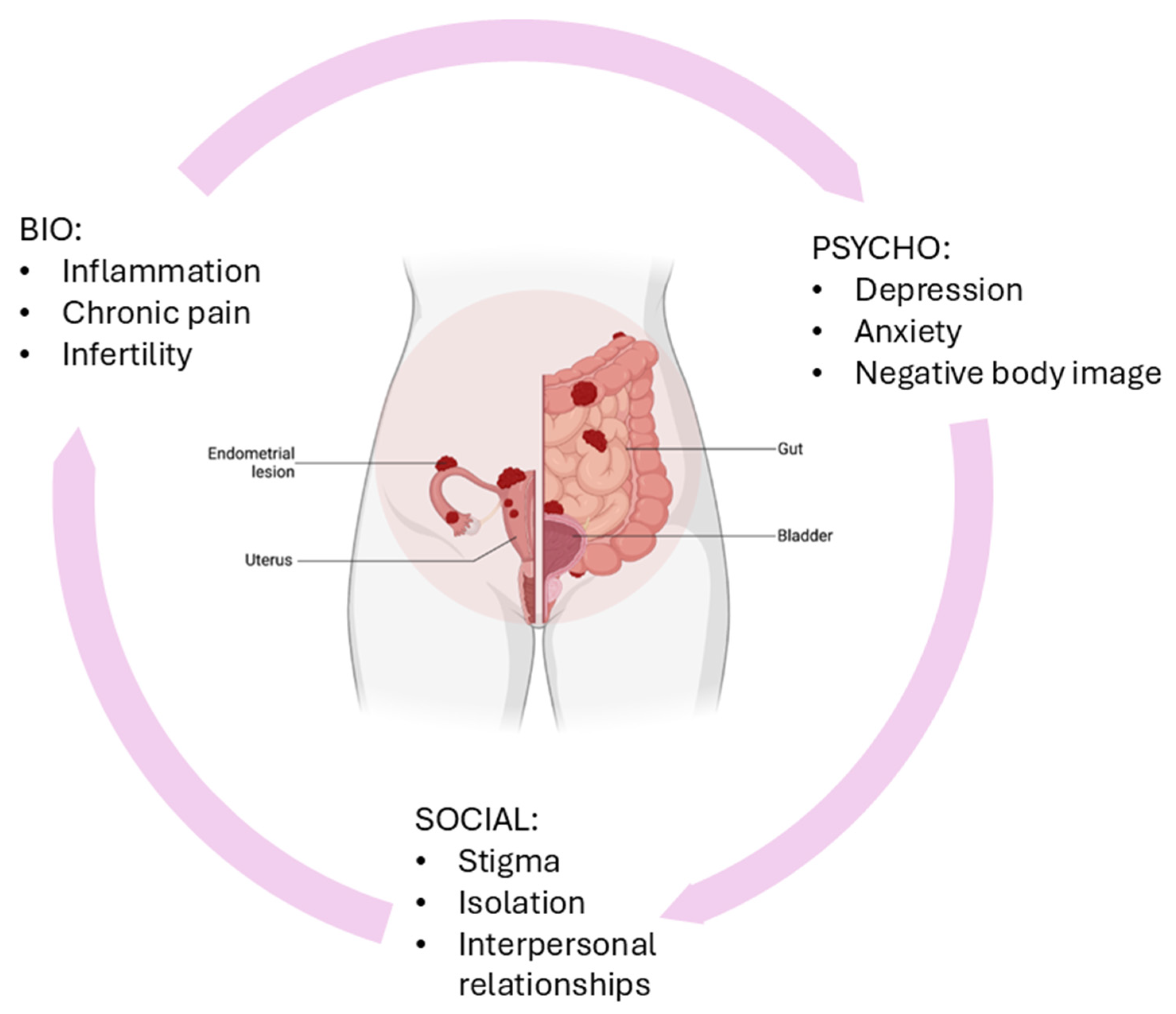
In conclusion, endometriosis is a complex and multidimensional disease that extends beyond gynecological manifestations to profoundly affect psychological well-being, interpersonal relationships, and occupational functioning. It represents a significant biopsychosocial burden with wide-ranging implications for women’s health and overall quality of life, as illustrated in Figure 1 [22]. The following sections of this review address, in sequence, the pathophysiological mechanisms of endometriosis and pain chronification (Section 2), the burden of mental health disorders and psychiatric comorbidities (Section 3), and current management and treatment strategies, including both biomedical and psychological interventions (Section 4). The final section (Section 5) discusses future research needs and emerging directions toward integrated, multidisciplinary care.
Figure 1.
Biopsychosocial model of endometriosis. Endometriosis is associated with biological factors (inflammation, chronic pain, infertility), psychological consequences (depression, anxiety, negative body image), and social challenges (stigma, isolation, impaired interpersonal relationships). The interplay among these domains contributes to a significant reduction in quality of life, highlighting the need for an integrated, multidisciplinary approach to care.
The present narrative review was conducted through a structured search of PubMed, Scopus, and Web of Science databases from January 2010 to December 2024. The following keywords were used: “endometriosis”, “chronic pelvic pain”, “depression”, “anxiety”, “mental health”, “sexual dysfunction”, and “multidisciplinary treatment”. Only articles in English were included. We selected clinical trials, cohort and case–control studies, systematic reviews, meta-analyses, and qualitative studies addressing the relationship between endometriosis-related pain and psychological outcomes. Reference lists of key papers were also manually screened to identify additional relevant sources. The selection process followed PRISMA recommendations adapted for narrative reviews.
2. Pathophysiology of Endometriosis and Pain Mechanisms
Before specifically addressing pain mechanisms in endometriosis, it is essential to understand the broader neurobiology of pain. Pain is defined as an unpleasant sensory and emotional experience associated with actual or potential tissue damage or described in terms of such damage [23]. It is a complex and highly subjective phenomenon, influenced by both peripheral input and central processing, and cannot be fully explained by nociceptive stimuli alone. Peripheral nociceptors detect harmful stimuli and transmit this information via the spinal cord to the brain, where the conscious perception of pain is generated. Along this pathway, a variety of modulatory mechanisms, both excitatory and inhibitory, shape the final pain experience. These include cognitive, emotional, and contextual factors such as mood, expectations, attention, and prior experiences.
Neuroimaging studies have revealed that pain perception involves a distributed network of brain regions, including sensory–discriminative, affective–emotional, cognitive–evaluative, motor, and brainstem modulatory areas. This functional ensemble is often referred to as the “pain neuromatrix” [24]. Originally conceptualized as a fixed network, it has since evolved into the notion of a “brain signature”, a dynamic, individualized pattern of activation that reflects the complexity and uniqueness of each person’s pain experience [25].
Although pain in endometriosis may initially result from nociceptive stimuli due to inflammation or tissue injury, it can persist long after the expected time for tissue healing (typically beyond three months). This transition marks the shift from acute to chronic pain, which is not merely a continuation of the initial pain but involves distinct and autonomous neuroplastic mechanisms [26]. Chronic pain is increasingly recognized as a disease in its own right, characterized by central sensitization, altered descending modulation, and structural and functional changes within the central nervous system [27]. These mechanisms appear to be consistent across various chronic pain conditions, including fibromyalgia, irritable bowel syndrome, and endometriosis-related pain [28]. The etiology of endometriosis remains incompletely understood, with multiple theories proposed to account for its pathogenesis. Each offers a distinct perspective on the clinical heterogeneity and anatomical distribution observed in affected individuals.
The most widely accepted theory is that of retrograde menstruation, originally proposed by Sampson in 1927 [29]. According to this model, endometrial cells are transported through the fallopian tubes into the peritoneal cavity during menstruation, where they adhere to pelvic structures and proliferate [29]. However, retrograde menstruation is known to occur in up to 90% of women of reproductive age, yet only 6–10% develop endometriosis. This suggests that additional factors, particularly involving impaired immune surveillance, such as the dysfunction of macrophages and natural killer (NK) cells, may be necessary for the establishment and persistence of ectopic endometrial lesions [30].
An alternative explanation is offered by the theory of coelomic metaplasia, which posits that peritoneal mesothelial cells, due to their shared embryological origin with endometrial tissue, may undergo metaplastic transformation into endometrial-like cells under specific stimuli [30]. This mechanism is particularly useful in explaining cases of endometriosis in individuals lacking a functional uterus, such as those with Mayer–Rokitansky–Küster–Hauser (MRKH) syndrome [31].
A third hypothesis, initially proposed by Von Recklinghausen and later elaborated by Russell, is the embryonic remnant theory. It suggests that undifferentiated Müllerian remnants present in the peritoneum may be induced to develop into functional endometrial tissue in response to hormonal or environmental triggers [30].
In addition to these models, several other mechanisms have been proposed. These include the hematogenous or lymphatic dissemination of endometrial cells to distant sites, the migration and implantation of stem cells derived from the bone marrow or endometrium, and an estrogen-dependent tissue injury and repair response following uterine microtrauma. Neuroangiogenic mechanisms have also been implicated in the pathophysiology of ectopic lesion formation and associated pain. Furthermore, both genetic and epigenetic alterations have been identified that may disrupt normal cellular regulation, enhancing the proliferation, survival, and immune evasion of ectopic endometrial tissue [30].
2.1. Pain Associated with Endometriosis
Endometriosis is most frequently characterized by a constellation of pain-related symptoms, including dysmenorrhea, cyclic and non-cyclic pelvic pain, dysuria, dyschezia, dyspareunia, and infertility. Despite the often early onset of symptoms, diagnosis is frequently delayed, on average by approximately ten years, largely due to the nonspecific nature of the clinical presentation and its overlap with other gynecological and gastrointestinal disorders [32].
The symptomatology of endometriosis is highly heterogeneous, and lesions typically elicit multiple symptoms in combination rather than in isolation. The nature and intensity of pain are closely related to the anatomical location of the lesions. When somatic structures such as the parietal peritoneum or pelvic walls are involved, patients tend to report well-localized, sharp, and stabbing pain. This pattern reflects the high density of somatosensory afferent fibers innervating these areas. In contrast, lesions involving visceral organs such as the uterus, bladder, or intestines are associated with poorly localized, cramp-like pain that is often diffuse and may be perceived as radiating across adjacent structures [33].
In more severe cases, pain is frequently accompanied by autonomic symptoms such as nausea, vomiting, and cyclic diarrhea during menstruation. These additional manifestations can significantly exacerbate disease burden and further impair quality of life.
2.2. Pathogenesis of Specific Pain Patterns
Cyclic pelvic pain and dysmenorrhea in endometriosis are primarily attributed to nociceptive inflammatory mechanisms. In affected individuals, elevated concentrations of proinflammatory cytokines, such as interleukin-6 (IL-6), interleukin-8 (IL-8), tumor necrosis factor-alpha (TNF-α), and prostaglandin E2 (PGE2), have been documented within the peritoneal environment [34]. These mediators are released in a cyclical fashion, leading to sensitization of peripheral nerve endings in both peritoneal and visceral tissues, thereby amplifying nociceptive signaling and pain perception. Typically, as inflammatory activity subsides outside the menstrual phase, this form of pain also tends to diminish.
Due to its inflammatory origin, this pain pattern is generally responsive to non-steroidal anti-inflammatory drugs (NSAIDs), which inhibit the cyclooxygenase (COX) pathway and subsequently suppress prostaglandin synthesis. Additionally, continuous hormonal therapy has been shown to alleviate symptoms by suppressing ovulation and reducing the cyclical production of pain mediators [35].
In cases of deep infiltrating endometriosis (DIE) involving pelvic organs, such as the vagina, rectum, or bladder, distinct and often more complex symptom profiles emerge. For instance, rectovaginal nodules may cause dyschezia, either due to mechanical compression or direct infiltration of the bowel wall. The cyclic swelling of these lesions, driven by hormonal fluctuations, may lead to cramp-like pain preceding defecation and alterations in bowel habits, including alternating constipation and diarrhea. These symptoms may suggest partial bowel stenosis secondary to DIE and should prompt further diagnostic evaluation, including imaging and/or endoscopic assessment [33].
Similarly, bladder involvement may manifest as cyclical dysuria, suprapubic pain, or incomplete bladder emptying, particularly during menstruation. These symptoms reflect local inflammatory changes and possible lesion-related distortion or infiltration of the bladder wall.
2.3. Neurogenic Inflammation
The evaluation of chronic pelvic pain in patients with endometriosis should include a comprehensive differential diagnosis that considers other potential contributing conditions, such as postsurgical adhesions, interstitial cystitis, and functional bowel disorders, including irritable bowel syndrome.
Importantly, there is often no clear correlation between the anatomical extent of endometriotic lesions and the severity of pain reported by patients [36]. This dissociation complicates diagnostic efforts, as some individuals with minimal or superficial disease may experience severe and debilitating pain, whereas others with extensive anatomical involvement may report only mild symptoms or remain asymptomatic.
Recent investigations into the innervation of endometriotic lesions have demonstrated a marked increase in sensory nerve fiber density within peritoneal implants, accompanied by a concurrent reduction in sympathetic nerve fibers [37]. Additionally, concentrations of nerve growth factor (NGF) have been found to be significantly elevated in the peritoneal fluid of women with endometriosis compared to healthy controls [38].
It has been proposed that this imbalance between pro- and anti-inflammatory mediators—particularly involving the sympathetic nervous system—may promote a state of neurogenic inflammation, contributing to pain that is independent of hormonal fluctuations. This mechanism may be especially relevant in patients who continue to experience pain despite effective hormonal suppression and should therefore be considered in the context of personalized treatment planning [33].
Further complicating the clinical picture is the presence of adhesions, which can serve as an additional source of both somatic and visceral pain. When chronic pain persists over time, it may also give rise to psychological comorbidities, including reactive depression, anxiety, and somatoform pain disorders. These secondary effects contribute to a cycle of pain amplification and increased disease burden, underscoring the importance of a multidisciplinary and biopsychosocial approach to management.
2.4. Central Sensitization and Spinal Hyperalgesia
Pain serves as a fundamental protective biological mechanism; however, its perception is inherently subjective and modulated by multiple neurophysiological and psychological factors. In the context of untreated dysmenorrhea, pain tends to recur cyclically and, over time, may induce maladaptive neuroplastic changes in central pain pathways. While the initial pain episodes typically subside with the resolution of inflammatory mediators, recurrent stimulation may cause the central nervous system to reinterpret nociceptive input as a persistent threat. At this stage, rather than attenuating the signal, the spinal cord may amplify it, resulting in heightened pain sensitivity and dysregulation of normal nociceptive processing [33].
This shift involves a cascade of neurochemical changes, including the upregulation of excitatory neurotransmitters such as glutamate, along with the activation of descending modulatory pathways. These alterations expand the nociceptive field and can lead to secondary symptoms, such as discomfort during urination or defecation, which are not directly related to the anatomical site of the lesions [39]. This phenomenon, known as spinal hyperalgesia, is marked by a reduced pain threshold and the emergence of pain in response to previously non-noxious stimuli (allodynia).
As pain becomes more intense and chronic, associated emotional responses particularly anxiety, fear, and anticipatory stress—tend to increase. This psychological distress may further exacerbate pain perception through a self-reinforcing loop. Many patients experiencing severe cramps and autonomic symptoms, such as nausea and fatigue, adopt protective postures to minimize discomfort. Over time, these compensatory behaviors can result in sustained contraction and dysfunction of the pelvic floor musculature, contributing to dyspareunia and exacerbating chronic pelvic pain syndromes [40].
If these musculoskeletal patterns persist, the resulting dyspareunia may worsen, creating a cycle in which fear of pain during sexual activity inhibits relaxation and further impairs sexual function. Prolonged exposure to chronic pain also induces neuroplastic changes at the cortical level. Functional magnetic resonance imaging (fMRI) studies have demonstrated structural and functional brain alterations in patients with chronic pain, with detectable changes emerging as early as two years after symptom onset [41].
Patients with chronic pelvic pain are at increased risk of developing comorbid pain syndromes, including bladder pain syndrome, irritable bowel syndrome, and vulvodynia [39]. These findings help explain why some individuals report severe, disabling pain despite minimal or absent macroscopic disease. For this reason, early, comprehensive, and individualized pain management is critical.
Non-steroidal anti-inflammatory drugs (NSAIDs) remain the first-line treatment for inflammatory nociceptive pain. However, complex or refractory cases often necessitate a multimodal strategy. This may include centrally acting agents such as gabapentin or pregabalin, and in select cases, short-term opioid therapy for severe pain. Adjunctive treatments such as physical therapy, pelvic floor rehabilitation, and psychosomatic interventions are also integral components of a holistic pain management approach [33].
In summary, the mechanisms underlying endometriosis-related pain are multifactorial and remain only partially elucidated. Ongoing research into central sensitization and neuroimmune interactions is essential for advancing therapeutic strategies and improving patient outcomes.
3. The Burden of Mental Health Disorders in Endometriosis
Endometriosis is a chronic gynecological disorder characterized by the presence of endometrial-like tissue outside the uterine cavity, which continues to respond to hormonal fluctuations of the menstrual cycle, resulting in inflammation and pain. Early diagnosis is essential to reduce the risk of infertility and mitigate the psychological, social, and relational consequences associated with the disease. However, research indicates an average delay of approximately seven years between symptom onset and definitive diagnosis [42]. During this interval, women typically consult multiple healthcare providers before reaching a specialist, highlighting the complexity and costliness of the diagnostic process from both economic and psychological perspectives. Furthermore, a substantial proportion of women remain undiagnosed as the diagnostic pathway is frequently initiated only after infertility is suspected. Currently, there is no definitive cure for endometriosis. Therapeutic interventions commonly involve analgesic medications that alleviate pain symptoms without addressing the underlying pathology, hormonal therapies that induce a temporary pharmacological menopause and thus prevent conception, and surgical excision of ectopic endometrial tissue. Surgical treatment, however, carries a considerable risk of disease recurrence.
Endometriosis also imposes significant social and occupational burdens. The severity of pain can substantially impair work performance, both in terms of quality and quantity. For instance, affected women have been reported to lose an average of eleven hours of productivity per week, which is notably higher than their unaffected counterparts [42]. Social functioning is similarly compromised, with many patients reporting a marked reduction in social participation due to pain and discomfort [43,44]. From a relational standpoint, dyspareunia is prevalent in 60 to 70 percent of women undergoing surgical treatment and in 50 to 90 percent of those receiving hormonal therapy [45]. This pain often results in decreased sexual desire and activity, with sexual encounters being limited primarily to reproductive purposes, thereby negatively impacting both individual sexual satisfaction and partner relationships [46,47].
Psychologically, endometriosis exerts a substantial impact on mental health. The absence of an early diagnosis may lead to confusion and neglect of symptoms, while even after diagnosis, many women experience stigma and isolation. Infertility often exacerbates negative body image and feelings of diminished femininity. Studies have documented a high prevalence of depressive symptoms in 86.5 percent and anxiety symptoms in 87.5 percent of patients with endometriosis, with depressive symptoms worsening with age and anxiety symptoms increasing during periods of acute pain [48]. These psychological symptoms may in turn amplify pain perception and disease severity, suggesting a bidirectional relationship between mental health and endometriosis symptomatology.
Endometriosis is increasingly acknowledged not only as a chronic gynecological disease but also as a complex, multisystem condition with significant psychological implications. A growing body of literature consistently reports a higher prevalence of psychiatric disorders among individuals with endometriosis when compared to the general population, with depression and anxiety being the most frequently observed comorbidities. A recent population-based cohort study demonstrated that women with endometriosis had an adjusted hazard ratio of 1.28 (95% CI: 1.24–1.33) for developing mental health-related conditions compared to matched controls, with the highest risk occurring in the first year following diagnosis [49]. Similarly, a large-scale genome-wide association study found significantly increased odds of both depression (OR 3.61, 95% CI: 3.32–3.92) and anxiety (OR 2.61, 95% CI: 2.30–2.97) in women diagnosed with endometriosis [50]. Importantly, these mental health symptoms are not solely a psychological reaction to chronic pain or the emotional burden of diagnosis. Instead, they may reflect overlapping pathophysiological mechanisms such as persistent systemic inflammation, dysregulation of the hypothalamic–pituitary–adrenal axis, and alterations in neuroimmune and neuroendocrine functioning. Central sensitization may further contribute to both the amplification of pain and the persistence of emotional dysregulation [51].
Beyond anxiety and depression, patients with endometriosis often report a wide spectrum of psychological difficulties, including sleep disturbances, somatization, intrusive thoughts, and symptoms of post-traumatic stress, as summarized in Table 1. These experiences are compounded by the frequent invisibility of the disease and the social stigma surrounding menstruation and pelvic pain, which can lead to feelings of isolation, invalidation, and frustration. The often substantial delay in diagnosis and the unpredictability of symptom flares contribute to ongoing psychological stress and emotional fatigue, impairing the individual’s ability to cope effectively with the illness [52]. In addition to these emotional and cognitive burdens, endometriosis has been associated with a diminished sense of bodily integrity and dissatisfaction with body image. Chronic pain, sexual dysfunction, and concerns about current or future infertility can profoundly impact self-esteem, interpersonal relationships, and identity. For many women, these challenges significantly reduce their perceived quality of life and exacerbate feelings of grief, loss, and inadequacy [53]. The interplay between chronic pain and psychological distress forms a self-perpetuating cycle, in which emotional suffering intensifies the perception of physical symptoms, further diminishing treatment response and resilience. This bidirectional relationship underscores the necessity of incorporating routine mental health screening, timely psychological interventions, and integrated, patient-centered care into the clinical management of endometriosis [54]. Finally, sociocultural and demographic factors play a crucial role in shaping psychological outcomes in women with endometriosis. Cross-cultural research shows that stigma surrounding menstruation and pain expression leads to diagnostic delays and internalized distress, particularly in conservative societies [11]. Differences in socioeconomic status, education, and healthcare accessibility further influence coping resources and treatment adherence. In low- and middle-income contexts, limited access to gynecological and mental health services exacerbates emotional burden and social isolation. Incorporating sociocultural sensitivity into clinical assessment is therefore essential to ensure equitable and person-centered care.
Table 1.
Psychiatric comorbidities in women with endometriosis.
From a psychological and symbolic perspective, endometriosis may represent an unconscious conflict related to feminine identity. The ectopic presence of uterine mucosa continuing to undergo cyclical changes can be conceptualized as a misplacement of feminine energy or identity, manifesting in physical symptoms. This phenomenon may symbolize a form of femininity enacted in inappropriate contexts that inflict harm on the individual. The frequent reliance on surgical removal of endometriotic tissue, an intervention that can be associated with traditionally masculine medical paradigms, further underscores the symbolic tension between feminine and masculine forces. Sexual pain during intercourse may reflect an unconscious resistance to masculine intrusion in a vulnerable feminine space, which can result in decreased sexual activity and relational difficulties. This dynamic might also manifest as an unconscious blockade of fertility, serving as a psychological defense mechanism. Historical notions linking uterine disorders to hysteria and symbolic bodily expression of psychological distress resonate with this interpretation, suggesting that endometriosis could be understood as a somatic manifestation of unresolved psychological conflict concerning femininity [56].
4. Management and Treatment Strategies
Multidimensional assessment tools and routine screening for psychological distress are essential components of comprehensive care for individuals with endometriosis. Given the complex biopsychosocial nature of the disease, treatment strategies must extend beyond purely biomedical approaches. Hormonal therapies, including progestins, combined oral contraceptives, and gonadotropin-releasing hormone (GnRH) analogues, alongside laparoscopic surgery, remain foundational in managing endometriosis-associated pain and in reducing lesion burden. For patients exhibiting signs of central sensitization, pharmacological agents such as gabapentin or pregabalin may be appropriate, as these target neuronal hyperexcitability and have demonstrated efficacy in modulating chronic pain pathways that are not responsive to hormonal treatment [57]. However, these interventions alone may be insufficient in significantly improving mental health outcomes, thereby underscoring the need for complementary psychosocial support [58].
An expanding body of evidence supports the integration of psychological therapies into standard endometriosis care. Cognitive–Behavioral Therapy (CBT) is one of the most extensively studied and applied psychological interventions in this context. CBT focuses on modifying maladaptive thought patterns and behaviors, thereby enhancing coping mechanisms and emotional resilience. Recent meta-analytic findings highlight the clinical efficacy of CBT in addressing both pain and psychological distress in patients with endometriosis. Del Pino-Sedeño et al. (2024) reported significant improvements, including reductions in dyspareunia (standardized mean difference [SMD]: 0.54), dyschezia (mean difference [MD]: 2.90), and enhanced overall mental health outcomes (SMD: 0.70), thereby reinforcing CBT as a valuable therapeutic modality [59].
In addition to CBT, emerging evidence supports the use of other psychotherapeutic approaches, including mindfulness-based stress reduction (MBSR), interpersonal therapy, and compassion-focused therapy. Mindfulness-based interventions, in particular, have been shown to reduce perceived stress and enhance emotional regulation, equipping patients with improved strategies for pain management and psychological adaptation [60]. Furthermore, systematic reviews indicate that cognitive–behavioral therapies can significantly enhance quality of life and adaptive coping, although additional rigorously controlled clinical trials are needed to establish standardized treatment protocols [61].
Pharmacological management of psychiatric comorbidities also plays a critical role in comprehensive treatment. Selective serotonin reuptake inhibitors (SSRIs) and serotonin-norepinephrine reuptake inhibitors (SNRIs) are particularly effective in patients experiencing moderate to severe depressive or anxiety symptoms. These medications not only alleviate affective disturbances but also contribute to reduced pain perception by modulating neurochemical pathways implicated in nociceptive processing [62]. Nevertheless, such pharmacological interventions must be individualized and monitored closely by qualified mental health professionals to maximize therapeutic benefit while minimizing adverse effects.
The complexity of endometriosis is evident from its multifaceted clinical and medical profile. The physical, mental, social, and relational consequences of the disease can profoundly impact the quality of life, well-being, and mental health of affected women. In this context, it is of paramount importance to reduce the delay between symptom onset and diagnosis of endometriosis to mitigate, as much as possible, the negative effects of the condition. Moreover, enhancing access to care necessitates providing women who experience debilitating menstrual pain or dyspareunia with accurate information to expedite their healthcare engagement. Some studies hypothesize that diagnostic delay may be attributed to three main factors [63,64]: normalization and underestimation of pathological menstrual pain by many healthcare providers; the inability of many women to distinguish between “normal” and pathological menstrual pain; and reluctance among women to discuss menstrual and intimacy-related issues due to fears of discrimination and social stigma.
Several studies have demonstrated that integrated interventions, combining both physiological and psychological approaches, can effectively address symptoms of anxiety and depression, thereby significantly improving the quality of life for women affected by endometriosis. Progressive muscle relaxation techniques significantly reduce anxiety and depression levels and improve the overall quality of life of patients after only twelve weeks of treatment [65,66]. Women with endometriosis exhibit significantly lower body appreciation compared to women without the condition. These women also report markedly reduced familiarity with their own bodies and a general dissatisfaction with their physical self-image [55].
Crucially, the cornerstone of effective endometriosis management is the implementation of structured multidisciplinary care. Optimal care models incorporate the collaborative efforts of gynecologists, pain specialists, psychologists, psychiatrists, nutritionists, and pelvic physiotherapists. This integrated approach addresses the full spectrum of the patient’s experience, from physical symptoms to emotional and psychosocial well-being. Multidisciplinary models of care have been associated with increased patient satisfaction, greater adherence to therapeutic regimens, reduced reliance on healthcare services, and improved overall outcomes, as demonstrated in recent large-scale studies [67].
From a psychological perspective, it is important for the woman’s experience and for the consequences in terms of waiting and pain to receive an early diagnosis which can sometimes be therapeutic as many women feel relieved to learn they do not have cancer or other potentially life-threatening conditions [68]. One of the primary responsibilities of the referring physician is to establish a strong therapeutic relationship with the patient through empathetic listening. It is essential to consider situational factors concurrent with episodes of pain because stress can contribute to an increased perception of pain [69].
Moreover, it is critical that both the physiological and psychological aspects of pain are considered together during the initial phases of consultation [70], in addition to the consequences of chemically or surgically induced menopause in terms of depression, anxiety and reduced sexual desire. For this reason, the management of endometriosis requires a multidisciplinary approach in which the gynecologist is not the sole expert involved in treating the disease, although they often represent the primary point of contact. Undergoing lifelong therapy consisting of hormonal treatments and frequent surgical interventions where pain sometimes does not completely resolve can lead to significant feelings of anger, resignation and misunderstandings within family and couple relationships. Sexual life may also be negatively impacted by endometriosis due to the pain often associated with this medical condition during sexual activity. Increasing awareness of the disease by improving understanding of its causes and symptoms is essential to prevent social stigma from exacerbating the difficulties experienced by individuals with endometriosis. A concise overview of available therapeutic and psychosocial approaches is provided in Table 2, which summarizes the evidence supporting multidisciplinary strategies in endometriosis management.
Table 2.
Multidisciplinary management strategies for endometriosis and associated mental health disorders.
Recent empirical evidence supports the feasibility and effectiveness of integrated care pathways. For example, Molina et al. [58] described a holistic model integrating gynecology, psychiatry, physiotherapy, and nutritional counseling, reporting significant improvements in pain severity, depressive symptoms, and treatment adherence. Similarly, Eucker et al. [67] emphasized the importance of biopsychosocial frameworks in non-opioid chronic pain management, underscoring the relevance of such models to endometriosis care. The incorporation of mental health professionals within endometriosis clinics facilitates early detection of psychiatric comorbidities and fosters individualized, collaborative treatment plans.
Beyond summarizing available evidence, it is essential to interpret current findings within a broader theoretical framework. The relationship between endometriosis, pain chronification, and psychological suffering illustrates the interdependence of biological, cognitive, and emotional processes. The authors propose a biopsychoneuroimmunological model in which sustained inflammation, altered pain perception, and emotional dysregulation form a self-perpetuating loop that amplifies symptom severity. This model highlights the need for research exploring molecular mediators of emotional resilience, such as neurotrophic factors and stress-related cytokines, and for interventions targeting both central sensitization and affective regulation.
Furthermore, existing care pathways should move from symptom-centered management to meaning-centered care, promoting patient empowerment and narrative expression as therapeutic tools.
5. Future Directions and Research Needs
Future research on endometriosis must adopt a holistic framework that acknowledges the complex interaction between physical symptoms and psychological well-being. The high prevalence of mental health disorders, particularly depression and anxiety, among individuals with endometriosis calls for the systematic inclusion of psychological assessments in clinical studies [71]. Employing a biopsychosocial model can illuminate the bidirectional relationship between chronic pelvic pain and emotional distress, thereby guiding the development of comprehensive, patient-centered interventions [72]. At the same time, innovation in therapeutic approaches is necessary to address the limitations of current conventional treatments [73]. Emerging non-hormonal options, including immunomodulatory agents and interventions targeting the microbiome, show promise as adjunctive therapies to standard care [74]. A crucial focus of future research should be to elucidate the biological and neuropsychological mechanisms underlying the disease. Studies investigating inflammatory pathways, central sensitization, and psychological factors such as stress and resilience may lead to the identification of novel biomarkers and therapeutic targets [75]. The future of endometriosis management lies in precision medicine, tailoring treatments to the individual patient’s genetic, hormonal, inflammatory, and psychosocial characteristics. Multimodal strategies combining pharmacological therapies with psychological support, physiotherapy, and lifestyle modifications have already demonstrated encouraging outcomes [76,77]. Importantly, clinical trials should expand their focus beyond symptom reduction to include outcomes related to quality of life and functional capacity. To overcome the ongoing fragmentation of care, integrated multidisciplinary models that involve gynecologists, pain specialists, mental health professionals, and primary care providers are essential. The use of digital health technologies and telemedicine may further enhance equitable access to comprehensive care [78]. It is also critical to ensure that healthcare professionals receive adequate training to address both physical and mental health dimensions, thereby improving long-term management and quality of life for patients with endometriosis [79].
Endometriosis is not only a chronic gynecological condition characterized by persistent pain and infertility but also represents a model for understanding the complex interplay between somatic and psychological health. The multifactorial pathophysiology of endometriosis-related pain, combined with frequent diagnostic delays and a high burden of mental health disorders, results in significant impairments in quality of life. Evidence supports a bidirectional relationship between chronic pain and emotional regulation, which is mediated by neurobiological, inflammatory, hormonal, and psychosocial processes [80]. As a result, mental health comorbidities, including depression, anxiety, body image disturbances, and sexual health issues, are prevalent yet often underrecognized in this population [81].
Effective management of endometriosis should therefore extend beyond mere symptom control and embrace a biopsychosocial approach to care [82]. This approach includes integrating psychological therapies and multidisciplinary interventions that address both physical and emotional suffering. Future research should aim to clarify the mechanistic links between endometriosis and mental health, promote innovation in targeted, patient-centered treatments, and support equitable access to integrated care pathways. Recognizing and addressing the psychological aspects of endometriosis is essential to improving clinical outcomes and the lived experience of affected individuals.
While empirical evidence on the biological and psychological mechanisms of endometriosis continues to grow, there remains a critical gap between scientific knowledge and clinical translation. Few studies have examined longitudinal trajectories linking pain, inflammation, and psychiatric symptoms over time. Future research should therefore adopt multilevel designs integrating biological markers, neuroimaging data, and psychosocial variables to identify prognostic profiles. Moreover, cross-disciplinary collaborations between gynecologists, psychiatrists, and neuroscientists are needed to develop personalized interventions addressing both somatic and emotional suffering.
From a practical standpoint, the implementation of integrated clinical models, where mental health professionals are embedded within gynecological services, could significantly reduce diagnostic delay, improve adherence, and prevent chronic psychological distress. Educational initiatives promoting menstrual health literacy and destigmatization may further mitigate social isolation and shame. This review contributes to emphasize that advancing care for women with endometriosis requires a cultural shift toward recognizing pain as both a biological and emotional signal, and mental health as an inseparable dimension of reproductive health.
6. Conclusions
Endometriosis is a complex condition with wide-ranging implications encompassing medical, psychological, social, and symbolic dimensions. Effective management must address not only the physical symptoms and fertility issues but also the emotional and existential challenges related to body image and feminine identity. A multidisciplinary approach that integrates biomedical treatments with psychological support and symbolic understanding may lead to improved patient outcomes and enhanced quality of life. This review not only synthesizes current knowledge but also underscores the urgent need for integrative, biopsychosocial paradigms in women’s health. There is an urgent need for research grounded in translational neuroscience and clinical psychology, aimed at transforming endometriosis care from symptom control to holistic well-being.
Author Contributions
Conceptualization, G.M., G.T. and M.M.; methodology, G.M., G.T., C.d., E.G. and M.M.; resources, C.d., E.C., I.I., F.M.L., E.G. and D.N.; data curation, C.d., E.C., I.I., F.M.L., E.G. and D.N.; writing—original draft preparation, G.M., G.T. and M.M.; writing—review and editing, G.M., G.T. and M.M.; supervision, G.M., G.T. and M.M. All authors have read and agreed to the published version of the manuscript.
Funding
This research received no external funding.
Institutional Review Board Statement
Not applicable.
Informed Consent Statement
Not applicable.
Data Availability Statement
No new data were created or analyzed in this study. Data sharing is not applicable to this article as it is a narrative review of the existing literature.
Conflicts of Interest
The authors declare no conflicts of interest.
References
- Aubry, G.; Panel, P.; Thiollier, G.; Huchon, C.; Fauconnier, A. Measuring Health-Related Quali-ty of Life in Women with Endometriosis: Comparing the Clinimetric Properties of the Endo-metriosis Health Profile-5 (EHP-5) and the EuroQol-5D (EQ-5D). Hum. Reprod. 2017, 32, 1258–1269. [Google Scholar] [CrossRef] [Scilit]
- La Rosa, V.L.; Barra, F.; Chiofalo, B.; Platania, A.; Di Guardo, F.; Conway, F.; Di Angelo Anto-nio, S.; Lin, L.T. An Overview on the Relationship Between Endometriosis and Infertility: The Impact on Sexuality and Psychological Well-Being. J. Psychosom. Obstet. Gynaecol. 2020, 41, 93–97. [Google Scholar] [CrossRef] [Scilit]
- Horne, A.W.; Missmer, S.A. Pathophysiology, Diagnosis, and Management of Endometriosis. BMJ 2022, 379, e070750. [Google Scholar] [CrossRef] [Scilit]
- Kalfas, M.; Chisari, C.; Windgassen, S. Psychosocial Factors Associated with Pain and Health-Related Quality of Life in Endometriosis: A Systematic Review. Eur. J. Pain 2022, 26, 1827–1848. [Google Scholar] [CrossRef] [Scilit]
- Fauconnier, A.; Staraci, S.; Huchon, C.; Roman, H.; Panel, P.; Descamps, P. Comparison of Patient- and Physician-Based Descriptions of Symptoms of Endometriosis: A Qualitative Study. Hum. Reprod. 2013, 28, 2686–2694. [Google Scholar] [CrossRef] [Scilit]
- Stratton, P.; Berkley, K.J. Chronic Pelvic Pain and Endometriosis: Translational Evidence of the Relationship and Implications. Hum. Reprod. Update 2011, 17, 327–346. [Google Scholar] [CrossRef] [Scilit]
- Dolci, C.; Jean Dit Gautier, E.; Lannez, L.; Lebuffe, G.; Wattier, J.M.; Rubod, C. Neuropathic-like Pain Affects Pain Perception in Patients with Deep Endometriosis: An Observational Study. Arch. Gynecol. Obstet. 2025, 312, 1789–1797. [Google Scholar] [CrossRef] [Scilit] [PubMed]
- van der Zanden, M.; de Kok, L.; Nelen, W.L.D.M.; Braat, D.D.M.; Nap, A.W. Strengths and Weaknesses in the Diagnostic Process of Endometriosis from the Patients’ Perspective: A Focus Group Study. Diagnosis 2021, 8, 333–339. [Google Scholar] [CrossRef] [Scilit] [PubMed]
- Hansen, S.; Sverrisdóttir, U.Á.; Rudnicki, M. Impact of Exercise on Pain Perception in Women with Endometriosis: A Systematic Review. Acta Obstet. Gynecol. Scand. 2021, 100, 1595–1601. [Google Scholar] [CrossRef] [Scilit] [PubMed]
- Martire, F.G.; Giorgi, M.; D’Abate, C.; Colombi, I.; Ginetti, A.; Cannoni, A.; Fedele, F.; Exacoustos, C.; Centini, G.; Zupi, E.; et al. Deep Infiltrating Endometriosis in Adolescence: Early Diagnosis and Possible Prevention of Disease Progression. J. Clin. Med. 2024, 13, 550. [Google Scholar] [CrossRef] [Scilit]
- Sims, O.T.; Gupta, J.; Missmer, S.A.; Aninye, I.O. Stigma and Endometriosis: A Brief Overview and Recommendations to Improve Psychosocial Well-Being and Diagnostic Delay. Int. J. Environ. Res. Public Health 2021, 18, 8210. [Google Scholar] [CrossRef] [Scilit]
- Toye, F.; Seers, K.; Hannink, E.; Barker, K. A Mega-Ethnography of Eleven Qualitative Evidence Syntheses Exploring the Experience of Living with Chronic Non-Malignant Pain. BMC Med. Res. Methodol. 2017, 17, 116. [Google Scholar] [CrossRef] [Scilit]
- Toye, F.; Seers, K.; Barker, K. A Meta-Ethnography of Patients’ Experiences of Chronic Pelvic Pain: Struggling to Construct Chronic Pelvic Pain as ‘Real’. J. Adv. Nurs. 2014, 70, 2713–2727. [Google Scholar] [CrossRef] [Scilit]
- Gstoettner, M.; Wenzl, R.; Radler, I.; Jaeger, M. “I Think to Myself ‘Why Now?’”—A Qualitative Study About Endometriosis and Pain in Austria. BMC Womens Health 2023, 23, 409, Erratum in BMC Womens Health 2023, 23, 455. https://doi.org/10.1186/s12905-023-02610-x. [Google Scholar] [CrossRef] [Scilit]
- The WHOQOL Group. The World Health Organization Quality of Life Assessment (WHOQOL): Development and General Psychometric Properties. Soc. Sci. Med. 1998, 46, 1569–1585. [CrossRef] [Scilit]
- Rush, G.; Misajon, R. Examining Subjective Wellbeing and Health-Related Quality of Life in Women with Endometriosis. Health Care Women Int. 2018, 39, 303–321. [Google Scholar] [CrossRef] [Scilit] [PubMed]
- Van Barneveld, E.; Manders, J.; van Osch, F.H.M.; Visser, L.; van Hanegem, N.; Lim, A.C.; Bongers, M.Y.; Leue, C. Depression, Anxiety, and Correlating Factors in Endometriosis: A Systematic Review and Meta-Analysis. J. Women’s Health 2022, 31, 219–230. [Google Scholar] [CrossRef] [Scilit] [PubMed]
- Gambadauro, P.; Carli, V.; Hadlaczky, G. Depressive Symptoms Among Women with Endometriosis: A Systematic Review and Meta-Analysis. Am. J. Obstet. Gynecol. 2019, 220, 230–241. [Google Scholar] [CrossRef] [Scilit]
- Gerlinger, C.; Schumacher, U.; Faustmann, T.; Colligs, A.; Schmitz, H.; Seitz, C. Defining a Minimal Clinically Important Difference for Endometriosis-Associated Pelvic Pain Measured on a Visual Analog Scale: Analyses of Two Placebo-Controlled, Randomized Trials. Health Qual. Life Outcomes 2010, 8, 138. [Google Scholar] [CrossRef] [Scilit] [PubMed]
- Cavaggioni, G.; Lia, C.; Resta, S.; Antonielli, T.; Benedetti Panici, P.; Megiorni, F.; Porpora, M.G. Are Mood and Anxiety Disorders and Alexithymia Associated with Endometriosis? A Preliminary Study. Biomed. Res. Int. 2014, 2014, 786830. [Google Scholar] [CrossRef] [Scilit]
- Fassino, S.; Pierò, A.; Boggio, S.; Piccioni, V.; Garzaro, L. Anxiety, Depression and Anger Suppression in Infertile Couples: A Controlled Study. Hum. Reprod. 2002, 17, 2986–2994. [Google Scholar] [CrossRef] [Scilit]
- Friedl, F.; Riedl, D.; Fessler, S.; Wildt, L.; Walter, M.; Richter, R.; Schüßler, G.; Böttcher, B. Impact of Endometriosis on Quality of Life, Anxiety, and Depression: An Austrian Perspective. Arch. Gynecol. Obstet. 2015, 292, 1393–1399. [Google Scholar] [CrossRef] [Scilit]
- Loeser, J.D.; Treede, R.D. The Kyoto Protocol of IASP Basic Pain Terminology. Pain 2008, 137, 473–477. [Google Scholar] [CrossRef] [Scilit]
- Melzack, R. From the Gate to the Neuromatrix. Pain 1999, 82, S121–S126. [Google Scholar] [CrossRef] [Scilit]
- Tracey, I.; Mantyh, P.W. The Cerebral Signature for Pain Perception and Its Modulation. Neuron 2007, 55, 377–391. [Google Scholar] [CrossRef] [Scilit]
- Denk, F.; McMahon, S.B. Neurobiological Basis for Pain Vulnerability: Why Me? Pain 2017, 158, S108–S114. [Google Scholar] [CrossRef] [Scilit] [PubMed]
- Doleys, D.M. How Neuroimaging Studies Have Challenged Us to Rethink: Is Chronic Pain a Disease? J. Pain 2010, 11, 399–400. [Google Scholar] [CrossRef] [Scilit] [PubMed]
- Woolf, C.J. Central Sensitization: Implications for the Diagnosis and Treatment of Pain. Pain 2011, 152, S2–S15. [Google Scholar] [CrossRef] [Scilit] [PubMed]
- Sampson, J.A. Metastatic or Embolic Endometriosis, Due to the Menstrual Dissemination of Endometrial Tissue into the Venous Circulation. Am. J. Pathol. 1927, 3, 93–110. [Google Scholar]
- Ochoa Bernal, M.A.; Fazleabas, A.T. The Known, the Unknown and the Future of the Pathophysiology of Endometriosis. Int. J. Mol. Sci. 2024, 25, 5815. [Google Scholar] [CrossRef] [Scilit] [PubMed]
- Troncon, J.K.; Zani, A.C.; Vieira, A.D.; Poli-Neto, O.B.; Nogueira, A.A.; Rosa-E-Silva, J.C. Endometriosis in a Patient with Mayer-Rokitansky-Küster-Hauser Syndrome. Case Rep. Obstet. Gynecol. 2014, 2014, 376231. [Google Scholar] [CrossRef] [Scilit]
- Pino, I.; Belloni, G.M.; Barbera, V.; Solima, E.; Radice, D.; Angioni, S.; Arena, S.; Bergamini, V.; Candiani, M.; Maiorana, A.; et al. “Endometriosis Treatment Italian Club” (ETIC). “Better Late Than Never but Never Late Is Better”, Especially in Young Women. A Multicenter Italian Study on Diagnostic Delay for Symptomatic Endometriosis. Eur. J. Contracept. Reprod. Health Care 2023, 28, 10–16. [Google Scholar] [CrossRef] [Scilit] [PubMed]
- Gruber, T.M.; Mechsner, S. Pathogenesis of Endometriosis: The Origin of Pain and Subfertility. Cells 2021, 10, 1381. [Google Scholar] [CrossRef] [Scilit]
- Nanda, A.K.T.; Banerjee, P.; Dutta, M.; Wangdi, T.; Sharma, P.; Chaudhury, K.; Jana, S.K. Cytokines, Angiogenesis, and Extracellular Matrix Degradation Are Augmented by Oxidative Stress in Endometriosis. Ann. Lab. Med. 2020, 40, 390–397. [Google Scholar] [CrossRef] [Scilit]
- Piacenti, I.; Viscardi, M.F.; Masciullo, L.; Sangiuliano, C.; Scaramuzzino, S.; Piccioni, M.G.; Muzii, L.; Benedetti Panici, P.; Porpora, M.G. Dienogest versus Continuous Oral Levonorgestrel/EE in Patients with Endometriosis: What’s the Best Choice? Gynecol. Endocrinol. 2021, 37, 471–475. [Google Scholar] [CrossRef] [Scilit] [PubMed]
- Mechsner, S. Endometriose: Eine Oft Verkannte Schmerzerkrankung [Endometriosis: An Often Unrecognized Pain Disorder]. Schmerz 2016, 30, 477–490. [Google Scholar] [CrossRef] [Scilit]
- Zhang, Y.; Liu, H.; Feng, C.; Yang, Y.; Cui, L. Prevalence of Sleep Disturbances in Endometriosis Patients: A Systematic Review and Meta-Analysis. Front. Psychiatry 2024, 15, 1405320. [Google Scholar] [CrossRef] [Scilit] [PubMed]
- Arnold, J.; Barcena de Arellano, M.L.; Rüster, C.; Vercellino, G.F.; Chiantera, V.; Schneider, A.; Mechsner, S. Imbalance Between Sympathetic and Sensory Innervation in Peritoneal Endometriosis. Brain Behav. Immun. 2012, 26, 132–141. [Google Scholar] [CrossRef] [Scilit]
- Hoffman, D. Central and Peripheral Pain Generators in Women with Chronic Pelvic Pain: Patient Centered Assessment and Treatment. Curr. Rheumatol. Rev. 2015, 11, 146–166. [Google Scholar] [CrossRef] [Scilit]
- Aredo, J.V.; Heyrana, K.J.; Karp, B.I.; Shah, J.P.; Stratton, P. Relating Chronic Pelvic Pain and Endometriosis to Signs of Sensitization and Myofascial Pain and Dysfunction. Semin. Reprod. Med. 2017, 35, 88–97. [Google Scholar] [CrossRef] [Scilit]
- As-Sanie, S.; Harris, R.E.; Napadow, V.; Kim, J.; Neshewat, G.; Kairys, A.; Williams, D.; Clauw, D.J.; Schmidt-Wilcke, T. Changes in Regional Gray Matter Volume in Women with Chronic Pelvic Pain: A Voxel-Based Morphometry Study. Pain 2012, 153, 1006–1014. [Google Scholar] [CrossRef] [Scilit]
- Nnoaham, K.E.; Hummelshoj, L.; Webster, P.; d’Hooghe, T.; de Cicco Nardone, F.; de Cicco Nardone, C.; Jenkinson, C.; Kennedy, S.H.; Zondervan, K.T.; World Endometriosis Research Foundation Global Study of Women’s Health Consortium. Impact of Endometriosis on Quality of Life and Work Productivity: A Multicenter Study Across Ten Countries. Fertil. Steril. 2011, 96, 366–373.e8. [Google Scholar] [CrossRef] [Scilit]
- Gilmour, J.A.; Huntington, A.; Wilson, H.V. The Impact of Endometriosis on Work and Social Participation. Int. J. Nurs. Pract. 2008, 14, 443–448. [Google Scholar] [CrossRef] [Scilit] [PubMed]
- Dipankar, S.P.; Kushram, B.; Unnikrishnan, P.; Gowda, J.R.; Shrivastava, R.; Daitkar, A.R.; Jaiswal, V. Psychological Distress and Quality of Life in Women With Endometriosis: A Narrative Review of Therapeutic Approaches and Challenges. Cureus 2025, 17, e80180. [Google Scholar] [CrossRef] [Scilit] [PubMed]
- Ferrero, S.; Esposito, F.; Abbamonte, L.H.; Anserini, P.; Remorgida, V.; Ragni, N. Quality of Sex Life in Women with Endometriosis and Deep Dyspareunia. Fertil. Steril. 2005, 83, 573–579. [Google Scholar] [CrossRef] [Scilit] [PubMed]
- Fritzer, N.; Haas, D.; Oppelt, P.; Renner, S.; Hornung, D.; Wölfler, M.; Ulrich, U.; Fischerlehner, G.; Sillem, M.; Hudelist, G. More Than Just Bad Sex: Sexual Dysfunction and Distress in Patients with Endometriosis. Eur. J. Obstet. Gynecol. Reprod. Biol. 2013, 169, 392–396. [Google Scholar] [CrossRef] [Scilit]
- Pluchino, N.; Wenger, J.M.; Petignat, P.; Tal, R.; Bolmont, M.; Taylor, H.S.; Bianchi-Demicheli, F. Sexual Function in Endometriosis Patients and Their Partners: Effect of the Disease and Consequences of Treatment. Hum. Reprod. Update 2016, 22, 762–774. [Google Scholar] [CrossRef] [Scilit]
- de P. Sepulcri, R.; do Amaral, V.F. Depressive Symptoms, Anxiety, and Quality of Life in Women with Pelvic Endometriosis. Eur. J. Obstet. Gynecol. Reprod. Biol. 2009, 142, 53–56. [Google Scholar] [CrossRef] [Scilit]
- Thiel, P.S.; Bougie, O.; Pudwell, J.; Shellenberger, J.; Velez, M.P.; Murji, A. Endometriosis and Mental Health: A Population-Based Cohort Study. Am. J. Obstet. Gynecol. 2024, 230, 649.e1–649.e19. [Google Scholar] [CrossRef] [Scilit]
- Koller, D.; Pathak, G.A.; Wendt, F.R.; Tylee, D.S.; Levey, D.F.; Overstreet, C.; Gelernter, J.; Taylor, H.S.; Polimanti, R. Epidemiologic and Genetic Associations of Endometriosis With Depression, Anxiety, and Eating Disorders. JAMA Netw. Open 2023, 6, e2251214. [Google Scholar] [CrossRef] [Scilit]
- Raimondo, D.; Raffone, A.; Renzulli, F.; Sanna, G.; Raspollini, A.; Bertoldo, L.; Maletta, M.; Lenzi, J.; Rovero, G.; Travaglino, A.; et al. Prevalence and Risk Factors of Central Sensitization in Women with Endometriosis. J. Minim. Invasive Gynecol. 2023, 30, 73–80.e1. [Google Scholar] [CrossRef] [Scilit]
- Grundström, H.; Alehagen, S.; Kjølhede, P.; Berterö, C. The Double-Edged Experience of Healthcare Encounters Among Women with Endometriosis: A Qualitative Study. J. Clin. Nurs. 2018, 27, 205–211. [Google Scholar] [CrossRef] [Scilit]
- Della Corte, L.; Di Filippo, C.; Gabrielli, O.; Reppuccia, S.; La Rosa, V.L.; Ragusa, R.; Fichera, M.; Commodari, E.; Bifulco, G.; Giampaolino, P. The Burden of Endometriosis on Women’s Lifespan: A Narrative Overview on Quality of Life and Psychosocial Wellbeing. Int. J. Environ. Res. Public Health 2020, 17, 4683. [Google Scholar] [CrossRef] [Scilit]
- Moreira, M.F.; Oliveira, M.A.P. Bringing Endometriosis to the Road of Contemporary Pain Science. BJOG 2025, 132, 685–693. [Google Scholar] [CrossRef] [Scilit]
- Melis, I.; Litta, P.; Nappi, L.; Agus, M.; Melis, G.B.; Angioni, S. Sexual Function in Women with Deep Endometriosis: Correlation with Quality of Life, Intensity of Pain, Depression, Anxiety, and Body Image. Int. J. Sex. Health 2015, 27, 175–185. [Google Scholar] [CrossRef] [Scilit]
- Dahlke, R.; Dahlke, M.; Zahn, V. Der Weg ins Leben: Schwangerschaft und Geburt aus ganzheitlicher Sicht; C. Bertelsmann Verlag: München, Germany, 2009. [Google Scholar]
- Marchand, G.; Masoud, A.T.; Govindan, M.; Ware, K.; King, A.; Ruther, S.; Brazil, G.; Cieminski, K.; Calteux, N.; Coriell, C.; et al. Systematic Review and Meta-Analysis of the Efficacy of Gabapentin in Chronic Female Pelvic Pain Without Another Diagnosis. AJOG Glob. Rep. 2021, 2, 100042. [Google Scholar] [CrossRef] [Scilit]
- Molina, A.; Carter, A.; Alexander, L.; Davé, A.; Riley, K. Holistic Approach to Care for Patients with Endometriosis. Curr. Opin. Obstet. Gynecol. 2024, 36, 266–272. [Google Scholar] [CrossRef] [Scilit] [PubMed]
- Del Pino-Sedeño, T.; Cabrera-Maroto, M.; Abrante-Luis, A.; González-Hernández, Y.; Ortíz Herrera, M.C. Effectiveness of Psychological Interventions in Endometriosis: A Systematic Review with Meta-Analysis. Front. Psychol. 2024, 15, 1457842. [Google Scholar] [CrossRef] [Scilit]
- Moreira, M.F.; Gamboa, O.L.; Oliveira, M.A.P. Mindfulness Intervention Effect on Endometriosis-Related Pain Dimensions and Its Mediator Role on Stress and Vitality: A Path Analysis Approach. Arch. Womens Ment. Health 2024, 27, 45–55. [Google Scholar] [CrossRef] [Scilit]
- Donatti, L.; Malvezzi, H.; Azevedo, B.C.; Baracat, E.C.; Podgaec, S. Cognitive Behavioral Therapy in Endometriosis, Psychological Based Intervention: A Systematic Review. Rev. Bras. Ginecol. Obstet. 2022, 44, 295–303. [Google Scholar] [CrossRef]
- Ferreira, G.E.; Abdel-Shaheed, C.; Underwood, M.; Finnerup, N.B.; Day, R.O.; McLachlan, A.; Eldabe, S.; Zadro, J.R.; Maher, C.G. Efficacy, Safety, and Tolerability of Antidepressants for Pain in Adults: Overview of Systematic Reviews. BMJ 2023, 380, e072415. [Google Scholar] [CrossRef] [Scilit]
- Goffman, E. Stigma and Social Identity. In Understanding Deviance: Connecting Classical and Contemporary Perspectives; Routledge: Oxfordshire, UK, 1963; pp. 256–265. [Google Scholar]
- Seear, K. The Etiquette of Endometriosis: Stigmatisation, Menstrual Concealment and the Diagnostic Delay. Soc. Sci. Med. 2009, 69, 1220–1227. [Google Scholar] [CrossRef] [Scilit] [PubMed]
- Zhao, L.; Wu, H.; Zhou, X.; Wang, Q.; Zhu, W.; Chen, J. Effects of Progressive Muscular Relaxation Training on Anxiety, Depression and Quality of Life of Endometriosis Patients Under Gonadotrophin-Releasing Hormone Agonist Therapy. Eur. J. Obstet. Gynecol. Reprod. Biol. 2012, 162, 211–215. [Google Scholar] [CrossRef] [Scilit]
- Arcoverde, F.V.L.; Andres, M.P.; Borrelli, G.M.; Barbosa, P.A.; Abrão, M.S.; Kho, R.M. Surgery for Endometriosis Improves Major Domains of Quality of Life: A Systematic Review and Meta-Analysis. J. Minim. Invasive Gynecol. 2019, 26, 266–278. [Google Scholar] [CrossRef] [Scilit]
- Eucker, S.A.; Knisely, M.R.; Simon, C. Nonopioid Treatments for Chronic Pain—Integrating Multimodal Biopsychosocial Approaches to Pain Management. JAMA Netw. Open 2022, 5, e2216482. [Google Scholar] [CrossRef] [Scilit]
- Ballard, K.; Lowton, K.; Wright, J. What’s the Delay? A Qualitative Study of Women’s Experiences of Reaching a Diagnosis of Endometriosis. Fertil. Steril. 2006, 86, 1296–1301. [Google Scholar] [CrossRef] [Scilit]
- de CWilliams, A.C.; McGrigor, H. A Thematic Synthesis of Qualitative Studies and Surveys of the Psychological Experience of Painful Endometriosis. BMC Womens Health 2024, 24, 50. [Google Scholar] [CrossRef] [Scilit]
- Dowding, C.; Mikocka-Walus, A.; Skvarc, D.; Van Niekerk, L.; O’Shea, M.; Olive, L.; Druitt, M.; Evans, S. The Temporal Effect of Emotional Distress on Psychological and Physical Functioning in Endometriosis: A 12-Month Prospective Study. Appl. Psychol. Health Well Being 2023, 15, 901–918. [Google Scholar] [CrossRef] [Scilit] [PubMed]
- Szypłowska, M.; Tarkowski, R.; Kułak, K. The Impact of Endometriosis on Depressive and Anxiety Symptoms and Quality of Life: A Systematic Review. Front. Public Health 2023, 11, 1230303. [Google Scholar] [CrossRef] [Scilit]
- Ayorinde, A.A.; Macfarlane, G.J.; Saraswat, L.; Bhattacharya, S. Chronic Pelvic Pain in Women: An Epidemiological Perspective. Womens Health 2015, 11, 851–864. [Google Scholar] [CrossRef] [Scilit]
- Sharma, K.R.; Malik, A.; Roof, R.A.; Boyce, J.P.; Verma, S.K. New Approaches for Challenging Therapeutic Targets. Drug Discov. Today 2024, 29, 103942. [Google Scholar] [CrossRef] [Scilit] [PubMed]
- Taylor, H.S.; Giudice, L.C.; Lessey, B.A.; Abrao, M.S.; Kotarski, J.; Archer, D.F.; Diamond, M.P.; Surrey, E.; Johnson, N.P.; Watts, N.B.; et al. Treatment of Endometriosis-Associated Pain with Elagolix, an Oral GnRH Antagonist. N. Engl. J. Med. 2017, 377, 28–40. [Google Scholar] [CrossRef] [Scilit] [PubMed]
- Morotti, M.; Vincent, K.; Becker, C.M. Mechanisms of Pain in Endometriosis. Eur. J. Obstet. Gynecol. Reprod. Biol. 2017, 209, 8–13. [Google Scholar] [CrossRef] [Scilit]
- Armour, M.; Sinclair, J.; Chalmers, K.J.; Smith, C.A. Self-Management Strategies Amongst Australian Women with Endometriosis: A National Online Survey. BMC Complement. Altern. Med. 2019, 19, 17. [Google Scholar] [CrossRef] [Scilit]
- Tijani, E.O.; Ajayi, L.O.; Tijani, O.S.; Akano, O.P.; Ajayi, A.F. Current and Emerging Therapies for Endometriosis-Associated Pain: A Review. Middle East Fertil. Soc. J. 2025, 30, 9. [Google Scholar] [CrossRef] [Scilit]
- Ezeamii, V.C.; Okobi, O.E.; Wambai-Sani, H.; Perera, G.S.; Zaynieva, S.; Okonkwo, C.C.; Ohaiba, M.M.; William-Enemali, P.C.; Obodo, O.R.; Obiefuna, N.G. Revolutionizing Healthcare: How Telemedicine Is Improving Patient Outcomes and Expanding Access to Care. Cureus 2024, 16, e63881. [Google Scholar] [CrossRef] [Scilit]
- Quintas-Marquès, L.; Martínez-Zamora, M.Á.; Camacho, M.; Gràcia, M.; Rius, M.; Ros, C.; Carrión, A.; Carmona, F. Central Sensitization in Patients with Deep Endometriosis. Pain Med. 2023, 24, 1005–1007. [Google Scholar] [CrossRef] [Scilit]
- Cetera, G.E.; Merli, C.E.M.; Barbara, G.; Caia, C.; Vercellini, P. Questionnaires for the Assessment of Central Sensitization in Endometriosis: What Is the Available Evidence? A Systematic Review with a Narrative Synthesis. Reprod. Sci. 2024, 31, 633–644. [Google Scholar] [CrossRef] [Scilit]
- Gentles, A.; Goodwin, E.; Bedaiwy, Y.; Marshall, N.; Yong, P.J. Nociplastic Pain in Endometriosis: A Scoping Review. J. Clin. Med. 2024, 13, 7521. [Google Scholar] [CrossRef] [Scilit]
- Mead, R.; Cummins, R. What Makes Us Happy? Ten Years of the Australian Unity Wellbeing Index, 2nd ed.; Australian Unity; Deakin University: Melbourne, Australia, 2010. [Google Scholar]

Disclaimer/Publisher’s Note: The statements, opinions and data contained in all publications are solely those of the individual author(s) and contributor(s) and not of MDPI and/or the editor(s). MDPI and/or the editor(s) disclaim responsibility for any injury to people or property resulting from any ideas, methods, instructions or products referred to in the content. |
© 2026 by the authors. Licensee MDPI, Basel, Switzerland. This article is an open access article distributed under the terms and conditions of the Creative Commons Attribution (CC BY) license.