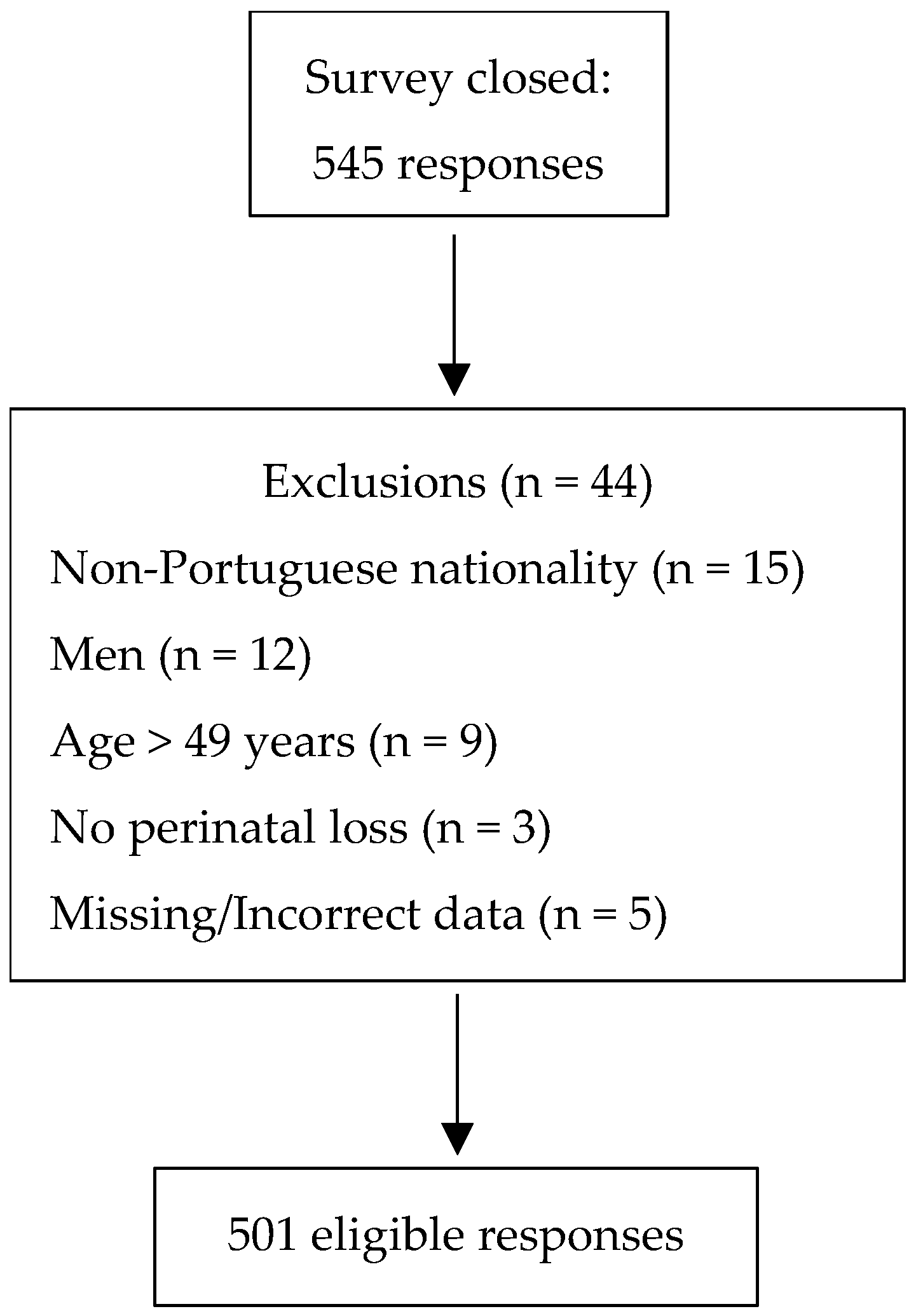

Invisible Scars: Psychopathology, Shame and Self-Judgment Following Perinatal Loss—A Cross-Sectional Study




Abstract
Share and Cite
Ribeiro, M.; Carvalho, P.S.; Torres, A.; Ferreira, D. Invisible Scars: Psychopathology, Shame and Self-Judgment Following Perinatal Loss—A Cross-Sectional Study. Psychiatry Int. 2026, 7, 43. https://doi.org/10.3390/psychiatryint7010043
Ribeiro M, Carvalho PS, Torres A, Ferreira D. Invisible Scars: Psychopathology, Shame and Self-Judgment Following Perinatal Loss—A Cross-Sectional Study. Psychiatry International. 2026; 7(1):43. https://doi.org/10.3390/psychiatryint7010043
Chicago/Turabian StyleRibeiro, Mariana, Paula Saraiva Carvalho, Ana Torres, and Dário Ferreira. 2026. "Invisible Scars: Psychopathology, Shame and Self-Judgment Following Perinatal Loss—A Cross-Sectional Study" Psychiatry International 7, no. 1: 43. https://doi.org/10.3390/psychiatryint7010043
APA StyleRibeiro, M., Carvalho, P. S., Torres, A., & Ferreira, D. (2026). Invisible Scars: Psychopathology, Shame and Self-Judgment Following Perinatal Loss—A Cross-Sectional Study. Psychiatry International, 7(1), 43. https://doi.org/10.3390/psychiatryint7010043