Article

Smartphone Addiction Among Greek University Students: A Cross-Sectional Study Using the SAS-SV Scale

by
Evangelia Karali
1,2,
Konstantina Briola
2,
Alkinoos Emmanouil-Kalos
2,3,
Symeon Sidiropoulos
2,3,4,*,
Alexandros Ginis
2 and
Athanassios Vozikis
2
1
Department of Industrial Design and Production Engineering, University of West Attica, 122 43 Egaleo, Greece
2
Laboratory of Health Economics and Management, Department of Economics, University of Piraeus, 185 34 Piraeus, Greece
3
Hellenic Association of Political Scientists, 106 73 Athens, Greece
4
Department of Public and One Health, University of Thessaly, 431 00 Karditsa, Greece
*
Author to whom correspondence should be addressed.
Psychiatry Int. 2025, 6(4), 152; https://doi.org/10.3390/psychiatryint6040152

Submission received: 7 July 2025 / Revised: 20 August 2025 / Accepted: 2 December 2025 / Published: 5 December 2025

Abstract

Problematic smartphone use (PSU) is increasingly recognized as a behavioral concern among university students, with consequences for well-being, risky behaviors, and academic outcomes. However, evidence from Greece remains limited. This study assessed the prevalence and correlates of PSU among students at the University of Piraeus and interpreted findings through Griffiths’ components model of addiction. A cross-sectional survey was conducted between March and June 2023 with 1743 participants, who provided socio-demographic, lifestyle, and health information and completed the Smartphone Addiction Scale–Short Version (SAS-SV). Nearly half of the students (49.2%) exceeded the proposed SAS-SV thresholds for PSU (50.5% men; 48% women). Regression analysis showed that alcohol consumption (p < 0.001), weekly screen time (p < 0.001), younger age (p < 0.001), female sex (p < 0.001), size of household (p < 0.033), and anxiety/depression (p = 0.019) were significant predictors of higher SAS-SV scores, while smoking, BMI, exercise, and academic performance were not associated. For the independent statistical tests, the Benjamini–Hochberg correction was applied to control the false discovery rate. Group comparisons confirmed greater alcohol use (p < 0.001), screen exposure (p < 0.001), and anxiety/depression (p = 0.004) among PSU students. Item-level responses reflected components of tolerance, salience, withdrawal, and conflict. These findings place Greek students at the higher end of international prevalence estimates and highlight the importance of integrating digital-well-being initiatives within student health services in universities.

1. Introduction

Increased smartphone usage is often associated with negative impacts on the psychological and social well-being of young individuals [1,2]. Excessive smartphone use can lead to detachment from the environment and interpersonal relationships, reinforcing dependency on technology rather than real human interaction [3]. Moreover, prolonged smartphone use has been associated with poorer sleep quality and diminished academic performance among university students [4], as well as attentional difficulties and reduced psychological well-being in broader adult populations [5]. A systematic review further confirms that such outcomes (including impaired attention, poor sleep, and negative academic impact) are consistently observed across studies of problematic smartphone use [6]. Greek evidence also highlights the broader social consequences of mobile phone addiction among people aged 14–34, emphasizing the importance of digital detoxing [7].
Although neither the Diagnostic and Statistical Manual of Mental Disorders (DSM-5) nor the International Classification of Diseases (ICD-11) formally recognizes excessive smartphone use as a clinical disorder, multiple studies highlight parallels with established behavioral addictions or at least problematic use [8,9]. As noted by Kuss and Griffiths [10], “smartphone addiction” acts as an umbrella term referring to the whole range of problematic smartphone behaviors and not an addiction to the physical device. In the recent literature, the term problematic smartphone use (PSU) has been used to describe this phenomenon. Broadly defined, PSU refers to compulsive, excessive smartphone use behaviors that impair daily functioning and may lead to adverse outcomes in social relationships, productivity, and the overall emotional well-being of the user [11,12,13]. Recent studies emphasize the multidimensional nature of PSU. It is framed as a coping strategy to mitigate social anxiety, highlighting its affect-regulation component [14]. Meanwhile, the mediating roles of Fear of Missing Out (FoMO) and psychological distress have also been emphasized, positioning PSU as a maladaptive response to low life satisfaction [15].
Moreover, problematic internet use has been associated with negative psychological outcomes, including correlations between internet addiction and stress, depression, anxiety, and loneliness [16]. As a dominant form of online engagement, Social Networking Sites (SNSs) play a central role in smartphone use (indeed, around 80% of social media browsing happens via mobile devices, indicating that PSU may be an aspect of SNS addiction) [10]. SNSs have become integral to people’s daily lives, offering diverse functionalities that cater to various interests and communication needs. Experimental evidence shows that abstaining from social media improves well-being, indirectly highlighting the adverse effects of excessive SNS use [17]. In a study on university students in Greece, positive correlations were found between SNS addiction and stress, depression, anxiety, and loneliness, while negative correlations were observed with self-esteem and age [18].
To quantify and study PSU behaviors, several standardized psychometric tools have been developed. Kwon et al. [19] introduced the Smartphone Addiction Scale (SAS), a 33-item questionnaire covering 6 domains: daily life disturbance, positive anticipation, withdrawal, cyberspace-oriented relationships, overuse/tolerance, and loss of control. The SAS demonstrated excellent internal consistency and has been widely applied in research settings. To facilitate use in larger surveys and reduce respondent burden, Kwon et al. [20] developed the Smartphone Addiction Scale–Short Version (SAS-SV), a 10-item self-report instrument rated on a 6-point Likert scale. Despite its brevity, the SAS-SV has shown high reliability (α ≈ 0.90) and strong correlations with the original scale, with established cut-off points of 31 for males and 33 for females. While scored as a unidimensional construct, the SAS-SV items were selected to reflect central domains of behavioral addiction identified in the original SAS, such as interference with daily life, withdrawal, tolerance, loss of control, and conflict. Although the SAS-SV was originally developed for adolescents, subsequent validation studies have confirmed its reliability and validity among university students in various cultural contexts, including Hungary [21], Honduras [22], Japan [23], Serbia [24], and Mexico [25].
Research using the SAS-SV among university students has revealed several correlates of problematic smartphone use. For instance, higher SAS-SV scores among college students were linked to increased alcohol consumption, poorer academic performance, higher impulsivity, and elevated levels of anxiety and depression [26]. Depression and anxiety were found to significantly predict smartphone addiction in Lebanese undergraduates, even after adjusting for variables such as GPA, smoking, and alcohol use [27]. Female medical students with problematic smartphone use exhibited markedly elevated levels of stress and depression [28]. Significant correlations between SAS-SV scores and symptoms of depression, anxiety, and stress, as well as problematic internet use, were also observed in Honduran university students [22]. Moreover, among Italian university students, lower self-control was associated with higher levels of smartphone addiction, with this relationship partially mediated by FoMO and smartphone use patterns [29]. Collectively, these findings suggest that problematic smartphone use among university students is consistently associated with poorer mental health and maladaptive behaviors. To date, aside from the aforementioned research on SNS addiction [18] which is conceptually related to these themes, there are no published studies examining problematic smartphone use among Greek university students. The present study addresses this gap by providing the first systematic assessment using the SAS-SV in this population.
To provide a broader theoretical lens, this study interprets findings through Griffiths’ [30] components model of addiction, which proposes that all behavioral and substance addictions share common elements: salience (the activity dominates thoughts and behavior), mood modification (engagement alters mood states), tolerance (increasing engagement is required to achieve the same effect), withdrawal (negative feelings when the activity is stopped), conflict (interpersonal or intrapsychic problems arising from the behavior), and relapse (tendency to revert to earlier patterns of excessive use after attempts at reduction). These criteria have been increasingly applied to technology-based behaviors, including smartphone use. Although the SAS-SV does not map perfectly onto these six components, its items conceptually align with most of them. In particular, mood modification and relapse are not directly assessed by the SAS-SV. Thus, our use of Griffiths’ framework is interpretive rather than fully operationalized, but it still provides a structured way to interpret the behavioral patterns captured by the SAS-SV and situates PSU within a well-established model of behavioral addiction.
Therefore, this exploratory study aims to (i) estimate the prevalence of PSU among Greek university students using the SAS-SV; (ii) examine its associations with socio-demographic, behavioral, and health-related variables using correlation and multivariable regression analyses; and (iii) compare PSU and non-PSU groups on these key characteristics. The results are interpreted within Griffiths’ components model to provide a theoretically grounded understanding of PSU in this population.

2. Materials and Methods

The study was conducted between March and June 2023 via questionnaires distributed to 1743 students from various departments of the University of Piraeus in Greece. All ethical rules were applied. Distribution and completion of the survey questionnaires were carried out in the classrooms of the university, always in consultation with the teacher of the course. All study participants were informed prior to completing the questionnaires about the purpose and objectives of the study and on how to complete the questionnaires, as well as about the confidentiality of their answers. They were also informed that they were free to withdraw their participation at any time. Verbal informed consent was obtained from all participants. Given the non-invasive nature of the study and the use of completely anonymized self-administered questionnaires (no personal data collected), approval from the Ethics Committee was not required.
The questionnaire consisted of (a) social-demographic questions like gender, age, department of study, semester of study, household status, place of residence, employment status, height, weight, and average grades so far. Given height and weight, Body Mass Index (BMI) was calculated. We classified Body Mass Index for adults over 18 years old as BMI < 18.5 underweight, 18.5–25 normal weight, >25–30 overweight, and ≥30 obese. (b) Health behavior questions about subjects like smoking habits, alcohol consumption, and physical exercise, as well as feelings of anxiety and/or depression. Moreover, weekly screen time and self-rated health were also asked about. (c) We administered the Short Version of the Smartphone Addiction Scale (SAS-SV), which contains 10 questions on the effects of multi-hour smartphone use. SAS-SV was designed to measure smartphone addiction using a 6-point Likert scale from 1 (not at all) to 6 (very much). According to previous research, the cut-off value of this scale was defined by sex, specifically 33 for female and 31 for male students.
All data were statistically analyzed with Microsoft Excel 365 using the Real Statistics 9.4 add-in and IBM SPSS Statistics 29. The statistical analysis followed a structured order to progressively explore, model, and compare the relationships between SAS-SV scores and relevant variables. Spearman’s rank correlation coefficients were computed to assess the bivariate associations between smartphone addiction (SAS-SV) scores and socio-demographic, behavioral, and health-related variables. Then, an OLS multiple linear regression analysis was conducted for the adjustment of confounding effects and the identification of significant predictors of SAS-SV scores. Moreover, group comparisons were performed between “problematic smartphone users” (PSU) and “non-problematic smartphone users” (non-PSU) as classified by established SAS-SV cut-off scores. For continuous or ordinal variables, Mann–Whitney U tests were used. For the categorical variable sex, a chi-square test of independence was applied. To account for multiple comparisons and in order to reduce the likelihood of type I errors, the Benjamini–Hochberg correction was applied to control the false discovery rate (FDR) of 5% across the independent statistical tests.
A significance threshold of p < 0.05 was used for all inferential statistical tests. The internal consistency of the Short Version of the Smartphone Addiction Scale (SAS-SV) was assessed using Cronbach’s alpha, which demonstrated high reliability (α = 0.815).

3. Results

The sample size consisted of 882 men (50.6%) and 861 women (49.4%) mostly at an age between 17 and 24 years (95.93%) (the rest of the participants were between 25 and 39 years old). The participants were mainly students who were not working, and they lived in the Attica area. The average weekly smartphone screen operation was 27.4 h. Furthermore, 72.12% of men and 79.33% of women were of normal BMI. The following figures present the results for various behavioral and other variables.
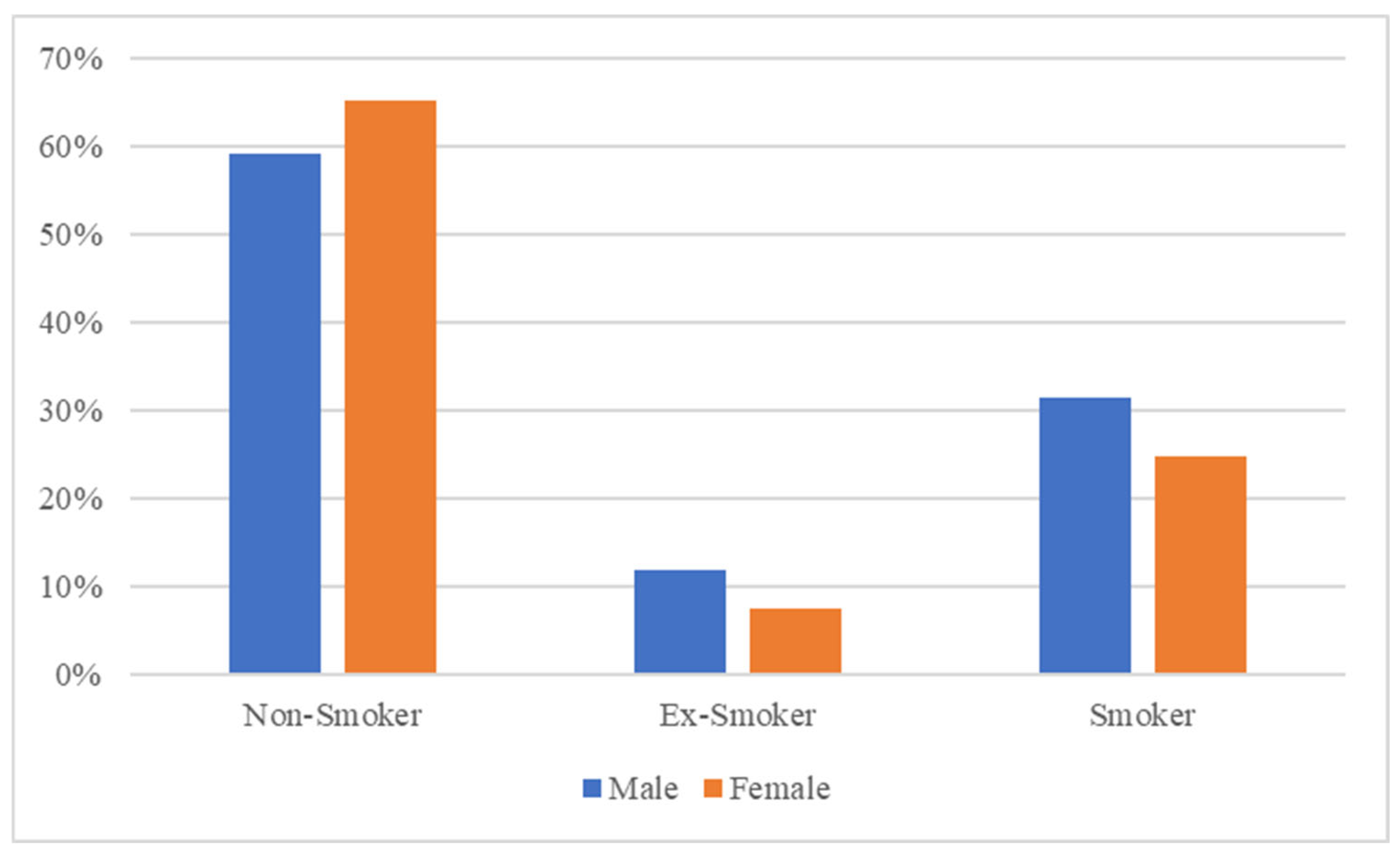
Figure 1 shows the smoking habits of the participants. A total of 62.2% of the total sample were non-smokers, with an additional 9.7% being ex-smokers and 28.1% being smokers. Similar patterns are noted between male and female students.
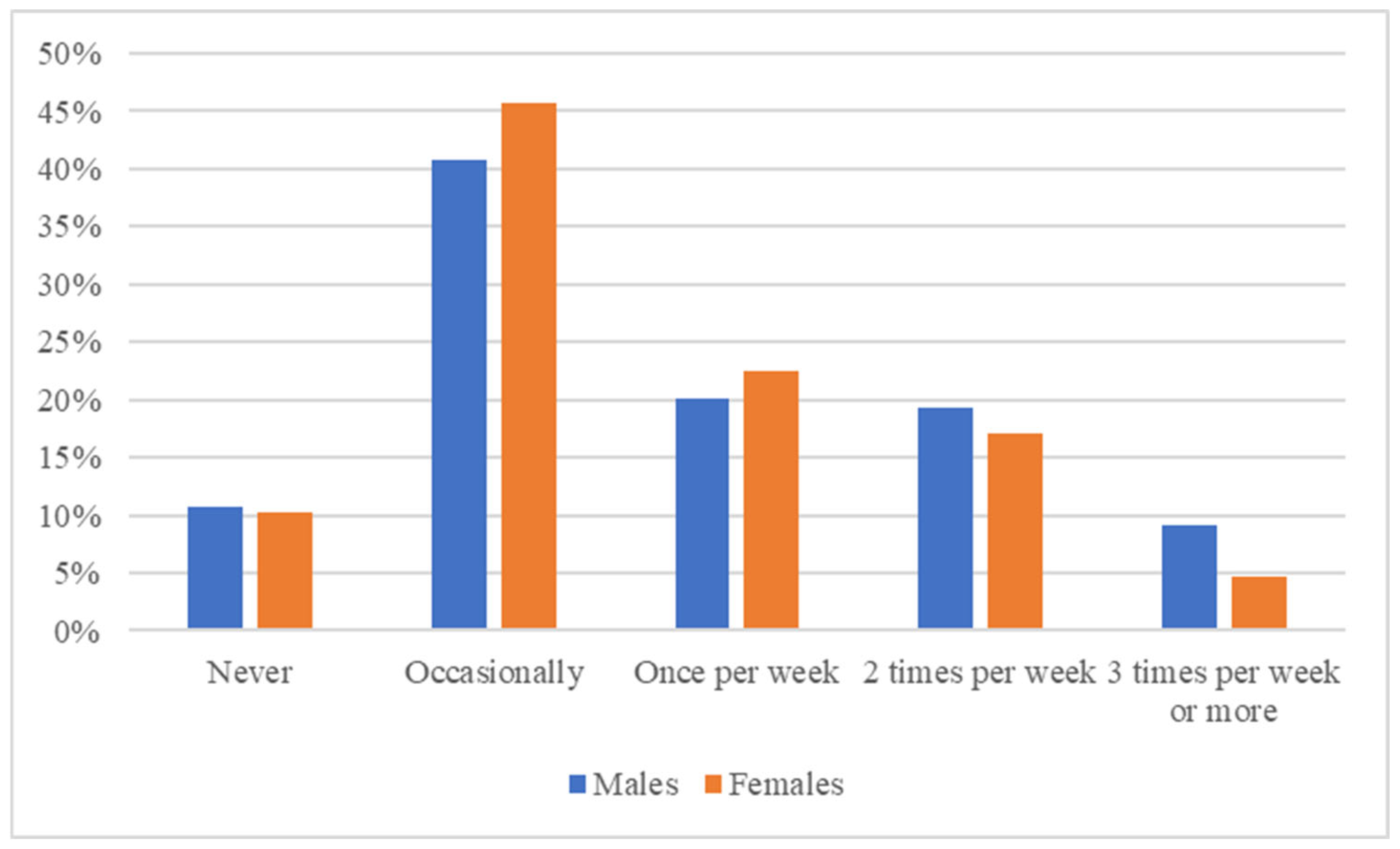
As shown in Figure 2, more than half (53.7%) of the participants consumed alcohol occasionally or never. It is noteworthy that the proportion of male students consuming alcohol 3+ times per week was double the proportion of female students who did the same (9.1% and 4.6%, respectively).
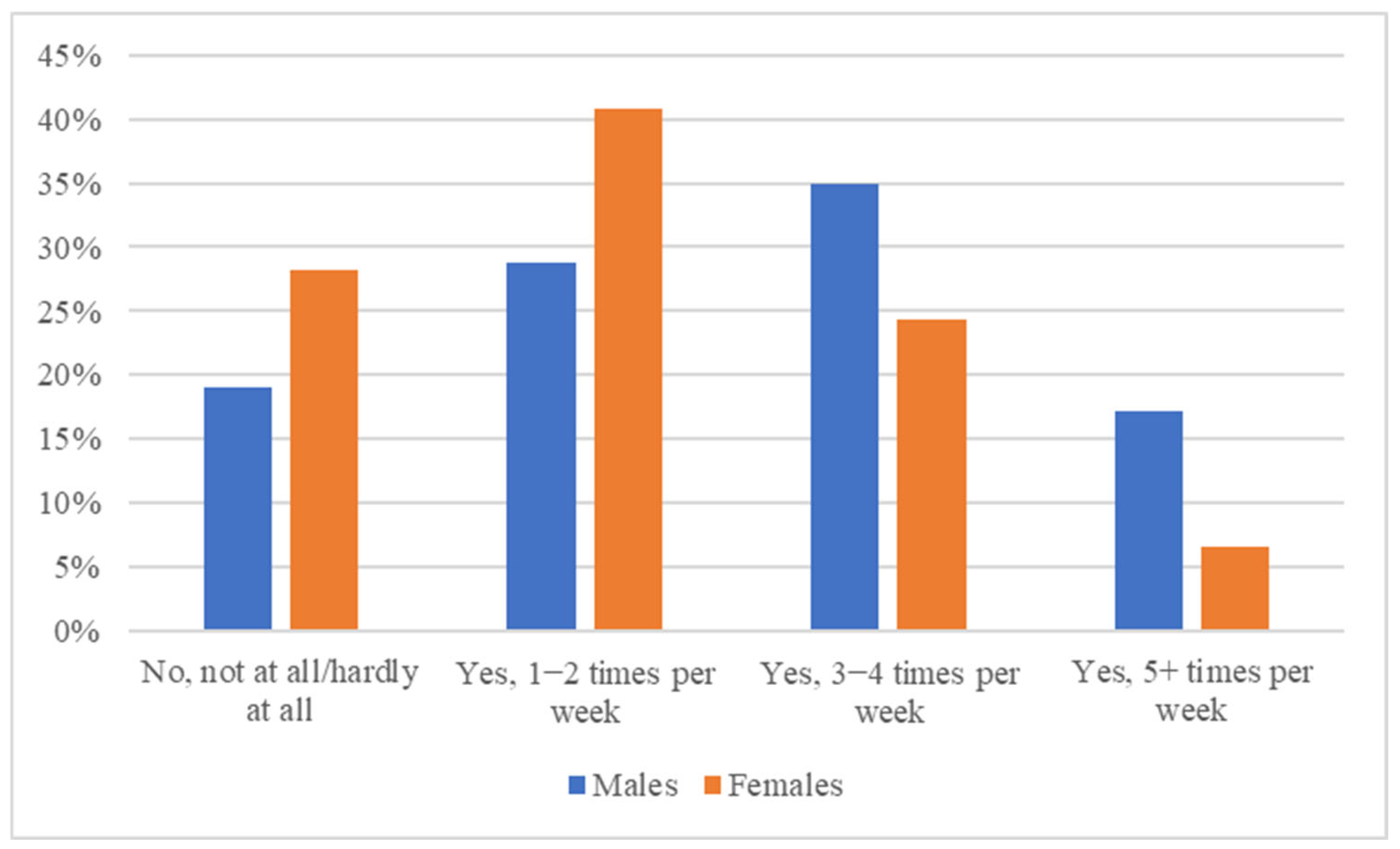
When it comes to exercising, 19% of male students and 28.2% of female students stated that they hardly ever exercise (Figure 3). Additionally, 41.75% of the respondents exercised at least three times per week, while male students tended to exercise more intensively than female students (52.2% and 31%, respectively).
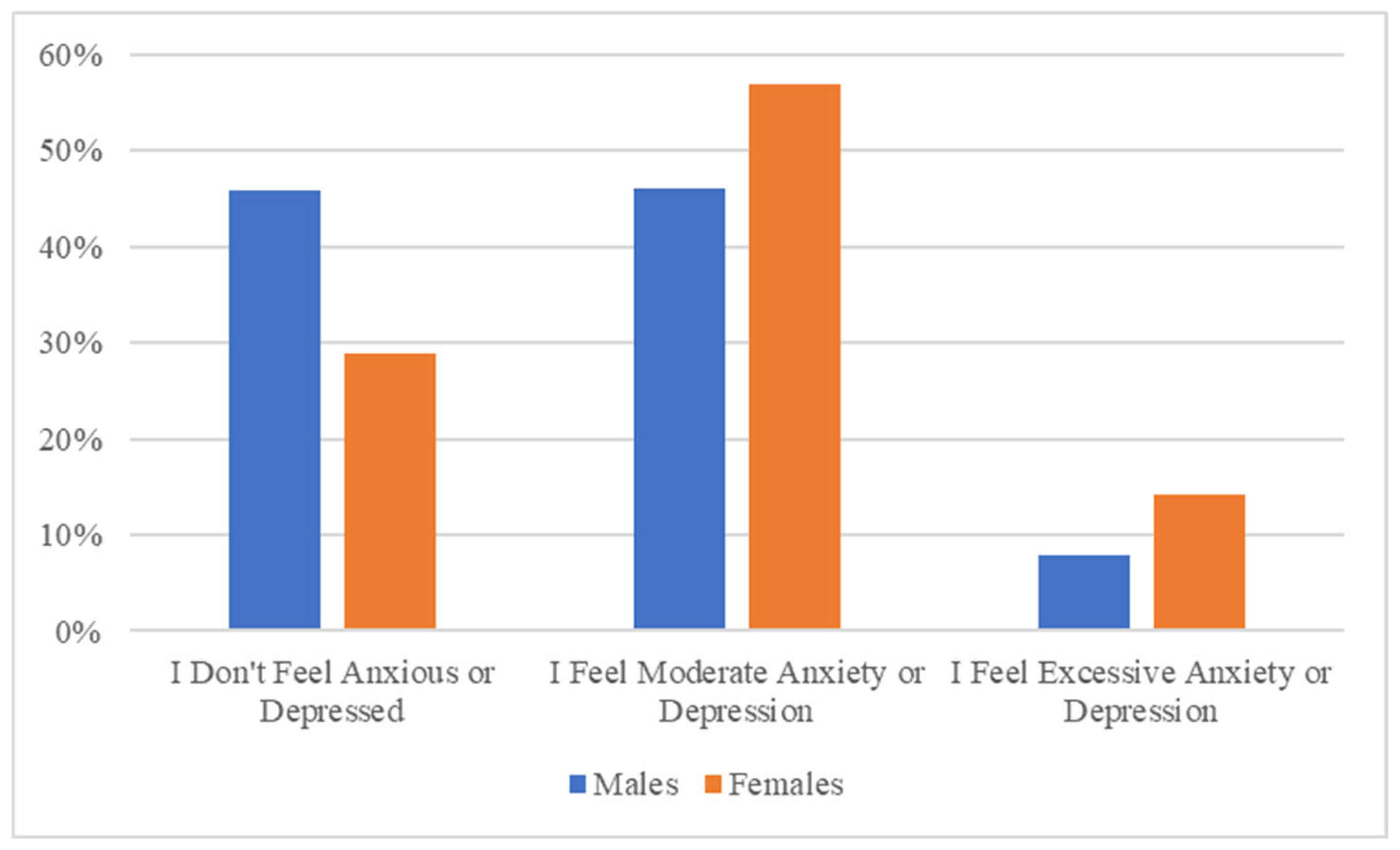
Finally, 62.56% of the participants stated that they feel moderate and excessive anxiety and/or depression (Figure 4). Female students (71.2%) tended to feel anxiety and/or depression much more commonly than male students (54.1%). A total of 14.2% of female students and 7.9% of male students stated they experience excessive anxiety and/or depression.
All SAS-SV answers are correlated, as expected, and Cronbach’s alpha coefficient was 0.815, which is a well-accepted reliability metric. Table 1 presents the 10 SAS-SV questions, along with the frequency of the answers given.
Academic disruptions were not strongly reported. Only 9% agreed or strongly agreed that they missed planned work due to smartphone use (Item 1), though 23% at least weakly agreed. Concentration difficulties were more prevalent: while 22.3% agreed or strongly agreed, an additional 24.7% weakly agreed, meaning that nearly half the sample (46.9%) reported some level of attentional problems linked to phone use (Item 2). On the other hand, physical complaints were least common, as only 10% agreed or strongly agreed that they experienced wrist or neck pain from smartphone use (Item 3), with almost two-thirds (64.6%) clearly disagreeing.
Items reflecting difficulty being without the smartphone were reported more widely. Almost half (46.2%) agreed or strongly agreed that they could not stand not having their device, and two-thirds (66.3%) at least weakly agreed (Item 4). Feelings of impatience or restlessness when not holding their phone were reported by 13.1%, and in total, 30.6% at least weakly agreed (Item 5). Similarly, 12.7% agreed or strongly agreed that they often thought about their phone when not using it, with an added 16.5% weakly agreeing (Item 6).
Indicators of escalating or poorly controlled use were also evident. Nearly half (49.1%) agreed or strongly agreed that they used their smartphone longer than intended, and overall, 71.4% at least weakly agreed, making this the most frequently agreed upon item (Item 9). Fewer participants (20.1%) agreed or strongly agreed that they would never give up using their phone even if it negatively affected daily life, though in total 39.7% at least weakly agreed (Item 7).
Socially driven behaviors were prominent. About one-third (33.1%) agreed or strongly agreed that they constantly checked their phone to avoid missing social media conversations, and 24.1% weakly agreed (Item 8). Reports of external criticism were less frequent: 20.8% agreed or strongly agreed that people around them told them they used their phone too much, compared with 45.8% who disagreed (Item 10).
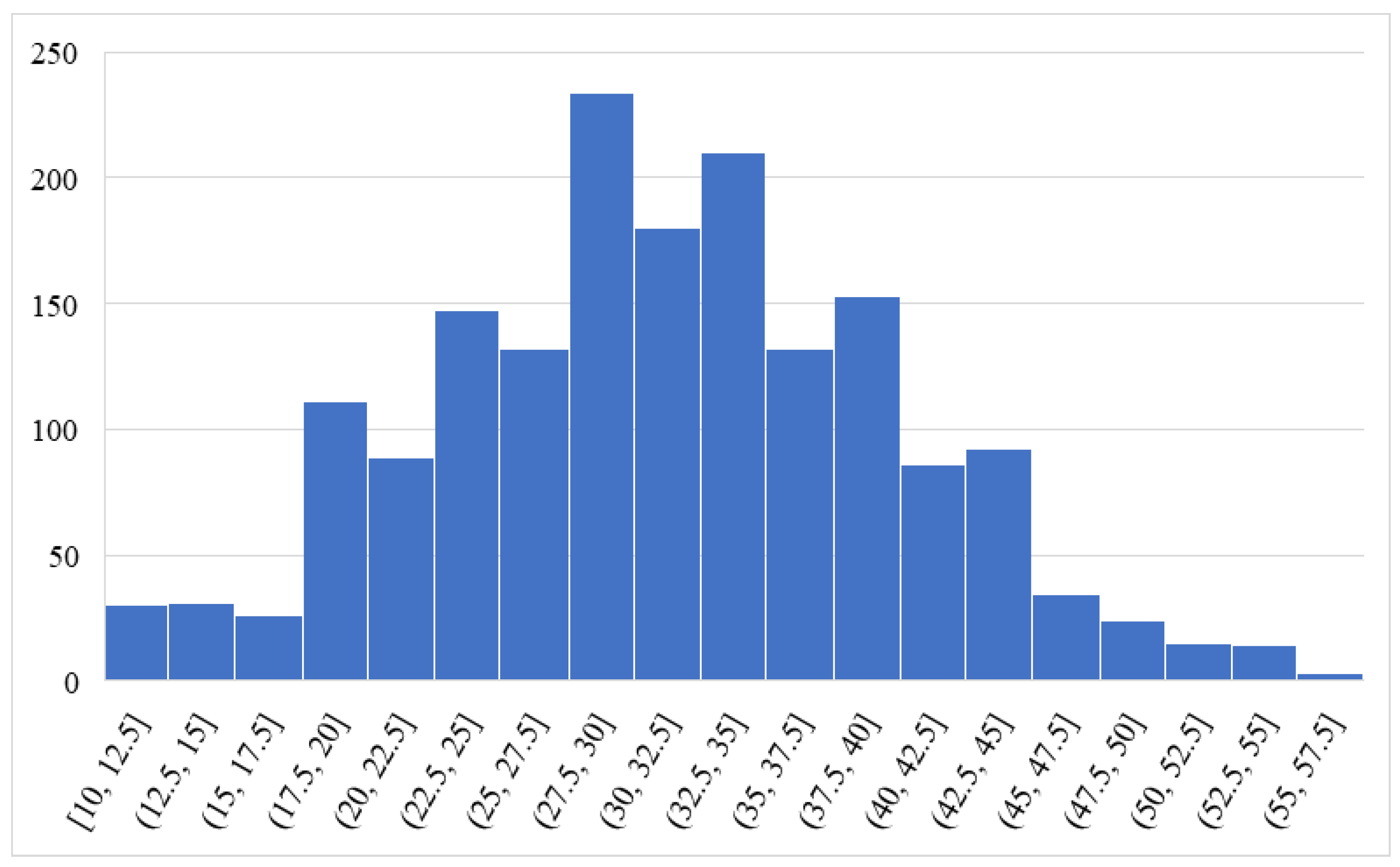
Based on the analysis of SAS-SV scores, 49.2% of the individuals who participated in this study were found to exhibit problematic smartphone use based on the cut-off point of 31 for men and 33 for women on the SAS-SV score (50.5% for male students and 48% for female students). Figure 5 presents the SAS-SV score frequencies.
Table 2 presents the bivariate correlation analysis between SAS-SV scores and various personal and behavioral variables among university students, which reveals several statistically significant but generally weak correlations.
A positive correlation between smartphone screen use and addiction scores was found (ρ = 0.147, p < 0.001), which aligns with expectations that longer screen time is associated with higher smartphone dependence. Similarly, a weak correlation was observed concerning gender (ρ = −0.120, p < 0.001), as female students tended to report higher scores. Age was negatively correlated with addiction (ρ = −0.060, p = 0.012), albeit very weakly, suggesting that younger students may be slightly more prone to problematic smartphone use.
Lifestyle and health-related variables also showed (weak) associations with smartphone addiction. Exercising negatively correlated with SAS-SV scores (ρ = −0.097, p < 0.001). In contrast, alcohol use showed the strongest correlation in the dataset (ρ = 0.162, p < 0.001), suggesting a possible clustering of risky or compulsive behaviors among certain students. Mental health indicators also played a role: students who reported feeling anxious or depressed had higher SAS-SV scores (ρ = 0.098, p < 0.001), while those who felt generally healthy reported slightly lower scores (ρ = −0.054, p = 0.024). Number of household members, average grade, smoking habits, and BMI showed no statistically significant correlations here with SAS-SV scores.
To examine these relationships more robustly and control for potential confounding, a multiple linear regression analysis was performed with SAS-SV scores as the dependent variable (Table 3). The overall model accounted for approximately 11.1% of the variance in SAS-SV scores (R2 = 0.111). Diagnostic checks were conducted to verify that the assumptions of the regression model were met. Normality of residuals was assessed using the Shapiro–Wilk test, which did not indicate significant deviation from normality (p = 0.088). Heteroskedasticity was evaluated using both the Breusch–Pagan test and the White test; neither test was statistically significant (p = 0.074 and p = 0.385, respectively), suggesting that the assumption of homoscedasticity was satisfied. Visual inspection of residual plots further supported these conclusions. Moreover, all variance inflation factor (VIF) values were below 1.3, indicating no issues of multicollinearity among the independent variables.
Screen time (β = 0.0959, p < 0.001), sex (β = −2.00, p < 0.001), age (β = −0.35, p < 0.001), size of household (β = 0.39, p < 0.033), and alcohol consumption (β = 1.40, p < 0.001) emerged as statistically significant predictors of SAS-SV scores. Self-reported anxiety/depression was also a significant predictor (β = 0.82, p = 0.019), indicating that students experiencing negative emotional states were more likely to report problematic smartphone use. In contrast, variables such as BMI, smoking status, average grade, exercise frequency, and self-rated health were not significant in the multivariate model.
Finally, based on the proposed cut off points, students were classified as “Problematic Smartphone Users” and “Non-Problematic Smartphone Users”. Table 4 presents comparisons between these two groups.
PSU students reported significantly higher weekly screen time (U = 305,559.5, p < 0.001, r = 0.13) and alcohol consumption (U = 354,322, p < 0.001, r = 0.13) compared to their non-PSU peers. They also reported higher levels of anxiety/depression (U = 352,123, p = 0.0036, r = 0.07). These three variables remained statistically significant after Benjamini–Hochberg correction, with effect sizes in the small to small-to-moderate range. No significant differences were observed between groups in terms of age, average grade, household composition, smoking habits, exercise frequency, BMI, or self-rated health. Likewise, the distribution of males and females across PSU and non-PSU groups did not differ significantly (χ2(1) = 1.08, p = 0.299).
It is noteworthy that, when comparing groups defined by cut-off points, far fewer significant differences emerged compared to the analyses using SAS-SV scores as a continuous variable. Whereas the correlation and regression models revealed multiple associations with demographic, behavioral, and health-related factors, the group comparisons identified only higher screen time, alcohol consumption, and greater anxiety/depression among PSU students. This discrepancy could reflect the loss of information that occurs when continuous scores are dichotomized into categories, reducing statistical power and masking more subtle relationships. However, it may also indicate that the proposed SAS-SV cut-off points (31 for men and 33 for women) are not fully optimized for Greek university students, as these thresholds were originally developed and validated in different populations.

4. Discussion

In our sample, nearly half of Greek university students (49.2%) exceeded the SAS-SV thresholds, indicating a high prevalence of problematic smartphone use. Lower rates have been observed in Japan (22.8% in men; 28.0% in women) [23], Serbia (21.7% among medical students) [24], and India (~27–28% among MBBS students) [31], while mid-range values around one-third have been reported in Brazil (33.1% among undergraduates) [32]. At the upper end, longitudinal data from Chinese college students showed prevalences of 65.8%, 58.1%, and 52.8% across three waves, with higher rates among women [33], and a study of Egyptian health-science undergraduates reported 59.6% [34]. A recent systematic review of university populations further highlights wide variability—typically from about 9% to over 50%, depending on instrument and context [35]. These benchmarks therefore place Greek students at the higher end of the international spectrum.
Gender patterns in our data were nuanced: although female students scored higher on the SAS-SV overall, applying the sex-specific cut-offs yielded nearly identical prevalence rates (50.5% in men vs. 48% in women). Findings from several cross-national and regional studies report higher problematic smartphone use in women [36], but contrasts with others where men were at greater risk, such as among Malaysian medical students [37]. Japanese data also found higher addiction risk in female undergraduates [23], while in Serbia no significant gender differences were noted [24]. Such inconsistencies suggest that cultural, social, and disciplinary contexts may affect the association between gender and PSU. Age was another significant correlate, with younger students reporting higher addiction scores. This trend is consistent with evidence from large multinational datasets showing that younger cohorts are especially vulnerable to PSU [36], as well as from Chinese longitudinal work where prevalence declined with advancing year of study [33].
Moreover, our findings confirmed that weekly screen time correlates with higher SAS-SV scores, which is consistent with the international literature indicating that prolonged smartphone use is a robust predictor of problematic use [6,26]. Beyond screen exposure, alcohol consumption emerged as the most powerful behavioral correlate in our multivariable model, in line with prior research documenting clustering of risky or compulsive behaviors in students with high PSU [26,38]. This association is consistent with the possibility that digital overuse and substance use may reflect common underlying vulnerabilities in self-regulation.
By contrast, exercise showed only a weak negative correlation with SAS-SV scores and no statistical correlation in the multiple regression, and BMI was not significantly correlated in either test. This largely replicates findings from Turkish undergraduates, where physical activity levels did not differ significantly between students with high and low PSU [39], though other evidence indicates that physically active participants were less addicted to smartphones than the non-physically active [40]. Similarly, smoking did not show a significant correlation with SAS-SV scores in our sample, consistent with results from Saudi Arabia [41], but diverging from Egyptian data reporting a positive association [34].
Moreover, we find a positive correlation between SAS-SV score and self-assessed level of anxiety and/or depression among students of the University of Piraeus, which is consistent with several university-based studies. Similar associations have been shown among Lebanese undergraduates [27], Turkish university students [42], and in work linking smartphone addiction risk to elevated stress and poorer academic outcomes in student samples [43]. Recent regional evidence likewise reports positive correlations between problematic smartphone use and stress/depressive symptoms in university students [28].
Interpreting the SAS-SV responses through Griffiths’ components model shows possible indications of conflict, salience, withdrawal, and tolerance in the sample. It is important to note that SAS-SV items do not directly capture mood modification or relapse. Accordingly, the model is used here as an interpretive framework rather than as a fully operationalized construct. In this framework, conflict covers both intrapsychic/role conflict (the behavior interferes with duties like study/work) and interpersonal conflict (friction with family, friends, or peers) [30]. In the SAS-SV, Item 1 (“Missing planned work due to smartphone use”) indexes role conflict with academic/work responsibilities, whereas Item 10 (“The people around me tell me that I use my smartphone too much”) captures interpersonal conflict arising from phone use, retained from the SAS’s daily life disturbance domain [19,20]. In our study, around 9% of the users agreed or strongly agreed that they miss planned work due to smartphone use, while about 20% of the respondents agreed or strongly agreed that the people around them tell them that they use their smartphone too much. On top of that, an extra 14% and 17%, respectively, weakly agreed.
Salience in Griffiths’ model refers to preoccupation, when the activity dominates thoughts and behavior [30]. In the SAS-SV this corresponds to Item 2 (task interference/attentional capture), Item 6 (thinking about the phone when not using it), and Item 8 (constant checking to avoid missing conversations), consistent with how the SAS/SAS-SV was conceptualized [19,20]. In our data, 46.9% endorsed Item 2 at least weakly (agree/strongly agree: 22.3%), 29.2% endorsed Item 6 (agree/strongly: 12.7%), and 57.2% endorsed Item 8 (agree/strongly: 33.1%). This pattern indicates salient, attention-capturing use with a strong social-monitoring motive and aligns with studies linking frequent checking and FoMO pathways to higher PSU in university samples [15,29].
Withdrawal refers to negative affect when access to the activity is blocked, such as restlessness or irritability [30]. In the SAS-SV this corresponds to Item 4 (“Won’t be able to stand not having a smartphone”) and Item 5 (“Feeling impatient and fretful when I am not holding my smartphone”), which were retained to reflect withdrawal phenomena in the short form [19,20]. In our data, 66.3% agreed with Item 4 at least weakly (agree/strongly agree: 46.2%), and 30.6% agreed with Item 5 (agree/strongly: 13.1%). This pattern is consistent with the SAS/SAS-SV construct, in which withdrawal is a core domain (with dedicated items retained in the short form) and is particularly prominent among higher-risk users [44].
Finally, tolerance refers to needing progressively more engagement to achieve the same effect or satisfaction [30]. In the SAS-SV this corresponds to Item 9 (“Using my smartphone longer than I had intended”), which was retained to reflect escalating use within the short form and derives from the SAS domain covering overuse/tolerance [19,20]. In our data, 71.4% agreed to Item 9 at least weakly (agree/strongly agree: 49.1%), the highest percentage among the items in the questionnaire. This interpretation is consistent with psychometric work identifying tolerance as a distinct factor in smartphone-addiction measures and with qualitative accounts in student samples describing increasing time on the phone over time [44,45].
It is important to note that the results presented here and their implications should be weighed against study limitations. The cross-sectional, self-report design precludes causal inference and may introduce recall or residual social-desirability bias, and the single-university sampling limits generalizability. In addition, as the survey relied on convenience sampling through classroom distribution in the university, students attending class at the time of data collection may systematically differ from those absent, for instance, in academic engagement, lifestyle habits, or psychological well-being. This raises the possibility of selection bias. Moreover, the questionnaire captured overall smartphone use and SAS-SV scores but did not differentiate academic/educational use from leisure or social use. Concerning the multiple regression analysis, our model explained about 11% of the variance in SAS-SV scores. This level of explanatory power is typical in behavioral research, but it also indicates that although alcohol use, screen time, younger age, female sex, and psychological distress were significant correlates, other important determinants of problematic smartphone use remain to be investigated in future work. Finally, it is important to note that the SAS-SV remains a screening tool, not a diagnostic instrument, and is susceptible to self-report bias and cultural variation in how addiction behaviors are perceived. Additionally, the sex-specific cut-offs (31 for men and 33 for women) were calibrated outside Greece and, while widely applied internationally, may not be optimal for Greek students and warrant local calibration in future work.
Future research in Greece would also benefit from longitudinal designs across academic years, multi-site sampling, and trials of brief, scalable interventions, possibly combining attention management with alcohol-risk reduction and mental-health support. Pairing digital-well-being initiatives with brief alcohol-risk and mental-health screening is justified by the prominent co-occurrence of heavier smartphone use with heavier alcohol consumption and anxiety/depression in student samples. Notably, recent research suggests that digital mental health interventions delivered to university students can lead to moderate improvements in depression and anxiety, with fully automated, self-guided interventions proving especially effective for anxiety symptoms, possibly because they offer privacy and flexibility, which are valued by students [46]. Additionally, digital public health interventions targeting university students reported positive impacts on mental well-being and health behaviors, including reductions in substance use [47]. These findings suggest that strengthening digital-well-being efforts within student health services offers a realistic and evidence-based avenue for addressing problematic smartphone use and its co-occurring risks in university students.

Author Contributions

Conceptualization, A.V. and A.G.; methodology, A.V. and E.K.; resources, E.K.; formal analysis, E.K.; data curation, A.E.-K. and K.B.; writing—original draft preparation, K.B., S.S., and A.E.-K.; writing—review and editing, S.S., A.E.-K., and A.G.; supervision, A.V.; funding acquisition, S.S. and A.G. All authors have read and agreed to the published version of the manuscript.

Funding

The study was funded by ELPEN Pharmaceutical Co. Inc.

Institutional Review Board Statement

This study qualified for institution IRB waiver as research does not fall under the provisions of Article 279, par. 2a of Greek Law 4957/2022 (Waiver Reason provided by University of Piraeus Research Ethics Committee).

Informed Consent Statement

Informed consent was obtained from all subjects involved in the study.

Data Availability Statement

The original data presented in the study are openly available in FigShare at https://doi.org/10.6084/m9.figshare.29521634.v2 (accessed on 1 December 2025).

Conflicts of Interest

The authors declare no conflicts of interest.

References

  1. Sunday, O.J.; Adesope, O.O.; Maarhuis, P.L. The Effects of Smartphone Addiction on Learning: A Meta-Analysis. Comput. Hum. Behav. Rep. 2021, 4, 100114. [Google Scholar] [CrossRef]
  2. Studer, J.; Marmet, S.; Wicki, M.; Khazaal, Y.; Gmel, G. Associations between Smartphone Use and Mental Health and Well-Being among Young Swiss Men. J. Psychiatr. Res. 2022, 156, 602–610. [Google Scholar] [CrossRef] [PubMed]
  3. Alotaibi, M.S.; Fox, M.; Coman, R.; Ratan, Z.A.; Hosseinzadeh, H. Perspectives and Experiences of Smartphone Overuse among University Students in Umm Al-Qura University (UQU), Saudi Arabia: A Qualitative Analysis. Int. J. Environ. Res. Public Health 2022, 19, 4397. [Google Scholar] [CrossRef] [PubMed]
  4. Gupta, N.; Garg, S.; Arora, K. Pattern of Mobile Phone Usage and Its Effects on Psychological Health, Sleep, and Academic Performance in Students of a Medical University. Natl. J. Physiol. Pharm. Pharmacol. 2016, 6, 132. [Google Scholar] [CrossRef]
  5. Horwood, S.; Anglim, J. Problematic Smartphone Usage and Subjective and Psychological Well-Being. Comput. Hum. Behav. 2019, 97, 44–50. [Google Scholar] [CrossRef]
  6. Busch, P.A.; McCarthy, S. Antecedents and Consequences of Problematic Smartphone Use: A Systematic Literature Review of an Emerging Research Area. Comput. Hum. Behav. 2021, 114, 106414. [Google Scholar] [CrossRef]
  7. Salepaki, A.; Zerva, A.; Kourkouridis, D.; Angelou, I. Unplugging Youth: Mobile Phone Addiction, Social Impact, and the Call for Digital Detox. Psychiatry Int. 2025, 6, 4. [Google Scholar] [CrossRef]
  8. Panova, T.; Carbonell, X. Is Smartphone Addiction Really an Addiction? J. Behav. Addict. 2018, 7, 252–259. [Google Scholar] [CrossRef]
  9. Montag, C.; Wegmann, E.; Sariyska, R.; Demetrovics, Z.; Brand, M. How to Overcome Taxonomical Problems in the Study of Internet Use Disorders and What to Do with “Smartphone Addiction”? J. Behav. Addict. 2021, 9, 908–914. [Google Scholar] [CrossRef]
  10. Kuss, D.; Griffiths, M. Social Networking Sites and Addiction: Ten Lessons Learned. Int. J. Environ. Res. Public Health 2017, 14, 311. [Google Scholar] [CrossRef]
  11. Elhai, J.D.; Levine, J.C.; Hall, B.J. The Relationship between Anxiety Symptom Severity and Problematic Smartphone Use: A Review of the Literature and Conceptual Frameworks. J. Anxiety Disord. 2019, 62, 45–52. [Google Scholar] [CrossRef] [PubMed]
  12. Horwood, S.; Anglim, J. Personality and Problematic Smartphone Use: A Facet-Level Analysis Using the Five Factor Model and HEXACO Frameworks. Comput. Hum. Behav. 2018, 85, 349–359. [Google Scholar] [CrossRef]
  13. Lepp, A.; Li, J.; Barkley, J.E. College Students’ Cell Phone Use and Attachment to Parents and Peers. Comput. Hum. Behav. 2016, 64, 401–408. [Google Scholar] [CrossRef]
  14. Xing, W.; Wang, X.; Feng, T.; Xie, J.; Liu, C.; Wang, X.; Liu, X. Network Analysis of the Association between Social Anxiety and Problematic Smartphone Use in College Students. Front. Psychiatry 2025, 16, 1508756. [Google Scholar] [CrossRef]
  15. Soraci, P.; Demetrovics, Z.; Bevan, N.; Pisanti, R.; Servidio, R.; Di Bernardo, C.; Griffiths, M.D. FoMO and Psychological Distress Mediate the Relationship between Life Satisfaction, Problematic Smartphone Use, and Problematic Social Media Use. Int. J. Ment. Health Addict. 2025, 1–30. [Google Scholar] [CrossRef]
  16. Andreou, E.; Svoli, H. The Association between Internet User Characteristics and Dimensions of Internet Addiction among Greek Adolescents. Int. J. Ment. Health Addict. 2013, 11, 139–148. [Google Scholar] [CrossRef]
  17. de Hesselle, L.C.; Montag, C. Effects of a 14-Day Social Media Abstinence on Mental Health and Well-Being: Results from an Experimental Study. BMC Psychol. 2024, 12, 141. [Google Scholar] [CrossRef]
  18. Dadiotis, A.; Bacopoulou, F.; Kokka, I.; Vlachakis, D.; Chrousos, G.P.; Darviri, C.; Roussos, P. Validation of the Greek Version of the Bergen Social Media Addiction Scale in Undergraduate Students. EMBnet J. 2021, 26, e975. [Google Scholar] [CrossRef]
  19. Kwon, M.; Lee, J.-Y.; Won, W.-Y.; Park, J.-W.; Min, J.-A.; Hahn, C.; Gu, X.; Choi, J.-H.; Kim, D.-J. Development and Validation of a Smartphone Addiction Scale (SAS). PLoS ONE 2013, 8, e56936. [Google Scholar] [CrossRef]
  20. Kwon, M.; Kim, D.-J.; Cho, H.; Yang, S. The Smartphone Addiction Scale: Development and Validation of a Short Version for Adolescents. PLoS ONE 2013, 8, e83558. [Google Scholar] [CrossRef]
  21. Tóth, B.; Makai, A.; Gyuró, M.; Komáromy, M.; Császár, G. The Validity and Reliability of the Hungarian Version of Smartphone Addiction Scale–Short Version (SAS-SV-HU) among University Students. Comput. Hum. Behav. Rep. 2024, 16, 100527. [Google Scholar] [CrossRef]
  22. Hidalgo-Fuentes, S.; Martínez-Álvarez, I.; Llamas-Salguero, F.; Pineda-Zelaya, I.S.; Merino-Soto, C.; Chans, G.M. Psychometric Properties of the Smartphone Addiction Scale–Short Version (SAS-SV) in Honduran University Students. PLoS ONE 2025, 20, e0327226. [Google Scholar] [CrossRef] [PubMed]
  23. Tateno, M.; Kim, D.J.; Teo, A.R.; Skokauskas, N.; Guerrero, A.P.S.; Kato, T.A. Smartphone Addiction in Japanese College Students: Usefulness of the Japanese Version of the Smartphone Addiction Scale as a Screening Tool for a New Form of Internet Addiction. Psychiatry Investig. 2019, 16, 115–120. [Google Scholar] [CrossRef] [PubMed]
  24. Nikolic, A.; Bukurov, B.; Kocic, I.; Soldatovic, I.; Mihajlovic, S.; Nesic, D.; Vukovic, M.; Ladjevic, N.; Grujicic, S.S. The Validity and Reliability of the Serbian Version of the Smartphone Addiction Scale—Short Version. Int. J. Environ. Res. Public Health 2022, 19, 1245. [Google Scholar] [CrossRef] [PubMed]
  25. Escalera-Chávez, M.E.; Rojas-Kramer, C.A. SAS-SV Smartphone Addiction Scale in Mexican University Students. Educ. Res. Int. 2020, 2020, 8832858. [Google Scholar] [CrossRef]
  26. Grant, J.E.; Lust, K.; Chamberlain, S.R. Problematic Smartphone Use Associated with Greater Alcohol Consumption, Mental Health Issues, Poorer Academic Performance, and Impulsivity. J. Behav. Addict. 2019, 8, 335–342. [Google Scholar] [CrossRef]
  27. Boumosleh, J.-M.; Jaalouk, D. Depression, Anxiety, and Smartphone Addiction in University Students: A Cross-Sectional Study. PLoS ONE 2017, 12, e0182239. [Google Scholar] [CrossRef]
  28. Elamin, N.O.; Almasaad, J.M.; Busaeed, R.B.; Aljafari, D.A.; Khan, M.A. Smartphone Addiction, Stress, and Depression among University Students. Clin. Epidemiol. Glob. Health 2024, 25, 101487. [Google Scholar] [CrossRef]
  29. Servidio, R. Self-Control and Problematic Smartphone Use among Italian University Students: The Mediating Role of the Fear of Missing Out and of Smartphone Use Patterns. Curr. Psychol. 2021, 40, 4101–4111. [Google Scholar] [CrossRef]
  30. Griffiths, M. A “Components” Model of Addiction within a Biopsychosocial Framework. J. Subst. Use 2005, 10, 191–197. [Google Scholar] [CrossRef]
  31. Bhalerao, M.M.; Krishnan, B.; Mokal, S.J.; Latti, R.G. An Analysis of Smartphone Addiction among MBBS Students. Indian J. Clin. Anat. Physiol. 2020, 7, 1–7. [Google Scholar] [CrossRef]
  32. Mescollotto, F.F.; Castro, E.M.; Pelai, E.B.; Pertille, A.; Bigaton, D.R. Translation of the Short Version of the Smartphone Addiction Scale into Brazilian Portuguese: Cross-Cultural Adaptation and Testing of Measurement Properties. Braz. J. Phys. Ther. 2019, 23, 250–256. [Google Scholar] [CrossRef] [PubMed]
  33. Wang, A.; Wang, Z.; Zhu, Y.; Shi, X. The Prevalence and Psychosocial Factors of Problematic Smartphone Use among Chinese College Students: A Three-Wave Longitudinal Study. Front. Psychol. 2022, 13, 877277. [Google Scholar] [CrossRef] [PubMed]
  34. Okasha, T.; Saad, A.; Ibrahim, I.; Elhabiby, M.; Khalil, S.; Morsy, M. Prevalence of Smartphone Addiction and Its Correlates in a Sample of Egyptian University Students. Int. J. Soc. Psychiatry 2022, 68, 1580–1588. [Google Scholar] [CrossRef] [PubMed]
  35. Sánchez-Fernández, M.; Borda-Mas, M. Problematic Smartphone Use and Specific Problematic Internet Uses among University Students and Associated Predictive Factors: A Systematic Review. Educ. Inf. Technol. 2022, 28, 7111–7140. [Google Scholar] [CrossRef]
  36. Olson, J.A.; Sandra, D.A.; Veissière, S.P.; Langer, E.J. Sex, Age, and Smartphone Addiction across 41 Countries. Int. J. Ment. Health Addict. 2023, 23, 937–945. [Google Scholar] [CrossRef]
  37. Lei, L.Y.C.; Ismail, M.A.A.; Mohammad, J.A.M.; Yusoff, M.S.B. The Relationship of Smartphone Addiction with Psychological Distress and Neuroticism among University Medical Students. BMC Psychol. 2020, 8, 33. [Google Scholar] [CrossRef]
  38. Popescu, A.M.; Balica, R.Ș.; Lazăr, E.; Bușu, V.O.; Vașcu, J.E. Smartphone Addiction Risk, Technology-Related Behaviors and Attitudes, and Psychological Well-Being during the COVID-19 Pandemic. Front. Psychol. 2022, 13, 997253. [Google Scholar] [CrossRef]
  39. Numanoğlu-Akbaş, A.; Suner-Keklik, S.; Yakut, H. Investigation of the Relationship between Smartphone Addiction and Physical Activity in University Students. Baltic J. Health Phys. Act. 2020, 12, 7. [Google Scholar] [CrossRef]
  40. Solon Júnior, L.J.F.; Ribeiro, C.H.T.; de Sousa Fortes, L.; Barbosa, B.T.; da Silva Neto, L.V. Smartphone Addiction Is Associated with Symptoms of Anxiety, Depression, Stress, Tension, Confusion, and Insomnia: A Cross-Sectional and Comparative Study with Physically and Non-Physically Active Adults in Self-Isolation during the COVID-19 Pandemic. Salud Ment. 2021, 44, 193–200. [Google Scholar] [CrossRef]
  41. Alkhateeb, A.; Alboali, R.; Alharbi, W.; Saleh, O. Smartphone Addiction and Its Complications Related to Health and Daily Activities among University Students in Saudi Arabia: A Multicenter Study. J. Fam. Med. Prim. Care 2020, 9, 3220–3224. [Google Scholar] [CrossRef]
  42. Demirci, K.; Akgönül, M.; Akpinar, A. Relationship of Smartphone Use Severity with Sleep Quality, Depression, and Anxiety in University Students. J. Behav. Addict. 2015, 4, 85–92. [Google Scholar] [CrossRef]
  43. Samaha, M.; Hawi, N.S. Relationships among Smartphone Addiction, Stress, Academic Performance, and Satisfaction with Life. Comput. Hum. Behav. 2016, 57, 321–325. [Google Scholar] [CrossRef]
  44. Jameel, S.; Shahnawaz, M.G.; Griffiths, M.D. Smartphone Addiction in Students: A Qualitative Examination of the Components Model of Addiction Using Face-to-Face Interviews. J. Behav. Addict. 2019, 8, 780–793. [Google Scholar] [CrossRef] [PubMed]
  45. Lin, Y.-H.; Chang, L.-R.; Lee, Y.-H.; Tseng, H.-W.; Kuo, T.B.J.; Chen, S.-H. Development and Validation of the Smartphone Addiction Inventory (SPAI). PLoS ONE 2014, 9, e98312. [Google Scholar] [CrossRef]
  46. Madrid-Cagigal, A.; Kealy, C.; Potts, C.; Mulvenna, M.D.; Byrne, M.; Barry, M.M.; Donohoe, G. Digital Mental Health Interventions for University Students with Mental Health Difficulties: A Systematic Review and Meta-Analysis. Early Interv. Psychiatry 2025, 19, e70017. [Google Scholar] [CrossRef]
  47. Matos Fialho, P.M.; Wenig, V.; Heumann, E.; Müller, M.; Stock, C.; Pischke, C.R. Digital Public Health Interventions for the Promotion of Mental Well-Being and Health Behaviors among University Students: A Rapid Review. BMC Public Health 2025, 25, 2500. [Google Scholar] [CrossRef]
Figure 1. Smoking habits.
Psychiatryint 06 00152 g001
Figure 2. Alcohol consumption habits.
Psychiatryint 06 00152 g002
Figure 3. Exercising (for at least 30 min) habits.
Psychiatryint 06 00152 g003
Figure 4. Degree of self-perceived anxiety or depression.
Psychiatryint 06 00152 g004
Figure 5. SAS-SV score frequencies.
Psychiatryint 06 00152 g005
Table 1. SAS-SV answer frequencies.
Items Strongly Agree (%)Agree (%)Weakly Agree (%)Weakly Disagree (%)Disagree (%)Strongly Disagree
(%)
1Missing planned work due to smartphone use2.0171415.9527.7133.33
2Having a hard time concentrating in class, while doing assignments, or while working due to smartphone use4.9317.3324.6716.9822.8913.2
3Feeling pain in the wrists or at the back of the neck while using a smartphone1.788.211.6513.7726.837.81
4Won’t be able to stand not having a smartphone18.0728.1720.0213.8813.146.71
5Feeling impatient and fretful when I am not holding my smartphone2.5810.517.5621.8629.6617.84
6Having my smartphone in my mind even when I am not using it3.169.5816.4720.3731.3319.1
7I will never give up using my smartphone even when my daily life is already greatly affected by it.5.8514.2919.5621.2923.5215.49
8Constantly checking my smartphone so as not to miss conversations between other people on Twitter or Facebook10.7322.3824.116.2917.19.41
9Using my smartphone longer than I had intended16.3532.7622.3214.699.474.42
10The people around me tell me that I use my smartphone too much.6.7114.1116.8116.5226.4519.39
Table 2. Correlation of SAS-SV score with social-demographic data and behavioral habits.
VariableSpearsman’s Rhop-ValueBenjamini–Hochberg
Threshold
Sig. After BH Correction
Screen time0.147<0.0010.009correlated
Sex−0.120<0.0010.014correlated
Age−0.0600.0120.027correlated
Household members0.0390.1040.050uncorrelated
Average Grade−0.0430.0890.045uncorrelated
Smoking0.0450.0600.041uncorrelated
Alcohol0.163<0.0010.005correlated
Exercise−0.097<0.0010.023correlated
BMI−0.0500.0380.036uncorrelated
Anxiety/Depression0.099<0.0010.018correlated
Self-rated health−0.0550.0230.032correlated
Table 3. OLS multiple regression with SAS-SV scores as the dependent variable.
VariableβStd Errt Statp-ValueVIF
Intercept35.4573.3110.700.000
Screen time0.0960.017.390.0001.02
Sex−1.9980.48−4.150.0001.29
Age−0.3550.08−4.410.0001.06
Average grade−0.3060.25−1.210.2261.06
Household members0.3880.182.130.0331.01
BMI0.0030.070.040.9721.14
Smoking0.0970.270.360.7221.26
Alcohol1.3990.216.630.0001.17
Exercise−0.4230.23−1.810.0701.12
Anxiety/depression0.8230.352.350.0191.13
Self-rated health−0.0010.02−0.040.9641.13
Table 4. Group comparisons between “Problematic” and “Non-Problematic” smartphone users.
Mann–Whitney U Tests
VariableMean Rank
(PSU)
Mean
Rank
(Non-PSU)
URaw
p-Value
BH
Threshold
Effect (r)Sig.
(BH)
Screen Time896.7790.4305,559.5<0.00010.00910.127Yes
Age851.6891.8362,1500.08500.02730.046Νο
Average grade753.9789.9283,7130.11240.03640.047Νο
Household members876.6867.6375,753.50.69440.05000.010Νο
Smoking891.4853.2362,9950.06440.01820.044Νο
Alcohol966.5848.5354,322<0.00010.00450.131Yes
Exercise850.7892.7361,376.50.06910.02270.048Νο
BMI878.5865.7374,056.50.47570.04550.015Νο
Anxiety/depression904.1840.9352,1230.00360.01360.073Yes
Self-rated health852.2891.2362,698.50.10410.03180.045Νο
Chi-Square Test of Independence
VariableMales
(PSU/Non-PSU)
Females
(PSU/Non-PSU)
χ2 (df)Raw
p-value
BH
Threshold
Effect (φ)Sig. (BH)
Sex445/437413/4481.08 (1)0.2990.0410.025No
Disclaimer/Publisher’s Note: The statements, opinions and data contained in all publications are solely those of the individual author(s) and contributor(s) and not of MDPI and/or the editor(s). MDPI and/or the editor(s) disclaim responsibility for any injury to people or property resulting from any ideas, methods, instructions or products referred to in the content.