Article

Abandoning Reportage and Proximity in Journalism: There Is No Time, No Money, and No People to Leave the Newsroom More Often


1
CECS—Centro de Estudos Comunicação e Sociedade, Universidade do Minho, 4710-057 Braga, Portugal
2
Escola Superior de Educação, CI&DEI, Instituto Politécnico de Viseu, 3504-510 Viseu, Portugal
*
Authors to whom correspondence should be addressed.
Journal. Media 2026, 7(2), 96; https://doi.org/10.3390/journalmedia7020096

Submission received: 11 March 2026 / Revised: 24 April 2026 / Accepted: 28 April 2026 / Published: 6 May 2026

Abstract

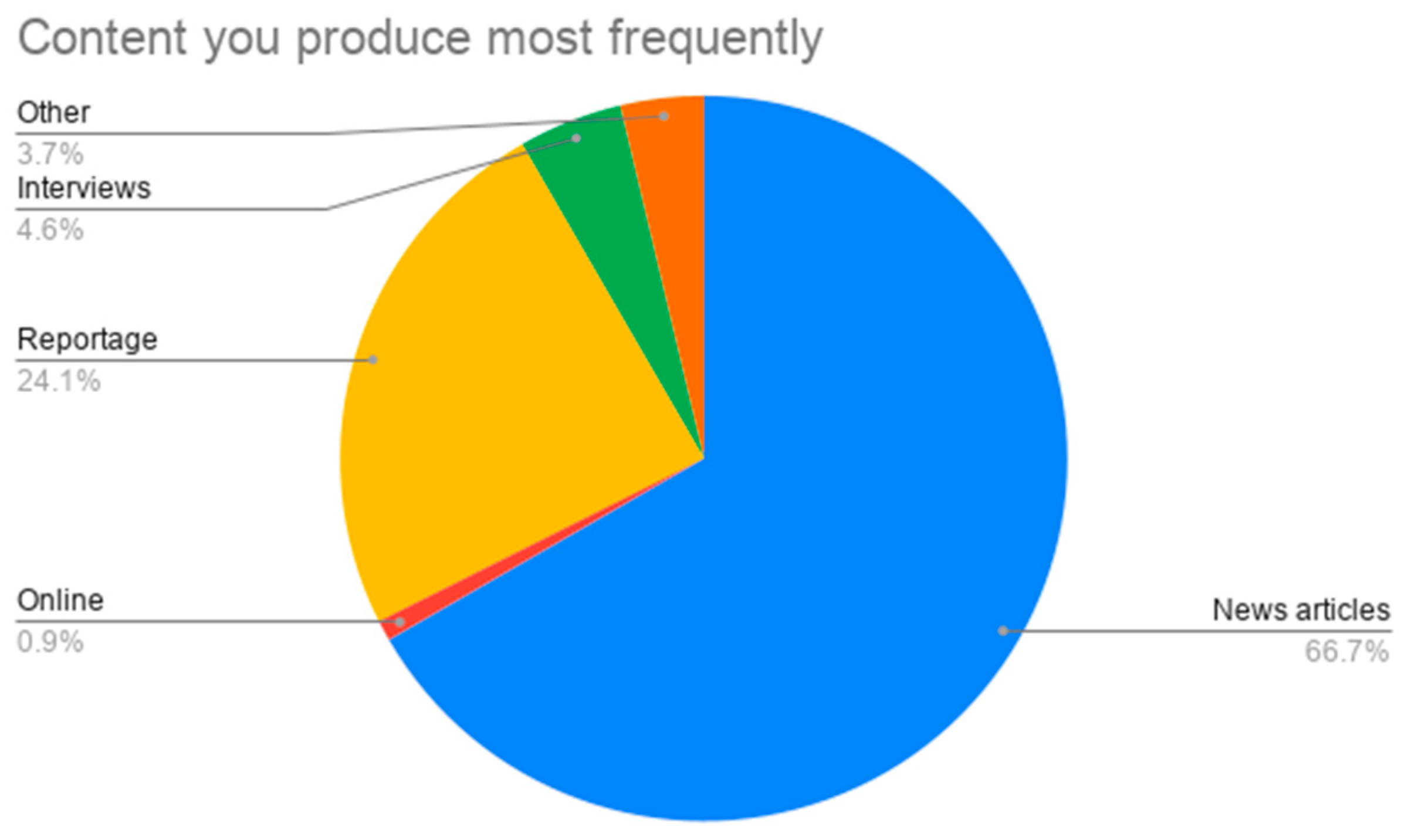
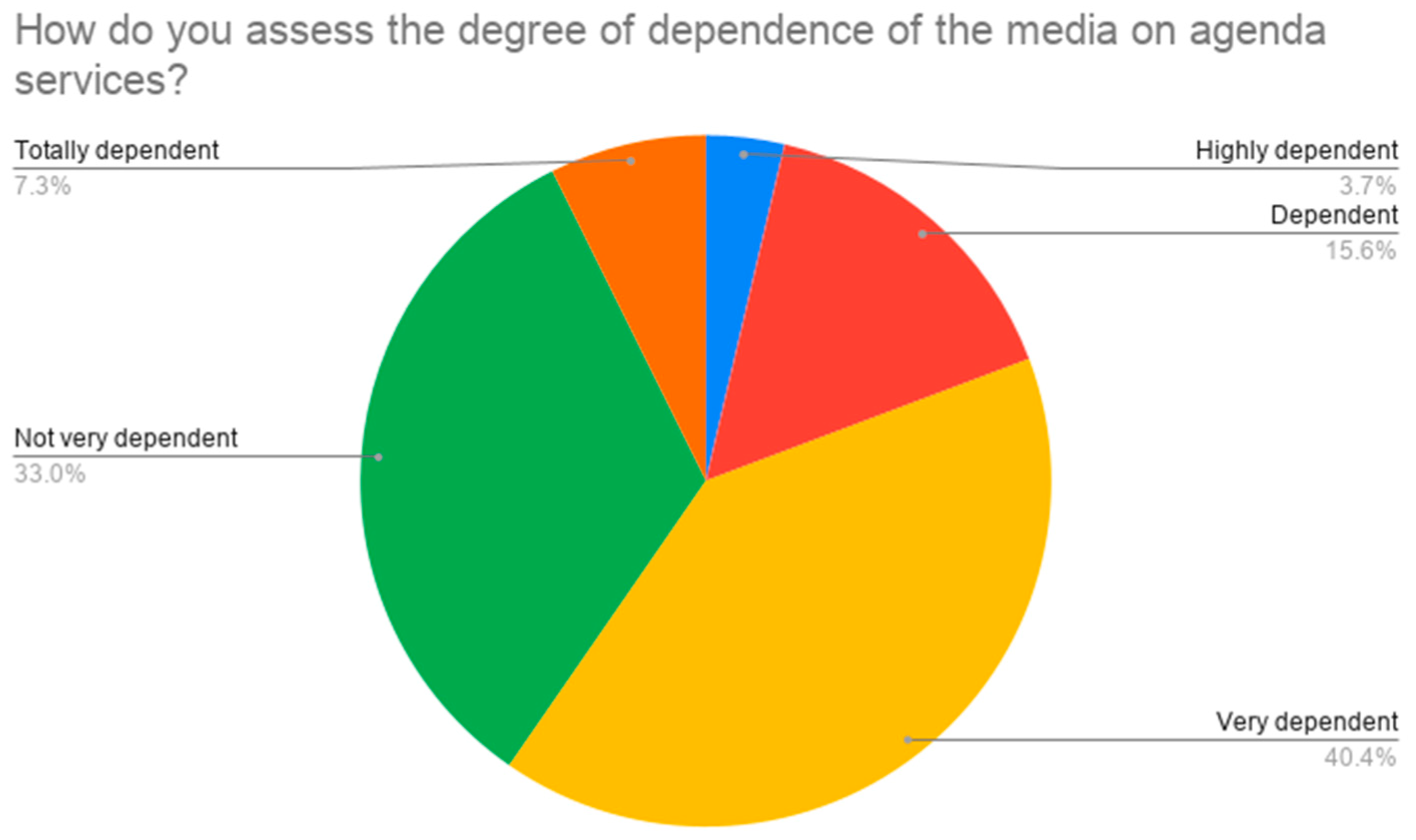
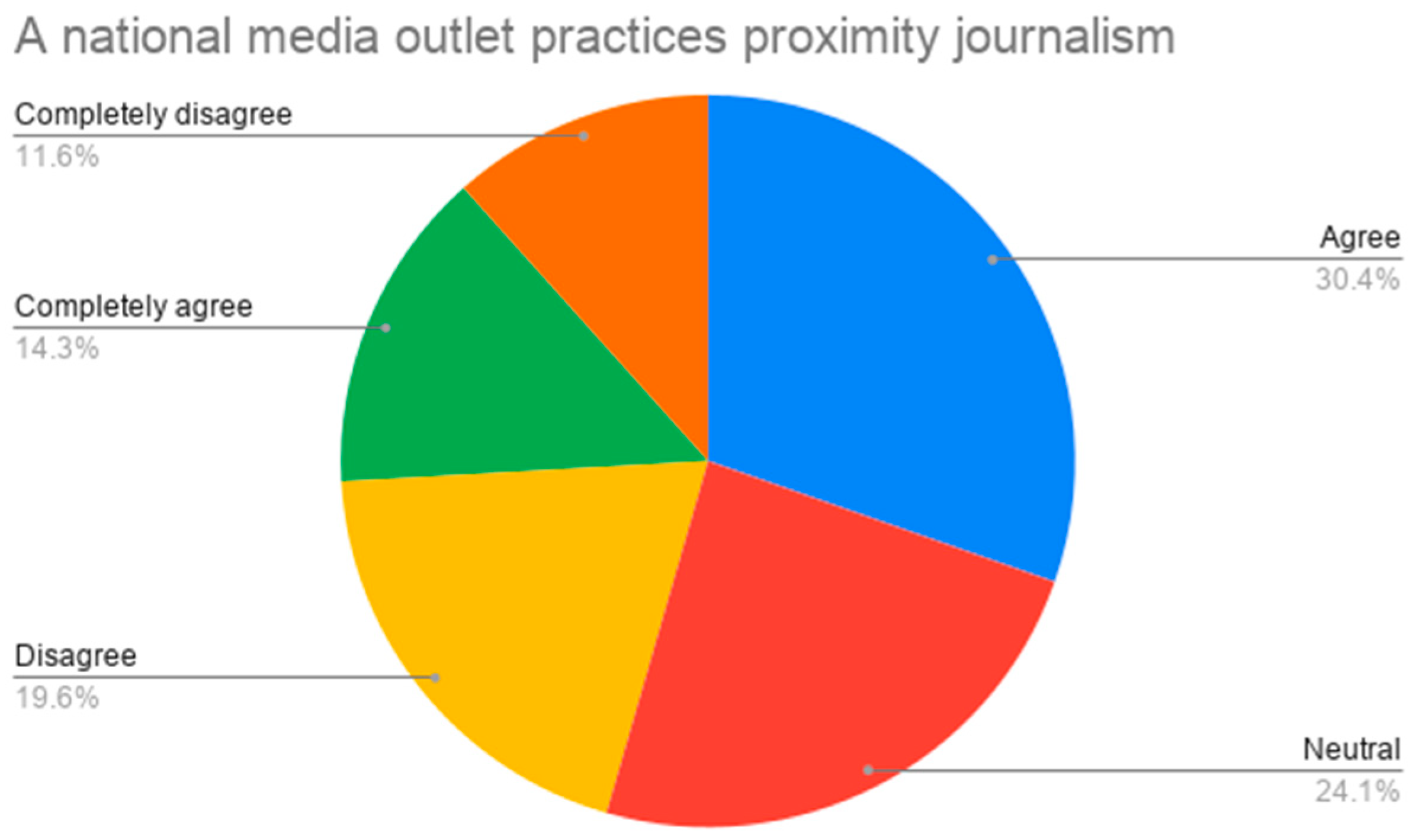
Starting from the idea of proximity as a fundamental news value—which may assume geographical, cultural, emotional, and thematic dimensions—this article discusses how this concept influences journalists’ production routines, focusing on the progressive abandonment of the journalistic genre of reportage. This quantitative study aims to understand how Portuguese journalists conceptualize proximity journalism and the role reportage plays as a journalistic practice that involves direct contact with the field. The study collected responses from 111 Portuguese journalists working in television, radio, print, and online media, across different media outlets, regardless of their hierarchical position or contractual status. The research shows that although proximity is considered transversal across all levels of journalism (local, regional, or national), current production routines primarily favor news production. This trend is driven by a strong dependence on the political and institutional agenda, neglecting reportage, which requires going into the field and establishing direct contact with local communities and, consequently, with alternative and non-official or non-institutional sources. Among the main reasons identified by journalists are a lack of time, a scarcity of human and financial resources, an overload of tasks in newsrooms, and poor editorial decisions by newsroom leadership. The study concludes that this dependence on fast production routines and institutional sources may compromise journalism’s ability to maintain close relationships with communities and to produce more in-depth, contextualized narratives, thereby gradually losing proximity to local communities and citizens.
Keywords: proximity journalism; reporting; newsmaking; community proximity journalism; reporting; newsmaking; community