


Abstract
Fatphobia, or the stigmatization of fat bodies, is increasingly prevalent in our society and is manifested in many ways, leading to serious consequences for those who suffer its effects. This study aims to enhance the understanding of the extent of media coverage regarding this issue, as well as the approach taken in its coverage. To this end, all the information containing the term fatphobia, which was published in six leading Spanish-language newspapers, (n = 309) was analyzed to pinpoint the moment when fatphobia appeared on the media agenda, as well as the specific features of its coverage. Using a multidisciplinary methodology including content analysis, framing theory, and a gender perspective, the following digital media outlets were analyzed: eluniversal.com.mx (Mexico), eltiempo.com (Colombia), clarin.com.ar (Argentina), elcomercio.com.pe (Peru), elmercurio.com (Chile), and elpaís.com (Spain). The findings reflect an inconsistent media portrayal, and the coverage was generally found to be superficial, which indicates the need for a more committed approach to the social acceptance of all bodies and to the struggle against aesthetic discrimination suffered by women with non-normative bodies.
1. Introduction
Fatphobia is a social phenomenon that exerts power over the standardization of bodies, giving preference to thin bodies and scorning fat people. This is a type of indoctrinating and ruthless discrimination in the lives of those who do not meet current beauty standards (Da Silva & Peres, 2021; Panzitta et al., 2023; Farrell, 2011; Lebesco, 2004).
This narrative is pervasive in both traditional media and on social media, the aim of which is to guide people toward internalizing ideals of appearance and social conformity (Rodgers et al., 2015; Roberts et al., 2022). It also tries to engender body dissatisfaction through the assimilation of ideals of thinness and muscularity, as well as social compliance, starting in adolescence (Scully et al., 2023; Jarman et al., 2021).
These kinds of messages are found in various reports and images published by the media (López-Guimerà et al., 2010), which include negative connotations of fat people. Moreover, this occurs because some people genuinely believe that fat people have ugly or deformed bodies, based on current stereotypes of beauty and discrimination (Piñeyro, 2016; García Villanueva, 2022).
In the media, content can reinforce stigma through inaccurate portrayals of fatness and inappropriate images, language, and terminology that try to make people feel responsible for their condition (Rubino et al., 2020). However, in an attempt to offer responsible coverage, these media outlets also report the discourse of the scientific community by echoing the negative health consequences of being overweight and obese, which are controversial terms.
Research on how the media covers fatness has consistently shown that the most prevalent depictions are shaped by frames that are moralizing, individualizing, and stigmatizing. A substantial body of literature clearly shows that media outlets frequently portray fatness as a social problem mainly rooted in individual behavior such as poor diet, lack of self-control, and a dearth of physical activity, rather than a phenomenon rooted in structural, economic, and cultural conditions (Saguy & Riley, 2005; Lawrence, 2004). From the viewpoint of critical studies on fatness, these frames reinforce neoliberal ideals of personal responsibility, yet they obscure the role of social inequality, food schemes, labor conditions, and institutional discrimination. Nevertheless, news frames that are more socially oriented and less individualistic are increasingly common in countries such as Spain (Argiñano & Rekondo, 2024; Marín-Murillo et al., 2024).
Media-framing studies have pointed to a prevalence of frames with connotations of “responsibility” and “crisis,” in which fat bodies are portrayed as threats to public health systems, national productivity, and moral standards (Saguy & Almeling, 2008). Such narratives often rely on alarmist language, statistical exaggeration, and visual tropes such as headless or faceless images of fat bodies, which dehumanize fat people and reduce them to archetypes of risk (Heuer et al., 2011). Discerning scholars argue that such depictions exacerbate the stigmatization of weight by legitimizing surveillance, shame and exclusion, under the guise of encouraging health.
More recent studies have highlighted the intensification of these dynamics during the COVID-19 pandemic. Media coverage frequently portrayed fat people as high-risk individuals, or burdens to health systems, often without critical reflection on structural vulnerabilities and the harmful effects of stigmatization (Flint, 2020; Monaghan, 2021, Camacho-Markina et al., 2023). Scholars have noted that these narratives exacerbate existing patterns of fatphobia and legitimize discriminatory attitudes and policies.
Overall, the majority of discerning scholarship concurs that the mainstream media’s coverage of fatness is less focused on providing neutral information and more interested in serving as a cultural site where standards related to bodies, health, and responsibility are propagated and enforced. Fat studies that criticize such practices call for alternative media frames that place the voices of fat people at center stage, in order to challenge stigmatizing assumptions and separate health from moral judgment and body size.
One strategy for combatting weight stigma in the media is to make it more visible. In this regard, a viable option is to specifically name the discrimination and rejection experienced by fat people. To this end, the present study analyses media coverage in which the term fatphobia is explicitly mentioned. As revealed in the systematic review by Kite et al. (2022), the vast majority of studies on weight stigma in the media are carried out in Anglo-Saxon countries, mainly the United States, yet very few studies examine or compare the situation in other nations, which is the case in Spanish-speaking countries. While several of these nations, including Mexico, Chile and Argentina, have some of the highest percentages of fat people in the world (World Obesity, 2025), research aimed at revealing the presence of weight stigma and fatphobia in the traditional and social media of these countries is either very limited (Marauri-Castillo et al., 2025; Paredes & Alemán-Andrade, 2024; Argiñano & Rekondo, 2024; Camacho-Markina et al., 2023) or it appears indirectly in studies that address the influence of the media on body image (Andres et al., 2024). Given the context, this study aims to address specific cases in which the term fatphobia appears in Spanish-language media content. Moreover, the research encompasses various countries in which Spanish is the official language.
1.1. Reference Framework
Fat activism originated in the United States in the 1960s and later expanded to Central and South America. This movement fights against the relationship established between body weight, diet, physical exercise, and health. This movement also denounces the discrimination suffered by fat people. Decades after fat activism was established, authors such as Robinson, Bacon, and O’Reilly coined the term fatphobia to describe this stigmatization (Robinson et al., 1993). Since then, “fat shaming” and “fat shame” have emerged as two alternative expressions used to identify the same social phenomenon. According to different authors (Halse, 2009; Bordo, 2003), fatphobia is closely related to women, who have long been subjected to oppression through the regulation and control of their bodies (Halse, 2009; Bordo, 2003). In fact, anti-fatphobia activism has been closely associated with the origins of feminist movements (Cooper, 2021). In the Spanish-speaking world, feminist platforms have also spread the Spanish-language neologism gordafobia (translated as fatphobia specifically directed at females), by which they emphasize their belief that the rejection of fat people mostly affects women (Guerrero, 2020).
The struggle against discrimination also extends to the field of language. Fat activism criticizes use of the terms “obese” and “obesity,” because, according to their vision, it implies the medicalization of fatness by framing it as a pathological condition. Consequently, the word fat has acquired a negative connotation. In contrast, the use of the term fat is currently being reclaimed by activists as a strategy to strip the term of its pejorative meanings (Guerrero, 2020). As Baker (2015) argues, negativity associated with the word fat is socially constructed. According to her, it is necessary to stop the hatred connected to the term fat, not the use of it. Ultimately, the goal of fat activism is to avoid framing fatness as a pathology and to counter the guilt that such medicalization generates.
Similar concerns have also been expressed within the scientific community. In 2020, one hundred representatives from leading scientific organizations specializing in obesity published the manifesto Joint international consensus statement for ending stigma of obesity (Rubino et al., 2020) in Nature Medicine. This document holds the media accountable for perpetuating stereotypes that depict fat individuals as “lazy, gluttonous, lacking willpower, and self-discipline.” The authors also condemn the media’s dissemination of unverified claims, such as the assertion that diet and physical exercise are the only valid therapeutic approaches, which they describe as lacking in scientific rigor. However, this position does not deny that fatness is a health risk with multiple causes. Nevertheless, current awareness of the need to change the prevalent narrative regarding fatness in order to acknowledge and reduce weight stigma has been highlighted by the World Obesity Federation (Nutter et al., 2024).
Linked to that concern in the scientific community, research on the stigmatization of fatness in the media, both in digital environments (Marauri-Castillo et al., 2025; Camacho-Markina et al., 2023; Cooper, 2021; Blanes, 2017; Puhl et al., 2013; Fernández-Ramírez & Baleriola, 2012; Heuer et al., 2011), in addition to the realm of audiovisual fiction (Kyrölä, 2021; De Sousa & Miklos, 2020; Donovan, 2019; Eisenberg et al., 2015; Throop et al., 2014; Himes & Thompson, 2012)—highlights the long road ahead in achieving the inclusion of all body types. Along this path, the inclusion of fatphobia in media coverage as a real-life situation that deserves to be reported will be a significant step forward. Herein lies the interest of this research, which is to identify the specific presence of the term fatphobia in the most prominent digital newspapers published in the Spanish language.
1.2. Objectives and Hypotheses
Based on the foregoing assumptions, the purpose of this study is to examine the coverage of fatphobia in Spanish-language newspapers. Thus, the following specific objectives are proposed:
O1.
Identify the precise moment when the term fatphobia first appeared in newspapers, followed by an analysis of its evolution up to the present day, focusing on how its use has emerged in different sections of the media outlets addressed.
O2.
Reveal whether the type of framing used for the texts is thematic or episodic.
O3.
Explore the prominence of the female gender in the depictions analyzed, with special attention paid to stereotypes and social stigmas used in the language and images displayed.
Based on these research objectives, the following hypotheses are set forth:
H1.
Fatphobia is a term with a significant presence in the Spanish-language press, similar to that of non-Spanish publications, especially in sections related to health.
H2.
Thematic and episodic news frames are balanced, and using both types enables a better understanding of the causes and consequences of fatphobia.
H3.
Women are featured more prominently than men in the news items, especially regarding images.
H4.
The language in news pieces about fat female bodies includes negative connotations, thereby reinforcing stereotypes and fomenting social stigma.
2. Materials and Methods
2.1. Corpus and Selection Criteria
The sample was obtained from information published in six benchmark, Spanish-language newspapers, including the following: eluniversal.com.mx (Mexico); eltiempo.com (Colombia); elpais.com (Spain), clarín.com.ar (Argentina); elcomercio.com.pe (Peru); and elmercurio.com (Chile). Regarding the selection criteria, the authors chose one iconic newspaper from each of the six countries1 mentioned above. Moreover, these six nations have the largest populations of native speakers, with Spanish as their official language, in addition to a democratic, parliamentary system of government. From each of these countries, one digital newspaper was selected based on its circulation and reach. To make the decision, the authors used the 2025 edition of the Reuters Institute’s Digital News Report (Reuters Institute, 2025) as a reference.
Search engines were used with the keyword fatphobia. The search was limited to this term, as we consider it to be the keyword in identifying a specific form of structural discrimination that operates in media discourse (Argiñano & Rekondo, 2024; Camacho-Markina et al., 2023; Rodríguez-González et al., 2025), which affects the dignity of fat people. The specific terms fat man and fat woman were not used in the search due to the number of terms and expressions created with this word that are unrelated to the topic addressed.
2.2. Analysis and Coding Method
Next, a content analysis was carried out (Krippendorff, 1990) to study the messages published in these media (Bardin, 2002; Berelson, 1952; Holsti, 1969; Matthes & Kohring, 2008). To this end, a categorization sheet was drawn up with both descriptive and analytical items.
In addition, this study incorporates a gender perspective, understood, according to Lagarde (1996), as a broad theoretical framework encompassing categories, hypotheses, interpretations, and bodies of knowledge related to the set of historical phenomena socially constructed around gender. Consequently, the gender of both the authors and the protagonists of the analyzed content, as well as those represented in the accompanying images, were systematically identified and recorded.
Furthermore, the analysis sought to determine whether the news content adopted an episodic or a thematic framing approach. Drawing on framing theory (De Vreese et al., 2001; Iyengar, 1991), an initial distinction was made between issue-specific frames and generic frames. Issue-specific frames focus on particular aspects of events or topics in a highly detailed and concrete manner, whereas generic frames encompass broader patterns applicable across different issues and cultural contexts over time. Within this latter category, two types of generic frames were identified: episodic and thematic (Iyengar, 1991). Episodic framing is focused on a specific event involving an individual, which is detached from a broader political or social context (Sádaba, 2008). By contrast, thematic framing places greater emphasis on background information; consequently, the sources are more specialized and able to address both causes and consequences.
To ensure the reliability of the analysis, double independent coding was performed on a random sample of 50 articles (12.85% of the total). Two researchers carried out the coding separately, and they initially obtained agreement of 0.32, according to the method of Holsti (1969), which was considered insufficient. The discrepancies were focused on the category of assessment and the definition of similes. Therefore, the differences were reviewed with the help of a third researcher, and the categories were redefined more precisely.
Subsequently, the two coders repeated the procedure and reached an agreement of 0.83, which is a highly acceptable level of reliability (Neuendorf, 2002). In addition, the thematic framework was validated by expanding subcategories for greater precision, and Jacob Cohen’s Kappa coefficient was applied, obtaining a value of 0.698, which indicates a substantial level of agreement between the coders.
2.3. Sample Analysis
The initial corpus of the study consisted of 447 pieces of information that corresponded to the term fatphobia, although 138 were discarded due to their being unrelated to the topic, referring to animal fatphobia, promotions, and other content that used the word “fat”, yet without a connection to fatphobia. Thus, the study was limited to 309 texts, which were broken down as follows: 112 from elpais.com, 72 from clarín.com.ar, 51 from elcomercio.pe, 42 from eluniversal.com.mx, 25 from eltiempo.com, and 7 from elmercurio.com.
3. Results
3.1. Media Coverage
The analysis period spanned nearly nine years, starting on 9 February 2016 and finishing on 8 June 2025. The news item in which the word fatphobia first appeared was in eluniversal.com.mx, on 9 February 2016. It was an opinion piece signed by Redacción El Universal, entitled “Thinsplaining #NotAllFlacos.” The article focused on explaining the phenomenon of fatphobia, which it described as “an activity carried out by men and women, whose bodies generally fall within established norms, and for whom body-positive arguments go in one ear and out the other,” thereby connecting fatphobia to the attitude of the time. The last item was also an opinion piece, published in elpais.com, entitled “The problem with food.” This article was written by journalist and novelist Rosa Montero, who criticizes fatphobia and, at the same time, warns of the health dangers of being overweight.
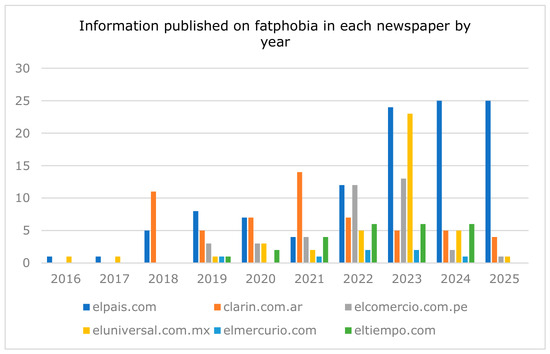
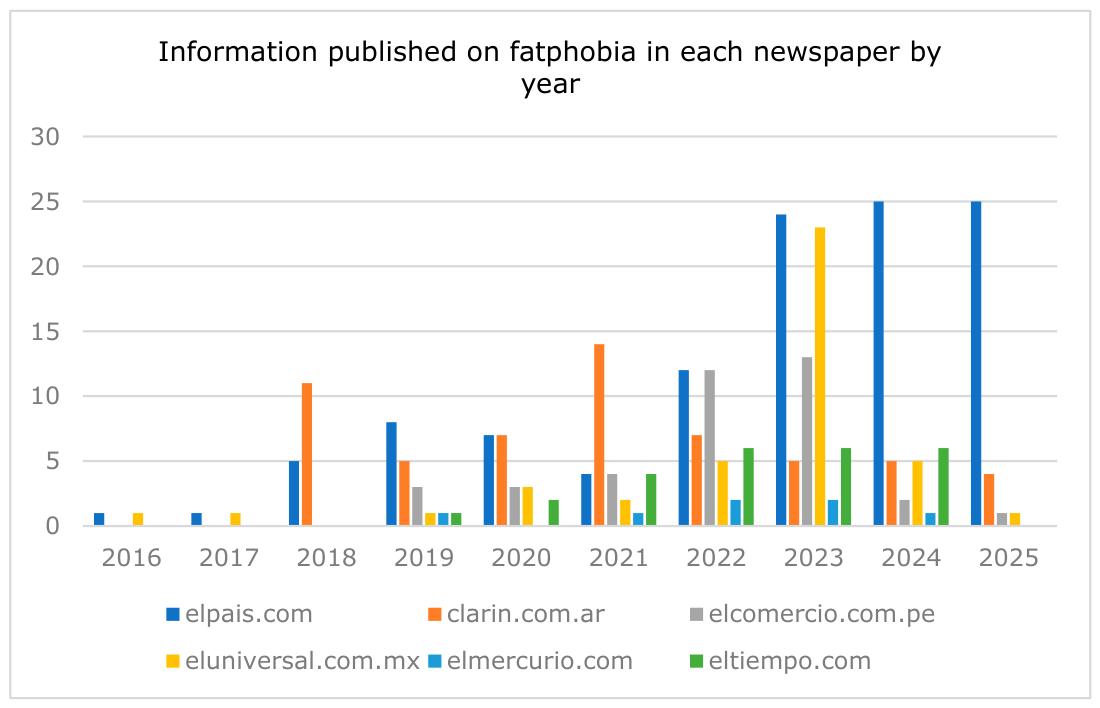
The following figure (Figure 1) shows the publication by each newspaper of content related to fatphobia and the years of publication:
Figure 1.
Information published by year and newspaper.
According to the results, fatphobia became part of the media agenda in 2016 and remained a minor topic over the following three years (6.4% of the published news items). However, a significant increase can be seen from 2019 onward, with the highest number of publications in all the newspapers taking place during 2023 and 2024 (37.8%), although none of the media outlets follow the same pattern. Regarding volume (Table 1), elpais.com has strengthened its position as the most consistent digital native, and therefore the most committed to covering the stigmatization of people because of their weight.
Table 1.
Media outlets, trends, and comments.
3.2. Fatphobia by Section
Information about fatphobia is published sporadically, with most articles appearing in sections related to fashion and entertainment (Table 2). While a total of 20 articles on fatphobia were published in the Fashion section of elpais.com, 12 were published in Celebrities (clarín.com.ar) and a total of 18 were published in sections related to Entertainment, Television, People, Movies, and Theater in the other newspapers analyzed.
Table 2.
Information about fatphobia that appears most often according to the section.
3.3. Episodic and Thematic Frames
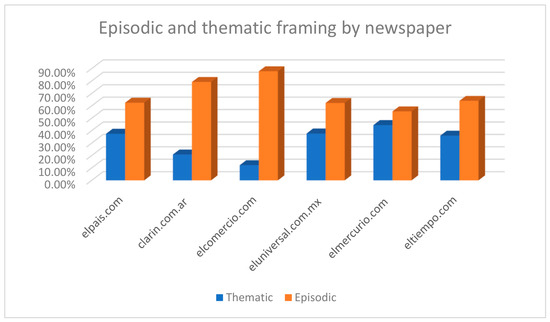
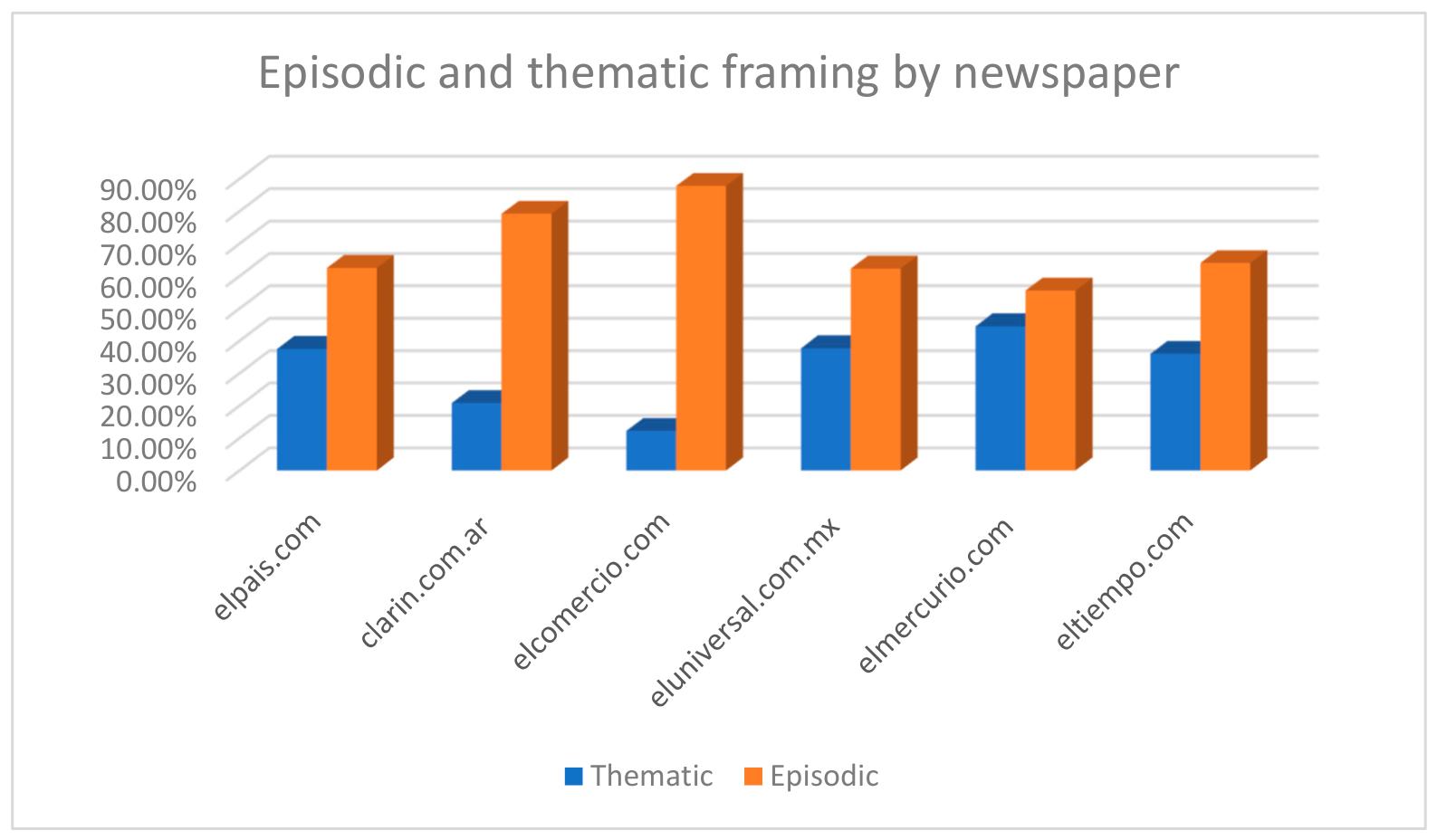
Only 27% of the information about fatphobia uses thematic framing; the rest takes an episodic approach. Moreover, episodic framing is used in 95% of the information in the following sections: Fashion; Television; Entertainment; Society; People and Style; Celebrities; Women’s Issues; Culture; Showbiz/News; Series/News; Literature; Culture; Theater; and Trends. However, in the sections of Health and Wellness, Mothers and Fathers, and The Good Life, and in the unnamed section of eltiempo.com, the proportion is the opposite.
Taking digital newspapers as a reference (Figure 2), elmercurio.com (44.5%), eluniversal.com.mx (37.71%) and elpais.com (37.50%) publish the highest percentage of thematic information of all content that addresses fatphobia, followed by eltiempo.com (36%), Clarin.com.ar (20.80%), and elcomercio.com.pe (12.20%).
Figure 2.
Episodic and thematic frames.
Articles using a thematic frame not only report specific events, such as an accusation resulting from a fatphobic comment or attitude. Instead, they go even further by providing analysis and interpretation. In practice, these items tend to be longer and incorporate more than three sources, including expert voices who, depending on the nature of the article, may be psychologists, physicians, anthropologists, or writers. Documentary sources are also frequently cited, such as institutional reports and research studies, which generally address obesity, prevention strategies, and eating disorders associated with corpulence. Other pieces classified as thematic include sections devoted to the history of fat activism, fat studies, and the body-positive movement, the aim of which is to contextualize a particular situation.
For example, discussions regarding the influence of social media on the propagation of weight-based, discriminatory attitudes often incorporate personal testimonies and research findings on adolescence, as well as analyses of the impact of social media on the image that girls have of their own bodies. These articles may also address the phenomenon of “chronic dieters” and the cultural obsession with the “perfect body,” drawing on statements from physicians and other healthcare professionals. Other pieces provide an educational perspective rooted in family socialization, an example of which is “Patricia Ramírez, ‘Patri Psicóloga’: Educating about diversity requires that we lead by example, thereby avoiding comments such as, ‘Look how fat she has become’” (elpais.com, 24 January 2024). This item denounces familial, social, and educational fatphobia, in addition to highlighting the grave consequences of adopting such attitudes, which often results in bullying.
By contrast, content using an episodic frame focuses on reporting specific events, generally linked to the cultural or television realm. One example is the coverage of a theatrical production denouncing fatphobia entitled, “Lola and Her Size in the Universe: A Play That Challenges Perceptions of Body Diversity” (elcomercio.pe, 15 July 2024). Another item was entitled, “Farewell to ‘El Gordo de Fin de Año’: The Name of Uruguay’s Lottery Drawing Changed Following a Complaint of Discrimination Against People with Obesity” (clarin.com.ar, 8 November 2023). Still another news story was the following: “After Mocking Guillermo del Toro, Stylist Aldo Rendón is Accused of Fatphobia” (eluniversal.com.mx, 13 March 2023).
3.4. Prominence of the Female Gender
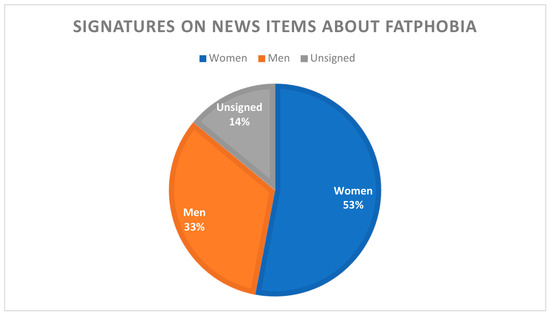
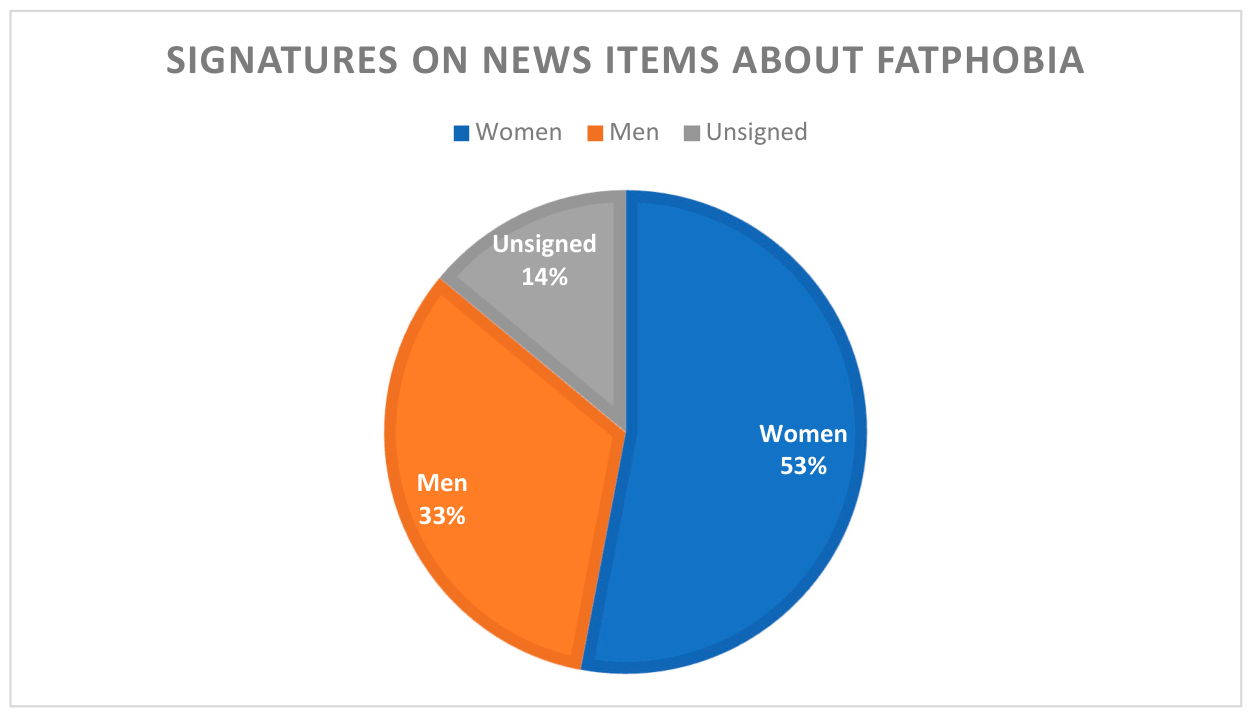
Of the 309 items analyzed, 53% were signed by a woman, 14.5% by a man, and 32.5% were published without a signature (Figure 3). This last category includes items signed by editorial staffs, Agencia EFE, agencies in general, S Moda, El País, and the editorial staff of Elle.
Figure 3.
Byline distribution by gender.
The higher proportion of female journalists in sections traditionally classified as soft news has been documented in numerous studies (North, 2016; García Gordillo, 2010). Although slight changes can be observed in the profession, as noted by North, women are generally assigned subject areas related to consumption, well-being, lifestyle, and beauty.
A gender perspective is evident in 83% of the texts analyzed, a distinction based on references to women as the primary and most widespread victims of discrimination related to fatness. Indeed, many female authors explicitly frame fatphobia as another form of aesthetic violence, manifested through social pressure to conform to prevailing beauty standards characterized by thinness and bodily perfection (García Villanueva, 2022; Treviños-Rodríguez & Díaz-Soloaga, 2021).
In 92% (284) of the content, photographs accompany the text, and in the remaining 8%, there is either no image or the image is a video, an illustration, a screenshot of a tweet, an Instagram account, or virtual avatars from the metaverse.
Nearly 80% of these photographs are depictions of women, for a total of 247 images. Men appear in just 17% of the content. Images that include both men and women represent 6%, which is the same percentage as Other2. Only three photographs featuring girls have been published on elmercurio.com. (1) and on elpais.com (2).
Images of overweight women (98) dominate those of overweight men (25). No images of thin men have been published, although there are images of thin women (49). Of these 49, a total of 24 are from the same news item, “Miss Universe Colombia 2023” (eltiempo.com, 2 September 2023), and six correspond to Spanish anchorwoman Cristina Pedroche as the host of the New Year’s Eve countdown (1 January 2020; 31 December 2024; 6 January 2024; 2 January 2025 (2 articles). The complete lack of images of boys and girls is not surprising, as this concurs with their nearly total absence from published content.
What stands out is a photograph from a campaign spearheaded by Spain’s Ministry of Equality, due to the controversy it sparked by showing a group of women with diverse body types on a beach (elpais.com, 30 July 2022). This image was intended to raise awareness about the diversity of women’s bodies, yet it led to numerous complaints due to modifications of the models’ bodies and using their image without permission. Nor is this photo the only one; in fact, 24 photos show women with very little clothing, or in swimsuits, bikinis, or see-through outfits. In this way, these women reinforce their message of empowerment and pride in their own bodies.
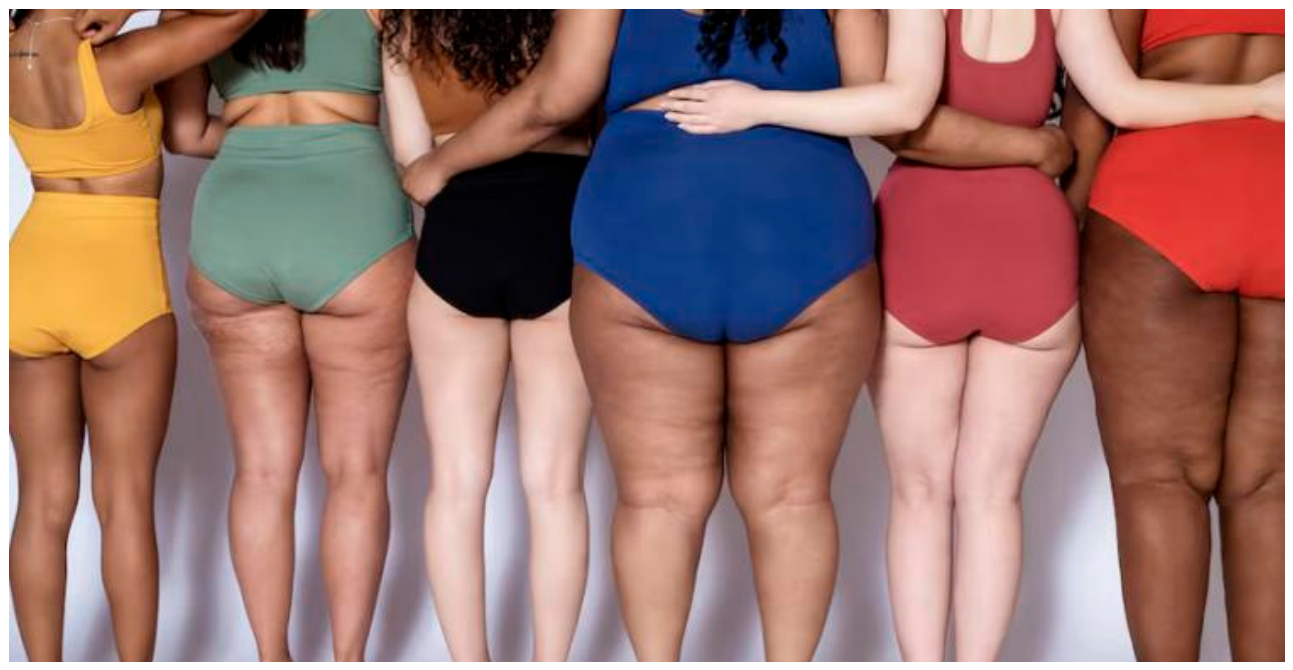
The recurring use of photographs depicting “faceless fat people” has nearly become a genre. Cooper (2021) refers to this visual practice as “headless fat people,” a term that captures the systematic omission of faces in images of anonymous overweight individuals used to illustrate reports on obesity (Figure 4).
Figure 4.
Faceless women. Source: elpais.com (6 March 2023).
3.5. Language and Fat Bodies
The term “fat” refers to women in 71% (219) of the articles, and to men in 19% (58). Its use for both male and female was found in the remaining 10% (32). Social pressure on female bodies makes fatness something to be avoided, hidden, or rejected. However, the women themselves are reclaiming the term “fat” as something positive (Rodríguez, 2024).
In the table below (Table 3), the conceptual associations shown in the articles can be seen:
Table 3.
Association of terms.
4. Discussion and Conclusions
The overall objective of this study has been to analyze the coverage of fatphobia in some of the most prominent digital newspapers in six countries with the largest Spanish-speaking populations, including the following: eluniversal.com.mx (Mexico); eltiempo.com (Colombia); elpais.com (Spain), clarín.com.ar (Argentina); elcomercio.com.pe (Peru); and elmercurio.com (Chile). In addressing the first specific objective (O1), the results show that fatphobia has been part of the media agenda in five of the six newspapers analyzed since the term first appeared in eluniversal.com.mx in 2016, with the exception of elmercurio.com. Furthermore, the significance of this finding is based on current research, which has found that the consumption of media content in Latin America, along with its influence, is associated with greater concern for body image and the ideal of a thin body (Andres et al., 2024). However, its growth is uneven among these newspapers. The newspapers studied, except elpais.com, fail to display a consistent pattern, although there is an increase in articles on the topic during 2020 and 2021, due to the COVID-19 pandemic (Jones et al., 2022). This inconsistency and concealment, especially regarding to childhood fatphobia, is simply not justified when there is evidence of discrimination against fat people in the social, labor, health, and educational domains in some of these countries, as affirmed by the academic literature (Energicy et al., 2017; Adelardi, 2022; Chavarriaga Pérez et al., 2024). In addition, there is only a scant amount of activism on this issue in these nations (Cabaleiro, 2021; Contreras, 2022).
Although use of the term fatphobia in digital media appears to imply more visibility of a problem suffered by thousands of citizens, the general approach of these newspapers is mostly superficial, as they usually place news stories about this topic in the so-called “soft news” sections. In fact, fatphobia is rarely discussed in the health sections of newspapers, yet the topic is frequently mentioned in segments related to the entertainment industry. This pattern could result in trivializing the seriousness of the problem, thereby limiting the public’s perception to aesthetics and anecdotal issues, when this type of discrimination has a genuinely negative impact on health, self-esteem, and social rights (Cornejo, 2016; Maldonado Castro et al., 2024). Therefore, given the limited scope of the term fatphobia in most of the newspapers analyzed, along with its scarce presence in the health sections of these dailies, Hypothesis 1 cannot be confirmed.
Furthermore, this finding is consistent with the results linked to the second specific objective (O2), which suggests a predominance of the episodic approach (73% of the articles analyzed), with thematic framing used much less often. This clearly indicates an imbalance between the two approaches, as confirmed by the notable absence of specialized sources, thereby disallowing confirmation of Hypothesis 2. Thematic news reports on this topic are sporadic and associated with specific dates, such as Obesity Awareness Day, or media debates, one of which involved a fat Spanish comedian who was chosen to co-host the 2025 New Year’s Eve countdown on prime-time television, together with another famous presenter. Even articles that seem to have a thematic focus rely on conventional medical sources, thereby reinforcing the culture of dieting for aesthetic purposes, and the association of thinness with health and beauty. In fact, according to a previous study (Major, 2009), thematic framing reinforces social responsibility, while episodic framing highlights individual culpability.
Consequently, although fatphobia is included on the news agenda of the newspapers under study, it appears more as a series of unrelated episodes rather than a significant social problem. Furthermore, the fact that 53% of the information published is unsigned indicates that fatphobia is not considered an especially relevant topic by newsrooms.
Regarding the third specific objective (O3), fatphobia has been identified as an issue associated with women, not only due to the fact that 53% of the authors are women, compared to 14.5% for men, but also as a result of the prominent female presence in the information itself, which is clearly dominated by women at 55%, compared to 12% for men. Therefore, this finding confirms Hypothesis 3. Regarding celebrities (88%), this group has become the focal point of a problem that affects the entire society. In fact, these personalities often act as spokespersons, sometimes in the role of victims themselves and, to a lesser extent, from a position of empowerment corresponding to the ideal of beauty rooted in a patriarchal society (Halse, 2009; Bordo, 2003).
Among the news items that mention fatphobia, the vast majority contain images of women. Nevertheless, consistent with the findings of previous studies (Marauri-Castillo et al., 2025; Camacho-Markina et al., 2023), the use of denigrating photographs and the depersonalization of fat people through images is in the minority, indicating heightened media awareness regarding the impact of such photographs, along with a change of attitude compared to prior analyses (Puhl et al., 2013; Heuer et al., 2011). In fact, images of unhealthy food are no longer prominent in such content. Moreover, these findings are in line with an assertion made by the author Domínguez, who emphasizes the power of images to transmit positive messages and make society fairer by fostering relationships that are egalitarian and inclusive (Domínguez, 2021).
However, this potential for fairness is not coming to fruition in the media coverage analyzed, judging from the expressions quoted in the news items regarding fat people, which were discovered in the analysis. Both genders carry a heavy burden of insults and stigmatization in the form of negative depictions. Women are dehumanized through vilifying expressions targeting their bodies, such as “elephant legs” and “fat cow,” using animal references to express misogyny, which is a practice identified in various studies (Lacalle et al., 2024). In addition, the use of euphemisms or synonyms such as “plus-size women” or “large-size” shows an attempt to soften the language, although it does not always succeed in diffusing the stigmatizing connotation. This confirms Hypothesis 4 and verifies that “fat” is not just a word, but a type of prejudice that generates direct discrimination, especially against women. Moreover, it clearly shows that language propagates and reinforces fatphobia through direct mockery and through ostensibly positive discourse (Guerrero, 2020).
Although the Spanish-speaking media have bestowed more visibility on fatphobia in recent years (Marauri-Castillo et al., 2025), the analysis indicates that a considerable amount of work is yet to be done, both by the media and public policy makers. The prevalence of fragmented coverage, which focuses on anecdotal or emotional aspects of the issue, suggests that there is a lack of editorial commitment to addressing this form of discrimination. Nevertheless, more research is needed to delve deeper into the presence of fatphobia in the media.
In summary, this study addresses an underexplored area in the analysis of news coverage of fatphobia in Spanish-speaking countries. Nevertheless, several limitations should be acknowledged: first, the study relies primarily on a descriptive approach; second, the sample size for each country is relatively limited; and third, the corpus of analysis is restricted to content that explicitly uses the term fatphobia. However, in spite of these constraints, this paper has laid the groundwork for advancing this line of research regarding Spanish-speaking countries. Moreover, future studies might even consider expanding this work by exploring the structural, cultural, and media systems that shape this phenomenon in each of the countries analyzed, in addition to comparing their findings with those of other geographical, linguistic, and cultural contexts.
Author Contributions
Conceptualization, M.d.M.R.-G. and I.M.-C.; methodology, M.d.M.R.-G. and I.M.-C.; validation, M.d.M.R.-G. and Y.V.-V.; formal analysis, M.d.M.R.-G. and Y.V.-V.; investigation, M.d.M.R.-G., Y.V.-V. and I.M.-C.; data curation, M.d.M.R.-G. and Y.V.-V.; writing—original draft preparation, M.d.M.R.-G.; writing—review and editing, M.d.M.R.-G. and Y.V.-V.; supervision, M.d.M.R.-G. and I.M.-C.; project administration, I.M.-C.; funding acquisition, I.M.-C. All authors have read and agreed to the published version of the manuscript.
Funding
This research was funded by the Spanish Ministry of Science and Innovation in the 2020 call (grant number PID2020-118090RB-I00). The authors are members of the Mediaiker research group, recognized in the 2021 call for grants supporting research group activities within the Basque university system (grant number IT1686-22).
Institutional Review Board Statement
Not applicable.
Informed Consent Statement
Not applicable.
Data Availability Statement
The data set presented in this article is not readily available because the data are part of an ongoing study.
Conflicts of Interest
The authors declare no conflicts of interest.
Notes
| 1 | Mexico has 130 million inhabitants; Colombia, 52 million; Spain, 48 million; Argentina, 46 million; Peru, 34 million; and Chile, 20 million. |
| 2 | Other refers to images showing a twisted fork, a scale with feet on it, a nightclub, a slice of pizza, a pair of jeans with a zipper that cannot be closed, and a mannequin. |
References
- Adelardi, L. (2022). Bullying, gordofobia y salud mental. Revista Límbica, III(4), 21–31. [Google Scholar]
- Andres, F. E., Boothroyd, L. G., Thornborrow, T., Chamorro, A. M., Dutra, N. B., Brar, M., Woodward, R., Malik, N., Sawhney, M., & Evans, E. H. (2024). Relationships between media influence, body image, and sociocultural appearance ideals in Latin America: A systematic literature review. Body Image, 51, 101774. [Google Scholar] [CrossRef] [Scilit] [PubMed]
- Argiñano, J.-L., & Rekondo, G. G. (2024). La obesidad en los ciberdiarios españoles: De la estigmatización (del obeso) a la responsabilidad social y a las soluciones estructurales. Revista Mediterránea de Comunicación, 15(1), 323–340. [Google Scholar] [CrossRef] [Scilit]
- Baker, J. (2015). Things no one will tell fat girls. Seal Press. [Google Scholar]
- Bardin, L. (2002). Análisis de contenido. Akal. [Google Scholar]
- Berelson, B. (1952). Content analysis in communication research. Free Press. [Google Scholar]
- Blanes, M. J. (2017). Las curvy como modelo de “celebritización” y empoderamiento en Instagram. CIC. Cuadernos de Información y Comunicación, 22, 203–221. [Google Scholar] [CrossRef] [Scilit]
- Bordo, S. (2003). Unbearable weight. University of California Press. [Google Scholar]
- Cabaleiro, A. (2021). Te lo digo por tu bien. Sobre ser gordas y ocupar espacios con libertad. Montena. [Google Scholar]
- Camacho-Markina, I., Goikoetxea Bilbao, U., & Marauri Castillo, I. (2023). Estigmatización social en el tratamiento informativo de la obesidad en la prensa española durante la pandemia. Revista Latina de Comunicación Social, 81, 250–274. [Google Scholar] [CrossRef] [Scilit]
- Chavarriaga Pérez, V., Uribe Gómez, M., & Gañán Moreno, A. (2024). Exploración de las experiencias y relaciones entre el trastorno de conducta alimenticia y la gordofobia desde la perspectiva de un grupo de adultos jóvenes en Medellín (Colombia). Psicoespacios, 18(32), 1–19. [Google Scholar] [CrossRef] [Scilit]
- Contreras, G. (2022). Caguama. Escritos de una lesbiana gorda. Editorial FEA. [Google Scholar]
- Cooper, C. (2021). Fat activism. A radical social movement. Intellect Books. [Google Scholar]
- Cornejo, S. (2016). Cuerpo, imagen e identidad. Una relación (im)perfecta. Cuadernos del Centro de Estudios de Diseño y Comunicación, 58, 157–177. [Google Scholar] [CrossRef] [Scilit]
- Da Silva, S. C., & Peres, G. J. (2021). Gordofobia no espaço escolar: Uma análise histórico-cultural. Revista Ciências Humanas, 14(25), 1–13. [Google Scholar] [CrossRef] [Scilit]
- De Sousa, A., & Miklos, J. (2020). O peso e a mídia: Estereótipos da gordofobia. Lìbero. Revista do Programa de Pós-Graduação em Comunicação da Faculdade Cásper Líbero, XXIII(46), 111–126. [Google Scholar]
- De Vreese, C., Peter, J., & Semetko, H. (2001). Framing politics at the launch of the Euro. A crossnational comparative study of frames in the news. Political Communication, 18, 107–122. [Google Scholar] [CrossRef] [Scilit]
- Domínguez, Y. (2021). Maldito estereotipo. ¡Así te manipulan los medios y las imágenes! Penguin Random House. [Google Scholar]
- Donovan, R. (2019). “Must Be Heavyset”: Casting women, fat stigma, and broadway bodies. The Journal of American Drama and Theatre, 31(3), 1–17. [Google Scholar] [CrossRef] [Scilit]
- Eisenberg, M. E., Carlson-McGuire, A., Gollust, S. E., & Neumark-Sztainer, D. (2015). A content analysis of weight stigmatization in popular television programming for adolescents. International Journal of Eating Disorders, 48(6), 759–766. [Google Scholar] [CrossRef] [Scilit] [PubMed]
- Energicy, M. A., Acosta, E., & Borquez, F. (2017). Gordura, discriminación y clasismo: Un estudio en jóvenes de Santiago de Chile. Psicología & Sociedade, 29, e164178. [Google Scholar] [CrossRef] [Scilit]
- Farrell, A. E. (2011). Fat shame: Stigma and the fat body in American culture. NYU Press. [Google Scholar]
- Fernández-Ramírez, B., & Baleriola, E. (2012). Estigma e identidad de las personas obesas en la semántica del discurso público. Discurso & Sociedad, 6(2), 314–359. [Google Scholar] [CrossRef] [Scilit]
- Flint, S. W. (2020). Stigmatizing media portrayal of obesity during the coronavirus (COVID-19) pandemic. Frontiers in Psychology, 11, 2124. [Google Scholar] [CrossRef] [Scilit]
- García Gordillo, M. J. (2010). Mujeres, Medios e Información o de cómo el quién condiciona el qué. In Jornadas universitarias: La mujer en el espejo mediático. El mediotrato femenino (pp. 25–33). Universidad de Sevilla. [Google Scholar]
- García Villanueva, J. (2022). Estereotipos de belleza y discriminación. Revista de Psicología de la Universidad Autónoma del Estado de México, 11(27), 41. [Google Scholar] [CrossRef] [Scilit]
- Guerrero, S. (2020). Léxico e ideología sobre la gordofobia en la comunicación digital. Círculo de Lingüística Aplicada a la Comunicación, 83, 93–107. [Google Scholar] [CrossRef] [Scilit]
- Halse, C. (2009). Bio-citizenship. In J. En Wright, & V. Harwood (Eds.), Biopolitics and the “obesity epidemic” (pp. 45–59). Routledge. [Google Scholar]
- Heuer, C. A., McClure, K. J., & Puhl, R. M. (2011). Obesity stigma in online news: A visual content analysis. Journal of Health Communication, 16(9), 976–987. [Google Scholar] [CrossRef] [Scilit]
- Himes, S., & Thompson, J. (2012). Fat stigmatization in television shows and movies: A content analysis. Obesity, 15(3), 712–718. [Google Scholar] [CrossRef] [Scilit]
- Holsti, O. R. (1969). Content analysis for the social sciences and humanities. Addison-Wesley. [Google Scholar]
- Iyengar, S. (1991). Is anyone responsible? How television frames political issues. University of Chicago Press. [Google Scholar]
- Jarman, H. K., Marques, M. D., McLean, S. A., Slater, A., & Paxton, S. J. (2021). Social media, body satisfaction, and well-being among adolescents: A mediation model of appearance-ideal internalization and comparison. Body Image, 36, 139–148. [Google Scholar] [CrossRef] [Scilit]
- Jones, R. A., Christiansen, P., Maloney, N. G., Duckworth, J. J., Hugh-Jones, S., Ahern, A. L., Richards, R., Brown, A., Flint, S. W., Robinson, E., Bryant, S., Halford, J. C. G., & Hardman, C. A. (2022). Perceived weight-related stigma, loneliness, and mental wellbeing during COVID-19 in people with obesity: A cross-sectional study from ten European countries. International Journal of Obesity, 46(12), 2120–2127. [Google Scholar] [CrossRef] [Scilit] [PubMed]
- Kite, J., Huang, B. H., Laird, Y., Grunseit, A., McGill, B., Williams, K., Bellew, B., & Thomas, M. (2022). Influence and effects of weight stigmatization in media: A systematic review. EClinicalMedicine, 48, 101464. [Google Scholar] [CrossRef] [Scilit] [PubMed]
- Krippendorff, K. (1990). Metodología de análisis de contenido: Teoría y práctica. Paidós. [Google Scholar]
- Kyrölä, K. (2021). Fat in the media. Routledge. [Google Scholar]
- Lacalle, C., Gómez-Morales, B., Vicent-Ibáñez, M., & Narvaiza, S. (2024). ‘Seals’, ‘bitches’, ‘vixens’, and other zoomorphic insults: The animalisation of women as an expression of misogyny in the Spanish Manosphere. Cogent Arts & Humanities, 11(1), 2298056. [Google Scholar] [CrossRef] [Scilit]
- Lagarde, M. (1996). Género y feminismo: Desarrollo humano y democracia. Horas y Horas. [Google Scholar]
- Lawrence, R. G. (2004). Framing obesity: The evolution of news discourse on a public health issue. The Harvard International Journal of Press/Politics, 9(3), 56–75. [Google Scholar] [CrossRef] [Scilit]
- Lebesco, K. (2004). Revolting bodies? The struggle to redefine fat identity. University of Massachusetts Press. [Google Scholar]
- López-Guimerà, G., Levine, M. P., Sánchez-carracedo, D., & Fauquet, J. (2010). Influence of mass media on body image and eating disordered attitudes and behaviors in females: A review of effects and processes. Media Psychology, 13(4), 387–416. [Google Scholar] [CrossRef] [Scilit]
- Major, L. H. (2009). Break it to me harshly: The effects of intersecting news frames in lung cancer and obesity coverage. Journal of Health Communication, 14(2), 174–188. [Google Scholar] [CrossRef] [Scilit]
- Maldonado Castro, J. M., Zambrano Barros, N. A., & Mancilla Patiño, K. L. (2024). Estereotipos de belleza en redes sociales: Impacto en la autoestima femenina. Religación, 9(40), e2401183. [Google Scholar] [CrossRef] [Scilit]
- Marauri-Castillo, I., del Mar Rodríguez-González, M., & Vargas-Veleda, Y. (2025). La gordofobia, ¿una cuestión de género? Análisis de la cobertura de elpais.com y lavanguardia.com. Doxa Comunicación. Revista Interdisciplinar De Estudios De Comunicación Y Ciencias Sociales, 42, 207–231. [Google Scholar] [CrossRef] [Scilit]
- Marín-Murillo, F., Marauri-Castillo, I., & Rodríguez-González, M. M. (2024). Childhood obesity in the Spanish digital press: A social problem with individual causes and consequences. Profesional de la Información, 33(1), 1–13. [Google Scholar] [CrossRef] [Scilit]
- Matthes, J., & Kohring, M. (2008). The content analysis of media frames: Toward improving reliability and validity. Journal of Communication, 58(2), 258–279. [Google Scholar] [CrossRef] [Scilit]
- Monaghan, L. F. (2021). Degrading bodies in pandemic times: Politicizing cruelty during the COVID-19 and obesity crises. Journal of Communication Inquiry, 49, 63–87. [Google Scholar] [CrossRef] [Scilit]
- Neuendorf, K. A. (2002). The content analysis guidebook. Sage Publications. [Google Scholar]
- North, L. (2016). The gender of soft and hard news: Female journalists’ views on gender story allocations. Journalism Studies, 17(3), 356–373. [Google Scholar] [CrossRef] [Scilit]
- Nutter, S., Eggerichs, L. A., Nagpal, T. S., Ramos Salas, X., Chin Chea, C., Saiful, S., Ralston, J., Barata-Cavalcanti, O., Batz, C., Baur, L. A., Birney, S., Bryant, S., Buse, K., Cardel, M. I., Chugh, A., Cuevas, A., Farmer, M., Ibrahim, A., Kataria, I., … Yusop, S. (2024). Changing the global obesity narrative to recognize and reduce weight stigma: A position statement from the World Obesity Federation. Obesity reviews: An official journal of the International Association for the Study of Obesity, 25(1), e13642. [Google Scholar] [CrossRef] [Scilit] [PubMed]
- Panzitta, M. T., Pees Labory, J., Anger, V. É., Chulibert, M. E., Mayer, M. A., & Kalfaian, L. (2023). Influencia del uso de redes sociales sobre la conformidad con la imagen corporal. Actualización en Nutrición, 24(2), 109–117. [Google Scholar] [CrossRef] [Scilit]
- Paredes, M., & Alemán-Andrade, A. (2024). Activismo gordo y significados corporales. Un análisis de ciberactivistas latinoamericanas y su construcción simbólica corporal. Comunicación y sociedad, 21, e8689. [Google Scholar] [CrossRef] [Scilit]
- Piñeyro, M. (2016). Stop gordofobia y las panzas subversas. Zambra. [Google Scholar]
- Puhl, R. M., Peterson, J. L., DePierre, J. A., & Luedicke, J. (2013). Headless, hungry, and unhealthy: A video content analysis of obese persons portrayed in online news. Journal of Health Communication, 18(6), 686–702. [Google Scholar] [CrossRef] [Scilit]
- Reuters Institute. (2025). Digital news report 2025. Reuters Institute for the Study of Journalism. Available online: https://reutersinstitute.politics.ox.ac.uk/digital-news-report/2025 (accessed on 20 September 2025).
- Roberts, S. R., Matheus, A. J., Hunt, R. A., Ladd, B. A., & Choukas-Bradley, S. (2022). Incorporating social media and muscular ideal internalization into the tripartite influence model of body image: Towards a modern understanding of adolescent girls’ body dissatisfaction. Body Image, 41, 239–247. [Google Scholar] [CrossRef] [Scilit]
- Robinson, B. E., Bacon, J. G., & O’Reilly, J. (1993). Fat phobia: Measuring, understanding, and changing anti-fat attitudes. The International Journal of Eating Disorders, 14(4), 467–480. [Google Scholar] [CrossRef] [Scilit]
- Rodgers, R. F., Mclean, S. A., & Paxton, S. J. (2015). Longitudinal relationships among internalization of the media ideal, peer social comparison, and body dissatisfaction: Implications for the tripartite influence model. Developmental Psychology, 51(5), 706–713. [Google Scholar] [CrossRef] [Scilit]
- Rodríguez, M. M. (2024). Llámame gorda, no me llames obesa: Las redes sociales como caldo de cultivo de la gordofobia. The Conversation. [Google Scholar] [CrossRef] [Scilit]
- Rodríguez-González, M. D. M., Vargas-Veleda, Y., & Marauri-Castillo, I. (2025). El tratamiento de la gordofobia en las redes sociales YouTube y TikTok: El caso de Itziar Castro. ICONO 14. Revista Científica de Comunicación y Tecnologías Emergentes, 23(1), e2219. [Google Scholar] [CrossRef] [Scilit]
- Rubino, F., Puhl, R. M., Cummings, D. E., Eckel, R. H., Ryan, D. H., Mechanick, J. I., Nadglowski, J., Salas, X. R., Schauer, P. R., Twenefour, D., Apovian, C. M., Aronne, L. J., Batterham, R. L., Berthoud, H., Boza, C., Busetto, L., Dicker, D., De Groot, M., Eisenberg, D., … Dixon, J. B. (2020). Joint international consensus statement for ending stigma of obesity. Nature Medicine, 26, 485–497. [Google Scholar] [CrossRef] [Scilit]
- Saguy, A. C., & Almeling, R. (2008). Fat in the fire? Science, the news media, and the “obesity epidemic”. American Journal of Sociology, 113(1), 53–83. [Google Scholar] [CrossRef] [Scilit]
- Saguy, A. C., & Riley, K. W. (2005). Weighing both sides: Morality, mortality, and framing contests over obesity. Journal of Health Politics, Policy, and Law, 30(5), 869–921. [Google Scholar] [CrossRef] [Scilit]
- Sádaba, M. T. (2008). Framing: El encuadre de las noticias. El binomio terrorismo-medios. La Crujía Ediciones. [Google Scholar]
- Scully, M., Swords, L., & Nixon, E. (2023). Social comparisons on social media: Online appearance-related activity and body dissatisfaction in adolescent girls. Irish Journal of Psychological Medicine, 40(1), 31–42. [Google Scholar] [CrossRef] [Scilit]
- Throop, E. M., Skinner, A. C., Perrin, A. J., Steiner, M. J., Odulana, A., & Perrin, E. M. (2014). Pass the popcorn: “obesogenic” behaviors and stigma in children’s movies. Obesity, 22(7), 1694–1700. [Google Scholar] [CrossRef] [Scilit]
- Treviños-Rodríguez, D., & Díaz-Soloaga, P. (2021). La imagen femenina en tiempos del #MeToo: Publicidad de moda, perfume y cosmética. Profesional de la Información, 30(2), 19. [Google Scholar] [CrossRef] [Scilit]
- World Obesity. (2025). Ranking (% obesity by country). World obesity federation global obesity observatory. Available online: https://data.worldobesity.org/rankings/ (accessed on 15 September 2025).

Disclaimer/Publisher’s Note: The statements, opinions and data contained in all publications are solely those of the individual author(s) and contributor(s) and not of MDPI and/or the editor(s). MDPI and/or the editor(s) disclaim responsibility for any injury to people or property resulting from any ideas, methods, instructions or products referred to in the content. |
© 2026 by the authors. Licensee MDPI, Basel, Switzerland. This article is an open access article distributed under the terms and conditions of the Creative Commons Attribution (CC BY) license.