Article

Digital and Corporate Strategy in Bio-Health Start-Ups: Andalusia Health Technology Park (2025)

by
Elena Becerra
,
José Borja Arjona
and
Juan Salvador Victoria
*
Audiovisual Communication and Advertising Department, Universidad de Málaga, 29 010 Málaga, Spain
*
Author to whom correspondence should be addressed.
Journal. Media 2026, 7(2), 120; https://doi.org/10.3390/journalmedia7020120
Submission received: 2 April 2026 / Revised: 19 May 2026 / Accepted: 25 May 2026 / Published: 4 June 2026
(This article belongs to the Special Issue Communication in Startups: Competitive Strategies for Differentiation)

Abstract

While digital communication is critical for business growth, there is a notable lack of research concerning the specific digital and corporate strategies of bio-health start-ups in regional ecosystems like Andalusia. This article addresses this gap by analysing the corporate and digital strategies of the leading bio-health start-ups at the Andalusian Health Technology Park. The research focuses on innovation in the health sector and builds on the broader discourse surrounding science communication as applied to Andalusian companies. Health innovation companies are implementing their digital corporate strategies to raise their profile and reach their target audience. For Andalusian bio-health start-ups, the main focus is on their websites; this is why they are analysed here from different perspectives, with the aim of evaluating the information they share and its effectiveness. To this end, a mixed approach combining quantitative and qualitative content analysis is proposed, and data analysis tools are applied to web traffic and performance factors, as well as to the analysis of corporate culture and brand identity. The results indicate that these companies are consistent with digital communication strategies typical of B2B models, that is, emerging and highly specialised companies. In the corporate sphere, there is generally a strong focus on positioning within a framework that fosters organisational culture, employee recognition and the key elements of effective brand architecture.

1. Introduction

The Andalusia Digital Health Strategy 20301 (ESDA) lays the foundations for aligning efforts to improve our healthcare system through the optimal use of technology. In this regard, a number of challenges arise, which are addressed through the following general objectives:
  • To improve and develop digital health services, responding to people’s real needs and their circumstances.
  • Improve decision-making by harnessing the value of available data and knowledge.
  • Drive the organisation’s digital transformation, promoting the strengthening of its capabilities and the modernisation of healthcare.
  • To foster innovation within the digital ecosystem of the SSPA (Andalusian Public Health System) by supporting the ideation, participation and development of transformative initiatives.
According to the Royal Spanish Academy (RAE), the term ‘start-up’ refers to a ‘recently established company with significant growth potential that is dedicated to the commercialisation of products or services through the use of information and communication technologies’.
Start-ups represent “the great promise” for delivering personalised, low-cost healthcare services—both of which are key challenges for 21st-century medicine and, in the context of the field under consideration, align with the objectives of modernising and innovating healthcare services (Guerra, 2019).
Furthermore, reports such as ‘MWC 2024: Startups Race for Digital Change’, have already highlighted healthcare technology as one of the technological advancements of the future, improving the customer experience and operational efficiency through integrated solutions. Thus, some of the conclusions from MWC 2024 highlight the wide diversity of innovation among start-ups, spanning sectors such as healthcare, finance and the media.2
The start-up ecosystem is demonstrating strong leadership in the healthcare sector, innovating in areas such as patient treatment, diagnostic procedures and the development of mechanisms to improve digital health. Within this framework, the present study seeks to answer the following research questions: RQ1: How do bio-health start-ups integrate their corporate identity into their digital platform? RQ2: What is the relationship between technical web performance and user engagement in a specialized B2B context?

2. Theoretical Framework

2.1. Start-Up Development: Key Factors

Innovation is one of the key characteristics of a start-up and constitutes the factor that, when applied to a product or service, justifies its creation. When we talk about a start-up, the first thing that comes to mind is innovation as a defining characteristic and essential requirement.
Numerous authors have analysed the variables that influence the development of this type of company. Some authors, such as Marvel et al. (2020), have concluded that aspects such as the founder’s human capital and their willingness to receive feedback from others are essential in start-ups. Others (Hashai & Zahra, 2022) highlight the founding team’s prior work experience as a key determinant of their growth, though only if the team possesses a high capacity for learning and adaptation.
One of the most recurring themes when discussing start-ups is the ability to secure funding. Some studies, such as Talaia et al. (2016), have concluded that factors such as the quality of the founding team, the quality of the business plan, the quality of the product or service, venture capital, or the company’s reputation are decisive for fundraising. According to Nigam et al. (2020), these factors are complemented by the most relevant ‘quality signals’ for securing funding, such as experienced teams and the existence of patents (in Ariza Dau et al., 2023).
However, internal factors are not the only drivers of growth for these companies; there are other aspects stemming from the regional ecosystem itself, including issues relating to infrastructure, competitiveness and cooperation between governments, universities and businesses (Ariza Dau et al., 2023).
As Ries (2011) proposed in his ‘Lean Start-up’ method, the foundation of a start-up lies in turning ideas into products, gauging how consumers respond, and learning when to pivot or persevere (in López-Navarrete et al., 2019).

2.2. Corporate Culture and Leadership in Start-Ups

The influence of the leader—who, in most cases, is also the driving force behind the idea—will shape the development of any new initiative, not to mention their responsibility for laying the foundations of the organisational culture that will sustain it in the years to come.
The importance of corporate culture was already addressed by Villafañe (1999) when he noted that a strong culture fosters staff engagement and cohesion, as well as defining the organisation’s identity and improving the internal working environment for employees.
Men et al. (2018) explore this further in a study in which they interviewed 25 leaders from different companies on leadership and culture in start-ups. The findings identified five main types of corporate culture in the start-ups analysed: innovation/adventure, openness, inclusion/participation, support, and, finally, aggressiveness/competitiveness.
The existence of a vibrant and tangible culture depends on daily communication practices, which are guided, particularly in the early stages, by the company’s management. In this vein, Chen et al. (2023) attach particular importance to the motivational language used by the leader, as it improves the quality of the relationship with employees in two ways: it strengthens the emotional bond and the workers’ organisational identification, that is to say, it enhances their sense of belonging to the company.
Previously, Men (2021) posited that the three specific attributes of a leader’s communication are receptiveness, authenticity and assertiveness, with the first two having the greatest impact on the quality of the relationship with employees in a start-up. Both studies agree that a start-up leader’s communication is not merely a strategic tool for conveying information, but a fundamental internal variable that fosters employee loyalty and commitment, builds trust in the leader and the company and thus encourages behaviour that goes beyond the employee’s basic duties.
In this regard, Ries (2011) identifies flexible leadership as a fundamental pillar, one that is not based solely on control, but on creating an environment of experimentation where curiosity is encouraged, mistakes are accepted as part of the process and data-driven decision-making is guided.

2.3. Digital Strategy for Start-Ups

When discussing the digital strategy of start-ups, we must not lose sight of the importance of controlling costs (the main driver of their profitability). According to Park and Loo (2022), start-ups must approach their digital strategy by taking into account principles such as the intentional use of platforms, managing the company’s intangible assets to create value, generate interest (buzz), increase engagement and gain credibility with potential investors.
For their part, Córdova et al. (2022) and García-Hernández et al. (2016) identify interactivity, low cost and rapid content dissemination as key variables for start-ups in their digital strategy, all of which facilitate direct links with customers and foster loyalty.
Social media is established as a fundamental strategy for the scalability and competitiveness of start-ups (Zhou, 2024). The term ‘scalability’ for a start-up is defined as ‘the ability of a business to exponentially multiply its revenue and profits, whilst keeping the resulting increase in costs at a linear rate’.3 Thus, the business model of such companies, which offer innovative solutions using technology, has as its primary objective achieving high profitability without excessively increasing costs.
In summary, the literature highlights that for start-ups, digital strategy is not merely a promotional tool but a core component of their scalability and credibility with investors. Based on these theoretical pillars of corporate culture and digital positioning, the following methodology describes the multi-layered approach used to evaluate the Andalusian bio-health ecosystem.

3. Methodology

This article adopts a mixed-methods research approach, combining both quantitative and qualitative content analysis.
To compile the theoretical corpus, scientific literature from the Communication Source database was accessed via the Ebsco research platform.
The quantitative perspective is carried out using web analytics tools with quantitative variables such as web traffic or performance factors.
In this regard, we carried out a quantitative analysis (Table 1) by collecting data relating, on the one hand, to the estimated monthly traffic of the websites analysed and the study of the main sources from which this traffic originates (search engines, direct access, social media, amongst others), and, on the other hand, the analysis of user behaviour whilst browsing these websites using metrics such as the average duration of interaction with the website, the average number of page views per visit and the bounce rate (the percentage of users who leave the website after viewing only one page).
The study of traffic volume and its origin is based on Attribution Theory (Heider, 1958) and the Conversion Funnel (Elmo Lewis 1898 in Iwamoto, 2023). Not all users arrive with the same intention; therefore, segmenting by source is vital to understanding the quality of the impact:
  • Search Engine Traffic (SEO/SEM): Indicates active intent. The user has a specific need they are seeking to fulfil, which usually correlates with higher content relevance.
  • Direct Traffic: This is an indicator of brand equity and loyalty. It suggests that the user is already familiar with the brand or has it in their ‘favourites’.
  • Social Media: This represents discovery traffic or passive interest, where interruption and visual engagement are the main drivers.
The ultimate justification lies in data triangulation: Analysing traffic without behaviour is incomplete (we know how many come, but not what they do). Analysing behaviour without the source is ‘blind’ (we know what they do, but not why they arrived). By combining both, the research achieves a holistic view of digital efficiency regarding acquisition, retention and latent conversion.
To explore this analysis in greater depth and provide some context, data was collected—measured in milliseconds and seconds—that indicates websites’ loading and response capabilities (performance metrics). These factors are as follows:
  • First contentful paint: The time it takes for the browser to display the first part of a website’s content, such as text, images, or other graphic elements.
  • Total blocking time: This relates to the responsiveness to user interaction with the website.
  • Speed index: The time it takes for all the visible content on the page to be displayed.
Finally, an Overall Performance Index (OPI) is calculated based on the three factors mentioned above and with the assistance of AI, normalising the values before weighting them to obtain a unified score.
As for the qualitative study, it involves analysing the company’s corporate digital identity on the web. To this end, the corporate discourse is reviewed: mission, vision, values, team, language used and key message. The control of all the variables comprising the qualitative analysis is carried out manually, while Microsoft 365 Copilot was used as an AI assistant to synthesize large volumes of qualitative data and provide a specific report, which is attached as Appendix A.
The companies’ presence on social media is minimal, appearing in only three of the seven cases analysed. We therefore focus on their web presence.
This methodology addresses the objectives set out in this research for the study of the selected bio-healthcare start-ups, which are as follows:
To categorize the innovation focus of the start-up to understand its market positioning.
To analyse the correlation between technical performance (speed, responsiveness) and user behaviour metrics.
To interpret the corporate discourse to determine how brand identity and human capital are communicated to specialised audiences.
The healthcare start-ups comprising the sample are based at the Andalusian Health Technology Park.4 Taking as a reference all the companies selected for the fourth edition of the AcexHealth programme in 2024 (ten start-ups)—the Andalusian accelerator for healthcare companies—the final sample for analysis will consist of seven start-ups. Three of them will therefore be excluded for failing to meet the study’s objectives, the main requirement of which was the existence of an active website.5
The selected companies completed in 20256 the individualised acceleration process, tailored to the needs of each business project. This programme comprised eight thematic modules covering topics such as market analysis and competitive positioning, results and proof of concept, intellectual property, regulatory strategy, financing and negotiation strategy, business and financial plan, internal and external team and development plan.
The companies in the cohort and their main focus within the healthcare sector are listed below:
  • Dimphealth. Has three different products (an IV fluid backpack, a rack and a portable tube holder) ready for the market and provides a solution for out-of-hospital emergency healthcare needs. https://dimphealth.com/ (accessed on 25 March 2026).
  • Evostem Theranostics. Improving immunotherapy treatments for cancer. https://nanomedspain.net/evostem-theranostics-sl/ (accessed on 25 March 2026).
  • LabsinLove. Improving boron neutron capture therapy treatments for cancer. https://www.labsinlove.com/ (accessed on 25 March 2026).
  • Atenxia. Using AI to improve attention parameters in attention deficit hyperactivity disorder (ADHD) and dyslexia in school-age children. https://atenxia.com/ (accessed on 25 March 2026).
  • Recognition. A virtual reality (VR) neurorehabilitation platform that simulates real-world environments for cognitive/physical therapy in the recovery from neurological damage. https://re-cognition.web.app/ (accessed on 25 March 2026).
  • Dynamics VR. Improves accessibility and quality of life through virtual reality (VR) therapy for chronic pain and neurological conditions. https://www.dynamics-vr.es/ (accessed on 25 March 2026).
  • ItelCare. Uses AI to transform medical conversations into detailed clinical records with specific coding, enabling the creation of accurate, patient-centred reports. https://www.itelcare.es/ (accessed on 25 March 2026).

4. Results

The results of the analysis of the bio-healthcare start-ups in the Andalusian Health Technology Park are set out below. They are organised according to the previously proposed objectives, which have helped to better structure the analysis of the various aspects under study.
We begin by addressing the main areas of healthcare on which these companies’ innovation focuses, as set out in Objective 1 of this article. We also include the main objective of each company, as well as the product and/or service offered by the start-ups in the sample (see Table 2).

4.1. Quantitative Data from Healthcare Start-Up Websites

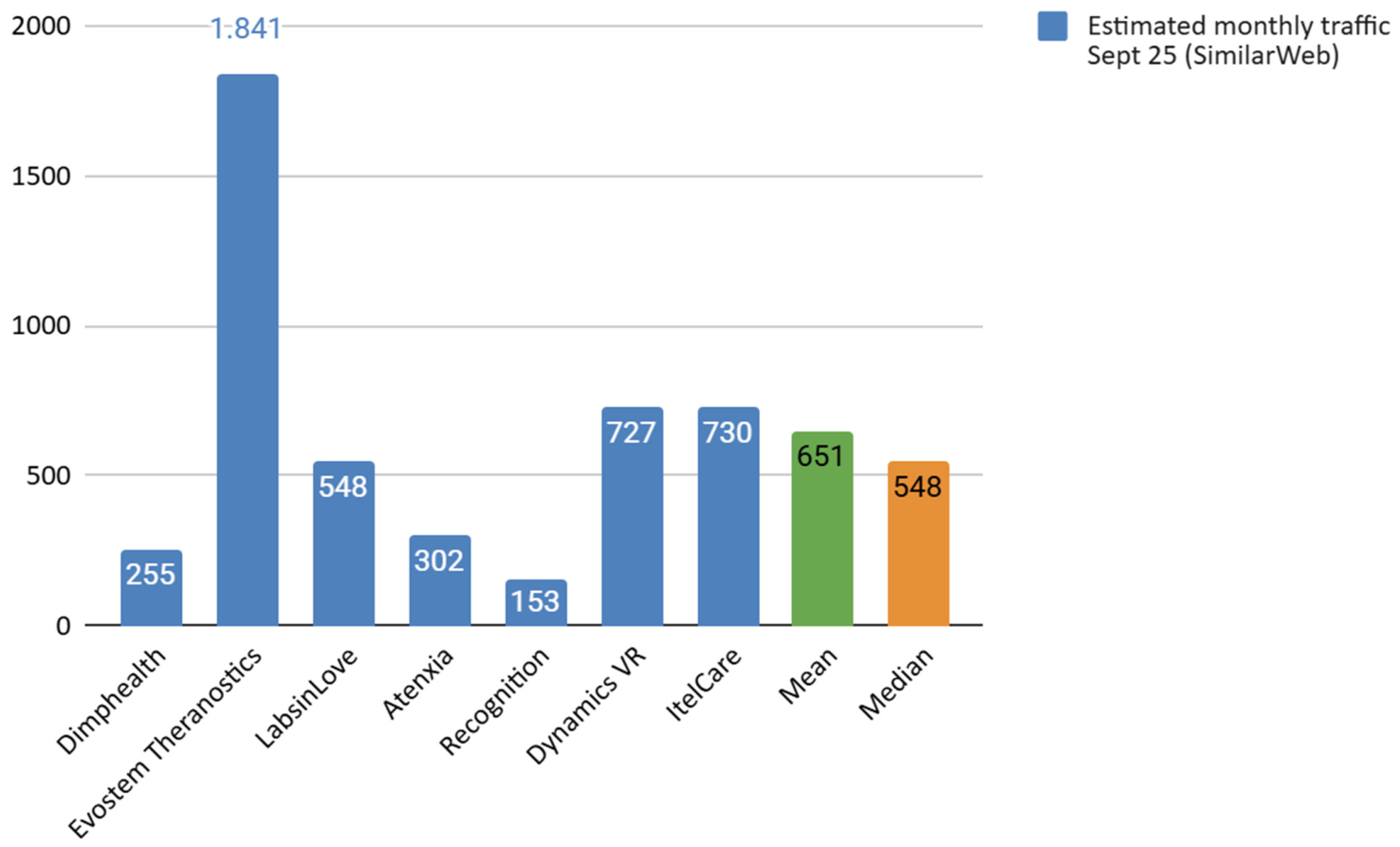
With regard to the estimated monthly traffic (see Figure 1) of the websites belonging to the companies in the study corpus, the average was 651 visits during the month analysed (September 2025) and the median was 548, with traffic ranging from 153 (Recognition) to 1841 (Evostem Theranostics). These figures indicate a general traffic level ranging from moderate to low, which is typical for early-stage biotech start-ups operating primarily (though not exclusively) under B2B (Business-to-Business) models, which tend to have lower but more specialised traffic.
As for websites with below-average traffic, we must take into account the current stages of both their operations (start-up phase) and their online presence. In other words, they may be in the early stages, where their SEO and promotional efforts are still in their infancy and not yet fully optimised.
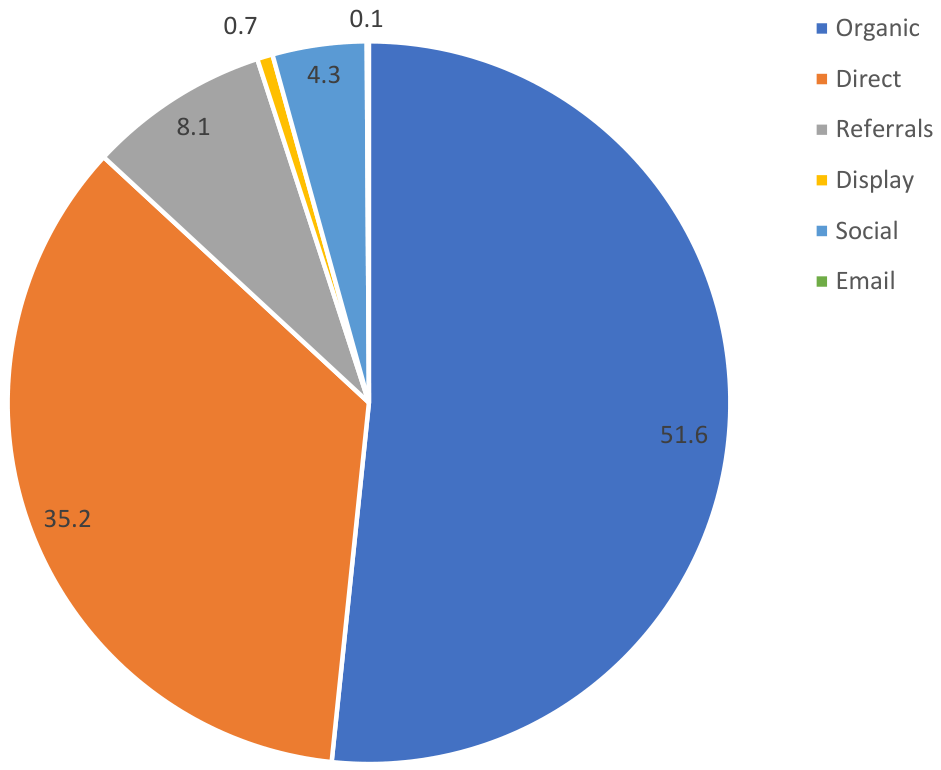
Figure 2 below shows the main sources of traffic on average for all the websites of the start-ups in the study sample. This data is useful for understanding how users arrive at the websites and, consequently, what kind of digital strategies are employed to attract visits and encourage browsing.
The predominance of organic traffic (51.6%) suggests that users find websites via search engines. This is a sign of effective SEO and, likely, the creation of relevant content.
Direct traffic accounts for 35% of traffic, corresponding to visits where the website’s URL is typed directly into the browser. In the context of this research, this may indicate traffic generated by visits from industry professionals familiar with the company or brand, as well as the promotional activities of start-ups at all kinds of events, meetings or professional gatherings.
Referral traffic indicates traffic generated via external sources; for example, in the case of start-ups or emerging companies, this could be traffic generated by a link to the website on a university portal, an accelerator, or an incubator project. It is also common for this traffic to come from media specialising in the sectors in which these companies operate. The figure of 8% is difficult to interpret, as given the niche nature of these websites, it can be seen as positive and could indicate good links with other networks and initiatives.
Taken as a whole, these figures reveal the nature of the browsing experience offered by B2B websites: specific searches for information or specialised content, as well as access to direct contact channels. Consequently, session durations are short, but the page-per-visit and bounce rate figures do not suggest a lack of interest, but rather a highly targeted form of communication (see Table 3).
With regard to the percentages of visits originating from computers (desktops or laptops) or mobile devices (see Table 4), we observe that mobile devices predominate as the access device when looking at the median value; however, when calculating the mean, we see a higher percentage of access from computers. Recognition, which records 100% of browsing from desktops, appears to skew the average. That said, the median provides a figure more consistent with the most common means of accessing and browsing the internet. It may therefore be more useful to assess each website individually rather than providing an overall view.
The data in Table 5 provides web performance metrics for both computers and mobile devices. These metrics measure loading and response times, which are key indicators for aspects such as the assessment of user experience (UX).
When evaluating this data, we should consider the differences in processing power between PCs and mobile devices, as well as their connection speeds (which are more variable on the latter). On that basis, and generally speaking, we can see that all the websites analysed perform well on PCs. On mobile devices, however, performance is more varied; some of them have load and blocking times that are higher than the mean and median.
In particular, Itelcare is the start-up with the best overall performance, driven mainly by its scores for First Contentful Paint and Speed Index (on both desktop and mobile). Conversely, Atenxia (no data for Total Blocking Time), Recognition and Dynamics VR perform more poorly (particularly on mobile), hampered by excessive blocking times and very slow loading speeds, which will affect the fluidity and responsiveness of these websites.
Using these performance factors, we could calculate an Overall Performance Index (hereinafter, OPI). First, we would need to convert the Total Blocking Time values into seconds.
With this, we could then normalise the various metrics, that is, transform the time (measured in seconds) into a standardised score. To do this, we will perform a logarithmic transformation that will require an inverse conversion, as a lower value (shorter time) indicates better website response (performance). However, with this index, we wish to establish that a higher OPI value indicates better performance. The normalisation or standardisation formula is as follows, where t is the time value in seconds:
t Est = 1/LN(t + 1)
Finally, we weight the values across the three categories to obtain a unified IRG:
IRG = (tTBT Est + tFCP Est+ tIP Est)/3
The table below (see Table 6) shows the IRG scores for mobile devices and computers and an overall average calculated from the previous values. The higher the score, the better the performance,7 which makes it easier for us to establish a ranking and provide an overall assessment.

4.2. Qualitative Data from Healthcare Start-Up Websites: Corporate Analysis

The following presents the qualitative findings regarding the corporate messaging on the website. The table below (see Table 7) sets out data on content relating to vision, mission, values and social commitment.
The start-ups that explicitly state their vision are those quoted in full as they appear on the website. These are Dimphealth, Labsinlove, Dy-namics VR and Itelcare.8 The others outline their mission and values.
As for the presence of content on social commitment, in all cases, there is a more or less explicit statement, except in the case of Recognition. In general, there is a strong emphasis on a commitment to people, aiming to improve their well-being and quality of life through innovation.
Another qualitative variable that indicates the existence of a corporate culture is the inclusion of sections describing the team of people who make up the company (see Table 8).
In this regard, we present the following data:
Table 8. Human team.
Start-UpSectionContentPeople
Dimphealth
Journalmedia 07 00120 i001
“About us”Photo and description (each person’s background and role within the company).4 members (2 men/2 women)
Recognition
Journalmedia 07 00120 i005
“Team”Photo and description (each person’s background and role within the company).3 members (2 men and 1 woman)
LabsinLove
Journalmedia 07 00120 i003
“About us”Photo and description (each person’s background and role within the company).6 members (4 women and 2 men)
Atenxia
Journalmedia 07 00120 i004
“Who we are”No content.No data
Evostem Theranostics
Journalmedia 07 00120 i002
“Who we are”Picture, name and training. 6 members (1 woman and 5 men)
Dynamics VR
Journalmedia 07 00120 i006
“Who we are”Group photos only, with no specific details about the team.4 members (all men)
Itelcare
Journalmedia 07 00120 i007
“About us”No data, no pictures about the human team.
Source: Own work.
Although the websites do not provide much information about the professional backgrounds of the members of biotech start-ups, their fields of origin are interesting: within the health sector (nursing, biology, neuropsychology, biomedicine and pharmacy), whilst in other areas, business administration and engineering professionals stand out.
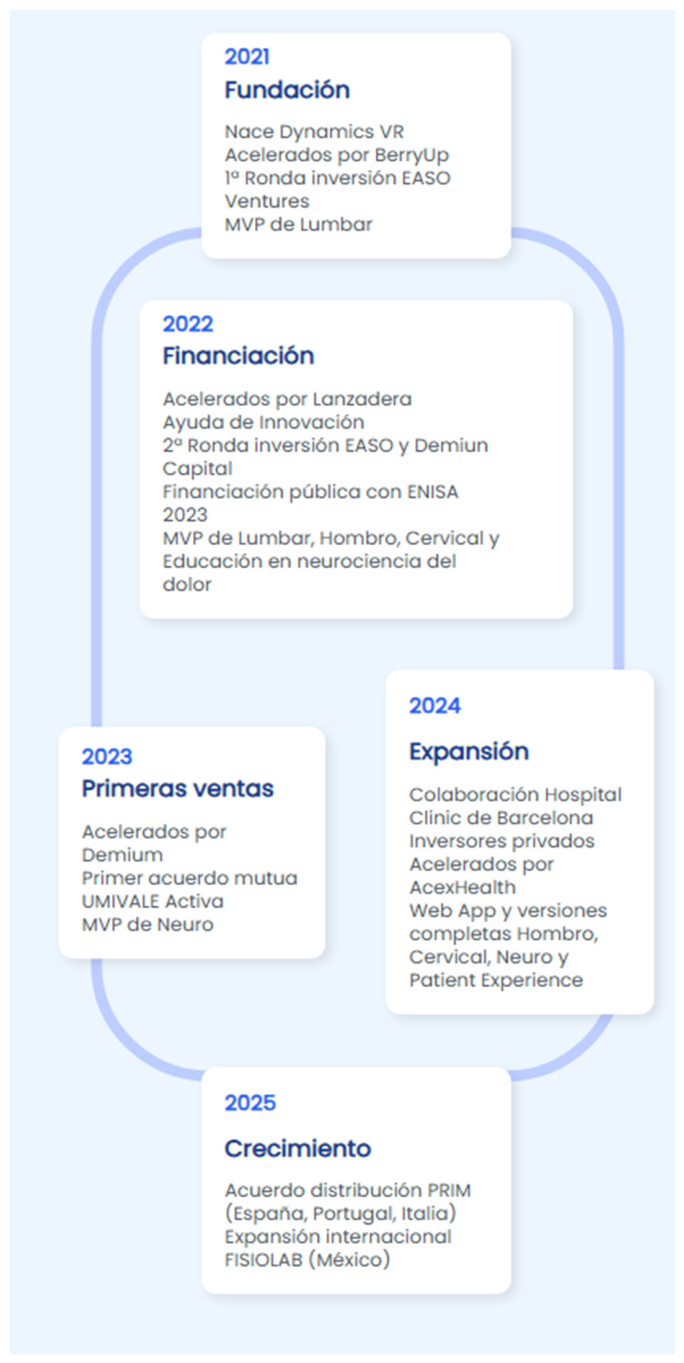
As for the ‘company history’ as a corporate variable that reflects the organisation’s culture, this is clearly presented by the start-up Dinamys VR under the heading ‘Learn about our history’ (see Figure 3). Although these are newly established companies, they put the user first by highlighting the key milestones since their inception.
The following information relates to the company’s identity as expressed through its texts. It also includes the symbolic elements conveyed through the corporate visual identity (see Table 9).
The first two variables analysed—the tone and style of the message—must be consistent with the start-up’s target audience. In this regard, companies such as Dimphealth, Evostem Theranostics and Labsinlove primarily target the healthcare sector—healthcare professionals and research centres—which justifies the use of specialised, technical language typical of the sector.
As for the visual elements in the case of the aforementioned companies, to which we add Dynamics VR, all use all-caps typography in their logos, which conveys strength and professionalism.
In the case of Itelcare, Dynamics VR, Recognition and Atenxia, the predominantly friendly tone in their texts is consistent with their main target audience: patients. The logos of three of them—Itelcare, Recognition and Atenxia—are in lowercase, which can be associated with a greater sense of approachability.
Regarding the colours used, most opt for blues and greens, which are strongly associated with technology and life. Both are also widely used in the healthcare sector.
As for symbols, two of the start-ups analysed, Itelcare and Labsinlove, include a heart in their visual design. This symbol can be associated with the communication of emotions and empathy.9

5. Discussion

This research demonstrates the interest of start-ups in the healthcare sector in managing their online presence and developing content that supports their brand architecture. The study reveals that the companies analysed, which have been in the market for no more than five years, are at an early stage both in terms of their use of digital platforms and in the development of a communication strategy that builds the corporate identity of the company and the brand.
According to the quantitative analysis and in terms of monthly website traffic, Evostem Theranostics stands out from the rest with a monthly traffic of 1841. To understand the reasons behind this, we would need to conduct a more detailed analysis, but we could venture that this figure reflects a better SEO strategy and active use of other communication channels (such as in-house publications, press coverage and other collaborations). We could also examine whether start-ups related to diagnostic technologies or advanced therapies (Evostem Theranostics specialises in the use of nanotechnology, gene editing and cellular biotechnology for oncological and regenerative medicine) attract more searches or informational interest that drives traffic to their websites.
This success can be attributed to the formal and specialised tone and style of its texts, as analysed in the qualitative section of the study. In this regard, the website highlights the professionalism of a multidisciplinary team dedicated to immunological diseases and cancer, which develops therapies to advance biomedicine in these fields. It also features informative content about cancer, including video content, which may contribute to the aforementioned website traffic.
In general, and with the exception of Evostem Theranostics, low traffic levels are observed across the websites analysed, with figures below 1000 visits. However, we must emphasise the nature of the companies and all the variables that may influence these monthly traffic levels.
In terms of overall performance, Itelcare is the start-up with the best results and the strongest position in the analysis of start-ups in the corporate sector, where they specifically articulate their vision, mission, values and social commitment. This places the company in an optimal position to achieve greater success, as both these factors enhance the user experience and brand perception.
As regards the overall picture of web traffic, the data suggests that the digital ecosystem of Andalusian bio-health start-ups is strongly linked to SEO efforts and direct brand or company recognition, with little emphasis on more active marketing channels (social media, newsletters, display advertising).
In terms of web traffic quality, Labsinlove and Recognition stand out, likely due to content with a higher level of engagement. In the case of Recognition, this fits perfectly with the direct and close relationship the site establishes with patients, showcasing the virtual reality technology they offer. Using accessible language, they present the details of “personalised therapy with exercises in virtual environments that are easy to apply in daily life”.
The main innovation challenges in healthcare for bio-healthcare start-ups are advancing patient safety and well-being, refining diagnostic capabilities, making progress in therapeutic adaptation, adapting technologies (virtual reality) to therapies in a personalised manner and adapting hospital tools for use in the patient’s home. All of this with the aim of contributing to the advancement and improvement of patients’ quality of life.

6. Conclusions

Given that we are analysing Andalusian bio-health start-ups, the traffic data obtained is consistent with digital communication strategies typical of B2B (Business-to-Business) models, i.e., emerging and highly specialised companies. In response to the analytical framework established at the beginning of this study, the following conclusions confirm the extent to which the initial questions have been addressed:
RQ1: How do bio-health start-ups integrate their corporate identity into their digital platform? The study confirms that while Andalusian bio-health start-ups are conscious of their brand identity, they are still in the early stages of maturity. There is a strong focus on defining mission and values, particularly regarding social commitment and the improvement of patient well-being. However, a significant inconsistency exists in the communication of human capital, despite several start-ups identifying their team as their greatest assets, many fail to provide visual or biographical information about their staff on their websites, which may hinder the building of trust with potential investors and partners.
RQ2: What is the relationship between technical web performance and user engagement in a specialized B2B context? The research identifies a divergence between strategic intent and technical infrastructure. While performance is consistently high on desktop platforms (PC), the high variability on mobile devices represents a critical weakness for start-ups whose primary audience includes patients. Regarding engagement, the data confirms a specialised B2B pattern: traffic is predominantly organic (51.6%) and direct (35.2%), indicating that engagement is driven by specific search intent and existing brand recognition rather than passive discovery through social media.
Hence, their overall traffic figures are relatively low. However, this same data shows, in general terms, effective SEO and promotion efforts, with websites designed from a fundamentally corporate perspective. The information regarding traffic sources supports this interpretation, with a predominance of organic and direct traffic that reflects this effective positioning and promotion of their websites. In this regard, their ability to build networks and generate traffic from external sources and their own content of a more informative nature is also significant.
The qualitative analysis does indeed reveal a corporate and communicative effort on the part of these companies, meaning that most are conscious of their brand identity, defining content regarding their mission and commitment within the healthcare sector. Whether targeting patients or healthcare professionals, these start-ups are at an early but well-focused stage of brand architecture.
Analysis of user behaviour data suggests that users’ interest is, one might say, highly focused and specific. In other words, by comparing the bounce rate, the number of pages viewed per visit and the average session duration (which is short), we can see that users have very specific objectives when accessing these websites.
In general terms, the performance of these websites—key factors for a good user experience—indicates that browsing is smooth, particularly on PCs. This is less so for mobile devices, which show greater variability.
This study therefore demonstrates that emerging biotech companies prioritise quality content over a more agile presence across different channels. The health and healthcare research sector thus shows that it operates at a more measured pace than companies in other sectors. This can be explained by the need to sell products and services, which typically leads to strategies involving greater brand presence and interaction with the public.
This study is limited by its focus on a specific regional park and relatively small sample of seven active websites.
Future research should adopt a longitudinal approach to observe how these digital strategies evolve as the start-ups transition from the acceleration phase to market maturity.

Author Contributions

Conceptualization, J.S.V. and E.B.; methodology, E.B.; software, J.B.A.; validation, J.S.V., E.B. and J.B.A.; formal analysis, E.B. and J.B.A.; investigation, J.S.V. and E.B.; writing—original draft preparation, E.B. and J.S.V.; writing—review and editing, E.B., J.S.V. and J.B.A.; supervision, E.B. and J.S.V. All authors have read and agreed to the published version of the manuscript.

Funding

This research was funded by State Research Agency (AEI, Spain), grant number PID2023-151727NB-I00 and The APC was funded by the same grant.

Institutional Review Board Statement

Not applicable.

Informed Consent Statement

Not applicable.

Data Availability Statement

The original contributions presented in this study are included in the article. Further inquiries can be directed to the corresponding author.

Conflicts of Interest

The authors declare no conflict of interest.

Appendix A

Analysis of the visual identity of the start-ups in the sample. Text generated by Microsoft Copilot (January 2026).
Atenxia
  • A cartoon-style character in blue-green tones with a red crest.
  • A blue sky background with clouds within a circular frame.
  • Large, stylised typography in teal and white tones.
  • Symbolism associated with accessible technology, education and approachability.
  • Suitable for educational platforms, youth apps or neurodiversity projects.
Dynamics VR
  • A blue gradient circle with three dots suggesting movement.
  • Sans-serif capital lettering, understated and professional.
  • Symbolism of dynamism, immersive technology and precision.
  • Suitable for virtual reality companies specialising in training or simulation.
EVOSTEM Theranostics
  • All-capital lettering with the ‘O’ transformed into a molecular symbol.
  • A scientific, clean and professional aesthetic.
  • Symbolism related to biotechnology, cells, diagnosis and therapy.
  • Ideal for companies specialising in personalised medicine or advanced therapies.
Itelcare
  • A geometric heart split vertically.
  • Handwritten typography in teal.
  • Symbolism of human care combined with technology.
  • Suitable for digital health, telemedicine or emotional wellbeing.
Labsinlove, S.L.
  • Logo centred on the word ‘LiL’ in green lettering, with a red heart as the dot on the ‘i’.
  • Accompanied by the company’s full name in a modern typeface.
  • Symbolising affection, warmth and professionalism.
  • Suitable for projects combining science, emotional care and creative branding.
RE-cognition
  • Stylised human profile with a purple-pink gradient.
  • Modern white typography on a blue background.
  • The long hyphen separates ‘re’ and ‘cognition’, reinforcing the idea of rethinking cognition.
  • Ideal for projects in cognitive AI, neuroscience or mental wellbeing.

Notes

1
It is a project run by the Regional Government of Andalusia that aims to integrate digital technologies into the public healthcare system in Andalusia.
2
It is a project run by the Regional Government of Andalusia that aims to integrate digital technologies into Andalusia’s public healthcare system.
3
According to the dictionary in the Impulsa Empresa section of Banco Santander (2026). www.impulsa-empresa.es, 24 May 2026.
4
https://ptsgranada.com, 24 May 2026. One of the Park’s key areas is Business Development. The PTS’s business focus is the driving force behind innovation in healthcare.
5
The excluded start-ups are: HealthConnect (data logging app), MouseData (website under construction) and Kerma (external website).
6
The AcexHealth Investor Day marked the conclusion of this support programme for start-ups. The event was attended by investors, investment funds and business representatives.
7
We would like to point out that no TBT data could be obtained for either platform (mobile and PC) for the Atenxia and Labsinlove websites. However, we have included them in the IRG calculation, with this limitation to be borne in mind when interpreting the results.
8
Table 5, ‘Corporate elements’, contains the aforementioned phrases in quotation marks.
9
The appendices to this article include the supplementary report generated by AI Copilot (2026) on the study variables. https://copilot.microsoft.com, 24 May 2026.

References

  1. Ariza Dau, M., Vega, L. M., Pimiento, D. T., García, M. G., & Passo, J. C. M. (2023). Human capital and business growth of the startups: An approach to the state of the art. Salud, Ciencia y Tecnología—Serie de Conferencias, 2, 362. [Google Scholar] [CrossRef]
  2. Banco Santander. (2026). Available online: www.impulsa-empresa.es (accessed on 24 May 2026).
  3. Chen, Z. F., Ji, Y. G., & Men, L. R. (2023). Effective social media communication for startups in China: Antecedents and outcomes of organization–Public dialogic communication. New Media & Society, 25(12), 3613–3640. [Google Scholar] [CrossRef]
  4. Córdova, J. C., Victoria-Mas, J. S., & Altamirano Benítez, V. (2022). Strategic communication for startups: Analysis of its intervention in the use of social networks. Journal of Positive Psychology & Wellbeing, 6(1), 795–803. [Google Scholar]
  5. García-Hernández, M. L., Martínez-Rodrigo, E., & Victoria-Mas, J. S. (2016). Biotechnology companies and science communication. The case of biotechnology SMEs based in biotechnology parks in Andalusia. Arbor, 192(779), a323. [Google Scholar] [CrossRef]
  6. Guerra, J. G. (2019). Algunas ideas sobre startups: ¿Superar el dilema de ‘personalización vs. coste’ de la medicina de precisión? Revista de Gestión y Salud, 10(2), 261–275. [Google Scholar] [CrossRef]
  7. Hashai, N., & Zahra, S. (2022). Founder team prior work experience: An asset or a liability for startup growth? Strategic Entrepreneurship Journal, 16(1), 155–184. [Google Scholar] [CrossRef]
  8. Heider, F. (1958). The psychology of interpersonal relations. John Wiley & Sons, Inc. [Google Scholar]
  9. Iwamoto, A. (2023). The origin of AIDA: Who invented and formulated the AIDA model? Proceedings of 21st Biennial Conference on Historical Analysis & Research in Marketing (CHARM), 21, 1–18. [Google Scholar]
  10. López-Navarrete, A.-J., López-Cepeda, I., & Álvarez-Ruiz, A. (2019). Estudio del caso de Hawkers: Un modelo de aprovechamiento estratégico de los recursos que ofrecen los entornos digitales. Mediterranean Journal of Communication/Revista Mediterránea de Comunicación, 10(2), 45–61. [Google Scholar] [CrossRef]
  11. Marvel, M. R., Wolfe, M. T., & Kuratko, D. F. (2020). Escaping the knowledge corridor: How founder human capital and founder coachability impacts product innovation in new ventures. Journal of Business Venturing, 35(6), 106060. [Google Scholar] [CrossRef]
  12. Men, L. R. (2021). The impact of startup CEO communication on employee relational and behavioral outcomes: Responsiveness, assertiveness, and authenticity. Public Relations Review, 47(4), 102078. [Google Scholar] [CrossRef]
  13. Men, L. R., Chen, Z. F., & Ji, Y. G. (2018). Walking the talk: An exploratory examination of executive leadership communication at startups in China. Journal of Public Relations Research, 30(1/2), 35–56. [Google Scholar] [CrossRef]
  14. Nigam, N., Benetti, C., & Johan, S. A. (2020). Digital start-up access to venture capital financing: What signals quality? Emerging Markets Review, 45, 100743. [Google Scholar] [CrossRef]
  15. Park, S.-Y., & Loo, B. T. (2022). The use of crowdfunding and social media platforms in strategic start-up communication: A big-data analysis. International Journal of Strategic Communication, 16(2), 313–331. [Google Scholar] [CrossRef]
  16. Ries, E. (2011). El método Lean Startup cómo crear empresas de éxito utilizando la innovación continua. Deusto. [Google Scholar]
  17. Talaia, M., Pisoni, A., & Onetti, A. (2016). Factors influencing the fund raising process for innovative new ventures: An empirical study. Journal of Small Business and Enterprise Development, 23(2), 363–378. [Google Scholar] [CrossRef]
  18. Villafañe, J. (1999). La gestión profesional de la imagen corporativa. Pirámide. [Google Scholar]
  19. Zhou, F. (2024). Utilizing social media platforms to foster entrepreneurial communication among start-up communities. El Profesional de La Información, 33(5), e330525. [Google Scholar] [CrossRef]
Figure 1. Estimated monthly traffic (September 25). Source: Own work/Similar Web.
Journalmedia 07 00120 g001
Figure 2. Traffic sources (average). Source: Own work/Similar Web.
Journalmedia 07 00120 g002
Figure 3. History of Dynamics VR. Source: www.dynamics-vr.com, 24 May 2026.
Journalmedia 07 00120 g003
Table 1. Quantitative methodology.
Data TypeSourceVariable
Estimated web trafficSimilarWebMonthly visits, traffic sources, devices, bounce rate, visit duration, number of pages per visit
Website technical performanceGoogle PageSpeed InsightsFirst contentful paint, total blocking time, speed index
Source: Own work.
Table 2. Selection of Start-ups.
Start-UpHealthcare AreaObjective Product/Service
DimphealthTechnologies for out-of-hospital healthcare.Optimising the work of healthcare professionals.Medical devices for the transport of blood samples or the administration of intravenous fluids.
Evostem TheranosticsInnovation in disease diagnosis.To facilitate diagnosis through technology.Medicines and diagnostic devices.
LabsinLoveInnovation in cancer treatment.Improving cancer treatments.Boron neutron capture therapy for cancer.
AtenxiaAI applied to ADHD and dyslexia.Tailor intervention plans.Digital platform for patient therapy.
RecognitionRehabilitation of neurological injuries.Improvements in neurodevelopmental and neurodegenerative conditions.Virtual reality platform.
Dynamics VRPhysiotherapy and neuromotor training.To facilitate access to neuromotor exercise programmes that can be carried out independently.Virtual reality in physiotherapy.
ItelCareAI for medical records and home monitoring.Improving digital health and home monitoring for patients with complex chronic conditions.Medical kits, mobile apps and web tools for doctors.
Source: Own work.
Table 3. Quality of the web traffic.
Start-UpAverage DurationPages per SessionBounce Rate (%)
Dimphealth1.0239.21
Evostem Theranostics0:00:411.942.82
LabsinLove0:01:242.8633.01
Atenxia0:00:241.4546.47
Recognition0:01:075.0
Dynamics VR0:00:122.0441.43
ItelCare0:00:232.4744.75
Source: Own work/Similar Web.
Table 4. Traffic distribution by device.
Start-UpDesktopMobile
Dimphealth33.2766.73
Evostem Theranostics41.6958.31
LabsinLove31.9468.06
Atenxia42.3157.69
Recognition1000
Dynamics VR52.7247.28
ItelCare76.0123.99
Media53.9914285746.00857143
Mediana42.3157.69
Source: Own work/Similar Web.
Table 5. Web performance factors.
Start-UpMobile: Total Blocking Time “ms” 1Mobile: First Contentful Paint “s” 2 Mobile: Speed Index “s” 3 PC: Total Blocking Time “ms” PC: First Contentful Paint “s” PC: Speed
Index “s”
Dimphealth802.53.9400.51.6
Evostem Theranostics2044.61100.92.1
LabsinLove-4.75.2-11
Atenxia-10.810.8-23.3
Recognition18002.721.56600.24.7
Dynamics VR3603.35.63800.83.2
ItelCare1101.51.51000.40.7
Media3.3857142864.2142857147.5857142861.8428571430.82857142862.371428571
Mediana803.35.21000.82.1
Source: Own work/PageSpeed Insights. 1 The total amount of time a page is blocked. Consequently, it does not respond to user interaction. It is measured in milliseconds. 2 The time it takes for the first visible element to appear. Measured in seconds. 3 The time it takes for the visible content of a website to load and be displayed. Measured in seconds.
Table 6. Scores for IRG Mobile, PC and Global.
Start-UpIRG MobileIRG PCIRG Global
Dimphealth4.8070187659.6698650317.238441898
Evostem Theranostics17.233382144.00802001310.62070107
LabsinLove0.56131963560.96179669390.7615581647
Atenxia0.40517004570.53194036210.4685552039
Recognition0.68558151182.0711225971.378352055
Dynamics VR1.4892327820.85546382041.172348301
ItelCare3.9216424461.6910836712.806363058
Source: Own work.
Table 7. Corporate elements.
Visual IdentityVision MissionValuesSocial Commitment
DimphealthJournalmedia 07 00120 i001“To establish ourselves as a leading provider of innovative medical devices.”“To make the work of healthcare professionals easier and improve patient safety.”Accessibility, continuous improvement, innovation, excellence, sustainability.Safety, efficiency and patient wellbeing.
Evostem TheranosticsJournalmedia 07 00120 i002To advance scientific knowledge and develop tools that bring real value to the healthcare sector.Diagnosing immune disorders. To contribute to advances in biomedicine and improve diagnostic and therapeutic capabilities.
LabsinLoveJournalmedia 07 00120 i003“To find a solution for types of cancer that are difficult to treat with existing therapies.”To develop new molecules and nanoparticles that contribute to the advancement of cancer therapies.Academic excellence, creativity, dedication and perseverance.Our greatest asset is our people.
AtenxiaJournalmedia 07 00120 i004 To provide a treatment plan tailored to each patient.Work based on scientific evidence.Customised adaptations.
RecognitionJournalmedia 07 00120 i005To provide a tool backed by scientific research that helps people exercise their cognitive abilities.To provide a useful tool to help those in need.Motivation, effectiveness, efficiency, accessibility
Dynamics VRJournalmedia 07 00120 i006“Revolutionising physiotherapy”.To make effective, self-directed neuromotor exercise programmes more widely accessible to people with chronic pain and brain injury.Innovation and technological excellencePioneers in the development of neuromotor training programmes using virtual reality.
ItelCareJournalmedia 07 00120 i007“To be leaders in the remote patient monitoring market.”To improve the quality of life for people with chronic conditions through innovation and technology.Quality and customer service.Bringing the necessary healthcare tools from the hospital to the patient’s home.
Source: Own work.
Table 9. Message style and Visual identity.
CompanyTone/Style of the MessageSymbolic Elements (Images, Colors, Symbols)
DimphealthNearby/informativeLogo in capital letters in dark blue.
Symbol: molecular structure
Re-cognitionNearby/technicalA blue lowercase logo with rounded lettering.
Symbol: a silhouette combining a brain and virtual reality glasses.
LabsinLoveNearby/specialisedLogo in green, using both upper and lower case letters.
Symbol: heart
AtenxiaTechnicalLogo in lowercase, greenish hue.
A friendly character in greenish tones holding a tablet.
Evostem TheranosticsFormal/specialisedLogo in capital letters, blue.
Symbol: Cell
Dynamics VRNearby/Technical–informativeLogo in dark blue capital letters.
Symbol: An incomplete circle.
ItelcareNearby/informativeFreehand logo, green in colour.
Symbol: Heart (made of paper) in the same shade.
Source: Own work.
Disclaimer/Publisher’s Note: The statements, opinions and data contained in all publications are solely those of the individual author(s) and contributor(s) and not of MDPI and/or the editor(s). MDPI and/or the editor(s) disclaim responsibility for any injury to people or property resulting from any ideas, methods, instructions or products referred to in the content.