1. Introduction
Within the EU policy framework, disinformation is widely conceptualized as “all forms of false, inaccurate, or misleading information de-signed, presented and pro-moted to intentionally cause public harm or for profit” (
EC, 2018a). This concept includes different forms of communication behaviour related not only to the production but also to the dissemination of such content (publishing, sharing, commenting, etc.). Thus, it also refers to “practices that go well beyond any-thing resembling ‘news’ to include some forms of automated accounts” for astroturfing, organized trolling, fake follower networks, fabricated or manipulated videos, and much more (
EC, 2018a). The disinformation providers can be both state and non-state, as well as internal or external actors, that drive “to confuse or manipulate citizens, create distrust in international norms, institutions or democratically agreed strategies, disrupt elections,” as well as “target, discredit, and silence those who produce verified information or hold opposing views, including politicians, journalists, human rights campaigners, scientists, and others” (
Bontcheva & Posetti, 2020, p. 19).
However, the absence of a universal or codified definition of disinformation is debatable among scholars. Discussing the most prominent definitions on disinformation that form the basis of the current European Union policy,
Ó Fathaigh et al. (
2021) identified their core common elements: (a) false information, (b) disseminated with a specific intention, and (c) targeting certain public harms. The European Commission’s current policy on disinformation emphasizes its intentional character. Another salient dimension of the EU approach is the recognition that disinformation, while not always unlawful, poses significant risks to citizens, societal cohesion, and the integrity of democratic political processes (
Ó Fathaigh et al., 2025). However, this “dimension” does not prevent legislative initiatives by EU member states to explicitly designate disinformation as illegal, while in some jurisdictions, disinformation is even subject to criminalization. This worrying trend is intensified in certain social crisis, such as the COVID-19 pandemic.
The theoretical approach used in this research connects disinformation with the contemporary processes of democratic backsliding and the growth of autocratization. The special challenge for democratic political order is the fact that disinformation often supports and amplifies narratives promoted by the authoritarian political agents. The risks of democratic pluralism are related to the phenomenon that the public is less and less exposed to media content of general interest and, at the same time, is progressively exposed to disinformation (
EC, 2022). The consequence of this non-balanced exposure might be the growth of public distrust towards representative institutions, which is quite widespread both in national arenas and at the European Union level (
EC, 2018b). Recent research has shown that the increase in disinformation and hate speech promotes the polarization of public discourse, which escalates to toxic levels in many countries, and “contributes to electoral victories of anti-pluralist leaders and the empowerment of their agendas” (
Somer et al., 2021).
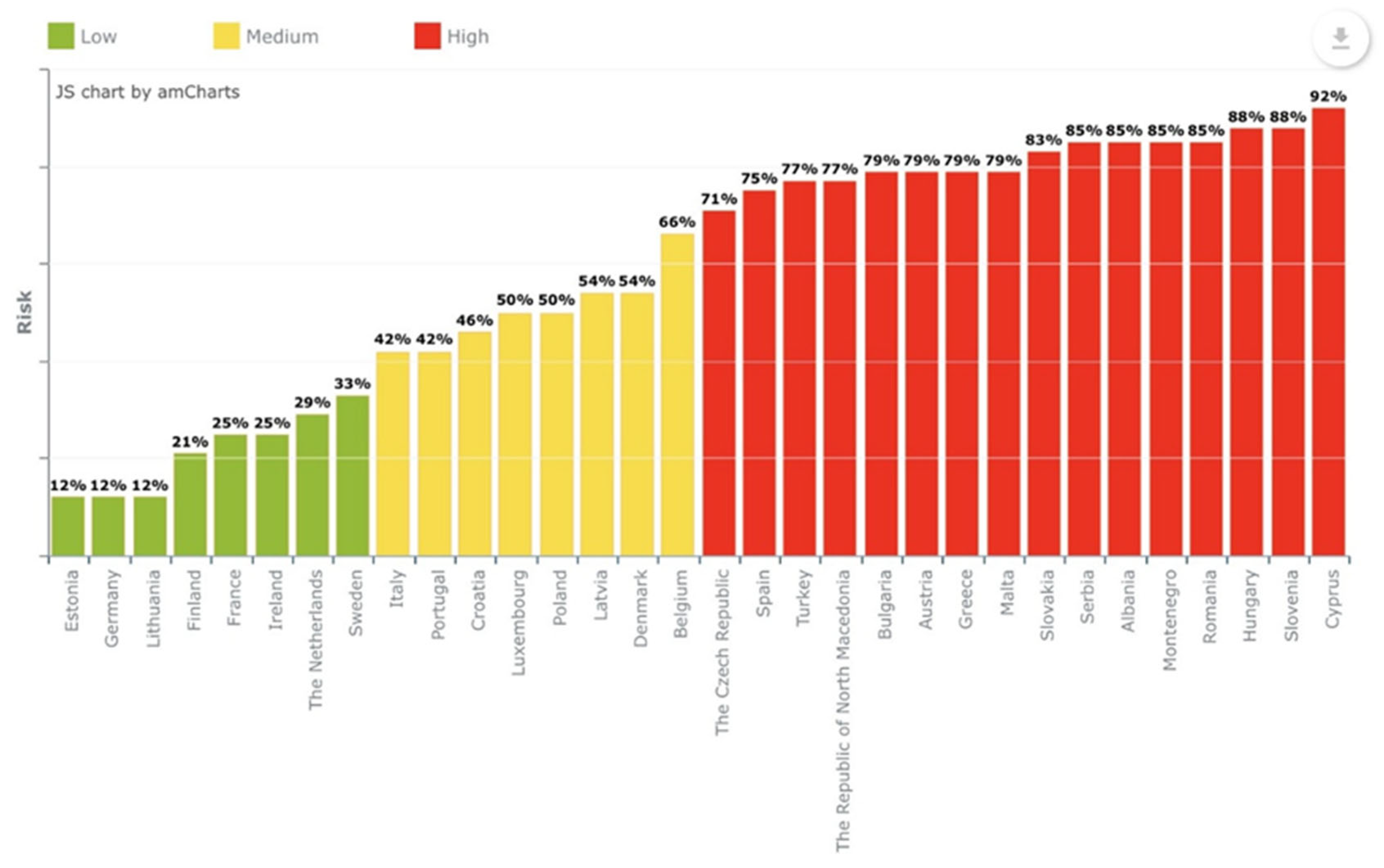
Over the last few years, the European Union has recognized the necessity of establishing a holistic and multidimensional approach to tackle the “disinfodemic” and launched a set of policy measures with the direct goal of suppressing disinformation. At the same time, with the indirect goal of protecting and strengthening European democracy, the EU has developed a strategic framework to protect a trustworthy media system, explicitly recognizing quality journalism as a public good that fulfils an important democratic function. However, the lack of comprehensive strategy against disinformation is still evident across Europe. Effective and functional protection exists in a few EU member countries, while others have medium or high risk levels (
Bleyer-Simon et al., 2024;
Blagojev et al., 2025). EU candidate countries belong to the latter group. Among them is Serbia, which, over the past two years, has developed political conditions which are extremely unfavourable for media pluralism and the functioning of democratic processes.
Therefore, the focus of this research is on the contemporary European Union’s policy framework for countering disinformation, situating it within the broader context of respective political regimes. The main research questions of the study are as follows: What are main challenges associated with defining and implementing counter-disinformation policies within the EU and Serbia? How do differences in political systems shape the respective approaches to countering disinformation in these two contexts?
3. Theoretical Framework: Disinformation and Democratic Decline
In traditional media (press, radio, and television), professional gatekeepers had an (albeit imperfect) institutional control role, assessing the credibility and reliability of media sources and their stories. Advancements in information technology and the emergence of social media platforms have granted individual users the autonomy to generate and distribute content, while gatekeeping relies on platform algorithms that play a key role in prioritizing and filtering content. This led to the current structural transformation of the public sphere, which has also been shaped by a noticeable decline in the trust placed in traditional quality journalism. Populist agendas have fuelled and exploited this distrust, claiming that the mainstream media is part of a corrupt liberal elite. Furthermore, today, misinformation often flows freely through the gates of traditional media, resulting in “amplifier effect” (
Bennett & Livingston, 2021, p. 124).
The decline in confidence towards media outlets not only challenges the dissemination of accurate information but also threatens the foundational principles of democratic governance. The technology-assisted undermining of the role of professional journalism is recognized by critical authors as part of a wider front against epistemological authorities, which works by systematically devaluing institutions dedicated to the search for truth and responsibility (
Bennett & Livingston, 2021).
Dahlgren (
2018) explains the concept of the “epistemic crisis of democracy,” which is largely determined by widespread distrust in journalistic institutions. He argues that this crisis may serve as a precursor to a fully developed post-truth society, where objective facts are often overshadowed by subjective beliefs and misinformation. Populist demagogues usually reach for so-called alternative facts and disinformation campaigns, trying to undermine the credibility of the institutional epistemological authority (
Bennett & Livingston, 2021).
Although this assessment primarily referred to the situation in the USA, recent studies indicate that post-truth politics poses a similar threat in Europe (
Conrad et al., 2022). In this sense, information disorder is interpreted as a consequence of the erosion of the legitimacy of liberal democracies’ authoritative institutions, resulting in a breakdown of trust in official information (
Cheyfitz, 2017;
Luttrell et al., 2021). Relevant research on the current global wave of autocratization documents two important structural elements—toxic polarization and disinformation campaigns (
V-Dem Institute, 2022,
2025). The last V-Dem Democracy Report (2025) showed that the democratic decline that has occurred over the past 25 years has global reach, though it has been observed to be uneven across regions: “Eastern Europe, including the Balkans and Caucasus, were much more democratic back then and autocracy has taken hold or strengthened in countries like Belarus, Hungary, Russia, and Serbia” (p. 10), while “no country across North America and Western Europe is substantially improving on democracy levels” (p. 21). In the European Union, several member states are subject to the processes of declining or collapsing indicators of democracy. This wave affects Slovenia, Romania, Greece, Slovakia and Cyprus, and Hungary is considered the biggest autocratizer.
Also, the following non-EU member countries are undergoing autocratization: Armenia, Belarus, Georgia, Moldova, Romania, Serbia, and Ukraine. For our analysis, Serbia, as an EU membership candidate, is particularly important; after the election victory in 2012, the new political elite led by the Serbian Progressive Party (SNS) gradually colonized and instrumentalized representative institutions and legislative bodies (
Bieber, 2019;
Milutinović, 2023;
Vladisavljević, 2019). Serbia, along with Hungary and Türkiye, is officially categorized as an electoral autocracy (
V-Dem Institute, 2025).
Numerous studies have analysed the causes of democratic decline, but we do not devote research attention to that topic in this paper. We limit our theoretical insights to the phenomenon of information disorder, in the context of autocratization strategies. Media capture, the suppression of independent journalism, and the erosion of media freedom constitute core elements of these strategies within electoral autocracies, shaping the environment conducive to the disinformation growth (
Marius, 2024;
Schedler, 2013). Also, in illiberal democracies, “disinformation supports a transition to more authoritarian regimes with overt press censorship and the suspension of basic rights and legal processes” (
Bennett & Livingston, 2021, p. 4). Digital media are clearly recognized as an especially significant catalyst in (repeated) strengthening of extreme political ideologies, causing disruptions in the conventions of democratic discourse and undermining trust in representative democracy (
Inglehart & Norris, 2016;
Sunstein, 2017). The literature clearly marks the mutual causal relationship between the deterioration of the democratic debate and electoral processes, on one hand, and “the increasing concentration of economic resources into just a few gigantic online platforms/media, and the spreading of the disinformation”, on the other (i.e.,
Parcu, 2019). Hence, disinformation functions not only as a cause of autocratization, but as its consequence as well, interacting with weakened media systems, declining trust, and political capture (
Echeverría et al., 2025;
Štětka & Mihelj, 2024). These dynamics frequently interact, often unfolding simultaneously and reinforcing one another.
Štětka and Mihelj (
2024) underline that, “When the illiberal public sphere reaches the hegemonic stage, as observed in Hungary and Serbia, mainstream media assume the central role in the disinformation news ecosystem, both as amplifiers, as well as producers of propaganda and false narratives, including conspiracy theories” (p. 204).
Thus, this academic perspective does not perceive information disorder as a root cause of current democracy disorders, but rather as a reliable symptom of broader problems of delegitimization and the systemic limitation of representative capacities of democracy and regulatory functions of government, which are visible even in democratic countries (
Tucker et al., 2018;
Fossum, 2022). Hence, the notion of autocratization, in addition to the collapse (or loss) of the remaining democratic attributes in societies with authoritarian rule, also addresses the decline of the quality of democracy in democratic societies (
Vladisavljević, 2019). Important insights into this were provided by
Crouch (
2004),
Bennett and Livingston (
2018,
2021),
Newman (
2022),
Starr (
2021),
Cheyfitz (
2017), and others. Crouch uses the term post-democracy to designate the contemporary order in which the principles of protection of basic rights, such as freedom of expression, institutional checks and balances including the role of parliaments, opposition parties and other institutions of political representation, have become the subject of public contestation. In short, at the base of this delegitimization of the fundamental institutions of classical liberal democracy, the ambitions of the most powerful global corporations are recognized. For decades, they have launched broad campaigns against the institutions that are capable of regulation, taxation, and examination; that is, those that are able to threaten the dogma of market fundamentalism in any way (
Bennett & Livingston, 2018;
Cheyfitz, 2017;
Luttrell et al., 2021).
Even in countries that have been known as the leaders of the free world for decades, populist movements and leaders legitimize themselves as opponents of the decadent “liberal establishment” and supporters of the sovereignty of nations, freedom, and true democracy. However, these promoters of post-truth become absolutists when it comes to the truth of their own narrative (
Newman, 2022, p. 26). Therefore, the assumptions that disinformation will continue to grow globally, especially in the wake of Donald Trump’s victory in the 2024 US presidential election, have strengthened. President Trump counts the owner of X, Elon Musk, as one of his main allies.
Tuñón Navarro et al. (
2025) suggest that Trump’s election to a second term and the use of disinformation by tech oligarchs confirm that we are already living in a post-truth era, “where opposing narratives are impervious to verification” (p. 3).
In this context, the demands for EU “tech sovereignty” gained prominence, framing disinformation as a geopolitical issue as well. The neoliberal economic order allowed for a huge concentration of market power in a very small number of US-based information technology companies, whose business models and algorithms helped spread disinformation (
Starr, 2021, pp. 67–68). Very large online platforms (VLOPs) have effectively taken over the role previously played by institutional gatekeepers in the mass media. But unlike editors and journalists, whose profession is determined by the deontological norms of objective, timely, and truthful reporting in the interest of the public (
McQuail, 2007), internet platforms are under no obligation to provide reliable knowledge, nor are they designed with the aim of evaluating and selecting information according to the criterion of credibility. Despite this, they function as “critical infrastructure for the information ecosystem, which architecture profoundly influences both democratic discourse and the visibility of journalism within” (
Blagojev et al., 2025, V). The problem is all the more complex because VLOPs and very large online search engines (VLOSEs) have accumulated extraordinary power to influence attempts to regulate online communication. They skilfully resist being characterized as media companies, insisting instead on positioning themselves primarily or exclusively as profit-oriented technology companies (
Napoli, 2019).
On the other hand, attempts at regulation carry with them considerable risks to democracy. Today, the attempt to regulate digital platforms is one of the key challenges faced by European democracies: how can one limit the power of platform monopolies and, at the same time, protect freedom of expression? Recent research (
Van Hoboken & Ó Fathaigh, 2021;
Ó Fathaigh et al., 2021,
2025) argues that a government’s regulation of disinformation may threaten freedom of expression. The main challenge is to achieve a balance between freedom of speech and preventing the spread of disinformation, i.e., project proportional (necessary and justified) restrictions (
Tucker et al., 2018, p. 62). Theoretical discussions on contemporary EU regulatory solutions for shaping media environments (
Marsden et al., 2019;
Ó Fathaigh et al., 2025) consider their limits, consistently referring back to Article 10 of the European Convention on Human Rights and Fundamental Freedoms. Scholars emphasize that restrictions on freedom of expression must be legally legitimate and proven to be necessary, and the least restrictive means possible should be employed to pursue this aim.
4. The Unique EU Disinformation-Countering Approach
The European Union started the official institutional fight against disinformation in 2015, when the East StratCom working group was established within the European External Action Service, following a decision made by the European Council. Since then, several initiatives regarding the fight against disinformation and the protection of media plurality and diversity online have been launched. Unlike in the previous period, when self-regulatory measures were considered more appropriate, the EU is now of the opinion that regulation is necessary.
In 2022 the EU took resolute steps to adopt new media legislation—the Digital Services Act (DSA), Digital Markets Act (DMA), and the European Media Freedom Act (EMFA), aiming to regulate digital platforms and ensure they take more responsibility for content moderation and combating disinformation. This legal package arose from the new point of view that the growth and autonomy of digital intermediaries should no longer be treated with unconditional freedom, but that they “should become conditioned by certain ethics and norms of behaviour as the basis of a new social contract” (
Tambini & Moore, 2021). In this regard, the DSA calls for higher transparency, greater focus on the responsibility of digital service providers, and for an efficient tackling of illegal online content. It requires major online platforms to carry out regular risk assessments (at least once a year) related to the design and use of their services, including the risks of spreading disinformation. The DSA prescribes the direct removal of illegal content such as incitement to terrorism, hate speech, and the like. On the other hand, it foresees different treatment for content that is potentially harmful but not necessarily illegal (disinformation) to avoid risks of encroaching on the freedom of expression. In that sense, DSA encourages key actors, i.e., large internet platforms, to provide response to these challenges in the domain of self-regulation mechanisms. The idea is to improve the safety of users online and protect their basic rights by establishing clear obligations for online platforms, including “notice and action” mechanisms for illegal content and the possibility of challenging the platforms’ content-moderation decisions (
Regulation (EU) 2022/2065, 2022).
Since the initiative to enact the DSA is based on Article 114 TFEU, it has direct applicability in the EU member states. DSA has been applicable since 1 January 2024, and the efficiency of its implementation should be subject to further research. EU legislators expect that this will improve legal certainty and the conditions for media pluralism in the EU’s harmonized digital market. In a very practical sense, the difference is that the previously voluntary character of the proposed actions has now become mandatory for both social media platforms and giants in the digital public sphere, such as Google and Apple (
Michailidou et al., 2022).
A key change in the new package of laws is the recognition of news media not only as commercial enterprises but also as a public good, where the role of professional journalism is explicitly recognized as a pillar of democracy. In light of this, an improved (revised) “Code of Practice on Countering Disinformation” was signed in 2022, as a self-regulatory agreement within the EU to combat online disinformation. The 34 signatories of the Code pledged to take action in several directions: denying financial incentives (demonetization) to purveyors of disinformation; ensuring the transparency of political advertising; reducing the manipulative behaviour used to spread misinformation (such as fake accounts, astroturfers, and bots); empowering users (by improving tools to recognize, understand and flag disinformation, to access authoritative sources and through media literacy initiatives); and improving cooperation with fact-checkers (
European Commission, 2022). However, the traditional media—even though they represent part of the problem of spreading disinformation—are not signatories to the Code, which the expert public assesses as its main drawback.
In February 2025, the European Commission and the European Board for Digital Services renamed the 2022 Code as the Code of Conduct on Disinformation and endorsed its integration into the DSA framework. The official code of conduct, in line with the DSA, entered into force on 1 July 2025 as a co-regulatory measure, i.e., one of the potential risks-mitigating measures under the DSA (Art. 35 of DSA). The DSA positions the Code as a benchmark for determining compliance with the legal norm: “adherence to and compliance with a given code of conduct by a very large online platform or a very large online search engine may be considered as an appropriate risk mitigating measure” (DSA, Recital 104). This illustrates the transformation of the Code from a self-regulatory tool into a key mechanism for evaluating VLOPs’ compliance with the DSA in relation to disinformation (
Ó Fathaigh et al., 2025, p. 11).
The recent literature discusses the concerns that rise from the legal powers of the EC. Namely, since competent national regulators (Digital Services Coordinators—DSCs) are not competent on VLOPs, the European Commission gains “exclusive powers” to supervise and enforce Articles 34 and 35 of the DSA on systemic risks (Art. 56 of DSA). The European Commission may submit requests for information to VLOPs regarding a “suspected infringement,” with fines applicable where platforms provide “incorrect, incomplete or misleading information” (Art. 67(1)–(2) of DSA). In urgent cases involving risks of serious harm to service recipients, the Commission can impose interim measures (Art. 70(1) DSA, which may include requirements for monitoring specific keywords or hashtags. Finally, the EC may impose fines of up to 6% of the total worldwide annual turnover of VLOPs (Articles 73–74 of DSA). Critics warn that these powers could blur the line between regulation and political discretion, potentially affecting freedom of expression (
Ó Fathaigh et al., 2025).
Alternative interpretations also highlight the risks posed by national laws that criminalize disinformation.
Ó Fathaigh et al. (
2021) caution that Article 8 of the DSA establishes a mechanism in the EU law that enables national judicial and administrative authorities to compel platforms to remove content under domestic provisions on disinformation (pp. 17–18). Such powers might carry significant implications for freedom of expression in Europe. The European Commission itself warned that laws adopted during the COVID-19 pandemic, which defined disinformation-related offences, risked fostering self-censorship and raised “particular concerns regarding freedom of expression” (EC according to
Ó Fathaigh et al., 2021).
6. The Case of Serbia
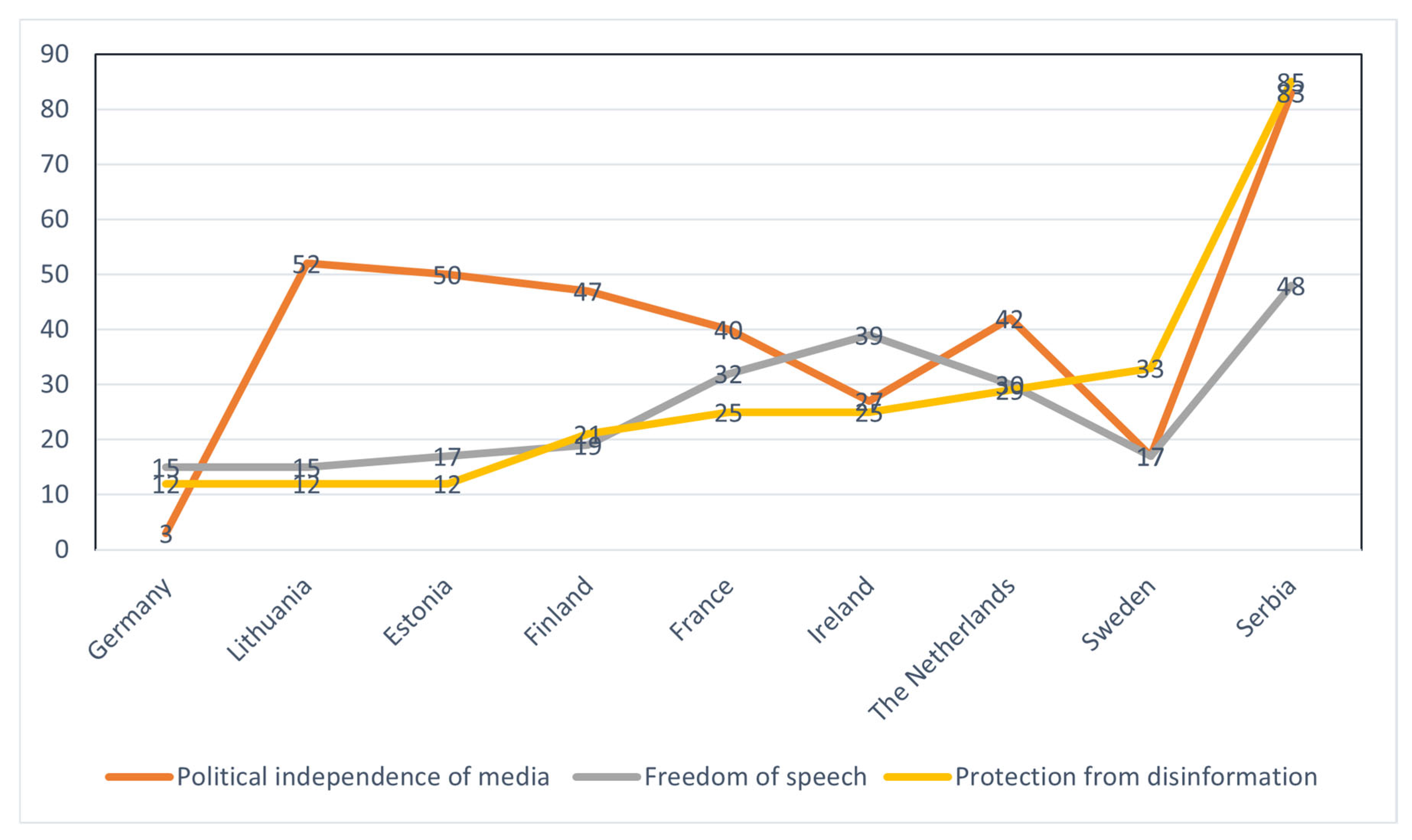
The MPM2024 Report assessed the risk to freedom of speech in Serbia as medium (48%), but the risk level was found to be significantly higher with regard to the political independence of the media (83%) (
Figure 2). Regarding disinformation, with a risk level of 85%, Serbia was categorized as highly vulnerable. This score significantly exceeded not only the cumulative risk score for the EU member states (52%) but also that for the EU plus candidate countries (54%). Since these scores were recorded, almost every benchmark of media pluralism and freedom in Serbia has exhibited additional regression.
Regulatory shortcomings persist, with no framework specifically addressing digital media or disinformation. The current media laws address the issue of disinformation only indirectly, through general provisions that require media to report truthfully, objectively, and in a timely manner (Art. 5, of
Law on Public Information and Media (LPIM), Official Gazette Republic of Serbia no 92/2023 and 25/2025; Art. 61 of the
Law on Electronic Media (LEM), Official Gazette Republic of Serbia no 92/2023 and 25/2025). The transmission of fake news is sanctioned under the Criminal Code which prescribes the criminal offence of causing panic and disorder (Article 343 of CC). However, the Code fails to provide definitions of either fake news or disinformation, limiting its provisions to news items that deviate from factual accuracy. Serbia’s 2023 and 2025 media law amendments ignored reform ideas from the 2020 Media Strategy and failed to align with the EU’s 2022 regulation, which required platform obligations and editorial safeguards.
In practice, within Serbia, disinformation functions as a coordinated and inherent behavioural pattern embedded in the ruling political regime profile. Despite its authoritarian nature, the Serbian authorities have pursued only minimal online content removal over previous years. This limited intervention has contributed to the characterization of Serbia’s internet environment as one of the freest in Europe, despite persistent disinformation challenges. Rather than employing overt repression, Serbian authorities have relied on more sophisticated methods typical of political systems undergoing autocratization behind a “democratic facade” (
Levitsky & Ziblatt, 2018). This strategy relies on disinformation campaigns initiated by high-ranking officials and amplified by pro-government tabloids, television, online portals, and social media (
EP, 2023). These campaigns function as tools to bolster or discredit political actors, agendas, and narratives. The opacity of ownership across numerous internet portals provides structural support for such strategies, as these outlets frequently act as vectors of disinformation. In addition, the government has previously worked to create a sophisticated system of organized online trolls operating on social networks (
ODIHR, 2022).
The information disorder functioned as a mutually reinforcing dynamic: it consolidated the political system that was influencing the media while strengthening itself through the autocratization process. The state aid mechanisms rewarded loyal newsrooms and media outlets that repeatedly violated ethical and professional standards (
EP, 2021). Media–political clientelism and the economic vulnerability of the journalistic profession supported these processes. But a central pillar of media capture in Serbia was the systematic non-implementation of legal norms and institutional powers, which effectively neutralized regulatory safeguards. In addition to other institutions, independent observers long warned that the Regulatory Body for Electronic Media (REM) was politically instrumentalized. It consistently undermined public interest and democracy through deliberate non-enforcement of its legal obligations and powers (
Kmezić, 2020;
EC, 2024). Since November 2024, Serbia’s media ecosystem has functioned without regulatory oversight following the expiration of the REM Council’s mandate. The subsequent appointment processes in December 2024 and again in 2025 have reinforced doubts about the government’s willingness to establish a regulator independent of political control, highlighting systemic weaknesses of the rule of law.
In June 2025, amidst political turmoil, the National Assembly hastily adopted amendments to three media-related laws without adequate public consultation. A few months later, the government again showed its intention to amend media-related laws through a non-inclusive and non-transparent procedure, under the alleged aim of harmonizing national regulations with the new EU framework. In November 2025, the competent Ministry initiated the formation of working groups tasked with carrying out this “reform.” In this process of “harmonization,” it is assumed that a Digital Services Coordinator would be established within the REM—an institution widely regarded as compromised and captured. The initiative is widely perceived as a simulation of the European path, since from the outset it has suffered from serious shortcomings, including an absence of democratic foundations, lack of problem analysis, and exclusion of public debate.
Under such conditions, countering disinformation was confined to self-regulation by some media outlets and voluntary fact-checking initiatives. This practice was largely sustained by the largest journalist and professional media associations, as well as some civil society organizations. Although the Code of Journalists of Serbia was improved to a certain extent in 2025, it lacks the capacity to engage more intensively, given the fact that the decisions of the competent Press Council are often disavowed by the media and relevant government commissions. The special Online Media Association Code provides additional recommendations related to work in an online newsroom, which refer to fact checking (
Section 2), accuracy of information (
Section 3) and moderation of user-generated content (
Section 4), with detailed guidelines for the preparation of internal rules. Countering of manipulated information and misleading content is primarily undertaken by investigative portals such as Fake News Tracker, Unmasking, Truth-teller, CRTA, and KRIK, alongside a few local media initiatives. While these outlets are effective at factchecking, they are often accused of defamation and reputational violations. The Independent Journalists’ Association of Serbia has documented over 40 ongoing SLAPP lawsuits against investigative media focusing on public governance, organized crime, and related issues.
The Experience of 2024/2025 Anti-Corruption Protests
The first half of 2025 saw a sharp escalation in disinformation in Serbia. FakeNews Tracker identified 180 distinct items of disinformation from 79 sources, spanning traditional outlets, online portals, and social media. Pro-government tabloids emerged as the most consistent disseminators, while X dominated as the primary social network for disinformation spreading (
FakeNews Tracker, 2025, p. 5).
Based on the content and orientation of disinformation flow, this escalation may be interpreted as a defensive strategy by the government in response to the intense anti-corruption protests that peaked during the same period. The long-passive critical public woke up after the fall of the newly renovated railway station canopy in Novi Sad on 1 November 2024, which killed 16 people (
Nordby, 2025). Immediately after this accident, students led faculty blockades and massive protests in Novi Sad and Belgrade, requesting that the authorities find and punish those responsible and publish all relevant documents on the railway station renovation. Even though the pressure led to the resignation of Prime Minister Vučević and the subsequent reshuffling of the government, no student demand was met over months of social and political instability in the country. On the contrary, Aleksandar Vučić’s regime responded using a “mirror” strategy, trying to imitate the model and performances of the student uprising. Despite this, it seemed that Serbian protesters were taking over initiatives from dysfunctional institutions, challenging the captured state and renewing the sphere of public critical judgment. In this sense, they acted as an essential challenge to the populist post-truth embodied in the current political regime.
During the protests, pro-regime media across all channels engaged in intensive daily disinformation campaigns, systematically targeting students, journalists, and opposition representatives involved in or supportive of the protest activities (
FakeNews Tracker, 2025). High state officials often initiated defamatory narratives against their opponents and critically oriented journalists and outlets. These narratives were subsequently amplified by pro-government tabloids and coordinated bot networks, embedding stigmatization into public discourse (
BIRN, 2025). Intensive daily narratives sought to delegitimize protest participants through stigmatization and defamatory framing. A pilot analysis based on the FakeNews Tracker data (2025) allows us to recognize several typical and representative disinformation narratives about protests and blockades, designed to discredit them.
Disinformation campaigns constructed reductive explanations, framing the protests as a “colour revolution” and insinuating foreign interference. This strategy aimed to create a distorted picture of the civil protests’ genuineness and of the scale of civic support for the protests. With the same goal, a narrative portraying students as “terrorists” was sustained for months, by recurring false announcements of “terrorist actions” and the framing of arrested individuals as “blockade leaders”. This strategy framed the canopy collapse in Novi Sad as a terrorist attack. The false claim was further amplified by fake accounts, with several politicians escalating the dramatization. There were attempts to advance a conspiracy theory, alleging that a “strange device” had appeared on the canopy at the time of the accident, despite evidence that it had been present for years.
In parallel, the number of participants at public gatherings was subject to intensive manipulation. The number of people gathered at protests throughout Serbia was drastically downplayed by the official state reports, while independent observers such as the Archives of Public Gatherings pointed to the lack of clear criteria and the illogicality of such announcements. During the largest protest in recent Serbian history, which was held in Belgrade on 15 March 2025, thousands of participants testified about an attack by an illegal sonic boom weapon. Despite medical proof, authorities and tabloids denied that the incident had taken place, framing it as collective panic, while warning that unverified information would be sanctioned as spreading panic. This reframing of the event was deployed to delegitimize and suppress alternative narratives.
The student cycling “Tour to Strasbourg” in April was staged as a fake event, and its cyclist participants were labelled as “scammers.” Disinformation claimed that they were transported in a van, which was denied by the Novi Sad student cyclists who organized and reported on the tour. Disinformation makers also ventured into the arena of international relations. In September, the most widely read analysis of the Tracker dealt with the incorrect claims of domestic tabloids that Donald Trump extended “historic support” to Serbia in the fight against “attempted colour revolutions”. In reality, Trump did not mention Serbia on this occasion, but the tabloids presented his criticism of the American left as an expression of support for the Serbian government, creating a completely fabricated context.
In short, the goals of strategic disinformation activities were to stigmatize the participants in the faculty blockades and protests as foreign conspirators, enemies of the state, or manipulated youth; to devalue their demands; and, ultimately, to dilute the entire rule-of-law campaign to the point where it would lose its strong mobilization. For more than a year, the protesters vigorously challenged and shook up the regime of the Serbian Progressive Party, which has sovereignly ruled Serbia without competitors for thirteen years. The visibility of alternative narratives and the deconstruction of false ones was possible thanks to the free space on the Internet that was not subject to regulations, and therefore did not face restrictions.
7. Discussion
The analysis based on the MPM results presented in
Section 5 reveals that effective and functional protection against disinformation exists only in the eight EU member states. The best-rated states have a unique orientation but employ a diversified set of approaches. For example, some of them have incorporated laws against defamation and hate speech into their legal systems, which have been designed to limit harmful and dangerous verbal acts in public communication. Others have focused on promoting transparency regarding reliable and true information about the sources of online content to fight disinformation. Some governments have established task forces and agencies dedicated to combating disinformation and have been collaborating with other countries and international organizations to address cross-border disinformation. France and Germany introduced legal frameworks to combat disinformation early. Ireland, Finland, the Netherlands and Sweden have developed national strategies and related bodies to tackle disinformation, as have the Baltic countries that perform very intensive combat, especially against FIMI.
But they have something in common: the main actors of disinformation suppression are states and non-governmental sectors. States act in two directions: through financial support for independent fact-checking organizations and by legally obliging giant platforms to implement a system of co-regulation. The non-governmental sector is the carrier of professional fact-checking projects, while the academic community supports these initiatives through research and pedagogy. The role of politically independent media is recognized both in society and in politics. It is important to note that the V-Dem Democracy Report (2025) classifies all the mentioned countries in the category of liberal democracies (except for Lithuania, which is an electoral democracy).
In general, this analysis shows that over last few years, the European liberal democracies have managed to maintain some level of balance between controlling disinformation and respecting freedom of speech. However, this does not mean that the top-ranked countries are devoid of problems in this area. A few years ago, Germany faced a democratic challenge when it passed a restrictive law (Netzwerkdurchsetzungsgesetz) against fake news and hate speech on social networks, prompting Facebook to launch a series of legal challenges (
Bennett & Livingston, 2018). In liberal democracies such as Austria, Switzerland and Denmark, illiberal right-wing parties that participated in the government or supported it behaved less restrictively than their neighbours—Hungary, Poland, Slovakia, Slovenia. In the MPM reports, Estonia is presented as a bastion of the fight against disinformation. However, it is true that there is serious concern about counter-disinformation actions, which are at times disproportionate and may limit freedom of expression (
Blagojev et al., 2025, p. 31). The issue is that EU policy is very resolute when it comes to the fight against FIMI. In this sense, the Baltic countries have a strategic role, considering a rising number of coordinated influence operations that have originated from Russia (
VigiNum, 2024;
Toma et al., 2025).
On the other hand, illiberal democracies and authoritarian populists throughout the EU often abuse democratic procedures in order to remove their own critics from the public space (
Conrad et al., 2022). There are several national laws within the EU which are aimed at restriction disinformation in a way that is not necessarily in line with the international standards of freedom of expression. The Hungarian Law on the Protection of Sovereignty is paradigmatic, and based on this, the Office for the Protection of Sovereignty targeted independent research portals (
Bleyer-Simon et al., 2024). Disinformation is criminalised in some EU member states (Malta, Cyprus, etc.). In the EU member states that are experiencing a more pronounced decline in democracy, such as Hungary, Poland, and Italy, the media freedom index is also in constant decline, as governments increase pressure on independent media and limit the budgets and independence of public media services (
Michailidou et al., 2022).
Particularly bad conditions for pluralism and media freedom are observed in electoral autocracies (Türkiye and recently Serbia). Türkiye is the worst-performing country among all those examined in the MPM reports, with systematic penalising media outlets working for the public interest through, for example, the removal and blocking of websites without oversight of the judiciary, and the criminalisation of disinformation (
Blagojev et al., 2025, p. 99). Serbia ranks only a few percentage points better than Türkiye on the European scale. The escalation of risks to freedom of speech and intensive political capture over the media has also been observed by the MPM. But still, it has free internet. Therefore, in this intensively autocratizing country, experts are justifiably more concerned that forthcoming regulatory arrangements affecting the internet could serve as a fig leaf for legitimizing restrictive regulations that would further suppress critical voices.
Our study confirms and further explains the theoretical assumption made in the introductory sections: present in all regimes of a wide political spectrum, disinformation campaigns are inherently rooted in electoral authoritarian political systems (
Bennett & Livingston, 2018). Within the broader European framework (encompassing EU member and candidate states), a clear distinction emerges between political systems where ruling elites actively disseminate fake news, disinformation, and manipulation, and democracies where institutional corrective mechanisms exist with the capacity to counter information disruption. In this sense, it is possible to discuss at least three different contextual patterns:
- (a)
European liberal democracies still have strong enough corrective mechanisms to counter fake news and disinformation. These corrective means include stable institutional and procedural mechanisms that enable the proper functioning of public spheres and the media (
Fossum, 2022, p. 34). The resilience of these systems lies in democratic political culture and truly independent civil societies that have the capacity to alleviate populist political options once they participate in government, and to avoid the illiberal perspectives that Türkiye, Hungary, and part of the Balkans have embarked on.
- (b)
In some EU member states, political elites have managed to maintain a democratic facade or the appearance of liberal democracy, while at the same time knocking down its institutional structures, undermining checks and balance principles, and manipulating public opinion (
Levitsky & Ziblatt, 2018, pp. 7–8). In the group of countries that fluctuate across the political spectrum between semi-consolidated democracies and hybrid regimes, there are different challenges when it comes to controlling disinformation flows. Here, disinformation campaigns are used as a weapon of internal political struggle. Also, campaigns against disinformation can be abused by passing repressive regulations, which actually suppress freedom of speech, “weaponize” the public, and undermine the conditions for the proper democratic functioning of the political system.
- (c)
Finally, in electoral autocracies, disinformation is one of the crucial pillars of the political system. There is a “strong connection between democratic decline and the rise of fake news, disinformation and manipulation” (
Michailidou et al., 2022) in such countries. We have seen that there are currently three European countries in this category, which have a different status in relation to EU integration: Hungary, which is a member state; Türkiye, a candidate whose membership negotiations were frozen in 2016 due to a lack of progress, after more than two decades of the negotiation; and Serbia, which has been a candidate since 2013, but as of December 2021 has not opened a single new cluster in ongoing negotiations. During the last decade, the political regime in Serbia has practiced similar patterns of autocratization to Hungary and Türkiye: the quality of the electoral process is highly compromised, the governance principle of checks and balances has never truly taken hold, judicial independence has been heavily undermined, while media independence and civil society have almost been devastated (
Milutinović, 2023).