


Abstract
Microplastic (MP) contamination has become a widespread environmental concern in coastal and freshwater wetlands, ecosystems that play a crucial role in hydrological regulation, nutrient cycling, and biodiversity conservation. Despite their ecological importance, research on MPs in wetlands remains fragmented and comparatively underexplored. This study presents a comprehensive bibliometric and visualization analysis of global research on MPs in coastal wetlands. A total of 17,523 publications were retrieved from the Web of Science Core Collection (2002–2025) using predefined search strings and screening criteria. Analytical tools, including VOSviewer version 1.6.20, were employed to examine co-authorship networks, country contributions, and keyword co-occurrence patterns. The results indicate a significant increase in MP-related publications after 2016, with China, the United States, and India emerging as leading contributors. However, wetland-specific studies constitute only a small fraction compared to marine-focused MP research, highlighting a substantial research gap. Key research themes identified include MP sources, transport pathways, sediment–water interactions, and ecotoxicological impacts. Additionally, there is growing attention to remediation approaches, particularly those involving TiO2, ZnO, Fe3O4, and graphene derivatives, employing photocatalytic, magnetic, and adsorptive mechanisms. Overall, the findings underscore the limited focus on wetland ecosystems in MP research and emphasize the urgent need for integrated research efforts and management strategies to address MP contamination in these vulnerable ecosystems.
1. Introduction
Plastic waste generation and disposal have been increasing exponentially worldwide [1]. China is identified as the largest contributor, producing nearly 60 million tons of plastic waste [2,3]. In Southeast Asia, Indonesia leads with about 5.046 million tons, followed by Thailand at 3.533 million tons and Vietnam at 3.268 million tons. Malaysia ranks fifth in the region, generating a significant amount of plastic waste [4]. Concerning primary microplastics emissions, India and South Asia account for the largest share at 18.3%, followed by North America at 17.2%, Europe and Central Asia at 15.9%, China at 15.8%, and East Asia and Oceania at 15.0% [5]. South America (9.1%) and Africa and the Middle East (8.7%) show relatively lower emissions. Globally, the main sources of microplastic contamination—excluding urban particulate matter—include textiles in India and Southeast Asia (15.9%), tyres in North America (11.5%), textiles in China (10.3%), and tyres in Europe and Central Asia (10.3%) [5]. Notably, microplastic particles smaller than 5 mm pose risks to ecosystems and human health due to their potential impacts [6]. Recent studies reveal various ecotoxicological effects on aquatic life, including decreased feeding activity, oxidative stress, neurotoxicity, increased energy expenditure, delayed growth, and even death [7]. According to the Organisation for Economic Co-operation and Development, 2024 Global plastic production has exceeded 400 million tons annually in recent years, with plastic waste generation reaching over 350 million tons worldwide [1].
Wetlands, regarded as the Earth’s third most significant ecosystem, are crucial for maintaining about 40% of global ecosystem functions and services, including groundwater replenishment, nutrient cycling, and serving as habitats for numerous species [2]. Among the various ecosystems affected by microplastic contamination, coastal wetlands are among the most sensitive environments and are being increasingly contaminated. Wetlands provide important ecosystem services, such as flood regulation, provision of fresh water through stormwater treatment, and maintenance of habitats for a diverse ecosystem of plants and animals, many of which are a source of livelihood for people. Wetlands also add to the aesthetic value and recreational amenities [3]. Furthermore, wetlands function as reservoirs, serving as both sources and sinks for contaminants, including microplastics. Coastal wetlands, known for their rich biodiversity and vital ecological services, are increasingly threatened by microplastic (MP) contamination, yet research on the distribution, fate, and ecological impacts of MPs in these systems remains limited. Very few studies have investigated the prevalence and accumulation trends of microplastics (approximately 4%) in the wetland ecosystems compared to marine environments [4]. The distribution of microplastics in wetlands depends on several key factors, such as geographical location, analytical method, wetland characteristics, and anthropogenic activities [5]. The distribution and abundance of microplastics in wetlands vary because of differences in soil texture and vegetation cover [6]. Composites of materials, of which the main types are PET (polyethene terephthalate), PS (polystyrene), PVC (polyvinyl chloride), PP (polypropylene), PE (polyethene), PA (polyamide), PMMA and the least dense PE (LDPE) [7] are widely used synthetic polymers that contribute significantly to wetland microplastic pollution due to their extensive production, durability, and resistance to degradation. The main aim of the paper is to highlight the role of coastal wetlands as potential sinks for MPs, emphasizing the need to investigate their contamination sources, fate, pathways, and impacts and the need for nano remediation of microplastics from these ecosystems. This review summarizes the literature and current knowledge on the source, transport, and impacts of microplastics in coastal wetland ecosystems, especially in Southeast Asian countries. A bibliographic analysis of research trends on microplastics in wetland ecosystems has been carried out using VOS viewer. Furthermore, the various remediation technologies for microplastics in wetland ecosystems have also been reviewed.
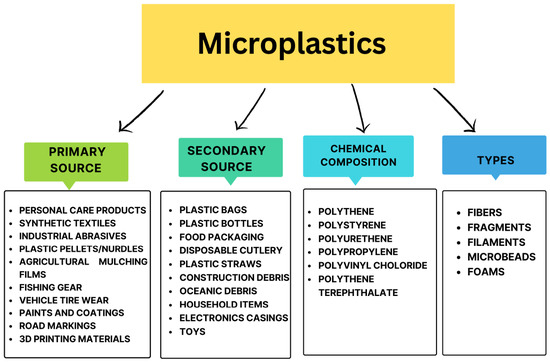
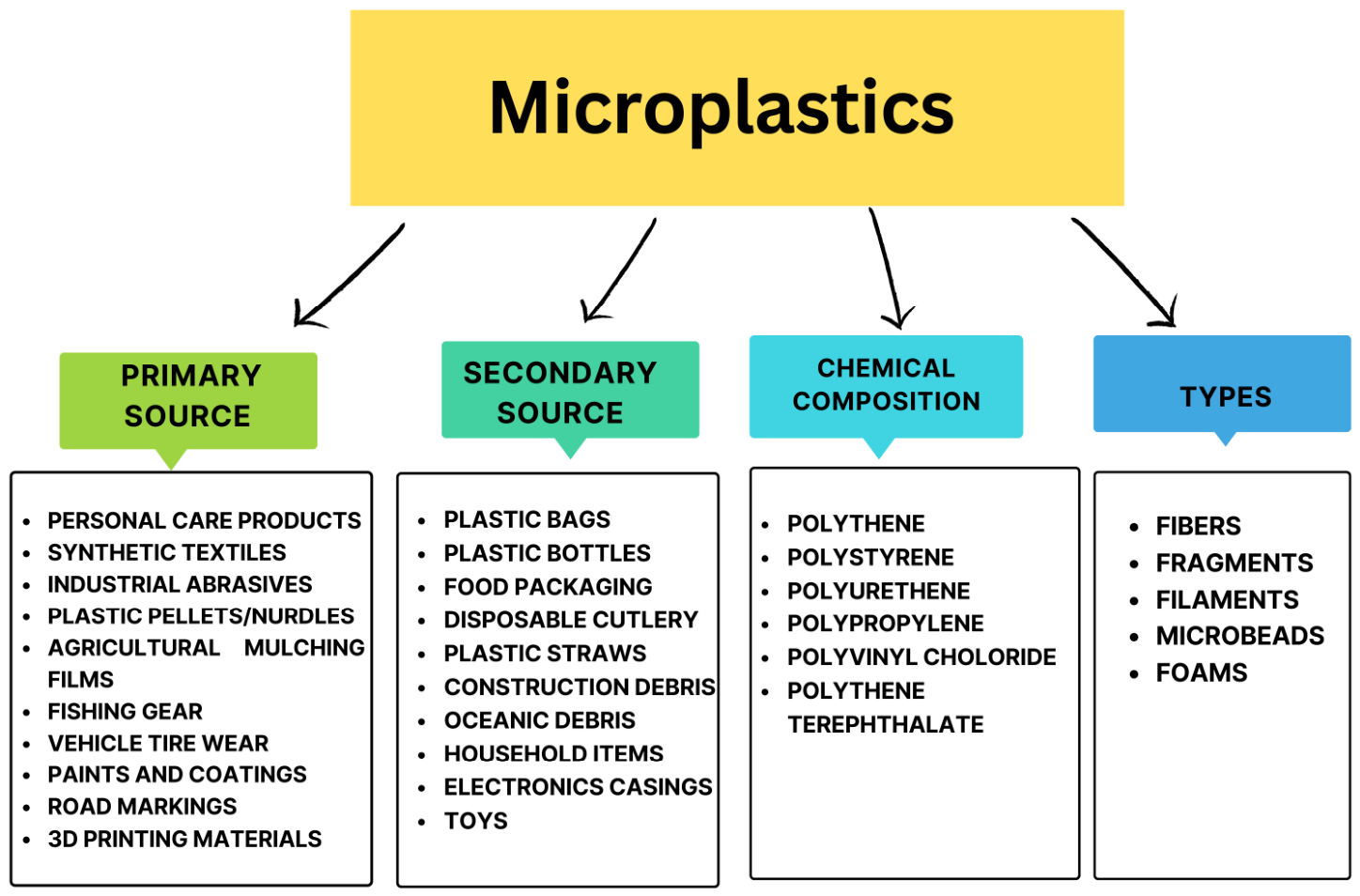
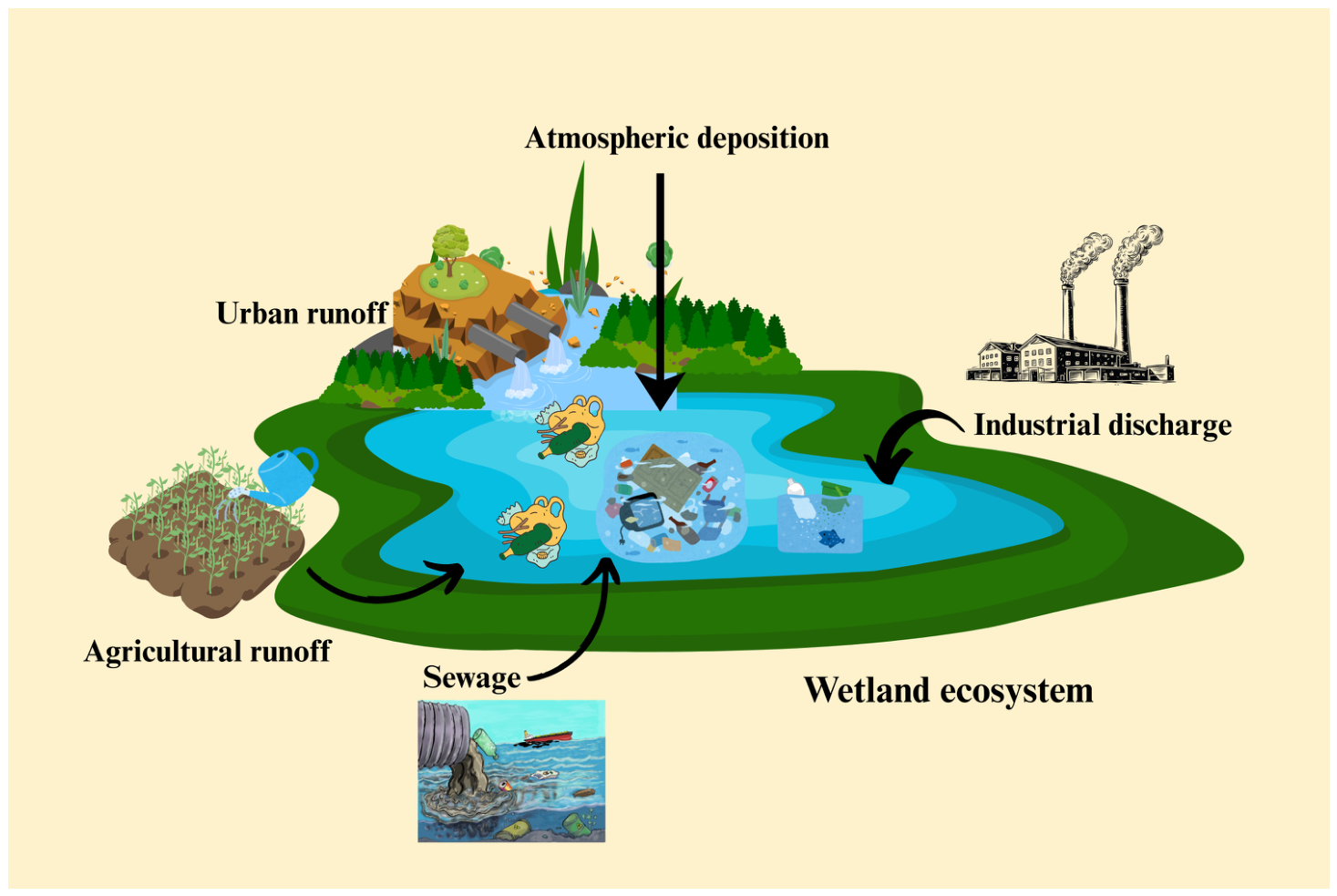
Microplastics enter the wetland environment as either primary or secondary microplastics [8,9]. Primary MP are intentionally manufactured pieces of plastic smaller than 5 mm, and secondary MP are created through the degradation of larger plastic materials [10]. They may be deliberately added to various products, such as exfoliating agents in cosmetics and personal care items (e.g., shower gels). Secondary microplastics are formed from the fragmentation of larger plastic materials, which deteriorate into smaller particles under marine or environmental conditions. This degradation primarily occurs through processes like photodegradation, weathering, and mechanical stress, often involving mismanaged plastic waste such as discarded bags, packaging materials, or lost fishing nets. Because these particles result from the breakdown of macroplastics, tracing their exact origins is difficult, making it challenging to estimate the amount of plastic transformed into microplastics. Consequently, studies often focus on quantifying primary microplastics, as they are easier to measure with existing data [11]. Nonetheless, secondary microplastics are far more prevalent in the environment and are generated through mechanical, chemical, and biological fragmentation processes, leading to a wide range of diverse and abundant sources [11,12]. Reported concentrations of microplastics in freshwater wetlands range from 17 to 1533 particles/kg in sediments and up to 2328 particles/m3 in water, indicating significant environmental contamination and underscoring the need for comprehensive research synthesis in this field. An overview of the various sources of microplastics is depicted in Figure 1.
Figure 1.
Classification of microplastics.
This study is novel in integrating bibliometric mapping with quantitative evidence on microplastic occurrence and an evaluation of conventional and nanoremediation-based removal strategies in coastal and freshwater wetlands of South Asia and Southeast Asian countries, thereby bridging the gap between research trends and practical environmental applications.
2. Materials and Methods
2.1. Analysis of Literature on Microplastic Studies in Wetlands
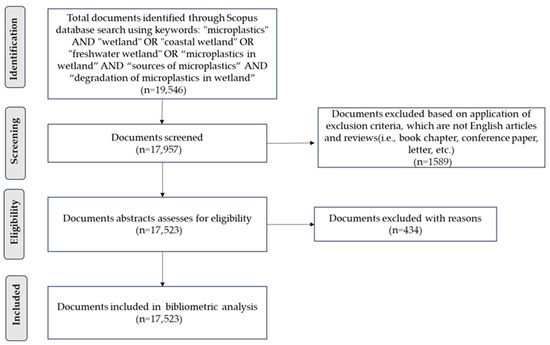
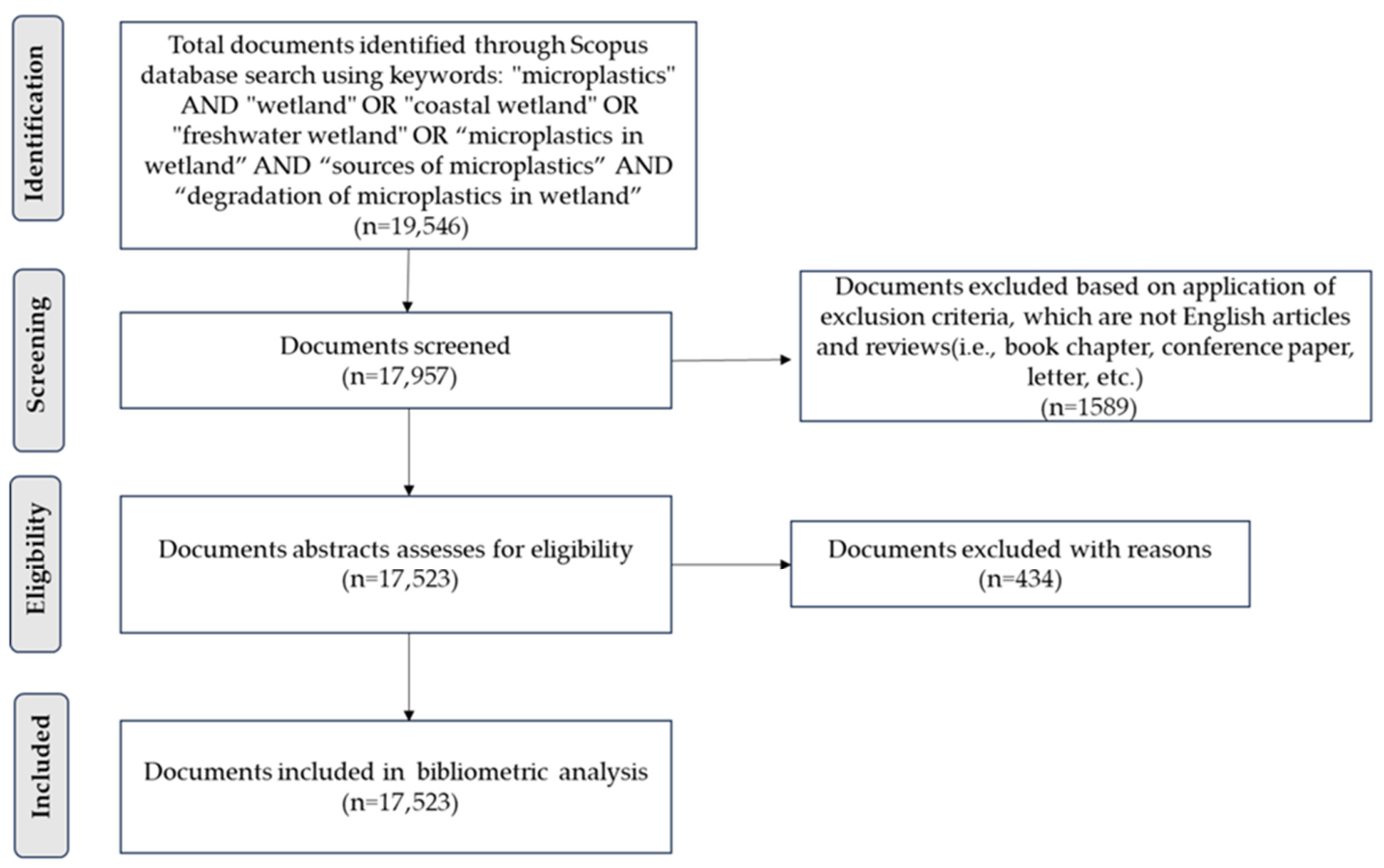
A comprehensive bibliometric analysis, as shown in Figure 2, was conducted using the Web of Science Core Collection database. The search was performed on 6 March 2026. The literature was retrieved from the Web of Science Core Collection database using a comprehensive search strategy. The keywords included combinations of: “microplastics” AND “wetland” OR “coastal wetland” OR “freshwater wetland” “microplastics in wetland” AND “sources of microplastics” AND “degradation of microplastics in wetland”. The search was limited to English-language publications up to 2025. The search was limited to keyword fields.
Figure 2.
PRISMA flow chart.
2.2. Inclusion and Exclusion Criteria
The Inclusion Criteria
- Articles (16,652) and review articles (871);
- Publications in English;
- Time span from 2002 to 2025.
The exclusion criteria included conference proceedings, book chapters, duplicate records, and unrelated subject areas.
2.3. Data Cleaning and Processing
A total of 18,792 journal articles were initially retrieved, and after refinement, 17,523 records were retained for analysis. The dataset was exported and cleaned by removing duplicates, standardizing author names, and merging similar keywords.
2.4. Data Analysis
Visualization of networks was performed using VOSviewer to identify research hotspots and collaboration patterns. VOS (Visualization of similarities) viewer is a tool meant for the analysis and visualization of bibliometric data [13].
Bibliometric indicators such as publication trends, keyword co-occurrence, citation of countries, citation of institutions, and citation of source networks were analyzed [14].
3. Results
3.1. Research on the Trend of “Microplastics” in Transition Literature
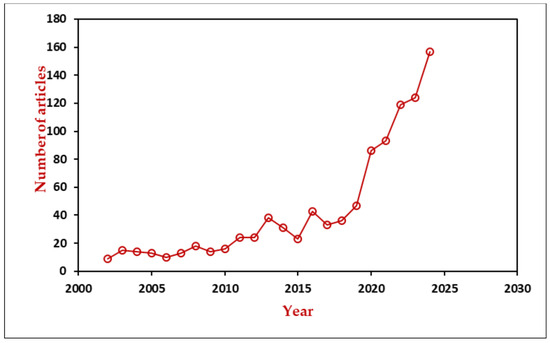
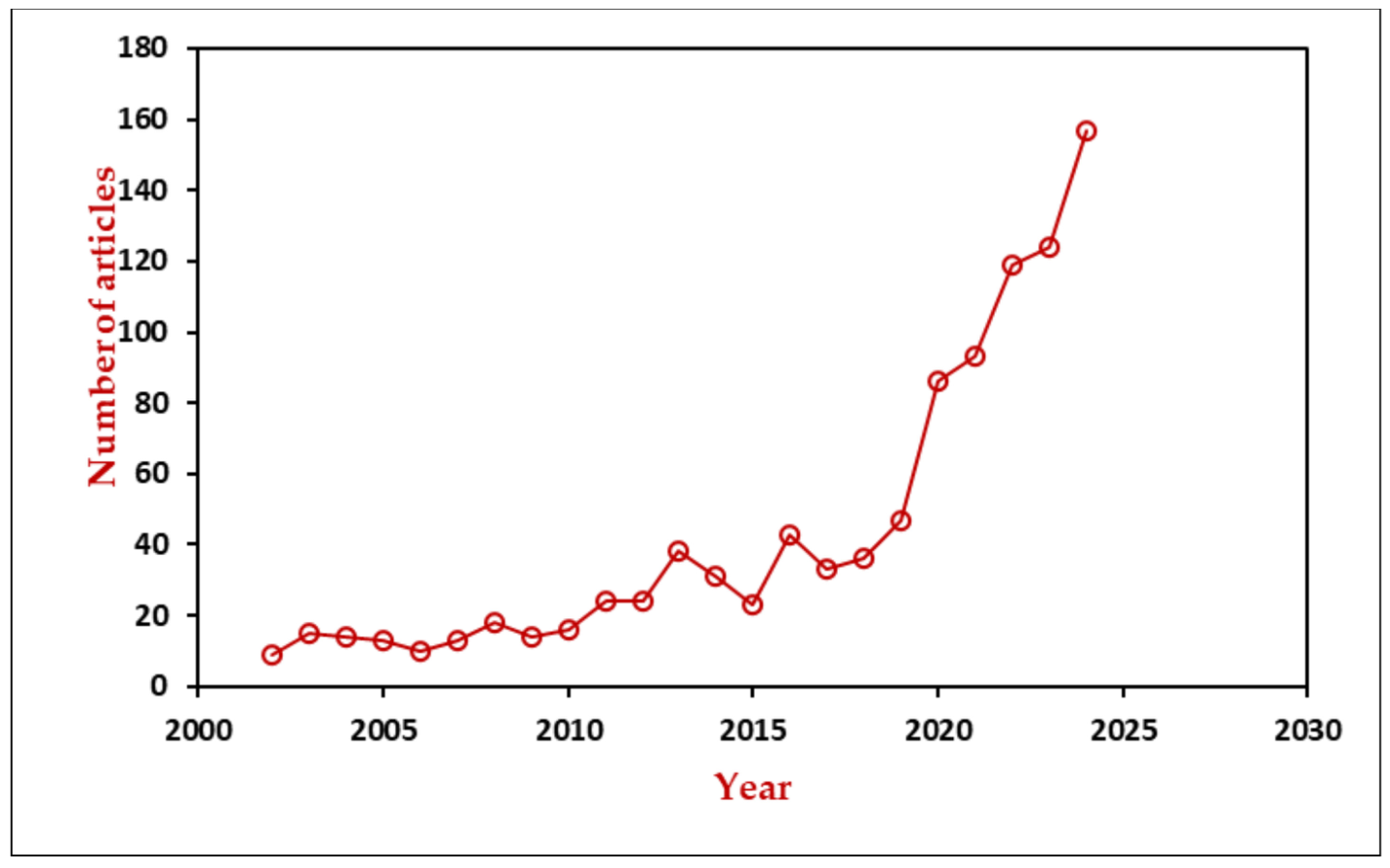
The trend line diagram shows an increasing trend in research on microplastics in wetlands over the last two decades (Figure 3). The publication trend can be divided into three phases: an initial phase (2002–2010), a growth phase (2011–2016), and a rapid expansion phase (2017–2025). The sharp increase after 2016 indicates heightened global research interest in microplastic pollution. Growth between 2000 and 2015 was relatively slow and stable, suggesting perhaps this was an area of less interest or awareness during that time. However, the number of studies began to increase significantly from about 2016 onward, with truly exponential growth post-2020. The rising pattern agrees with intensified global concern towards plastic pollution, especially the presence of microplastics and their ecological and health effects on humans. This pattern indicates the increasing recognition of microplastics as a serious issue in the environment that is driving enhanced research to investigate the sources and impacts on wetland ecosystems and potential mitigative measures.
Figure 3.
Trend line of literature growth on “microplastics” during 2002 to 2025.
3.2. Research on the Co-Occurring Keywords of “Microplastics in Wetland
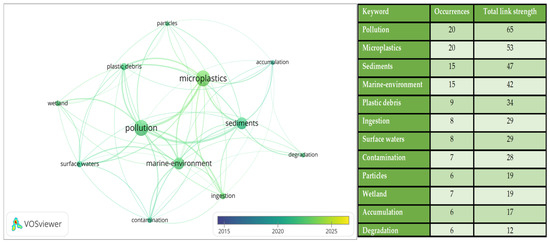
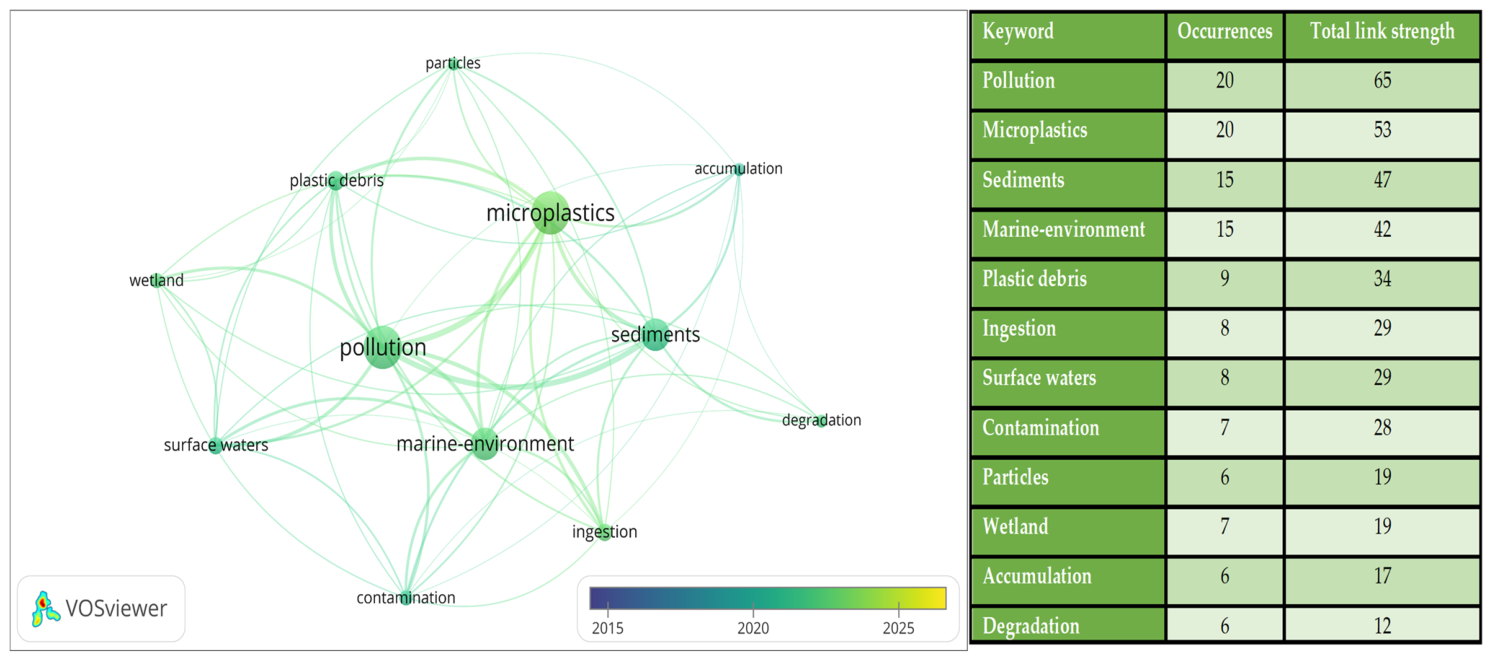
The VOS viewer visualization, as shown in Figure 4, points out the major themes and co-occurring keywords in research on “microplastics in wetlands.” The central node, “microplastics,” is highly connected to terms such as “pollution,” “sediments,” “accumulation,” and “contamination,” which point to the sources, pathways, and impacts in aquatic ecosystems (Figure 4). Related concepts such as “wetland,” “river,” “lake,” and “marine environment” suggest that research spans different water bodies and their interconnections. These are keywords like “particles” and “ingestion,” which reflect research into the behavior, degradation, and possible biological impacts of microplastics. Related references include “plastic debris” and “degradation,” and the time gradient suggests increased interest in topics like “pollution” and “accumulation” in recent years, as concern about the ecological impacts of microplastics in wetland ecosystems. Cluster 1 comprises keywords such as accumulation, freshwater, ingestion, microplastics, particles, plastic debris, and sediments, highlighting the fate and biological interactions of microplastics in freshwater systems. Cluster 2 includes degradation, marine environment, plastic pollution, removal, and stormwater, reflecting studies focused on sources, transformation processes, and mitigation strategies. Cluster 3 consists of coastal, contamination, surface water, and wetland, emphasizing pollution distribution and environmental characteristics of coastal wetland ecosystems.
Figure 4.
Overlay visualization of co-occurrence of keyword “microplastics in wetlands” (left) and its summary (right).
3.3. Research on the Country Distribution of “Microplastics in Wetlands” Literature
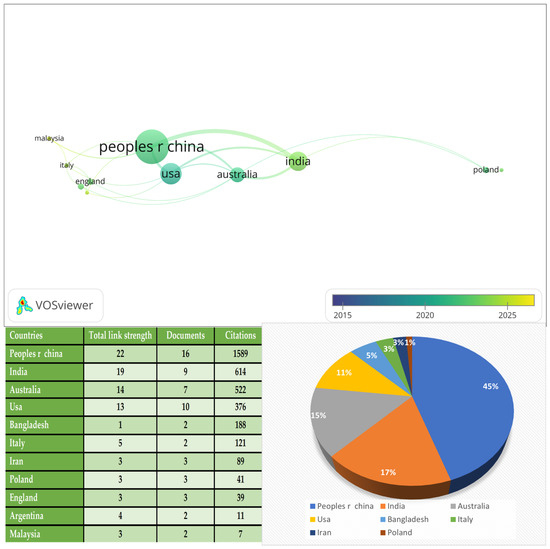
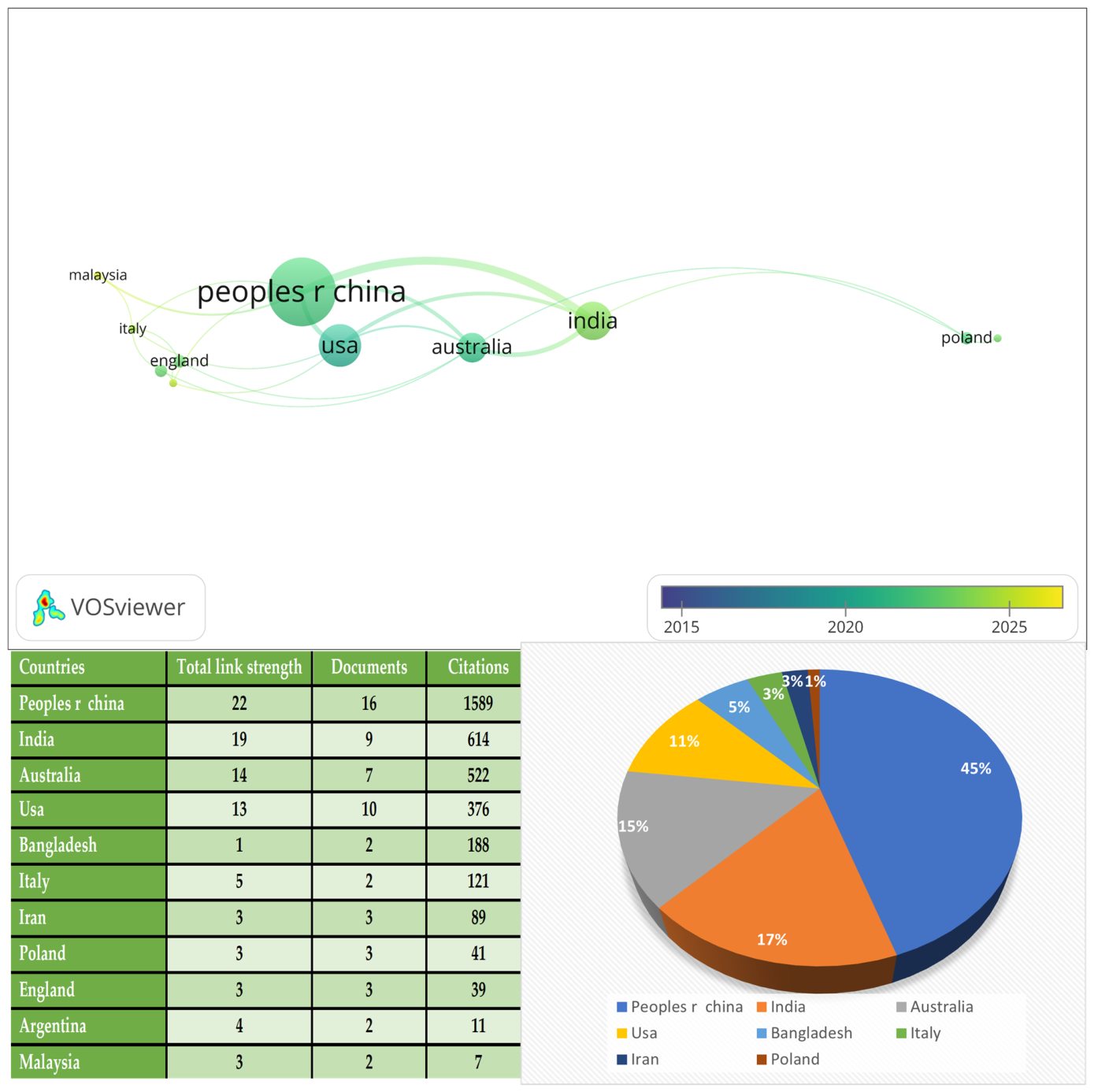
The VOSviewer visualization depicts the global distribution of research contributions on “microplastics in wetlands,” highlighting the prominent roles of countries such as China, the USA, and India (Figure 5). China appears as the most prominent node, indicating its dominant contribution to the literature, which may be attributed to rapid industrialization, vast wetlands, and growing awareness of environmental issues. The USA also demonstrates its presence, as its connections with other countries, like Germany and India, are strong, indicating robust international collaborations. India, though smaller in node size, is connected to key contributors like Australia and Argentina, suggesting that there is growing interest in microplastic pollution in the context of developing economies and tropical wetlands.
Figure 5.
Overlay visualization of citations of countries (left) and the summary of top citations and country distributions (right).
Smaller nodes such as Malaysia and Argentina represent the contribution of European and other regions on a much smaller scale. Such countries are probably dealing with niche areas or specific case studies. The time gradient in the visualization depicts the increased output of research over recent years, especially from the USA(United States of America) and China. Overall, the network highlights significant geographic variation in research focus, with developing countries like India emerging as important contributors. This trend is likely driven by growing environmental challenges in their wetland ecosystems.
3.4. Analysis of Research Institutions and Their Literature Citation
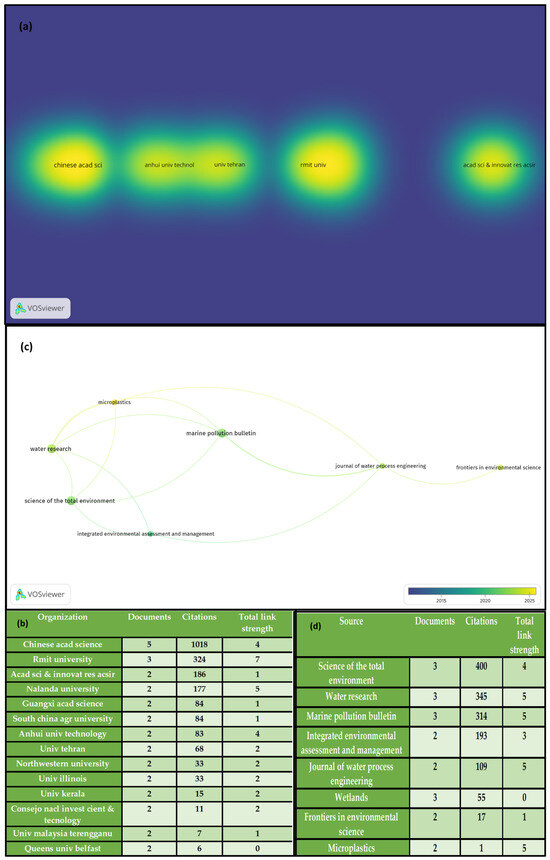
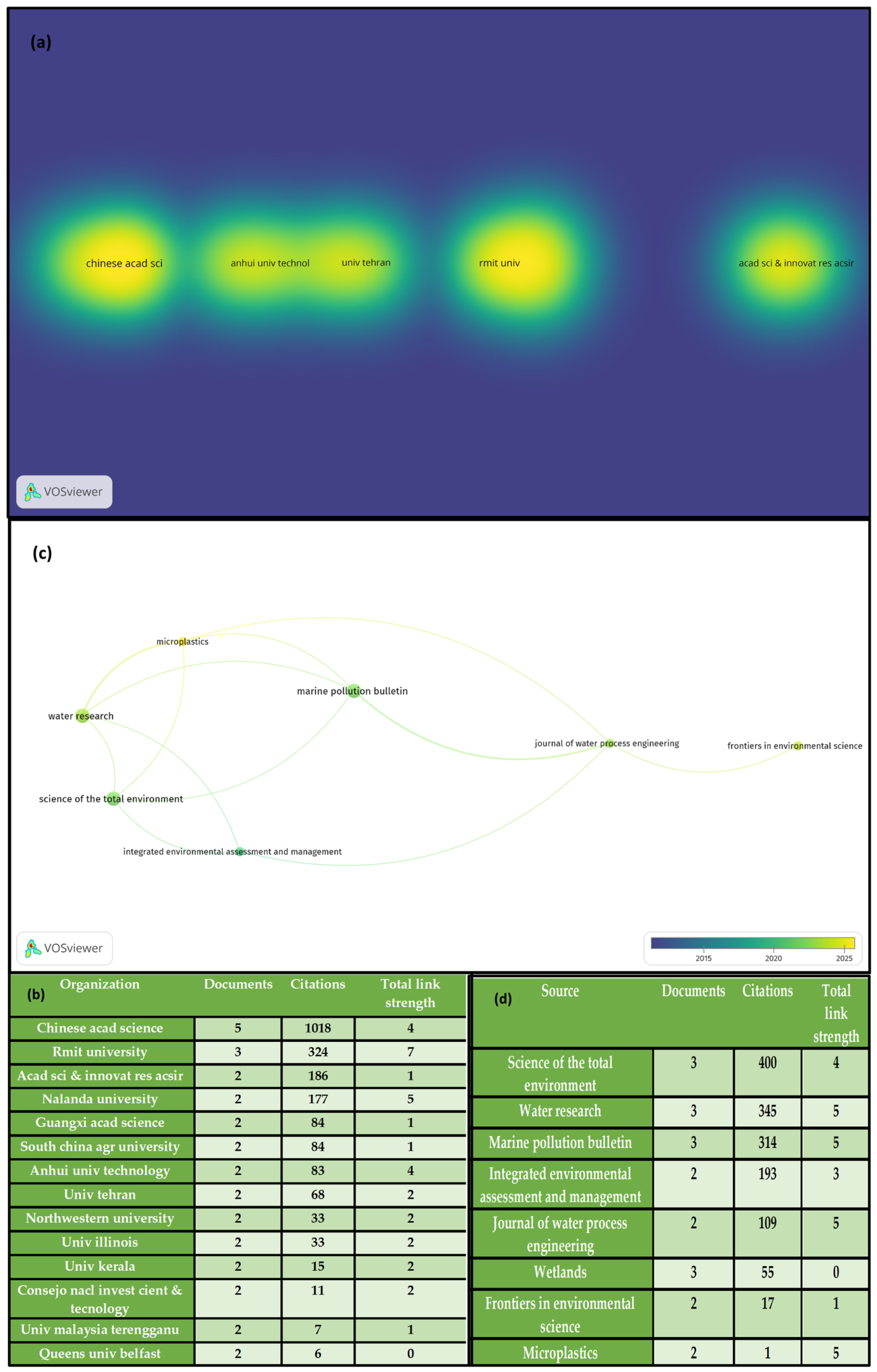
Analysis of research institutions contributing to the literature on microplastics in wetlands indicates that the Chinese Academy of Sciences (CAS) remains the most influential organization, with the highest citation count (1018) and a strong research presence despite a limited number of publications (5), reflecting high-impact outputs (Figure 6). RMIT University demonstrates notable collaborative strength with the highest total link strength (7) and substantial citations (324), highlighting its central role in international research networks. Institutions such as Nalanda University and Anhui University of Technology show moderate citation counts (177 and 83, respectively) along with relatively strong link strengths, suggesting growing contributions and collaboration in the field. Meanwhile, organizations including Guangxi Academy of Sciences, South China Agricultural University, and Universiti Malaysia Terengganu exhibit comparatively low citations and weaker link strengths, indicating limited research influence or emerging involvement. Overall, the findings emphasize the dominance of Chinese institutions in this domain, while contributions from international universities such as RMIT reflect expanding global collaboration in microplastics research.
Figure 6.
(a) Density visualization of citation of institution. (b) Summary of top-most cited institutions. (c) Overlay visualization of citation source. (d) Summary of top-most cited journals.
The analysis of citation sources reveals that Science of the Total Environment, Water Research, and Marine Pollution Bulletin are the most influential journals, each with three documents and high citation counts (400, 345, and 314, respectively), along with strong total link strengths, underscoring their central role in disseminating impactful research. Integrated Environmental Assessment and Management and Journal of Water Process Engineering show moderate citation performance (193 and 109 citations), indicating their contribution to specialized and applied aspects of the field. Although Wetlands has a comparable number of documents (3), its low citation count (55) and zero link strength suggest limited influence within this research network. Similarly, Frontiers in Environmental Science and Microplastics exhibit relatively lower citation counts but contribute to emerging and niche research areas. The density visualization further supports these findings, where high-density (yellow) regions correspond to leading institutions such as the Chinese Academy of Sciences and RMIT University, indicating strong research activity and collaboration, while low-density (green/blue) regions represent institutions with comparatively lower contributions. Overall, the visualization highlights a concentrated yet evolving research landscape characterized by strong institutional dominance and increasing interdisciplinary collaboration.
Analysis of research institutions contributing to the literature on “microplastics in wetlands” shows that the Chinese Academy of Sciences (CAS) leads both in the volume of documents (7) and total citations (827), reflecting its prominent role in advancing research and producing highly cited studies (Figure 5).
Parameters such as the number of publications, total citations, and total link strength (TLS) were used to evaluate research productivity and collaboration patterns. Institutional and country affiliations were standardized based on the database records to ensure consistency. The density visualization map generated using VOSviewer represents the research intensity of institutions based on publication output and collaboration strength. Higher density regions (yellow areas) indicate institutions with greater research activity and stronger collaboration networks, whereas lower density regions (green/blue areas) represent comparatively lower contributions. The higher research output observed for institutions such as the Chinese Academy of Sciences and Zhejiang University reflects their significant contribution to the field based on publication volume and collaboration networks. However, the underlying factors driving these patterns were not explicitly analyzed in this study and require further investigation.
3.5. Microplastic Pollution in Freshwater Wetlands and Coastal Wetlands
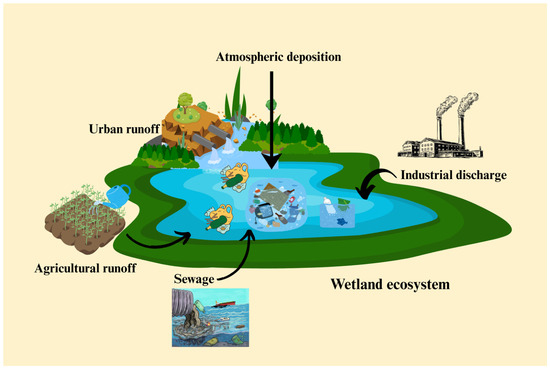
Microplastic pollution in freshwater wetlands primarily stems from urban runoff, agricultural practices, wastewater treatment plants, and littering. These wetlands function as sinks for microplastics carried by rivers, streams, and atmospheric deposition. Microplastics accumulate within sediment layers, modifying the soil’s physical structure, and are ingested by aquatic organisms, resulting in bioaccumulation and disturbances in the food web. This pollution also deteriorates water quality by releasing toxic additives and adsorbing pollutants. The resulting impacts include biodiversity loss, diminished ecosystem services, and significant challenges for communities dependent on wetlands for water and other resources. Studies on the distribution of microplastics in freshwater wetlands are limited, accounting for only about 4% of studies compared to the coastal environment [4,15]. According to [16], a significant level of microplastic contamination was observed in freshwater fish from the East Kolkata Wetlands and surrounding areas, with 77% of the examined fish specimens indicating microplastic presence. On average, each microplastic-affected fish contained approximately 4.3 microplastic particles, indicating a concerning level of pollution in these aquatic environments [16]. In coastal wetlands, microplastic sources include marine debris, tidal inflows, industrial effluents, and waste generated by tourism. Coastal processes such as tidal movements and ocean currents facilitate the transport and deposition of microplastics, leading to their accumulation in mangroves, seagrass beds, and sediments. These pollutants adversely affect marine life, including fish, birds, and mangroves, through ingestion and physical harm. Furthermore, coastal ecosystems suffer from habitat degradation, which diminishes their functions in storm protection and carbon sequestration.
The observed differences between coastal and freshwater wetlands in terms of microplastic distribution and impacts can be attributed to a combination of environmental, climatic, and trophic factors. Environmentally, coastal wetlands are influenced by tidal dynamics, salinity gradients, and marine inputs, which enhance the fragmentation, transport, and redistribution of microplastics. In contrast, freshwater wetlands are primarily affected by riverine inputs, catchment land use, and lower hydrodynamic energy, resulting in greater retention and sediment accumulation of microplastics. Climatic factors such as precipitation intensity and seasonal flooding further regulate microplastic fluxes in freshwater systems, while coastal regions are more susceptible to storm surges and sea-level rise, which can resuspend and redistribute accumulated particles. From a food web perspective, coastal wetlands typically support more complex and diverse trophic interactions, increasing the likelihood of microplastic bioaccumulation and biomagnification across multiple trophic levels. Conversely, freshwater wetlands often exhibit localized food chains where microplastics may accumulate within benthic organisms and detritus-based pathways. These combined factors explain the distinct patterns of microplastic occurrence and ecological risks observed between the two wetland types. Table 1 summarizes the microplastic contamination in freshwater and coastal wetlands.
Table 1.
(a) Microplastics in freshwater wetlands. (b) Microplastics in coastal wetlands.
3.6. Fate and Pathways of Microplastics in Wetlands
Environmental microplastics primarily originate from poorly managed plastic waste and are formed through weathering processes [36], suggest that these particles are then redistributed via atmospheric and oceanic currents. Over time, atmospheric deposition and gravitational forces lead to their accumulation in different environmental compartments. These particles are then redistributed via atmospheric and oceanic currents. Over time, atmospheric deposition and gravitational forces lead to their deposition in different environmental segments.
The major pathways of microplastics in wetlands are surface water flow, tidal and ocean currents, sediment transport, groundwater pathways, and biological transport. One major pathway involves surface water flow, where microplastics are transported from wetlands into downstream rivers, streams, and estuaries, eventually reaching coastal and marine ecosystems (Figure 7). In coastal wetlands, tidal actions further drive the transfer of microplastics into estuarine waters, where they can enter global ocean currents and spread across vast marine areas. Sediment transport also plays a key role, with microplastics becoming embedded in wetland sediments and later resuspended during high-flow events such as floods or storms, facilitating their movement to riverbeds, deltas, and coastal sediments. Groundwater pathways contribute as well, with smaller microplastic particles infiltrating porous wetland soils, potentially reaching aquifers or reemerging in downstream springs and surface water systems. Biological transport is another crucial mechanism, as wetland organisms ingest microplastics, which are then redistributed through migration or trophic interactions, introducing these pollutants into a new environment.
Figure 7.
Sources of microplastic contamination to wetlands.
3.7. Impacts of Microplastics in Wetland Ecosystem
According to the 2012 report by the Secretariat of the Convention on Biological Diversity titled Impacts of Marine Debris on Biodiversity, marine debris has negatively impacted all recognized species of sea turtles, nearly 50% of marine mammal species, and around 20% of seabird species through entanglement or ingestion [61]. Plastics are composed of a variety of potentially hazardous chemicals added during manufacturing, including monomers, oligomers, bisphenol-A (BPA), phthalate plasticizers, flame retardants, and antimicrobial agents [62]. These substances can enter the human body through multiple pathways, such as food and beverage containers, medical devices, and plastic toys. In addition to leaching these additives, plastic debris can adsorb persistent, bio-accumulative, and toxic substances, such as persistent organic pollutants (POPs), from the surrounding marine environment [61]. Over time, plastics undergo further fragmentation and degradation due to physical, chemical, and biological processes, leading to the formation of microplastics [63]. For instance, microplastics and debris fragments found on beaches have been shown to affect the sediment’s porosity and its ability to transfer heat [64]. Furthermore, climate change worsens microplastic pollution by disrupting ocean currents and modifying weather patterns, thereby influencing the distribution and impact of these pollutants [39].
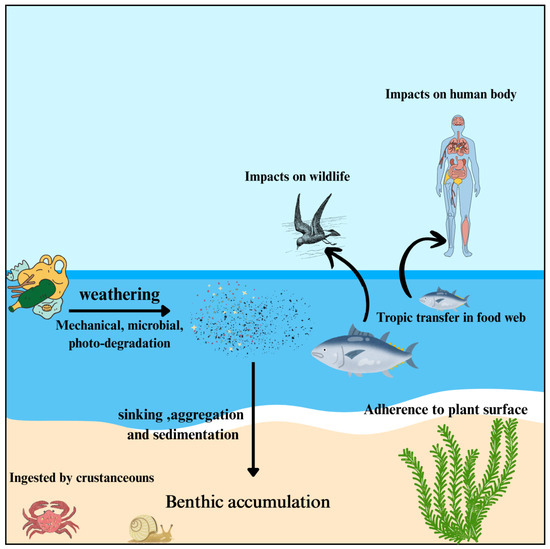
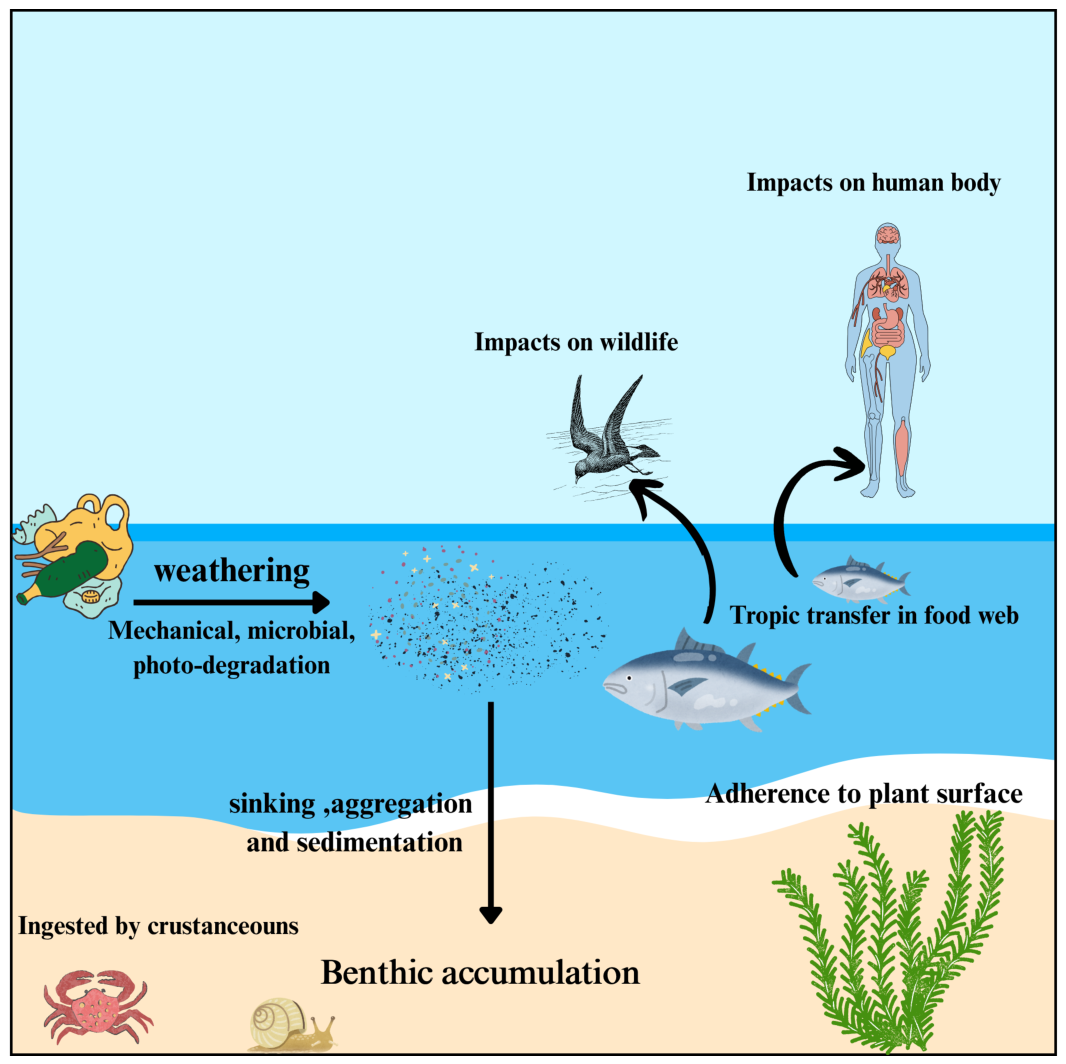
Empirical studies have demonstrated the ingestion of microplastics by aquatic organisms. For instance, zooplankton have been reported to ingest microplastic particles, particularly microfibres, within measurable concentration ranges ingested between 0.03 and 2.04 microplastic particles per cubic meter [65]. These fibres are believed to mainly originate from fishing activities and other offshore recreational sources. Additionally, ref. [66] evidence indicates microplastics in myctophid fish and in the scats of Hooker’s sea lions and fur seals, pointing to the movement of microplastics through the pelagic food web -starting from zooplankton, then to myctophid fish, and eventually to marine mammals like sea lions and fur seals as such, lower trophic level organisms play a key role in transporting microplastics and the contaminants they carry through marine ecosystems [66]. These findings suggest that lower trophic organisms may facilitate the movement of microplastics through aquatic ecosystems, although the extent of biomagnification requires further investigation (Figure 8).
Figure 8.
Pathway of microplastic bioaccumulation.
Laboratory-based studies provide evidence of physiological effects associated with microplastic exposure. For example, short-term exposure to microplastics (MP) has been shown to weaken the immune system, as seen in the scleractinian coral Pocillopora damicornis, where researchers observed a significant drop in alkaline phosphatase enzyme levels [67]. In Southeast Asia, only a limited number of studies have specifically looked at freshwater ecosystems. One such study by [68] investigated the presence of microplastics in fish species like Mystus bocourti, Puntioplites proctozysron, Hemibagrus spilopterus, and Cyclocheilichthys repasson from Thailand’s Chi River. However, similar to most marine-focused research, this study did not examine the biological impacts of microplastics. Research on microplastics present in commercially important marine fish has also been conducted in Malaysia; for instance, [35], reported microplastic particles in 9 out of the 11 fish species they analyzed. According to [38], nearly 70% of freshwater fish examined in earlier studies were found to have ingested fibres. Compared to other forms of plastic particles, fibres are more flexible, making them easier for smaller invertebrates within the food web to consume [69]. As a result, fibres are more likely to be accidentally ingested either through trophic transfer or when mixed with sediment. They are also commonly detected within freshwater sediments [70]. This ingestion can negatively impact aquatic organisms by reducing their growth rates, lowering hatchability, and affecting their ability to feed [71].
In wetland vegetation, experimental evidence suggests that microplastics may influence plant growth and physiological processes. For example, reduced germination rates negatively impact the growth of Bacopa species, a wetland plant, leading to reduced fresh weight and shorter plant height [72]. The accumulation of ingested polystyrene microplastics in the foraging structures responsible for capturing and digesting prey has been found to significantly retard the growth of aquatic plants [73]. Aquatic plants, whether emergent, floating-leaved, free-floating, or submerged, serve as vital primary producers in wetland ecosystems [74,75]. However, exposure to microgram-level concentrations of microplastics can impair both plant growth and the efficiency of nitrogen removal in these environments [76]. The accumulation of MPs in wetland sediments can severely destabilize plant root functions, disrupting water, nutrient, and oxygen transport, thereby reducing plant biomass development [77]. The findings of this study enhance our understanding of coastal vegetation as a sink for microplastics and indicate that variations in microplastic characteristics influence their accumulation patterns within biogenic canopies [78].
Regarding human health, exposure to microplastics is primarily associated with ingestion through contaminated food and water. Current literature indicates possible health effects such as oxidative stress and inflammatory responses, but direct causal relationships and long-term impacts are still under investigation [79]. Among these, ingestion through the gastrointestinal tract appears to be the most common exposure pathway (Figure 8). Ubiquitous plastics and their derivatives were found in all surveyed field samples, indicating widespread degraded microplastic residues that readily enter and bio-magnify within the food web [80].
3.8. Removal Technologies of Microplastics in Wetland Systems
The removal techniques presented include both conventional adsorption-based methods and emerging nanoremediation approaches. While conventional materials such as biochar and sponges are effective, nanomaterial-based systems offer enhanced surface area, reactivity, and potential for targeted removal, although they remain limited by cost, scalability, and environmental concerns.
These technologies primarily include adsorption-based removal, magnetic separation, and photocatalytic degradation processes. Adsorption techniques utilize natural, bio-based, and engineered materials with high surface area and affinity for plastic particles, offering cost-effective and environmentally friendly solutions. Magnetic adsorption enhances removal efficiency by enabling the rapid separation of MPs using externally applied magnetic fields. In contrast, photocatalytic degradation focuses on breaking down MPs into smaller or mineralized products under light irradiation, thereby reducing their environmental persistence. Each approach presents distinct advantages and limitations in terms of efficiency, cost, scalability, and environmental compatibility. Therefore, selecting an appropriate remediation strategy depends on factors such as the type of microplastics, environmental conditions, and the desired level of removal or degradation. Nanoremediation refers to the process of removing contaminants using nanomaterials or nanoparticles. Depending on the properties of these nanoparticles, the remediation can occur through mechanisms such as reduction, oxidation, sorption, or a combination of these processes [81]. Various forms of nanoparticles, like carbon-based nanomaterials, zero-valent iron nanoparticles, zinc oxide (ZnO), and titanium dioxide (TiO2) have been well explored for remediation methods during the last couple of years. They may be employed in a variety of forms to increase their removal capacity, like catalysts, coatings, modifiers, and composites [82]. The benefits of nano-remediation include a high rate of removal with different contaminants and environmental conditions, fast degradation rate, quick clean-up time for contaminated sites, low toxicity, and the possible ability to be used over a wider scope [83]. Nanomaterials have the ability to be applied as absorbents, catalysts, and flocculants in the treatment process. Activated carbon, which has historically been employed as a solid adsorbent, proves to be successful because of its high surface area and porosity. The disadvantages of nano-remediation include the expense, agglomeration of nanomaterials within living organisms, and possible harm to human health and the environment by nanomaterials [83].
Various technologies for the removal or degradation of microplastics (MPs) in aquatic environments can be categorized into adsorption, magnetic adsorption, and photocatalytic degradation, as presented in Table 2.
Table 2.
Microplastic Removal Technologies and Efficiencies.
With materials such as biochar, chitin-based sponges, and granular activated carbon, adsorption-based techniques exhibit above 90% removal rates, while modified biochar reaches up to 98.75%. Oat protein sponges and coffee grounds, which are bio-based materials, also prove to be sustainable and low-cost adsorbents.
Magnetic nanoparticles and carbon nanotube composites are used to separate microplastics in magnetic adsorption processes through magnetic fields. High removal efficiencies are achieved using hydrophobic materials such as iron nanoparticles, magnetic CNTs, and Fe3O4 nanoparticles for certain polymers.
Semiconductor catalysts such as TiO2, ZnO, and BiOCl are used in photocatalytic degradation processes to degrade plastic polymers under light exposure. Studies show that further optimization is required to achieve mineralization efficiencies up to 98.4% for polystyrene particles using TiO2 nanoparticle films.
3.9. Advantages and Limitations of Nanoremediation
Although nanoremediation strategies have demonstrated promising efficiency in the removal and degradation of microplastics, it is important to note that most of the current findings are based on controlled laboratory-scale experiments. The performance of nanomaterials such as TiO2, ZnO, Fe3O4, and graphene-based composites under real environmental conditions remains insufficiently explored. Factors such as complex wetland matrices, variable hydrodynamics, natural organic matter, and competing pollutants may significantly influence their effectiveness in field conditions. The removal techniques summarized in Table 2 demonstrate considerable variability in efficiency depending on the material properties, microplastic type, and experimental conditions. Adsorption-based methods, particularly those using biochar, graphene, and metal–organic frameworks, exhibit high removal efficiencies; however, their performance is often limited by issues such as saturation, regeneration challenges, and lack of specificity toward different polymer types. Magnetic adsorption techniques offer the advantage of easy recovery and high efficiency, especially for polymers such as polyethylene (PE), polypropylene (PP), and polyethylene terephthalate (PET), but concerns remain regarding aggregation, cost, and large-scale applicability. In contrast, photocatalytic degradation methods show potential for the breakdown of microplastics; however, their efficiency is generally lower and dependent on factors such as irradiation time, catalyst properties, and polymer composition. Furthermore, several studies do not specify the type of microplastics targeted, limiting comparability and practical application. Overall, while these methods demonstrate promising removal capabilities, challenges related to scalability, environmental safety, and real-world implementation remain significant, highlighting the need for further research, particularly in the development of efficient and sustainable nanoremediation approaches.
4. Discussion
The removal techniques summarized in Table 2 demonstrate considerable variability in efficiency depending on the material properties, microplastic type, and experimental conditions. Adsorption-based methods, particularly those using biochar, graphene, and metal–organic frameworks, exhibit high removal efficiencies; however, their performance is often limited by issues such as saturation, regeneration challenges, and lack of specificity toward different polymer types. Magnetic adsorption techniques offer the advantage of easy recovery and high efficiency, especially for polymers such as polyethylene (PE), polypropylene (PP), and polyethylene terephthalate (PET), but concerns remain regarding aggregation, cost, and large-scale applicability. In contrast, photocatalytic degradation methods show potential for the breakdown of microplastics; however, their efficiency is generally lower and dependent on factors such as irradiation time, catalyst properties, and polymer composition. Furthermore, several studies do not specify the type of microplastics targeted, limiting comparability and practical application. Overall, while these methods demonstrate promising removal capabilities, challenges related to scalability, environmental safety, and real-world implementation remain significant, highlighting the need for further research, particularly in the development of efficient and sustainable nanoremediation approaches.
Limitation of the study: This study is limited by the use of a single database (Web of Science), which may exclude relevant studies indexed elsewhere. The bibliometric approach focuses on publication trends and does not evaluate experimental quality. Furthermore, variability in sampling methods and analytical techniques across studies limits direct comparison of microplastic concentration data. It should be noted that bibliometric analyses are dependent on database indexing and may not fully capture all global research outputs, particularly from non-indexed or regional publications.
This study is subject to potential sources of bias. The use of a single database (Web of Science Core Collection) may exclude relevant studies indexed elsewhere. Additionally, the restriction to English-language publications introduces language bias.
5. Conclusions
This study highlights the increasing prevalence of microplastic pollution in wetland ecosystems, driven by sources such as urban runoff, industrial discharge, fisheries and agricultural practices. The review demonstrates that the particles originating from diverse sources accumulate in sediments and water columns, facilitating their entry into the food web through aquatic micro-organisms. Despite the growing body of research, significant gaps remain in understanding the unique interactions between microplastics and wetland dynamics, including sediment–water–plant systems, advanced remediation technologies such as nanomaterial-based adsorption, photocatalytic degradation and magnetic separation, which are promising methods for microplastic removal. The findings emphasize the critical role of wetlands as both sinks and sources of microplastics, with implications for biodiversity, water quality, and ecosystem services. The bibliometric trends reveal a rapid increase in research post-2016, reflecting the growing global recognition of microplastic pollution, with China, the USA, and India emerging as key contributors. Methodological advancements, such as VOSviewer analysis, have facilitated a deeper exploration of research hotspots, but developing regions remain underrepresented in the literature. Overall, the study stresses the need for future research that prioritizes stronger international collaboration and improved policy frameworks to mitigate microplastic pollution. Such efforts are essential to alleviate the ecological impacts of microplastic accumulation in wetlands and explore integrated conservation strategies that align with global sustainability goals, particularly SDG 6 (Clean Water and Sanitation), SDG 13 (Climate Action), SDG 14 (Life Below Water) and SDG 15 (Life on Land). These bibliometric findings have direct and measurable implications for sustainability goals. The underrepresentation of wetland-focused studies identified in this analysis constrains scientific progress toward SDG 6 (Clean Water and Sanitation) by limiting understanding of microplastic behavior in critical freshwater systems. Similarly, the fragmented and laboratory-dominated nature of remediation research hinders effective contributions to SDG 14 (Life Below Water), where ecosystem-scale solutions are essential.
6. Recommendations and Future Directions
This study aligns with SDG 15 (Life on Land), focusing on conserving wetland ecosystems by addressing microplastic pollution. It further contributes to SDG 6 (Clean Water and Sanitation) by improving water quality in these habitats and to SDG 14 (Life Below Water) by mitigating land-based pollution that impacts marine environments. “Future research should integrate the goals of Ramsar Convention on Wetlands, Global Plastics Treaty under UNEP (United Nations Environment Programme), SDG 6 (Clean Water and Sanitation), SDG 12 (Responsible Consumption and Production), SDG 13 (Climate Action), SDG 14 (Life Below Water) and SDG 15 (Life on Land) by developing innovative approaches for wetland restoration and sustainable management. Additionally, the study of microplastic transport from wetlands to oceans can guide strategies under SDG 14 to prevent marine pollution. According to [62], proactive policies and programs effectively manage waste and recycling to reduce land-based sources of marine debris. Examples include packaging and plastics reduction, eco-labelling, green procurement, extended producer responsibility (EPR), deposit-return programs, user fees for single-use plastics, waste resource utilisation, corporate engagement in sustainability, green chemistry, improved product and packaging design, and marine debris awareness initiatives. The study also concludes that emerging remediation approaches should be further evaluated for environmental safety and scalability before integration into environmental management strategies. Finally, wetland management policies should explicitly represent the growing global environmental concern related to ecological, economic, and public health implications, incorporating microplastic pollution as a key environmental threat. To address this, it requires coordinated international policy action, including technological innovations, scientific research, pollution prevention and strengthened governance frameworks.
Author Contributions
Conceptualization, T.B.S. and B.J.; Methodology, T.B.S. and B.J.; Software, T.B.S.; Validation, B.J. and P.K.L.A.; Formal Analysis, T.B.S.; Investigation, T.B.S. and B.J.; Resources, B.J. and P.K.L.A.; Data Curation, T.B.S. and B.J.; Writing—Original Draft Preparation, T.B.S.; Writing—Review and Editing, T.B.S., B.J. and P.K.L.A.; Visualization, T.B.S., B.J., P.K.L.A. and J.T.; Supervision, B.J., P.K.L.A. and J.T. All authors have read and agreed to the published version of the manuscript.
Funding
This research received no external funding.
Data Availability Statement
The data presented in this study are available on request from the corresponding author. The bibliometric dataset was obtained from the Web of Science Core Collection database.
Conflicts of Interest
The authors have declared that they have no known competing financial interests or personal relationships that could have appeared to influence the work reported in this paper.
References
- OECD. Development Co-Operation Report 2024; OECD Publishing: Paris, France, 2024. [Google Scholar]
- Pendleton, M.C. Ecosystem Functioning of Great Salt Lake Wetlands. Wetlands 2020, 40, 2163–2177. [Google Scholar] [CrossRef] [Scilit]
- Scholte, S.S.K.; Todorova, M.; van Teeffelen, A.J.A.; Verburg, P.H. Public Support for Wetland Restoration: What Is the Link with Ecosystem Service Values? Wetlands 2016, 36, 467–481. [Google Scholar] [CrossRef] [Scilit]
- Peng, J.; Wang, J.; Cai, L. Current Understanding of Microplastics in the Environment: Occurrence, Fate, Risks, and What We Should Do. Integr. Environ. Assess. Manag. 2017, 13, 476–482. [Google Scholar] [CrossRef] [Scilit]
- Eriksen, M.; Mason, S.; Wilson, S.; Box, C.; Zellers, A.; Edwards, W.; Farley, H.; Amato, S. Microplastic Pollution in the Surface Waters of the Laurentian Great Lakes. Mar. Pollut. Bull. 2013, 77, 177–182. [Google Scholar] [CrossRef] [Scilit]
- Chen, Y.; Li, T.; Hu, H.; Ao, H.; Xiong, X.; Shi, H.; Wu, C. Transport and Fate of Microplastics in Constructed Wetlands: A Microcosm Study. J. Hazard. Mater. 2021, 415, 125615. [Google Scholar] [CrossRef] [Scilit]
- Ghosh, S.K.; Pal, S.; Ray, S. Study of Microbes Having Potentiality for Biodegradation of Plastics. Environ. Sci. Pollut. Res. Int. 2013, 20, 4339–4355. [Google Scholar] [CrossRef] [Scilit]
- Arthur, C.; Baker, J.; Bamford, H. Proceedings of the International Research Workshop on the Occurrence, Effects, and Fate of Microplastic Marine Debris; NOAA Institutional Repository: Silver Spring, MD, USA, 2009. [Google Scholar]
- Cole, M.; Lindeque, P.; Halsband, C.; Galloway, T.S. Microplastics as Contaminants in the Marine Environment: A Review. Mar. Pollut. Bull. 2011, 62, 2588–2597. [Google Scholar] [CrossRef] [Scilit] [PubMed]
- Andrady, A.L. Microplastics in the Marine Environment. Mar. Pollut. Bull. 2011, 62, 1596–1605. [Google Scholar] [CrossRef] [Scilit] [PubMed]
- Sundt, P.; Schulze, P.-E.; Syversen, F. Sources of Microplastic-Pollution to the Marine Environment; Norwegian Environment Agency: Trondheim, Norway, 2014. [Google Scholar]
- Auta, H.S.; Emenike, C.U.; Fauziah, S.H. Distribution and Importance of Microplastics in the Marine Environment: A Review of the Sources, Fate, Effects, and Potential Solutions. Environ. Int. 2017, 102, 165–176. [Google Scholar] [CrossRef] [Scilit]
- van Eck, N.J.; Waltman, L. Software Survey: VOSviewer, a Computer Program for Bibliometric Mapping. Scientometrics 2010, 84, 523–538. [Google Scholar] [CrossRef] [Scilit] [PubMed]
- Arruda, H.; Silva, E.R.; Lessa, M.; Proença, D.; Bartholo, R. VOSviewer and Bibliometrix. J. Med. Libra. Assoc. 2022, 110, 392–395. [Google Scholar] [CrossRef] [Scilit] [PubMed]
- Lambert, S.; Wagner, M. Microplastics Are Contaminants of Emerging Concern in Freshwater Environments: An Overview. In Freshwater Microplastics; Handbook of Environmental Chemistry; Springer: Cham, Switzerland, 2018; Volume 58, pp. 1–23. [Google Scholar]
- Roy, R.S.; Das, S.K. Wetland Management Control in Distribution and Biodegradation of Microplastics Found in the Gastrointestinal Tract of Fishes: A Pilot Study at East Kolkata Wetlands and Surrounding Districts of West Bengal, India. 2024. Available online: https://papers.ssrn.com/sol3/papers.cfm?abstract_id=5013540 (accessed on 18 September 2025).
- Singh, N.; Mondal, A.; Bagri, A.; Tiwari, E.; Khandelwal, N.; Monikh, F.A.; Darbha, G.K. Characteristics and Spatial Distribution of Microplastics in the Lower Ganga River Water and Sediment. Mar. Pollut. Bull. 2021, 163, 111960. [Google Scholar] [CrossRef] [Scilit] [PubMed]
- Napper, I.E.; Baroth, A.; Barrett, A.C.; Bhola, S.; Chowdhury, G.W.; Davies, B.F.R.; Duncan, E.M.; Kumar, S.; Nelms, S.E.; Hasan Niloy, M.N.; et al. The Abundance and Characteristics of Microplastics in Surface Water in the Transboundary Ganges River. Environ. Pollut. 2021, 274, 116348. [Google Scholar] [CrossRef] [Scilit]
- Chauhan, J.S.; Semwal, D.; Nainwal, M.; Badola, N.; Thapliyal, P. Investigation of Microplastic Pollution in River Alaknanda Stretch of Uttarakhand. Environ. Dev. Sustain. 2021, 23, 16819–16833. [Google Scholar] [CrossRef] [Scilit]
- Amrutha, K.; Warrier, A.K. The First Report on the Source-to-Sink Characterization of Microplastic Pollution from a Riverine Environment in Tropical India. Sci. Total Environ. 2020, 739, 140377. [Google Scholar] [CrossRef] [Scilit]
- Tsering, T.; Sillanpää, M.; Sillanpää, M.; Viitala, M.; Reinikainen, S.-P. Microplastics Pollution in the Brahmaputra River and the Indus River of the Indian Himalaya. Sci. Total Environ. 2021, 789, 147968. [Google Scholar] [CrossRef] [Scilit]
- Maheswaran, B.; Karmegam, N.; Al-Ansari, M.; Subbaiya, R.; Al-Humaid, L.; Sebastin Raj, J.; Govarthanan, M. Assessment, Characterization, and Quantification of Microplastics from River Sediments. Chemosphere 2022, 298, 134268. [Google Scholar] [CrossRef] [Scilit]
- Neelavannan, K.; Sen, I.S.; Lone, A.M.; Gopinath, K. Microplastics in the High-Altitude Himalayas: Assessment of Microplastic Contamination in Freshwater Lake Sediments, Northwest Himalaya (India). Chemosphere 2022, 290, 133354. [Google Scholar] [CrossRef] [Scilit]
- Gopinath, K.; Seshachalam, S.; Neelavannan, K.; Anburaj, V.; Rachel, M.; Ravi, S.; Bharath, M.; Achyuthan, H. Quantification of Microplastic in Red Hills Lake of Chennai City, Tamil Nadu, India. Environ. Sci. Pollut. Res. 2020, 27, 33297–33306. [Google Scholar] [CrossRef] [Scilit]
- Laju, R.L.; Jayanthi, M.; Jeyasanta, K.I.; Patterson, J.; Asir, N.G.G.; Sathish, M.N.; Edward, J.K.P. Spatial and Vertical Distribution of Microplastics and Their Ecological Risk in an Indian Freshwater Lake Ecosystem. Sci. Total Environ. 2022, 820, 153337. [Google Scholar] [CrossRef] [Scilit] [PubMed]
- Manikanda Bharath, K.; Srinivasalu, S.; Natesan, U.; Ayyamperumal, R.; Nirmal Kalam, S.; Anbalagan, S.; Sujatha, K.; Alagarasan, A. Microplastics as an Emerging Threat to the Freshwater Ecosystems of Veeranam Lake in South India: A Multidimensional Approach. Chemosphere 2021, 264, 128502. [Google Scholar] [CrossRef] [Scilit]
- Ajay, K.; Behera, D.; Bhattacharya, S.; Mishra, P.K.; Ankit, Y.; Anoop, A. Distribution and Characteristics of Microplastics and Phthalate Esters from a Freshwater Lake System in Lesser Himalayas. Chemosphere 2021, 283, 131132. [Google Scholar] [CrossRef] [Scilit] [PubMed]
- Lechthaler, S.; Waldschläger, K.; Sandhani, C.G.; Sannasiraj, S.A.; Sundar, V.; Schwarzbauer, J.; Schüttrumpf, H. Baseline Study on Microplastics in Indian Rivers under Different Anthropogenic Influences. Water 2021, 13, 1648. [Google Scholar] [CrossRef] [Scilit]
- Selvam, S.; Jesuraja, K.; Venkatramanan, S.; Roy, P.D.; Jeyanthi Kumari, V. Hazardous Microplastic Characteristics and Its Role as a Vector of Heavy Metal in Groundwater and Surface Water of Coastal South India. J. Hazard. Mater. 2021, 402, 123786. [Google Scholar] [CrossRef] [Scilit]
- Kurniawan, S.B.; Imron, M.F. Seasonal Variation of Plastic Debris Accumulation in the Estuary of Wonorejo River, Surabaya, Indonesia. Environ. Technol. Innov. 2019, 16, 100490. [Google Scholar] [CrossRef] [Scilit]
- Alam, F.C.; Sembiring, E.; Muntalif, B.S.; Suendo, V. Microplastic Distribution in Surface Water and Sediment River around Slum and Industrial Area (Case Study: Ciwalengke River, Majalaya District, Indonesia). Chemosphere 2019, 224, 637–645. [Google Scholar] [CrossRef] [Scilit]
- Viet Dung, L.; Huu Duc, T.; Thi Khanh Linh, L.; Thi Dieu Ly, T.; Anh Duong, H.; Thi My Hao, N. Depth Profiles of Microplastics in Sediment Cores from Two Mangrove Forests in Northern Vietnam. J. Mar. Sci. Eng. 2021, 9, 1381. [Google Scholar] [CrossRef] [Scilit]
- Lahens, L.; Strady, E.; Kieu-Le, T.-C.; Dris, R.; Boukerma, K.; Rinnert, E.; Gasperi, J.; Tassin, B. Macroplastic and Microplastic Contamination Assessment of a Tropical River (Saigon River, Vietnam) Transversed by a Developing Megacity. Environ. Pollut. 2018, 236, 661–671. [Google Scholar] [CrossRef] [Scilit]
- Johansson, E. Quantification for the Flow of Microplastic Particles in Urban Environment: A Case of the Chao Phraya River, Bangkok Thailand: A Minor Field Study. 2018. Available online: http://urn.kb.se/resolve?urn=urn:nbn:se:kth:diva-230990 (accessed on 18 September 2025).
- Karbalaei, S.; Golieskardi, A.; Hamzah, H.B.; Abdulwahid, S.; Hanachi, P.; Walker, T.R.; Karami, A. Abundance and Characteristics of Microplastics in Commercial Marine Fish from Malaysia. Mar. Pollut. Bull. 2019, 148, 5–15. [Google Scholar] [CrossRef] [Scilit]
- Tee, Y.H.; Ibrahim, Y.S.; Wan Mohd Khalik, W.M.A. Microplastic Abundance, Distribution, and Composition in Sungai Dungun, Terengganu, Malaysia. Sains Malays. 2020, 49, 1479–1490. [Google Scholar] [CrossRef] [Scilit]
- Sarijan, S.; Azman, S.; Said, M.I.M.; Jamal, M.H. Microplastics in Freshwater Ecosystems: A Recent Review of Occurrence, Analysis, Potential Impacts, and Research Needs. Environ. Sci. Pollut. Res. 2021, 28, 1341–1356. [Google Scholar] [CrossRef] [Scilit]
- Kumar, K.J.S.; Chu, F.-H.; Hsieh, H.-W.; Liao, J.-W.; Li, W.-H.; Lin, J.C.-C.; Shaw, J.-F.; Wang, S.-Y. Antroquinonol from Ethanolic Extract of Mycelium of Antrodia Cinnamomea Protects Hepatic Cells from Ethanol-Induced Oxidative Stress through Nrf-2 Activation. J. Ethnopharmacol. 2011, 136, 168–177. [Google Scholar] [CrossRef] [Scilit] [PubMed]
- Haque, F.; Fan, C. Fate of Microplastics under the Influence of Climate Change. iScience 2023, 26, 107649. [Google Scholar] [CrossRef] [Scilit] [PubMed]
- Riya, K.K.; Anisuzzaman, M.; Samad Azad, M.A.; Ujjaman Nur, A.-A.; Banik, P.; Paray, B.A.; Arai, T.; Yu, J.; Hossain, M.B. Characteristics, Contamination Levels, and Ecosystem Risk Assessment of Microplastics in Surface Water of a Highly Urbanized River from a Developing Country. ACS Omega 2024, 9, 50922–50932. [Google Scholar] [CrossRef] [Scilit]
- Nie, H.; Wang, J.; Xu, K.; Huang, Y.; Yan, M. Microplastic Pollution in Water and Fish Samples around Nanxun Reef in Nansha Islands, South China Sea. Sci. Total Environ. 2019, 696, 134022. [Google Scholar] [CrossRef] [Scilit] [PubMed]
- Liu, R.; Dong, Y.; Quan, G.; Zhu, H.; Xu, Y.; Elwardany Rafaey, M. Microplastic Pollution in Surface Water and Sediments of Qinghai-Tibet Plateau: Current Status and Causes. China Geol. 2021, 4, 178–184. [Google Scholar] [CrossRef] [Scilit]
- Yuan, W.; Liu, X.; Wang, W.; Di, M.; Wang, J. Microplastic Abundance, Distribution and Composition in Water, Sediments, and Wild Fish from Poyang Lake, China. Ecotoxicol. Environ. Saf. 2019, 170, 180–187. [Google Scholar] [CrossRef] [Scilit]
- Xia, F.; Liu, H.; Zhang, J.; Wang, D. Migration Characteristics of Microplastics Based on Source-Sink Investigation in a Typical Urban Wetland. Water Res. 2022, 213, 118154. [Google Scholar] [CrossRef] [Scilit]
- Su, L.; Xue, Y.; Li, L.; Yang, D.; Kolandhasamy, P.; Li, D.; Shi, H. Microplastics in Taihu Lake, China. Environ. Pollut. 2016, 216, 711–719. [Google Scholar] [CrossRef] [Scilit]
- Nithin, A.; Sundaramanickam, A.; Sathish, M. Seasonal Distribution of Microplastics in the Surface Water and Sediments of the Vellar Estuary, Parangipettai, Southeast Coast of India. Mar. Pollut. Bull. 2022, 174, 113248. [Google Scholar] [CrossRef] [Scilit]
- Ramesh, S.; Nagalakshmi, R. Influence of COVID-19 on Microplastics Pollution in Coastal Water and Sediment of Chennai, India. In Advances in Construction Management; Springer: Singapore, 2022; pp. 547–563. [Google Scholar]
- Radhakrishnan, K.; Sivapriya, V.; Rajkumar, A.; Akramkhan, N.; Prakasheswar, P.; Krishnakumar, S.; Hussain, S.M. Characterization and Distribution of Microplastics in Estuarine Surface Sediments, Kayamkulam Estuary, Southwest Coast of India. Mar. Pollut. Bull. 2021, 168, 112389. [Google Scholar] [CrossRef] [Scilit]
- Hitchcock, J.N.; Mitrovic, S.M. Microplastic Pollution in Estuaries across a Gradient of Human Impact. Environ. Pollut. 2019, 247, 457–466. [Google Scholar] [CrossRef] [Scilit]
- Suteja, Y.; Atmadipoera, A.S.; Riani, E.; Nurjaya, I.W.; Nugroho, D.; Cordova, M.R. Spatial and Temporal Distribution of Microplastic in Surface Water of Tropical Estuary: Case Study in Benoa Bay, Bali, Indonesia. Mar. Pollut. Bull. 2021, 163, 111979. [Google Scholar] [CrossRef] [Scilit] [PubMed]
- Cordova, M.R.; Ulumuddin, Y.I.; Purbonegoro, T.; Shiomoto, A. Characterization of Microplastics in Mangrove Sediment of Muara Angke Wildlife Reserve, Indonesia. Mar. Pollut. Bull. 2021, 163, 112012. [Google Scholar] [CrossRef] [Scilit] [PubMed]
- Firdaus, M.; Trihadiningrum, Y.; Lestari, P. Microplastic Pollution in the Sediment of Jagir Estuary, Surabaya City, Indonesia. Mar. Pollut. Bull. 2020, 150, 110790. [Google Scholar] [CrossRef] [Scilit] [PubMed]
- Binti Shahul Hamid, F.; Jia, W.; Zakaria, R.M. Microplastics Abundance and Uptake by Meretrix Lyrata (Hard Clam) in Mangrove Forest. J. Eng. Technol. Sci. 2020, 52, 436–448. [Google Scholar] [CrossRef] [Scilit]
- Zainuddin, A.H.; Aris, A.Z.; Zaki, M.R.M.; Yusoff, F.M.; Wee, S.Y. Occurrence, Potential Sources and Ecological Risk Estimation of Microplastic towards Coastal and Estuarine Zones in Malaysia. Mar. Pollut. Bull. 2022, 174, 113282. [Google Scholar] [CrossRef] [Scilit]
- Choong, W.S.; Hadibarata, T.; Yuniarto, A.; Tang, K.H.D.; Abdullah, F.; Syafrudin, M.; Al Farraj, D.A.; Al-Mohaimeed, A.M. Characterization of Microplastics in the Water and Sediment of Baram River Estuary, Borneo Island. Mar. Pollut. Bull. 2021, 172, 112880. [Google Scholar] [CrossRef] [Scilit]
- Jiwarungrueangkul, T.; Phaksopa, J.; Sompongchaiyakul, P.; Tipmanee, D. Seasonal Microplastic Variations in Estuarine Sediments from Urban Canal on the West Coast of Thailand: A Case Study in Phuket Province. Mar. Pollut. Bull. 2021, 168, 112452. [Google Scholar] [CrossRef] [Scilit]
- Ta, A.T.; Babel, S. Microplastics Pollution with Heavy Metals in the Aquaculture Zone of the Chao Phraya River Estuary, Thailand. Mar. Pollut. Bull. 2020, 161, 111747. [Google Scholar] [CrossRef] [Scilit]
- Mohamed Nor, N.H.; Obbard, J.P. Microplastics in Singapore’s Coastal Mangrove Ecosystems. Mar. Pollut. Bull. 2014, 79, 278–283. [Google Scholar] [CrossRef] [Scilit]
- Li, J.; An, W.; Xu, C.; Hu, J.; Gao, H.; Du, W.; Li, X. Sunken Oil Detection and Classification Using MBES Backscatter Data. Mar. Pollut. Bull. 2022, 180, 113795. [Google Scholar] [CrossRef] [Scilit]
- Tajwar, M.; Yousuf Gazi, M.; Saha, S.K. Characterization and Spatial Abundance of Microplastics in the Coastal Regions of Cox’s Bazar, Bangladesh: An Integration of Field, Laboratory, and GIS Techniques. Soil Sediment Contam. Int. J. 2022, 31, 57–80. [Google Scholar] [CrossRef] [Scilit]
- Secretariat of the Convention on Biological Diversity. Impacts of Marine Debris on Biodiversity; Secretariat of the Convention on Biological Diversity: Montreal, QC, Canada, 2012. [Google Scholar]
- Lithner, D.; Larsson, A.; Dave, G. Environmental and Health Hazard Ranking and Assessment of Plastic Polymers Based on Chemical Composition. Sci. Total Environ. 2011, 409, 3309–3324. [Google Scholar] [CrossRef] [Scilit] [PubMed]
- Priya, K.L.; Renjith, K.R.; Joseph, C.J.; Indu, M.S.; Srinivas, R.; Haddout, S. Fate, Transport and Degradation Pathway of Microplastics in Aquatic Environment—A Critical Review. Reg. Stud. Mar. Sci. 2022, 56, 102647. [Google Scholar] [CrossRef] [Scilit]
- Carson, H.S.; Colbert, S.L.; Kaylor, M.J.; McDermid, K.J. Small Plastic Debris Changes Water Movement and Heat Transfer through Beach Sediments. Mar. Pollut. Bull. 2011, 62, 1708–1713. [Google Scholar] [CrossRef] [Scilit] [PubMed]
- Amin, R.M.; Sohaimi, E.S.; Anuar, S.T.; Bachok, Z. Microplastic Ingestion by Zooplankton in Terengganu Coastal Waters, Southern South China Sea. Mar. Pollut. Bull. 2020, 150, 110616. [Google Scholar] [CrossRef] [Scilit]
- Wright, S.L.; Thompson, R.C.; Galloway, T.S. The Physical Impacts of Microplastics on Marine Organisms: A Review. Environ. Pollut. 2013, 178, 483–492. [Google Scholar] [CrossRef] [Scilit]
- Tang, J.; Ni, X.; Zhou, Z.; Wang, L.; Lin, S. Acute Microplastic Exposure Raises Stress Response and Suppresses Detoxification and Immune Capacities in the Scleractinian Coral Pocillopora Damicornis. Environ. Pollut. 2018, 243, 66–74. [Google Scholar] [CrossRef] [Scilit]
- Kasamesiri, P.; Thaimuangpho, W. Microplastics Ingestion by Freshwater Fish in the Chi River, Thailand. Int. J. Geomate 2020, 18, 114–119. [Google Scholar] [CrossRef] [Scilit]
- Gusmao, F.; Di Domenico, M.; Amaral, A.C.Z.; Martínez, A.; Gonzalez, B.C.; Worsaae, K.; do Sul, J.A.I.; da Cunha Lana, P. In Situ Ingestion of Microfibres by Meiofauna from Sandy Beaches. Environ. Pollut. 2016, 216, 584–590. [Google Scholar] [CrossRef] [Scilit]
- Fischer, E.K.; Paglialonga, L.; Czech, E.; Tamminga, M. Microplastic Pollution in Lakes and Lake Shoreline Sediments—A Case Study on Lake Bolsena and Lake Chiusi (Central Italy). Environ. Pollut. 2016, 213, 648–657. [Google Scholar] [CrossRef] [Scilit] [PubMed]
- Kooi, M.; Besseling, E.; Kroeze, C.; van Wenzel, A.P.; Koelmans, A.A. Modeling the Fate and Transport of Plastic Debris in Freshwaters: Review and Guidance. In Freshwater Microplastics; Springer: Cham, Switzerland, 2018. [Google Scholar]
- Yu, H.; Qi, W.; Cao, X.; Hu, J.; Li, Y.; Peng, J.; Hu, C.; Qu, J. Microplastic Residues in Wetland Ecosystems: Do They Truly Threaten the Plant-Microbe-Soil System? Environ. Int. 2021, 156, 106708. [Google Scholar] [CrossRef] [Scilit]
- Yu, H.; Zhang, X.; Hu, J.; Peng, J.; Qu, J. Ecotoxicity of Polystyrene Microplastics to Submerged Carnivorous Utricularia Vulgaris Plants in Freshwater Ecosystems. Environ. Pollut. 2020, 265, 114830. [Google Scholar] [CrossRef] [Scilit]
- Cook, C.D.K.; Gut, B.J.; Rix, E.M.; Schneller, J.; Seitz, M. Water Plants of the World: A Manual for the Identification of the Genera of Freshwater Macrophytes; Springer: Dordrecht, The Netherlands, 1974; Volume viii, 561p. [Google Scholar]
- Jeppesen, E.; Sondergaard, M.; Sondergaard, M.; Christofferson, K. The Structuring Role of Submerged Macrophytes in Lakes; Springer: New York, NY, USA, 2012. [Google Scholar]
- Yang, X.; He, Q.; Guo, F.; Sun, X.; Zhang, J.; Chen, M.; Vymazal, J.; Chen, Y. Nanoplastics Disturb Nitrogen Removal in Constructed Wetlands: Responses of Microbes and Macrophytes. Environ. Sci. Technol. 2020, 54, 14007–14016. [Google Scholar] [CrossRef] [Scilit] [PubMed]
- Liu, L.; Hua, Y.; Sun, J.; Ahmad, S.; He, X.; Zhuo, Y.; Tang, J. Carbon Cycling in Wetlands Under the Shadow of Microplastics: Challenges and Prospects. Toxics 2025, 13, 143. [Google Scholar] [CrossRef] [Scilit]
- McIlwraith, H.K.; Lindeque, P.K.; Miliou, A.; Tolhurst, T.J.; Cole, M. Microplastic Shape Influences Fate in Vegetated Wetlands. Environ. Pollut. 2024, 345, 123492. [Google Scholar] [CrossRef] [Scilit] [PubMed]
- Revel, M.; Chatel, A.; Mouneyrac, C. Micro(Nano)Plastics: A Threat to Human Health? Curr. Opin. Environ. Sci. Health 2018, 1, 17–23. [Google Scholar] [CrossRef] [Scilit]
- Nisari, A.R.; Sujatha, C.H. Microplastics in the Surface Waters and Sediment in an Agrarian Part of Vembanad-Kol Wetlands, the Largest Ramsar Site—Southwest India. Water Air Soil Pollut. 2024, 235, 550. [Google Scholar] [CrossRef] [Scilit]
- Lee, C.-C.; Lien, H.-L.; Wu, S.-C.; Doong, R.-A.; Chao, C.-C. Reduction of Priority Pollutants by Nanoscale Zerovalent Iron in Subsurface Environments. In Aquananotechnology; CRC Press: Boca Raton, FL, USA, 2014; p. 34. [Google Scholar]
- Vu, K.A.; Mulligan, C.N. Synthesis of Carbon-Based Nanomaterials and Their Use in Nanoremediation. In Bio and Nanoremediation of Hazardous Environmental Pollutants; CRC Press: Boca Raton, FL, USA, 2023. [Google Scholar]
- Bardos, P.; Merly, C.; Kvapil, P.; Koschitzky, H.-P. Status of Nanoremediation and Its Potential for Future Deployment: Risk-Benefit and Benchmarking Appraisals. J. Environ. Cleanup Costs Technol. Tech. 2018, 28, 43–56. [Google Scholar] [CrossRef] [Scilit]
- Wang, Z.; Sun, C.; Li, F.; Chen, L. Fatigue Resistance, Re-Useable and Biodegradable Sponge Materials from Plant Protein with Rapid Water Adsorption Capacity for Microplastics Removal. Chem. Eng. 2021, 415, 129006. [Google Scholar] [CrossRef] [Scilit]
- Sun, C.; Wang, Z.; Chen, L.; Li, F. Fabrication of Robust and Compressive Chitin and Graphene Oxide Sponges for Removal of Microplastics with Different Functional Groups. Chem. Eng. 2020, 393, 124796. [Google Scholar] [CrossRef] [Scilit]
- Wang, J.; Sun, C.; Huang, Q.-X.; Chi, Y.; Yan, J.-H. Adsorption and Thermal Degradation of Microplastics from Aqueous Solutions by Mg/Zn Modified Magnetic Biochars. J. Hazard. Mater. 2021, 419, 126486. [Google Scholar] [CrossRef] [Scilit]
- Yuan, F.; Yue, L.; Zhao, H.; Wu, H. Study on the Adsorption of Polystyrene Microplastics by Three-Dimensional Reduced Graphene Oxide. Water Sci. Technol. 2020, 81, 2163–2175. [Google Scholar] [CrossRef] [Scilit]
- Wang, L.; Kaeppler, A.; Fischer, D.; Simmchen, J. Photocatalytic TiO2 Micromotors for Removal of Microplastics and Suspended Matter. ACS Appl. Mater. Interfaces 2019, 11, 32937–32944. [Google Scholar] [CrossRef] [Scilit]
- Chen, Y.-J.; Chen, Y.; Miao, C.; Wang, Y.-R.; Gao, G.-K.; Yang, R.-X.; Zhu, H.-J.; Wang, J.-H.; Li, S.-L.; Lan, Y.-Q. Metal–Organic Framework-Based Foams for Efficient Microplastics Removal. J. Mater. Chem. A Mater. 2020, 8, 14644–14652. [Google Scholar] [CrossRef] [Scilit]
- Tiwari, E.; Singh, N.; Khandelwal, N.; Monikh, F.A.; Darbha, G.K. Application of Zn/Al Layered Double Hydroxides for the Removal of Nano-Scale Plastic Debris from Aqueous Systems. J. Hazard. Mater. 2020, 397, 122769. [Google Scholar] [CrossRef] [Scilit] [PubMed]
- Ramirez Arenas, L.; Ramseier Gentile, S.; Zimmermann, S.; Stoll, S. Nanoplastics Adsorption and Removal Efficiency by Granular Activated Carbon Used in Drinking Water Treatment Process. Sci. Total Environ. 2021, 791, 148175. [Google Scholar] [CrossRef] [Scilit]
- Yen, P.-L.; Hsu, C.-H.; Huang, M.-L.; Liao, V.H.-C. Removal of Nano-Sized Polystyrene Plastic from Aqueous Solutions Using Untreated Coffee Grounds. Chemosphere 2022, 286, 131863. [Google Scholar] [CrossRef] [Scilit] [PubMed]
- Grbic, J.; Nguyen, B.; Guo, E.; You, J.B.; Sinton, D.; Rochman, C.M. Magnetic Extraction of Microplastics from Environmental Samples. Environ. Sci. Technol. Lett. 2019, 6, 68–72. [Google Scholar] [CrossRef] [Scilit]
- Tang, Y.; Zhang, S.; Su, Y.; Wu, D.; Zhao, Y.; Xie, B. Removal of Microplastics from Aqueous Solutions by Magnetic Carbon Nanotubes. Chem. Eng. J. 2021, 406, 126804. [Google Scholar] [CrossRef] [Scilit]
- Gusain, R.; Kumar, N.; Ray, S.S. Recent Advances in Carbon Nanomaterial-Based Adsorbents for Water Purification. Coord. Chem. Rev. 2020, 405, 213111. [Google Scholar] [CrossRef] [Scilit]
- Sharma, A.K.; Choudhary, H.; Chauhan, P.; Chaliha, J. Nanomaterials for the Remediation of Microplastics in Wastewater. Nano Trends 2025, 12, 100152. [Google Scholar] [CrossRef] [Scilit]
- Jiang, R.; Lu, G.; Yan, Z.; Liu, J.; Wu, D.; Wang, Y. Microplastic Degradation by Hydroxy-Rich Bismuth Oxychloride. J. Hazard. Mater. 2021, 405, 124247. [Google Scholar] [CrossRef] [Scilit]
- Nabi, I.; Bacha, A.-U.-R.; Li, K.; Cheng, H.; Wang, T.; Liu, Y.; Ajmal, S.; Yang, Y.; Feng, Y.; Zhang, L. Complete Photocatalytic Mineralization of Microplastic on TiO2 Nanoparticle Film. iScience 2020, 23, 101326. [Google Scholar] [CrossRef] [Scilit]
- Nakatani, H.; Kyan, T.; Urakawa, Y. Novel Recycling System of Polystyrene Water Debris with Polymer Photocatalyst and Thermal Treatment. J. Polym. Environ. 2021, 29, 1467–1476. [Google Scholar] [CrossRef] [Scilit]
- Ariza-Tarazona, M.C.; Villarreal-Chiu, J.F.; Barbieri, V.; Siligardi, C.; Cedillo-González, E.I. New Strategy for Microplastic Degradation: Green Photocatalysis Using a Protein-Based Porous N-TiO2 Semiconductor. Ceram. Int. 2019, 45, 9618–9624. [Google Scholar] [CrossRef] [Scilit]

Disclaimer/Publisher’s Note: The statements, opinions and data contained in all publications are solely those of the individual author(s) and contributor(s) and not of MDPI and/or the editor(s). MDPI and/or the editor(s) disclaim responsibility for any injury to people or property resulting from any ideas, methods, instructions or products referred to in the content. |
© 2026 by the authors. Licensee MDPI, Basel, Switzerland. This article is an open access article distributed under the terms and conditions of the Creative Commons Attribution (CC BY) license.