
Article

Geomorphological Change and Water Quality Demonstrating Environmental Resilience in Mediterranean Watersheds Amidst Climatic and Socio-Economic Transformations: Evidence from Greece


by
Konstantinos Tsimnadis
1,
Konstantinos Merakos Vanias
2,
Elena Kallikantzarou
2,
Christos Karavitis
3 and
Panagiotis Trivellas
2,*
1
Department of Greenery and Urban Fauna, City of Athens, P. Kanellopoulou 5, 11525 Athens, Greece
2
Organizational Innovation and Management Systems Laboratory, Department of Agribusiness and Supply Chain Management, Agricultural University of Athens, 1st km of Old National Road Thebes-Eleusis, 32200 Thebes, Greece
3
Department of Natural Resources Development & Agricultural Engineering, Agricultural University of Athens, Iera Odos 75, 11855 Athens, Greece
*
Author to whom correspondence should be addressed.
Earth 2026, 7(2), 64; https://doi.org/10.3390/earth7020064
Submission received: 10 February 2026 / Revised: 28 March 2026 / Accepted: 30 March 2026 / Published: 13 April 2026

Abstract

Mountainous Mediterranean rivers provide essential ecosystem services but are increasingly affected by land-use change, hydraulic works, and inadequate wastewater management. This study investigates the links between geomorphological transformation and river water quality in the Central Eurytania drainage basin (Greece) over the past two decades, within the institutional framework of European and Greek environmental legislation, with emphasis on the protection and restoration of aquatic ecosystems. Georeferenced satellite imagery from 2003/2010 and 2023, Google Earth Engine (GEE, Python Earth Engine API: 1.7.20)-based spatial analysis, high-resolution UAV orthomosaics, and seasonal spectrophotometric analyses were integrated to assess spatial and temporal dynamics. Results indicate that land-use changes, including the construction of solar parks, expansion of tourism infrastructure, and partial agricultural abandonment, reflect ongoing socio-economic shifts influencing fluvial processes. Water-quality analyses further showed that channel alteration and wastewater inputs jointly degrade ecological conditions. The findings highlight the need for integrated watershed management focused on riparian buffer restoration, improved wastewater control, and systematic monitoring of hydromorphological change. The proposed interdisciplinary framework contributes to the assessment of environmental resilience in Mediterranean mountainous watersheds, which are increasingly vulnerable to climatic and socio-economic pressures.

1. Introduction

Rivers in Mediterranean mountainous environments are quite dynamic systems shaped by steep relief, seasonal hydrological variability, and centuries of human intervention. Such systems play a crucial role in sustaining biodiversity, supplying water for irrigation and domestic use, and maintaining geomorphic stability in regions characterized by fragile soils and intense rainfall events [1,2]. The need to enhance the resilience of these ecosystems against ongoing climatic and anthropogenic pressures has emerged at the center of national and European policy, as reflected in Law 3199/2003, the Water Framework Directive 2000/60/EC and Law 4014/2011, which promote integrated management with special emphasis on the protection of water resources [1,2]. Environmental resilience to changing natural and technological conditions integrates climate resilience with socio-ecological systems to reflect ecosystems’ adaptive capacity to tolerate climate and anthropogenic pressures, and deliver its services to the nearby communities. Thus, sustainability complements resilience by promoting participatory governance and responsible management of water resources. In this vein, environmental resilience to changing conditions is built upon the ability of the river corridor and its adjacent landscape to sustain geomorphological and ecological functionality under the combined influence of steep topography, climatic forcing, and anthropogenic pressures [3,4].
Furthermore, recurring droughts and floods have exacerbated the need for contingency planning in all aspects of a developmental framework [5]. However, the combined effects of climate variability, land desertification, land-use change, and engineering works have altered many of these catchments continuously, leading to increased channel confinement, erosion, loss of riparian vegetation, and degradation of water quality [6,7,8,9,10,11,12].
In Greece, mountain basins have been subject to pronounced landscape transformations over the past half century. The expansion of road infrastructure, hydraulic works such as dams, lengthy channels, and levees, and the most recent development of renewable-energy and haphazard tourism facilities have reshaped natural drainage networks [13,14,15,16]. While the physical impacts of these changes have been widely mapped, their implications for aquatic ecosystem health and riverine water quality remain insufficiently documented [17,18]. In particular, while prior studies have investigated Mediterranean river systems from hydromorphological, riparian, remote sensing, and water-quality perspectives, they have not integrated geomorphological evolution, chemical water quality analysis, remote sensing data, and field-based observations within a comprehensive analytical framework at the Mediterranean basins [19,20,21,22].
The Central Eurytania basin in Western Greece is a representative case of a highland watershed undergoing concurrent geomorphic and anthropogenic pressures. The area includes three main rivers—Karpenesiotes, Krikeliotes, and Trikeriotes—and their tributaries, including the Klarotos stream. These rivers drain steep mountainous terrain before converging to form the Spercheios River system. Repeated floods, slope instability, the lack of monitoring of anthropogenic inputs, and unregulated works have caused morphological readjustments and periodic deterioration of water quality. At the same time, depopulation and partial agricultural abandonment have created a mosaic of natural recovery and localized pollution sources.
Recent advances in Earth-observation technologies, particularly high-resolution satellite and unmanned aerial vehicle (UAV) imagery, provide new opportunities to analyze geomorphological change with unprecedented precision [23,24,25]. When combined with in situ spectrophotometric monitoring, such methods allow for the detection of spatial correspondences between physical and chemical indicators of river health. This integrated approach is especially important in Mediterranean basins, where strong seasonality and limited hydrological data complicate traditional monitoring [26].
The objectives of this study are aligned with the objectives of the National Climate Change Adaptation Strategy (NCCAS) [27]. The relevant institutional frameworks include tracking long-term geomorphological transformations in the Central Eurytania river basin between 2003 and 2023, using satellite and unmanned aerial vehicle (UAV) images. Such effort seeks to assess the quality parameters of the river basin through seasonal field sampling and laboratory analyses, as well as investigating the interaction between geomorphological changes, land use dynamics, and water quality indicators, within a mountainous Mediterranean environment [28]. Combining spatial analysis with water quality analysis, this work aims to improve the understanding on how human activities and natural processes interact to shape the environmental status of small upland basins. Finally, this effort may contribute to an evolving body of research that supports integrated watershed management in light of ongoing climate, social and economic challenges, thereby enhancing pertinent policy resilience to such challenges and regulatory compliance. There is a relative lack of comprehensive approaches in the existing literature, which tries to integrate environmental, social and economic information for a holistic understanding of the resilience to the above-mentioned challenges [29,30]. Hence, the pertinent framework combines spatial analysis via GIS, and uses water quality indicators, in an effort to provide a model enabling a comprehensive evaluation of the adaptability of natural, social and ecological systems. It tries to offer deeper insights into the factors influencing vulnerability to climatic, social and economic challenges, as well as providing tools that may strengthen sustainable development strategies aiming at enhancing watershed resilience to evolving climatic, social and economic conditions.

2. Materials and Methods

2.1. Study Area

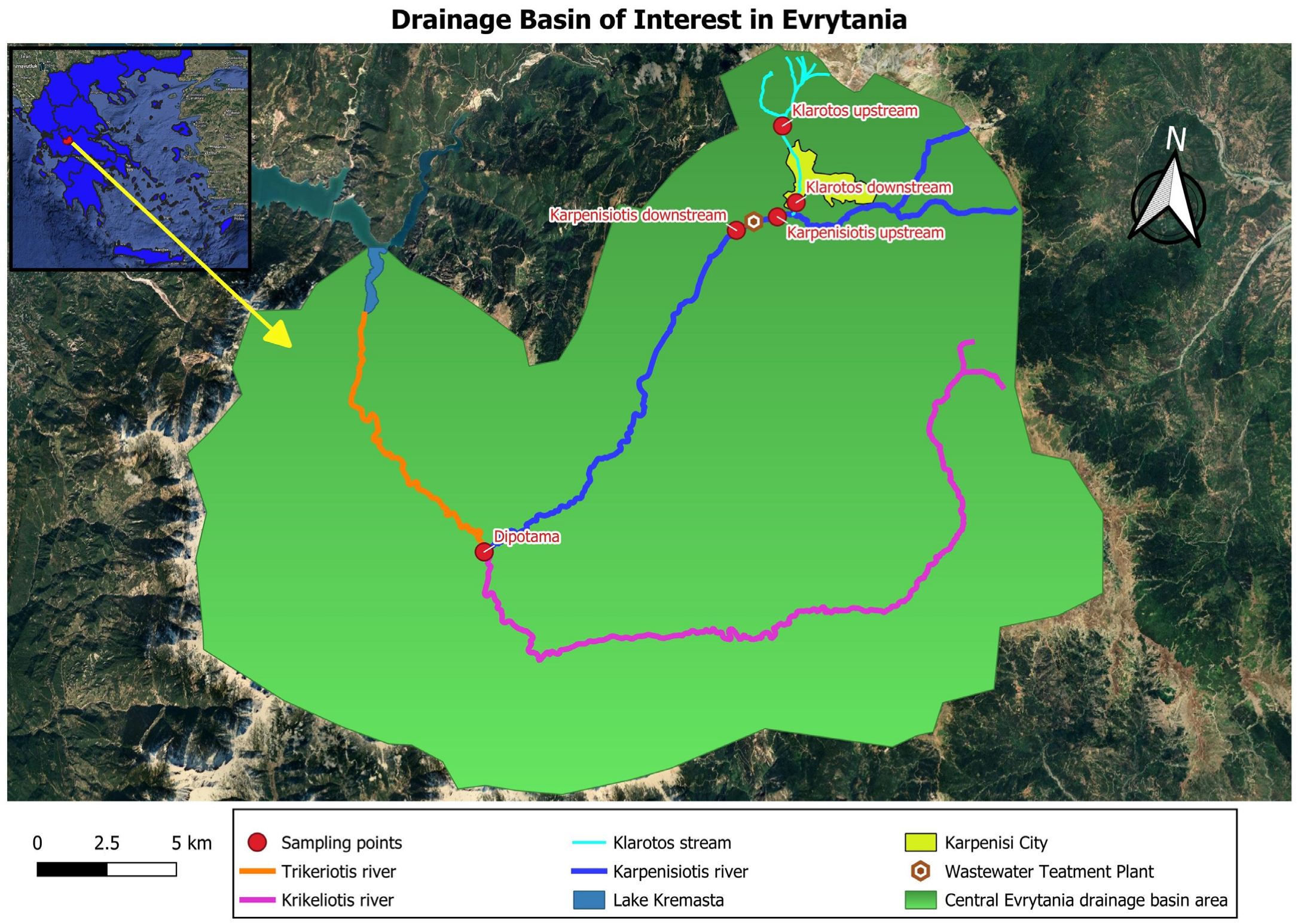
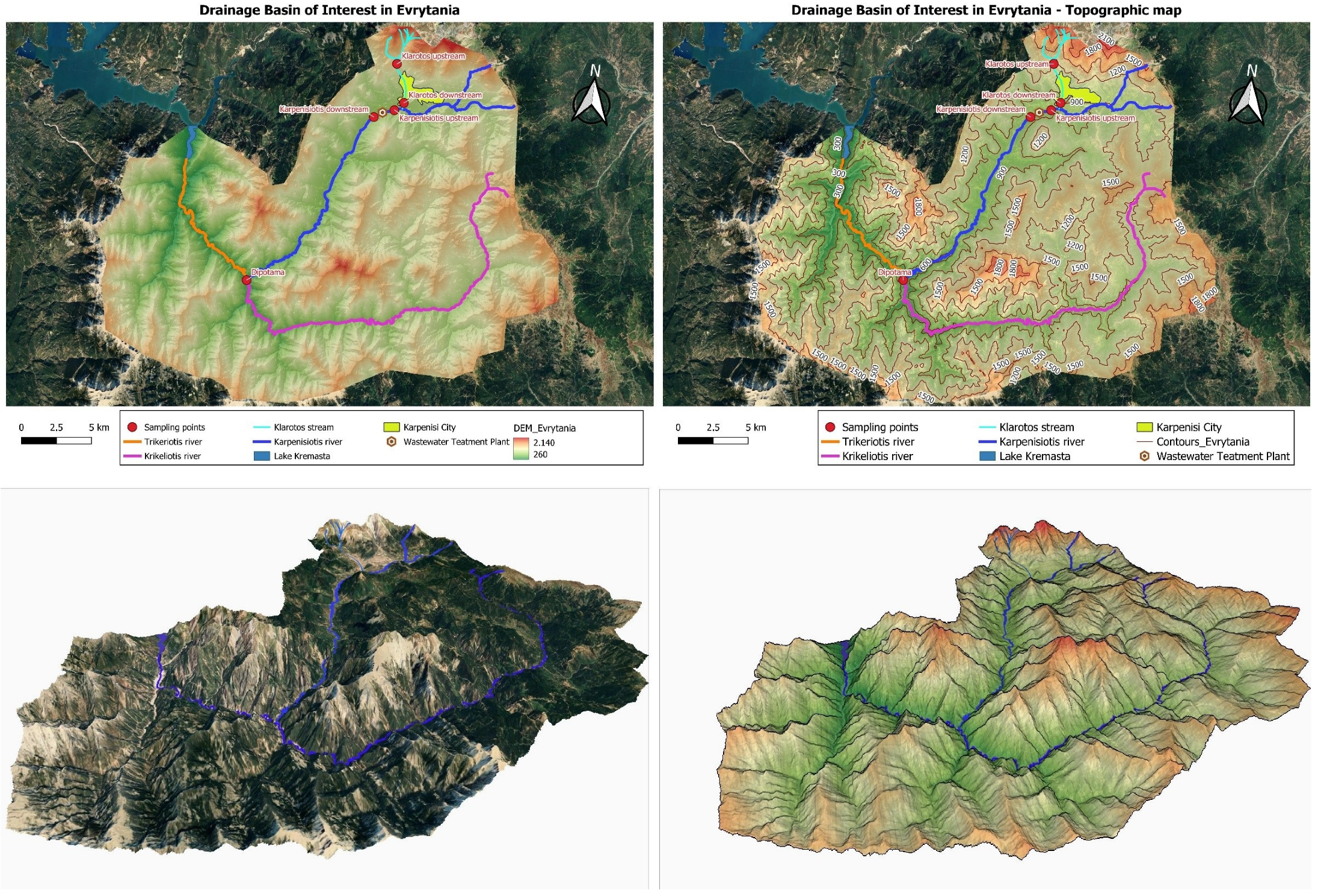
The study area is the Central Eurytania drainage basin, which covers approximately 567 km2 and is located in the Eurytania regional unit of Central Greece (Figure 1). The main hydrological network of this area consists of one stream and three rivers, with a total length of nearly 97.4 km.
Initially, the Klarotos stream originates from mount Tymphrystos in the northeastern part of the drainage basin and flows into the Karpenesiotes River. Its total length is approximately 13 km. The Karpenesiotes River also begins at Mount Tymphristos and joins the Klarotos stream. It then flows through the largest part of the basin before meeting the Krikeliotes River at the Dipotama confluence point, and then into Achelous River as they are both its tributaries, being a part of the Achelous River basin. The Achelous River basin has the greatest water quantity of all the watersheds in Greece [16]. The Karpenesiotes River has a total length of about 34.7 km. Furthermore, the Krikeliotes River originates from mount Oxya and flows through the southern part of the drainage basin before meeting the Karpenesiotes River at the Dipotama confluence point. Its length is estimated at 36.5 km. Additionally, downstream of the confluence of the Karpenesiotes and Krikeliotes Rivers is the Dipotama point, which translates into “Two Rivers Point”, which then forms a joint creating the Trikeriotes River. This river has a length of approximately 13.2 km and flows into Kremasta reservoir created by the namesake dam on the Achelous River, which is the greatest artificial lake in Greece. The total catchment area covers approximately 567 km2, about 12 percent of the total Achelous watershed (4860 km2), with an altitudinal range of 260–2140 m [31].
Several hydrometric stations operated historically in the area under the Public Power Corporation of Greece (PPC), as documented in the Open Hydrosystem Information Network (OpenHi) [31] of the National Technical University of Athens (NTUA). On the Krikeliotes River (Raches Tymphrystos–Domnista bridge), a station functioned from 1965, though affected by flooding and sedimentation, and produced 17 daily water stage observations on the Karpenesiotes River. Two stations—Micro Chorio and Gavra–Megalo Chorio (641 m)—have provided 15 min and daily stage time series for at least the past decade [32]. The most significant station is located on the Trikeriotes River (Geroboros bridge, 413 m), operational since 1966, with half-hourly and daily stage data. Despite issues related to sedimentation and turbulent flows, this station monitors the largest portion of the sub-catchment [32].
According to the River Basin Management Plan (RBMP) of the Ministry of Environment and Energy of Greece for the Western Sterea Hellas District (EL04, 1st Revision, 2023) [32], the Karpenesiotes and Krikeliotes are registered as distinct River Water Bodies (R.1–R.2 and R.1–R.3, respectively). For these units, official records on river length, catchment area, and mean annual discharge provide a baseline for ecological and chemical status assessments. For example, Karpenesiotes R.1 has a length of approximately 15.5 km, a catchment of 107 km2, and a mean annual discharge of 143 hm3, while Krikeliotes R.1 extends 22 km, drains 144 km2, and has a discharge of 487 hm3 [31,33,34].
Eurytania’s climate is classified as mountainous humid, with mean annual precipitation exceeding 1200 mm in most years. In Karpenission, precipitation ranges between 1250 and 1400 mm, whereas in the basin lower-altitude areas (e.g., Fthiotida) it decreases markedly (<700 mm) [35]. Such a characteristic is predominant between Western and Eastern Greece [16]. This altitudinal gradient also explains the pronounced spatial variability of river discharges and flow seasonality. Such seasonality is pronounced, with winter peak flows exceeding 10–15 m3/s and summer base-flows often below 1 m3/s. Eurytania is an extremely densely forested prefecture, with forests and woodlands covering up to 85% of its total area (about 1869 km2). Thus, the area is prone to forest fires with the corresponding incidental water pollution [28,36]. Overall, vegetation is dominated by chestnut, oak and riparian plane forests, interspersed with pastures, and few cultivated terraces. Recent anthropogenic developments include photovoltaic parks and small hydraulic structures. In this regard, seasonal and unpredicted hydrological fluctuations strongly influence water quality: droughts and low summer flows favor pollutant accumulation, whereas high winter flows promote dilution but increase sediment transport [15]. Furthermore, the role of Kremasta reservoir as the terminal receptor of Trikeriotes enhances both the hydrodynamic complexity and the variability of water quality within the system [35].
Table 1 presents all the rivers described previously in the Central Eurytania basin hydrological network, along with their lengths, their geographical locations within the basin, and their sources of origin.
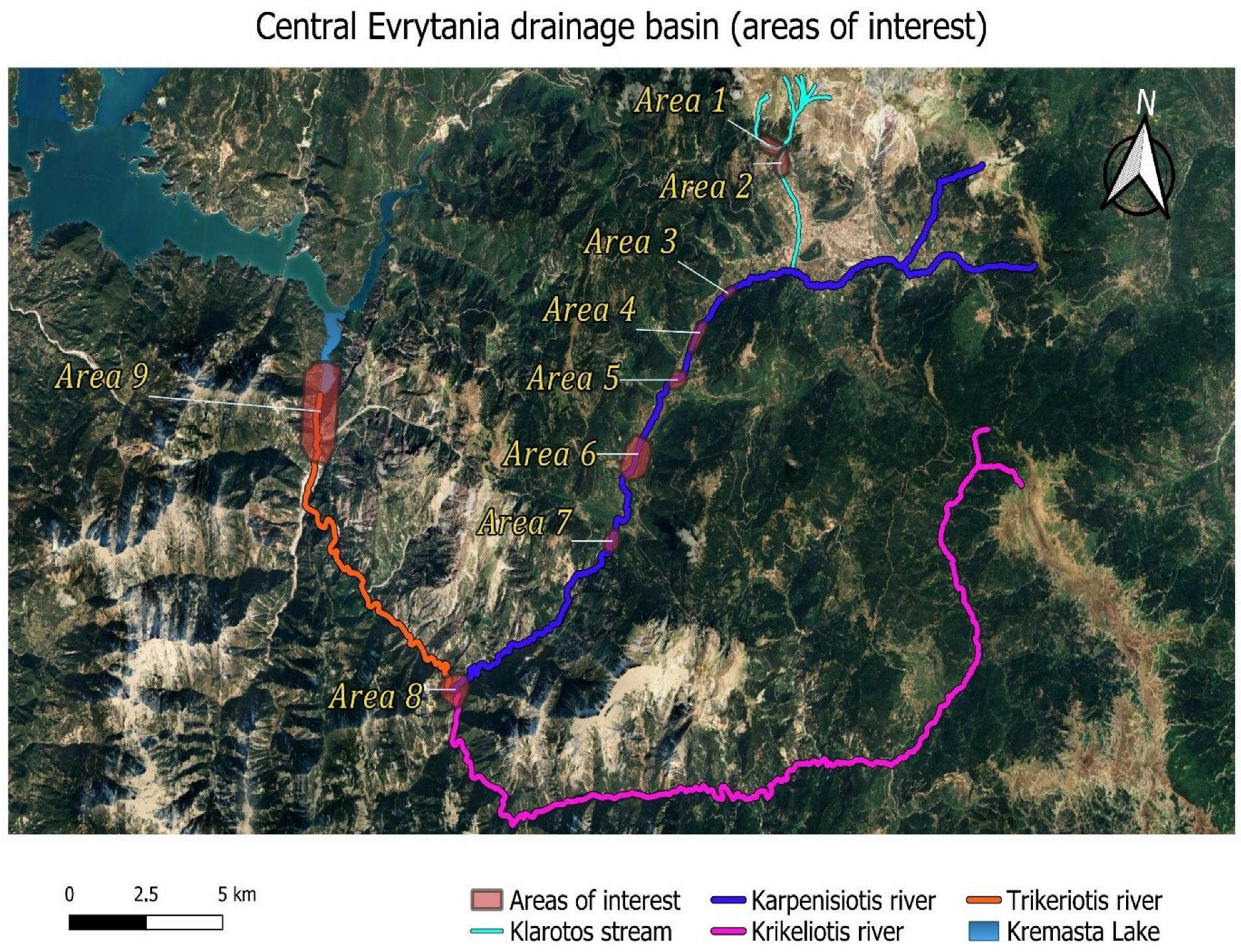
Overall, the Central Eurytania drainage basin has a notable geomorphology and varied geography (Figure 2 and Figure 3). Moreover, within this basin lies Karpenision, the capital city of the Eurytania regional unit, which has a population of 6788 inhabitants according to the latest Census [37]. The city of Karpenision is traversed by the Klarotos stream, which is under environmental pressure from urban activities, mainly due to the frequent inflow of polluted urban stormwater runoff.
In general, the Central Eurytania drainage basin hosts a variety of economic activities that rely on its rich natural resources. The main source of income is livestock farming, with extensive goat and sheep breeding and the production of high-quality dairy products, including various types of cheese, as well as fine cured meats such as traditional sausages. Furthermore, agricultural activities within the basin are limited due to the mountainous terrain and are primarily focused on traditional crops, herbs, and small-scale cottage industry products [38]. Additionally, the local forestry sector remains a central activity, with organized logging and forest cooperatives managing the region’s extensive woodlands [39]. Tourism is also highly developed within the Eurytania regional unit, with the municipality of Karpenision in particular attracting visitors for winter sports, alternative outdoor activities, and religious tourism, particularly in Proussos medieval Monastery [40,41]. Notably, there is no significant industrial activity throughout Eurytania, while a large proportion of the population is employed in services (both public and private) that meet the needs of the local community and visitors, thus contributing substantially to the local economy. In recent years, an increasing number of solar parks have been constructed in the area as part of Greece’s broader strategy for a sustainable energy transition [42].
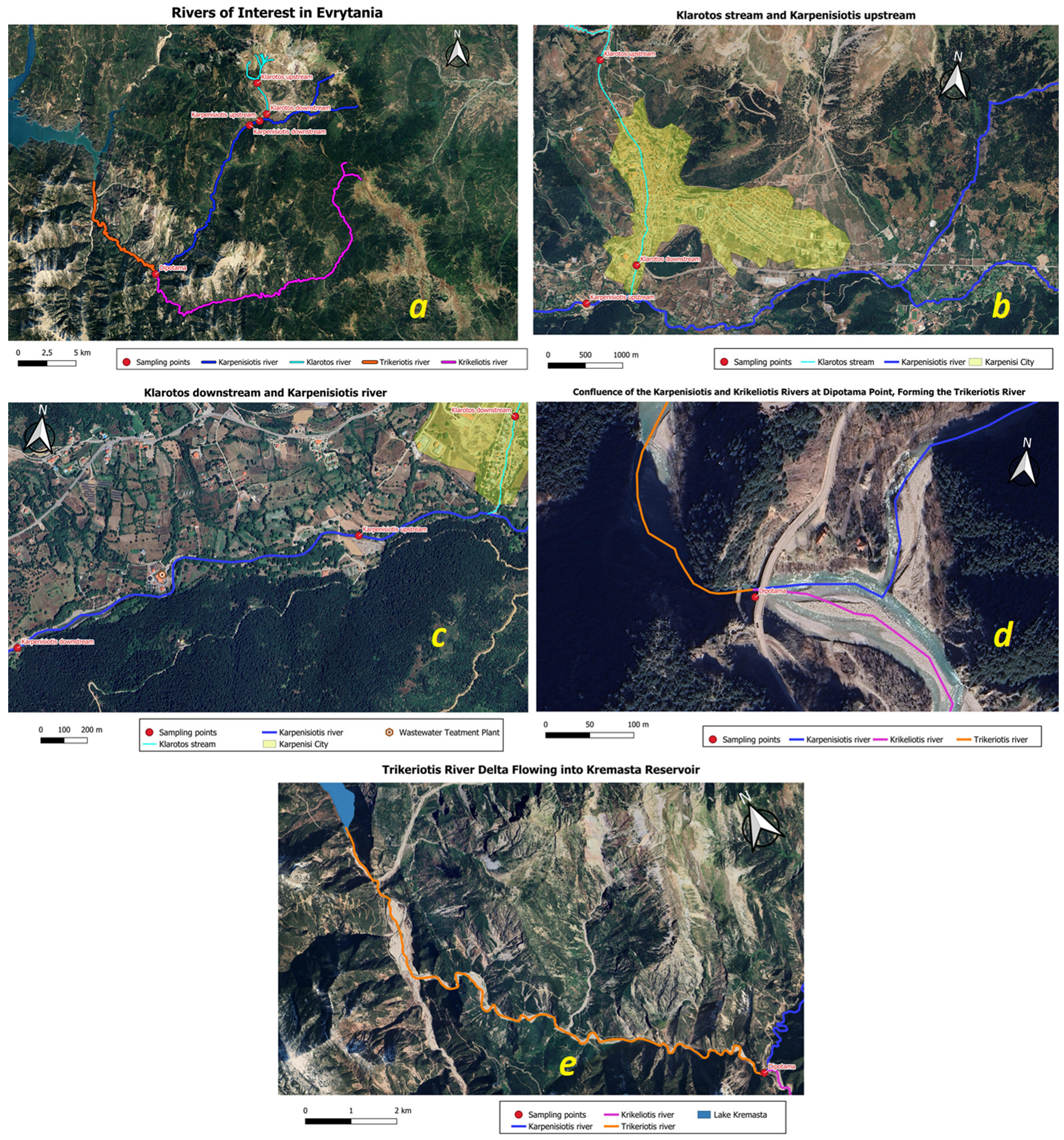
Overall, the entire hydrological network of the Central Eurytania drainage basin is subject to environmental pressures from Karpenision and other point sources, such as the effluents of questionable quality of the Karpenision wastewater treatment plant (Figure 3), as well as of numerous non-point sources companied with extensive usage of septic tanks in the rural housing. All such local activities appear to affect both its water quality and the riverbeds (Figure 4) [6].
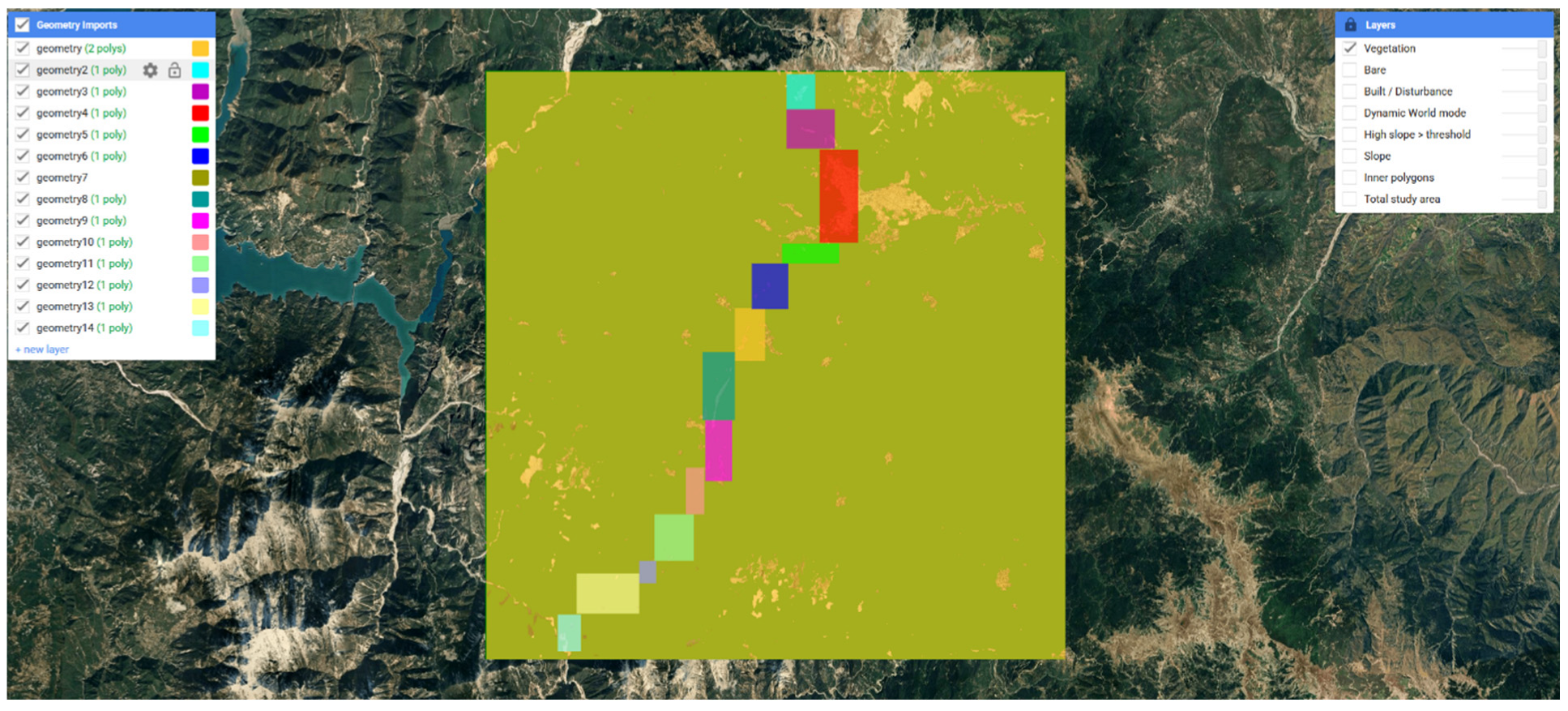
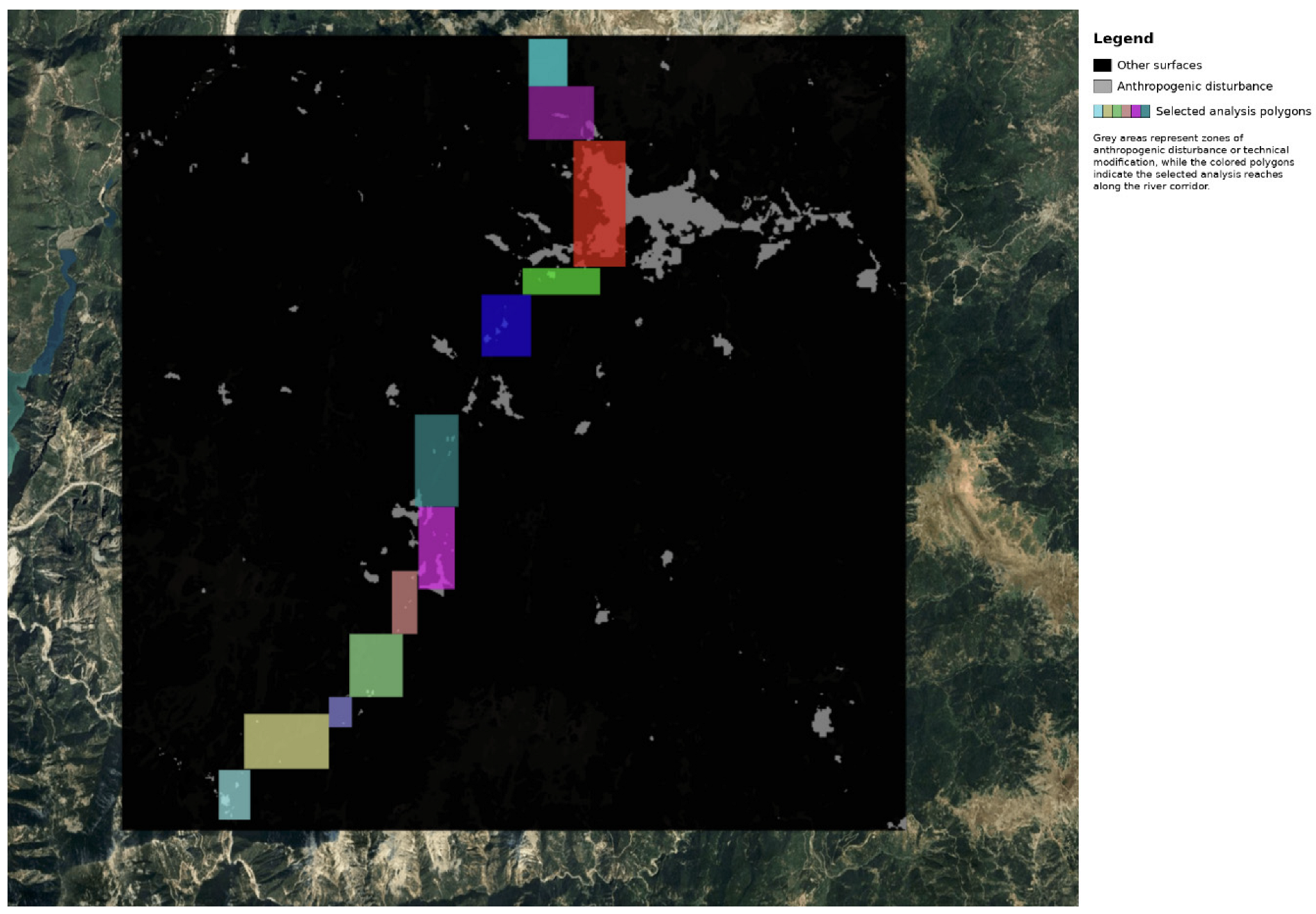
The GEE-derived indicators show that the broader watershed remains predominantly vegetated and strongly mountainous, whereas the selected inner polygons along the river corridor display lower vegetation cover and substantially higher anthropogenic disturbance (Table 2). Although the inner polygons represent only 6.23% of the total study area, they concentrate a markedly higher proportion of disturbance (11.85%) compared with the basin-wide average (2.51%). This contrast indicates that human pressures are spatially concentrated within the river corridor rather than being uniformly distributed across the watershed.

2.2. Methods

2.2.1. Satellite and Aerial Imagery

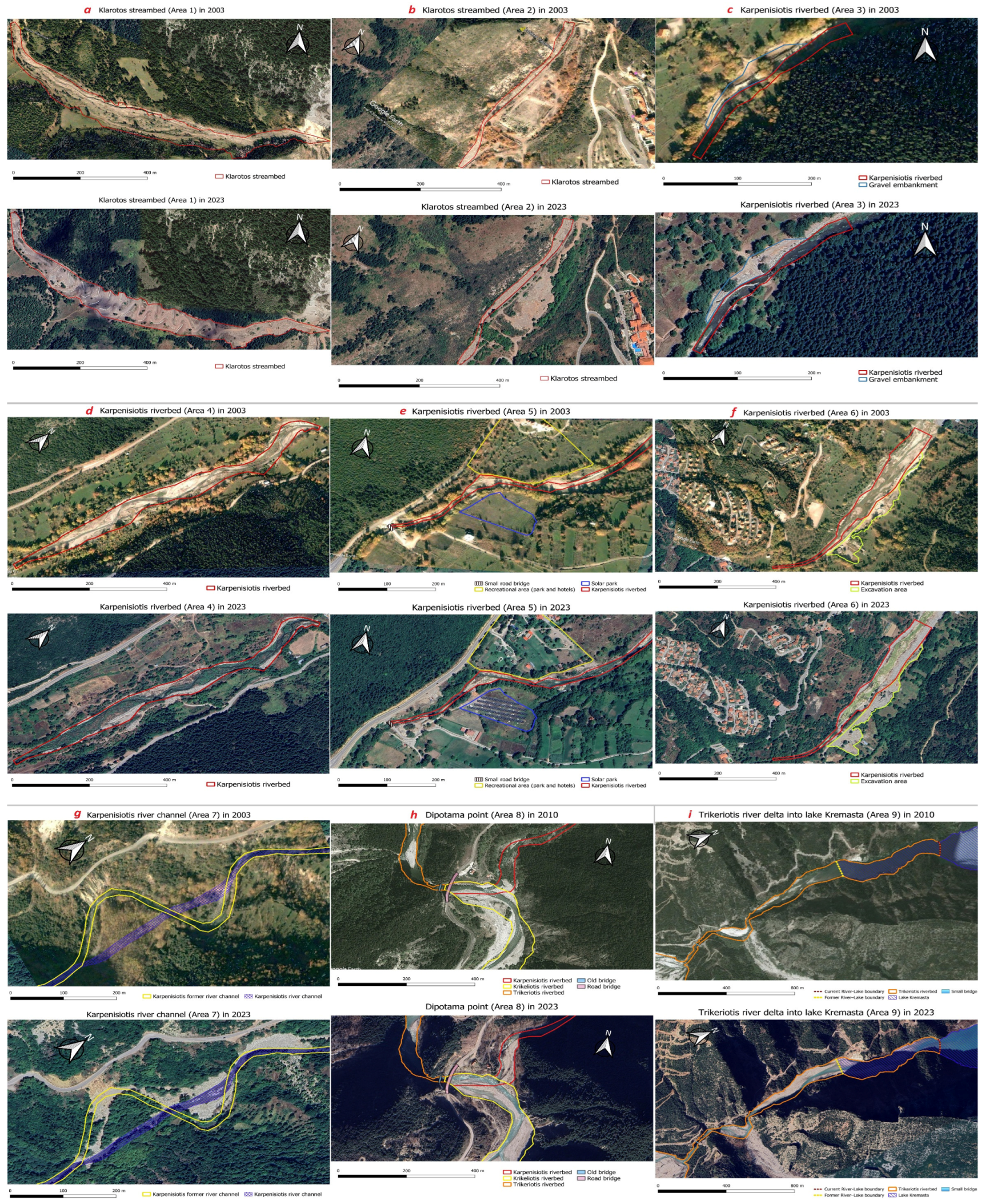
Satellite imagery from Google Earth Pro was obtained for 2003/2010 and 2023, covering nine representative sites along the Klarotos stream and the Karpenesiotes and Trikeriotes Rivers. Each site included paired images (2003/2010 vs. 2023) at a resolution of approximately 1570 × 944 pixels. In total, 18 images were extracted and processed to evaluate temporal geomorphological change.
Alongside the historical image series acquired from Google Earth Pro and the UAV-generated orthomosaics, an additional spatial analysis was performed within the Google Earth Engine (GEE) framework to improve methodological reproducibility and extract further indicators pertaining to terrain morphology and anthropogenic disturbance within the river corridor. This investigation aimed not to supplant the historical visual understanding of geomorphological changes but to augment it with reproducible geospatial processing utilizing open Earth Observation datasets. Topographic features were obtained from the Copernicus DEM GLO-30 dataset, and land-cover changes and disturbance patterns were analyzed using classification results from the Dynamic World dataset. This method yielded many geographical indicators, such as average slope, the percentage of terrain with steep gradients, vegetation cover, areas with minimal or sparse vegetation, and surfaces that are anthropogenically altered or technically modified. The indicators were computed for the entire research region as well as for specific inner polygons defined along the river channel [43,44,45].
An exploratory effort was undertaken to extract indications pertaining to the spatial footprint of surface water utilizing satellite data on the GEE platform. Nonetheless, the extraction of steady and dependable water signals was challenging due to the constricted river channel, steep terrain slopes, topographic shadowing, and complex spectral features characteristic of mountainous locations. The investigation failed to yield sufficiently strong data to facilitate the assessment of the geographic continuity of surface-water presence or discharge conditions along the river. As a result, these experimental findings were excluded as principal hydrological indicators in the final study [43,44,45].

2.2.2. Georeferencing and Image Processing

Images were georeferenced in a GIS environment using polynomial and thin-plate-spline transformations selected to minimize distortion (Root Mean Square Error (RMSE) < 1 pixel). The EPSG:3857—WGS 84/Pseudo-Mercator coordinate system was used for consistency with Google Earth. The nearest-neighbor resampling method was applied, and black background values were masked by setting the no-data value to 0. The resulting layers were compiled into nine comparison maps illustrating land-cover and channel-form changes between observation years (Figure 5).
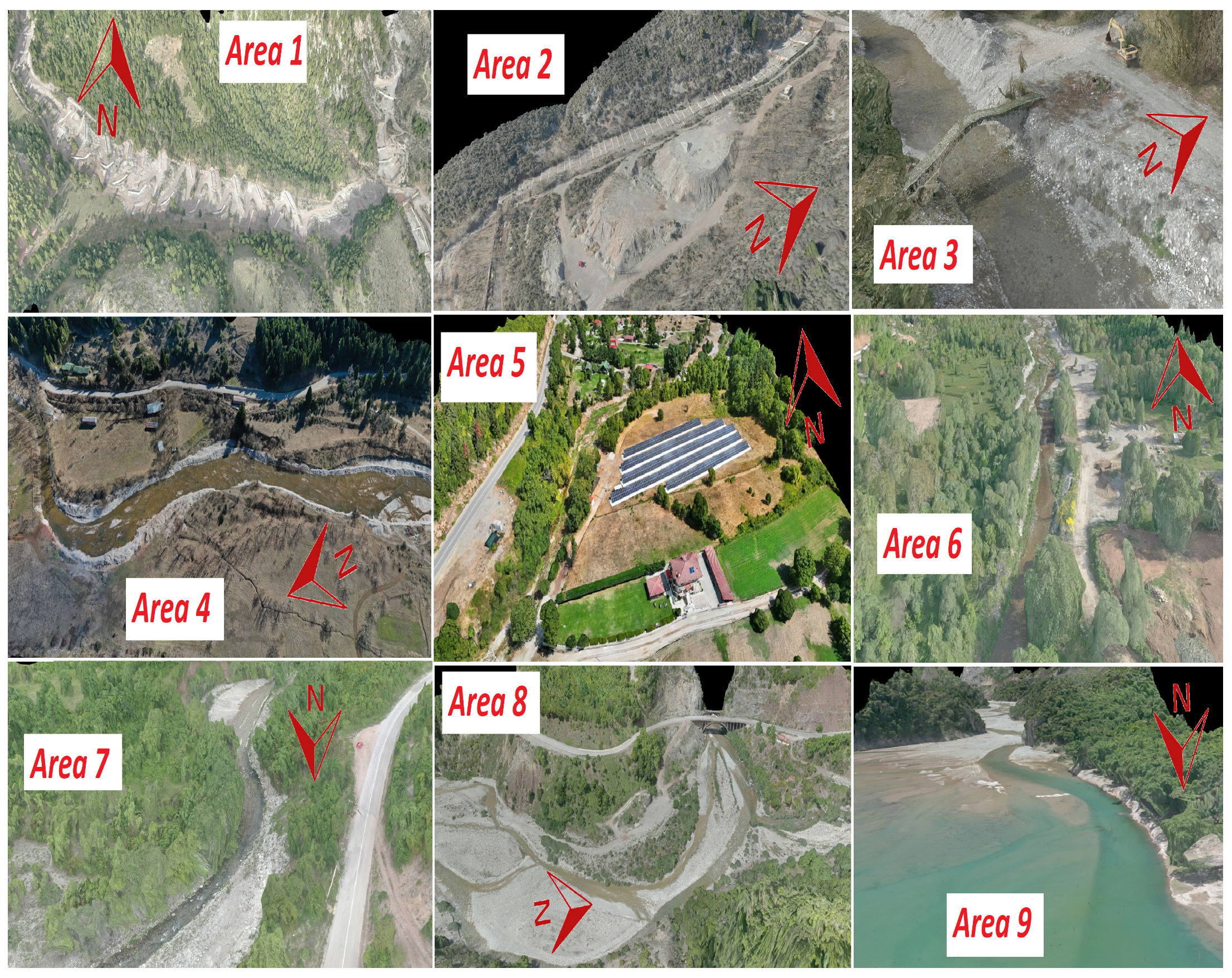
For each site, high-resolution UAV orthomosaics were also produced in 2023 using a DJI Mavic 2 Pro, manufactured by DJI company, Shenzhen, China, and equipped with a Hasselblad 20 MP (1″ CMOS) camera. Structure-from-Motion (SfM) photogrammetry was performed in Pix4D Mapper, achieving geometric accuracy better than 10 cm. Flight altitudes varied between 70 and 400 m, depending on topography and flight-safety constraints. Image overlap was set to 85% frontal and 80% side, yielding ground-sampling distances of 1.6–9.4 cm pixel−1. The UAV data complement the satellite series by documenting recent fine-scale morphological and anthropogenic modifications.
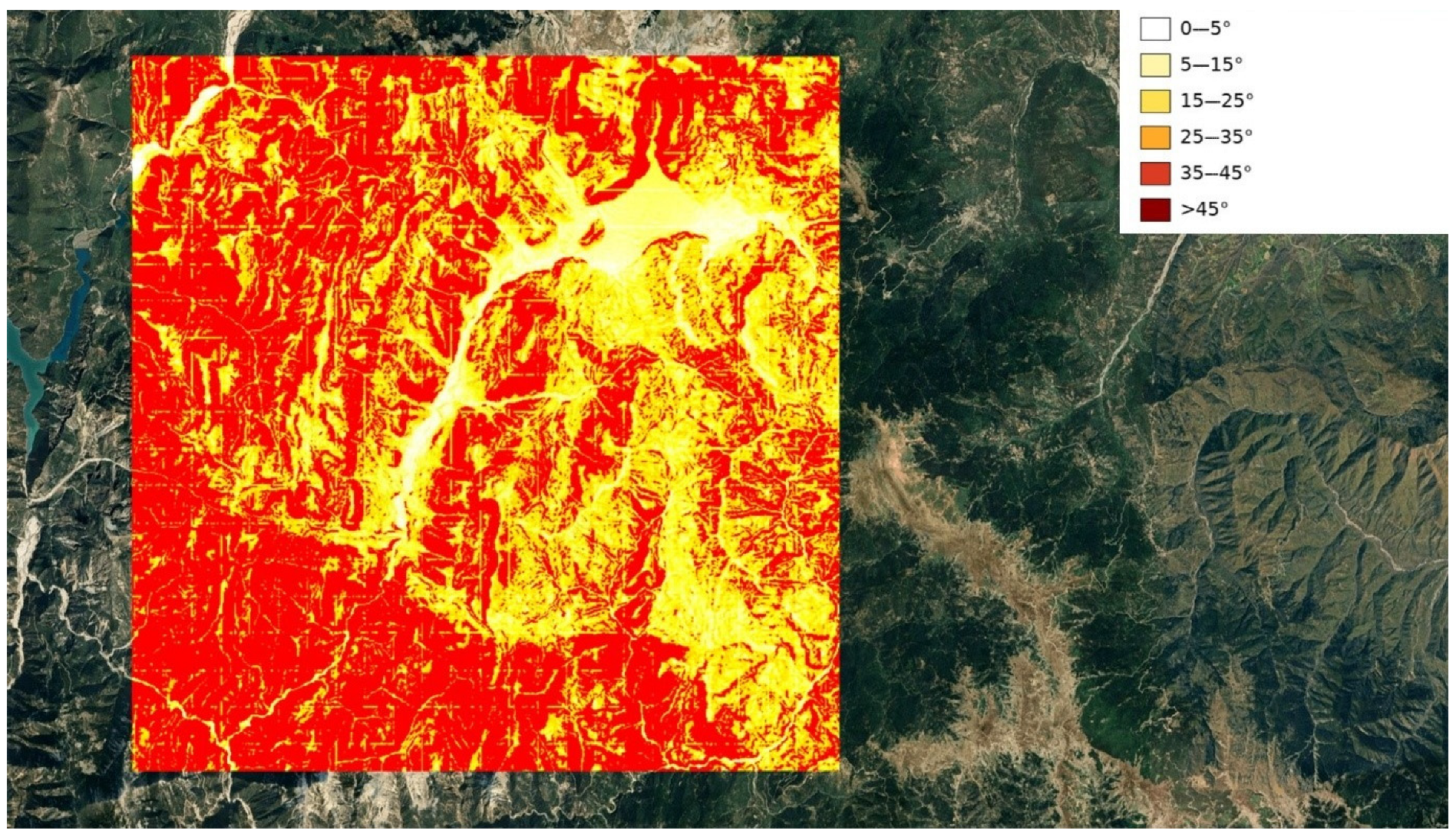
The georeferenced historical imagery and UAV orthomosaics were primarily used for the visual and comparative interpretation of geomorphological and land-use changes between observation periods. To improve reproducibility and reduce reliance on visual interpretation, a supplementary analysis was conducted using Google Earth Engine (GEE). Specifically, Copernicus DEM GLO-30 was used to derive terrain-related metrics such as slope gradient, while Dynamic World land-cover data were used to quantify vegetation cover, bare surfaces, and anthropogenic disturbance (Figure 6). These datasets provided reproducible, globally available spatial indicators describing terrain morphology and land-cover dynamics within both the broader watershed and the selected river corridor sub-zones. In this way, the geomorphological interpretation is supported by independent spatial information derived from open Earth Observation datasets.

2.2.3. Water Quality Sampling and Analyses

The chemical status of all Greek water bodies is poorly monitored; thus, accurate and reliable data are not available in order to have succinct quality measurements, and all pertinent literature suggests that their status should be used with caution, a fact that has marginally changed over the last three decades [16,46]. Nationally, in Greece, the quality status of the river basins, as characterized by the European Directives (2000/60/EC, 2008/105/EC and 2013/39/EU) and pertinent Greek legislation, is overall good, with about 3.5% poor and 11% unknown quality status [16]. Overall, the water chemical status in the river basin of Western Greece, where the selected case study area lies, is reported as good [16,46].
Therefore, five water-quality sampling stations were established along the Karpenesiotes River (Figure 7) and sampled seasonally during 2023–2024. In general, the parameters analyzed to assess water quality included Chemical Oxygen Demand (COD), Biochemical Oxygen Demand over five days (BOD5), dissolved oxygen (DO), Total Ammonium as Nitrogen (N–NH4+), Nitrate Nitrogen (NO3–N), Nitrite Nitrogen (NO2–N), total nitrogen (TN), phosphate ions (PO43−), total phosphorus (TP), total suspended solids dried at 103–105 °C (TSS), electrical conductivity (EC), turbidity, and pH. These parameters collectively provide a comprehensive understanding of the physicochemical characteristics and overall water sample quality. Measurements were expressed in mg/L for most parameters, μS/cm for electrical conductivity, Formazin Nephelometric Units (FNU) for turbidity, and dimensionless units for pH. In cases where measurements could not be obtained due to a dry streambed, the data were recorded as No Data (N/D). Such measurements help identify deviations from natural background conditions and indicate potential anthropogenic pressures; however, they do not by themselves confirm specific pollution sources. Differentiating between point-source inputs (e.g., municipal wastewater discharges) and diffuse sources (e.g., agricultural runoff) requires additional source-tracing techniques or complementary land-use data [47,48].
Field parameters—temperature, pH, electrical conductivity (EC), and dissolved oxygen (DO)—were measured in situ using a WTW Multi 3630 IDS portable meter. The equipment was sourced from WTW (Xylem Analytics), Weilheim, Germany. Laboratory analyses followed APHA Standard Methods (2017). COD was determined by the dichromate reflux method (Hach Method 8000); BOD5 by incubation using the Hach BOD kit; and DO by the indigo method (10360). Nutrients were quantified spectrophotometrically: NH4+ (salicylate–hypochlorite, 8155), NO3 (cadmium reduction, 8039), NO2 (diazotization, 8507), and PO43− (ascorbic acid molybdate blue, 8048). Total nitrogen and total phosphorus were measured after persulfate digestion (Methods 10,208 and 8190). Turbidity and TSS were analyzed using a Hach TSS portable system, while pH and EC were cross-verified with electrode and conductivity probe readings [49,50,51,52,53,54,55,56,57,58,59,60].
Samples were collected in sterilized 50 mL bottles pre-rinsed with ambient river water, sealed, labeled, and stored in insulated containers until analysis. All laboratory procedures were completed within 24 h of sampling to minimize alteration of chemical characteristics.

2.2.4. Data Integration and Interpretation

All datasets were integrated within a Geographic Information Systems (GIS) framework in order to examine the relationship between geomorphological alteration and spatial variability in water quality conditions. Each water sampling site was linked to its respective geomorphological reach and defined by indicators of morphological disturbance, such as channel confinement, riparian vegetation condition, and the intensity of adjacent land-use pressures. The seasonal averages of physicochemical water parameters were then compared with the geomorphological indicators. Spearman correlation coefficients were employed to investigate monotonic correlations among physical and chemical data, including COD, BOD5, NH4+, TP, and dissolved oxygen (DO). The application of Spearman correlation was deemed suitable owing to the restricted number of sampling stations and the semi-quantitative or categorical characteristics of various geomorphological parameters, rendering a non-parametric method more appropriate.
The channel confinement index was used to describe the degree to which the river channel is laterally constrained by valley walls or anthropogenic structures. It was estimated through visual analysis of the georeferenced satellite imagery series and UAV orthomosaics, considering valley topography, active channel width, and the presence of structural alterations within the river corridor, such as artificial bank stabilization, channel constriction, or other engineering modifications affecting the riverbanks. Supported by geomorphological criteria reported in the literature [43,44], this index provides an indication of the river’s lateral mobility and its capacity to adjust under hydrological and sediment transport conditions.
Riparian vegetation cover was assessed by analyzing the continuity and density of vegetation along the riparian corridor using available satellite data and UAV orthomosaics. Continuous riparian vegetation is considered a key indicator of river ecosystem functionality, as it contributes to bank stabilization, sediment retention, and the reduction of diffuse pollutant transport associated with surface runoff [45].
A further geospatial analysis was performed using the Google Earth Engine (GEE) environment and open-access Earth Observation datasets in order to enhance the spatial interpretation of these indicators. Copernicus DEM GLO-30 data were used to derive terrain slope indicators, while land-cover classification outputs from the Dynamic World dataset were used to assess vegetation cover, bare surfaces, and anthropogenically altered or technically modified regions. These indicators were computed for both the entire study area and specific inner polygons along the river corridor.
This approach was not designed to provide a direct hydrological model or causal predictor, but rather to function as an auxiliary and reproducible spatial tool for describing the topographic context, vegetation distribution, and spatial concentration of anthropogenic pressures within the watershed. Because the methodology relies on open satellite datasets and reproducible geospatial processing, it can be applied to other river basins for comparative evaluation of geomorphological and environmental stressors.
Structure, Function, and Integration of the Interdisciplinary Framework
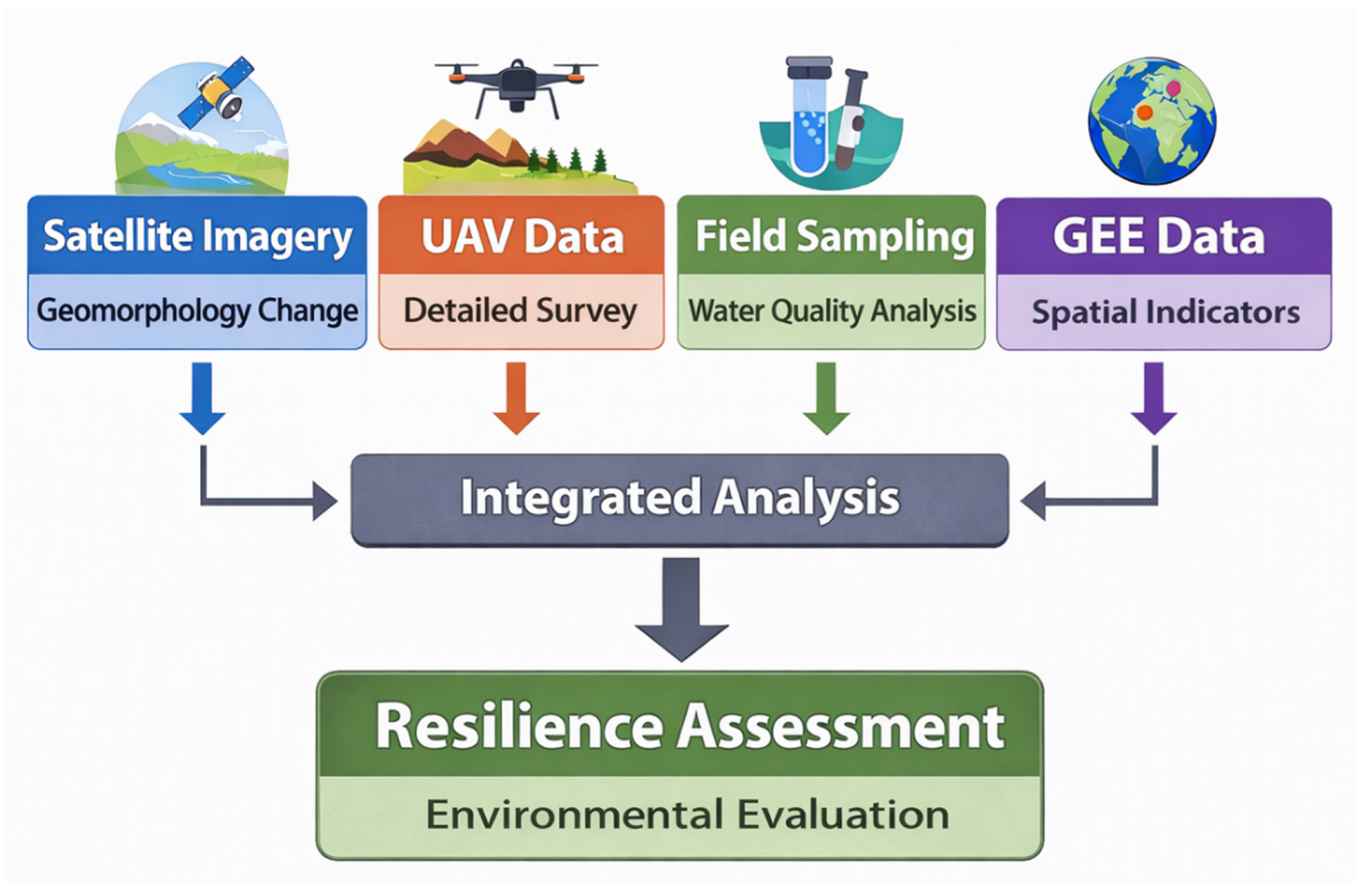
This study employed an interdisciplinary framework to evaluate the environmental status and susceptibility of a mountainous Mediterranean watershed by integrating four complementary components: (i) historical geomorphological analysis based on georeferenced satellite imagery, (ii) high-resolution UAV orthomosaic mapping for recent fine-scale alterations, (iii) seasonal physicochemical monitoring of river water quality, and (iv) supplementary cloud-based spatial analysis of terrain sensitivity and anthropogenic disturbance using Google Earth Engine. In this context, environmental resilience is defined operationally as the ability of the river corridor and its adjacent landscape to sustain geomorphological and ecological functionality under the combined influence of steep topography, climatic forcing, and anthropogenic pressures.
The framework was designed to link physical landscape attributes with observed water quality conditions. Historical and contemporary image analysis recorded alterations in channel morphology, riparian connectivity, and land-use pressures, while the GEE-based assessment yielded consistent metrics of slope, vegetation cover, and patterns of anthropogenic disturbance. These spatial data were subsequently analyzed alongside seasonal physicochemical measurements in order to examine whether the most morphologically altered and spatially disturbed reaches were also associated with poorer water quality conditions. Thus, the framework is based on the integrated interpretation of geomorphological, geospatial, and hydrochemical data rather than on a single line of evidence. It should be noted, however, that the relationships identified in this study represent spatial associations rather than direct causal links, given the limited sample size and the exploratory nature of the statistical analysis. The proposed interdisciplinary framework for assessing the environmental resilience of Mediterranean mountain watersheds under climate change, landscape degradation, and biodiversity loss, with particular reference to the Central Eurytania region, integrates scientific methods supported and guided by the prevailing national and European regulatory framework. It provides a comprehensive analytical tool based on multiple pillars: spatial analysis through GIS using satellite and UAV data to record geomorphological changes and land-use alterations; resilience-related indicators that assess the influence of physical and socio-economic factors based on physicochemical analyses and land data; and the integration of these datasets to understand the multidimensional impacts affecting watersheds under rapid climatic and anthropogenic change.
This framework was designed with flexibility and ease of application in mind, making it a potentially useful tool for other mountainous watersheds across the Mediterranean. In this way, it may support sustainable natural resource planning, integrated watershed management, and the development of effective mitigation and adaptation strategies, while also contributing to the environmental, social, and economic resilience of regional ecosystems under the one health perspective.
The overall structure and integration of the interdisciplinary framework applied in this study, integrating satellite imagery, UAV data, field-based water quality measurements, and GEE-derived spatial indicators for the assessment of geomorphological change and environmental resilience, are illustrated in Figure 8.

3. Results

3.1. Geomorphological and Land-Use Changes

Comparative analysis of georeferenced satellite imagery from 2003/2010 and 2023 (Figure 9) revealed widespread morphological simplification within the Central Eurytania drainage basin. Formerly braided and meandering reaches of the Klarotos, Karpenesiotes, and Trikeriotes Rivers have evolved into confined single-thread channels bordered by engineered embankments and roads. Riparian vegetation cover decreased markedly, especially near Karpenision and along the lower Karpenesiotes River, where channel excavation and bank reinforcement are evident. Upstream reaches of the Krikeliotes River, in contrast, retained largely natural morphology and continuous riparian corridors.
The integration of GEE-derived datasets allowed the extraction of quantitative spatial indicators that support the geomorphological interpretation. These include slope gradients, proportions of vegetated and non-vegetated areas, and indicators of anthropogenic disturbance within the watershed and selected river corridor sections.
Land-use analysis derived from QGIS classification shows that built-up surfaces increased by approximately 18% between 2003 and 2023, particularly around Karpenision and Micro Chorio, whereas agricultural land decreased by almost 10%. The emergence of small photovoltaic parks and tourism infrastructure after 2018 indicates a shift from agro-pastoral to mixed rural land use [13]. These spatial transformations correspond to reduced channel complexity and loss of flood-plain connectivity, especially downstream of the Dipotama confluence.
High-resolution UAV orthomosaics from 2024 and 2025 (Figure 10) complement and validate the satellite image analysis, providing detailed evidence of recent fine-scale morphological and anthropogenic modifications. These include localized channel straightening, bank stabilization works, and vegetation removal along developed reaches, further corroborating the ongoing trend of simplification and human alteration observed in the earlier datasets [61].
The additional geographical analysis performed by Google Earth Engine elucidated the geomorphological configuration and spatial distribution of human-induced disturbances within the research area. The whole analysis area encompassed 375.63 km2 (37,563.34 ha), whereas the designated inner polygons along the river corridor spanned 23.40 km2 (2339.52 ha), accounting for approximately 6.23% of the overall study area. The average slope of the terrain was 25.14°, with around 51.66% of the area designated as high-slope terrain, affirming the distinctly mountainous nature of the watershed. Simultaneously, the broader environment predominantly retained its natural state, with vegetation cover at 95.73%, bare or poorly vegetated areas constituting 0.93%, and anthropogenically altered or technically modified surfaces comprising roughly 2.51% of the overall area.
The chosen inner polygons along the river corridor displayed a significantly distinct spatial configuration. Despite the mean slope remaining elevated at 21.31°, vegetation cover diminished to 86.69%, bare areas escalated to 1.11%, and the extent of anthropogenic disturbance climbed to 11.85%. The results demonstrate that although the larger watershed maintains a largely natural and vegetated environment, human disturbance is markedly more localized within the river corridor compared to the entire basin.
The quantitative spatial descriptors align with the visual analysis of the georeferenced maps and UAV orthomosaics, indicating that the most significant morphological simplification and riparian disruption did not occur uniformly throughout the watershed, but rather in specific segments where engineering interventions, corridor disturbances, and human land-use pressures were concentrated.

3.2. River-Water Quality

Seasonal monitoring at five stations along the Karpenesiotes River and its tributaries (Table 3, Table 4, Table 5 and Table 6) revealed clear spatial gradients in water quality during 2023–2024. Upstream sites near Tymphristos Mountain maintained good ecological status with DO > 8.5 mg L−1, BOD5 < 2 mg L−1, and NH4+ < 0.05 mg L−1. In contrast, downstream sites near Karpenission and the Dipotama confluence exhibited elevated COD (18–24 mg L−1), BOD5 (4–6 mg L−1), and NH4+ (up to 0.38 mg L−1), reflecting municipal and diffuse anthropogenic influences. The Trikeriotes outlet toward Lake Kremasta showed intermediate conditions (COD ≈ 12 mg L−1, DO ≈ 7.2 mg L−1).
Electrical conductivity ranged from 380 to 640 µS cm−1, peaking during summer low flows, while turbidity and total suspended solids increased during spring snowmelt. pH remained neutral to slightly alkaline (7.3–8.1). Seasonal variations followed discharge patterns: pollutant concentrations rose during summer and declined with winter dilution.
According to the RBMP-EL04 classification by the Greek Ministry of Environment and Energy, the Klarotos and upper Karpenesiotes reaches fall within good to moderate quality, whereas the lower Karpenesiotes and Dipotama confluence have poor due to high organic and nutrient loads.

3.3. Integrated Relationships Between Geomorphology and Water Quality

Spatial integration of geomorphological and water-quality datasets within a GIS environment revealed consistent associations between physical channel modification and chemical water deterioration (Table 7). To quantify these relationships, correlation analyses were performed in Microsoft Excel 365 using the CORREL function applied to ranked values of each variable, equivalent to Spearman’s rank correlation method. This approach evaluates how strongly two variables change together, producing a coefficient (ρ) that ranges from –1 to +1, where positive values indicate that both variables increase simultaneously, and negative values indicate an opposite trend [62,63].
Correlation coefficients were calculated for three morphological indices (channel confinement, riparian vegetation cover, and land-use intensity) and four physicochemical parameters (COD, BOD5, NH4+, and DO) using data from five sampling sites (n = 5). Values of |ρ| ≥ 0.6 were interpreted as strong correlations, and statistical significance was considered at p < 0.05 based on critical Spearman thresholds for n = 5.
The statistical analysis is based on a limited number of sampling locations (n = 5), which constrains statistical power, and therefore the identified correlations should be interpreted as indicative relationships rather than definitive causal evidence.
Results showed strong positive correlations between the channel confinement index and COD (ρ = 0.72, p < 0.05), BOD5 (ρ = 0.68, p < 0.05), and NH4+ (ρ = 0.64, p < 0.05), indicating that greater artificial channelization and reduced flow capacity are associated with higher organic and nutrient concentrations. Conversely, dissolved oxygen (DO) was negatively correlated with confinement (ρ = −0.69, p < 0.05), reflecting oxygen depletion in morphologically altered reaches. Reaches with denser riparian vegetation showed lower organic and nutrient levels, highlighting the protective role of riparian buffers in maintaining river water quality.
The adopted framework combines geomorphological interpretation, UAV-based mapping, hydrochemical monitoring, and reproducible spatial indicators, providing a multi-scale approach for assessing environmental resilience in mountainous Mediterranean watersheds.
Positive ρ values indicate that both variables increase together, while negative values indicate inverse relationships. Correlations with |ρ| ≥ 0.6 are considered strong. The asterisk (*) denotes statistically significant associations at p < 0.05 (two-tailed test).

4. Discussion

4.1. Geomorphological Changes and Human Impact

The results of the pertinent effort may provide new insights into the geomorphological transformations and water-quality dynamics of the Central Eurytania water basin over the past two decades. By integrating georeferenced satellite imagery, high-resolution orthomosaic mapping, and seasonal spectrophotometric analyses, the results highlight both the extent of anthropogenic interventions and the persistence of natural fluvial processes in the mountainous region. Initially, the comparative analysis of Areas 1–9 demonstrates a clear shift from natural, dynamic river systems toward manmade and confined channels. Interventions such as check dams, bank reinforcement, excavation, and channel straightening have reduced morphological complexity, restricted lateral mobility, and altered sediment-transport dynamics. While such measures provide local earth stability and flood protection, they have simultaneously diminished riparian vegetation, disrupted habitat continuity, and weakened the resilience of river systems against anthropocentric pressure, land-use change, ecological degradation, climate change, one health risks, and socio-economic stress. The transition from braided or meandering reaches to simplified, stabilized channels in the Klarotos and Karpenesiotes Rivers illustrates the long-term ecological damages of intensive regulation.
The terrain analysis indicates that the Karpenesiotes River system evolves within a highly restricted mountainous environment, where the channel occupies the lowest topographic positions and thus serves as the primary receptor of runoff and transported materials from the adjacent slopes. This geomorphological context fosters a naturally sensitive environment conducive to erosion, sediment transfer, and local channel instability, particularly in areas where the riparian corridor has been disrupted. The GEE-based findings reveal that the overall landscape is predominantly vegetated; however, the chosen inner river-corridor polygons have significantly reduced plant cover and a markedly greater anthropogenic disturbance footprint compared to the entire basin. This contrast indicates that pressures are unevenly distributed across the terrain, with a disproportionate concentration in the most vulnerable areas of the fluvial system.

4.2. Land-Use Change, Socio-Economic Factors and Ecological Implications

Furthermore, orthomosaic mapping revealed further land-use transformations, including the installation and expansion of solar parks and recreational infrastructure. These changes underscore the growing role of renewable energy and tourism as economic drivers in Eurytania, but raise concerns about cumulative ecological impacts, particularly where new developments approach sensitive riparian corridors. Abandoned agricultural land in several sub-catchments, especially in Areas 4 and 6, reflects broader demographic and socio-economic transitions. Although some rewilding tendencies may favor vegetation recovery, the uneven distribution of these processes indicates that human and natural drivers continue to shape the region’s geomorphological and ecological equilibrium. Comparable trajectories have been reported in other Mediterranean mountain basins, where rural depopulation, infrastructure expansion, and energy transition projects are reshaping river landscapes.

4.3. Water-Quality Dynamics and Hydrochemical Characteristics

Additionally, water-quality analyses revealed significant spatial and seasonal variability across the drainage network. Downstream sites, especially in the Klarotos stream and the Karpenesiotes River, showed elevated levels of organic and nutrient pollution, likely linked to municipal effluents and diffuse urban runoff. Seasonal effects were evident: summer low flows increased pollutant concentrations, while higher winter discharges diluted contaminants and improved oxygen levels. Autumn sampling showed episodic peaks in suspended sediment and nutrient loads, suggesting storm-related runoff as an additional stressor. These findings confirm that both human activities and climate variability affect the hydrochemical regime of mountainous Mediterranean rivers. The statistical relationships summarized in Table 3 indicate that greater channel confinement and less riparian vegetation are strongly associated with increased levels of COD, BOD5, and NH4+, while dissolved oxygen declines. These patterns align with studies from southern Italy and Spain, where channel simplification and reduced hydraulic complexity have led to organic enrichment and oxygen depletion. The downstream deterioration observed in the Klarotos and Karpenesiotes Rivers demonstrates how hydromorphological changes and wastewater discharges together degrade river health, whereas upstream reaches with intact riparian vegetation maintain good ecological conditions.
This spatial pattern is crucial for understanding water quality deterioration. The larger watershed cannot be characterized as uniformly urbanized or extensively altered; however, the river corridor is influenced by localized yet intense human pressures, including channel confinement, engineering modifications, disrupted riparian zones, and land-use practices adjacent to the channel. In a high mountainous environment, such localized disturbances may exert disproportionate impacts due to their occurrence precisely where runoff, sediment transfer, and pollution transport are concentrated. The hydrochemical degradation noted in the more altered sections should be understood not only in the context of wastewater contributions and diffuse pollution but also concerning the cumulative decline of riparian buffering, channel stability, and geomorphological resilience throughout the affected corridor.

4.4. Coupling Geomorphology and Water Quality

The combined interpretation of geomorphological mapping and water-quality indicators provides a comprehensive picture of cumulative human impact in the Central Eurytania basin. Areas where channel confinement, bank reinforcement, and riparian vegetation loss were most pronounced corresponded to sites with higher organic and nutrient loads, suggesting that reduced lateral connectivity and diminished riparian filtering capacity have intensified pollutant transport. In contrast, partially abandoned agricultural zones exhibited localized improvements in oxygenation and lower nutrient concentrations, indicating that natural rewilding processes may contribute to self-restoration of water quality. These findings emphasize the importance of coupling geomorphological and chemical monitoring to capture the integrated effects of land-use transitions and engineered interventions on river systems.

4.5. Watershed Management Implications, Policy Framework and Large-Scale Water Resource Planning

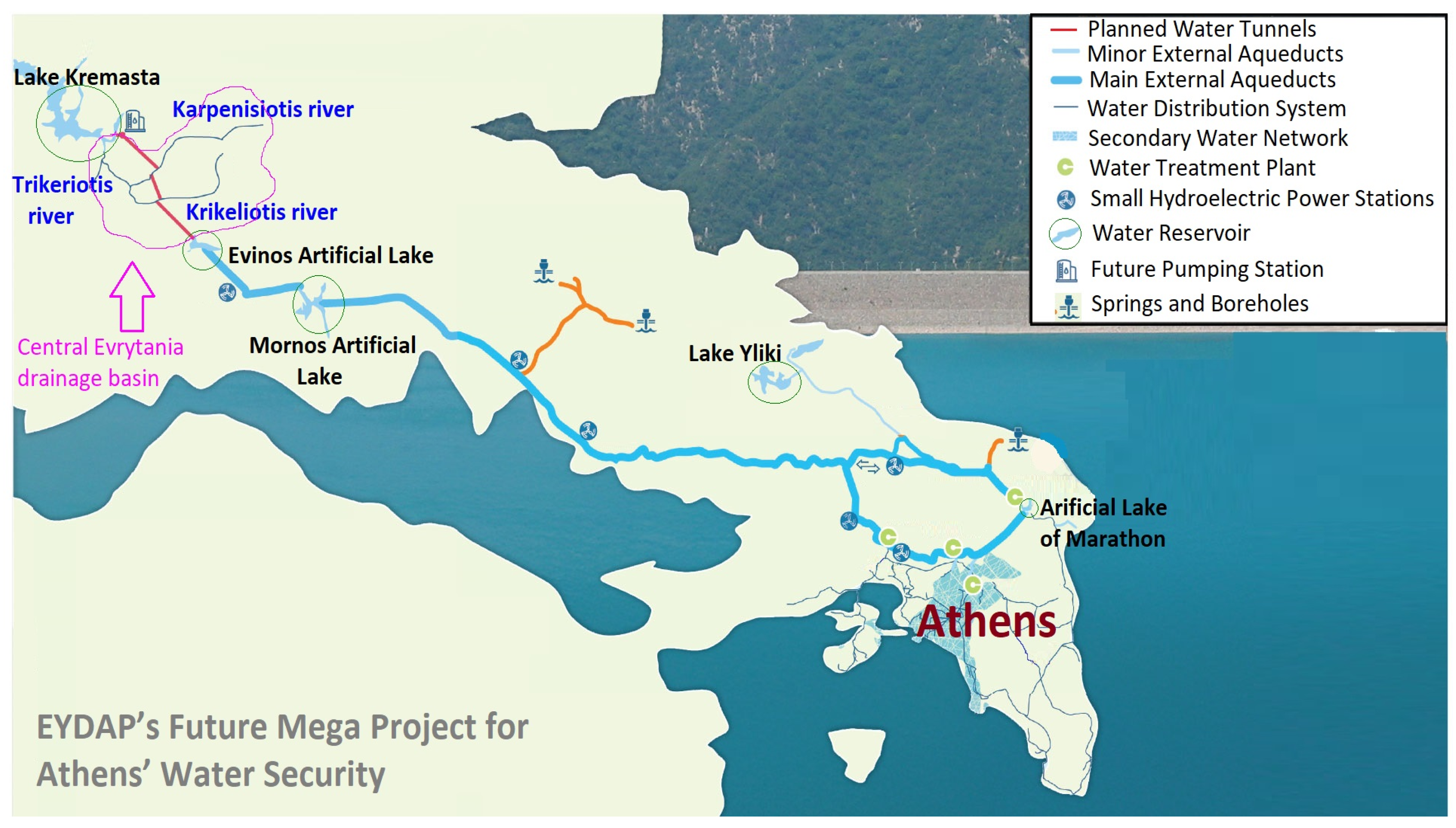
This effort’s evidence supports the need for integrated watershed management that incorporates flood and drought contingency planning, renewable-energy development, tourism, ecosystem and overall environmental proactive management. Priority actions should include stricter control of wastewater discharges, restoration and preservation of riparian flora and fauna, and systematic monitoring of sedimentation in the Trikeriotes River delta. Such measures align with the EU Water Framework Directive, which promotes the attainment of “good ecological status” through both morphological and chemical water quality restoration and accurate measurements. Beyond regional management, the Central Eurytania basin holds growing strategic importance for Greek national water security. According to the Athens Water Supply and Sewerage Company (EYDAP S.A.), new interventions are planned to connect the Euenos River with the Krikeliotes and Karpenesiotes Rivers, tributaries of Achelous River, thus part of a major water-transfer initiative for the Achelous River diversion (Figure 11). However, existing studies from the construction of Euenos dam, reservoir and aqueduct in the mid-1990s clearly pointed out and proved the sufficiency of the pertinent scheme for a period of 50 years, thus ending in about 2045 [46,64,65,66]. It was also announced that the first phase of this new mega-project, with a budget of approximately €365 million, aims to enhance Athens’s long-term water supply, followed by a second phase to transfer water from Kremasta reservoir in Achelous River basin (€170 million), which at the same time is a major hydropower electricity supply node for the whole country. The proposed water transfer will use pumping stations, forcing further high electric energy demand and consumption for the required pressure heads. Furthermore, the Supreme Court of Greece has repeatedly ruled against such diversion of River Achelous [67]. In addition, there are not enough hydrologic indications for the need of such a project, since even the population of greater Athens has decreased in past decades; namely, the decrease was 0.4% from 2011 to 2021 [37]. In 1989, the year previous to the great drought year, the total annual water transfer in EYDAP S.A.-serviced areas was 375.816 × 10⁶ m3 [64]. In the 1990 drought, the consumption dropped to 326.5 × 10⁶ m3/yr, reaching a minimum of 246.3 × 10⁶ m3/yr in 1993 due to the applied drought-responsive measures [46]. Despite the still-in-force measures, mainly quadrupling the water price, consumption climbed to 280.2 × 10⁶ m3/yr in 1995, reaching 406.3 × 10⁶ m3/yr in 2024 [46,68]. Given such transfers and the corresponding population, in 1989 the per capita water transfer was 292.2 lt/day, and in 2025 it was 291.9 lt/day, practically the same, proving (according to the international norms) that the urban water use is predominantly cultural and follows the economic developmental status of an area, given adequate water supply [37,46,68]. Furthermore, it was announced that the construction of the pertinent projects will last five years, wherein, despite the announced urgency of the interventions due to the lack of precipitation, it was also proclaimed that there would be enough water to last for those five years at least. Such an announcement may constitute a hydrologic oxymoron more aiming to ease the public opinion, and it has to be thoroughly studied and substantiated. Currently, to support the presented argumentation, the current water reserves of EYDAP S.A. reservoirs are 435.3 × 10⁶ m3, whereas on 28 November, when the measures were announced, the reserves were 371.6 × 10⁶ m3, having already experienced a 17% increase in about only two months [68]. All in all, such works were announced to supposedly secure the water needs of Metropolitan Athens for the next 50 years at an estimated cost of €0.15 per m3, without specifying legal and environmental constraints, as well as predominately the annual operating and energy costs [69,70]. Thus, questions may arise that such planned developments would need further documentation before their integration into the broader planning framework of sustainable water resource management [16]. Overall, they may underline the national importance of maintaining the ecological integrity of the rivers of Central Eurytania, while at the same time ensuring the sustainability and resilience to changing water conditions of regional social and environmental systems.

4.6. Limitations

It is nevertheless worth noting that, despite the integration of multiple datasets, this study remains limited by the temporal availability of satellite imagery (2003/2010 and 2023) and by the relatively small number of water-sampling sites (five) and campaigns (four). While these datasets reveal major spatial trends, long-term monitoring is essential to capture inter-annual variability and extreme hydrological events.
In addition to the limitations outlined above, several further constraints must be recognized. The statistical associations were examined using a limited number of sampling locations (n = 5), which constrains statistical power and implies that the reported correlations should be regarded as suggestive rather than causal. The historical geomorphological interpretation was partially based on Google Earth imagery, which is beneficial for comparative visual analysis but has limitations in scientific reproducibility compared to standardized satellite archives. The temporal framework of the study integrates historical geomorphological observations from 2003, 2010, and 2023 with water-quality measurements obtained in 2023–2024; consequently, the analysis aims to identify spatially consistent associations rather than perfectly synchronous long-term paired datasets. Moreover, direct discharge measurements were unavailable during water sampling; thus, hydrological variability was inferred indirectly through geomorphological context and seasonal water-quality patterns instead of through discharge-based quantification.
Furthermore, an exploratory surface-water detection analysis using Google Earth Engine (GEE) remote sensing datasets was conducted; however, due to the narrow channel geometry, steep slopes, topographic shadowing, and mixed spectral conditions typical of mountainous environments, the results were not sufficiently stable or reliable for interpreting the spatial continuity of surface-water presence or discharge conditions along the river. Therefore, this approach was not included in the final analytical framework.
Additionally, the GEE-based classification of disturbed surfaces should not be interpreted as a precise built-up inventory at any scale, but rather as a consistent indicator of anthropogenic modification within and along the river corridor. Despite the integration of reproducible spatial datasets through Google Earth Engine (GEE), part of the geomorphological interpretation still relies on expert-based visual analysis of historical imagery. This introduces a degree of subjectivity that should be considered when interpreting the results.

4.7. Future Research, Policy Framework and Stakeholder Engagement

Future research requires the interdisciplinary integration of runoff measurements, advanced sediment transport modeling, and the use of biological indicators, such as benthic macroinvertebrates and periphytes [71,72]. Furthermore, the application of high-precision technologies, such as LiDAR imaging or photogrammetric modeling, can significantly enhance the quantification of river morphological changes, providing high-resolution spatial data that improve the understanding of geomorphological evolution [73,74].
A critical element for managing vulnerability and enhancing the resilience of aquatic ecosystems through a one health lens is the integration of hydrological scenarios with socio-economic and policy analyses, in order to fully characterize potential climate change, land-use changes and management interventions [75,76].
At the legislative level, this study is based on the current legislative framework governing water resource management, such as the Water Framework Directive 2000/60/EC of the European Union and Law 3199/2003 of Greece, which sets legal and management quality standards for the protection and improvement of water resources and the promotion of their sustainable use. Compliance with these regulations is fundamental, improving the resilience and reducing the vulnerability of water systems, particularly under increasing impacts due to climate and anthropogenic pressures [9].
Finally, collaborative research and participatory decision making incorporating local stakeholders promotes open innovation and agro-ecology via Living Labs [77,78]. Such a framework, combined with a multidimensional approach that integrates technical, political, social and-economic data, may be adopted to co-develop mitigation and adaptation strategies, based on contingency planning methodologies aiming at the restoration of aquatic ecosystems, balancing ecological integrity with the socio-economic sustainable development needs of the region [79,80].

5. Conclusions

5.1. Main Findings and Policy Implications

This study integrated geospatial and water-quality analyses to assess two decades of geomorphological transformation and aquatic change in the Central Eurytania drainage basin, Greece. Georeferenced satellite imagery and UAV orthomosaics revealed a progressive transition from natural braided and meandering channels toward confined and engineered river systems, driven by hydraulic works and other infrastructure expansion, as well as changing land use. Seasonal spectrophotometric analyses showed that organic and nutrient pollution is most pronounced in morphologically constrained reaches, where riparian vegetation has been reduced and untreated wastewater inputs persist. The strong statistical relationships among channel confinement and key chemical indicators highlight the direct coupling between physical alteration and water-quality deterioration.
The findings suggest that the Central Eurytania basin is predominantly hilly and vegetated at a macro scale; nevertheless, disturbances are significantly more concentrated within specific river-corridor zones than throughout the whole basin. This differentiation is essential for comprehending river status. The Karpenesiotes system seems to be shaped not by a singular dominant force, but by the interplay of steep topography, runoff and sediment transport, channel alterations, localized human impact, and water quality challenges. In these circumstances, the detected hydrochemical degradation in modified sections should be understood as a component of a cumulative stress regime affecting an already geomorphologically vulnerable mountain river ecosystem.
These findings may be considered of particular importance in the context of national and European policies aiming at strengthening resilience to climate change. The ongoing hydromorphological degradation and water quality degradation reveals the mountain water systems’ vulnerability to climate change and confirm that the implementation of integrated river basin management programs is imperative, as defined in the National Strategy for Adaptation to Climate Change [23]. The proposed interventions include the restoration of riparian zones, the strengthening of wastewater controls and the systematic monitoring of hydromorphological changes, with the aim of fortifying environmental resilience to adverse natural and artificial changes, as well as ensuring the functional integrity of ecosystems.

5.2. Methodological Framework and Contribution

Such an interdisciplinary framework, aligned with national and European legislation, may represent an innovative methodological approach that combines spatial analysis through Geographic Information Systems (GIS), UAV data, information and resilience indicators for a holistic assessment of physical, social and economic parameters. This methodology enhances the capacity to address the challenges posed by rapid climatic and anthropogenic changes, facilitating the development of mitigation and adaptation policies for the sustainable management of natural resources. Its flexibility and adaptive application at wider temporal and spatial scales, supported by open and participatory innovation via Living Labs [73], contribute decisively to the formulation of protective policies and the strengthening of environmental and socio-economic resilience of these ecosystems in the mountainous areas of the Mediterranean against ongoing climatic and anthropogenic pressures.
Note: All the transliterations in English of the Greek names and words were performed according to the Transliteration Guide of the Library of Congress, USA.

Author Contributions

Conceptualization, K.T., K.M.V., E.K. and P.T.; methodology, K.T. and K.M.V.; software, K.T. and K.M.V.; validation, K.T., K.M.V., E.K. and P.T.; investigation, K.T. and E.K.; resources, K.T. and K.M.V.; data curation, K.T.; writing—original draft preparation, K.T.; writing—review and editing, K.M.V., E.K., C.K. and P.T.; visualization, K.T. and K.M.V.; supervision, K.T., E.K. and P.T.; project administration, K.T. and P.T. All authors have read and agreed to the published version of the manuscript.

Funding

This research received funding from the Thriving Agroecology Living Lab (THALLA) project, which has received funding from the project ECO-READY (grant agreement No. 101084201) through its Open Call, funded by the European Union’s Horizon Europe research and innovation program.

Data Availability Statement

The original contributions presented in this study are included in the article. Further inquiries can be directed to the corresponding author.

Conflicts of Interest

The authors declare no conflicts of interest.

References

  1. Stefanidis, S.; Alexandridis, V.; Theodoridou, T. Flood Exposure of Residential Areas and Infrastructure in Greece. Hydrology 2022, 9, 145. [Google Scholar] [CrossRef]
  2. Petrović, A.; Kostadinov, S.; Dragićević, S. The Inventory and Characterization of Torrential Flood Phenomenon in Serbia. Pol. J. Environ. Stud. 2014, 23, 823–830. [Google Scholar]
  3. Kiribou, I.A.R.; Dimobe, K.; Dejene, S.W. Strengthening Ecosystem Sustainability and Climate Resilience Through Inte-grative Nature-Based Solutions in Bontioli Natural Reserve, West African Drylands. Earth 2025, 6, 111. [Google Scholar] [CrossRef]
  4. Salvetti, M.; Focacci, C.N.; Paul, M. An Enhanced Water Governance Assessment Tool for Resilience and Sustainability: The InnWater Approach. Earth 2026, 7, 18. [Google Scholar] [CrossRef]
  5. Oikonomou, P.D.; Karavitis, C.A.; Tsesmelis, D.E.; Kolokytha, E.; Maia, R. Drought Characteristics Assessment in Europe over the Past 50 Years. Water Resour. Manag. 2020, 34, 4757–4772. [Google Scholar] [CrossRef]
  6. Stefanidis, K.; Papaioannou, G.; Markogianni, V.; Dimitriou, E. Water Quality and Hydromorphological Variability in Greek Rivers: A Nationwide Assessment with Implications for Management. Water 2019, 11, 1680. [Google Scholar] [CrossRef]
  7. Latsiou, A.; Kouvarda, T.; Stefanidis, K.; Papaioannou, G.; Gritzalis, K.; Dimitriou, E. Pressures and Status of the Riparian Vegetation in Greek Rivers: Overview and Preliminary Assessment. Hydrology 2021, 8, 55. [Google Scholar] [CrossRef]
  8. Cid, N.; Bonada, N.; Carlson, S.M.; Grantham, T.E.; Gasith, A.; Resh, V.H. High Variability Is a Defining Component of Mediterranean-Climate Rivers and Their Biota. Water 2017, 9, 52. [Google Scholar] [CrossRef]
  9. European Commission (EC). Directive 2000/60/EC of the European Parliament and of the Council establish-ing a framework for Community action in the field of water policy. Off. J. Eur. Com-Munities 2000, L327, 1–72. [Google Scholar]
  10. Tsesmelis, D.E.; Karavitis, C.A.; Kalogeropoulos, K.; Zervas, E.; Vasilakou, C.G.; Skondras, N.A.; Oikonomou, P.D.; Stathopoulos, N.; Alexandris, S.G.; Tsatsaris, A.; et al. Evaluating the Degradation of Natural Resources in the Mediterranean Environment Using the Water and Land Resources Degradation Index: The Case of Crete Island. Atmosphere 2022, 13, 135. [Google Scholar] [CrossRef]
  11. Tsesmelis, D.E.; Karavitis, C.A.; Kalogeropoulos, K.; Tsatsaris, A.; Zervas, E.; Vasilakou, C.G.; Stathopoulos, N.; Skondras, N.A.; Alexandris, S.G.; Chalkias, C.; et al. Development and Application of Water and Land Resources Degradation Index (WLDI). Earth 2021, 2, 515–531. [Google Scholar] [CrossRef]
  12. Karavitis, C.A.; Tsesmelis, D.E.; Oikonomou, P.D.; Kairis, O.; Kosmas, C.; Fassouli, V.; Ritsema, C.; Hessel, R.; Jetten, V.; Moustakas, N.; et al. A Desertification Risk Assessment Decision Support Tool (DRAST). Catena 2020, 187, 104413. [Google Scholar] [CrossRef]
  13. Kaloudis, S.; Glykou, M.; Galanopoulou, S.; Fotiadis, G.; Yialouris, C.; Raptis, D. Land Cover Changes in Evrytania Prefecture (Greece). Forests 2023, 14, 1462. [Google Scholar] [CrossRef]
  14. Stamatiou, K. Bridging the Gap between Tourism Development and Urban Planning: Evidence from Greece. Sustainability 2024, 16, 6359. [Google Scholar] [CrossRef]
  15. Efthimiou, N.; Lykoudi, E.; Karavitis, C. Comparative Analysis of Sediment Yield Estimations Using Different Empirical Soil Erosion Models. Hydrol. Sci. J. 2017, 62, 2674–2694. [Google Scholar] [CrossRef]
  16. Karavitis, C.A.; Oikonomou, P.D. Water Resources Management and Policy in Greece: Challenges and Options. In The Geography of Greece: Managing Crises and Building Resilience; Darques, R., Sidiropoulos, G., Kalabokidis, K., Eds.; Springer: Cham, Switzerland, 2024; pp. 113–128. [Google Scholar] [CrossRef]
  17. Mentzafou, A.; Varlas, G.; Papadopoulos, A.; Poulis, G.; Dimitriou, E. Assessment of Automatically Monitored Water Levels and Water Quality Indicators in Rivers with Different Hydromorphological Conditions and Pollution Levels in Greece. Hydrology 2021, 8, 86. [Google Scholar] [CrossRef]
  18. Krina, A.; Xystrakis, F.; Karantininis, K.; Koutsias, N. Monitoring and Projecting Land Use/Land Cover Changes of Eleven Large Deltaic Areas in Greece from 1945 Onwards. Remote Sens. 2020, 12, 1241. [Google Scholar] [CrossRef]
  19. Bruno, D.; Belmar, O.; Sánchez-Fernández, D.; Guareschi, S.; Millán, A.; Velasco, J. Responses of Mediterranean aquatic and riparian communities to human pressures at different spatial scales. Ecol. Indic. 2014, 45, 456–464. [Google Scholar] [CrossRef]
  20. González del Tánago, M.; Martínez-Fernández, V.; Aguiar, F.C.; Bertoldi, W.; Dufour, S.; García de Jalón, D.; Garófano-Gómez, V.; Mandzukovski, D.; Rodríguez-González, P.M. Improving river hydromorphological assessment through better integration of riparian vegetation: Scientific evidence and guidelines. J. Environ. Manag. 2021, 292, 112730. [Google Scholar] [CrossRef]
  21. Serpa, D.; Nunes, J.P.; Rocha, J.; Keizer, J.J.; Abrantes, N. Impacts of climate and land use changes on the water quality of a small Mediterranean catchment with intensive viticulture. Environ. Pollut. 2017, 224, 454–465. [Google Scholar] [CrossRef]
  22. Koutalakis, P.; Tzoraki, O.; Zaimes, G.N. Detecting riverbank changes with remote sensing tools. Case study: Aggitis River in Greece. Ann. Dunarea Jos Univ. Galati Fascicle II Math. Phys. Theor. Mech. 2019, 42, 134–142. [Google Scholar] [CrossRef]
  23. Pizarro, A.; Valera-Gran, D.; Navarrete-Muñoz, E.-M.; Dal Sasso, S.F. The Use of Unmanned Aerial Systems for River Monitoring: A Bibliometric Analysis Covering the Last 25 Years. Hydrology 2024, 11, 80. [Google Scholar] [CrossRef]
  24. Crivellaro, M.; Vitti, A.; Zolezzi, G.; Bertoldi, W. Characterization of Active Riverbed Spatiotemporal Dynamics through the Definition of a Framework for Remote Sensing Procedures. Remote Sens. 2024, 16, 184. [Google Scholar] [CrossRef]
  25. Vélez-Nicolás, M.; García-López, S.; Barbero, L.; Ruiz-Ortiz, V.; Sánchez-Bellón, Á. Applications of Unmanned Aerial Systems (UASs) in Hydrology: A Review. Remote Sens. 2021, 13, 1359. [Google Scholar] [CrossRef]
  26. Myronidis, D.; Ivanova, E. Generating Regional Models for Estimating the Peak Flows and Environmental Flows Magnitude for the Bulgarian-Greek Rhodope Mountain Range Torrential Watersheds. Water 2020, 12, 784. [Google Scholar] [CrossRef]
  27. Bank of Greece—Climate Change Impacts Study Committee (CCISC). National Climate Change Adaptation Strategy (NCCAS), Greece; Greek Ministry of Environment and Energy; Biomedical Research Foundation of the Academy of Athens: Athens, Greece, 2016; Available online: https://www.bankofgreece.gr (accessed on 11 September 2025).
  28. Das, A. Applying the Water Quality Indices, Geographical Information System, and Advanced Decision-Making Techniques to Assess the Suitability of Surface Water for Drinking Purposes in Brahmani River Basin (BRB), Odisha. Environ. Sci. Pollut. Res. 2025, 32, 13638–13673. [Google Scholar] [CrossRef]
  29. Skondras, N.A.; Tsesmelis, D.E.; Vasilakou, C.G.; Karavitis, C.A. Resilience–Vulnerability Analysis: A Decision-Making Framework for Systems Assessment. Sustainability 2020, 12, 9306. [Google Scholar] [CrossRef]
  30. Skondras, N.A.; Karavitis, C.A. Evaluation and Comparison of DPSIR Framework and the Combined SWOT–DPSIR Analysis Approach: Towards Embracing Complexity. Glob. NEST J. 2014, 17, 198–209. [Google Scholar] [CrossRef]
  31. Mamassis, N.; Efstratiadis, A. Open Hydrosystem Information Network (OpenHi.net). Department of Water Resources and Environmental Engineering, National Technical University of Athens, Greece, 2018–2020. Available online: https://www.itia.ntua.gr/en/projinfo/194/ (accessed on 29 September 2025).
  32. Ministry of Environment & Energy, Special Secretariat for Water. 1st Update of River Basin Management Plans—River Basin District of Western Sterea Ellada (EL04): Summary (English), 2018. Available online: https://wfdver.ypeka.gr/wp-content/uploads/2022/01/EL04_1REV_P22b_Perilipsi_EN.pdf (accessed on 30 September 2025).
  33. Mamassis, N.; Mazi, K.; Dimitriou, E.; Kalogeras, D.; Malamos, N.; Lykoudis, S.; Koukouvinos, A.; Tsirogiannis, I.; Papageorgaki, I.; Papadopoulos, A.; et al. OpenHi.net: A Synergistically Built, National-Scale Infrastructure for Monitoring the Surface Waters of Greece. Water 2021, 13, 2779. [Google Scholar] [CrossRef]
  34. Panagopoulos, Y.; Konstantinidou, A.; Lazogiannis, K.; Papadopoulos, A.; Dimitriou, E. A New Automatic Monitoring Network of Surface Waters in Greece: Preliminary Data Quality Checks and Visualization. Hydrology 2021, 8, 33. [Google Scholar] [CrossRef]
  35. Hellenic National Meteorological Service (EMY). Climatic Data—Statistics. Available online: https://emy.gr/en/climatic-data?tab=statistics-tab (accessed on 30 September 2025).
  36. Karavitis, C.A.; Liaros, M.; Papanikolaou, I.; Psomiadis, E.; Misialis, K.; Kalampokidis, K.D.; Palaiologou, P.; Paitaridou, D.; Frangou, S.; Alexiou, S.; et al. Pilot Innovative Implementation of Integrated Reforestation Methodologies Using UAVs (Unmanned Aerial Vehicle–Drone Seeding). In Drone Technology in the Implementation, Supervision and Management of Forest Projects; Athenaeum Grand Hotel: Athens, Greece, 2022. [Google Scholar]
  37. Hellenic Statistical Authority (ELSTAT). Available online: https://www.statistics.gr/en/home/ (accessed on 10 January 2026).
  38. Gkoltsiou, A. Landscape Character Assessment for Sustainable Rural Development in Border Insular Areas: A Case Study of Ano Mirabello, Crete. Agriculture 2025, 15, 1020. [Google Scholar] [CrossRef]
  39. Koulelis, P.P.; Tsiaras, S.; Andreopoulou, Z.S. Greece’s Forest Sector from the Perspective of Timber Production: Evolution or Decline? Forests 2023, 14, 2331. [Google Scholar] [CrossRef]
  40. Apostolopoulos, N.; Liargovas, P.; Stavroyiannis, S.; Makris, I.; Apostolopoulos, S.; Petropoulos, D.; Anastasopoulou, E. Sustaining Rural Areas, Rural Tourism Enterprises and EU Development Policies: A Multi-Layer Conceptualisation of the Obstacles in Greece. Sustainability 2020, 12, 7687. [Google Scholar] [CrossRef]
  41. Tampakis, S.; Andrea, V.; Karanikola, P.; Pailas, I. The Growth of Mountain Tourism in a Traditional Forest Area of Greece. Forests 2019, 10, 1022. [Google Scholar] [CrossRef]
  42. Faraslis, I.; Margaritopoulou, V.; Christakis, C.; Providas, E. Evaluating Landscape Fragmentation and Consequent Environmental Impact of Solar Parks Installation in Natura 2000 Protected Areas: The Case of the Thessaly Region, Central Greece. Sustainability 2025, 17, 7158. [Google Scholar] [CrossRef]
  43. Brierley, G.J.; Fryirs, K.A. Geomorphology and River Management: Applications of the River Styles Framework; Blackwell Publishing: Oxford, UK, 2005. [Google Scholar]
  44. Wohl, E. Rivers in the Landscape: Science and Management; Wiley-Blackwell: Chichester, UK, 2014. [Google Scholar]
  45. Gregory, S.V.; Swanson, F.J.; McKee, W.A.; Cummins, K.W. An ecosystem perspective of riparian zones. BioScience 1991, 41, 540–551. [Google Scholar] [CrossRef]
  46. Karavitis, C.A. Drought and Urban Water Supplies: The Case of Metropolitan Athens. Water Policy 1998, 1, 505–524. [Google Scholar] [CrossRef]
  47. Armijos-Arcos, F.; Salazar, C.; Beltrán-Dávalos, A.A.; Kurbatova, A.I.; Savenkova, E.V. Assessment of Water Quality and Ecological Integrity in an Ecuadorian Andean Watershed. Sustainability 2025, 17, 3684. [Google Scholar] [CrossRef]
  48. Braga, F.H.R.; Dutra, M.L.S.; Lima, N.S.; Silva, G.M.; Miranda, R.C.M.; Firmo, W.C.A.; Moura, A.R.L.; Monteiro, A.S.; Silva, L.C.N.; Silva, D.F.; et al. Study of the Influence of Physicochemical Parameters on the Water Quality Index (WQI) in the Maranhão Amazon, Brazil. Water 2022, 14, 1546. [Google Scholar] [CrossRef]
  49. Hach. Chemical Oxygen Demand (COD) TNTplus Vial Test, LR (3–150 mg/L COD), 25 Tests (TNT821). Hach, Inc. Available online: https://www.hach.com/p-chemical-oxygen-demand-cod-tntplus-vial-test-lr-3-150-mgl-cod-25-tests/TNT821 (accessed on 1 October 2025).
  50. Hach. Hach Method 8043: Determination of the Biochemical Oxygen Demand in Water and Wastewater (Luminescence DO Sensing). Available online: https://cdn.hach.com/7FYZVWYB/at/hx9w59v68s82gfsr5hstm3m/HACH_METHOD_8043.pdf (accessed on 1 October 2025).
  51. U.S. Environmental Protection Agency. Hach Method 10360—Luminescence Measurement of Dissolved Oxygen (LDO®) in Water and Wastewater; Revision 1.1, January 2006. Available online: https://downloads.regulations.gov/EPA-HQ-OW-2010-0192-0002/content.pdf (accessed on 1 October 2025).
  52. Hach. Asset No. 55834 (Hach, images.hach.com). Available online: https://images.hach.com/asset-get.download.jsa?code=55834 (accessed on 1 October 2025).
  53. Hach. Cadmium Reduction Method (Method 8039) for Nitrate (0.4 to 30.0 mg/L NO3-N). Available online: https://cdn.hach.com/7FYZVWYB/at/bfn5smq44z4n5k478qc4bs8/DOC3165301465.pdf (accessed on 1 October 2025).
  54. Hach. Nitrite Method DOC316.53.01074—USEPA Diazotization Method 8507 (0.002 to 0.300 mg L−1 NO2-N). Available online: https://cdn.hach.com/7FYZVWYB/at/2mss86gqj3x8qq37ghsbssp/DOC3165301074.pdf (accessed on 1 October 2025).
  55. Hach. Phosphorus, Reactive (Orthophosphate) DOC316.53.01471: PhosVer 3 (Ascorbic Acid) Method 8048 (0.02 to 3.00 mg/L PO4). Available online: https://cdn.hach.com/7FYZVWYB/at/rvv6gjss664xc87v4rkhtn3c/DOC3165301471.pdf (accessed on 1 October 2025).
  56. Hach. Nitrogen, Total DOC316.53.01087: Persulfate Digestion Method 10208 (1 to 16 mg/L N, LR TNTplus 826). Available online: https://cdn.hach.com/7FYZVWYB/at/2z6q7nvht8g4pw9tkwqzj3sv/DOC3165301087.pdf (accessed on 1 October 2025).
  57. Hach. Phosphorus, Total, Digestion DOC316.53.01493 (USEPA Acid Persulfate Digestion, Method 8190). Available online: https://cdn.hach.com/7FYZVWYB/at/mvh6pkhhxkxzh8v7j4tgw89z/DOC3165301493.pdf (accessed on 1 October 2025).
  58. Hach. TSS Portable Handheld Instrument for Turbidity, Suspended Solids, and Sludge Level System (Product Id: 59428643297). Available online: https://my.hach.com/tss-portable-handheld-instrument-for-turbidity-suspended-solids-and-sludge-level-system/product?id=59428643297&callback=pf (accessed on 1 October 2025).
  59. Hach. Conductivity DOC316.53.01324: USEPA Direct Measurement Method (10256). Available online: https://cdn.hach.com/7FYZVWYB/at/4zrqjt3gj9k95zvknpnc3j3c/DOC3165301324.pdf (accessed on 1 October 2025).
  60. Hach. pH DOC316.53.01323: USEPA Electrode Method 10257; Hach Company. Available online: https://cdn.hach.com/7FYZVWYB/at/cpqzhqr4s7vc3mptvvjrpt28/DOC3165301323.pdf (accessed on 1 October 2025).
  61. Nikolakopoulos, I.A.; Petropoulos, G.P. Obtaining a Land Use/Cover Cartography in a Typical Mediterranean Agricultural Field Combining Unmanned Aerial Vehicle Data with Supervised Classifiers. Land 2025, 14, 643. [Google Scholar] [CrossRef]
  62. De Lotto, R.; Bellati, R.; Moretti, M. Correlation Methodologies between Land Use and Greenhouse Gas Emissions: The Case of Pavia Province (Italy). Air 2024, 2, 86–108. [Google Scholar] [CrossRef]
  63. Schober, P.; Boer, C.; Schwarte, L.A. Correlation Coefficients: Appropriate Use and Interpretation. Anesth. Analg. 2018, 126, 1763–1768. [Google Scholar] [CrossRef] [PubMed]
  64. Karavitis, C.A. Decision support systems for drought management strategies in metropolitan Athens. Water Int. 1999, 24, 10–21. [Google Scholar] [CrossRef]
  65. European Committee for Water Resources Management Greek Section, ECWRMGS. Perspectives for the Solution of theAthens Water Supply Problem; ECWRMGS: Athens, Greece, 1990. [Google Scholar]
  66. Ministry of Environment Planning and Public Works. Appraisal of the Existing Potential for Improving the Water Supply of Greater Athens; MEPPW: Athens, Greece, 1990; Volume 1.
  67. Supreme Court of Greece. Decline of the Environmental Impact Assessment for the Diversion of Achelous River. Available online: https://www.dianeosis.org/wp-content/uploads/2017/02/6_apofasi_Ste_26_2014.pdf (accessed on 10 November 2025).
  68. EYDAP, S.A. Water. Available online: https://www.eydap.gr/en/TheCompany/Water/ (accessed on 10 January 2026).
  69. Tovima. Available online: https://www.tovima.gr/2024/12/18/finance/leipsydria-enallaktika-senaria-apo-tin-eydap-tanker-ka-nea-timologia/ (accessed on 1 September 2025).
  70. Kathimerini. Available online: https://www.kathimerini.gr/society/563215192/metra-kata-tis-leipsydrias-kai-monades-afalatosis-gia-na-mi-dipsasei-i-athina/ (accessed on 1 September 2025).
  71. Wildsmith, M.D.; Rose, T.H.; Potter, I.C.; Warwick, R.M.; Clarke, K.R. Benthic macroinvertebrates as indicators of environmental deterioration in a large microtidal estuary. Mar. Pollut. Bull. 2011, 62, 525–538. [Google Scholar] [CrossRef] [PubMed]
  72. Pont, D.; Hugueny, B.; Rogers, C. Development of a fish-based index for the assessment of river health in Europe: The European Fish Index. Fish. Manag. Ecol. 2007, 14, 427–439. [Google Scholar] [CrossRef]
  73. Kovani, L.; Topitzer, Β.; Pet’ovský, P.; Blišt’an, P.; Gergeľová, M.B.; Blišťanová, M. Review of Photogrammetric and Lidar Applications of UAV. Appl. Sci. 2023, 13, 6732. Available online: https://www.researchgate.net/publication/371231886_Review_of_Photogrammetric_and_Lidar_Applications_of_UAV (accessed on 18 December 2025). [CrossRef]
  74. Delai, F.; Moretto, J.; Mao, L.; Picco, L.; Lenzi, M. Evaluation of Short-Term Geomorphic Changes in Differently Impacted Gravel-Bed Rivers Using Improved DEMs of Difference. J. Agric. Eng. 2013, 44, e23. [Google Scholar] [CrossRef]
  75. Vörösmarty, C.J.; McIntyre, P.B.; Gessner, M.O.; Dudgeon, D.; Prusevich, A.; Green, P.; Glidden, S.; Bunn, S.E.; Sullivan, C.A.; Liermann, C.R.; et al. Global threats to human water security and river biodiversity. Nature 2010, 467, 555–561. Available online: https://www.nature.com/articles/nature09440 (accessed on 29 January 2026). [CrossRef]
  76. Folke, C.; Carpenter, S.; Elmqvist, T.; Gunderson, L.; Holling, C.S.; Walker, B. Resilience and Sustainable Develop-ment: Building Adaptive Capacity in a World of Transformations. Ambi 2002, 31, 437–440. [Google Scholar] [CrossRef]
  77. Trivellas, P.; Mavrommati, S.; Anastasopoulou, A.; Grapas, C.; Kallikantzarou, E. Agro Living Labs: Creating Innovative, Sustainable, Resilient and Social Inclusive Food Systems. IOP Conf. Ser. Earth Environ. Sci. 2023, 1185, 012036. [Google Scholar] [CrossRef]
  78. Trivellas, P.; Anastasopoulou, A.; Malindretos, G.; Reklitis, P.; Sakas, D.P. A Place Based Analysis of Stakeholders’ Advancing Sustainability in Remote and Isolated Communities: The Case of North Aegean Islands. IOP Conf. Ser. Earth Environ. Sci. 2021, 899, 012044. [Google Scholar] [CrossRef]
  79. Reed, M.S.; Kenter, J.; Bonn, A.; Broad, K.; Burt, T.; Fazey, I.; Fraser, E.; Hubacek, K.; Nainggolan, D.; Quinn, C.; et al. Participatory scenario development for environmental management: A methodological framework. Environ. Sci. Policy 2018, 88, 265–272. [Google Scholar]
  80. Biggs, R.; Schlüter, M.; Biggs, D.; Bohensky, E.L.; BurnSilver, S.; Cundill, G.; Dakos, V.; Daw, T.M.; Evans, L.; Kotschy, K.; et al. Toward principles for enhancing the resilience of ecosystem services. Annu. Rev. Environ. Resour. 2015, 40, 319–342. [Google Scholar] [CrossRef]
Figure 1. Central Eurytania drainage basin, GIS environment. Source: Google Earth; maps edited and processed by the authors.
Earth 07 00064 g001
Figure 2. Slope gradient map of the Karpenesiotes study area derived from Copernicus DEM GLO-30 and processed in Google Earth Engine. Slope values are expressed in degrees and classified into six categories (0–5°, 5–15°, 15–25°, 25–35°, 35–45°, and >45°), ranging from white to dark red. The map highlights the predominance of steep terrain within the mountainous watershed and indicates that the river corridor occupies the lowest topographic positions, where runoff and transported material from adjacent slopes are naturally concentrated. Source: Google Earth and Copernicus; maps edited and processed by the authors.
Earth 07 00064 g002
Figure 3. Geomorphology and geography of the Central Eurytania drainage basin shown in both 2D and 3D, GIS environment. Source: Google Earth; maps edited and processed by the authors.
Earth 07 00064 g003
Figure 4. Anthropogenic disturbance map of the Karpenesiotes River corridor derived from the supplementary Google Earth Engine analysis. Gray areas indicate anthropogenically disturbed or technically modified surfaces, whereas the colored polygons represent the selected analysis reaches along the river corridor. The map is used as a spatial indicator of corridor alteration and concentrated human pressure rather than as an exact built-up inventory. Source: Google Earth; maps edited and processed by the authors.
Earth 07 00064 g004
Figure 5. Overview map showing all nine selected areas within the Klarotos streambed and the Karpenesiotes and Trikeriotes riverbeds, as referenced in the nine final georeferenced comparative maps, GIS environment. Source: Google Earth; maps edited and processed by the authors.
Earth 07 00064 g005
Figure 6. Delineation of the total study area and the selected inner polygons along the Karpenesiotes River corridor. The outer polygon defines the total analysis area, while the inner polygons indicate the reaches used for the calculation of slope, vegetation cover, bare surfaces, and anthropogenic disturbance metrics within the river corridor. Source: Google Earth; maps edited and processed by the authors.
Earth 07 00064 g006
Figure 7. Overview map illustrating (a) the five sampling points across the rivers of interest in Eurytania; (b) the sampling points in the Klarotos stream; (c) in the Karpenesiotes River; (d) at the Dipotama confluence point; and (e) in the Trikeriotes River, GIS environment. Source: Google Earth; maps edited and processed by the authors.
Earth 07 00064 g007
Figure 8. Conceptual diagram of the interdisciplinary framework. Source: authors’ own photo and design.
Earth 07 00064 g008
Figure 9. Comparative maps of representative river reaches in 2003/2010 and 2023 showing morphological change and channel confinement in the Klarotos, Karpenesiotes, and Trikeriotes Rivers (ai), GIS environment. Source: Google Earth; maps edited and processed by the authors.
Earth 07 00064 g009
Figure 10. Orthomosaic maps of Areas 1–9 within the study area, generated using Pix4D Mapper, version 4.9.0. Source: authors’ own data.
Earth 07 00064 g010
Figure 11. Planned mega-project to meet water demand and ensure water security in the Athens metropolitan area. Source: Kathimerini; adopted from EYDAP; edited by the authors [70].
Earth 07 00064 g011
Table 1. Main information on rivers and streams of the Central Eurytania drainage basin.
River/Stream NameLengthGeographical Location Within the Drainage BasinSource of Origin
Klarotos stream13 kmNortheastmount Tymphristos
Karpenesiotes River34.7 kmNorthmount Tymphristos
Krikeliotes River36.5 kmSouthmount Oxya
Trikeriotes River13.2 kmNorthwestKarpenesiotes and Krikeliotes Rivers’ confluence
Table 2. Summary of supplementary GEE-derived spatial indicators for the total study area and the selected inner polygons along the Karpenesiotes River corridor.
IndicatorTotal Study AreaSelected Inner Polygons
Area (km2)375.6323.4
Area (ha)37,563.342339.52
Inner polygons/total area (%)6.23
Mean slope (°)25.1421.31
High-slope terrain (%)51.6639.81
Vegetation cover (%)95.7386.69
Bare or sparsely covered surfaces (%)0.931.11
Anthropogenic disturbance (%)2.5111.85
Table 3. Physicochemical properties of water from Eurytanian Rivers sampled on 4 May 2023 (spring) and analyzed using spectrophotometry. N/D indicates “No Data”.
Sampling PointsCODBOD5DON-NH4+NO3-NNO2-NTSSTNPO43TPTurbidityECpH
mg/Lmg/Lmg/Lmg/Lmg/Lmg/Lmg/Lmg/Lmg/Lmg/LFNUμS/cm0–14
Klarotos upstreamN/DN/DN/DN/DN/DN/DN/DN/DN/DN/DN/DN/DN/D
Klarotos downstream4827.115.2924.400<0.014.1041.221.982.365.17397.58
Karpenesiotes upstream5.091.308.630.140.230.01<22.5800.022.14767.59
Karpenesiotes downstream3111.204.3725.600.150.192.8032.813.113.393.48957.52
Dipotama15.625.349.180.120.10<0.011.622.100024507.96
Table 4. Physicochemical properties of water from Eurytanian Rivers sampled on 2 July 2023 (summer) and analyzed using spectrophotometry. N/D indicates “No Data”.
Sampling PointsCODBOD5DON-NH4+NO3-NNO2-NTSSTNPO43−TPTurbidityECpH
mg/Lmg/Lmg/Lmg/Lmg/Lmg/Lmg/Lmg/Lmg/Lmg/LFNUμS/cm0–14
Klarotos upstreamN/DN/DN/DN/DN/DN/DN/DN/DN/DN/DN/DN/DN/D
Klarotos downstream76.5025.421.468.820.01<0.0110.408.550.480.768.65767.40
Karpenesiotes upstream34.4311.207.82<0.010.230.022.400.470<0.015.55147.76
Karpenesiotes downstream51.2018.515.8728.700.180.395.6015.651.411.727.89357.82
Dipotama34.4415.129.12<0.010.030.013.70<0.100<0.014.13447.84
Table 5. Physicochemical properties of water from Eurytanian Rivers sampled on 5 November 2023 (autumn) and analyzed using spectrophotometry. N/D indicates “No Data”.
Sampling PointsCODBOD5DON-NH4+NO3-NNO2-NTSSTNPO43−TPTurbidityECpH
mg/Lmg/Lmg/Lmg/Lmg/Lmg/Lmg/Lmg/Lmg/Lmg/LFNUμS/cm0–14
Klarotos upstream4013.307.940.0800.0155<20.090.037731307.21
Klarotos downstream9531.674.945.411.210.44957.811.210.35892627.31
Karpenesiotes upstream11439.128.12<0.03<0.070.031171<20.050.023892907.48
Karpenesiotes downstream258.318.320.044.410.05466.7511.403.80425367.50
Dipotama124.238.88<0.03<0.700.0130<200762657.85
Table 6. Physicochemical properties of water from Eurytanian Rivers sampled on 24 February 2024 (winter) and analyzed using spectrophotometry. N/D indicates “No Data”.
Sampling PointsCODBOD5DON-NH4+NO3-NNO2-NTSSTNPO43−TPTurbidityECpH
mg/Lmg/Lmg/Lmg/Lmg/Lmg/Lmg/Lmg/Lmg/Lmg/LFNUμS/cm0–14
Klarotos upstreamN/DN/DN/DN/DN/DN/DN/DN/DN/DN/DN/DN/DN/D
Klarotos downstream538.2112.077.040.360.0916.20100.630.827.54767.76
Karpenesiotes upstream173.4013.100.020.830.0114.60<200<23927.62
Karpenesiotes downstream36.306.1613.240.231.460.15283.202.562.875.76077.69
Dipotama18.903.6013.780009.80<200<23188.01
Table 7. Spearman rank correlation coefficients (ρ) between morphological indices and selected water-quality parameters (n = 5).
Water-Quality ParameterChannel Confinement (ρ)Riparian Vegetation Cover (ρ)Land-Use Intensity (ρ)
COD (mg/L)0.72 *−0.66 *0.58
BOD5 (mg/L)0.68 *−0.63 *0.55
NH4+ (mg/L)0.64 *−0.59 *0.60 *
DO (mg/L)−0.69 *0.71 *−0.47
* p < 0.05 (significant correlation).
Disclaimer/Publisher’s Note: The statements, opinions and data contained in all publications are solely those of the individual author(s) and contributor(s) and not of MDPI and/or the editor(s). MDPI and/or the editor(s) disclaim responsibility for any injury to people or property resulting from any ideas, methods, instructions or products referred to in the content.