


Abstract
The long-term sustainability of Australian agriculture is fundamentally constrained by the capacity, condition, availability, and governance of soil resources. Australian soils are among the oldest and most weathered globally, highly heterogeneous, and often slow or effectively irreversible to recover once degraded. Traditional approaches centred on soil health, while valuable at paddock scale, are insufficient to address national-scale challenges related to spatial variability, data continuity, economic valuation, and policy integration. This paper examines soil security as a policy-relevant framework for supporting more sustainable Australian agriculture. Building on the dimensions of soil security (capacity, condition, capital, connectivity, and codification), we synthesise recent Australian case studies to show how soil security extends beyond soil health to integrate biophysical properties, digital soil infrastructure, socio-economic value, and governance mechanisms. Drawing on recent Australian case studies, this review identifies advances in digital soil mapping, national soil assessments, economic valuation of soil capital, stakeholder connectivity, and emerging policy frameworks, while also identifying persistent gaps in regulation, data standardisation, and institutional coordination. The paper argues that soil security can help operationalise 3-N agriculture—Net-Zero, Nature-Positive, and Nutrient-Balanced systems—by translating sustainability goals into spatially explicit, place-based decisions grounded in soil realities. By explicitly accounting for soil capacity limits, condition trajectories, capital value, information flows, and codified rules, soil security can support more realistic climate mitigation strategies, targeted nature-positive interventions, and durable nutrient security outcomes. We conclude that embedding soil security more explicitly within Australian agricultural research, policy, and governance would strengthen efforts to deliver productive, resilient, and socially legitimate food and fibre systems. Without soil security, sustainability frameworks may remain difficult to operationalise consistently; with soil security, they can be translated more effectively into measurable, place-based, and durable decisions.
1. Introduction
Australian agriculture is sustained—and constrained—by soil. Soils regulate food and fibre production, water and nutrient cycles, carbon storage, and ecosystem resilience, yet Australia’s soils are among the oldest and most weathered on Earth, with widespread nutrient limitations and strong spatial contrasts in fertility and function [1,2,3,4].
Soil degradation therefore represents a persistent and systemic risk to Australian agriculture. Processes such as erosion, acidification, salinisation, compaction, nutrient depletion, and organic matter decline continue to affect large areas of agricultural land, particularly under intensifying production, land-use pressure, and climate extremes [3,4,5]. Because soil degradation is often cumulative and effectively irreversible on human timescales, short-term productivity gains can translate into long-term losses in soil function, resilience, and economic value [3].
Soil security improves on existing sustainability frameworks by making soil’s biophysical limits, trajectories, socio-economic value, information flows, and enforceable rules explicit and measurable at the scales where planning and policy operate. In practice, this means soil security can translate broad goals (e.g., climate-smart agriculture, natural capital, or ESD) into spatially explicit decisions about what land uses are feasible where, what risks are accumulating, and which interventions are likely to persist [6,7].
Mechanistically, soil security advances decision-making through five linked pathways: (i) capacity constraints (what soils can sustain); (ii) condition baselines and change detection (what is being gained or lost, and where); (iii) capital valuation (how soil function is recognised economically); (iv) connectivity (how knowledge and incentives reach landholders and communities); and (v) codification (how standards and rules convert knowledge into consistent action) [8,9,10,11]. Table 1 summarises these five soil security pathways and shows how each one translates broad sustainability objectives into concrete decision mechanisms for planning, management, and policy. Figure 1 provides a schematic overview of how soil security moves from data and baseline monitoring through assessment, valuation, connectivity, and codification to on-ground action and verified outcomes.
Table 1.
Soil security pathways and decision mechanisms that operationalise sustainability frameworks [6,7,8,9].
Figure 1.
From soil information to decision and policy action under soil security (schematic). Arrows indicate the sequential progression from data and baseline monitoring through assessment, valuation, connectivity, and codification to on-ground action and verified outcomes.
The concept of soil health has been widely adopted as a means of assessing soil functioning, typically through biological, chemical, and physical indicators [12,13,14]. While soil health provides valuable insights at paddock and farm scales, it is limited in its capacity to inform decision-making at broader spatial and institutional scales. Soil health assessments are often site-specific, inconsistently measured, weakly connected to spatial soil information systems, and rarely embedded within policy, planning, or regulatory frameworks [13,14,15]. As a result, soil health alone does not adequately address questions of long-term soil availability, spatial variability, cumulative risk, or governance responsibility—issues that are especially critical in a large, diverse, and federated country such as Australia.
In response to these limitations, soil security has emerged as a comprehensive framework that extends beyond soil health to integrate the biophysical, spatial, economic, social, and governance dimensions of soil use [8,16,17,18,19]. Recent conceptual work has also located soil security within a wider “One Security” architecture, showing how soil stewardship links agricultural production to broader environmental and societal resilience [20]. Australia has played a prominent role in applying soil security ideas through digital soil mapping, spatial assessment, and policy debate, but the broader international literature also shows that soil security depends on interoperable soil information, actionable knowledge, and governance that links data to decision-making [21,22,23,24,25].
Comparable pressures are evident beyond Australia. In South Asia, recent reviews identify soil degradation, nutrient depletion, and ecosystem decline as major constraints on long-term food security and agricultural resilience [26]. In East Africa, studies of farmers’ indicators of soil health in the African highlands show that durable soil improvement depends not only on measurable indicators but also on farmer knowledge, locally adapted practices, and accessible assessment approaches [27]. In Brazil, recent synthesis of soil-health research shows rapid growth in the field but also marked spatial and biome-level gaps, underscoring the need for regionally explicit assessment and governance [28]. Together, these examples reinforce several elements central to soil security—biophysical constraints, condition assessment, connectivity, and institutional coordination—even where the literature is not framed explicitly in soil-security terms.
At the same time, Australian agricultural policy and strategy increasingly invoke the concept of 3-N agriculture, referring to systems that are simultaneously Net-Zero, Nature-Positive, and Nutrient-Balanced. This framing reflects national priorities around emissions reduction, biodiversity repair, food security, and regional resilience. While conceptually powerful, 3-N agriculture risks remaining aspirational unless grounded in the biophysical realities and limits of soils. Soils are central to all three objectives: they act as both sources and sinks of greenhouse gases, underpin ecosystem services and biodiversity, and determine long-term productivity and food quality. Yet the strong spatial variability of Australian soils means that not all outcomes are achievable everywhere, and trade-offs are inevitable. Internationally, related debates are often framed in terms such as digital agriculture or Agriculture 4.0; here, however, we retain the term 3-N agriculture because it more directly captures the Australian policy emphasis on emissions reduction, biodiversity repair, and nutrient security.
This paper argues that soil security can support the operationalisation of 3-N agriculture in Australia. By integrating soil capacity limits, condition trajectories, economic value, information systems, and governance arrangements, soil security makes it possible to connect net-zero, nature-positive, and nutrient-balanced goals within a single decision framework [9,29,30,31,32].
The aims of this paper are threefold. First, it reviews the conceptual foundations of soil security and contrasts them with traditional soil health approaches currently being pursued in the Australian context. Second, it synthesises key Australian soil security case studies across all five dimensions, highlighting advances, insights, and persistent gaps. Third, it examines how soil security can support 3-N agriculture across Australia’s diverse agricultural systems. In doing so, the paper positions soil security not as an abstract concept, but as a form of public decision infrastructure for the long-term sustainability, resilience, and legitimacy of Australian agriculture.
2. Soil Security Conceptual Foundations
Soil security has emerged in response to the growing recognition that traditional concepts—soil fertility, soil quality, and soil health—are not sufficient on their own to address the scale, complexity, and governance requirements of contemporary land-use decisions [8,16,17,19]. The formal articulation of soil security introduced a structured, multidimensional framework spanning capacity, condition, capital, connectivity, and codification, thereby extending soil assessment from field-scale diagnosis to societal stewardship [8,16,17].
Recent assessment work has further clarified how soil security can be operationalised by linking soil functions, services, and threats to these five dimensions and by embedding measurements within explicit decision contexts [15,23,33,34]. Within this broader framing, soil health occupies an important but partial role. Soil health remains socially resonant and scientifically useful, but its meaning shifts depending on whether the emphasis is biological functioning, agronomic performance, environmental resilience, or policy communication [12,13,14,35,36]. This point is now made explicitly in recent scholarship that positions soil health within soil security rather than as a competing paradigm, and in work calling for more open and reflexive soil-security framings [37,38]. This has led many authors to argue that soil health is best treated as one component of a wider governance and assessment architecture rather than as a complete framework in itself [13,14,34,36,39]. Open assessment frameworks likewise reinforce the value of treating soil health as a transparent and modular component within a broader decision architecture rather than as a standalone master concept [40].
Accordingly, this paper treats soil health as most closely aligned with the condition dimension of soil security, while recognising that long-term soil stewardship also requires information systems, valuation, social uptake, and codified rules [8,16,17,18,19].
At national scale, “soil health” programs often struggle to support consistent governance because indicators, thresholds, and sampling designs vary by jurisdiction and program, and because many regions lack stable reference baselines required to interpret change. In Australia, this has motivated a shift toward nationally consistent monitoring, mapping, reporting, and data-sharing frameworks under the National Soil Strategy and the National Soil Action Plan, alongside audit scrutiny of early implementation and coordination arrangements [6,7,41].
Here, we establish the conceptual foundation necessary for the remainder of the paper. It clarifies why soil security is required as an overarching framework, how it extends beyond soil health without displacing it, and why distinguishing between these concepts is essential for policy-relevant soil assessment. This framing underpins the subsequent analysis of Australian soil security case studies and supports the paper’s central argument: that soil security provides the enabling structure through which soil health can meaningfully contribute to Net-Zero, Nature-Positive, and Nutrient-Balanced agricultural systems.
Together, these perspectives highlight a central tension in contemporary soil discourse: while soil health has been extraordinarily effective at mobilising action and improving soil condition, it remains conceptually and operationally incomplete when applied in isolation. Understanding why this is the case—and where soil health both succeeds and falls short—is essential for clarifying the added value of soil security. The following section therefore examines the limitations of soil health as a standalone framework and establishes the rationale for moving beyond soil health toward a more comprehensive, multidimensional approach.
2.1. Beyond Soil Health
The concept of soil health has gained extraordinary traction in science, policy, and agricultural practice over the past two decades, largely because it is intuitive, metaphorically powerful, and readily communicated to non-specialist audiences. By framing soil as a “living system,” soil health helped shift attention away from soils as inert substrates toward their biological, chemical, and physical functioning in support of productivity, environmental quality, and human wellbeing [12,35]. However, despite this success as a communication and engagement tool, soil health exhibits several conceptual and operational limitations when used as a standalone framework for guiding soil management and policy at regional to national scales.
At the same time, soil health has been criticised for definitional vagueness, inconsistent indicator sets, and weak comparability across soil types, land uses, and institutional settings [13,14,34,36]. A soil may be judged “healthy” under one indicator framework yet perform poorly under another, especially when biological, agronomic, environmental, and policy objectives are conflated. These criticisms do not make soil health unhelpful; rather, they show why soil health alone is insufficient as a national governance framework and why it benefits from being situated within the broader architecture of soil security.
Despite these limitations, the concept of soil health remains valuable because it has been highly effective in mobilising farmer engagement, encouraging practice change, and supporting paddock-scale decision-making focused on improving soil function and resilience [12,35,36]. In particular, soil health frameworks have helped translate complex soil processes into practical management principles such as maintaining ground cover, minimising disturbance, and enhancing organic matter. However, the same characteristics that make soil health powerful as a communication and extension tool also limit its effectiveness as a national-scale governance framework. Soil health assessments are typically site-specific, often lack consistent reference baselines, and rarely incorporate the spatial context, cumulative risks, economic valuation, or institutional rules required for coordinated soil stewardship across regions and jurisdictions [13,14,34]. Soil security extends beyond these limitations by embedding soil condition within a broader architecture that explicitly incorporates spatial soil capacity, economic and ecosystem-service value, information connectivity, and codified governance arrangements [8,16,17,19]. In this sense, soil security does not replace soil health but provides the structural framework within which soil condition assessments can be interpreted, compared, and translated into consistent land-use planning and policy decisions. This broader framing provides the foundation for the five-dimensional soil security framework introduced in the following section.
2.1.1. Vagueness and Divergent Interpretations Across Regions
A persistent problem with soil health is its conceptual vagueness. Although widely invoked, the term lacks a universally agreed operational definition, creating ambiguity about what counts as a “healthy” soil and for whom [13,14,35,36]. These divergent interpretations are evident internationally. In Europe, soil health is increasingly embedded in legislative and strategic frameworks, such as the EU Soil Strategy for 2030 and the proposed Soil Monitoring and Resilience Law, where it is linked to multifunctionality, ecosystem services, and long-term protection [42]. Yet the concept is often applied without explicit reference states, and its operational meaning can vary between monitoring, restoration, and regulatory contexts. In North America, soil health has developed largely within agricultural management systems, where it is strongly associated with practice-based principles and improvements in dynamic soil properties linked to productivity, water regulation, and erosion control [43,44]. In Australia, soil health has been adopted as a central policy objective through the National Soil Strategy and National Soil Action Plan, but definitions and emphases vary across jurisdictions and stakeholder groups, ranging from broad sustainability framing to more production-focused interpretations in grower and extension programs [45,46]. Comparable variability exists in Africa, Asia, and Latin America, where soil health is often framed in relation to dominant degradation threats, food security priorities, or carbon restoration goals [8,33]. From a soil security perspective, this variability matters because many of the most pressing soil challenges—land-use competition, cumulative degradation, climate risk, data fragmentation, and weak governance—operate at scales broader than the paddock or farm [8,16,17].
A second limitation of the soil health concept is the strong tendency for practice and assessment to converge on lists of indicators, often with insufficient consideration of their purpose, interpretation, or use. Soil health initiatives frequently focus on measuring suites of biological, chemical, and physical properties—such as soil organic carbon, aggregate stability, infiltration, or microbial activity—without clearly articulating which soil functions or services these indicators are intended to support, which threats they are meant to diagnose, or how results should inform management, investment, or regulation [34,39,43,44].
By contrast, soil security requires indicators to be interpreted relative to purpose, place, and reference state, and to be connected to economic, social, and policy use rather than treated as ends in themselves; accordingly, the soil security assessment framework organises indicators within a structured matrix linking soil roles (functions, services, and threats) to the five dimensions, ensuring that measurement is purpose-driven and embedded within broader social and institutional contexts [8,15,16,33,34].
2.1.2. Soil Condition/Health as the Condition Dimension of Soil Security
A key insight emerging from recent soil security research is that soil health becomes conceptually clearer and more operational when it is understood as soil condition relative to a reference soil or state [8,16,47]. If soil health is explicitly equated with soil condition—defined as the present state of soil relative to an appropriate reference condition—then many of the ambiguities surrounding the concept are resolved. “Healthy” soils are no longer those that meet an implicit or idealised standard, but those whose condition is appropriate relative to their inherent capacity and reference state. This framing aligns directly with the soil security assessment framework, where condition is evaluated in relation to capacity and reference soils, and change is interpreted as improvement, maintenance, or degradation [15,47]. For this reason, throughout this paper we adopt the term soil condition/health. This terminology retains the communicative and motivational strength of “soil health” while grounding it in the precision and comparability offered by the soil security framework [8,16,47]. Table 2 explicitly contrasts soil health and soil security across definition, scale, baseline, governance, data infrastructure, and policy use, illustrating why soil security provides the necessary structure for interpreting soil condition/health in a policy-relevant and spatially explicit manner [8,18,19].
Table 2.
Conceptual and operational differences between soil health and soil security. Note: This comparison synthesises the conceptual framing of soil security and its assessment framework as developed by McBratney et al. [16], Evangelista et al. [15], and Bouma [8].
Figure 2 illustrates how soil health is situated within the broader soil security framework across scales of decision-making. While soil health is most closely aligned with the condition dimension of soil security [37]—particularly in the context of field- and farm-scale management of phenosoils—the concept of soil security extends well beyond this single perspective. Soil security incorporates the additional dimensions of capacity, capital, connectivity and codification, thereby expanding on soil condition to broader considerations including spatial assessment, economic value, education and governance.
Figure 2.
Soil health within the broader soil security framework across scales of decision-making. Soil health primarily focuses on the biological, chemical, and physical functioning of soils at paddock and farm scales and is most closely aligned with the condition dimension of soil security. While soil health supports practice adoption and paddock-level management decisions, it does not by itself address broader challenges such as spatial variability, cumulative degradation risk, economic valuation, data infrastructure, or governance arrangements. Soil security expands this perspective by integrating five interconnected dimensions—capacity, condition, capital, connectivity, and codification—thereby linking soil functioning with spatial soil information systems, economic value, knowledge networks, and institutional rules. This broader framework enables soil condition assessments to be interpreted relative to inherent soil capacity and translated into coordinated planning and policy decisions at regional and national scales. Arrows indicate conceptual linkages and translation across scales: horizontal arrows show relationships among components within each framework, while vertical arrows show how soil condition information is interpreted and scaled into management, planning, and policy decisions. Colours distinguish the broader soil security framework from the narrower soil health focus at farm scale.
In this way, soil security provides a more comprehensive and integrated framework. It operates across multiple scales to evaluate soil functions, services and threats within a structured soil-referencing system (pedogenons, genosoils and phenosoils), rather than being confined to local-scale assessments based on a limited set of indicators. This contrasts with current soil health approaches in Australia and other jurisdictions, which typically focus on lists of indicators applied at field or farm scales. Soil security therefore offers a broader and more coherent basis for understanding, managing and governing soils within environmental, economic and societal systems.
2.2. Dimensions of Soil Security
Soil security is commonly structured around five interrelated dimensions [8,16]:
- Capacity: The inherent potential of soils to perform various roles;
- Condition: The current physical, chemical, and biological state;
- Capital: The economic and ecosystem service value of soils;
- Connectivity: Access to soil data, information flows, and knowledge systems;
- Codification: Policy, regulation, and institutional arrangements.
Importantly, soil security is inherently spatial and digital, relying on spatial soil information, modelling, and continuous updating through data infrastructure. Soil security can also be interpreted within broader sustainability and ecosystem-service framings that treat long-term stewardship as a matter of safeguarding critical natural assets and societal wellbeing [8,17,19]. Figure 3 provides an overview of the soil security framework and illustrates how the five dimensions—together with key Australian findings—enable the operationalisation of 3-N agriculture.
Figure 3.
Conceptual overview linking the five dimensions of soil security (capacity, condition/soil health, capital, connectivity, codification) to 3-N agriculture (Net-Zero, Nature-Positive, Nutrient-Balanced) and sustainable Australian agriculture. Arrows indicate the contribution of the five soil security dimensions to the 3-N agriculture framework and its translation into sustainable Australian agriculture. Colours distinguish the three 3-N objectives and their overlap.
3. Australian Soils and the Need for Soil Security
Australian agricultural soils have developed across landscapes characterised by long geomorphic stability, limited recent glaciation, and extensive weathering, although they are not uniform in age, origin, or degree of development [1,2,48]. Much of the continent contains highly weathered and nutrient-limited soils, while younger alluvial, volcanic, and coastal soils occur in more localised settings. Australian agriculture also spans a wide range of climatic zones, so climatic variation interacts with contrasting soil histories rather than replacing them. The key point is therefore not that all Australian soils are equally ancient, but that many major agricultural systems operate within pedological settings where nutrient limitation, textural contrasts, and slow recovery from degradation are especially important.
This has important implications for agricultural sustainability. Because many Australian soils operate close to important biophysical thresholds, degradation processes such as erosion, acidification, salinisation, compaction, nutrient depletion, and decline in soil organic matter can have long-lasting consequences for productivity, resilience, and ecosystem service provision [3,4,5]. In some settings, degradation may be effectively irreversible on human timescales, or only reversible at very high economic cost. The challenge is compounded by the fact that similar land uses can produce very different outcomes depending on soil type, landscape position, and climatic setting. As a result, management systems or policy settings that are effective in one region may be inappropriate, inefficient, or even damaging in another.
Australian agriculture also operates across an enormous range of climatic zones, land-use systems, and soil-forming environments, from intensive peri-urban horticulture and mixed cropping regions to extensive grazing systems and dryland landscapes. This diversity means that national soil policy cannot rely on broad-brush assumptions about what soils are capable of doing, how they respond to management, or what kinds of interventions are most appropriate. Instead, sustainable soil governance requires frameworks that can distinguish inherent soil capacity from current condition, relate local change to defensible reference states, and connect site-level information to regional and national planning. These requirements point directly to the value of soil security as a framework that is explicitly spatial, comparative, and policy-relevant.
Figure 4 illustrates this heterogeneity by mapping pedogenon zones across Australia and the strong spatial diversity of soil-forming environments. While the map does not directly measure management outcomes, it provides a first-order representation of the variation from which differences in soil capacity, condition trajectories, and degradation risk arise. From a soil security perspective, this heterogeneity is not a background feature but a central determinant of what kinds of agricultural, environmental, and governance outcomes are feasible in different places. Soil security therefore provides a framework that accommodates Australian soil diversity by linking pedogenesis, landscape position, land-use pressure, and institutional response within a single decision architecture. Although the examples developed in this paper are Australian, the broader logic of soil security is transferable: other regions can adapt the framework by redefining reference states, functional priorities, and governance mechanisms to their own pedological and institutional contexts.
Figure 4.
Distribution of pedogenons across Australia and their implications for soil security assessment. The map highlights the pronounced spatial heterogeneity of Australian soil-forming environments generated by interactions among parent material, climate, topography, and time. This variability has major implications for agricultural production, degradation risk, and governance because soil capacity limits, condition trajectories, and management responses differ markedly between regions. By making soil-forming environments explicit and mappable, pedogenons provide a spatial foundation for interpreting soil security dimensions—especially capacity and condition—and for designing place-based pathways to operationalise sustainable Australian agriculture. Arrows indicate the analytical progression from pedogenon-based spatial interpretation to soil security dimensions and then to place-based management outcomes. Colours distinguish the soil security dimensions and the three operational pillars of 3-N agriculture (Net-Zero, Nature-Positive, and Nutrient-Balanced).
4. Australian Soil Security Case Studies
4.1. Digital Soil Mapping as a Foundation for Soil Security
Digital soil mapping (DSM) underpins nearly all contemporary soil security assessments in Australia. International reviews show that DSM has moved from experimental mapping to operational infrastructure for land management, monitoring, and policy, with increasing attention to scale, uncertainty, and user interpretation [22,23,24,49,50].
Comparative national experience likewise shows that sustained public investment in soil data infrastructure matters. Large-area DSM and monitoring systems can support contamination assessment, land evaluation, carbon accounting, and prioritisation of conservation actions, but only when data products are interpretable and actionable for end users [23,24,25,51].
DSM is most often associated with the ‘capacity’ and ‘condition’ dimensions because it predicts spatial variability and supports monitoring; however, its value for soil security depends on integration with the other dimensions. In practice, DSM outputs become decision-relevant when they are (i) translated into economic terms (capital) for cost–benefit analysis and risk pricing, (ii) co-produced and communicated through extension and participatory networks (connectivity), and (iii) embedded in standards for monitoring, reporting, and compliance (codification). International soil mapping and monitoring reviews emphasise that actionable soil information requires sustained governance arrangements, transparent uncertainty characterisation, and data standards that support uptake beyond the scientific domain [23,24,50].
Figure 5 shows how digital soil mapping and monitoring contribute not only to the capacity and condition dimensions of soil security, but also to capital, connectivity, and codification. By linking spatial soil information to valuation, advisory systems, reporting standards, and planning rules, DSM becomes more than a biophysical tool and instead functions as enabling infrastructure for soil security.
Figure 5.
Role of digital soil mapping and monitoring across the five soil security dimensions. Digital soil mapping provides the spatial data stream for capacity mapping, condition assessment and change detection, valuation of soil capital, translation of soil information into usable knowledge, and support for monitoring, reporting, and regulatory decision-making. Arrows indicate how digital soil mapping and monitoring provide data streams and decision support across each of the five soil security dimensions, collectively contributing to the operationalisation of soil security. Colours distinguish the five dimensions and the overarching integration of these functions.
4.2. National and Regional Soil Security Assessments
A number of case studies have applied the soil security framework across Australia at various scales, providing local, regional and national-scale assessments. These studies have been used to operationalize the soil security concept, test its applicability under diverse environmental and land-use contexts, and inform ongoing refinement of the assessment framework. The collection of work to date provides insight into the current status and spatial variability of soil security across evidence-based decision-making in land management, climate adaptation, and policy development.
Figure 6 shows the distribution of pedogenons across Australia, highlighting the pronounced spatial heterogeneity of soil-forming environments created by interactions among parent material, climate, topography, and time. This continental-scale variability reinforces a central premise of soil security: uniform, broad-brush policies and indicator thresholds are unlikely to be effective because soil capacity limits, condition trajectories, and management risks differ markedly between regions. By making soil-forming environments explicit and mappable, Figure 6 provides a spatial foundation for interpreting soil security dimensions (especially capacity and condition) and for designing place-based pathways to operationalise 3-N agriculture.
Figure 6.
Distribution of pedogenons across Australia illustrating spatial variability in soil-forming environments and their implications for soil security assessments. Colours represent different pedogenon classes (soil-forming environment types) across the landscape.
The earliest Australian soil security assessment to quantify all five dimensions at regional scale was conducted in Tasmania by Kidd et al. [52]. This pioneering study showed that capacity assessment must be interpreted alongside condition assessment, because the two dimensions are fundamentally linked in determining whether soils remain fit for long-term use.
Yang et al. [53] developed a GIS-based approach to set monthly hillslope erosion improvement targets across New South Wales using long-term vegetation-cover and rainfall-erosivity time series, and assessed these targets against land and soil capability classes. Their results highlight where erosion risk exceeds sustainable threshold levels and indicate management actions needed to improve soil condition, offering an approach that aligns closely with soil security’s capacity-condition logic under climate variability. More recently, Hunakunti et al. [54] assessed soil erosion vulnerability using a novel capacity-condition framework, further strengthening the application of soil security concepts to erosion threat assessment in New South Wales.
Reference-state thinking has been strengthened by genosoil–phenosoil (genosoils = least-modified reference soils; phenosoils = land-use-modified variants) mapping and broader DSM evaluation studies, which show that assessment of soil change must be linked to both land-use history and the scale at which soil information is interpreted [23,24,47]. In parallel, Román Dobarco et al. developed a large-area framework for assessing changes in soil condition and capability, providing a clearer basis for detecting when management or land-use change has shifted soils away from their expected potential [55].
Subsequent Australian work has extended these ideas from local pedogenon studies to continental analyses of soil condition, capital, connectivity, and codification, illustrating how soil security can be translated across scales [22,56,57]. More recent work has also used pedogenon-based regionalisation to define soil districts and to test the transferability of condition–capacity assessment beyond Australia, including across the Americas’ horse latitudes [58,59].
4.2.1. Capacity Dimension
The capacity dimension addresses the fundamental question: “What can this soil do?” It focuses on the inherent biophysical capacity of soils to perform specific functions.
Key Findings: Capacity
Most of Australia has a relatively low inherent capacity to store additional carbon, which has major implications for national mitigation strategies and for the realistic design of soil-carbon programs [29,56,60,61]. The assessment framework has been successfully applied in Tasmania to demonstrate its benefits over traditional one-dimensional land evaluation by integrating multiple factors simultaneously [52]. Continental assessment of carbon-storage capacity shows that inherent soil properties, climate, and land-use history strongly constrain long-term sequestration potential. This means that expectations for soil-carbon gains must be differentiated spatially rather than assumed to be uniform across farming systems [56,60,61].
More targeted functional-capacity studies reach a similar conclusion: even where management can improve outcomes, soils vary markedly in their ability to retain organic matter and cycle nutrients, so capacity-based benchmarking is essential for realistic goal setting [52,60,61]. Recent Australian applications now extend this logic to specific functions, including nutrient-cycling capacity and habitat-of-biodiversity capacity, showing that functional benchmarks can vary sharply even within broadly similar production zones [62,63]. Even within the same broad agricultural regions, soils do not begin from the same baseline. Their inherent capacity to perform key functions differs according to underlying soil properties, meaning that observed condition must be interpreted relative to what each soil is realistically able to achieve. This is particularly important for the water-storing function, where soils may appear similar in use or location but differ substantially in their natural ability to retain and supply water. A recent national application of the soil security framework to water storing further illustrates this distinction by mapping both soil capacity and soil condition for this function across Australia [64]. Figure 7 presents the capacity score in the upper panel and the condition score in the lower panel, allowing the two maps to be interpreted separately.
Figure 7.
Capacity and condition scores for the water-storing soil function across Australia. The (upper) panel shows capacity score, representing the inherent potential of soils to retain and supply water. The (lower) panel shows condition score, representing the current state of that function relative to expected potential or reference state. For clarity, the class ranges shown in the (upper) panel are 0.01–0.29, 0.30–0.39, 0.40–0.46, 0.47–0.54, and 0.55–0.72, whereas the (lower) panel ranges are 0.02–0.61, 0.62–0.76, 0.77–0.80, 0.81–0.88, and 0.89–1.00.
4.2.2. Condition Dimension
The condition dimension evaluates whether soils can perform their intended functions, asking “Is the soil being improved, maintained, or degraded by particular land uses?”
Key Findings: Condition
While many Australian soils have limited carbon-storage capacity, condition relative to that capacity varies substantially with land use, disturbance history, erosion risk, and the availability of appropriate reference states [47,56,60,61]. More broadly, recent ecology reviews highlight that soil condition must encompass not only carbon and chemistry but also biological functioning and belowground biodiversity, because these strongly influence resilience, nutrient cycling, and habitat provision [65,66].
A significant portion of Australia’s pedogenon classes have few or no remaining unmodified soils (genosoils) that can serve as reference states for condition assessment [47].
Continental-scale mapping of soil-carbon condition using reference-state comparisons shows that many soils remain within their inherent limits, but identifiable hotspots of loss occur in more intensive agricultural regions and on erosion-prone landscapes [56,60,61].
This broader perspective is consistent with international work showing that condition indicators are most useful when interpreted against intended function—for example carbon storage, habitat support, or water regulation—rather than as a single universal score [33,34,65,66].
Román Dobarco et al. [47] provided a foundational study for condition assessment by mapping genosoils (least modified soils) and phenosoils (land-use-modified variants) across Australia. They found that 56% of Australia could be mapped as genosoils, but that many pedogenon classes retain few or no remaining reference soils. This work is essential because reference-state properties provide the baseline against which management effects on soil condition can be assessed, and broader DSM reviews show that such baselines must also be matched to the spatial support of the data being used [23,24]. The complementary large-area change framework proposed by the same research group makes this reference-state logic more operational by specifying how both condition and capability can be tracked through time [55].
Australian profile-based studies further show that soil organic carbon losses are often concentrated near the surface and differ markedly by land-use intensity, reinforcing the need for depth-explicit condition assessment [60,61]. These patterns are consistent with global evidence that cultivation history, residue management, and the stabilisation environment jointly determine whether carbon losses can be halted or reversed over time [29,60,61].
Comparable findings for nutrient-related condition indicate that soils under similar management can nonetheless exhibit very different trajectories because inherited soil properties and landscape position mediate responses to use [33,34]. Detailed Hunter Valley case studies similarly show that nutrient-cycling condition must be interpreted relative to local soil capability, because identical management can generate very different outcomes when starting baselines differ [67].
At broader scales, regionalisation and large-area monitoring are needed so that local condition evidence can be aggregated consistently for governance and planning [22,23,24,50]. The delineation of soil districts provides one practical mechanism for aggregating local evidence into reporting units that are meaningful for policy and long-term monitoring [58].
Taken together, these studies show that condition assessment is strongest when it compares current soils with defensible reference states and when uncertainty is made explicit for decision-makers [47,50,56].
4.2.3. Capital Dimension
The capital dimension places economic and ecosystem values on soil contributions, encompassing economic, social, and natural capital elements.
Key Findings: Capital
A soil production-capital metric based on available water capacity has been mapped for Australia, revealing major concentrations of soil capital along the eastern seaboard and in Tasmania [57]. This economic valuation provides a concrete justification for soil conservation investments in Australia’s major agricultural production zones. International natural-capital and ecosystem-service frameworks provide the conceptual basis for translating soil contributions into economic and policy language. These approaches emphasise productivity, risk buffering, water regulation, carbon storage, and other services that justify investment in soil conservation and restoration [18,19,57,68,69]. They also emphasise that soils generate option, insurance, and non-market values that are not captured by short-term yield metrics alone, including biodiversity-support and public-welfare benefits [70,71]. Public-preference studies from Australia further suggest that citizens are willing to pay for the maintenance of multiple soil functions and broader soil-security outcomes [72].
4.2.4. Connectivity Dimension
The connectivity dimension addresses the social aspects of soil security, focusing on stakeholder knowledge, attitudes, and actions regarding soils.
Key Findings: Connectivity
A quantifiable framework for the connectivity dimension has been developed and applied to Australian land managers, demonstrating that connectivity encompasses not only knowledge, but also attitudes, trust, action, and the accessibility of usable soil information [21]. Australian empirical work has further shown that connectivity can be measured not only through access to information but also through public valuation, social preferences, and willingness to support soil-security outcomes [72].
International evidence shows that adoption of soil-conserving practices depends on behavioural, social, and institutional factors as much as on technical knowledge, including risk perceptions, norms, advisory networks, and perceived compatibility with existing farm systems [73,74,75,76,77]. This broader behavioural literature is also consistent with recent evidence that barriers to sustainable soil management are often economic and institutional rather than informational alone [78].
This helps explain why knowing and doing often diverge in practice. Farmers may understand soil threats but still underinvest in soil stewardship when returns are delayed, risks are immediate, or policy signals are weak [21,74,75].
Australian work on connectivity is therefore strengthened by a wider literature on farmer perceptions, data use, and citizen participation, which shows that actionable soil information must be trusted, interpretable, and embedded in local decision contexts [21,79]. Within Australia, connectivity research has therefore expanded to include social and personal norms, mapped public attitudes to soil ecosystem services, and the role of citizen science in building societal engagement with soils [80,81,82].
4.2.5. Codification Dimension
The codification dimension addresses the policy, legal, and institutional framework for soil security, asking “What rules, standards, and governance arrangements guide (or constrain) appropriate soil use over the long term?” Codification is the mechanism that turns soil knowledge into durable, enforceable, and investable decision-making: it shapes what is monitored, what is incentivised, what is regulated, and who is accountable. In practice, codification interacts with every other soil security dimension. For example, digital soil mapping and monitoring strengthen connectivity and capacity/condition assessment, but without codified standards for minimum monitoring, interoperability, reporting, and decision thresholds, information remains unevenly used and difficult to translate into coordinated action.
Key findings: Codification
Australia, like many parts of the world, has limited specific soil regulation and policy [5]. A proposed Australian Soil Security framework includes a National Account for Soil and a National Soil Capability Statement to fill this policy gap. Comparable debates internationally emphasise that soil protection improves when governance moves beyond voluntary aspiration and is embedded in enduring planning, land-use, and stewardship institutions [10,11,83,84,85].
Bennett et al. [5] set out an Australian soil security framework, giving particular attention to the codification dimension, identifying gaps in soil regulation and proposing elements such as a National Account for Soil and a National Soil Capability Statement. Their argument aligns with broader international reviews calling for clearer legal priorities, stronger institutional mandates, and better integration of soil protection into food, biodiversity, and climate policy [10,11,84,85].
Recent governance work reinforces that codification must be anticipatory rather than purely reactive. Soil rules need to shape land-use trajectories before degradation becomes entrenched, and they need to be linked to verifiable data systems so that compliance and stewardship can be assessed over time [25,83,84,85].
Sharififar et al. [9] further show that codification should be soil-centric, inclusive, and verifiable, and that policy design must explicitly recognise all five soil security dimensions rather than focusing only on condition or climate-related co-benefits. This aligns with international arguments that soil governance should be preventative, multi-level, and integrated across sectors [10,11,84].
Table 3 summarises representative Australian soil security case studies across the five dimensions, the main functions or variables assessed, and the scales at which they have been applied, highlighting both the breadth of recent work and the areas where evidence remains comparatively limited.
Table 3.
Representative Australian soil security case studies across dimensions, scales, and assessed functions.
4.3. Operationalising Soil Security in Australia
Evangelista et al. [15] explicitly operationalised soil security in Australian case studies by integrating biophysical soil indicators with governance and data-access metrics within a structured assessment framework. Their approach is important because it moved soil security beyond conceptual discussion and demonstrated how the five dimensions can be assessed together in practice, rather than treated as parallel or loosely related themes. By linking soil functions, soil services, and soil threats to capacity, condition, capital, connectivity, and codification, the framework provided a practical basis for evaluating not only what soils can do and how they are changing, but also how that information is recognised, communicated, and embedded in decision-making [15].
A key contribution of this work is to show that soil security outcomes are often uneven across dimensions. In some Australian settings, relatively strong information exists for the biophysical dimensions, especially where digital soil mapping, reference-state comparisons, and functional assessments provide usable evidence on soil capacity and condition [15,47,56]. However, these strengths do not automatically translate into secure soil outcomes if the remaining dimensions are weak. Evangelista et al. [15] showed that connectivity and codification can remain limiting even where soil data are of high quality, because decision-makers, landholders, and institutions may lack the systems needed to access, interpret, trust, or apply the information consistently. In this sense, operationalising soil security requires more than measurement; it requires the institutional and social infrastructure necessary to turn measurement into action.
This point has broader significance for Australian agriculture. A recurring challenge in soil governance is that scientific understanding often outpaces implementation. Spatial soil information may identify where soils are vulnerable, where functions are declining, or where management interventions are most likely to succeed, yet these insights remain underused if they are not connected to advisory systems, incentives, reporting frameworks, or planning rules [21,23,25]. Operational soil security therefore depends on whether the five dimensions reinforce one another. Capacity and condition provide the biophysical basis for assessment, but capital determines whether soil functions are recognised in investment and valuation frameworks, connectivity determines whether knowledge reaches users in actionable form, and codification determines whether soil considerations are embedded in durable rules and institutions [8,9,15].
Viewed in this way, the Australian case studies suggest that the central challenge is not only to generate more soil data, but to build a system in which soil information becomes decision-relevant across scales. The practical value of soil security lies precisely in this integrative capacity. Rather than treating soil assessment as an end in itself, the framework makes it possible to connect measurement with governance, policy, and management. This is especially important in Australia, where soil diversity, climatic variability, and federated governance arrangements mean that soil stewardship cannot depend on broad principles alone. Operationalising soil security therefore requires a shift from isolated assessments toward coordinated systems of monitoring, interpretation, communication, and institutional uptake.
4.4. Soil Security, Governance, and Data Infrastructure
Sharififar et al. [9] emphasise that implementing soil security requires more than conceptual clarity; it depends on coherent policy principles, consistent soil assessment approaches, and stronger institutional alignment across jurisdictions. This issue is especially important in Australia, where soil governance operates within a federated system in which responsibilities are distributed across Commonwealth, state, and territory governments, as well as across agricultural, environmental, planning, and natural resource management domains. In practice, this fragmentation can weaken accountability, produce uneven standards, and create inconsistencies in how soils are assessed, reported, and protected. Comparable problems have also been identified in broader international soil governance scholarship, which shows that fragmented governance arrangements often limit the translation of soil knowledge into durable and coordinated policy action [10,83,84,85].
From a soil security perspective, governance coherence matters because each of the five dimensions depends on institutional support. Capacity and condition assessments require shared standards and stable reference frameworks if they are to be comparable across regions. Capital requires institutions capable of recognising soil functions within investment, accounting, and policy systems. Connectivity depends on advisory, educational, and participatory structures that allow soil information to circulate effectively between scientists, landholders, policymakers, and communities. Codification requires the legal and administrative mechanisms that translate soil knowledge into standards, reporting requirements, planning rules, and accountability structures [8,9]. Where these supporting arrangements are weak or poorly aligned, even high-quality soil information may fail to influence real-world decisions.
Operational experience with national-scale soil information systems likewise shows that soil security cannot be achieved without sustained investment in open, interoperable soil data infrastructure. Large-area mapping and monitoring programs are most valuable when they do more than generate technically sophisticated datasets; they must also produce information that is comparable, interpretable, and usable across decision contexts [23,24,25,50]. This includes transparent reporting of uncertainty, clear communication of spatial support and scale limitations, and formats that allow soil information to be integrated with planning, advisory, valuation, and compliance systems. Without these features, soil data can remain scientifically robust yet institutionally marginal, limiting their practical contribution to stewardship and governance.
In the Australian context, this means that soil data infrastructure should be understood as a form of public decision infrastructure rather than simply a scientific resource. Digital soil mapping, monitoring networks, reference-state frameworks, and national reporting systems all contribute to soil security only when they are designed to support ongoing decision-making across paddock, regional, and national scales. This requires not only technical capability, but also institutional continuity, data-sharing arrangements, and governance mechanisms that ensure information is updated, trusted, and incorporated into practice [22,23,25]. In this sense, the challenge is not merely to produce more soil data, but to build an integrated system in which soil information can move reliably from observation and assessment to action and accountability. Understanding how formal soil-security assessments align with farmers’ experiential knowledge would further strengthen the practical legitimacy of these tools as guides for management decisions.
5. Soil Security and 3N Agriculture
The “3-N” framing—Net-Zero, Nature-Positive, and Nutrient-Balanced agriculture—offers a concise way to express the need to deliver emissions reduction, nature repair, and durable nutrient outcomes simultaneously [29,30,31,32]. It is also consistent with recent systems thinking that places agriculture within wider food–environment security transitions rather than treating climate, biodiversity, and nutrient goals as separate agendas [20,86].
Soil security provides a disciplined way to make 3-N agriculture operational because it integrates the five soil security dimensions rather than focusing only on in-paddock indicators [8,9].
5.1. Net-Zero Agriculture
Net-zero agriculture relies heavily on soils as both sources and sinks of greenhouse gases, yet sequestration potential varies sharply with mineralogy, climate, texture, and management history [29,60,61]. From a soil security perspective, net-zero outcomes depend on the coordinated performance of all five dimensions. Capacity constrains what is biophysically achievable over the long term: sandy or highly weathered soils may have limited stabilisation potential even under best practice, meaning sequestration expectations must be spatially realistic. Condition determines whether existing soil carbon is being maintained, improved, or lost; vulnerability to erosion, disturbance, bare fallow, or compaction makes permanence a central consideration. Capital recognises that soil carbon carries growing economic and natural-capital value—including productivity co-benefits, risk buffering, and market and reputational value—supporting the investment case for practices that protect both yields and climate outcomes. Connectivity is required to make net-zero claims credible, because robust spatial baselines, monitoring designs, uncertainty information, and decision support must be shared across growers, advisers, supply chains, and programs. Finally, codification provides the rules and standards—methods, verification, and planning settings—needed to ensure incentives and claims are consistent, comparable, and trustworthy.
Net-zero strategies that rely on soil carbon also face well-known risks: non-permanence and reversibility under drought, fire, erosion, or management change; measurement and model uncertainty (including spatial representativeness of sampling); and institutional barriers such as transaction costs, reporting burdens, and shifting method rules. These risks imply that soil carbon should be treated as a managed asset with explicit permanence obligations, buffers, and transparent uncertainty reporting, rather than as a uniform offset opportunity [87,88,89,90,91].
Figure 8 illustrates the relationship between soil carbon opportunity and reversal risk across major Australian land-use contexts. While some systems may offer greater scope for additional soil carbon sequestration, these opportunities are not uniform and must be interpreted alongside the risk of reversal arising from erosion, drought, fire, disturbance, land-use change, and management instability. Framing net-zero potential in this way reinforces the soil security argument that carbon outcomes should be assessed not only in terms of capacity, but also in terms of condition, permanence, and the governance arrangements needed to protect gains over time.
Figure 8.
Soil carbon opportunity and reversal risk across Australian land-use contexts. Conceptual schematic showing the relationship between potential soil carbon gains and the risk that those gains may be reversed under different Australian land-use contexts. Cropping systems may offer moderate to high sequestration opportunities, but often face elevated reversal risk where soils are erosion-prone or management disturbance remains high. Permanent pastures may present lower additional sequestration potential in some settings because existing stocks are already substantial, but their main contribution may lie in protecting established carbon through maintenance of ground cover, grazing control, and avoidance of compaction. Peri-urban systems are typically characterised by high reversal risk because soil disturbance, excavation, sealing, and land conversion can result in rapid and often irreversible carbon loss. The figure emphasises that soil carbon should be treated as a managed asset, with net-zero strategies grounded in realistic assessments of both opportunity and permanence. Arrows indicate the two conceptual gradients in the framework: increasing soil carbon opportunity/sequestration potential on the vertical axis and increasing reversal risk/permanence challenge on the horizontal axis. Colours distinguish the contrasting land-use contexts and their relative risk–opportunity profiles.
- Australian system examples:
In Australia, the practical question is not whether soils can contribute to net-zero, but where sequestration gains are likely to be verifiable and durable. In cropping systems adopting reduced tillage and stubble retention, soil security helps separate settings where additional carbon can plausibly stabilise from those where gains are easily reversed by erosion, drought, or disturbance [29,60,61]. In permanent pastures, the main opportunity often lies in protecting existing stocks—maintaining cover, managing grazing pressure, and avoiding compaction—because many systems are already near their attainable carbon levels [29,60,61]. In peri-urban landscapes, the key net-zero risk is irreversible loss through conversion and soil disturbance; here, codification through planning rules and offset settings becomes decisive in preventing carbon loss that cannot be recovered on policy timeframes [10,11,84].
5.2. Nature-Positive Agriculture
Nature-positive agriculture aims to enhance biodiversity and ecosystem services while maintaining productive land use. In Australian systems, soils underpin these outcomes through water regulation, nutrient cycling, and habitat provision, and recent synthesis studies show that belowground processes are central to making biodiversity gains durable [30,65,66]. Australian case studies now make this relationship more concrete by assessing soils explicitly for their capacity and condition to provide habitat for biodiversity, thereby linking nature-positive ambitions to measurable soil functions [63].
In broad-acre cropping systems of southern and western Australia, soil security assessments help identify lighter-textured or erosion-prone soils where intensive cultivation risks long-term degradation. Protecting soil condition in these areas supports nature-positive outcomes by maintaining soil structure, reducing sediment loss, and sustaining soil biota. In grazing systems, particularly across northern Australia and semi-arid rangelands, soil security highlights the importance of aligning stocking rates with soil capacity. Overgrazing on fragile soils rapidly degrades condition, reducing ground cover and biodiversity. Soil security frameworks enable managers to distinguish between inherently resilient soils and those requiring conservative use. Peri-urban agricultural zones face additional pressures from land-use change and fragmentation. Here, soil security supports nature-positive outcomes by integrating soil information into planning frameworks (codification), ensuring high-value soils and ecosystem services are not irreversibly lost to urban expansion.
Nature-Positive, through the lens of the five soil security dimensions
In Australian policy discourse, nature-positive agriculture refers to farming systems that maintain or enhance biodiversity, ecosystem function, and natural capital while continuing to produce food and fibre. This framing aligns closely with current international thinking on integrated land stewardship and ecosystem-service protection [8,30,65,66]. This broader framing also aligns with One Security thinking, which treats biodiversity, food systems, and environmental stewardship as mutually dependent rather than sequential objectives [20,92].
Soil security provides a practical way to operationalise nature-positive outcomes by explicitly linking soil properties, landscape processes, and governance mechanisms through its five dimensions. Capacity matters because some soils are inherently better able to support multifunctional outcomes—maintaining productivity while also providing habitat and ecosystem services—due to depth, texture, water-holding capacity, and landscape position; recognising these limits helps avoid pushing fragile soils beyond ecological thresholds. Condition is equally central, as nature-positive outcomes depend on maintaining soil structure, organic matter, biological activity, and ground cover; when condition declines, ecosystem services such as infiltration, nutrient cycling, and erosion control are directly impaired. Capital captures the fact that soils provide natural capital through ecosystem services—including water regulation, carbon storage, and biodiversity support—that are increasingly recognised in policy and investment frameworks [18,19,68,69], and maintaining this soil capital protects both production and ecological resilience. Connectivity enables implementation by linking soil data with vegetation, biodiversity, and hydrological information so that decisions are place-based and scalable from paddocks to farms and catchments [23,25,65,66]. Finally, codification ensures durability by embedding nature-positive objectives into policy instruments, land-use planning, and stewardship programs, so that soil protection is not left to short-term or purely voluntary action [10,11,84,85].
- Australian system examples
Nature-positive outcomes are most credible when investments are targeted to the soils and landscapes most likely to sustain ecosystem service gains. In broad-acre cropping zones, soil security identifies erosion-prone or structurally fragile soils where reduced disturbance and improved ground cover deliver both biodiversity-supporting habitat and long-term productivity benefits [65,66]. In extensive grazing regions, the limiting factor is often pressure relative to capacity: soil security provides a basis for aligning stocking rates with soil resilience so that ground cover and soil biota are maintained rather than progressively depleted [65,66]. In peri-urban mosaics, where fragmentation and conversion pressures are high, nature-positive outcomes depend on keeping high-value soils and their services in the landscape; this makes codification through zoning, planning triggers, and stewardship requirements the practical lever for avoiding irreversible losses [10,11,84].
5.3. Nutrient-Balanced Agriculture
Nutrient-balanced agriculture depends on the capacity of soils to sustain both yield and food quality over time. In Australia, widespread nutrient limitations and strong soil–landscape contrasts mean that soil capacity plays a decisive role in nutrient density, crop resilience, and long-term food-system stability [31,32,93,94]. In intensive cropping systems, soil security enables spatial identification of nutrient-limited soils where yield gains may come at the cost of long-term degradation or declining micronutrient content. By linking capacity and condition, soil security supports more durable nutrient-management strategies [31,32,93]. In grazing systems, soil nutrient status and structure directly affect pasture quality and livestock nutrient. Soil security assessments help identify soils vulnerable to compaction or nutrient depletion, supporting targeted interventions that sustain forage quality over time [31,93]. Peri-urban agriculture, often characterised by high-value horticulture, depends on maintaining soil condition under intensive management. Soil security emphasises the capital value of these soils, recognising that degradation imposes long-term costs on both productivity and food quality [31,32,57].
Nutrient-Balanced, through the lens of the five soil security dimensions
The nutrient-balanced (or nutrient-secure) component of 3-N agriculture extends beyond yield quantity to encompass food quality, micronutrient availability, and the long-term reliability of food production systems. International reviews increasingly relate these outcomes to soil condition, nutrient cycling, and human health [31,32,93,94]. Recent Australian soil-security studies add that nutrient-cycling capacity and nutrient-cycling condition can be assessed directly, making it possible to distinguish soils that are inherently nutrient-limited from soils whose nutrient performance has been degraded by management [62,67].
Soil security strengthens nutrient-balanced agriculture by explicitly linking inherent soil properties, management history, and governance to food-system outcomes across its five dimensions. Capacity sets the underlying limits and opportunities because it determines inherent nutrient supply, rooting depth, and water availability; in Australia’s highly weathered soils, these constraints strongly shape nutrient density and yield stability. Condition governs how well soils currently perform these roles, influencing nutrient cycling, root access, and water-use efficiency; when condition declines, production becomes more input-dependent and risk-prone. Capital emphasises that nutrient security depends on maintaining soil as productive capital over the long term, avoiding short-term gains that degrade future food quality or system resilience [31,32,57]. Connectivity is critical because digital soil information enables precision nutrient management and decision support, improving input efficiency while protecting soil function and food quality [23,24,25]. Finally, codification helps secure nutrient outcomes at scale by embedding soil capacity and condition into planning frameworks, advisory systems, and sustainability standards, strengthening consistency and accountability across supply chains and jurisdictions [10,11,84]
Australian system examples
For nutrient-balanced agriculture, soil security shifts attention from short-term yield to long-run reliability of food quality and production. In cropping systems, capacity-informed nutrient management helps distinguish soils where nutrient limitations and water constraints make production fragile and where intensification risks accelerating decline in condition and micronutrient supply [31,32,93]. In broadacre systems, making nitrogen explicit in the assessment improves realism: nitrogen rate governs yield formation, residue returns, SOC trajectories, and N losses, exposing trade-offs that can otherwise distort both productivity and carbon expectations during management transitions [95,96,97]. In grazing systems, soil structure and nutrient status underpin pasture quality and livestock nutrient, so soil security supports targeted actions to prevent compaction and nutrient depletion that quietly erode feed value over time [31,93]. In peri-urban horticulture, where soils are high-value and intensely managed, soil security highlights the capital and nutrient risk of degradation and supports policies that protect these soils as strategic food infrastructure [9,31,32,57].
5.4. Integrating 3N Outcomes Across Australian Landscapes
A key advantage of soil security is its ability to integrate nature-positive, net-zero, and nutrient-balanced objectives within a single spatial framework. Although the goals of Net-Zero, Nature-Positive, and Nutrient-Balanced agriculture are often presented as mutually reinforcing, in practice Australian landscapes frequently involve trade-offs that must be managed explicitly. For example, soils with relatively high potential to accumulate soil organic carbon may also be vulnerable to erosion or structural degradation if management intensifies beyond their capacity limits; in such cases, soil security highlights the need to balance capacity and condition, with codified safeguards (e.g., ground cover requirements or erosion controls) ensuring that carbon gains do not come at the cost of long-term soil stability [29,60,61]. Similarly, efforts to enhance biodiversity through habitat restoration or land retirement may compete with the need to maintain productive land for food and fibre systems. Here the capital dimension of soil security helps identify soils where agricultural production provides high long-term value, while spatial planning and policy triggers within the codification dimension can help protect high-capability soils from inappropriate land-use change [18,19,84]. A third trade-off arises where incentives for soil-carbon sequestration or productivity gains inadvertently increase nitrogen inputs and associated environmental losses. Addressing this challenge requires strong connectivity and monitoring systems that track nutrient dynamics alongside carbon outcomes, combined with codified accounting rules that recognise interactions between greenhouse gas mitigation and broader soil-function outcomes [23,25,87]. By making these trade-offs explicit, soil security provides a structured framework for evaluating competing objectives and designing management and policy responses that balance climate mitigation, biodiversity protection, and food-system resilience.
Figure 9 summarises the main trade-offs and synergies among Net-Zero, Nature-Positive, and Nutrient-Balanced objectives in Australian agricultural systems. While these goals can align in some contexts, they also generate real tensions that cannot be resolved through single-indicator approaches alone. By making these trade-offs explicit, the figure shows how the soil security framework provides a structured basis for balancing competing objectives through the combined roles of capacity, condition, capital, connectivity, and codification.
Figure 9.
Key trade-offs and synergies among Net-Zero, Nature-Positive, and Nutrient-Balanced outcomes under soil security. Conceptual diagram showing how the three objectives of 3-N agriculture can generate both synergies and tensions across Australian landscapes. Net-Zero strategies may conflict with soil stability where carbon-sequestration ambitions exceed soil capacity or increase reversal risk. Nature-Positive interventions may compete with the retention of highly productive land required for long-term nutrient security. Intensification for productivity or carbon outcomes may also increase nitrogen inputs and associated losses, undermining broader environmental goals. Soil security helps adjudicate these trade-offs by linking carbon opportunity, biodiversity support, food-system resilience, and governance mechanisms within a single framework. In this way, the five dimensions of soil security provide the basis for evaluating where 3-N outcomes are mutually reinforcing and where safeguards, trade-offs, or policy interventions are required. Arrows indicate the directional relationships, trade-offs, and synergies among Net-Zero, Nature-Positive, and Nutrient-Balanced outcomes, with soil security providing the evaluative framework for adjudicating these interactions. Colours distinguish the three 3-N outcome domains and their associated interaction pathways.
Australian landscapes frequently present trade-offs between these goals, driven by soil variability, climate, land-use history, and institutional settings [8,29,30,31]. For example, soils with high carbon-sequestration potential may be poorly suited to intensive cropping, while soils critical for nutrient security may require careful management to avoid biodiversity loss. Through connectivity and codification, soil security provides a mechanism for making such trade-offs explicit rather than implicit [25,60,61,65,66]. By aligning paddock-scale management with regional and national soil security assessments, Australian agriculture can progress toward 3-N outcomes that are realistic, measurable, and durable [8,9,15].
Australian agricultural landscapes encompass a wide range of production systems, each interacting with soils in different ways and therefore contributing differently to net-zero, nature-positive, and nutrient-balanced outcomes. Soil security provides a useful framework for comparing these roles across systems by linking soil capacity, condition, and management pressures to broader sustainability objectives. Figure 10 summarises how major Australian production systems—cropping, grazing, and peri-urban agriculture—contribute to the three dimensions of 3-N agriculture. While cropping systems often emphasise soil carbon sequestration and nutrient management, grazing systems frequently focus on maintaining soil organic carbon stocks and supporting biodiversity through ground cover and habitat protection. Peri-urban systems, by contrast, highlight the importance of preventing soil loss and maintaining high-quality soils for intensive horticultural production. Viewing these systems comparatively illustrates how soil security enables the alignment of diverse land uses with shared sustainability goals.
Figure 10.
Comparative roles of major Australian production systems in supporting net-zero, nature-positive, and nutrient-balanced agriculture through soil security pathways. The matrix highlights how cropping, grazing, and peri-urban systems contribute differently to soil carbon management, ecosystem services, and food and nutrient outcomes across Australian landscapes. Colours distinguish the three major production-system contexts (cropping, grazing, and peri-urban), while arrows indicate how different soil security pathway emphases align with management scales and operational soil security outcomes.
5.5. Implications for Policy and Practice
Embedding soil security within the 3-N agriculture framework has clear implications for Australian agricultural policy. Nature-positive investments can be spatially targeted to soils with high ecosystem service potential, net-zero strategies can be grounded in realistic, soil-specific carbon potential and risk, nutrient security can be safeguarded by aligning land use with long-term soil capacity, and policy coherence can be strengthened through shared soil data standards and governance frameworks. Without soil security, 3-N agriculture risks remaining aspirational; with soil security, it becomes operational, spatially explicit, and policy-relevant.
The operationalisation of soil security requires governance structures that connect international commitments, national policy instruments, regional planning frameworks, and on-farm management decisions. These nested governance levels are central to the codification and connectivity dimensions of soil security, ensuring that soil knowledge is translated into coordinated policy and management actions. Global environmental frameworks, such as those led by the FAO, the United Nations Convention to Combat Desertification (UNCCD), and the Sustainable Development Goals (SDGs), establish broad principles and targets for sustainable land management. These international commitments are then translated into national policy instruments, including carbon market mechanisms and biodiversity strategies, which guide regional land-use planning and ultimately influence farm-level management practices. Figure 11 illustrates this hierarchical architecture, highlighting how soil security principles can be embedded across governance scales to support coherent and effective implementation.
Figure 11.
Soil security policy architecture illustrating the hierarchical relationship between global environmental frameworks, national policy instruments, regional planning systems, and farm-level management. The structure demonstrates how soil security principles are translated across governance scales, enabling codification of soil protection policies and connectivity between international commitments and on-ground agricultural management. Arrows indicate the translation of soil security principles across governance scales—from international frameworks to national policy instruments, regional planning systems, and farm-level management—with feedback loops through monitoring, reporting, connectivity, and codification. Colours distinguish the three 3-N domains (Nature-Positive, Net-Zero, and Nutrient-Balanced) and their associated policy and planning pathways.
6. Research and Policy Implications
The overarching aim of advancing research, policy, and governance in this space is to enhance soil security as the foundation of sustainable Australian agriculture, guided by the organising framework of 3-N agriculture—Net-Zero, Nature-Positive, and Nutrient-Balanced systems. Soil security provides the mechanism through which these ambitions can be made durable, spatially explicit, and policy-relevant, consistent with broader calls to place soil at the centre of food-security, systems-based conservation agriculture, and sustainability agendas [32,98,99]. Recent synthesis work further argues that mid-century agricultural strategy should be built around integrated security outcomes, with soils treated as enabling infrastructure rather than as an isolated biophysical constraint [86,92]. The current state of soil security research in Australia is uneven across its five dimensions.
6.1. Research Priorities: Knowledge, Connectivity, and Soil Capital
Enhancing soil security under 3-N agriculture requires continued expansion of high-resolution digital soil mapping capable of capturing soil capacity, condition, and vulnerability to change. These data underpin informed decisions about where agriculture can intensify, where restoration is more appropriate, and where trade-offs must be managed explicitly [23,24,50,60,61].
Improved connectivity between soil science, farmers, advisers, regulators, and the wider public is essential if research outputs are to translate into enhanced soil security at scale. Research must therefore prioritise not only the generation of better soil data, but also the behavioural, institutional, and communication conditions that shape uptake [21,25,74,75,76,79].
From an economic perspective, research should increasingly treat soils as long-term capital assets. Recognising soil capital—through its contribution to productivity, risk buffering, ecosystem services, and food security—aligns directly with soil policy debates in Australia and internationally [18,19,57,68,69].
6.2. Codification: Embedding Soil Security in Policy
Soil policy principles emphasise that lasting soil outcomes require codification—the embedding of soil values and limits into enduring policy, standards, and institutions. Enhancing soil security under 3-N agriculture therefore requires moving beyond strategy statements to durable legal and administrative mechanisms [9,10,11,84,85].
Despite growing recognition of soil as a strategic natural asset, Australia’s soil governance framework remains relatively weak compared with other environmental domains. Soil protection is still largely embedded within voluntary stewardship programs, incentive schemes, and fragmented land management regulations rather than enforceable national standards. As a result, Australia’s soil governance system relies heavily on behavioural change and project-based incentives rather than clear statutory obligations to maintain soil condition within capacity limits [5,9,10,84,85]. Monitoring and reporting frameworks have improved through initiatives such as the National Soil Strategy and the National Soil Monitoring Program, but significant challenges remain in achieving interoperable datasets, consistent sampling designs, and stable national baselines against which soil change can be measured [6,7,23,24,50]. Without such foundations, soil information risks remaining scientifically valuable but institutionally underutilised in planning, regulatory, and investment contexts.
Strengthening the codification dimension of soil security therefore requires moving beyond descriptive strategies toward concrete governance mechanisms that embed soil protection within enduring institutions. Several policy instruments could support this transition. First, the establishment of minimum national soil monitoring standards would ensure comparability of measurements and reporting across jurisdictions, enabling robust national-scale assessments of soil condition and change [6,23,50]. Second, the development of a National Soil Capability Statement or Soil Account—as proposed in earlier soil security policy analyses—would provide a consistent national reference for evaluating soil capacity and degradation risk [5]. Third, soil-sensitive planning triggers within land-use and development approval systems could prevent irreversible loss of high-capital soils, particularly in peri-urban agricultural zones [10,84]. Fourth, harmonised national soil reporting frameworks would improve transparency and comparability across state-based monitoring programs [6,7]. Finally, economic incentives tied to verified soil baselines, including carbon markets, stewardship payments, or ecosystem-service schemes, could reward land managers for maintaining or improving soil condition within realistic capacity limits [18,19,87,88]. Together, these mechanisms illustrate how codification can transform soil security from a conceptual framework into a practical governance architecture capable of supporting Net-Zero, Nature-Positive, and Nutrient-Balanced agricultural systems.
In Australia, early steps toward codification include the National Soil Strategy (2021–2041) and the National Soil Action Plan (2023–2028), which explicitly call for nationally consistent measurement, monitoring, mapping, reporting, and sharing of soil information, and for strengthening extension and stewardship capability. Complementary initiatives such as the National Soil Monitoring Program and targeted soil extension grants illustrate how codification can move from concept to implementation by defining shared objectives and delivery mechanisms [6,41,100,101]. The Australian National Soil Monitoring Program has incorporated pedogenon regionalisation and minimally disturbed reference soils (genosoils) to some extent, but the approach has not yet been exploited to its full potential for national-scale change attribution and policy reporting [102].
Soil security provides the structure needed for codification by defining acceptable limits for soil use based on capacity, monitoring soil condition in a consistent and spatially explicit manner, and supporting policy instruments that prevent degradation rather than relying on costly remediation [6,41].
However, codification remains constrained by institutional and regulatory gaps. Soil governance is dispersed across Commonwealth and state/territory responsibilities, with heavy reliance on voluntary programs and incentive-based approaches rather than enforceable soil protection standards; this can lead to inconsistent monitoring designs, patchy reporting, and limited comparability of outcomes across jurisdictions and commodity regions. Audit and governance analyses highlight the practical coordination challenges of turning national soil goals into consistent, trackable action [7,103].
International soil governance scholarship likewise suggests that coherent implementation requires nested institutions, clear legal criteria, and cross-sector coordination rather than siloed programs [10,11,83,85]. Read together with One Security scholarship, this suggests that soil codification should be designed not only to regulate degradation, but also to align soil governance with food, biodiversity, climate, and public-health objectives [20,92].
Concrete Australian examples include (i) carbon market incentives under the ACCU scheme’s soil carbon methods, which combine crediting rules with permanence obligations and discounts/buffers to manage reversal risk; (ii) stewardship and extension funding through Landcare-linked programs and soil extension activity grants that lower adoption barriers; and (iii) place-based investment programs (e.g., Reef Trust catchment investments) that fund land management actions to reduce pollutant loads while co-delivering soil and water benefits. These instruments illustrate how economic levers can support soil security when linked to credible baselines, monitoring, and enforceable (or at least auditable) rules [87,88,101,104,105,106,107]. Embedding soil security into agricultural policy, climate strategies, biodiversity frameworks, and land-use planning directly supports the sustainability objectives of 3-N agriculture, ensuring that Net-Zero, Nature-Positive, and Nutrient-Balanced goals are grounded in soil realities [99,108].
Taken together, these mechanisms illustrate that strengthening the codification dimension of soil security requires a coherent mix of policy instruments rather than reliance on a single governance approach. In practice, soil governance can be understood as a complementary set of policy types. Standards establish the technical foundations of soil stewardship by defining minimum monitoring requirements, data interoperability protocols, and nationally comparable soil indicators [6,23,50]. Planning and regulatory instruments embed soil capacity and condition within land-use decision frameworks, for example, through soil capability statements, spatial planning triggers, and protection of high-value agricultural soils from irreversible conversion [5,10,84]. Market and incentive mechanisms align economic drivers with soil stewardship by linking payments, carbon credits, or ecosystem-service incentives to verified soil baselines and measurable improvements in soil condition [18,19,87,88]. Finally, institutional arrangements provide the governance backbone required for long-term soil security by defining responsibilities for monitoring, reporting, and accountability across jurisdictions and sectors [9,83,85]. Together, these policy types illustrate how codification can translate soil security principles into a practical governance architecture capable of supporting Net-Zero, Nature-Positive, and Nutrient-Balanced agricultural systems.
Figure 12 illustrates a possible codification pathway for operationalising soil security in Australia. The sequence shows how soil protection can move from technical foundations, such as minimum monitoring standards and reference baselines, through harmonised reporting and planning instruments, and into incentive structures and institutional accountability. Presenting codification in this way helps clarify that soil security requires not only better data, but also the governance architecture needed to translate that data into durable, enforceable, and policy-relevant action.
Figure 12.
Codification pathway for operationalising soil security in Australia. Conceptual pathway showing how the codification dimension of soil security can be translated into practice. The sequence begins with technical foundations, including minimum monitoring standards, interoperable datasets, and stable reference baselines such as pedogenons and genosoils. These support harmonised national reporting frameworks and soil capability assessments, which can then inform planning triggers, land-use controls, and soil-sensitive development decisions. Market and incentive mechanisms, including carbon and stewardship schemes tied to verified baselines, provide economic support for soil stewardship, while institutional arrangements ensure monitoring, reporting, accountability, and periodic review. Together, these steps show how codification connects soil knowledge with governance, planning, and implementation across multiple scales. Arrows indicate the progression and linkage from technical data infrastructure and reference baselines through assessment, reporting, planning, and policy controls to institutional governance and implementation. Colours distinguish the major functional stages in the codification pathway.
6.3. Governance for Soil Security and 3N Agriculture
Effective governance is central to enhancing soil security and, by extension, the sustainability of Australian agriculture. Sharififar’s policy principles highlight the need for governance arrangements that are preventative, long-term, place-based, and inclusive [9,10,84]. Under a soil security framework, governance systems should align responsibilities across jurisdictions, use spatial soil information to support place-based decision-making, and integrate soil considerations across agriculture, climate, biodiversity, and food policy domains. Such arrangements ensure that soil security is not treated as an isolated technical issue, but as a core enabler of 3-N agriculture at national scale [9,10,84].
6.4. Economics and Incentives: Supporting Soil Security Outcomes
Economic instruments play a critical role in reinforcing soil security under 3-N agriculture. Sharififar et al. [9] caution against incentives that overlook soil capacity or prioritise short-term gains over long-term stewardship. By explicitly recognising soil as capital, policy instruments can be designed to reward the maintenance and improvement of soil condition within capacity limits, support nature-positive and net-zero outcomes without compromising food security, and reduce systemic risks associated with soil degradation [18,19,68,69]. Well-designed incentives, grounded in soil security principles and supported by evidence on soil capital and ecosystem-service value, help ensure that economic drivers support rather than undermine sustainable agricultural systems [18,19,68,69].
6.5. Toward a Coherent Soil Security Policy Framework
Ultimately, the purpose of these research and policy efforts is to enhance soil security as the enabling foundation for 3-N agriculture in Australia. Without coordinated investment in soil information, governance, and economic recognition of soil capital, efforts to improve sustainability will remain fragmented and reactive [10,23,25]. A One Security perspective sharpens this point by showing that fragmented soil policy ultimately fragments food, climate, biodiversity, and human-security outcomes as well [20,92]. A coherent national soil security policy framework—explicitly aligned with Net-Zero, Nature-Positive, and Nutrient-Balanced objectives—offers a pathway to sustainable agricultural systems that are productive, resilient, and socially legitimate over the long term [8,9,10,11].
7. Conclusions
Australian agriculture faces intensifying pressures from climate change, land degradation, and competing land uses, all of which ultimately converge on soil. This paper shows that, while soil health has been highly effective in raising awareness and improving in-paddock management, it remains insufficient as a standalone framework for securing soils at the scales required to meet contemporary sustainability challenges.
Soil security provides the structure needed to address these limitations. By integrating soil capacity, condition (soil condition/health), capital, connectivity, and codification within a spatially explicit framework, soil security helps translate soil stewardship from an aspirational goal into an operational system. Treating soil health explicitly as soil condition relative to reference states clarifies assessment, improves comparability, and enables meaningful monitoring, risk management, and policy intervention.
Soil security can also support outcomes aligned with the United Nations Sustainable Development Goals, particularly those relating to Zero Hunger (SDG 2), Climate Action (SDG 13), Life on Land (SDG 15), and responsible production systems [99]. By grounding Net-Zero, Nature-Positive, and Nutrient-Balanced ambitions in the biophysical realities and limits of soils, soil security helps make sustainability objectives more realistic, place-based, and durable. Recent work translating the One Security framework into an operational model also supports this argument by showing how soil-focused indicators can be linked to wider sustainability system architecture [92].
Securing soils is therefore not solely a technical challenge, but a societal one requiring coordinated data infrastructure, governance, and long-term investment. Embedding soil security into agricultural, climate, biodiversity, and land-use policy positions soil as essential public infrastructure—supporting productivity, resilience, ecosystem services, and intergenerational equity. In this context, soil health remains vital, but it achieves its greatest impact when embedded within the broader soil security framework that helps ensure soils are not only healthy today, but secure for the future.
In this sense, soil security is not only a framework for better soil science, but also a bridge between paddock-scale management and whole-of-system sustainability governance [20,37,86,92].
Author Contributions
Conceptualization, A.M., S.E. and M.P.; methodology, S.E., Q.S. and A.S.; formal analysis, S.E., N.F., A.H., H.J.J., W.N., J.C.P.M., T.O., M.P., A.S., Q.S. and Y.T.; investigation, S.E., N.F., A.H., H.J.J., W.N., J.C.P.M., T.O., M.P., A.S., Q.S. and Y.T.; resources, A.M., S.E., N.F., A.H., H.J.J., W.N., J.C.P.M., T.O., M.P., A.S., Q.S. and Y.T.; data curation, S.E. and M.P.; writing—original draft preparation, S.E. and M.P.; writing—review and editing, A.M., S.E., N.F., A.H., H.J.J., W.N., J.C.P.M., T.O., M.P., A.S., Q.S. and Y.T.; visualization, N.F., H.J.J., A.H. and M.P.; supervision, A.M.; project administration, M.P. All authors have read and agreed to the published version of the manuscript.
Funding
This research was funded by the Australian Research Council, Australian Laureate Fellowship FL210100054 (“A calculable approach to securing Australia’s soil”). The APC was funded by the Australian Research Council Laureate Fellowship FL210100054.
Institutional Review Board Statement
Not applicable.
Informed Consent Statement
Not applicable.
Data Availability Statement
No new data were created or analysed in this study. Data sharing is not applicable to this article.
Acknowledgments
The authors acknowledge our colleagues and collaborators at the University of Sydney who supported discussion and refinement of the soil security framework and its application to Australian agriculture.
Conflicts of Interest
The authors declare no conflicts of interest. The funders had no role in the design of the study; in the collection, analyses, or interpretation of data; in the writing of the manuscript; or in the decision to publish the results.
References
- McKenzie, N.N.; Jacquier, D.D.; Isbell, R.F.; Brown, K.L. Australian Soils and Landscapes: An Illustrated Compendium; CSIRO Publishing: Collingwood, Australia, 2004. [Google Scholar] [CrossRef] [Scilit]
- Eldridge, D.J.; Maestre, F.T.; Koen, T.B.; Delgado-Baquerizo, M. Australian dryland soils are acidic and nutrient-depleted, and have unique microbial communities compared with other drylands. J. Biogeogr. 2018, 45, 2803–2814. [Google Scholar] [CrossRef] [Scilit] [PubMed]
- Lal, R. Degradation and resilience of soils. Philos. Trans. R. Soc. Lond. Ser. B Biol. Sci. 1997, 352, 997–1010. [Google Scholar] [CrossRef] [Scilit]
- Holland, J.E.; Bennett, A.E.; Newton, A.C.; White, P.J.; McKenzie, B.M.; George, T.S.; Pakeman, R.J.; Bailey, J.S.; Fornara, D.A.; Hayes, R.C. Threats to food production and water quality in the Murray–Darling Basin of Australia. Ecosyst. Serv. 2015, 12, 55–70. [Google Scholar] [CrossRef] [Scilit]
- Bennett, J.M.L.; McBratney, A.; Field, D.; Kidd, D.; Stockmann, U.; Liddicoat, C.; Grover, S. Soil Security for Australia. Sustainability 2019, 11, 3416. [Google Scholar] [CrossRef] [Scilit]
- Australian Government Department of Agriculture, Fisheries and Forestry. National Soil Action Plan 2023–2028; Australian Government Department of Agriculture, Fisheries and Forestry: Canberra, Australia, 2023. Available online: https://www.agriculture.gov.au/sites/default/files/documents/National-Soil-Action-Plan-2023-28.pdf (accessed on 4 March 2026).
- Australian National Audit Office (ANAO). Design and Early Implementation of the National Soil Strategy; Performance Audit; ANAO: Canberra, Australia, 2024. Available online: https://www.anao.gov.au/work/performance-audit/design-and-early-implementation-the-national-soil-strategy (accessed on 4 March 2026).
- Bouma, J. The 5C’s of soil security guiding realization of ecosystem services in line with the UN-SDGs. Soil Secur. 2023, 12, 100099. [Google Scholar] [CrossRef] [Scilit]
- Sharififar, A.; Borrelli, P.; Evangelista, S.J.; Field, D.; Flynn, T.; Francos, N.; Heuser, I.; Hunakunti, A.; McBratney, A.; Minasny, B.; et al. Soil policy principles and a policymaking framework using the soil security concept. Environ. Sci. Policy 2025, 168, 104057. [Google Scholar] [CrossRef] [Scilit]
- Vidar, M. Soil and agriculture governance and food security. Soil Secur. 2022, 6, 100027. [Google Scholar] [CrossRef] [Scilit]
- Peake, L.; Robb, C. Saving the ground beneath our feet: Establishing priorities and criteria for governing soil use and protection. R. Soc. Open Sci. 2021, 8, 201994. [Google Scholar] [CrossRef] [Scilit]
- Doran, J.W.; Zeiss, M.R. Soil health and sustainability: Managing the biotic component of soil quality. Appl. Soil Ecol. 2000, 15, 3–11. [Google Scholar] [CrossRef] [Scilit]
- Lichtenberg, E. Thinking about soil health: A conceptual framework. Soil Secur. 2024, 14, 100130. [Google Scholar] [CrossRef] [Scilit]
- Powlson, D.S. Is “soil health” meaningful as a scientific concept or as terminology? Soil Use Manag. 2021, 37, 403–405. [Google Scholar] [CrossRef] [Scilit]
- Evangelista, S.J.; Field, D.J.; McBratney, A.B.; Minasny, B.; Ng, W.; Padarian, J.; Román Dobarco, M.; Wadoux, A.M.J.-C. A proposal for the assessment of soil security: Soil functions, soil services and threats to soil. Soil Secur. 2023, 11, 100088. [Google Scholar] [CrossRef] [Scilit]
- McBratney, A.; Field, D.J.; Koch, A. The dimensions of soil security. Geoderma 2014, 213, 203–213. [Google Scholar] [CrossRef] [Scilit]
- Bouma, J. Soil security as a roadmap focusing soil contributions on sustainable development agendas. Soil Secur. 2020, 1, 100001. [Google Scholar] [CrossRef] [Scilit]
- Adhikari, K.; Hartemink, A.E. Linking soils to ecosystem services—A global review. Geoderma 2016, 262, 101–111. [Google Scholar] [CrossRef] [Scilit]
- Robinson, D.A.; Hockley, N.; Dominati, E.; Lebron, I.; Scow, K.M.; Reynolds, B.; Emmett, B.A.; Keith, A.M.; de Jonge, L.W.; Schjønning, P.; et al. Natural capital, ecosystem services, and soil change: Why soil science must embrace an ecosystems approach. Vadose Zone J. 2012, 11, vzj2011.0051. [Google Scholar] [CrossRef] [Scilit]
- McBratney, A.; Park, D. One Security. In International Yearbook of Soil Law and Policy 2025; Ginzky, H., Heuser, I.L., Kasimbazi, T., Kibugi, R., Viola de Azevedo Cunha, M., Eds.; Springer: Cham, Switzerland, 2025; pp. 63–90. [Google Scholar] [CrossRef] [Scilit]
- Pachón Maldonado, J.C.; Leonard, E.C.; Field, D.J.; McRobert, K.; Heath, R.; McBratney, A.B. Quantifying the connectivity dimension of the soil security assessment framework. Soil Secur. 2024, 17, 100158. [Google Scholar] [CrossRef] [Scilit]
- Kidd, D.; Searle, R.; Grundy, M.; McBratney, A.; Robinson, N.; O’Brien, L.; Zund, P.; Arrouays, D.; Thomas, M.; Padarian, J.; et al. Operationalising digital soil mapping—Lessons from Australia. Geoderma Reg. 2020, 23, e00335. [Google Scholar] [CrossRef] [Scilit]
- Arrouays, D.; Mulder, V.L.; Richer-de-Forges, A.C. Soil mapping, digital soil mapping and soil monitoring over large areas and the dimensions of soil security—A review. Soil Secur. 2021, 5, 100018. [Google Scholar] [CrossRef] [Scilit]
- Han, S.Y.; Filippi, P.; Singh, K.; Whelan, B.M.; Bishop, T.F.A. Assessment of global, national and regional-level digital soil mapping products at different spatial supports. Eur. J. Soil Sci. 2022, 73, e13300. [Google Scholar] [CrossRef] [Scilit]
- Lobry de Bruyn, L.; Prager, K. How can soil data and information become actionable knowledge to advance sustainable land management? Soil Use Manag. 2024, 40, 3. [Google Scholar] [CrossRef] [Scilit]
- Nawaz, A.; Farooq, M.; Ul-Allah, S.; Gogoi, N.; Lal, R.; Siddique, K.H.M. Sustainable soil management for food security in South Asia. J. Soil Sci. Plant Nutr. 2021, 21, 258–275. [Google Scholar] [CrossRef] [Scilit]
- Eze, S.; Dougill, A.J.; Banwart, S.A.; Sallu, S.M.; Smith, H.E.; Tripathi, H.G.; Mgohele, R.N.; Senkoro, C.J. Farmers’ indicators of soil health in the African highlands. CATENA 2021, 203, 105336. [Google Scholar] [CrossRef] [Scilit] [PubMed]
- Cherubin, M.R.; Pinheiro Junior, C.R.; Souza, L.N.; Canisares, L.P.; Cerri, C.E.P. Exploring soil health research in Brazil: A critical analysis of national challenges, opportunities, and priorities. Land Use Policy 2025, 157, 107677. [Google Scholar] [CrossRef] [Scilit]
- Paustian, K.; Lehmann, J.; Ogle, S.; Reay, D.; Robertson, G.P.; Smith, P. Climate-smart soils. Nature 2016, 532, 49–57. [Google Scholar] [CrossRef] [Scilit] [PubMed]
- Leclère, D.; Obersteiner, M.; Barrett, M.; Butchart, S.H.M.; Chaudhary, A.; De Palma, A.; DeClerck, F.A.J.; Di Marco, M.; Doelman, J.C.; Dürauer, M.; et al. Bending the curve of terrestrial biodiversity needs an integrated strategy. Nature 2020, 585, 551–556. [Google Scholar] [CrossRef] [Scilit]
- Oliver, M.A.; Gregory, P.J. Soil, food security and human health: A review. Eur. J. Soil Sci. 2015, 66, 257–276. [Google Scholar] [CrossRef] [Scilit]
- Kopittke, P.M.; Menzies, N.W.; Wang, P.; McKenna, B.A.; Lombi, E. Soil and the intensification of agriculture for global food security. Environ. Int. 2019, 132, 105078. [Google Scholar] [CrossRef] [Scilit]
- FAO; ITPS. Towards a Definition of Soil Health; Food and Agriculture Organization of the United Nations: Rome, Italy, 2020. [Google Scholar]
- Rinot, O.; Levy, G.J.; Steinberger, Y.; Svoray, T.; Eshel, G. Soil health assessment: A critical review of current methodologies and a proposed new approach. Sci. Total Environ. 2019, 648, 1484–1491. [Google Scholar] [CrossRef] [Scilit]
- Janzen, H.H.; Janzen, D.W.; Gregorich, E.G. The “soil health” metaphor: Illuminating or illusory? Soil Biol. Biochem. 2021, 159, 108167. [Google Scholar] [CrossRef] [Scilit]
- Lehmann, J.; Bossio, D.A.; Kögel-Knabner, I.; Rillig, M.C. The concept and future prospects of soil health. Nat. Rev. Earth Environ. 2020, 1, 544–553. [Google Scholar] [CrossRef] [Scilit] [PubMed]
- Styc, Q.; Borrelli, P.; Evangelista, S.; Field, D.; Francos, N.; Heuser, I.; Minasny, B.; Moreira, F.; Morgan, C.L.S.; Román Dobarco, M.; et al. Soil Health within Soil Security. Unpublished manuscript. 2026.
- Mizuta, K.; Grunwald, S. Reshaping How We Think about Soil Security. Soil Syst. 2022, 6, 74. [Google Scholar] [CrossRef] [Scilit]
- Bünemann, E.K.; Bongiorno, G.; Bai, Z.; Creamer, R.E.; De Deyn, G.; de Goede, R.; Fleskens, L.; Geissen, V.; Kuyper, T.W.; Mäder, P.; et al. Soil quality—A critical review. Soil Biol. Biochem. 2018, 120, 105–125. [Google Scholar] [CrossRef] [Scilit]
- Ros, G.H.; Verweij, S.E.; Janssen, S.J.C.; De Haan, J.; Fujita, Y. An Open Soil Health Assessment Framework Facilitating Sustainable Soil Management. Environ. Sci. Technol. 2022, 56, 17375–17384. [Google Scholar] [CrossRef] [Scilit]
- Australian Government Department of Agriculture, Fisheries and Forestry. National Soil Strategy (2021–2041) Overview; Australian Government Department of Agriculture, Fisheries and Forestry: Canberra, Australia, 2026. Available online: https://www.agriculture.gov.au/agriculture-land/farm-food-drought/natural-resources/soils (accessed on 4 March 2026).
- Montanarella, L.; Panagos, P. Soil security for the European Union. Soil Secur. 2021, 4, 100009. [Google Scholar] [CrossRef] [Scilit]
- Karlen, D.L.; Veum, K.S.; Sudduth, K.A.; Obrycki, J.F.; Nunes, M.R. Soil health assessment: Past accomplishments, current activities, and future opportunities. Soil Tillage Res. 2019, 195, 104365. [Google Scholar] [CrossRef] [Scilit]
- Norris, C.E.; Bean, G.M.; Cappellazzi, S.B.; Cope, M.; Greub, K.L.; Liptzin, D.; Rieke, E.L.; Tracy, P.W.; Morgan, C.L.S.; Honeycutt, C.W. Introducing the North American project to evaluate soil health measurements. Agron. J. 2020, 112, 3195–3215. [Google Scholar] [CrossRef] [Scilit]
- Commonwealth of Australia. National Soil Strategy; Department of Agriculture, Water and the Environment: Canberra, Australia, 2021. [Google Scholar]
- Commonwealth of Australia. National Soil Action Plan; Department of Agriculture, Fisheries and Forestry: Canberra, Australia, 2022. [Google Scholar]
- Román Dobarco, M.; Padarian, J.; McBratney, A.B.; Malone, B.; Minasny, B. Genosoil and phenosoil mapping in continental Australia is essential for soil security. Soil Secur. 2023, 13, 100108. [Google Scholar] [CrossRef] [Scilit]
- Isbell, R.F. The Australian Soil Classification; CSIRO Publishing: Collingwood, Australia, 2002. [Google Scholar]
- Hengl, T.; de Jesus, J.M.; Heuvelink, G.B.M.; Ruiperez Gonzalez, M.; Kilibarda, M.; Blagotić, A.; Shangguan, W.; Wright, M.N.; Geng, X.; Bauer-Marschallinger, B.; et al. SoilGrids250m: Global gridded soil information based on machine learning. PLoS ONE 2017, 12, e0169748. [Google Scholar] [CrossRef] [Scilit]
- Lilburne, L.; Helfenstein, A.; Heuvelink, G.B.M.; Eger, A. Interpreting and evaluating digital soil mapping prediction uncertainty: A case study using texture from SoilGrids. Geoderma 2024, 450, 117052. [Google Scholar] [CrossRef] [Scilit]
- Arrouays, D.; Richer-de-Forges, A.C.; Héliès, F.; Mulder, V.L.; Saby, N.P.A.; Chen, S.; Martin, M.P.; Dobarko, M.R.; Follain, S.; Jolivet, C.; et al. Impacts of national scale digital soil mapping programs in France. Geoderma Reg. 2020, 23, e00337. [Google Scholar] [CrossRef] [Scilit]
- Kidd, D.; Field, D.; McBratney, A.; Webb, M. A preliminary spatial quantification of the soil security dimensions for Tasmania. Geoderma 2018, 322, 184–200. [Google Scholar] [CrossRef] [Scilit]
- Yang, X.; Leys, J.; Gray, J.; Zhang, M. Hillslope erosion improvement targets: Towards sustainable land management across New South Wales, Australia. CATENA 2022, 211, 105956. [Google Scholar] [CrossRef] [Scilit]
- Hunakunti, A.; McBratney, A.B.; Minasny, B.; Field, D.J. Assessing soil erosion vulnerability using a novel capacity–condition framework (CCF): A case study from New South Wales, Australia. Int. Soil Water Conserv. Res. 2025, 13, 771–794. [Google Scholar] [CrossRef] [Scilit]
- Román Dobarco, M.; McBratney, A.; Minasny, B.; Malone, B. A framework to assess changes in soil condition and capability over large areas. Soil Secur. 2021, 4, 100011. [Google Scholar] [CrossRef] [Scilit]
- Wadoux, A.M.J.-C.; Román Dobarco, M.; Ng, W.; McBratney, A.B. Spatial evaluation of the soils capacity and condition to store carbon across Australia. Geoderma 2024, 442, 116773. [Google Scholar] [CrossRef] [Scilit]
- Francos, N.; McBratney, A.B.; Field, D.J.; Minasny, B. Mapping available water capacity as a soil production capital metric in Australia. Soil Secur. 2024, 16, 100157. [Google Scholar] [CrossRef] [Scilit]
- Styc, Q.; Pachón, J.; Ng, W.; Padarian, J.; McBratney, A. Creating soil districts for Australia based on pedogenon mapping. Geoderma 2025, 454, 117164. [Google Scholar] [CrossRef] [Scilit]
- Francos, N.; Ng, W.; Evangelista, S.; Styc, Q.; Sharififar, A.; Pachón, J.; McBratney, A. Assessing soil condition and capacity using the global pedogenon map within the Americas’ horse latitudes. CATENA 2025, 259, 109372. [Google Scholar] [CrossRef] [Scilit]
- Sanderman, J.; Hengl, T.; Fiske, G.J. Soil carbon debt of 12,000 years of human land use. Proc. Natl. Acad. Sci. USA 2017, 114, 9575–9580. [Google Scholar] [CrossRef] [Scilit]
- Chenu, C.; Angers, D.A.; Barré, P.; Derrien, D.; Arrouays, D.; Balesdent, J. Increasing organic stocks in agricultural soils: Knowledge gaps and potential innovations. Soil Tillage Res. 2019, 188, 41–52. [Google Scholar] [CrossRef] [Scilit]
- Evangelista, S.J.; McBratney, A.; Minasny, B. A soil security assessment: The capacity of soil to cycle nutrients in the Lower Hunter Valley, NSW, Australia. Soil Adv. 2025, 4, 100080. [Google Scholar] [CrossRef] [Scilit]
- Tang, Y.; Minasny, B.; McBratney, A.B.; Jang, H.J. Assessing soil capacity and condition for “habitat of biodiversity” in the Lower Namoi Valley. Soil Secur. 2024, 15, 100129. [Google Scholar] [CrossRef] [Scilit]
- Sharififar, A.; Evangelista, S.J.; McBratney, A.B.; Styc, Q.; Ng, W.; Pachón Maldonado, J.C.; Watt, D.; Francos, N.; O’Donoghue, T.; Jayasekara, T.; et al. Operationalising the Dimensions of Soil Security Assessment for the Water-Storing Function in Australia. Sydney Institute of Agriculture, University of Sydney, Sydney, NSW, Australia. 2026; manuscript in preparation.
- Cappelli, S.L.; Domeignoz-Horta, L.A.; Loaiza, V.; Laine, A.-L. Plant biodiversity promotes sustainable agriculture directly and via belowground effects. Trends Plant Sci. 2022, 27, 674–687. [Google Scholar] [CrossRef] [Scilit]
- Eisenhauer, N.; Frank, K.; Weigelt, A.; Bartkowski, B.; Beugnon, R.; Liebal, K.; Mahecha, M.D.; Quaas, M.; Al-Halbouni, D.; Bastos, A.; et al. A belowground perspective on the nexus between biodiversity change, climate change, and human well-being. J. Sustain. Agric. Environ. 2024, 3, e212108. [Google Scholar] [CrossRef] [Scilit]
- Evangelista, S.J.; McBratney, A.; Minasny, B. Approaches to assessing soil nutrient cycling condition: A case study in the Hunter valley Wine district. Soil Secur. 2025, 20, 100198. [Google Scholar] [CrossRef] [Scilit]
- Daily, G.C.; Polasky, S.; Goldstein, J.; Kareiva, P.M.; Mooney, H.A.; Pejchar, L.; Ricketts, T.H.; Salzman, J.; Shallenberger, R. Ecosystem services in decision making: Time to deliver. Front. Ecol. Environ. 2009, 7, 21–28. [Google Scholar] [CrossRef] [Scilit]
- Dominati, E.; Patterson, M.; Mackay, A. A framework for classifying and quantifying the natural capital and ecosystem services of soils. Ecol. Econ. 2010, 69, 1858–1868. [Google Scholar] [CrossRef] [Scilit]
- Pascual, U.; Termansen, M.; Hedlund, K.; Brussaard, L.; Faber, J.H.; Foudi, S.; Lemanceau, P.; Jørgensen, S.L. On the value of soil biodiversity and ecosystem services. Ecosyst. Serv. 2015, 15, 11–18. [Google Scholar] [CrossRef] [Scilit]
- Baveye, P.C.; Baveye, J.; Gowdy, J. Soil “Ecosystem” Services and Natural Capital: Critical Appraisal of Research on Uncertain Ground. Front. Environ. Sci. 2016, 4, 41. [Google Scholar] [CrossRef] [Scilit]
- Franceschinis, C.; McBratney, A.; Eusse-Villa, L.; Field, D.; Thiene, M.; Meyerhoff, J. Society’s willingness to pay its way to soil security. Soil Secur. 2023, 13, 100122. [Google Scholar] [CrossRef] [Scilit]
- Prokopy, L.S.; Floress, K.; Klotthor-Weinkauf, D.; Baumgart-Getz, A. Determinants of agricultural best management practice adoption: Evidence from the literature. J. Soil Water Conserv. 2008, 63, 300–311. [Google Scholar] [CrossRef]
- Dessart, F.J.; Barreiro-Hurlé, J.; van Bavel, R. Behavioral factors affecting the adoption of sustainable farming practices: A policy-oriented review. Eur. Rev. Agric. Econ. 2019, 46, 417–471. [Google Scholar] [CrossRef] [Scilit]
- Knowler, D.; Bradshaw, B. Farmers’ adoption of conservation agriculture: A review and synthesis of recent research. Food Policy 2007, 32, 25–48. [Google Scholar] [CrossRef] [Scilit]
- Carlisle, L. Factors influencing farmer adoption of soil health practices in the United States: A narrative review. Agroecol. Sustain. Food Syst. 2016, 40, 583–613. [Google Scholar] [CrossRef] [Scilit]
- Ogieriakhi, M.O.; Woodward, R.T. Understanding why farmers adopt soil conservation tillage: A systematic review. Soil Secur. 2022, 9, 100077. [Google Scholar] [CrossRef] [Scilit]
- Aghabeygi, M.; Strauss, V.; Paul, C.; Helming, K. Barriers of adopting sustainable soil management practices for organic and conventional farming systems. Discov. Soil 2024, 1, 11. [Google Scholar] [CrossRef] [Scilit]
- Head, J.S.; Crockatt, M.E.; Didarali, Z.; Woodward, M.-J.; Emmett, B.A. The role of citizen science in meeting SDG targets around soil health. Sustainability 2020, 12, 10254. [Google Scholar] [CrossRef] [Scilit]
- Franceschinis, C.; Liebe, U.; Thiene, M.; Meyerhoff, J.; Field, D.; McBratney, A. The effect of social and personal norms on stated preferences for multiple soil functions: Evidence from Australia and Italy. Aust. J. Agric. Resour. Econ. 2022, 66, 335–362. [Google Scholar] [CrossRef] [Scilit]
- Eusse-Villa, L.; McBratney, A.; Franceschinis, C.; Meyerhoff, J.; Field, D.; Thiene, M. Mapping citizens’ attitudes towards soil ecosystem services: A case study from New South Wales, Australia. Soil Secur. 2022, 7, 100063. [Google Scholar] [CrossRef] [Scilit]
- Pino, V.; McBratney, A.; O’Brien, E.; Singh, K.; Pozza, L. Citizen science & soil connectivity: Where are we? Soil Secur. 2022, 9, 100073. [Google Scholar] [CrossRef] [Scilit]
- Juerges, N.; Hansjürgens, B. Soil governance in the transition towards a sustainable bioeconomy—A review. J. Clean. Prod. 2018, 170, 1628–1639. [Google Scholar] [CrossRef] [Scilit]
- Peake, L.R.; Robb, C. The global standard bearers of soil governance. Soil Secur. 2022, 6, 100055. [Google Scholar] [CrossRef] [Scilit]
- Ruppel, O.C. Overview of international soil law. Soil Secur. 2022, 6, 100056. [Google Scholar] [CrossRef] [Scilit]
- McBratney, A.; Park, M. Agriculture over the Horizon: A Synthesis for the Mid-21st Century. Sustainability 2025, 17, 9424. [Google Scholar] [CrossRef] [Scilit]
- Clean Energy Regulator. Estimating Soil Organic Carbon Sequestration Using Measurement and Models Method (ACCU Scheme Method). Updated 13 January 2026. Available online: https://cer.gov.au/schemes/australian-carbon-credit-unit-scheme/accu-scheme-methods/estimating-soil-organic-carbon-sequestration-using-measurement-and-models-method (accessed on 4 March 2026).
- Clean Energy Regulator. Permanence Obligations (ACCU Scheme). Updated 22 December 2025. Available online: https://cer.gov.au/schemes/australian-carbon-credit-unit-scheme/how-to-participate-accu-scheme/permanence-obligations (accessed on 4 March 2026).
- Australian Government Department of Climate Change, Energy, the Environment and Water (DCCEEW). Estimation of Soil Organic Carbon Sequestration Using Measurement and Models Method. Updated 11 October 2024. Available online: https://www.dcceew.gov.au/climate-change/emissions-reduction/accu-scheme/methods/estimation-of-soil-organic-carbon-sequestration-using-measurement-and-models (accessed on 4 March 2026).
- Australian Government Department of Climate Change, Energy, the Environment and Water (DCCEEW). Review of Four Methods Generating Australian Carbon Credit Units (Including Risk of Reversal Buffer). 2022. Available online: https://www.dcceew.gov.au/sites/default/files/documents/review-four-methods-generating-australian-carbon-credit-units.pdf (accessed on 4 March 2026).
- Macintosh, A.; Butler, D.; Eldridge, D.; Waschka, M.; Ansell, D.; Lindenmayer, D. Submission to the ERAC Review of the ACCU Scheme’s 2021 Measurement and Modelled Soil Carbon Method; Australian National University: Canberra, Australia 2025; Available online: https://law.anu.edu.au/files/2025-04/ACCU%20Soil%20C%20method%20submission%2011%20April%202025%20%28final%29.pdf (accessed on 4 March 2026).
- Park, M.; McBratney, A. Translating the One Security Framework for Global Sustainability: From Concept to Operational Model. Sustainability 2026, 18, 1031. [Google Scholar] [CrossRef] [Scilit]
- Lal, R. Soil degradation as a reason for inadequate human nutrition. Food Secur. 2009, 1, 45–57. [Google Scholar] [CrossRef] [Scilit]
- Brevik, E.C.; Slaughter, L.; Singh, B.R.; Steffan, J.J.; Collier, D.; Barnhart, P.; Pereira, P. Soil and human health: Current status and future needs. Air Soil Water Res. 2020, 13, 1178622120934441. [Google Scholar] [CrossRef] [Scilit]
- Carberry, P.S.; Liang, W.-L.; Twomlow, S.; Holzworth, D.P.; Dimes, J.P.; McClelland, T.; Huth, N.I.; Chen, F.; Hochman, Z.; Keating, B.A. Scope for improved eco-efficiency varies among diverse cropping systems. Proc. Natl. Acad. Sci. USA 2013, 110, 8381–8386. [Google Scholar] [CrossRef] [Scilit]
- Li, Z.; Guan, K.; Zhou, W.; Peng, B.; Nafziger, E.D.; Grant, R.F.; Jin, Z.; Tabg, J.; Margenot, A.J.; Lee, D.; et al. Comparing continuous-corn and soybean-corn rotation cropping systems in the U.S. central Midwest: Trade-offs among crop yield, nutrient losses, and change in soil organic carbon. Agric. Ecosyst. Environ. 2025, 393, 109739. [Google Scholar] [CrossRef] [Scilit]
- Socolow, R.H. Nitrogen management and the future of food: Lessons from the management of energy and carbon. Proc. Natl. Acad. Sci. USA 1999, 96, 6001–6008. [Google Scholar] [CrossRef] [Scilit]
- Lal, R. A system approach to conservation agriculture. Soil Tillage Res. 2015, 153, 82–86. [Google Scholar] [CrossRef] [Scilit]
- Bouma, J. Soil science contributions towards sustainable development goals and their implementation: Linking soil functions with ecosystem services. J. Plant Nutr. Soil Sci. 2014, 177, 111–120. [Google Scholar] [CrossRef] [Scilit]
- CSIRO. National Soil Monitoring Program (NSMP): Background; CSIRO: Pullenval, Australia, 2024; Available online: https://research.csiro.au/nsmp/the-project/background/ (accessed on 4 March 2026).
- Australian Government Department of Agriculture, Fisheries and Forestry. Australian Government Investment in Landcare (Including Soil Extension Activity Grants); Australian Government Department of Agriculture, Fisheries and Forestry: Canberra, Australia 2025. Available online: https://www.agriculture.gov.au/agriculture-land/farm-food-drought/natural-resources/landcare/national-landcare-program/australian-government-investment-in-landcare (accessed on 4 March 2026).
- Malone, B.; Grealish, G.; Roberton, S. Designing and configuring monitoring sites to fulfill Australia’s national soil monitoring objectives. Soil Res. 2025, 63, SR25127. [Google Scholar] [CrossRef] [Scilit]
- Lawson, A. Recent Developments in Soil Governance in Australia: The Drive Towards a National Policy and Implications for Rural Land. In International Yearbook of Soil Law and Policy 2025; Ginzky, H., Heuser, I.L., Kasimbazi, T., Kibugi, R., Viola de Azevedo Cunha, M., Eds.; Springer: Cham, Switzerland, 2026; pp. 435–462. [Google Scholar] [CrossRef] [Scilit]
- Australian Government Department of Agriculture, Fisheries and Forestry. Climate-Smart Agriculture Program. Updated 6 February 2026. Available online: https://www.agriculture.gov.au/agriculture-land/farm-food-drought/natural-resources/landcare/climate-smart (accessed on 4 March 2026).
- Australian Government Department of Climate Change, Energy, the Environment and Water (DCCEEW). Reef Trust programs. Updated 18 February 2026. Available online: https://www.dcceew.gov.au/parks-heritage/great-barrier-reef/protecting/our-investments/reef-trust/programs (accessed on 4 March 2026).
- Clean Energy Regulator. Understanding Your Soil Carbon Project (Simple Method Guide); Australian Government: Canberra, Australia 2021. Available online: https://cer.gov.au/document/understanding-your-soil-carbon-project-simple-method-guide (accessed on 4 March 2026).
- Australian Government. Smart Farms Small Grants: Soil Extension Activities (Program Information); Australian Government: Canberra, Australia, 2021. Available online: https://www.communitygrants.gov.au/grants/smart-farms-small-grants (accessed on 4 March 2026).
- Montanarella, L.; Panagos, P. The relevance of sustainable soil management within the European Green Deal. Land Use Policy 2021, 100, 105125. [Google Scholar] [CrossRef] [Scilit]
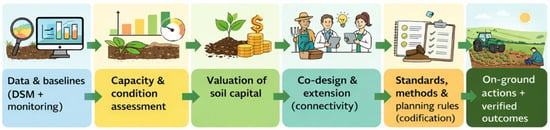
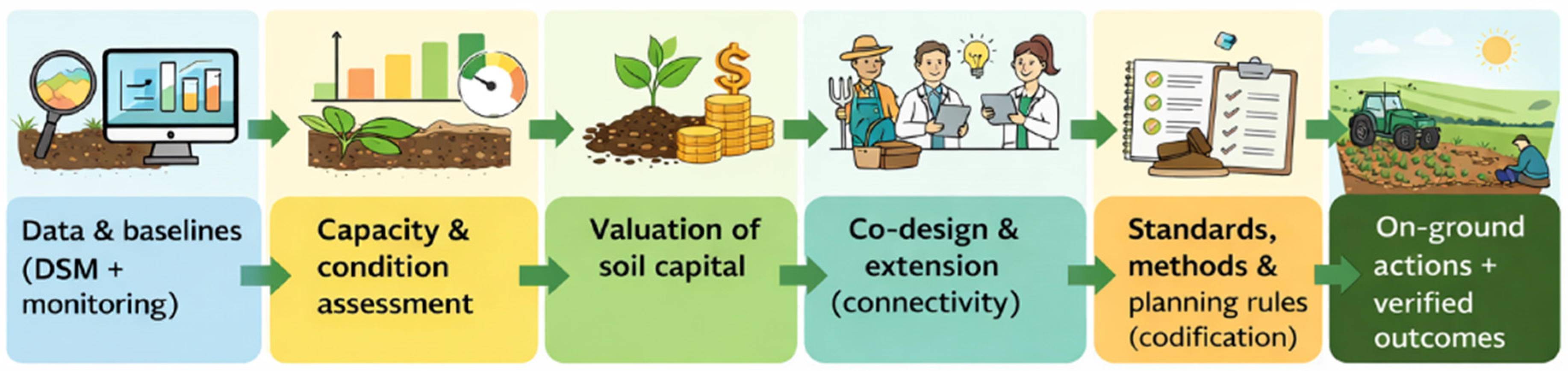
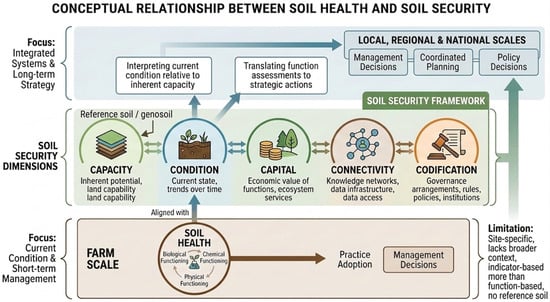
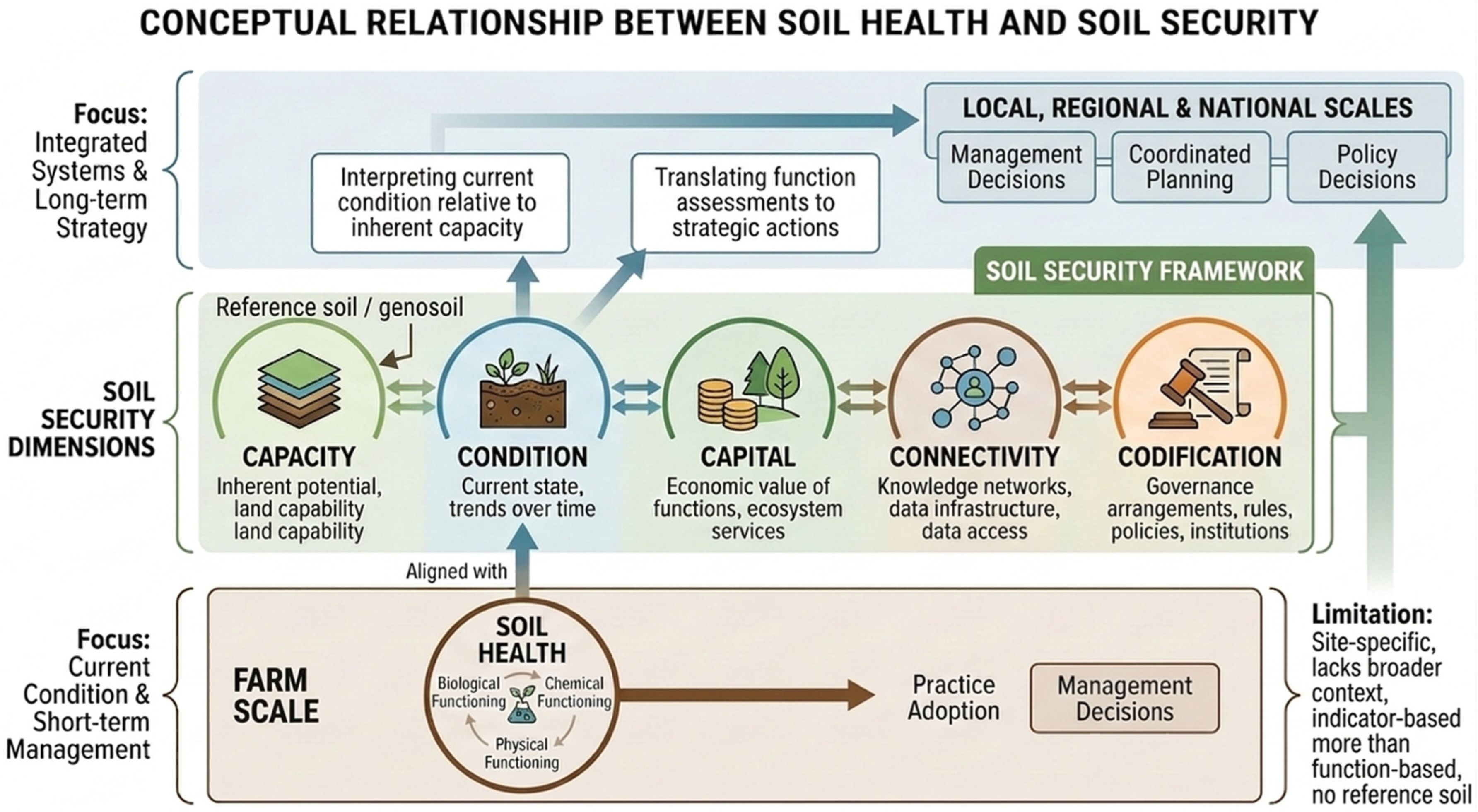
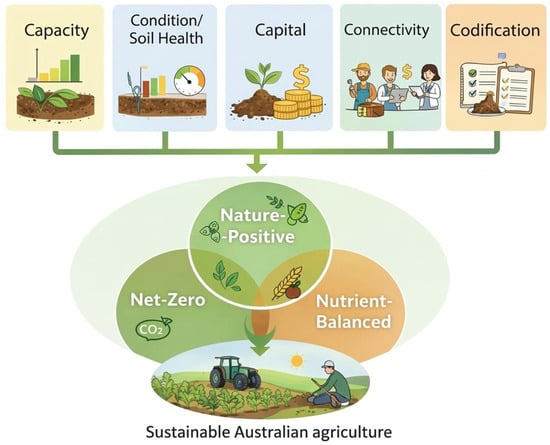
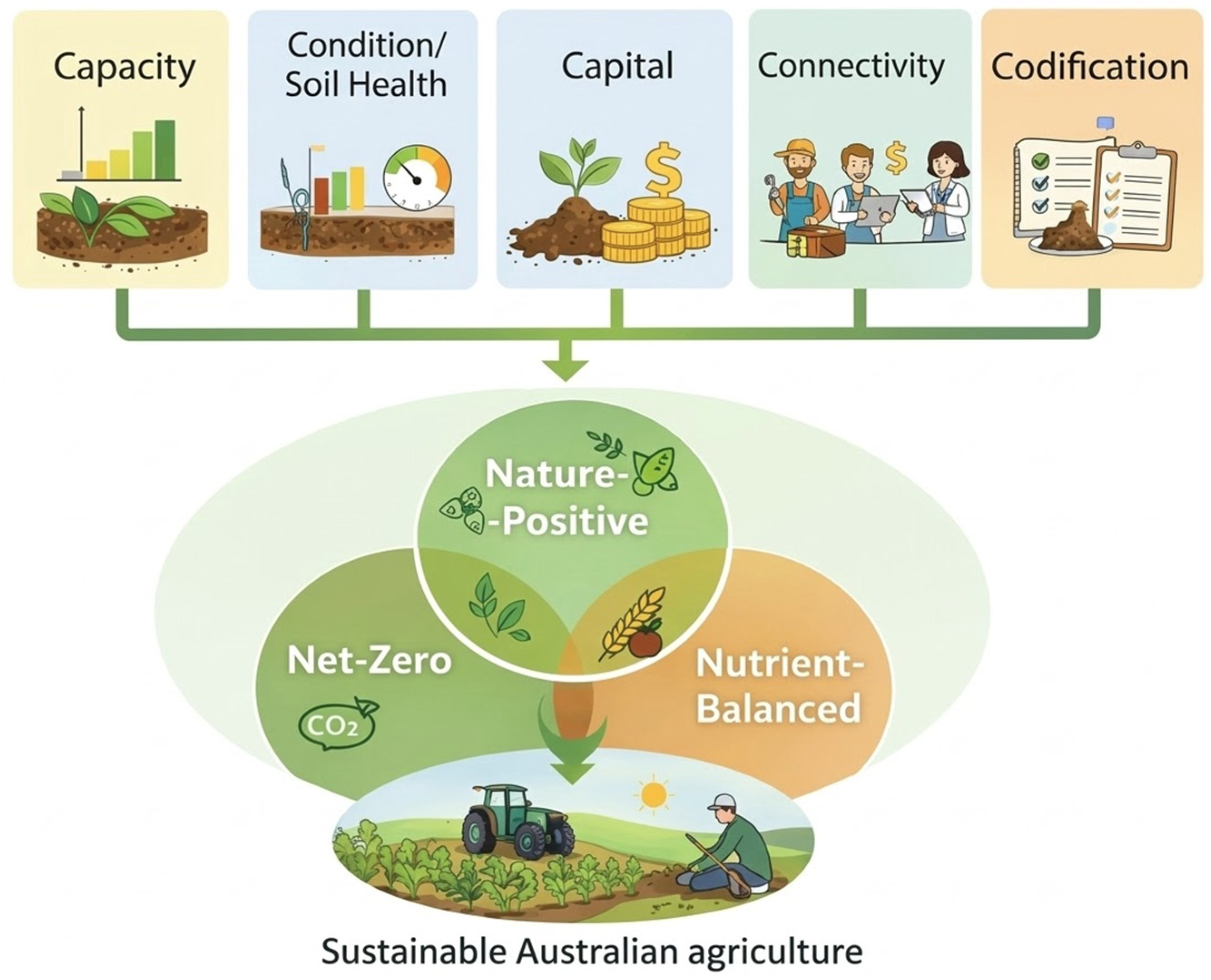
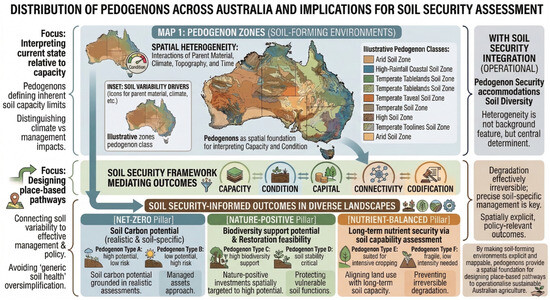
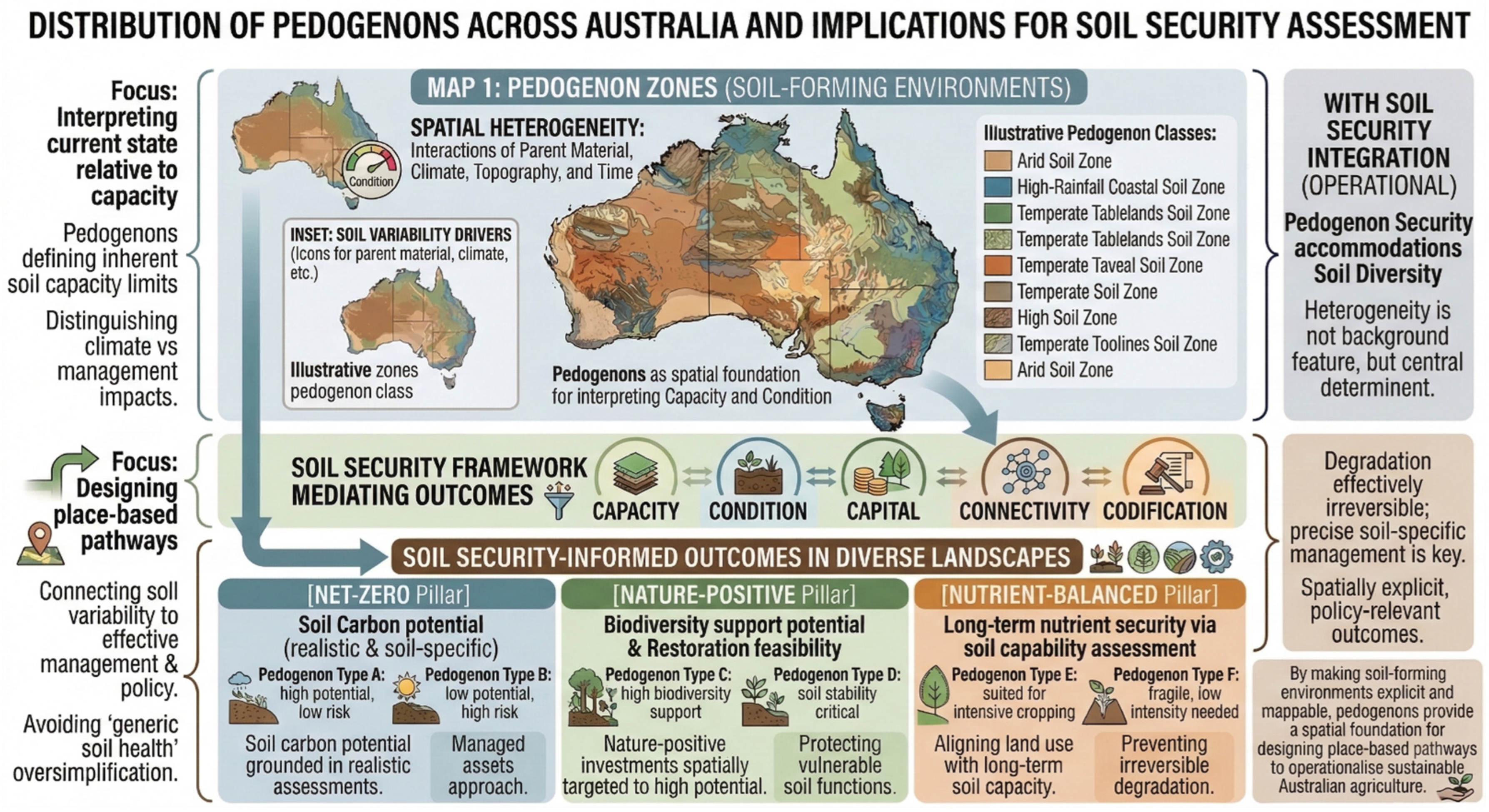
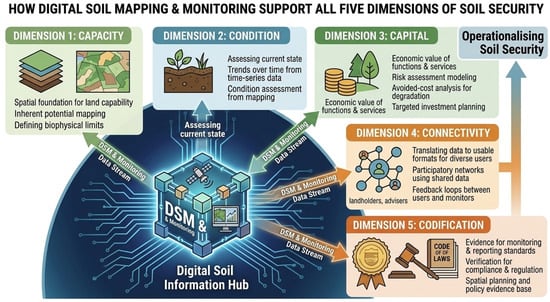
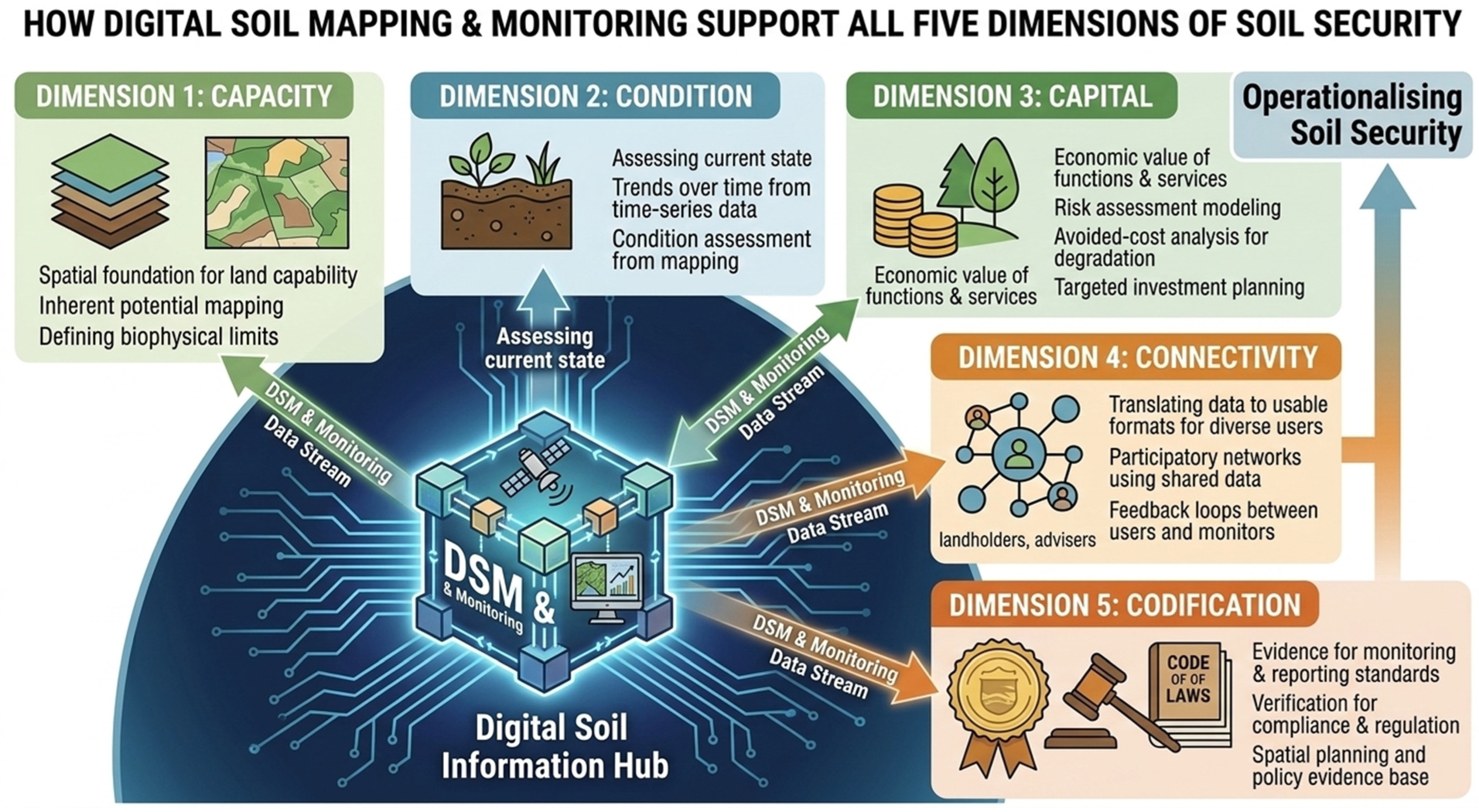
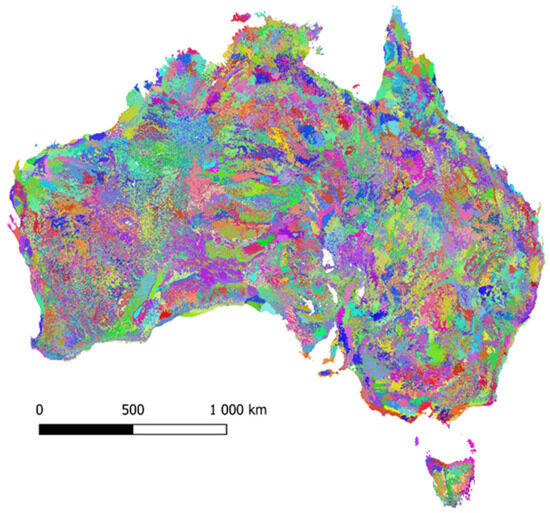
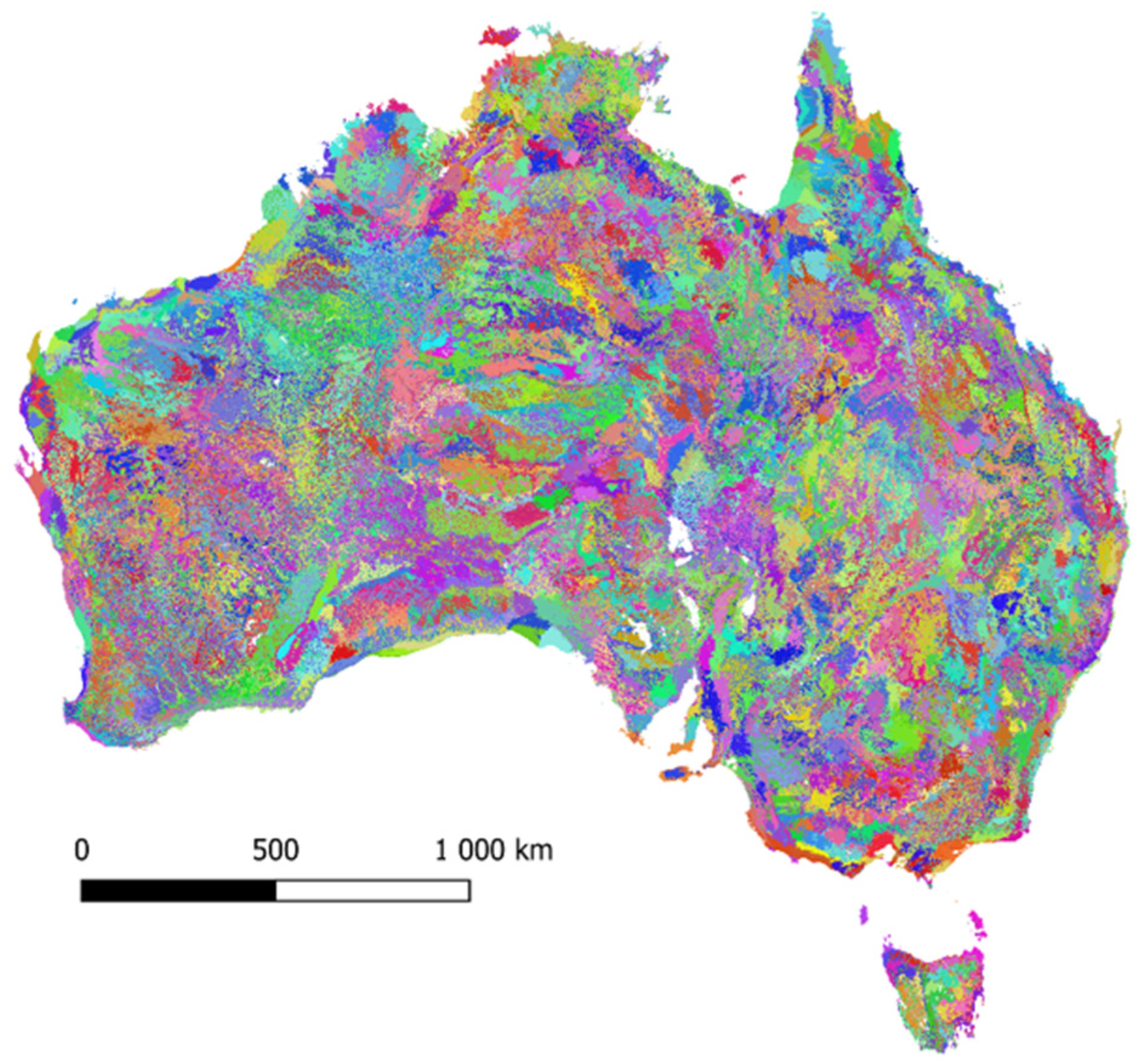
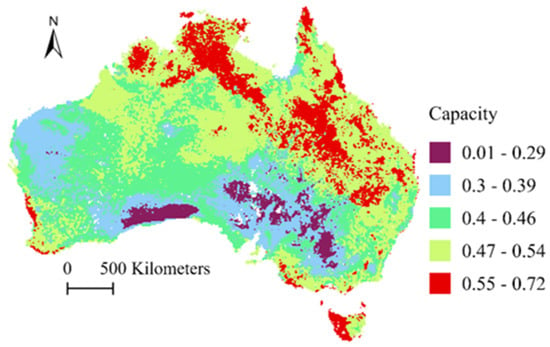
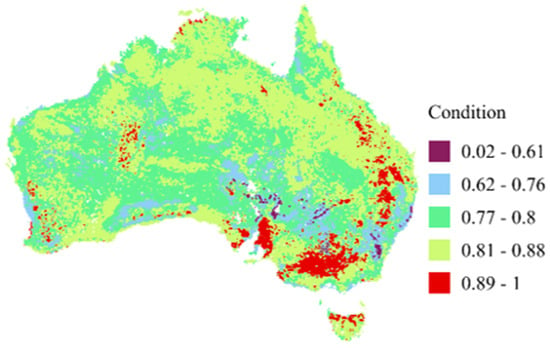
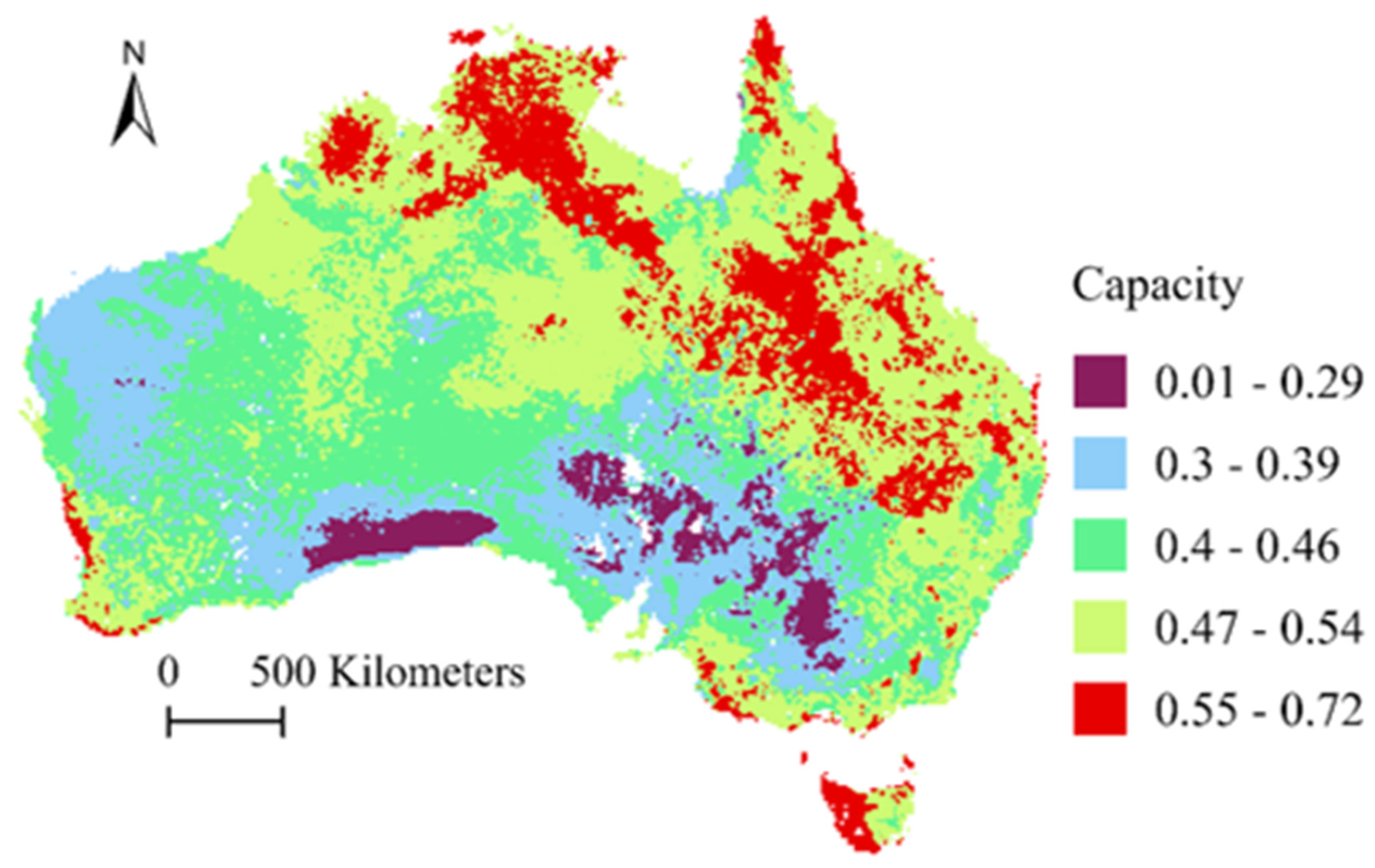
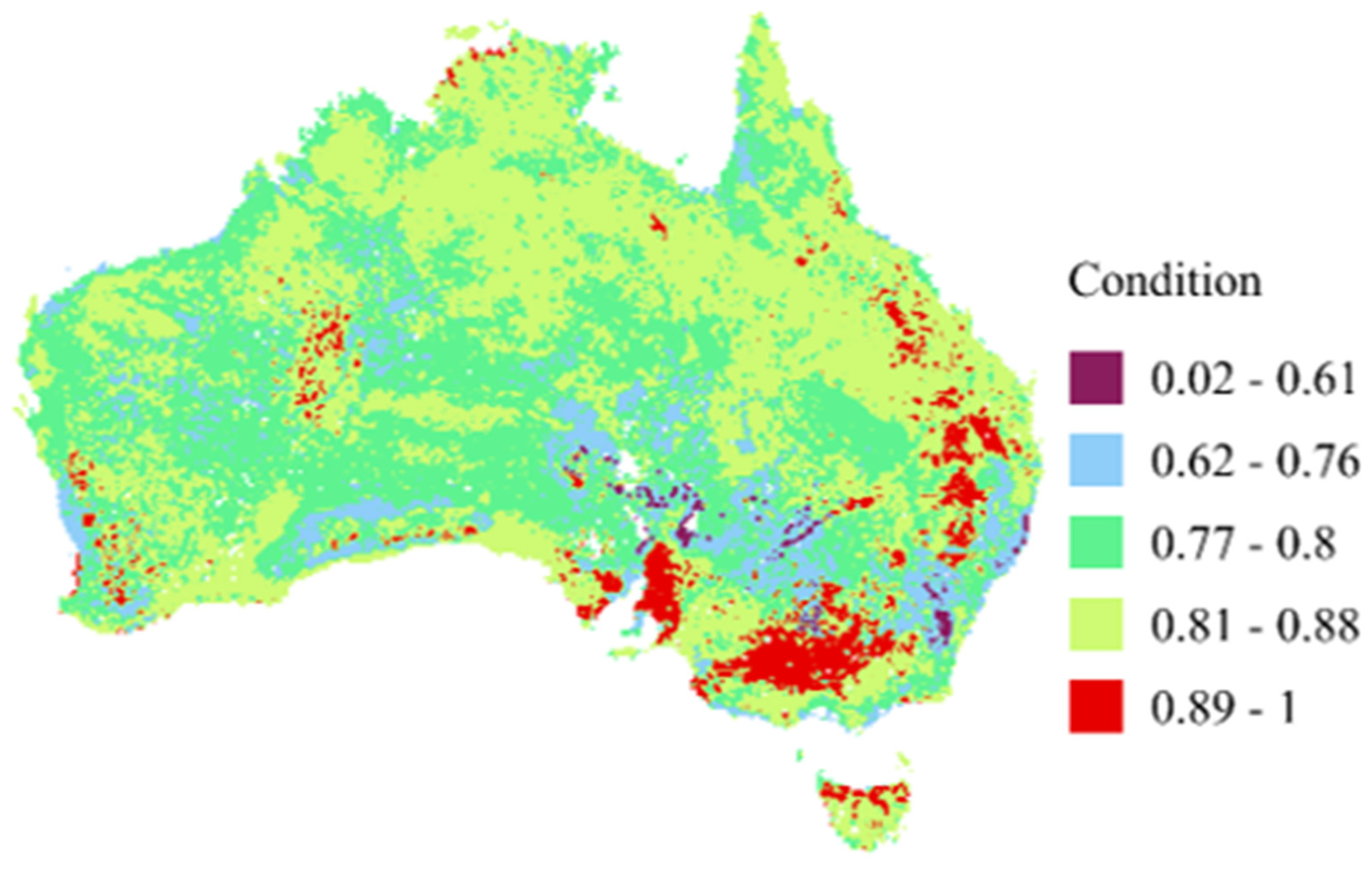
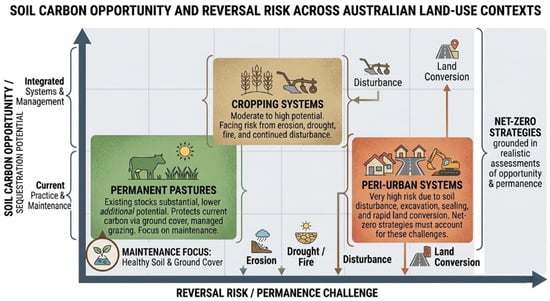
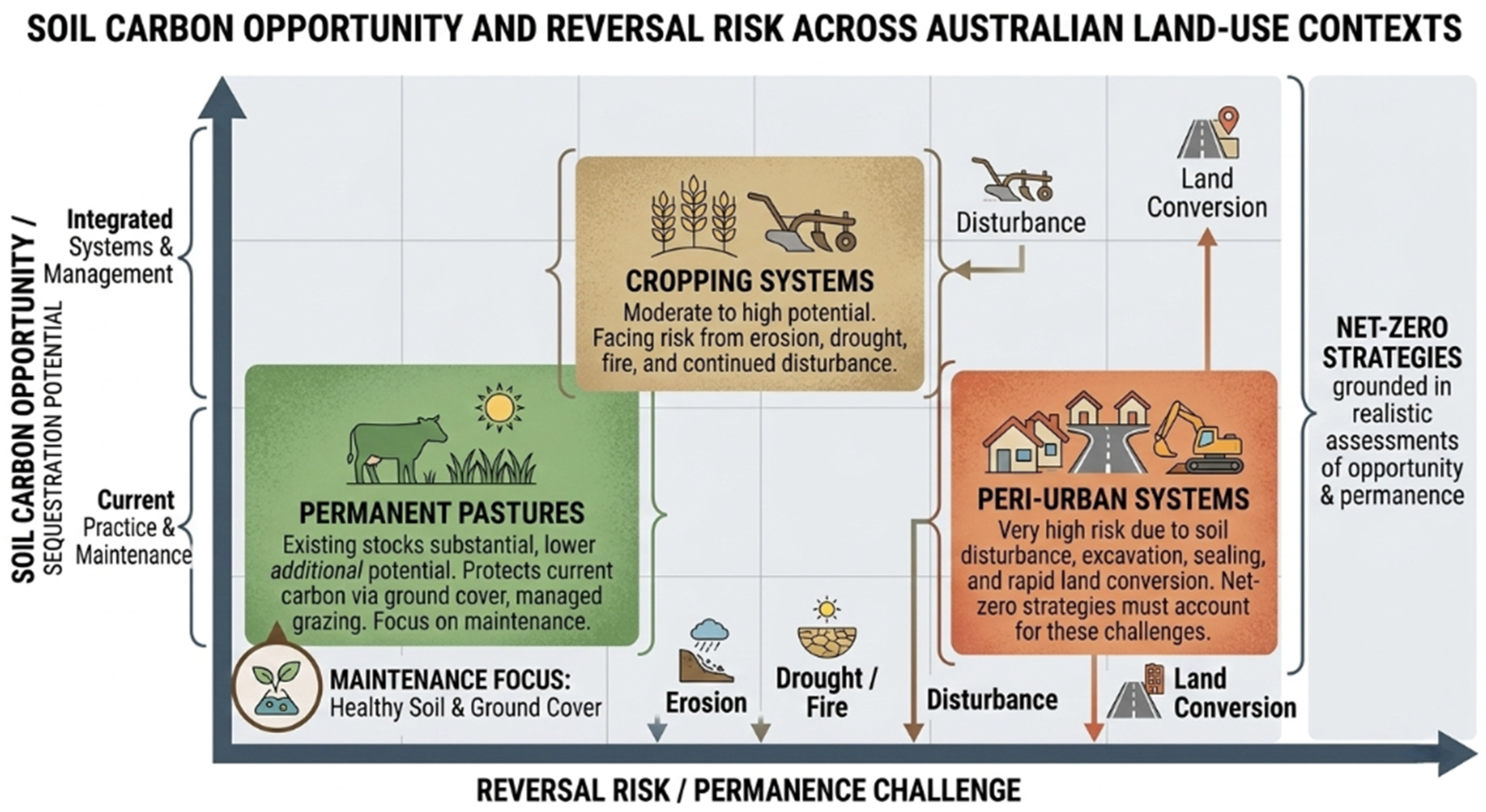
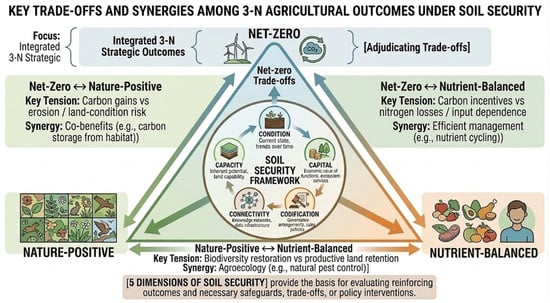
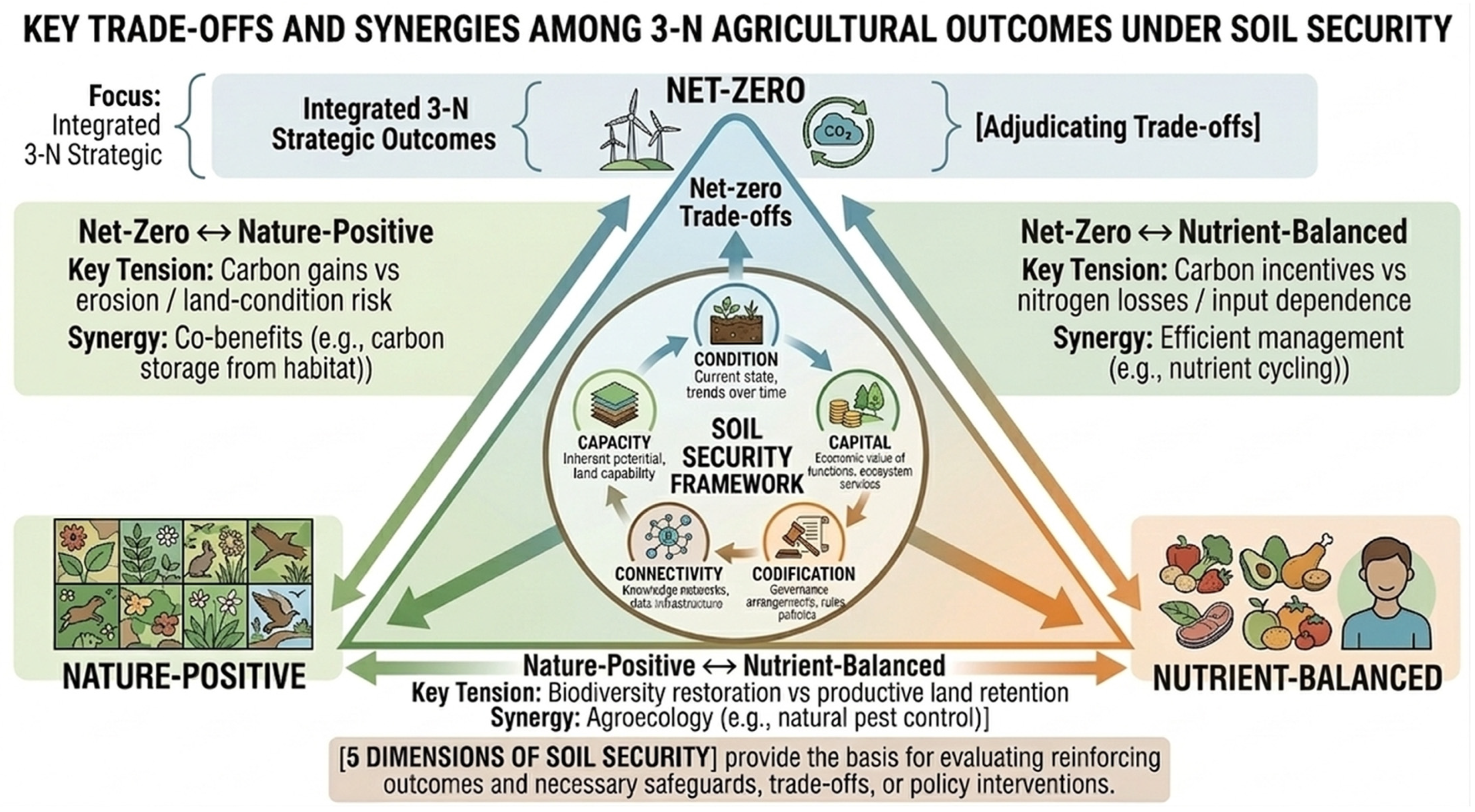
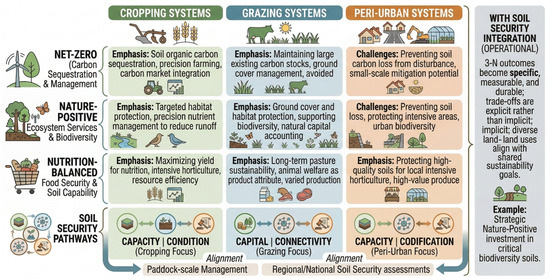
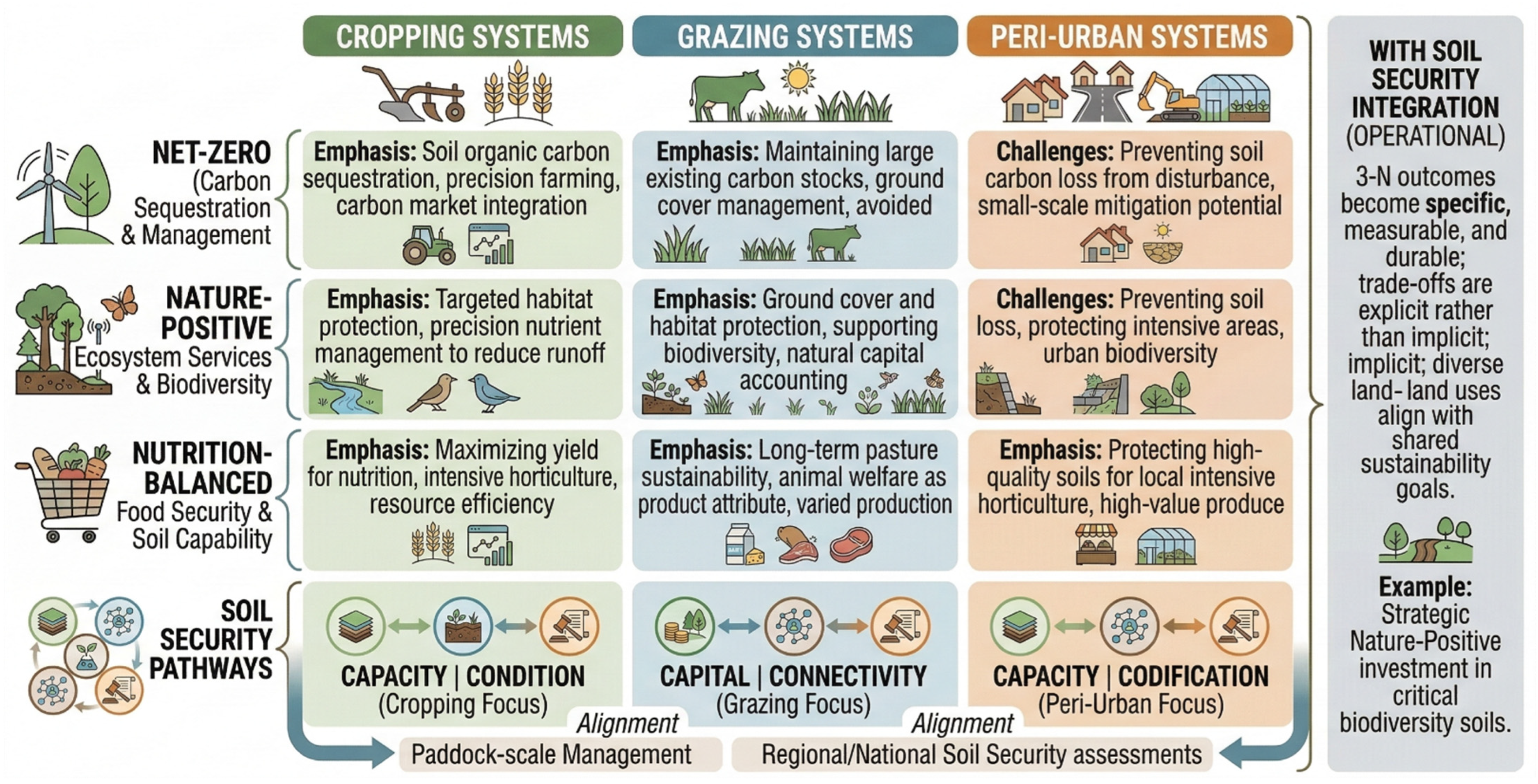
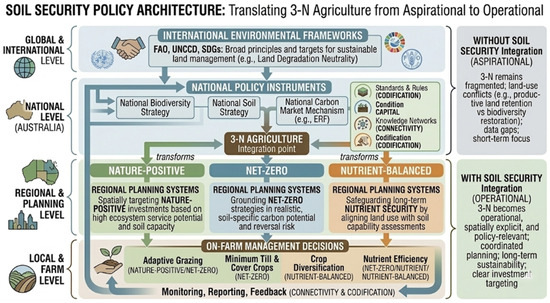
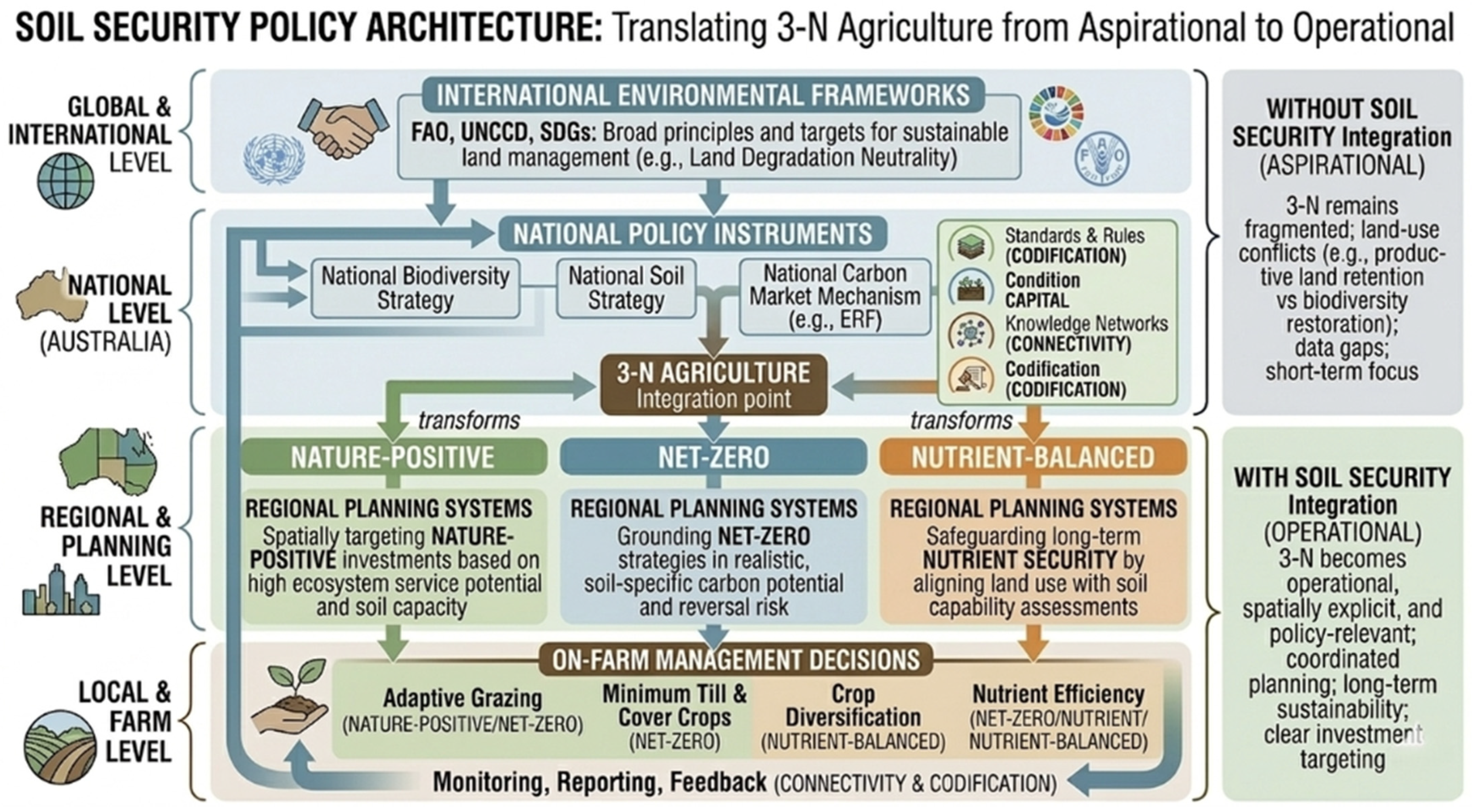
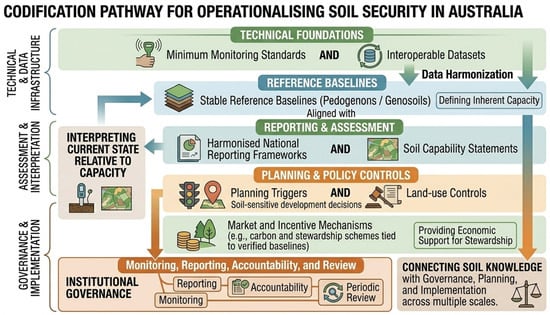
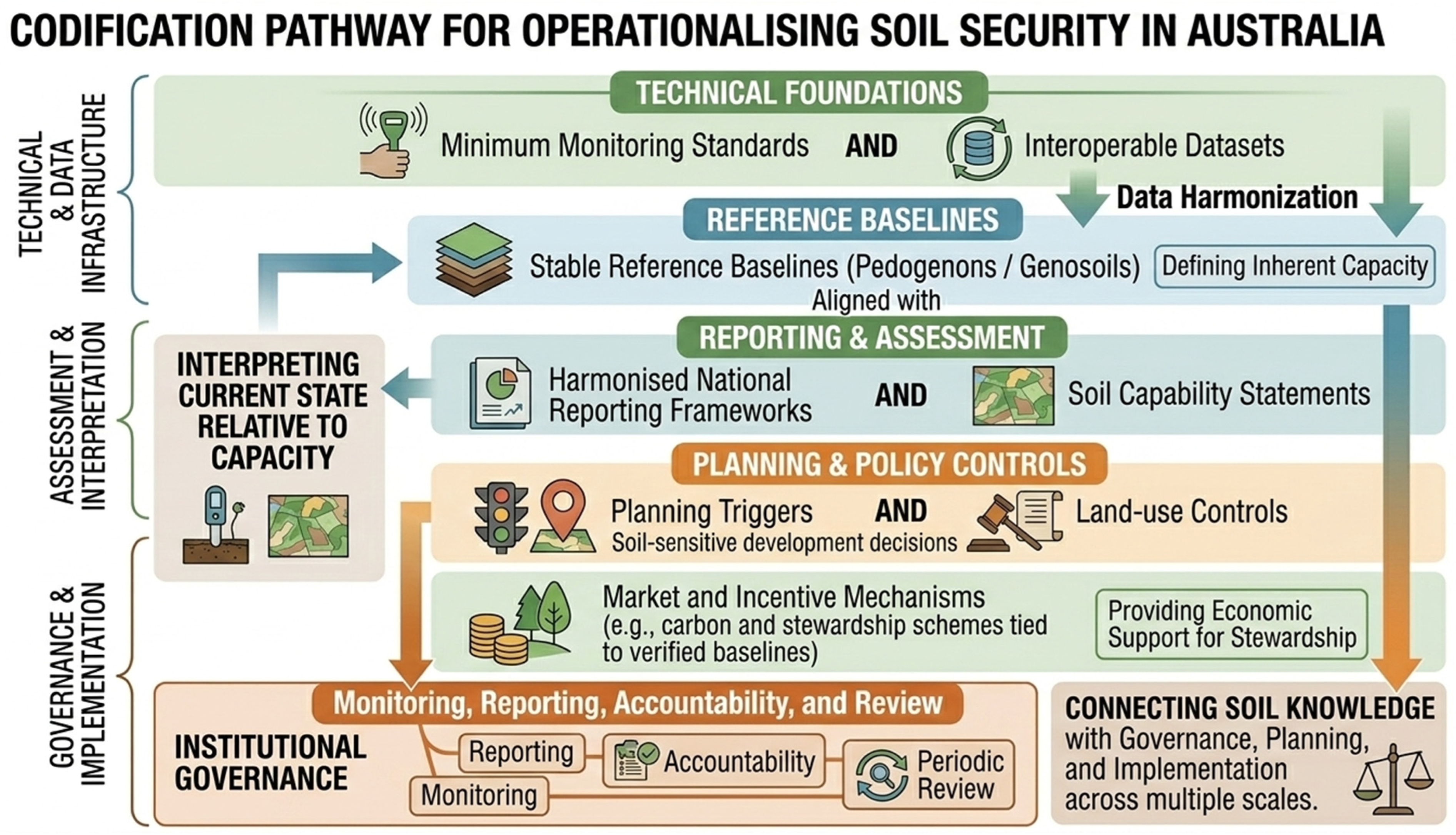

Disclaimer/Publisher’s Note: The statements, opinions and data contained in all publications are solely those of the individual author(s) and contributor(s) and not of MDPI and/or the editor(s). MDPI and/or the editor(s) disclaim responsibility for any injury to people or property resulting from any ideas, methods, instructions or products referred to in the content. |
© 2026 by the authors. Licensee MDPI, Basel, Switzerland. This article is an open access article distributed under the terms and conditions of the Creative Commons Attribution (CC BY) license.