Article

Physicochemical Properties and Diatom Diversity in the Sediments of Lake Batur: Insights from a Volcanic Alkaline Ecosystem


by
Ulvienin Harlianti
1,
Silvia Jannatul Fajar
1,*,
Satria Bijaksana
1,
Irwan Iskandar
1,
Rachmat Fajar Lubis
2,
Rey Donne S. Papa
3,
Putu Billy Suryanata
4 and
Ni Komang Tri Suandayani
5
1
Faculty of Mining and Petroleum Engineering, Institut Teknologi Bandung, Bandung 40132, Indonesia
2
Research Center for Limnology and Water Resources, National Research and Innovation Agency (BRIN), Bogor 16911, Indonesia
3
Research Center the Natural and Applied Sciences, Department of Biological Sciences, College of Science, The Graduate School, University of Santo Tomas, Manila 1015, Philippines
4
Research Center for Geological Disaster, National Research and Innovation Agency (BRIN), South Tangerang 15314, Indonesia
5
Faculty of Mathematics and Natural Science, Universitas Udayana, Denpasar 80361, Indonesia
*
Author to whom correspondence should be addressed.
Submission received: 28 November 2025 / Revised: 28 December 2025 / Accepted: 29 December 2025 / Published: 3 January 2026

Abstract

Lake Batur, located within a volcanic caldera in Bali, Indonesia, is subjected to anthropogenic pressures related to agriculture, aquaculture, tourism, and religious activities, which may affect its water quality and ecology condition. This study investigates the physicochemical properties of lake water and diatom assemblages preserved in lake sediments to provide insight into environmental conditions in this volcanic alkaline ecosystem. Water quality parameters, including pH, temperature, electrical conductivity (EC), and total dissolved solids (TDS), were measured. Vertical profiles of temperature and conductivity revealed stable stratification, with minimal variation below 20 m water depth. Elevated nitrogen concentrations, including nitrate (NO3), nitrite (NO2), and ammonium (NH4+), were observed, particularly in the southern basin, suggesting localized nutrient enrichment. Scanning electron microscopy (SEM) analysis of lake sediment samples identified ten diatom genera, including Ulnaria, Denticula, and Discostella, which are commonly associated with nutrient-enriched freshwater environments. Overall, the results indicate that Lake Batur exhibits conditions consistent with early-stage eutrophication in localized areas, highlighting the importance of continuous monitoring and targeted management strategies to protect the ecological integrity of this volcanic lake system.

1. Introduction

Volcanic lakes are often characterized by the absence of natural inlets and outlets, with water primarily sourced from precipitation, groundwater, or glacial melt [1]. This hydrological isolation makes volcanic lakes extremely sensitive to environmental changes and allows their water and sediment records to serve as valuable archives of local ecological history. Due to the lack of external drainage, these lakes tend to accumulate nutrients, pollutants, and other materials over time, making them important sites for monitoring ecosystem responses to both natural processes and anthropogenic influences. Indonesia, with 129 active volcanoes, is home to many volcanic lakes, several of which occupy large calderas formed by explosive volcanic eruptions. Prominent examples include Lake Toba and Lake Maninjau in Sumatra, Lake Tondano in Sulawesi, and Lake Batur in Bali. These lakes hold significant ecological, cultural, and economic value. However, these lakes have undergone degradation due to land use intensification and increasing anthropogenic pressures. Lake Toba, for instance, has been classified as eutrophic as a result of agricultural runoff and domestic waste inputs [2]. Lake Tondano also exhibits signs of eutrophication, with widespread proliferation of water Eichhornia crassipes linked to elevated nutrient concentrations [3]. Similarly, Lake Maninjau receives inflows from small streams and discharges through a single outlet, but high nutrient loading has contributed to its eutrophic status [4].
Lake Batur is a tropical caldera lake located beside the active Mount Batur volcanic complex in Bali, Indonesia. It forms a closed hydrological system with no natural outlet, resulting in long-term retention of materials entering the lake. Since 2012, Lake Batur has been designated as part of the Batur UNESCO Global Geopark (BUGG), underscoring its geologic and ecological significance [5]. The water of Lake Batur is classified as sodium chloride type [6], reflecting the strong influence of volcanic and geothermal processes on its chemical composition. Land use surrounding the lake includes agriculture, aquaculture, tourism, sand mining, residential development, and religious activities [7,8,9,10,11,12,13], all of which contribute varying degrees of nutrient and sediment input into the lake. Geothermal features such as hot springs are also present along the lake’s periphery, further affecting its thermal and geochemical characteristics [6].
Previous studies have investigated multiple aspects of Lake Batur, including hydrogeochemistry [6,10,11], assessment of lake quality based on sediment [8], water quality suitability for aquaculture [12], physicochemical conditions assessed through the National Sanitation Foundation Water Quality Index (NSFWQI) [13], and hydrological inputs and water balance [14]. These studies highlight Lake Batur as a dynamic volcanic lake system influenced by both natural processes and expanding human activities. The lake also serves as an important freshwater source for local communities, supplementing domestic wells used for domestic supply and irrigation. However, declining water quality has been increasingly reported, with implications for aquatic ecosystem integrity, local resource use, and the livelihoods of surrounding populations [8,12,13,15]. These trends reinforce the need for continued monitoring and improved management strategies to safeguard the long-term sustainability of the lake.
Monitoring the health of lake ecosystems requires integrated approaches, among which physicochemical analysis remains fundamental for assessing water quality. Biological indicators, particularly diatoms, are also used in aquatic ecosystem monitoring due to their sensitivity to changes in environmental parameters such as pH, temperature, TDS, salinity, ions, and nutrient concentration [16,17,18,19,20,21,22,23,24,25]. Such as the parameters Electrical Conductivity (EC), which represents mineral ion content, and NO3, which indicates potential surface pollution [24]
Diatoms preserved in surface sediments (epipelon) typically provide more diverse and abundant assemblages than those attached to rocks (epilithon) or aquatic plants (epiphyton) [19,20,21]. Their community composition offers insights into historical and recent ecological conditions, including eutrophication. Scanning electron microscopy (SEM) allows high-resolution morphological analysis of diatoms, facilitating genus-level identification in sediment samples. Although several previous studies have examined the physicochemical properties of Lake Batur, limited attention has been paid to the spatial variability of nutrient concentrations, particularly in relation to human activity hotspots and hydrothermal inputs. Moreover, no studies have yet documented the unique conductivity-depth patterns in Lake Batur that differ from other tropical lakes, or the presence of specific diatom genera that could serve as early indicators of eutrophication.
This study evaluates the current environmental condition of Lake Batur by integrating water quality assessment with morphological identification of diatoms in surface sediments. Surface water parameters, including pH, temperature, electrical conductivity (EC), and total dissolved solids (TDS), were measured spatially, with vertical profiling of temperature and EC to examine stratification patterns. Diatom genera were identified using SEM to explore their ecological relevance and potential as bioindicators.
Specifically, this research aims to (1) characterize spatial variability in water quality, (2) assess vertical patterns in conductivity and temperature, and (3) identify diatom genera that may reflect ecological shifts. The findings provide new insights into the evolving limnological state of Lake Batur, particularly its nutrient enrichment trends and early signs of eutrophication, offering a foundation for evidence-based conservation strategies. This is the first study to document the unique conductivity-depth profile and spatially resolved nutrient enrichment patterns in Lake Batur, integrating both physicochemical data and diatom assemblage analysis.

2. Materials and Methods

2.1. Study Area

Lake Batur is a caldera lake located in the Kintamani city, Bali Island, Indonesia, and it is part of the UNESCO Batur Global Geopark. The rocks surrounding Lake Batur are dominated by basaltic to andesitic composition [11,26]. Lake Batur is a closed volcanic lake with no surface inlet or outlet and is characterized by alkaline water [14]. Previous studies have reported that the chemical characteristics of Lake Batur water are more similar to those of hot springs surrounding the lake than to rainwater and groundwater in the area [6,10,11,27]. Various human activities occur around Lake Batur, including settlements, agriculture, tourism, religious activities, and fisheries within the lake.
The climate of Bali Island is characterized by a typical Asian-Australian monsoonal pattern, with the wet season occurring from November to March and the dry season from May to October, and annual air temperature ranges from 9.8 to 19.0 °C [28]. Rainfall across Bali Island shows considerable spatial variability, ranging from approximately 1500 mm in coastal lowland areas to more than 2500 mm in mountainous regions [29]. In eastern Bali and the southern part of the island, annual rainfall ranges between 1500 and 3000 mm, while the annual rainfall in the Lake Batur area is approximately 1809 mm [30].

2.2. Sample Collection

Lake sediment and surface water samples, along with domestic wells and hot spring water samples, were collected in June 2023. This period corresponds to the early dry season in Indonesia, characterized by low to moderate rainfall intensity [28]. Sediment and water samples were collected at different but closely spaced locations to ensure representative spatial coverage. Lake sediment samples were collected at ten stations at water depths ranging from 10 to 80 m (Figure 1) using a sediment grabber. Water samples were collected from the lake surface, hot springs, and shallow surface waters accessed via domestic wells, using a bucket, with sampling depths of approximately 0–20 cm. Surface water samples from the lake were collected at twelve stations, along with samples from two hot springs and four domestic wells (Figure 1).

2.3. Measurement of Ecological Parameters, Data Treatment, and Diatom Analyses

In addition to sample collection, in situ measurements of physicochemical parameters were conducted at the water surface, including pH, temperature, electrical conductivity (EC), and total dissolved solids (TDS), at the water sampling locations in June 2023 (dry season). Additional measurements of dissolved oxygen (DO) were conducted in November 2023 (wet season). Measurements of TDS and DO were performed using a Lutron WA-2017SD Water Quality Meter (Lutron Electronic Enterprise Co., Ltd., Taipei, Taiwan), while pH, temperature, and electrical conductivity (EC) were measured using a Hanna Instruments waterproof multiparameter tester (Hanna Instruments Inc., Woonsocket, Rhode Island, USA).
Vertical profiling of water temperature and electrical conductivity (CTD) was also conducted during August 2023 (dry season) and November 2023 (wet season). CTD measurements were performed using an AML Oceanographic Minos CTD profiler (AML Oceanographic Ltd., Victoria, BC, Canada). The profiler has a conductivity accuracy of ±10 µS/cm with a resolution of 1 µS/cm, and a temperature accuracy of ±0.008 °C with a resolution of 0.001 °C.
The collected water samples were analyzed in the laboratory to determine ion concentrations (K+, NH4+, Cl, SO42−, F, NO3, and NO2) using a Metrohm 930 Compact IC Flex ion chromatograph (Metrohm AG, Herisau, Switzerland) at the Laboratory of Hydrogeology and Hydrogeochemistry, Institut Teknologi Bandung (ITB), Indonesia. The limits of detection (LOD) were 0.28 mg/L for K+, 0.50 mg/L for NH4+, 0.21 mg/L for Cl, 0.77 mg/L for SO42−, 0.63 mg/L for F, 0.98 mg/L for NO3, and 0.67 mg/L for NO2. Lake sediment samples were prepared following [9] and coated with gold prior to scanning electron microscopy (SEM) analysis. SEM observations were carried out at the Laboratory of Hydrogeology and Hydrogeochemistry, ITB, Indonesia, using a Hitachi SU3500 (Hitachi High-Tech Corporation, Tokyo, Japan).
Morphological data of diatoms obtained from SEM were identified by comparing their morphological characteristics with established diatom databases, including Diatom.org [31], and with descriptions from previous studies on freshwater and caldera lake diatoms. Reference materials included studies from tropical and temperature freshwater systems, such as Lake Buyan, Bali [28], Coldbrook Creek, California, Blue Lake, Utah, Lake Di Atas, Sumatra, Indonesia, Sheep Lakes, Colorado [32], and Vietnamese reservoirs, have been extensively studied [17]. Diatom identification was conducted conservatively based on SEM observations, with most taxa identified at the genus level. Species-level assignments were applied only in cases where diagnostic morphological features were clearly observed and sufficiently distinctive.

2.4. Statistical Analysis

In addition to the measurements, the data were analyzed using statistical methods, including Spearman correlation and Hierarchical Cluster Analysis (HCA) to further explore the relationship between environmental conditions and the physicochemical parameters and ions in the surface water [24]. To further investigate the spatial variation in water quality, Hierarchical Cluster Analysis (HCA) was performed using the complete linkage method and Euclidean distance metric. All statistical analyses were performed using the Minitab 21 software (Minitab, LLC, State College, PA, USA).

3. Results

3.1. Physicochemical Parameters and Ion Concentration of Surface Water

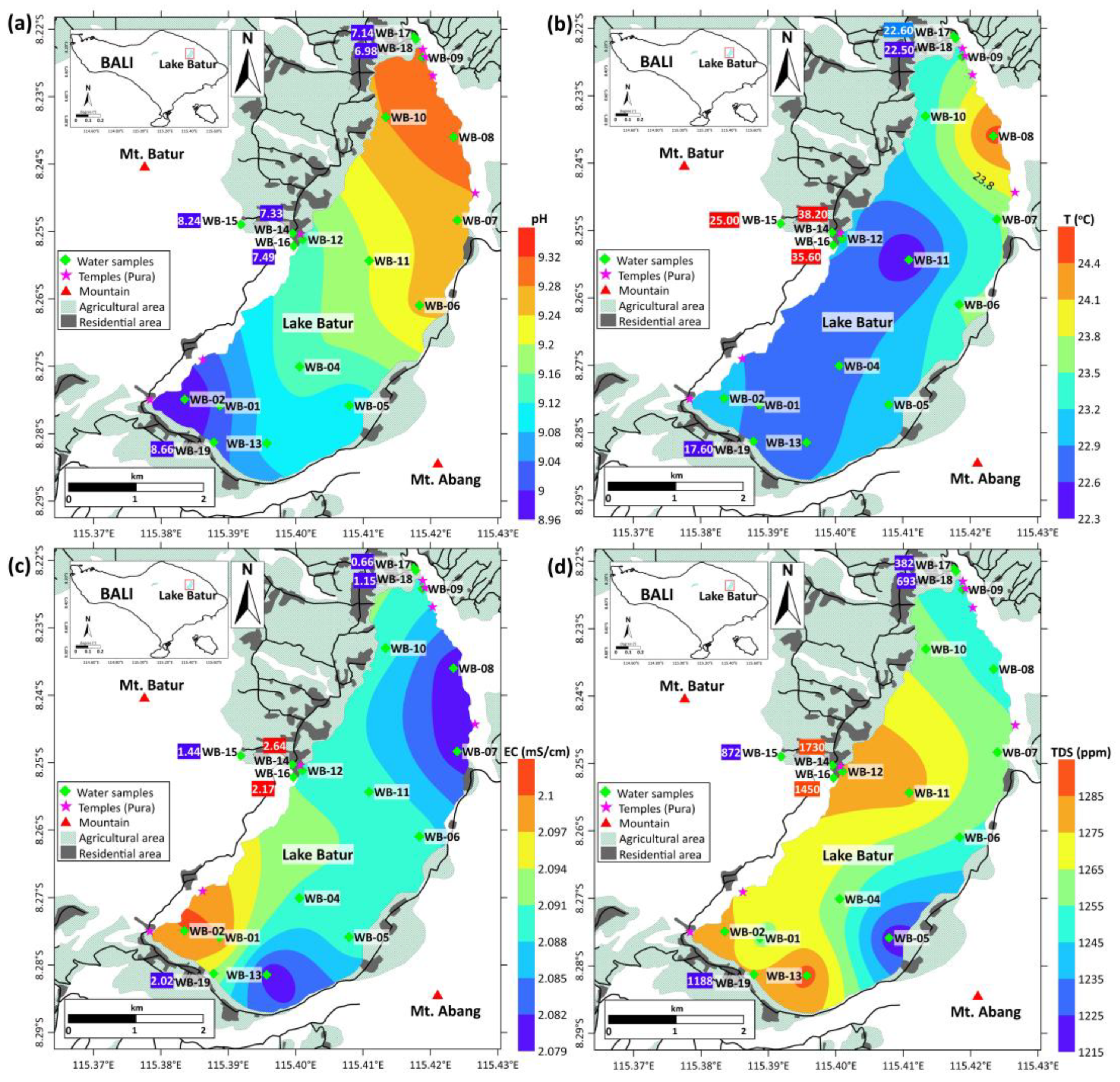
The physicochemical and ion concentrations data obtained in this study are presented in Table 1. Spatial analysis of physicochemical parameters in Lake Batur shows distinct variations across sampling locations (Figure 2). The surface water pH values ranged from 8.96 to 9.32, indicating alkaline conditions throughout the lake (Figure 2a). In contrast, lower pH values were observed in surrounding water sources. Hot spring samples (WB-14 and WB-16) exhibited near-neutral pH levels (7.3–7.5), while domestic wells showed a broader range, from 6.98 (WB-18) to 8.66 (WB-19). Surface water temperatures varied between 22.3 °C and 24.5 °C, with a spatial gradient showing increasing temperature from the southwest to northeast region of the lake (Figure 2b). Hot spring sites recorded significantly higher temperatures, reaching 38.2 °C (WB-14) and 35.6 °C (WB-16). Temperatures at domestic wells varied; most were similar to lake surface temperatures (22.5–25 °C), while WB-19 recorded the lowest value at 17.6 °C. Electrical conductivity (EC) in surface water ranged from 2.08 to 2.10 mS/cm, with slightly elevated values in the southwest region (Figure 2c). Hot springs exhibited higher EC values (2.64 and 2.17 mS/cm), while conductivity in domestic wells was generally lower, ranging from 0.66 to 2.02 mS/cm. Total dissolved solids (TDS) ranged between 1215 and 1290 ppm (Figure 2d), with the highest concentrations in the southwestern and western lake areas (e.g., WB-02, WB-11, WB-12, WB-13, WB-19), and the lowest in the southeast (WB-05). The physicochemical parameters of Lake Batur water obtained in this study are compared with previous studies in Table 2 and with WHO standards [33] and Indonesian Government Regulation No. 22 (2021) [34] in Table 3.
Potassium (K+) concentrations ranged from 24.8 to 34.56 mg/L, with the highest value at site WB-03 (Table 1). Nitrogen concentrations, derived from the sum of nitrate (NO3), nitrite (NO2), and ammonium (NH4+), showed significant spatial variability, ranging from 0.6 to 42.46 mg/L. The highest nitrogen concentration is located in the southern region of the lake.

3.2. Temperature and Conductivity Profiles with Depth

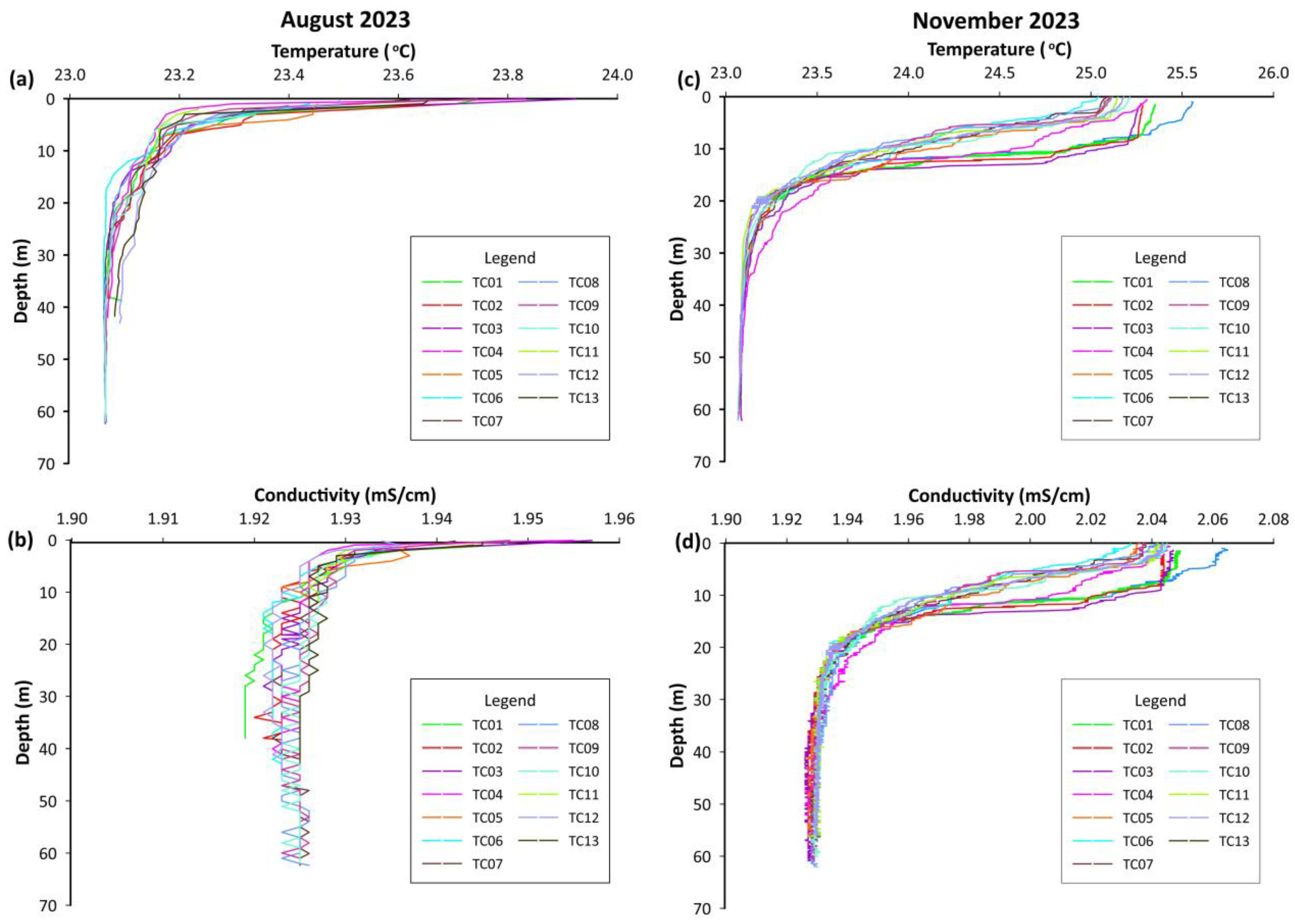
Temperature and electrical conductivity profiles were obtained at 13 lake sites to a maximum depth of 60 m. Both parameters show a consistent pattern of decreasing values with depth, with minimal variation at depths greater than approximately 20 m (Figure 3). Temperature measurements from August and November 2023 exhibit similar vertical profiles, although surface waters were warmer in November.
In August, the temperature decreased from approximately 24 °C at the surface to 23 °C at ~15 m depth and remained nearly constant to 60 m (Figure 3a). In November, temperatures ranged from about 25.5 °C at the surface to 23 °C at 20 m and likewise remained stable at greater depths (Figure 3c). The largest surface-to-depth temperature gradient was observed at site TC-12, whereas the smallest gradient occurred at TC-06. The uniform temperatures at greater depth indicate limited vertical mixing and the presence of a stable deep-water layer.
In August, EC decreased from 1.96 mS/cm at the surface to approximately 1.92 mS/cm below 10 m depth, remaining constant to the lake bottom (Figure 3b). In November, EC values ranged from 2.06 mS/cm at the surface to 1.93 mS/cm at 20 m and stabilized at greater depths (Figure 3d). The most significant change in conductivity variation was recorded at TC-01, while TC-13 showed the least variation. Overall, conductivity values were higher in November, mirroring the seasonal pattern observed in temperature.

3.3. Diatom Assemblages in Surface Sediments

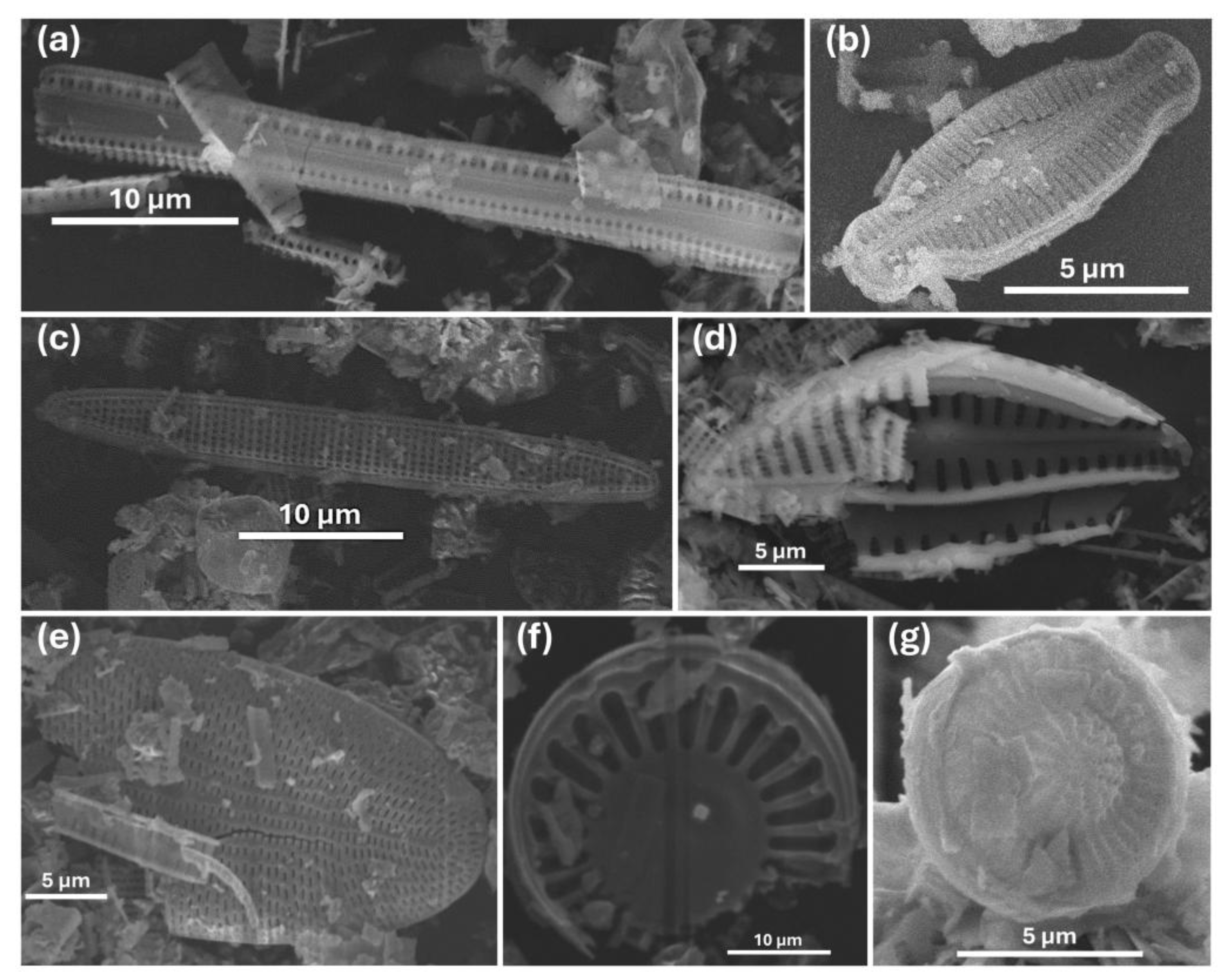
Scanning electron microscopy (SEM) analysis of ten surface sediment samples confirmed the abundance and diversity of diatoms in Lake Batur (Figure 4). Both centric and pennate diatom forms were observed. Based on morphological characteristics observed in SEM images, the diatoms from Lake Batur were conservatively classified primarily at the genus level. Accordingly, taxa area reported as Genus sp. Unless a tentative affinity to a known species could be suggested (cf.). In total, ten genera were identified: Discostella, Ulnaria, Denticula, Simonsenia, Karayevia, Encyonema, Pseudostaurosira, Diploneis, Cymbella, and Cocconeis. The following diatom genera were identified in the sediments of Lake Batur:
  • Discostella sp. was observed in Lake Batur with frustule diameters ranging from 7.83 to 14.39 µm (Figure 4f,g). The observed morphology shows a strong similarity to Discostella cf. stelligera Houk and Klee, 2004. This genus is commonly found in freshwater environments and has been widely reported from various lacustrine systems [17].
  • Ulnaria sp. was identified with frustule lengths exceeding 62.53 µm and widths of approximately 4.97 µm. The observed morphology is consistent with members of the Ulnaria acus group (Kütz.) Compère, 2001, which is typically associated with moderately alkaline and eutrophic water bodies. This genus is often linked to nutrient-rich environments and has been used as a bioindicator of elevated nutrient conditions [35].
  • Denticula sp. exhibited frustule lengths ranging from 17.08 to 41.72 µm and widths between 2.58 and 4.68 µm. The observed specimens show morphological similarities to Denticula cf. tenuis Kütz., 1844. However, species-level identification remains tentative. The genus Denticula is commonly reported from carbonate-rich freshwater environments with moderate conductivity and elevated alkalinity [36].
  • Simonsenia sp. was identified with a frustule length of 9.91 µm and a width of 2.49 µm. Due to limited diagnostic features observed in SEM images, species-level identification could not be resolved. This genus is frequently reported from nutrient-enriched waters and is commonly associated with eutrophic conditions [22].
  • Karayevia sp. was detected with a frustule length of approximately 11.87 µm. Although the morphology shows similarities to Karayevia amoena group Round et Bukht. ex Round, 1998, species-level identification was not assigned due to the conservative taxonomic approach applied in this study. Members of this genus are typically associated with alkaline environments characterized by relatively high pH and moderate conductivity [31].
  • Encyonema sp. was observed with frustule lengths ranging from 21.62 to 29.53 µm and widths between 7.48 and 8.31 µm. The morphology is consistent with the Encyonema montana group Kütz, 1833. However, identification was retained at the genus level. This genus commonly occurs in alkaline freshwater systems with moderate conductivity and has previously been reported from lakes in Bali, including Lake Buyan [28,31].
  • Pseudostaurosira sp. was identified with dimensions of approximately 4.6 µm in length and 4.4 µm in width. Due to limited morphological resolution, further taxonomic refinement at the species level was not possible. This genus is characterized by its distinctive frustule structure and is commonly found in freshwater sediments [31].
  • Diploneis sp. was observed with a frustule length of approximately 22.36 µm and a width of 9.27 µm. This genus is generally associated with oligotrophic freshwater environments and is typically present in low abundance. Diploneis is often considered indicative of low-nutrient conditions [37].
  • Cymbella sp. was observed with a frustule length greater than 20.88 µm and a width of approximately 6.56 µm. Although species-level identification could not be determined, Cymbella is a widespread genus commonly reported from a variety of freshwater habitats [31].
  • Cocconeis sp. was observed with frustule lengths ranging from 31.74 to 33.09 µm and widths between 13 and 17.76 µm. The observed specimens show similarities to Cocconeis cf. klamathensis group Ehrenberg, 1837. However, special-level identification remains tentative. The genus Cocconeis is commonly reported from oligotrophic lakes and moist subaerial habitats and has also been documented in freshwater systems in Bali, including Lake Buyan [28,31].

3.4. Spearman Correlation and HCA

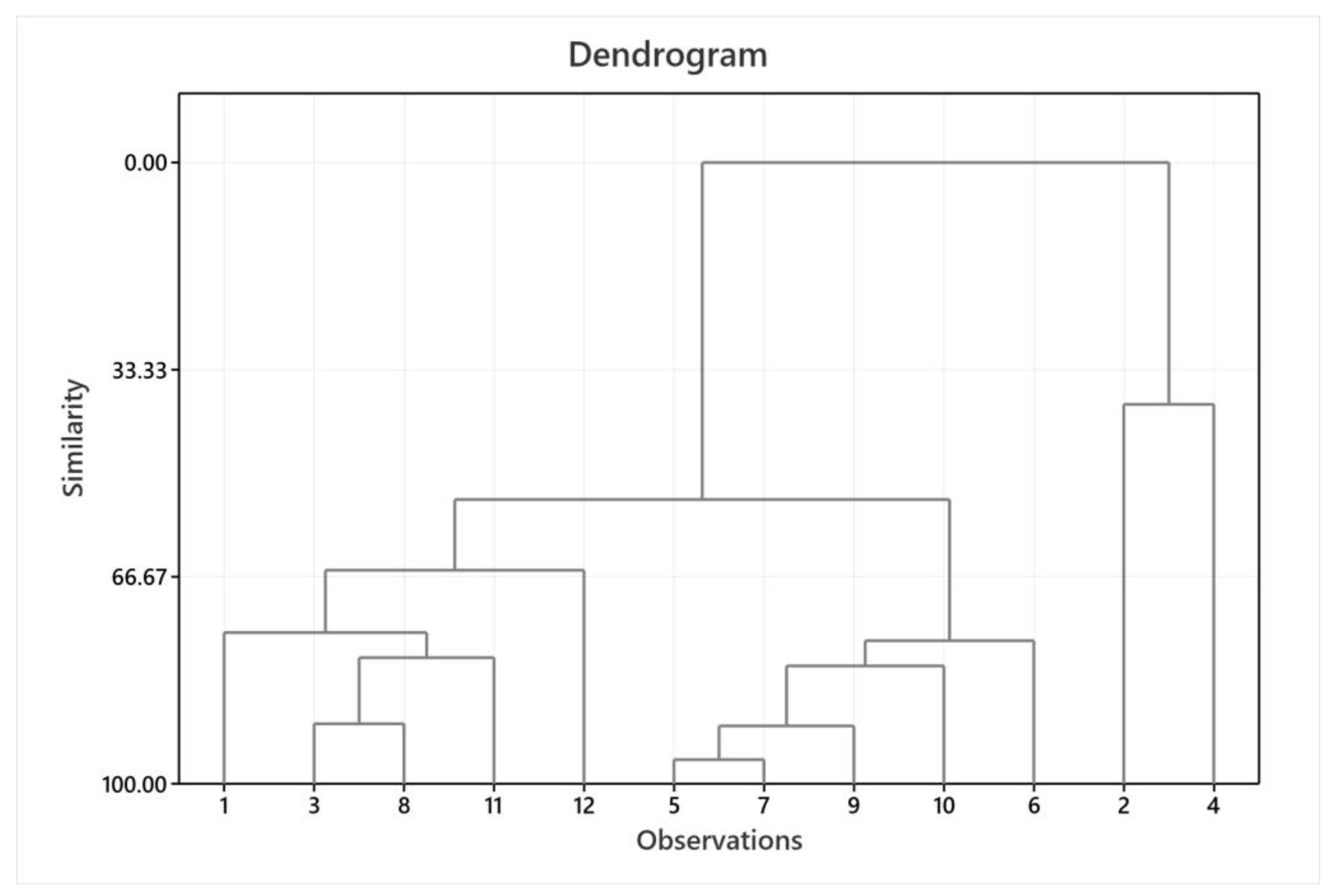
Spearman correlation analysis was conducted to assess the relationships among various physicochemical parameters and major ions in the surface water of the lake (Table 4). The correlation matrix revealed several significant associations, providing insights into the underlying geochemical processes and potential sources of solutes. The resulting HCA dendrogram (Figure 5) groups the 12 within-lake sampling locations into several clusters based on their physicochemical characteristics and ionic composition. The dendrogram identifies three major clusters at a similarity threshold of approximately 66–70%.

4. Discussion

4.1. Physicochemical Characteristics of Surface Water

Lake Batur exhibits consistently alkaline conditions, with pH values ranging from 8.96 to 9.32. This alkalinity is primarily controlled by the surrounding volcanic lithology, which contributes substantial alkali and earth alkali ions (Na+, Mg2+, Ca2+) to the lake water through water-rock interactions [6]. In addition, groundwater interactions with carbonate-bearing layers beneath the Batur Caldera and the broader Bali region further enhance alkalinity by increasing the concentrations of Ca2+ and Mg2+ in the water [6,38].
Comparison with earlier studies [12,13] indicates that pH, temperature, and alkalinity measured in 2023 (this study) are broadly consistent with previously reported values (Table 2), suggesting relative seasonal stability of these parameters. Total Dissolved Solids (TDS) serve as an indicator of water origin, mixing processes, and potential pollution. TDS values > 1000 ppm, as observed in Lake Batur and surrounding hot springs, may reflect moderate pollution levels and a strong hydrothermal influence [39,40]. Compared to previous studies, TDS values measured in 2023 are higher than those reported in 2021 (1025–1030 ppm) [41] but remain lower than those in 2018 (1340–1860 ppm) [13], indicating temporal variability in dissolved solids concentrations in Lake Batur.
Dissolved Oxygen (DO) concentration in surface water in 2023 was higher than that reported in previous studies (see Table 1 and Table 3) [12,13]. This increase may be related to seasonal factors, such as enhanced vertical mixing and increased oxygen input from rainfall during the wet season [42,43,44]. However, because DO measurements were limited to surface waters, further depth-profile investigations are required to better understand oxygen distribution and stratification dynamics within the lake.
The average of nitrogen concentrations (NH4+, NO3, NO2) in 2023 was higher than those reported in 2011 [12], with relatively elevated values observed in the southern part of the lake. This pattern indicates spatial heterogeneity in nutrient conditions and is consistent with localized nutrient inputs associated with surrounding human activities [8,12,13,15,30], although definitive source attribution cannot be established based on the present data. The contrasting distributions of nitrate and ammonium further reflect differences among sampled surface water environments, including lake waters, hot springs, and domestic wells. Within the lake (stations 1–12), nitrate concentrations are generally low, whereas ammonium shows a more gradual spatial variation, which is consistent with the distribution of nitrogen species commonly observed in alkaline lake surface waters. In contrast, elevated nitrate and nitrite concentrations observed at several non-lake sites likely reflect localized external inputs rather than processes occurring within the open lake surface waters. Overall, nitrate exhibits a more spatially heterogeneous and source-dependent distribution, while ammonium provides a more integrated signal of nutrient conditions within the lake.

4.2. Vertical Thermal and Conductivity Structure

The vertical profiles of temperature and electrical conductivity (EC) in Lake Batur display characteristics typical of a tropical lake, with limited thermal stratification. In both August and November, surface temperatures declined gradually with depth and stabilized below 20 m. The deeper mixing observed in November suggests a stronger convective process during the rainy season, which facilitates nutrient redistribution and oxygenation of deeper layers. EC values exhibit a decreasing trend with depth, contrary to patterns observed in other tropical lakes such as Lake Maninjau, Lake Singkarak, and Lake Toba in Indonesia [45,46], and lakes in India and Guatemala [47,48]. In those systems, EC typically increases in depth due to ionic accumulation in deeper waters. The unique EC profile of Lake Batur may be influenced by subsurface inflows, hydrothermal inputs, or uncharacterized geological features. Seasonal differences influenced the thermal structure of the lake. Cooler surface temperatures and enhanced mixing in August corresponded to the dry season, which is typically associated with higher evaporation and stronger wind-driven circulation. Further investigation is required to confirm the underlying mechanisms.
Although Lake Batur is located in a volcanically active region, the absence of thermal anomalies at depth suggests minimal current influence from volcanic activity beneath the lake. This unique EC-depth pattern in Lake Batur, unlike other tropical lakes, may indicate the influence of subaqueous groundwater discharge or hydrothermal processes, requiring further investigation. This could be a distinguishing hydrogeological characteristic of caldera lakes with active geothermal systems.

4.3. Nutrient Enrichment, Diatom Assemblages, and Ecological Implications

Comparison with WHO guidelines [33] and Indonesian Government Regulation No. 22/2021 [34] indicates that several physicochemical parameters in Lake Batur exceed acceptable limits. These include pH values above recommendation range for drinking water, elevated concentrations of nitrogen species (NH4+, NO3, NO2), and Fluoride (F) at specific locations, as well as sulphate (SO42−), EC, and TDS across much of the lake. Although surface DO concentrations generally remain within the acceptable limits, historical variability suggests that oxygen conditions may not be stable throughout the year [12]. Collectively, these findings indicate Lake Batur water is unsuitable for direct consumption, and in many areas, does not meet the criteria for aquaculture or recreational use, corresponding broadly to Class III–IV water quality under Indonesian regulations.
The physicochemical evidence of nutrient enrichment, together with diatom assemblages preserved in surface sediments, provides an integrated ecological signal of lake conditions over longer timescales. The presence of genera such as Ulnaria, Denticula, Karayevia, and Encyonema is consistent with alkaline, nutrient-enriched lake environments and supports the interpretation of progressing eutrophication. These taxa are more appropriately interpreted as diatoms tolerant of alkaline conditions rather than true extremophiles. Although sampling sites characterized by eutrophic-affiliated diatom genera generally coincide with elevated nutrient concentrations, quantitative relationships between diatom abundance and nutrient levels were not assessed in this study and should be addressed in future investigations. Moreover, species-level identification and quantitative assemblage analyses are required to further constrain habitat preferences and strengthen the application of diatoms as bioindicators in Lake Batur.
The consistently pH (8.96–9.32) observed in Lake Batur reflects conditions commonly found in lakes hosting phytoplankton communities adapted to alkaline environments and may also reflect the influence of photosynthetic activity on water chemistry. While such stability favors certain algal groups, abrupt changes in nutrient inputs or pH, whether natural or anthropogenic, could substantially alter the community composition and ecosystem functioning [49]. Spatial patterns indicate that the southern zone of Lake Batur, where nitrogen concentrations are highest, may represent a hotspot for biological productivity and ecological change.
Spearman correlation analysis indicates a strong negative relationship between pH and nitrate (NO3; r = −0.791), as well as a moderate negative relationship with nitrite (NO2; r = −0.553), suggesting that oxidized nitrogen species may be associated with localized acidifying inputs. These patterns imply that pH variability is more sensitive to nitrogen dynamics and external inputs than to overall salinity or sustained hydrothermal influence. Spearman correlation analysis further reveals that EC and TDS are strongly correlated (r = 0.733) and closely associated with major anions, particularly SO42− (r = 0.711) and Cl (r = 0.498), confirming that these ions dominate the lake’s ionic strength. In contrast, strong positive correlations among NH4+, K+, and Cl (r = 0.715–0.911) indicate a coherent anthropogenic nutrient signal, consistent with fertilizer application, aquaculture activities, and domestic wastewater inputs. The weaker correlations between nitrate and ammonium suggest differing sources or biogeochemical pathways, such as nitrification, dilution, or temporal variability in nitrogen loading.
Hierarchical cluster analysis (Figure 5) highlights pronounced spatial heterogeneity across Lake Batur, distinguishing sampling locations representing baseline geochemical conditions dominated by geological controls, transitional zones influenced by mixed land use, and localized hot spots characterized by elevated nutrient and ionic concentrations. The southern part of the lake, where nitrogen and potassium concentrations are highest, emerges as a zone of particular ecological sensitivity, potentially acting as a focal area for enhanced biological productivity and eutrophication processes.
Overall, Lake Batur’s surface water chemistry and sedimentary diatom assemblages reflect a complex interplay between volcanic geology, groundwater interactions, and increasing anthropogenic pressures, within a physically dynamic lake system where frequent mixing may influence nutrient redistribution [50]. While natural processes establish the lake’s alkaline baseline, localized nutrient enrichment poses growing risks of eutrophication and ecological degradation in this closed-basin system. Continued monitoring that incorporates depth-resolved physicochemical measurements, nutrient speciation, chlorophyll-a, and quantitative biological indicators is essential to support effective management and long-term conservation of this volcanic lake ecosystem.

5. Conclusions

This study presents an integrated assessment of the physicochemical properties, vertical thermal structure, and ecological indicators of Lake Batur, based on surface water measurements, depth profiling, and diatom assemblage analysis. The results confirm that Lake Batur maintains persistently alkaline conditions and elevated electrical conductivity, consistent with observations reported in previous studies. Elevated concentrations of nitrogen species and total dissolved solids (TDS), particularly in the southern basin, indicate localized nutrient enrichment and increasing pressure on water quality. Although these patterns suggest the influence of anthropogenic activities, definitive source attribution requires additional supporting data.
Vertical profiles of electrical conductivity exhibit an atypical depth-dependent pattern compared to many other tropical lakes, likely reflecting the unique hydrogeological and volcanic setting of the Batur caldera system. Diatom assemblages preserved in surface sediments reveal diverse communities characteristic of alkaline and nutrient-enriched freshwater environments, highlighting their potential as indicators of ecological status. The identification of spatially heterogeneous nutrient enrichment and unusual hydrochemical behavior provides a more nuanced understanding of Lake Batur’s environmental dynamics relative to earlier studies.
Overall, the combined physicochemical and biological evidence suggests that Lake Batur is experiencing progressive eutrophication in localized areas, with potential implications for ecosystem stability in this closed-basin volcanic lake. These findings underscore the importance of spatially resolved monitoring, nutrient input management, and integrated lake management strategies. Continued investigations incorporating depth-resolved water quality measurements, quantitative biological indicators, and detailed diatom species analyses are essential to support future conservation and restoration efforts.

Author Contributions

Conceptualization, U.H., S.B., I.I. and R.F.L.; methodology, U.H., S.B., I.I. and R.F.L.; data acquisition, U.H., S.B., P.B.S., S.J.F. and N.K.T.S.; formal analysis, U.H., S.B., I.I. and R.F.L.; writing—original draft preparation, U.H.; writing—review and editing, U.H., S.B., I.I., R.F.L., R.D.S.P., P.B.S., S.J.F. and N.K.T.S.; visualization, U.H., P.B.S.; funding acquisition, S.J.F. All authors have read and agreed to the published version of the manuscript.

Funding

This research was funded by Institut Teknologi Bandung (ITB) under two grants: PN-6-09-2023 and FTTM.PPMI.1-60-2025.

Data Availability Statement

The data supporting the findings of this study are included within the article. Further inquiries can be directed to the authors.

Acknowledgments

We thank the permission to conduct field research at Batur Caldera by the Balai Konservasi Sumber Daya Alam Bali (BKSDA or Natural Resource Conservation Centre), Indonesia.

Conflicts of Interest

The authors declare no conflicts of interest.

References

  1. Marchetto, A.; Ariztegui, A.; Brauer, A.; Lami, A.; Mercuri, A.M.; Sadori, L.; Vigliotti, L.; Wulf, S.; Guilizzoni, P. Volcanic Lake Sediments as Sensitive Archives of Climate and Environmental Change. In Volcanic Lakes, Advances in Volcanology; Rouwet, D., Christenson, B., Tassi, F., Vandemeulebrouck, J., Eds.; Springer: Berlin/Heidelberg, Germany, 2015. [Google Scholar]
  2. Lukman, L.; Hidayat, H.; Subehi, L.; Dina, R.; Mayasari, N.; Melati, I.; Sudriani, Y.; Ardianto, D. Pollution loads and its impact on Lake Toba. IOP Conf. Ser. Earth Environ. Sci. 2019, 299, 012051. [Google Scholar] [CrossRef]
  3. Wantasen, S.; Luntungan, J. Water Resources Management of Lake Tondano in North Sulawesi Province. IOP Conf. Ser. Earth Environ. Sci. 2019, 256, 012005. [Google Scholar] [CrossRef]
  4. Makmur, S.; Muthmainnah, D.; Subagdja. Fishery activities and environmental condition of Maninjau Lake, West Sumatra. IOP Conf. Ser. Earth Environ. Sci. 2020, 564, 012025. [Google Scholar] [CrossRef]
  5. Batur Global Geopark. Available online: https://geoparksnetwork.id/geopark-global (accessed on 8 August 2023).
  6. Harlianti, U.; Bijaksana, S.; Iskandar, I.; Lubis, R.F.; Venkateshwarlu, M.; Satyakumar, A.V.; Suryanata, P.B.; Fajar, S.J.; Suandayani, N.K.T.; Ibrahim, K. Magnetic properties of surface sediment in a closed alkaline volcanic lake: A case study from Lake Batur, Bali, Indonesia. Int. J. Sediment Res. 2025; in press. [Google Scholar] [CrossRef]
  7. Nada, I.M.; Redana, I.W.; Dharma, I.G.B.S.; Yana, A.A.G.A. Community-based erosion control model in Batur Lake zone. MATEC Web Conf. 2018, 276, 04008. [Google Scholar] [CrossRef]
  8. Irdhawati; Manuruang, M.; Reichelt-Brushett, A. Trace metals and nutrients in lake sediments in the Province of Bali, Indonesia: A baseline assessment linking potential sources. Mar. Freshw. Res. 2021, 72, 66. [Google Scholar] [CrossRef]
  9. Suandayani, N.K.T.; Harlianti, U.; Fajar, S.J.; Suryanata, P.B.; Ibrahim, K.; Bijaksana, S.; Dahrin, D.; Iskandar, I. Religious activities and their impacts on the surface sediments of two lakes in Bali, Indonesia: A case study from Lake Buyan and Lake Tamblingan. Elem. Sci. Anthr. 2023, 11, 00140. [Google Scholar] [CrossRef]
  10. Polkowska, Ż.; Ruman, M.; Lehmann, S.; Matysik, M.; Absalon, D. The Specific Nature of Chemical Composition of Water from Volcanic Lakes Based on Bali Case Study. APCBEE Procedia 2014, 10, 21–25. [Google Scholar] [CrossRef]
  11. Polkowska, Ż.; Wolska, L.; Łęczyński, L.; Ruman, M.; Lehmann, S.; Kozak, K.; Matysik, M.; Absalon, D. Estimating the Impact of Inflow on the Chemistry of Two Different Caldera Type Lakes Located on the Bali Island (Indonesia). Water 2015, 7, 1712–1730. [Google Scholar] [CrossRef]
  12. Wijaya, D.; Sentosa, A.A.; Tjahjo, D.W.H. Kajian Kualitas Perairan dan Potensi Produksi Sumber Daya Ikan di Danau Batur, Bali (Study of Water Quality and Production Potential of Fish Resources in Lake Batur, Bali). In Proceedings of the 6th National Limnology Seminar, Bogor, Indonesia, 16 July 2012. (In Indonesian). [Google Scholar]
  13. Sukmawati, N.M.H.; Pratiwi, A.E.; Rusni, N.W. Water Quality of Batur Lake Based on Physico-chemical Parameters and NSFWQI. WICAKSANA J. Lingkung. Dan Pembang. 2019, 3, 53–60. (In Indonesian) [Google Scholar]
  14. Mustiatin; Iskandar, I.; Anggayana, K.; Ariantana, I.K.; Suryantini; Notosiswoyo, S. An Overview on Bali’s Largest Volcanic Lake: Detecting the Source of The Lake Water Using Surface Hydrogeochemical Approach. In Proceedings of the International Symposium on Earth Science and Technology, Fukuoka, Japan, 1–2 December 2022. [Google Scholar]
  15. Suryono, T.; Nomosatriyo, S.; Mulyana, E. Tingkat Kesuburan Danau—Danau di Sumatera Barat dan Bali (Fertility Levels of Lakes in West Sumatra and Bali). LIMNOTEK Trop. Inland Waters Indones. 2008, 15, 99–111. (In Indonesian) [Google Scholar]
  16. Liu, X.; Han, J.; Li, Y.; Zhu, B.; Li, Y.; Pan, K. The Structure of the Seasonal Benthic Diatom Community and Its Relationship with Environmental Factors in the Yellow River Delta. Front. Mar. Sci. 2022, 9, 784238. [Google Scholar] [CrossRef]
  17. Gusev, E.S.; Kulikovskiy, M.S. Centric diatoms from Vietnam reservoirs with description of one new Urosolenia species. Nova Hedwig. Beih. 2014, 143, 111–126. [Google Scholar]
  18. Bellinger, B.J.; Cocquyt, C.; O’Reilly, C.M. Benthic diatoms as indicators of eutrophication in tropical streams. Hydrobiologia 2006, 573, 75–87. [Google Scholar] [CrossRef]
  19. Kitner, M.; Poulíčková, A. Littoral diatoms as indicators for the eutrophication of shallow lakes. Hydrobiologia 2003, 506, 519–524. [Google Scholar] [CrossRef]
  20. Rivera-Rondón, C.A.; Catalan, J. Diatom as indicators of the multivariate environment of mountain lakes. Sci. Total Environ. 2020, 703, 135517. [Google Scholar] [CrossRef]
  21. Zorzal-Almeida, S.; Bartozek, E.C.R.; Bicudo, D.C. Homogenization of diatom assemblages is driven by eutrophication in tropical reservoir. Environ. Pollut. 2021, 288, 117778. [Google Scholar] [CrossRef] [PubMed]
  22. Martín, G.; Fernández, M.R. Diatoms as Indicators of Water Quality and Ecological Status: Sampling, Analysis and Some Ecological Remarks. In Ecological Water Quality-Water Treatment and Reuse; Voudouris, K., Ed.; IntechOpen Limited: London, UK, 2012. [Google Scholar]
  23. Adjovu, G.E.; Stephen, H.; Ahmad, S. Spatial and Temporal Dynamics of Key Water Quality Parameters in a Thermal Stratified Lake Ecosystem: The Case Study of Lake Mead. Earth 2023, 4, 461–502. [Google Scholar] [CrossRef]
  24. Djaafri, I.; Seghir, K.; Valles, V.; Barbiero, L. Regional Hydro-Chemistry of Hydrothermal Springs in Northeastern Algeria, Case of Guelma, Souk Ahras, Tebessa and Khenchela Regions. Earth 2024, 5, 214–227. [Google Scholar] [CrossRef]
  25. Islam, M.A.S.; Hossain, M.E.; Majed, N. Assessment of Physicochemical Properties and Comparative Pollution Status of the Dhaleshwari River in Bangladesh. Earth 2021, 2, 696–714. [Google Scholar] [CrossRef]
  26. Wheller, G.E.; Varne, R. Genesis of dacitic magmatism at Batur volcano, Bali, Indonesia: Implications for the origins of stratovolcano calderas. J. Volcanol. Geotherm. Res. 1986, 28, 363–378. [Google Scholar] [CrossRef]
  27. Nakagami, K.; Kubota, J.; Setiawan, B.I. Sustainable Water Management; Springer: Singapore, 2016. [Google Scholar]
  28. Fukumoto, Y.; Li, X.; Yasuda, Y.; Okamura, M.; Yamada, K.; Kashima, K. The Holocene environmental changes in southern Indonesia reconstructed from highland caldera lake sediment in Bali Island. Quat. Int. 2015, 374, 15–33. [Google Scholar] [CrossRef]
  29. Kayane, I.; Shimmi, O.; Winaya, P.D. Physical and religious background of subak in Bali. In Water Cycle and Water Use in Bali Island, 1st ed.; Kayane, I., Ed.; Institute of Geosciences, Tsukuba University: Ibaraki, Japan, 1992; pp. 229–247. [Google Scholar]
  30. Pengelolaan Ekosistem Danau Batur (Lake Batur Ecosystem Management). Available online: http://ppebalinusra.menlhk.go.id/pengelolaan-ekosistem-danau-batur/ (accessed on 7 May 2024). (In Indonesian).
  31. Spaulding, S.A.; Potapova, M.G.; Bishop, I.W.; Lee, S.S.; Gasperak, T.S.; Jovanoska, E.; Furey, P.C.; Edlund, M.B. Diatoms.org: Supporting taxonomists, connecting communities. Diatom Res. 2021, 36, 291–304. [Google Scholar] [CrossRef]
  32. Hamsher, S.E.; Graeff, C.L.; Stepanek, J.G.; Kociolek, J.P. Frustular morphology and polyphyly in freshwater Denticula (Bacillariophyceae) species, and the description of Tetralunata gen. nov. (Epithemiaceae, Rhopalodiales). Plant Ecol. Evol. 2014, 147, 346–365. [Google Scholar] [CrossRef]
  33. WHO Drinking Water Specifications. Available online: https://cpcb.nic.in/who-guidelines-for-drinking-water-quality/ (accessed on 7 May 2024).
  34. Penyelenggaraan Perlindungan dan Pengelolaan Lingkungan Hidup (Environmental Protection and Management Authority). Available online: https://peraturan.bpk.go.id/Details/161852/pp-no-22-tahun-2021 (accessed on 7 May 2024). (In Indonesian).
  35. Lange-Bertalot, H.; Ulrich, S. Contributions to the taxonomy of needle-shaped Fragilaria and Ulnaria species. Lauterbornia 2014, 78, 1–73. [Google Scholar]
  36. Diatoms of North America. Available online: https://diatoms.org/genera/denticula (accessed on 27 April 2024).
  37. Lange-Bertlot, H.; Fuhrmann, A. Diploneis lecohuiana sp. nov., D. fereparma sp. n., and D. parma Cleve: Rare diatoms (Bacillariophyta) in Central European freshwater. Nova Hedwig. Beih 2017, 146, 33–42. [Google Scholar] [CrossRef]
  38. Suryanata, P.B.; Bijaksana, S.; Dahrin, D.; Nugraha, A.D.; Harlianti, U.; Putra, P.R.A.; Fajar, S.J.; Suandayani, N.K.T.; Pratama, A.; Gumilang, M.F.; et al. Subsurface structure of Bali Island inferred from magnetic and gravity modeling: New insights into volcanic activity and migration of volcanic centers. Int. J. Earth Sci. 2024, 113, 523–538. [Google Scholar] [CrossRef]
  39. Pecoraino, G.; D’Alessandro, W.; Inguaggiato, S. The other side of the coin: Geochemistry of alkaline lakes in volcanic areas. In Volcanic Lakes, Advances in Volcanology; Rouwet, D., Christenson, B., Tassi, F., Vandemeulebrouck, J., Eds.; Springer: Berlin/Heidelberg, Germany, 2015. [Google Scholar]
  40. Clark, I. Groundwater Geochemistry and Isotopes; CRC Press: Boca Raton, FL, USA, 2015. [Google Scholar]
  41. Septiani, N.K.A.; Suyasa, I.W.B.; Rai, I.N. The Analysis of Water Quality and Pollution Control Strategies in Lake Batur By Implementing Force Field Analysis. Ecotrophic 2022, 16, 10–19. [Google Scholar]
  42. Rooney, G.G.; van Lipzig, N.; Thiery, W. Estimating the effect of rainfall on the surface temperature of a tropical lake. Hydrol. Earth Syst. Sci. 2018, 22, 6357–6369. [Google Scholar] [CrossRef]
  43. Giling, D.P.; Nejstgaard, J.C.; Berger, S.A.; Grossart, H.P.; Kirillin, G.; Penske, A.; Lentz, M.; Sareyka, J.; Gessner, M.O. Thermocline deepening boosts ecosystem metabolism: Evidence from a large-scale lake enclosure experiment simulating a summer storm. Glob. Change Biol. 2017, 23, 1448–1462. [Google Scholar] [CrossRef]
  44. Klug, J.L.; Richardson, D.C.; Ewing, H.A.; Hargreaves, B.R.; Samal, N.R.; Vachon, D.; Pierson, D.C.; Lindsey, A.M.; O’Donnell, D.M.; Effler, S.W.; et al. Ecosystem Effects of a Tropical Cyclone on a Network of Lakes in Northeastern North America. Environ. Sci. Technol. 2012, 46, 11693–11701. [Google Scholar] [CrossRef]
  45. Fukushima, T.; Setiawan, F.; Subehi, L.; Fakhrudin, M.; Triwisesa, E.; Dianto, A.; Matsushita, B. Convection of waters in Lakes Maninjau and Singkarak, tropical oligomictic lakes. Limnology 2022, 23, 375–383. [Google Scholar] [CrossRef]
  46. Fukushima, T.; Setiawan, F.; Subehi, L.; Jiang, D.; Matsushita, B. Water temperature and some water quality in Lake Toba, a tropical volcanic lake. Limnology 2023, 24, 61–69. [Google Scholar] [CrossRef]
  47. Pal, M.; Samal, N.R.; Roy, P.K.; Roy, M.B. Electrical Conductivity of Lake Water as Environmental Monitoring—A Case Study of Rudrasagar Lake. IOSR J. Environ. Sci. Toxicol. Food Technol. (IOSR-JESTFT) 2015, 9, 66–71. [Google Scholar]
  48. Brocard, G.; Bettini, A.; Pfeifer, H.-R.; Adatte, T.; Morán-Ical, S.; Gonneau, C.; Vásquez, O. Eutrophication and chromium contamination in Lake Chichój, Alta Verapaz, Guatemala. Span. Rev. Guatem. De Cienc. De La Tierra 2016, 3, 1–21. [Google Scholar]
  49. Effendi, H. Telaah Kualitas Air: Bagi Pengelolaan Sumber Daya dan Lingkungan Perairan (Water Quality Review: For the Management of Aquatic Resources and Environment); PT Kanisius: Yogyakarta, Indonesia, 2003; 258p. (In Indonesian) [Google Scholar]
  50. Santoso, A.B.; Hamilton, D.P.; Nomosatryo, S.; Sunaryani, A.; Rustini, H.A.; Rahmadya, A.; Setiawan, F.; Triwisesa, E.; Yulianti, M.; Muttaqien, F.H.; et al. Stratification and mixing dynamics in tropical polymictic Lake Batur, Indonesia. Inland Waters 2025, 15, 1–42. [Google Scholar] [CrossRef]
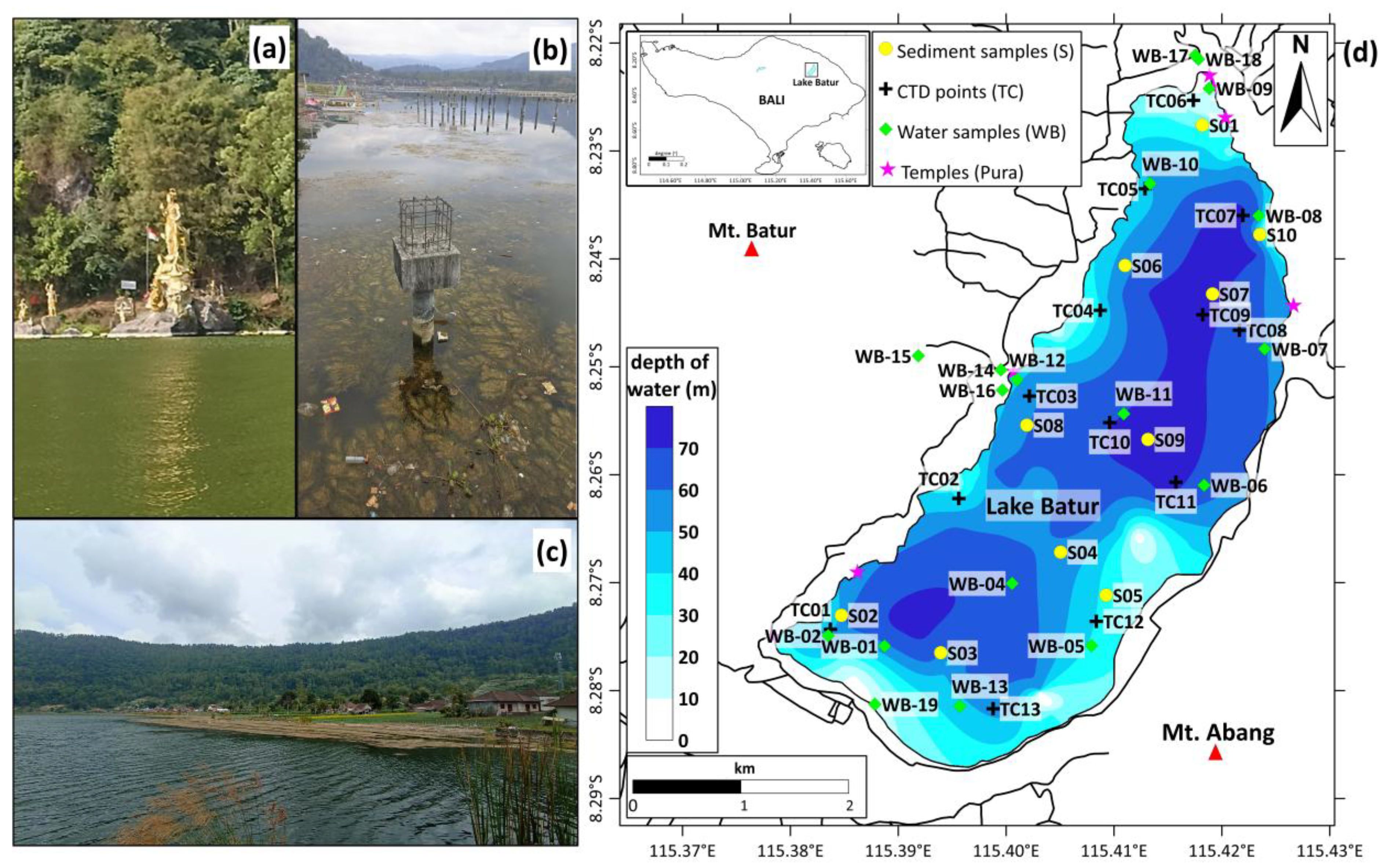
Figure 1. (ac) Current conditions of Lake Batur surface waters. (d) Bathymetric map of Lake Batur showing sampling locations. Yellow circles indicate surface sediment sampling points (S); green rhombuses represent surface water sampling points and physicochemical measurements (W); black “+” sign indicates locations of temperature and conductivity depth profiling (TC).
Earth 07 00005 g001
Figure 2. Distribution of (a) pH values; (b) temperature; (c) conductivity; and (d) TDS on the water surface of Lake Batur in June 2023. Physicochemical parameter values for samples around Lake Batur are shown in colored boxes according to the value color scale.
Earth 07 00005 g002
Figure 3. Vertical profiles of (a) temperature and (b) electrical conductivity measured in August 2023, and (c) temperature and (d) electrical conductivity measured in November 2023 in Lake Batur.
Earth 07 00005 g003
Figure 4. Representative diatoms identified in surface sediment samples based on SEM observations. Identification was conducted conservatively, primarily at the genus level. The observed taxa include (a,c) Denticula sp.; (b) Karayevia sp.; (d) Encyonema sp.; (e) Cocconeis sp.; and (f,g) Discostella cf. stelligera.
Earth 07 00005 g004
Figure 5. Hierarchical Cluster Analysis (HCA) of surface water sampling points in Lake Batur.
Earth 07 00005 g005
Table 1. Data on physicochemical and ion concentrations in surface water.
NoIDLatLongpHTECTDSDOK+NH4+ClSO42−FNO3NO2Loc.
(°S)(°E) (°C)(mS)(ppm)(mg/L)(mg/L)(mg/L)(mg/L)(mg/L)(mg/L)(mg/L)(mg/L)*
1WB-018.276115.3899.0222.82.1126011.625.180204.62511.6612.2429.740a
2WB-028.275115.3848.96232.1127911.729.248.86234.9610.46.5200a
3WB-048.270115.4019.1622.82.09126111.426.082.58211.36491.924.3807.38a
4WB-058.276115.4089.0823.12.09121810.531.6217.62253.2534.5411.9424.840a
5WB-068.261115.4189.2523.52.09125511.524.840.7204.44754.2600a
6WB-078.248115.4249.2623.52.08126011.629.049.1223.44443.9412.1800a
7WB-088.236115.4239.3124.52.08125111.625.160.6204.36469.824.200a
8WB-098.224115.4199.3123.52.09124712.827.663.14208492.384.700a
9WB-108.233115.4139.2823.32.09126012.224.80.72201.36460.44.1600a
10WB-118.254115.4119.222.32.09128013.324.964.58199.82458.024.1200a
11WB-128.251115.4019.14232.0912801125.721.44215.24496.784.5400a
12WB-138.281115.3969.122.82.0812901228.247.2231.54484.2611.6428.50a
13WB-148.250115.4007.3338.22.641730(-)30.51.96280.4776.448.5220.060b
14WB-158.249115.3928.24251.44872(-)18.380.6114.04212.144.3615.3810.34c
15WB-168.252115.4007.4935.62.171450(-)23.541.18206.6414.284.3225.535.91b
16WB-178.221115.4187.1422.60.66382(-)23.981.4655.6272.611.0488.221.78c
17WB-188.221115.4186.9822.51.15693(-)19.320.9888.98201.843.92141.367.36c
18WB-198.281115.3888.6617.62.021188(-)26.681.38213.66415.3811.5229.820c
min 6.9817.600.66382.0010.5018.380.0055.6272.603.920.000.00
max 9.3138.202.641730.0013.3031.6217.62280.40776.4412.24141.3621.78
avg 8.6624.421.951192.0011.7725.833.56197.31445.667.1422.412.93
LOD 0.280.500.210.770.630.980.67
* a. Lake Batur. b. Hot Spring. c. Domestic wells.
Table 2. Comparative data on the water characteristics of Lake Batur in this study and others.
Parameter[12][13]This Study
May 2011July 2011October 2011June 2018June 2023November 2023
T (°C)24.1–26.422.9–24.124.2–26.223.2–23.622.3–24.524.9–26.9
pH water (unit)8.81–9.508.21–8.698.62–9.008.1–8.98.96–9.319.13–9.30
DO (mg/L)3.22–6.820.62–5.564.92–8.257.07–7.9 10.5–13.3
TDS (ppm)(-)(-)(-)1340–18601218–12901340–1360
EC (mS)(-)(-)(-)(-)2.08–2.102.15–2.17
NO2 (mg/L)0.01–0.040.06–0.140.00–0.13(-)0–7.38(-)
NO3 (mg/L)0.07–0.530.28–0.650.05–1.56(-)0–29.74(-)
NH4+ (mg/L)0.56–1.310.12–0.550.23–1.06(-)0–17.62(-)
TP (mg/L)(-)(-)(-)0.404–0.739(-)(-)
Chlorophyll-a (mg/m3)3.06–12.284.48–21.381.70–7.75(-)(-)(-)
Table 3. Comparison of data on the water characteristics of Lake Batur with WHO (2019) [33] and Indonesian Government Regulation No.22 (2021) [34].
ParametersThis Study *[33][34]
MinMaxMeanClass IClass IIClass IIIClass IV
NH4+ (mg/L)June017.624.71(-)0.10.20.5(-)
Cl (mg/L)199.82253.2216.02250300300300600
SO42− (mg/L)443.94610.40494.09250300300300400
F (mg/L)4.1212.247.072.1911.51.5(-)
NO3 (mg/L)029.746.921010102020
NO2 (mg/L)07.380.620.10.060.060.06(-)
pHJune8.969.319.176.5–8.5(-)(-)(-)(-)
November9.139.39.2(-)(-)(-)(-)
EC μS/cmJune208021002090400(-)(-)(-)(-)
November215021702160
TDS (ppm)June121812901262300–9001000100010002000
November134013601346
DO (mg/L)November10.513.311.8 6431
* The Indonesian government’s water quality criteria. Class I: water quality that is suitable for drinking purposes or other uses that require the same quality standards as drinking water. Class II: water quality intended for recreation, aquaculture, fishery, livestock, irrigation, or other purposes that require water quality similar to those uses. Class III: water quality suitable for freshwater fish farming, livestock, irrigation, or other purposes with similar water quality requirements. Class IV: water quality suitable for irrigation or other uses requiring water quality conforming to standards specified for that purpose.
Table 4. Spearman correlation analysis of physicochemical parameters and ions in lake water and surrounding waters.
pHTECTDSK+NH4+ClSO42−FNO3
T0.179
EC0.0970.381
TDS0.1200.2460.733
K+0.2090.0380.3650.339
NH4+0.087−0.1630.1060.2630.715
Cl0.0630.2050.4980.5260.9110.615
SO420.2470.1990.7110.4930.7540.3150.740
F−0.133−0.0760.0720.0250.6530.3940.6020.366
NO3−0.791−0.362−0.325−0.331−0.200−0.172−0.155−0.3540.299
NO2−0.553−0.070−0.412−0.376−0.620−0.229−0.545−0.613−0.2420.389
Disclaimer/Publisher’s Note: The statements, opinions and data contained in all publications are solely those of the individual author(s) and contributor(s) and not of MDPI and/or the editor(s). MDPI and/or the editor(s) disclaim responsibility for any injury to people or property resulting from any ideas, methods, instructions or products referred to in the content.