Article

Assessing the Effectiveness of the Ramsar Convention in the Conservation of Nesting Waterbirds in Benin, West Africa


by
Abiola Sylvestre Chaffra
1,2,
Irene Di Lecce
2,3,
David D. L. Goodman
2,4 and
Nico Arcilla
2,5,*
1
Department of Geography and Spatial Planning, Adjarra University Centre, University of Abomey-Calavi, Cotonou 01 B.P. 536, Benin
2
International Bird Conservation Partnership, Carmel, CA 93923, USA
3
Institute of Evolutionary Biology, Biological and Chemical Research Centre, Faculty of Biology, University of Warsaw, Żwirki i Wigury 101, 02-089 Warsaw, Poland
4
School of Geography and the Environment, University of Oxford, South Parks Road, Oxford OX1 3QY, UK
5
Center for Great Plains Studies, University of Nebraska, 1155 Q St, Lincoln, NE 68588, USA
*
Author to whom correspondence should be addressed.
Earth 2026, 7(1), 33; https://doi.org/10.3390/earth7010033
Submission received: 22 December 2025 / Revised: 30 January 2026 / Accepted: 5 February 2026 / Published: 22 February 2026

Abstract

The longest-standing international treaty for wetland and waterbird protection, the Ramsar Convention has resulted in the establishment of more than 2500 protected areas covering over 2.5 million square kilometers around the world. However, its measures are not legally binding, and its effectiveness as a tool for wildlife conservation has rarely been quantitatively assessed. In Benin, West Africa, breeding waterbirds are subjected to intense hunting and egg harvesting for both commercial and subsistence purposes. We quantified count data of waterbirds and eggs taken by local hunters and trappers to assess the effectiveness of the Ramsar Convention as a wildlife conservation tool in southeastern Benin. During the six-month period between May and October 2022, 64 people reported harvesting a total of 12,053 breeding waterbirds and 63,987 eggs, comprising eight species in three families in Ramsar site 1018. Birds most heavily targeted included Allen’s Gallinule (Porphyrio alleni), with 4187 breeding birds taken (~35% of all birds captured), and the White-faced Whistling Duck (Dendrocygna viduata), with 24,491 eggs taken (~38% of all eggs taken) over the course of a single breeding season. The Eurasian Moorhen (Gallinula chloropus) and Lesser Moorhen (Paragallinula angulata) were the third and fourth most targeted bird species, respectively, followed by the African Swamphen (Porphyrio madagascariensis), Black Crake (Zapornia flavirostra), African Jacana (Actophilornis africanus), and African Crake (Cecropsis egregia). Captured waterbirds were sold live at local markets, while eggs were eaten by hunters, except eggs containing chicks, which were discarded. Our findings show heavy persecution of waterbirds during their breeding season, when nesting birds are especially vulnerable to human predation, on a scale that is likely unprecedented and threatens to drive declines of targeted species in Benin. As local residents do not currently appear to recognize any deterrents to the uncontrolled hunting of breeding waterbirds or the collection of eggs in Ramsar site 1018, there is an urgent need to better leverage the Ramsar Convention to enforce conservation practices in this region.

1. Introduction

Covering at least 1.5–1.6 billion hectares worldwide [1], wetlands are extremely biodiverse and productive habitats [2]. Wetlands provide many essential ecosystem services, including habitat for wildlife, carbon fixation and storage, nutrient cycling, and water treatment and purification, and play important roles in regulation environmental disturbances, such as flooding during storms [3,4,5,6]. In addition, wetlands offer people recreational, cultural, and educational opportunities [3,7,8], and feature heavily in many subsistence and commercial activities. Among terrestrial ecosystems, the role of wetlands in climate mitigation, biodiversity conservation, and human health is crucial [9]. Public attitudes toward wetlands have shifted in recent decades, through the efforts of scientists and conservationists who have worked to change the perception of wetlands as “waste areas” [7] and advocated for formal protection of these habitats, leading to their recognition as valued ecosystems [8,10,11]. The Convention on Wetlands of International Importance Especially as Waterfowl Habitat, signed in Ramsar, Iran, in 1971, is commonly known as the Ramsar Convention [12] and draws from the earlier Project MAR (short for “marsh”) on the conservation and management of temperate marshes, bogs and other wetlands [13,14].
The Ramsar Convention is one of the longest-standing international treaties for wetland and waterbird protection, with 2500 protected areas covering over 2.5 million square kilometers around the world [9,15]. The 172 Contracting Parties to the Ramsar Convention have agreed to engage in “working together for wetland conservation and wise use” and “to develop the best available data, advice and policy recommendations to realize the benefits of fully functional wetlands to nature and society” [9,15]. However, evidence indicates that the conservation status of wetlands has not improved over the Ramsar Convention’s lifetime [15,16]. On the contrary, wetland habitats have the highest rates of degradation and loss worldwide [3,17], with studies reporting the loss of 35% or more of their extent [9,18,19,20]. Drainage for agriculture, cutting down water-loving woody vegetation and mowing and burning reed beds, pollution, invasive species, dam construction, human population growth, and climate change are among the many anthropogenic threats endangering wetlands globally [8,21].
African wetlands south of the Sahara play a crucial role in supporting African resident waterbird species year-around and in providing wintering grounds for migratory waterbirds breeding in Europe and Asia [22,23]. Unfortunately, even where laws protecting natural areas and wildlife are in place, law enforcement may be virtually absent. Limited law enforcement capacity, corruption, low education and literacy levels, weak or absent political will to protect nature as part of sustainable development all contribute to increasing threats to and declines of African wildlife and habitat [24,25,26,27]. The Ramsar Convention’s measures are not legally binding or supported by legal regulations, and several studies report on the inadequate implementation of management plans by the Contracting Parties and on the lack of compliance with the monitoring and reporting mechanisms established by the convention to promote the conservation status of wetlands [28,29,30,31].
Despite the extensive coverage of protected wetland areas, which provide critical habitat for waterbirds, international censuses have shown that waterbird populations are in decline globally, especially in regions where biodiversity conservation programs are lacking and where governance is weak [23,32,33]. Birds are specifically threatened by illegal take at stopover and wintering sites and along migration flyways around the world [34,35,36,37], habitat destruction on wintering grounds [38], and climate change across their ranges [39]. Human-caused bird mortality in the African–Eurasian flyway does not appear to have declined over the last 15 years, despite conservation efforts [40]. Research shows that marked declines of species wintering in the Sahel occurred in the 1960s–1980s, and that declines of species wintering in the humid tropics and Guinea forest zone have been underway since the 1980s [37]. Bird hunting in Africa likely plays a role in these declines, as data on large terrestrial birds have revealed that the ratio between human-caused and natural mortality is 2.4 times higher in Africa than in Asia or Europe [40].
In many tropical regions, protected area status may not result in effective land or wildlife protection, and West Africa is no exception [24,25,26]. For example, the illegal destruction of wildlife and protected wetlands in northern Togo’s Oti River Valley starting in the 1980s has led to the extirpation of waterbirds and raptors including the Black-crowned Crane (Balearica pavonina [Linnaeus, 1758]), Saddle-billed Stork (Ephippiorhynchus senegalensis [Shaw, 1800]), Hadaba Ibis (Bostrychia hagedash [Latham, 1790]), and African Fish Eagle (Icthyophaga vocifer [Daudin, 1800]) [41]. W National Park, in neighboring northern Benin at its border with Niger, is designated as Ramsar site 355 [42], but is likewise subjected to intense anthropogenic pressure, including overfishing, rice cultivation, and deforestation [41]. Nearly half (42%) of residents in Ramsar site 355 reported agricultural encroachment as a major problem degrading the site, and over a third (35%) reported problems with uncontrolled resource extraction related to population growth, poverty and the lack of clear, consistent conservation and management directives for natural resource governance [43].
The hunting of waterbirds is one of the major pressures at the wetlands in sub-Saharan Africa [23,41,44] and constitutes a key threat to waterbirds [34,45]. In West Africa, the most densely populated region of Africa, intense persecution of birds for wildlife trade has been documented for decades [41,44,46,47,48,49]. In Benin, many wildlife species are protected under Decree No. 2011-394 (enacted 28 May 2011), which focuses on the conservation, development, and sustainable management of wildlife and habitats, but they are nevertheless persecuted by both professional and opportunistic hunters [50]. However, most people involved in poaching and wildlife trade in Benin do not appear to recognize laws protecting wildlife, and laws protecting wildlife do not appear to be enforced [25].
Bird hunting in Benin is intense and widespread, including the trapping, wounding, and killing of birds by young boys as a form of entertainment [41,44,51]. In addition to the commercial, subsistence, and recreational hunting of birds, government agencies and even development aid programs have supported “pest control” campaigns to kill birds and destroy habitat, including burning roosts, spraying toxic chemicals, and mist netting at agricultural and fisheries sites to kill birds [51]. Local residents also use nets to trap live birds, such as herons, to sell them along roads and in villages, and persecute huge numbers of individuals and species of birds to sell them in wildlife trade for voodoo (West African vodun) and other belief-based uses, either dead or alive [41,51,52].
The entire coastline of Benin is an important wetland complex designated as two Ramsar sites. On the western side is the Lower Couffo Valley (Ramsar site 1017), including Côtiere Lagoon, Aho Channel, and Lake Ahémé, comprising 524,000 ha [53], and on the eastern side is the Lower Ouémé River Valley (Ramsar site 1018), including the Porto-Novo Lagoon and Lake Nokoué, comprising 652,760 ha [54] (Figure 1). Both sites are recognized for their importance for both wintering Palearctic migratory birds and resident birds [50,55,56,57,58,59]. However, few quantitative data on regional avifauna have been published from Benin [41,51,60,61,62], and such data are urgently needed to improve both ornithological research capacity in West Africa and the effectiveness of international conservation efforts [63].
To date, there have been few quantitative studies of human impacts on birds or assessments of wetland ecosystem health and conservation strategies in southern Benin. Here, we aim to assess the effectiveness of the Ramsar Convention as a tool for waterbird conservation in West Africa, specifically by examining breeding waterbird hunting and egg harvesting in southeastern Benin’s Ramsar site 1018. Our objectives included the following: (1) using count data reported in interviews with local hunters and trappers to assess numbers of waterbirds and eggs taken during the breeding season; (2) interpreting our findings and their conservation implications in light of relevant studies from this area and other regions; and (3) using our findings to make recommendations for future research and conservation efforts.

2. Materials and Methods

2.1. Study Area

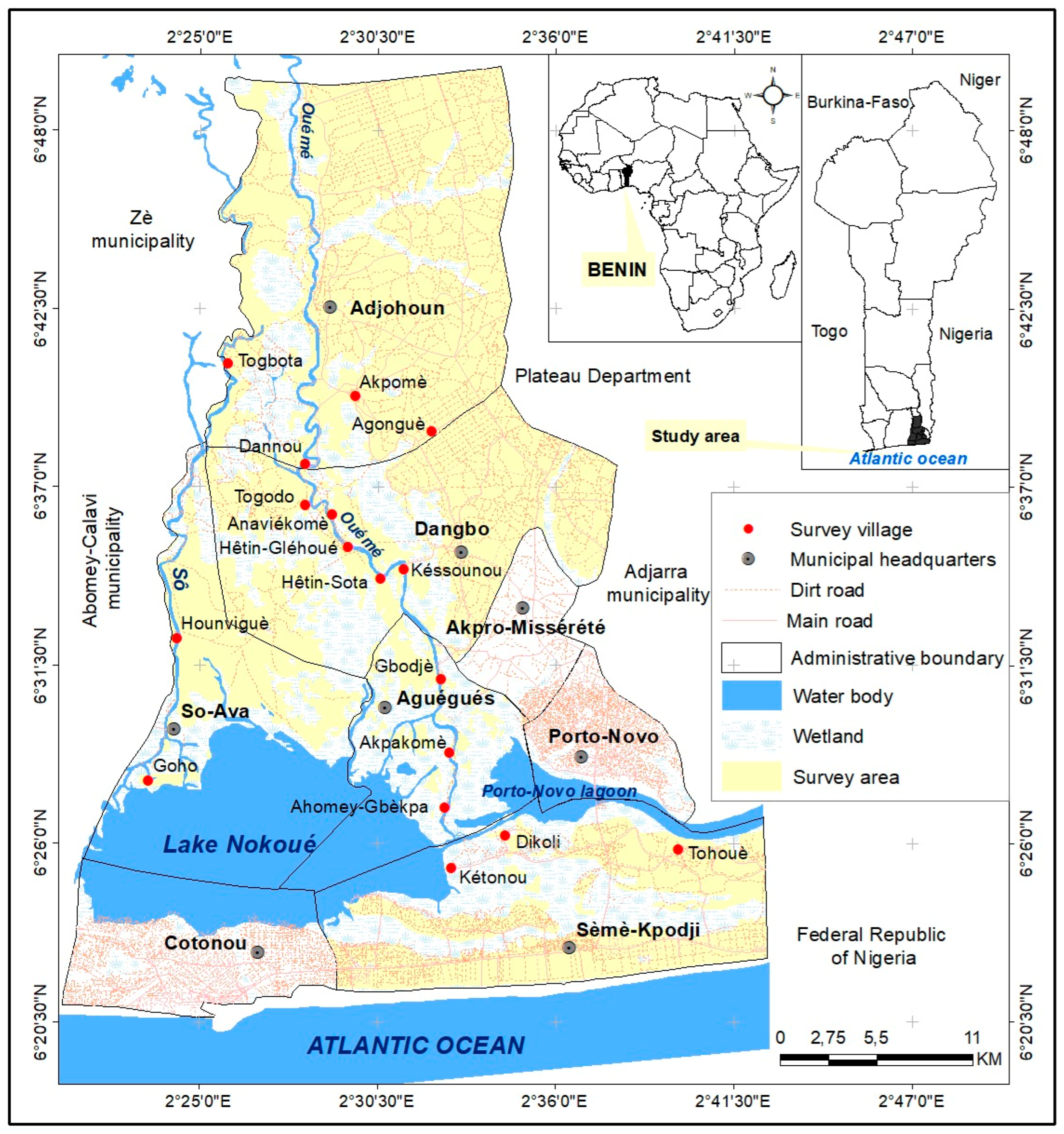
We collected data for this study in the Benin’s Lower Ouémé River Valley, including the Porto-Novo Lagoon and Lake Nokoué (Figure 1), which form part of Ramsar site 1018 [54]. Since 2020, these wetlands have also formed part of a United Nations Educational, Scientific and Cultural Organization (UNESCO) Biosphere Reserve [64]. The area is marshy, with major watercourses (the Ouémé and Sô Rivers) and bodies of water (the Porto-Novo Lagoon and Lake Nokoué); it is periodically flooded and inhabited by resident waterbirds, as well as Palearctic and inter-African migrants [55,56,57,58]. The prevailing climate is sub-equatorial with two dry seasons and two rainy seasons, with an average annual rainfall exceeding 1500 mm [55,65].
Here, scientific names of bird species follow the taxonomy used by Birds of the World [66]. Ramsar site 1018 hosts at least 215 bird species [54], and previous work in the study area identified 84 bird species in 19 different bird families, including 61 obligate wetland species, 15 raptor species, and eight other species, including four kingfisher (Alcedinidae) species and 4 bee-eater (Meropidae) species [51]. The richest ecosystems for birds identified included Lake Nokoué, the Sô and Ouémé Rivers, Lower Mono River Delta, the Aho River and adjacent marshes (also called the “Aho complex”), Porto Novo Lagoon, and Lake Ahémé [51]. A particularly notable discovery in Ramsar Site 1018 in 1996–1997 was the presence of ~3500 Black Terns (Chlidonias niger [Linnaeus, 1758]) in Lake Nokoué, numbers that exceeded the 1% criterion of its global population. This discovery helped qualify the lake as a wetland of international importance [51]. In addition, Lake Nokoué is recognized as an Important Bird Area (IBA-BJ004) [54,55], based on criteria including the presence of range-restricted species and the presence of at least 1% of the global population of a waterbird species [41,67].
Southern Benin is densely populated, with >50% of the country’s human population on ~10% of its land area [51]. An investigation of changes in land use and land cover in Ramsar site 1018 found that the presence of birds around Lake Nokoué was limited by the loss of 5854 ha of marshes and 70 ha of mangroves due to human encroachment and activities [59]. In addition, pollution along watersides, especially discarded plastic in Lake Nokoué, poses an environmental health hazard [51]. Much of the floodplain land is cultivated after seasonal floods [41], including to produce cassava (Manihot esculenta [Crantz]), sweet potato (Ipomoea batatas (L.) Lam.), cowpea (Vigna unguiculata (L.) Walp.), peanuts (Arachis hypogaea L.) and vegetables [55]. Several non-governmental organizations and local groups are active in the area and are involved in biodiversity conservation and the promotion of tourism in this area [50,52,68]. However, waterbirds are persecuted for food and trade in southern Benin despite existing legislation, employing the use of guns, nets, hooks, and slingshots among other methods [69].

2.2. Field Methods

We carried out this study in 17 locations in five communes in the Lower Ouémé River Valley, Benin (Figure 1, Table 1). We conducted interviews with 64 residents, including waterbird hunters and egg collectors, during the rainy season (May–October 2022), which corresponds to the waterbird breeding season [41]. Residents were selected via chain referral as a method of investigating sensitive topics and sampling hard-to-reach populations [70,71]. Three-quarters (48 of 64) of interviewees had been involved in a previous study on hunting activities in the same study area [50]. Although interview data depends on human recall and cannot alone be used for making population-level inferences in the absence of field data [70], local residents may offer a wealth of important data that, if not fully comprehensive, provides a first step towards establishing a baseline understanding of hunting, trapping, and egg harvesting impacts on targeted waterbirds. Among the 64 interviewees, 19 (30%) identified as professional hunters, 8 (12%) were opportunistic hunters (fishermen and craftsmen who hunt a few days per week), and 37 (58%) were other local residents not identified as professional or opportunistic hunters.
We conducted interviews in French, the official language of Benin, and/or the native languages of interview participants, including Mahi, Fon, Wémè, and Goun, four of Benin’s 50 indigenous languages [72]. Verbal consent was obtained from all participants prior to conducting interviews; written consent was not sought as the majority (58%) of Benin’s population is not literate [72]. We visited interviewees every week during the rainy season, from May to October 2022, during which ASC and colleagues, including Dossou Ignace, Bonou Erick, Amoussou Bernard, Agonzanmè Samuel, Lodonou Julienne, and Lokossou Étienne, used a questionnaire (Appendix A, Table A1) to record the number of (1) breeding birds caught; (2) eggs taken; (3) live birds sold; (4) price of the sale; and (5) markets where sales occurred, all organized by species. No personal identifying data was attached to questionnaires in order to protect participants’ privacy. Informal discussions were carried out to gather information about hunting practices.

2.3. Statistical Analysis

We separately analyzed variation in the number of birds captured at the nest and eggs collected from the nest using generalized linear models with a negative binomial error distribution to account for overdispersion and a log link function using the glmmTMB package in R [73]. The number of hunted birds and the number of collected eggs were the response variables, and commune, month, and species were included as fixed effects. Dispersion, zero-inflation and residual diagnostics were evaluated using DHARMa package in R [74].

3. Results

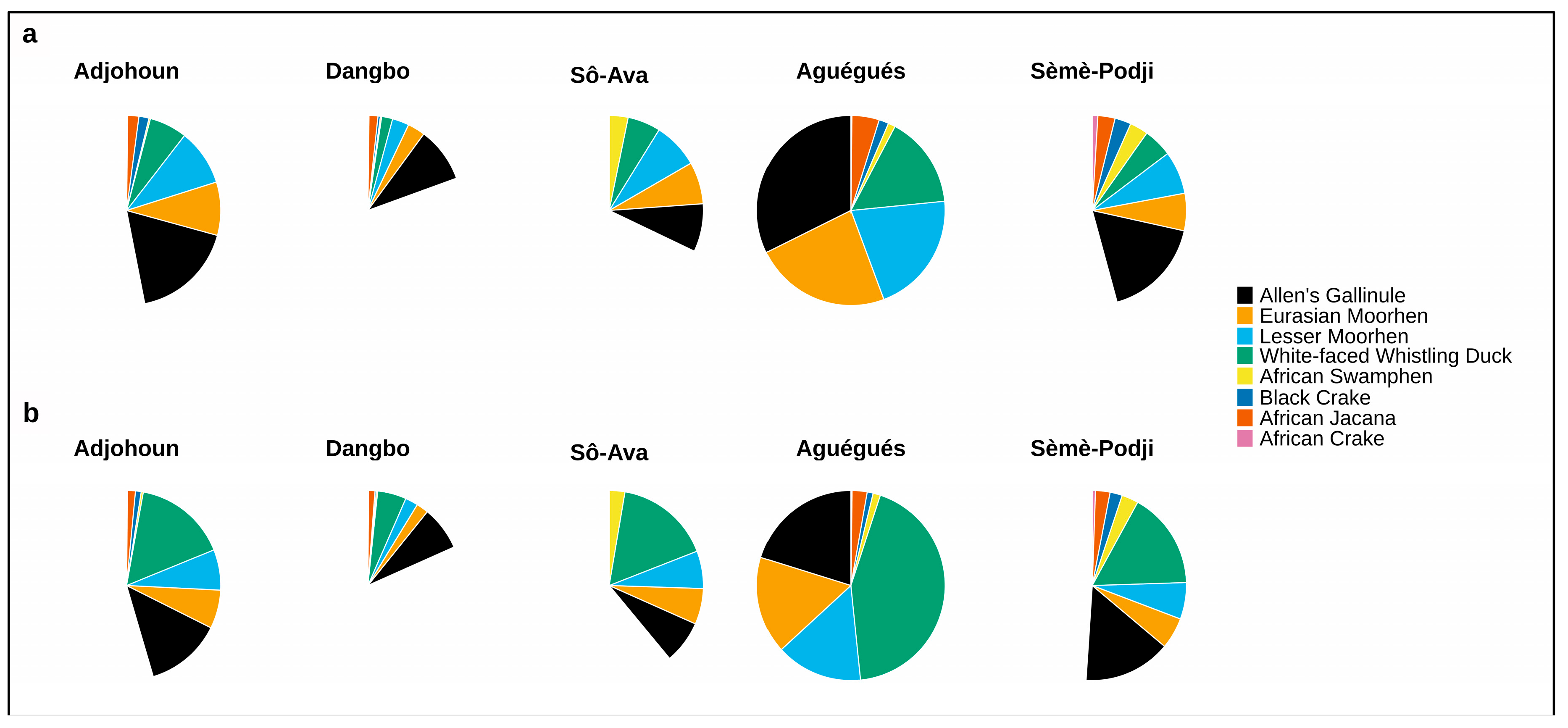
We recorded a total of 12,053 breeding individuals captured from their nests (Table 2) and 63,987 collected eggs (Table 3), comprising eight species in three families. Allen’s Gallinule (Porphyrio alleni [Thomson, 1842]; Rallidae), Eurasian Moorhen (Gallinula chloropus [Linnaeus, 1758]; Rallidae), Lesser Moorhen (Paragallinula angulata [Sundevall, 1850]; Rallidae), and White-faced Whistling Duck (Dendrocygna viduata [Linnaeus, 1766]; Anatidae) made up 89% of captured waterbirds and 92% of collected eggs reported by interviewees. Birds most heavily targeted included Allen’s Gallinule, which accounted for 35% of all birds captured, with 4187 breeding birds taken over the course of a single breeding season across all communes (Table 2), and the White-faced Whistling Duck, with 24,491 eggs taken in all communes except Dangbo, where Allen’s Gallinule eggs were the most frequently collected (Table 3). African Swamphen (Porphyrio madagascariensis [Latham, 1801]; Rallidae), Black Crake (Zapornia flavirostra [Swainson, 1837]; Rallidae), African Jacana (Actophilornis africanus [Gmelin, 1789]; Jacanidae), and African Crake (Cecropsis egregia [Peters, 1854]; Rallidae) were also targeted by hunters and trappers but reportedly with less success because their nests are more difficult to find.
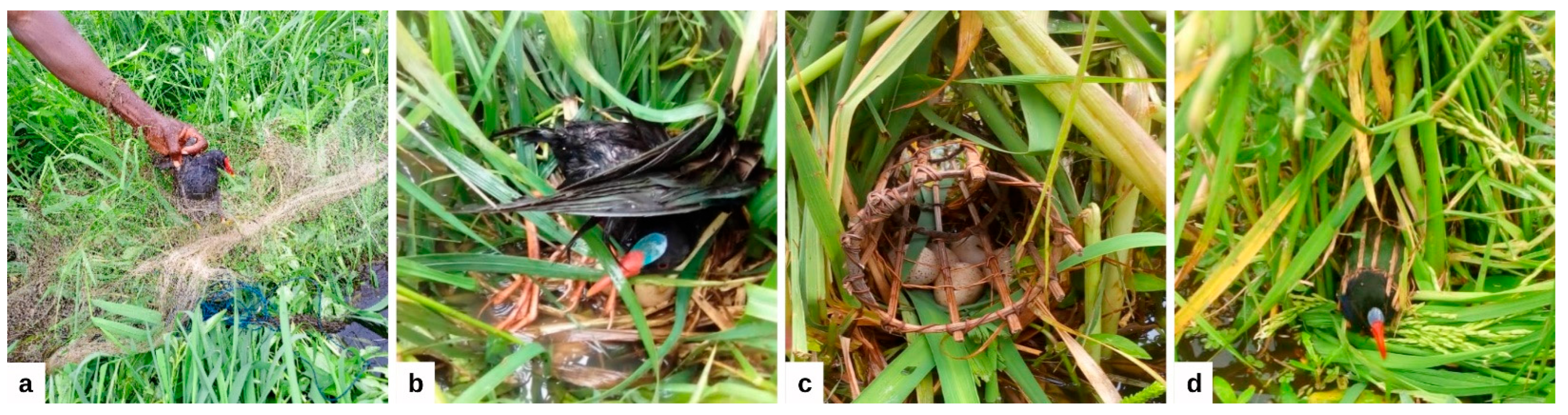
Hunters caught waterbirds in their nests by throwing fishing nets over them during incubation (Figure 2a) and using hou traps, where a baited hook with items such as worms, mollusks, and insects is placed hanging over the nest (Figure 2b). They also trapped waterbirds using a small cylindrical cage woven from the rachis of Raphia leaves (locally called an aglan) with a flattened side at one end, placed at the entrance of the nest (Figure 2c,d).
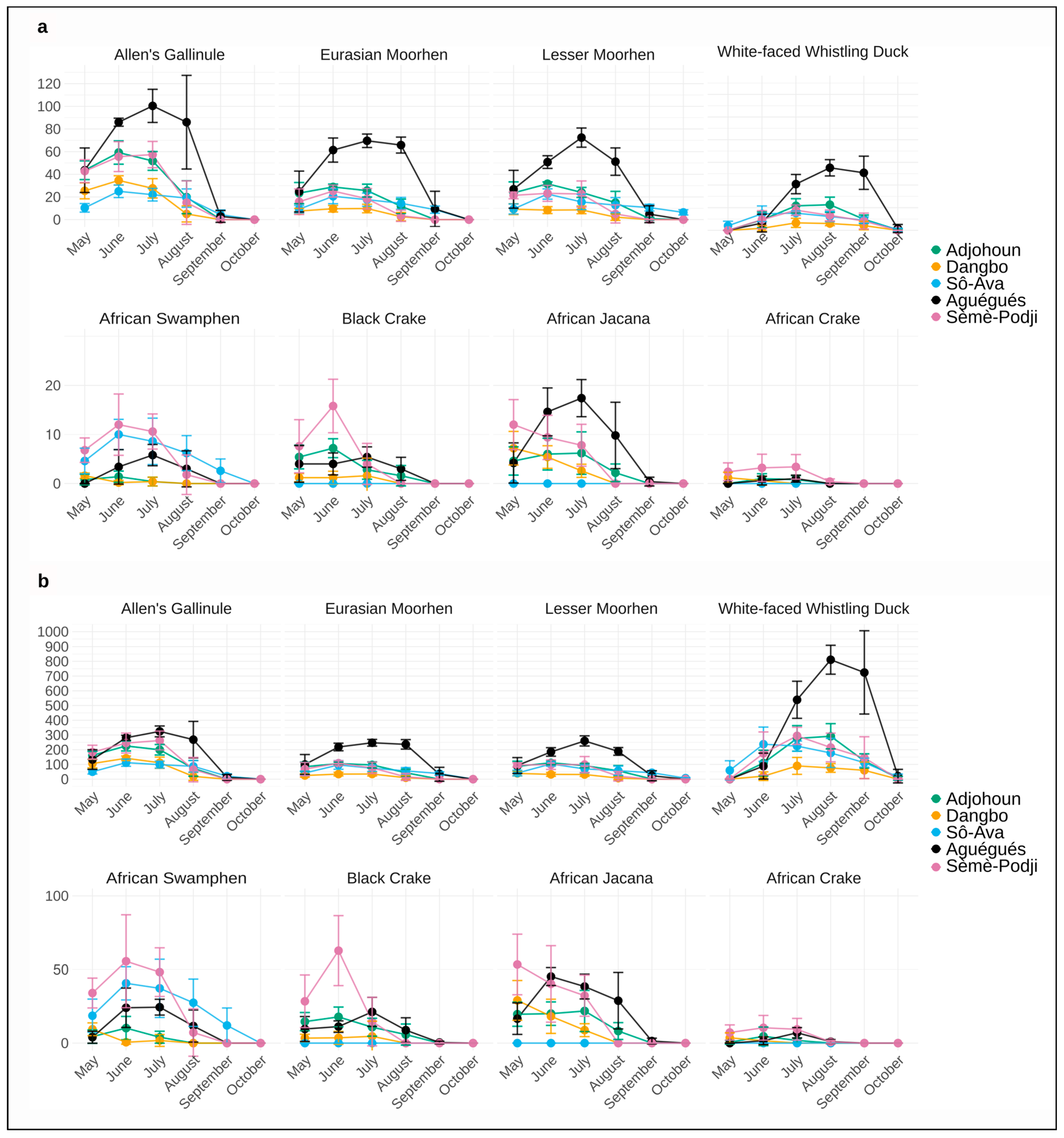
We recorded the highest hunting pressure in Aguégués, which accounted for 41% of hunted birds and 39.4% of collected eggs, followed by Adjohoun (19.2% of hunted birds and 17.9% of collected eggs), Sèmè-Podji (18.7% of hunted birds and 20.1% of collected eggs), Sô-Ava (13.1% of hunted birds and 15.3% of collected eggs), and Dangbo (8% of hunted birds and 7.2% of collected eggs), despite Dangbo having the highest number of interviewees participating in this study (Table 2 and Table 3; Figure 3 and Figure 4). Between May and October 2022, total numbers of waterbirds caught and eggs collected were highest in June and July (Figure 4). Our statistical models revealed significant spatial, temporal, and species-specific variation in the numbers of hunted birds (Table 4A). Bird numbers differed among communes, with significantly lower numbers recorded in Dangbo and Sô-Ava, and higher numbers in Aguégués, relative to Adjohoun. Seasonal patterns were detected, with higher hunted bird numbers in June and July and a marked decline in September and October, consistent with the progression of the breeding season. Substantial differences were also observed among species: all species showed significantly lower counts relative to Allen’s Gallinule (the reference species), with the lowest numbers observed for African Crake, Black Crake, Africa Swamphen, and African Jacana. Similarly, the number of collected eggs varied significantly among communes, months, and species (Table 4B). Compared to Adjohoun, egg numbers were significantly lower in Dangbo and higher in Aguégués. Egg collection was highest in June and July and decreased sharply in September and October. Among species, egg numbers were lowest in African Crake, Black Crake, African Jacana, and African Swamphen, whereas Eurasian Moorhen was moderately lower and White-faced Whistling Duck showed no significant difference relative to Allen’s Gallinule (the reference species).
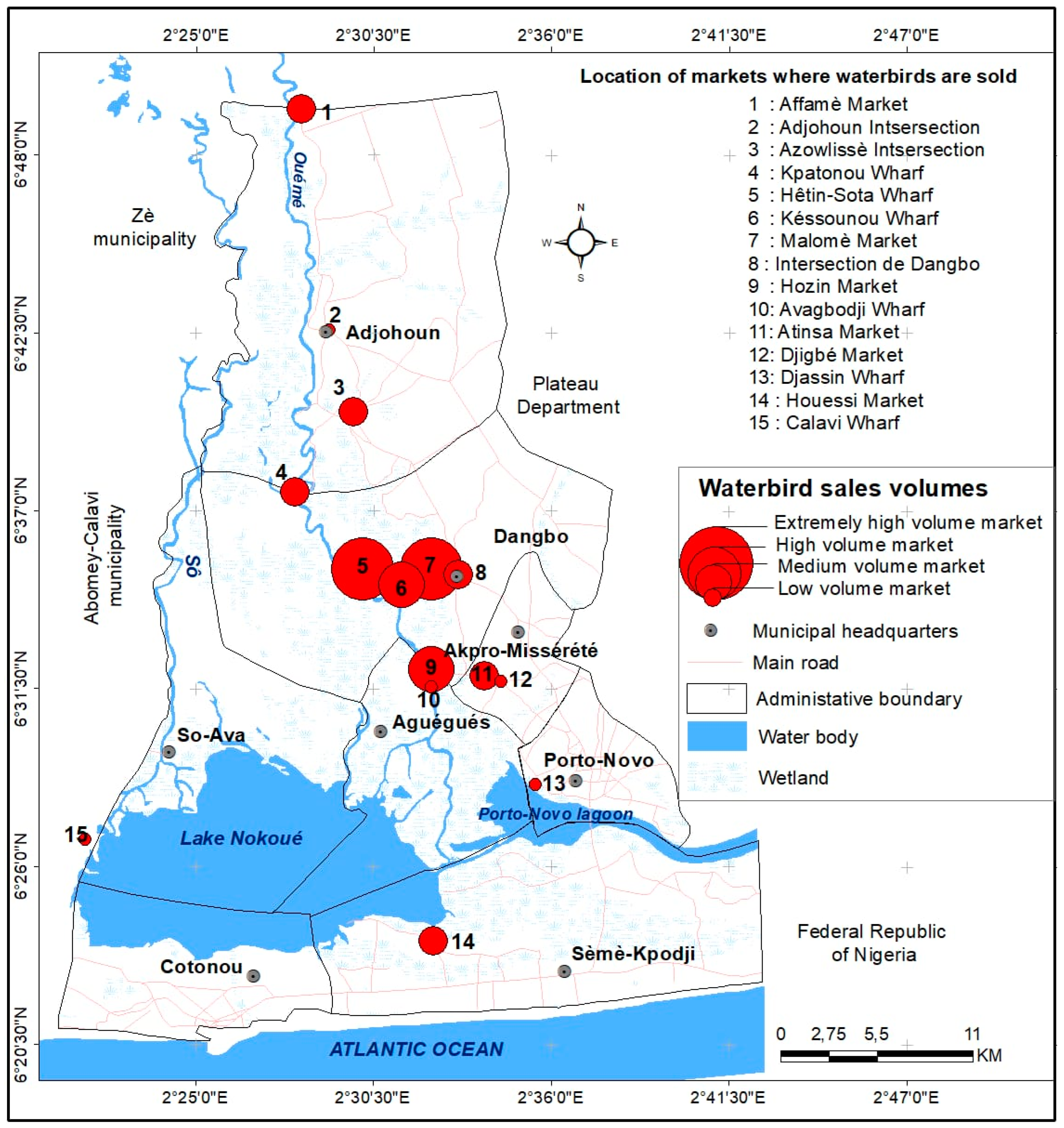
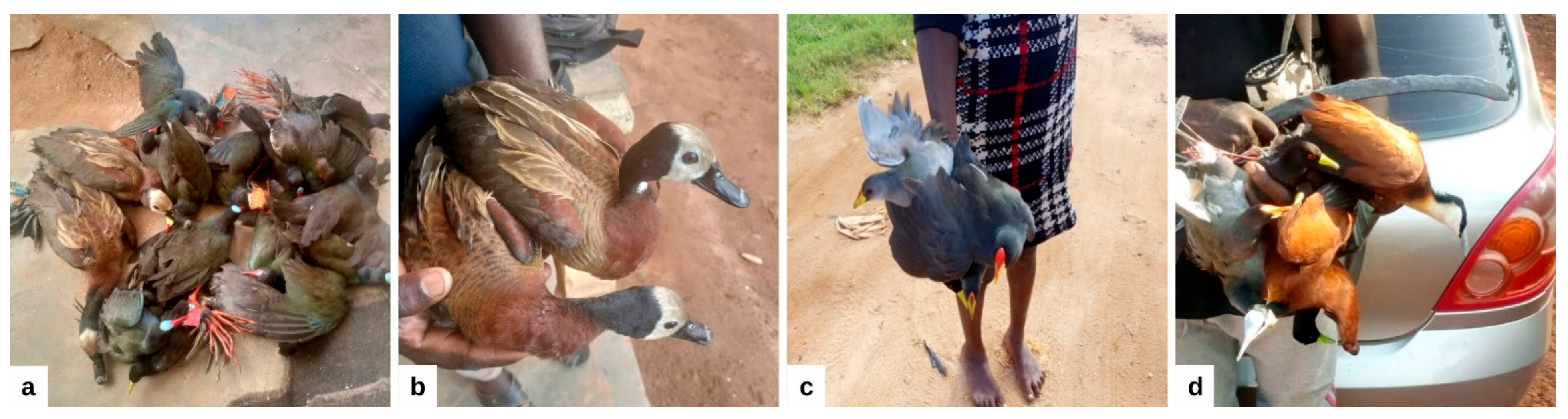
Hunters and members of their families ate birds killed by hunters and eggs collected, while fertilized eggs were discarded. Residents, often women and children related to hunters, sold live birds at 15 locations in the vicinity of roads (three locations), piers (six locations) and markets (six locations) (Figure 5 and Figure 6). Sale prices varied based on the size of the birds: Black Crakes were sold at FCFA 50 (~USD 0.079); Eurasian Moorhens, Lesser Moorhens, African Swamphens, and Allen’s Gallinules were sold at between FCFA 150 (~USD 0.24) and FCFA 300 (~USD 0.47); White-faced Whistling Ducks, the birds with the largest body size in this study, were sold at the highest price, which varied between FCFA 1000 (~USD 1.58) and FCFA 2500 (~USD 3.95).

4. Discussion

In this study, we aimed to assess the effectiveness of the Ramsar Convention as a tool for waterbird conservation in West Africa by using interview data from 64 residents on breeding waterbird hunting and egg harvesting in Ramsar site 1018, southeastern Benin. Interview data revealed extremely high levels of persecution of nesting waterbirds during a single breeding season in Ramsar site 1018, despite the existence of legislation for the protection of these species and this site’s international status as a protected site. Our findings indicate that persecution of waterbirds peaked during the core breeding period (June–July) and was most intense in the commune of Aguégués, located at the confluence of the Ouémé into Lake Nokoué and Porto-Novo Lagoon. The hunting pressure targeting incubating adults and eggs reported in this study, while based on the recollections of the interviewees and therefore approximate, suggests a particularly high potential impact on population recruitment, underscoring the limited effectiveness of existing legal protections at this internationally recognized site.
Birds most heavily persecuted included Allen’s Gallinule, Eurasian Moorhen, Lesser Moorhen, and White-faced Whistling Duck, which together made up 89% of all breeding birds and 92% of eggs harvested in the study area. In addition, hunters targeted African Swamphen, Black Crake, African Jacana, and African Crake. Allen’s Gallinule is a resident and partial migrant, and Lesser Moorhen is an intra-African migrant and partial resident; the other six species are Afrotropical residents in southern Benin [38]. Hunters and their families both consume and sell waterbirds, highlighting how both subsistence and commercial activities of Benin’s fast-growing human population are impacting wetlands and wildlife, despite the protections intended by the Ramsar Convention and the laws and policies of Benin. The current persecution of waterbirds in the study area appears to be taking place at an unprecedented scale, and if unchecked, threatens to drive declines of both targeted waterbird populations and their ecological roles in the wetlands as a whole.

4.1. Human Impacts, Life Histories, and Conservation Status of Hunted Waterbird Species Targeted

Allen’s Gallinules made up over one-third (~35%) of all birds harvested by hunters interviewed in the study area. The fact that only 64 residents harvested 4187 breeding Allen’s Gallinule over the course of a single breeding season, and that our interviewees represent what may be only a subset of the total numbers of hunters and birds taken in this area, raises serious concerns about the future of this species in the study area. Allen’s Gallinule is monogamous, occurs in pairs throughout the year, and is territorial when breeding; breeding pairs typically produce 3–8 eggs (mean: ~4) that are incubated by both sexes over ~15 days on the ground [75]. The territoriality of this species suggests that as breeding pairs are trapped on the nest, as both males and females incubate the eggs, the study area likely represents a population sink for this species as new individuals attempting to breed move into territories emptied by trappers.
Although Allen’s Gallinule is not currently considered vulnerable to global extinction, the destruction and conversion of wetlands for human activities throughout the bird’s range in sub-Saharan Africa, including the loss of seasonally flooded habitats, is assumed to have driven population declines, but its occurrence in seasonal habitats makes its populations difficult to assess [75]. Moreover, hunters took 15,914 eggs of this species, representing nearly a quarter (24%) of the total eggs collected from all species for the entire study period, which appears to be highly likely to contribute to population declines in this area. We recommend prioritizing future field surveys to quantify numbers and nests of Allen’s Gallinule, as well as the impacts of such intense human predation on them, ideally through comparing populations in and outside of protected areas.
Eurasian Moorhens made up one-fifth (~20%) of all birds harvested by hunters interviewed in the study area, representing 2418 birds taken by 64 residents. The Eurasian Moorhen is monogamous and territorial, occurring in pairs that may be maintained for multiple years; cooperative nesting of two or more females mated to one male may also occur [76]. Both sexes build nests on the ground, where 3–9 eggs are laid by a single female or larger clutches in cases of cooperative breeding; up to five replacement clutches can be laid after egg loss [76]. Incubation, by both sexes, takes place over 17–22 days [76], making this species extremely vulnerable to predation at the nest. In theory, controlled harvest of eggs could be sustainable given the number of replacement clutches that may be laid after egg loss, but the fact that 64 residents harvested 9234 eggs, or 14% of the total eggs harvested, together with 2418 breeding adults, which represent only a fraction taken by all local residents, suggests that local persecution of this species is likely driving population declines.
Lesser Moorhens made up one-fifth (~20%) of all birds and 14% of all eggs harvested by residents interviewed in the study area, with 2395 breeding birds and 9227 eggs taken by 64 residents. The Lesser Moorhen is also monogamous and territorial [77]. Whereas nests of this species in Nigeria were clustered together so that four were found in a 20-m radius, studies elsewhere have found nests farther apart [77]. Clutches contain 3–9 (mean: ~5) eggs, which are incubated for up to 20 days, likely by both females and males, making both sexes highly vulnerable to human predation during the breeding period. While Lesser Moorhens are widespread and locally common over much of their range, the erratic nature of their occurrence in seasonal habitats makes their numbers difficult to assess. Nevertheless, the harvest of such high numbers of breeding birds and eggs of this species means that persecution in the study area is likely either driving population declines or the study area is a population sink for this species.
White-faced Whistling-Ducks comprised 14% of all breeding birds and 38% of all eggs harvested by residents interviewed in the study area, with 1706 breeding birds and 24,491 eggs taken by 64 residents in the course of a single breeding season. The White-faced Whistling-Duck is monogamous and believed to pair for life; birds are gregarious and nest in groups on the ground [78], qualities that unfortunately make them highly vulnerable to human predation. Although they are fairly abundant and not globally threatened, large numbers are hunted, including 53,439 birds shot in a single season in 1998–1999 in Lake Chilwa, Malawi, where even higher numbers were killed in snares [78]. Such high levels of predation can decimate local populations in the absence of protection, as happened with White-faced Whistling-Duck breeding colonies in northern Togo after the Oti-Kéran protected area complex was largely destroyed; thus, despite their potential to reach very high abundance, populations of this species can quickly decline in response to unsustainable exploitation, which may be taking place in the study area.
Four additional species made up the remaining 1347 breeding birds and 5121 eggs harvested as reported by study participants: African Swamphen, Black Crake, African Jacana, and African Crake. Although these four species should in principle be less threatened by persecution than the four species taken in much greater numbers, there do not appear to be any population estimates or quantitative studies of human impacts that might guide conservation plans or actions.
Interviewees reported taking 401 breeding adults and 1876 eggs of the African Swamphen, a species that is typically aggressively territorial, frequently fighting at territory edges, except where territory is limited, when they may nest in loose colonies [79]. Both sexes engage in nest-building, sometimes cooperatively, and incubate 2–6 eggs over a period of 23–25 days [79]. African Swamphens are patchily distributed in West Africa, and while there are few data on their populations or trends, there is evidence of regional African Swamphen population declines in Nigeria as well as in Kenya due to the introduction of nutria (Myocastor coypus), a semi-aquatic rodent, from South America [79]. African Swamphens have also declined in North Africa due to wetland drainage and disturbance [79].
Interviewees reported taking 324 breeding adults and 1088 eggs of Black Crake in a single breeding season. Black Crakes are monogamous and territorial during the breeding season, when females lay 2–6 (mean: 3) eggs that are incubated for 13–19 days by both parents; pairs may produce up to four clutches per season, conditions permitting [80]. Black Crakes are the most widespread and abundant crake in Africa and are less secretive than other rails in the region [80], making their distribution and populations easier to detect than those of their relatives, but also more vulnerable to human predation. Although they are fairly abundant in much of their range and not globally threatened, Black Crakes may be locally rare in drier regions of West Africa and are vulnerable to ongoing losses of wetlands [80].
According to interview data, 549 adult African Jacanas and 1909 eggs were collected over the course of one breeding season. African Jacanas are monogamous and territorial during the breeding season, when females lay 2–5 (mean: 4) eggs that are incubated for 20–26 days by males [81], making them more vulnerable to human predation at nests. Nest success is typically very low [81]. Although African Jacanas are not globally threatened and may be common to abundant in their extensive range, there are no overall and few regional population estimates, and some populations have been threatened by wetland drainage or degradation and invasive species introductions elsewhere in Africa [81].
Interviewees reported taking 73 African Crake breeding adults and 248 African Crake eggs in a single breeding season. African Crakes are believed to be largely monogamous and, like the White-faced Whistling Duck but unlike the other 6 waterbird species considered in this study, nest on dry ground near wetlands [82]. Females lay 3–9 eggs, which are incubated by both sexes [82]. As with Black Crakes, African Crakes’ distribution and status are relatively well documented, as they are less secretive than other crakes [82]. Not globally threatened, African Crakes are widespread and locally common throughout most of their range, but in some areas, they are vulnerable to habitat loss from overgrazing, agriculture, and wetland destruction as well as hunting and trapping for food [82].

4.2. Interpreting Our Findings with Reference to Previous and Other Relevant Research

The highest numbers of waterbirds caught and eggs collected were observed in June and July, likely corresponding to the peak of the breeding season, when incubating adults are most vulnerable to capture and eggs are most abundant. Aguégués village hunters reported the highest consumption of birds, accounting for 41% of hunted birds and 39% of collected eggs; the lowest consumption of birds was reported by hunters in Dangbo, with 8% of hunted birds and 7% of collected eggs, although this commune had the highest number of hunters interviewed (23) of those surveyed. We found statistical support for pronounced spatial, temporal, and species-specific variation in the number of hunted birds (Table 4A). Birds taken differed among communes, with Dangbo and Sô-Ava exhibiting markedly lower harvest levels, and Aguégués showing higher levels, compared to the reference commune, Adjohoun. Substantial differences were also observed among species, as all species were harvested in smaller numbers than the reference species, Allen’s Gallinule. The lowest harvest levels were recorded for African Crake, Black Crake, Africa Swamphen, and African Jacana. Similarly, egg collection varied significantly among communes, months, and species (Table 4B). Compared to Adjohoun, the reference commune, egg harvest was significantly lower in Dangbo and higher in Aguégués. Egg collection peaked in June and July and decreased sharply in September and October. Among species, egg numbers were lowest in African Crake, Black Crake, African Jacana, and African Swamphen, followed by the Eurasian Moorhen. Egg collection for White-faced Whistling Duck was persistently high throughout the study period, leading to a total harvest of 24,491 for this species, the equivalent of 383 White-faced Whistling Duck eggs for each of the 64 study participants during the study period.
Already in 1996–1997, high pressure on these wetlands from hunting and human encroachment was notable, with increasing demographic pressure, resulting in poaching, overfishing, eutrophication of the water ecosystems, blocking of fish migration corridors with fish traps, and harvesting of trees and other plants for construction materials and household fuel [51]. During waterbird surveys during this period, researchers noted evidence of persecution and its effects on behavior of the White-faced Whistling Duck, whose concentrations were found highest in the northern part of Lake Nokoué and Ouémé River near the border with Nigeria [51]. The skittish behavior of White-faced Whistling Ducks appeared to be a response to heavy hunting pressure [51]. Likewise, African Jacanas were identified as “remarkably shy” by researchers who noted that the birds were easily disturbed and fled when approached from a great distance, indicating behavioral changes driven by persecution [51].
Our findings complement and corroborate findings from recent research on the hunting pressure on wintering and breeding waterbirds in Ramsar site 1018, which demonstrated that hunting for subsistence and commercial purposes during both the dry and rainy seasons is common and identified 22 hunted waterbird species, the most frequently targeted of which included the White-faced Whistling Duck and members of the rail (Rallidae) and jacana (Jacanidae) families [50]. Another recent study on the distribution and interannual variability of waterbirds of the Lower Ouémé River Valley (Ramsar site 1018) in southern Benin [56] identified poaching as a serious threat to waterbirds and noted several species that may already have been extirpated by human activities, including the Goliath Heron (Ardea goliath [Cretzschmar, 1829]) and Lesser Jacana (Microparra capensis [Smith, 1839]). Throughout the wetlands of Ramsar site 1018, there is evidence of uncontrolled poaching of waterbirds by local residents and residents of the regional cities of Cotonou, Abomey, and Porto-Novo [56]. Despite conservation legislation, illegal hunting is a serious threat to the birds in the area, especially White-faced Whistling Ducks, jacanas, moorhens, egrets and shorebirds [56].

4.3. Recommendations for Conservation and Future Research

Ramsar site 1018 has a management plan and some conservation activities [54], but to date these do not appear to offer any effective protection for the waterbirds that are the focus of this study. Moreover, Benin’s Decree 2011-394 outlines measures for wildlife and habitat conservation and sustainable management, setting out requirements and conditions for obtaining hunting permits, including restricting hunting to particular seasons and limiting numbers of animals not fully protected by law [83]. We recommend that efforts should be made to raise awareness of this decree, as more than 80% of hunters in this region remain unaware of its existence [50]. Under this decree, the White-faced Whistling Duck is listed as a partially protected species, while rails and jacanas are listed as non-game species [83]. Nevertheless, people hunting and trapping birds and harvesting their eggs in Ramsar site 1018 do not appear to observe regulations protecting birds, obtain permits, or observe limits, regardless of any formal protections of the species or site. Such patterns are consistent with other research showing that critically endangered and fully protected species are widely sold in open markets in Benin, as laws protecting them do not appear to be enforced [25]. Ramsar site 1018 also hosts sacred forests that are protected by law but nevertheless are threatened by increasing overexploitation and conversion to human use [54,84].
The hunting pressure on waterbirds reported in this study, while based on the recollections of the interviewees and therefore approximate, suggests a particularly high potential impact on both breeding birds, population recruitment, and reproductive success, underscoring the lack of effectiveness of existing legal protections at this internationally recognized site. Anthropogenic predictors that could influence differences in bird and egg harvest between villages might include numbers of people in each village and whether hunters in each village are professional or opportunistic, information that unfortunately was not available to us, but which might serve to guide questions for future research and analyses. Likewise, although information on the level of hunting effort or spatial area covered by hunters was beyond the scope of this study, such information should be included in future studies so that population-level impacts on birds might be assessed. We also lack information on species abundance, distribution, and accessibility to hunters and trappers in various areas, subjects that ideally would be investigated in future research.
Law enforcement is essential for effective wildlife conservation, but faces significant challenges in sub-Saharan Africa [24,25,27,85]. Recommendations to improve wildlife law enforcement in this region include: investing in specialized training and capacity building for law enforcement officials, strengthening collaboration among law enforcement agencies, adopting data-driven approaches to share intelligence and fight wildlife crime, and advocating for strong governance and increased public awareness of wildlife laws [27]. Moreover, drawing on cultural and sacred traditions such as through protecting traditional sacred forests and consecrating new sacred sites can be leveraged to protect wildlife [83,85]. For example, White-faced Whistling Ducks were traditionally protected from hunting by taboos in northwest Benin [41]. However, in northeast Benin, near the border with Niger, this species was heavily persecuted by professional hunters originating from outside the area before they were stopped by the local authorities [41]. We emphasize the necessity for more effective waterbird and wetland conservation in Benin, particularly through environmental education and awareness-raising campaigns to ensure wetlands continue to perform their vital ecosystem functions [86]. We also recommend that Benin’s Decree No. 2011-394 [82] should be revised to incorporate hunting restrictions during the waterbird nesting season.
The Lower Ouémé River Valley provides vital habitat for huge numbers of waterbirds [56], but despite its formal protection and international status as a Ramsar site, no implementation activity or managing plan aimed at achieving conservation objectives effectively protects breeding birds in this area. As our findings were based on the memory of the interviewees, numbers of birds and eggs recorded are approximate; however, the order of magnitude of the hunting is reliable and cause for concern. Intense hunting and egg collection activities during the breeding season have the potential to drive population declines and the disappearance of the affected species [87,88]. Species overexploitation is known to be a major driver of global wildlife declines [88,89,90,91] with significant negative impacts on both biodiversity and human wellbeing. Ongoing and future studies are necessary to assess the effects of the observed harvesting practices on demographic trends and the conservation status of these species in the area, not to mention the possible selective effects and evolutionary consequences [92].
The underuse of the Ramsar Convention as a conservation tool is not limited to Benin. Granting Ramsar status to Burdur Lake in Turkey failed to improve its environmental health status [93]. A recent study showed contrasting effectiveness of the Ramsar Convention in enhancing waterbird population trends across Mediterranean sub-regions, with low effectiveness in Southern Europe, the Balkans, and the Middle East, and high effectiveness in the Maghreb [29]. Several studies have reported declines in waterbird populations at Ramsar sites, such as the Macquarie Marshes in Australia [94], Kerkini Reservoir in northern Greece [95], Doñana in south-west Spain [96], and Rio Cruces Wetland in Chile [97]. However, local waterbird populations have been observed to increase more rapidly in Ramsar sites than in unprotected wetlands [98].
Previous research on waterbirds in the study area recommended the designation of protected reserves, the development of sustainable use strategies for natural resources in this region, the integration of local communities in environmental conservation practices, and the implementation of environmental educational and awareness-raising activities about the protection of birds and the roles of birds in the ecosystem [51]. In Ramsar site 1017, neighboring our study area in Ramsar site 1018, the mangrove ecosystems sustained severe degradation due to human impacts from 1995 to 2005, but from 2005 to 2015, a mangrove restoration project was implemented, together with several projects on biodiversity conservation and sustainable resource use, consistent with the goals of the Ramsar Convention [68]. Moreover, many residents around wetland sites in Benin have expressed frustration with the effects of haphazard development around natural areas and support for stronger conservation measures [43].
This study corroborates other recent findings highlighting an urgent need to implement effective conservation measures to avoid ongoing losses of regional biodiversity [99,100]. Our findings highlight the need to strengthen the influence of the Ramsar Convention to support conservation practices in the Lower Ouémé River Valley, with particular attention to the heavily targeted species and populations identified in this study: Allen’s Gallinule, Eurasian Moorhen, Lesser Moorhen, and White-faced Whistling Duck. To discourage wildlife crime, conservation legislation must be enforced and new guidelines, such as banning the trapping of birds and collection of eggs protected areas and at nesting sites, should be implemented [69]. To accompany conservation actions, community engagement and education initiatives should be undertaken, such as promoting alternative livelihoods for former poachers [101], building long-term research sites, and implementing resource-access agreements.

5. Conclusions

Our findings indicate that waterbird hunting and egg collection in southeastern Benin’s Ramsar site 1018 occurs at high rates in the rainy season, which is the main waterbird breeding season, during which nesting birds are especially vulnerable to human predation. The scale of persecution of waterbirds in the study area is likely unprecedented, and if unchecked, threatens to drive declines of targeted waterbird populations. There is an urgent need to better leverage the Ramsar Convention in Benin to enforce stronger conservation practices in this region. Uncontrolled hunting of waterbirds during the breeding season has the potential to compromise both adult survival, juvenile recruitment, and breeding success, with implications for local population trends and species conservation. Effective implementation of conservation measures may reduce the conversion of wetland habitats to agriculture and urban areas [95]. Previous research also suggests that enforcing international conservation policies may also facilitate climate change adaptation of waterbird communities [102].
In Benin’s Ramsar site 1017, which hosts most of Benin’s remaining mangrove forests, has benefited from mangrove restoration projects carried out by both private conservation organizations and state environmental institutions, which have also worked to create conservation awareness, promote participatory management, and provide alternative household fuel sources to reduce pressure on trees used as firewood [68,103]. Recent research has shown that between 2001–2022, mangrove forests increased in area in Ramsar site 1017, over the same time period that they declined in our study area, Ramsar site 1018 [103]. Benin’s human population has more than doubled since Ramsar sites 1017 and 1018 were designated in 2000, and this population growth has been much more pronounced in our study area, Ramsar site 1018 [54,104].
With three of Benin’s most important urban areas, Cotonou, Abomey, and Porto-Novo, Ramsar site 1018 is under intense human pressure, and also has hosted fewer conservation and restoration efforts focused on mangroves, because it hosts fewer mangrove forests compared to Ramsar site 1017 [103]. We strongly and urgently recommend implementing monitoring programs, conservation actions, and environmental education programs to promote the protection of waterbirds, wetlands, and the ecosystem services they provide in this region, particularly for the most heavily persecuted species documented in this study, including the Allen’s Gallinule, Eurasian Moorhen, Lesser Moorhen, and White-faced Whistling Duck, as well as the African Swamphen, Black Crake, African Jacana, and African Crake.
Habitat conservation successes in Ramsar site 1017, immediately to the west of our study area in Ramsar site 1018, provide some salient examples of approaches that might be used to improve the conservation status of waterbirds in this area, including leveraging cultural traditions such as protecting sacred forests, enacting and enforcing national decrees and laws, and promoting community conservation awareness and initiatives [83,84,104]. For example, passing and enforcing conservation legislation prohibiting mangrove cutting, with perpetrators facing jail time, has been credited with reducing pressure on mangrove forests [103]. In addition, some mangrove forests have been consecrated, or made sacred, by ceremonially calling in the zangbéto, or “night hunter,” a spiritual entity seen as providing powerful protection to sacred areas by local residents who practice vodun (voodoo), a national religion in Benin [25,103,105]. The strategy of consecrating particular natural areas so that they are recognized and protected sacred sites makes use of longstanding indigenous cultural traditions to benefit bird conservation [85], and offers a promising approach to protect waterbird nesting sites in the future.
This study was based on interviews, estimating the numbers of birds and eggs taken by 64 interviewees providing data through recall at weekly intervals over the course of a single waterbird breeding season. Future investigations would ideally use field surveys to quantify breeding parameters, including quantifying nest abundance, breeding birds, clutch size, reproductive success, and recruitment. Conducting waterbird studies that are larger in temporal and spatial scope in the future, potentially with reference to the present study, to quantify the levels of hunting effort and pressure in any given area would allow a greater ranger of inferences in terms of human impacts on particular breeding bird populations and their consequences. We also join other researching in recommending the development of assessments of the cultural and economic importance of waterbirds to local communities [51]. Finally, we encourage future studies that evaluate waterbird population trends in response to conservation strategies to better assess the long-term success of the Ramsar Convention in protecting waterbirds and their unique ecological roles in wetland ecosystems.

Author Contributions

Conceptualization, A.S.C.; methodology, A.S.C., I.D.L. and N.A.; software, A.S.C. and I.D.L.; formal analysis, A.S.C. and I.D.L.; investigation, A.S.C., I.D.L., D.D.L.G. and N.A.; data curation, A.S.C. and I.D.L.; writing—original draft preparation, A.S.C.; writing—review and editing, A.S.C., I.D.L., D.D.L.G. and N.A.; visualization, A.S.C. and I.D.L.; supervision, A.S.C. and N.A.; project administration, A.S.C. and N.A.; funding acquisition, A.S.C. and N.A. All authors have read and agreed to the published version of the manuscript.

Funding

Donors to the International Bird Conservation Partnership provided financial support that made this study possible.

Data Availability Statement

Data are provided in Appendix A; other data referred to but not provided in this manuscript can be provided on request to the corresponding author.

Acknowledgments

We are very grateful to all the residents of southeastern Benin who kindly agreed to participate in this study, for generously sharing their time and information with us in interviews. We thank Dossou Ignace, Bonou Erick, Amoussou Bernard, Agonzanmè Samuel, Lodonou Julienne, and Lokossou Étienne for their assistance in collecting data in the field, and Zountondji Mokaram for creating the maps. We thank Ruthe J. Smith for editing the manuscript, and Ola Svensson for other crucial support. This paper is dedicated to all those engaged in the protection, study, and celebration of waterbirds as part of Africa’s natural and cultural heritage, past, present, and future.

Conflicts of Interest

The authors declare no conflicts of interest. The funders had no role in the design of this study; in the collection, analyses, or interpretation of data; in the writing of this manuscript, or in the decision to publish the results.

Appendix A

Table A1. Questionnaires used in weekly interviews with study participants; researchers asked participants about numbers of birds and eggs harvested each week and used responses to fill in numbers in the spreadsheet.
MayJuneJulyAugustSeptemberOctober
S1S2S3S4S5S6S7S8S9S10S11S12S13S14S15S16S17S18S19S20S21S22S23S24S25S26S27S28S29S30
African Jacana
Collected eggs
White-faced Whistling Duck
Collected eggs
African Crake
Collected eggs
Black Crake
Collected eggs
Eurasian Moorhen
Collected eggs
Lesser Moorhen
Collected eggs
Allen’s Gallinule
Collected eggs
African Swamphen
Collected eggs
Earth 07 00033 i001

References

  1. Davidson, N.C.; Finlayson, C.M. Updating global coastal wetland areas presented in Davidson and Finlayson (2018). Mar. Freshw. Res. 2019, 70, 1195. [Google Scholar] [CrossRef]
  2. Dudgeon, D.; Arthington, A.H.; Gessner, M.O.; Kawabata, Z.; Knowler, D.J.; Lévêque, C.; Naiman, R.J.; Prieur-Richard, A.; Soto, D.; Stiassny, M.L.J.; et al. Freshwater biodiversity: Importance, threats, status and conservation challenges. Biol. Rev. 2006, 81, 163–182. [Google Scholar] [CrossRef]
  3. Millennium Ecosystem Assessment. Ecosystems and Human Well-Being: Wetlands and Water: Synthesis; World Resources Institute: Washington, DC, USA, 2005; 80p, Available online: https://www.unep.org/resources/report/ecosystems-and-human-well-being-wetlands-and-water-synthesis (accessed on 1 December 2025).
  4. United Nations. Transforming Our World: The 2030 Agenda for Sustainable Development; United Nations: New York, NY, USA, 2015; Available online: https://sustainabledevelopment.un.org/content/documents/21252030%20Agenda%20for%20Sustainable%20Development%20web.pdf (accessed on 23 April 2025).
  5. Janse, J.H.; van Dam, A.A.; Hes, E.M.A.; de Klein, J.M.J.; Finlayson, C.M.; Janssen, A.B.G.; van Wijk, D.; Mooij, W.M.; Verhoeven, J.T.A. Towards a global model for wetlands ecosystem services. Curr. Opin. Environ. Sustain. 2019, 36, 11–19. [Google Scholar] [CrossRef]
  6. Eric, A.; Chrystal, M.-P.; Erik, A.; Kenneth, B.; Robert, C. Evaluating ecosystem services for agricultural wetlands: A systematic review and meta-analysis. Wetl. Ecol. Manag. 2022, 30, 1129–1149. [Google Scholar] [CrossRef]
  7. Keddy, P.A.; Fraser, L.H.; Solomeshch, A.I.; Junk, W.J.; Campbell, D.R.; Arroyo, M.T.K.; Alho, C.J.R. Wet and wonderful: The world’s largest wetlands are conservation priorities. BioScience 2009, 59, 39–51. [Google Scholar] [CrossRef]
  8. Kingsford, R.T.; Basset, A.; Jackson, L. Wetlands: Conservation’s poor cousins. Aquat. Conserv. Mar. Freshw. Ecosyst. 2016, 26, 892–916. [Google Scholar] [CrossRef]
  9. Convention on Wetlands. Global Wetland Outlook: Special Edition 2021; Secretariat of the Convention on Wetlands: Gland, Switzerland, 2021; 56p, Available online: https://www.global-wetland-outlook.ramsar.org/gwo-2021 (accessed on 1 December 2025).
  10. Gren, I.-M.; Folke, C.; Turner, K.; Bateman, I. Primary and secondary values of wetland ecosystems. Environ. Resour. Econ. 1994, 4, 55–74. [Google Scholar] [CrossRef]
  11. Mitsch, W.J.; Gosselink, J.G. The value of wetlands: Importance of scale and landscape setting. Ecol. Econ. 2000, 35, 25–33. [Google Scholar] [CrossRef]
  12. Convention on Wetlands of International Importance Especially as Waterfowl Habitat Ramsar, Iran, 2.2.1971 as Amended by the Protocol of 3.12.1982 and the Amendments of 28.5.1987; United Nations Educational, Scientific and Cultural Organization (UNESCO): Paris, France, 1994; Available online: https://www.env.go.jp/nature/ramsar/conv/treaty/RamsarConventionText_EN.pdf (accessed on 20 November 2025).
  13. Lukas, H. Project Mar: The Conservation and Management of Temperate Marshes, Bogs and Other Wetlands. Volume 1. Proceedings of the Mar Conference. 12–16 November 1962; IUCN, ICBP (International Council for Bird Preservation), International Waterfowl Research Bureau; IUCN: Morges, Switzerland, 1964; 475p, Available online: https://portals.iucn.org/library/node/6207 (accessed on 20 November 2025).
  14. Matthews, G.V.T. The Ramsar Convention on Wetlands: Its History and Development; Ramsar Convention Bureau: Gland, Switzerland, 1993; 90p, Available online: https://www.ramsar.org/sites/default/files/documents/pdf/lib/Matthews-history.pdf (accessed on 1 December 2025).
  15. Bridgewater, P.; Kim, R.E. The Ramsar Convention on Wetlands at 50. Nat. Ecol. Evol. 2021, 5, 268–270. [Google Scholar] [CrossRef]
  16. Bridgewater, P.; Kim, R.E. 50 years on, w(h)ither the Ramsar Convention? A case of institutional drift. Biodivers. Conserv. 2021, 30, 3919–3937. [Google Scholar] [CrossRef] [PubMed]
  17. Fluet-Chouinard, E.; Stocker, B.D.; Zhang, Z.; Malhotra, A.; Melton, J.R.; Poulter, B.; Kaplan, J.O.; Goldewijk, K.K.; Siebert, S.; Minayeva, T.; et al. Extensive global wetland loss over the past three centuries. Nature 2023, 614, 281–286. [Google Scholar] [CrossRef]
  18. Davidson, N.C. How much wetland has the world lost? Long-term and recent trends in global wetland area. Mar. Freshw. Res. 2014, 65, 934–941. [Google Scholar] [CrossRef]
  19. Hu, S.; Niu, Z.; Chen, Y.; Li, L.; Zhang, H. Global wetlands: Potential distribution, wetland loss, and status. Sci. Total Environ. 2017, 586, 319–327. [Google Scholar] [CrossRef]
  20. Díaz, S.; Settele, J.; Brondízio, E.S.; Ngo, H.T.; Guèze, M.; Agard, J.; Arneth, A.; Balvanera, P.; Brauman, K.A.; Butchart, S.H.M.; et al. (Eds.) Summary for Policymakers of the Global Assessment Report on Biodiversity and Ecosystem Services of the Intergovernmental Science-Policy Platform on Biodiversity and Ecosystem Services; IPBES Secretariat: Bonn, Germany, 2019; 56p. [Google Scholar] [CrossRef]
  21. Butt, M.A.; Zafar, M.; Ahmed, M.; Shaheen, S.; Sultana, S. Threats to biodiversity of wetland. In Wetland Plants; Springer International Publishing: Cham, Switzerland, 2021; pp. 117–133. [Google Scholar] [CrossRef]
  22. Hahn, S.; Bauer, S.; Liechti, F. The natural link between Europe and Africa: 2.1 billion birds on migration. Oikos 2009, 118, 624–626. [Google Scholar] [CrossRef]
  23. Deniau, C.P.; Mathevet, R.; Gautier, D.; Besnard, A.; Cornu, G.; Le Bel, S. Flyways to hell? An empirical assessment of Palearctic migratory waterbird harvest practices in key wetlands of Sahel-Sub-Saharan Africa. Biol. Conserv. 2022, 265, 109419. [Google Scholar] [CrossRef]
  24. Arcilla, N.; Holbech, L.H.; O’Donnell, S. Severe declines of understory birds follow illegal logging in Upper Guinea forests of Ghana, West Africa. Biol. Conserv. 2015, 188, 41–49. [Google Scholar] [CrossRef]
  25. Chaffra, A.S.; Arcilla, N.; Yabi, B.F.; Lissagbé, H.M.; Honfo, E.E.; Houéssou, M.G.; Murgatroyd, M. Conservation implications of the illegal trade in Hooded Vultures Necrosyrtes monachus for belief-based use in Benin, West Africa. Bird Conserv. Int. 2025, 35, e14. [Google Scholar] [CrossRef]
  26. Kaboumba, L.-E.M.; Di Lecce, I.; Afiademanyo, K.M.; Kourdjouak, Y.; Arcilla, N. Assessing threats to Fazao-Malfakassa National Park, Togo, using birds as indicators of biodiversity conservation. Land 2025, 14, 225. [Google Scholar] [CrossRef]
  27. Dada, O.M.; Ajayi, O.O.; Coker, O.M. Challenges of effective wildlife law enforcement in Oyo and Lagos States, Nigeria. Wildl. Lett. 2025. [Google Scholar] [CrossRef]
  28. Davidson, N.C.; Dinesen, L.; Fennessy, S.; Finlayson, C.M.; Grillas, P.; Grobicki, A.; McInnes, R.J.; Stroud, D.A. A review of the adequacy of reporting to the Ramsar Convention on change in the ecological character of wetlands. Mar. Freshw. Res. 2020, 71, 117. [Google Scholar] [CrossRef]
  29. Gaget, E.; Le Viol, I.; Pavón-Jordán, D.; Cazalis, V.; Kerbiriou, C.; Jiguet, F.; Popoff, N.; Dami, L.; Mondain-Monval, J.Y.; Defos du Rau, P.; et al. Assessing the effectiveness of the Ramsar Convention in preserving wintering waterbirds in the Mediterranean. Biol. Conserv. 2020, 243, 108485. [Google Scholar] [CrossRef]
  30. Finlayson, C.M.; Gardner, R.C. Ten key issues from the global wetland outlook for decision makers. Mar. Freshw. Res. 2021, 72, 301. [Google Scholar] [CrossRef]
  31. Munguía, S.M.; Heinen, J.T. Assessing protected area management effectiveness: The need for a wetland-specific evaluation tool. Environ. Manag. 2021, 68, 773–784. [Google Scholar] [CrossRef]
  32. Wetlands International. Waterbird Population Estimates, 5th ed.; Summary Report; Wetlands International: Wageningen, The Netherlands, 2012; 28p, Available online: https://www.wetlands.org/wp-content/uploads/2015/11/Waterbird-Populations-Estimates-Fifth-Edition.pdf (accessed on 20 November 2025).
  33. Amano, T.; Székely, T.; Sandel, B.; Nagy, S.; Mundkur, T.; Langendoen, T.; Blanco, D.; Soykan, C.U.; Sutherland, W.J. Successful conservation of global waterbird populations depends on effective governance. Nature 2017, 553, 199–202. [Google Scholar] [CrossRef]
  34. Brochet, A.L.; Van den Bossche, W.; Jbour, S.; Ndang’ang’a, P.K.; Jones, V.R.; Abdou, W.A.L.I.; Al-Hmoud, A.R.; Asswad, N.G.; Atienza, J.C.; Atrash, I.; et al. Preliminary assessment of the scope and scale of illegal killing and taking of birds in the Mediterranean. Bird Conserv. Int. 2016, 26, 1–28. [Google Scholar] [CrossRef]
  35. Boere, G.C.; Piersma, T. Flyway protection and the predicament of our migrant birds: A critical look at international conservation policies and the Dutch Wadden Sea. Ocean Coast. Manag. 2012, 68, 157–168. [Google Scholar] [CrossRef]
  36. Kirby, J.S.; Stattersfield, A.J.; Butchart, S.H.M.; Evans, M.I.; Grimmett, R.F.A.; Jones, V.R.; O’Sullivan, J.; Tucker, G.M.; Newton, I. Key conservation issues for migratory land-and waterbird species on the world’s major flyways. Bird Conserv. Int. 2008, 18, S49–S73. [Google Scholar] [CrossRef]
  37. Vickery, J.A.; Ewing, S.R.; Smith, K.W.; Pain, D.J.; Bairlein, F.; Škorpilová, J.; Gregory, R.D. The decline of Afro-Palearctic migrants and an assessment of potential causes. Ibis 2014, 156, 1–22. [Google Scholar] [CrossRef]
  38. Zwarts, L.; Bijlsma, R.G.; van der Kamp, J. Large decline of birds in Sahelian rangelands due to loss of woody cover and soil seed bank. J. Arid. Environ. 2018, 155, 1–15. [Google Scholar] [CrossRef]
  39. Zurell, D.; Graham, C.H.; Gallien, L.; Thuiller, W.; Zimmermann, N.E. Long-distance migratory birds threatened by multiple independent risks from global change. Nat. Clim. Change 2018, 8, 992–996. [Google Scholar] [CrossRef] [PubMed]
  40. Serratosa, J.; Oppel, S.; Rotics, S.; Santangeli, A.; Butchart, S.H.; Cano-Alonso, L.S.; Tellería, J.L.; Kemp, R.; Nicholas, A.; Kalvāns, A.; et al. Tracking data highlight the importance of human-induced mortality for large migratory birds at a flyway scale. Biol. Conserv. 2024, 293, 110525. [Google Scholar] [CrossRef]
  41. Dowsett-Lemaire, F.; Dowsett, R.J. The Birds of Benin and Togo: An Atlas and Handbook; Tauraco Press: Liège, Belgium, 2019; 692p. [Google Scholar]
  42. Ramsar Sites Information Service. Parc National du W. 2018. Available online: https://rsis.ramsar.org/ris/355 (accessed on 28 December 2025).
  43. Dossou, P.J.; Agossou, H.; Lougbegnon, T.O.; Boukary, N.I. Effect of anthropogenic pressure on bird diversity of “Bird Island” in the commune of Karimama, Benin. Int. J. Fauna Biol. Stud. 2020, 7, 34–40. Available online: https://www.faunajournal.com/archives/2020/vol7issue2/PartA/7-2-1-833.pdf (accessed on 1 December 2025).
  44. Dowsett-Lemaire, F.; Dowsett, R.J. The Birds of Ghana: An Atlas and Handbook; Tauraco Press: Liège, Belgium, 2014; 713p. [Google Scholar]
  45. Brochet, A.L.; Van Den Bossche, W.; Jones, V.R.; Arnardottir, H.; Damoc, D.; Demko, M.; Driessens, G.; Flensted, K.; Gerber, M.; Ghasabyan, M.; et al. Illegal killing and taking of birds in Europe outside the Mediterranean: Assessing the scope and scale of a complex issue. Bird Conserv. Int. 2019, 29, 10–40. [Google Scholar] [CrossRef]
  46. Williams, V.L.; Cunningham, A.B.; Kemp, A.C.; Bruyns, R.K. Risks to Birds Traded for African Traditional Medicine: A Quantitative Assessment. PLoS ONE 2014, 9, e105397. [Google Scholar] [CrossRef]
  47. Nikolaus, G. The fetish culture in West Africa: An ancient tradition as a threat to endangered bird life? In Tropical Vertebrates in a Changing World; Schuchmann, K.L., Ed.; Zoologisches Forschungsmuseum A. Koenig: Bonn, Germany, 2011; pp. 145–150. Available online: https://ia802307.us.archive.org/3/items/biostor-293714/biostor-293714.pdf (accessed on 1 December 2025).
  48. Buij, R.; Nikolaus, G.; Whytock, R.; Ingram, D.J.; Ogada, D. Trade of threatened vultures and other raptors for fetish and bushmeat in West and Central Africa. Oryx 2016, 50, 606–616. [Google Scholar] [CrossRef]
  49. Petrozzi, F. Bushmeat and fetish trade of birds in West Africa: A review. Vie Milieu 2018, 68, 51–64. Available online: https://wwwphp.obs-banyuls.fr/Viemilieu/index.php/volume-68-2018/68-issue-1/681-article-7.html (accessed on 1 December 2025).
  50. Chaffra, A.S. Chasse villageoise et commerce des oiseaux d’eau dans les communes du bassin du bas-Ouémé et Lac Nokoué, Bénin. Malimbus 2022, 44, 39–55. [Google Scholar]
  51. Hagemeijer, E.J.M.; Poot, M.J.M.; Adjakpa, J.B.; Corbeou, P.T. Waterbird Survey in the Wetlands of South Benin, 1996 and 1997; SOVON Vogelonderzoek Nederland (Beek-Ubbergen) Report 1997/09; Sovon Dutch Center for Field Ornithology: Nijmegen, The Netherlands; CEROE: Cotonou, Benin, 1997; Available online: https://pub.sovon.nl/pub/publicatie/17525 (accessed on 1 December 2025).
  52. Cape Cod Bird Club. Mid-Term Report. Project: Strengthen Education for the Conservation of Migratory Waterbirds on Lake Nokoué in Benin. 2022. Available online: https://capecodbirdclub.org/wordpress/wp-content/uploads/2022-Benin-First-Report.pdf (accessed on 29 December 2025).
  53. Ramsar Sites Information Service. Basse Vallée du Couffo, Lagune Côtiere, Chenal Aho, Lac Ahémé. 2019. Available online: https://rsis.ramsar.org/ris/1017 (accessed on 30 December 2025).
  54. Ramsar Sites Information Service. Basse Vallée de l’Ouémé, Lagune de Porto-Novo, Lac Nokoué. 2019. Available online: https://rsis.ramsar.org/ris/1018 (accessed on 30 December 2025).
  55. BirdLife International Site Factsheet: Lake Nokoué. 2026. Available online: https://datazone.birdlife.org/site/factsheet/6041-lake-nokou%C3%A9 (accessed on 28 January 2026).
  56. Adjakpa, J.B.; Adjakpa, W.A.; Lawouin, L.; Tossou, J.; Weesie, P.D.; Akpo, L.E. Spatio-temporal distribution and interannual variability of waterbirds of the lower valley of Ouémé in the south of Benin. J. Anim. Plant Sci. 2016, 31, 4874–4888. Available online: https://bec.uac.bj/uploads/publication/27dd50bd3422553ca6919f4803f1ce55.pdf (accessed on 30 December 2025).
  57. Adjakpa, J.B.; Tchabi, V.; Lawouin, L.E.; Tossou, J.; Adjakpa, W.L.A.; Coquillat, J.M. Specific diversity of avifauna of wetlands of the lower delta of Ouémé (Ramsar site 1018). Eur. J. Sci. Res. 2017, 3, 239–255. [Google Scholar]
  58. Azonningbo, S.H.W.; Adjakpa, J.B.; Dissou, F.E.; Obossou, D.M.G.F.; Chidikofan, D.M.G.F.; Agbangba, E.C. Specific diversity of avifauna of wetland of international importance of southwest Benin (Ramsar site 1017). J. Entomol. Zool. Stud. 2018, 6, 644–654. Available online: https://www.entomoljournal.com/archives/2018/vol6issue6/PartK/6-5-133-391.pdf (accessed on 1 December 2025).
  59. Chaffra, A.S. Distribution des populations de petits oiseaux d’eau gibiers et conversion de leurs habitats autour du lac Nokoué, sud-est du Bénin. Malimbus 2023, 45, 8–18. Available online: https://www.malimbus.org/fr/contents/summarie/summ42216.html (accessed on 1 December 2025).
  60. Brunel, J. Observations sur les oiseaux du Bas-Dahomey. Oiseau R.F.O. 1958, 28, 1–38. Available online: https://ia601601.us.archive.org/25/items/oiseauetlarevue28soci/oiseauetlarevue28soci.pdf (accessed on 1 December 2025).
  61. Holyoak, D.; Seddon, M. Distributional notes on the birds of Benin. Malimbus 1990, 11, 128–134. Available online: https://www.researchgate.net/publication/282731489_Distributional_notes_on_the_birds_of_Benin (accessed on 1 December 2025).
  62. Verschuren, J. Notes d’écologie, principalement des mammifères du Parc National de la Pendjari, Bénin. Biologie 1988, 58, 185–206. Available online: https://biblio.naturalsciences.be/rbins-publications/bulletin-of-the-royal-belgian-institute-of-natural-sciences-biologie/bulletin-of-the-royal-belgian-institute-of-natural-sciences-biology/58-1988/biologie-1988-58_185-206.pdf (accessed on 1 December 2025).
  63. Cresswell, W. The continuing lack of ornithological research capacity in almost all of West Africa. Ostrich 2018, 89, 123–129. [Google Scholar] [CrossRef]
  64. UNESCO. 2020. Available online: https://www.unesco.org/en/mab/oueme-lower-valley (accessed on 20 December 2025).
  65. Agency for the Safety of Air Navigation in Africa and Madagascar. Base de Données Météorologiques du Bénin de la Station de Cotonou, de 1987 à 2018. Base de Données Non-Publiée, Disponible à Agence Pour la Sécurité de la Navigation Aérienne en Afrique et à Madagascar, Cotonou, Bénin. 2018. Available online: https://www.asecna.aero/index.php/fr/ (accessed on 1 December 2025).
  66. Billerman, S.M.; Keeney, B.K.; Kirwan, G.M.; Medrano, F.; Sly, N.D.; Smith, M.G. (Eds.) Birds of the World; Cornell Laboratory of Ornithology: Ithaca, NY, USA, 2026. [Google Scholar] [CrossRef]
  67. Cheke, R.A. Benin. In Important Bird Areas in Africa and Associated Islands: Priority Sites for Conservation; Fishpool, L.D.C., Evans, M.I., Eds.; BirdLife International: Cambridge, UK, 2001; Available online: https://www.researchgate.net/publication/312398316_Important_Bird_Areas_in_Africa_and_Associated_Islands_Priority_Sites_for_Conservation_by_L_D_C_Fishpool_and_M_I_Evans_2001_book_review (accessed on 1 December 2025).
  68. Padonou, E.A.; Gbaï, N.I.; Kolawolé, M.A.; Idohou, R.; Toyi, M. How far are mangrove ecosystems in Benin (West Africa) conserved by the Ramsar Convention? Land Use Policy 2021, 108, 105583. [Google Scholar] [CrossRef]
  69. Yabi, F.B. Étude ethnozoologique du bec ouvert africain au sud du Bénin. Rev. Int. GRECE 2025, 1, 197–212. Available online: https://grece-tchad.com/wp-content/uploads/2025/10/14-RIG305.pdf (accessed on 1 December 2025).
  70. Penrod, J.; Preston, D.B.; Cain, R.E.; Starks, M.T. A discussion of chain referral as a method of sampling hard-to-reach populations. J. Transcult. Nurs. 2003, 14, 100–107. [Google Scholar] [CrossRef] [PubMed]
  71. Su, S.; Guetse, F.; Arcilla, N. A price on their heads? Assessing foreign demand as a driver of hornbill hunting in Cameroon. Glob. Ecol. Conserv. 2024, 51, e02905. [Google Scholar] [CrossRef]
  72. Ethnologue. Benin. 2026. Available online: https://www.ethnologue.com/country/BJ/ (accessed on 1 December 2025).
  73. Brooks, M.E.; Kristensen, K.; van Benthem, K.J.; Magnusson, A.; Berg, C.W.; Nielsen, A.; Skaug, H.J.; Mächler, M.; Bolker, B.M. glmmTMB balances speed and flexibility among packages for zero-inflated generalized linear mixed modeling. R J. 2017, 9, 378–400. [Google Scholar] [CrossRef]
  74. Hartig, F. DHARMa: Residual Diagnostics for Hierarchical (Multi-Level/Mixed) Regression Models. R Package Version 0.4.6. 2022. Available online: https://CRAN.R-project.org/package=DHARMa (accessed on 1 December 2025).
  75. Taylor, B. Allen’s Gallinule (Porphyrio alleni), version 1.0. In Birds of the World; del Hoyo, J., Elliott, A., Sargatal, J., Christie, D.A., de Juana, E., Eds.; Cornell Lab of Ornithology: Ithaca, NY, USA, 2020. [Google Scholar] [CrossRef]
  76. Kirwan, G.M.; Taylor, B.; Christie, D.A.; Perlman, Y. Eurasian Moorhen (Gallinula chloropus), version 1.1. In Birds of the World; del Hoyo, J., Elliott, A., Sargatal, J., Christie, D.A., de Juana, E., Kirwan, G.M., Eds.; Cornell Lab of Ornithology: Ithaca, NY, USA, 2025. [Google Scholar] [CrossRef]
  77. Taylor, B. Lesser Moorhen (Paragallinula angulata), version 1.0. In Birds of the World; del Hoyo, J., Elliott, A., Sargatal, J., Christie, D.A., de Juana, E., Eds.; Cornell Lab of Ornithology: Ithaca, NY, USA, 2020. [Google Scholar] [CrossRef]
  78. Carboneras, C.; Kirwan, G.M. White-faced Whistling-Duck (Dendrocygna viduata), version 1.1. In Birds of the World; del Hoyo, J., Elliott, A., Sargatal, J., Christie, D.A., de Juana, E., Eds.; Cornell Lab of Ornithology: Ithaca, NY, USA, 2024. [Google Scholar] [CrossRef]
  79. Taylor, B. African Swamphen (Porphyrio madagascariensis), version 1.0. In Birds of the World; Rodewald, P.G., Ed.; Cornell Lab of Ornithology: Ithaca, NY, USA, 2020. [Google Scholar] [CrossRef]
  80. Taylor, B.; Boesman, P.F.D. Black Crake (Zapornia flavirostra), version 1.1. In Birds of the World; del Hoyo, J., Elliott, A., Sargatal, J., Christie, D.A., de Juana, E., Eds.; Cornell Lab of Ornithology: Ithaca, NY, USA, 2021. [Google Scholar] [CrossRef]
  81. Jenni, D.A.; Kirwan, G.M. African Jacana (Actophilornis africanus), version 1.0. In Birds of the World; del Hoyo, J., Elliott, A., Sargatal, J., Christie, D.A., de Juana, E., Eds.; Cornell Lab of Ornithology: Ithaca, NY, USA, 2020. [Google Scholar] [CrossRef]
  82. Taylor, B. African Crake (Crecopsis egregia), version 1.1. In Birds of the World; del Hoyo, J., Elliott, A., Sargatal, J., Christie, D.A., de Juana, E., Eds.; Cornell Lab of Ornithology: Ithaca, NY, USA, 2024. [Google Scholar] [CrossRef]
  83. Republic of Benin. Décret N° 2011-394 du 28 Mai 2011: Fixant les Modalités de Conservation, de Développement et de Gestion Durable de la Faune et de Ses Habitats en République du Bénin. 2011. Available online: https://sgg.gouv.bj/doc/decret-2011-394/ (accessed on 1 December 2025).
  84. Republic of Benin. Interministerial Order N°0121/MEHU/MDGLAAT/DC/SGM/DGFRN/SA: Setting the Conditions for the Sustainable Management of Sacred Forests in the Republic of Benin. 2012. Available online: https://sacrednaturalsites.org/wp-content/uploads/2014/09/Benin-Sacred-Forest-law-final-English-version-2014.pdf (accessed on 1 December 2025).
  85. Matseketsa, G.; Krüger, K.; Gandiwa, E. Rule-breaking in terrestrial protected areas of sub-Saharan Africa: A review of drivers, deterrent measures and implications for conservation. Glob. Ecol. Conserv. 2022, 37, e02172. [Google Scholar] [CrossRef]
  86. Goodman, D. The Nature of Voodoo: A Journey Through Benin. 2024. Available online: https://www.birdpartners.org/post/the-nature-of-voodoo-a-journey-through-benin (accessed on 1 December 2025).
  87. Benitez-Lopez, A.; Alkemade, R.; Schipper, A.M.; Ingram, D.J.; Verweij, P.A.; Eikelboom, J.A.J.; Huijbregts, M.A.J. The impact of hunting on tropical mammal and bird populations. Science 2017, 356, 180–183. [Google Scholar] [CrossRef] [PubMed]
  88. Rosser, A.M.; Mainka, S. Overexploitation and species extinctions. Conserv. Biol. 2002, 16, 584–586. [Google Scholar] [CrossRef]
  89. Sodhi, N.S.; Koh, L.P.; Brook, B.W.; Ng, P.K. Southeast Asian biodiversity: An impending disaster. Trends Ecol. Evol. 2004, 19, 654–660. [Google Scholar] [CrossRef]
  90. Yiming, L.; Wilcove, D.S. Threats to vertebrate species in China and the United States. BioScience 2005, 55, 147–153. [Google Scholar] [CrossRef]
  91. Young, H.S.; McCauley, D.J.; Galetti, M.; Dirzo, R. Patterns, causes, and consequences of Anthropocene defaunation. Annu. Rev. Ecol. Evol. Syst. 2016, 47, 333–358. [Google Scholar] [CrossRef]
  92. Grzegorczyk, E.; Caizergues, A.; Eraud, C.; Francesiaz, C.; Le Rest, K.; Guillemain, M. Demographic and evolutionary consequences of hunting of wild birds. Biol. Rev. 2024, 99, 1298–1313. [Google Scholar] [CrossRef]
  93. Adaman, F.; Hakyemez, S.; Özkaynak, B. The political ecology of a Ramsar site conservation failure: The case of Burdur Lake, Turkey. Environ. Plan. C Gov. Policy 2009, 27, 783–800. [Google Scholar] [CrossRef]
  94. Kingsford, R.T.; Johnson, W. Impact of water diversions on colonially-nesting waterbirds in the Macquarie Marshes of Arid Australia. Colon. Waterbirds 1998, 21, 159–170. [Google Scholar] [CrossRef]
  95. Crivelli, A.J.; Grillas, P.; Jerrentrup, H.; Nazirides, T. Effects on fisheries and waterbirds of raising water levels at Kerkini Reservoir, a Ramsar Site in Northern Greece. Environ. Manag. 1995, 19, 431–443. [Google Scholar] [CrossRef]
  96. Rendon, M.A.; Green, A.J.; Aguilera, E.; Almaraz, P. Status, distribution and long-term changes in the waterbird community wintering in Doñana, south–West Spain. Biol. Conserv. 2008, 141, 1371–1388. [Google Scholar] [CrossRef]
  97. Lagos, N.A.; Paolini, P.; Jaramillo, E.; Lovengreen, C.; Duarte, C.; Contreras, H. Environmental processes, water quality degradation, and decline of waterbird populations in the Rio Cruces Wetland, Chile. Wetlands 2008, 28, 938–950. [Google Scholar] [CrossRef]
  98. Kleijn, D.; Cherkaoui, I.; Goedhart, P.W.; van der Hout, J.; Lammertsma, D. Waterbirds increase more rapidly in Ramsar-designated wetlands than in unprotected wetlands. J. Appl. Ecol. 2014, 51, 289–298. [Google Scholar] [CrossRef]
  99. Franta, B.; Kourdjouak, Y.; Kaboumba, L.-E.M.; Arcilla, N. Sacred Forest Degradation and Conservation: Resident Views of Nakpadjoak Forest in Togo, West Africa. Conservation 2025, 5, 21. [Google Scholar] [CrossRef]
  100. Dominique Juhé-Beaulaton. Sacred forests and the global challenge of biodiversity conservation: The case of Benin and Togo. J. Study Relig. Nat. Cult. 2008, 2, 351–372. Available online: https://shs.hal.science/halshs-00090462/en/ (accessed on 1 December 2025). [CrossRef]
  101. Geijzendorffer, I.R.; Beltrame, C.; Chazee, L.; Gaget, E.; Galewski, T.; Guelmami, A.; Perennou, C.; Popoff, N.; Guerra, C.A.; Leberger, R.; et al. A more effective Ramsar Convention for the conservation of Mediterranean wetlands. Front. Ecol. Evol. 2019, 7, 21. [Google Scholar] [CrossRef]
  102. Gaget, E.; Galewski, T.; Jiguet, F.; Le Viol, I. Waterbird communities adjust to climate warming according to conservation policy and species protection status. Biol. Conserv. 2018, 227, 205–212. [Google Scholar] [CrossRef]
  103. Kochoni, B.I.; Salako, K.V.; Danquah, J.A.; Sinsin, L.; Mensah, S.; Kakaï, R.G. Contribution of the Ramsar Convention to the conservation of West African mangroves: A case study in Benin. Wetl. Ecol. Manag. 2025, 33, 15. [Google Scholar] [CrossRef]
  104. Chaffra, A.S. Quantifying Hunting and Egg Collection Targeting Nesting Waterbirds in Bénin, West Africa. 2024. Available online: https://www.birdpartners.org/post/quantifying-hunting-and-egg-collection-targeting-nesting-waterbirds-in-b%C3%A9nin-west-africa (accessed on 1 December 2025).
  105. Gnansounou, S.C.; Toyi, M.; Salako, K.V.; Ahossou, D.O.; Jean, T.; Akpona, D.; Gbedomon, R.C.; Assogbadjo, A.E.; Glèlè, R. Local uses of mangroves and perceived impacts of their degradation in Grand-Popo municipality, a hotspot of mangroves in Benin, West Africa. Trees For. People 2021, 4, 100080. [Google Scholar] [CrossRef]
Figure 1. Study area around Lake Nokoué and the Lower Ouémé River Valley in Ramsar site 1018, southeastern Benin, West Africa.
Earth 07 00033 g001
Figure 2. (a) Eurasian Moorhen caught in a net trying to fly from its nest; (b) Allen’s Gallinule caught in a hou trap, (c) aglan trap, a small cylindrical cage woven from the rachis of Raphia leaves, over eggs of Allen’s Gallinule (Photo: B. Amoussou); (d) Allen’s Gallinule caught in an aglan trap: once the nest is discovered, hunters gather the Typha vegetation surrounding the nest to close all sides and leave two entrances, then the trap is placed over the nest with the large diameter side coinciding with the nest entrance; when the bird tries to reach the nest, it enters the trap and gets stuck at the other end (Photos: S. Agonzanmè).
Earth 07 00033 g002
Figure 3. Distribution of (a) hunted birds and (b) collected eggs across species for 5 communes (Adjohoun, Dangbo, Sô-Ava, Aguégués, Sèmè-Podji) in Ramsar site 1018, southeastern Benin, from May to October 2022. Pie charts show the total number of birds in (a) and the total number of eggs in (b) recorded per species (summed across weeks and months) in the study period. Each facet represents a different commune, and slice size corresponds to the total number of birds or eggs recorded for that species.
Earth 07 00033 g003
Figure 4. Mean (± SD) monthly abundance of captured breeding waterbirds (a) and harvested eggs (b) in Ramsar site 1018, southeastern Benin, from May to October 2022. Points and lines represent the mean number of individuals hunted and eggs collected per month for each species, with colors indicating different communes (locations): Adjohoun, Dangbo, Sô-Ava, Aguégués, Sèmè-Podji. Error bars show one standard deviation around the mean. Panels correspond to individual species, illustrating temporal variation in abundance across locations. Note the different scales between top and bottom rows in both (a,b).
Earth 07 00033 g004
Figure 5. Locations of open markets for live waterbirds in Ramsar site 1018, southeastern Benin, and relative volumes of waterbirds sold from June through October 2022.
Earth 07 00033 g005
Figure 6. Live waterbirds offered for sale in Ramsar site 1018 in southeastern Benin: (a) White-faced Whistling Ducks, Allen’s Gallinules, and Black Crakes for sale at the Malomè market (Photo: M. Dassi); (b) two White-faced Whistling Ducks for sale on the roadside north of Adjohoun (Photo: M. Dassi); (c) three Lesser Moorhens and one Black Crake for sale on the road to the Malomè market (Photo: J. Lodonou); (d) two African Jacanas, one Black Crake and two Lesser Moorhens for sale at the Hêtin-Sota Wharf (Photo: E. Bonou).
Earth 07 00033 g006
Table 1. Participants interviewed by village and commune in Ramsar site 1018, southeastern Benin, from May to October 2022.
CommuneNumber of
Interviewees per Commune
VillageNumber of
Interviewees per Village
Adjohoun16 (25%)Agonguè5
Togbota2
Akpomè4
Dannou5
Aguégués12 (19%)Ahomey-Gbèkpa3
Akpakomè5
Gbodjè4
Dangbo23 (36%)Késsounou8
Aniviékomè3
Hêtin-Sota9
Hêtin-Gléhoué2
Togodo1
Sèmè-Podji9 (14%)Tohouè2
Dikoli1
Kétonou6
Sô-Ava4 (6%)Hounviguè3
Goho1
Table 2. Numbers of breeding birds captured at the nest for each species in Ramsar site 1018, southeastern Benin, from May to October 2022. Values are presented in decreasing order of total captures, with percentages by commune shown in parentheses.
Scientific NameEnglish NameAdjohounDangboSô-AvaAguéguésSèmè-PodjiTotal
Porphyrio alleniAllen’s Gallinule872 (37.7)463 (48.1)404 (25.5)1594 (32.3)854 (37.8)4187
Gallinula chloropusEurasian Moorhen448 (19.4)148 (15.4)353 (22.3)1155 (23.4)314 (13.9)2418
Paragallinula angulataLesser Moorhen475 (20.5)142 (14.8)387 (24.5)1030 (20.9)361 (16.0)2395
Dendrocygna viduataWhite-faced Whistling Duck318 (13.7)93 (9.7)278 (17.6)774 (15.7)243 (10.8)1706
Porphyrio madagascariensisAfrican Swamphen13 (0.6)11 (1.1)160 (10.1)61 (1.2)156 (6.9)401
Zapornia flavirostraBlack Crake85 (3.7)20 (2.1)0 (0)82 (1.7)137 (6.1)324
Actophilornis africanusAfrican Jacana95 (4.1)76 (7.9)0 (0)232 (4.7)146 (6.5)549
Cecropsis egregiaAfrican Crake9 (0.4)9 (0.9)0 (0)8 (0.2)47 (2.1)73
Total231596215824936225812,053
Table 3. Numbers of eggs collected from the nest for each species in Ramsar site 1018, southeastern Benin, from May to October 2022. Values are presented in decreasing order of total captures, with percentages by commune shown in parentheses.
Scientific NameEnglish NameAdjohounDangboSô-AvaAguéguésSèmè-PodjiTotal
Porphyrio alleniAllen’s Gallinule3300 (28.8)1893 (40.9)1844 (18.8)5098 (20.2)3779 (29.4)15,914
Gallinula chloropusEurasian Moorhen1653 (14.4)522 (11.3)1538 (15.7)4176 (16.6)1345 (10.4)9234
Paragallinula angulataLesser Moorhen1741 (15.2)554 (12.0)1614 (16.4)3746 (14.9)1572 (12.2)9227
Dendrocygna viduataWhite-faced Whistling Duck4039 (35.3)1240 (26.8)4140 (42.4)10,918 (43.3)4154 (32.3)24,491
Porphyrio madagascariensisAfrican Swamphen93 (0.8)59 (1.3)679 (6.9)320 (1.3)725 (5.6)1876
Zapornia flavirostraBlack Crake245 (2.1)58 (1.3)0 (0)256 (1.0)529 (4.1)1088
Actophilornis africanusAfrican Jacana348 (3.0)280 (6.0)0 (0)652 (2.6)629 (4.9)1909
Cecropsis egregiaAfrican Crake35 (0.3)26 (0.6)0 (0)48 (0.2)139 (1.1)248
Total11,4544632981525,21412,87263,987
Table 4. Results of generalized linear models examining the effects of commune (location), month, and species on (A) the number of birds captured at the nest and (B) the number of eggs collected at the nest in Ramsar site 1018, southeastern Benin, from May–October 2022. Reference parameters were: Adjohoun (commune), May (month), and Allen’s Gallinule (species).
A. Number of Birds Captured at the NestB. Number of Eggs Collected at the Nest
PredictorEstimateStd. Errorz Valuep-ValueEstimateStd. Errorz Valuep-Value
Intercept4.9010.18626.34<0.0015.9920.25523.462<0.001
Commune
  Dangbo−0.7630.184−4.15<0.001−0.6540.211−3.0960.002
  Sô-Ava−0.4280.175−2.440.015−0.1910.204−0.9380.348
  Aguégués0.6390.1414.54<0.0010.5740.1743.2960.001
  Sèmè-Podji−0.0830.160−0.520.6050.0530.1890.2830.777
Month
  June0.6720.1554.33<0.0010.9070.1984.588<0.001
  July0.7440.1574.75<0.0011.0530.2055.122<0.001
  August0.1220.1800.680.4970.4800.2312.0730.038
  September−1.9170.292−6.56<0.001−1.3190.314−4.196<0.001
  October−3.7860.522−7.26<0.001−3.3200.529−6.282<0.001
Species
  Eurasian Moorhen−0.5100.145−3.53<0.001−0.4250.197−2.1600.031
  Lesser Moorhen−0.4850.143−3.40<0.001−0.3710.193−1.9280.054
  White-faced Whistling Duck−1.2420.184−6.76<0.001−0.1210.203−0.5970.550
  African Swamphen−2.2620.237−9.56<0.001−1.6610.252−6.588<0.001
  Black Crake−2.4390.258−9.47<0.001−2.1610.286−7.570<0.001
  African Jacana−2.0540.234−8.77<0.001−1.9580.281−6.978<0.001
  African Crake−3.3830.330−10.26<0.001−2.7610.321−8.610<0.001
Disclaimer/Publisher’s Note: The statements, opinions and data contained in all publications are solely those of the individual author(s) and contributor(s) and not of MDPI and/or the editor(s). MDPI and/or the editor(s) disclaim responsibility for any injury to people or property resulting from any ideas, methods, instructions or products referred to in the content.