Article

A Hybrid Deep Learning Framework for Smart Grid Stress Prediction and Adaptive Mitigation Under Extreme Weather Conditions

School of Computing, Engineering, & Digital Technologies, Teesside University, Middlesbrough TS1 3BX, UK
*
Author to whom correspondence should be addressed.
Electricity 2026, 7(3), 61; https://doi.org/10.3390/electricity7030061

Submission received: 30 April 2026 / Revised: 4 June 2026 / Accepted: 10 June 2026 / Published: 25 June 2026

Abstract

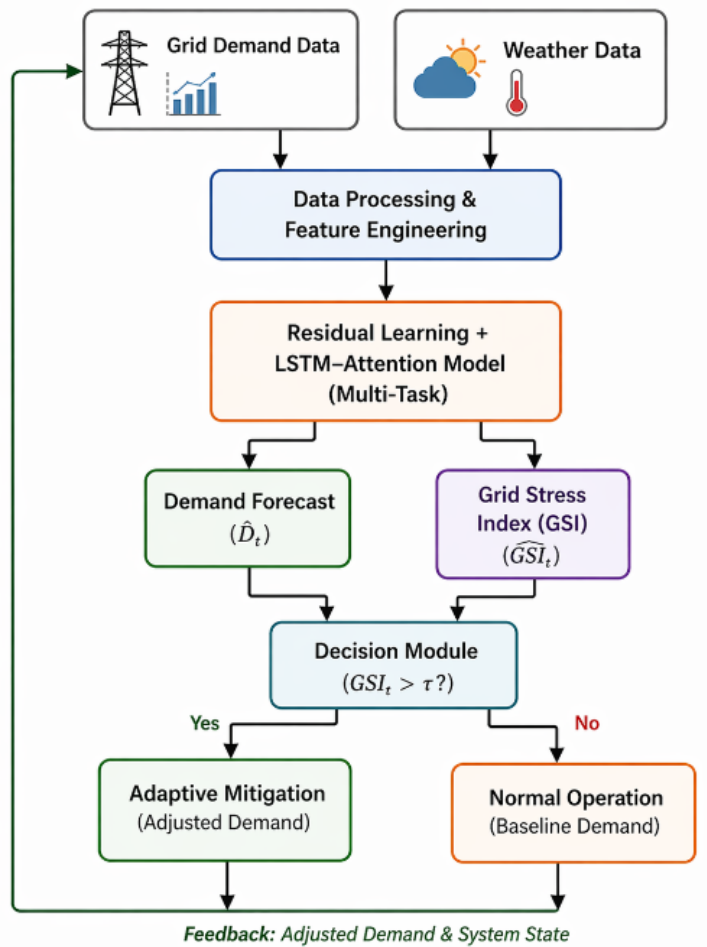
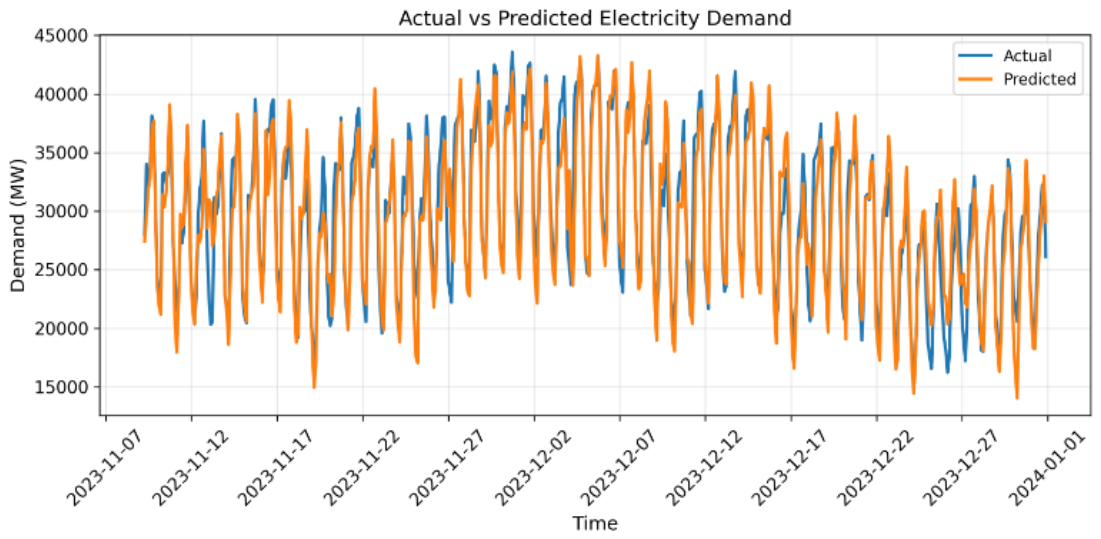
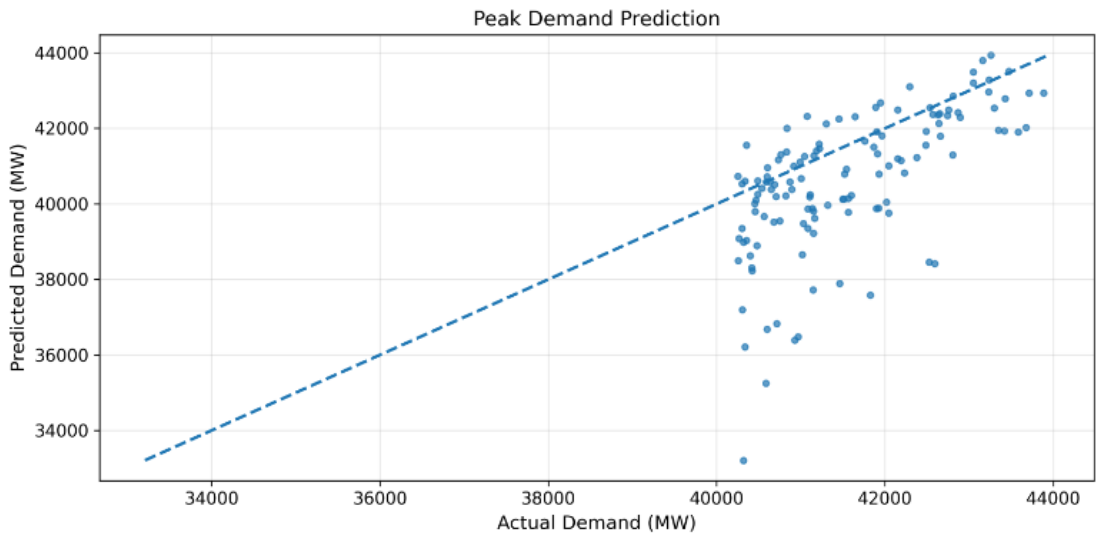
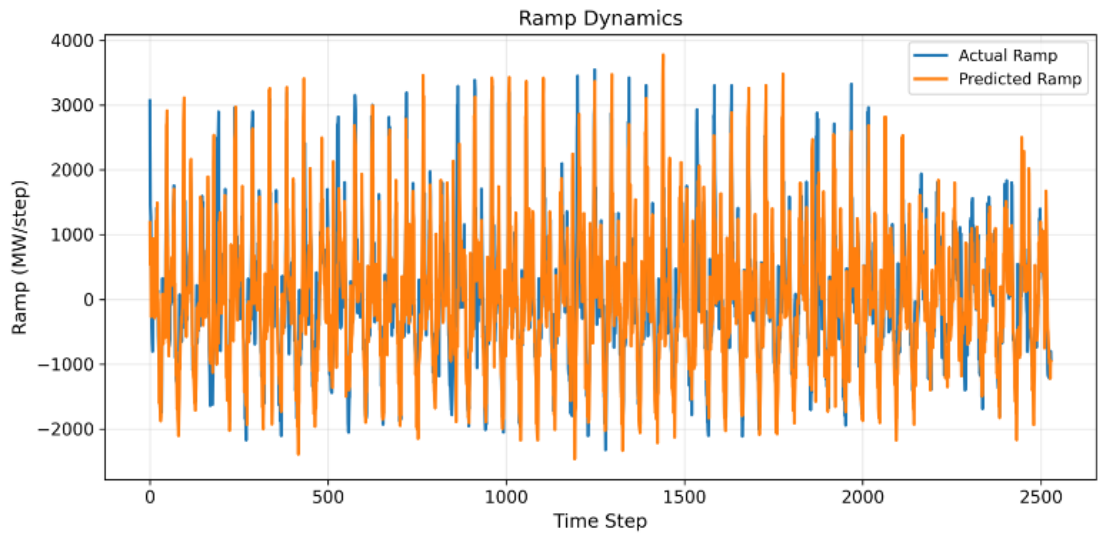
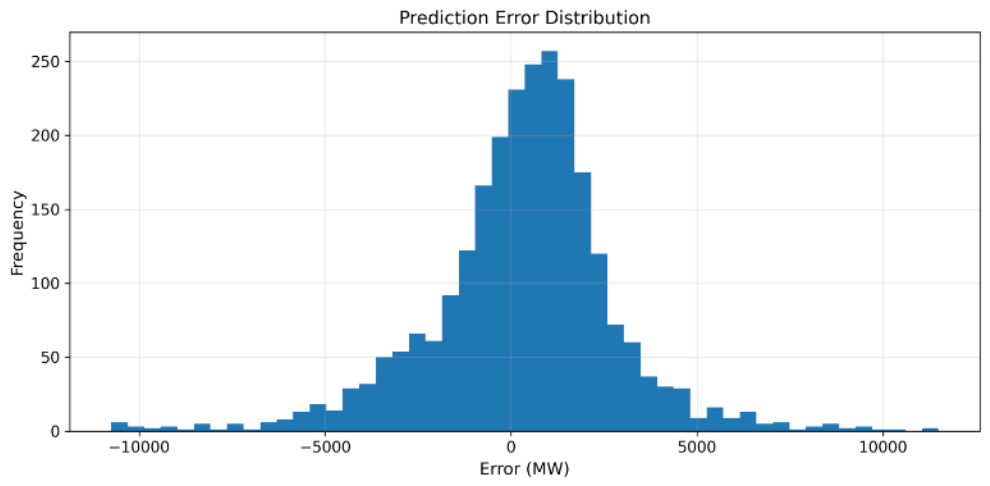
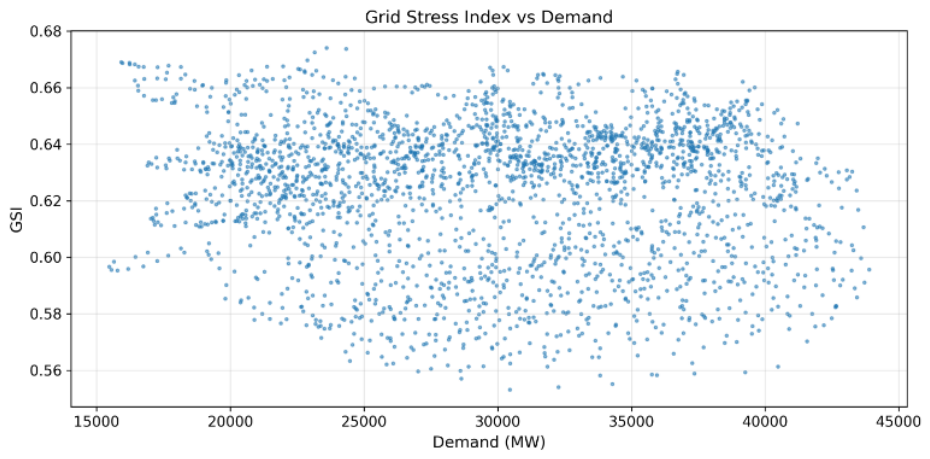
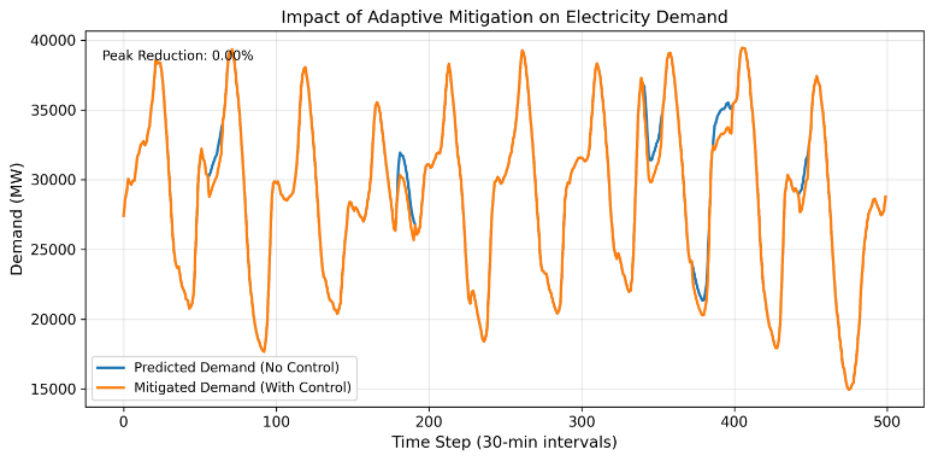
Electricity systems are increasingly exposed to demand variability driven by extreme weather conditions, creating significant challenges for maintaining grid reliability and operational stability. Conventional forecasting approaches focus primarily on prediction accuracy and provide limited support for operational decision-making under dynamic conditions. This study proposes a hybrid deep learning framework for smart grid stress prediction and adaptive mitigation under extreme weather. The framework reformulates demand forecasting using residual learning. It further integrates grid stress modelling with control-oriented decision support. A sequence learning architecture with attention is employed to capture temporal demand dynamics, while a continuous Grid Stress Index (GSI) translates predictions into operational indicators of system stress. The model demonstrates stable performance on real-world UK electricity demand data, achieving a mean absolute error of 1827.51 MW and a root mean squared error of 2505.22 MW. Peak demand and ramp behaviour are captured with improved consistency, and grid stress is predicted with a mean absolute error of 0.1246. An adaptive mitigation module translates predicted stress into actionable control, resulting in approximately 5.37% peak demand reduction, with limited impact on ramp smoothing. The results demonstrate that integrating forecasting, stress modelling, and control delivers greater operational value than standalone predictive models. The proposed framework provides a scalable and practical approach for grid-aware decision support under increasing climate-driven demand uncertainty.
Keywords: electricity demand forecasting; smart grids; predictive control; grid stress assessment; extreme weather; demand response; energy resilience electricity demand forecasting; smart grids; predictive control; grid stress assessment; extreme weather; demand response; energy resilience