
Article

Horizon-Dependent Model Ranking Reversal in Short-Term Load Forecasting: A Controlled Benchmark of Deep Learning Architectures

by
Muhammad Abdullah
,
Muhammad Kamran Ishfaq
*,
Rehan Liaqat
and
Umer Ijaz
Department of Electrical Engineering and Technology, Government College University Faisalabad, Faisalabad 38000, Pakistan
*
Author to whom correspondence should be addressed.
Electricity 2026, 7(3), 106; https://doi.org/10.3390/electricity7030106

Submission received: 1 August 2026 / Revised: 6 September 2026 / Accepted: 12 September 2026 / Published: 14 September 2026

Abstract

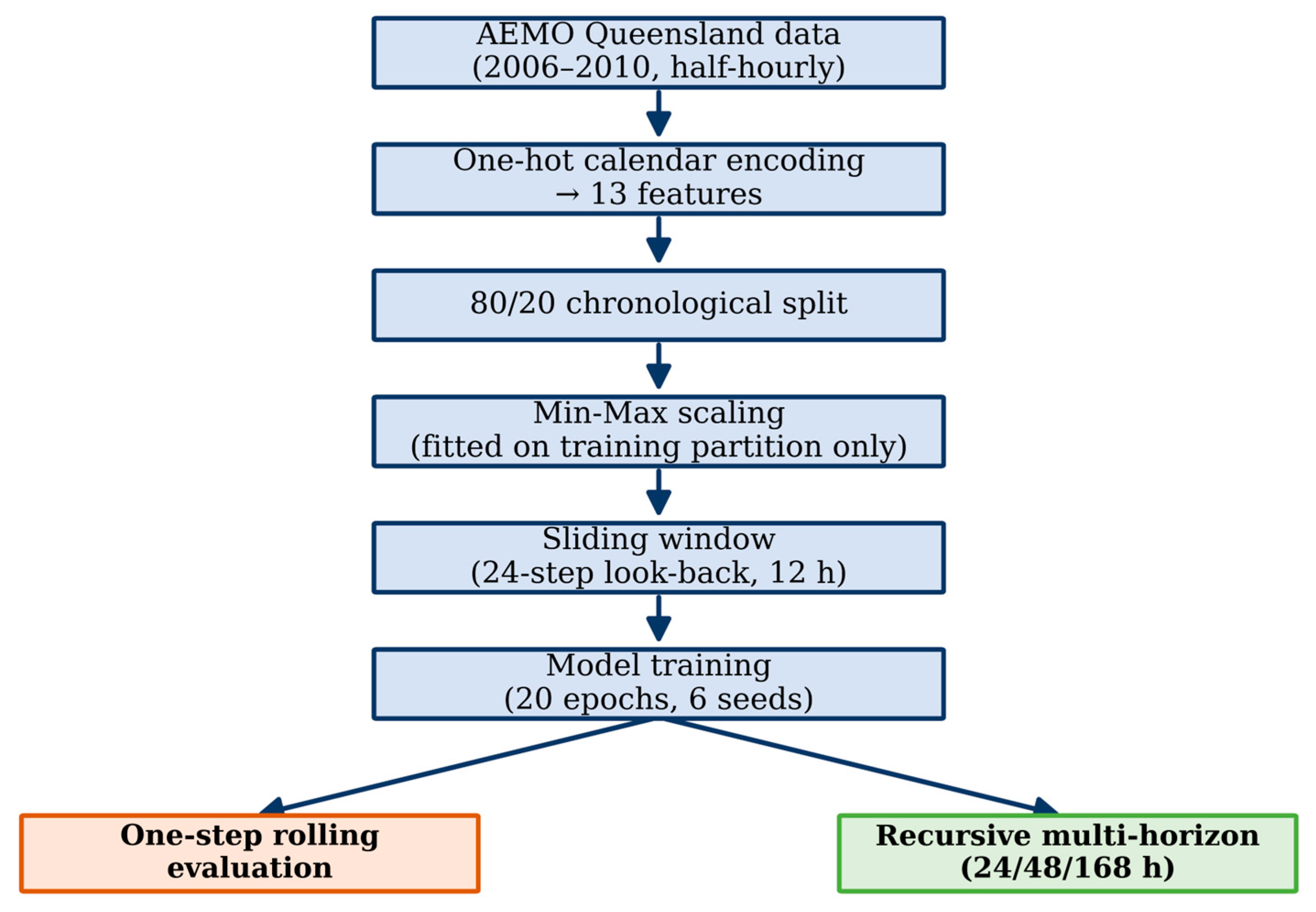
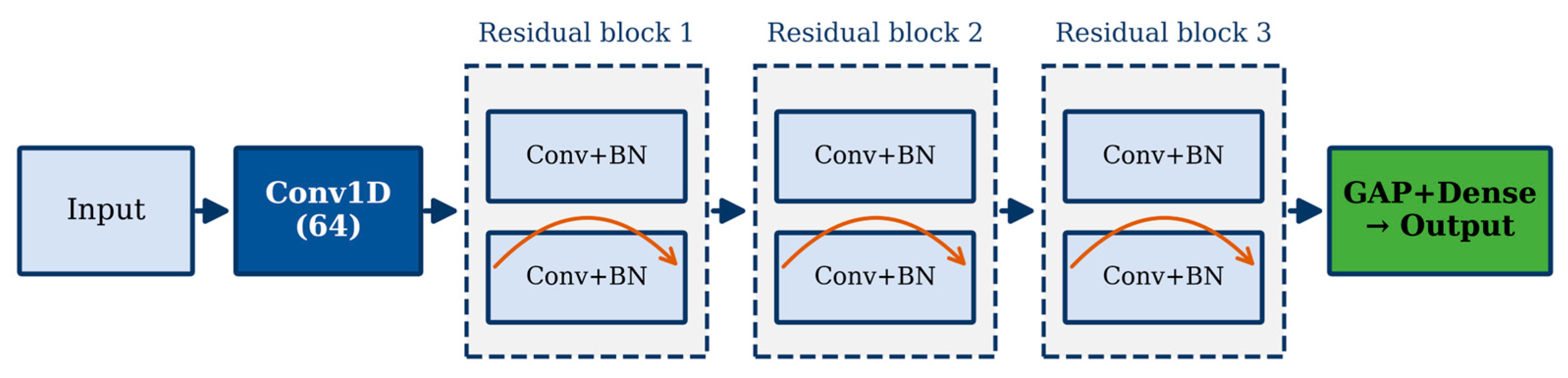
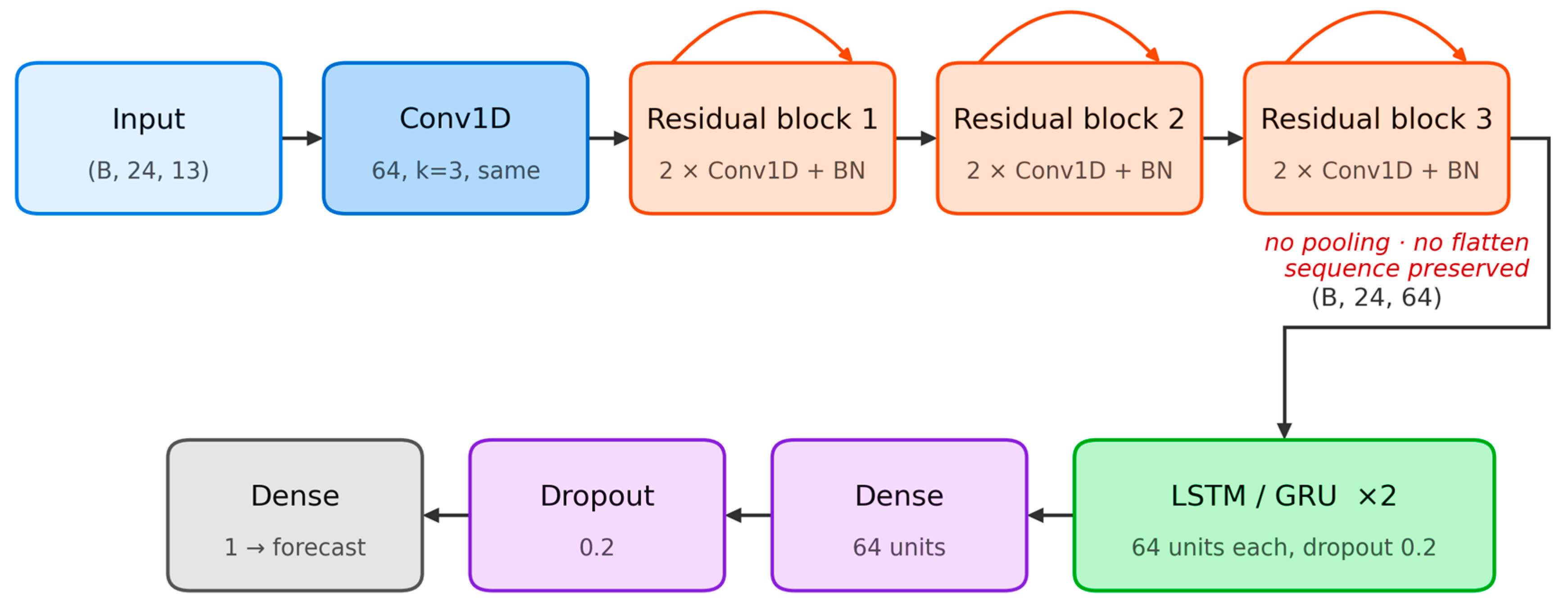
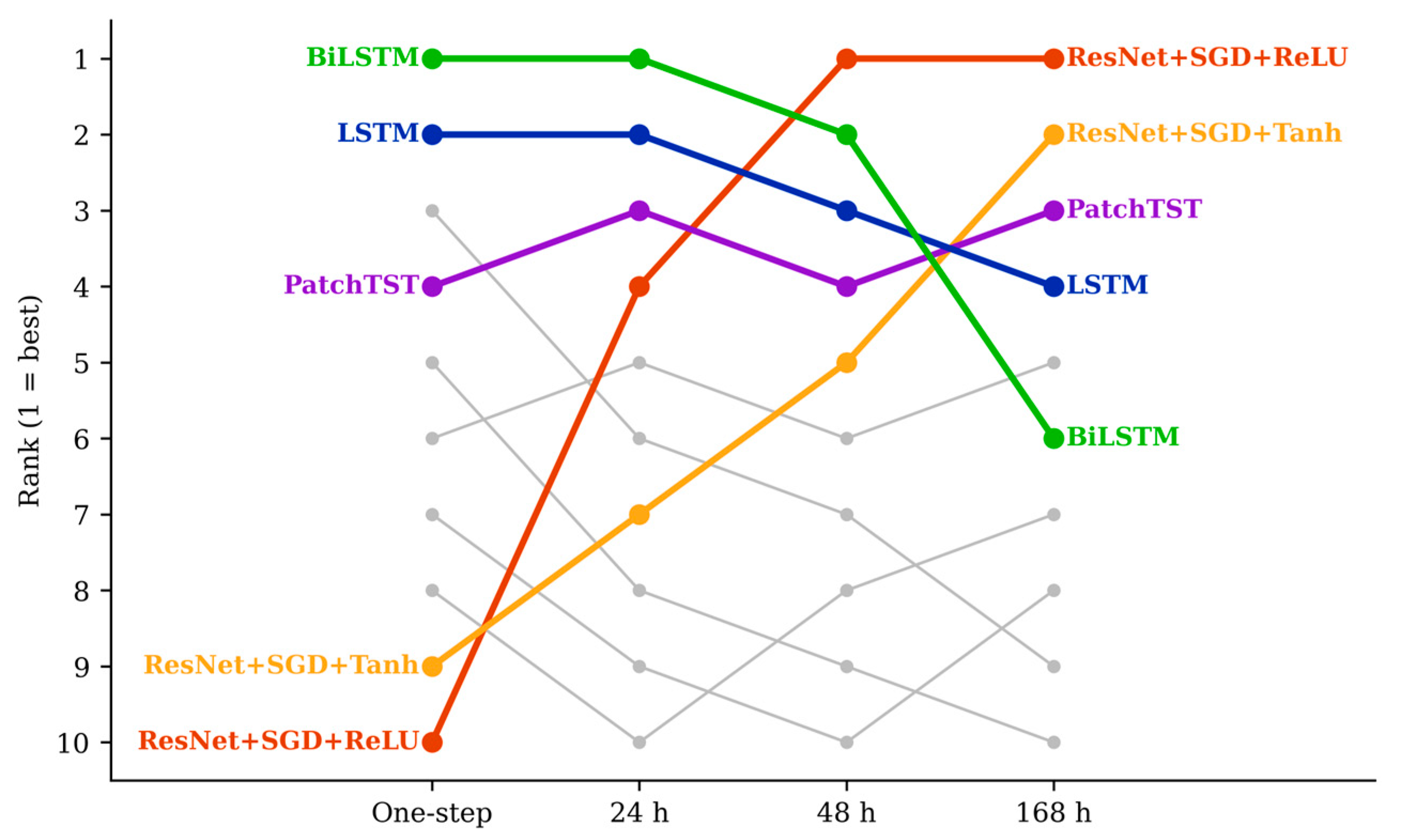
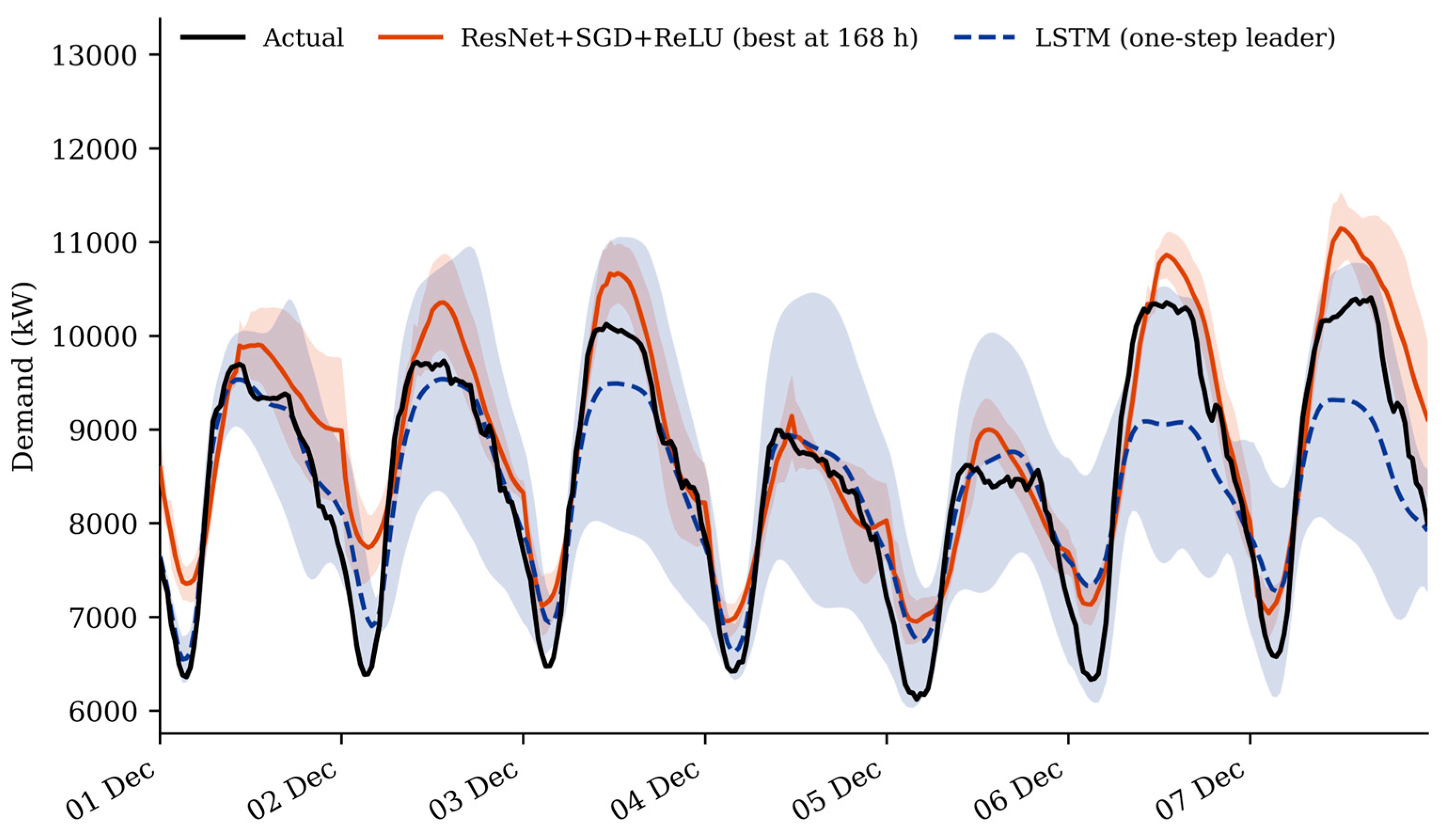
Short-term electricity demand forecasting is essential for power grid stability and generation scheduling. Although forecasting models are commonly evaluated using one-step-ahead predictions, high accuracy at a short horizon does not necessarily imply robust performance when forecasts are recursively extended over longer horizons. This study systematically investigates this issue by evaluating ten deep-learning models: recurrent architectures (LSTM, GRU, and bidirectional LSTM), four ResNet variants with different optimizer–activation configurations, two ResNet-based hybrid models, and the PatchTST Transformer. To ensure a fair assessment, all models are trained and evaluated using identical datasets, experimental settings, and training budgets. Their performance is assessed for one-step-ahead forecasting and recursive multi-horizon forecasting at 24, 48, and 168 h, with each experiment repeated over six independent random seeds. The results reveal a substantial reversal in model ranking as the forecasting horizon increases. For the next single step, the recurrent models are the most accurate, with the lowest mean average percentage error (MAPE), while the ResNet models trained with the SGD optimizer are the weakest. As the horizon extends to 168 h, the ranking reverses, and the two SGD-trained ResNets with ReLU and tanh activation functions rise to first and second rank, respectively, while the three most accurate one-step models fall to 6th, 4th and 9th rank with respect to MAPE. The more complex PatchTST transformer never leads. Therefore, demand forecasting models should be evaluated at the operational forecasting horizon for which they are intended to be deployed rather than selected solely based on one-step accuracy.
Keywords: short-term load forecasting; multi-horizon forecasting; recursive forecasting; LSTM; bidirectional LSTM; GRU; ResNet; PatchTST; optimizer comparison; electricity demand; smart grid short-term load forecasting; multi-horizon forecasting; recursive forecasting; LSTM; bidirectional LSTM; GRU; ResNet; PatchTST; optimizer comparison; electricity demand; smart grid