Article

Actinomycetes-Mediated Decomposition of Chicken Feathers: Effects on Nitrogen Recovery over Time

by
Afia Ibnath Shimki
1,†,
Fahad Al Nur Sajid
2,† and
Zubaer Hosen
3,*
1
Department of Pharmacy, Islamic University, Kushtia 7003, Bangladesh
2
Discipline of Soil, Water and Environment, Khulna University, Khulna 9208, Bangladesh
3
Global Centre for Environmental Remediation, School of Environmental and Life Sciences, The University of Newcastle, Callaghan, NSW 2308, Australia
*
Author to whom correspondence should be addressed.
These authors contributed equally to this work.
Pollutants 2025, 5(4), 47; https://doi.org/10.3390/pollutants5040047 (registering DOI)
Submission received: 5 March 2025 / Revised: 16 June 2025 / Accepted: 17 November 2025 / Published: 1 December 2025

Abstract

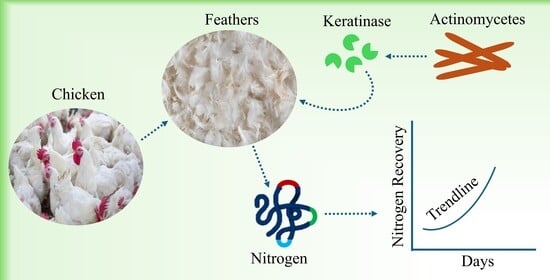
Rapid urbanisation and intensified poultry production have increased chicken feather waste (CFW), posing environmental concerns due to its recalcitrant keratin content. This study aimed to evaluate the potential of Actinomycetes, specifically Streptomyces sp., isolated from peat-rich soils, to degrade CFW and enhance nitrogen recovery. Chicken feathers collected from a slaughterhouse near Khulna University were washed, dried, ground, and inoculated with 2.5 mL of Streptomyces broth in a controlled composting setup. The decomposition process was monitored over eight days, with daily assessments of total and available nitrogen using the Micro-Kjeldahl method. The results demonstrated a significant increase (p ≤ 0.05) in nitrogen content in the Actinomycetes-treated decomposition group compared to the control. The highest total nitrogen content (6.43%) was observed on day 7, while peak available nitrogen (4.04%) occurred on day 8. The percentage of nitrogen recovery through Actinomycetes activity was 86.1%. These findings confirm the keratinolytic efficiency of Streptomyces in degrading feather waste and enhancing nitrogen mineralisation. Although nitrogen release was gradual, the resulting compost presents a viable slow-release organic fertiliser. This bioconversion approach offers an environmentally sustainable solution for poultry waste management and soil nutrient enrichment in agriculture.

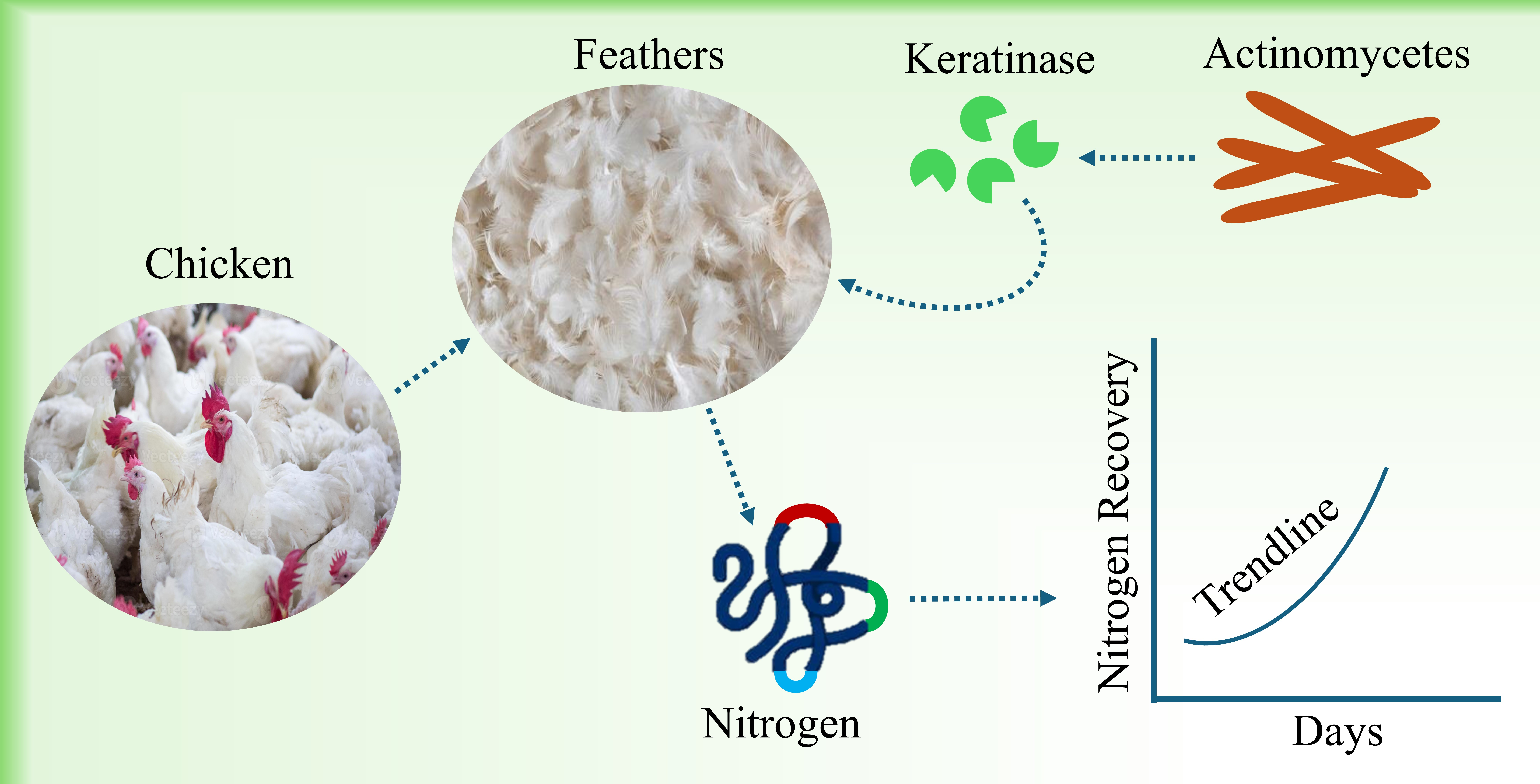
Graphical Abstract

1. Introduction

Global waste production is rising rapidly as a consequence of urbanisation and economic development. By 2050, annual waste generation is projected to reach 3.4 billion metric tonnes, with developed nations contributing a substantial portion [1]. In Bangladesh, commercial chicken production has expanded significantly in recent decades, driven by advances in genetics, formulated feeds, and improved farm management practices. However, this rapid growth in poultry farming has often occurred without adequate consideration of site-specific feasibility or long-term environmental sustainability [2,3]. Chicken farming is a significant and diverse segment of the food sector. Their processing facilities produce large volumes of waste, including feathers, manure, litter, soft tissues, blood, deboning residues, and dead-on-arrival birds [4,5]. These waste products contribute significantly to environmental pollution, affecting water, air, and soil quality [6,7]. Among them, chicken feathers are typically viewed as low-value by-products and contribute notably to the global solid waste burden [8]. With each bird generating up to 125 g of feathers, weekly global feather waste has been estimated at approximately 3000 tonnes [9]. In Bangladesh, industrial-scale feather waste management or valorisation remains largely unestablished, and most feather residues are either landfilled or incinerated, posing additional environmental threats [10]. As poultry production increases, the management of this feather waste becomes ever more urgent. Chicken feather waste (CFW), is particularly difficult to degrade due to its primary structural protein, ‘keratin’, which is chemically inert and physically recalcitrant [11,12]. Conventional recycling approaches, such as converting CFW into low-quality animal feed supplements, are often economically unfeasible [13]. Comprising approximately 8% of an adult chicken’s body weight and up to 90% protein on a dry weight basis, feathers are rich in keratin and amino acids, with nitrogen content typically expressed as a percentage on a dry weight basis [14]. The primary structural component, keratin, is highly resistant to degradation and is stabilised by hydrogen bonds and hydrophobic interactions, making it highly resistant to microbial breakdown [15,16]. Nonetheless, keratinolytic microorganisms capable of producing specialised enzymes, keratinases, offer promising avenues for feather valorisation into nitrogen-rich fertilisers and other bio-based products [13,15,17,18,19,20,21,22].
The superior effectiveness of Actinomycetes in feather degradation is primarily attributed to their production of specialised keratinolytic enzymes, notably keratinases, which catalyse the hydrolysis of the tough keratin protein [20,23]. Keratin’s high stability results from extensive disulphide bonds, hydrogen bonding, and hydrophobic interactions that render it resistant to common proteolytic enzymes. Actinomycetes possess robust enzyme systems capable of cleaving these stabilising bonds, thereby breaking down the keratin matrix into smaller peptides and amino acids [24]. This enzymatic activity not only accelerates feather decomposition but also facilitates nitrogen mineralisation, enhancing nutrient availability in compost [20]. Furthermore, Actinomycetes can thrive under diverse environmental conditions, including alkaline and nutrient-poor soils, enabling efficient feather waste treatment even in resource-limited settings [23,25].
Various bacterial and fungal strains have been identified for their keratinolytic potential. These include Microbacterium spp. [26], Bacillus and Streptomyces among Actinomycetes [27,28], and certain keratinolytic fungi [29]. Actinomycetes, particularly the genus Streptomyces, have shown superior degradation capacity, owing to their robust enzyme systems and ability to thrive under variable environmental conditions [30,31]. Unlike fungal or mixed consortia systems, Actinomycetes are more tolerant to alkaline and nutrient-poor conditions, characteristics commonly found in South Asian soils, including the peat-rich alkaline soils of south-western Bangladesh [32,33]. This ecological adaptability, coupled with their high keratinolytic efficiency, makes Actinomycetes particularly suitable for cost-effective and decentralised waste management strategies in the region. Moreover, thermophilic Actinomycetes strains can utilise feathers as the sole carbon and nitrogen source, enhancing the composting process [28,34]. Feather waste has successfully been transformed into organic fertilisers, containing approximately 15–18% nitrogen and 2–5% sulphur [35,36], while interest has also grown in converting CFW into biofuels [37]. Composting, especially anaerobic composting, presents an environmentally friendly and economically viable method of waste management. It transforms organic matter into stable soil amendments while reducing reliance on synthetic fertilisers, which can degrade soil health over time [38,39,40]. However, the efficiency of composting depends on microbial activity, degradation time, nitrogen mineralisation, and nutrient recovery. While feather compost can potentially enrich agricultural soils with nitrogen, the slow release of nutrients remains a limiting factor for immediate fertiliser use.
Although various studies have explored the microbial degradation of feather waste, many rely on industrial-scale enzyme treatments, extended composting durations, or commercially optimised conditions that may not be feasible in resource-limited settings. Furthermore, limited attention has been given to quantifying nitrogen transformation, particularly both total and available nitrogen, during the rapid biodegradation of CFW under controlled composting conditions using locally sourced, naturally adapted microbial isolates.
Therefore, this study aims to investigate the keratinolytic potential of an indigenous Streptomyces sp. Actinomycete strain isolated from Bangladeshi soil, and to evaluate its capacity for rapid feather degradation and nitrogen recovery. Specifically, we asked, Can a native Actinomycete strain accelerate feather waste decomposition and enhance nitrogen mineralisation within a short composting period? We hypothesised that the selected Streptomyces strain would efficiently degrade feather waste within eight days and produce a nitrogen-rich organic compost suitable for agricultural application.

2. Materials and Methods

2.1. Sample (Chicken Feathers) Collection and Processing

Chicken feather waste was collected from a nearby slaughterhouse at the Gollamari site, near the Khulna University campus, Bangladesh (Figure 1). The feathers were washed under tap water to remove blood, faeces, skin, flesh, and other slaughterhouse residues, then dried at 60 °C for 24 h following the method described by Tesfaye, Sithole [41].
Once completely dried, the feathers were ground to a particle size of approximately <2 mm using a laboratory grinder before use in the degradation experiment. A 0.5 g portion of the ground, dried feathers was then transferred into 27 test tubes for further processing.

2.2. Isolation of Bacteria

Actinomycetes were particularly abundant in alkaline soils rich in peat, which were collected from the vicinity of Khulna University. Keratin-containing materials, such as feathers, are inherently resistant to natural degradation. However, their decomposition can be facilitated through the application of bacteria, particularly Actinomycetes.

2.3. Culture Media Preparation for Microbial Growth

Actinomycetes isolation agar is utilised to isolate and cultivate Actinomycetes from soil samples. The composition of the medium is provided in Table 1. To prepare the medium, 10.35 g of the agar is suspended in 500 mL of distilled water containing 2.5 mL of the designated solvent, followed by heating to boiling to ensure complete dissolution. The prepared medium is then dispensed as required. The most effective sterilisation method is autoclaving, where the medium is exposed to steam at 121 °C and 15 PSI of pressure for 20 min. All procedures were conducted under aseptic conditions using a laminar airflow cabinet to minimise contamination. During incubation, the culture media and broth were maintained at a constant temperature of 30 ± 1 °C, which is optimal for Actinomycetes growth.
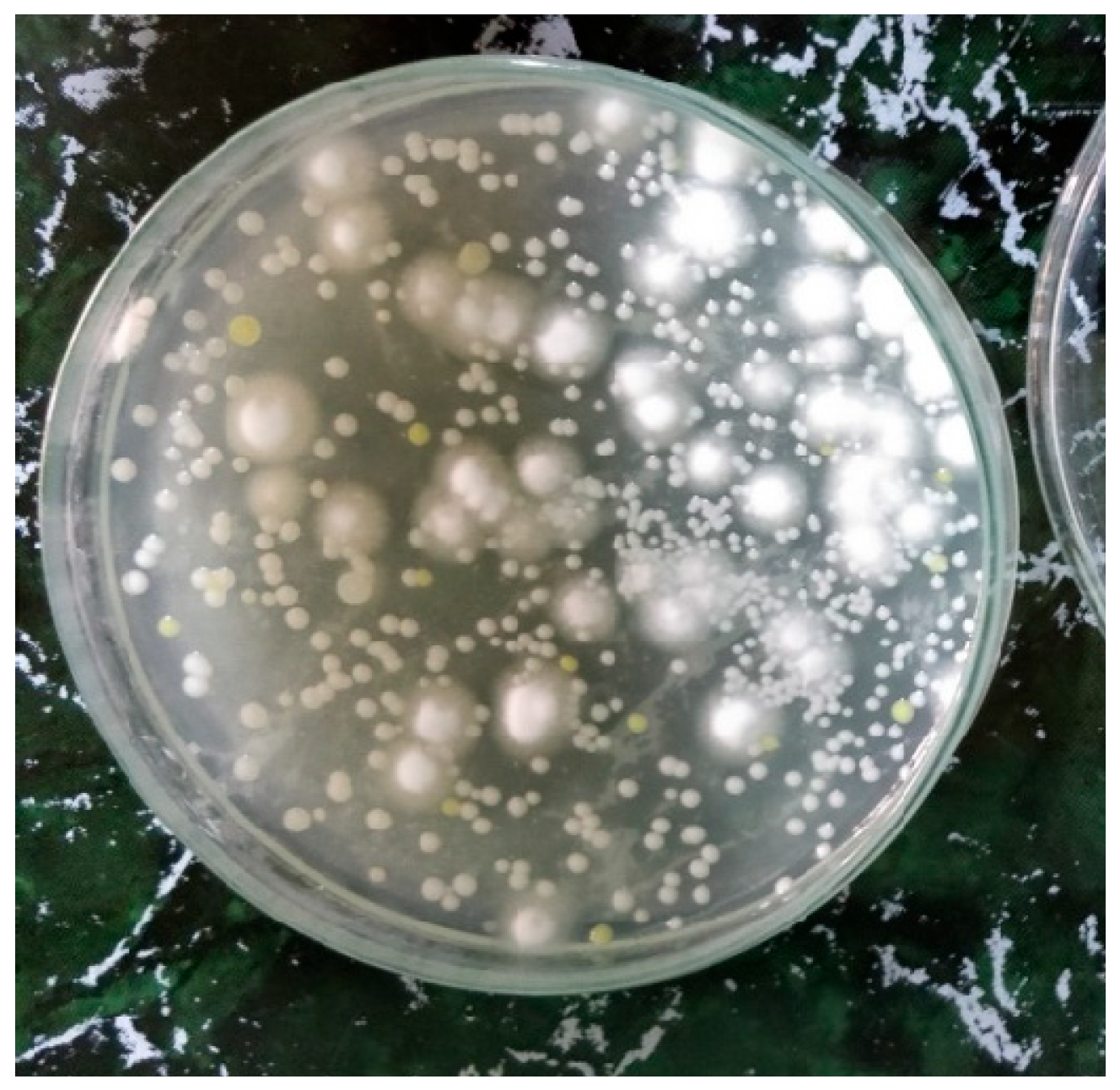
To prepare the inoculum stock, 4.5 g of sodium chloride (NaCl) was dissolved in 500 mL of distilled water and thoroughly mixed. Serial dilution was performed to progressively reduce the concentration of the original inoculum. Initially, 1 g of the soil sample was taken, and dilutions were prepared from 10−2 to 10−9 under a laminar airflow chamber. Subsequently, 1 mL of the serially diluted soil solution from each test tube (10−2 to 10−9) was inoculated onto the respective culture medium in Petri plates. Following inoculation, the Petri plates were incubated at room temperature in an inverted position to prevent contamination and promote the growth of Actinomycetes (Figure 2).
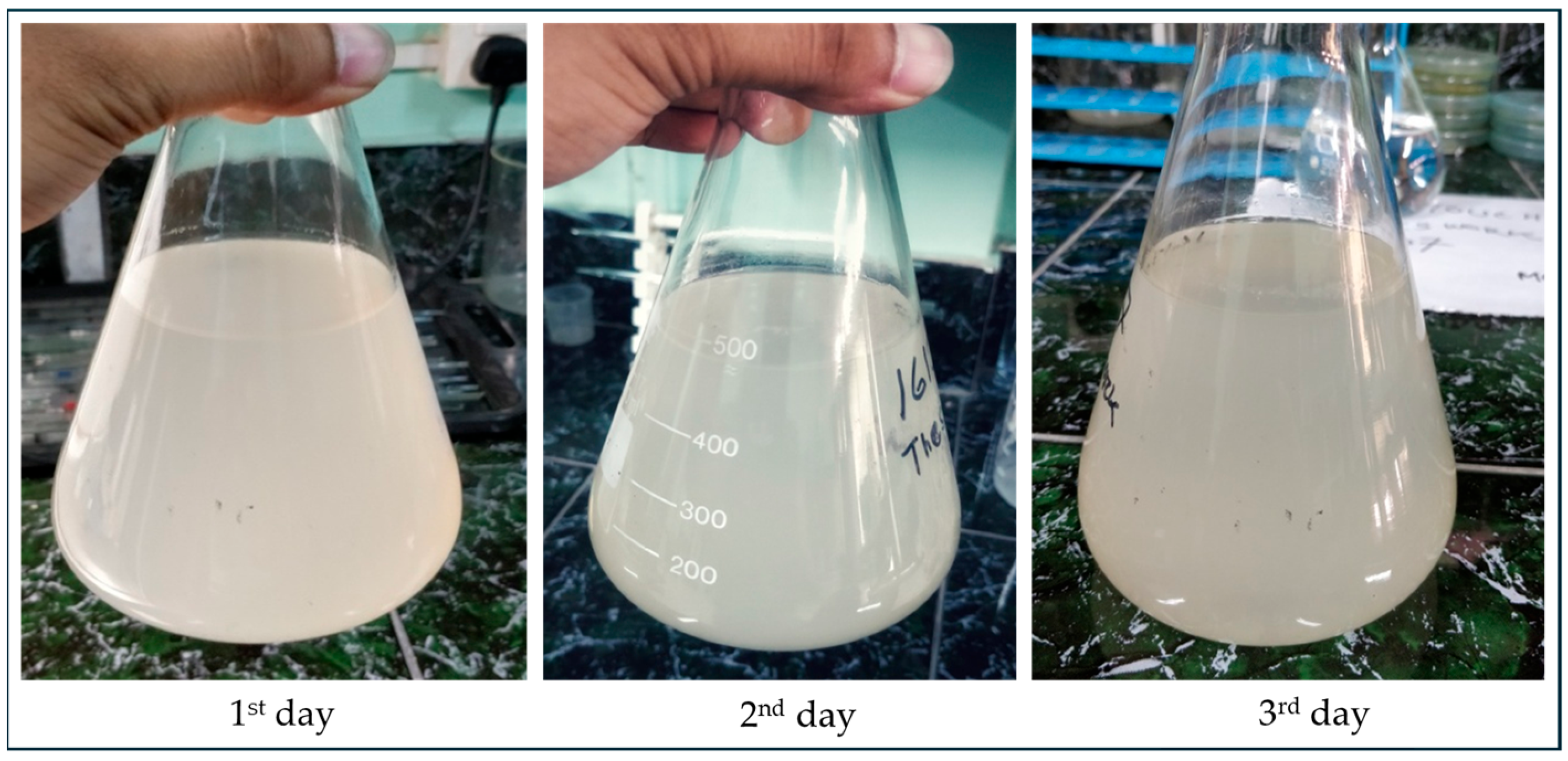
Moreover, a broth culture medium in liquid form was prepared using the same Actinomycetes ingredients, except for agar. The medium was diluted following the same procedure as previously described, as this bacterium was applied to CFW. Subsequently, 1 mL of the solution from the 10−7 diluted medium was transferred into 250 mL of broth culture medium. The inoculated broth was then incubated at room temperature for 72 h. On the first day, no visible changes were observed in the liquid. By the second day, the medium appeared turbid, and on the third day, it became highly turbid, indicating a significant propagation of bacteria (Figure 3).

2.4. Identification of Bacteria

The Petri plate from the 10−7 dilution was selected for bacterial identification, as it contained a colony count within the optimal range (25–300), with 130 colonies observed (Figure 2). The isolates were characterised based on morphological features, including colony shape, pigmentation, texture, and spore formation. Based on these traits, the dominant isolate was tentatively identified as Streptomyces spp. This identification was made in reference to standard morphological characteristics of Actinomycetes described in previous literature [42].
It should be noted that no biochemical or molecular confirmation was performed in this study. Therefore, the identification remains presumptive, and further verification through 16S rRNA sequencing is recommended in future investigations.

2.5. Experimental Setup and Procedures

Approximately 2.5 mL of Actinomycetes bacteria were applied to each of the three replicates in 0.5 g of ground feathers across 24 test tube samples. After three days, the first set of replicates was opened to assess the degradation status and bacterial survival. For the control group, 0.5 g of ground feathers was mixed with distilled water in three replicates, without the addition of Actinomycetes. Compost samples were collected from three test tubes per day. The samples were then weighed and divided into two equal portions. This experiment, conducted over eight days, analysed the decomposition rate at regular intervals. One portion of the sample was used to measure total nitrogen content, while the other was analysed for available nitrogen. To prevent contamination, all steps were carried out under aseptic conditions, following the protocol outlined in Section 2.3. Moreover, to ensure reproducibility and minimise experimental bias, the study was conducted using 24 test tubes. Each treatment group included three biological replicates, assessed over eight composting time points (days 1 to 8). For each time point, samples were collected from three test tubes inoculated with Actinomycetes broth. The control treatments consisted of sterile controls: ground feathers sterilised by autoclaving and mixed with an equal volume of sterile distilled water, without bacterial inoculation. These controls were also maintained in triplicate. This design enabled comparison between inoculated and uninoculated samples under identical conditions. While the study employed biological replicates and sterile controls, the small-scale setup may not fully capture the variability present in field conditions. Further investigations using larger-scale composting systems and multiple environmental conditions could enhance the generalisability of the findings.

2.6. Estimation of Nitrogen

The total nitrogen content in the composted feathers was determined using the Micro-Kjeldahl method, following H2SO4 acid digestion and steam distillation, as described by chemists [43]. Approximately 0.2 g of oven-dried and ground compost was digested with 5 mL of concentrated sulphuric acid (H2SO4) in the presence of a catalyst mixture containing potassium sulphate, copper sulphate, and selenium (K2SO4:CuSO4:Se = 100:10:1 w/w). Digestion was conducted in a Kjeldahl flask at 360 °C for approximately 3 h, or until the solution turned clear, indicating complete breakdown of organic matter. The digested samples were cooled and diluted with distilled water before steam distillation using 40% NaOH. The released ammonia was trapped in a 4% boric acid solution containing mixed indicators and titrated with 0.01 N HCl to determine the total nitrogen content. Another portion of the compost was dried in an oven at 65 °C and then ground using a mortar and pestle. The available nitrogen content was subsequently measured using the Micro-Kjeldahl method, following steam distillation with 10% NaOH, as outlined by Sáez-Plaza, Navas [44]. For available nitrogen, 1.0 g of compost was extracted with 2 M KCl, filtered, and the filtrate was distilled and titrated following the same procedure described above. The measurement of total nitrogen and available nitrogen content in compost includes both organic and inorganic forms of nitrogen. The presence of nutrients in feather compost, along with the chemical transformations occurring during the composting process, plays a crucial role in nutrient availability. Nutrient extraction is one of the most widely used strategies for managing waste efficiently, facilitating the conversion of organic matter into a more usable form [45,46,47]. All nitrogen content values reported in this study represent percentages (%) on a dry weight basis.
Prior to nitrogen analysis, each composted feather sample was oven-dried at 65 °C until a constant weight was achieved, then finely ground using a mortar and pestle. The powdered samples were passed through a 0.5 mm sieve to ensure uniformity. As the microbial inoculum was part of the overall compost matrix, no further filtering was performed. The homogenised material was used directly for total and available nitrogen analysis. To ensure accuracy and reliability, all analyses were performed in triplicate. Calibration curves were established using certified urea standards, and blanks were run with each batch of samples. Quality control included the use of standard reference materials and periodic checks of equipment precision. The coefficient of variation for triplicates was maintained below 5%, ensuring analytical consistency.

2.7. Statistical Analysis

Data were analysed statistically using Microsoft Excel 2015 for graphical presentations. For data analysis, the statistical software Minitab 17 was used, following the analysis of variance (ANOVA) technique. Mean differences were evaluated using Fisher’s significance test, as described by Gomez and Gomez [48]. Prior to conducting ANOVA, data were tested for normality using the Shapiro–Wilk test and for homogeneity of variances using Levene’s test. Both assumptions were satisfied for the total and available nitrogen datasets. All p-values reported are two-tailed, with significance set at p ≤ 0.05.

3. Experiment Outcomes

3.1. Effects of Composting Time on Total N (%) Content in CFW Compost

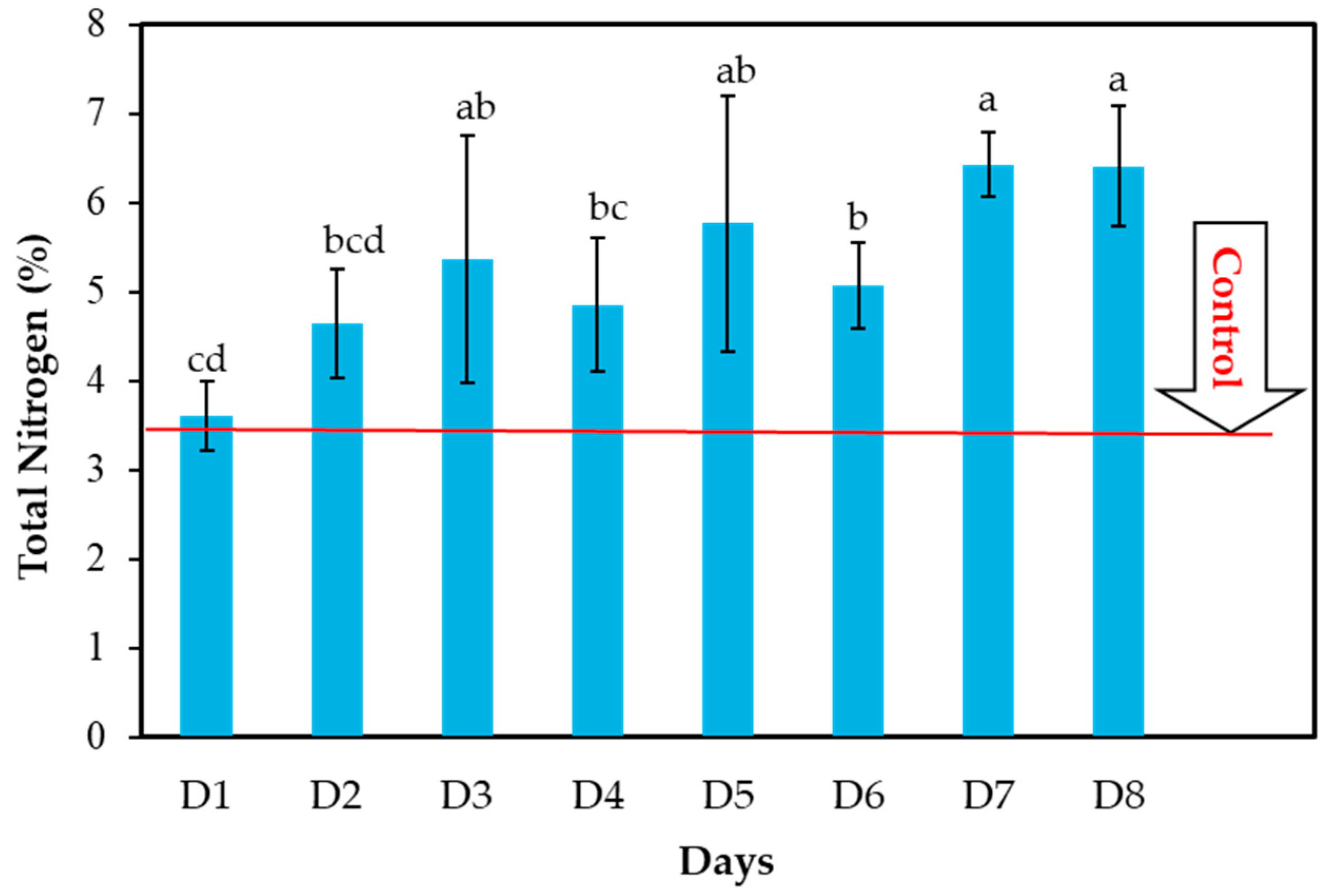
Figure 4 illustrates the effects of decomposing time on total N (%) content of CFW, expressed on a dry weight basis. The total nitrogen percentage in CFW increased following the application of Actinomycetes across all treatments at a uniform concentration of 2.5 mL compared to the control. Among the different time points, the highest nitrogen percentage (6.43%) was observed on day 7 (D7) with 2.5 mL of Actinomycetes broth, while the lowest (3.60%) was recorded on day 1 (D1) under the same treatment. In this case, the nitrogen percentage significantly increased (p ≤ 0.05) under D7 compared to the control. Additionally, Table 2 shows the percentages of the total nitrogen increase over the control.

3.2. Effects of Composting Time on Available N (%) Content in CFW Compost

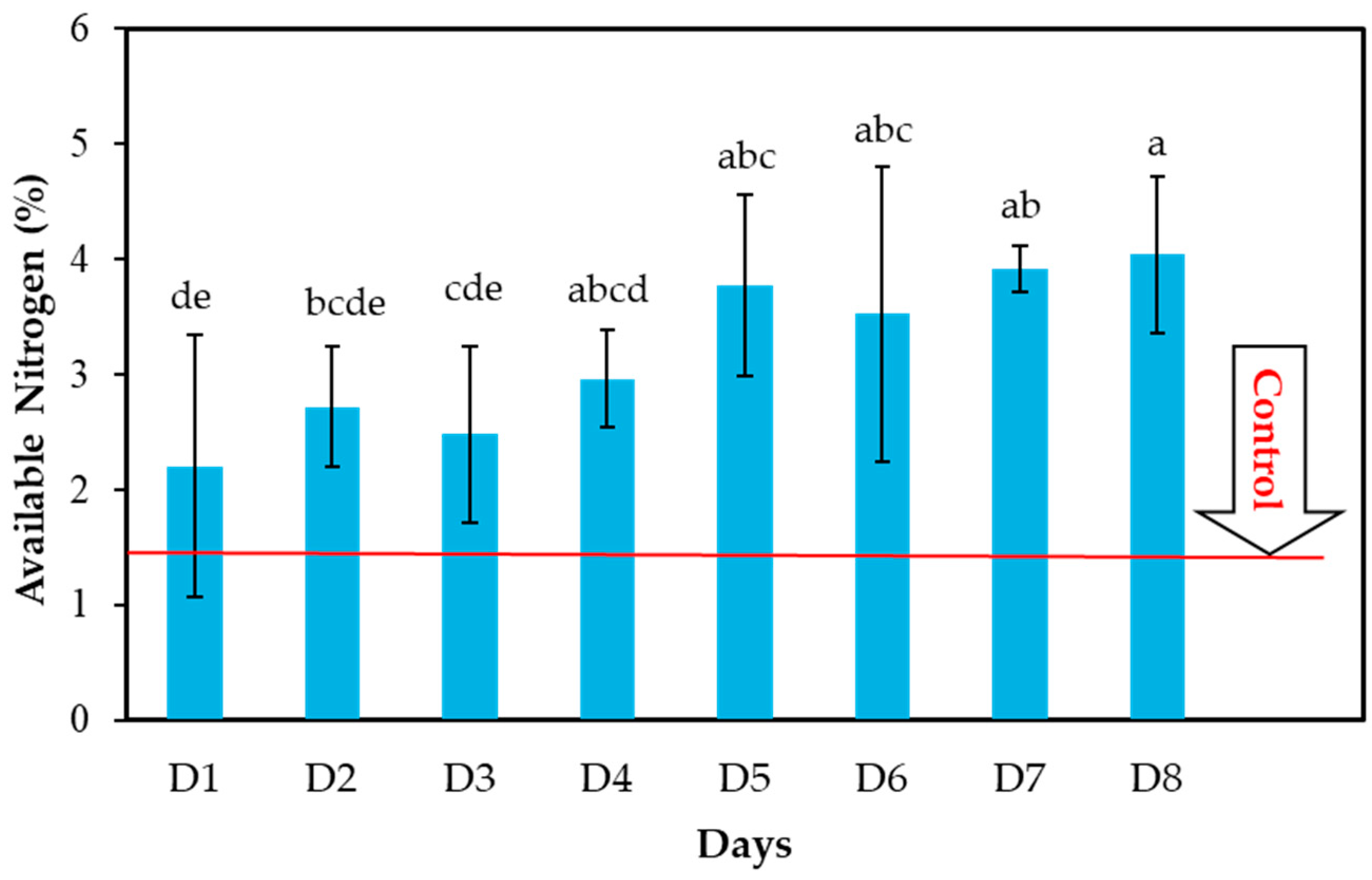
The available nitrogen percentage in CFW (dry weight basis) increased following the application of Actinomycetes across all treatments at the same concentration of 2.5 mL, compared to the control (Figure 5). Among the different time points, the highest available nitrogen percentage (4.04%) was observed on day 8 (D8) with 2.5 mL of Actinomycetes broth, while the lowest (2.21%) was recorded on day 1 (D1) under the same treatment. In this case, the available nitrogen percentage significantly (p ≤ 0.05) increased on D8 compared to the control. Here, the percentages of the available nitrogen increase over the control are shown in Table 3.

4. Discussion

The results indicate that the highest total nitrogen (N) recovery was observed in CFW under D7 (6.43%), which was significantly higher than the control (3.46%). Notably, all applied treatments exhibited higher nitrogen content compared to the control. As shown in Figure 4, total nitrogen varied significantly over the decomposition period, likely due to the enzymatic activities of Actinomycetes bacteria. Similar observations have been reported [49,50], who studied Actinomycetes for their keratinolytic activity. Previous studies have documented that feather compost contains approximately 13-15% total nitrogen on a dry weight basis [35,51]. This is primarily attributed to the high keratin content in feathers, which can only be degraded by keratinolytic microorganisms in natural settings [52]. The results further show that the highest available nitrogen (N) was recovered from CFW under D8 (4.04%), which was significantly greater than the control (1.42%). As illustrated in Figure 5, available nitrogen also varied significantly over the decomposition period due to the activities of Actinomycetes. These findings suggest that Actinomycetes play a vital role in nitrogen mineralization, particularly in the first 1–8 days of decomposition. Based on the initial feather nitrogen content and final compost nitrogen levels, the nitrogen recovery rate over the 8-day composting period was estimated at approximately 86.1%, indicating a high degree of nitrogen retention and transformation facilitated by Actinomycetes activity.
Despite the increase in available nitrogen, the release rate from feathers was slow, limiting its potential as an immediate fertiliser. Similarly, Sobucki, Ramos [53] found that while feather-derived nitrogen contributes to slow-release fertiliser potential, it is not sufficient for immediate agricultural use. This slow-release characteristic could be beneficial in controlled agricultural applications where prolonged nitrogen availability is desirable. Other treatments exhibited lower total and available nitrogen levels over time, with significant variations among them. Some nitrogen losses were likely due to volatilization into the atmosphere, a phenomenon that has been previously reported [54,55,56]. These researchers identified ammonia volatilization and nitrate denitrification as key contributors to nitrogen losses during decomposition. Both total and available nitrogen concentrations were lower in the control and D1 treatments, possibly due to insufficient Actinomycetes growth or contamination with non-keratinolytic microbes. Similar trends have been reported [57,58] who further emphasises the importance of microbial composition in nitrogen recovery from organic waste.
Overall, these findings highlight the effectiveness of Actinomycetes in nitrogen mineralization from feather waste. While D7 was the most effective treatment for total nitrogen recovery, D8 exhibited the highest available nitrogen content. The study highlights the potential of Actinomycetes-driven decomposition in enhancing nitrogen availability but also suggests that additional strategies, such as optimising microbial consortia or integrating complementary organic amendments, may be required to improve nitrogen retention and release efficiency. However, this study has certain limitations. The first limitation of this study is the lack of molecular confirmation of the Actinomycetes strain. While morphological identification provided preliminary classification, future work should include genetic sequencing to confirm the taxonomic identity and assess functional genes related to keratin degradation.
Moreover, the experiments were conducted under controlled laboratory conditions and may not fully represent field-scale or heterogeneous composting environments. Additionally, only one Actinomycete strain was tested, and its comparative efficacy against other microbial consortia remains unexplored. The focus on short-term nitrogen recovery, while valuable, did not include other critical parameters such as phosphorus transformation, microbial succession, or long-term compost maturity. Future research should explore the integration of Actinomycetes with complementary microbial strains to enhance keratin degradation and nutrient release, examine the scalability of this approach in diverse agroecological contexts, and investigate the long-term effects of feather compost on crop productivity and soil health.
From a socio-economic perspective, the valorisation of chicken feather waste using locally isolated Actinomycetes could offer a low-cost and sustainable waste management solution for developing countries like Bangladesh. The use of indigenous strains eliminates the need for expensive commercial enzymes or imported microbial inocula, thereby reducing input costs. Furthermore, decentralised composting initiatives, especially in peri-urban or rural poultry-producing regions, could generate income opportunities for smallholder farmers and waste workers. The resulting nitrogen-rich compost may reduce dependency on synthetic fertilisers, contributing to soil health and sustainable agriculture. Nonetheless, an economic feasibility assessment, considering labour, infrastructure, and market access, is necessary to support the adoption of this technology on a broader scale.

5. Conclusions

Over the past decade, the increasing generation of CFW from poultry farming has attracted significant technological interest among researchers, particularly in terms of its treatment and potential applications. Biodegradation processes with the greatest global impact utilise the pure bacterial strain Streptomyces sp., which was originally isolated from peat soil in Khulna, Bangladesh. This study has verified that treating CFW with Actinomycetes strains under anaerobic decomposition conditions results in optimal degradation efficiency, achieving complete decomposition within 1 to 8 days. Actinomycetes exhibit keratinolytic protease activity, producing maximum enzyme levels in media where feathers serve as the sole nitrogen source. Chemical analysis confirmed that the bacterial activity in chicken feather compost facilitates the complete biological breakdown of waste within eight days, significantly increasing nitrogen content over time. However, nitrogen release from feathers occurs too slowly for immediate use as a fertiliser, limiting its role in addressing soil nutrient deficiencies. Nevertheless, nutrient-rich residues from feather composting, particularly nitrogen, can be effectively utilised for agricultural crops. Once applied to soil, these nutrients transition into more stable organic forms, making them biologically and chemically available for long-term soil enrichment. This method not only provides a cost-effective and environmentally sustainable approach to recycling chicken feathers but also helps mitigate the pollution issues associated with feather waste.
Future research should investigate the optimisation of composting conditions, such as microbial consortia, moisture control, and pH regulation, to enhance nitrogen mineralisation rates. Additionally, field-scale trials are recommended to assess the agronomic effectiveness of the composted product across different soil types and cropping systems. From a practical standpoint, decentralised, low-cost composting facilities incorporating indigenous Actinomycetes strains could be established in poultry-producing regions of Bangladesh to promote circular waste management and reduce environmental burdens. However, the introduction of specific Actinomycetes strains into new environments may carry ecological risks, such as disruption of native microbial communities or unintended effects on soil health. While the strain used in this study was isolated locally, any broader application should involve thorough risk assessments and regulatory oversight to ensure biosafety. Careful consideration must be given to environmental compatibility, especially when scaling the application beyond its native habitat or under varying soil and climatic conditions.

Author Contributions

A.I.S.: Conceptualization, Data curation, Writing—original draft, review and editing, Visualisation. F.A.N.S.: Conceptualization, Data curation, Writing—original draft, review and editing, Visualisation. Z.H.: Conceptualization, Writing—review and editing, Overall Supervision. All authors have read and agreed to the published version of the manuscript.

Funding

This research received no external funding.

Data Availability Statement

All raw data for this study are available upon request.

Acknowledgments

We sincerely express our gratitude to the Discipline of Soil Science, Khulna University, Khulna, Bangladesh, for providing laboratory facilities and necessary chemicals. Additionally, we extend our appreciation to the owner of the local slaughterhouse for their valuable support.

Conflicts of Interest

The authors declare no conflicts of interest.

References

  1. Bakari, R.; Asha, R.; Hossein, M.; Huang, X.; Islam, N.; Liew, R.K.; Narayan, M.; Lam, S.S.; Sarma, H. Converting Food Waste to Biofuel: A Sustainable Energy Solution for Sub-Saharan Africa. Sustain. Chem. Environ. 2024, 7, 100126. [Google Scholar] [CrossRef]
  2. Alam, M.J.; Begum, I.A.; Al Mamun, A.; Iqbal, A.; McKenzie, A.M. The adoption of biosecurity measures and its influencing factors in Bangladeshi layer farms. Discov. Sustain. 2025, 6, 29. [Google Scholar] [CrossRef]
  3. Imam, T.; Gibson, J.S.; Foysal, M.; Das, S.B.; Das Gupta, S.; Fournié, G.; Hoque, A.; Henning, J. A Cross-Sectional Study of Antimicrobial Usage on Commercial Broiler and Layer Chicken Farms in Bangladesh. Front. Vet. Sci. 2020, 7, 576113. [Google Scholar] [CrossRef]
  4. Seidavi, A.R.; Zaker-Esteghamati, H.; Scanes, C.G. Chicken processing: Impact, co-products and potential. World’s Poult. Sci. J. 2019, 75, 55–67. [Google Scholar] [CrossRef]
  5. Karuppannan, S.K.; Dowlath, M.J.H.; Raiyaan, G.D.; Rajadesingu, S.; Arunachalam, K.D. Application of poultry industry waste in producing value-added products—A review. In Concepts of Advanced Zero Waste Tools; Elsevier: Amsterdam, The Netherlands, 2021; pp. 91–121. [Google Scholar]
  6. Gupta, S.; Sharma, S.; Aich, A.; Verma, A.K.; Bhuyar, P.; Nadda, A.K.; Mulla, S.I.; Kalia, S. Chicken Feather Waste Hydrolysate as a Potential Biofertilizer for Environmental Sustainability in Organic Agriculture Management. Waste Biomass Valori. 2023, 14, 2783–2799. [Google Scholar] [CrossRef]
  7. Grzinic, G.; Piotrowicz-Cieślak, A.; Klimkowicz-Pawlas, A.; Górny, R.L.; Ławniczek-Wałczyk, A.; Piechowicz, L.; Olkowska, E.; Potrykus, M.; Tankiewicz, M.; Krupka, M.; et al. Intensive poultry farming: A review of the impact on the environment and human health. Sci. Total Environ 2023, 858 Pt 3, 160014. [Google Scholar] [CrossRef]
  8. Casadesús, M.; Álvarez, M.D.; Garrido, N.; Molins, G.; Macanás, J.; Colom, X.; Cañavate, J.; Carrillo, F. Environmental impact assessment of sound absorbing nonwovens based on chicken feathers waste. Resour. Conserv. Recycl. 2019, 149, 489–499. [Google Scholar] [CrossRef]
  9. Aradoaei, S.; Constantin, M.A.; Constantin, L.A.; Aradoaei, M.; Ciobanu, R.C. A Sustainability Study upon Manufacturing Thermoplastic Building Materials by Integrating Chicken Feather Fibers with Plastic Waste. Sustainability 2024, 16, 9243. [Google Scholar] [CrossRef]
  10. Rahman, M.; Hassan, A.; Hossain, I.; Jahangir, M.; Chowdhury, E.; Parvin, R. Current state of poultry waste management practices in Bangladesh, environmental concerns, and future recommendations. J. Adv. Vet. Anim. Res. 2022, 9, 490–500. [Google Scholar] [CrossRef] [PubMed]
  11. Ferro, V.R.; Leiva, H.; Cadena, E.; Valverde, J.L. Multiscale Conceptual Design of a Scalable and Sustainable Process to Dissolve and Regenerate Keratin from Chicken Feathers. Ind. Eng. Chem. Res. 2023, 62, 13324–13339. [Google Scholar] [CrossRef]
  12. Srivastava, B.; Khatri, M.; Singh, G.; Arya, S.K. Microbial keratinases: An overview of biochemical characterization and its eco-friendly approach for industrial applications. J. Clean. Prod. 2020, 252, 119847. [Google Scholar] [CrossRef]
  13. Bhari, R.; Kaur, M.; Sarup Singh, R. Chicken Feather Waste Hydrolysate as a Superior Biofertilizer in Agroindustry. Curr. Microbiol. 2021, 78, 2212–2230. [Google Scholar] [CrossRef]
  14. Garrido, T.; Leceta, I.; de la Caba, K.; Guerrero, P. Chicken feathers as a natural source of sulphur to develop sustainable protein films with enhanced properties. Int. J. Biol. Macromol. 2018, 106, 523–531. [Google Scholar] [CrossRef] [PubMed]
  15. Qiu, J.; Wilkens, C.; Barrett, K.; Meyer, A.S. Microbial enzymes catalyzing keratin degradation: Classification, structure, function. Biotechnol. Adv. 2020, 44, 107607. [Google Scholar] [CrossRef] [PubMed]
  16. Călin, M.; Constantinescu-Aruxandei, D.; Alexandrescu, E.; Răut, I.; Doni, M.B.; Arsene, M.-L.; Oancea, F.; Jecu, L.; Lazăr, V. Degradation of keratin substrates by keratinolytic fungi. Electron. J. Biotechnol. 2017, 28, 101–112. [Google Scholar] [CrossRef]
  17. Li, Q. Perspectives on Converting Keratin-Containing Wastes Into Biofertilizers for Sustainable Agriculture. Front. Microbiol. 2022, 13, 918262. [Google Scholar] [CrossRef]
  18. Shavandi, A.; Silva, T.H.; Bekhit, A.A.; Bekhit, A.E.-D.A. Keratin: Dissolution, extraction and biomedical application. Biomater. Sci. 2017, 5, 1699–1735. [Google Scholar] [CrossRef]
  19. Chilakamarry, C.R.; Mahmood, S.; Saffe, S.N.B.M.; Bin Arifin, M.A.; Gupta, A.; Sikkandar, M.Y.; Begum, S.S.; Narasaiah, B. Extraction and application of keratin from natural resources: A review. 3 Biotech 2021, 11, 220. [Google Scholar] [CrossRef]
  20. Anbesaw, M.S. Bioconversion of Keratin Wastes Using Keratinolytic Microorganisms to Generate Value-Added Products. Int. J. Biomater. 2022, 2022, 2048031. [Google Scholar] [CrossRef]
  21. Adelere, I.A.; Lateef, A. Degradation of keratin biomass by different microorganisms. In Keratin as a Protein Biopolymer: Extraction from Waste Biomass and Applications; Springer: Berlin/Heidelberg, Germany, 2019; pp. 123–162. [Google Scholar]
  22. Sypka, M.; Jodlowska, I.; Bialkowska, A.M. Keratinases as Versatile Enzymatic Tools for Sustainable Development. Biomolecules 2021, 11, 1900. [Google Scholar] [CrossRef]
  23. Ben Elhoul, M.; Jaouadi, N.Z.; Rekik, H.; Benmrad, M.O.; Mechri, S.; Moujehed, E.; Kourdali, S.; El Hattab, M.; Badis, A.; Bejar, S.; et al. Biochemical and molecular characterization of new keratinoytic protease from Actinomadura viridilutea DZ50. Int. J. Biol. Macromol. 2016, 92, 299–315. [Google Scholar] [CrossRef]
  24. Ignatova, Z.; Gousterova, A.; Spassov, G.; Nedkov, P. Isolation and partial characterisation of extracellular keratinase from a wool degrading thermophilic actinomycete strain Thermoactinomyces candidus. Can. J. Microbiol. 1999, 45, 217–222. [Google Scholar] [CrossRef]
  25. Prakash, D.; Nawani, N.; Prakash, M.; Bodas, M.; Mandal, A.; Khetmalas, M.; Kapadnis, B. Actinomycetes: A repertory of green catalysts with a potential revenue resource. Biomed. Res. Int. 2013, 2013, 264020. [Google Scholar] [CrossRef]
  26. Subash, H.A.; Santhosh, K.; Kannan, K.; Pitchiah, S. Extraction of Keratin degrading enzyme from marine Actinobacteria of Nocardia sp and their antibacterial potential against oral pathogens. Oral. Oncol. Rep. 2024, 9, 100184. [Google Scholar] [CrossRef]
  27. Vojnovic, S.; Aleksic, I.; Ilic-Tomic, T.; Stevanovic, M.; Nikodinovic-Runic, J. Bacillus and Streptomyces spp. as hosts for production of industrially relevant enzymes. Appl. Microbiol. Biotechnol. 2024, 108, 185. [Google Scholar] [CrossRef]
  28. Hamma, S.; Boucherba, N.; Azzouz, Z.; Le Roes-Hill, M.; Kernou, O.-N.; Bettache, A.; Ladjouzi, R.; Maibeche, R.; Benhoula, M.; Hebal, H.; et al. Statistical Optimisation of sp. DZ 06 Keratinase Production by Submerged Fermentation of Chicken Feather Meal. Fermentation 2024, 10, 500. [Google Scholar] [CrossRef]
  29. Sharma, R. Isolation and Molecular Characterization of Keratanophilic Fungi. Res. J. Sci. Technol. 2024, 16, 181–188. [Google Scholar] [CrossRef]
  30. Alamoudi, S.A.; Khalel, A.F.; Alghamdi, M.A.; Alshehri, W.A.; Alsubeihi, G.K.; Alsolmy, S.A.; Hakeem, M.A. Isolation, Identification and Characterization of Keratin-Degrading AM8. J. Pure Appl. Microbiol. 2022, 16, 2045–2054. [Google Scholar] [CrossRef]
  31. Li, Z.-W.; Liang, S.; Ke, Y.; Deng, J.-J.; Zhang, M.-S.; Lu, D.-L.; Li, J.-Z.; Luo, X.-C. The feather degradation mechanisms of a new Streptomyces sp. isolate SCUT-3. Commun Biol 2020, 3, 191. [Google Scholar] [CrossRef] [PubMed]
  32. Farda, B.; Djebaili, R.; Vaccarelli, I.; Del Gallo, M.; Pellegrini, M. Actinomycetes from Caves: An Overview of Their Diversity, Biotechnological Properties, and Insights for Their Use in Soil Environments. Microorganisms 2022, 10, 453. [Google Scholar] [CrossRef] [PubMed]
  33. Rahman, M.A.; Islam, M.Z.; Islam, M.A. Antibacterial activities of actinomycete isolates collected from soils of rajshahi, bangladesh. Biotechnol. Res. Int. 2011, 2011, 857925. [Google Scholar] [CrossRef]
  34. Albasri, H.M.; Almohammadi, M.S.; Mawad, A.M. Biological Activity and Enzymatic Productivity of Two Thermophilic Actinomycetes Isolated from the Uhud Mountain. Appl. Ecol. Environ. Res. 2024, 22, 3975–3992. [Google Scholar] [CrossRef]
  35. Joardar, J.; Rahman, M. Poultry feather waste management and effects on plant growth. Int. J. Recycl. Org. Waste Agric. 2018, 7, 183–188. [Google Scholar] [CrossRef]
  36. Sharma, S.; Gupta, A. Sustainable Management of Keratin Waste Biomass: Applications and Future Perspectives. Braz. Arch. Biol. Technol. 2016, 59, e16150684. [Google Scholar] [CrossRef]
  37. El Salamony, D.H.; Hassouna, M.S.E.; Zaghloul, T.I.; He, Z.; Abdallah, H.M. Bioenergy production from chicken feather waste by anaerobic digestion and bioelectrochemical systems. Microb. Cell Fact. 2024, 23, 102. [Google Scholar] [CrossRef] [PubMed]
  38. Sahu, H.; Kumar, U.; Mariappan, S.; Mishra, A.P.; Kumar, S. Impact of organic and inorganic farming on soil quality and crop productivity for agricultural fields: A comparative assessment. Environ. Chall. 2024, 15, 100903. [Google Scholar] [CrossRef]
  39. Diksha, S.S.; Tyagi, T.; Chawla, G. Chapter: 8 Waste Management Strategies in Poultry Production. In Innovative Poultry Science: Trends, Disease Management, and Future Perspectives; Kavya Publications: New Delhi, India, 2024; p. 153. [Google Scholar]
  40. Riaz, A.; Muzzamal, H.; Maqsood, B.; Naz, S.; Latif, F.; Saleem, M. Characterization of a Bacterial Keratinolytic Protease for Effective Degradation of Chicken Feather Waste into Feather Protein Hydrolysates. Front. Biosci. (Elite Ed.) 2024, 16, 22. [Google Scholar] [CrossRef]
  41. Tesfaye, T.; Sithole, B.; Ramjugernath, D.; Mokhothu, T. Valorisation of chicken feathers: Characterisation of thermal, mechanical and electrical properties. Sustain. Chem. Pharm. 2018, 9, 27–34. [Google Scholar] [CrossRef]
  42. Lertcanawanichakul, M.; Sahabuddeen, T. Characterization of Streptomyces sp. KB1 and its cultural optimization for bioactive compounds production. PeerJ 2023, 11, e14909. [Google Scholar] [CrossRef]
  43. Association of Official Analytical Chemists. Association of Official Analytical Chemists (AOAC) Official Methods of Analysis; AOAC: Washington, DC, USA, 2004; pp. 223–225. [Google Scholar]
  44. Sáez-Plaza, P.; Navas, M.J.; Wybraniec, S.; Michałowski, T.; Asuero, A.G. An overview of the Kjeldahl method of nitrogen determination. Part II. Sample preparation, working scale, instrumental finish, and quality control. Crit. Rev. Anal. Chem. 2013, 43, 224–272. [Google Scholar] [CrossRef]
  45. Vanotti, M.B.; García-González, M.C.; Molinuevo-Salces, B.; Riaño, B. New processes for nutrient recovery from wastes. Front. Sustain. Food Syst. 2019, 3, 81. [Google Scholar] [CrossRef]
  46. Soobhany, N. Insight into the recovery of nutrients from organic solid waste through biochemical conversion processes for fertilizer production: A review. J. Clean. Prod. 2019, 241, 118413. [Google Scholar] [CrossRef]
  47. Frossard, E.; Crain, G.; Bordóns, I.G.d.A.; Hirschvogel, C.; Oberson, A.; Paille, C.; Pellegri, G.; Udert, K.M. Recycling nutrients from organic waste for growing higher plants in the Micro Ecological Life Support System Alternative (MELiSSA) loop during long-term space missions. Life Sci. Space Res. 2024, 40, 176–185. [Google Scholar] [CrossRef]
  48. Gomez, K.A.; Gomez, A.A. Statistical Procedures for Agricultural Research; John Wiley & Sons: Hoboken, NJ, USA, 1984; p. 680. [Google Scholar]
  49. Mozejko, M.; Bohacz, J. Optimization of Conditions for Feather Waste Biodegradation by Geophilic Trichophyton ajelloi Fungal Strains towards Further Agricultural Use. Int. J. Environ. Res. Public Health 2022, 19, 10858. [Google Scholar] [CrossRef] [PubMed]
  50. Abd El-Aziz, N.M.; Khalil, B.E.; Ibrahim, H.F. Enhancement of feather degrading keratinase of Streptomyces swerraensis KN23, applying mutagenesis and statistical optimization to improve keratinase activity. BMC Microbiol. 2023, 23, 158. [Google Scholar] [CrossRef] [PubMed]
  51. Vann, M.; Bennett, N.; Fisher, L.; Reberg-Horton, S.C.; Burrack, H. Poultry Feather Meal Application in Organic Flue-Cured Tobacco Production. Agron. J. 2017, 109, 2800–2807. [Google Scholar] [CrossRef]
  52. Tamreihao, K.; Mukherjee, S.; Khunjamayum, R.; Devi, L.J.; Asem, R.S.; Ningthoujam, D.S. Feather degradation by keratinolytic bacteria and biofertilizing potential for sustainable agricultural production. J. Basic Microbiol. 2019, 59, 4–13. [Google Scholar] [CrossRef]
  53. Sobucki, L.; Ramos, R.F.; Gubiani, E.; Brunetto, G.; Kaiser, D.R.; Daroit, D.J. Feather hydrolysate as a promising nitrogen-rich fertilizer for greenhouse lettuce cultivation. Int. J. Recycl. Org. Waste Agric. 2019, 8, 493–499. [Google Scholar] [CrossRef]
  54. Schwenke, G. Nitrogen volatilisation: Factors affecting how much N is lost and how much is left over time. In GRDC Research Update. Accessed; GRDC: Canberra, Australia, 2014; p. 15. [Google Scholar]
  55. Bohacz, J. Changes in mineral forms of nitrogen and sulfur and enzymatic activities during composting of lignocellulosic waste and chicken feathers. Environ. Sci. Pollut. Res. Int. 2019, 26, 10333–10342. [Google Scholar] [CrossRef]
  56. Qiu, Z.; Li, M.; Song, L.; Wang, C.; Yang, S.; Yan, Z.; Wang, Y. Study on nitrogen-retaining microbial agent to reduce nitrogen loss during chicken manure composting and nitrogen transformation mechanism. J. Clean. Prod. 2021, 285, 124813. [Google Scholar] [CrossRef]
  57. Meenakshi, S.; Hiremath, J.; Meenakshi, M.; Shivaveerakumar, S. Actinomycetes: Isolation, Cultivation and its Active Biomolecules. J. Pure Appl. Microbiol. 2024, 18, 118–143. [Google Scholar] [CrossRef]
  58. Li, Q. Progress in Microbial Degradation of Feather Waste. Front. Microbiol. 2019, 10, 2717. [Google Scholar] [CrossRef] [PubMed]
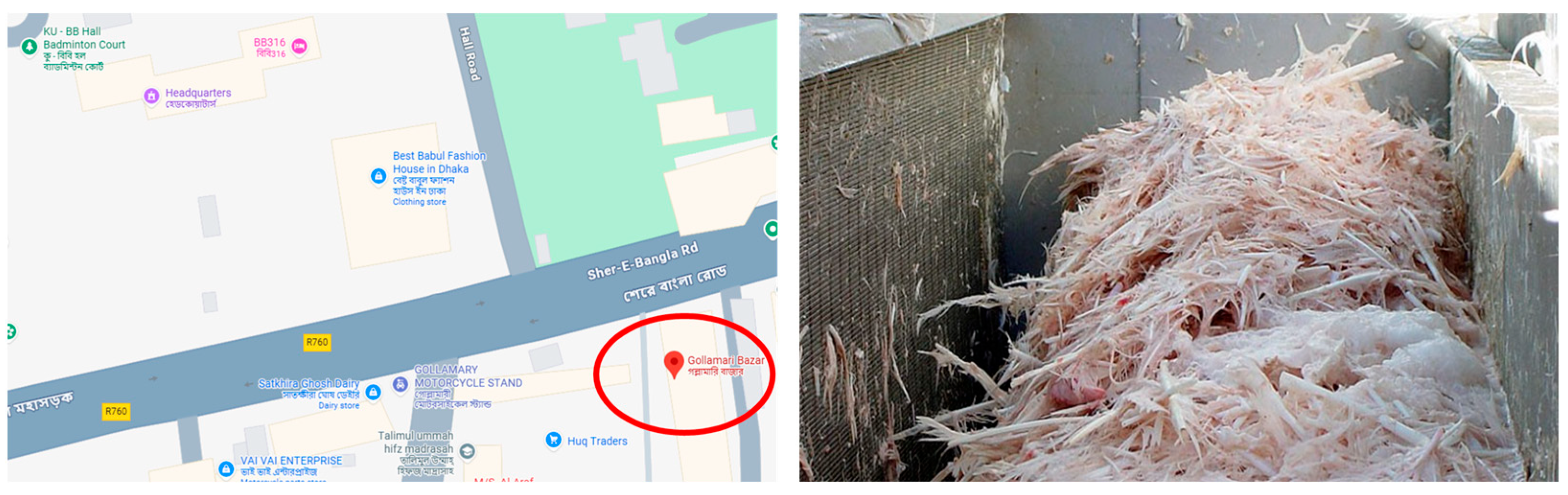
Figure 1. Chicken feather collection site (red circle) and the disposed feathers in the slaughterhouse, respectively. All locations are labeled in both English and Bangla for clarity; the two labels denote the same features.
Pollutants 05 00047 g001
Figure 2. The 10−7 diluted colonies of actinomyces (small white dots).
Pollutants 05 00047 g002
Figure 3. Progressive turbidity in broth culture over three days, reflecting increased bacterial proliferation.
Pollutants 05 00047 g003
Figure 4. Effect of microbial decomposition on total nitrogen (%) content over time. Data were presented as Mean ± SD and the same letter indicates non-significant difference, and different letters indicate significant differences among them.
Pollutants 05 00047 g004
Figure 5. Effect of microbial decomposition on available nitrogen (%) content over time. Data were presented as Mean ± SD, and the same letter indicates a non-significant difference, and a difference indicates a significant difference among them.
Pollutants 05 00047 g005
Table 1. Composition of Actinomycetes isolation agar.
Ingredientsgm/0.5 L
Sodium caseinate1.000
L-Asparagine0.05
Sodium propionate2.000
Dipotassium phosphate0.25
Magnesium sulphate0.05
Ferrous sulphate0.0005
Agar7
Table 2. Percentages of the total nitrogen increase over the control.
DaysControl
(% N)
Treatment
(% N)
% N Increase
over Control
D13.463.604.04
D23.464.6434.10
D33.465.3654.91
D43.464.8540.17
D53.465.7766.76
D63.465.0646.24
D73.466.4385.83
D83.466.4185.26
Note: N, Total Nitrogen.
Table 3. Percentages of the available nitrogen increase over the control.
DaysControl
(% N)
Treatment
(% N)
% N Increase
over Control
D11.422.2155.63
D21.422.7291.54
D31.422.4874.64
D41.422.96108.45
D51.423.77165.49
D61.423.52147.88
D71.423.91175.55
D81.424.04184.50
Note: N, Available Nitrogen.
Disclaimer/Publisher’s Note: The statements, opinions and data contained in all publications are solely those of the individual author(s) and contributor(s) and not of MDPI and/or the editor(s). MDPI and/or the editor(s) disclaim responsibility for any injury to people or property resulting from any ideas, methods, instructions or products referred to in the content.