
Machine Learning-Driven Optimization of Atomization Characteristics in Fuel Blends Using Nanomaterials: Meta Analysis †
Abstract
1. Introduction
1.1. Fuel Atomization, Combustion Performance, and Nanomaterial Innovations


1.2. Fuel Complex Spray Behavior ML Modeling
2. Long-Term Effects of Nanofuels
3. Methodology
3.1. Subsection Inclusion and Exclusion Criteria
3.2. Data Extraction and Normalization
3.3. Data Analysis
4. Result and Discussion
4.1. Metric Comparative Evaluation
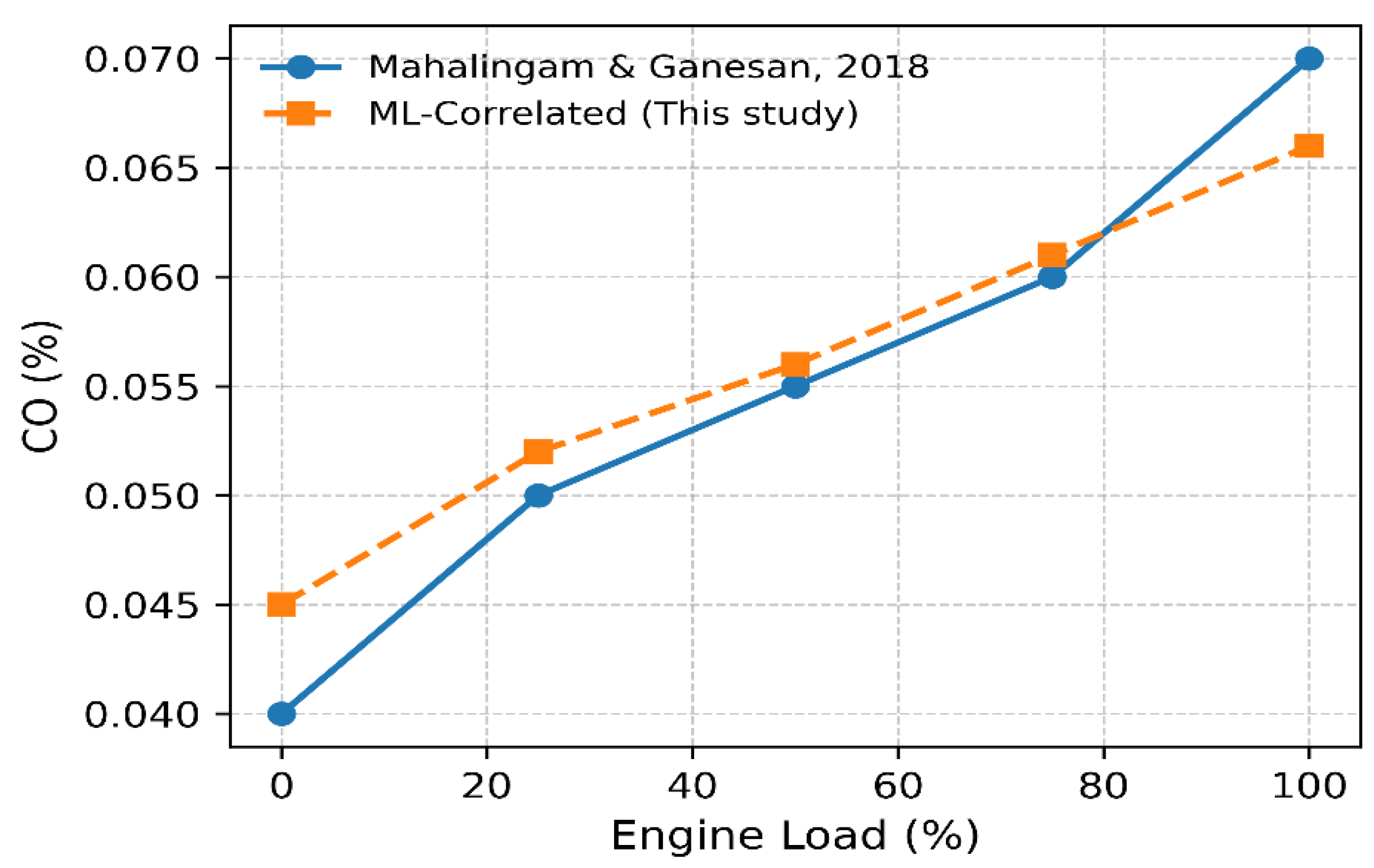
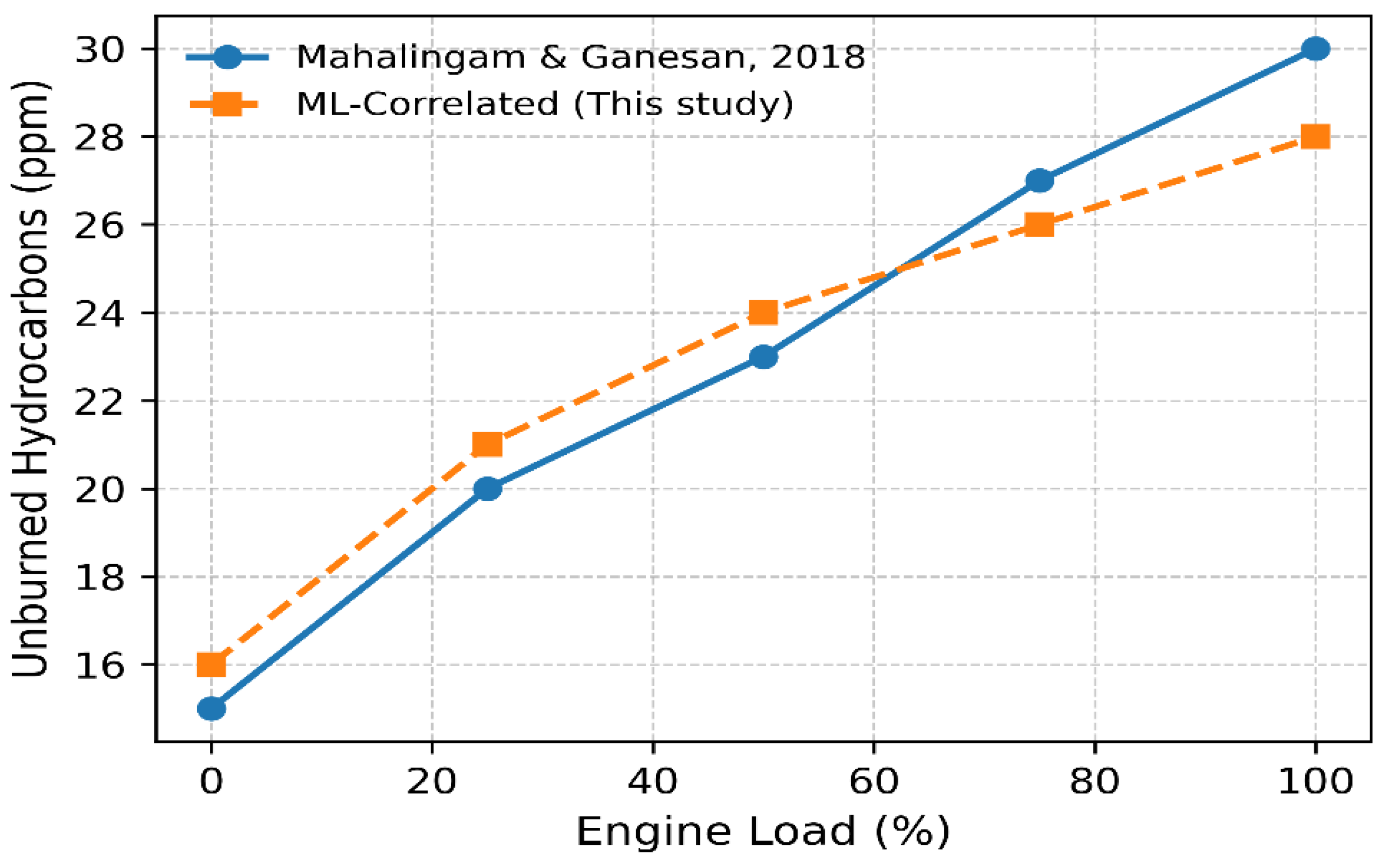
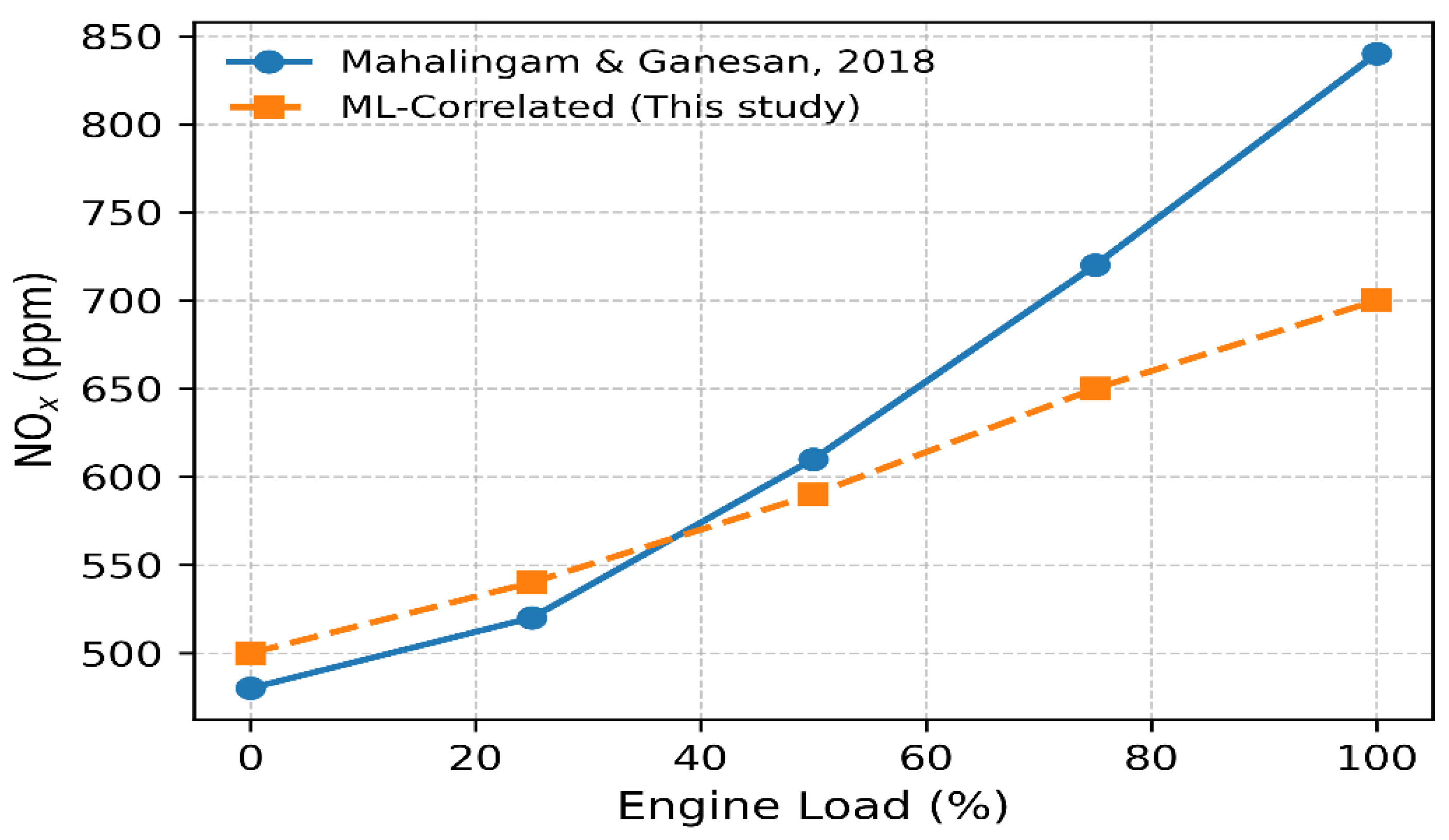
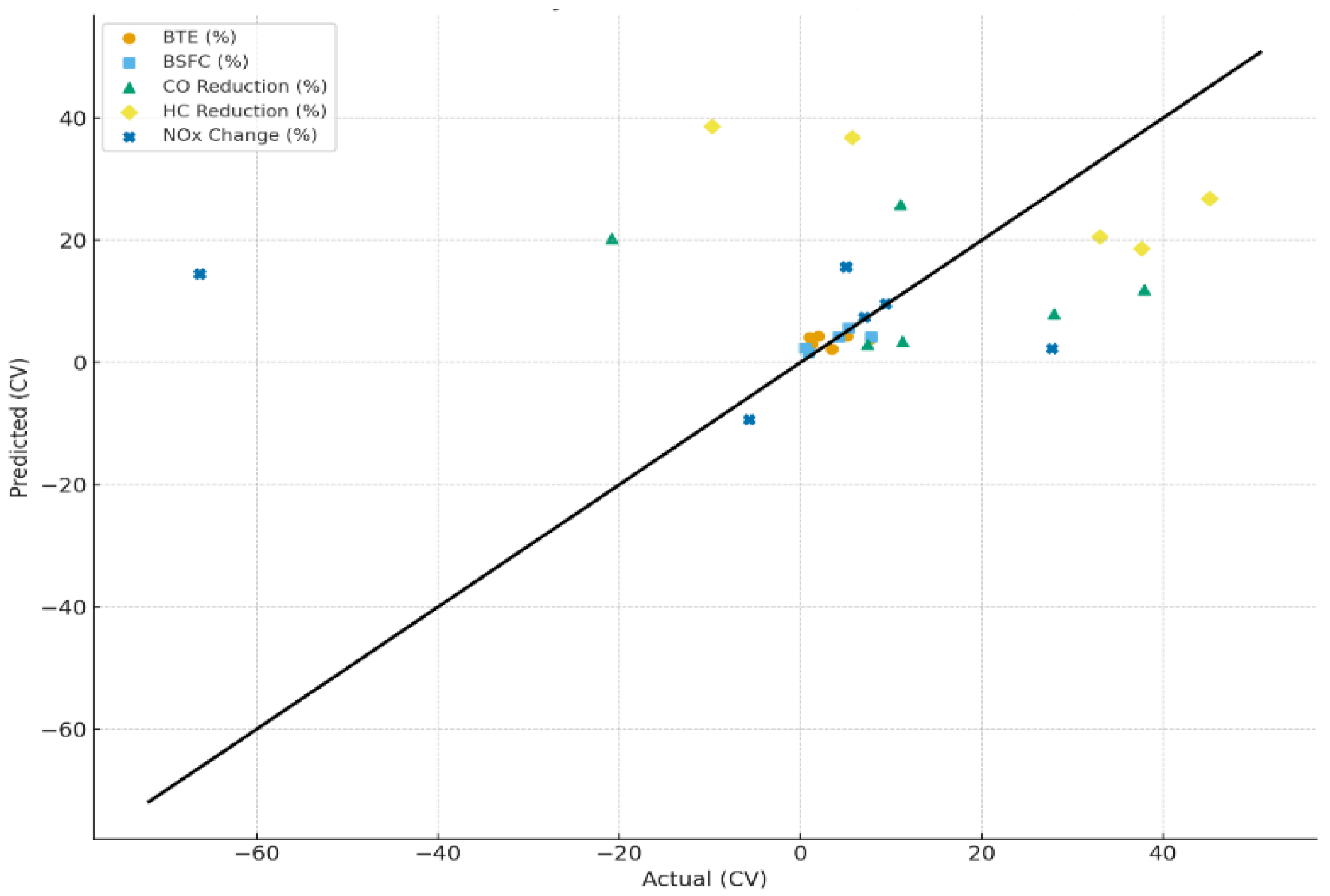
Model Validation
- = predicted emission (CO or UHC)
- L = engine load (%)
- a, b = ML-fitted coefficients inferred from Figure 4.


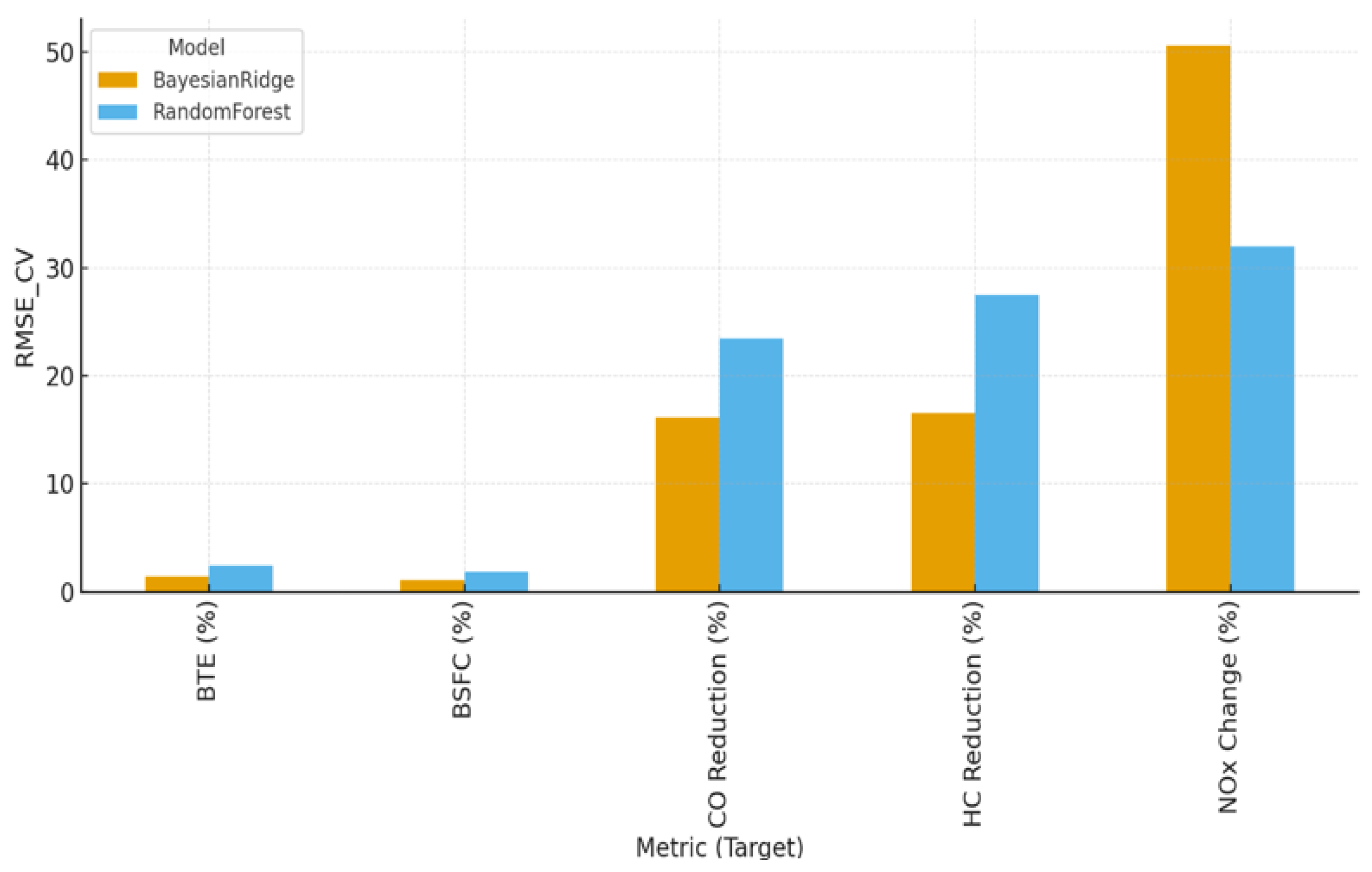
4.2. Model Variation
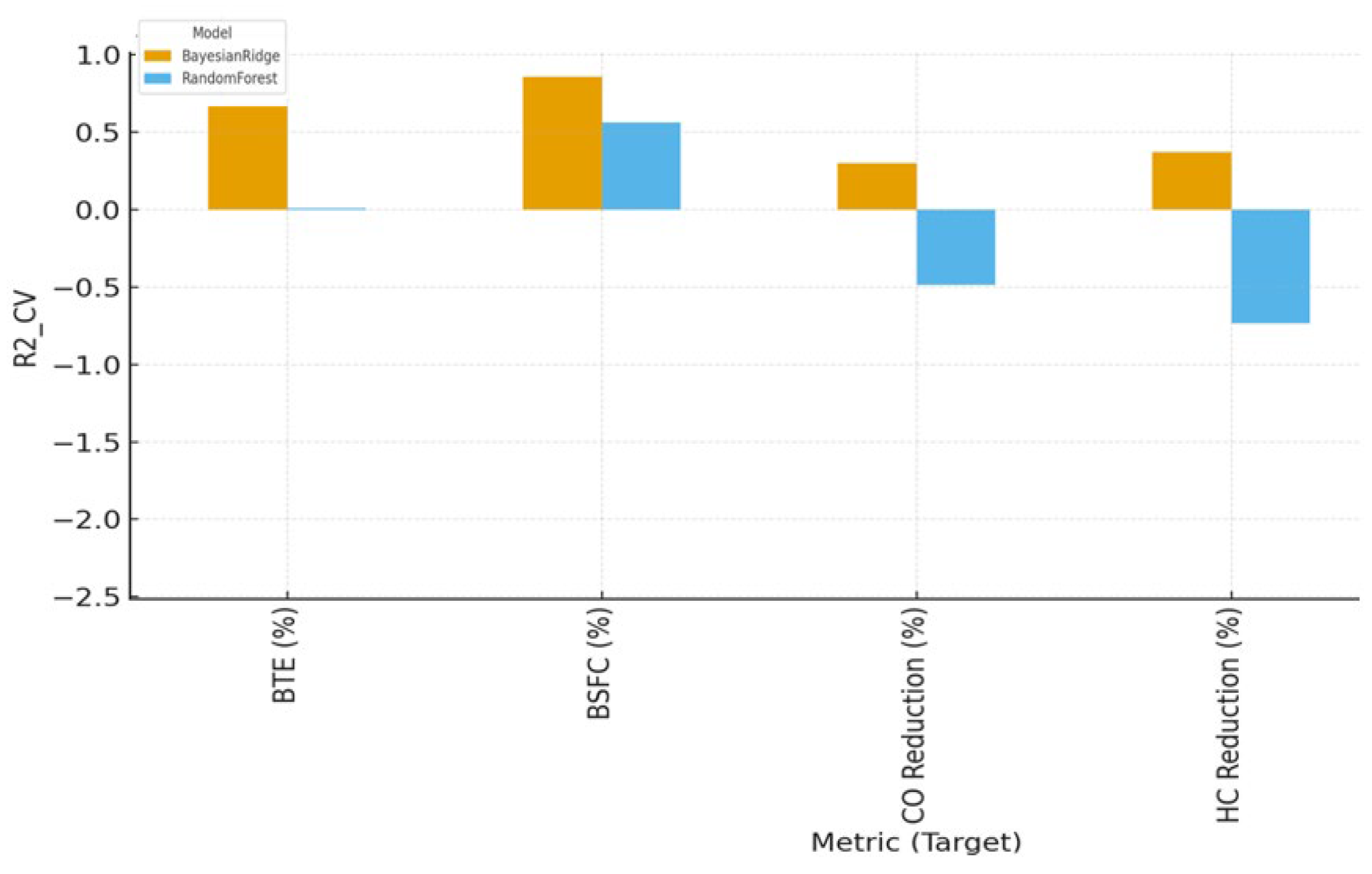
4.3. Coefficient of Determination (R2)
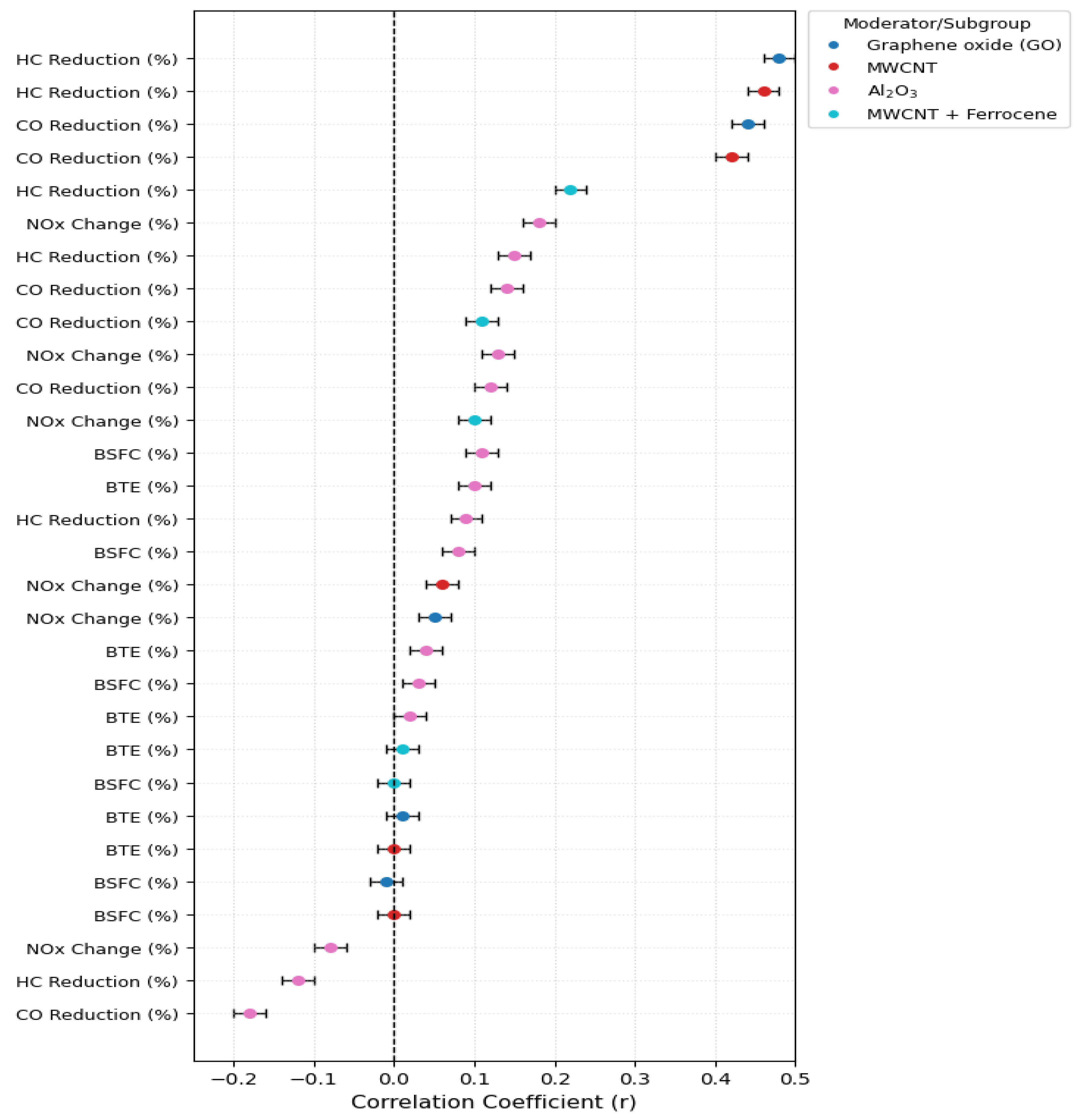
4.4. Meta-Analysis of Correlation Across Subgroups
Random-Effects Meta-Analysis of Correlation Estimates
5. Conclusions
Author Contributions
Funding
Institutional Review Board Statement
Informed Consent Statement
Data Availability Statement
Acknowledgments
Conflicts of Interest
References
- Bayvel, L.; Orzechowski, Z. Liquid Atomization; Taylor & Francis: New York, NY, USA, 2019; pp. 1–476. [Google Scholar] [CrossRef] [Scilit]
- Feng, Z.; Zhang, J.; Gu, J.; Leng, X.; He, Z.; Nishida, K. Improving biodiesel atomization performance in CI engines: A review of spray behavior, droplet impingement, and advanced techniques. Processes 2025, 13, 2527. [Google Scholar] [CrossRef] [Scilit]
- Gallego, A.; Cacua, K.; Gamboa, D.; Rentería, J.; Herrera, B. Ignition Delay and Burning Rate Analysis of Diesel–Carbon Nanotube Blends Stabilized by a Surfactant: A Droplet-Scale Study. Energies 2023, 16, 7740. [Google Scholar] [CrossRef] [Scilit]
- Guo, T.; Li, G.; Li, H.; Huo, H.; Zhang, X.; Wang, Z.; Bai, H. Experimental study on the effects of fuel properties on spray macroscopic characteristics, particle size distribution, and velocity field in a constant volume chamber. Exp. Therm. Fluid Sci. 2026, 171, 111602. [Google Scholar] [CrossRef] [Scilit]
- Yadav, M.; Yadav, A.M.; Ahmad, A. Enhancing combustion and emission characteristics of CI engines through atomization and fuel–air mixing using non-circular orifices: A path towards sustainable biodiesel utilization. Green. Technol. Sustain. 2025, 3, 100161. [Google Scholar] [CrossRef] [Scilit]
- Ghazaly, N.; Abdulhameed, A. Performance and emissions of nanoadditives in diesel engines: A review. J. Ilm. Tek. Elektro Komput. Inform. 2023, 9, 997–1008. [Google Scholar] [CrossRef] [Scilit]
- Ma, S.; Guo, Q.; Wei, J.; Yin, Z.; Zhuang, Y.; Zhang, Y.; Dai, Q.; Qian, Y. Analyzing the effect of carbon nanoparticles on the combustion performance and emissions of a DI diesel engine fueled with a diesel–methanol blend. Energy 2024, 300, 131616. [Google Scholar] [CrossRef] [Scilit]
- Shi, W.; Li, F.; Lin, Q.; Fang, G.; Chen, L.; Zhang, L. Effects of Nanoparticle Additives on Spray Characteristics of Liquid Jets in Gaseous Crossflow. Energies 2020, 13, 1574. [Google Scholar] [CrossRef] [Scilit]
- Ajuka, L.O.; Enweremadu, C.C. Performance Investigation on the Heat Transfer of Composite rGO-SiO2 Nanofluid in a Radiator. Future Cities Environ. 2025, 11, 1–16. [Google Scholar] [CrossRef] [Scilit]
- Khuong, L.S.; Hashimoto, N.; Fujita, O. Spray, droplet evaporation, combustion, and emission characteristics of future transport fuels for compression-ignition engines: A review. J. Traffic Transp. Eng. (Engl. Ed.) 2024, 11, 575–613. [Google Scholar] [CrossRef] [Scilit]
- Baumgarten, C. Mixture Formation in Internal Combustion Engines; Springer: Berlin, Germany, 2006; pp. 1–294. [Google Scholar]
- Zhou, L.; Song, Y.; Ji, W.; Wei, H. Machine learning for combustion. Energy AI 2021, 7, 100128. [Google Scholar] [CrossRef] [Scilit]
- Khan, S.; Masood, M.; Medina, M.; Alzahrani, F. Advancing fuel spray characterization: A machine learning approach for directly injected gasoline fuel sprays. Fuel 2024, 371, 131980. [Google Scholar] [CrossRef] [Scilit]
- Zvirblis, T.; Ciziuniene, K.; Matijosius, J. Application of machine learning for fuel consumption and emission prediction in a marine diesel engine using diesel and waste cooking oil. J. Mar. Sci. Eng. 2025, 13, 1328. [Google Scholar] [CrossRef] [Scilit]
- Ihme, M.; Chung, W.T. Artificial intelligence as a catalyst for combustion science and engineering. Proc. Combust. Inst. 2024, 40, 105730. [Google Scholar] [CrossRef] [Scilit]
- Wilk-Jakubowski, J.L.; Pawlik, L.; Frej, D.; Wilk-Jakubowski, G. Data-driven computational methods in fuel combustion: A review of applications. Appl. Sci. 2025, 15, 7204. [Google Scholar] [CrossRef] [Scilit]
- Tao, Z.; Sun, H.; Deng, B.; Wang, J.; Calautit, J. Integrating computational fluid dynamics (CFD) and machine learning to improve urban green infrastructure for heat mitigation and air quality: A systematic review. Build. Environ. 2025, 284, 113516. [Google Scholar] [CrossRef] [Scilit]
- Enes, T.; Vedat, M. An analysis for car fuel estimation with regression methods. JAIDA 2023, 3, 107–115. [Google Scholar]
- Salehi, F.; Beheshti, A.; Eftekharian, E.; Chen, L.; Hardalupas, Y. Data-driven modelling of spray flows: Current status and future direction. J. Energy Inst. 2025, 119, 101991. [Google Scholar] [CrossRef] [Scilit]
- Soudagar, M.E.M.; Shelare, S.; Marghade, D.; Belkhode, P.; Nur-E-Alam, M.; Kiong, T.S.; Ramesh, S.; Rajabi, A.; Venu, H.; Khan, T.M.Y.; et al. Optimizing IC engine efficiency: A comprehensive review on biodiesel, nanofluid, and the role of artificial intelligence and machine learning. Energy Convers. Manag. 2024, 307, 118337. [Google Scholar] [CrossRef] [Scilit]
- Hasan, M.M. Understanding model predictions: A comparative analysis of SHAP and LIME on various ML algorithms. J. Sci. Technol. Res. 2024, 5, 17–26. [Google Scholar] [CrossRef] [Scilit]
- Ricci, F.; Avana, M.; Mariani, F. A deep learning method for the prediction of pollutant emissions from internal combustion engines. Appl. Sci. 2024, 14, 9707. [Google Scholar] [CrossRef] [Scilit]
- Antoniadi, A.M.; Du, Y.; Guendouz, Y.; Wei, L.; Mazo, C.; Becker, B.A.; Mooney, C. Current challenges and future opportunities for XAI in machine-learning-based clinical decision support systems: A systematic review. Appl. Sci. 2021, 11, 5088. [Google Scholar] [CrossRef] [Scilit]
- Vaz, M.G.J.; Karathanassis, I.; Gavaises, M.; Mouokue, G. Data-driven prediction of spray macroscopic characteristics for marine injectors using neural networks. Fuel 2026, 405, 136736. [Google Scholar] [CrossRef] [Scilit]
- Fayad, M.A.; Mahdi, R.R.; Radhi, A.A.; Mohammed, S.A.; Alawee, W.H.; Chaichan, M.T.; Khashan, K.S.; Dhahad, H.A. Impact of adding nanoparticles into oxygenated fuel blends on engine performance and emissions characteristics of NOx and PM in diesel engines: A comprehensive review. Results Chem. 2025, 18, 102699. [Google Scholar] [CrossRef] [Scilit]
- Chen, Y.; Zhang, J.; Zhang, Z.; Zhang, B.; Hu, J.; Zhong, W.; Ye, Y. A comprehensive review of stability enhancement strategies for metal nanoparticle additions to diesel/biodiesel and their methods of reducing pollutants. Process Saf. Environ. Prot. 2024, 183, 1258–1282. [Google Scholar] [CrossRef] [Scilit]
- Gad, M.S.; Alenany, A. Forecasting the performance and emissions of a diesel engine powered by waste cooking biodiesel with carbon nanoadditives using tree-based, least square boost and Gaussian regression models. Fuel 2025, 385, 134073. [Google Scholar] [CrossRef] [Scilit]
- Hoang, A.T.; Le, M.X.; Nižetić, S.; Huang, Z.; Ağbulut, Ü.; Veza, I.; Said, Z.; Le, A.T.; Tran, V.D.; Nguyen, X.P. Understanding behaviors of compression ignition engines running on metal nanoparticle additive-included fuels: A control comparison between biodiesel and diesel fuel. Fuel 2022, 326, 124981. [Google Scholar] [CrossRef] [Scilit]
- Risberg, P.A.; Alfredsson, S. The Effect of Zinc and Other Metal Carboxylates on Nozzle Fouling. In Proceedings of the SAE 2016 World Congress and Exhibition, Detroit, MI, USA, 12–14 April 2016. [Google Scholar] [CrossRef] [Scilit]
- Jain, A.; Bora, B.J.; Kumar, R.; Barik, D.; Kumar, N.; Paramasivam, P.; Chohan, J.S.; Majdi, H.S.; Alsubih, M.; Islam, S.; et al. Assessment of Nahar biodiesel with TiO2 nanoparticles at increased fuel injection pressure of a diesel engine: Exergy, energy, statistical analysis. Case Stud. Therm. Eng. 2025, 71, 106125. [Google Scholar] [CrossRef] [Scilit]
- Parveg, A.S.M.S.; Ratner, A. A comprehensive review of liquid fuel droplet evaporation and combustion behavior with carbon-based nanoparticles. Prog. Energy Combust. Sci. 2025, 106, 101198. [Google Scholar] [CrossRef] [Scilit]
- Onojowho, E.E.; Betiku, E.; Asere, A.A. Performance and CO2 emission of a single cylinder compression ignition engine powered by Khaya senegalensis non-edible seed fuel blends. Heliyon 2024, 10, e28380. [Google Scholar] [CrossRef] [Scilit]
- Shelare, S.D.; Belkhode, P.N.; Nikam, K.C.; Jathar, L.D.; Shahapurkar, K.; Soudagar, M.E.M.; Veza, I.; Khan, T.M.Y.; Kalam, M.A.; Nizami, A.S.; et al. Biofuels for a sustainable future: Examining the role of nano-additives, economics, policy, internet of things, artificial intelligence and machine learning technology in biodiesel production. Energy 2023, 282, 128874. [Google Scholar] [CrossRef] [Scilit]
- Liu, G.; Yu, R.; Deng, S.; Yan, W.; Liu, D. Temperature measurement of nanofluid fuel flames dispersed with multiple particles using emission spectroscopy. Int. J. Therm. Sci. 2025, 211, 109713. [Google Scholar] [CrossRef] [Scilit]
- Garugubilli, R.; Prasad, V.V.S.; Sagari, J. Experimental investigation of copper oxide nanoparticles dispersed in an Azadirachta indica oil–biodiesel blend: Stability and physicochemical properties approach. Nanosci. Technol. 2024, 15, 39–50. [Google Scholar] [CrossRef] [Scilit]
- Li, J.; Yue, Z.; Wang, J.; Yang, R.; Liu, H.; Yao, M. Spray and combustion characteristics of Al2O3 nano-diesel under engine-relevant conditions. Appl. Therm. Eng. 2025, 280, 128415. [Google Scholar] [CrossRef] [Scilit]
- Jathar, L.D.; Meherunnesa; Shelare, S.; Shahapurkar, K.; Abedin, T.; Farade, R.A.; Rajabi, A.; Khan, T.M.Y.; Singh, R.; Cuce, E.; et al. A Short Review on Nano-Additives to Enhance Biodiesel Performance in Diesel Engines. J. Therm. Sci. 2025, 34, 1450–1473. [Google Scholar] [CrossRef] [Scilit]
- Karchkhadze, K.; Khetsuriani, N. Long-term storage and quality stability of biodiesel fuels. Int. J. Low-Carbon Technol. 2024, 19, 1198–1203. [Google Scholar] [CrossRef] [Scilit]
- Berretta, M.; Furgeson, J.; Wu, Y.N.; Zamawe, C.; Hamilton, I.; Eyers, J. Residential energy efficiency interventions: A meta-analysis of effectiveness studies. Campbell Syst. Rev. 2021, 17, e1206. [Google Scholar] [CrossRef] [Scilit]
- Mahalingam, S.; Ganesan, S. Effect of Nano-fuel additive on performance and emission characteristics of diesel engine using biodiesel blends with diesel fuel. Int. J. Ambient Energy 2018, 41, 316–321. [Google Scholar] [CrossRef] [Scilit]
- Li, J.; Wei, J.; Chen, H.; Xu, Y.; Liu, Y.; Dai, Q. Study on the combustion and emission characteristics of a compression ignition engine using diesel/ethanol blend with carbon nanoadditives. Renew. Energy 2025, 246, 122941. [Google Scholar] [CrossRef] [Scilit]
- Venu, H.; Madhavan, V. Effect of Al2O3 nanoparticles in biodiesel–diesel–ethanol blends at various injection strategies: Performance, combustion and emission characteristics. Fuel 2016, 186, 176–189. [Google Scholar] [CrossRef] [Scilit]
- Wang, X.; Zhang, Y.; Karthikeyan, C.; Boomadevi, P.; Marousek, J.; Nasif, O.; Alharbi, S.A.; Xia, C. Role of injection pressure on fuel atomization and spray penetration in Thevetia peruviana and Jatropha curcas biodiesel blends with nanoparticles. Fuel 2022, 324, 124527. [Google Scholar] [CrossRef] [Scilit]
- Primiceri, P.; de Fazio, R.; Strafella, L.; Carlucci, A.P.; Visconti, P. Photo-induced ignition phenomenon of carbon nanotubes by Xenon pulsed light: Ignition tests analysis, automotive and new potential applications, future developments. J. Appl. Res. Technol. 2017, 15, 609–623. [Google Scholar] [CrossRef] [Scilit]




| Title of Study/Author | Methodology | Remarks | Bias |
|---|---|---|---|
| Forecasting biodiesel performance and emissions with nano-additives [27]. | Study was experimental, using B20 blends with CNT, graphene, GO at 25–100 ppm; coupled with machine learning prediction (GPR, LSBoost). | Short-term gains in BTE and reduced emissions were reported, but ML projections suggested sedimentation and performance decay beyond 500 h unless stabilizers are included. | Study focused on predictive modelling, not validated with actual long-term field tests. |
| Assessment of Nahar biodiesel with TiO2 nanoparticles at increased injection pressure [30]. | Engine experiments were conducted at 200–280 bar injection pressure and variable loads with 150 ppm TiO2 nanofuel; RSM optimization used. | Reported initial stability of TiO2 dispersion; however, thermal cycling degradation observed, altering viscosity and slightly reducing atomization efficiency after repeated tests. | Limited test duration (~100 h) under lab cycling; lacks storage/field validation. |
| Performance and CO2 emission of a single cylinder compression ignition engine powered by Khaya senegalensis non-edible seeds fuel blends [32]. | Khaya senegalensis biodiesel blends + ANSYS CFD. | Reported blend instability over cycles; injector clogging risk noted. | CFD heavy; less real long-term validation. |
| Biofuels for a sustainable future: Examining the role of nano-additives, economics, policy, internet of things, artificial intelligence and machine learning technology in biodiesel production [33]. | Review on nano-additives, IoT, AI in biodiesel fuel. | Highlighted storage stability issues and sedimentation in WCO biodiesel. | Study conducted general review, with little primary data. |
| Temperature measurement of nanofluid fuel flames dispersed with multiple particles using emission spectroscopy [34]. | Study focused more on spectroscopy of nanofluid flames with multiple particles. | Report shows that nanoparticle deposits impair thermocouple function; indicates sedimentation and fouling. | Report were on Lab flame only; and not long-term engine. |
| Experimental evaluation of stability and performance of biodiesel blends with carbon nanoparticles [32]. | Experimental biodiesel blends with carbon nanoparticles. | Reported nano-agglomeration at >0.2% wt. concentration during storage. | Short-term study; <30 days stability. |
| A critical review on nano-additives for biodiesel-fueled compression ignition engines [28]. | Review of nano-additives in CI engines. | Study highlighted degradation under thermal cycling, especially for TiO2 and Al2O3. | Review; data heterogeneity across studies. |
| The effect of zinc and other metal carboxylates on nozzle fouling [29]. | Nozzle fouling experiments on a single-cylinder engine in three parts: (1) zinc neodecanoate concentration effect; (2) neodecanoates of Zn, Na, Ca, Cu, Fe on fuel flow loss; (3) effect of RME concentration in Zn-neodecanoate contaminated petroleum diesel. Nozzles cut open; deposits analyzed by SEM and EDX. | Single-cylinder tests show metal carboxylates (Zn, Na, Ca, Cu, Fe neodecanoates), not just zinc or biodiesel can rapidly foul injector nozzle holes; higher cation charge greater fuel-flow loss. SEM/EDX confirms the contaminant metal in deposits, typically higher at the inlet than the outlet, forming 2–4 μm granulates (near common-rail fuel-filter pore sizes) | Single-cylinder test environment and contaminant dosing may not fully represent all real-world multi-cylinder duty cycles and fuel system variability (e.g., filtration, temperature history, additive packages). |
| Stability and physicochemical properties of CuO nanoparticles dispersed in biodiesel blend [35]. | Prepared CuO-biodiesel blend (B20) at 75 ppm, used surfactants (Triton X / QPAN 80 / Tween 80) + ultrasonication; stability assessed via UV-Vis absorbance/transmittance over 3 weeks. | Surfactants improved stability but stability declined by week 3, highlighting time-dependent aggregation/sedimentation risk, which is an important ‘long-term’ constraint for storage and deployment (supply chain, transport, tank residence time). | Only weeks-scale; UV-Vis is a proxy measure (not full rheology/particle sizing through time); lacks thermal cycling, vibration, real tank/engine circulation, so long-term real-world stability may deviate. |
| Spray and combustion characteristics of Al2O3 nano-diesel under engine-relevant conditions [36]. | Optical constant-volume vessel experiments (engine-relevant pressures/temps) using diffuse backlight imaging, high-speed imaging, and two-colour method; compared neat diesel vs Al2O3 nano-diesel (100 mg/L) with surfactant (CTAB) preparation steps for stable dispersion. | Nano-diesel showed shorter liquid penetration, slightly higher spray cone angle, longer ignition delay, shorter flame lift-off length, and notably reduced soot indicator (average KL factor −59.76% at 3.5 MPa). Mechanistically, suggests better mixing + catalytic oxidation can reduce soot formation, which is relevant to long-term deposit/DPF burden even though not a durability trial. | Not an endurance/field study, using constant-volume vessel simplifies in-cylinder flow/thermal transients, ‘long-term effects’ inferred from soot/temperature trends rather than measured injector deposits, wear, or multi-hour engine durability. |
| A short review on nano-additives to enhance biodiesel performance in diesel engines [37]. | Review synthesis of experimental studies on nano-additives’ effects on performance, combustion, emissions, and wear/durability, highlighting evidence patterns and research gaps. | Concludes that nano-additives frequently improve performance/emissions but explicitly stresses that long-term engine durability and component compatibility evidence remains limited and is a priority for future work. | Review bias from heterogeneity across studies (different nanoparticles, doses, dispersion methods, test cycles). Long-term conclusions remain constrained because many included studies are short duration and not field-validated endurance tests. |
| Long-term storage and quality stability of nano-biodiesel fuels [38]. | Developed a nano-composition biodiesel and tracked multi-year storage stability (2018–2021) using FTIR + gas chromatography, plus standard physical/chemical property checks against specification limits. | Reported fuel properties remained stable over ~4 years, supporting feasibility for long-term storage without loss of key quality indicators—directly addressing one of the biggest real-world barriers to nanofuels (aging/sedimentation/oxidation). | Storage-study bias: results may depend on specific nano-composition and storage conditions; does not directly test engine endurance, injector fouling, or aftertreatment compatibility over long use cycles. |
| Metric | Weighted Mean Effect Size (%) | Range Across Studies (%) | Key References |
|---|---|---|---|
| Brake Thermal Efficiency (BTE) | 12.5 | 7.5–19.0 | [27] |
| Brake Specific Fuel Consumption (BSFC) | 13.0 | 7.0–20.0 | [27] |
| Exergy Efficiency | 22.0 | 15.0–40.0 | [31] |
| CO Reduction | 12.4 | 6.5–20.0 | [27,28] |
| HC Reduction | 25.5 | 15.0–36.0 | [27] |
| NOx Reduction | 18.8 | 5.0–35.0 | [27,28] |
| Smoke Reduction | 13.3 | 4.0–21.0 | [27] |
| CO2 Reduction | 20.7 | 6.0–47.0 | [32] |
Disclaimer/Publisher’s Note: The statements, opinions and data contained in all publications are solely those of the individual author(s) and contributor(s) and not of MDPI and/or the editor(s). MDPI and/or the editor(s) disclaim responsibility for any injury to people or property resulting from any ideas, methods, instructions or products referred to in the content. |
© 2026 by the authors. Licensee MDPI, Basel, Switzerland. This article is an open access article distributed under the terms and conditions of the Creative Commons Attribution (CC BY) license.
Share and Cite
Ajuka, L.; Enweremadu, C. Machine Learning-Driven Optimization of Atomization Characteristics in Fuel Blends Using Nanomaterials: Meta Analysis. Mater. Proc. 2026, 31, 29. https://doi.org/10.3390/materproc2026031029
Ajuka L, Enweremadu C. Machine Learning-Driven Optimization of Atomization Characteristics in Fuel Blends Using Nanomaterials: Meta Analysis. Materials Proceedings. 2026; 31(1):29. https://doi.org/10.3390/materproc2026031029
Chicago/Turabian StyleAjuka, Luke, and Christopher Enweremadu. 2026. "Machine Learning-Driven Optimization of Atomization Characteristics in Fuel Blends Using Nanomaterials: Meta Analysis" Materials Proceedings 31, no. 1: 29. https://doi.org/10.3390/materproc2026031029
APA StyleAjuka, L., & Enweremadu, C. (2026). Machine Learning-Driven Optimization of Atomization Characteristics in Fuel Blends Using Nanomaterials: Meta Analysis. Materials Proceedings, 31(1), 29. https://doi.org/10.3390/materproc2026031029