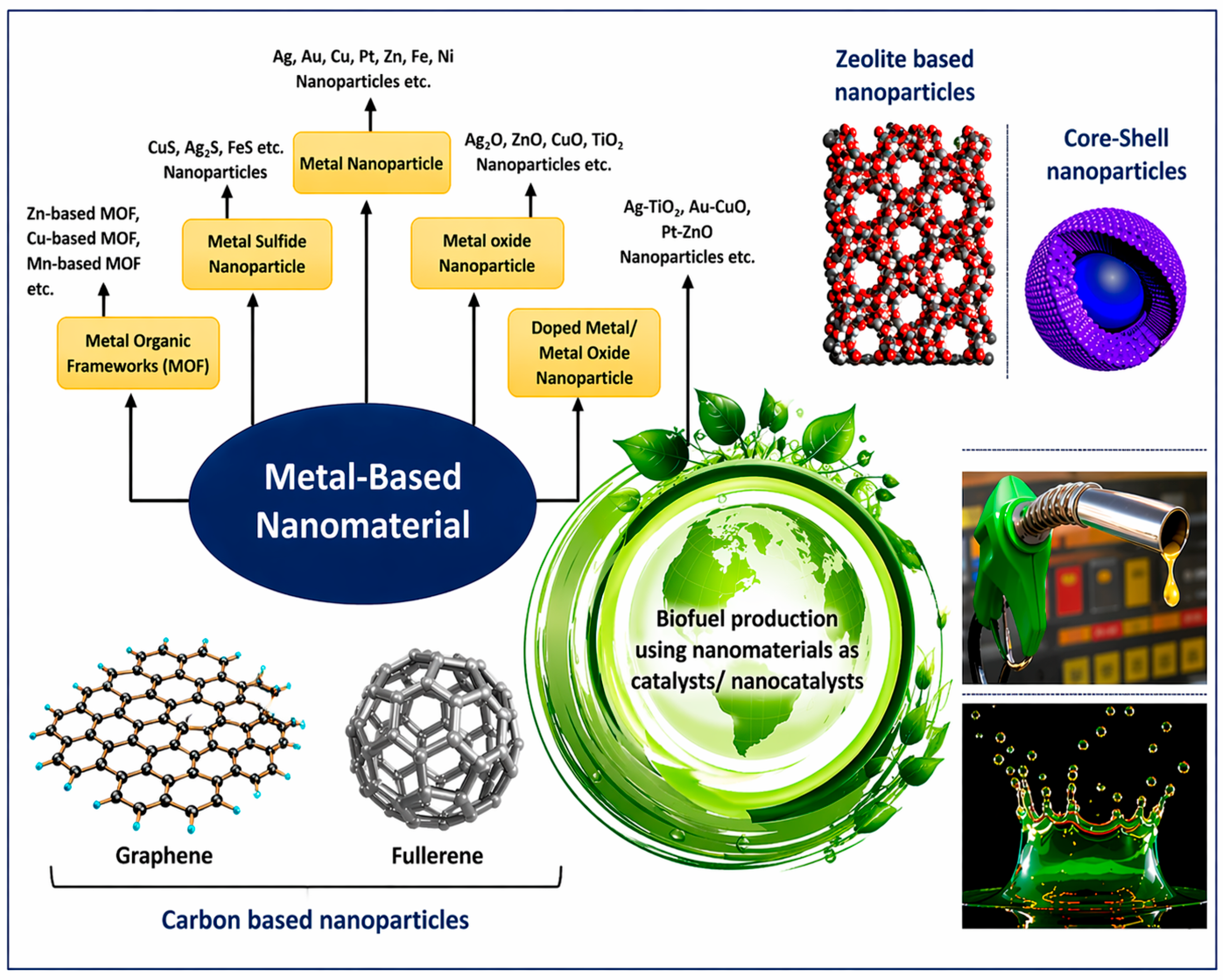

Perspective of Materials Characterisation and Performance Evaluation of Advanced Nanomaterials for Bioenergy Systems: A Systematic Review †

Abstract
1. Introduction
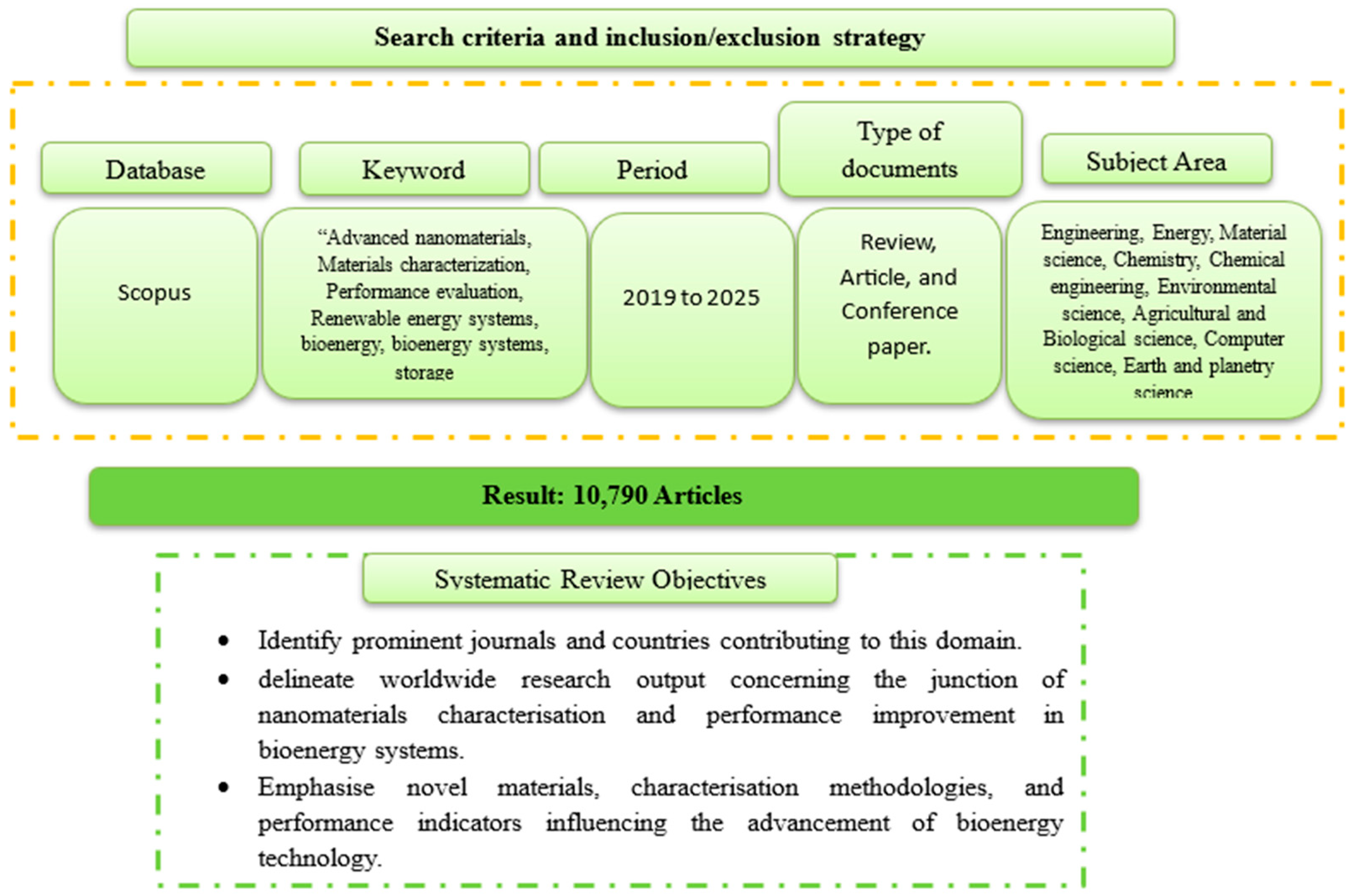
- Identify prominent journals/publications contributing to this domain.
- Delineate the worldwide research output concerning the junction of nanomaterials characterisation and performance improvement in bioenergy systems.
- Emphasise novel materials, characterisation methodologies, and performance indicators influencing the advancement of bioenergy technology.
2. Methodology
2.1. Data Sources
2.2. Data Analysis
2.3. Methodological Limitations
3. Results
3.1. Annual Publication Trends in Nanomaterials for Bioenergy
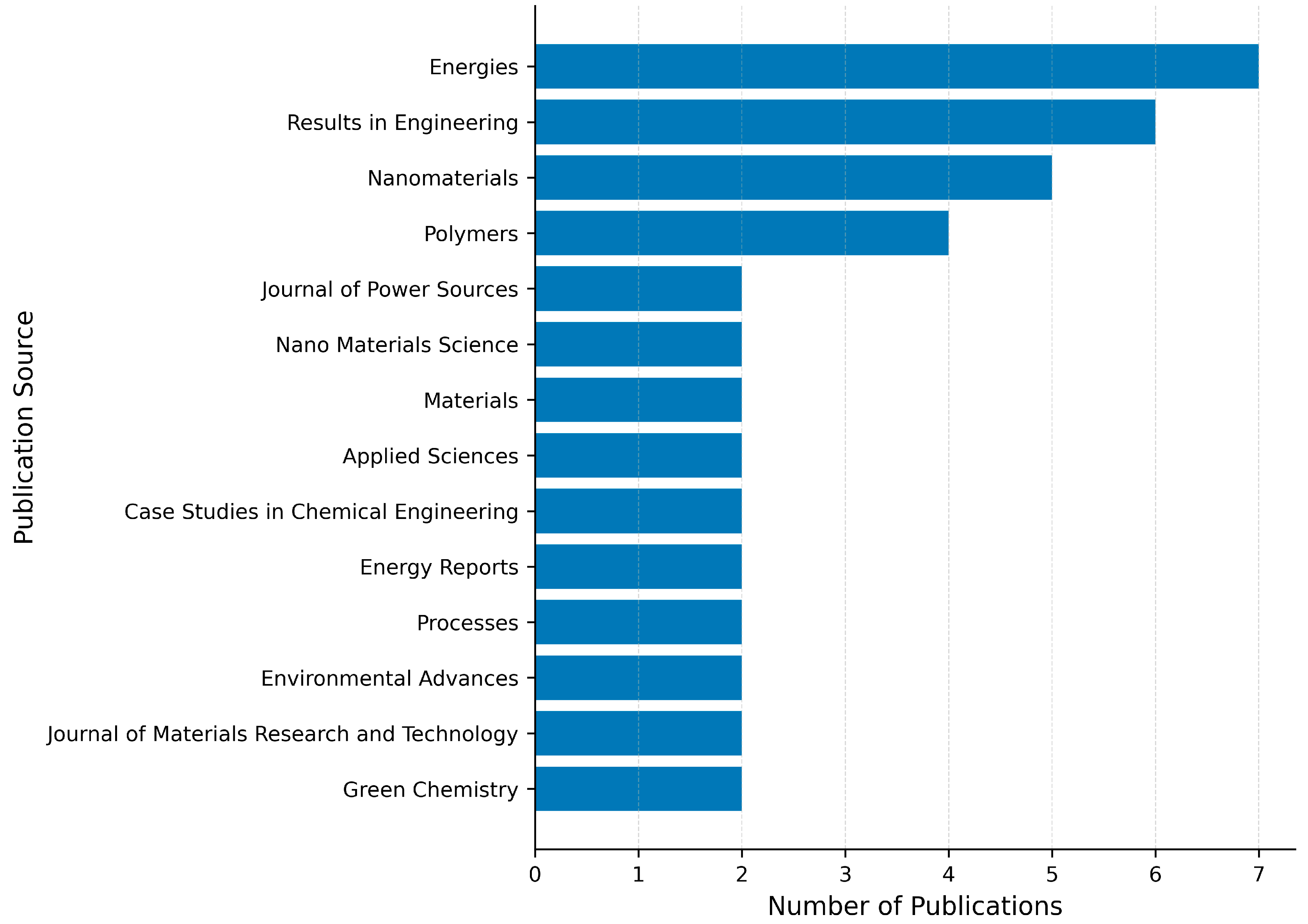
3.2. Distribution of Journals and Publication Sources
3.3. Thematic Outcome of the Study
3.3.1. Material Characterisation Techniques for Advanced Nanomaterials in Bioenergy Systems
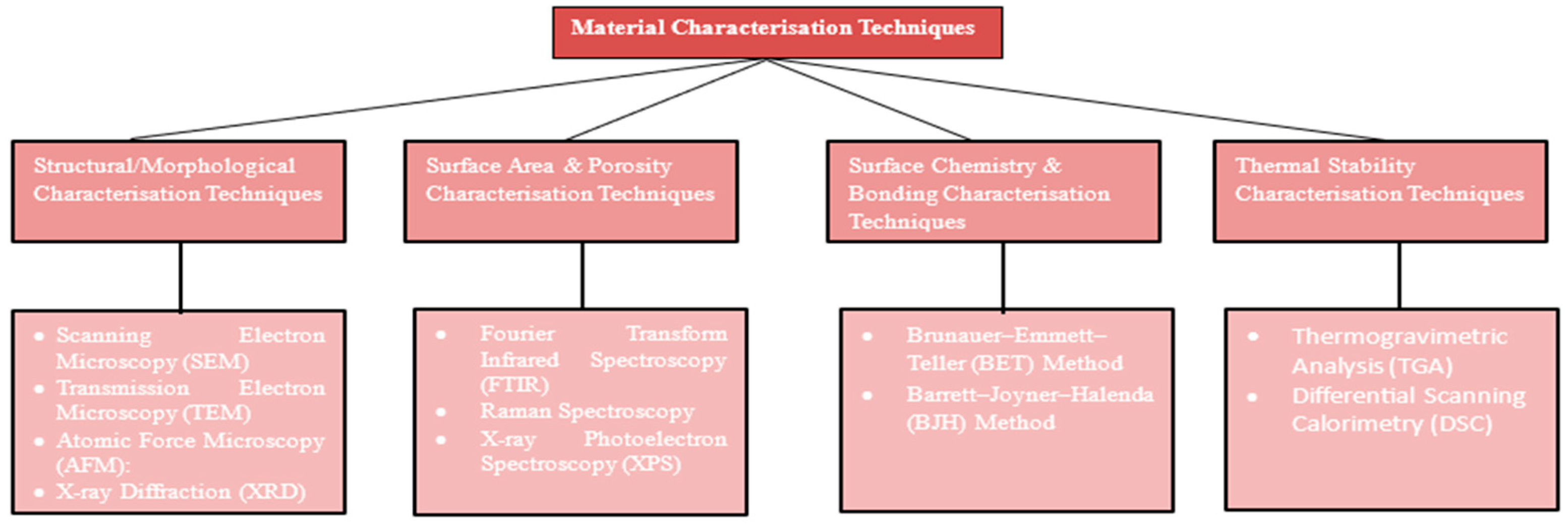
- Scanning electron microscopy (SEM): High-resolution scanning electron microscopy (SEM) is very effective for characterising the size and form of nanoparticles. Scanning electron microscopy (SEM) offers real-time imaging with nanometre resolution and an extensive scanning area, facilitating the development and integration of robotic nanomanipulation systems within large vacuum chambers to achieve concurrent imaging and direct interactions with objects at submicrometer and nanometre scales [28,29,30,31]. Furthermore, SEM can be combined with advanced technologies such as electron beam lithography (EBL) and focused ion beam (FIB) for in situ nanomaterial engineering and production [32,33].
- Preparation of samplesThe accuracy of SEM nanoparticle size and shape measurements heavily depends on sample preparation [34,35,36]. There is no single optimal preparation method suitable for all nanoparticles; instead, various techniques are considered effective depending on the specific properties of the nanoparticles and the measurand, which refers to the quantity or attribute being measured. It is crucial to ensure that test or analytical samples are representative and relevant to the measurand. Instruments used for preparing and handling nanoparticles must be kept clean and stored in a dry, sanitised environment, preferably within an area fitted with high-efficiency particulate air (HEPA) filtration throughout sample processing [37,38].
- Mechanical Characterisation using Scanning Electron MicroscopyComprehending the mechanical characteristics of nanomaterials is crucial for miniaturised electronic, optical, thermal, and electromechanical systems [39]. Nevertheless, owing to scaling effects and geometric disparities, as the surface-to-volume ratio escalates with the reduction in structural dimensions, nanostructures such as nanowires (NWs), carbon nanotubes (CNTs), and ultrathin films demonstrate markedly distinct mechanical properties in comparison to their bulk equivalents, indicating that one cannot readily extrapolate nanomaterial mechanical properties from bulk characteristics [40,41,42].
- Electrical Characterisation in Scanning Electron Microscopy
- Mechanism of Operation Nanomaterial ConfigurationAccording to [45], a solitary nanomaterial, such as a nanowire, nanotube, or thin film, is fabricated and positioned inside an electron microscopy chamber.
- Probe Placement: Two delicate electrical probes are strategically placed to contact the nanostructure. In a nanowire, one probe may interface with the apex of the nanowire, while the other connects to the growth substrate.
- Administering Stimuli: External circumstances are imposed while the probes assess the current and voltage.
- Mechanical Stress: The probes are capable of measuring variations in electrical conductivity during tensile, compressive, or bending tests on the nanostructure.
- Environmental Changes: Probes may be used to assess electrical resistance or current flow when the material encounters varying temperatures or gases, yielding information about temporal characteristics and chemical reactivity.
- Data Acquisition: Through the analysis of recorded electrical signals, such as current–voltage (I-V) curves, researchers can determine the electrical conductivity and resistance of nanomaterials, as well as the impact of environmental factors on these characteristics.
- 2.
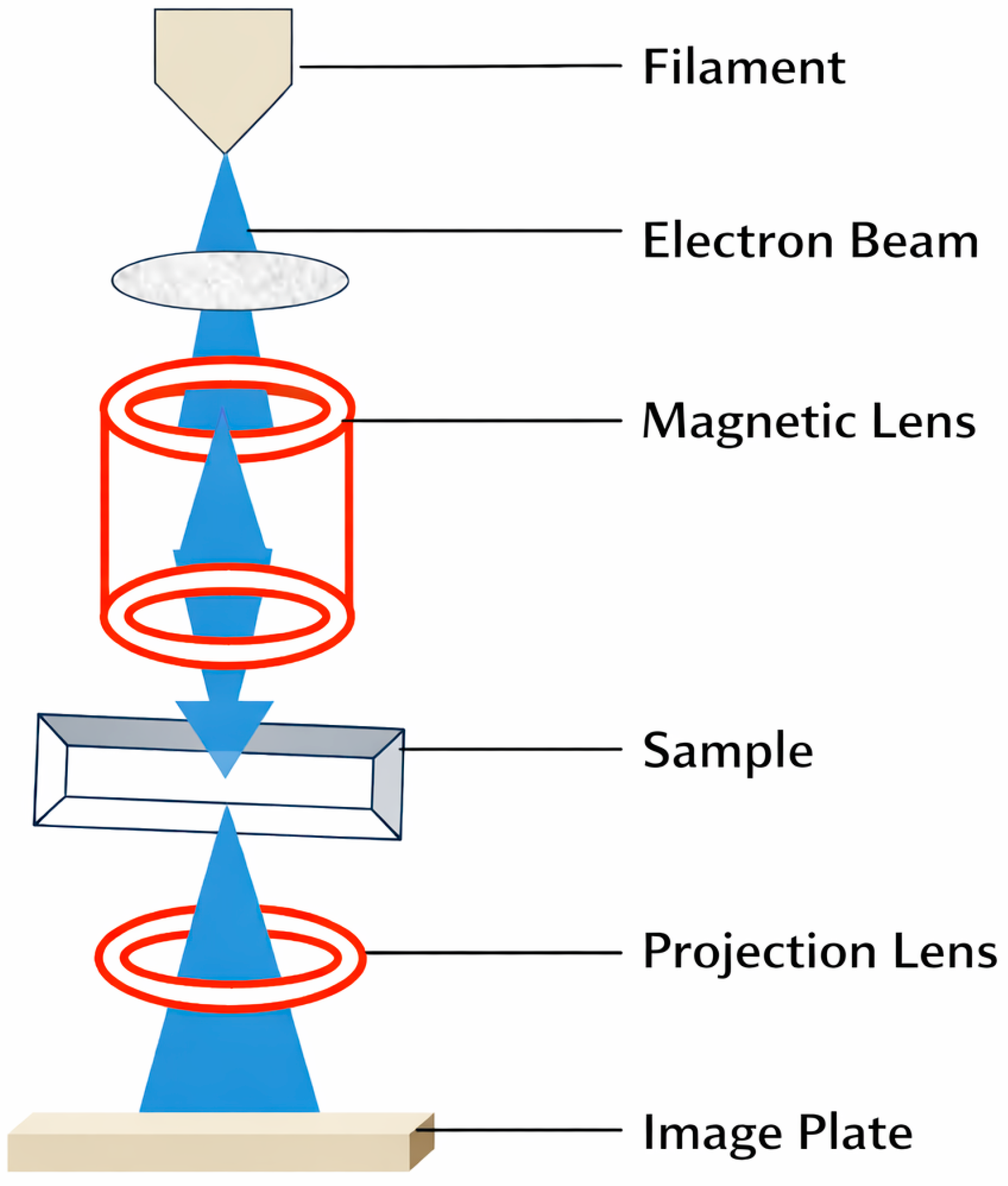
- Transmission Electron Microscopy (TEM): Transmission electron microscopy (TEM) (Figure 5) is a commonly used method for characterising nanomaterials, offering both structural and chemical information about samples [46,47]. It enables researchers to directly visualise and capture images of nanomaterials, similar to the SEM method, with atomic-scale resolution of less than 1 nm. Nonetheless, TEM utilises higher-intensity electron beams, yielding pictures with superior resolution relative to the SEM approach [47,48]. Consequently, TEM may provide enhanced information about nanomaterials, including their granularity and crystallinity. Transmission electron microscopy (TEM) mostly depends on the following factors:
- The ratio of the distance across the picture plane to the objective lens.
- The fraction of the distance between the specimen and the objective lens.
- 3.
- Atomic Force Microscopy (AFM): Atomic force microscopy (AFM) is a form of scanning probe microscopy that creates highly detailed three-dimensional topographical images with subnanometre resolution [49,50]. AFM offers high-resolution images of biomass materials. Additionally, the nanoscale contact force between the probe and the sample enables detection without damaging the sample, while simultaneously showcasing the real-time mechanical and surface features of the material [51]. The ability of AFM probes to interact with biomass materials under gentle conditions (such as room temperature, normal pressure, or biomimetic liquids) is essential for examining the microscopic properties of biomass [52]. AFM analyses the surface structure and properties of materials by sensing subtle interatomic forces between the sample surface and the probe tip.
- 4.
- X-ray Diffraction (XRD): Nanomaterials possess distinctive features that make them appropriate for many applications, including electronics, energy storage, medicine, and catalysis. Characterising the structure and composition of nanomaterials is crucial for understanding and optimising their characteristics. X-ray diffraction (XRD) is an effective method for analysing and characterising nanomaterials [45,53,54]. X-ray diffraction (XRD) is a non-invasive method that is used to ascertain the crystalline structure and composition of materials using X-rays.
- 5.
- Characterisation of Nanomaterials by XRD

| Characterisation Output | Technique(s) | Property Revealed | Impact on Bioenergy Performance | References |
|---|---|---|---|---|
| Crystallinity, phase composition | XRD | Crystal structure, crystallite size | Higher catalytic activity, thermal stability, improved biodiesel yield | [57,58,59,60,61,65,71,72,73] |
| Particle size, morphology | SEM, TEM | Surface area, active site density | Faster reaction kinetics, higher conversion efficiency | [29,30,31,32,33,64,65,66,70,74] |
| Surface roughness, topology | AFM | Nanoscale roughness, adhesion sites | Enhanced electron transfer, improved BES power output | [49,50,51,52,75,76,77] |
| Porosity, pore distribution | SEM/TEM, structural analysis | Mass-transfer pathways | Improved reactant diffusion, selectivity, and stability | [24,68,78,79,80,81,82] |
3.3.2. Evaluation of the Performance of Nanomaterials in Bioenergy Conversion Processes
Nanocatalysts for Making Biodiesel
- Magnetic nanocatalysts: Magnetic nanocatalysts have recently garnered significant attention from researchers due to their notable magnetic properties. Numerous efforts have been made in this field, resulting in the development and application of various magnetic nanocomposites for the transesterification of different feedstocks in biodiesel production [90] NC KF/CaO-Fe3O4 is a new magnetic nanocatalyst used in biodiesel synthesis, derived from Stillingia oil. This nanocarrier has a diameter of 50 nm and exhibits high efficiency, allowing for multiple reuses with minimal decline in activity. About ninety percent of the catalyst can be recovered when used at 65 °C, with a methanol/oil molar ratio of 12:1 and a catalyst concentration of 4% after three hours of reaction. Using magnetic nanocomposites, a fast, simple, and cost-effective nanotechnological method was developed for biodiesel production from soybean oil by [104]. Co-precipitation was used to synthesise a composite of magnetic iron/cadmium and iron/tin oxide nanoparticles, which were then tested for their effectiveness in hydrolysis, transesterification, and esterification of soybean oil and its fatty acids. At 200 °C and a reaction time of one hour, esterification facilitated by iron/tin oxide nanoparticles achieved an efficiency of around 84%. Furthermore, these NCs could be magnetically recovered and reused up to four additional times without significant loss of activity; however, a decline in activity was observed in the iron/cadmium oxide catalyst [105].
- Non-magnetic nanocatalysts: Non-magnetic nanocatalysts include metal oxides (e.g., ZnO, TiO2-ZnO, Co/ZnO, Ni-doped ZnO, CaO), supported catalysts (e.g., KF/CaO, Cs/Al/Fe3O4), zeolites, metal–organic frameworks (MOFs), and hydrotalcites [106,107]. These have demonstrated increased biodiesel yields under various optimal conditions, although issues such as catalyst leakage and deactivation over multiple cycles are sometimes encountered and they include:
- Metal Oxides: This category of nanocatalysts (NC) is regarded as very promising and is therefore extensively used in biodiesel generation from diverse feedstocks. SiO2/ZrO2 catalysts synthesised using the sol–gel technique has a large surface area and demonstrate commendable efficiency, allowing for reuse beyond six cycles of transesterification [65,97].
- Zeolites: A different kind of catalyst used in the industrial production of biodiesel is zeolites (Zes). Zeolites are esteemed for their potent acidic properties, extensive dimension, shape affinity, and unique molecular sieving capacity, which contribute to their exceptional catalytic performance and widespread use in many catalytic applications over the years [100,101].
- Hydrotalcite: Hydrotalcite, a naturally occurring chemical, has significant potential for use, hence garnering heightened interest. Due to the numerous applications of hydrotalcite, current studies have focused on the production of nano-hydrotalcites, also known as anionic clays or aluminium–magnesium-layered double hydroxides. Hydrotalcite compounds are classified as positively charged, two-dimensional, nanostructured anionic clays that include two distinct forms of metallic cations, which are interspersed among densely packed hydroxyl groups [108].
Bioethanol Fermentation Enhancers
Catalysts for Biomass Pyrolysis and Thermochemical Conversion
Electrodes for Bioelectrochemical Systems (BESs)
Operational Durability, Mechanical Stability, and Scalability
3.3.3. Influence of Deactivation, Recyclability, and Long-Term Stability on Efficiency and Sustainability
3.3.4. Structured Sustainability Assessment Framework
3.4. Challenges in Sustainability
4. Future Perspectives for Additive Manufacturing and Hybrid Nanomaterial Systems
5. Conclusions
Author Contributions
Funding
Institutional Review Board Statement
Informed Consent Statement
Data Availability Statement
Acknowledgments
Conflicts of Interest
References
- Dincer, I.; Aydin, M.I. New paradigms in sustainable energy systems with hydrogen. Energy Convers. Manag. 2023, 283, 116950. [Google Scholar] [CrossRef]
- Kabeyi, M.J.B.; Olanrewaju, O.A. Sustainable energy transition for renewable and low carbon grid electricity generation and supply. Front. Energy Res. 2022, 9, 743114. [Google Scholar] [CrossRef]
- Sher, F.; Ziani, I.; Hameed, M.; Ali, S.; Sulejmanović, J. Advanced nanomaterials design and synthesis for accelerating sustainable biofuels production—A review. Curr. Opin. Green Sustain. Chem. 2024, 47, 100925. [Google Scholar] [CrossRef]
- Kutscher, C.F.; Milford, J.B.; Kreith, F. Principles of Sustainable Energy Systems; CRC Press: Boca Raton, FL, USA, 2025. [Google Scholar]
- Alagoz, E.; Alghawi, Y. The future of fossil fuels: Challenges and opportunities in a low-carbon world. Int. J. Earth Sci. Knowl. Appl. 2024, 5, 381–388. [Google Scholar]
- Goyal, A.; Meena, P.K.; Shelare, S. Nanotechnology in biofuel production: Enhancing efficiency and sustainability through nanomaterials. J. Clust. Sci. 2025, 36, 87. [Google Scholar] [CrossRef]
- Joudeh, N.; Linke, D. Nanoparticle classification, physicochemical properties, characterization, and applications: A comprehensive review for biologists. J. Nanobiotechnol. 2022, 20, 262. [Google Scholar] [CrossRef]
- Paras; Yadav, K.; Kumar, P.; Teja, D.R.; Chakraborty, S.; Chakraborty, M.; Mohapatra, S.S.; Sahoo, A.; Chou, M.M.; Liang, C.-T. A review on low-dimensional nanomaterials: Nanofabrication, characterization and applications. Nanomaterials 2022, 13, 160. [Google Scholar] [CrossRef] [PubMed]
- Chettri, D.; Boro, M.; Malik, A.A.; Verma, A.K. Nanotechnology for a greener future: Sustainable energy and biofuel advances. Biofuels 2025, 16, 622–637. [Google Scholar] [CrossRef]
- Markandan, K.; Chai, W.S. Perspectives on nanomaterials and nanotechnology for sustainable bioenergy generation. Materials 2022, 15, 7769. [Google Scholar] [CrossRef] [PubMed]
- Chafiq, M.; Chaouiki, A.; Ko, Y.G. Recent advances in multifunctional reticular framework nanoparticles: A paradigm shift in materials science road to a structured future. Nano-Micro Lett. 2023, 15, 213. [Google Scholar] [CrossRef]
- Kim, G.-H.; Son, J.; Nam, J.-M. Advances, challenges, and opportunities in plasmonic nanogap-enhanced Raman scattering with nanoparticles. ACS Nano 2025, 19, 2992–3007. [Google Scholar] [CrossRef] [PubMed]
- Shahzad, K.; Mardare, A.I.; Hassel, A.W. Accelerating materials discovery: Combinatorial synthesis, high-throughput characterization, and computational advances. Sci. Technol. Adv. Mater. Methods 2024, 4, 2292486. [Google Scholar] [CrossRef]
- Mondal, S.; Ruidas, S.; Chongdar, S.; Saha, B.; Bhaumik, A. Sustainable porous heterogeneous catalysts for the conversion of biomass into renewable energy products. ACS Sustain. Resour. Manag. 2024, 1, 1672–1704. [Google Scholar] [CrossRef]
- Qian, X.; Li, W.; Wang, X.; Guan, H.; Bao, Q.; Zhao, B.; Wulan, B.; Liu, S.; Zhu, D.; Feng, X. Multifunctional roles of ionic microenvironments in the preparation, modification, and application of g-C3N4. Adv. Funct. Mater. 2025, 35, 2416946. [Google Scholar] [CrossRef]
- Abo-Hamad, A.; Phadatare, M.; Lindgren, F.; Brandell, D.; Hahlin, M.; Örtegren, J. Safe and cost-effective synthesis of porous silicon using urea: Structural, morphological, and porosity analysis. Microporous Mesoporous Mater. 2025, 397, 113773. [Google Scholar] [CrossRef]
- Ahmad, N.; Alghamdi, A.A.; Al-Abdulkarim, H.A.; Mustafa, G.M.; Baghdadi, N.; Alharthi, F.A. Structural, morphological, and electrochemical performance of CeO2/NiO nanocomposite for supercapacitor applications. Appl. Sci. 2021, 11, 411. [Google Scholar] [CrossRef]
- Ozel, C.; Macit, C.K.; Gurgenc, T.; Biryan, F.; Gurgenc, E.; Bellucci, S. Enhancing dielectric properties of ZnO nanopowders with 2D hBN doping: Production, structural, morphological and dielectric characterization. Appl. Phys. A 2024, 130, 232. [Google Scholar] [CrossRef]
- Pattnaik, A.; Patra, A.R.; Poonia, A.K.; Ghosh, P. Sustainable nanomaterials: Synthesis and characterization. In Nanomaterials in Environmental Remediation; CRC Press: Boca Raton, FL, USA; pp. 59–74.
- Pattnaik, S.; Mohapatra, B.; Gupta, A. Plant growth-promoting microbe mediated uptake of essential nutrients (Fe, P, K) for crop stress management: Microbe–soil–plant continuum. Front. Agron. 2021, 3, 689972. [Google Scholar] [CrossRef]
- Anucha, C.B.; Guénin, E. Micro and nanotechnology. In Biomaterials and Tissue Engineering; Springer: Cham, Switzerland, 2023; pp. 131–174. [Google Scholar]
- Golovin, Y.I.; Gusev, A.A.; Golovin, D.Y.; Matveev, S.M.; Vasyukova, I.A. Multiscale mechanical performance of wood: From nano- to macro-scale across structure hierarchy and size effects. Nanomaterials 2022, 12, 1139. [Google Scholar] [CrossRef]
- Guo, Q.; Ma, J.; Yin, T.; Jin, H.; Zheng, J.; Gao, H. Superhydrophobic non-metallic surfaces with multiscale nano/micro-structure: Fabrication and application. Molecules 2024, 29, 2098. [Google Scholar] [CrossRef]
- Thommes, M.; Schlumberger, C. Characterization of nanoporous materials. Annu. Rev. Chem. Biomol. Eng. 2021, 12, 137–162. [Google Scholar] [CrossRef] [PubMed]
- Bon, V.; Roztocki, K.; Iacomi, P.; Hobday, C.L.; Senkovska, I.; Pöppl, A.; Brunner, E.; Kaskel, S. The dynamic view: Multiscale characterisation techniques for flexible frameworks. In Inorganic Materials Series; Royal Society of Chemistry: Cambridge, UK, 2024; p. 145. [Google Scholar] [CrossRef]
- Hall, S.J.; Klein, B.P.; Maurer, R.J. Characterizing molecule–metal surface chemistry with ab initio simulation of X-ray absorption and photoemission spectra. arXiv 2022. [Google Scholar] [CrossRef]
- Fenech, J.; Dalbin, M.; Barnabé, A.; Bonino, J.-P.; Ansart, F. Sol–gel processing and characterization of (RE–Y)-zirconia powders for thermal barrier coatings. Powder Technol. 2011, 208, 480–487. [Google Scholar] [CrossRef][Green Version]
- Hayat, M.; Yang, Y.; Li, L.; Bevilacqua, M.; Chen, Y. Preparation and thermophysical characterisation analysis of potential nano-phase transition materials for thermal energy storage applications. J. Mol. Liq. 2023, 376, 121464. [Google Scholar] [CrossRef]
- Ali, A.; Zhang, N.; Santos, R.M. Mineral characterization using scanning electron microscopy (SEM): A review of the fundamentals, advancements, and research directions. Appl. Sci. 2023, 13, 12600. [Google Scholar] [CrossRef]
- Datye, A.; DeLaRiva, A. Scanning electron microscopy (SEM). In Springer Handbook of Advanced Catalyst Characterization; Springer: Berlin/Heidelberg, Germany, 2023; pp. 359–380. [Google Scholar]
- Pandey, S.; Mishra, S.; Sardar, T.; Khan, A.; Parmar, B.; Mishra, A. Sample Preparation Techniques for Scanning Electron Microscopy. Integr. Ferroelectr. 2025, 241, 732–744. [Google Scholar] [CrossRef]
- Basu, P.; Verma, J.; Abhinav, V.; Ratnesh, R.K.; Singla, Y.K.; Kumar, V. Advancements in Lithography Techniques and Emerging Molecular Strategies for Nanostructure Fabrication. Int. J. Mol. Sci. 2025, 26, 3027. [Google Scholar] [CrossRef]
- Feng, Z. Electron Beam Lithography and Focused Ion Beam Techniques for the Development of Low Power Consumption Microelectromechanical Systems-Based Chemiresistive Gas Sensors. Ph.D. Thesis, University of Ferrara, Ferrara, Italy, 2023. [Google Scholar]
- Farivar, F.; Yap, P.L.; Karunagaran, R.U.; Losic, D. Thermogravimetric Analysis (TGA) of Graphene Materials: Effect of Particle Size of Graphene, Graphene Oxide and Graphite on Thermal Parameters. C 2021, 7, 41. [Google Scholar] [CrossRef]
- Jia, Z.; Li, J.; Gao, L.; Yang, D.; Kanaev, A. Dynamic Light Scattering: A Powerful Tool for In Situ Nanoparticle Sizing. Colloids Interfaces 2023, 7, 15. [Google Scholar] [CrossRef]
- Kashkanova, A.D.; Blessing, M.; Gemeinhardt, A.; Soulat, D.; Sandoghdar, V. Precision Size and Refractive Index Analysis of Weakly Scattering Nanoparticles in Polydispersions. Nat. Methods 2022, 19, 586–593. [Google Scholar] [CrossRef] [PubMed]
- Gowri, S.; Justin, J.; Vanithamani, R. Automated Nano-Technology Based Particulate Filters to a Clean Environment in Rooms of Biomedical Applications. Ictact J. Microelectron. 2021, 7, 1189–1192. [Google Scholar]
- Salama, K.F.; Alnimr, A.; Alamri, A.; Radi, M.; Alshehri, B.; Rabaan, A.A.; Alshahrani, M. Nano-Treatment of HEPA Filters in COVID-19 Isolation Rooms in an Academic Medical Center in Saudi Arabia. J. Infect. Public Health 2022, 15, 937–941. [Google Scholar] [CrossRef]
- Qu, J.; Liu, X. MEMS-Based Platforms for Multi-Physical Characterization of Nanomaterials: A Review. IEEE Sens. J. 2021, 22, 1827–1841. [Google Scholar] [CrossRef]
- Bui, T.-X.; Lu, Y.-S.; Fang, T.-H. Mechanical Properties and Deformation Characteristic of Few-Layer Gold Nanolayers. Curr. Appl. Phys. 2025, 77, 15–31. [Google Scholar] [CrossRef]
- Kubiak, J.M.; Li, B.; Suazo, M.; Macfarlane, R.J. Polymer Grafted Nanoparticle Composites with Enhanced Thermal and Mechanical Properties. ACS Appl. Mater. Interfaces 2022, 14, 21535–21543. [Google Scholar] [CrossRef] [PubMed]
- Mehra, R. Electronic and Mechanical Properties of Nanoparticles. In Applications of Nanomaterials for Energy Storage Devices; CRC Press: Boca Raton, FL, USA, 2022; pp. 127–141. [Google Scholar]
- Darwish, M.A.; Abd-Elaziem, W.; Elsheikh, A.; Zayed, A.A. Advancements in Nanomaterials for Nanosensors: A Comprehensive Review. Nanoscale Adv. 2024, 6, 4015–4046. [Google Scholar] [CrossRef]
- Goyal, P.; Agarwal, M.B.; Mehrotra, M.; Panday, M.K.; Ali, S.; Jadon, V.K.; Agarwal, S. Nanomaterials Revolutionizing Nano-Electronics: Unleashing Potential. In Discovery, Disruption, and Future Implications of Nanomaterials; IGI Global: Hershey, PA, USA, 2024; pp. 219–248. [Google Scholar]
- Prasad, R.D.; Teli, B.; Prasad, R.S.; Prasad, R.B.; Prasad, S.R.; Sinha, P.; Sinha, A.; Sinha, P.; Saxena, M.; Prasad, R.R. A Review on Thin Film Technology and Nanomaterial Characterization Techniques. ES Mater. Manuf. 2024, 25, 1198. [Google Scholar]
- Li, G.; Wang, Y.; Zhou, S.; Lu, Z.; Yin, T. Effectiveness and Challenge of Environmental Impact Assessment in Industrial Park: A Case Study in Northeast Rust Belt China. Innov. Green Dev. 2023, 2, 100072. [Google Scholar] [CrossRef]
- Lyu, Z.; Yao, L.; Chen, W.; Kalutantirige, F.C.; Chen, Q. Electron Microscopy Studies of Soft Nanomaterials. Chem. Rev. 2023, 123, 4051–4145. [Google Scholar] [CrossRef]
- Lin, Y.; Zhou, M.; Tai, X.; Li, H.; Han, X.; Yu, J. Analytical Transmission Electron Microscopy for Emerging Advanced Materials. Matter 2021, 4, 2309–2339. [Google Scholar] [CrossRef]
- Ishida, N. Atomic Force Microscopy. In Non-Destructive Material Characterization Methods; Elsevier: Amsterdam, The Netherlands, 2024; pp. 89–125. [Google Scholar]
- Wei, M.; Zhang, Y.; Wang, Y.; Liu, X.; Li, X.; Zheng, X. Employing Atomic Force Microscopy (AFM) for Microscale Investigation of Interfaces and Interactions in Membrane Fouling Processes: New Perspectives and Prospects. Membranes 2024, 14, 35. [Google Scholar] [CrossRef] [PubMed]
- You, Z.; Meng, Y.; Li, D.; Zhang, Z.; Ren, M.; Zhang, X.; Zhu, L. Adaptive Detection of Tool–Workpiece Contacts for Nanoscale Tool Setting Based on Multi-Scale Decomposition of Force Signal. Mech. Syst. Signal Process. 2024, 208, 111000. [Google Scholar] [CrossRef]
- Li, J.; Kasal, B. Review on the Structure–Property Relationship of Lignocellulosic Materials Measured by Atomic Force Microscopy. Biomacromolecules 2025, 26, 1404–1418. [Google Scholar] [CrossRef]
- Al-Harbi, N.; Abd-Elrahman, N.K. Physical Methods for Preparation of Nanomaterials, Their Characterization and Applications: A Review. J. Umm Al-Qura Univ. Appl. Sci. 2025, 11, 356–377. [Google Scholar] [CrossRef]
- Ranu, R.; Kadam, S.; Gade, V.; Desarada, S.V.; Yewale, M.; Chavan, K.B. Comparative Microstructural Analysis of V2O5 Nanoparticles via X-Ray Diffraction (XRD) Technique. Nanotechnology 2024, 35, 435701. [Google Scholar] [CrossRef]
- Atukunda, P.; Eide, W.B.; Kardel, K.R.; Iversen, P.O.; Westerberg, A.C. Unlocking the Potential for Achievement of the UN Sustainable Development Goal 2–‘Zero Hunger’–in Africa: Targets, Strategies, Synergies and Challenges. Food Nutr. Res. 2021, 65, 10–29219. [Google Scholar] [CrossRef]
- Prasher, S.; Kumar, M. Exploring X-Ray Techniques for Comprehensive Material Characterization and Analysis. In Next Generation Materials for Sustainable Engineering; IGI Global Scientific Publishing: Hershey, PA, USA, 2024; pp. 272–296. [Google Scholar]
- Kashyap, V.; Pawar, H.; Sihmar, I.; Kumar, C.; Kumar, A.; Kumar, S.; Chaudhary, N.; Goyal, N.; Saxena, K. X-Ray Analysis of Ag Nanoparticles on Si Wafer and Influence of Ag Nanoparticles on Si Nanowire-Based Gas Sensor. Appl. Phys. A 2024, 130, 238. [Google Scholar] [CrossRef]
- Das, S.; Biswas, J.; Siddique, M. Mechanical Characterization of Materials Using Advanced Microscopy Techniques. World J. Adv. Res. Rev. 2024, 21, 274–283. [Google Scholar] [CrossRef]
- Li, X.; Aftab, S.; Mukhtar, M.; Kabir, F.; Khan, M.F.; Hegazy, H.H.; Akman, E. Exploring Nanoscale Perovskite Materials for Next-Generation Photodetectors: A Comprehensive Review and Future Directions. Nano-Micro Lett. 2025, 17, 28. [Google Scholar] [CrossRef]
- Alam, M.A.; Ahmed, S.; Bishwas, R.K.; Mostofa, S.; Jahan, S.A. X-Ray Crystallographic Diffraction Study by Whole Powder Pattern Fitting (WPPF) Method: Refinement of Crystalline Nanostructure Polymorphs TiO2. S. Afr. J. Chem. Eng. 2025, 51, 68–77. [Google Scholar] [CrossRef]
- Alam, M.A.; Sadia, S.I.; Shishir, M.K.H.; Bishwas, R.K.; Ahmed, S.; Al-Reza, S.M.; Jahan, S.A. Crystallinity Integration and Crystal Growth Behavior Study of Preferred Oriented (111) Cubic Silver Nanocrystal. Inorg. Chem. Commun. 2025, 173, 113834. [Google Scholar] [CrossRef]
- Aggarwal, S.; Fatima, A.; Shandilya, S.; Mangala, B.; Ikram, S. Covalent Immobilization of Aspergillus niger Lipase on Epoxy-Activated Silver Oxide Nanoparticles-Impregnated Chitosan Surfaces: Characterization, Stability & Kinetic Studies. Catal. Lett. 2024, 154, 3594–3618. [Google Scholar] [CrossRef]
- Rajendran, R.; Rojviroon, O.; Arumugam, P.; Ramasamy, G.; Paramasivam, S.; Rojviroon, T. Synergistic Effects of Activated Carbon-Supported TiO2/ZnO Nanocomposites for Photocatalytic Dye Degradation and Antibacterial Activity. J. Mol. Liq. 2025, 433, 127792. [Google Scholar] [CrossRef]
- Ibrahim, O.O.; Kabantiyok, R.Z.; Chinemerem, E.D.; Oluwadarasimi, E.F.; Sparsha, M.S.Y.Z.; Mohsin, U.; Ikeji, A.C.; Abdulrahman, M.I.; Ojewumi, M.E.; Camilla, S.M. Advanced Characterization Techniques for Organic and Inorganic Materials: Emerging Trends, Innovations, and Multidisciplinary Applications. World J. Adv. Res. Rev. 2025, 26, 279–314. [Google Scholar] [CrossRef]
- Li, X.; Zhang, S.; Jia, X.; Li, W.; Song, J. Catalytic Properties and Structural Optimization of Solid Transesterification Catalysts to Enhance the Efficiency of Biodiesel Synthesis. Catalysts 2025, 15, 239. [Google Scholar] [CrossRef]
- Ramasundaram, S.; Jeevanandham, S.; Vijay, N.; Divya, S.; Jerome, P.; Oh, T.H. Unraveling the Dynamic Properties of New-Age Energy Materials Chemistry Using Advanced In Situ Transmission Electron Microscopy. Molecules 2024, 29, 4411. [Google Scholar] [CrossRef]
- Joo, S.; Eom, S.; Choi, Y.; Jeong, U.; Cho, Y.; Yu, W.; Park, K.; Hong, S. Atomic Force Microscopy for Cross-Disciplinary Materials Research. Small Methods 2025, 9, 2500514. [Google Scholar] [CrossRef]
- He, Y.; Li, C.; Chen, X.; Alrahili, M.R.; Elsharkawy, E.R.; Peng, W.; Lam, S.S.; El-Bahy, Z.M.; Yang, Y. Preparation of Biofuel from Biomass Using Nanocatalytic-Assisted Process. Adv. Compos. Hybrid Mater. 2024, 7, 253. [Google Scholar] [CrossRef]
- Sun, D.; Zhang, Y.; Zhou, Y.; Nie, Y.; Ban, L.; Wu, D.; Yang, S.; Zhang, H.; Li, C.; Zhang, K. Photocatalytic and Electrochemical Synthesis of Biofuel via Efficient Valorization of Biomass. Adv. Energy Mater. 2025, 15, 2406098. [Google Scholar] [CrossRef]
- Gholami, A.; Pourfayaz, F.; Rodygin, K. Reusable Chemical Catalysts for Sustainable Biodiesel Production: The Role of Metallic Elements. ChemBioEng Rev. 2025, 12, e202400033. [Google Scholar] [CrossRef]
- Abo, L.D.; Areti, H.A. Advancements in Heterogeneous Biobased and Bio-Composite Catalysts: A Comprehensive Review on Synthesis, Characterizations, and Applications in Biodiesel Production. BioEnergy Res. 2025, 18, 68. [Google Scholar] [CrossRef]
- Awogbemi, O.; Ojo, A.A.; Adeleye, S.A. Advancements in the Application of Metal Oxide Nanocatalysts for Sustainable Biodiesel Production. Discov. Appl. Sci. 2024, 6, 250. [Google Scholar] [CrossRef]
- Mustapha, A.O.; Olasode, H.F.; Saheed, I.O.; Ameen, A.O. Optimization of Biodiesel Production from Jatropha and Waste Cooking Oil Blends Using Mixed Metal Oxide Nanocatalysts: A Response Surface Methodology Approach. Rec. Chem. Sci. 2025, 4, 89–103. [Google Scholar] [CrossRef]
- Vellaiyan, S. Biodiesel Synthesis through Gossypium hirsutum Oil Transesterification Using Reusable Nanocatalysts: An Energy Intensive Approach Optimization. Ind. Crops Prod. 2024, 214, 118601. [Google Scholar]
- Sogani, M.; Syed, Z.; Sen, H.; Maheshwari, K.; Gupta, D.; Rajvanshi, J.; Gupta, N.S. Algae Materials-Based Bioelectrodes. In Phyconanotechnology: Current Research, Challenges, and Prospects; Springer: Berlin, Germany, 2025; pp. 197–212. [Google Scholar]
- Ayanda, O.S.; Mmuoegbulam, A.O.; Okezie, O.; Durumin Iya, N.I.; Mohammed, S.A.E.; James, P.H.; Muhammad, A.B.; Unimke, A.A.; Alim, S.A.; Yahaya, S.M. Recent Progress in Carbon-Based Nanomaterials: Critical Review. J. Nanoparticle Res. 2024, 26, 106. [Google Scholar] [CrossRef]
- Parvin, N.; Kumar, V.; Joo, S.W.; Mandal, T.K. Emerging Trends in Nanomedicine: Carbon-Based Nanomaterials for Healthcare. Nanomaterials 2024, 14, 1085. [Google Scholar] [CrossRef]
- Baloch, H. Conversion of Sugarcane Bagasse and Polyethylene to Bio-Oil with Hydro-Solvothermal Liquefaction. Doctoral Dissertation, RMIT University, Melbourne, Australia, 2024. [Google Scholar]
- Damian, C.S.; Devarajan, Y. A Comprehensive Review of the Impact of Nano-Catalysts on Biodiesel Production. J. Biosyst. Eng. 2024, 49, 277–290. [Google Scholar] [CrossRef]
- Damian, C.S.; Devarajan, Y.; J, R.; T, R. Nanocatalysts in Biodiesel Production: Advancements, Challenges, and Sustainable Solutions. ChemBioEng Rev. 2025, 12, e202400055. [Google Scholar] [CrossRef]
- Hosseinpour, M.; Fakhroleslam, M.; Djimasbe, R.; Al-Muntaser, A.A.; Suwaid, M.A.; Khelil, I.; Varfolomeev, M.A.; Nurgaliev, D.K. Hot Compressed Water for Conversion and Upgrading of Unconventional Oil Resources: State of the Art, Perspectives, and Future Directions. Energy Fuels 2024, 38, 12303–12336. [Google Scholar] [CrossRef]
- Vadodaria, D.M.; Al-Fatesh, A.S.; Alrashed, M.M.; Alhoshan, M.; Ibrahim, A.A.; Siva Kumar, N.; Kumar, R. A Comprehensive Review on Catalytic Oxidation of Methane in the Presence of Molecular Oxygen: Total Oxidation, Partial Oxidation and Selective Oxidation. Catal. Rev. 2025, 1–47. [Google Scholar] [CrossRef]
- Devarajan, Y. Investigation of Emerging Technologies in Agriculture: An In-Depth Look at Smart Farming, Nano-Agriculture, AI, and Big Data. J. Biosyst. Eng. 2025, 50, 170–192. [Google Scholar] [CrossRef]
- Kumar, N.; Aepuru, R.; Lee, S.-Y.; Park, S.-J. Advances in Catalysts for Hydrogen Production: A Comprehensive Review of Materials and Mechanisms. Nanomaterials 2025, 15, 256. [Google Scholar] [CrossRef] [PubMed]
- Christopher, S.D.; Channappagoudra, M.; Samantaray, S.; Mishra, A.K.; Juneja, G.; Devarajan, Y.; Chand, K. Transforming Waste to Energy: Nanocatalyst Innovations Driving Green Hydrogen Production. Rev. Inorg. Chem. 2025. [Google Scholar] [CrossRef]
- Olaniyan, O.F.; Ariwaodo, C.A.; Ibrahim, S.O.; Atolani, O.; Kambizi, L. Advances in Green Synthesis and Application of Nanoparticles from Crop Residues: A Comprehensive Review. Sci. Afr. 2025, 28, e02654. [Google Scholar] [CrossRef]
- Kokila, G.; Mallikarjunaswamy, C.; Ranganatha, V.L. A Review on Synthesis and Applications of Versatile Nanomaterials. Inorg. Nano-Met. Chem. 2024, 54, 942–971. [Google Scholar]
- Pramanik, A.; Chaudhary, A.A.; Sinha, A.; Chaubey, K.K.; Ashraf, M.S.; Basher, N.S.; Rudayni, H.A.; Dayal, D.; Kumar, S. Nanocatalyst-Based Biofuel Generation: An Update, Challenges and Future Possibilities. Sustainability 2023, 15, 6180. [Google Scholar] [CrossRef]
- Bhan, S.; Kumar, S.; Gautam, R.; Yadav, P.S.; Gautam, G.D.; Mahajan, S. Innovative Catalytic Approaches for Optimizing Biodiesel Production: A Review of Homogeneous, Heterogeneous, Enzymatic, and Nanostructured Catalysts. Environ. Prog. Sustain. Energy 2024, 44, e70052. [Google Scholar] [CrossRef]
- Mawlid, O.A.; Abdelhady, H.H.; El-Deab, M.S. Recent Advances in Magnetic Nanoparticle-Based Heterogeneous Catalysts for Efficient Biodiesel Production: A Review. Energy Fuels 2024, 38, 20169–20195. [Google Scholar] [CrossRef]
- Nasir, R.; Ameen, M. Homogeneous and Heterogeneous Nanocatalytic Systems for Bioenergy and Biofuel Production. In Nanomaterials in Biomass Conversion; Elsevier: Amsterdam, The Netherlands, 2024; pp. 169–188. [Google Scholar]
- Raising Rathod, D.; Suresh Karkal, S.; Jamadar, A.S.; Hashem, A.M.; Suresh, P.; Mamatha, S.; Kudre, T.G. Prospects of Novel Heterogeneous Base Catalysts and Nanocatalysts in Achieving Sustainable Biodiesel Production. Int. J. Green Energy 2024, 21, 1017–1042. [Google Scholar] [CrossRef]
- Sarifudin, A.; Yaningsih, I.; Kristiawan, B.; Miyazaki, T.; Kyaw, T.; Kim, K.-S. Recent Material Research Advances for Photothermal Absorbers. Jt. J. Nov. Carbon Resour. Sci. Green Asia Strategy 2024, 11, 2035–2062. [Google Scholar] [CrossRef]
- Jamil, I.; Shamir, K.; Sajid, Q.; Iftikhar, R.; Maryam, E.; Rafaqat, R.; Bibi, R.; Saleem, I.; Nawab, A.; Mumtaz, S.; et al. A Review on the Synthesis and Fabrication of Gold Nanoparticles and Their Application in Dyes Degradation. Preprints 2024. [Google Scholar] [CrossRef]
- Zheng, F.; Cao, S.; Yang, Z.; Sun, Y.; Shen, Z.; Wang, Y.; Pang, H. Synthesis and Catalytic Application of MOF Complexes Containing Noble Metals. Energy Fuels 2024, 38, 11494–11520. [Google Scholar] [CrossRef]
- Pei, C.; Chen, S.; Fu, D.; Zhao, Z.-J.; Gong, J. Structured Catalysts and Catalytic Processes: Transport and Reaction Perspectives. Chem. Rev. 2024, 124, 2955–3012. [Google Scholar] [CrossRef]
- Farouk, S.M.; Tayeb, A.M.; Osman, R.M.; Abdel-Hamid, S.M. Sustainable Production of Biodiesel from Waste Cooking Oil Using Magnesium Oxide Nano Catalyst: An Optimization Study. Sci. Rep. 2024, 14, 22010. [Google Scholar] [CrossRef]
- Parida, S.; Pali, H.S.; Chaturvedi, A.; Sharma, A.; Balasubramanian, D.; Ramegouda, R.; Tran, V.D.; Nguyen, V.G.; Shobanabai, F.J.J.; Varuvel, E.G. Production of Biodiesel from Waste Fish Fat through Ultrasound-Assisted Transesterification Using Petro-Diesel as Cosolvent and Optimization of Process Parameters Using Response Surface Methodology. Environ. Sci. Pollut. Res. 2024, 31, 25524–25537. [Google Scholar] [CrossRef] [PubMed]
- Hosseini, S.A. Nanocatalysts for Biodiesel Production. Arab. J. Chem. 2022, 15, 104152. [Google Scholar] [CrossRef]
- Wang, L.; Dong, F.; Meng, Y.; Kang, Y.; Zhang, H.; Tang, Z. Molecular Sieve Confined Catalysts for the Catalytic Combustion of VOCs: Preparation, Application and Future Development. J. Mater. Chem. A 2025, 13, 18209–18252. [Google Scholar] [CrossRef]
- Qin, L.; Ma, C.; Zhang, J.; Zhou, T. Structural Motifs in Covalent Organic Frameworks for Photocatalysis. Adv. Funct. Mater. 2024, 34, 2401562. [Google Scholar] [CrossRef]
- Ding, S.; Huang, Y. CS NPs–MWCNT@ NiFe2O4 a Nanocatalyst Crosslinked Chitosan NPs Anchored to Magnetic Multi-wall Carbon for Synthesis of 1, 4-Disubstituted 1, 2, 3-Triazoles. J. Inorg. Organomet. Polym. Mater. 2025, 35, 7529–7550. [Google Scholar] [CrossRef]
- Pomogailo, S.I.; Chepaikin, E.G.; Bubelo, O.N.; Jussupkaliyeva, R.I.; Kustov, L.M. Magnetic Nanocomposites Based on Iron Oxides as Catalysts of Oxidation Reactions. Crystals 2024, 14, 1031. [Google Scholar] [CrossRef]
- Alves, M.B.; Medeiros, F.C.; Sousa, M.H.; Rubim, J.C.; Suarez, P.A. Cadmium and Tin Magnetic Nanocatalysts Useful for Biodiesel Production. J. Braz. Chem. Soc. 2014, 25, 2304–2313. [Google Scholar] [CrossRef]
- Alfinaikh, R.S.; Alamry, K.A.; Hussein, M.A. Sustainable and Biocompatible Hybrid Materials-Based Sulfated Polysaccharides for Biomedical Applications: A Review. RSC Adv. 2025, 15, 4708–4767. [Google Scholar] [CrossRef]
- Ahmad, A.; Jilani, M.I. Recent Advancements in Catalysis Used for Biodiesel Production: A Review. Int. J. Chem. Biochem. Sci. 2024, 25, 142–157. [Google Scholar]
- Alemu, T.; Alemu, A.G. Recent Developments in Catalysts for Biodiesel Production Applications. In Advanced Biodiesel-Technological Advances, Challenges, and Sustainability Considerations; IntechOpen: London, UK, 2024; p. 75. [Google Scholar] [CrossRef]
- Gîlea, D. Novel Heterostructures of Plasmonic Nanoparticles and Layered Double Hydroxides with Specific Applications in Catalysis and Nanomedicine. Doctoral Dissertation, University of Antwerp, Antwerp, Belgium, 2023. [Google Scholar]
- Aggarwal, N.K.; Kumar, N.; Mittal, M. Prospects of Nanotechnology in Bioethanol Production. In Bioethanol Production: Past and Present; Springer: Berlin, Germany, 2022; pp. 169–177. [Google Scholar]
- Zarea, M.; Saady, N.M.C.; Zendehboudi, S.; Venkatachalam, P.; Albayati, T.M.; Al-nayili, A. Nanomaterials in the Fermentation of Bioethanol and Biobutanol: Strategies to Improve Process Efficiency. In Biomass Conversion Through Nanomaterials; Elsevier: Amsterdam, The Netherlands, 2025; pp. 309–354. [Google Scholar]
- de Oliveira, J.A.R.; Komesu, A.; Moreira, D.K.T.; Ferreira, N.R.; Asencios, Y.J.O.; Penteado, E.D.; da Silva Martins, L.H. Nanocomposites/Nanomaterials for Bioethanol Production. In Nanomaterials as a Catalyst for Biofuel Production; Springer: Berlin, Germany, 2025; pp. 71–102. [Google Scholar]
- Kim, Y.-K.; Park, S.E.; Lee, H.; Yun, J.Y. Enhancement of Bioethanol Production in Syngas Fermentation with Clostridium ljungdahlii Using Nanoparticles. Bioresour. Technol. 2014, 159, 446–450. [Google Scholar] [CrossRef] [PubMed]
- Das, H.; Sharma, M. Transforming Computational Nanotechnology: Accelerating Material Discovery, Design, and Property Prediction through Soft Computing Techniques. ACS Appl. Electron. Mater. 2025, 7, 5757–5787. [Google Scholar] [CrossRef]
- Carmona Marques, P.; Fernandes, P.C.; Sampaio, P.; Silva, J. Advances in Biotechnology in the Circular Economy: A Path to the Sustainable Use of Resources. Sustainability 2025, 17, 6391. [Google Scholar] [CrossRef]
- Devis, L.; Closset, M.; Degosserie, J.; Lessire, S.; Modrie, P.; Gruson, D.; Favaloro, E.J.; Lippi, G.; Mullier, F.; Catry, E. Revisiting the Environmental Impact of Inappropriate Clinical Laboratory Testing: A Comprehensive Overview of Sustainability, Economic, and Quality of Care Outcomes. J. Appl. Lab. Med. 2025, 10, 113–129. [Google Scholar] [CrossRef] [PubMed]
- Singh, P.; Ali, S.W.; Kale, R.D. Antimicrobial Nanomaterials as Advanced Coatings for Self-Sanitizing of Textile Clothing and Personal Protective Equipment. ACS Omega 2023, 8, 8159–8171. [Google Scholar] [CrossRef]




| S/N | Step | Action/Criteria | Resulting Records (n) | Bias-Mitigation Notes |
|---|---|---|---|---|
| 1. | Identification | Scopus initial retrieval (broad keywords: nanomaterials, characterisation, bioenergy) | 46,144 | Maximise recall |
| 2. | Database filtering | Years 2019–2025; Subject areas; Doc types; English; Final; Access (All/Gold/Green) | 10,790 | Objective, metadata-based |
| 3. | Title screening | Advanced nanomaterials + characterisation + bioenergy performance context | 810 | Predefined inclusion terms |
| 4. | Deduplication | Duplicates and repeated proceedings versions removed | 140 | Automated manual check |
| 5. | Abstract check | Explicit characterisation–performance linkage required | 132 | No journal/citation filtering |
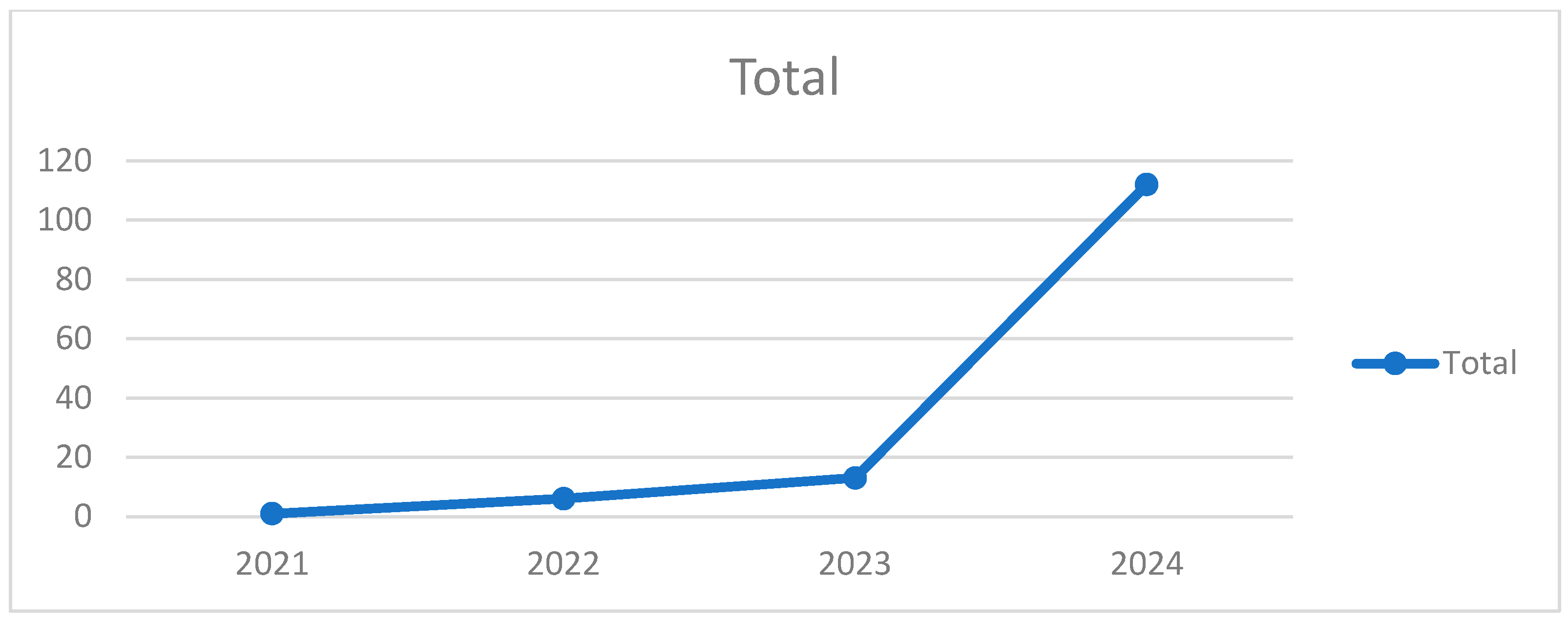
| Years | Frequency |
|---|---|
| 2021 | 1 |
| 2022 | 6 |
| 2023 | 13 |
| 2024 | 112 |
| Grand Total | 132 |
| Publication Source | Frequency |
|---|---|
| Energies | 7 |
| Results in Engineering | 6 |
| Nanomaterials | 5 |
| Polymers | 4 |
| Journal of Power Sources | 2 |
| Nano Materials Science | 2 |
| Materials | 2 |
| Applied Sciences (Switzerland) | 2 |
| Case Studies in Chemical and Environmental Engineering | 2 |
| Energy Reports | 2 |
| Processes | 2 |
| Environmental Advances | 2 |
| Journal of Materials Research and Technology | 2 |
| Green Chemistry | 2 |
| Technique | Properties | Applicable Nanomaterials | Strengths | Limitation | References |
|---|---|---|---|---|---|
| SEM | Surface morphology, particle size | Nanoparticles, nanocomposites, and catalysts | High-resolution imaging of surface morphology | Limited to surface structure, no chemical bonding information. | [62,63] |
| TEM | Crystallinity, internal structure | Nanocatalysts, energy storage materials | Atomic resolution, internal structure analysis, | Requires a thin sample and complex sample preparation | [64,65,66] |
| AFM | Surface topography, roughness, nanoscale defects | Catalysts, electrode, biomolecular interactions | High-resolution, topography, 3D imaging | Slower scanning time, limited to small areas of the sample | [50,67] |
| XRD | Crystallinity, phase structure | Nanocatalysts, electrodes, biofuels | Identify crystallinity, phase analysis | Limited to crystalline materials, no surface chemistry information | [68,69] |
| Nanocatalysts | Description | Examples and (Mode of Synthesis) | Feedstock Source | Reference |
|---|---|---|---|---|
| Metal oxide-based | They are conventionally used for the production of biodiesel. | Nano-MgO, MgO/MgFe2O4, KOH/Fe2O3/Al2O3, Na2SiO3 | Goat fat, sunflower oil, palm oil, corn oil, canola oil, soybean oil, animal fat, cooking oil | [71,72,73] |
| Carbon-based | The physical and chemical properties of nanocatalysts made from carbon materials, including graphene, carbon nanotubes, and reduced graphene oxides, have been characterised and correspond to various morphologies and sizes of the resulting non-composite materials. It has been discovered that nanocatalysts with acidic properties, high porosity, and large surface areas have better catalytic activity. | KOH-loaded MWCNTs (impregnation method), silicon carbide/sodium hydroxide–graphene oxide (in situ impregnation method), sulfonated biochar and activated carbon (pyrolysis method) | Canola oil, rapeseed oil, oleic acid, used cooking oil, oleic acid, vegetable oil. | [93,94] |
| Zeolite-based | Zeolite materials are now being used more frequently than before. The existence of active acidic and basic sites, high catalytic activity, easily modifiable structures using various functions, and metal exchange are only a few of the distinctive qualities they notably possess. | Zeolite/chitosan/KOH Lanthanum–natural zeolite (La/NZA) (impregnation method), ZSM-5 (nanosheets) (Hydrothermal method), Li/NaY zeolite (Hydrothermal and microemulsion) | Waste cooking oil, crude palm oil, linoleic acid, shea butter, castor oil | [95,96] |
| Nanocatalyst Class | Yield/Conversion (%) | Reaction Time | Recyclability (Cycles) | Supporting References |
|---|---|---|---|---|
| Metal oxide-based nanocatalysts (e.g., CaO, MgO, ZnO, mixed oxides) | 85–98% biodiesel yield | 1–3 h | 3–6 | [65,70,71,72,73,74,97] |
| Carbon-based nanocatalysts (CNTs, graphene, sulfonated biochar) | 80–95% biodiesel yield | 2–4 h | 4–7 | [76,92,93,94,98,99] |
| Zeolite-based nanocatalysts (ZSM) | 75–92% biodiesel yield | 2–5 h | 5–8 | [95,96,100,101] |
| Magnetic nanocatalysts (Fe3O4-based composites) | 85–97% biodiesel yield | 1–3 h | 6–10 | [90,102,103,104,105] |
| Enzyme-immobilised nanocatalysts (bioethanol fermentation) | 60–85% sugar-to-ethanol conversion | 24–72 h |
| Nanomaterial Class | Targeted Bioenergy Application | Key Performance Role | Critical Characterisation Focus | Key Scalability Challenge | Supporting References |
|---|---|---|---|---|---|
| Metal-oxide nanocatalysts (CaO, MgO, mixed oxides) | Biodiesel transesterification | High catalytic activity, fast reaction kinetics | Crystallinity, phase composition, particle size (XRD, SEM/TEM) | Catalyst leaching, sintering, limited reuse | [57,58,59,60,61,65,70,71,72,73,74] |
| Magnetic nanocomposites (Fe3O4-based) | Biodiesel production and upgrading | Easy recovery, recyclability | Core–shell integrity, dispersion, morphology (TEM, SEM) | Mechanical durability over multiple cycles | [90,102,103,104,105] |
| Carbon-based nanomaterials (CNTs, graphene, biochar) | Bioelectrochemical systems (MFCs, BES) | Enhanced electron transfer, conductivity | Surface roughness, topology, defect density (SEM, AFM) | Electrode delamination, long-term stability | [49,50,51,52,75,76,77,98] |
| Enzyme-immobilised nanomaterials | Bioethanol fermentation | Improved enzymatic efficiency and reuse | Surface chemistry, binding stability (AFM, spectroscopy) | Enzyme deactivation, operational lifetime | [109,110] |
| Hybrid/additively manufactured nanocomposites | Structured catalysts, electrodes, reactors | Structural integrity, controlled mass transport | Multiscale architecture, interface stability (SEM, operando methods) | Scalability, printability, life-cycle impacts | [75,76,77,90,102,103,104,105,113,114] |
Disclaimer/Publisher’s Note: The statements, opinions and data contained in all publications are solely those of the individual author(s) and contributor(s) and not of MDPI and/or the editor(s). MDPI and/or the editor(s) disclaim responsibility for any injury to people or property resulting from any ideas, methods, instructions or products referred to in the content. |
© 2026 by the authors. Licensee MDPI, Basel, Switzerland. This article is an open access article distributed under the terms and conditions of the Creative Commons Attribution (CC BY) license.
Share and Cite
Adeoba, M.I.; Ngwangwa, H.; Masebe, T.; Pandelani, T. Perspective of Materials Characterisation and Performance Evaluation of Advanced Nanomaterials for Bioenergy Systems: A Systematic Review. Mater. Proc. 2026, 31, 26. https://doi.org/10.3390/materproc2026031026
Adeoba MI, Ngwangwa H, Masebe T, Pandelani T. Perspective of Materials Characterisation and Performance Evaluation of Advanced Nanomaterials for Bioenergy Systems: A Systematic Review. Materials Proceedings. 2026; 31(1):26. https://doi.org/10.3390/materproc2026031026
Chicago/Turabian StyleAdeoba, Mariam I., Harry Ngwangwa, Tracy Masebe, and Thanyani Pandelani. 2026. "Perspective of Materials Characterisation and Performance Evaluation of Advanced Nanomaterials for Bioenergy Systems: A Systematic Review" Materials Proceedings 31, no. 1: 26. https://doi.org/10.3390/materproc2026031026
APA StyleAdeoba, M. I., Ngwangwa, H., Masebe, T., & Pandelani, T. (2026). Perspective of Materials Characterisation and Performance Evaluation of Advanced Nanomaterials for Bioenergy Systems: A Systematic Review. Materials Proceedings, 31(1), 26. https://doi.org/10.3390/materproc2026031026