
Proceeding Paper

Key Predictors of Lightweight Aggregate Concrete Compressive Strength by Machine Learning from Density Parameters and Ultrasonic Pulse Velocity Testing †

by
Violeta Migallón
,
Héctor Penadés
* and
José Penadés
Department of Computer Science and Artificial Intelligence, University of Alicante, 03690 Alicante, Spain
*
Author to whom correspondence should be addressed.
Presented at the 4th International Online Conference on Materials, 3–6 November 2025; Available online: https://sciforum.net/event/IOCM2025.
Mater. Proc. 2025, 26(1), 4; https://doi.org/10.3390/materproc2025026004

Published: 6 January 2026
(This article belongs to the Proceedings of The 4th International Online Conference on Materials)

Abstract

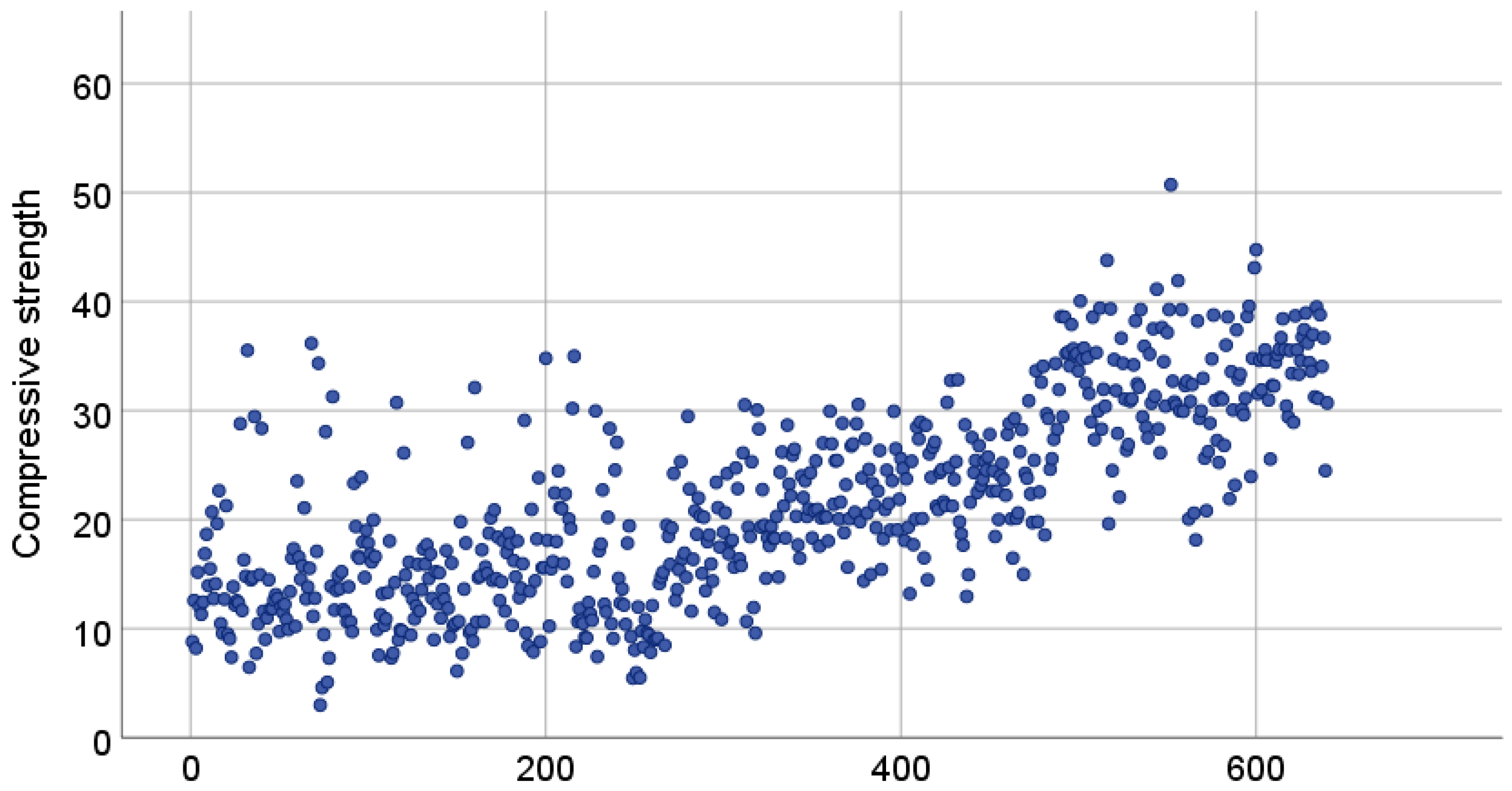
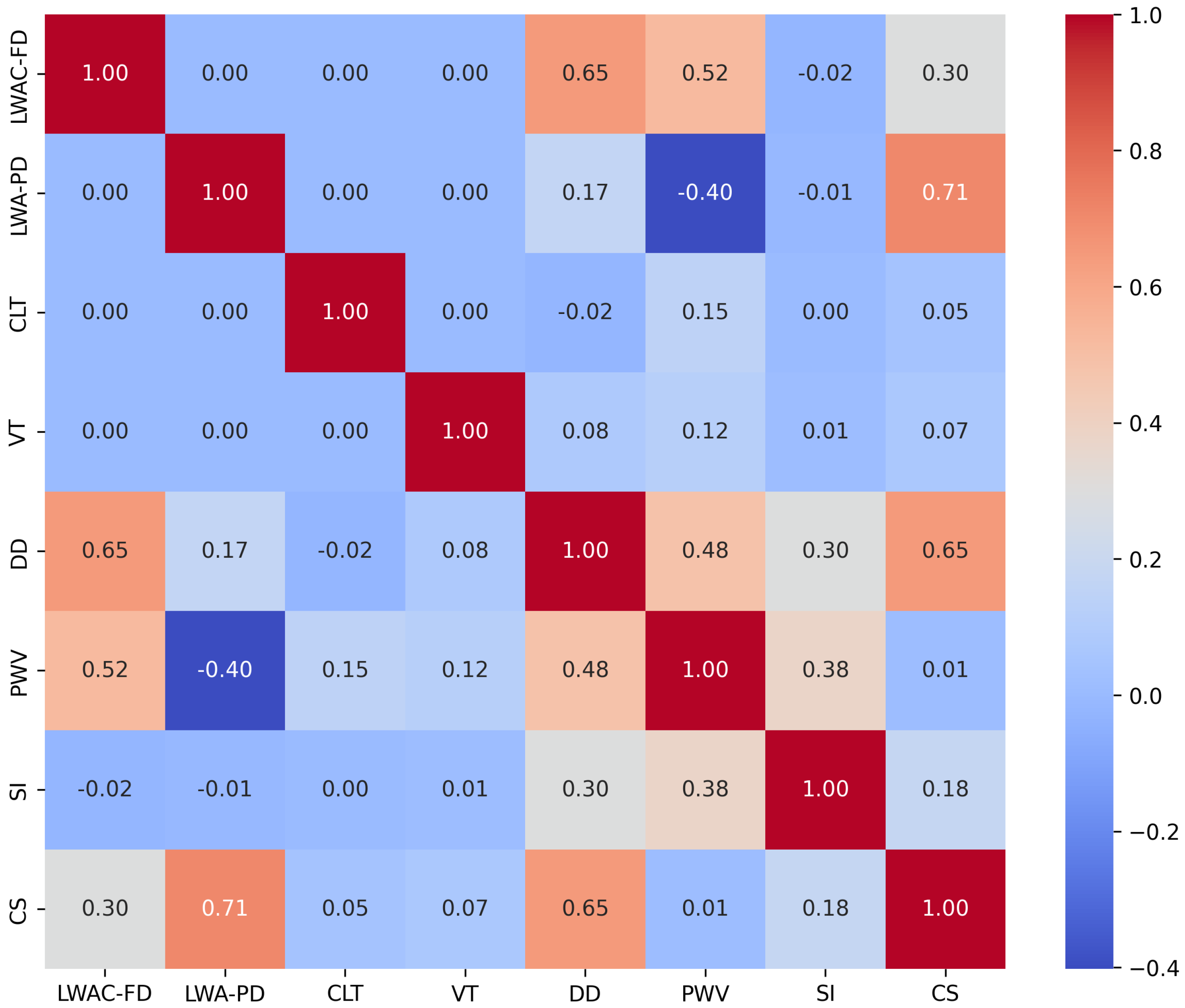
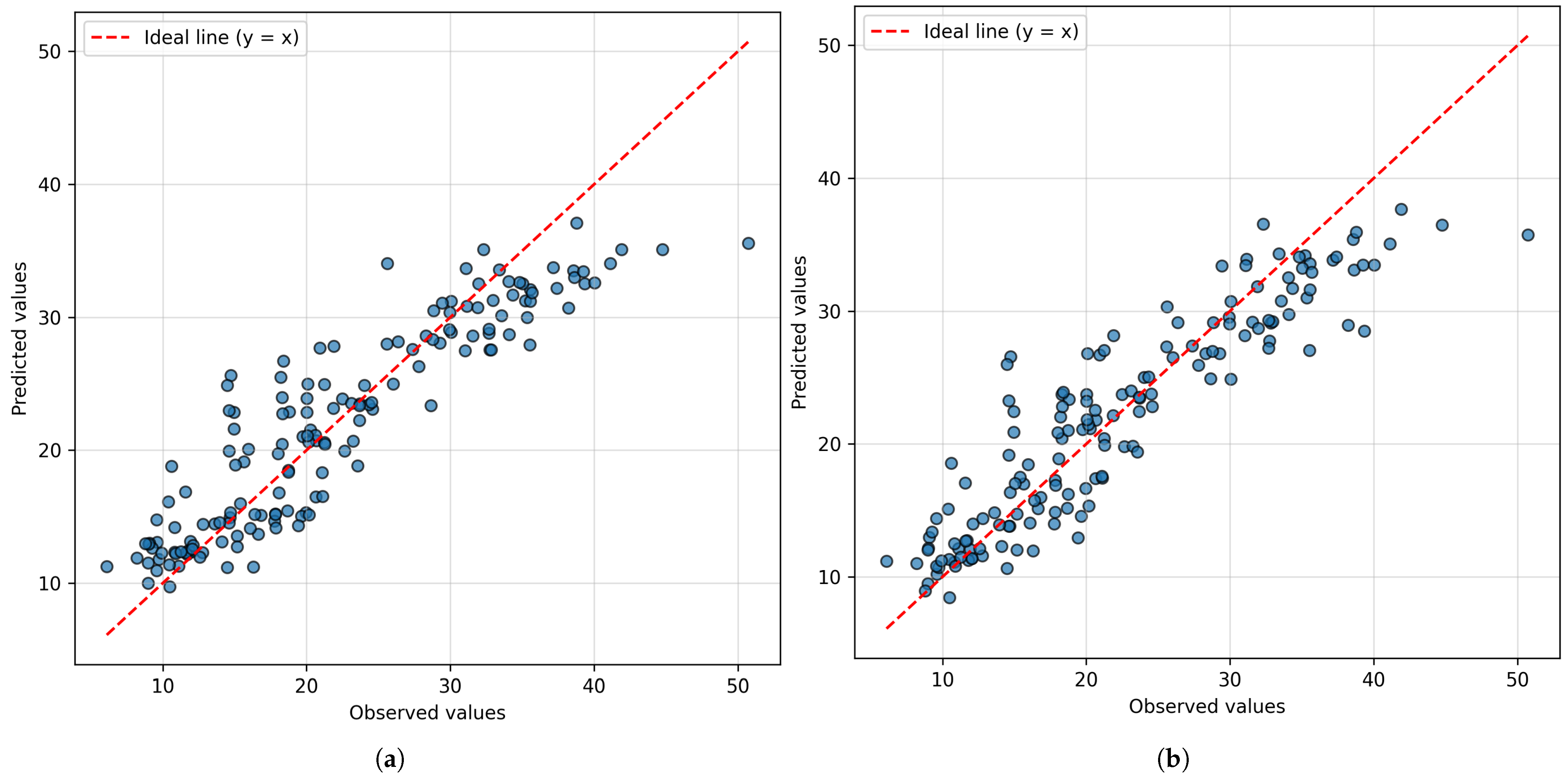
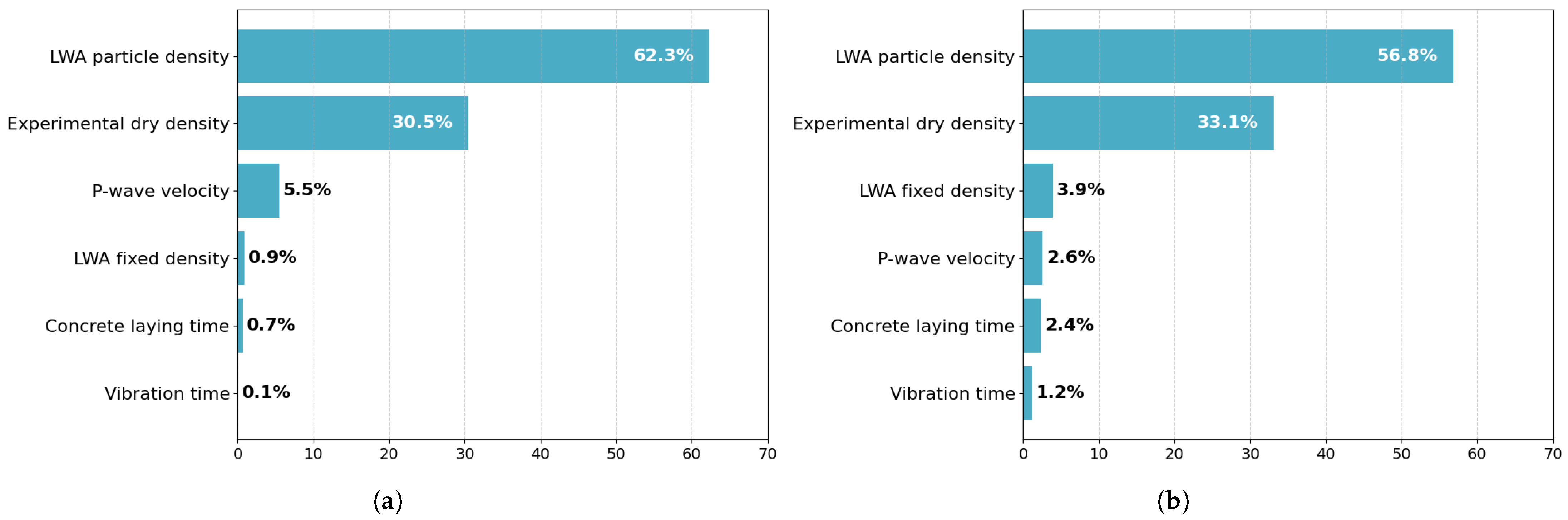
Non-destructive evaluation techniques are increasingly recognised as effective alternatives to destructive testing for estimating the compressive strength of lightweight aggregate concrete (LWAC). Among these, ultrasonic pulse velocity (UPV) is a well-established and widely employed method, characterised by its speed, non-invasiveness, and relative simplicity of implementation. In this study, an experimental dataset comprising 640 core segments from 160 cylindrical specimens, provided for analysis, was investigated. Each segment was described by physical and processing variables or features, including lightweight aggregate (LWA) and concrete densities, casting and vibration times, experimental dry density, and P-wave velocity obtained through UPV testing. A segregation index, derived from UPV measurements and defined as the ratio of local to mean P-wave velocity within each specimen, was also considered, following approaches previously suggested in the literature. A range of machine learning techniques was applied to assess the predictive capacity of local P-wave velocity and segregation index. Most ensemble-based methods and support vector regression (SVR) achieved the highest predictive performance when the segregation index was excluded, suggesting that its inclusion did not improve the predictive ability of the models. By contrast, Gaussian process regression (GPR) showed slight improvements when the segregation index was included. The results confirmed that the P-wave velocity measured by UPV testing is a reliable non-destructive predictor of compressive strength in LWAC. At the same time, the added value of the segregation index remained negligible under conditions of low segregation, as reflected by segregation index values above 0.8. These findings highlight the practical potential of integrating UPV-based measurements with data-driven modelling to enhance the reliability of concrete characterisation and quality control.
Keywords: lightweight aggregate concrete; compressive strength prediction; ultrasonic pulse velocity; machine learning models lightweight aggregate concrete; compressive strength prediction; ultrasonic pulse velocity; machine learning models