
Proceeding Paper

Synthesis and Characterization of Spermidine-Modified Alginic Acid Hydrogels with Possible Tissue Regeneration Applications †

by
Harim Galilea Díaz-Corte
1,
Itzia Irene Padilla-Martínez
1,
Gabriela Martínez-Mejía
2,* and
Mónica Corea
2,*
1
Unidad Profesional Interdisciplinaria de Biotecnología, Instituto Politécnico Nacional, Gustavo A. Madero, Ciudad de México 07340, Mexico
2
Laboratorio de Investigación en Polímeros y Nanomateriales (UPALM), Escuela Superior de Ingeniería Química e Industrias Extractivas (ESIQIE), Instituto Politécnico Nacional, Zacatenco, Ciudad de México 07738, Mexico
*
Authors to whom correspondence should be addressed.
Presented at the 5th International Online Conference on Nanomaterials, 22–24 September 2025; Available online: https://sciforum.net/event/IOCN2025.
Mater. Proc. 2025, 25(1), 23; https://doi.org/10.3390/materproc2025025023
Published: 26 January 2026
(This article belongs to the Proceedings of The 5th International Online Conference on Nanomaterials)

Abstract

Hydrogels are 3D networks of hydrophilic crosslinked polymers, which are synthesized from synthetic or natural sources such as chitosan and alginic acid derived from shrimp shell and brown seaweed, respectively. These materials exhibit biodegradability, biocompatibility, and non-cytotoxic properties to be used as scaffolds for tissue engineering applications. In this study, four types of alginic acid hydrogels were chemically synthesized using spermidine as a crosslinking agent with concentrations ranging from 5% (w/w) to 100% (w/w). The results of scanning electron microscopy (SEM) revealed a small average pore size (≤5 μm), while electrospray ionization mass spectrometry (ESI-MASS) and Fourier transform infrared spectroscopy (FT-IR) showed the characteristic vibrations and formed bonds between alginic acid and spermidine, respectively. Finally, the alginic acid hydrogels demonstrated potential ability for tissue regeneration treatments.

1. Introduction

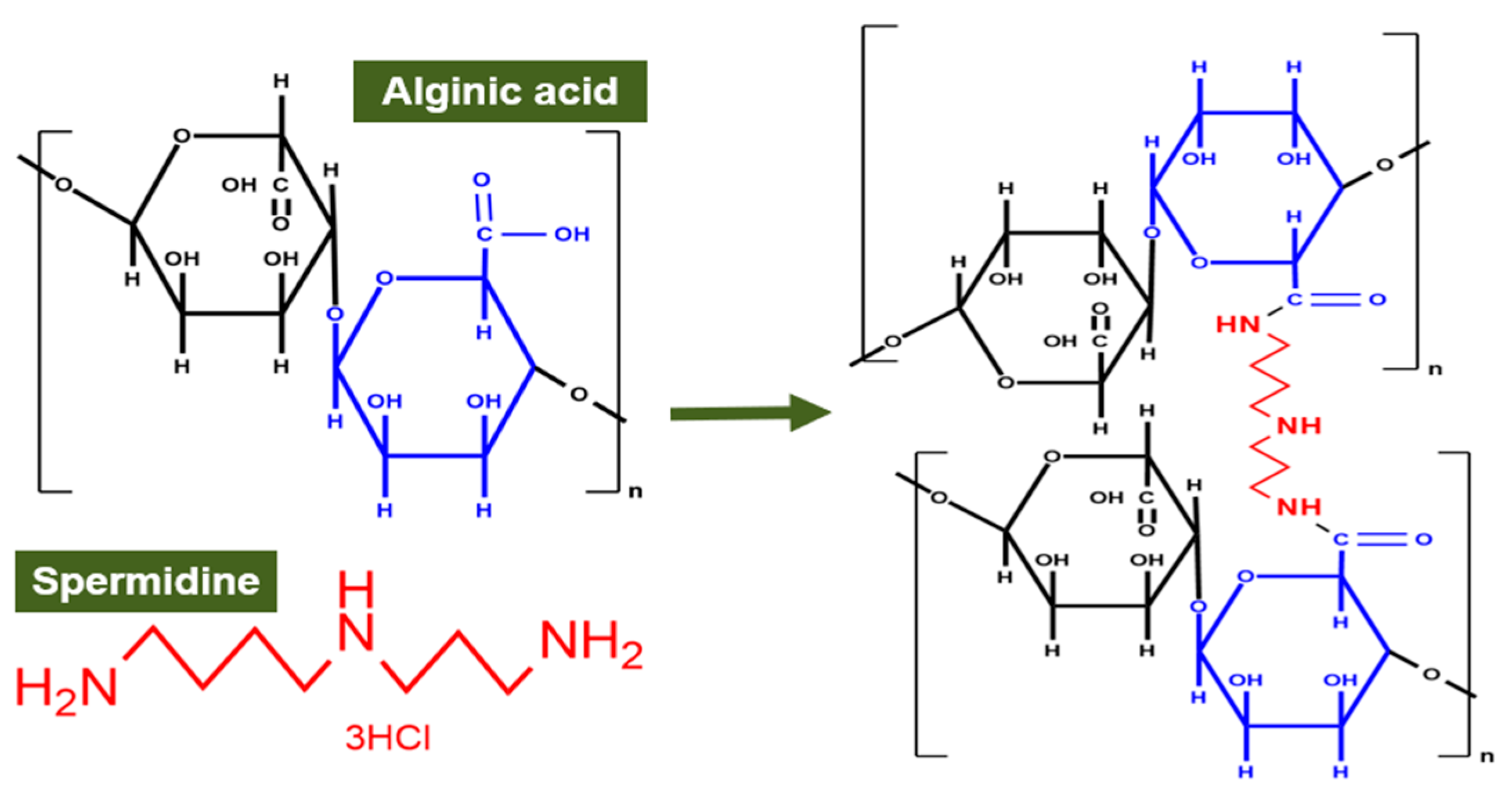
Recent advances in alginate-based hydrogels emphasize the development of new crosslinking pathways to improve mechanical stability and biological performance, particularly for regenerative applications. Several studies published in 2025 report enhanced polysaccharide hydrogels through polyamine-modified networks, advanced alginate processing, and optimized crosslinker–polymer interactions [1,2,3]. These findings support the growing interest in alternative crosslinking strategies beyond traditional ionic mechanisms and highlight the relevance of exploring spermidine mediated chemical crosslinking. Polymeric hydrogels are three-dimensional cross-linked networks of hydrophilic polymers that can absorb and retain large amounts of water. Their porous structure allows them high permeability to oxygen and nutrients [4]. Among the polymers commonly employed in hydrogel synthesis is alginic acid (alginate), which is a natural polysaccharide widely used because of its biocompatibility, biodegradability, and gel-forming ability [5]. It is predominantly found in the cell walls of brown seaweeds (Phaeophyceae) [5]. Previous studies have reported that alginate hydrogels can successfully support myoblast cell adhesion on their surface [6]. However, other authors have reported that alginate tends to swell or degrade, even in the presence of additional polysaccharides such as gelatin and hyaluronic acid [7]. To improve the stability of alginate hydrogels, a crosslinking agent such as spermidine trihydrochloride is often employed because of its presence in most living organisms [8], where the crosslinking reaction occurs between the carboxylic acid group from the alginic acid monomer and the amine groups of spermidine (Figure 1) [9,10]. The novelty of this work relies on the chemical crosslinking of alginic acid with spermidine at four different concentrations (5–100% w/w), followed by a complete physicochemical characterization (SEM, ESI-MS, and FT-IR) that has not been simultaneously reported in previous studies. In contrast to earlier works where alginate hydrogels were stabilized using conventional multivalent cations or natural polysaccharide blends, our approach demonstrates that spermidine induces distinct pore size reduction, viscosity enhancement, and specific bonding signatures, offering an alternative crosslinking route with potential advantages for tissue regeneration applications.

2. Materials and Methods

2.1. Materials

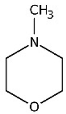
The chemicals used for hydrogel synthesis and their specifications are summarized in Table 1. The reagents were used without prior purification.

2.2. Hydrogel Synthesis

The synthesis of hydrogels was performed by adding 1 g of alginic acid to different Erlenmeyer flasks containing 10 mL of deionized water. For catalyst preparation, 0.025 g of CDMT and 16 µL of NMM were dissolved in 2 mL of deionized water in different flasks. Then, catalyst mixtures were added to the alginic acid solutions under constant stirring for 1 h. Finally, spermidine was deposited at concentrations of 5% (w/w), 20% (w/w), 50% (w/w), and 100% (w/w). All syntheses were carried out at room temperature and atmospheric pressure. The experiments were carried out in triplicate.

2.3. Scanning Electron Microscopy (SEM)

The surface morphology of alginate hydrogels was analyzed in a scanning electron microscope JEOL JSM 6400 (Tokyo, Japan). Analysis was conducted using 0.5 g of the sample deposited on a sample holder without prior dilution. Subsequently, the samples were introduced into liquid nitrogen over 20 s and placed under vacuum conditions overnight. Finally, the hydrogel was coated with a gold–palladium layer for 3 s. SEM analysis was performed under the following operation conditions: magnification range of 500 and 2500×, at a working distance (WD) of 10 mm, and an accelerating voltage of 10 kV.

2.4. Electrospray Ionization Mass Spectrometry (ESI-MASS)

Electrospray ionization mass spectrometry was used to determine the experimental molecular weight of alginate hydrogels. ESI-MASS analyses were performed using a microOTOF-benchtop spectrometer from Bruker Daltonics (Bremen, Germany). To remove excess catalysts in the sample, 3 g of hydrogel was washed by manual agitation with 5 mL of deionized water. This procedure was repeated twice. Then, 1 mL of supernatant was transferred to a 3 mL Eppendorf tube. ESI-MASS analyses were performed from 50 mz−1 to 3000 mz−1, and the results were plotted with the Bruker Compass Data Analysis 4.1 program.

2.5. Fourier Transform Infrared Spectroscopy (FT-IR)

The FT-IR analysis of alginate hydrogels was performed in an infrared spectrophotometer with an ATR reflectance attenuator from Perkin Elmer model Frontier (Waltham, MA, USA) with an energy of 236 E.U. The hydrogel’s spectrum was measured in transmission mode over the middle region of the infrared spectrum between 4000 and 400 cm−1 at 30 °C.

2.6. In Vitro Cytotoxicity Assay

The LIVE/DEAD Viability/Cytotoxicity Kit was used to assess cell viability. Human fibroblasts cultured in 4-well chamber slides were treated with the hydrogel with 5 wt.% of spermidine. Prior to application, the hydrogels were sterilized using UV radiation for 15 min. Calcein and ethidium homodimer staining were performed after 24 and 72 h of nanoparticle exposure. Untreated wells were used and considered as controls. Fluorescence images were acquired using a fluorescence microscope (Nikon Eclipse, Tokyo, Japan).

3. Results

3.1. Alginic Acid Hydrogel Synthesis with Different Concentrations of Crosslinker Agent

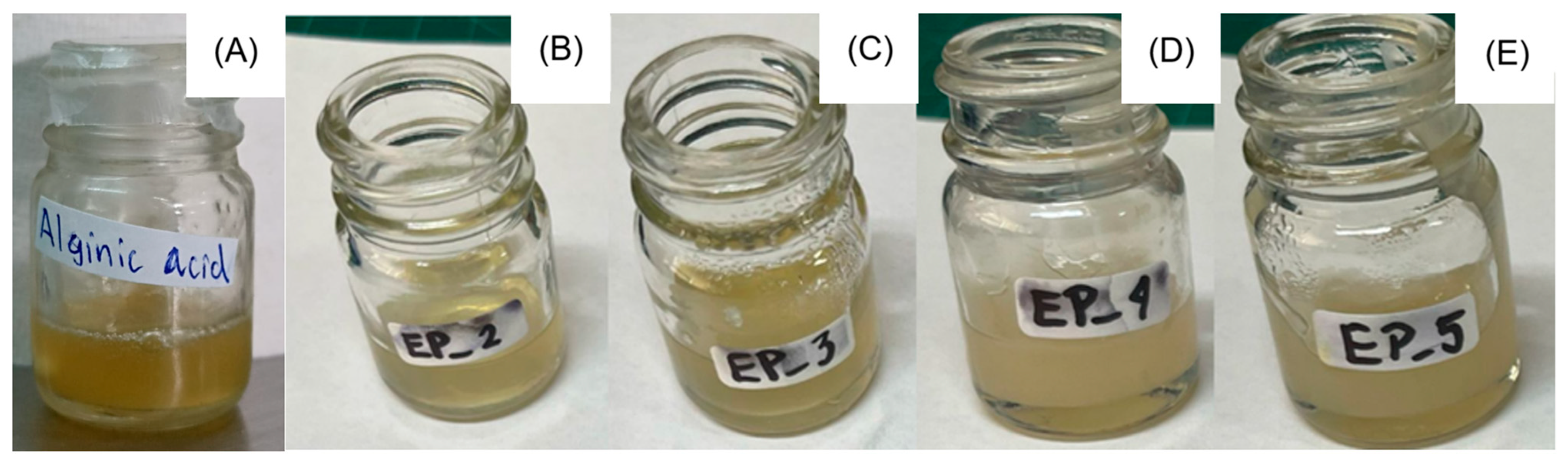
In general, Figure 2A–D shows the alginate acid hydrogels with different concentrations of spermidine. As shown, the hydrogels with 5% (w/w) and 20% (w/w) of spermidine exhibit a similar behavior to that of the alginic acid gel. This means they show a liquid–gel consistency and pale translucent/amber color. This behavior is also maintained after the crosslinker agent was added (Figure 2A,B). Furthermore, hydrogels with 50% (w/w) and 100% (w/w) of spermidine show a thicker consistency, non-transparent white color, and a similar solid-like behavior, as seen in Figure 2C,D. In both cases, color and consistency are related to the amount of crosslinker agent added [11]. This is because the pore size of hydrogels decreases by adding larger concentrations of crosslinker agent [11]. Thus, their apparent viscosity increases and color changes significantly. A blank hydrogel (alginic acid without spermidine) was included as the control sample to assess the influence of the crosslinker. This blank exhibited a fully translucent appearance and a fluid-like consistency, serving as the reference behavior against which the structural and visual modifications induced by spermidine addition were evaluated. Among the four synthesized hydrogels, only the sample containing 5% (w/w) spermidine exhibited sufficient mechanical stability, homogeneity, and handleability to be prepared adequately for the instrumental characterizations.

3.2. Scanning Electron Microscopy (SEM) of Alginic Acid Hydrogels with Different Concentrations of Crosslinker Agent

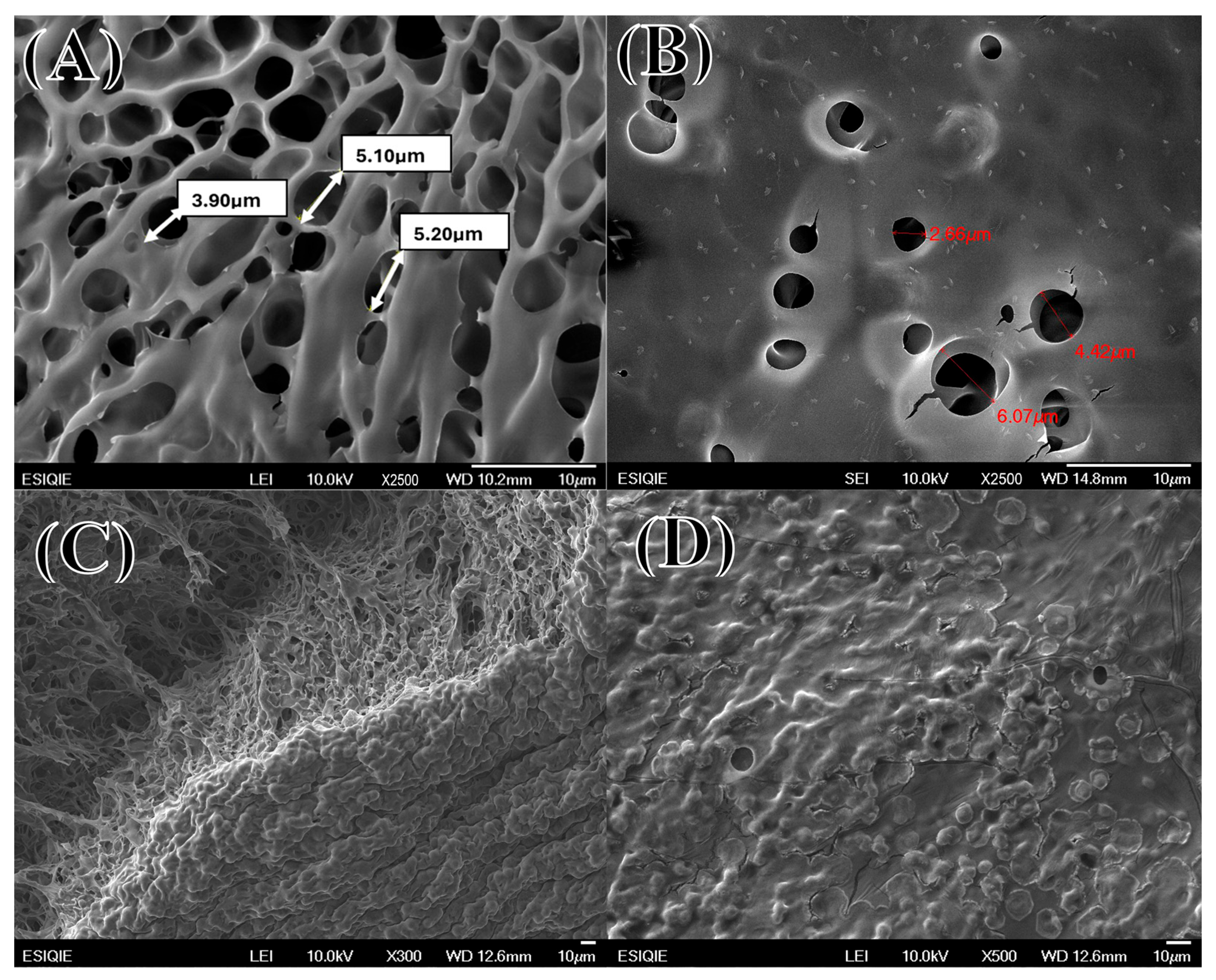
Figure 3 shows the surface morphology of the hydrogels with 5%, 20%, 50%, and 100% (w/w) of spermidine. It is observed that all the hydrogels exhibit a 3D network, porous structure, and average pore size ranging between 3 µm and 5 µm. This is attributed to the linkage between alginic acid polymeric chains and the crosslinking agent. This means that the reaction occurs between the carboxylic acid group present in the alginic acid and the amine groups of spermidine [12], which leads to an increase in the physical hydrogel stability [13].

3.3. Electrospray Ionization Mass Spectrometry (ESI-MASS) of Alginic Acid Hydrogels with Different Concentrations of Crosslinker Agent

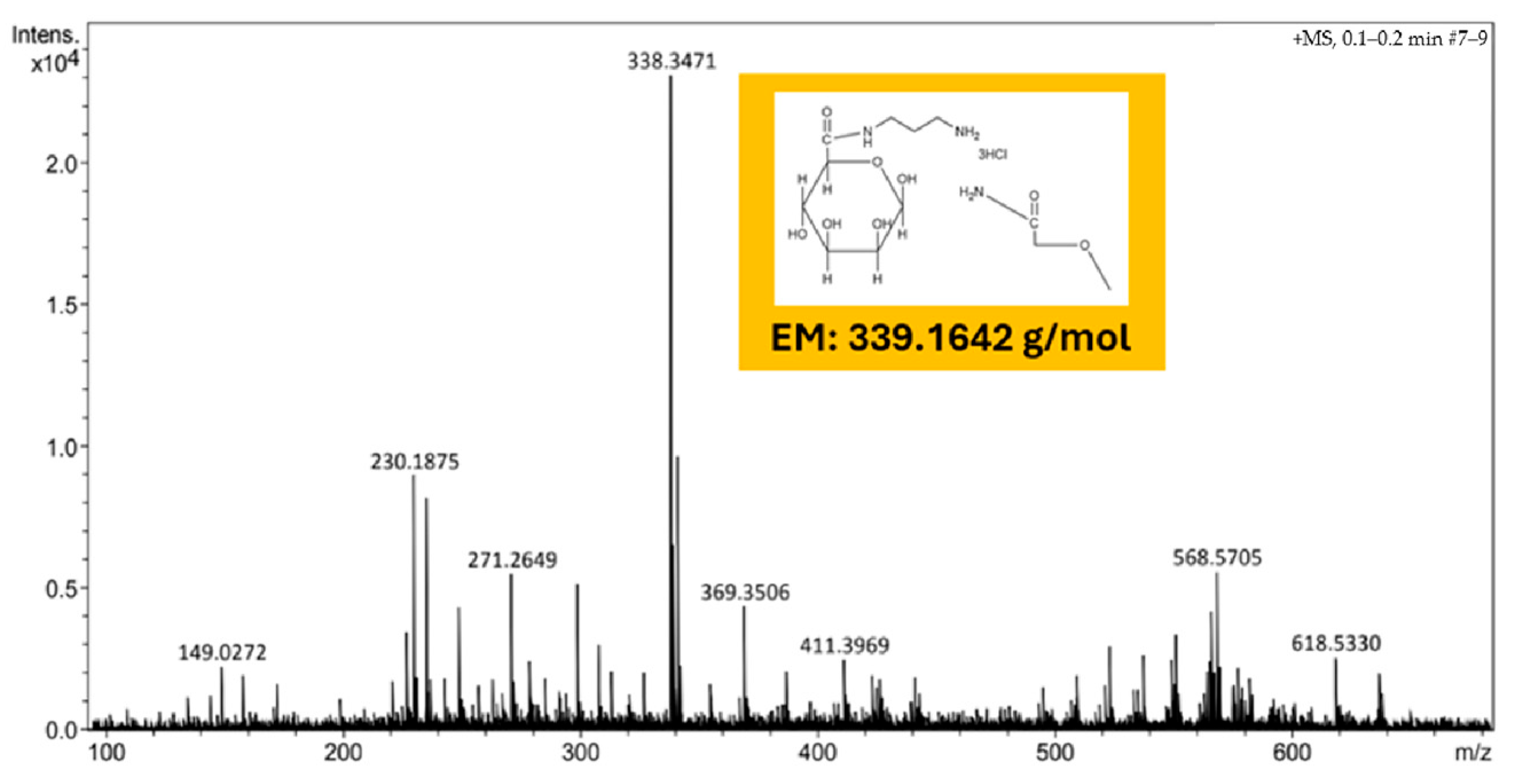
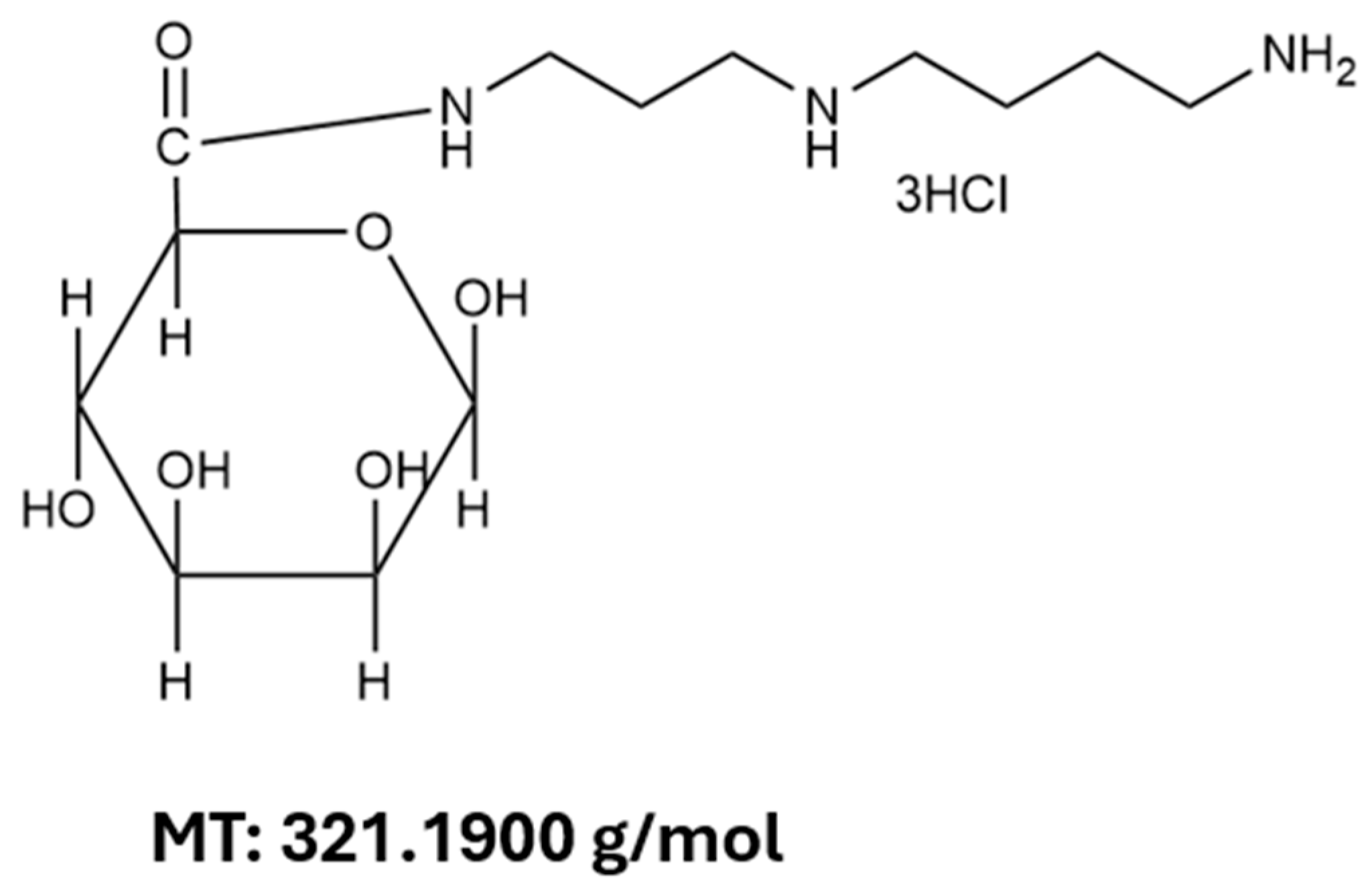
Experimental molecular weight (EM) of the hydrogel was analyzed by electrospray ionization mass spectrometry. The results show the intense peak at 338.34 g mol−1 (Figure 4, yellow square) is attributed to the molecular weight corresponding to the alginic acid-spermidine molecule [14,15]. The theoretical and experimental molecular mass are similar to those obtained by the Chemdraw 23.1.2-32 program (321.19 g mol−1, see Figure 5), confirming the formation of the polymer. The difference of ~18 g mol−1 may be related to another fragment of alginic acid-spermidine molecule. It is important to note that ESI-MS analysis was performed only for the hydrogel containing 5% (w/w) spermidine, as all synthesized hydrogels share the same chemical crosslinking structure. Variations among samples are related exclusively to the degree of crosslinking rather than to differences in chemical composition. Therefore, the 5% (w/w) hydrogel was selected as a representative sample to confirm the formation of the alginic acid–spermidine structure.

3.4. Fourier Transform Infrared Spectroscopy (FT-IR) of Alginic Acid Hydrogels with Different Concentrations of Crosslinker Agent

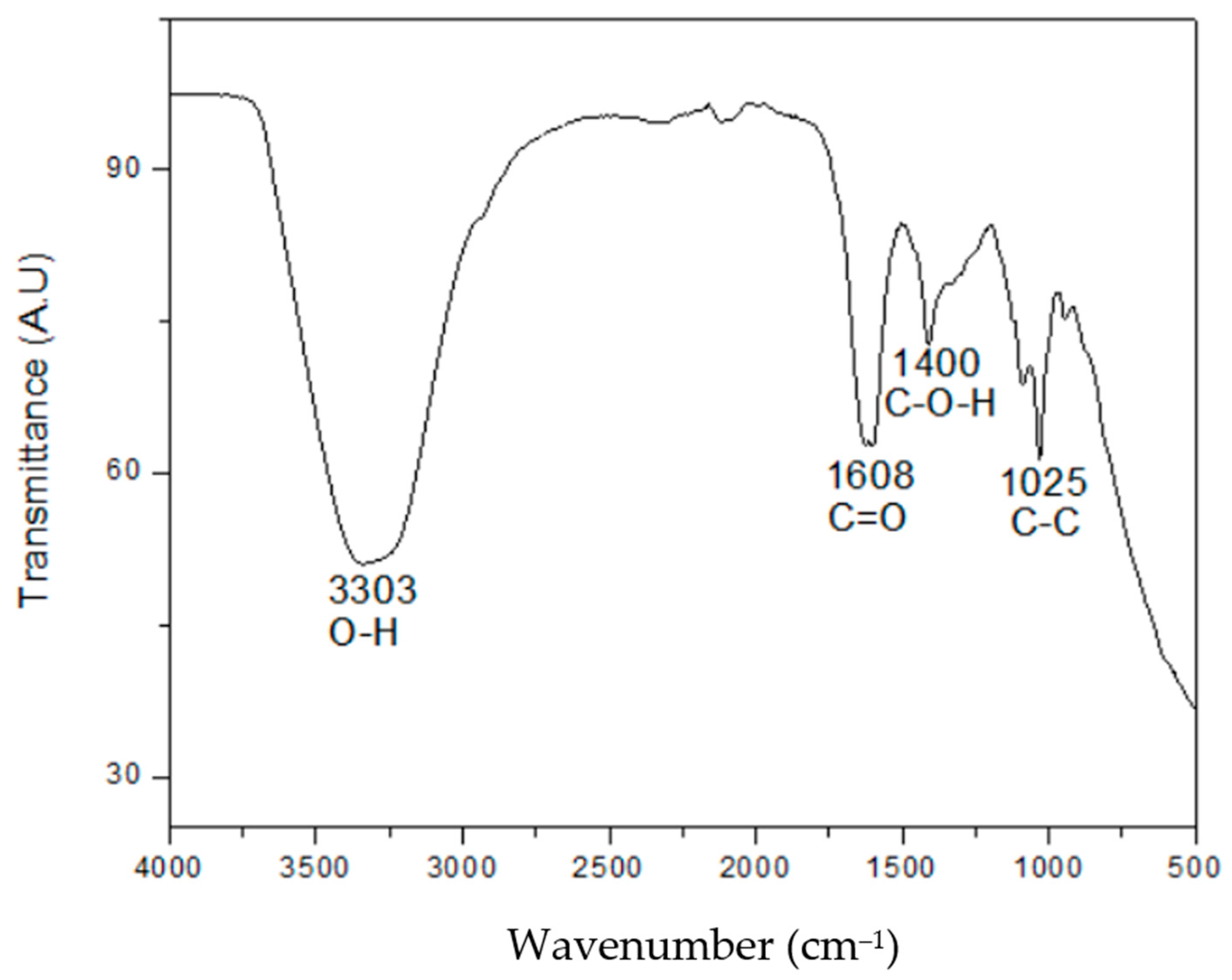
Fourier-transform infrared spectroscopy (FT-IR) analysis was made directly on fresh hydrogel with the crosslinking agent. Figure 6 shows the characteristic peaks of a hydrogel with 5% (w/w) spermidine as an example, since all synthesized hydrogels share the same chemical crosslinking structure. Consequently, all samples exhibited the same characteristic absorption bands at identical wavenumber positions, with variations related only to band intensity rather than the appearance of new functional groups. Therefore, the spectrum corresponding to the 5% (w/w) hydrogel is shown to illustrate the typical vibrational features of the alginic acid–spermidine network. Based on this representative spectrum, its observe an absorption peak at 3303 cm−1 corresponds to the stretching frequencies of the O-H bond, as well as the absorption bands at 1608 cm−1, 1400 cm−1, and 1025 cm−1, corresponding to the stretching carbonyl group (C=O), C-O-H bonds, and structural carbon–carbon bonds from carboxylic acid, respectively [16]. The FT-IR findings corroborate the experimental molecular weight analysis of ESI-MS, confirming the formation of a chemical cross-link between the alginic acid monomer and the spermidine molecule.

3.5. In Vitro Cytotoxicity Assay

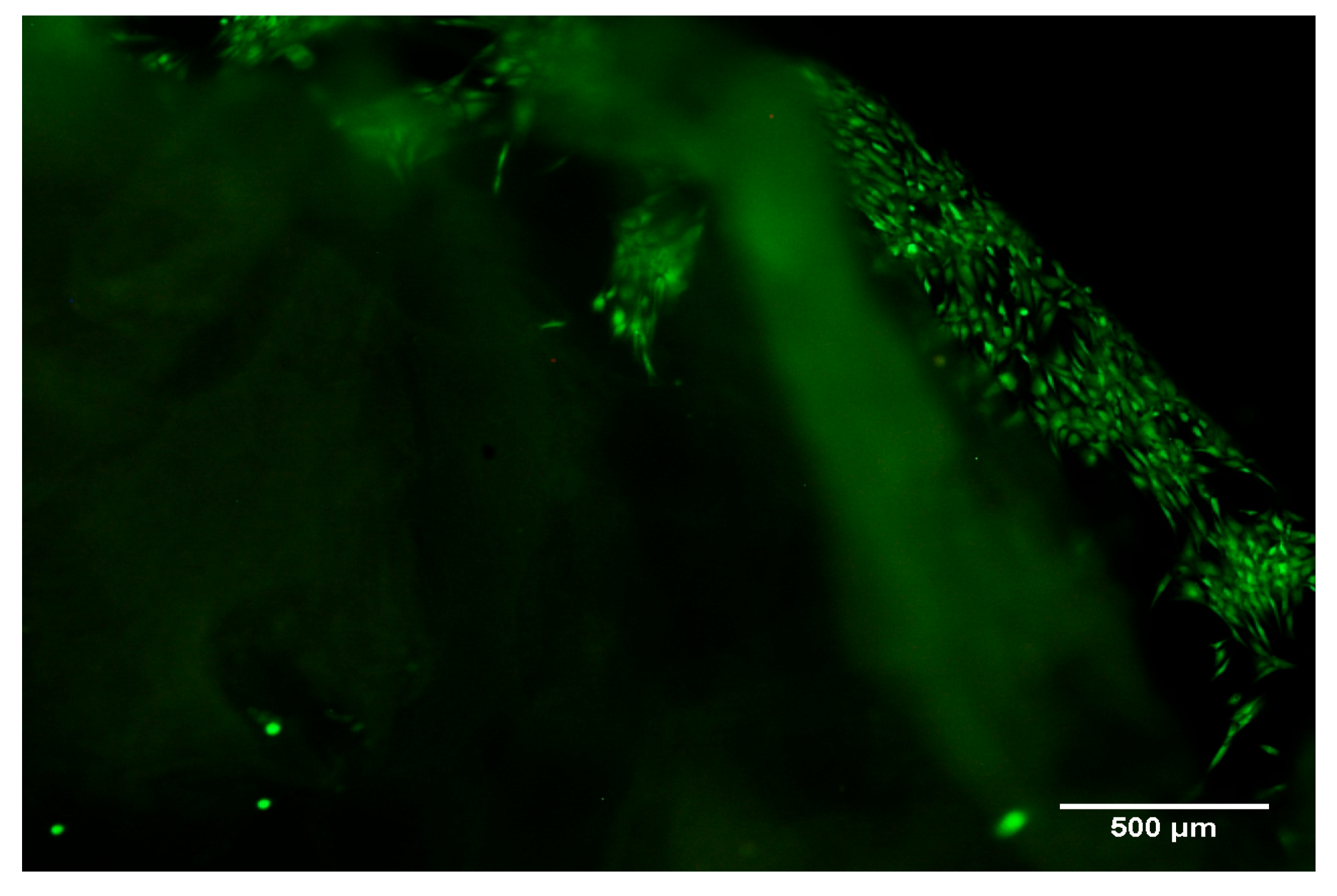
Figure 7 shows the cell viability assay of human fibroblasts interacting with a hydrogel containing 5 wt.% spermidine. This formulation was selected for the biological evaluation due to its adequate handling, structural integrity, and homogeneous porous morphology, as observed in the physicochemical characterization. Live cells are observed on the hydrogel surface in green, indicating that calcein was internalized, metabolized, and reduced by viable cells. These results demonstrate that the hydrogel exhibits low cytotoxic effects toward human fibroblasts, suggesting its suitability for further biological evaluation [17].

4. Partial Conclusions

Novel alginic acid hydrogels were successfully synthesized by chemical crosslinking with spermidine. The hydrogel’s average pore size is highly influenced by the crosslinker concentration, also resulting in a color and viscosity alteration. ESI-MASS revealed an effective bonding between the amine group and carboxyl group from spermidine and alginic acid, respectively. Finally, FT-IR presented the characteristic bands corresponding to the carboxylic acid groups from alginic acid. The obtained results suggest that alginic acid hydrogels with 5% (w/w) of spermidine show a high potential to be applied for tissue regeneration treatments.

Author Contributions

Conceptualization, G.M.-M. and M.C.; methodology, G.M.-M.; validation, G.M.-M., M.C. and I.I.P.-M.; formal analysis, G.M.-M., M.C. and H.G.D.-C.; investigation, H.G.D.-C.; resources, G.M.-M. and M.C.; data curation, H.G.D.-C.; writing—original draft preparation, H.G.D.-C.; writing—review and editing, H.G.D.-C.; visualization, H.G.D.-C.; supervision, G.M.-M., M.C. and I.I.P.-M.; project administration, G.M.-M., M.C. and I.I.P.-M. All authors have read and agreed to the published version of the manuscript.

Funding

This research received no external funding.

Institutional Review Board Statement

Not applicable.

Informed Consent Statement

Not applicable.

Data Availability Statement

The original contributions presented in this study are included in the article. Further inquiries can be directed to the corresponding authors.

Acknowledgments

The authors would like to acknowledge CENTRO DE NANOCIENCIAS Y MICRONANOTECNOLOGÍAS (CNMN, IPN) and ESCUELA SUPERIOR DE INGENIERÍA QUÍMICA E INDUSTRIAS EXTRACTIVAS (ESIQIE, IPN) for characterization techniques.

Conflicts of Interest

The authors declare no conflicts of interest.

References

  1. Cao, J.; Wu, B.; Yuan, P.; Liu, Y.; Hu, C. Research Progress of Sodium Alginate-Based Hydrogels in Biomedical Engineering. Gels 2025, 11, 758. [Google Scholar] [CrossRef] [PubMed]
  2. Zhang, T.; Liu, H.; Nie, P.; Wang, K.; Wang, X.; Liu, Y.; Li, X.; Cheng, X. Enhancement of alginate/gelatin/polyvinyl alcohol hydrogels for multi-crosslinked 3D printed blood vessels. Int. J. Biol. Macromol. 2025, 310, 142947. [Google Scholar] [CrossRef] [PubMed]
  3. Liu, Y.; Ding, A. An overview of recent advancements in 4D printing of alginate hydrogels for tissue regeneration. J. Biomater. Sci. Polym. 2025, 36, 2786–2819. [Google Scholar] [CrossRef] [PubMed]
  4. Trucillo, P. Biomaterials for Drug Delivery and Human Applications. Materials 2024, 17, 456. [Google Scholar] [CrossRef] [PubMed]
  5. Lee, K.Y.; Mooney, D.J. Alginate: Properties and biomedical applications. Prog. Polym. Sci. 2012, 37, 106–126. [Google Scholar] [CrossRef] [PubMed]
  6. Rowley, J.A.; Madlambayan, G.; Mooney, D.J. Alginate hydrogels as synthetic extracellular matrix materials. Biomaterials 1999, 20, 45–53. [Google Scholar] [CrossRef] [PubMed]
  7. Serafin, A.; Culebras, M.; Collins, M.N. Synthesis and evaluation of alginate, gelatin, and hyaluronic acid hybrid hydrogels for tissue engineering applications. Int. J. Biol. Macromol. 2023, 233, 2–10. [Google Scholar] [CrossRef] [PubMed]
  8. Tabor, C.W.; Tabor, H. 1,4-Diaminobutane (putrescine), spermidine, and spermine. Annu. Rev. Biochem. 1976, 45, 285–306. [Google Scholar] [CrossRef] [PubMed]
  9. Alavarse, A.C.; Frachini, E.C.G.; da Silva, R.L.C.G.; Lima, V.H.; Shavandi, A.; Petri, D.F.S. Crosslinkers for polysaccharides and proteins: Synthesis conditions, mechanisms, and crosslinking efficiency, a review. Int. J. Biol. Macromol. 2022, 202, 558–596. [Google Scholar] [CrossRef] [PubMed]
  10. Maiti, S.; Maji, B.; Yadav, H. Progress on green crosslinking of polysaccharide hydrogels for drug delivery and tissue engineering applications. Carbohydr. Polym. 2024, 326, 121584. [Google Scholar] [CrossRef] [PubMed]
  11. Kopač, T.; Ručigaj, A.; Krajnc, M. The mutual effect of the crosslinker and biopolymer concentration on the desired hydrogel properties. Int. J. Biol. Macromol. 2020, 159, 557–558. [Google Scholar] [CrossRef] [PubMed]
  12. He, Q.; Tong, T.; Yu, C.; Wang, Q. Advances in Algin and Alginate-Hybrid Materials for Drug Delivery and Tissue Engineering. Mar. Drugs 2022, 21, 14. [Google Scholar] [CrossRef] [PubMed]
  13. Martinez, F.D.; Fischer, T.; Hayn, A.; Mierke, C.T.; Burgess, J.K.; Harmsen, M.C. A Beginner’s Guide to the Characterization of Hydrogel Microarchitecture for Cellular Applications. Gels 2022, 8, 535. [Google Scholar] [CrossRef] [PubMed]
  14. MERCK. Available online: https://www.sigmaaldrich.com/MX/es/product/sigma/s2626?srsltid=AfmBOooqpGXHzovEintDe0-U20wleet7rd0WNl3l6evdNtRp9il_bjX6 (accessed on 20 October 2025).
  15. PubChem. Available online: https://pubchem.ncbi.nlm.nih.gov/compound/Alginate (accessed on 20 October 2025).
  16. Stuart, B. Infrared Spectroscopy: Fundamentals and Applications; John Wiley & Sons Ltd.: Bognor Regis, UK, 2004; pp. 45–51. [Google Scholar]
  17. Wang, M.O.; Etheridge, J.M.; Thompson, J.A.; Vorwald, C.E.; Dean, D.; Fisher, J.P. Evaluation of the in vitro cytotoxicity of cross-linked biomaterials. Biomacromolecules 2013, 14, 1321–1329. [Google Scholar] [CrossRef] [PubMed]
Figure 1. Linkage process between alginic acid (black and blue color) and crosslinking agent spermidine (red).
Materproc 25 00023 g001
Figure 2. Alginic acid hydrogels synthesized with (A) 0% (w/w), (B) 5% (w/w), (C) 20% (w/w), (D) 50% (w/w), and (E) 100% (w/w) of spermidine.
Materproc 25 00023 g002
Figure 3. SEM images of alginic acid hydrogels synthesized with (A) 5% (w/w), (B) 20% (w/w), (C) 50% (w/w), and (D) 100% (w/w) of spermidine.
Materproc 25 00023 g003
Figure 4. ESI-mass analysis of hydrogel with 5% (w/w) of spermidine.
Materproc 25 00023 g004
Figure 5. Theoretical molecular mass (MT) from alginic acid hydrogel with 5% (w/w) of spermidine.
Materproc 25 00023 g005
Figure 6. FT-IR spectrum of alginic acid hydrogel with 5% (w/w) of spermidine.
Materproc 25 00023 g006
Figure 7. Cell viability assay of human fibroblasts exposed to a hydrogel with 5% (w/w) of spermidine.
Materproc 25 00023 g007
Table 1. Chemical specifications of reagents used for alginate hydrogel synthesis.
ReagentSource and CountryMass Fraction PurityGradeChemical Structure
Alginic acid sodium salt Sigma-Aldrich
(Burlington, MA, USA)
100%Industrial reagentMaterproc 25 00023 i001
Spermidine trihydrochloride (TLC)Sigma-Aldrich
(Burlington, MA, USA)
≥98%Industrial reagentMaterproc 25 00023 i002
1-Cloro-4,6-dimetoxi-1,3,5-triazina (CDMT)Sigma-Aldrich
(Burlington, MA, USA)
97%Industrial reagentMaterproc 25 00023 i003
N-Methyl morpholine (NMM)Sigma-Aldrich
(Burlington, MA, USA)
99%Analytical reagentMaterproc 25 00023 i004
Disclaimer/Publisher’s Note: The statements, opinions and data contained in all publications are solely those of the individual author(s) and contributor(s) and not of MDPI and/or the editor(s). MDPI and/or the editor(s) disclaim responsibility for any injury to people or property resulting from any ideas, methods, instructions or products referred to in the content.