Proceeding Paper

Experimental Investigation on the Drilling Characteristics of Kenaf/PLA-Based Laminates †
by
Velusamy Masannan
1,
Chinnappaiyan Anbalagan
1,
Natrayan Lakshmaiya
2,* and
Pankaj Kumar
3
1
School of Civil and Infrastructure Engineering, Bharath Institute of Higher Education and Research, Selaiyur, Chennai 600073, Tamil Nadu, India
2
Department of Mechanical Engineering, Saveetha School of Engineering, SIMATS, Chennai 602107, Tamil Nadu, India
3
Department of Mechanical Engineering, School of Engineering, SR University, Warangal 506371, Telangana, India
*
Author to whom correspondence should be addressed.
Presented at the International Conference on Processing and Performance of Materials, Chennai, India, 2–3 March 2023.
Eng. Proc. 2024, 61(1), 9; https://doi.org/10.3390/engproc2024061009

Published: 26 January 2024

Abstract

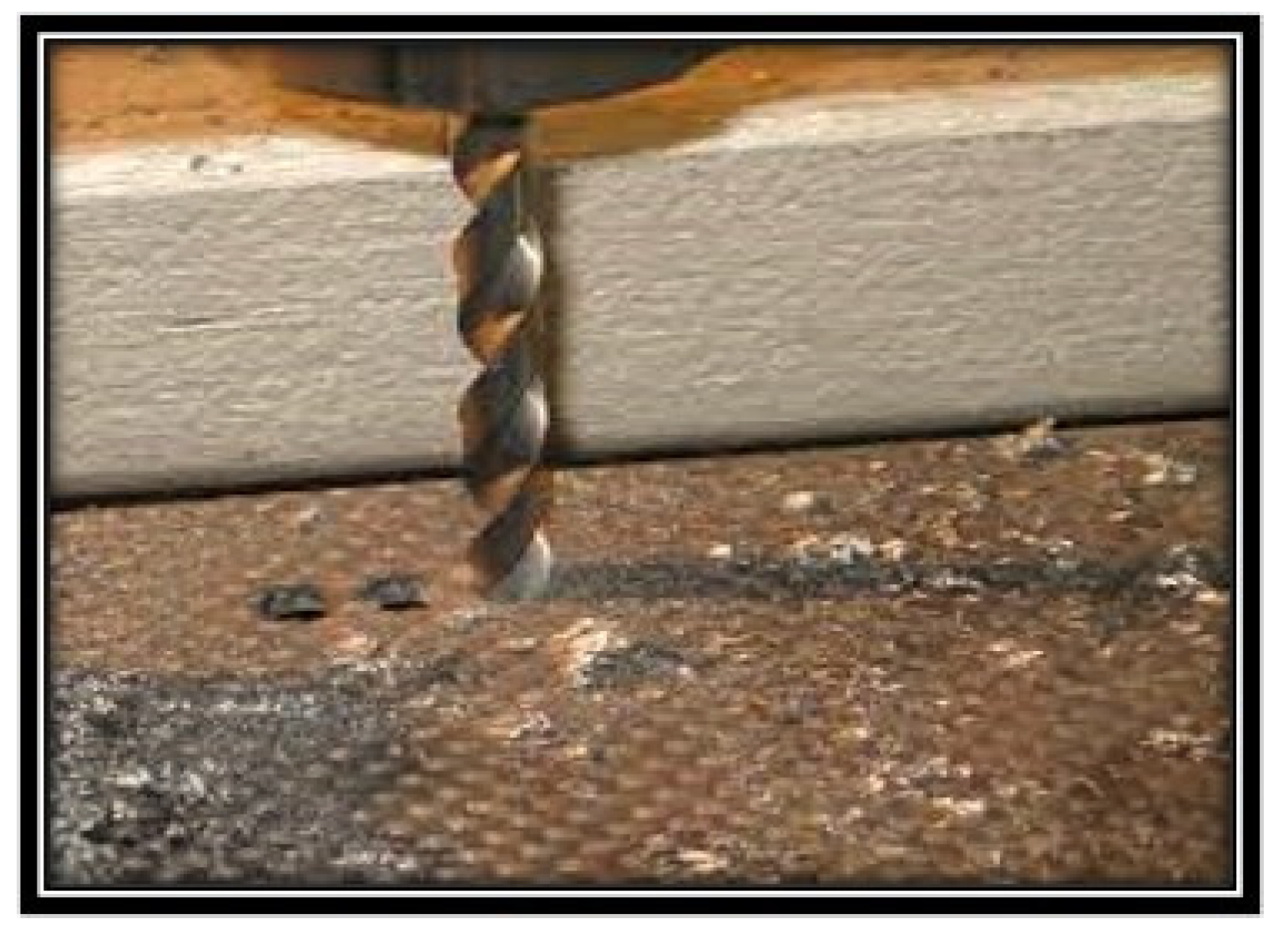
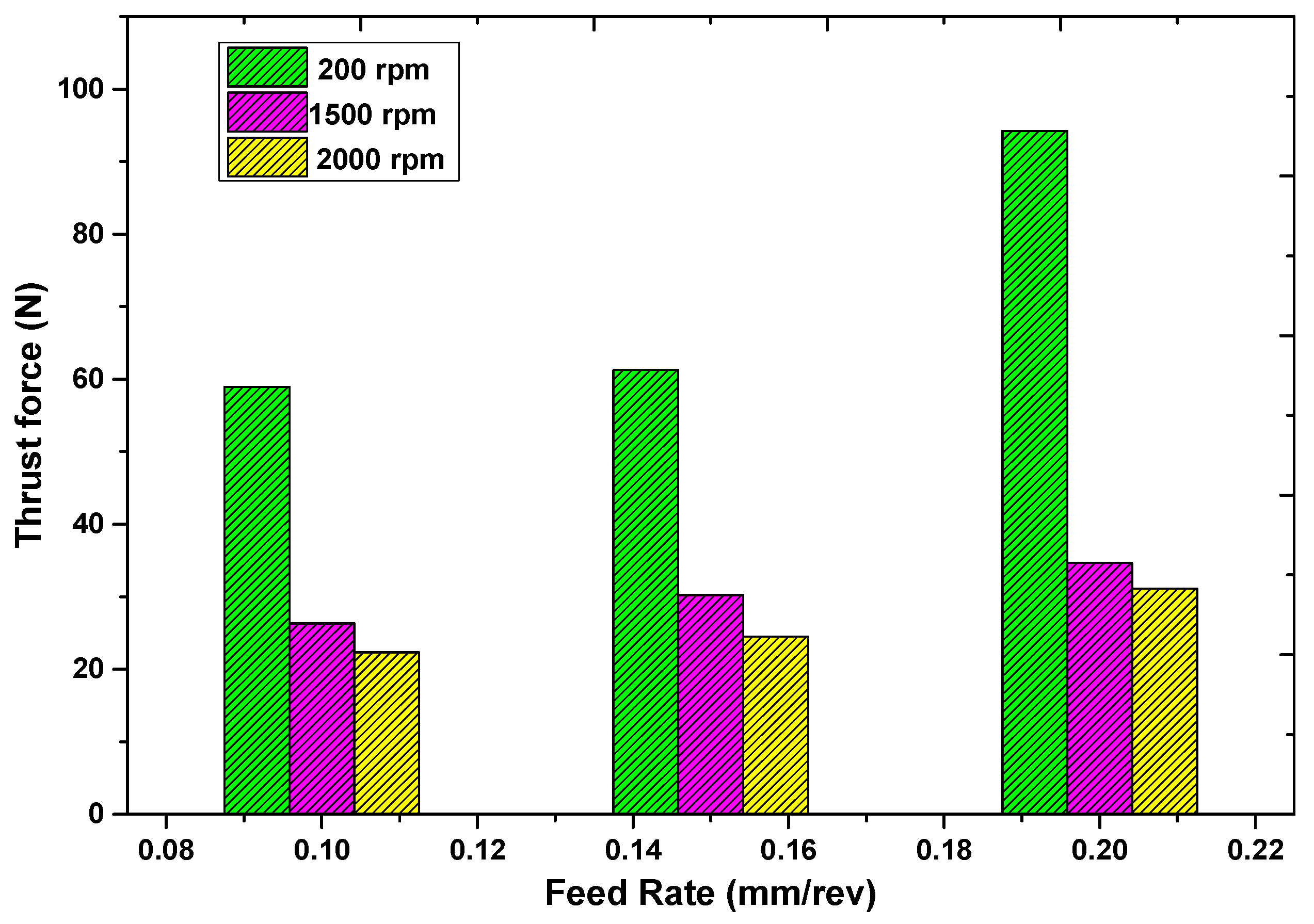
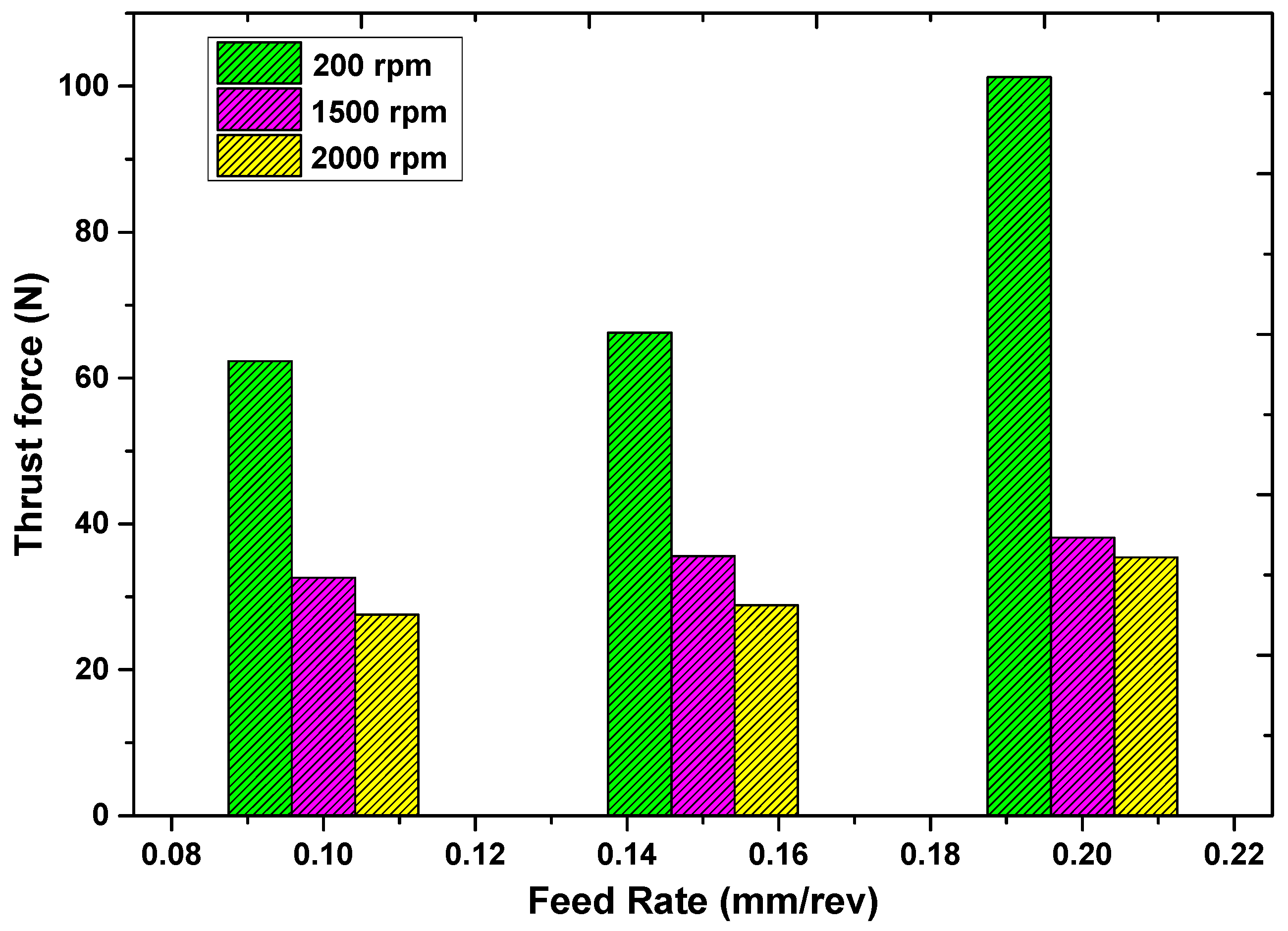
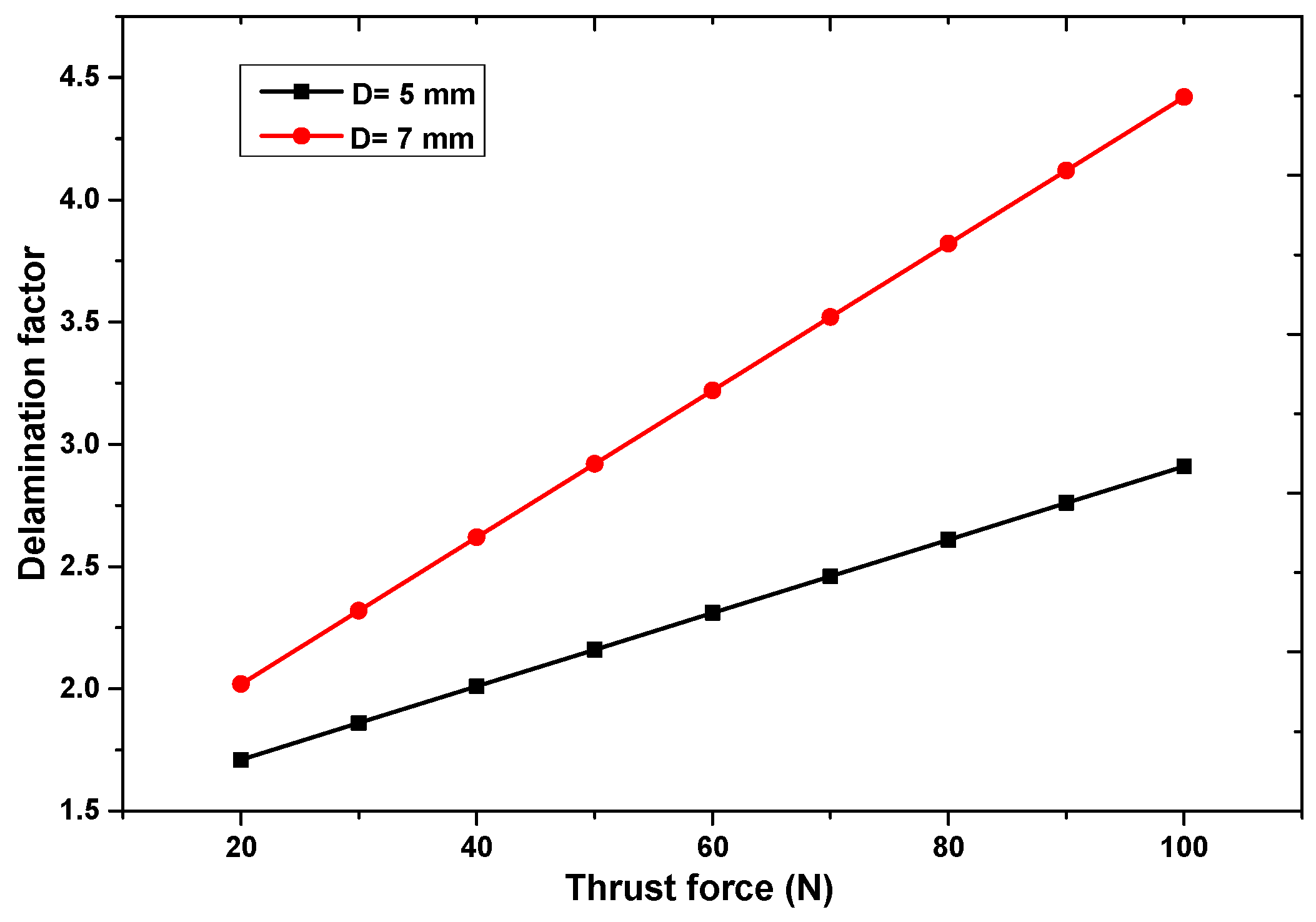
Natural fiber composites are gaining popularity in manufacturing due to their cost-effectiveness, sustainability, reusability, and eco-friendly nature. Kenaf fiber is increasingly used as a reinforcing component in organic fiber-strengthened polymers for engineering purposes. Drilling is a crucial machining process used to create holes in composite constructions for the easier assembly of complex parts. Limited research has focused on drilling organic fiber-strengthened materials, as indicated by literature surveys. Consequently, this study investigates the drilling of weaved kenaf fiber-augmented polymeric composites. The study assesses the impact of drill bit varieties and cutting settings on delamination size and thrust force in poly (lactic acid) (PLA) composites supplemented with kenaf fibers. The investigation revealed that drill bit selection significantly influences surface finish and delamination index. Feed is the cutting variable that, when drilling kenaf fiber-reinforced materials, has the most impact on the thrust force for every drill bit. When using an HSS twisting drill with the Coro Drill-856 (CD-856), the thrust force produced is less than when using the Coro Drill (CD-854) design.
Keywords: kenaf fiber; PLA; sustainability; thrust force; drill bits; sliding speed; feed rate kenaf fiber; PLA; sustainability; thrust force; drill bits; sliding speed; feed rate