Proceeding Paper

Tensile Testing at Elevated Temperatures of PolyJet Digital ABS Plus Material †
1
Institute of Information and Communication Technologies, Bulgarian Academy of Sciences, 1113 Sofia, Bulgaria
2
Department of Mechanics, Technical University, 1756 Sofia, Bulgaria
*
Author to whom correspondence should be addressed.
Presented at the 15th International Scientific Conference TechSys 2026—Engineering, Technologies and Systems, Plovdiv, Bulgaria, 14–16 May 2026.
Eng. Proc. 2026, 150(1), 40; https://doi.org/10.3390/engproc2026150040
Published: 21 July 2026

Abstract

This publication focuses on the additive technology PolyJet and more specifically the photopolymer Digital ABS Plus. After a thorough analysis, it was concluded that this technology is suitable for both rapid prototyping of parts and rapid small-scale production of various products. The resulting parts can be implemented in a production process with different operating conditions. That is why it is interesting to investigate the Digital ABS Plus material at elevated temperatures. The temperatures at which the tests were performed are consistent with the values for heat deflection temperature (HDT) of the Digital ABS Plus material, described in the manufacturer’s technical data sheet, as well as with the results of high-temperature tests of parts obtained using Fused Deposition Modeling (FDM) technology. The investigated test pieces are subjected to annealing in order to increase their tensile strength and temperature resistance. The process is carried out in an oven with digital temperature control with a thermal profile according to a procedure approved by the manufacturer Stratasys. The obtained data from the mechanical properties before and after annealing of the Digital ABS Plus material are compared and depicted in a diagram.

1. Introduction

3D printing with PolyJet technology is an innovative high-precision technology, in which a photopolymer in the presence of a UV light source instantly hardens layer by layer until the part is completely printed [1]. The technology allows the mixing of different materials and colors and the construction of complex-shaped parts, applicable in the aviation industry, automotive industry, medicine, etc. [2,3,4,5]. This technology is often used in the production of engine parts, optically transparent lenses and light pipes, phone cases, electronic component cases, and parts operating at relatively high temperatures. In [6], a study was conducted on the possibility of producing injection molding molds using the PolyJet Rapid Prototyping technology for the production of small series of PLA parts. It has been established that it is possible to produce PLA parts by injection molding them in a hot PolyJet mold.
Increasing the temperature leads to a decrease in the strength properties of the material [7,8,9]. Therefore, when designing structural parts operating at elevated temperatures, it is important to know the behavior of the material from which they are made at the desired temperature.
The study of the behavior of materials at elevated temperatures is associated with overcoming significant difficulties determined by the reliability of the means used and maintaining constant conditions during testing [10]. There is not much information in the literature about studies of materials obtained using the PolyJet technology at elevated temperatures. Therefore, an analysis of other studied material parameters related to temperature resistance in high temperature materials and materials from the Fused Deposition Modeling (FDM) technology was undertaken. In [11], the high-temperature RGD 525 was studied, which has the highest glass transition temperature (65 °C) compared to other materials used in the PolyJet technology. The high temperature resistance can be further increased by subsequent thermal treatment of the components, which is applicable to most PolyJet materials. The behavior of Polylactic Acid (PLA) under the influence of elevated temperatures from 30 °C to 60 °C has also been studied [12]. The results show that with increasing temperature, the tensile strength decreases, and the elongation at brake increases significantly. The authors also conducted a study of different categories of materials used in FDM technology: flexible, rigid, wear-resistant, and impact-resistant [13]. The same patterns were found, but different materials have different liquefaction points. For example, the tensile strength of PLA decreases dramatically from 25.5 MPa at 40 °C to 5 MPa at 50 °C. Much greater resistance was found for the PC material, which was annealed after printing. In this case, the tensile strength remained stable and a tensile test was conducted at 80 °C. At 50 °C, the test piece has an ultimate strength of 41 MPa, and at 80 °C the ultimate strength is 32.1 MPa.
In her master’s thesis, Mikkelson analyzed the thermal conductivity of Vero White Plus, Tango Black Plus, and Grey 60 materials used in PolyJet technology using the heat flow meter technique [14]. The goal of the study was to embed electronics into built parts through additive manufacturing. The resulting thermal conductivity coefficients are used in finite element analysis (FEA) simulations to model the thermal distribution of heated PolyJet parts. Mikkelson found that determining thermal conductivity as a function of temperature (as opposed to a constant value) reduces the average error in predicted temperatures to less than 1%.
The goal of this work is to investigate the behavior of the PolyJet material Digital ABS Plus at elevated temperatures, to apply a methodology for heating test pieces, and to determine their tensile strength at elevated temperatures before and after the applied annealing.

2. Methods, Materials and Equipment

There are many models of printers printing with PolyJet technology. Over time, they become more and more perfect, work with a larger range of materials, the print quality increases and the dimensions of the printed object become larger. An Objet 260 Connex 3 3D printer [15] was used to prepare the test bodies and the printing settings were made with the GrabCAD software, Version 1.115. According to the literature [1], this model has good print quality, comparable to other newer models. Only the Objet 1000 Plus printer has a significantly higher accuracy with regards to the dimensions of the printed parts.
The material chosen for analysis and research is Digital ABS Plus (Stratasys AP Limited, Minnetonka, MN, USA)—a photopolymer used in PolyJet technology. It was selected because it combines high temperature resistance and high strength. The material is suitable for prototyping and manufacturing parts using PolyJet technology, which require the highest possible impact resistance, as well as for design verification and functional tests. It is used for functional design of parts with complex shapes, for the production of tooling, etc. According to the technical documentation, the manufacturer has indicated a tensile strength of 55–60 MPa and a tensile elongation at break of 25–40% [16].
The heat deflection temperature (HDT) of the tested Digital ABS Plus material is given in Table 1. The data are taken from the material’s data sheet given by the manufacturer—Stratasys [16]. After thermal treatment according to procedures A and B prescribed by the manufacturer, test pieces produced by 3D printing were tested. The heat deflection temperature is determined according to ASTM D648/ISO 75 standards [17,18]. This test method covers the determination of the temperature at which a specified deformation occurs when the test pieces are subjected to three-point bending immersed in a heat transfer medium, with the temperature increasing at a specified rate until the specified deformation occurs. It is applied for Thermoplastics, Hard Rubber, and Filled Thermosetting Plastics. The temperature loading procedures A and B are described in detail in [19]. The attached data are used as guide temperatures for tensile strength testing of test pieces on a high temperature bench. The data shows that without applied thermal annealing, the material withstands temperatures up to 68 °C, and with applied annealing up to about 90–95 °C.
For tensile testing of test pieces at elevated temperature, an available test setup [20,21] with a different two-section heating module with an operating temperature of up to 200 °C, suitable for testing polymers, was used. Each section of electric heaters is controlled by a separate thermocouple and a separate temperature regulator. The temperature is controlled by PID temperature regulators with Platinum 100 thermocouples integrated in the heating module.

3. Experimental Data

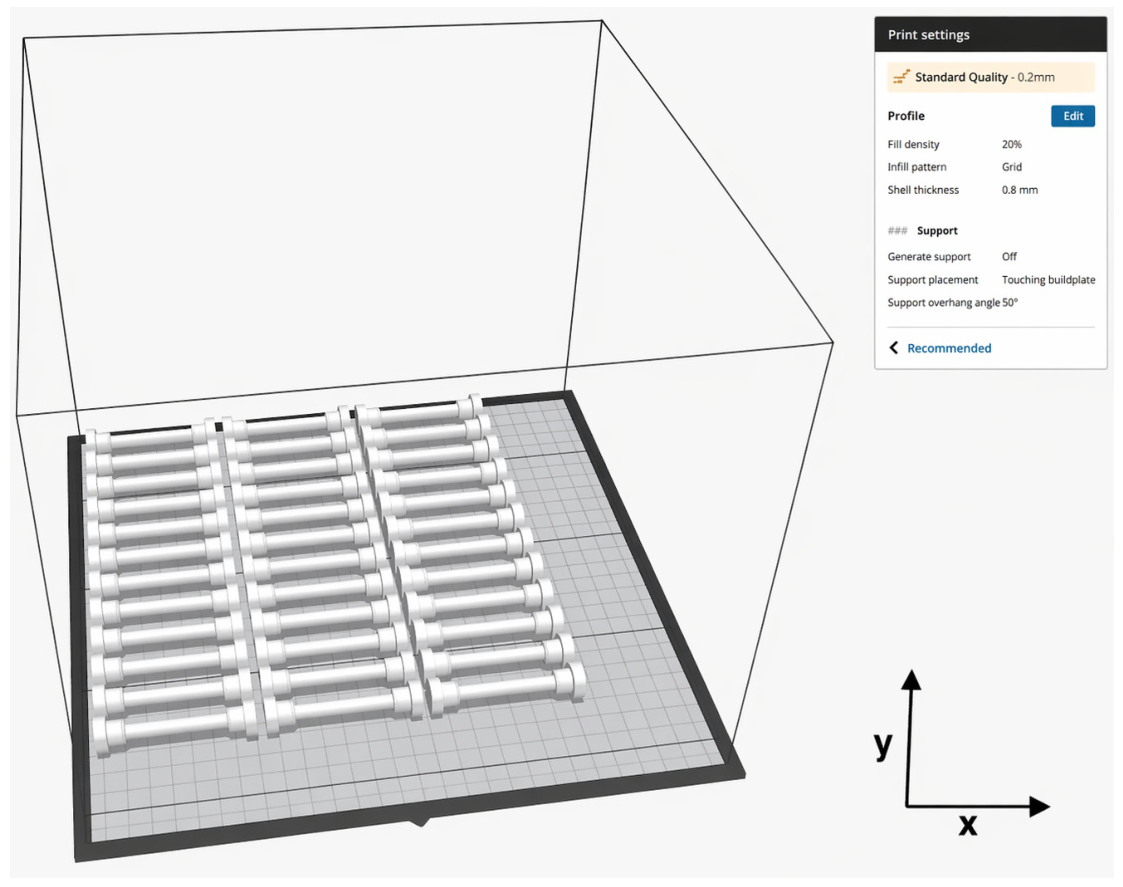
The test pieces for tensile strength testing at elevated temperatures were manufactured according to standard EN ISO 6892-2:2018 [22]. The shape of the test pieces is cylindrical with a diameter d = 6 ± 0.04 mm and a gauge length of 35 mm for the working part. The file was designed and converted to .stl format, suitable for assigning the settings for 3D printing using the GrabCAD Print software, Ver. 1.115. The selected material for the study is Digital ABS Plus, a two-component material consisting of RGD 515S—Base, and RGD 531 is the hardening component containing pigment (Ivory). The support material used to support the model of the test body is SUP 705B. It is removed by washing with tap water, under pressure or mechanically. The “Digital Material” mode is selected in the software for setting the print settings. In the 3D printer used by the authors, the Objet 260 Connex 3, when setting this operating mode, the remaining functions Layer Thickness and Surface Finish are automatically selected by default without the possibility of correction. In this case, the default layer thickness is 30 microns, and the finish is Matte. With the matte surface finish, the entire part is covered with support material to build a test body with excellent dimension accuracy and strength. Thirty-six test bodies with x-y orientation were printed (Figure 1) then cleaned with the Water Jet system under pressure from the supporting material and left to dry for at least 24 h in a horizontal position.
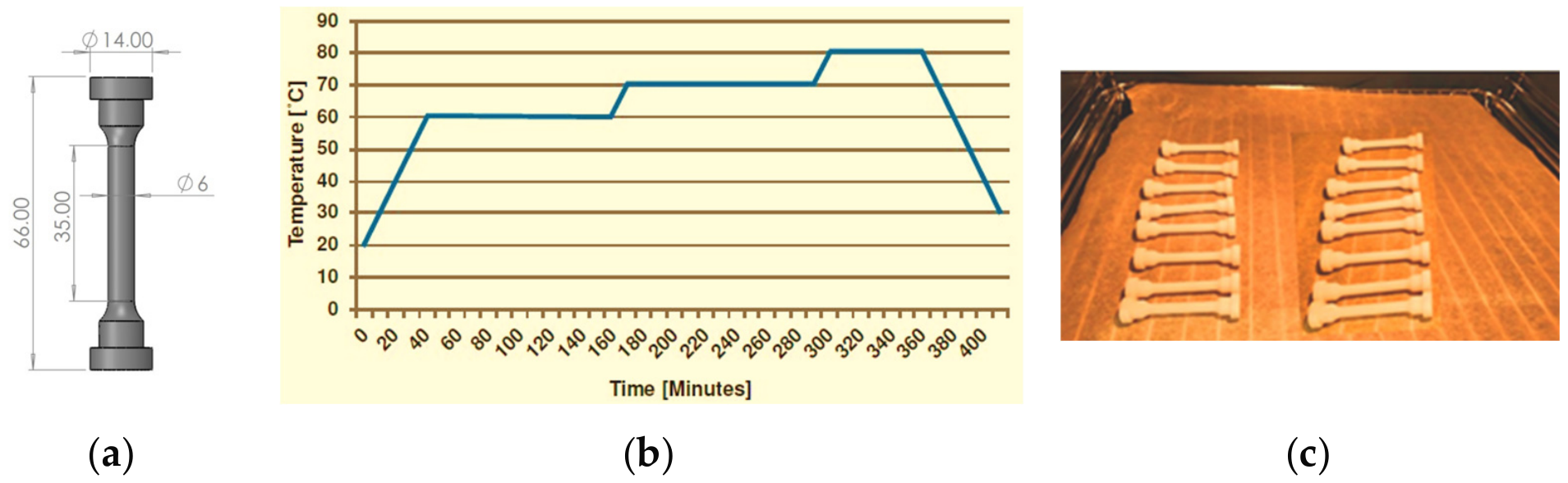
Half of them—18 test pieces—were tested after the drying process and are marked as “Digital ABS Plus”. The remaining 18 test pieces were subjected to annealing according to procedure A. The aim was to verify whether the applied heating increases the strength of the material and the resistance to elevated temperatures. In Figure 2a an image of a test piece for tensile test is shown, an in Figure 2b the diagram of the heating process is shown; the time for which each temperature is held and the total process time is 400 min at a maximum temperature of 80 °C. The samples were placed in a programmable furnace at room temperature with the temperature increase rate being 1 °C (1.8 °F) per minute (Figure 2c). The annealed test pieces, prepared for the determination of tensile strength at elevated temperature, are marked with the name “Digital ABS Plus after heating”.
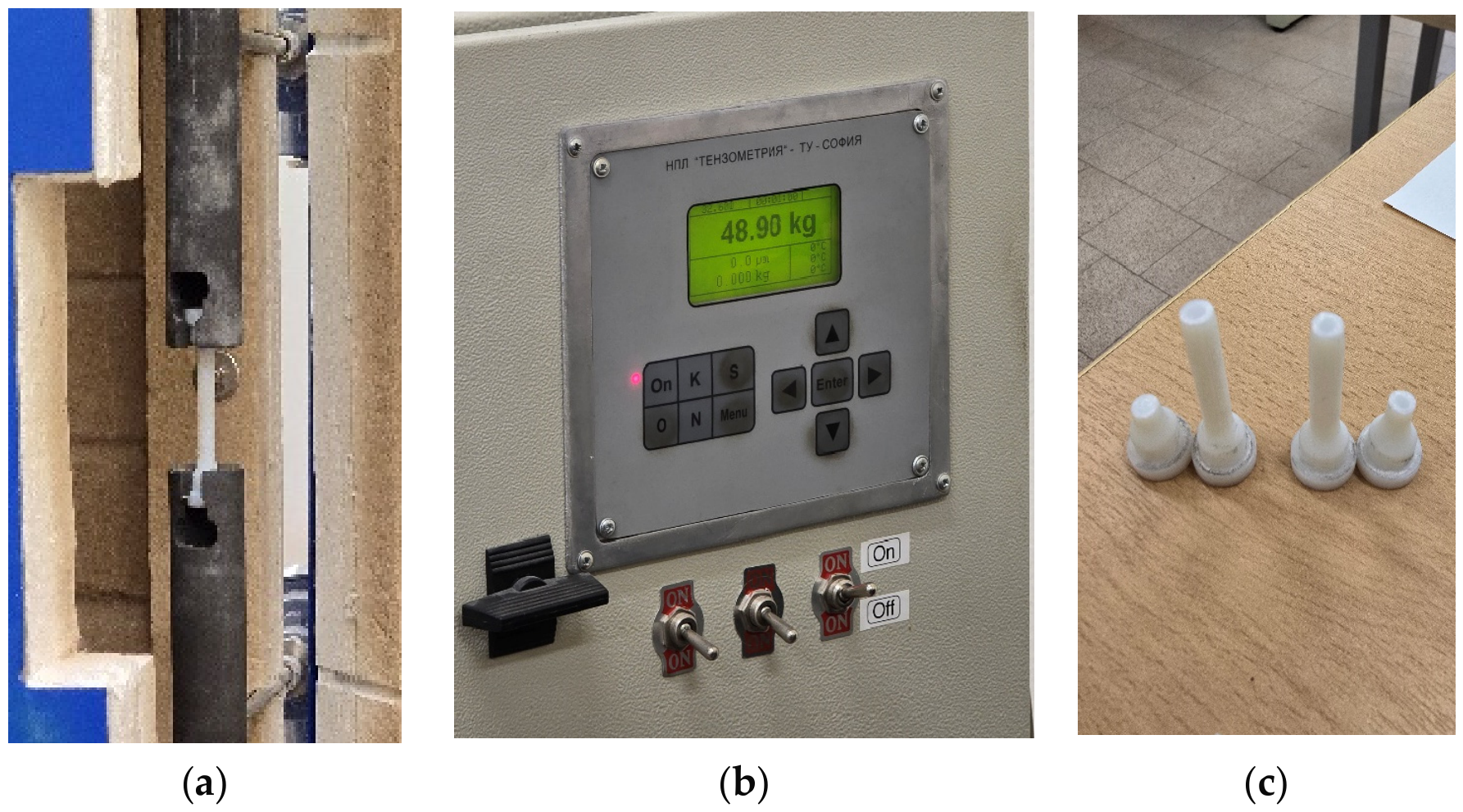
In Figure 3 the experimental setup during the tensile test of the test pieces after the printing process and after annealing is shown. In Figure 3a the heating module with a test specimen mounted in the machine’s grips, which is made of heat-resistant alloyed steel, is shown. During the tensile test, the heating module is closed and sealed to maintain the set temperature. The set temperature is maintained with an accuracy of ±0.5 °C. In Figure 3b the control panel of the testing machine and the display, which shows the instantaneous load and displacement of the movable grip, are shown. In Figure 3c the ruptures in the gauge length test pieces are shown. Tests were performed at different temperatures: 30 °C, 40 °C, 50 °C, 60 °C, 70 °C and 80 °C. For each set temperature, 3 test pieces were tested. During the test, the force and displacement values of the movable grip of the machine are continuously recorded.
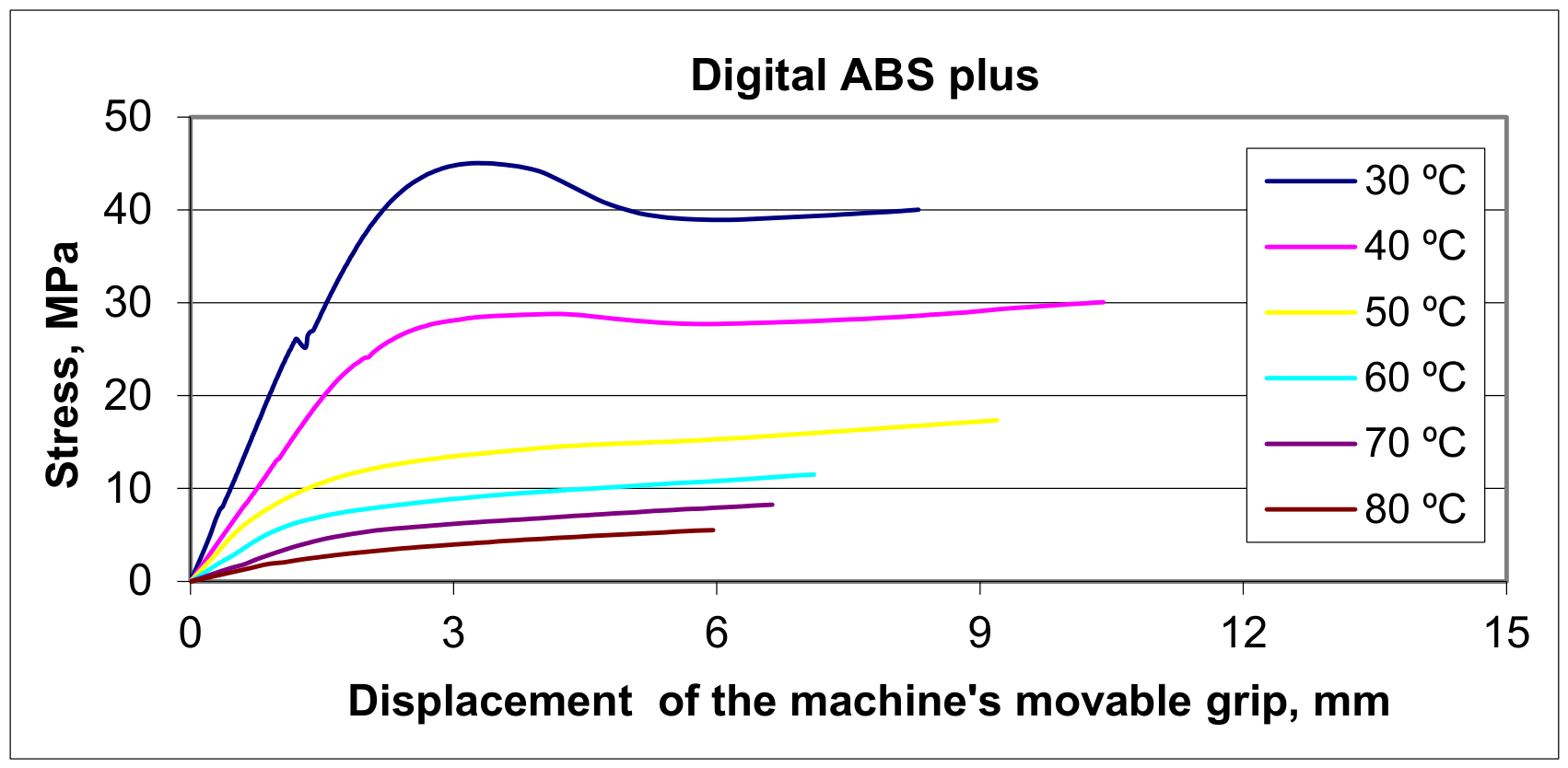
The obtained results are used to draw the stress-deformation curves of the tested polymer materials, from which the tensile strength σm is determined. This is the stress at the first local maximum observed during the tensile test [23] and the elongation at brake εB (the displacement of the movable grip of the machine at failure divided by the gauge length of the test piece).
The results of the tensile tests conducted with tested pieces of the Digital ABS Plus material are presented in Table 2, with averaged values of the tensile strength for each of the test temperatures, and the elongation at brake. In Figure 4 the stress–deformation curves of the tested material at all the tested temperatures are shown.
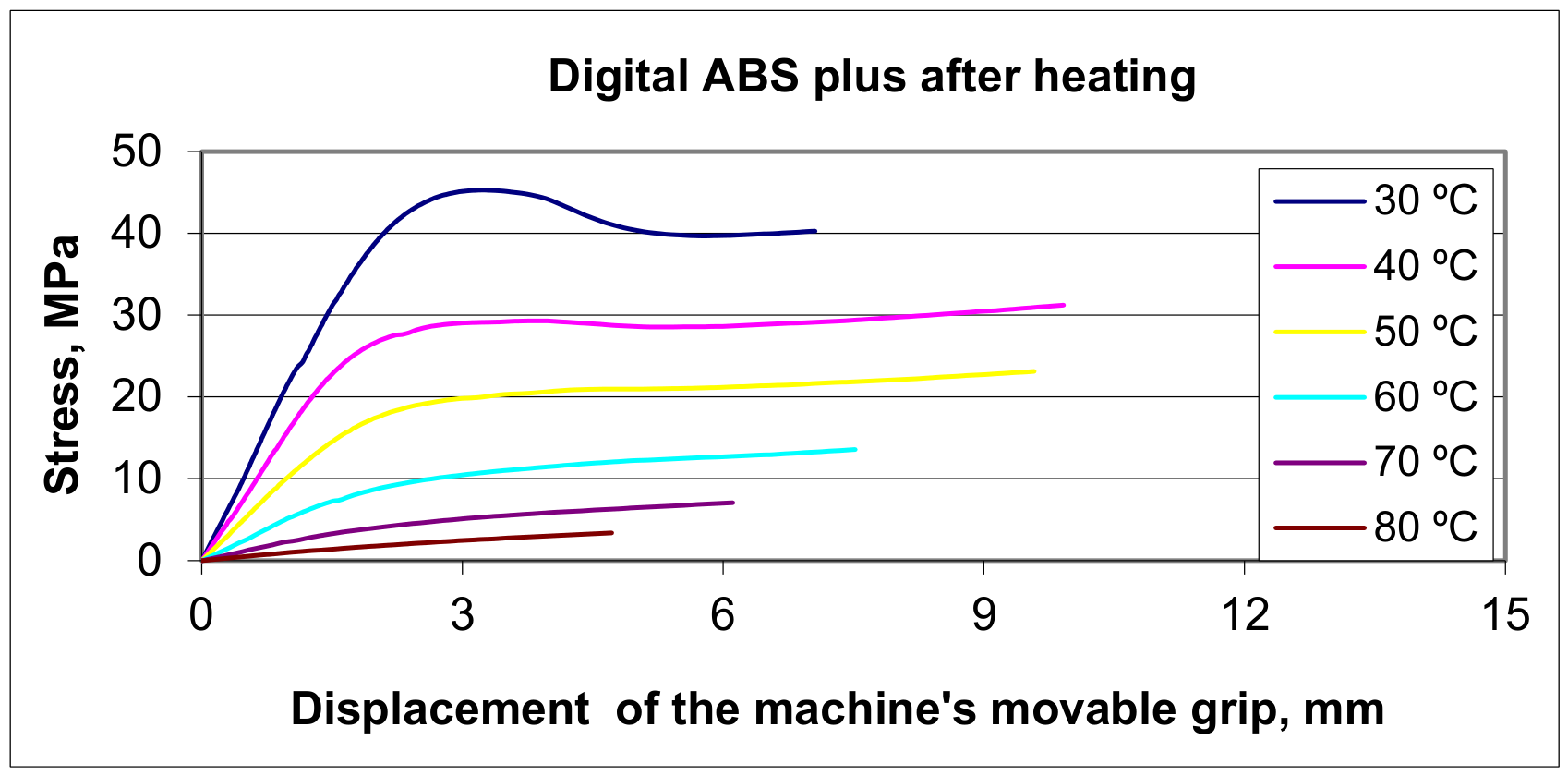
The mechanical properties of the Digital ABS Plus material after heating are presented in Table 3, and the stress–deformation curves are shown in Figure 5.

4. Discussion

According to the described values of the mechanical characteristics under normal conditions in the technical properties for the Digital ABS Plus material, the tensile strength is 55–60 MPa, and the elongation at break reaches 25–40%. After increasing the temperature during the test by 10 °C, the strength decreases to 45 MPa, which is a decrease of about 18%, and the elongation at brake drops to 23.7%. At 40 °C, there is already a change in the behavior of the material. The yield strength becomes lower than the tensile strength, but significantly lower than the test at 30 °C—28.8 MPa, which is 36% less. At this temperature (40 °C), the elongation at brake has increased to 29.7–21% compared to the test at 30 °C. At 50 °C the maximum stress is 17.4 MPa, at 60 °C—11.5 MPa. At 70 °C and 80 °C the strength becomes quite low and reaches 5.5 MPa. Tensile elongation at brake drops to 17%. The conducted studies show that with increasing temperature the material loses its elasticity and plasticity, unlike FDM materials, which become too plastic and liquefy.
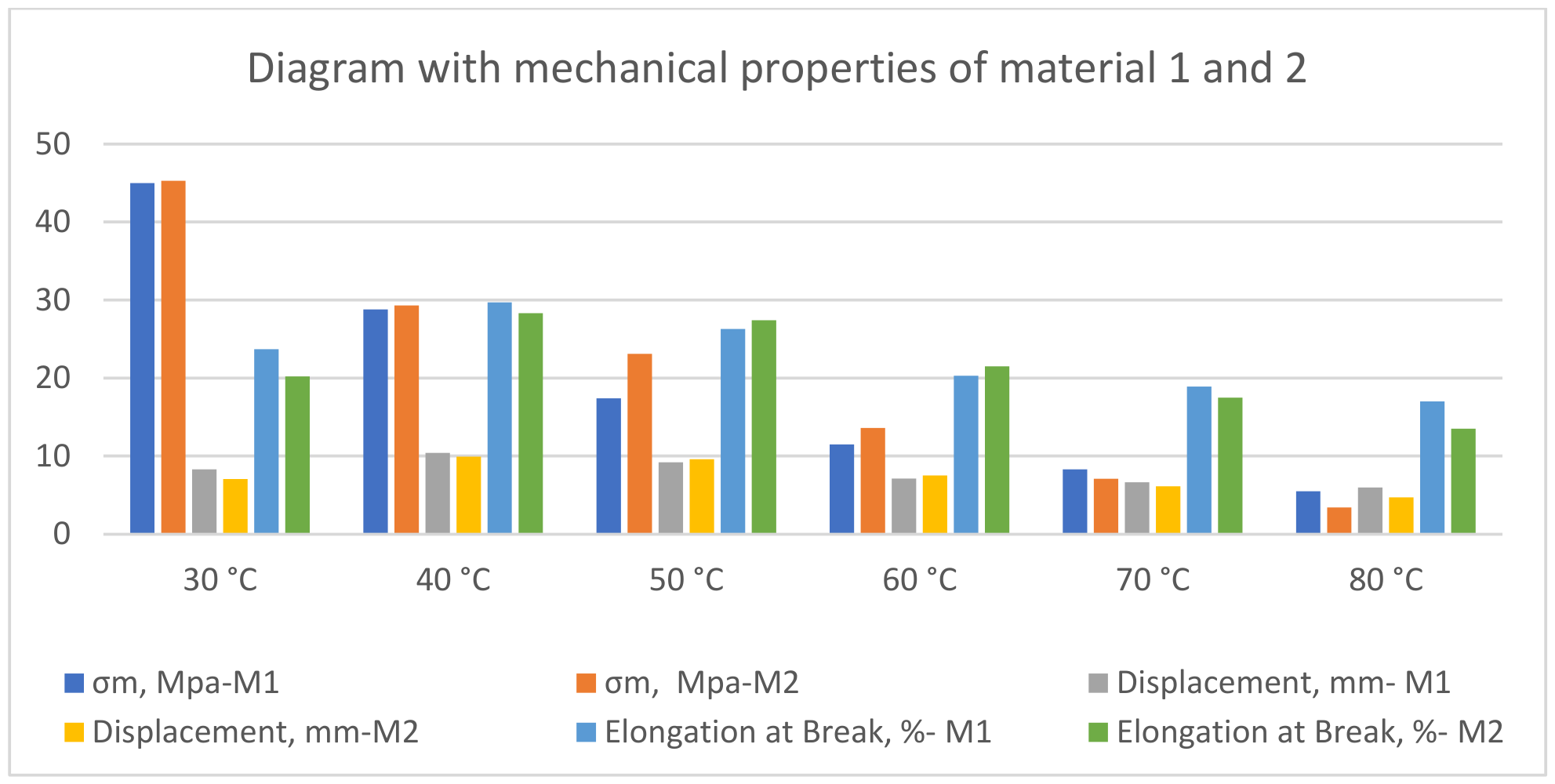
After thermal heating according to procedure A, the behavior according to the stress–deformation curves is observed to be preserved. In order to make the comparison of the results of the study of the test bodies after printing and after annealing more understandable, a diagram was constructed with the mechanical characteristics: tensile strength, displacement and tensile elongation at brake. For a more abbreviated designation in the diagram, the Digital ABS Plus material is named as M1, and the Digital ABS Plus material after heating as M2 (Figure 6). At 30 °C the tensile strength σm of M2 is 0.3% higher than that of M1, at 40 °C there is an increase of 1.7%. The largest increase in the tensile strength of M2 compared to M1 is at 50 °C—24.7%. At 60 °C the increase in tensile strength becomes smaller—15.4%. An interesting phenomenon occurs at 70 °C and 80 °C for M2, at which σm of M2 is lower than σm of M1 respectively by 14.5% and 38.2%. The elongation at brake of M2 compared to M1 is smaller at 30 °C, 40 °C, 70 °C and 80 °C. Only at 50 °C and 60 °C is it larger for M2 compared to M1, respectively by 4% and 5.6%.

5. Conclusions

The PolyJet 3D printing technology is increasingly being utilized in industry, which requires knowledge of the mechanical characteristics of materials. The tensile strength of materials is a decisive factor in determining their application, especially in environments with elevated temperatures. That is why it is necessary to know their indicators by conducting tests at different temperatures. The analysis performed in this work showed that the tensile strength of the Digital ABS Plus material decreases with increasing temperature, but retains relatively stable indicators up to 60 °C. Unlike FDM materials, which become extremely plastic, the PolyJet material showed a decrease in elongation at brake with increasing temperature. The manufacturer’s proposed procedure A for annealing the material was applied in the study and demonstrated an increase in strength characteristics up to 60 °C. Increasing the temperature to 80 °C during the test worsened the tensile strength compared to non-annealed test pieces. The use of this material would find application in mechanical engineering in the construction of functional parts and prototypes for design verification, subjected to high temperatures of up to 60 °C.

Author Contributions

Conceptualization, M.P. and P.P.; methodology, M.P.; validation, M.P., P.P. and N.K.; formal analysis, M.P. and N.K.; investigation, M.P. and P.P.; resources, M.P.; data curation, M.P.; writing—original draft preparation, M.P. and P.P.; writing—review and editing, M.P. and N.K.; visualization, M.P.; supervision, M.P.; project administration, M.P.; funding acquisition, M.P. All authors have read and agreed to the published version of the manuscript.

Funding

This research was funded by BULGARIAN NATIONAL SCIENCE FUND, project No. KP-06-M87/4 and The APC was funded by BULGARIAN NATIONAL SCIENCE FUND.

Institutional Review Board Statement

Not applicable.

Informed Consent Statement

Not applicable.

Data Availability Statement

No new data were created or analyzed in this study. Data sharing is not applicable to this article.

Acknowledgments

The research was carried out as part of project No. KP-06-M87/4 “Research the wear resistance of machine elements, possibilities for optimizing their properties through innovative methods and materials”, financed by the Bulgarian National Science Fund.

Conflicts of Interest

The authors declare no conflicts of interest.

Abbreviations

The following abbreviations are used in this manuscript:
FDMFused Deposition Modeling
3DThree-dimensionality
PLAPolylactic Acid
MPaMega Pascals
ABSAcrylonitrile Butadiene Styrene
HDTHeat Deflection Temperature

References

  1. Patpatiya, P.; Chaudhary, K.; Shastri, A.; Sharma, S. A review on PolyJet 3D printing of polymers and multi-material structures. Proc. Inst. Mech. Eng. Part C J. Mech. Eng. Sci. 2022, 236, 095440622210795. [Google Scholar] [CrossRef] [Scilit]
  2. Shen, Z.; Yao, Y.; Xie, Y.; Guo, C.; Shang, X.; Dong, X.; Pan, H. The process of 3D printed skull models for anatomy education. Comput. Assist. Surg. 2019, 24, 121–130. [Google Scholar] [CrossRef] [Scilit] [PubMed]
  3. Froes, F.; Boyer, R. Additive Manufacturing for Theaerospace Industry; Essay; Elsevier: Amsterdam, The Netherlands, 2019. [Google Scholar]
  4. 3D Printed Art & Design World. Available online: https://3dprintedart.stratasys.com/#/nickervinckwolfkiam/ (accessed on 6 March 2026).
  5. Bandyopadhyay, A.; Heer, B. Additive manufacturing of multi-material structures. Mater. Sci. Eng. R Rep. 2018, 129, 1–16. [Google Scholar] [CrossRef] [Scilit]
  6. Tábi, T.; Kovacs, K.; Sajó, I.; Czigány, T.; Hajba, S.; Kovacs, J. Comparison of thermal, mechanical and thermomechanical properties of polylactic acid injection-molded into epoxy-based Rapid Prototyped (PolyJetTM) and conventional steel mold. J. Therm. Anal. Calorim. 2015, 123, 349–361. [Google Scholar] [CrossRef] [Scilit]
  7. Tsonev, V. Tensile testing of 1.4859 steel at high temperatures. J. Balk. Tribol. Assoc. 2025, 31, 720. [Google Scholar]
  8. Dochev, B.; Panov, I.; Tsonev, V.; Dimova, D. High-Temperature Tests of Piston Hypereutectic Aluminum-Silicon Alloy AlSi18Cu3CrMn. AIP Conf. Proc. 2022, 2557, 040007. [Google Scholar] [CrossRef] [Scilit]
  9. Dimova, D.; Dochev, B.; Trojan, K.; Kamarska, K.; Sofronov, Y.; Zagorski, M.; Tsonev, V.; Nikolov, A. Investigation of the Structural, Mechanical and Operational Properties of an Alloy AlSi18Cu3CrMn. Materials 2025, 18, 5434. [Google Scholar] [CrossRef] [Scilit] [PubMed]
  10. Tsonev, V. Equipment for mechanical testing of materials at high temperatures. J. Balk. Tribol. Assoc. 2025, 31, 729–743. [Google Scholar]
  11. Kent, N.; Jolivet, L.; O’Neill, P.; Brabazon, D. An evaluation of components manufactured from a range of materials, fabricated using PolyJetTM technology. Adv. Mater. Process. Technol. 2017, 3, 318–329. [Google Scholar] [CrossRef] [Scilit]
  12. Grasso, M.; Azzouz, L.; Ruiz-Hincapie, P.; Zarrelli, M.; Ren, G. Effect of temperature on the mechanical properties of 3D-printed PLA tensile specimens. Rapid Prototyp. J. 2018, 24, 1337–1346. [Google Scholar] [CrossRef] [Scilit]
  13. Paneva, M.; Panev, P.; Tsonev, V. Tensile Testing at Elevated Temperatures of Test Specimens Made of Polymer Materials Obtained by Fused Deposition Modeling. In Proceedings of the 2025 International Conference Automatics and Informatics (ICAI), Varna, Bulgaria, 9–11 October 2025; pp. 207–211. [Google Scholar] [CrossRef] [Scilit]
  14. Mikkelson, E. Characterization and Modeling of the Thermal Properties of Photopolymers for Material Jetting Processes, Thesis Submitted to the Faculty of the Virginia Polytechnic Institute and State University in Partial Fulfillment of the Requirements for the Degree of Master of Science in Mechanical Engineering, Blacksburg, VA, USA. 2014. Available online: https://vtechworks.lib.vt.edu/server/api/core/bitstreams/6774252e-96d5-4956-86db-d348bda62f7f/content (accessed on 17 March 2026).
  15. Stratasys, Objet260 Connex 1-2-3 3D Printers. Available online: https://support.stratasys.com/en/Printers/PolyJet-Legacy/Objet260-Connex-1-2-3 (accessed on 6 March 2026).
  16. Stratasys, PolyJetTM Materials Data Sheet. Available online: https://www.stratasys.com/en/materials/materials-catalog/PolyJetTM-materials/digital-abs-plus/ (accessed on 6 March 2026).
  17. ASTM D648; Standard Test Method for Deflection Temperature of Plastics Under Flexural Load in the Edgewise Position. ASTM International: West Conshohocken, PA, USA, 2018.
  18. ISO 75-1; Plastics—Determination of Temperature of Deflection Under Load, Part 1: General Test Method. ISO: London, UK, 2020.
  19. Stratasys, Digital ABS Plus. Available online: https://advancedtek.com/wp-content/uploads/2016/08/Digital-ABS-Plus-EN-PolyJet-Best-Practice.pdf (accessed on 6 March 2026).
  20. Tsonev, V.; Borisov, B.; Muhtarov, I.; Kuzmanov, N. Testing machine for experimental investigation in high temperature conditions. In Proceedings of the BulTrans-2017—9th International Scientific Conference on Aeronautics, Automotive, and Railway Engineering and Technologies, Sozopol, Bulgaria, 11–13 September 2017; pp. 64–68. [Google Scholar]
  21. Nikolov, N.; Tsonev, V.; Lazov, L. Controlling of stand for materials testing at high temperatures. In Proceedings of the AMO’2010, Varna, Bulgaria, 27–29 June 2010; pp. 315–319. [Google Scholar]
  22. EN ISO 6892-2:2018; Metallic Materials—Tensile Testing—Part 2: Method of Test at Elevated Temperature. ISO: Vernier, Switzerland, 2018.
  23. BDS EN ISO 527-1:2020; Plastics—Determination of Tensile Properties—Part 1: General Principles. Bulgarian Institute for Standardization: Sofia, Bulgaria, 2020.
Figure 1. Test pieces for determining tensile strength at high temperature, configured in the GrabCad program.
Engproc 150 00040 g001
Figure 2. Annealing process of a test specimen: (a) test specimen for tensile strength at elevated temperature; (b) temperature–time diagram for procedure A; (c) test pieces subjected to thermal annealing.
Engproc 150 00040 g002
Figure 3. Test setup for tensile testing at elevated temperatures: (a) heating module with mounted test specimen; (b) control panel; (c) ruptured test pieces.
Engproc 150 00040 g003
Figure 4. Stress–displacement curve of Digital ABS Plus material at elevated temperatures.
Engproc 150 00040 g004
Figure 5. Stress–displacement curves of Digital ABS Plus material after heating at elevated temperatures.
Engproc 150 00040 g005
Figure 6. Diagram of mechanical properties of the materials Digital ABS Plus (M1) and Digital ABS Plus after heating (M2).
Engproc 150 00040 g006
Table 1. Heat deflection temperature (HDT) of Digital ABS Plus material.
Mechanical PropertiesValues
HDT at 0.45 MPa58–68 °C
HDT at 0.45 MPa after heat treatment at Procedure A82–90 °C
HDT at 0.45 MPa after heat treatment at Procedure B92–95 °C
HDT at 1.82 MPa51–55 °C
Table 2. Tensile strength and elongation at brake of Digital ABS Plus material.
Digital ABS Plus30 °C40 °C50 °C60 °C70 °C80 °C
σm, MPa45.028.817.411.58.35.5
εB, %23.729.726.320.318.917
Table 3. Tensile strength and elongation at brake of Digital ABS Plus material after heating.
Digital 3030 °C40 °C50 °C60 °C70 °C80 °C
σm, MPa45.329.323.113.67.13.4
εB, %20.228.327.421.517.513.5
Disclaimer/Publisher’s Note: The statements, opinions and data contained in all publications are solely those of the individual author(s) and contributor(s) and not of MDPI and/or the editor(s). MDPI and/or the editor(s) disclaim responsibility for any injury to people or property resulting from any ideas, methods, instructions or products referred to in the content.