Proceeding Paper

Integrated Assessment Methodology for Asphalt Pavement Integrity Under Accelerated Loading Conditions and GPR †
The College of Electrical Engineering, Zhejiang University of Water Resources and Electric Power, Hangzhou 310000, China
Presented at the 7th International Conference on Civil, Architecture and Disaster Prevention and Control, Dali, China, 30 January–1 February 2026.
Eng. Proc. 2026, 146(1), 5; https://doi.org/10.3390/engproc2026146005 (registering DOI)
Published: 22 June 2026

Abstract

Ensuring the integrity of pavement structures necessitates a thorough evaluation of both surface-level damage and subsurface mechanical performance. This study proposes an integrated, non-destructive assessment framework tailored for semi-rigid base asphalt pavements subjected to repeated vehicular loading via MLS66 full-scale accelerated testing equipment. The proposed methodology integrates ground-penetrating radar (GPR) using the CO4080 system and dynamic response measurements from a falling weight deflectometer (FWD) to characterize structural conditions across multiple depths. Comparative analysis between pre-loading and post-loading data revealed significant deterioration trends in the surface layers, with stiffness loss closely associated with increasing load repetitions. In contrast, the underlying base layers exhibited stable deformation characteristics, with variations in deflection basin indices remaining within ±5%. Subgrade dielectric properties derived from GPR data confirmed consistent compaction quality throughout the test site. Statistical analysis further validated the synergy between GPR and FWD results, demonstrating that the combined application enhances diagnostic accuracy. The dual-method approach improved overall evaluation reliability by approximately 22–35% compared to using individual techniques alone under accelerated pavement testing scenarios. These findings support broader implementation of integrated sensing systems and highlight the potential for application across varied pavement types and loading conditions.

1. Introduction

With asphalt pavement constituting 78% of China’s expressway network, its structural resilience faces multifaceted challenges [1,2,3]. Field investigations reveal that 54% of premature failures (service age < 8 years) originate from composite degradation mechanisms where dynamic load spectra exceeding 100 kN (AASHTO T320) interact with seasonal temperature fluctuations (ΔT = 62 °C) and hydraulic erosion (permeability > 0.03 cm/s) [4,5,6,7]. This deterioration mechanism progressively diminishes pavement serviceability [8,9]. Such multi-physics interactions necessitate integrated condition assessment protocols combining NDT methods [10,11].
Ground Penetrating Radar (GPR), as a novel approach within the domain of pavement non-destructive assessment, enables the rapid and efficient detection of deterioration across different structural layers of the pavement system [12,13,14]. By sending high-frequency electromagnetic pulses below the pavement surface and recording the returning reflections, GPR provides a continuous profile of internal pavement conditions without causing any physical damage to the structure [15,16]. This capability is especially valuable for identifying hidden defects such as moisture ingress, delamination, voids, and layer debonding that are often difficult to detect using traditional methods [17,18,19,20].
In addition to two-dimensional scans, GPR also facilitates the acquisition of three-dimensional (3D) radar datasets representing the volumetric structure of pavement layers [21,22]. These 3D representations allow for more intuitive and comprehensive visual interpretation, while also enabling advanced analytical techniques to assess the spatial distribution and severity of subsurface pavement anomalies [23]. This enhanced interpretability greatly aids engineers and maintenance planners in understanding the true condition of the pavement, even in complex or multilayered structures [24,25]. Complementary to GPR, the drop hammer bending instrument is utilized to simulate dynamic loading conditions like those imposed by actual vehicular traffic. This method evaluates pavement surface responses in real-time [26], offering insights into stiffness characteristics, deflection behavior, and the mechanical performance of individual layers [27]. Such dynamic assessments are essential for diagnosing early-stage fatigue or rutting potential that may not be evident in static or surface-level evaluations. Furthermore, the integration of artificial intelligence, particularly deep learning algorithms [28,29,30,31], has opened new avenues for automated and intelligent interpretation of GPR data [32,33,34,35]. These techniques enhance the detection accuracy of internal deterioration, such as micro-cracking or material segregation, and support the quantification of mechanical integrity across pavement depths [36,37,38]. Overall, the synergistic application of GPR, dynamic testing, and AI-driven interpretation contributes to a more precise and holistic evaluation of pavement condition. This integrated approach not only minimizes uncertainty in diagnostic results but also supports data-informed decision-making for optimized maintenance scheduling, cost-effective rehabilitation planning, and the extension of pavement service life [39,40].
Moreover, highway pavement structures often suffer degradation due to the combined effects of traffic loading and environmental conditions [41,42], such as temperature fluctuations [43] and moisture infiltration [44]. To assess the real-world performance of pavement structures or materials over their design service period, traditional approaches require long-term monitoring through field projects or test roads, which are typically time-intensive and labor-demanding, with results confined to specific sites [45,46]. To address this, researchers have introduced the Accelerated Pavement Testing (APT) method for asphalt pavements [47]. Utilizing the comprehensive APT setup [48,49], the accelerated full-scale loading procedure can simulate the cumulative impacts of actual traffic loads within a condensed timeframe, offering a more efficient means to evaluate pavement durability [50,51,52]. This methodology enables comparative studies across various pavement structures and materials under differing loading scenarios [53], while also supporting the validation of pavement response models and material behavior theories.
Therefore, to assess the behavior of semi-rigid pavement under APT loading, with possible reference to other pavement structures, the MLS66 system was employed to apply repeated loads to the test road. Core specimens were then extracted from both trafficked and untrafficked areas, and the structural response to loading was evaluated through FWD measurements, backcalculated layer moduli, and GPR inspection.

2. APT Design

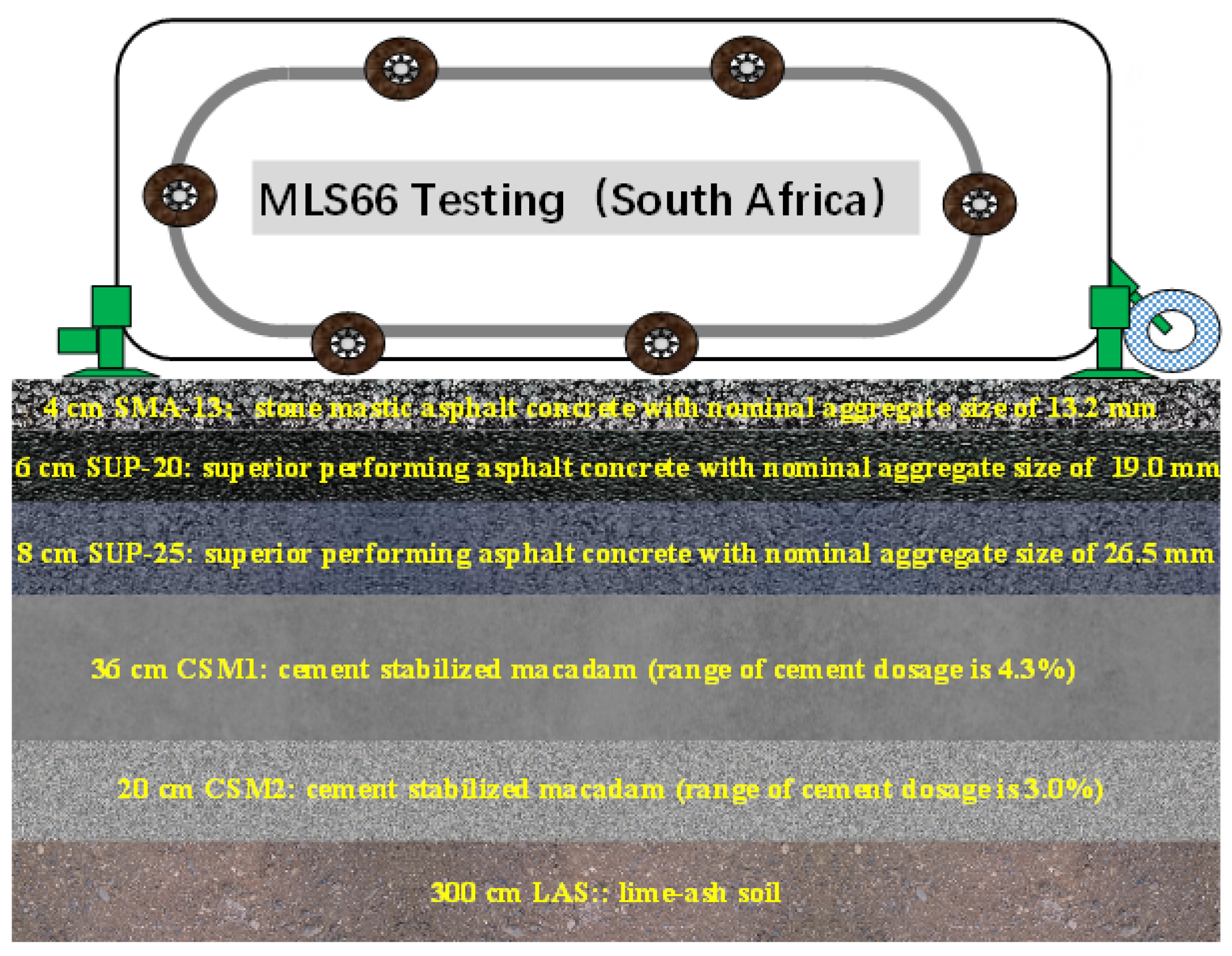
In this study, the test pavement section was constructed with a multi-layered structure designed to replicate typical expressway pavement compositions. The structure comprised the following layers from top to bottom [54]: 7 cm of SMA-13 surface course, 6 cm of SUP-20, 8 cm of SUP-25, and a 36 cm-thick CSM1 layer with a cement content of 4.5%. Beneath this, a 20 cm-thick CSM2 layer containing 3.0% cement was placed, as illustrated in Figure 1. These layers were selected to reflect both standard asphalt pavement configurations and semi-rigid base conditions commonly found in service. To assess the pavement response behavior under repeated traffic loading, APT was employed. Testing was conducted in a controlled environment with ambient air temperature maintained at 20 °C. The loading device applied a single-wheel load of 50 kN, simulating a standard truck tire load, and operated at a constant speed of 22 km/h. The MLS66 full-scale loading system was utilized to impose one million repetitions of dynamic loading on the pavement structure. This was done to investigate the progressive deformation characteristics and long-term performance degradation of each structural layer. The experimental process enabled continuous tracking of pavement condition changes, thereby providing valuable insight into the structural resilience and fatigue resistance of the layered system over extended service simulation.

3. Structural Properties Evaluation

3.1. Pavement Modulus Analysis Based on FWD

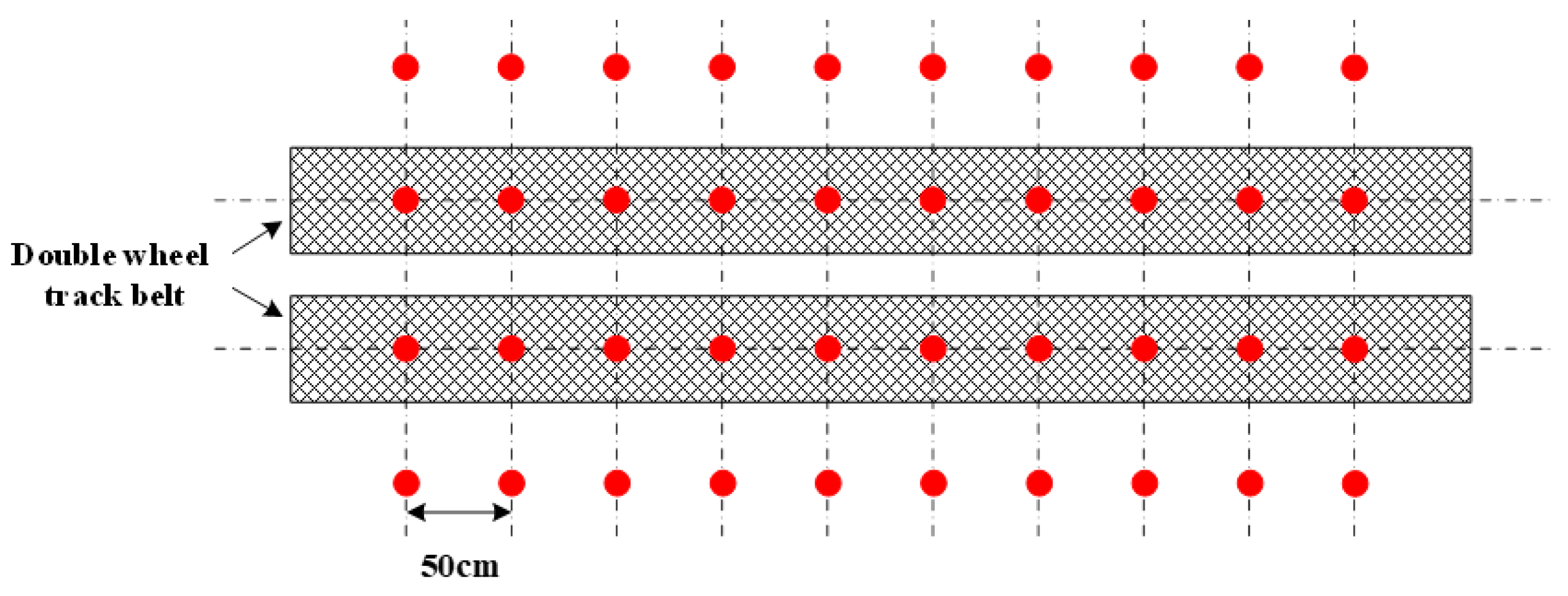
FWD test was conducted on a full-scale test track to describe pavement deflection under various loading durations and assess the impact of load repetition on structural bearing performance. Due to the significant influence of temperature on surface bending behavior, a temperature compensation factor was derived through calibration in unloaded areas and subsequently used to adjust the measured deflection in the wheel path zone. This correction minimized temperature-related deviations. The layout of deflection measurements under varying loading durations is illustrated in Figure 2.
To describe the curve shape of the sink basin of asphalt pavement structure as realistically as possible, nine sensors were deployed during test. With the increase in distance from the load center, the spacing of sensors increased appropriately, and the specific spacing of sensors was 0, 20 cm, 30 cm, 45 cm, 60 cm, 90 cm, 120 cm, 150 cm, and 180 cm, respectively.

3.1.1. Representative Deflection

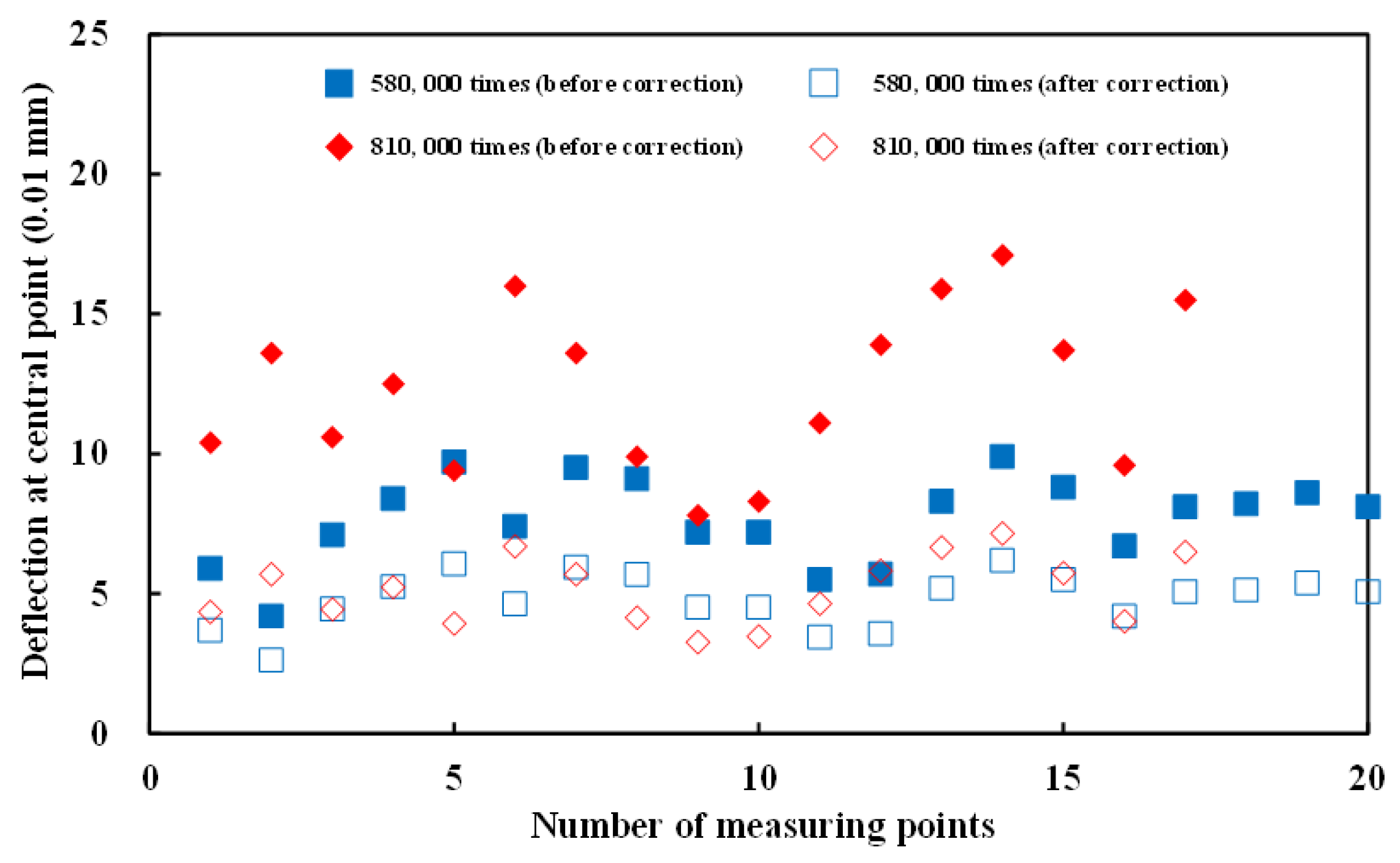
To minimize the thermal influence on pavement deflection measurements, the center point deflection values recorded under various loading repetitions were standardized by converting them to an equivalent value at the reference temperature of 20 °C. This temperature normalization process ensures that the results are directly comparable across different loading conditions. The correction coefficient used for temperature adjustment was derived based on deflection measurements taken from unloaded areas within the accelerated pavement testing zone, where external thermal effects could be isolated. This approach allowed for the establishment of a reliable baseline unaffected by loading-induced heat accumulation. The effectiveness of the temperature correction method is demonstrated in Figure 3, which compares center point deflection values before and after adjustment under loading scenarios of 580,000 and 810,000 repetitions. The temperature-corrected data provides a more accurate representation of the true structural response of the pavement, improving the precision of performance evaluation under accelerated testing.
After correcting temperature effects, representative center deflection values were calculated, as shown in Table 1. When subjected to cumulative loadings of 90,000, 580,000, and 810,000 cycles, the corresponding deflections were recorded as 4.0 mm, 6.4 mm, and 7.1 mm. Even under one million load applications, the pavement maintained minimal deformation and demonstrated stable structural integrity. In addition, a rise in the coefficient of variation was noted with increasing load cycles, indicating a progressive decline in the pavement’s structural capacity. When loading number reached 1.03 million, the deflection at the measurement location was reduced from 7.1 mm to 6.2 mm after applying a 4 cm SMA-13 overlay, highlighting the overlay’s effectiveness in improving load resistance.

3.1.2. Modulus Back Calculation

The Modulus 6.0 software was employed to perform inverse analysis of the stiffness values for each pavement structural layer, based on the measured sink basin data under varying load repetitions. Detailed results of this analysis are shown in Table 2. The stiffness values for the base, subbase, and subgrade layers demonstrated varying patterns under different loading conditions. As the cumulative number of load repetitions increased, the modulus of the surface layer progressively decreased from 7963 MPa to 5019 MPa. After a 4 cm SMA-13 overlay was applied, the modulus value rose again to 5541 MPa. These observations were consistent with changes in the sink basin curve and its corresponding geometric indices from D0 to D20. In Modulus 6.0, layer moduli were back calculated using a multilayer linear-elastic model by iteratively adjusting the moduli to best fit the measured FWD deflection basin (RMS/least-squares criterion). Poisson’s ratios were assumed as ν = 0.35 for asphalt layers, ν = 0.25 for cement-stabilized macadam layers, and ν = 0.40 for the subgrade.

3.2. GPR Investigation

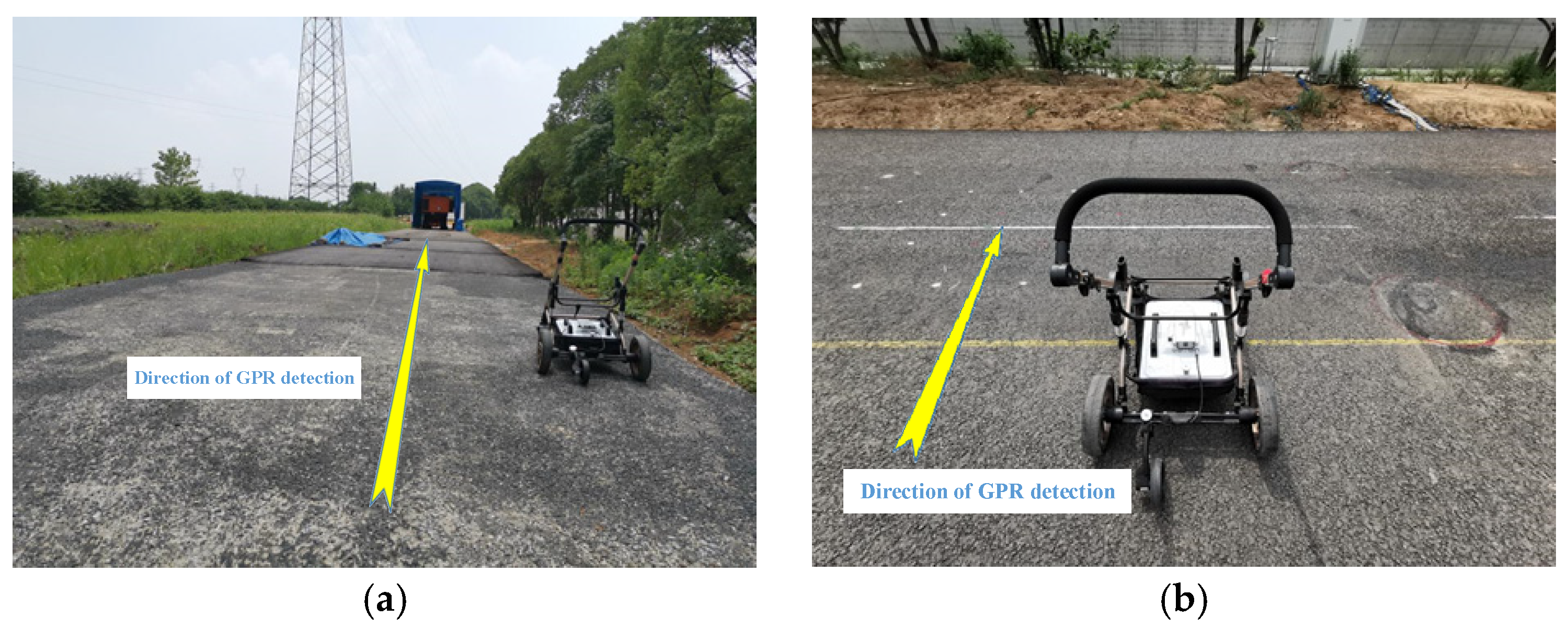
To assess the presence of potential internal defects within the asphalt pavement layers, the base, intermediate, and surface courses of the test road were examined using GPR before and after loading operations. The scanning was conducted in both transverse and longitudinal directions. A CO4080 model GPR device (ImpulseRadar Sweden AB, Skolgatan 22, SE-939 31 Malå, Sweden), was employed for the data acquisition. Details of the GPR setup and detection parameters are listed below [55,56]: The CO4080 GPR detection configuration uses a center frequency of 800 MHz with an operating bandwidth of 500 to 1300 MHz. The horizontal GPR trace spacing is set to 1 cm, with 600 vertical sampling points and a 26 ns time window. A relative permittivity of 6 is assumed, corresponding to an equivalent propagation velocity of 0.102 m/ns and an equivalent detection depth of approximately 2.4 m. Distance (range) estimation is performed using a distance-measuring wheel, with a wheel diameter/circumference of 287/900 mm. While the layout of the scan directions is illustrated in Figure 4.

3.2.1. Structural Conditions Before APT

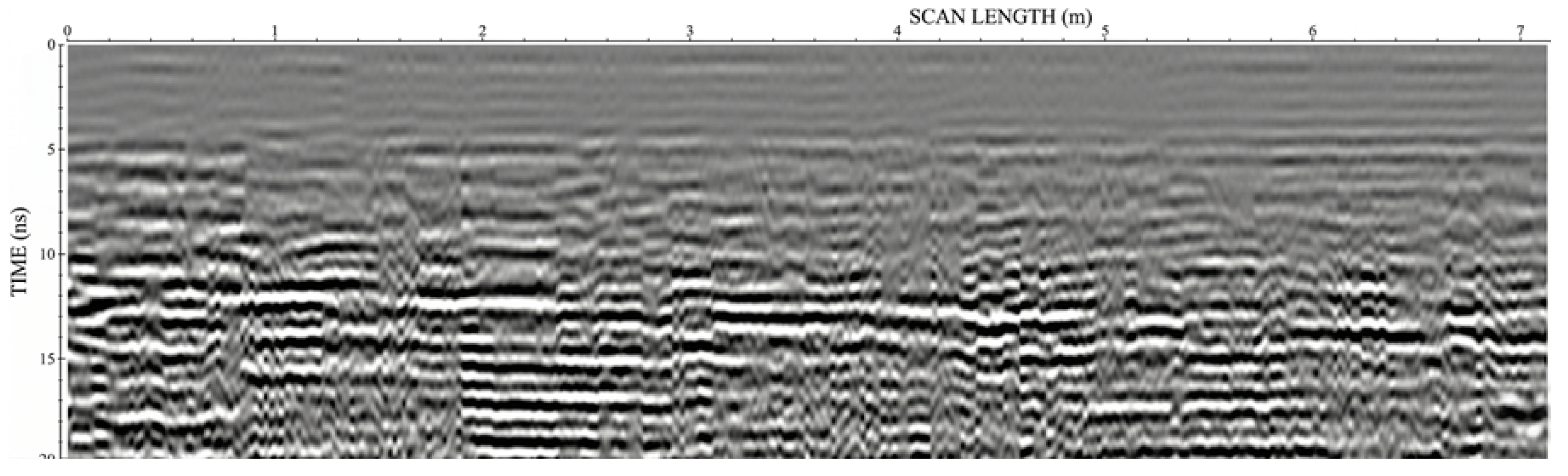
The detected image was filtered, and the obtained image data was used for disease recognition. Results show that the reflected electromagnetic wave signal within the internal pavement layers did not exhibit significant amplitude enhancement features. Instead, the waveform distribution remained relatively stable, with consistent layer interfaces and uniform reflection intensity across the inspection line. As indicated in Figure 5, the road subgrade in this section was generally in favorable condition, suggesting adequate compaction, minimal moisture intrusion, and well-bonded structural layers. The absence of anomalous signal characteristics implies that no significant structural deficiencies or voids are present within the surveyed segment.
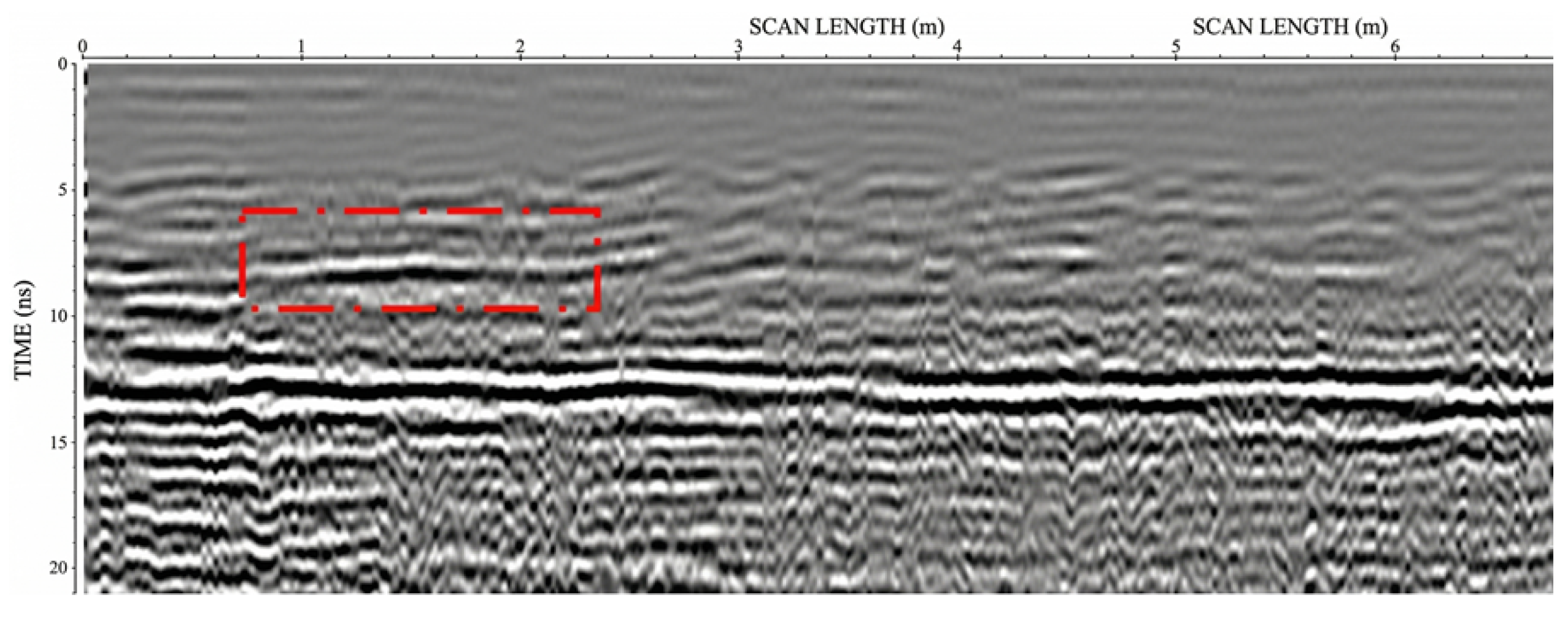
In contrast to the uniform signals observed in other sections, the electromagnetic wave reflections within the red-marked region of Figure 6 were characterized by enhanced continuity and intensity, deviating from the baseline pattern. These anomalies may indicate the presence of structural irregularities or inconsistencies in material composition. Specifically, the increased amplitude and continuity of the reflected signals suggest potential zones of partial voids or delamination between structural layers. Such features are typically attributed to construction defects, such as insufficient layer bonding, inadequate compaction, or segregation of materials during placement [57].
In this case, the irregular reflections most likely originate from the interfaces between the lower base and the subbase layers, as well as between the subbase and subgrade. These discontinuities may result from a variety of in-service factors, including moisture infiltration, differential settlement, or load-induced fatigue. Additionally, poor drainage or repeated freeze–thaw cycles can exacerbate the formation of voids, leading to progressive deterioration if left unaddressed [58,59]. Therefore, the observed anomalies warrant further investigation through complementary non-destructive testing or core sampling and should be prioritized for targeted maintenance or rehabilitation measures to ensure pavement integrity and long-term performance.

3.2.2. Structural Conditions After APT

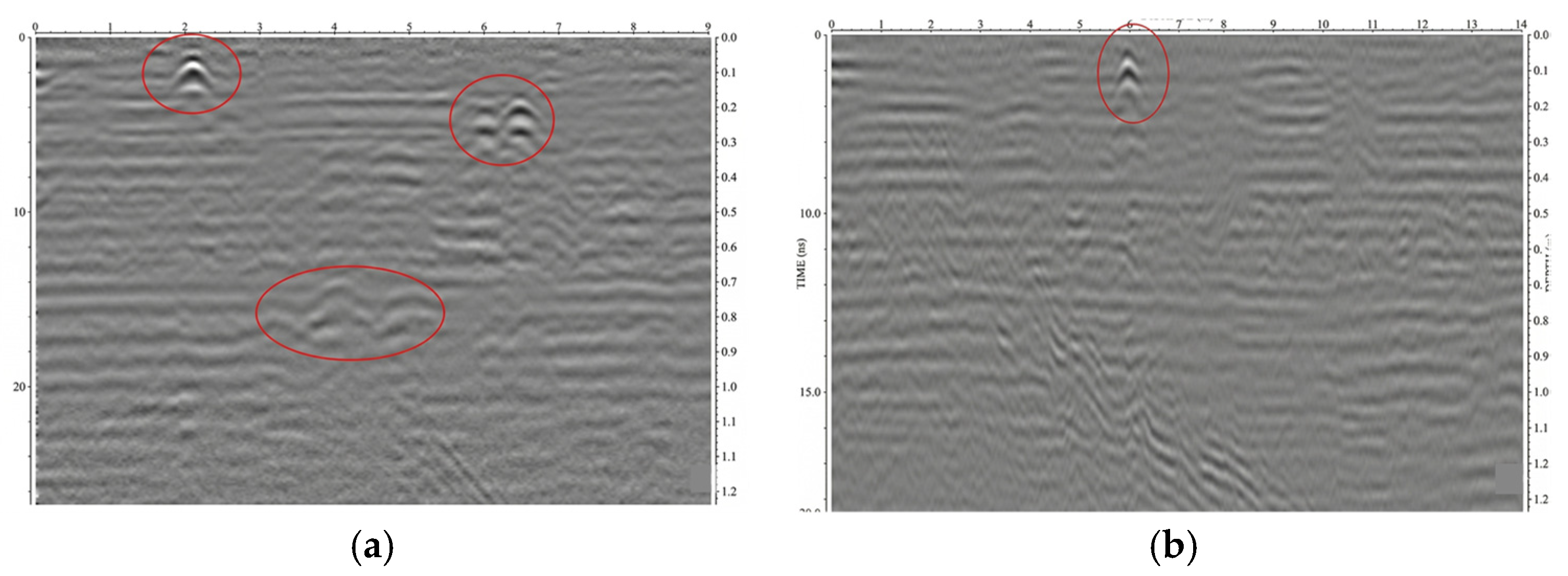
According to the interpretation of Figure 7, apart from the parabolic electromagnetic reflections caused by the embedded sensors (indicated in red), the signals obtained from both the longitudinal (Figure 7a) and transverse (Figure 7b) GPR profiles showed no significant increase in amplitude or disruption in continuity. These hyperbolic signatures are typical of localized point reflectors such as embedded objects, and do not indicate structural damage [60].
The remaining reflected waveforms across the scanned sections remained stable and continuous, without evidence of diffraction patterns, abrupt amplitude anomalies, or phase shifts that are typically associated with material defects, layer separation, or voids. This consistency suggests that the internal structure in this area was minimally affected by the APT loading process, and that no substantial deterioration occurred within the radar’s effective detection depth.
Furthermore, the absence of signal scattering or loss of coherence supports the conclusion that the pavement layers maintained good interfacial bonding and mechanical integrity under applied loading. The well-preserved stratification in both directions (longitudinal and transverse) indicates that the construction quality and material properties were sufficient to resist deformation or delamination. This confirms that the test section performed adequately under simulated traffic conditions, and no immediate rehabilitation measures are required at this stage. Continuous monitoring, however, is recommended to detect potential long-term damage initiation that may evolve under extended loading cycles or environmental exposure.
The combined FWD–GPR results indicate that the dominant deterioration at the investigated loading stage is concentrated in the upper asphalt layers. The back calculated surface-layer modulus shows a clear reduction with increasing repetitions, whereas the GPR profiles remain largely stable in deeper layers and do not suggest pronounced debonding or void development. This pattern is consistent with the commonly reported mechanism for semi-rigid base asphalt pavements, where early damage tends to initiate near the surface as fatigue microcracking and stiffness loss before evolving into macroscopic defects detectable by radar. The observed improvement after the SMA-13 overlay further supports the near-surface control of structural response, highlighting the complementarity of FWD (mechanical degradation quantification) and GPR (subsurface condition verification).

4. Conclusions

The results obtained from APT demonstrated that the surface layer exhibited a progressive reduction in its structural bearing capacity as the number of load repetitions increased. In contrast, the base layer maintained relatively stable mechanical performance throughout the loading cycles. GPR assessments further indicated that the roadbed in the examined section remained in satisfactory condition, indicating minimal structural deterioration in the deeper layers. These combined findings underscore the effectiveness of applying both FWD and GPR methods for evaluating pavement conditions from a multi-depth perspective. The integrated approach allows for more comprehensive monitoring of both surface and subsurface layer performance, enabling timely detection of potential weaknesses. This methodology provides valuable insights for pavement design optimization, preventive maintenance planning, and service life prediction, while future application to varied pavement types and loading spectra will enhance its generalizability. The combined interpretation indicates that the observed degradation is primarily surface-dominated at the investigated loading stage, while no pronounced deep-layer defects or interfacial failures were identified by GPR, demonstrating the complementarity of mechanical (FWD) and electromagnetic (GPR) diagnostics.

Funding

This research received no external funding.

Institutional Review Board Statement

Not applicable.

Informed Consent Statement

Not applicable.

Data Availability Statement

The data presented in this study are available upon request from the corresponding author.

Conflicts of Interest

The authors declare no conflict of interest.

References

  1. Xiong, C.L.; Yu, J.M.; Zhang, X.N. Use of NDT systems to investigate pavement reconstruction needs and improve maintenance treatment decision-making. Int. J. Pavement Eng. 2023, 24, 2011872. [Google Scholar] [CrossRef]
  2. Wang, H.-P.; Guo, Y.-X.; Wu, M.-Y.; Xiang, K.; Sun, S.-R. Review on structural damage rehabilitation and performance assessment of asphalt pavements. Rev. Adv. Mater. Sci. 2021, 60, 438–449. [Google Scholar] [CrossRef]
  3. Liu, Z. Life-Cycle-Assessment-Based Quantification and Low-Carbon Optimization of Carbon Emissions in Expressway Construction. Infrastructures 2025, 10, 291. [Google Scholar] [CrossRef]
  4. Liu, Z.; Zhou, Z.; Gu, X.; Sun, L.; Wang, C. Laboratory evaluation of the performance of reclaimed asphalt mixed with composite crumb rubber-modified asphalt: Reconciling relatively high content of RAP and virgin asphalt. Int. J. Pavement Eng. 2023, 24, 2217320. [Google Scholar] [CrossRef]
  5. Liu, Z.; Sun, L.; Gu, X.; Wang, X.; Dong, Q.; Zhou, Z.; Tang, J. Characteristics, mechanisms, and environmental LCA of WMA containing sasobit: An analysis perspective combing viscosity-temperature regression and interface bonding strength. J. Clean. Prod. 2023, 391, 136255. [Google Scholar] [CrossRef]
  6. Ren, H.; Qian, Z.; Chen, T.; Cao, H.; Qian, L.; Zhang, X. Fracture resistance of asphalt mixtures used for bridge deck pavement in high-altitude and cold regions. Constr. Build. Mater. 2024, 443, 137833. [Google Scholar] [CrossRef]
  7. Cui, B.; Wang, H. Predicting Asphalt Pavement Deterioration Under Climate Change Uncertainty Using Bayesian Neural Network. IEEE Trans. Intell. Transp. Syst. 2025, 26, 785–797. [Google Scholar] [CrossRef]
  8. Liu, Z.; Gu, X.; Dong, X.; Cui, B.; Hu, D. Mechanism and performance of graphene modified asphalt: An experimental approach combined with molecular dynamic simulations. Case Stud. Constr. Mater. 2023, 18, e01749. [Google Scholar] [CrossRef]
  9. Famewo, B.G.; Shokouhian, M. A Review of Pavement Performance Deterioration Modeling: Influencing Factors and Techniques. Symmetry 2025, 17, 1992. [Google Scholar] [CrossRef]
  10. Liu, Z.; Gu, X. Performance evaluation of full-scale accelerated pavement using NDT and laboratory tests: A case study in Jiangsu, China. Case Stud. Constr. Mater. 2023, 18, e02083. [Google Scholar] [CrossRef]
  11. Alqurashi, I.; Alver, N.; Bagci, U.; Catbas, F.N. A Review of Ultrasonic Testing and Evaluation Methods with Applications in Civil NDT/E. J. Nondestruct. Eval. 2025, 44, 53. [Google Scholar] [CrossRef]
  12. Liu, Z.; Wang, S.; Gu, X.; Dong, Q. Non-destructive testing and intelligent evaluation of road structural conditions using GPR and FWD. J. Traffic Transp. Eng. (Engl. Ed.) 2025, 12, 462–476. [Google Scholar] [CrossRef]
  13. Wang, L.; Liu, Z.; Gu, X.; Wang, D. Three-Dimensional Reconstruction of Road Structural Defects Using GPR Investigation and Back-Projection Algorithm. Sensors 2025, 25, 162. [Google Scholar] [CrossRef] [PubMed]
  14. Lahouar, S.; Al-Qadi, I.L. Automatic detection of multiple pavement layers from GPR data. NDT E Int. 2008, 41, 69–81. [Google Scholar] [CrossRef]
  15. Wang, L.; Gu, X.; Liu, Z.; Wu, W.; Wang, D. Automatic detection of asphalt pavement thickness: A method combining GPR images and improved Canny algorithm. Measurement 2022, 196, 111248. [Google Scholar] [CrossRef]
  16. Bai, H.; Sinfield, J.V. Improved background and clutter reduction for pipe detection under pavement using Ground Penetrating Radar (GPR). J. Appl. Geophys. 2020, 172, 103918. [Google Scholar] [CrossRef]
  17. Liu, Z.; Gu, X.; Dong, Q.; Tu, S.; Li, S. 3D visualization of airport pavement quality based on BIM and WebGL integration. J. Transp. Eng. Part B Pavements 2021, 147, 04021024. [Google Scholar] [CrossRef]
  18. Benedetto, A.; Benedetto, F.; Blasiis, M.R.D.; Giunta, G. Reliability of signal processing technique for pavement damages detection and classification using ground penetrating radar. IEEE Sens. J. 2005, 5, 471–480. [Google Scholar] [CrossRef]
  19. Ahmad, N.; Lorenzl, H.; Wistuba, M. Crack detection in asphalt pavements-How useful is the GPR? In Proceedings of the 2011 6th International Workshop on Advanced Ground Penetrating Radar (IWAGPR), Aachen, Germany, 22–24 June 2011; pp. 1–6. [Google Scholar] [CrossRef]
  20. Liu, Z.; Gu, X.; Kwan, M.-P.; Cui, B. Integrated ultrasonic testing and numerical simulation for damage detection in steel bridge deck pavements. Eng. Struct. 2026, 355, 122421. [Google Scholar] [CrossRef]
  21. Liu, Z.; Cui, B.; Gu, X. TIGPR: A multi-view ground penetrating radar detection data for damage assessment of transportation infrastructure. Data Brief. 2025, 60, 111665. [Google Scholar] [CrossRef] [PubMed]
  22. Li, C.; Miao, L.; Yue, J. Research on Detection to Moisture Content of Flexible Pavement by GPR. In Paving Materials and Pavement Analysis; American Society of Civil Engineers: Reston, VA, USA, 2010; pp. 420–426. [Google Scholar] [CrossRef]
  23. Salvi, R.; Ramdasi, A.; Kolekar, Y.A.; Bhandarkar, L.V. Use of Ground-Penetrating Radar (GPR) as an Effective Tool in Assessing Pavements—A Review. In Geotechnics for Transportation Infrastructure; Springer: Singapore, 2019; pp. 85–95. [Google Scholar] [CrossRef]
  24. Liu, Z.; Yang, Q.; Gu, X. Assessment of pavement structural conditions and remaining life combining accelerated pavement testing and ground-penetrating radar. Remote Sens. 2023, 15, 4620. [Google Scholar] [CrossRef]
  25. Simonin, J.M.; Baltazart, V.; Hornych, P.; Dérobert, X.; Thibaut, E.; Sala, J.; Utsi, V. Case study of detection of artificial defects in an experimental pavement structure using 3D GPR systems. In Proceedings of the 15th International Conference on Ground Penetrating Radar, Brussels, Belgium, 30 June–4 July 2014; pp. 847–851. [Google Scholar] [CrossRef]
  26. Liu, Z.; Shen, S.; Yu, S.; Jahangiri, B.; Mensching, D.J.; Haghshenas, H.F. Development of field compaction curves for asphalt mixtures based on laboratory workability tests and machine learning modeling. Constr. Build. Mater. 2025, 479, 141520. [Google Scholar] [CrossRef]
  27. Fernandes, F.M.; Pais, J.C. Laboratory observation of cracks in road pavements with GPR. Constr. Build. Mater. 2017, 154, 1130–1138. [Google Scholar] [CrossRef]
  28. Cui, B.; Liu, Z.; Yang, Q. UAV-YOLO12: A Multi-Scale Road Segmentation Model for UAV Remote Sensing Imagery. Drones 2025, 9, 533. [Google Scholar] [CrossRef]
  29. Wu, W.; Zou, X.; Fang, Z.; Fang, X.; Song, X.; Yang, A.; Liu, Z. Research on Asphalt Pavement Crack Detection using YOLOv5 Model. In Proceedings of the 2024 7th International Conference on Advanced Algorithms and Control Engineering (ICAACE), Shanghai, China, 1–3 March 2024; pp. 1397–1401. [Google Scholar] [CrossRef]
  30. Liu, Z.; Wu, W.; Wang, D.; Cui, B.; Gu, X. Automatic extraction and 3D modeling of real road scenes using UAV imagery and deep learning semantic segmentation. Int. J. Digit. Earth 2024, 17, 2365970. [Google Scholar] [CrossRef]
  31. Cui, B.; Wang, H. Coupled prediction of viscoelastic properties of asphalt mixtures using a multi-task physics-constrained neural network. Adv. Eng. Inform. 2026, 72, 104437. [Google Scholar] [CrossRef]
  32. Liu, Z.; Wang, S.; Gu, X.; Wang, D.; Dong, Q.; Cui, B. Intelligent Assessment of Pavement Structural Conditions: A Novel FeMViT Classification Network for GPR Images. IEEE Trans. Intell. Transp. Syst. 2024, 25, 13511–13523. [Google Scholar] [CrossRef]
  33. Liu, Z.; Gu, X.; Chen, J.; Wang, D.; Chen, Y.; Wang, L. Automatic recognition of pavement cracks from combined GPR B-scan and C-scan images using multiscale feature fusion deep neural networks. Autom. Constr. 2023, 146, 104698. [Google Scholar] [CrossRef]
  34. Liu, Q.; Liu, Z. Road Distress Identification Using GPR Signals and U-Net Model. In Proceedings of the 2024 9th International Conference on Intelligent Computing and Signal Processing (ICSP), Xi’an, China, 19–21 April 2024; pp. 739–744. [Google Scholar] [CrossRef]
  35. Krysiński, L.; Sudyka, J. GPR abilities in investigation of the pavement transversal cracks. J. Appl. Geophys. 2013, 97, 27–36. [Google Scholar] [CrossRef]
  36. Liu, Z.; Gu, X.; Li, J.; Dong, Q.; Jiang, J. Deep learning-enhanced numerical simulation of ground penetrating radar and image detection of road cracks. Chin. J. Geophys. 2024, 67, 2455–2471. [Google Scholar] [CrossRef]
  37. Liu, Z.; Yeoh, J.K.; Gu, X.; Dong, Q.; Chen, Y.; Wu, W.; Wang, L.; Wang, D. Automatic pixel-level detection of vertical cracks in asphalt pavement based on GPR investigation and improved mask R-CNN. Autom. Constr. 2023, 146, 104689. [Google Scholar] [CrossRef]
  38. Bastard, C.L.; Baltazart, V.; Wang, Y.; Saillard, J. Thin-Pavement Thickness Estimation Using GPR With High-Resolution and Superresolution Methods. IEEE Trans. Geosci. Remote Sens. 2007, 45, 2511–2519. [Google Scholar] [CrossRef]
  39. Liu, Z.; Wu, W.; Gu, X.; Cui, B. PaveDistress: A comprehensive dataset of pavement distresses detection. Data Brief. 2024, 57, 111111. [Google Scholar] [CrossRef] [PubMed]
  40. Ahmed, F.; Thompson, J.; Kim, D.; Huynh, N.; Carroll, E. Evaluation of pavement service life using AASHTO 1972 and mechanistic-empirical pavement design guides. Int. J. Transp. Sci. Technol. 2023, 12, 46–61. [Google Scholar] [CrossRef]
  41. Cui, B.; Wang, H. Compatibility analysis of waste polymer recycling in asphalt binder using molecular descriptor and graph neural network. Resour. Conserv. Recycl. 2025, 212, 107950. [Google Scholar] [CrossRef]
  42. Llopis-Castelló, D.; García-Segura, T.; Montalbán-Domingo, L.; Sanz-Benlloch, A.; Pellicer, E. Influence of pavement structure, traffic, and weather on urban flexible pavement deterioration. Sustainability 2020, 12, 9717. [Google Scholar] [CrossRef]
  43. Cui, B.; Wang, H. Cross-scale analysis of asphalt binder tensile fracture using molecular dynamics simulation. Constr. Build. Mater. 2024, 426, 136200. [Google Scholar] [CrossRef]
  44. Cui, B.; Wang, H. Oxidative aging mechanism of asphalt binder using experiment-derived average molecular model and ReaxFF molecular dynamics simulation. Fuel 2023, 345, 128192. [Google Scholar] [CrossRef]
  45. Liu, Z.; Cui, B.; Yang, Q.; Gu, X. Sensor-Based Structural Health Monitoring of Asphalt Pavements with Semi-Rigid Bases Combining Accelerated Pavement Testing and a Falling Weight Deflectometer Test. Sensors 2024, 24, 994. [Google Scholar] [CrossRef] [PubMed]
  46. Liu, Z.; Gu, X.; Ren, H.; Li, S.; Dong, Q. Permanent Deformation Monitoring and Remaining Life Prediction of Asphalt Pavement Combining Full-Scale Accelerated Pavement Testing and FEM. Struct. Control Health Monit. 2023, 2023, 6932621. [Google Scholar] [CrossRef]
  47. Nagabhushana, M.N.; Tiwari, D.; Jain, P.K. Rutting in Flexible Pavement: An Approach of Evaluation with Accelerated Pavement Testing Facility. Procedia-Soc. Behav. Sci. 2013, 104, 149–157. [Google Scholar] [CrossRef]
  48. Liu, Z.; Gu, X.; Ren, H. Rutting prediction of asphalt pavement with semi-rigid base: Numerical modeling on laboratory to accelerated pavement testing. Constr. Build. Mater. 2023, 375, 130903. [Google Scholar] [CrossRef]
  49. Camacho-Garita, E.; Puello-Bolaño, R.; Laurent-Matamoros, P.; Aguiar-Moya, J.P.; Loria-Salazar, L. Structural analysis for APT sections based on deflection parameters. Transp. Res. Rec. 2019, 2673, 313–322. [Google Scholar] [CrossRef]
  50. Liu, Z.; Gu, X.; Wu, C.; Ren, H.; Zhou, Z.; Tang, S. Studies on the validity of strain sensors for pavement monitoring: A case study for a fiber Bragg grating sensor and resistive sensor. Constr. Build. Mater. 2022, 321, 126085. [Google Scholar] [CrossRef]
  51. Liu, Z.; Gu, X.; Ren, H.; Zhou, Z.; Wang, X.; Tang, S. Analysis of the dynamic responses of asphalt pavement based on full-scale accelerated testing and finite element simulation. Constr. Build. Mater. 2022, 325, 126429. [Google Scholar] [CrossRef]
  52. Nguyen, M.L.; Chupin, O.; Blanc, J.; Piau, J.-M.; Hornych, P.; Lefeuvre, Y. Investigation of Crack Propagation in Asphalt Pavement Based on APT Result and LEFM Analysis. J. Test. Eval. 2020, 48, 161–177. [Google Scholar] [CrossRef]
  53. Liu, Z.; Gu, X.; Ren, H.; Wang, X.; Dong, Q. Three-dimensional finite element analysis for structural parameters of asphalt pavement: A combined laboratory and field accelerated testing approach. Case Stud. Constr. Mater. 2022, 17, e01221. [Google Scholar] [CrossRef]
  54. Ren, H.; Gu, X.; Liu, Z. Analysis of mechanical responses for semi-rigid base asphalt pavement based on mls66 accelerated loading test. In CICTP 2021; American Society of Civil Engineers: Reston, VA, USA, 2021; pp. 732–742. [Google Scholar] [CrossRef]
  55. Liu, Z.; Gu, X.; Yang, H.; Wang, L.; Chen, Y.; Wang, D. Novel YOLOv3 model with structure and hyperparameter optimization for detection of pavement concealed cracks in GPR images. IEEE Trans. Intell. Transp. Syst. 2022, 23, 22258–22268. [Google Scholar] [CrossRef]
  56. Liu, Z.; Gu, X.; Wu, W.; Zou, X.; Dong, Q.; Wang, L. GPR-based detection of internal cracks in asphalt pavement: A combination method of DeepAugment data and object detection. Measurement 2022, 197, 111281. [Google Scholar] [CrossRef]
  57. Lei, K.; Cui, B.; Zhang, M.; Mao, R.; Du, Y.; Gu, X.; Liu, Z. Intelligent Prediction of Pavement Structural Degradation Using a Multimodel Ensemble Learning Approach. Struct. Control Health Monit. 2026, 1, 6132295. [Google Scholar] [CrossRef]
  58. Li, S.; Gu, X.; Xu, X.; Xu, D.; Zhang, T.; Liu, Z.; Dong, Q. Detection of concealed cracks from ground penetrating radar images based on deep learning algorithm. Constr. Build. Mater. 2021, 273, 121949. [Google Scholar] [CrossRef]
  59. Thitimakorn, T.; Kampananon, N.; Jongjaiwanichkit, N.; Kupongsak, S. Subsurface void detection under the road surface using ground penetrating radar (GPR), a case study in the Bangkok metropolitan area, Thailand. Int. J. Geo-Eng. 2016, 7, 2. [Google Scholar] [CrossRef]
  60. Liu, Z.; Wu, W.; Gu, X.; Li, S.; Wang, L.; Zhang, T. Application of combining YOLO models and 3D GPR images in road detection and maintenance. Remote Sens. 2021, 13, 1081. [Google Scholar] [CrossRef]
Figure 1. MLS66 loading equipment, materials and structures of tested road.
Engproc 146 00005 g001
Figure 2. FWD test point (red dots): dual wheel group track belt and non-loading belt.
Engproc 146 00005 g002
Figure 3. Centre point bending of loading wheel track belt before and after temperature correction.
Engproc 146 00005 g003
Figure 4. Direction of GPR detection: (a) longitudinal; (b) transverse.
Engproc 146 00005 g004
Figure 5. GPR image of the base longitudinal inspection line.
Engproc 146 00005 g005
Figure 6. Partial void between lower base and lower base.
Engproc 146 00005 g006
Figure 7. GPR image of pavement structure after APT loading: (a) longitudinal; (b) transverse.
Engproc 146 00005 g007
Table 1. Central deflection values under various loading.
Loading Times
(10 Thousand)
Average Deflection (mm)Standard Deviation
(0.1 mm)
Coefficient of Variation (%)Representative Deflection (mm)
94.20.36.44.6
584.80.919.86.4
815.11.223.57.1
Table 2. Inverse analysis results of layer modulus under varying load applications.
Loading Times (10 Thousand)Modulus of Structural Layers (MPa)
SurfaceBaseSubbaseSubgrade
97963 ± 101815,578 ± 46758749 ± 3529154 ± 11
585435 ± 127712,479 ± 55419517 ± 1005163 ± 9
815019 ± 22510,178 ± 35499862 ± 667166 ± 7
1035541 ± 29811,652 ± 365111,567 ± 1457176 ± 12
Disclaimer/Publisher’s Note: The statements, opinions and data contained in all publications are solely those of the individual author(s) and contributor(s) and not of MDPI and/or the editor(s). MDPI and/or the editor(s) disclaim responsibility for any injury to people or property resulting from any ideas, methods, instructions or products referred to in the content.