1. Introduction
In the Philippines, as a developing country, stealing is one of the social problems. In a case reported, the so-called “termite gang” successfully tunneled into a pawnshop in Barangay Sto. Niño, Marikina City, stealing approximately eight hundred thousand worth of assets [
1]. Similarly, a high-profile robbery in Ozamiz involved perpetrators digging beneath a food court to infiltrate a mall, ultimately escaping with thirty-five million in stolen goods [
2]. These events underscore the urgent need for enhanced security measures to detect and prevent subterranean intrusions.
Thus, traditional security systems, such as closed-circuit television (CCTV), are being integrated with modern innovations, including AI-driven analytics, biometric access control, and solar-powered surveillance infrastructure [
3]. Despite these innovations and developments, the rapidly evolving nature of criminal tactics requires adaptable systems. Predictive modelling and artificial intelligence are valuable in creating a dynamic system that can learn from attack patterns and autonomously adapt to emerging threats [
4].
Applying socio-technical frameworks further enriches security design by analyzing how technologies interact with human behavior and environmental factors, thereby enhancing their real-world applicability [
5]. Investment in research and development also plays a significant role in ensuring that security technology remains robust and relevant. The application of multidisciplinary approaches combining engineering, behavioral science, and data analytics improves the adaptability and resilience of security systems [
6].
A prominent example is the integration of vibration sensors with Global System for Mobile Communications (GSM) networks. Studies demonstrate that Arduino-based platforms, paired with vibration sensors and modules such as the SIM900A, can detect unauthorized activities in remote settings, such as farms, thereby demonstrating the technology’s potential for broader security applications [
7].
In studying a GSM-based vibration data acquisition system that enables low-cost, wireless transmission of vibration data, this system demonstrates the practical feasibility of detecting structural anomalies [
8]. As supported by a study, a fiber-optic sensing system is used to prevent excavation of underground heritage sites. Thus, wireless transmission can be used for real-time detection and geographic pinpointing of underground threats [
9]. Supported by [
10], that energy vibration provides evidence of its effectiveness in being deployed in remote and underground environments. This supports the potential long-term operation of sensor systems in MFIs even in areas with limited power access [
11,
12].
This research seeks to bridge the gap in security technology by providing an innovative, proactive solution to counter underground burglary tactics: a dual security system, a Global System for Mobile Communications (GSM) alert system, and a simulation response alarm system for the developed project.
This study presents a real-time underground intrusion detection system that uses vibration sensors to identify disturbances and a dual-band GSM module (SIM900A) to send instant cellular notifications. Designed for electrical laboratory simulations, the system effectively demonstrates how vibration-based sensing and GSM communication can enhance security monitoring and rapid alert responses.
2. Methodology
Technical development research plays a pivotal role in shaping the future of industries by driving innovation through the systematic creation and enhancement of technologies. This research is particularly valuable in fields requiring rapid adaptation to evolving threats and demands, such as security systems. It encompasses a broad spectrum of activities—from early-stage prototyping to the deployment of fully operational systems—guided by iterative testing, feedback loops, and integration of interdisciplinary knowledge.
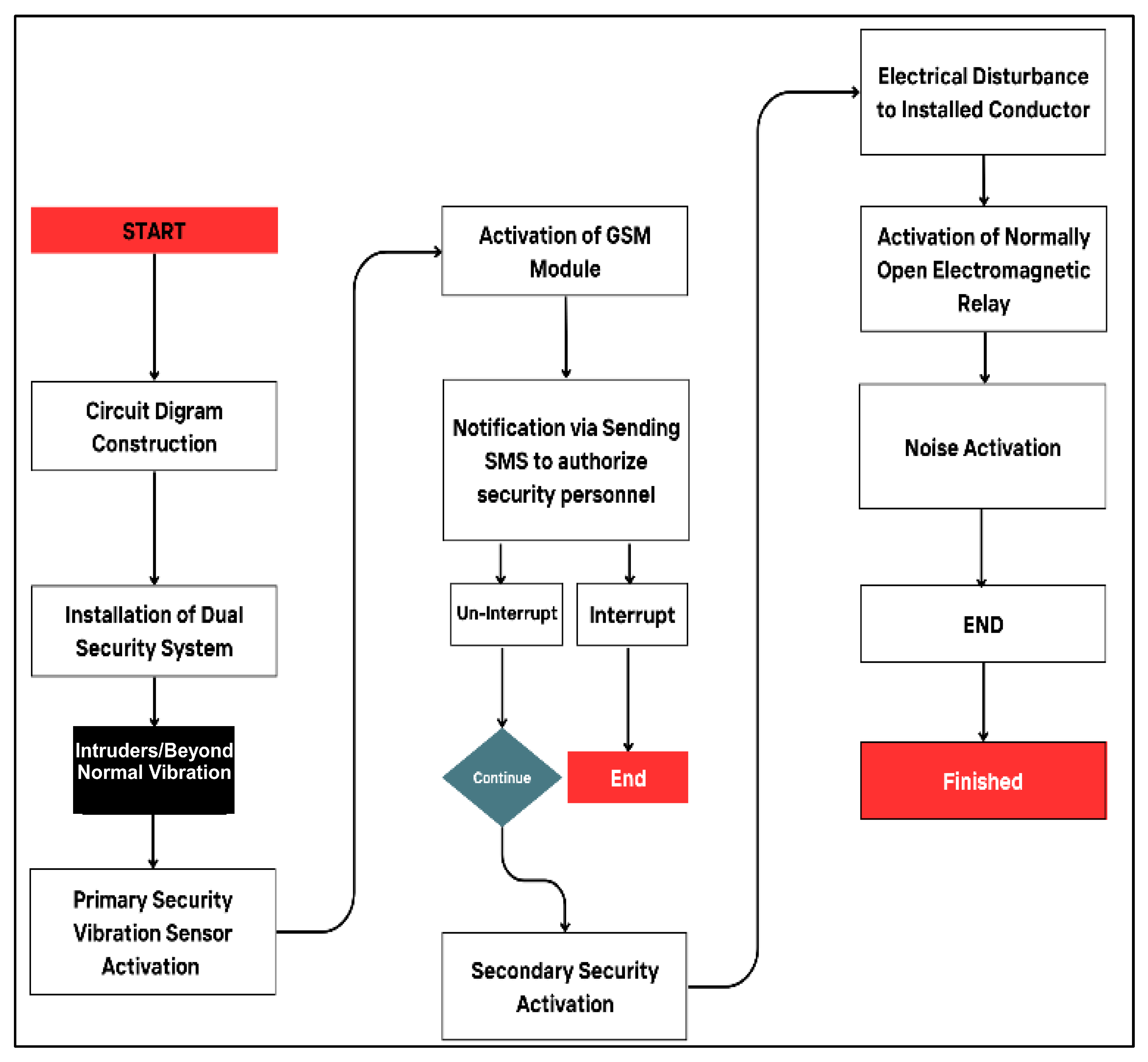
Figure 1 presents the operational flow of vibration sensors and dual-band GSM cellular notifications using the SIM900A module, which is explained as follows:
The process begins with a circuit diagram construction that will serve as the blueprint for the integral parts of all components. After the design is finalized, the dual security system is installed, integrating the configuration of both the primary and secondary layers of detection and response.
Detection triggers the primary security. The system enters its operational mode when abnormal or excessive vibrations or potential intrusion attempts are detected by the SW-420 vibration sensor, representing the primary security layer.
Communication via the GSM Module is triggered to initiate communication. An SMS notification is sent to authorized security personnel, alerting them to a potential breach.
Decision point: interrupted vs. uninterrupted. Once notified, security personnel may assess the situation. If the activity shows no accidental or deemed unsafe conditions, the system remains uninterrupted, allowing it to proceed with secondary security activation. If deemed a false alarm, or if intervention occurs early, the process is interrupted, and the flow ends without triggering further actions.
The secondary security activation; if the security is not interrupted, the system proceeds to the secondary phase. This creates an electrical disturbance in the installed conductor, triggering a normally open electromagnetic relay.
Audible alarm activation when the relay closes the circuit, resulting in noise activation that activates the fire alarm bell or siren.
The process ends when the audible alarm is triggered; the system concludes its operation flow, and is marked as finished, ready for reset, or further monitoring of the entire establishment.
To address false positives, a two-stage validation procedure is used to distinguish underground intrusion-related vibrations from non-intrusion sources, such as nearby vehicles, laboratory foot traffic, and incidental structural movements.
First, a baseline vibration profile was established by recording the SW-420 sensor output for a continuous 30-min period under standard laboratory conditions (no intentional disturbance), during which transient signals caused by walking, door closing, and bench movement were logged and used to define a noise threshold window.
Second, controlled disturbance trials were conducted using three categories of excitation: (a) low-amplitude ambient vibration (walking and chair movement), (b) short impulsive vibration (object drop and light tapping on the floor slab), and (c) sustained and repetitive vibration intended to emulate underground digging activity using a handheld mechanical shaker placed on the floor surface.
A software debounce and a temporal filtering strategy were implemented in the Arduino program, requiring the vibration signal to remain above the calibrated threshold for a minimum persistence time (≥300 ms) and to occur in repeated bursts within a short time window before an intrusion event was declared. Events that failed to meet both amplitude and persistence criteria were automatically classified as non-intrusive and suppressed, preventing GSM transmission.
This approach substantially reduced false alarms caused by isolated or short-lived disturbances and provides a transparent method for validating system robustness against familiar environmental vibration sources.
3. Results and Discussion
The prototype system’s cost includes an Arduino Uno, a SW-420 vibration sensor, a SIM900A GSM module, a relay module, power regulation components, wiring, and an enclosure. Based on local supplier quotations, the total hardware cost is approximately USD 28–35 per unit, with the GSM module accounting for the largest share of the budget. In contrast, commercially available perimeter vibration or buried cable intrusion sensors typically range from USD 120 to over USD 300 per sensing node, excluding communication modules and monitoring software.
The proposed system therefore demonstrates a reduction of approximately 70–85% in upfront hardware cost. While commercial systems provide advanced signal processing and centralized monitoring, the developed prototype offers a low-cost, modular alternative suitable for small- and medium-sized facilities, such as microfinance institutions and pawnshops, where budget limitations often prevent the deployment of proprietary underground detection systems.
The researchers develop and simulate a real-time system for detecting underground intrusions using vibration sensors and dual-band GSM cellular notifications with the SIM900A module.
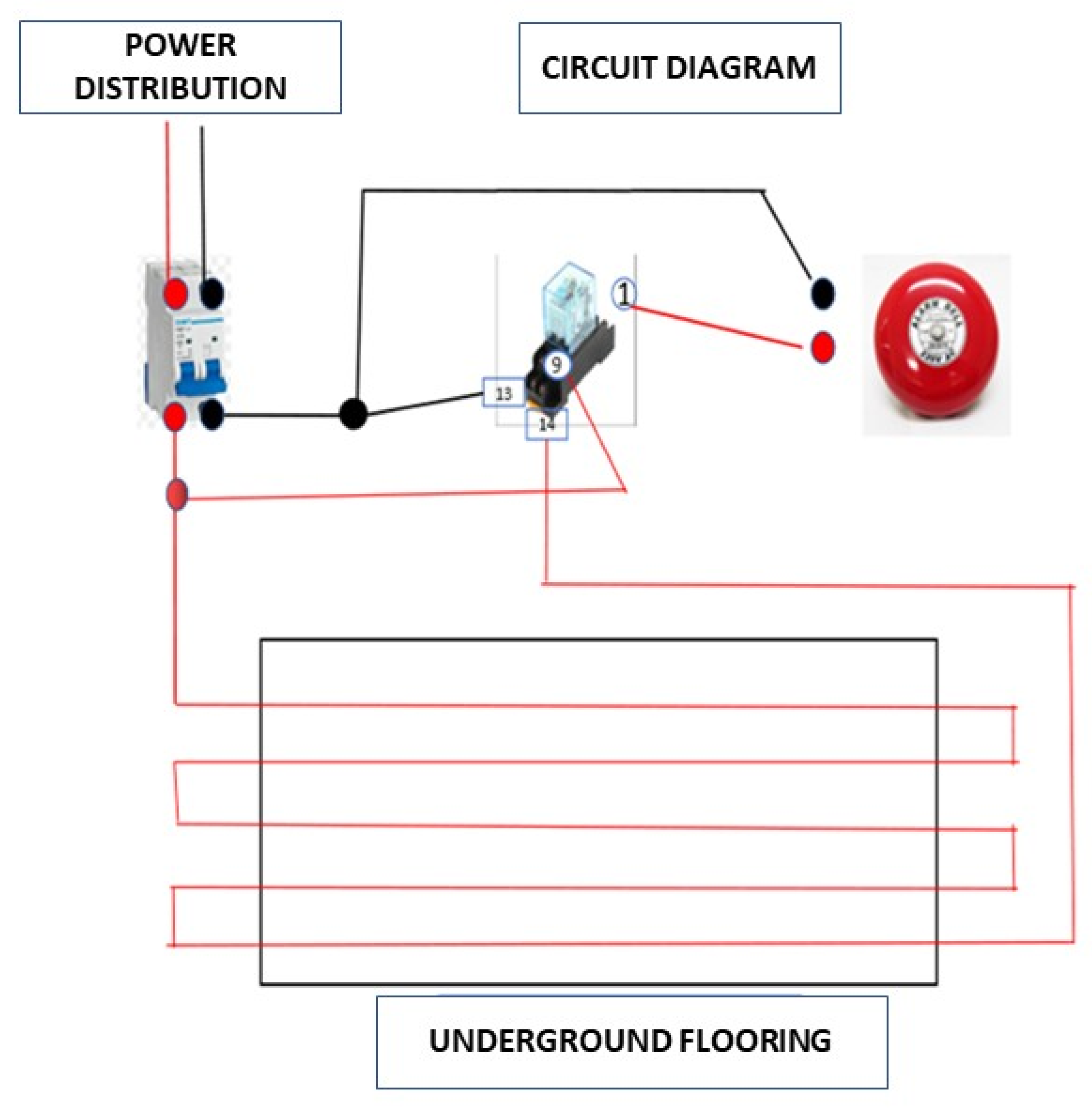
Figure 2 presents a circuit diagram of a technical implementation of a fault or fire detection system that uses underground conductive sensing and relay-based control logic for alarm actuation. The system initiates from a power distribution unit, typically supplying AC voltage, routed through a protective device—likely a Miniature Circuit Breaker (MCB)—which provides overcurrent protection to prevent equipment damage and ensure personnel safety. The red line symbolized the energized line of the circuit, while the black line shows the ground of the circuit.
The circuit includes an electromagnetic relay with a control coil (A1 and A2) and a normally open (NO) contact set. The relay operates as an electromechanical switch, isolating the low-voltage sensing circuit from the high-voltage alarm circuit. The relay module serves as a critical switching component in the alarm system, enabling control of a high-power device via a low-power sensing circuit. As shown in the circuit diagram, the relay consists of a coil and a set of contacts identified as terminals 9, 13, and 14. Terminal 9 functions as the common contact, while terminals 13 and 14 serve as the normally open (NO) and normally closed (NC) contacts, respectively. Under normal operating conditions, the relay remains in its default state, preventing current flow to the alarm device. When a signal is received from the underground flooring sensor, the relay coil becomes energized, causing the internal contacts to change position. This switching action allows electrical current to flow through the alarm circuit, thereby activating the bell and generating an audible warning signal. The sensing circuit comprises conductors embedded beneath the flooring, labeled “Underground Flooring” in the diagram. These conductors function as passive sensor lines that remain open under normal operating conditions but close upon detecting abnormal conditions such as excessive heat, flame, or insulation breakdown, indicating a fault condition.
The underground circuit closes when a fault is detected, energizing the relay coil. This action changes the state of the NO contact, closing it and completing the path to the alarm indicator, a red alarm bell. The bell then actuates, generating an audible alert to signal the presence of a hazard. This system ensures continuous monitoring of subsurface infrastructure and provides real-time fault indication through a straightforward yet reliable relay-controlled mechanism.
Such a configuration is particularly suited for industrial environments, data centers, or high-risk facilities where early detection of thermal or electrical faults beneath the floor is critical. A relay enhances electrical isolation and control, enabling safe actuation of higher-voltage alarm devices from low-voltage sensing inputs. Overall, the system is a cost-effective and technically robust approach to localized fault detection and response.
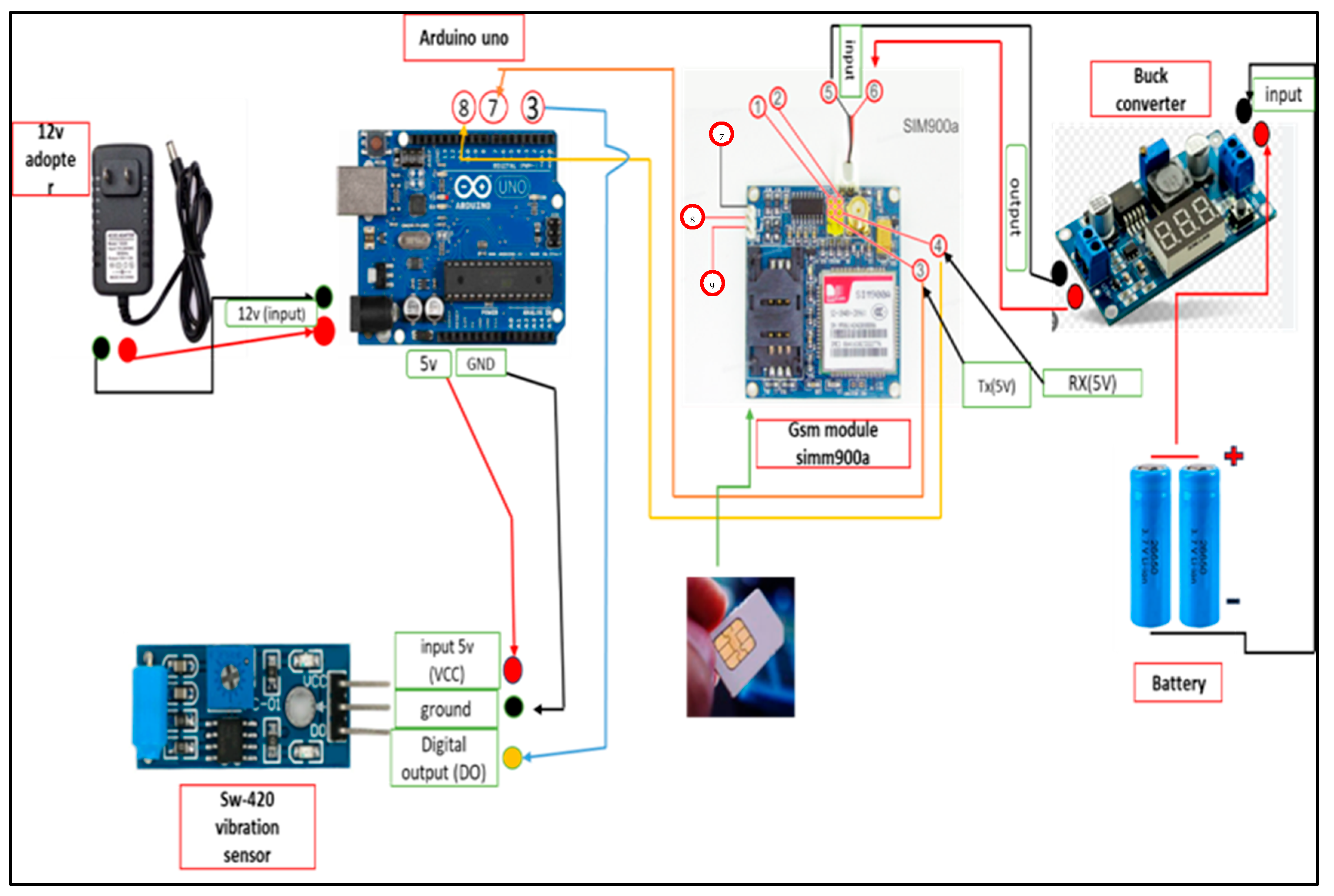
Figure 3 presents a pictorial diagram showing a vibration-based GSM alert system. The arrows indicate the direction of electrical power flow and signal transmission between components. Red lines represent positive voltage supply connections (VCC), black lines indicate ground (GND) or negative connections, blue lines represent digital signal transmission from the vibration sensor to the Arduino Uno, orange lines indicate data transmission (TX) from the Arduino to the GSM module, and yellow lines indicate data reception (RX) from the GSM module to the Arduino. The numbered labels identify the corresponding terminals and communication pins used in the circuit connections. During operation, the SW-420 vibration sensor detects vibration and transmits a digital signal to the Arduino Uno, which processes the input and sends AT commands to the SIM900A GSM module. The GSM module, powered by a regulated supply from the battery and the buck converter, transmits SMS notifications via the cellular network whenever a vibration event is detected. This integrates an Arduino Uno microcontroller, a SIM900A GSM module, and an SW-420 vibration sensor, with regulated power management. The system’s primary function is to detect abnormal vibration events and automatically send an SMS alert to a predefined recipient via GSM communication. Power is supplied by a 12V DC adapter, which simultaneously powers the Arduino Uno and feeds it to a buck converter [
13,
14]. This buck converter steps down the voltage to a stable 5V required to operate the SIM900A GSM module, ensuring voltage compatibility and preventing damage or instability in the GSM module.
The Arduino Uno serves as the central processing unit, interfacing with the vibration sensor and the GSM module. The SW-420 vibration sensor is connected to the Arduino’s digital input pin and consists of three terminals: VCC (5V), GND, and Digital Output (DO) [
15]. Under normal conditions, the sensor’s output remains LOW. Upon detecting vibrations above the predefined threshold, the sensor sends a HIGH signal to the Arduino. The Arduino continuously monitors this input state and, when triggered, executes a software serial communication routine via digital pins 2 (Rx) and 3 (Tx) to the SIM900A GSM module [
16]. The Arduino sends AT commands to the module, which then transmits a text message through the mobile network, enabled by the inserted SIM card.
The design also includes a battery to ensure the GSM module functions reliably, especially in outdoor or off-grid scenarios. This secondary power source maintains continuous operation even during primary power failure. The system’s modularity and low power consumption make it suitable for structural health monitoring, industrial equipment fault detection, and security alert systems. Combining real-time sensing with wireless communication enhances the responsiveness and remote surveillance capabilities of embedded systems.
GSM Alert System Programming
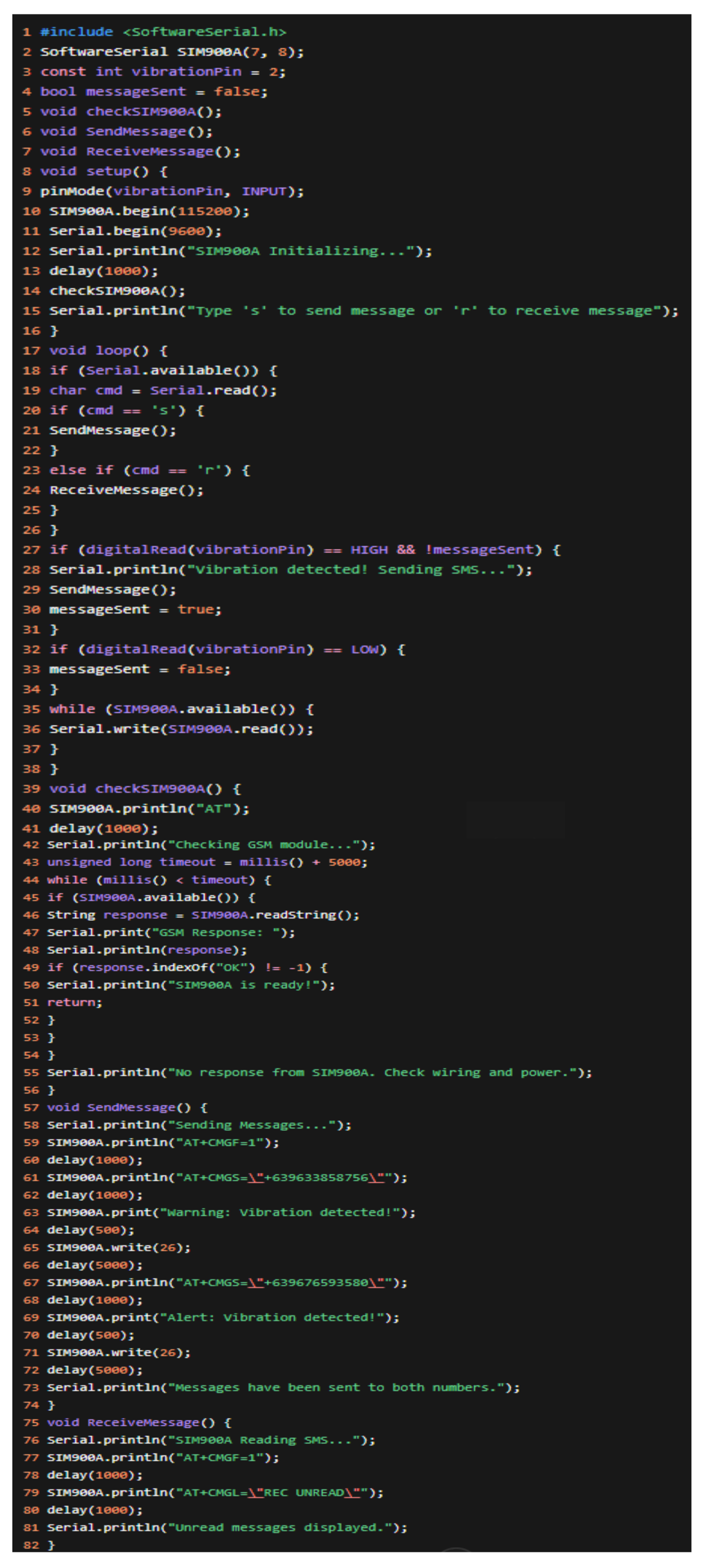
To effectively simulate the GSM alert system program for its user, it is crucial to establish the correct programming code in the module to synchronize the vibration sensors and signaling system with the mobile device registered to the system module.
Figure 4 shows that to evaluate the response alarm system mechanism of the anti-theft security system, the term “simulation” is defined as laboratory-based physical emulation of underground intrusion scenarios rather than numerical or software-only simulation. The experiments were conducted in an electrical technology laboratory using a controlled test arrangement in which the vibration sensor was mounted on a custom simulator case and connected to the complete operational hardware. Artificial vibration sources included a handheld mechanical shaker and repetitive manual tapping at fixed positions on the base to simulate localized digging or drilling. Human-induced movement (walking and stepping near the sensor) and equipment movement were intentionally introduced to represent common background disturbances. Simulations A, B, and C therefore correspond to successive experimental runs under the same physical setup but with refined threshold calibration, signal filtering, and GSM transmission handling, allowing the researchers to evaluate improvements in detection and notification latency under repeatable laboratory-controlled conditions.
The data in
Table 1 shows the simulation of the response alarm system mechanism of the anti-theft security system, demonstrating the responsiveness and functionality of a vibration-based GSM alert mechanism designed to detect underground intrusion threats, such as tunneling near microfinance institutions (MFIs). The system’s rapid detection and notification consistently deliver alerts within 3.5 s after vibration detection. This short delay is critical for real-time monitoring and immediate response by security personnel. Such rapid alerts allow MFIs to mobilize defenses or alert law enforcement before the intrusion escalates.
The identical message format and consistently decreasing response time indicate the reliability and stability of the GSM-based alarm system. This data also indicates that it recognizes vibrational changes, suggesting that the vibration sensor is sensitive enough to detect subtle seismic signals from underground movement or tunneling, which are typically challenging to detect with conventional security tools like CCTVs or motion sensors.
As criminal techniques become more advanced, such as tunneling used in high-value heists, this system offers MFIs a cost-effective, proactive layer of security. Integration can reduce losses and improve deterrence by enabling early detection of breaches from underground access points. Given minimal tie lag and consistent results, the mechanism can be scaled to protect other vulnerable establishments, including rural banks, pawnshops, and high-risk facilities. Its low power requirements and compatibility with mobile networks make it suitable for remote or underground areas.
Table 2 shows a consistent reduction in the time required to detect vibration across three trials (3 to 2 s). This trend may indicate system adaptation, improved sensor calibration, or user learning, leading to faster detection in subsequent trials. Second simulation tests show the anti-theft system under potentially optimized or improved conditions. The simulation performance shows even faster response times compared to simulation A. Compared to simulation A (3.5–5.0 s), simulation B shows faster alert transmission, with a 2.0–3.0-s response time. This improvement can be attributed to system refinement, such as faster microcontroller execution, better GSM signal handling, or reduced processing latency. A 2-s response window greatly improves the security system’s ability to alert personnel during a real-time breach. In high-risk scenarios, every second matters. As indicated, all three trials successfully detect vibration and trigger the alert, indicating reliable sensor behavior and consistent integration with the GSM module, even at faster intervals.
Table 3 shows that simulation C represents the fastest iteration of the anti-theft response system. This version likely incorporates optimizations such as more efficient code execution and higher GSM signal strength. The response time has been reduced to 1–5 s, making the system nearly instantaneous in detecting and reporting vibration events. This is critical in deterring or disrupting attempts at theft, especially those involving underground intrusion, where every second matters. The level of responsiveness approaches that of a real-time alarm system, which is vital for on-site personnel or remote monitoring centers to act promptly. Thus, all three trials consistently detect vibrations and send alerts without delay or error. This demonstrates the system’s stability and reliability in providing rapid responses to MFIs and similar establishments that may lack robust physical infrastructure. This highly responsive system offers an affordable yet highly effective layer of security. This will also be more efficient, thanks to its low latency; this system can serve as a platform for integrating automated locks and surveillance activation. Alternatively, it could even be applied in AI-based analytics, paving the way for innovative, predictive, and autonomous security systems.
4. Conclusions
This study demonstrated the successful integration and performance of a real-time detection system for underground intrusions using vibration sensors and dual-band GSM cellular notifications, powered by an Arduino Uno controller and a GSM module. Across three simulation sets (A, B, and C), a clear trend emerged: improved response times for detecting vibrations and sending SMS alerts—from an initial 5 s to 1 s—indicating effective sensor calibration, system optimization, and possible user adaptation. The system’s design supports real-time notifications and energy resilience, making it suitable for high-risk environments such as pawnshops or remote areas. Moreover, cognitive and user-interface research findings highlight that while vibration alerts effectively convey urgency and improve detection without visual attention, they can also disrupt user focus and task performance. In a future extension, vibration time-series data collection from the SW-420 sensor (peak amplitude, event duration, inter-event interval, and short-time energy) will be transmitted periodically to a cloud or local server and labeled according to known activities (e.g., human walking, vehicular vibration, equipment movement, and simulated digging). A lightweight supervised classifier, such as a support vector machine or decision tree, can then be trained to automatically categorize incoming vibration events before triggering alerts. The mobile interface would also allow authorized users to adjust alert sensitivity levels and acknowledge alarms in real time. This concrete workflow demonstrates how machine learning can directly enhance discrimination accuracy and how mobile applications can support operational decision-making rather than serving only as passive notification. Consequently, future field validation in real subsurface conditions is required to assess long-term reliability, optimal sensor placement depth, and detection coverage before operational deployment in actual underground intrusion scenarios.




 ,
,