1. Introduction
Members of the Deaf community continue to encounter significant communication barriers that limit their participation in education, employment, and everyday social interactions. These challenges are often linked to limited public understanding of sign language and the lack of accessible tools that support real-time communication [
1]. In the Philippines, approximately 1.78 million Deaf individuals were recorded in the 2000 national census [
2], highlighting the need for inclusive communication initiatives. The passage of Republic Act 11106 formally recognized Filipino Sign Language (FSL) as the national sign language of the Filipino Deaf community, affirming its importance not only as a communication system but also as a marker of cultural and linguistic identity.
Recent developments in artificial intelligence have contributed to improvements in sign language recognition systems. Prior studies have demonstrated encouraging results in recognizing Filipino Sign Language gestures using machine learning approaches [
3,
4,
5,
6]. While earlier systems have shown effectiveness in identifying hand gestures, challenges remain in ensuring consistent performance across different environments, lighting conditions, and user variations. In addition, maintaining reliability in mobile settings continues to be a concern.
The availability of lightweight hand-tracking technologies has enabled real-time gesture recognition on mobile devices [
7]. When combined with learning-based models, these technologies allow applications to function directly on smartphones without requiring external hardware [
8]. Mobile platforms are particularly suitable for assistive applications because of their portability and widespread use [
9]. Previous mobile-based communication tools have demonstrated positive impacts on accessibility for Deaf users [
10,
11].
Despite these advancements, gesture recognition systems continue to face limitations related to variations in hand movement, complex backgrounds, and environmental inconsistencies [
12]. Enhancing system reliability across diverse contexts requires continued refinement of learning models and careful attention to user-centered design principles [
13,
14,
15]. Ensuring that assistive technologies are both functional and accessible is essential for meaningful adoption within the Deaf community.
In response to these needs, this study introduces KamAI Version 1.0, an Android-based mobile application designed to recognize basic Filipino Sign Language gestures in real time. The name KamAI combines the Filipino word kamay (hand) with Artificial Intelligence (AI), symbolizing the integration of accessibility and intelligent computing. By providing a mobile-first platform for recognizing FSL letters, numbers, and commonly used words, KamAI aims to support inclusive learning and improve communication accessibility in the Philippine context.
2. Materials and Method
This section describes the procedures undertaken to design, develop, and evaluate KamAI, an Android-based mobile application for real-time recognition of basic Filipino Sign Language (FSL). The study focused on integrating MediaPipe-based hand landmark detection with CNN-based gesture classification and refining the dataset, training configuration, and deployment pipeline to achieve reliable recognition for letters, numbers, and common words. The dataset sources, preprocessing steps, model training configurations, mobile implementation, and evaluation metrics are detailed in the following subsections to ensure reproducibility and clarity of the development process.
2.1. Dataset Collection and Composition
A dataset of over 29,000 images was compiled from publicly available repositories [
16,
17] and locally captured images collected with the assistance of FSL educators and Deaf participants. The dataset was organized into three categories aligned with KamAI’s recognition modes: FSL Letters (A–Z): 11,700 images, FSL Numbers: 16,500 images and FSL Words/Phrases: ~2000 images.
The dataset included variations in hand size, orientation, background complexity, and lighting conditions to enhance real-world generalization. Public datasets were curated to ensure alignment with Filipino Sign Language conventions, while locally collected images improved contextual and cultural accuracy. Data diversity was intentionally considered to reduce bias and improve robustness across different users and environmental conditions.
2.2. Image Preprocessing and Data Augmentation
Prior to model training, all collected images underwent preprocessing procedures, including image resizing, pixel value normalization, and label verification to ensure data consistency and quality. To enhance model robustness and improve generalization performance, several data augmentation techniques were applied. These included random rotation, horizontal flipping, brightness adjustment, and scaling.
These augmentation methods simulate real-world variations in hand sign appearance and help reduce overfitting during model training [
18].
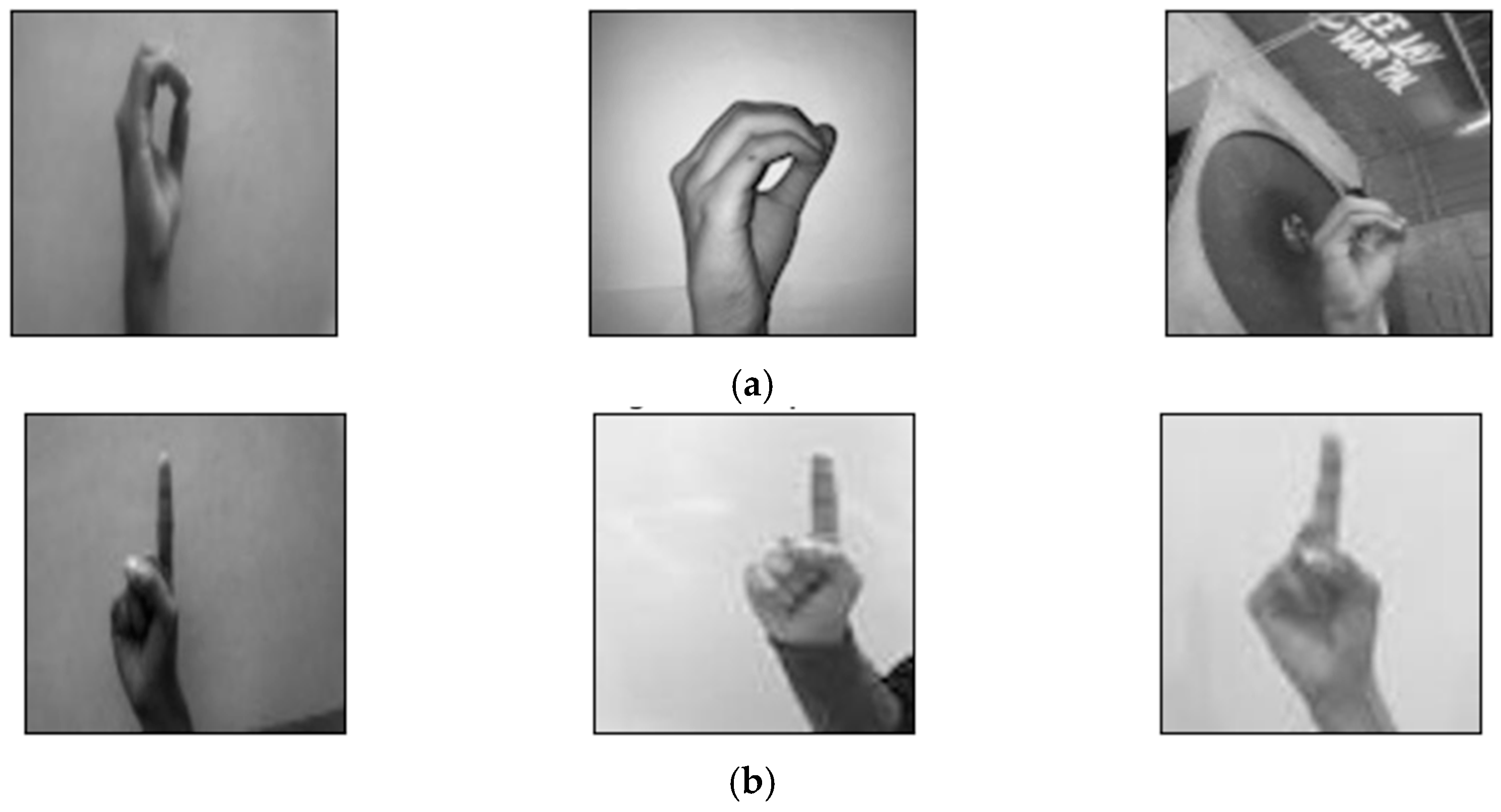
Figure 1 presents representative samples from the Filipino Sign Language (FSL) Letters dataset,
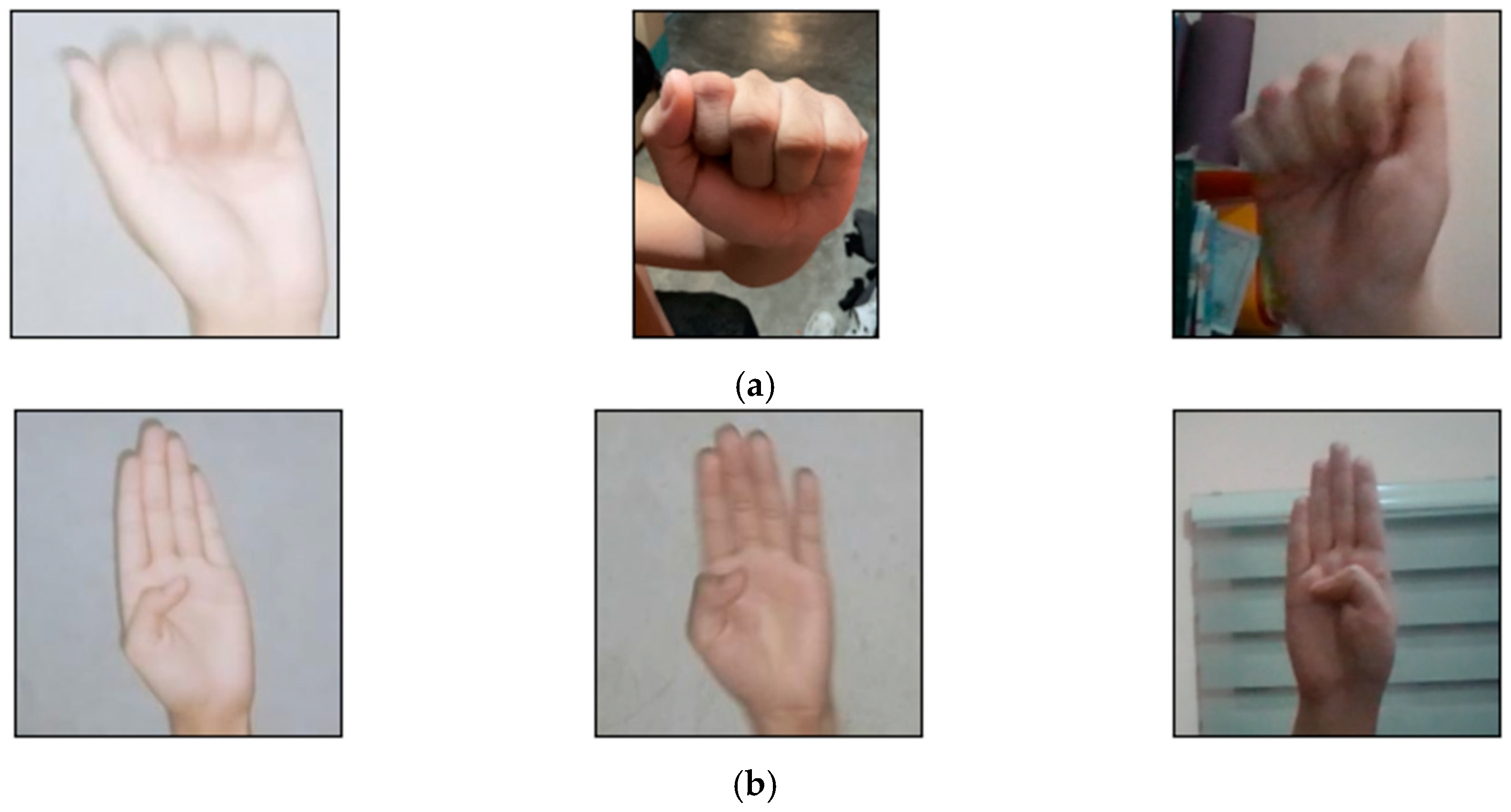
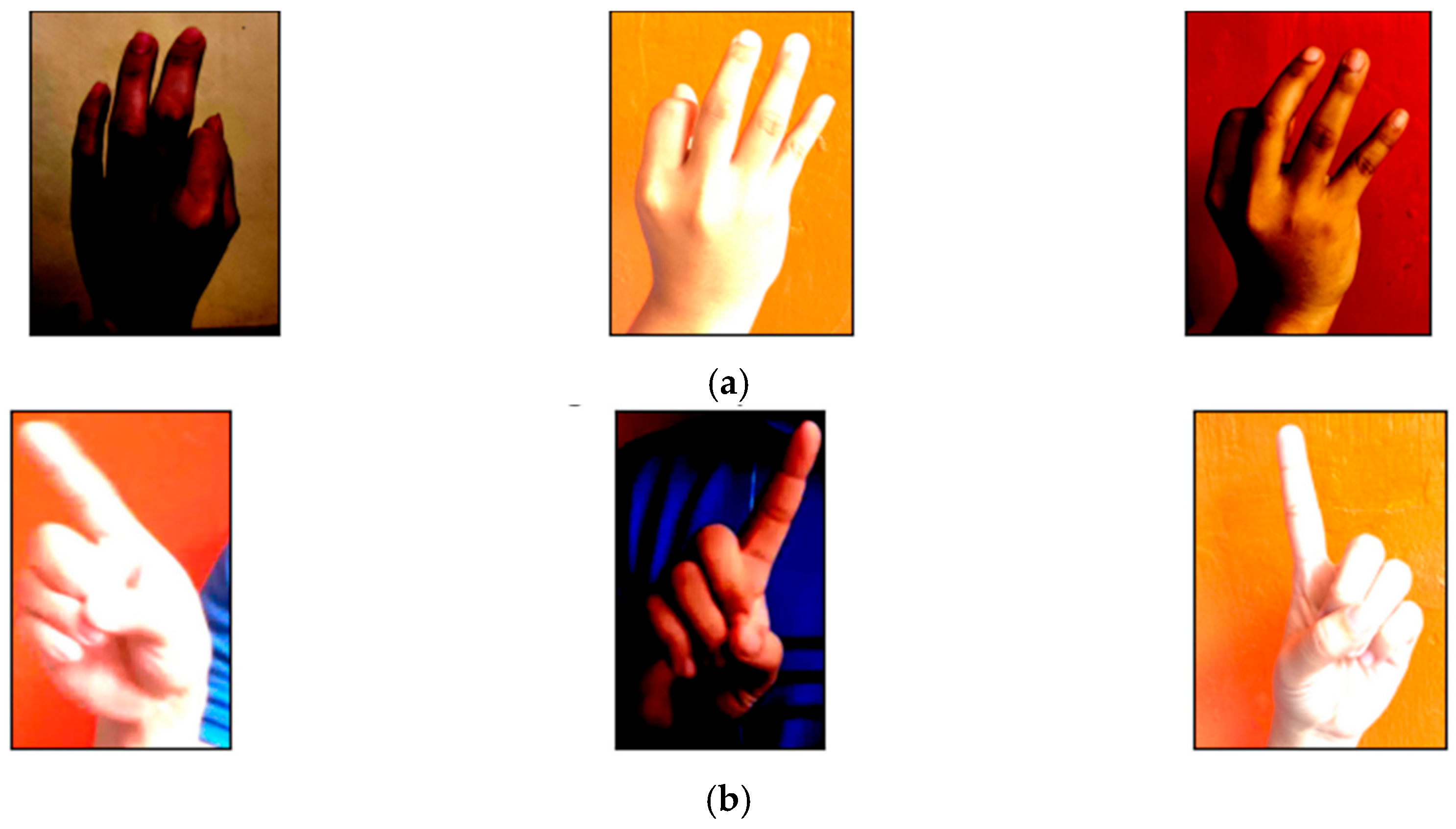
Figure 2 presents representative samples from the FSL Numbers dataset, and
Figure 3 presents representative samples from the FSL Words dataset. Together, these figures illustrate the diversity of the datasets in terms of hand orientation, finger positioning, lighting conditions, and background complexity, enabling the model to learn robust features for accurate real-world Filipino Sign Language recognition.
2.3. Hand Landmark Detection Pipeline
MediaPipe was used to extract 21 hand landmarks from the camera feed in real time [
19]. These landmarks represent finger joints and wrist coordinates, which were transformed into structured numerical input features for the CNN classifier.
The landmark-based approach reduces dependency on raw image pixels and improves consistency across different backgrounds and lighting conditions.
2.4. CNN Model Architecture and Training Configuration
The researcher developed and trained the Convolutional Neural Network (CNN) models using TensorFlow 2.18.0 within a Jupyter Notebook 7.3 environment. The model architecture consisted of multiple convolutional and pooling layers, followed by fully connected dense layers and a final Softmax output layer for classification.
Cross-validation techniques were applied throughout the training process to prevent overfitting and improve the model’s ability to generalize to new data. Model performance was monitored using evaluation metrics including accuracy, precision, recall, and F1-score to optimize classification performance across gesture categories.
Once training was completed, the trained models were converted into TensorFlow Lite (.tflite) format to enable deployment within the Android-based KamAI mobile application.
2.5. Model Evaluation Metrics
Model performance was evaluated using a confusion matrix and standard multi-class classification metrics. The confusion matrix was used to analyze class-level prediction behavior and identify potential misclassification patterns across gesture categories.
To provide a comprehensive assessment of classification performance, the following metrics were computed: accuracy, precision, recall, and F1-score. Accuracy measured the overall proportion of correctly classified instances. Precision assessed the model’s ability to correctly predict positive classes, while recall evaluated its sensitivity in identifying actual gesture instances. The F1-score was calculated as the harmonic mean of precision and recall to provide a balanced measure of model performance, particularly in cases of class imbalance [
20,
21].
These metrics were computed separately for the letter, number, and word recognition models to ensure detailed performance analysis across gesture categories.
2.6. Acceptance Testing (UAT)
User Acceptance Testing (UAT) was conducted to evaluate the practical usability and software quality of the KamAI mobile application. The evaluation was guided by the ISO/IEC 25010 software quality model, an international standard for software product quality evaluation (ISO/IEC 25010, 2011). The standard provides a structured framework for assessing software systems across multiple quality characteristics.
Six quality attributes were evaluated in this study: functionality, reliability, compatibility, usability, efficiency, and portability. Participants assessed each attribute using a five-point Likert scale ranging from strongly disagree to strongly agree.
The UAT process aimed to determine whether the system met user expectations in terms of performance, ease of use, responsiveness, and cross-device compatibility. The collected responses were aggregated and analyzed to determine the overall acceptability of the application.
3. Results and Discussion
This section presents the results of the development, implementation, and evaluation of the KamAI mobile application. The findings are structured into three main components: (1) system implementation and functional features, (2) quantitative performance evaluation of the CNN-based recognition models, and (3) user acceptance evaluation based on ISO/IEC 25010 software quality standards. The results are analyzed to determine the system’s effectiveness in recognizing Filipino Sign Language (FSL) hand signs in real time and its practical usability as a mobile-based assistive learning tool.
3.1. CNN Model Architecture and Training Configuration System Implementation and Functional Features
KamAI was successfully developed using Android Studio, TensorFlow Lite, and Google’s MediaPipe framework. The application integrates real-time hand landmark detection with CNN-based gesture classification, enabling on-device recognition without requiring cloud processing. The system supports three primary recognition modes—letters, numbers, and words—allowing users to progressively learn Filipino Sign Language (FSL) gestures through structured interaction.
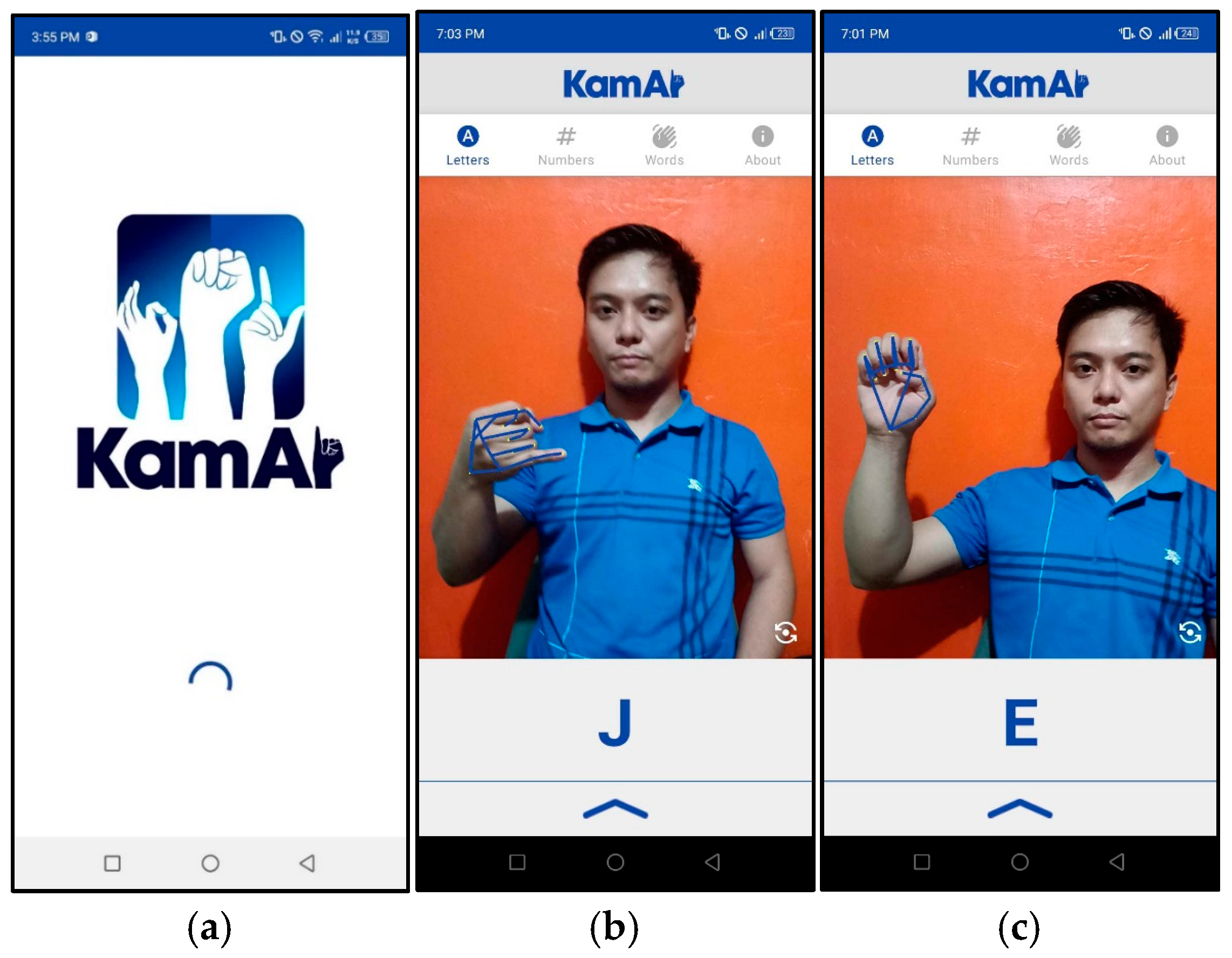
The user interface was designed to be intuitive and accessible for both Deaf and hearing users. Upon launching the application, a splash screen initializes system resources before transitioning to the home screen, where users are presented with a live camera feed for immediate gesture interaction. Recognized gestures are displayed in real time as corresponding text outputs, and users can easily switch between recognition modes through clearly labeled navigation controls. An additional about section provides categorized tutorial playlists to supplement learning. The overall application interface, including the splash screen, home screen, and mode selection interface, is shown in
Figure 4.
The real-time performance of the developed system is illustrated through representative recognition outputs.
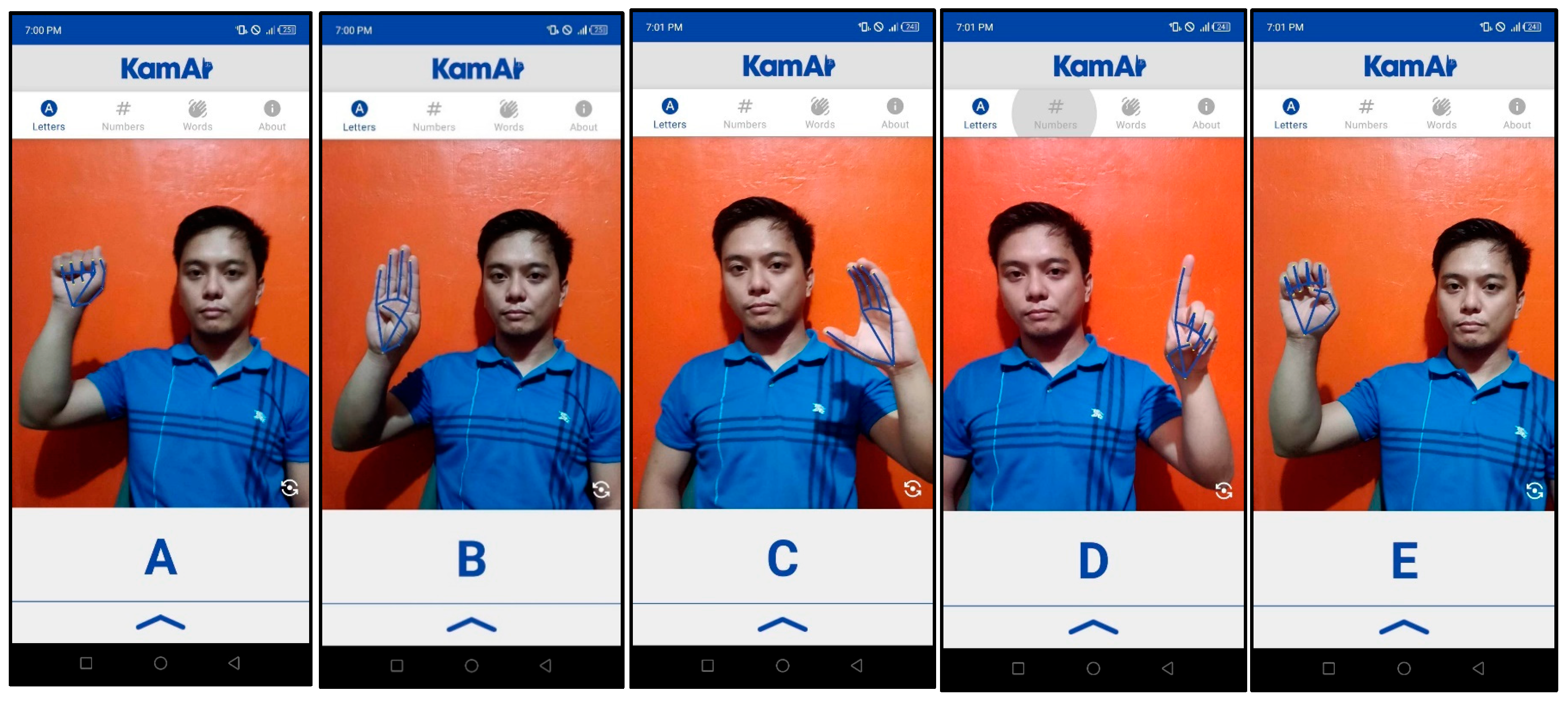
Figure 5 presents sample recognition results for the FSL alphabet (Letters A–E), demonstrating the application’s capability to recognize alphabetic hand gestures in real time.
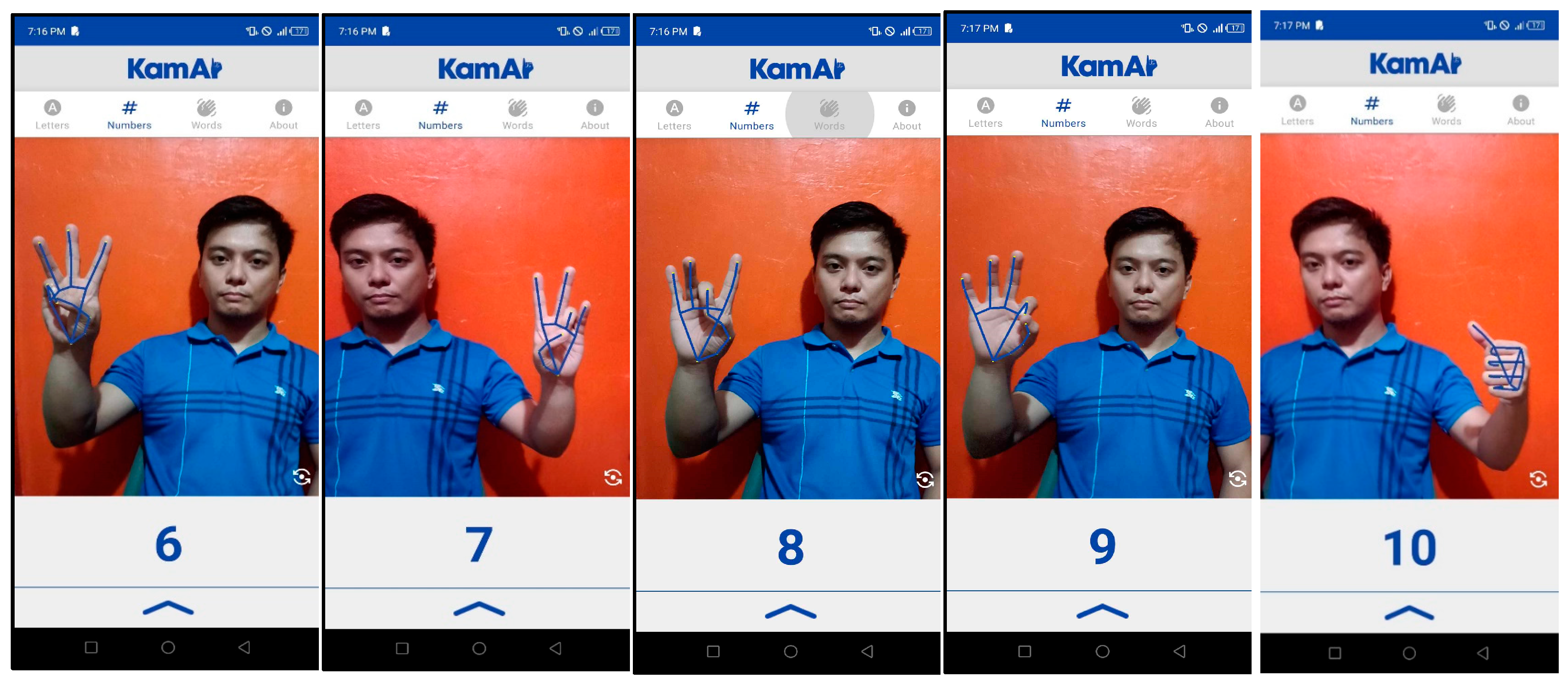
Figure 6 shows representative recognition outputs for FSL numbers (6–10), highlighting the model’s ability to distinguish numerical hand signs with varying finger configurations.
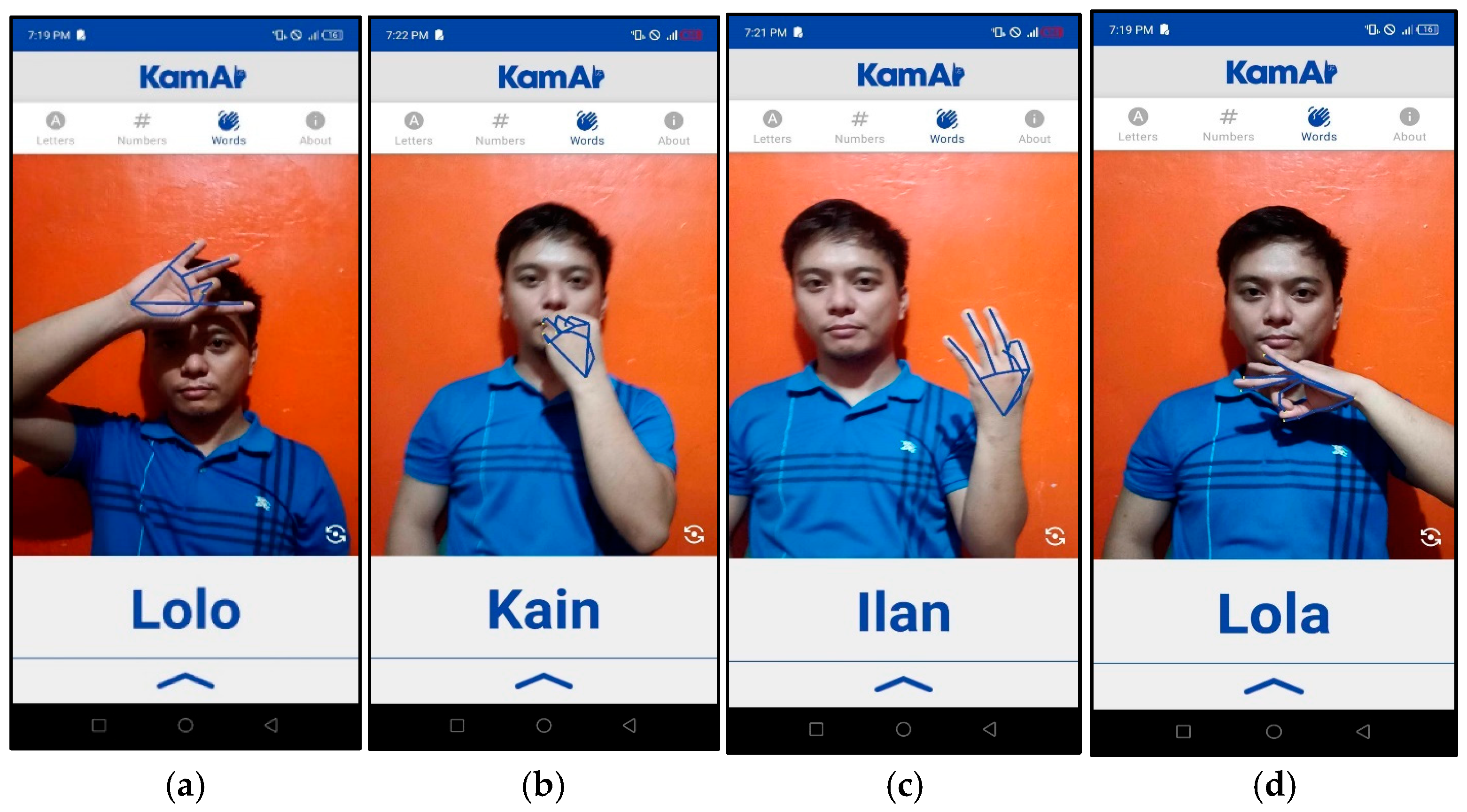
Figure 7 presents sample recognition outputs for commonly used FSL words, including Lolo, Kain, Ilan, and Lola, demonstrating the model’s capability to recognize conversational gestures under different environmental conditions.
3.2. CNN Model Performance Evaluation
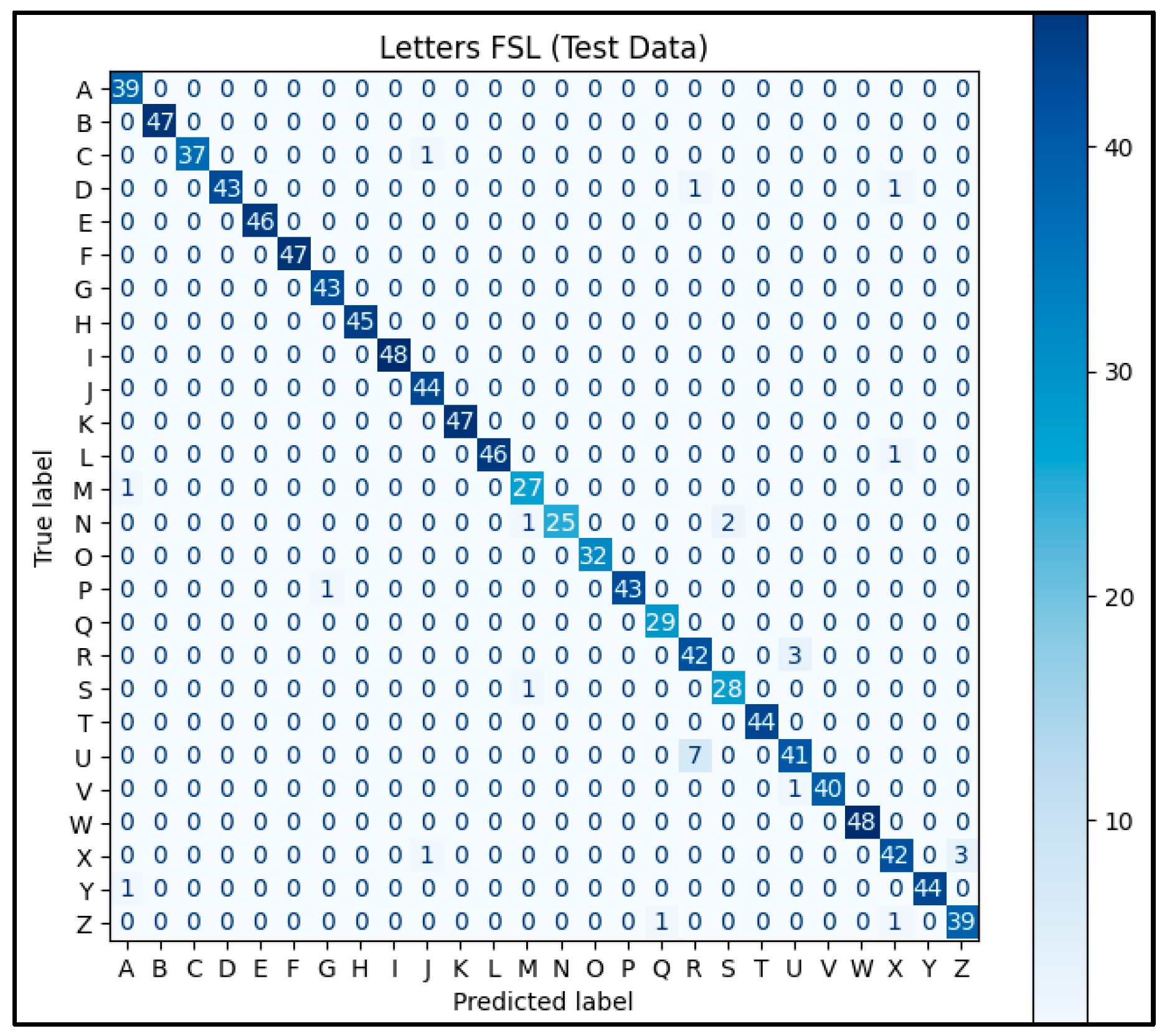
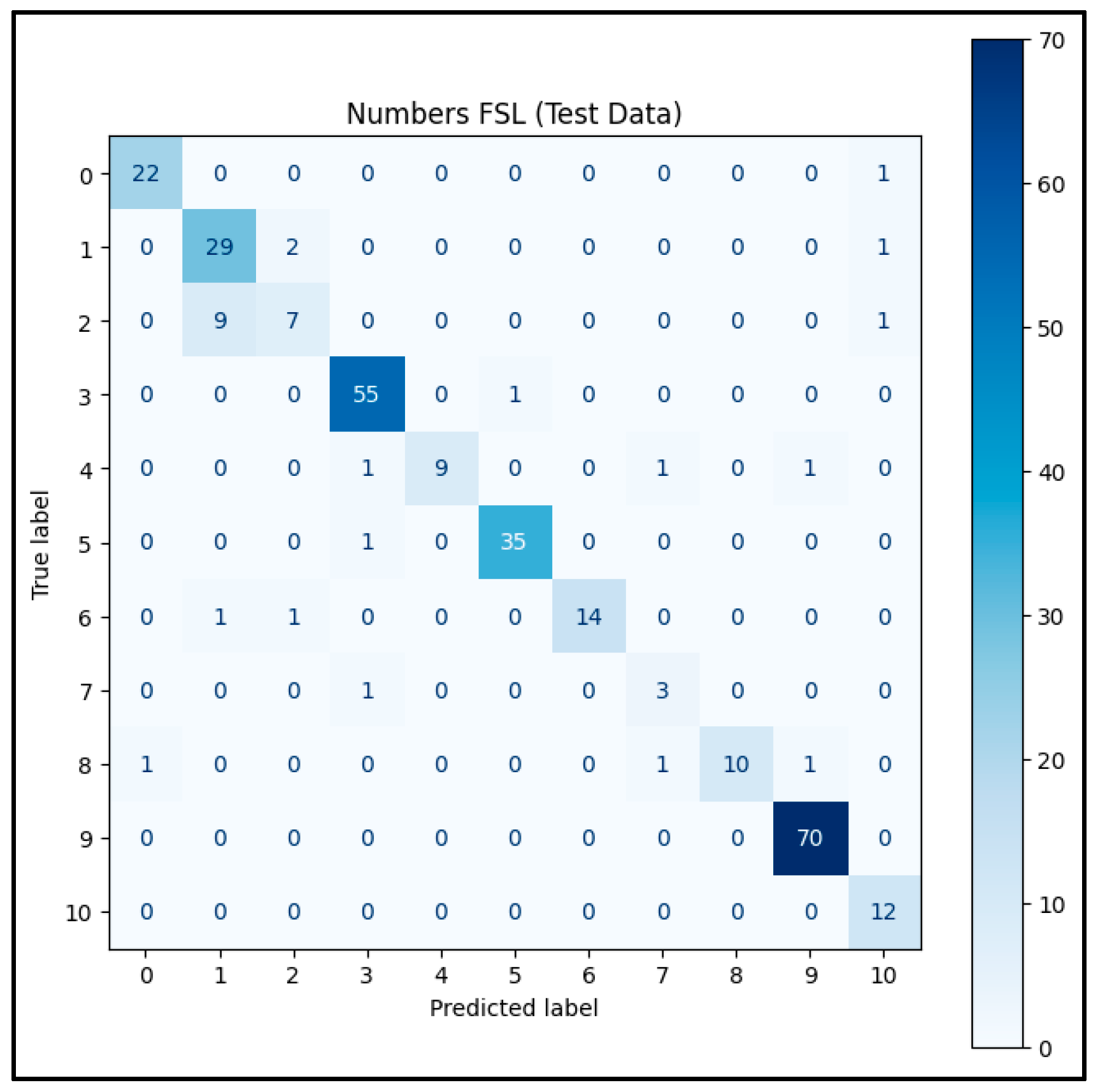
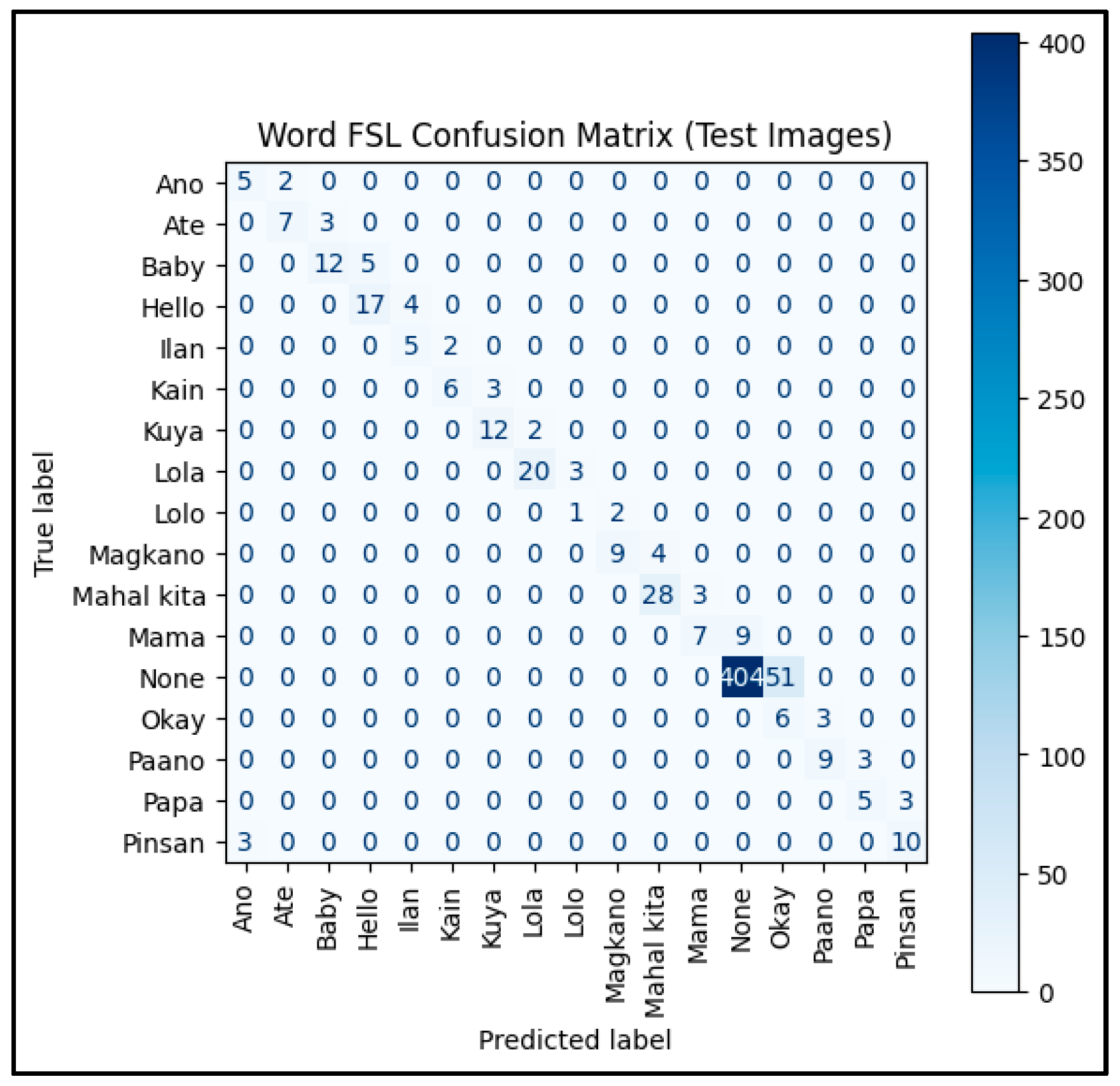
The performance of the developed CNN-based recognition models was evaluated using standard multi-class classification metrics, including accuracy, precision, recall, and F1-score. A confusion matrix was also generated for each dataset to analyze class-level prediction behavior and identify misclassification patterns. These metrics provide a comprehensive assessment of the model’s ability to correctly classify Filipino Sign Language (FSL) hand signs across letters, numbers, and words. The confusion matrices for the FSL letter, number, and word recognition models are presented in
Figure 8,
Figure 9, and
Figure 10, respectively.
The FSL letter recognition model achieved an accuracy of 88.38%, with a precision of 97%, recall of 87%, and F1-score of 90%. The high precision value indicates that when the model predicts a letter, it is highly likely to be correct. The relatively balanced recall and F1-score further confirm stable multi-class classification performance across the alphabet.
Despite strong overall performance, confusion matrix analysis revealed minor misclassifications between visually similar hand signs, particularly between “M” and “N.” These gestures share closely related finger positioning patterns, which can challenge CNN-based static image classifiers.
The FSL number recognition model achieved the highest overall accuracy at 91.41%, indicating strong classification performance across numerical gestures. However, while precision remained relatively high (89%), recall was significantly lower (21%), resulting in a reduced F1-score of 28%.
The lower recall suggests that although the model makes correct predictions when confident, it may fail to detect certain number gestures consistently. Confusion matrix analysis revealed misclassification patterns primarily among gestures with subtle finger differences, particularly between numbers such as “6,” “7,” and “8.”
The FSL word recognition model achieved an accuracy of 83.08%, with precision at 96%, recall at 88%, and F1-score at 91%. These results demonstrate the model’s capability to classify more complex gestures representing conversational words and phrases.
Unlike static alphabet gestures, word-level signs often involve more varied hand shapes and contextual positioning. The strong F1-score indicates balanced performance between precision and recall, confirming the robustness of the classification model in handling multi-class word recognition tasks.
3.3. Acceptance Testing (UAT) Results
To evaluate the practical usability and software quality of the KamAI mobile application, User Acceptance Testing (UAT) was conducted using the ISO/IEC 25010 software quality model. The evaluation covered six quality characteristics: functionality, reliability, compatibility, usability, efficiency, and portability. Participants assessed each criterion using a five-point Likert scale ranging from 1 (Highly Unacceptable) to 5 (Highly Acceptable).
The summary of the User Acceptance Testing results is presented in
Table 1, which shows the mean scores and corresponding descriptive interpretations for each evaluated software quality attribute based on the ISO/IEC 25010 framework.
All quality attributes achieved mean scores within the “Highly Acceptable” range (4.21–5.00), indicating strong overall user approval. Functionality (4.73), compatibility (4.71), and portability (4.77) received the highest ratings, confirming accurate gesture recognition and reliable operation across various Android devices. Reliability (4.51), efficiency (4.59), and usability (4.50) further demonstrate stable performance, resource efficiency, and an intuitive interface design. These results affirm that KamAI meets ISO/IEC 25010 quality standards and is suitable for practical mobile deployment.
4. Conclusions
The study demonstrates that integrating Convolutional Neural Networks (CNNs) with MediaPipe-based hand landmark detection significantly enhances real-time Filipino Sign Language (FSL) recognition on mobile devices. Rather than relying on cloud-based processing, the system focused on efficient on-device inference through TensorFlow Lite, ensuring accessibility and responsiveness in real-world conditions. While the recognition models performed strongly across letters, numbers, and words, certain visually similar gestures, particularly in numerical and alphabet categories, posed classification challenges due to subtle finger configuration differences. Despite these limitations, the developed approach achieved high precision and balanced F1-scores in letter and word recognition, confirming the effectiveness of CNN-based classification for static FSL gestures. The integration of structured recognition modes and real-time feedback further strengthened the application’s educational utility. User Acceptance Testing based on ISO/IEC 25010 standards indicated that the system met high levels of functionality, reliability, compatibility, usability, efficiency, and portability, reinforcing its readiness for practical deployment. These results highlight the value of lightweight deep learning architectures in mobile-based assistive technologies and demonstrate the system’s potential to support inclusive education and communication accessibility. The findings establish KamAI as a viable framework for further advancement in mobile sign language recognition systems.
Author Contributions
Conceptualization, D.D.L. and C.B.B.A.; methodology, D.D.L. and C.B.B.A.; software, D.D.L.; validation, D.D.L. and D.N.F.; formal analysis, D.D.L. and D.N.F.; investigation, D.D.L.; resources, D.D.L.; data curation, D.D.L.; writing—original draft preparation, D.D.L.; writing—review and editing, D.D.L., C.B.B.A. and D.N.F.; visualization, D.D.L.; supervision, C.B.B.A.; project administration, D.D.L. All authors have read and agreed to the published version of the manuscript.
Funding
This research received no external funding. The Article Processing Charge (APC) was funded by Romblon State University.
Institutional Review Board Statement
The study protocol titled “Design and Development of KamAI: A Basic FSL Recognition Mobile Application Using Mobile Deep Learning” was reviewed and granted exemption by the Romblon State University Research Ethics Committee (RSUREC) under RSUREC Code RSUREC 2025-0007, approved on 20 May 2025, with ethical clearance valid until 20 May 2026.
Informed Consent Statement
Informed consent was obtained from all subjects involved in the study.
Data Availability Statement
The datasets used in this study consist of publicly available FSL gesture datasets and locally collected gesture images. Public datasets are available through Kaggle repositories cited in this manuscript. Locally collected data are not publicly available due to privacy considerations but may be made available from the corresponding author upon reasonable request.
Acknowledgments
The author sincerely acknowledges the Filipino Sign Language (FSL) educators, Deaf and hearing participants, and technical reviewers who contributed to the development and evaluation of the KamAI application. The author also expresses gratitude to the Graduate Education and Professional Studies (GEPS) of Romblon State University, where this study was completed as part of the Master in Information Technology program, and to Romblon State University for the opportunity to present and disseminate this research. Appreciation is likewise extended to the Persons with Disability Affairs Office (PDAO) for their cooperation and support during the conduct of the study. During the preparation of this manuscript, the author used ChatGPT (OpenAI, GPT-5) for language refinement and structural editing and takes full responsibility for the final content of this publication.
Conflicts of Interest
The author declares no conflicts of interest.
Abbreviations
The following abbreviations are used in this manuscript:
| FSL | Filipino Sign Language |
| CNN | Convolutional Neural Network |
| UAT | User Acceptance Testing |
| ISO | International Organization for Standardization |
| TFLite | TensorFlow Lite |
| GPU | Graphics Processing Unit |
References
- Jha, A.; Pathak, K. Breaking Barriers: Hand Gesture Vocalizer for the Deaf and Mute. JMC Res. J. 2024, 12, 1–20. [Google Scholar] [CrossRef] [Scilit]
- Diliman. Liberty Notarte-Balanquit presents Filipino Sign Language research. Department of Linguistics—UP Diliman, 2023. Available online: https://linguistics.upd.edu.ph/news/liberty-notarte-balanquit-presents-filipino-sign-language-research/ (accessed on 15 March 2025).
- Cayme, K.J.; Retutal, V.A.; Salubre, M.E.; Astillo, P.V.; Cañete, L.G., Jr.; Choudhary, G. Gesture Recognition of Filipino Sign Language Using Convolutional and Long Short-Term Memory Deep Neural Networks. Knowledge 2024, 4, 358–381. [Google Scholar] [CrossRef] [Scilit]
- Jarabese, M.; Marzan, C.; Boado, J.; Lopez, R.; Ofiana, L.; Pilarca, K. Sign to speech convolutional neural network-based Filipino Sign Language hand gesture recognition system. In 2021 International Symposium on Computer Science and Intelligent Controls (ISCSIC); IEEE: Piscataway, NJ, USA, 2021. [Google Scholar] [CrossRef] [Scilit]
- Madrid, G.; Villanueva, R.; Caya, M. Recognition of dynamic Filipino Sign Language using MediaPipe and Long Short-Term Memory. In 2022 13th International Conference on Computing Communication and Networking Technologies (ICCCNT); IEEE: Piscataway, NJ, USA, 2022. [Google Scholar] [CrossRef] [Scilit]
- Montefalcon, M.D.; Padilla, J.; Rodriguez, R. Filipino Sign Language Recognition using Deep Learning. In Proceedings of the 2021 International Conference on Artificial Intelligence and Machine Learning; ACM: New York, NY, USA, 2021; pp. 219–225. [Google Scholar] [CrossRef] [Scilit]
- Lugaresi, C.; Tang, J.; Nash, H.; McClanahan, C.; Ceze, L.; Taylor, J. MediaPipe: A framework for building perception pipelines. arXiv 2019, arXiv:1906.08172. [Google Scholar]
- Ardana, S.A.; Sukmana, F.; Bakti, H.D. Evaluasi kualitas user interface pada situs website booking system ‘Kantoor’ menggunakan ISO/IEC 25010 dan metode fuzzy. J. Ilm. Penelit. Dan Pembelajaran Inform. 2023, 8, 4763. [Google Scholar] [CrossRef] [Scilit]
- Joshua, S.; Abbas, W.; Kim, S.K. Trust components: An analysis in the development of Type 2 Diabetic Mellitus mobile application. Appl. Sci. 2023, 13, 1251. [Google Scholar] [CrossRef] [Scilit]
- Pigou, L.; Dieleman, S.; Kindermans, P.J.; Schrauwen, B. Sign language recognition using convolutional neural networks. In Proceedings of the European Conference on Computer Vision (ECCV); Springer: Cham, Switzerland, 2018; pp. 572–578. [Google Scholar]
- Sanromà-Giménez, M.; Lázaro Cantabrana, J.; Usart Rodríguez, M.; Gisbert-Cervera, M. Design and validation of an assessment tool for educational mobile applications used with autistic learners. J. New Approaches Educ. Res. 2021, 10, 101–121. [Google Scholar] [CrossRef] [Scilit]
- Ezra, D.; Mastitz, S.; Rabaev, I. Signsability: Enhancing Communication through a Sign Language App. Software 2024, 3, 368–379. [Google Scholar] [CrossRef] [Scilit]
- Familoni, B.T.; Babatunde, S.O. User experience (UX) design in medical products: Theoretical foundations and development best practices. Eng. Sci. Technol. J. 2024, 5, 129–137. [Google Scholar] [CrossRef] [Scilit]
- Samonte, M.; Gazmin, R.A.; Valencia, M.N.O. BridgeApp: An assistive mobile communication application for the Deaf and Mute. In Proceedings of the 2019 International Conference on Information and Communication Technology Convergence (ICTC); IEEE: Piscataway, NJ, USA, 2019. [Google Scholar] [CrossRef] [Scilit]
- Aditama, W.Y.; Hikmah, I.R. Analisis perbandingan kinerja dan kegunaan aplikasi pengelola kata sandi closed-source berdasarkan ISO/IEC 25010. EDUMATIC J. Pendidik. Inform. Dan Sains 2022, 6, 364–373. [Google Scholar] [CrossRef] [Scilit]
- Khalid, M. Sign Language for Numbers [Data Set]. Kaggle, 2019. Available online: https://www.kaggle.com/datasets/muhammadkhalid/sign-language-for-numbers (accessed on 15 March 2025).
- Rahimian, E.; Zabihi, S.; Atashzar, S.F.; Asif, A.; Mohammadi, A. XceptionTime: Independent time-window XceptionTime architecture for hand gesture classification. In Proceedings of the IEEE International Conference on Acoustics, Speech and Signal Processing (ICASSP); IEEE: Piscataway, NJ, USA, 2020; p. 9054586. [Google Scholar] [CrossRef] [Scilit]
- Zulaikha, E.; Andansari, D.; Susandari, H. Empathy-driven innovation: Analysis of five user-centered design thinking case studies. In Asian HCI Symposium 2023, Asian CHI 2023—Proceedings; Sari, E., Ghazali, M., Tedjasaputra, A.B., Eds.; Association for Computing Machinery: New York, NY, USA, 2023; pp. 1–6. [Google Scholar] [CrossRef] [Scilit]
- Choo, K.; Balan, R.; Lee, Y. Examining augmented virtuality impairment simulation for mobile app accessibility design. In Proceedings of the 2019 CHI Conference on Human Factors in Computing Systems (CHI ‘19), 2 May 2019; ACM: New York, NY, USA, 2019. [Google Scholar] [CrossRef] [Scilit]
- Wu, Z.; Xiao, Z.-Y. Few-shot learning based on deep learning: A survey. Math. Biosci. Eng. 2024, 21, 679–711. [Google Scholar] [CrossRef] [Scilit] [PubMed]
- Wee, S.Y.; Taha, N.M.; Azman, N.A.A. Behavioral intentions of higher education students toward using gadgets for mobile learning. Int. J. Acad. Res. Progress. Educ. Dev. 2024, 13, 23081. [Google Scholar] [CrossRef] [Scilit] [PubMed]
Figure 1.
Representative hand sign samples from the FSL Letters dataset showing (a) the hand sign for Letter A and (b) the hand sign for Letter B under varying orientations, lighting conditions, and background complexities.
Figure 1.
Representative hand sign samples from the FSL Letters dataset showing (a) the hand sign for Letter A and (b) the hand sign for Letter B under varying orientations, lighting conditions, and background complexities.
Figure 2.
Representative samples from the FSL Numbers dataset showing the hand signs for (a) Number 0 and (b) Number 1, illustrating variations in finger positioning, hand orientation, and lighting conditions across numerical gesture classes.
Figure 2.
Representative samples from the FSL Numbers dataset showing the hand signs for (a) Number 0 and (b) Number 1, illustrating variations in finger positioning, hand orientation, and lighting conditions across numerical gesture classes.
Figure 3.
Representative samples from the FSL Words dataset showing multi-class hand signs used for conversational Filipino Sign Language: (a) the FSL word “Ilan” and (b) the FSL word “Ano,” demonstrating variations in hand positioning, orientation, and environmental conditions.
Figure 3.
Representative samples from the FSL Words dataset showing multi-class hand signs used for conversational Filipino Sign Language: (a) the FSL word “Ilan” and (b) the FSL word “Ano,” demonstrating variations in hand positioning, orientation, and environmental conditions.
Figure 4.
KamAI user interface components: (a) splash screen; (b) home screen with live recognition display; and (c) mode selection interface, demonstrating the application’s intuitive layout and real-time gesture recognition functionality.
Figure 4.
KamAI user interface components: (a) splash screen; (b) home screen with live recognition display; and (c) mode selection interface, demonstrating the application’s intuitive layout and real-time gesture recognition functionality.
Figure 5.
Real-time recognition outputs for representative FSL alphabet letters (A–E). While only sample letters A–E are displayed, the system is capable of recognizing the complete FSL alphabet (A–Z) under varying environmental conditions.
Figure 5.
Real-time recognition outputs for representative FSL alphabet letters (A–E). While only sample letters A–E are displayed, the system is capable of recognizing the complete FSL alphabet (A–Z) under varying environmental conditions.
Figure 6.
Real-time recognition outputs for representative FSL numbers (6–10), demonstrating the system’s ability to accurately classify numerical hand signs despite subtle differences in finger positioning and hand configuration. The model supports recognition of the full FSL numerical set (0–10).
Figure 6.
Real-time recognition outputs for representative FSL numbers (6–10), demonstrating the system’s ability to accurately classify numerical hand signs despite subtle differences in finger positioning and hand configuration. The model supports recognition of the full FSL numerical set (0–10).
Figure 7.
Sample recognition outputs for FSL words: (a) “Lolo or Grandfather”; (b) “Kain” or “Ear”; (c) “Ilan” or “How Much”; and (d) “Lola,” or Grandmother highlighting the model’s capability to recognize commonly used conversational gestures.
Figure 7.
Sample recognition outputs for FSL words: (a) “Lolo or Grandfather”; (b) “Kain” or “Ear”; (c) “Ilan” or “How Much”; and (d) “Lola,” or Grandmother highlighting the model’s capability to recognize commonly used conversational gestures.
Figure 8.
Confusion matrix for the FSL letter recognition model, illustrating the distribution of correct classifications and misclassification patterns across Filipino Sign Language (FSL) alphabet hand signs. The matrix shows strong classification performance, with most predictions concentrated along the diagonal, indicating high recognition accuracy. Minor misclassifications were observed among visually similar hand signs, particularly between the letter’s “M” and “N,” reflecting the challenges posed by subtle differences in finger positioning and hand configurations.
Figure 8.
Confusion matrix for the FSL letter recognition model, illustrating the distribution of correct classifications and misclassification patterns across Filipino Sign Language (FSL) alphabet hand signs. The matrix shows strong classification performance, with most predictions concentrated along the diagonal, indicating high recognition accuracy. Minor misclassifications were observed among visually similar hand signs, particularly between the letter’s “M” and “N,” reflecting the challenges posed by subtle differences in finger positioning and hand configurations.
Figure 9.
Confusion matrix for the FSL number recognition model, illustrating the distribution of correct classifications and misclassification patterns across numerical gesture classes (0–10). The matrix highlights higher prediction accuracy along the diagonal and confusion primarily among visually similar and numerically adjacent hand signs.
Figure 9.
Confusion matrix for the FSL number recognition model, illustrating the distribution of correct classifications and misclassification patterns across numerical gesture classes (0–10). The matrix highlights higher prediction accuracy along the diagonal and confusion primarily among visually similar and numerically adjacent hand signs.
Figure 10.
Confusion matrix for the FSL word recognition model, illustrating class-level prediction performance across conversational gesture categories. The strong diagonal values indicate accurate classification for most word classes, while limited off-diagonal entries reflect minor misclassifications, particularly among less frequently represented gestures.
Figure 10.
Confusion matrix for the FSL word recognition model, illustrating class-level prediction performance across conversational gesture categories. The strong diagonal values indicate accurate classification for most word classes, while limited off-diagonal entries reflect minor misclassifications, particularly among less frequently represented gestures.
Table 1.
Summary of ISO/IEC 25010-based User Acceptance Testing results, showing the mean scores and descriptive interpretation of the evaluated software quality attributes.
Table 1.
Summary of ISO/IEC 25010-based User Acceptance Testing results, showing the mean scores and descriptive interpretation of the evaluated software quality attributes.
| Quality Attribute | Mean Score | Interpretation |
|---|
| Functionality | 4.73 | Highly Acceptable |
| Reliability | 4.51 | Highly Acceptable |
| Compatibility | 4.71 | Highly Acceptable |
| Usability | 4.50 | Highly Acceptable |
| Efficiency | 4.59 | Highly Acceptable |
| Portability | 4.77 | Highly Acceptable |
| Disclaimer/Publisher’s Note: The statements, opinions and data contained in all publications are solely those of the individual author(s) and contributor(s) and not of MDPI and/or the editor(s). MDPI and/or the editor(s) disclaim responsibility for any injury to people or property resulting from any ideas, methods, instructions or products referred to in the content. |