1. Introduction
The global trend of population aging has led to a growing demand for medical care among older adults, which in turn contributes to significantly prolonged waiting times. In ophthalmology, for example, Olokoba et al. reported that average patient waiting times exceed 180 min, with nearly half of patients perceiving the wait as excessive [
1]. These findings underscore the critical influence of the waiting environment on patients’ physical burden and overall healthcare experience.
Most waiting chairs used in healthcare facilities adopt a fixed structure and lack integrated designs that provide both head support and stand-assist functionality. Older adults frequently experience functional decline and mobility restrictions, and inadequate seating support exacerbates the difficulty and fall risk associated with the sit-to-stand (STS) transition. During waiting periods, older adults are often required to maintain non-neutral postures due to examination-related constraints, which can result in neck stiffness and muscle fatigue. When the head is positioned in forward flexion, the cervical spine load can reach up to 3.6 times that of a neutral posture. Prolonged maintenance of such postures also leads to a marked reduction in the neck extensor muscle flexion–relaxation ratio (FRR), impairing postural stability [
2]. Fabisiak et al. found that up to 79% of older adults prefer chair backs designed to support the head [
3]. Similarly, Xu et al. demonstrated that assistive mechanisms enabling the upper limbs to share the load significantly improve force distribution across lower limb joints, thereby reducing exertion and instability during standing [
4].
In this study, we analyzed postural changes and discomfort experienced by older adults during waiting periods to explore the integration of ergonomic support and assistive mechanisms into waiting chair design. The objective is to propose a chair concept that enhances stability and safety, thereby improving both the waiting experience and healthcare outcomes for elderly patients. The study population consists of patients aged 65 years and older at a regional teaching hospital. The ophthalmology waiting area was selected as the primary research site due to its high patient volume and prolonged seating durations, providing a representative context for observing behavioral patterns among older adults. By identifying pain points and structural deficiencies of existing waiting chairs through semi-structured interviews, design guidelines are proposed for an innovative chair concept tailored to the physiological needs of elderly patients.
2. Literature Review
2.1. Hospital Waiting Chairs
The design of hospital waiting chairs prioritizes durability and ease of cleaning, often utilizing linked metal or plastic structures to accommodate high-frequency use and maintenance. However, in scenarios involving prolonged use, these designs frequently fail to provide adequate support and comfort. Relevant research and design guidelines show that fixed seat heights, insufficient back support, overly firm seat materials, and unhelpful armrests (which hinder force application) increase the physical burden on users during waiting periods. For older adults with weaker lower limb strength, this can lead to fatigue and significant difficulty with the sit-to-stand transition [
5]. If waiting chairs lack proper ergonomic design, they negatively impact users’ sitting stability and the overall waiting experience. Consequently, recent trends in medical waiting furniture have increasingly emphasized integrating ergonomic support and user needs to enhance both safety and comfort [
6].
2.2. Head Support and STS Assistance Needs
As individuals age, older adults experience a gradual decline in muscle strength, balance, and mobility, which subjects them to a higher physical load during prolonged sitting, maintaining postural stability, and performing the sit-to-stand motion [
7]. Age-friendly seating design must integrate elements such as back support, seat height, and armrest force application to enhance comfort and independence during extended use [
3]. Furthermore, studies indicate that maintaining a poor sitting posture for extended periods tends to increase the load on the neck, shoulder, and trunk muscles, leading to fatigue and discomfort. This highlights the necessity for seating to provide appropriate postural support to mitigate the physical burden caused by prolonged sitting [
7]. Regarding transitional movements, the STS action is considered a key movement where older adults face a high risk of falling. By incorporating a stand-assist mechanism, the load on lower limb muscle strength and balance control can be effectively reduced, making the standing motion safer and more natural [
4].
The literature review results indicate that existing waiting chairs are insufficient in terms of support, comfort, and age-friendliness, with a particular lack of head/neck stability and stand-assist functionality. Since older adults frequently experience fatigue and operational difficulties during prolonged waiting, this study established design directives focused on improving support and assistance as the guiding principles for the subsequent waiting chair design.
3. Methods
Research Design and Process
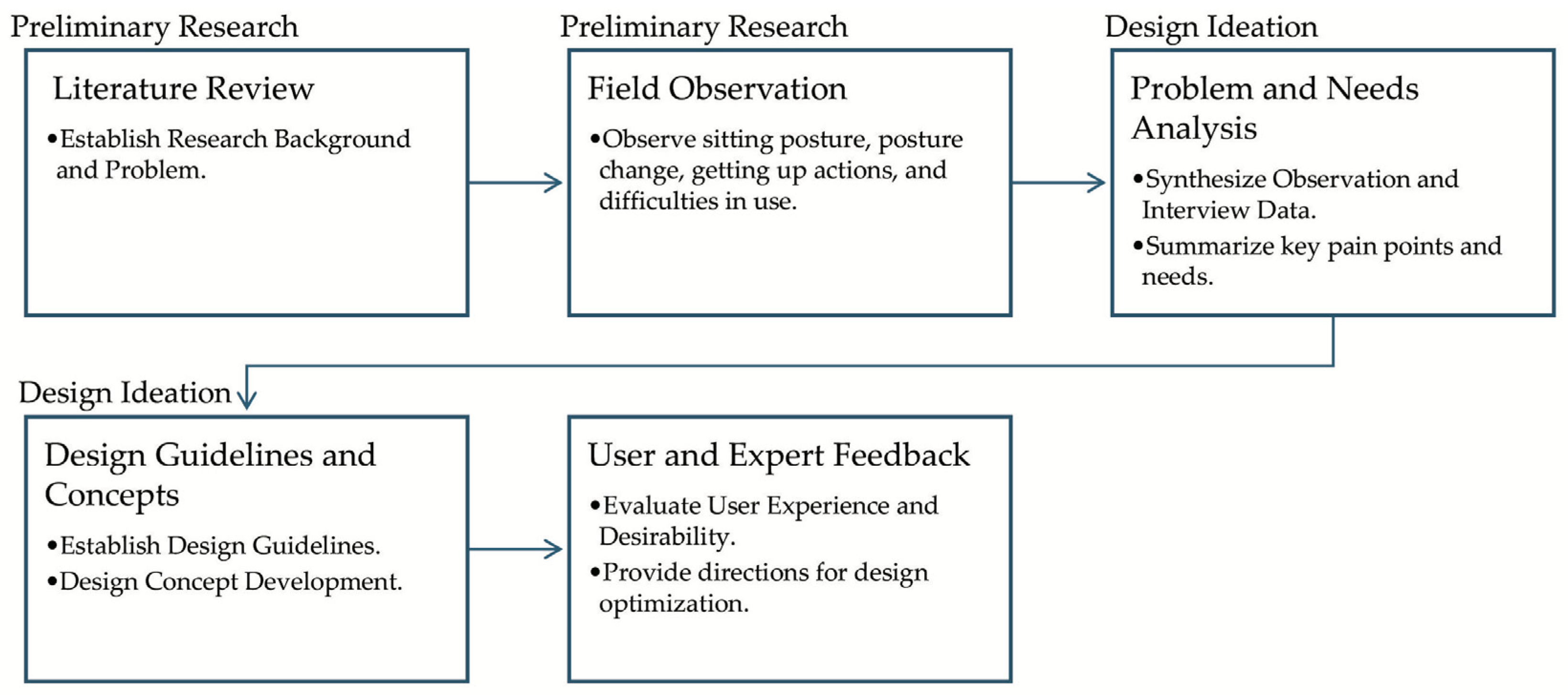
We investigated the behavioral characteristics and usage difficulties experienced by older adults during the waiting process through on-site observations and semi-structured interviews, ultimately proposing a waiting chair design concept with integrated support and assistive functions. The research process comprised the following stages (
Figure 1).
On-site observation: Documenting older adults’ sitting postures, postural changes, and sit-to-stand behaviors in the waiting environment;
Interviews: Collecting data on the elderly users’ waiting experiences and specific needs through interviews;
Data analysis: Organizing and analyzing the observation and interview data to categorize the main pain points and difficulties encountered during the waiting process;
Design conception: Based on the identified needs, propose a waiting chair design concept featuring head support and a stand-assist function, which serves as the foundation for subsequent design development and optimization.
4. Results
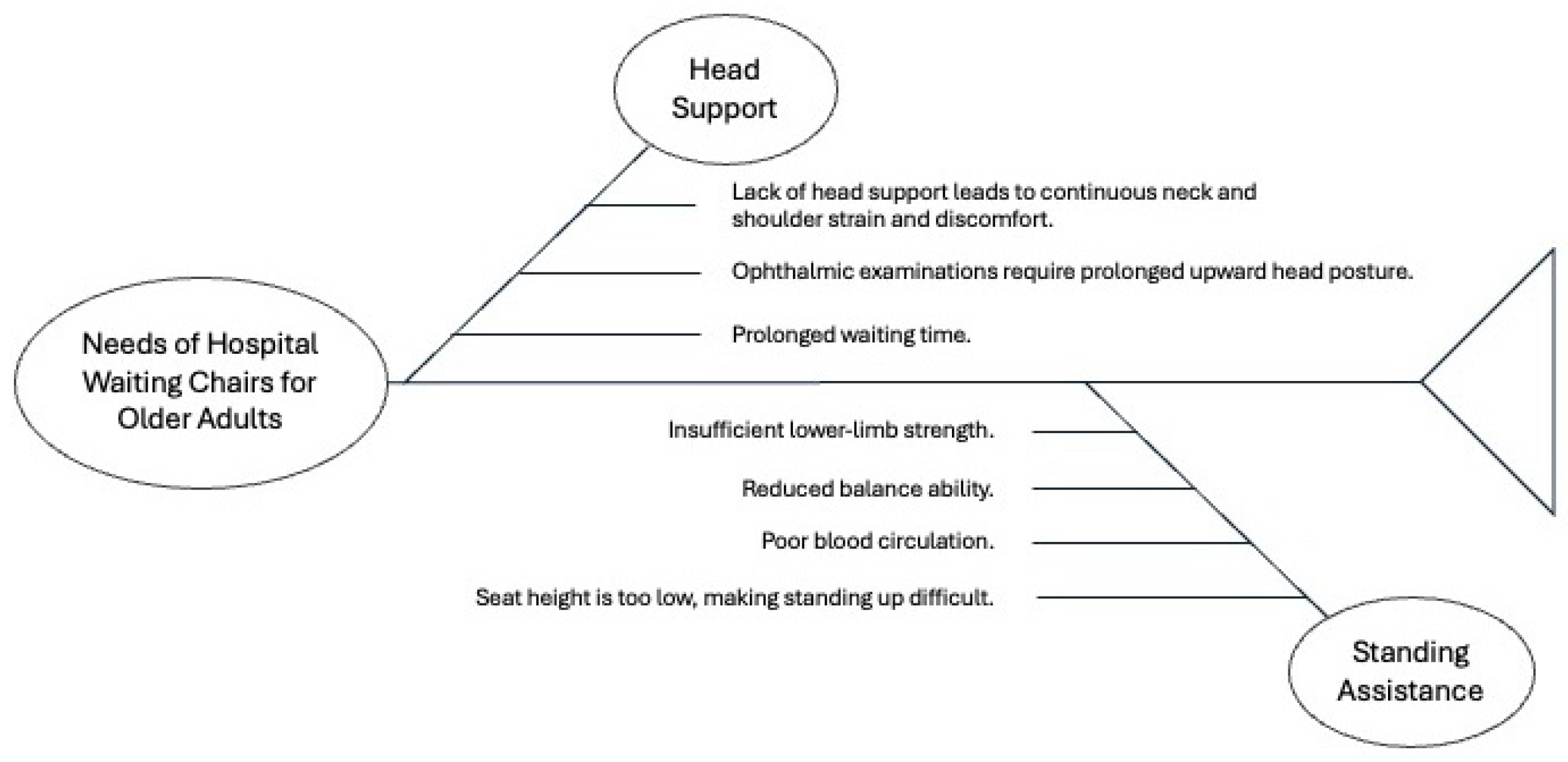
Based on the comprehensive literature review, user interviews, and the design review by experts, the design principles for the waiting room seating were formulated. These principles maintain the original linked-seating configuration while incorporating head support and a non-electric stand-assist function (
Figure 2). The design process proceeded sequentially through the following stages: establishing design guidelines, sketching concept drafts, and creating visual renderings. Upon completion of the preliminary design, subsequent user interview feedback was collected to serve as the basis for design revision and optimization. Existing waiting chairs are insufficient in terms of support, comfort, and age-friendliness, with a particular lack of head/neck stability and stand-assist functionality.
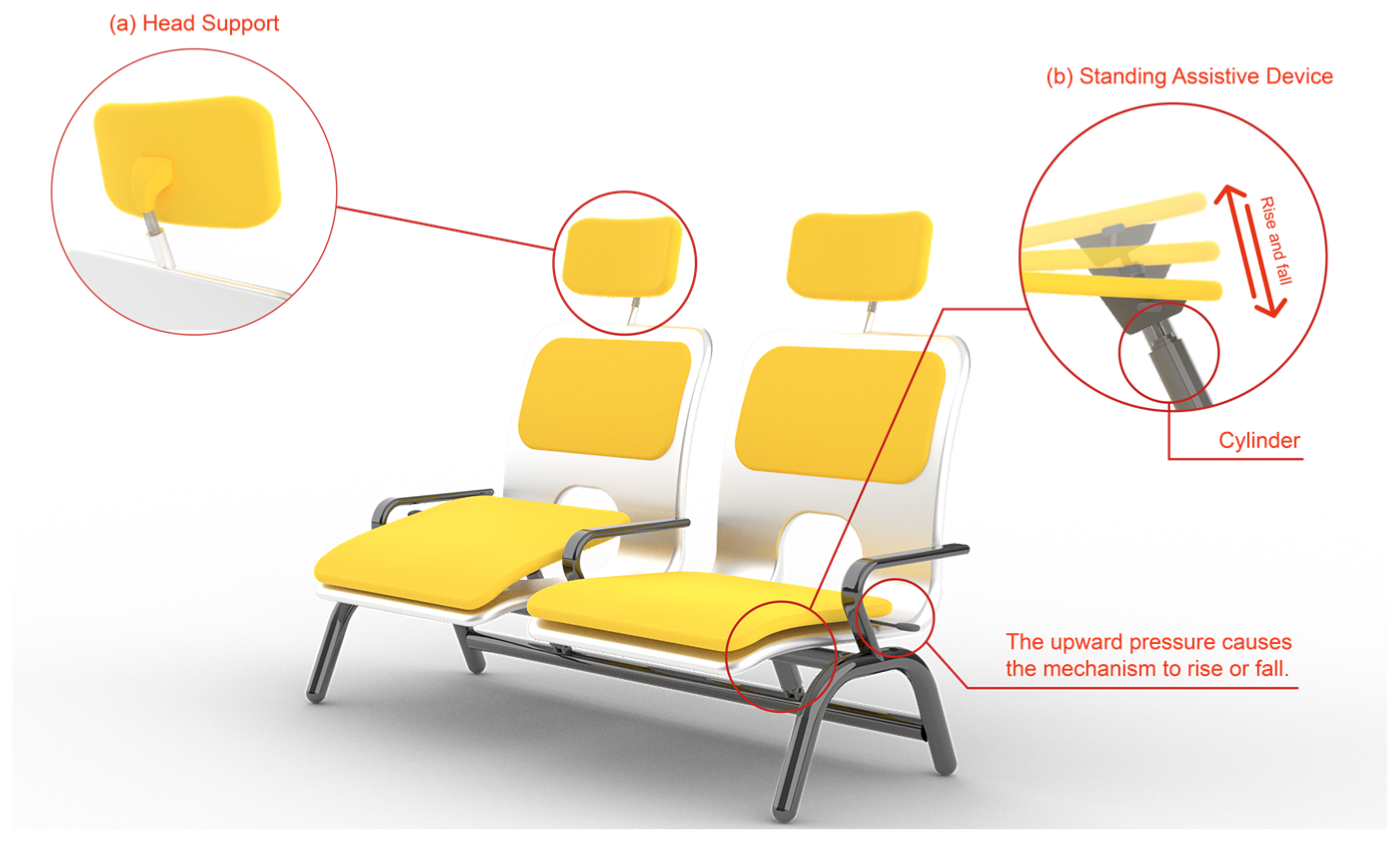
The design analysis results indicate that future hospital waiting chair designs maintain existing linked-seating configurations and spatial efficiency while incorporating ergonomic assistive functions that address the needs of older adults. The integration of head support effectively reduces neck and shoulder strain caused by prolonged waiting (
Figure 3a), while a non-electric standing assistance mechanism can help decrease lower-limb exertion and balance demands during standing (
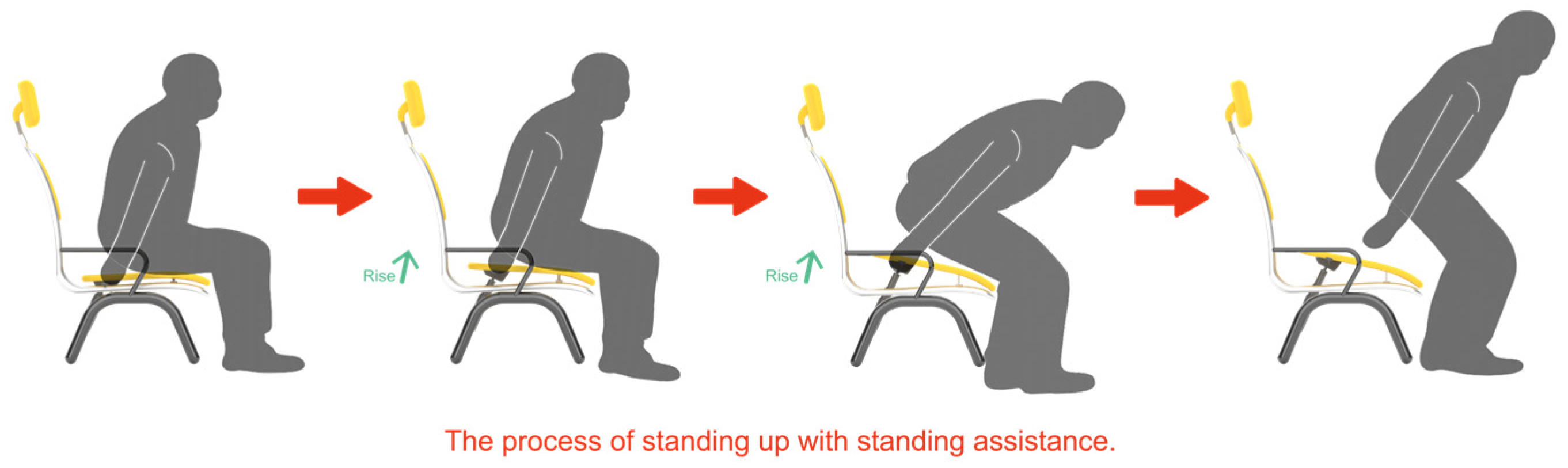
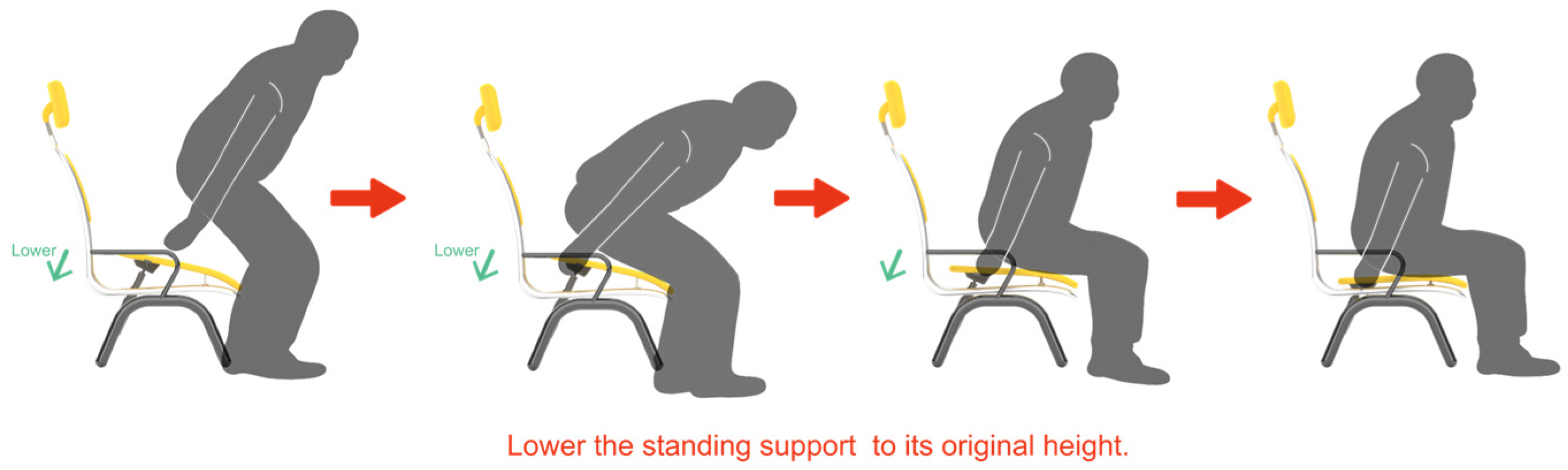
Figure 3b), thereby improving safety and stability. These design considerations may serve as a reference for the development of age-friendly hospital waiting environments. The step-by-step operation for standing up and returning the seat to its baseline position are visually detailed in
Figure 4 and
Figure 5.
5. Conclusions
By integrating expert and user feedback, this design effectively addresses the functional limitations of existing hospital waiting chairs with respect to elderly-friendly features. Importantly, it enhances the mobility and safety of older adults without reliance on electrical power systems. Two design strategies were developed based on the principles of User-Centered Design. The first is an adjustable spring-loaded headrest, which stabilizes sitting posture and alleviates neck and shoulder muscle fatigue. The second is a non-electric mechanical stand-assist mechanism, which provides immediate upward thrust when the user shifts their center of gravity forward. This mechanism reduces fall risk during the sit-to-stand transition, decreases the load on the lower limbs, and ensures stable transfer of the center of gravity. This design overcomes the limitations of conventional medical furniture, which often prioritizes durability while neglecting ergonomic considerations. Through a low-maintenance and highly reliable mechanical structure, it enhances comfort and supports behavioral autonomy among older adults in healthcare environments. Beyond offering concrete design guidelines for future age-friendly medical furniture, this research contributes to the creation of safer and more supportive healthcare waiting environments.
Author Contributions
Conceptualization, H.C., I.-J.S. and T.-W.K.; methodology, H.C.; formal analysis, H.C.; investigation, H.C.; data curation, H.C.; writing—original draft preparation, H.C.; visualization, H.C.; writing—review and editing, H.C., I.-J.S. and T.-W.K.; supervision, I.-J.S. and T.-W.K.; project administration, I.-J.S. and T.-W.K. All authors have read and agreed to the published version of the manuscript.
Funding
This research received no external funding.
Institutional Review Board Statement
Ethical review and approval were waived for this study because it involved non-invasive interviews, no sensitive personal information was collected, and participants were informed about the purpose and procedures of the study prior to participation.
Informed Consent Statement
Participants were informed of the purpose and procedures of the study before participation, and verbal consent was obtained.
Data Availability Statement
Data are available in this manuscript.
Conflicts of Interest
The authors declare no conflict of interest.
Abbreviations
The following abbreviations are used in this manuscript:
| STS | Sit-to-Stand |
| FRR | Neck Extensor Muscle Flexion–Relaxation Ratio |
| UCD | User-Centered Design |
References
- Olokoba, L.B.; Durowade, K.A.; Adepoju, F.G.; Olokoba, A.B. Assessment of Patients Waiting and Service Times in the Ophthalmology Clinic of a Public Tertiary Hospital in Nigeria. Ghana Med. J. 2020, 54, 231–237. [Google Scholar] [CrossRef] [Scilit] [PubMed]
- Choi, K.-H.; Cho, M.-U.; Park, C.-W.; Kim, S.-Y.; Kim, M.-J.; Hong, B.; Kong, Y.-K. A Comparison Study of Posture and Fatigue of Neck According to Monitor Types (Moving and Fixed Monitor) by Using Flexion Relaxation Phenomenon (FRP) and Craniovertebral Angle (CVA). Int. J. Environ. Res. Public Health 2020, 17, 6345. [Google Scholar] [CrossRef] [Scilit] [PubMed]
- Fabisiak, B.; Jankowska, A.; Kłos, R.; Knudsen, J.; Merilampi, S.; Priedulena, E. Comparative Study on Design and Functionality Requirements for Senior-Friendly Furniture for Sitting. BioResources 2021, 16, 6244–6266. [Google Scholar] [CrossRef] [Scilit]
- Xu, Y.; Zhang, B.; Li, Y.; Guo, R.; Cao, P.; Zhu, X.; Zhu, S. Design and Evaluation of the Sit-to-Stand Movement Assistive Device for Elderly. Actuators 2024, 13, 102. [Google Scholar] [CrossRef] [Scilit]
- Stellar Medico. Best Waiting Area Furniture for Hospitals: A Planning Guide. 2025. Available online: https://stellarmedico.com/best-waiting-area-furniture-for-hospitals/ (accessed on 21 March 2025).
- HEWEI. The Importance of Comfortable Chairs in Hospital Waiting Rooms. 2025. Available online: https://www.heweiseating.com/a-the-importance-of-comfortable-chairs-in-hospital-waiting-rooms.html (accessed on 14 July 2025).
- Blackler, A.; Brophy, C.; O’Reilly, M.; Chamorro-Koc, M. Seating in Aged Care: Physical Fit, Independence and Comfort. Sage Open Med. 2018, 6, 2050312117744925. [Google Scholar] [CrossRef] [Scilit]
| Disclaimer/Publisher’s Note: The statements, opinions and data contained in all publications are solely those of the individual author(s) and contributor(s) and not of MDPI and/or the editor(s). MDPI and/or the editor(s) disclaim responsibility for any injury to people or property resulting from any ideas, methods, instructions or products referred to in the content. |