Proceeding Paper

Technical Impacts of High PV Penetration in Low-Voltage Distribution Networks †
Department of Electrical and Electronic Engineering Science, University of Johannesburg, Johannesburg 2006, South Africa
*
Author to whom correspondence should be addressed.
Presented at the 34th Southern African Universities Power Engineering Conference (SAUPEC 2026), Durban, South Africa, 30 June–1 July 2026.
Eng. Proc. 2026, 140(1), 3; https://doi.org/10.3390/engproc2026140003
Published: 12 May 2026

Abstract

The incorporation of Distributed Energy Resources (DERs), mainly photovoltaic (PV) systems, creates new challenges for distribution networks, even though these technologies provide significant benefits for decarbonization and grid flexibility. This paper evaluates the impact of high PV penetration on the low-voltage distribution network. The impact was tested on an IEEE 123-bus test network in 24 h simulations. Simulations to evaluate the impacts were conducted using the Open-Source Distribution System Simulator (OpenDSS) and MATLAB via the Component Object Model (COM) interface. The maximum hosting capacity of the different buses was evaluated and then enhanced using smart inverters (SI). The results obtained show improved hosting capacity using fixed lagging PF and Volt-Watt settings. The Volt-Var yielded the worst PV hosting capacity (HC).

1. Introduction

DERs systems are increasingly used worldwide as a source of energy to meet rising energy demands. High penetration of DERs, such as solar PV systems, battery storage, and electric vehicles, significantly affects the operation of low-voltage (LV) distribution networks [1]. While the DERs enhance energy efficiency, decarbonization, and grid flexibility, their large-scale integration can introduce technical challenges, including voltage fluctuations, reverse power flow, transformer and line overloading, and increased network losses [2]. The intermittent and decentralized nature of DER generation also complicates voltage regulation and protection coordination [3]. Without proper management, these impacts can compromise power quality and system reliability, highlighting the need for advanced control, energy storage, and network planning strategies.
Several methods can be employed to mitigate the impacts of high PV penetration on low-voltage distribution networks. These include voltage regulation techniques such as on-load tap changers and line voltage regulators, and reactive power support devices such as STATCOMs [4]. Smart PV inverters can provide reactive power control through Volt-Var, Volt-Watt, or power factor regulation to stabilize voltage levels [5]. The integration of battery energy storage systems (BESS) helps absorb excess generation and reduce reverse power flow and voltage fluctuations [6]. Demand-side management strategies, including load shifting and time-of-use tariffs, can align consumption with PV generation periods [7]. Additionally, network reinforcement, feeder reconfiguration, and the adoption of advanced monitoring and control systems enhance grid flexibility and resilience, ensuring stable operation under high PV penetration conditions [8].
The HC of a distribution network is defined as the maximum number of DERs that can be added to an existing network without exceeding acceptable performance limits [9]. Although numerous studies have examined the effects of high DER penetration in LV distribution networks, there is limited research on the impact of different buses. The study seeks to identify weak and strong buses in the IEEE 123-bus network by determining the maximum HC.
Contributions
Although the technical impacts of high PV penetration have been investigated in previous studies, this research will add to the broad knowledge body.
  • Most published studies use the default/recommended Volt-Watt curves from IEEE 1547-2018, which typically start curtailment around 1.06–1.10 pu with more gradual slopes. This study uses narrower parameters with curtailment starting at 1.04 pu. By quantifying how much extra PV kW can be hosted at various buses before hitting the hard 1.05 pu voltage limit (or thermal limits), the work provides evidence of the trade-off between voltage security and actual energy yield/curtailment losses under aggressive autonomous inverter control.
  • The IEEE 123-node feeder is a standard benchmark, but many HC studies on it emphasize Volt-Var (VAr) control, combining Volt-Var + Volt-Watt, model-predictive control, optimization of droop settings, or pairing with storage/ESS. Fewer studies isolate the pure Volt-Watt contribution (especially with no reactive support and with an aggressive curve). This study evaluates multiple test buses (450, 300, 76, 61, 97) which represent different electrical distances from the substation and different R/X ratios, and reports per-bus HC values and limiting factors (voltage and thermal).

2. Materials and Methods

To precisely assess the HC of a distribution network, its operational performance must be analyzed under the influence of high PV integration. Key operational parameters to consider include the bus voltage profile, average voltage deviation index, and total power losses. In this study, voltage violation and thermal limits were used as performance indicators. Simulations to evaluate the impacts were conducted using the OpenDSS version 10.2.0.1 and MATLAB version R2025a via the COM interface. In this study, the IEEE 123-bus test network was used to evaluate the impact of high PV penetration. The IEEE 123-bus system model is a more realistic and intricate distribution network, featuring multiple laterals, both single- and three-phase lines, varied load profiles, and extended feeder branches. The IEEE 123 Node Test Feeder is powered at 4.16 kV at its nominal output. The substation (source) is at bus 150, modelled as an ideal voltage source with a base of 4.16 kV. Voltage regulators and transformers step down to lower levels where needed. There are several switches, four voltage regulators, shunt capacitor banks, and unbalanced loads with constant current, impedance, and power in this circuit. The test buses 450, 300, 76, 61, and 97 were selected due to their distance from the substation.
The OpenDSS default load model was adopted with a peak load of 3.8MW. To simulate a realistic diurnal load variation, loads were scaled by a factor of 0.85 and assigned a 24 h daily shape with multipliers ranging from 0.2 for night to 1.0 for peak during midday.
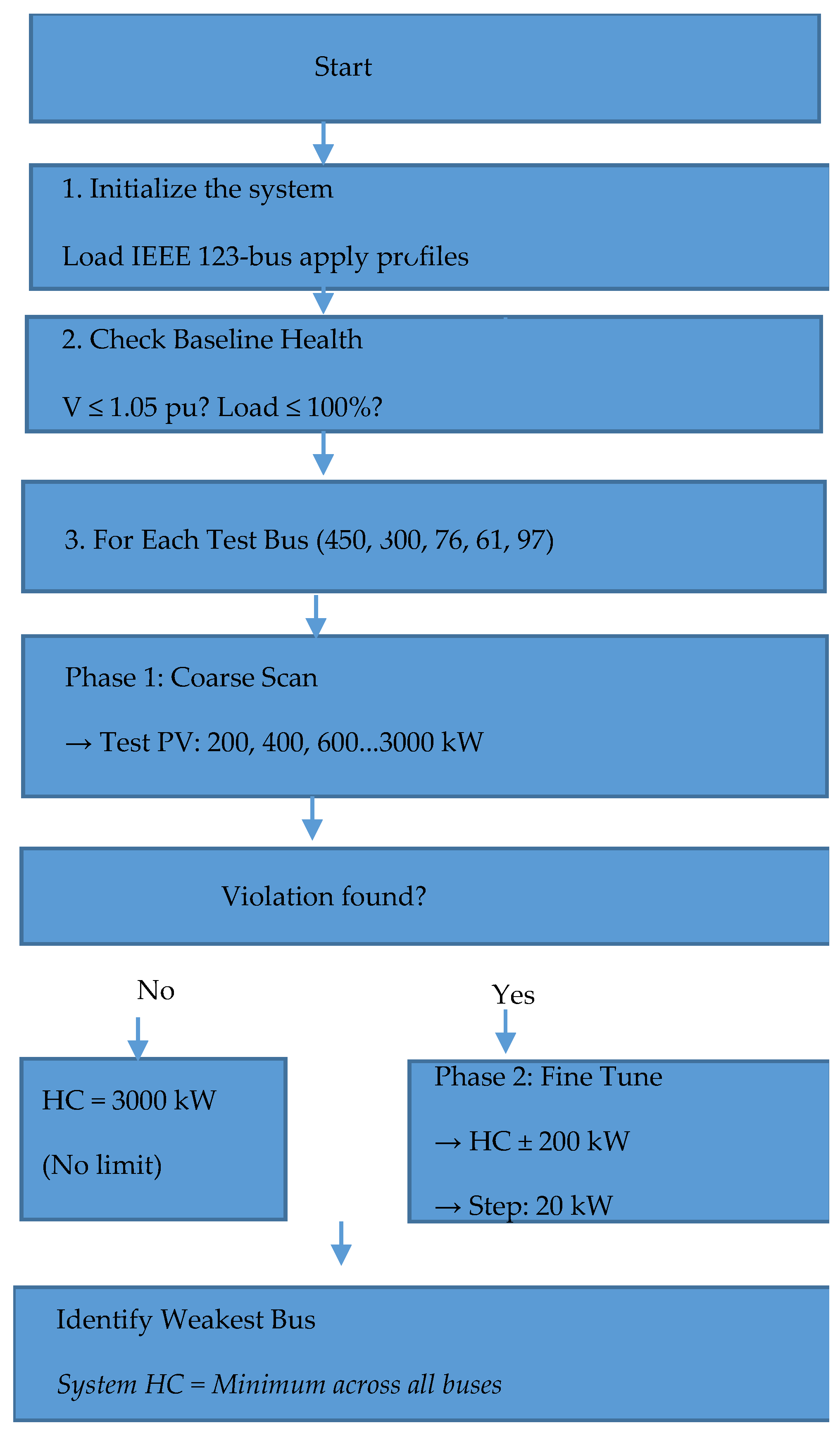
The fixed PV was placed at bus 149. Test PV was sequentially placed at each of the five test buses. All PV systems are three-phase and wye-connected. Active power (Pmpp) of the test PV varies from 200 kW to 3000 kW in coarse steps of 200 kW; fine-tuning uses steps of 20 kW around detected limits.
Mathematical Formulation to Determine Hosting Capacity
A coarse scan + fine-tuning to estimate HC per bus, equivalent to solving a constrained optimization problem via simulation. Formally, for each test bus b ∊ {450, 300, 76, 61, 97}
Maximize the PV active power capacity PPVb (in kW) at the bus, subject to operational constraints over the simulation period:
max PPVb
Constraints
Voltage upper limit: Maximum per-unit voltage across all buses and phases must not exceed 1.05 pu:
V m a x ( t ) =   m a x n N ,     Φ V n , , ( t ) 1.05 t     T
where N is the set of all buses, Φ = {a, b, c} phases, V n , (t) is the voltage magnitude at bus n, phase , time t, and T is the simulation time horizon.
Thermal limits on lines/transformers: Maximum loading on any line or transformer must not exceed 100% of rating:
L m a x t = m a x e E I e t I e , r a t e d   × 100 % 100 %   t     T
where E is the set of lines/transformers, I e ( t ) is the current magnitude on element e at time t, and I e , r a t e d is the rated amps.
Assumptions:
  • No derating; P-T curve is flat (multipliers [1 1 1 1] for temperatures [0 25 75 100] °C), assuming ideal conditions (no thermal impact on PV output).
  • Load models: Constant power (PQ) by default in OpenDSS, scaled by 0.85 globally (LoadMult = 0.85). Unbalanced, with a 24 h shape but only 10 h simulated.
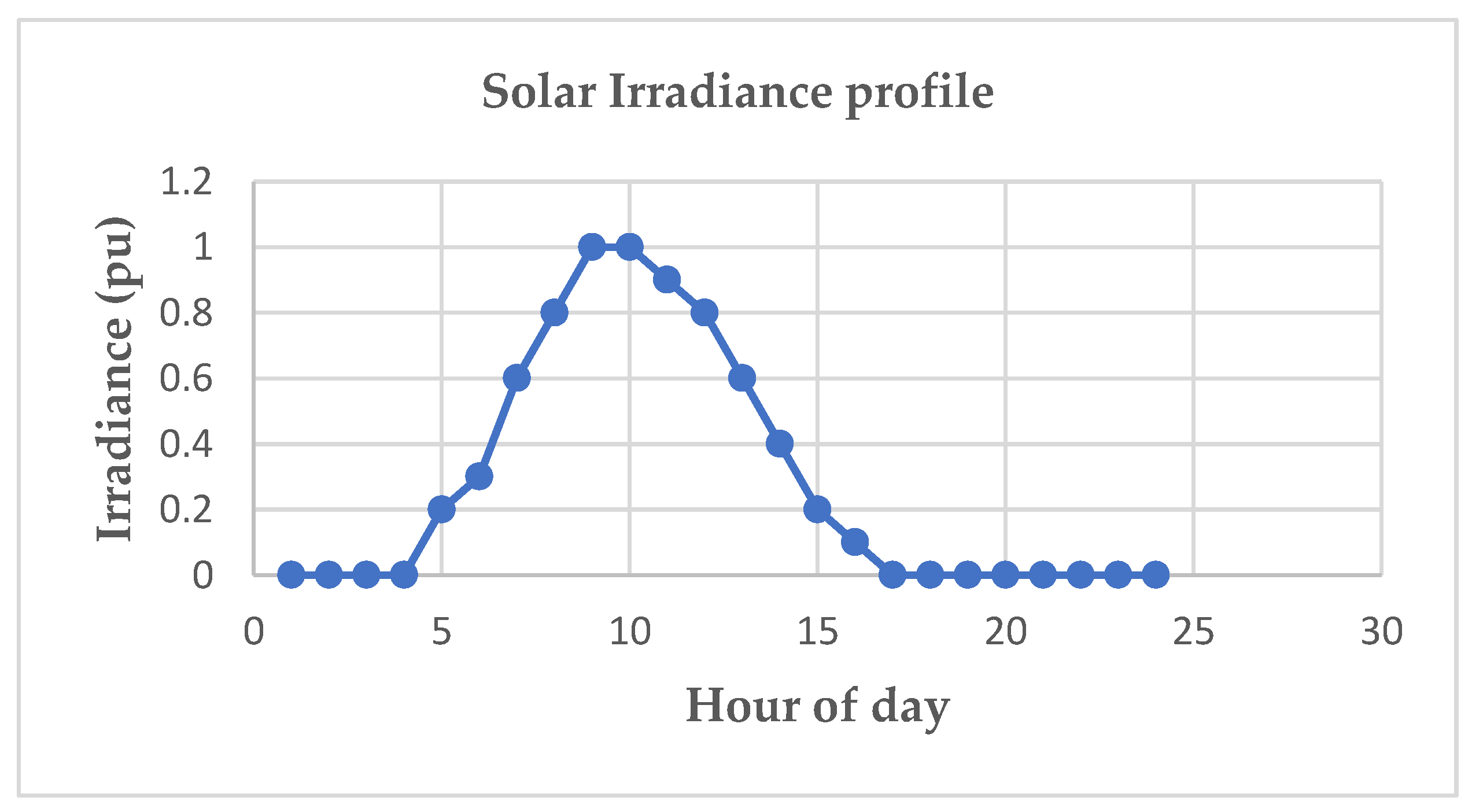
  • Irradiance: Fixed at 1.0 (full sun) modulated by PV shape (0–1 multipliers over 24 h).
  • Efficiency: Flat efficiency curve [1 1 1 1] for irradiance fractions [0.1 0.2 0.4 1.0].
To determine the hosting capacity of the selected buses, a procedure shown in Figure 1 was followed. The test was conducted in two phases. Phase 1 involved a coarse Scan, testing PV penetration levels from 0 to 3000 kW in 200 kW steps to quickly identify when violations occur. Phase 2 consists of fine-tuning by focusing on the violation point and uses 20 KW steps to achieve precision in finding the accurate hosting capacity.
A.
Solar irradiance data
In this study, the OpenDSS version 10.2.0.1 PVSystem element is utilized to model the PV systems. The active power output of each PV panel depends on solar irradiance, ambient temperature, and the panel’s rated power at the maximum power point. The analysis was conducted at peak generation at hours 9–10. Figure 2 shows the irradiance profile used in the study.
B.
Load profile
Because each distribution network has distinct characteristics and load patterns, applying a different load profile can lead to voltage/thermal violations during specific periods, even without DER integration. Simulation results revealed that thermal violations occurred under various load conditions. For accurate HC assessments, the base network should operate without any existing violations; otherwise, DER integration would be infeasible. To address this issue, the load profiles were reduced by applying a 0.85 scaling factor to eliminate voltage violations.

3. Results and Discussion

The study investigated six cases applied to the IEEE 123 bus network using MATLAB version R2025a to drive OpenDSS version 10.2.0.1 via the COM interface. The impact of each case on the HC capacity of the selected buses was investigated. Voltage violations and thermal limits were utilized as performance indicators.
A.
Case 1: With PV with voltage regulators on (base case)
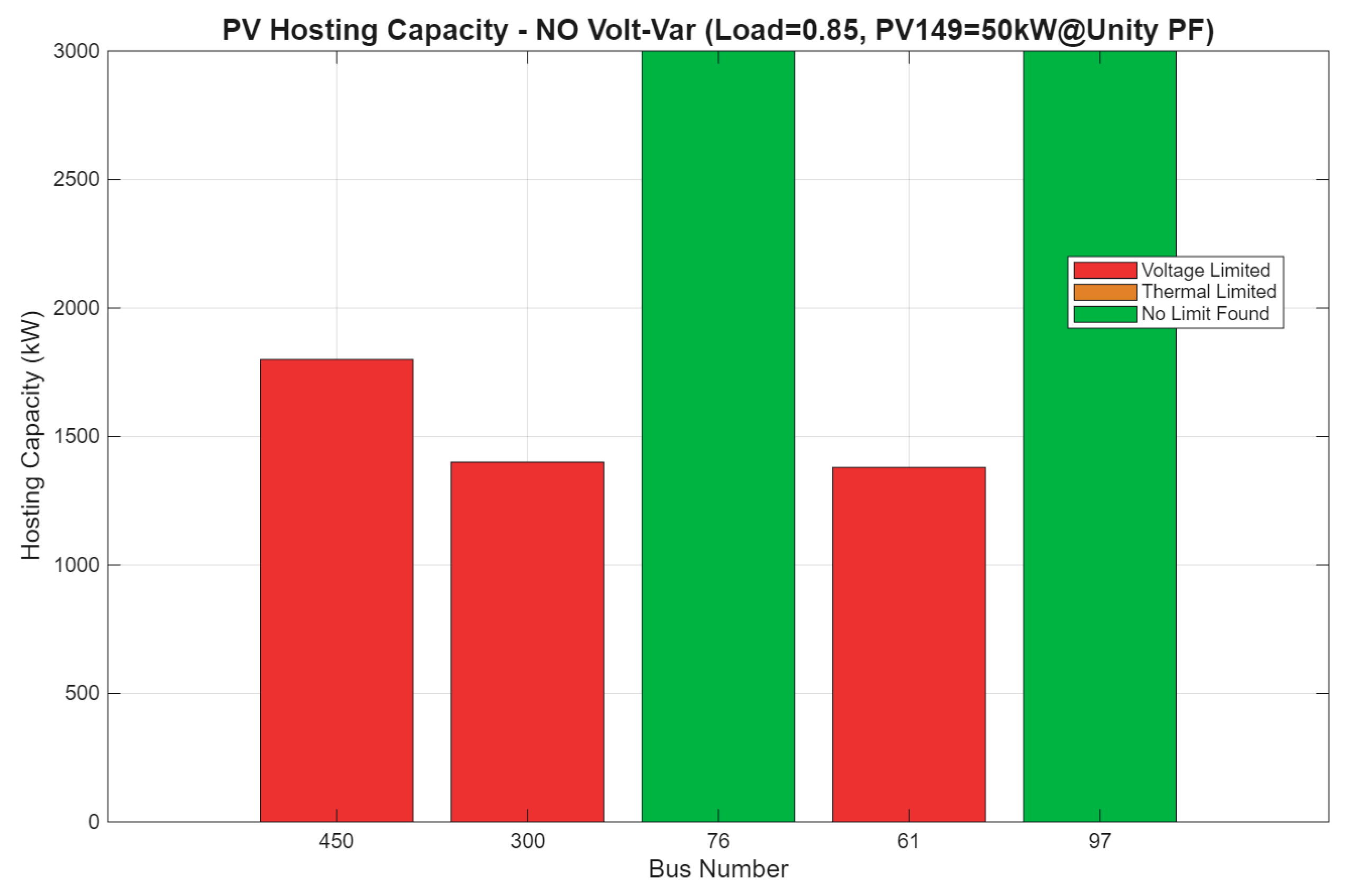
The IEEE123 Bus network has four step-voltage regulators, connected in a wye (Y) configuration: On-Rgltr-1 (150, 149) on all three phases, On-Rgltr-2 on single-phase A (9–14), On-Rgltr-3 on phases A–C (25, 26), and On-Rgltr-4 on all three phases (160, 67) [10]. The base scenario (bus 61 and 300) had the lowest hosting capacity of 1400 KW, as shown in Figure 3. Buses 76 and 97 had a hosting capacity of over 3000 kW.
B.
Case 2: No voltage regulators
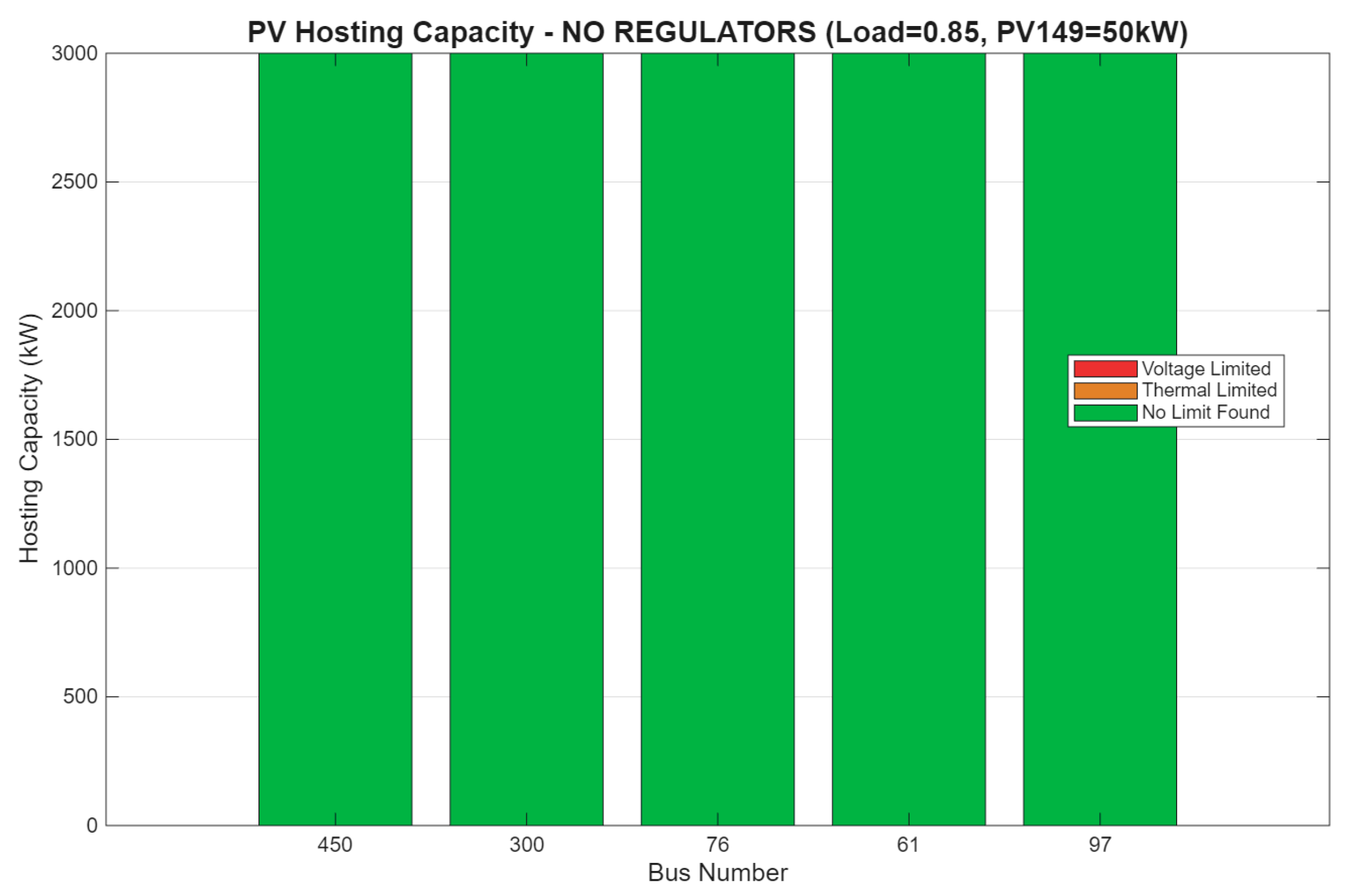
The scenario was tested to investigate the impact of disabling all the voltage regulators. Though not a practical case, this scenario was simulated for diagnostic purposes. Voltage regulators in the IEEE 123-bus feeder are single-phase, wye-connected devices designed to maintain regulated voltages at specific downstream buses. The case tested the impact of switching off all the voltage regulators in the network. All RegControls (voltage regulators) and CapControls (switched capacitors) were disabled. Baseline voltage dropped to 1.0000 pu (from 1.042 pu)—the regulators were boosting voltage. No thermal and voltage violations were experienced, as shown in Figure 4. With disabled voltage regulators, there is more headroom below the 1.05 limit. They are set too high for a system with distributed generation. The existing voltage regulation strategy is incompatible with high PV penetration.
C.
Case 3: Volt-Var
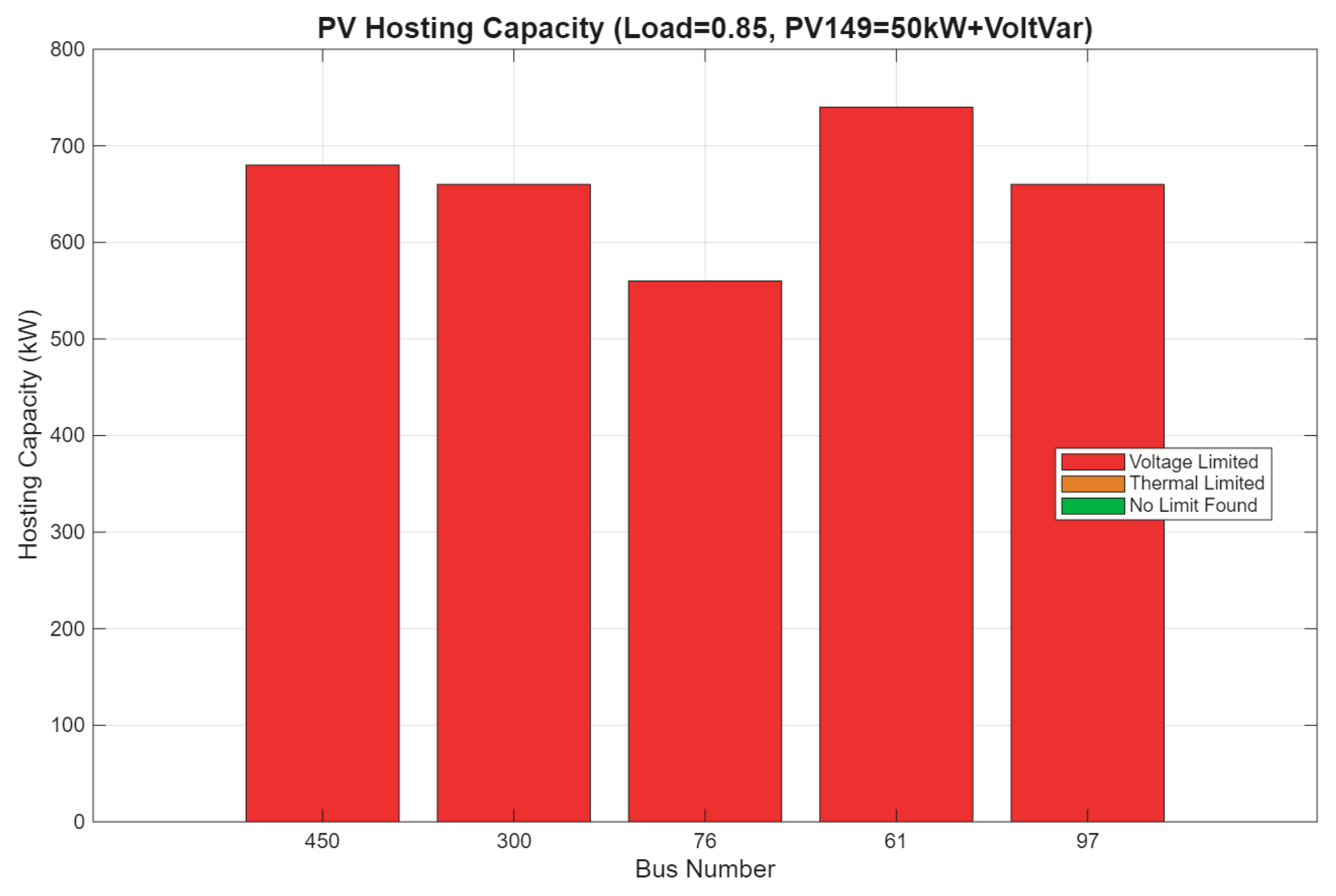
The Volt-Var function is a widely adopted SI function that can enhance HC. Several studies have proven that Volt-Var is one of the most effective methods for mitigating voltage violations [11,12]. In this study, the Volt-Var was the least effective method as shown in Figure 5. This is due to the convergence issues. The convergence issue can be reduced by proper coordination of SI and voltage regulators. No thermal limits were violated.
D.
Case 4: Volt-Watt
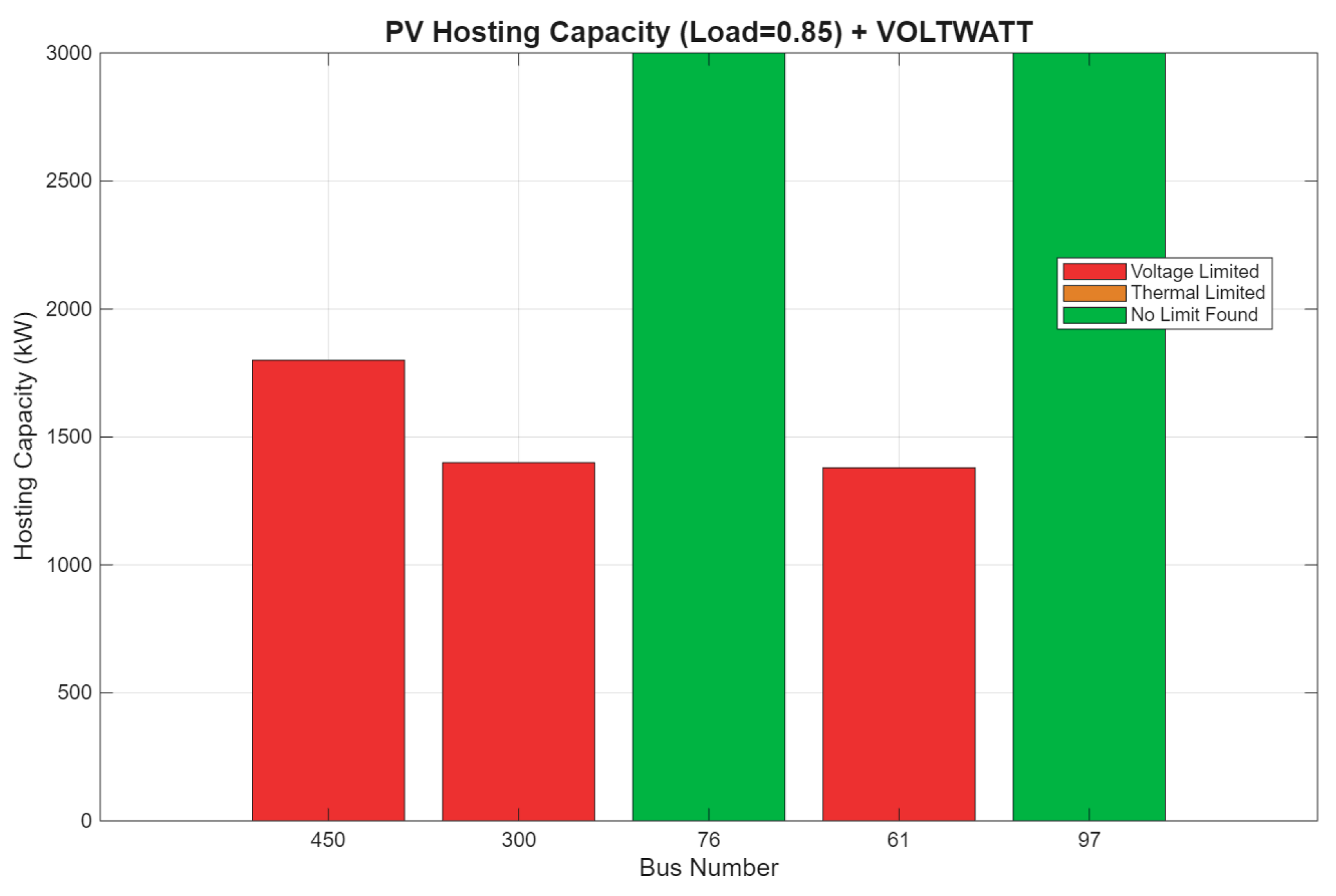
Volt-Watt led the slight increase in HC, as shown in Figure 6. However, the major setback of Volt-Watt is the energy loss caused by power curtailment. No thermal limits were violated.
E.
Case 5: Fixed leading PF = 0.95
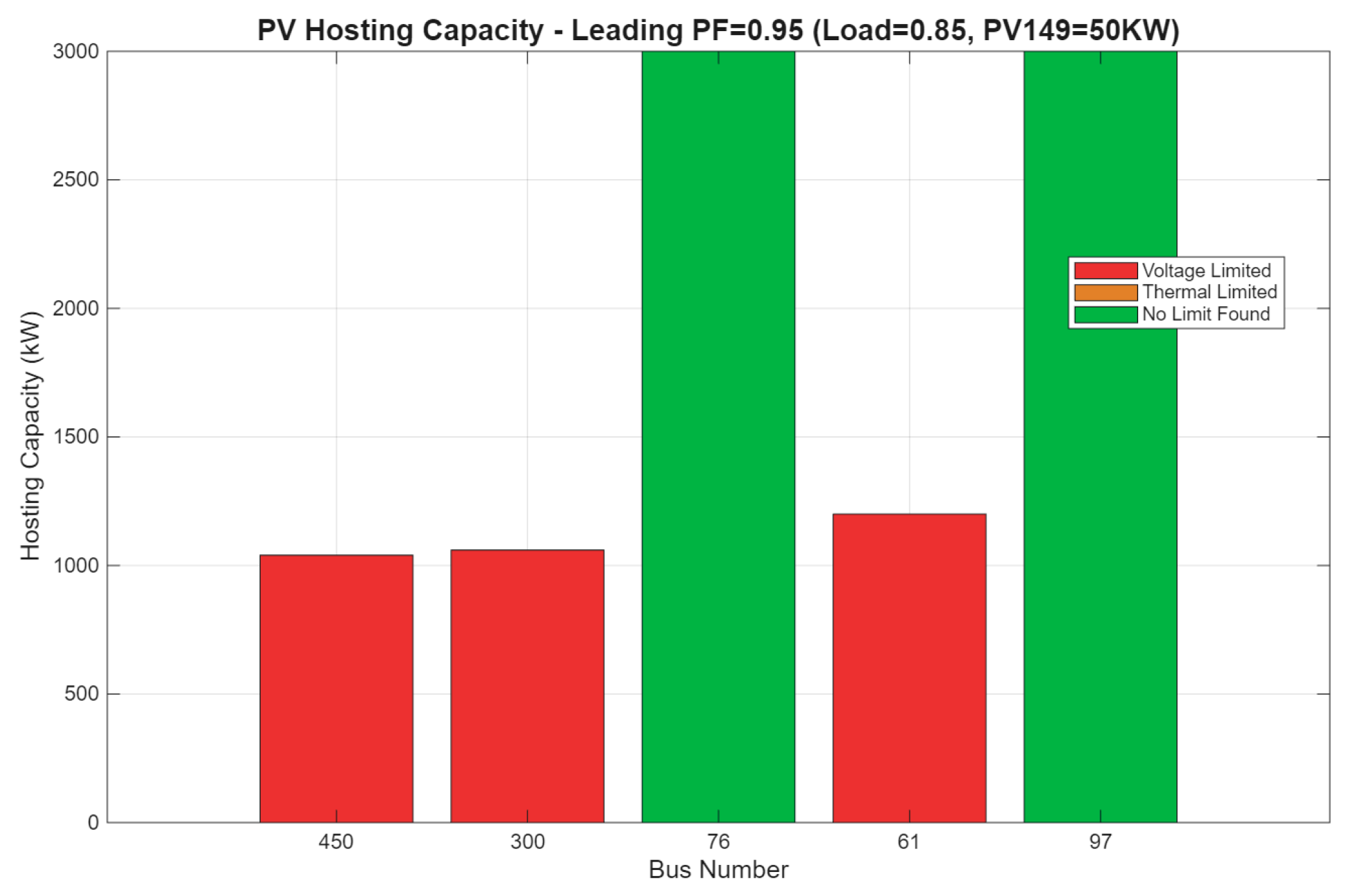
Bus 76 and bus 97 saw an increase in HC when the leading PF was enabled, as shown in Figure 7. Dynamic PF has the same effect as Volt-Var but also leads to convergence issues. No thermal limits were violated.
F.
Case 6: Fixed lagging PF = 0.95
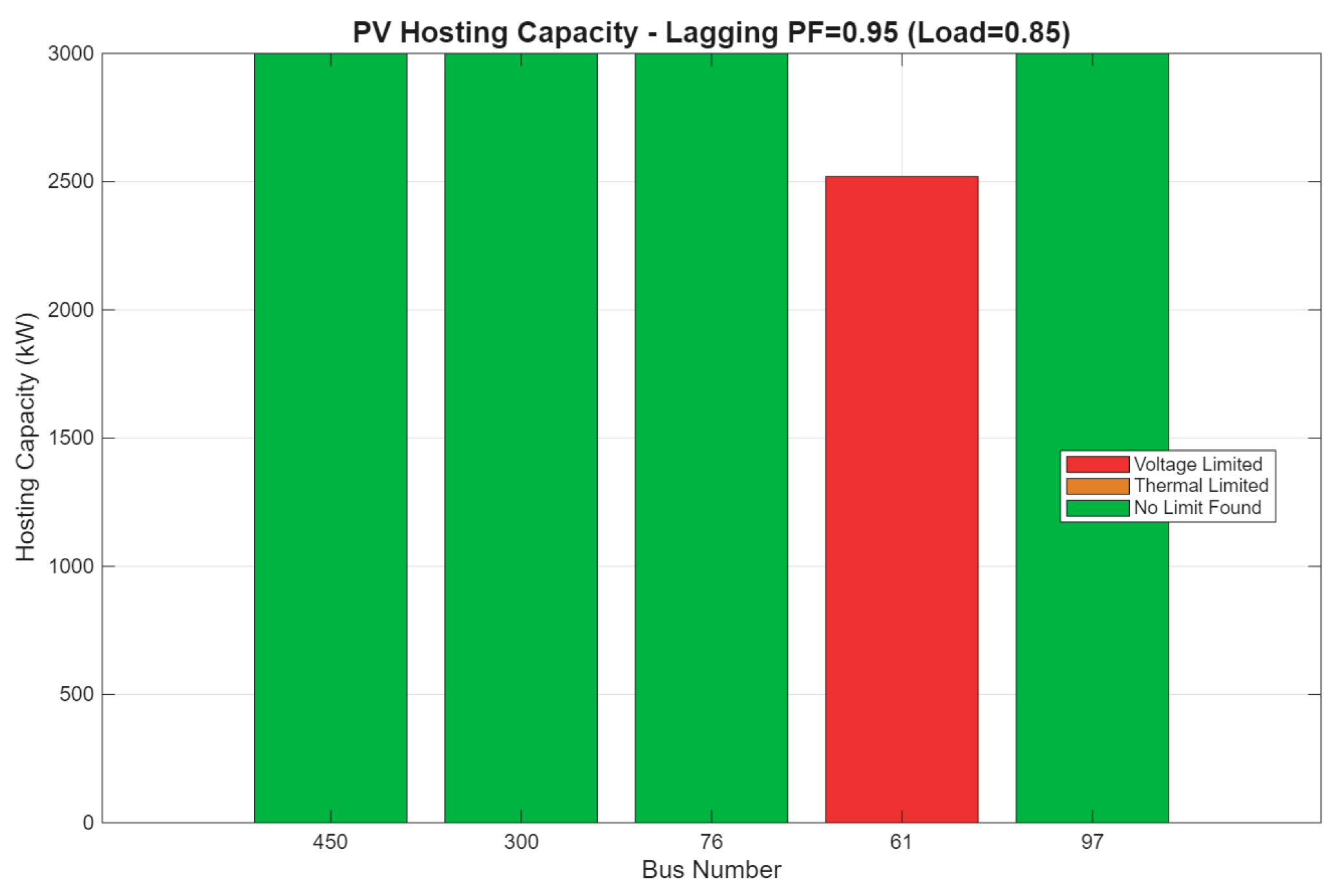
Fixed lagging PF was the most effective in enhancing HC in this study. Bus 61 is the weakest in the network, as shown in the cases studied. The other buses showed an HC above 3000 kW, as shown in Figure 8. No thermal limits were violated.
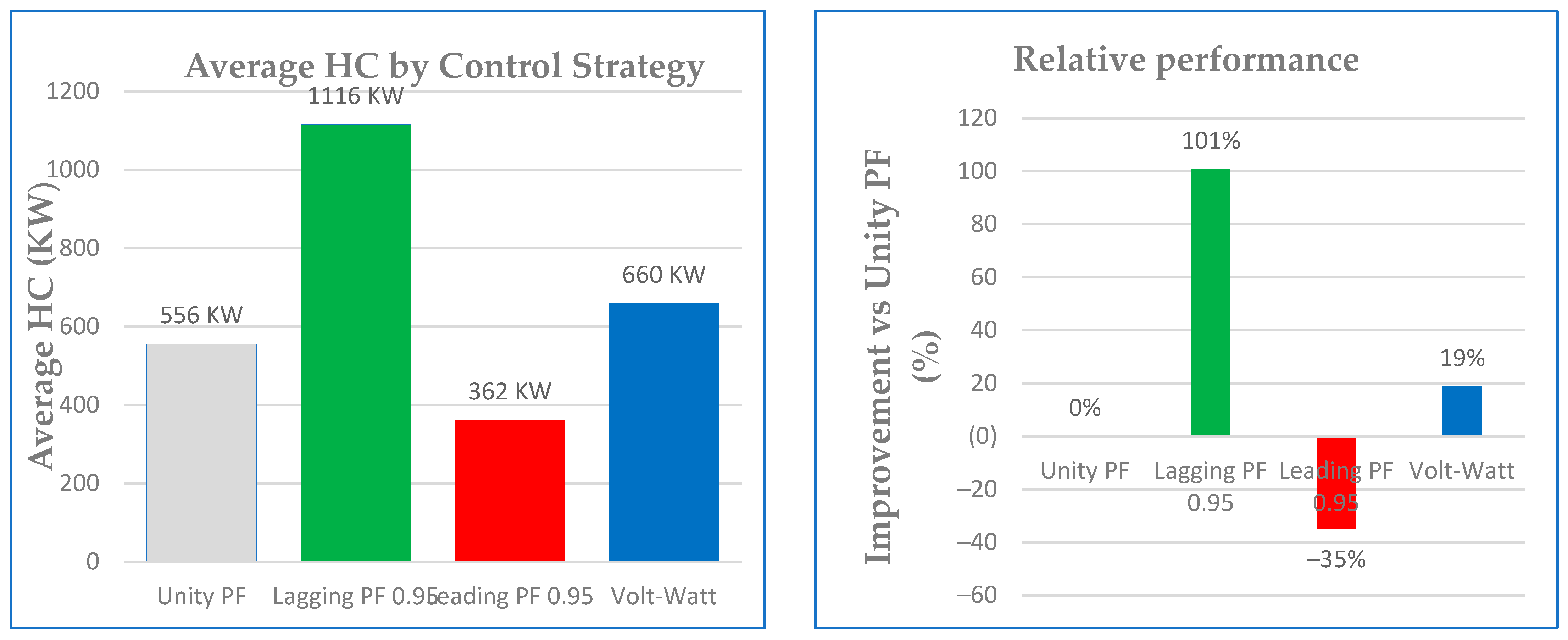
Figure 9 summarizes the impact of the cases investigated in the study. The Volt-Watt control showed a modest improvement over unity PF. Volt-Watt shows a moderate improvement (+18%) and prevented overvoltage violations. The major setback of Volt-Watt is the need for active power curtailment at high voltages. The lagging PF was the most effective method (+100%) to enhance hosting capacity. The advantage of the method is its simplicity of implementation. The IEEE123 bus network has high R/X-ratio feeders, which make Volt-Watt and lagging PF more effective in enhancing HC [10]. The Volt-Var was ineffective because it is designed for networks with low R/X ratios. It lowers the HC and leads to convergence failure. The Volt-Var was set to 300 iterations to prevent OpenDSS from reporting the maximum iterations error. No thermal violations were experienced using either method.

4. Conclusions

The study showed that Bus 61 was the weakest bus compared to the other buses under study. Legacy voltage regulation infrastructure limited HC. Removing voltage regulators provided the best result. The result shows that there is a need for proper configuration of voltage regulators after integrating DER in the system. A lagging PF of 0.95 was most effective in enhancing HC, followed by Volt-Watt. The Volt-Var gave the worst result due to convergence issues. The future work will focus on a realistic LV electric distribution network in Johannesburg, which is operated by the main utility provider in South Africa.

Author Contributions

Conceptualization, P.M. and O.D.; methodology, P.M.; software, P.M.; validation, P.M., O.D.; resources, writing—original draft preparation, P.M.; writing—review and editing, P.M.; supervision, O.D. All authors have read and agreed to the published version of the manuscript.

Funding

This research received no external funding.

Institutional Review Board Statement

Not applicable.

Informed Consent Statement

Not applicable.

Data Availability Statement

Data is available on request.

Conflicts of Interest

The authors declare no conflicts of interest.

Abbreviations

The following abbreviations are used in this manuscript:
DERDistributed Energy Resources
HCHosting Capacity
PVPhotovoltaic
EVElectric Vehicle
BESSBattery Energy Storage System
PFPower Factor
SISmart Inverter
LVLow Voltage
COMComponent Object Model

References

  1. Impact of High Penetration of Sustainable Local Energy Communities on Distribution Network Protection and Reliability. Available online: https://www.mdpi.com/2076-3417/15/19/10401 (accessed on 9 November 2025).
  2. Ilahi, A.S.A.M.; Zeeminnaj, M.R.; Ahamed, M.H.F.; Juhaniya, A.I.S. Technical Impacts of High Penetration of Solar Photovoltaic Systems in Low-Voltage Radial Distribution Network—Case Study. In Proceedings of the 2024 4th International Conference on Electrical Engineering (EECon), Colombo, Sri Lank, 12 December 2024; pp. 7–12. [Google Scholar] [CrossRef]
  3. Impact of Distributed Generation on the Protection Systems of Distribution Networks: Analysis and Remedies—Review Paper—Meskin—2020—IET Generation, Transmission & Distribution—Wiley Online Library. Available online: https://ietresearch.onlinelibrary.wiley.com/doi/10.1049/iet-gtd.2019.1652 (accessed on 9 November 2025).
  4. Cheng, Z.; Udren, E.; Holbach, J.; Reno, M.J.; Ropp, M.E. Protection and Control Challenges of Low-Voltage Networks with High Distributed Energy Resources Penetration—Part 1: Utility Workshop and Low-Voltage Network Modeling. In Proceedings of the 2023 76th Annual Conference for Protective Relay Engineers (CFPR), College Station, TX, USA, 27–30 March 2023; pp. 1–15. [Google Scholar] [CrossRef]
  5. Babu, K.R.; Khatod, D.K. Smart Inverter-Based Distributed Volt/Var Control for Voltage Violation Mitigation of Unbalanced Distribution Networks. IEEE Trans. Power Deliv. 2024, 39, 1481–1490. [Google Scholar] [CrossRef]
  6. Sreelakshmi, P.P.; Kumar, M.; Jisha, P. Integration of PV-BES in Low-Voltage Distribution Systems with Distinct Load Profiles. In Proceedings of the 2025 International Conference on Advancements in Power, Communication and Intelligent Systems (APCI), Kannur, India, 27–28 June 2025; pp. 1–8. [Google Scholar] [CrossRef]
  7. Liu, J.; Zhang, S.; Wang, J. Demand-Side Management Strategy for Local Energy System Supporting Renewable Energy Sources Integration. In Proceedings of the 2023 6th International Conference on Energy, Electrical and Power Engineering (CEEPE), Guangzhou, China, 12–14 May 2023; pp. 1332–1337. [Google Scholar] [CrossRef]
  8. Lim, S.; Kim, T.; Lee, K.Y.; Choi, D.; Park, J.-W. Impact of high penetration of renewables on power system frequency response: A review and verification. Renew. Sustain. Energy Rev. 2025, 217, 115728. [Google Scholar] [CrossRef]
  9. Abideen, M.Z.U.; Ellabban, O.; Ahmad, F.; Al-Fagih, L. An Enhanced Approach for Solar PV Hosting Capacity Analysis in Distribution Networks. IEEE Access 2022, 10, 120563–120577. [Google Scholar] [CrossRef]
  10. Nacar Cikan, N.; Cikan, M. Reconfigeration of 123-bus unbalanced power distribution network analysis by considering minimization of current & voltage unbalanced indexes and power loss. Int. J. Electr. Power Energy Syst. 2024, 157, 109796. [Google Scholar] [CrossRef]
  11. Kim, I. Effect of Volt/Var Control on Optimal Hosting Capacity of Distributed Energy Resources. In Proceedings of the 2024 Global Energy Conference (GEC), Batman, Turkiye, 4–6 December 2024; pp. 359–362. [Google Scholar] [CrossRef]
  12. Varma, R.K.; Singh, V. Review of Studies and Operational Experiences of PV Hosting Capacity Improvement by Smart Inverters. In Proceedings of the 2020 IEEE Electric Power and Energy Conference (EPEC), Edmonton, AB, Canada, 9–10 November 2020; pp. 1–6. [Google Scholar] [CrossRef]
Figure 1. Hosting capacity procedure.
Engproc 140 00003 g001
Figure 2. Solar irradiance profile.
Engproc 140 00003 g002
Figure 3. Base case scenario.
Engproc 140 00003 g003
Figure 4. Impact of switching off all regulators on HC of buses under study.
Engproc 140 00003 g004
Figure 5. Impact of Volt-Var on HC of selected buses.
Engproc 140 00003 g005
Figure 6. Impact of Volt-Watt on HC of selected buses.
Engproc 140 00003 g006
Figure 7. Impact fixed leading PF on HC of selected buses.
Engproc 140 00003 g007
Figure 8. Impact of fixed lagging PF on HC of buses under study.
Engproc 140 00003 g008
Figure 9. Impact of different strategies on HC.
Engproc 140 00003 g009
Disclaimer/Publisher’s Note: The statements, opinions and data contained in all publications are solely those of the individual author(s) and contributor(s) and not of MDPI and/or the editor(s). MDPI and/or the editor(s) disclaim responsibility for any injury to people or property resulting from any ideas, methods, instructions or products referred to in the content.