1. Introduction
There is a greater need for flexibility resources in the power system to manage the increased variability caused by a higher percentage of variable renewable generation, as well as uncertainty in load forecasting. According to the International Renewable Energy Agency [
1], flexibility refers to the capability of a power system to cope with the variability and uncertainty that variable renewable generation introduces at different time scales, from the very short- to long-term, minimizing the curtailment of power from the variable renewable generation and reliably supplying all customer energy demand. Flexibility resources are needed to respond to rapid changes in load or generation, which may lead to substantial deviations in system frequency or voltage magnitude away from nominal levels. The non-dispatchable nature of most distributed energy resources (especially the variable renewable generation, such as wind and PV generation) has resulted in them being interconnected to the grid in a passive manner and being treated as negative load, with little opportunity for actively contributing to system operation. The development of new technologies, however, is facilitating the effective integration of these resources as active players in system operation. The key enabling technologies for the effective grid integration of distributed energy resources include distributed storage, smart inverters, energy efficiency, and demand response, as well as flexible loads, such as smart charging of electric vehicles. Distributed energy resource (DER)-based flexibility resources have the potential to contribute to the lowering of carbon emissions and the overall cost of meeting the net demand by reducing the need for expensive fossil fuel-fired peaking plants, decreasing the need for renewable generation curtailment to prevent excess generation and thus increasing the value of renewable generation on the system [
2].
Due to the dispersed nature of DERs, most of which are at a small scale, their individual contribution to system services provision as flexibility resource providers is limited. In this context, aggregation of a variety of DERs, which may include non-dispatchable and dispatchable resources, as well as storage and flexible load, acts as an enabler for their active participation in network operation. The aggregation of flexibility resources facilitates their ability to provide a variety of ancillary services to the grid. This article discusses the role that the aggregator plays as an enabler for the provision of flexibility from small-scale, dispersed DERs.
Section 2 outlines the aggregator model.
Section 3 discusses the services that the aggregator of flexibility resources would typically provide.
Section 4 presents an analysis of the seasonality impact on both small-scale renewable (photovoltaic) generation and residential demand.
Section 5 concludes the article with a few remarks.
2. The Aggregator Model
The provision of demand-side flexibility for the purpose of participation in ancillary services and other segments of the electricity market has largely been focused on large industrial and commercial consumers because they are better able to satisfy the market participation or system operator requirements for the provision of such services. The aggregator model has been conceptualized to act as an enabler for the integration of small consumers and prosumers in the provision of demand-side flexibility.
An aggregator can be defined as an entity engaging in the electricity market, the role of which is to gather flexibility from prosumers’ devices to sell it to the Distribution System Operator (DSO) or Balance Responsible Party (BRP), maximizing its profit by supplying that flexibility to reduce grid congestion, deferring the need for network reinforcement, limiting any penalties due to supply/demand imbalance, and arbitraging on energy price [
3]. An aggregator typically serves two purposes: commercial (trading energy and flexibility in the electricity market) and technical (participating in local system management in collaboration with the system operator).
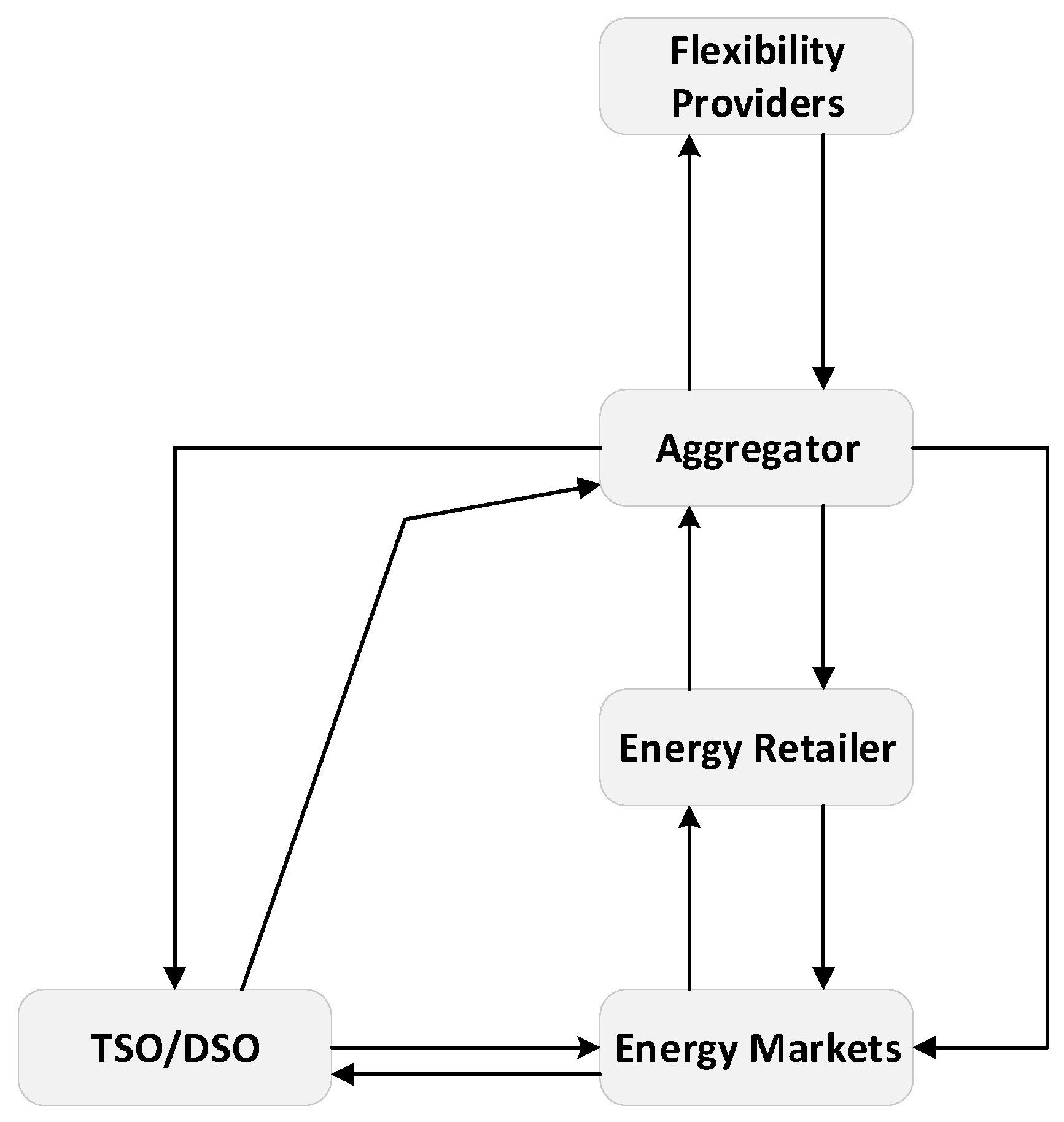
A typical architecture or business model of the aggregator is depicted in
Figure 1, which illustrates the interactions between the aggregator and the aggregated participants on the one hand, as well as the aggregator and the energy or electricity market on the other hand. The architecture shows that the aggregator will typically coordinate the provision of flexibility from a number of participating energy consumers/prosumers and engage in energy trading as well as the trading of flexibility in the energy and ancillary services markets.
The main value of the aggregator consists in its capability to facilitate relatively easier access to the electricity markets for small consumers/prosumers wishing to participate in the provision of demand flexibility. The average energy consumer/prosumer is unable to directly participate in the electricity market due to a number of technical or commercial barriers that might make participation hardly profitable. Aggregated participation in the provision of system services may present a number of benefits, such as reduced fixed costs for small participants, reduced cost of infrastructure needed for participation, greater ease for small participants in meeting market entry requirements, and accessibility of enabling tools and technologies required for efficient participation in energy markets [
4].
The following section discusses the services that would typically be provided by the aggregator of small-scale flexibility.
3. Aggregator’s Participation in Energy and Ancillary Services Markets
Small-scale demand-side flexibility (such as that of residential customers) can play a material role in distribution network management if well-coordinated under the framework of the aggregator. One of the major consequences of the transformation from passive distribution networks to actively managed distribution systems is the increase in the need for ancillary services provision at the distribution level. Ancillary services refer to specialized functions used by the system operator to maintain the security and reliability of grid operation [
5]. These services have traditionally been secured at the transmission level of the power system, making use of large-scale synchronous generator-based generation [
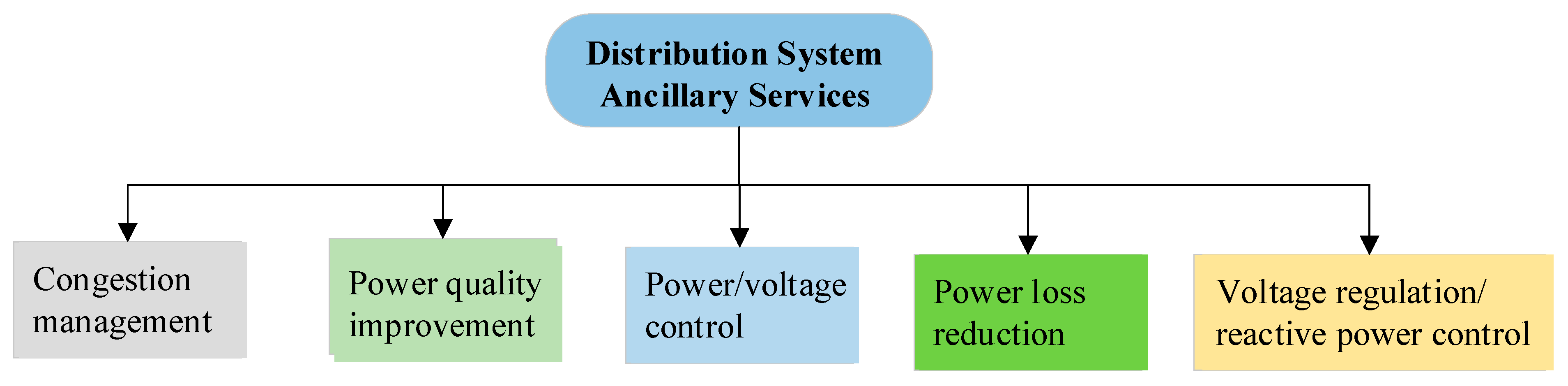
6]. Some of the ancillary services that are typically needed at the distribution level in active distribution networks are depicted in
Figure 2. The main segments of the market in which the aggregator can trade the demand flexibility, as depicted in
Figure 1, are the day-ahead energy market, the day-ahead secondary reserve market, and the day-ahead tertiary reserve market. The aggregator participates in the day-ahead market with the aim of maximizing the profits procured from bidding the aggregated demand flexibility. The next section discusses small-scale renewable (PV) generation and residential demand forecasting, with consideration of the seasonality impact.
4. Aggregated Demand Analysis and Forecasting
Demand-side management can be seen as a tool in the hands of the utility operator that can be used to improve the efficiency and reliability of network operation. The main idea is to exploit the available resources to a maximum degree before considering deploying additional resources to satisfy network operation requirements. In this respect, analyzing and forecasting both generation and demand is a key aspect of demand flexibility aggregation. Generation and demand forecasting have always played a vital role in power system planning and grid management, influencing decisions regarding network infrastructure reinforcement, reliability improvement, cost cutting, and mitigation against unforeseen contingencies. Short-term grid operations rely to a significant extent on accurate forecasting of demand as well as intermittent (renewable) generation. The importance of demand forecasting has taken on greater importance due to supply-side developments, especially the increase in intermittent renewable generation, as well as increased environmental awareness among the population.
The analysis and forecasting of electricity generation and energy demand consider historical data and the impact of relevant factors, such as weather, seasonal changes, and economic activity. The primary time frames across which forecasting can be done are the short-term (hours to days), medium-term (a few weeks to a few months), and long-term (a period of years). The key factors that influence electricity demand include weather conditions, time of day, economic activity, and seasonal variations, as well as holidays and special events.
4.1. Generation and Demand Forecasting Methods
Many different methods of forecasting have been developed over the years. The prominent ones include regression analysis (linear regression), time series analysis (e.g., Auto-Regressive Integrated Moving Average, ARIMA), exponential smoothing, neural networks, support vector machines, expert systems, trend analysis, econometric analysis, and various hybrid approaches. These methods vary in their characteristics, and their application is influenced by factors such as the time horizon of forecasting (whether it is short-, medium-, or long-term forecasting), the complexity of the data, the required level of forecasting accuracy, the cost of implementing the method, and other factors that ultimately affect the usability of the result of the forecast. This study uses the nonlinear autoregressive neural network (NAR) in MATLAB (version R2025a) to forecast future values of a time series based on its past values, using small-scale rooftop PV generation as an example.
4.2. Seasonality-Based Analysis of Renewable Generation and Electricity Demand
The study of the impact of seasonality changes on the production of intermittent generation (such as photovoltaic (PV) power generation) and electricity demand is very helpful in projecting short to medium-term requirements for efficient network operation. Because the peaks and troughs of generation and demand may not coincide, it becomes essential to anticipate when these could occur and to appropriately plan for effectively managing the network resources to ensure that generation matches demand as closely as possible at all times.
The magnitude and duration of solar irradiance have the most significant impact on PV generation. Therefore, the summer period, with higher solar irradiance and longer daylight hours, tends to experience the highest level of PV generation. Regarding seasonality, the factors having the greatest impact on electricity demand are the heating and cooling demand and the daylight hours. The heating demand usually peaks in winter, whereas the cooling demand peaks in summer, when the air conditioning energy consumption is usually the highest.
In the framework of the present study, a case study was conducted, which involved analyzing a grid-tied PV generation plus battery storage system, along with the energy demand, focusing on the seasonality impact on the PV production, energy consumption, and the operation of the battery storage. The location of the case study is Cape Town.
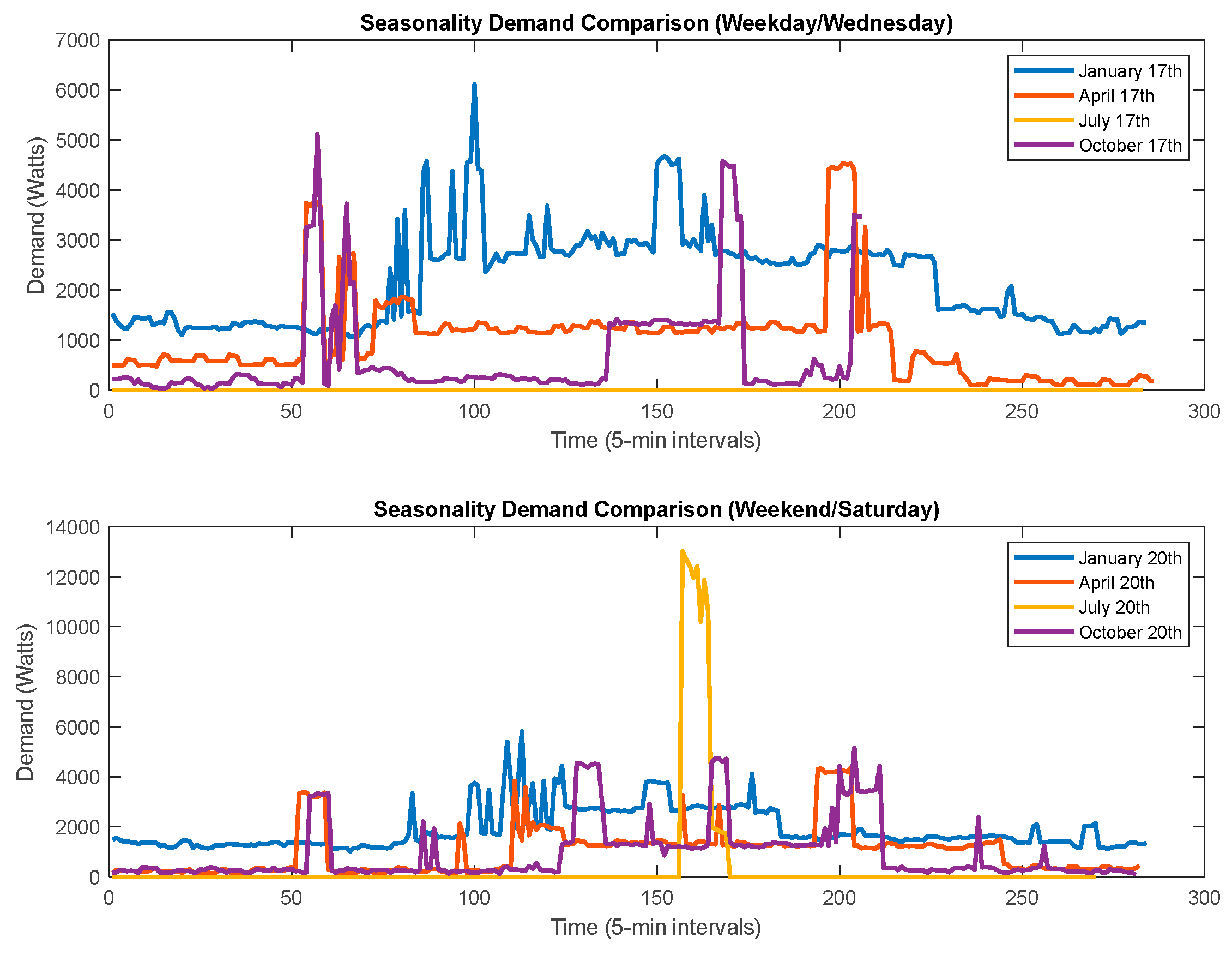
Figure 3 compares the daily load demand pattern. The four seasons are spring, winter, autumn, and summer. The top plot in
Figure 3 compares a weekday in each season, and the bottom figure compares a weekend. Based on the studied data, what can be deduced from the analysis is that demand is highest in summer, most probably due to cooling demand, as Cape Town tends to be very hot in summer (the month of January used in the analysis). It can also be seen that demand is higher during the week (Wednesday in this case) than over the weekend (Saturday in this case).
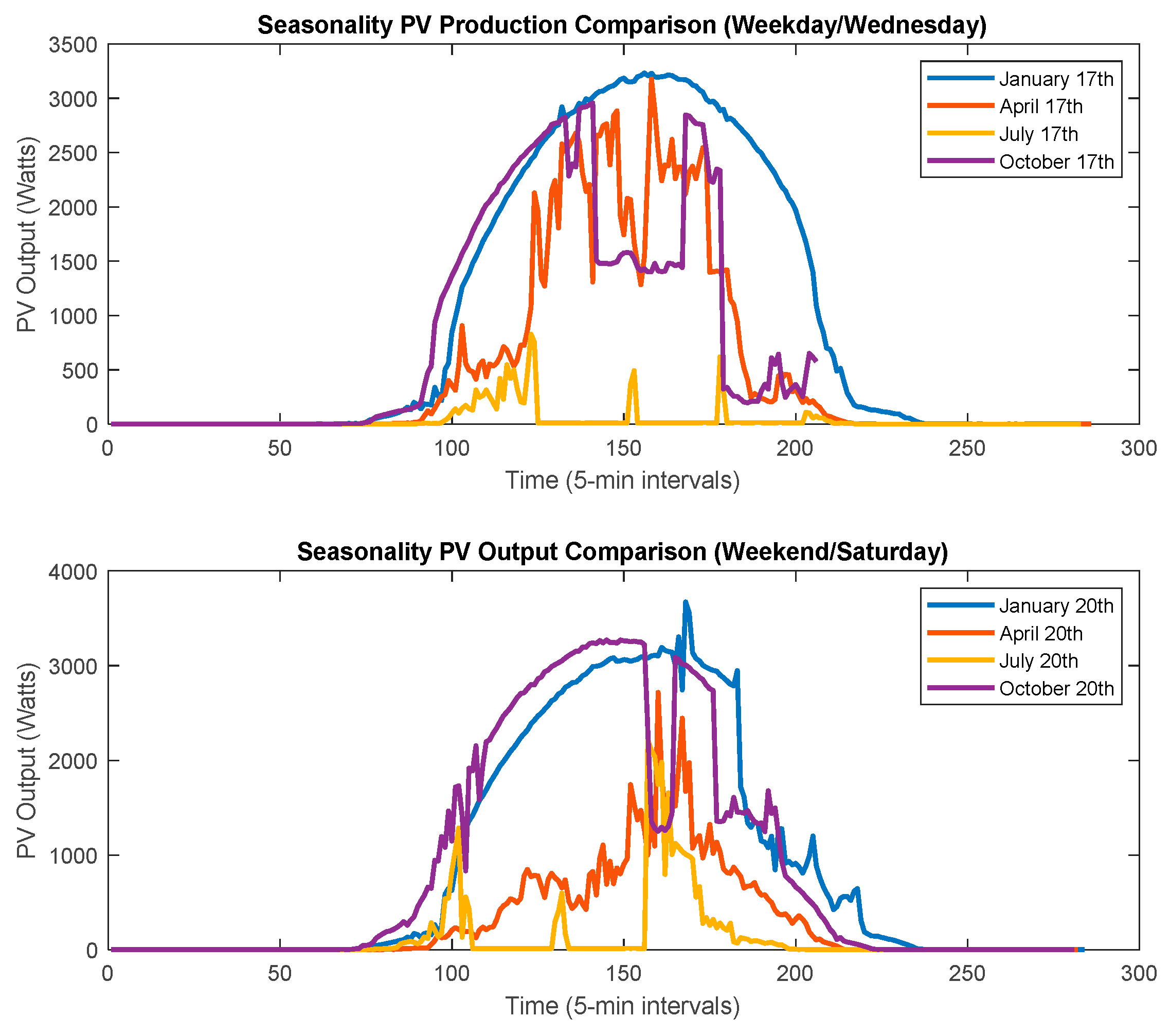
Figure 4 compares the daily PV generation pattern across the four seasons of spring, winter, autumn, and summer. As expected,
Figure 4 shows that PV generation output is highest in the summer month of January, and on all the days, it peaks around noon.
4.3. Nonlinear Autoregressive (NAR) Network-Based PV Generation Forecasting
The nonlinear autoregressive (NAR) neural network model is a type of shallow dynamic neural network used to predict the future values of a single time series based entirely on its own past values. The model implemented in MATLAB enables training the neural network in open-loop mode and then creating a closed-loop model that can be used to predict future values of the time series based on the past values [
7].
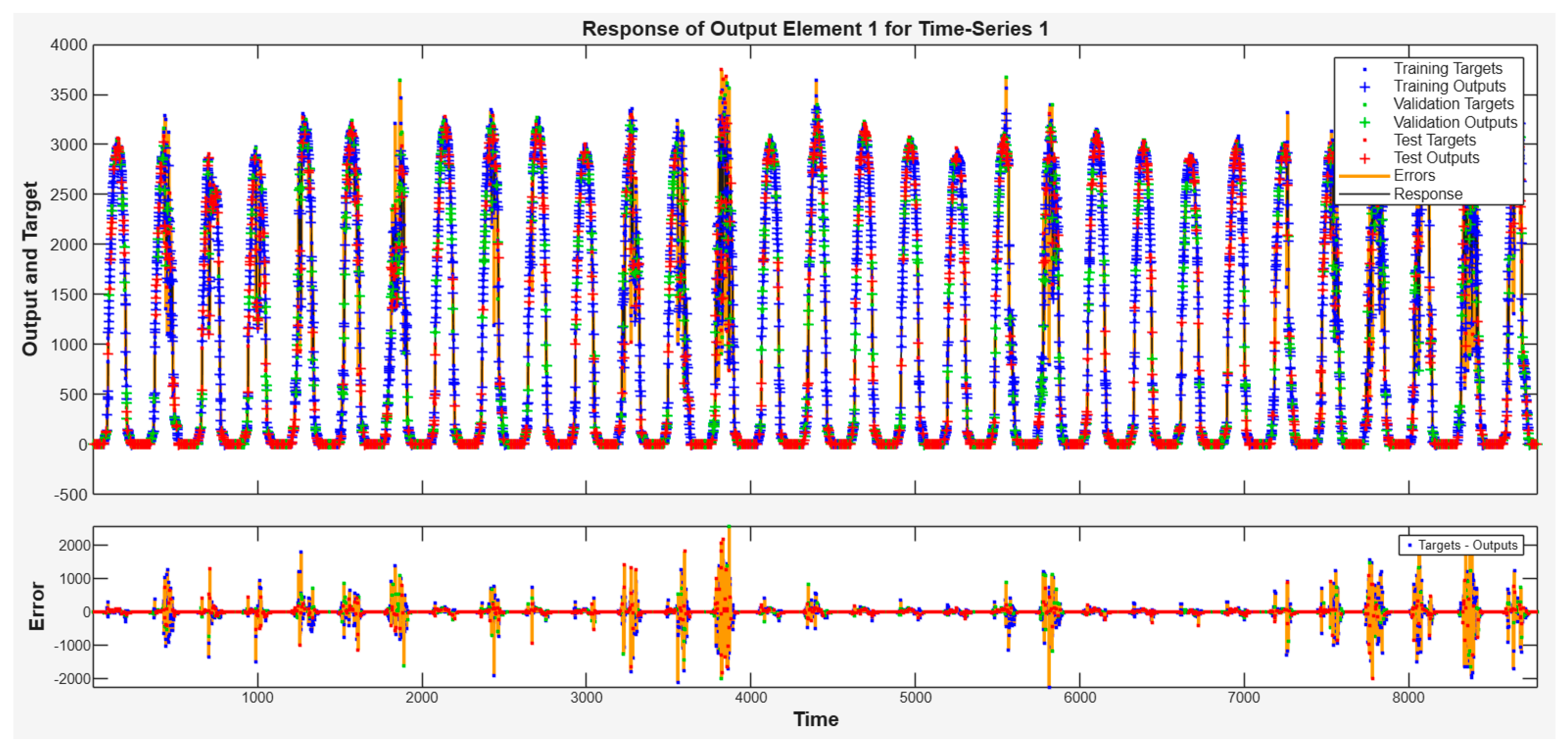
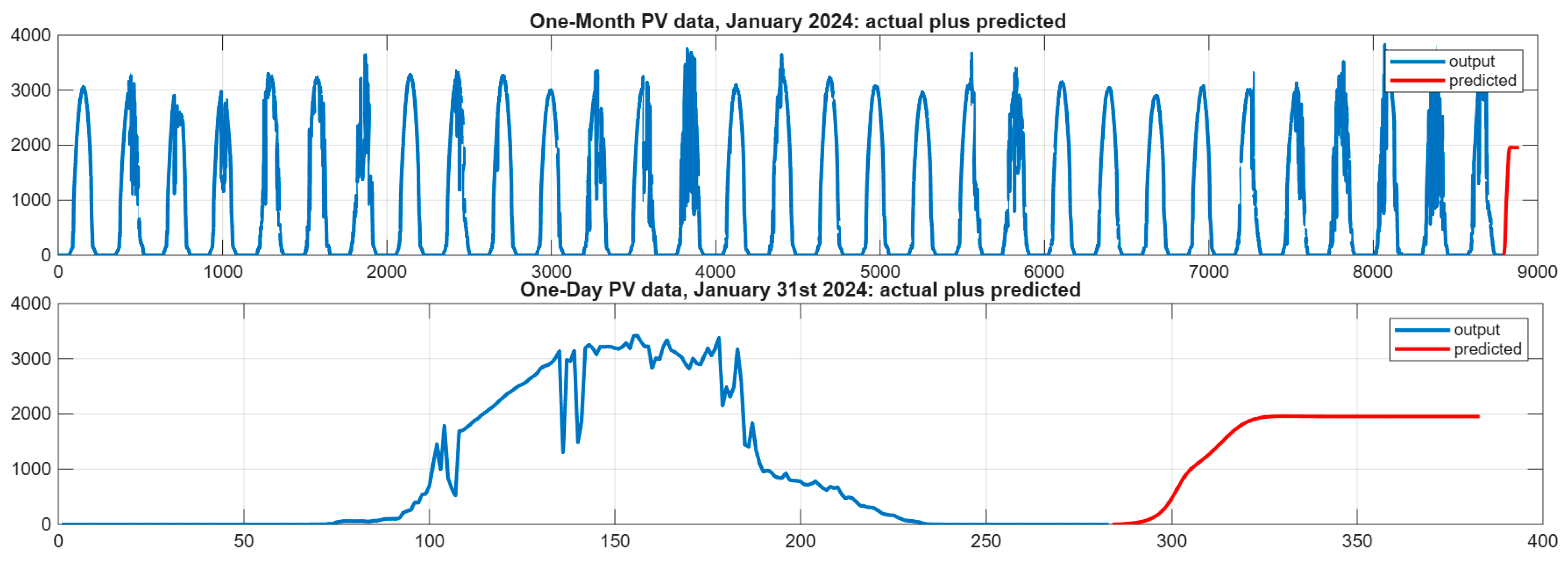
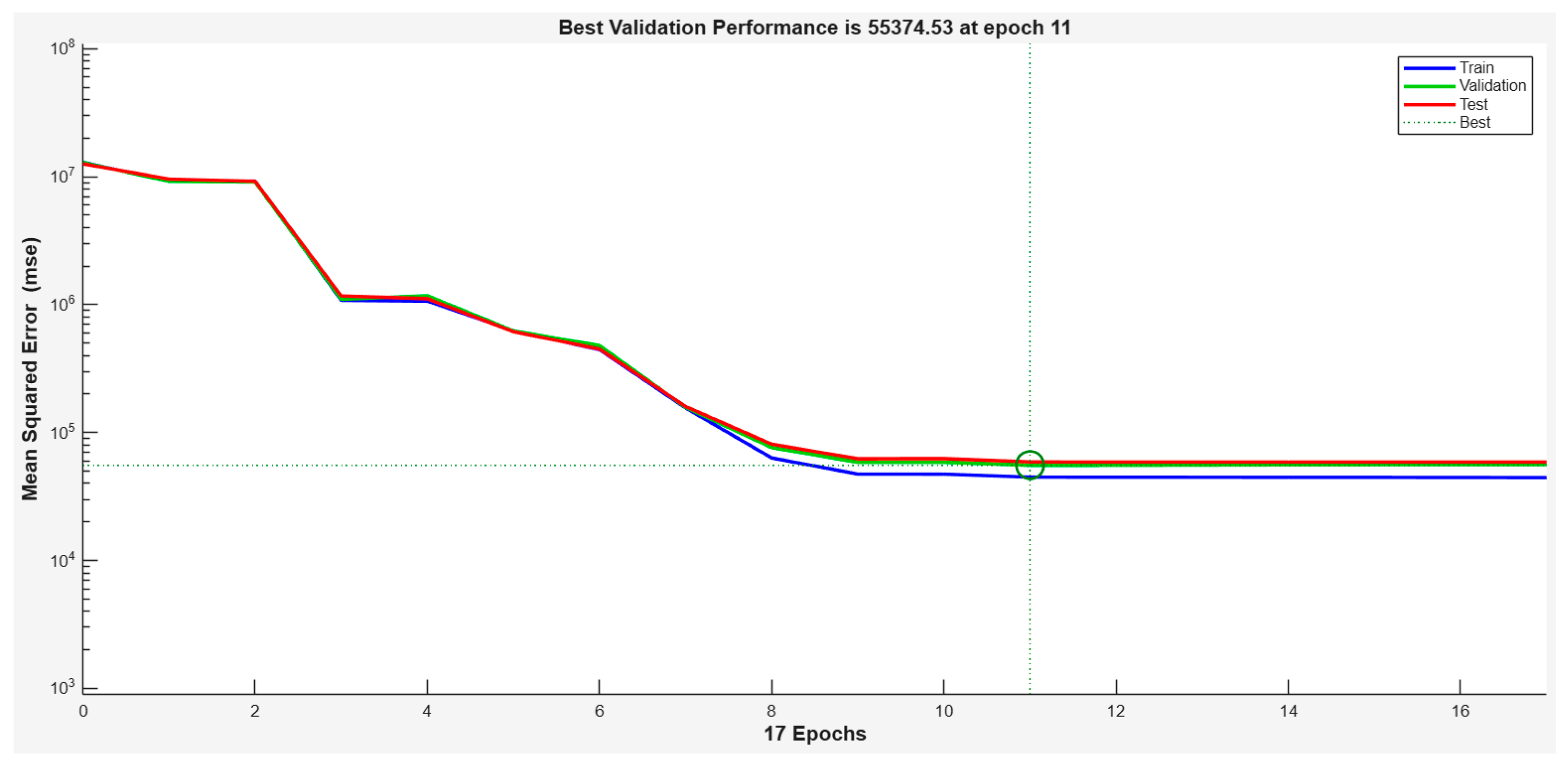
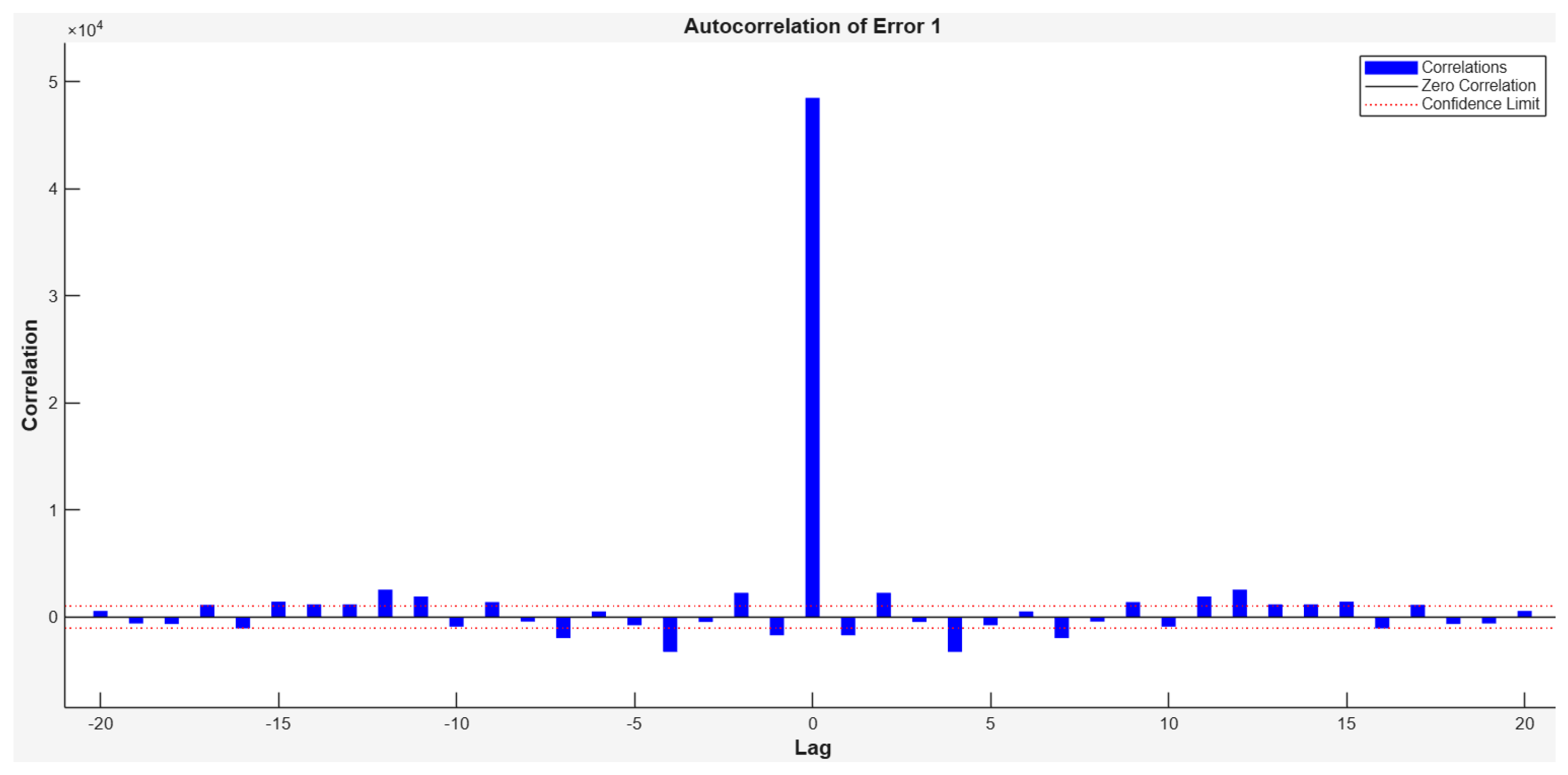
The NAR network was used to perform PV generation forecasting based on the same case study discussed in the previous section. The results are depicted in
Figure 5,
Figure 6,
Figure 7 and
Figure 8. The analysis shows that the prediction model performs reasonably well, although the performance metrics (such as error autocorrelation) suggest the PV time series data is highly nonlinear and may require further training and parameter tuning of the neural network model in order to get improved results. The study and analysis are nonetheless insightful in the context of the scope of the present research. They can form the basis for further study to develop an improved analysis of the intermittent generation and demand to support grid operations.
5. Conclusions
The growing need for flexibility resources to handle the heightened variability and uncertainty in active distribution networks due to the high penetration of variable renewable generation presents opportunities for the greater exploitation of flexible demand-side resources. Due to various technical and economic constraints, the exploitation of flexibility has largely been confined to large industrial and commercial energy consumers. As discussed in this article, the aggregator model has been conceptualized to facilitate the integration of small consumers and prosumers in the provision of demand-side flexibility. The participation of small consumers and prosumers in the provision of flexibility not only has economic benefits by reducing their electricity bills, but it also promotes the realization of grid modernization objectives of energy security, supply reliability, energy efficiency, and sustainability. Further, aggregation of small-scale flexibility would also support the modern integrated distribution system planning objective of efficiently integrating distributed energy resources into the active distribution system. Future research will look to build upon the case study presented in this article to devise more efficient methods of implementing generation and demand forecasting in the framework of demand flexibility aggregation.
Author Contributions
Conceptualization, S.K., M.R. and H.M.; methodology, H.M.; software, H.M. and S.K.; validation, H.M. and S.K.; formal analysis, H.M.; investigation, H.M. and N.T.; resources, S.K., M.R. and M.A.; data curation, H.M.; writing—original draft preparation, H.M. and N.T.; writing—review and editing, S.K.; visualization, H.M.; supervision, S.K., M.R. and M.A.; project administration, S.K., M.R. and M.A.; funding acquisition, S.K. and M.R. All authors have read and agreed to the published version of the manuscript.
Funding
This research was supported in part by the SANEDI JET RFQ0622; the National Research Foundation (NRF), under Thuthuka Grant 138177; the Eskom Tertiary Education Support Program (TESP) through a research grant; the Eskom Power Plant Engineering Institute (EPPEI); and the France Embassy’s Frugal-AI Grant 2025-135.
Institutional Review Board Statement
Not applicable.
Informed Consent Statement
Not applicable.
Data Availability Statement
The data presented in this study are available on request from the corresponding author due to privacy concerns.
Conflicts of Interest
The authors declare no conflicts of interest.
References
- IRENA. Power System Flexibility for the Energy Transition. Part I: Overview for Policy Makers; International Renewable Energy Agency: Abu Dhabi, United Arab Emirates, 2018. [Google Scholar]
- GridLab. The Role of Distributed Energy Resources in Today’s Grid Transition. 2018. Available online: https://gridlab.org/wp-content/uploads/2022/10/GridLab_RoleOfDER_online.pdf (accessed on 27 November 2023).
- Bertolini, M.; Morosinotto, G. Business models for energy community in the aggregator perspective: State of the art and research gaps. Energies 2023, 16, 4487. [Google Scholar] [CrossRef] [Scilit]
- Iria, J. Optimal Participation of an Aggregator of Prosumers in the Electricity Markets. Ph.D. Thesis, Australian National University, Canberra, Australia, 2019. [Google Scholar]
- Kryonidis, G.C.; Kontis, E.O.; Papadopoulos, T.A.; Pippi, K.D.; Nousdilis, A.I.; Barzegkar-Ntovom, G.A.; Boubaris, A.D.; Papanikolaou, N.P. Ancillary services in active distribution networks: A review of technological trends from operational and online analysis perspective. Renew. Sustain. Energy Rev. 2021, 147, 111198. [Google Scholar] [CrossRef] [Scilit]
- Idoko, L.; Anaya-Lara, O.; Campos-Gaona, D. Voltage control ancillary services for low voltage distributed generation. Int. J. Smart Grid Clean Energy 2018, 7, 98–108. [Google Scholar] [CrossRef] [Scilit]
- MathWorks. Fit Time Series Data Using the Neural Net Time Series App. MATLAB Documentation. Retrieved from MathWorks Portal. The MathWorks, Inc.: Natick, MA, USA. Available online: https://ww2.mathworks.cn/help/deeplearning/index.html?s_tid=CRUX_topnav (accessed on 27 November 2025).
| Disclaimer/Publisher’s Note: The statements, opinions and data contained in all publications are solely those of the individual author(s) and contributor(s) and not of MDPI and/or the editor(s). MDPI and/or the editor(s) disclaim responsibility for any injury to people or property resulting from any ideas, methods, instructions or products referred to in the content. |



 ,
,