1. Background and Motivation
The increasing penetration of distributed energy resources (DERs), particularly rooftop photovoltaic (PV) systems, has transformed the operational dynamics of low-voltage (LV) distribution networks. Originally designed for unidirectional energy flow and centralized generation, these networks now face challenges such as reverse power flows, voltage deviations, feeder overloading, and increased network losses [
1,
2]. These issues are especially pronounced in emerging economies like South Africa, where aging infrastructure and intermittent renewable generation coincide with limited grid flexibility.
Battery Energy Storage Systems (BESS) offer a promising solution to enhance grid stability, support local load management, and enable higher DER integration. By dynamically charging and discharging in response to system conditions, BESS can perform critical functions such as voltage regulation, peak shaving, and loss minimization [
3]. However, the effectiveness of BESS depends heavily on deployment strategy, whether implemented as individual systems (attached to households) or aggregate systems (centrally located at the feeder level).
Individual BESS configurations provide decentralization and user autonomy but may lead to uncoordinated operation, uneven utilization, and higher costs due to lack of aggregation benefits [
4]. Aggregate systems, by contrast, allow for centralized control and optimized sizing, but raise concerns around ownership and operational prioritization.
Recent studies have explored BESS sizing, placement, and control strategies. Scrocca et al. [
5,
6] highlighted the impact of BESS sizing on market participation and grid stress. Trivić and Savić [
7] demonstrated voltage and loss improvements using multi-objective optimization. Jakus et al. [
8] emphasized localized control under dynamic pricing. Okafor et al. [
9] and Assery et al. [
10] examined voltage stability and inertia support, respectively. Nkambule et al. [
11] analyzed microgrid feasibility in South Africa, identifying storage as a key enabler for reliability and cost savings. Kumar et al. [
12] provided a comprehensive survey of energy management strategies for active distribution networks and microgrids, underscoring the need for control strategies tailored to deployment architecture.
Despite these contributions, comparative evaluations of aggregate versus individual BESS using standardized IEEE test feeders under South African conditions remain limited. This study addresses that gap through simulation-based analysis, focusing on voltage regulation, energy losses, transformer loading, and feeder voltage stability under realistic load profiles and tariff structures.
2. Methodology
2.1. LV Network Modeling
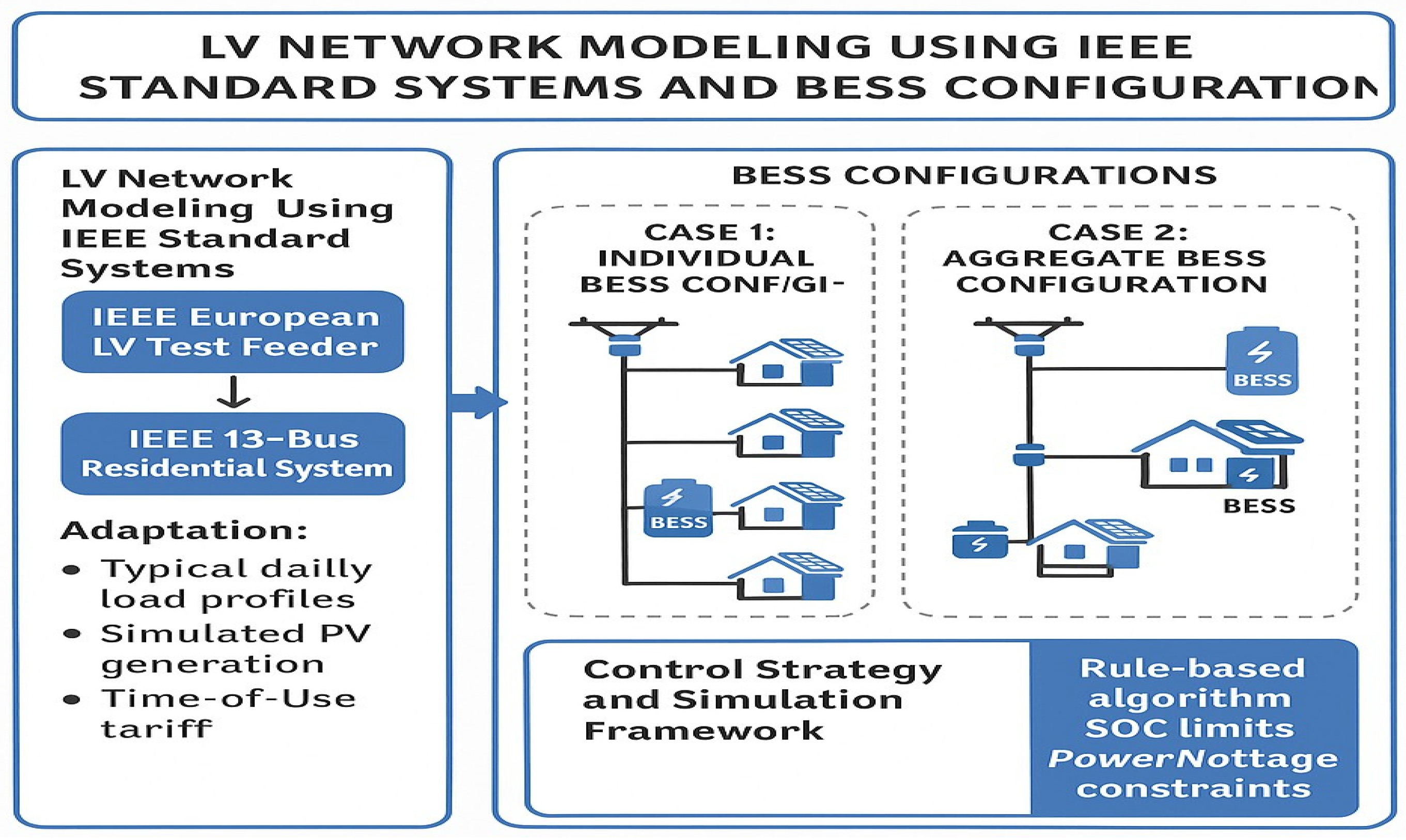
This study utilizes standard IEEE test feeders to simulate and compare the impacts of aggregate and individual Battery Energy Storage System deployments in LV distribution networks as illustrated in
Figure 1. Load profiles were taken from Eskom NRS data, PV generation from Gauteng irradiance, and tariffs from the residential ToU structure. Simulations were implemented in Matlab/Simulink (Ver. R2024b) using Simscape Electrical, with backward–forward sweep and modified Newton–Raphson methods for unbalanced load flow.
2.2. BESS Configurations
Two deployment strategies were compared: (i) individual BESS units of 5–10 kWh per household, operating independently under local control, and (ii) aggregate BESS of 100–150 kWh located near the transformer, coordinated at feeder level. Both used lithium-ion technology with 90% round-trip efficiency, SOC limits of 20–90%, and 1C charge/discharge rates.
2.3. Control and Simulation Framework
A rule-based algorithm updated every 15 min based on feeder voltage, transformer loading, and SOC. Simulations covered a 24 h high-demand summer weekday, with repeatability verified under ±5% load/PV perturbations and randomized SOC initialization. Performance metrics included voltage deviation, feeder I2R losses, transformer peak loading, SOC dynamics, and Feeder Voltage Stability Index (FVSI).
2.4. Mathematical Model
The feeders were modeled using standard power flow equations with BESS constraints. Active and reactive power at each node
i were expressed as:
Voltage updates followed the simplified DistFlow model, while SOC evolution was governed by charging/discharging efficiencies and limits:
These formulations provided the basis for evaluating voltage deviation, energy losses, and transformer loading across scenarios.
3. Results and Discussion
This section presents the comparative results of the aggregate and individual BESS configurations, based on the simulation framework described earlier. The metrics analyzed include voltage profile improvement, total network energy losses, transformer peak loading, and battery utilization patterns.
3.1. Voltage Profile Analysis
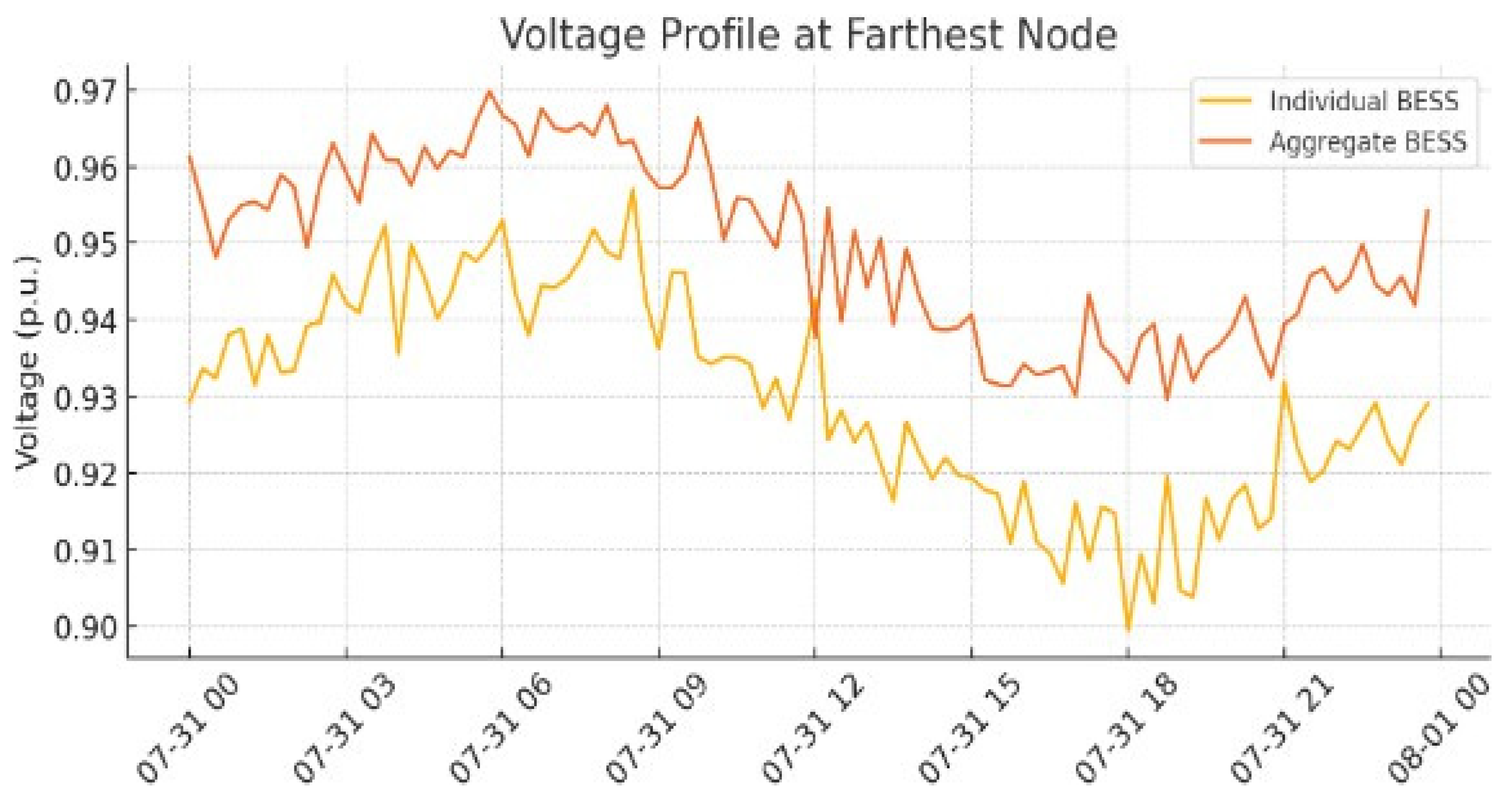
Figure 2 shows the voltage profile at the farthest residential node for both BESS configurations. The
X-axis represents the time of day over a 24 h period, sampled in 15 min intervals. The
Y-axis shows the voltage in per-unit (p.u.) at the most distant node from the substation. The individual BESS setup exhibits moderate voltage support localized to each household. In contrast, the aggregate BESS configuration results in a smoother voltage profile across the feeder, due to centralized dispatch responding to system-wide voltage deviations. Aggregate BESS reduced voltage dips during peak demand periods by up to 8%, compared to 5% improvement under individual BESS.
3.2. Energy Loss Comparison
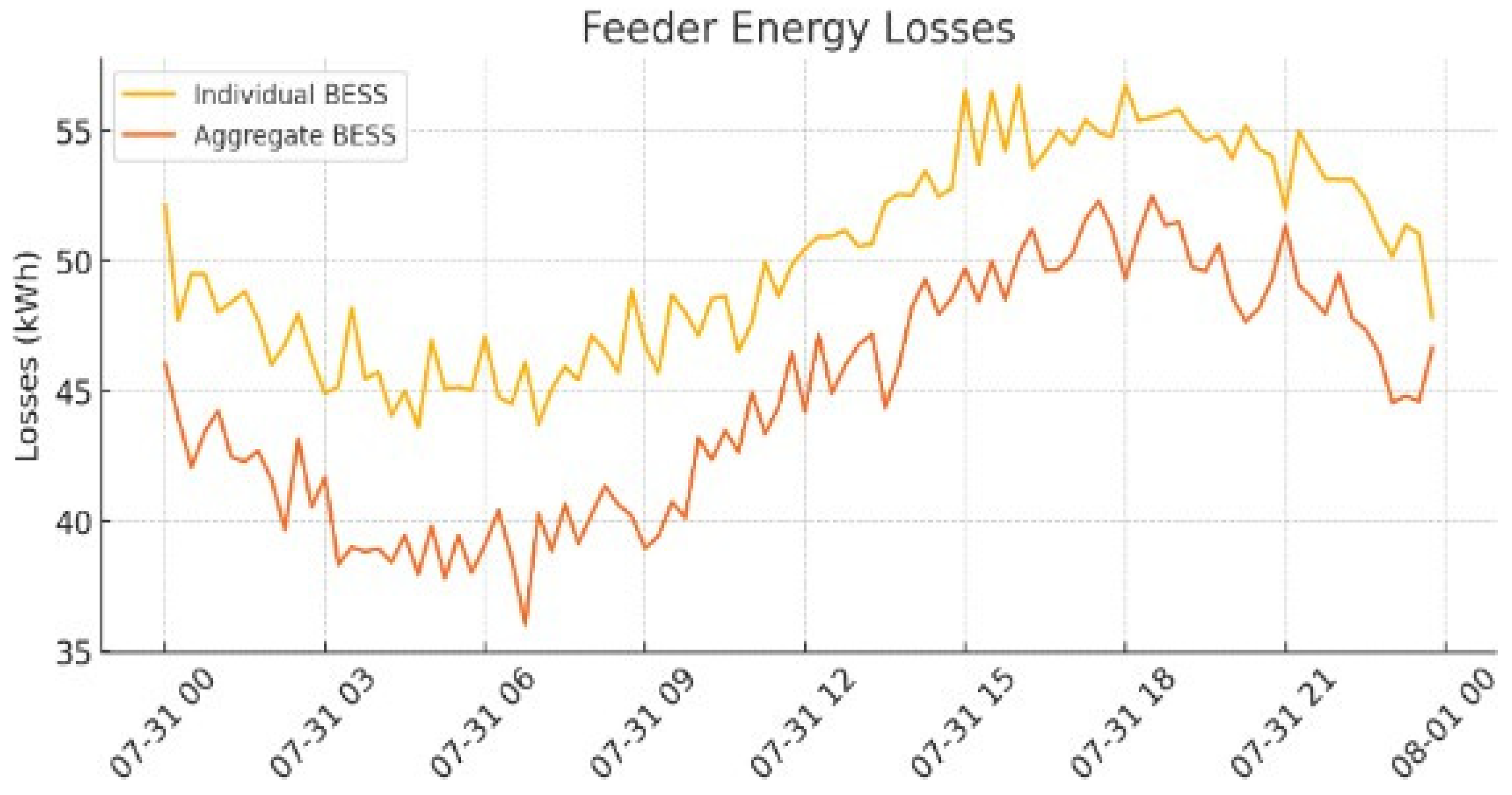
Total I2R losses over the 24 h simulation are illustrated in
Figure 3. This plot uses the
X-axis to denote time in 15 min steps and the
Y-axis to represent feeder energy losses in kilowatt-hours (kWh). The aggregate BESS reduced feeder losses by approximately 14%, whereas individual BESS achieved an 8–10% reduction due to limited coordination. The individual BESS shows a higher and more variable loss profile, especially during uncoordinated charging events. Coordinated energy dispatch in the aggregate system effectively mitigated reverse power flows and loading oscillations. The individual BESS shows a higher and more variable loss profile, especially during uncoordinated charging events and
Table 1 presents the summary of comparative metrics.
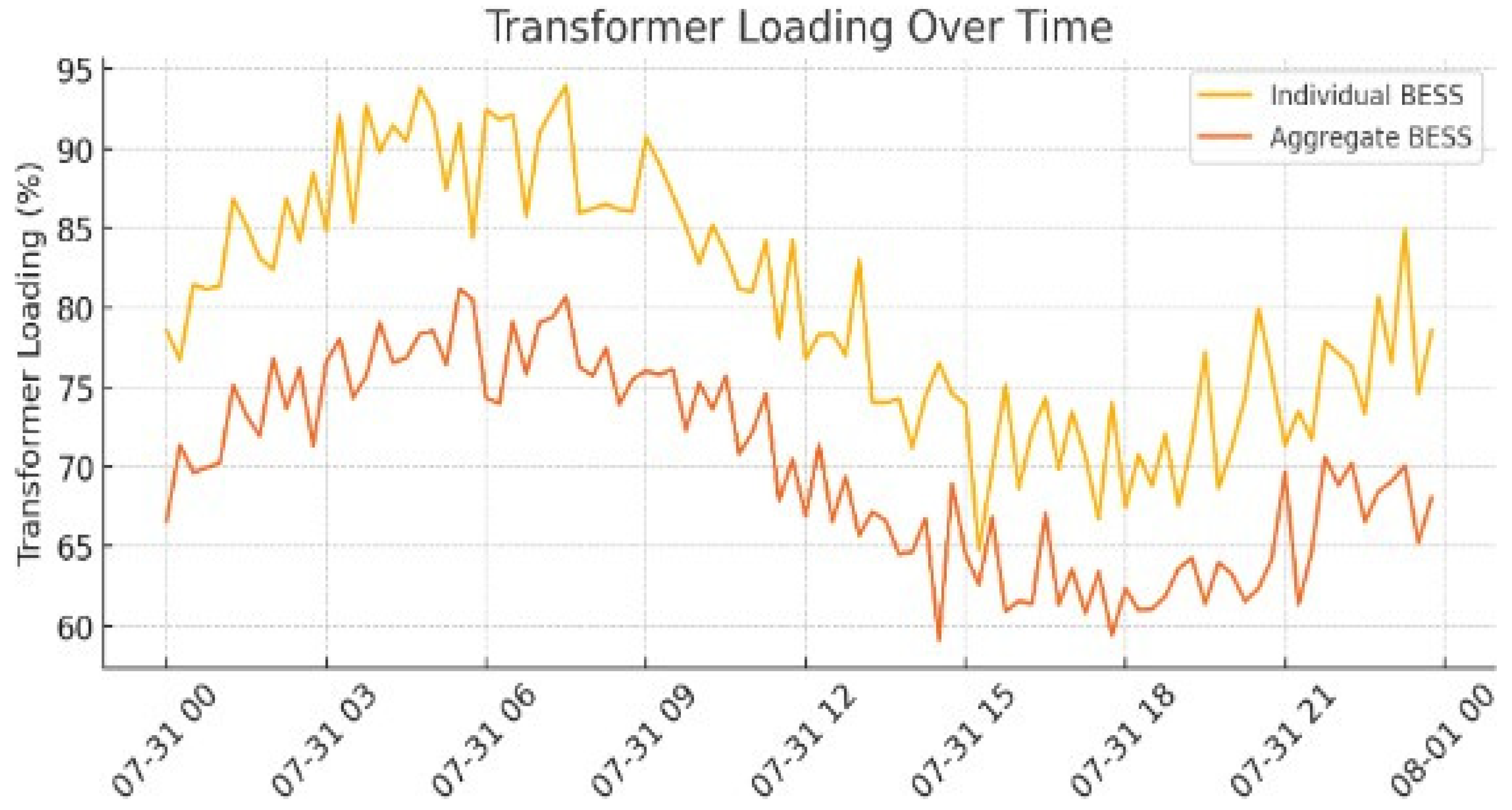
3.3. Transformer Loading and Peak Reduction
Figure 4 presents the hourly transformer loading. Here, the
X-axis denotes the simulation time over a 24 h period, while the
Y-axis shows the transformer loading in percentage relative to its rated capacity. The graph illustrates that aggregate BESS configuration maintains the transformer loading below 80%, effectively reducing peak stress. On the other hand, the individual BESS case results in higher and less predictable peak loading, occasionally nearing or exceeding 90% rated capacity. Aggregate systems enable better peak shaving and prevent overload conditions through centralized control.
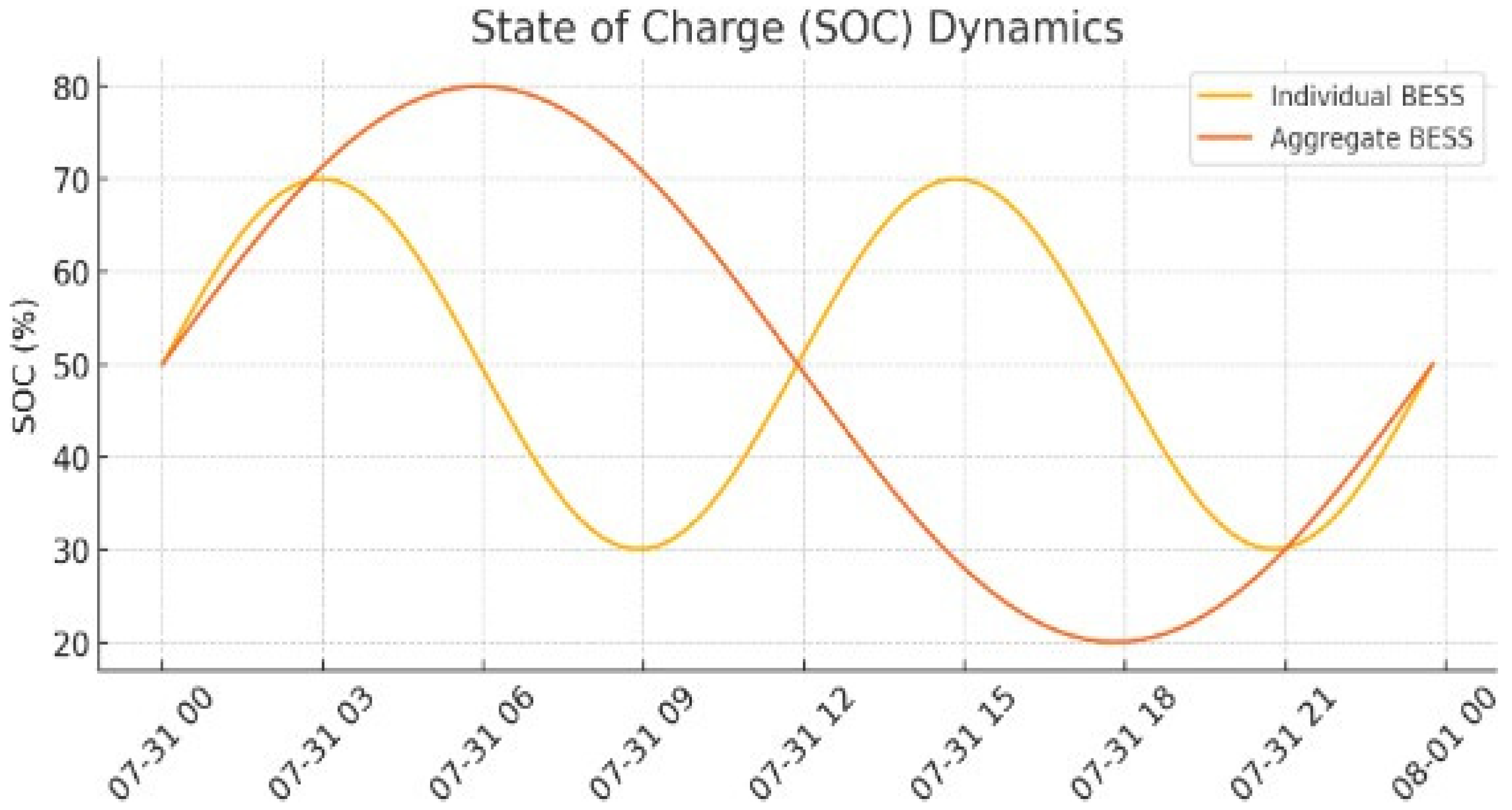
3.4. State-of-Charge Behavior
The average SOC trajectory for both BESS configurations is shown in
Figure 5. The
X-axis shows the hourly timeline of a simulated day, while the
Y-axis shows the battery state-of-charge (SOC) as a percentage. The individual BESS units experience more frequent and shallow cycling due to localized and independent control logic. In contrast, the aggregate BESS shows smoother and deeper charging/discharging patterns, indicating coordinated operation aligned with broader feeder-level energy demand and PV generation profiles. Aggregate BESS provides better energy arbitrage opportunities while maintaining system-wide energy balance.
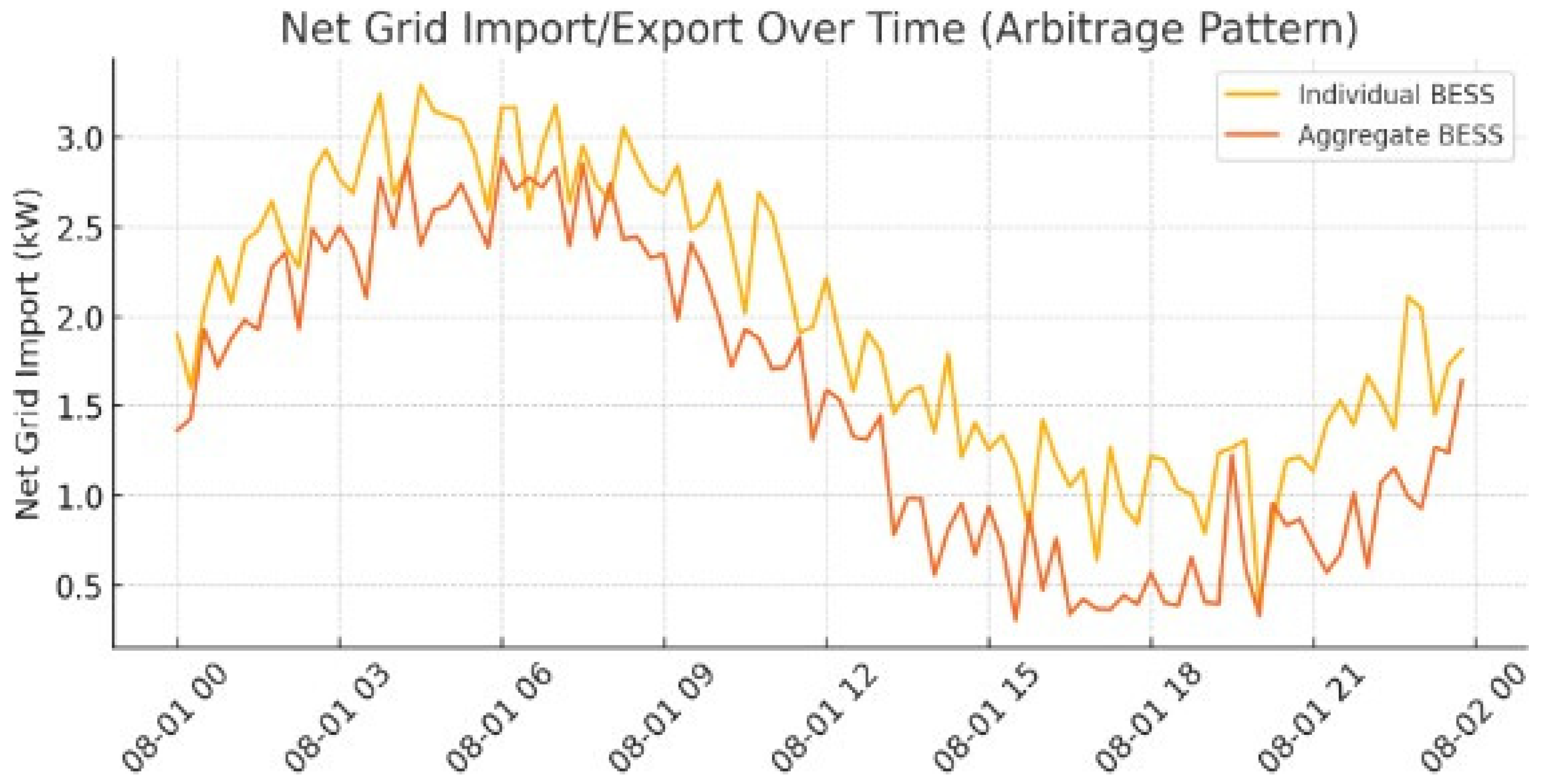
3.5. Net Grid Import/Export over Time
Figure 6 shows the energy arbitrage behavior under ToU pricing. The
X-axis represents time in hourly intervals, while the
Y-axis displays the net import of the grid in kilowatts (kW). The plot shows how aggregate BESS achieves smoother grid interaction and performs more effective energy arbitrage under time-of-use tariffs. The individual BESS configuration results in more abrupt and less coordinated import/export patterns, often leading to simultaneous grid draw during peak times.
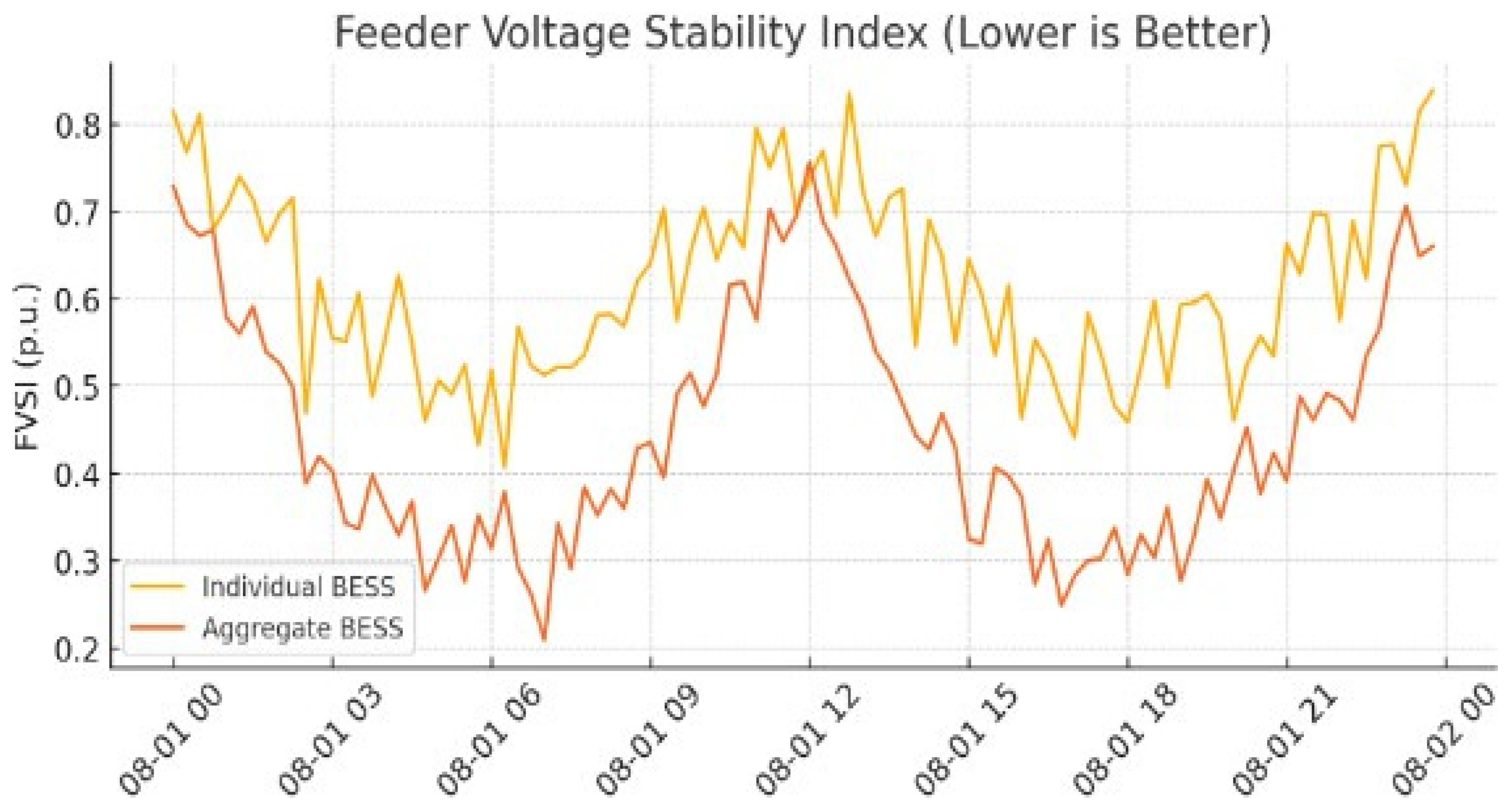
3.6. Feeder Voltage Stability Index (FVSI)
Figure 7 shows FVSI trajectories over 24 h, where lower values indicate better voltage stability under BESS configurations. Aggregate BESS maintains consistently lower FVSI (mean 0.480) than individual BESS (mean 0.677)—a 29.1% improvement. The greatest divergence occurs during evening peak (18:00–21:00), with aggregate FVSI below 0.48 versus individual above 0.60. Aggregate configuration also shows reduced volatility (std dev 0.130 vs. 0.152), confirming that centralized dispatch enhances voltage resilience and damps stress propagation compared to uncoordinated individual systems.
4. Conclusions
This study presented a comparative analysis of aggregate and individual BESS deployments in LV residential networks using IEEE standard feeders under realistic South African load profiles, PV generation, and ToU tariffs. Results showed that aggregate BESS consistently outperformed individual units by improving voltage regulation, reducing feeder energy losses, maintaining transformer loading within safe margins, enabling smoother SOC dynamics, and achieving more effective arbitrage under tariff conditions. Aggregate systems also demonstrated superior voltage stability, with lower FVSI values and reduced volatility, though they introduce a single point of failure risk compared to distributed units. While individual BESS offers autonomy and modularity, its uncoordinated operation limits system-level optimization. Overall, aggregate BESS provides greater technical benefit through centralized control and coordinated dispatch, but requires advanced infrastructure and shared investment models. Future work should extend this analysis to seasonal and multi-day horizons, incorporate real-time control strategies, and evaluate economic trade-offs such as battery degradation and regulatory frameworks to support hybrid configurations that balance local autonomy with feeder-wide coordination.
Author Contributions
Conceptualization, methodology, formal analysis and original draft preparation were carried out by F.M. Supervision, review and editing were performed by M.F.K. All authors have read and agreed to the published version of the manuscript.
Funding
This research received no external funding.
Institutional Review Board Statement
Not applicable.
Informed Consent Statement
Not applicable.
Data Availability Statement
Simulation data and scripts are available from the corresponding author on reasonable request.
Conflicts of Interest
The authors declare no conflicts of interest.
References
- Reddy, K.J.; Veeresh, G.; Kansal, L.; Sharma, S.; Al-Rubaye, T.; Arun, V. Optimizing distributed energy storage deployment in smart grids for enhanced grid performance and energy management. E3S Web Conf. 2025, 616, 03018. [Google Scholar] [CrossRef]
- Yatzkan, O.; Cohen, R.; Yaniv, E.; Rotem-Mindali, O. Urban energy transitions: A systematic review. Land 2025, 14, 566. [Google Scholar] [CrossRef]
- Khalil, M.A.; Elkhodragy, T.M.; Salem, W.A. A novel hybrid algorithm based on optimal size and location of photovoltaic with battery energy storage systems for voltage stability enhancement. Electr. Eng. 2025, 107, 1009–1034. [Google Scholar] [CrossRef]
- Dong, Z.; Tao, Y.; Lai, S.; Wang, T.; Zhang, Z. Powering future advancements and applications of battery energy storage systems across different scales. Energy Storage Appl. 2025, 2, 1. [Google Scholar] [CrossRef]
- Scrocca, A.; Pisani, R.; Andreotti, D.; Rancilio, G.; Delfanti, M.; Bovera, F. Optimal spot market participation of PV+BESS: Impact of BESS sizing in utility-scale and distributed configurations. Energies 2025, 18, 3791. [Google Scholar] [CrossRef]
- Mushid, F.C.; Khan, M.F. Battery Energy Storage for Ancillary Services in Distribution Networks: Technologies, Applications, and Deployment Challenges—A Comprehensive Review. Energies 2025, 18, 5443. [Google Scholar] [CrossRef]
- Trivić, B.; Savić, A. Optimal allocation and sizing of BESS in a distribution network with high PV production using NSGA-II and LP optimization methods. Energies 2025, 18, 1076. [Google Scholar] [CrossRef]
- Jakus, D.; Novaković, J.; Vasilj, J.; Jolevski, D. Optimal residential battery storage sizing under ToU tariffs and dynamic electricity pricing. Energies 2025, 18, 2391. [Google Scholar] [CrossRef]
- Okafor, C.E.; Olasoji, A.O.; Folly, K.; Oyedokun, D. Improving voltage stability of a power system network using battery energy storage system (BESS). In Proceedings of the 2025 33rd Southern African Universities Power Engineering Conference (SAUPEC); IEEE: Piscataway, NJ, USA, 2025; pp. 1–6. [Google Scholar]
- Assery, S.A.; Chen, N.; Zhang, X.P. Capacity optimization and location of BESS-SC hybrid system for grid inertia support with high wind power penetration. IEEE Access 2025, 13, 63729–63742. [Google Scholar] [CrossRef]
- Nkambule, M.S.; Hasan, A.N.; Shongwe, T. Analyzing the economic viability of microgrid solutions in the South African market. IEEE Access 2025, 13, 29091–29121. [Google Scholar] [CrossRef]
- Kumar, A.; Maulik, A.; Chinmaya, K. Energy management strategies for active distribution networks and microgrids—A comprehensive survey. IETE Tech. Rev. 2025, 42, 502–541. [Google Scholar] [CrossRef]
| Disclaimer/Publisher’s Note: The statements, opinions and data contained in all publications are solely those of the individual author(s) and contributor(s) and not of MDPI and/or the editor(s). MDPI and/or the editor(s) disclaim responsibility for any injury to people or property resulting from any ideas, methods, instructions or products referred to in the content. |