Proceeding Paper

Experimental and Numerical Verification of Impact Durability of Electric Vehicle Battery Pack Cases †
1
Extreme Process Control Group, Korea Institute of Industrial Technology, Jinju-si 52845, Republic of Korea
2
Purpose Built Mobility Group, Korea Institute of Industrial Technology, Gwangju 61012, Republic of Korea
3
Department of Smart Ocean Mobility Engineering, Changwon National University, Changwon-si 51140, Republic of Korea
*
Author to whom correspondence should be addressed.
Presented at the 7th International Conference on Architecture, Construction, Environment and Hydraulics 2025 (ICACEH 2025), Kaohsiung, Taiwan, 5–7 December 2025.
Eng. Proc. 2026, 136(1), 4; https://doi.org/10.3390/engproc2026136004

Published: 20 April 2026

Abstract

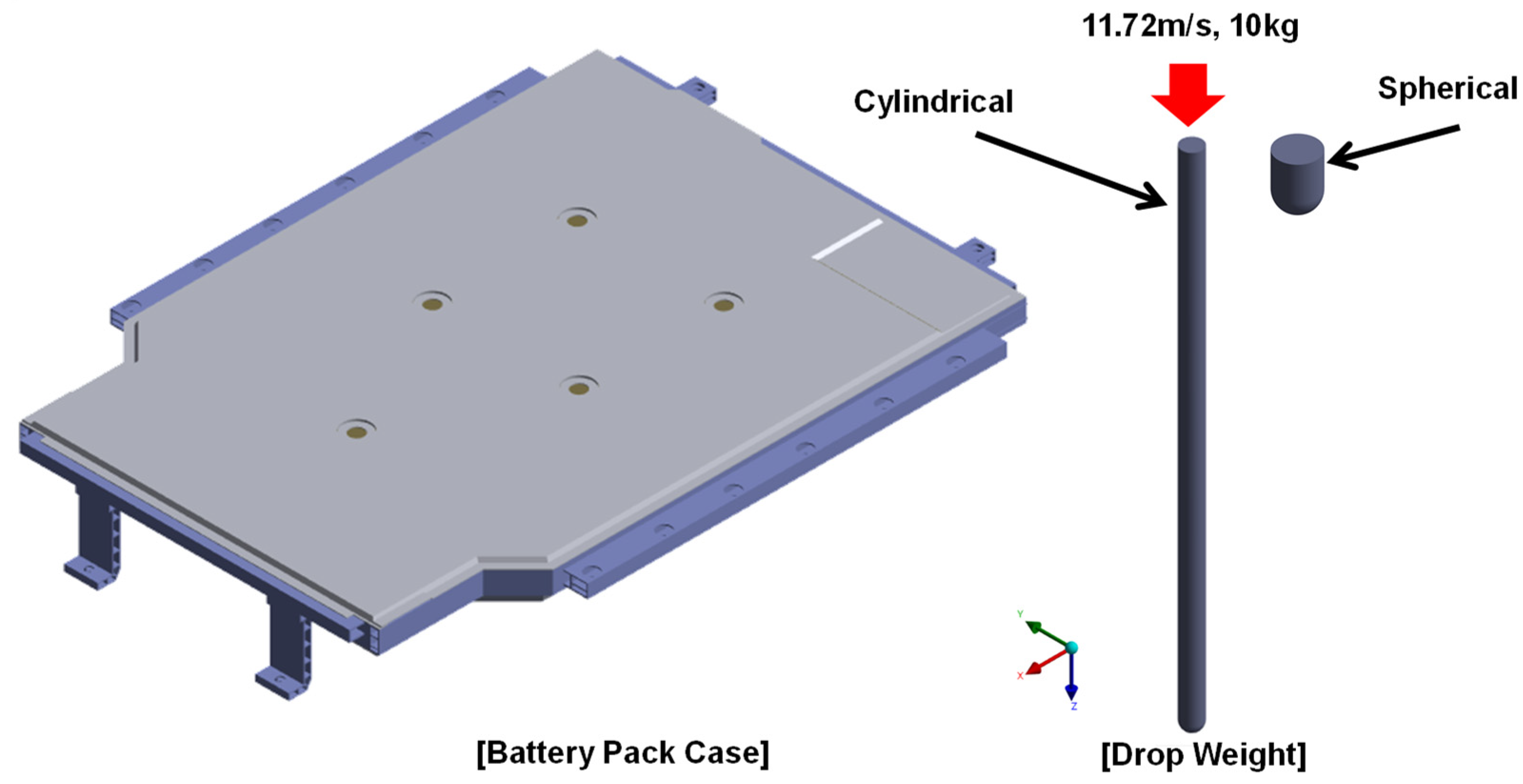
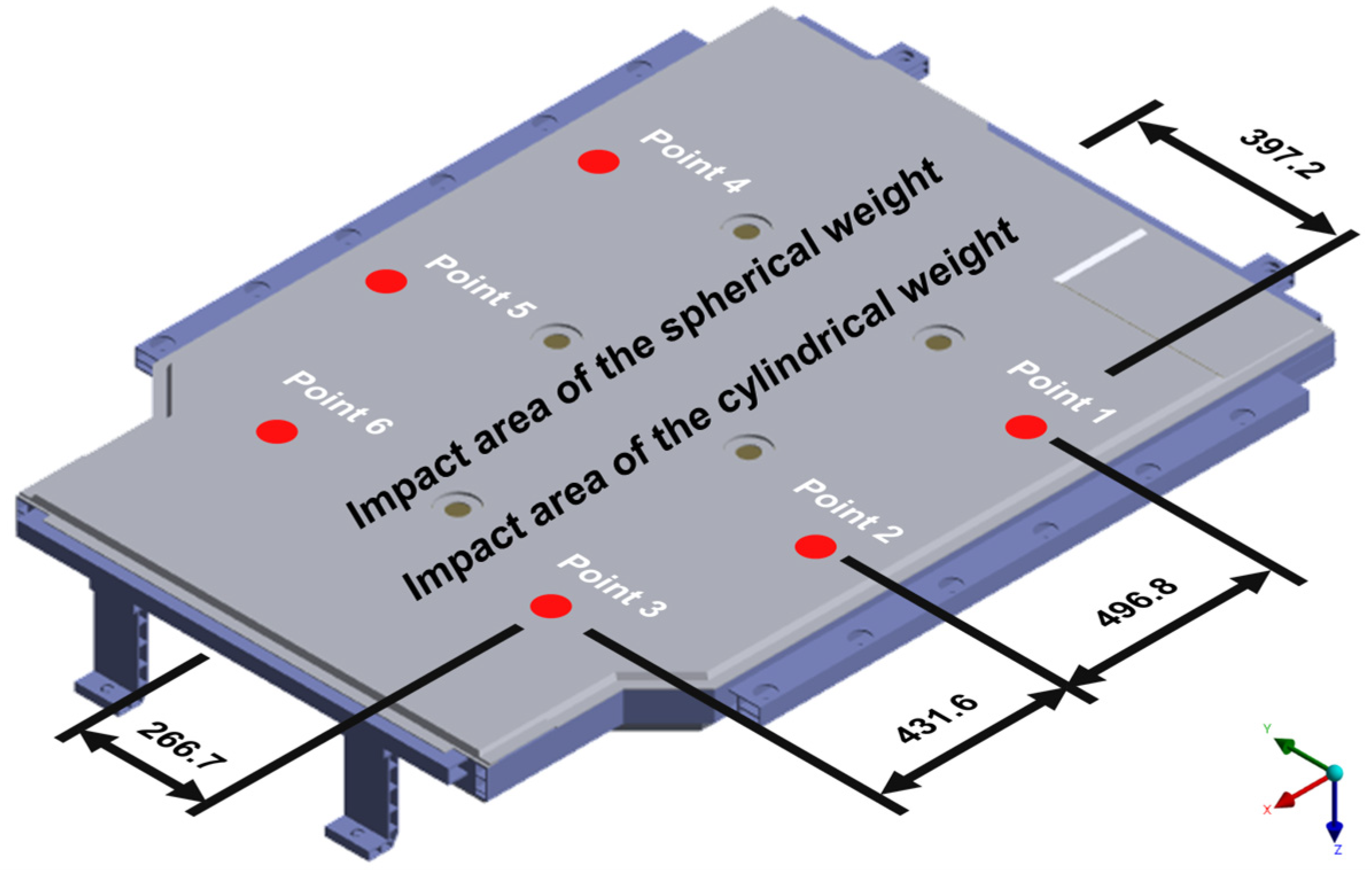
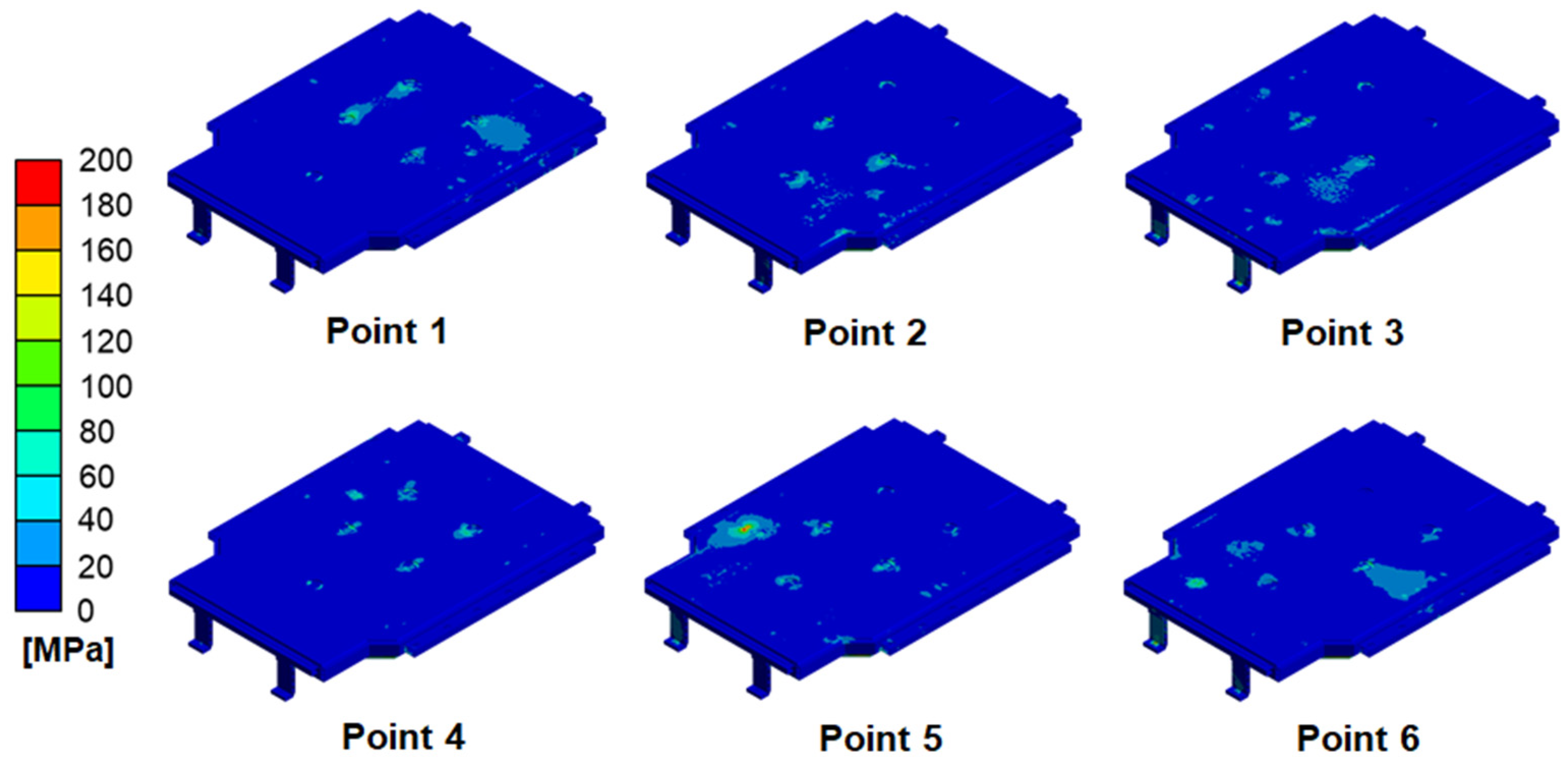
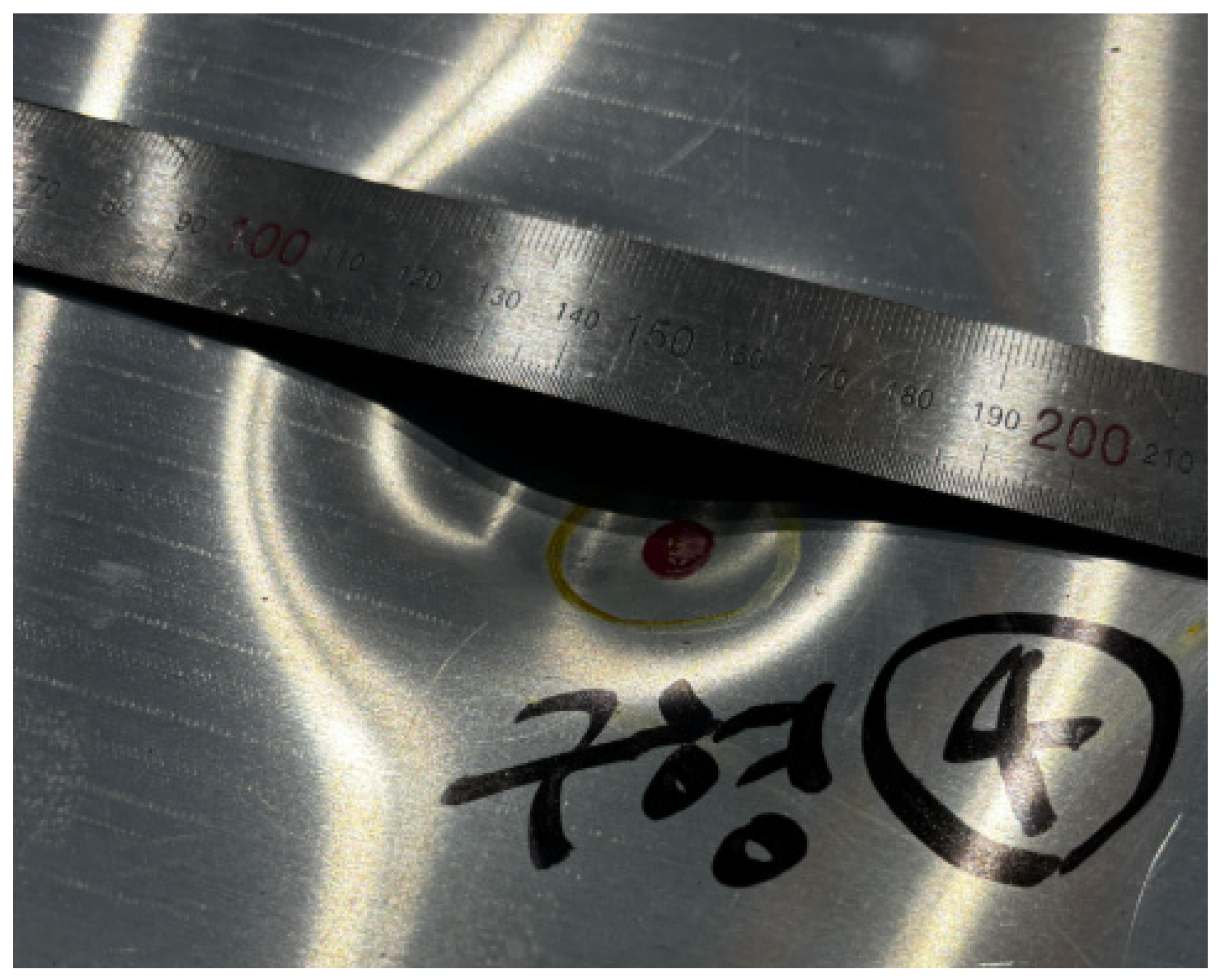
The structural safety of lithium-ion battery systems in electric vehicles (EVs) has become increasingly important with growing concerns over battery-related accidents. In particular, external impacts on the battery pack case (BPC) can cause cell deformation or short-circuiting, potentially leading to thermal runaway. In this study, the mechanical integrity of a commercial BPC was evaluated using both drop-weight impact tests and finite element method (FEM) simulations. A 10 kg hemispherical or cylindrical weight was dropped from a height of 7 m to generate high-energy vertical impacts. The deformation and potential failure of the BPC were examined experimentally, and equivalent FEM simulations were conducted to analyze stress and deformation responses. In both cases, the BPC maintained structural integrity without cracking or intrusion into the battery cell region. The hemispherical impact resulted in relatively shallow, distributed deformation, whereas the cylindrical impact produced more localized indentations due to stress concentrations. The close agreement between experiment and simulation confirms the suitability of FEM for pre-assessment of BPC impact on safety. These findings provide a useful basis for establishing mechanical design criteria and improving battery protection strategies for EV applications.
Keywords: battery pack case (BPC); finite element method (FEM); drop test; drop weight; structure analysis battery pack case (BPC); finite element method (FEM); drop test; drop weight; structure analysis