1. Introduction
Damage may occur in fiber-reinforced composite materials due to impacts encountered either during the manufacturing process or throughout service life. In such cases, the damaged component or region must either be replaced or repaired. Since component replacement is often costly, performing a repair using a suitable patch method generally offers a more economical solution. Patch application can restore the mechanical strength of the material to a level close to its original state at a significantly lower cost compared to full replacement. The purpose of repair in fiber-reinforced composites is to eliminate the damage, enhance the service life and performance of the material, and restore its original functionality. Various repair techniques are applied depending on the type and extent of the damage. While small-scale damage may be remedied using a protective film, the use of bonded patch repair becomes inevitable for larger damaged areas. However, in some cases where the repair does not considerably extend the service life of the component, replacement may be a more appropriate option in terms of both cost and time.
We explored the repair of composite plates containing cracks of different lengths emanating from a circular hole and investigated the effect of such repairs on the structural response under low-velocity impact loading. By addressing crack length as a critical factor, the research contributes to the literature by experimentally demonstrating its decisive role in impact behavior.
2. Literature Review
Numerous experimental and numerical studies have examined the repair of composite structures. Chen et al. [
1] investigated carbon fiber reinforced polymer (CFRP) plates used in rail vehicles, applying patches made of the same material after drilling circular holes, and evaluated the mechanical response under low-velocity impact loads with varying patch thicknesses, radii, and off-axis angles. A finite element model based on the 3D Hashin damage criterion was also developed in the Abaqus/Explicit environment. Kumar et al. [
2] studied CFRP materials repaired with external patches under quasi-static indentation loading, monitoring damage progression using Acoustic Emission and C-scan techniques. Damghani et al. [
3] evaluated the tensile behavior of CFRP materials repaired after low-velocity impact, correlating patch size with damage distribution. Liu et al. [
4] examined the use of plugs to improve load transfer in repaired panels, visualizing damage with ultrasonic C-scan and optical microscopy. Roeper et al. [
5] investigated the tension-after-impact behavior of epoxy-bonded patches and revealed 3D damage morphology using micro-computed tomography (micro-CT).
Patch geometry, size, and placement have been widely studied due to their influence on impact response. Hall et al. [
6] analyzed the effects of patch diameter and thickness, including the role of fiber continuity with plug insertion. Kumari et al. [
7] experimentally investigated scarf angle effects on the impact behavior of glass fiber-reinforced polymer composites, while Kumari et al. [
8] developed a finite element model to evaluate impact location effects in scarf-repaired composites. Sun et al. [
9] examined repeated impact loading on patch-repaired CFRP materials, analyzing interlaminar energy distributions under 10 J and 20 J impacts. Cao et al. [
10] assessed mechanical repair using bolted connections under low-velocity impact. Psarras et al. [
11] compared milling and laser ablation techniques for material removal in scarf repairs, highlighting their influence on bonding quality. Hou et al. [
12] studied the geometric and mechanical properties of patches under low-velocity impact, while Ivanez et al. [
13] evaluated the performance of double-patch repairs subjected to impacts at both the center and edge regions.
Stacking sequence, fiber orientation, and patch geometry were also explored. Chen et al. [
14] analyzed scarf-type repairs using a 3D finite element model, while Tie et al. [
15] compared patch shapes and sizes under low-velocity impact. Coelho et al. [
16] examined single and double patch applications under multiple impacts, focusing on fatigue resistance. Cheng et al. [
17] employed cohesive elements to analyze scarf angles and adhesive thickness effects. Andrew et al. [
18] tested glass/epoxy specimens repaired with randomly oriented fiber patches under repeated impacts, evaluating compression-after-impact performance. Park and Kong [
19] studied external patch applications for small aircraft composite structures, and Reyes and Sharma [
20] investigated woven thermoplastic composites with varying orientation ratios under low-velocity impact.
Repairing circular openings in composite structures has been examined by using external patches and evaluating performance under low-velocity impact loading. However, previous results represent the damaged region only as a hole geometry, without sufficiently addressing crack formation and propagation around the hole. In contrast, the present study emphasizes the role of crack length in repaired composite plates, thereby extending existing knowledge on structural response under impact conditions.
3. Materials and Methods
In this study, the behavior of composite plates containing a circular hole and different crack lengths under low-velocity impact loading, as well as the effectiveness of external patch repair, is investigated. In this context, four specimen groups were prepared with crack lengths of 5, 10, and 15 mm, and three specimens were produced for each group, resulting in a total of 12 samples. The composite plates used in the study were supplied by Dost Kimya, Istanbul, Turkey. These plates consist of a 2 × 2 twill woven glass fiber reinforcement with a density of 300 g/m
2, having dimensions of 100 × 100 mm and a thickness of 1.5 mm. For the repair process, patches with dimensions of 50 × 50 mm and the same material properties were utilized. As shown in
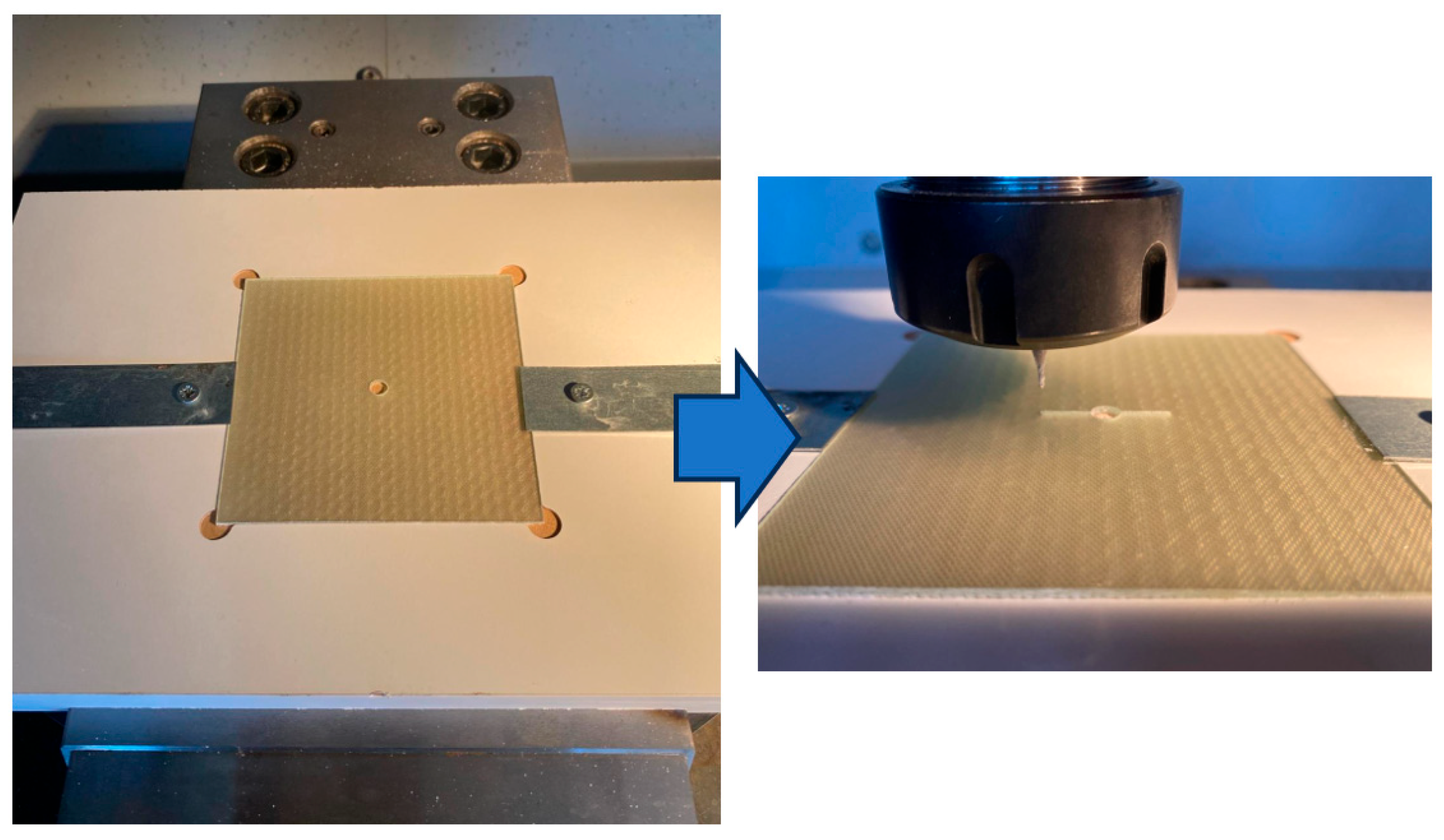
Figure 1, the circular hole with a diameter of 6 mm and the cracks with different lengths were machined on the composite plates using a universal end milling machine equipped with a 1 mm diameter diamond cutting tool.
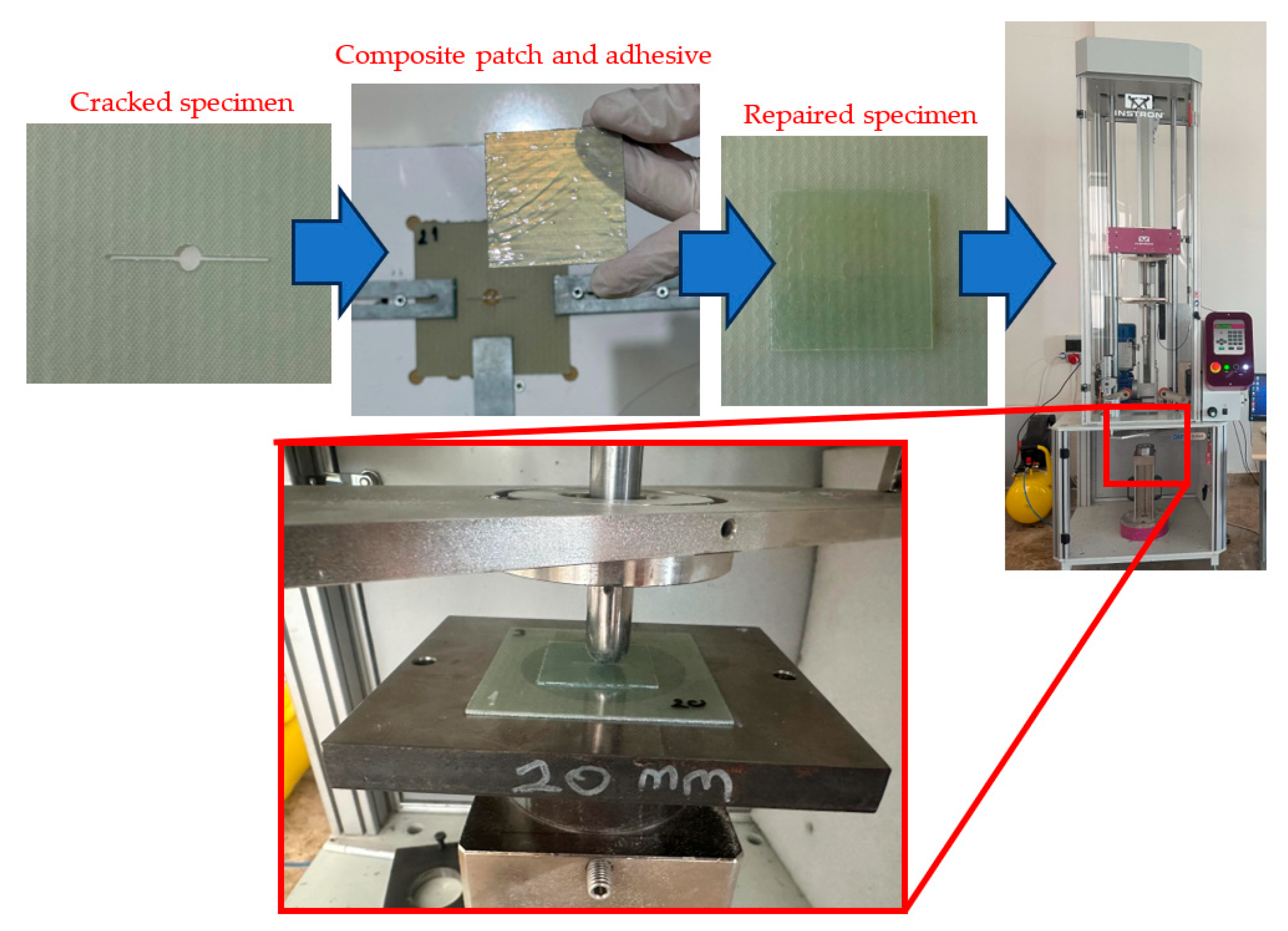
Loctite EA 9466 epoxy-based adhesive (Henkel AG & Co. KGaA, Dusseldorf, Germany) was used for the repair process. To ensure proper surface contact and accurate alignment of the patch, a specially designed placement mold was used. A recess was created within the mold to allow the composite plate to fit precisely into position. The bonding time was set to 1 h, and during this period, a 12 kg weight was applied to the specimen to improve the adhesion quality.
Figure 2 shows the preparation of the test specimens and the experimental setup. The low-velocity impact tests were carried out using the InstronCeast 9350 impact testing device located in the Mechanical Laboratory of the Civil Engineering Department at Adiyaman University with an impact energy of 20 J, and each experiment was performed in three repetitions. To ensure that the specimens remained fixed on the device during testing, two fixing molds with a thickness of 20 mm were designed to correctly position the specimens in the test setup. The data recorded after the tests were evaluated, and the obtained results are presented in graphical form.
4. Results and Discussion
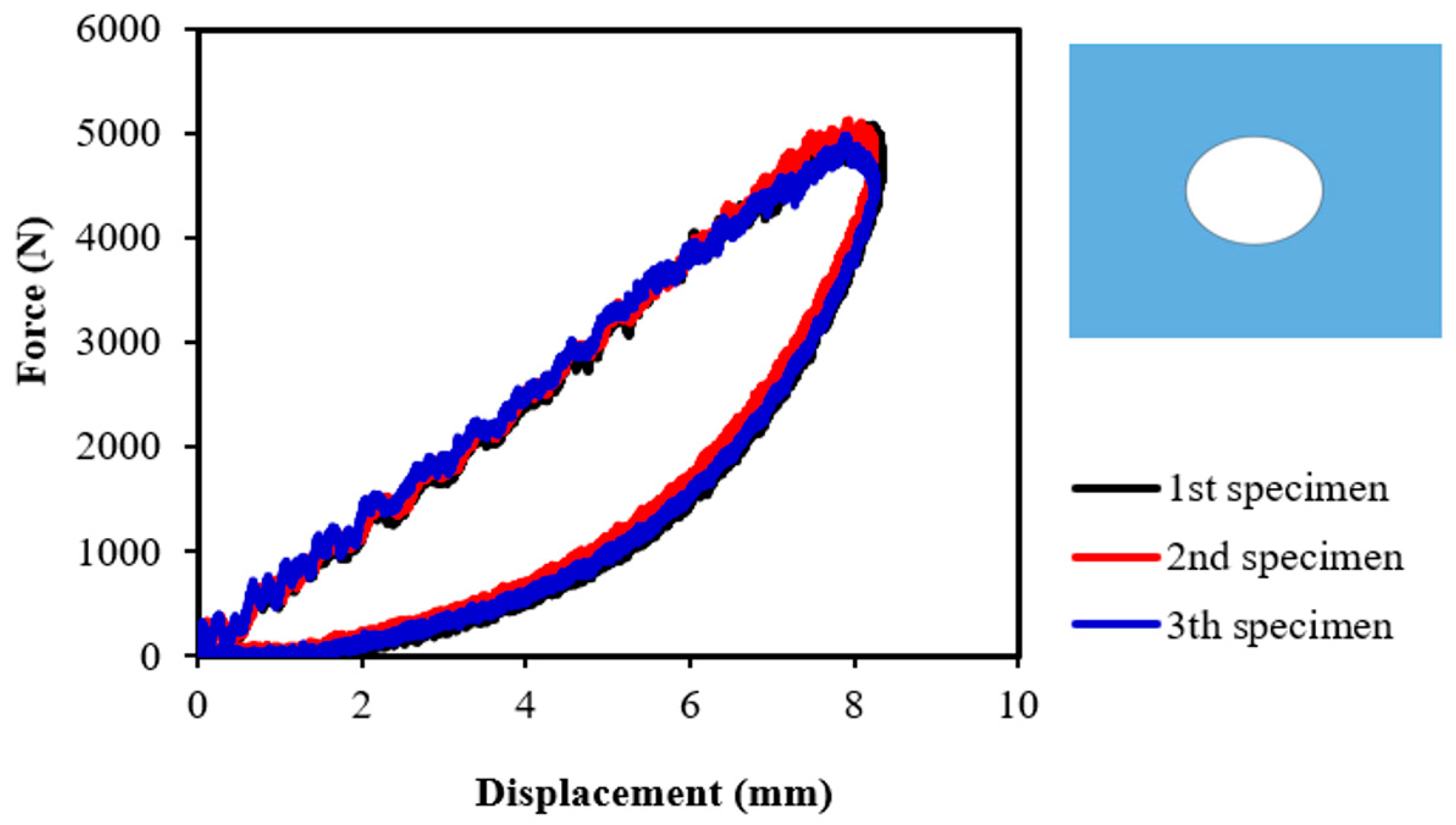
Figure 3 shows the graphical results of the low-velocity impact test for the composite specimen with a 6 mm hole and no crack. According to the graph, the application of the patch significantly improves the load transfer in the region of the hole. The force–displacement curve exhibits a stable increase within the linear elastic region, and the maximum impact force occurs at approximately 5065 N. The absence of a sudden drop in the curve indicates that, due to the lack of cracking, the damage propagates without causing localized stress concentration.
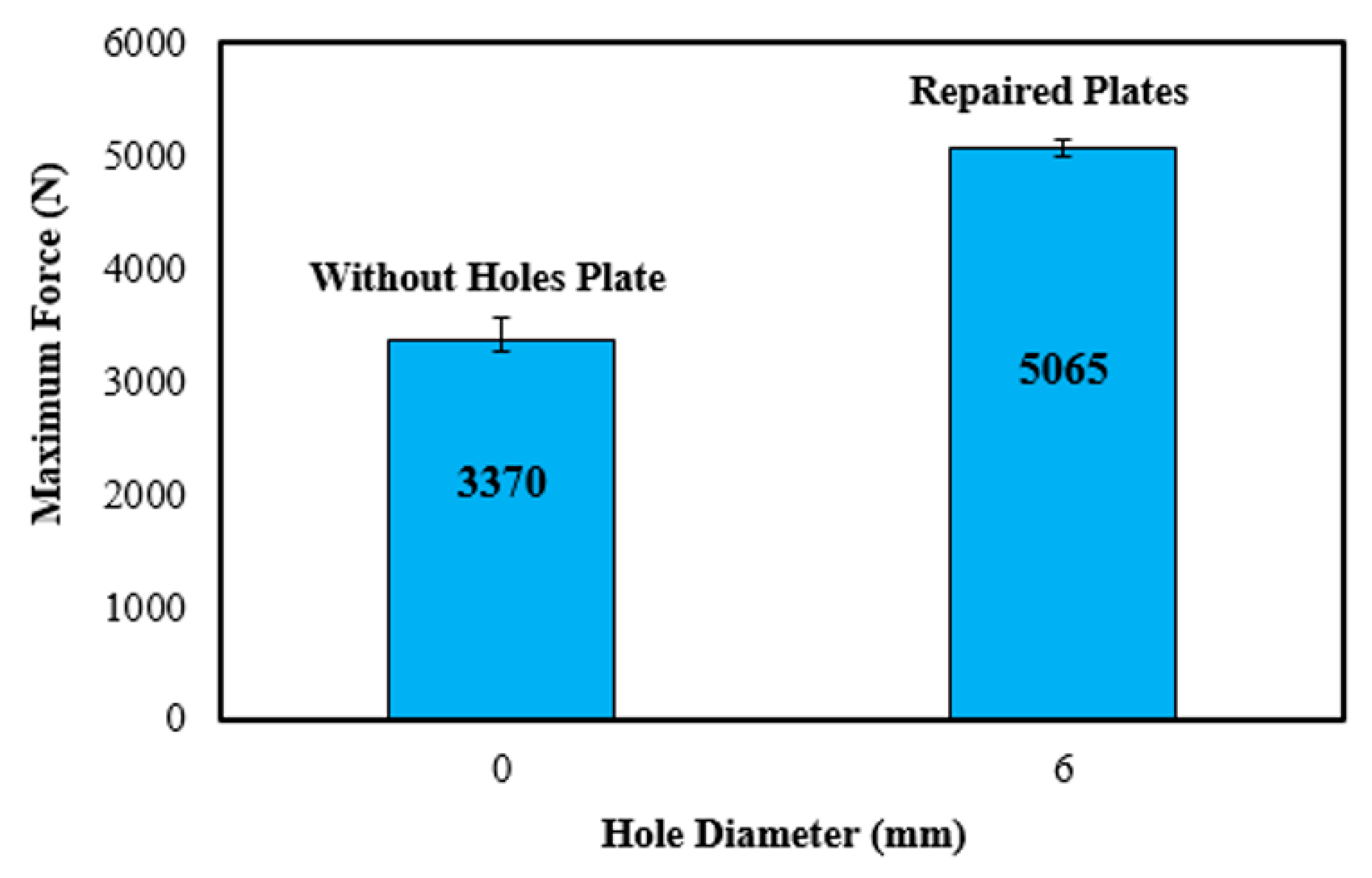
Figure 4 presents the graphical results of the low-velocity impact test for the composite specimen with a 6 mm hole that was not repaired with a patch. While the maximum impact force for the unpatched specimen is approximately 3370 N, the application of a patch increases this value by up to 50%, reaching around 5065 N. This indicates that the use of a patch significantly enhances the impact resistance of the composite plate.
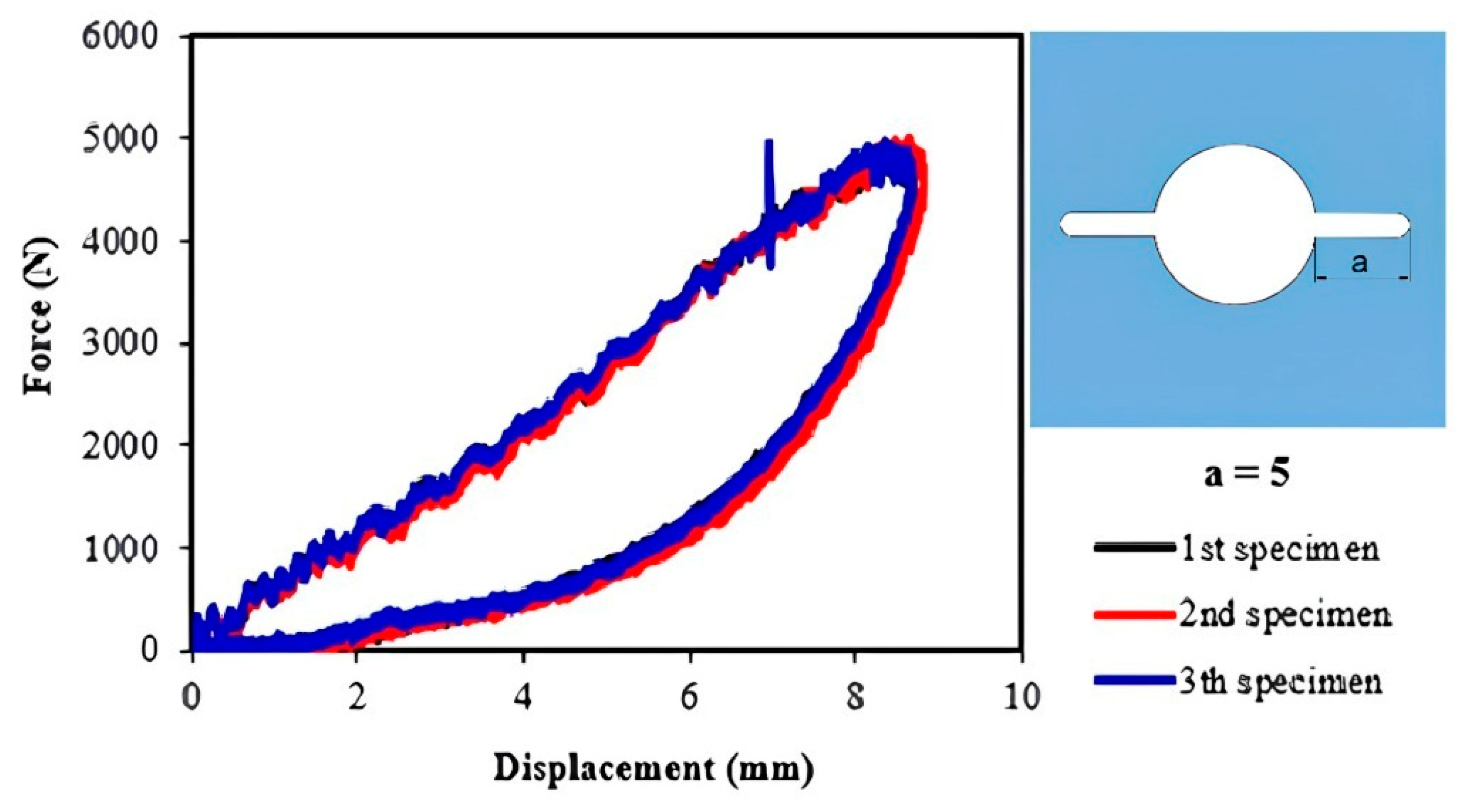
Figure 5 shows the low-velocity impact test results for the repaired composite specimen with a 5 mm crack length. With the increase in the crack length to 5 mm, a slight reduction in the maximum impact force is observed. The peak of the force–displacement curve is lower, followed by a gradual decrease in load-carrying capacity. This behavior indicates that the stress concentration at the crack tip begins to reduce the structural load-bearing capability. However, the patch continues to transfer load effectively.
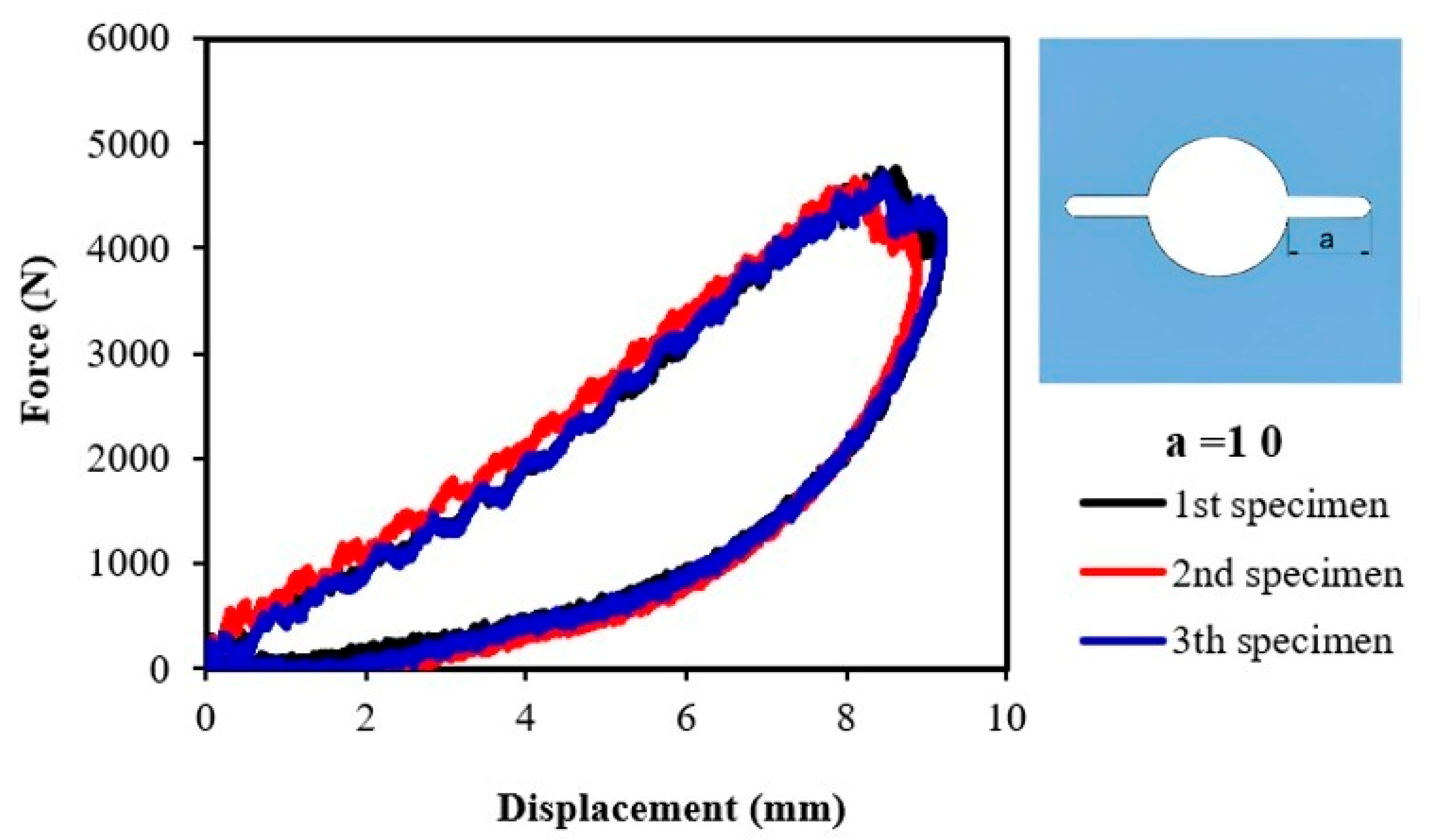
Figure 6 shows the low-velocity impact test results for the repaired composite specimen with a 10 mm crack length. When the crack length reaches 10 mm, a noticeable decrease in impact resistance is observed. The peak value of the force–displacement curve is lower, and a sudden drop in the curve after the maximum force is evident. This behavior indicates an increased tendency for crack propagation and suggests that stress transfer at the patch–base material interface becomes more difficult.
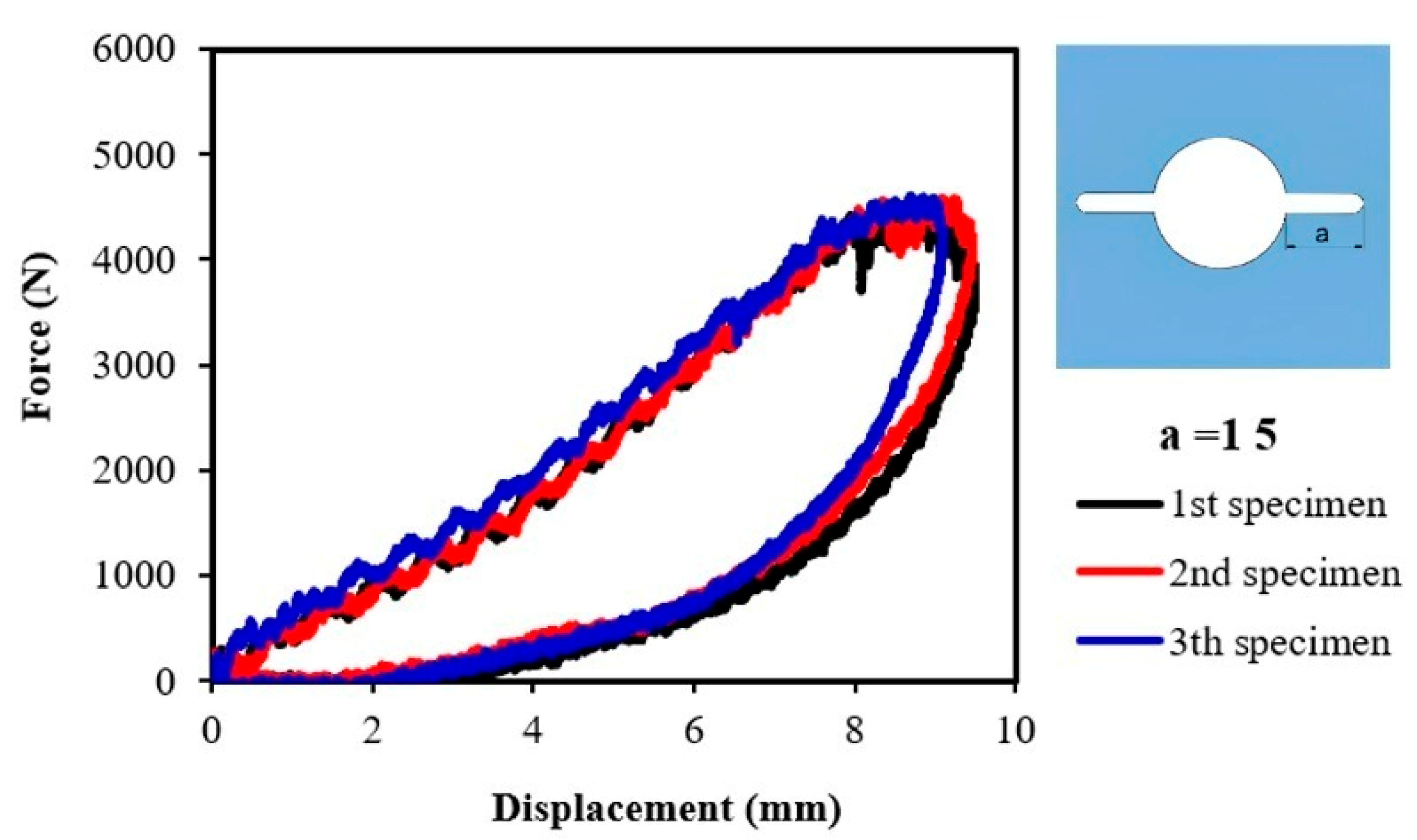
Figure 7 presents the low-velocity impact test results for the repaired composite specimen with a crack length of 15 mm. When the crack length reaches 15 mm, the impact resistance decreases to its lowest level. The maximum force occurs at approximately 4583 N, and the curve exhibits a sudden drop after reaching the peak value. This indicates that crack propagation has progressed to a stage where it begins to exceed the mechanical support provided by the patch, thereby reducing the effectiveness of the repair.
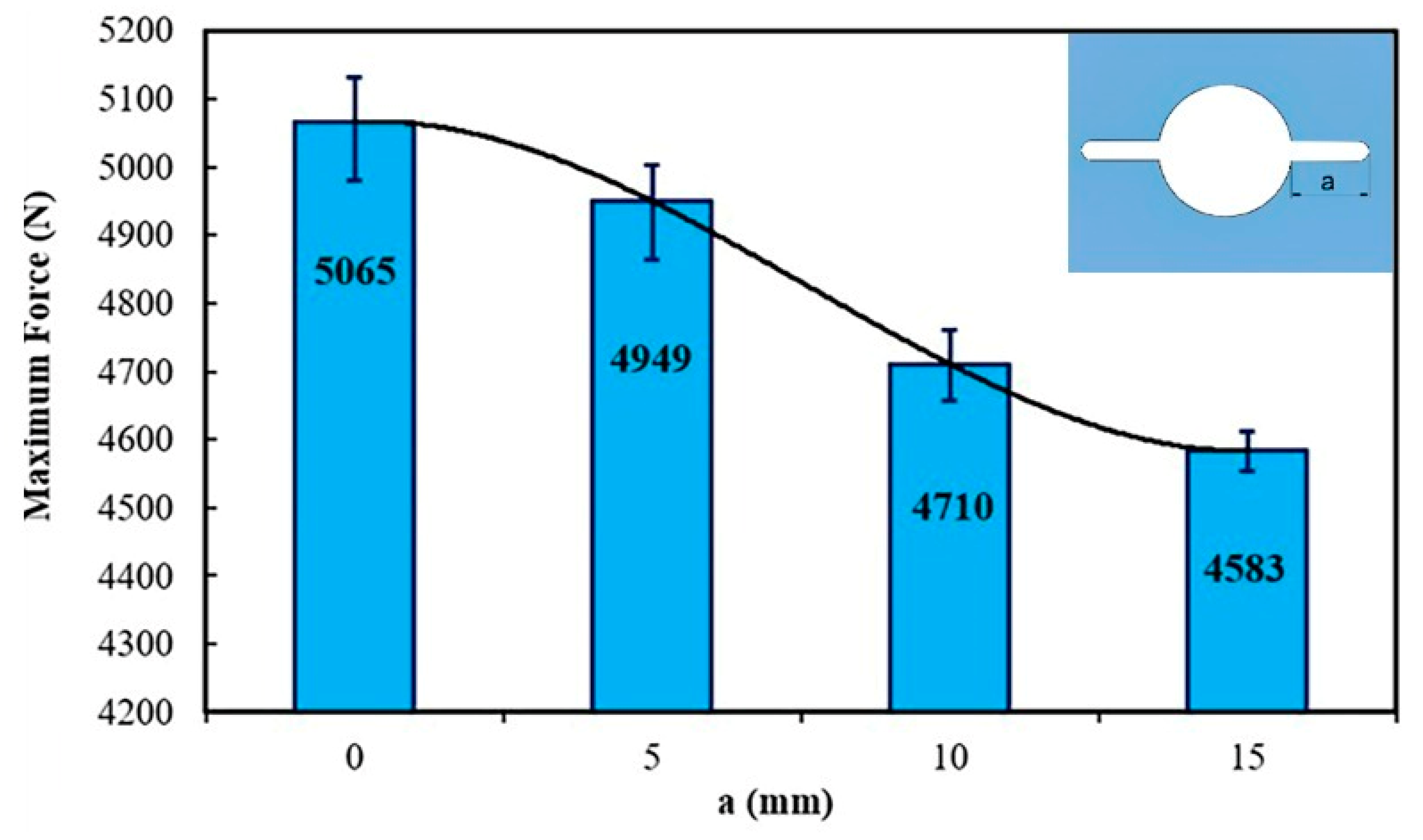
Figure 8 shows the variation in maximum impact force with respect to crack length. As the crack length increases, the maximum impact force gradually decreases, although not in a strictly linear manner. This finding clearly indicates that crack length is a critical parameter that directly influences the effectiveness of the repair.
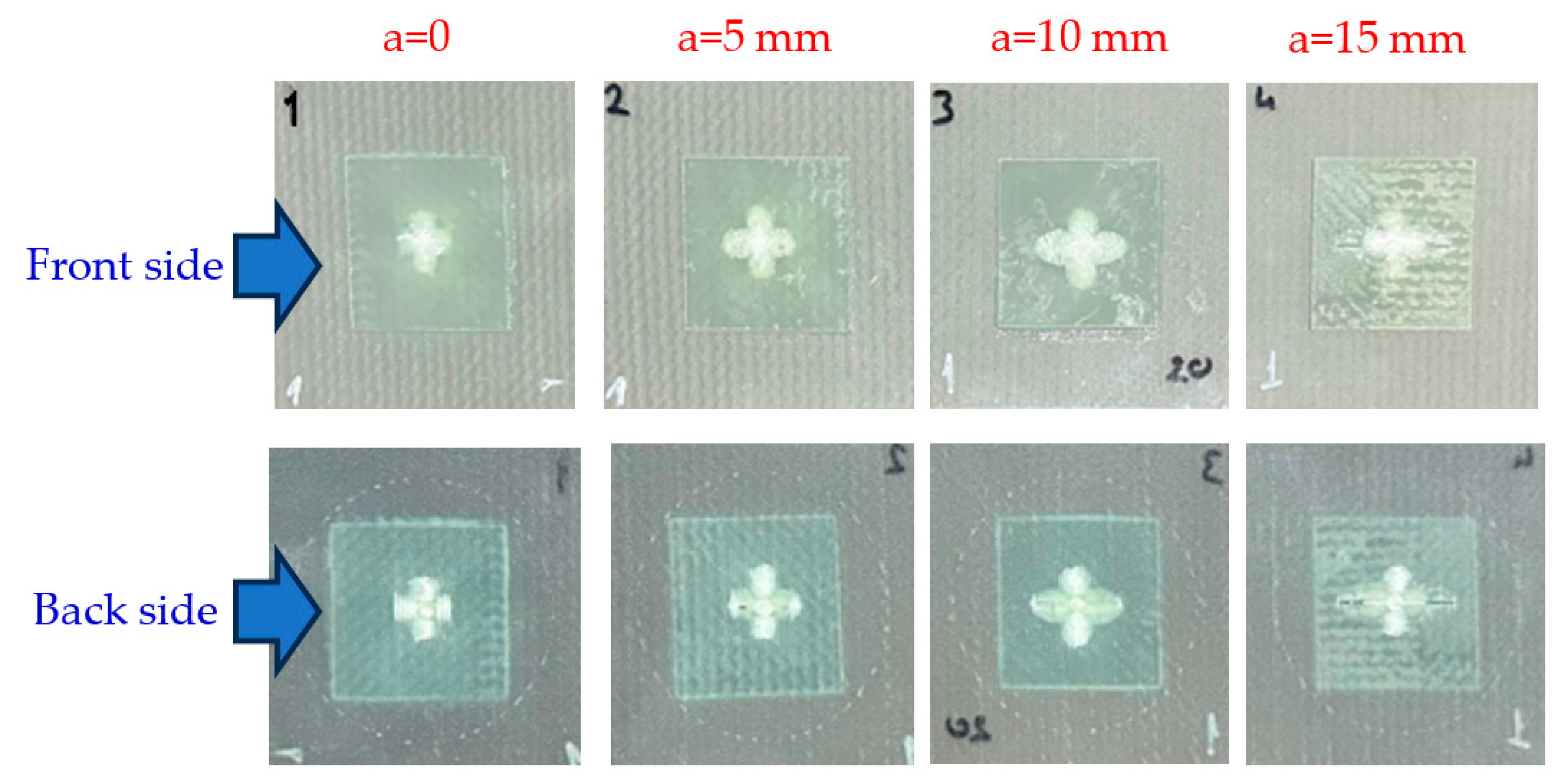
Figure 9 shows the front and back surface views of the composite specimens after the low-velocity impact test. It is observed that the damage on both surfaces varies with increasing crack length. In the crack-free specimen, the damage area remains limited, indicating that the patch effectively dissipates the impact energy. At a crack length of 5 mm, the damage area increases slightly, and delamination tends to propagate along the fiber direction. For the specimen with a 10 mm crack, the damage becomes more pronounced on both the front and back surfaces, with a noticeable enlargement of the delamination region on the back side. At a crack length of 15 mm, the most extensive damage occurs, including fiber breakage, resin separation, and severe delamination. As the crack length increases, the effectiveness of the patch repair in maintaining impact resistance decreases, and the damage propagation becomes more uncontrolled.
Researchers have demonstrated that patch repair methods applied to eliminate impact damage in composite materials improve the load transfer capacity of the damaged region to varying degrees. Chen et al. [
1], Hall et al. [
6], and Liu et al. [
4] showed that patch application on CFRP panels containing circular holes increases the load-carrying capacity under impact and reduces the severity of delamination. Similarly, it has been reported that patch geometry and thickness directly influence repair performance, as the interaction between the patch and the base material reorganizes the load flow. Psarras et al. [
11] and Cheng et al. [
14,
17] emphasized that the stacking sequence of the patch and the scarf angle are critical parameters determining load transfer and bonding quality. Sun et al. [
9] and Coelho et al. [
16] reported that when composites are subjected to multiple or repeated impacts, damage accumulation becomes a significant performance-determining factor, and although patch repair initially provides effective performance, the strength decreases as the damage progresses. Andrew et al. [
18] and Ivanez et al. [
13] stated that the impact location and the extension of the crack/damage directly affect the repair efficiency; in particular, when the damage approaches the patch edge, stress concentration increases and the strength is reduced.
The results of this study differ from the commonly examined repair approach in the literature, which focuses solely on composite plates containing circular holes, by investigating the repair of composites that contain both a circular hole and a crack using an external patch. The experimental results obtained show that the patch application significantly improves the load transfer interrupted by the hole. While the maximum impact force of the reference specimen without a hole was 3370 N, this value increased to 5065 N in the patched specimens, providing approximately 50% recovery in strength. This result is consistent with the strength recovery rates reported by Hall et al. [
6] and Roeper et al. [
5]. However, a gradual decrease in impact strength was observed as the crack length increased. When the crack length increased from 0 mm to 15 mm, the maximum impact force decreased from 5065 N to 4583 N, which is consistent with the stress concentration effect and the reduction in load-carrying fiber cross-section reported by Ivanez et al. [
13] and Kumar et al. [
2]. This indicates that the effectiveness of the repair is not solely dependent on the patch geometry, but is also strongly influenced by the size and propagation potential of the damage.
5. Conclusions
In this study, the effect of external patch repair on the behavior of composite plates containing circular holes with different crack lengths under low-velocity impact loading was experimentally investigated. The results obtained from the experiments can be summarized as follows.
The experimental results indicate that the external patch repair significantly improves the load transfer capacity in the region weakened by the circular hole. This shows that the patch restores the structural continuity and strengthens the load-bearing capability of the composite to a considerable extent. As the crack propagates, stress concentration increases and the effective load-carrying area decreases. However, even though the crack length increases, the load-carrying capacity of the hole region is not completely lost due to the presence of the patch, and a certain level of strength is preserved. This result proves that patch repair does not completely stop crack propagation, but it significantly improves the structural strength. The patch’s retention on the plate after impact, coupled with the higher reaction force relative to the unrepaired specimen, demonstrates that the repair achieved successful performance.
In this study, the interaction between the hole, the crack, and the applied patch was evaluated together, and it was experimentally demonstrated that the crack length directly limits the effectiveness of the repair. Therefore, the obtained results indicate that the design of the patch should be optimized not only based on the patch geometry itself, but also in accordance with the damage morphology and the size of the crack.
Author Contributions
Conceptualization, M.O.K.; methodology, M.O.K. and A.Y.; experiments, M.F.S. and H.B.; formal analysis, M.A.; investigation, A.Y.; writing—original draft preparation, A.Y.; writing—review and editing, M.O.K.; visualization, M.O.K. and A.Y. All authors have read and agreed to the published version of the manuscript.
Funding
This research received no external funding.
Institutional Review Board Statement
Ethical review and approval were waived for this study because it did not involve human participants or animal subjects.
Informed Consent Statement
Not applicable.
Data Availability Statement
The data presented in this study are available upon request from the corresponding author.
Conflicts of Interest
The authors declare no conflicts of interest.
Abbreviations
The following abbreviations are used in this manuscript:
| CFRP | Carbon Fiber Reinforced Polymer |
| QSI | Quasi-Static İndentation |
| Micro-CT | Micro-Computed Tomography |
| 3D | There-Dimensional |
References
- Chen, X.; Peng, Y.; Wang, K.; Wang, X.; Liu, Z.; Huang, Z.; Zhang, H. Experimental and simulation study on bonded repaired low-velocity impact of carbon fiber reinforced plastic laminates for rail vehicles. J. Mater. Res. Technol. 2024, 28, 446–458. [Google Scholar] [CrossRef]
- Kumar, A.; Sahoo, K.C.; Arockiarajan, A. Study of damage behavior and repair effectiveness of patch repaired carbon fiber laminate under quasi-static indentation loading. Def. Technol. 2024, 34, 29–41. [Google Scholar] [CrossRef]
- Damghani, M.; Atkinson, G.A.; Thapa, P.; Joy, J.; Monaghan, M.; Maleki, P.; Ward, C. An experimental investigation of tensile residual strength of repaired composite laminates after low velocity impact. Thin-Walled Struct. 2024, 20, 111896. [Google Scholar] [CrossRef]
- Liu, H.; Liu, J.; Hall, Z.E.C.; Brooks, R.A.; Crocker, J.W.M.; Joesbury, A.M.; Harper, L.T.; Blackman, B.R.K.; Kinloch, A.J.; Pear, J.P. Modeling the effects of patch-plug configuration on the impact performance of patch-repaired composite laminates. Compos. Sci. Technol. 2023, 233, 109917. [Google Scholar] [CrossRef]
- Roeper, F.; Sommacal, S.; Compston, P.; Tauchner, J.; Wolfahrt, M.; Pinter, G. Tension-after-impact performance and 3D damage visualization of carbon-fiber epoxy composites with adhesively bonded patch repairs. Compos. Struct. 2023, 322, 117338. [Google Scholar] [CrossRef]
- Hall, Z.E.C.; Liu, J.; Brooks, R.A.; Liu, H.; Crocker, J.W.M.; Joesbury, A.M.; Harper, L.T.; Blackman, B.R.K.; Kinloch, A.J.; Dear, J.P. The effectiveness of patch repairs to restore the impact properties of carbon-fibre reinforced-plastic composites. Eng. Fract. Mech. 2022, 270, 108570. [Google Scholar] [CrossRef]
- Kumari, P.; Alam, A.; Saahil; Wang, J. Estimation of low velocity impact on the scarf repair GFRP composite: Experimental method. Mater. Today Proc. 2021, 43, 731–739. [Google Scholar] [CrossRef]
- Kumari, P.; Alam, A.; Saahil. Influence of the impact position on scarf repair composite under low velocity impact: FEA investigation. Mater. Today Proc. 2021, 38, 3005–3013. [Google Scholar] [CrossRef]
- Sun, Z.; Li, C.; Tie, Y. Experimental and numerical investigations on damage accumulation and energy dissipation of patch-repaired CFRP laminates under repeated impacts. Mater. Des. 2021, 202, 109540. [Google Scholar] [CrossRef]
- Cao, D.; Hu, H.; Wang, Y.; Li, S. Experimental and numerical studies on influence of impact damage and simple bolt repair on compressive failure of composite laminates. Compos. Struct. 2021, 275, 114491. [Google Scholar] [CrossRef]
- Psarras, S.; Loutas, T.; Galanopoulos, G.; Karamadoukis, G.; Sotiriadis, G.; Kostopoulos, V. Evaluating experimentally and numerically different scarf-repair methodologies of composite structures. Int. J. Adhes. Adhes. 2020, 97, 102495. [Google Scholar] [CrossRef]
- Hou, Y.; Tie, Y.; Li, C.; Sapanathan, T.; Mohamed, R. Low-velocity impact behaviors of repaired CFRP laminates: Effect of impact location and external patch configurations. Compos. Part B 2019, 163, 669–680. [Google Scholar] [CrossRef]
- Ivanez, I.; Garcia-Castillo, S.K.; Sanchez-Saez, S.; Barbero, E. Analysis of the impact location on damage tolerance of bonded-repaired composite laminates. Polym. Test. 2019, 78, 106000. [Google Scholar] [CrossRef]
- Cheng, X.; Du, X.; Zhang, J.; Zhang, J.; Guo, X.; Bao, J. Effects of stacking sequence and rotation angle of patch on low velocity impact performance of scarf repaired laminates. Compos. Part B 2018, 133, 78–85. [Google Scholar] [CrossRef]
- Tie, Y.; Hou, Y.; Li, C.; Zhou, X.; Sapanathan, T.; Rachik, M. An insight into the low-velocity impact behavior of patch-repaired CFRP laminates using numerical and experimental approaches. Compos. Struct. 2018, 190, 179–188. [Google Scholar] [CrossRef]
- Coelho, S.R.M.; Reis, P.N.B.; Ferreira, J.A.M.; Pereira, A.M. Effects of external patch configuration on repaired composite laminates subjected to multi-impacts. Compos. Struct. 2017, 168, 259–265. [Google Scholar] [CrossRef]
- Cheng, X.; Zhang, J.; Bao, J.; Zeng, B.; Cheng, Y.; Hu, R. Low-velocity impact performance and effect factor analysis of scarf-repaired composite laminates. Int. J. Impact Eng. 2017, 111, 85–93. [Google Scholar] [CrossRef]
- Andrew, J.J.; Arumugam, V.; Saravanakumar, K.; Dhakal, H.N.; Santulli, C. Compression after impact strength of repaired GFRP composite laminates under repeated impact loading. Compos. Struct. 2015, 133, 911–920. [Google Scholar] [CrossRef]
- Park, H.; Kong, C. Experimental study on barely visible impact damage and visible impact damage for repair of small aircraft composite structure. Aerosp. Sci. Technol. 2013, 29, 363–372. [Google Scholar] [CrossRef]
- Reyes, G.; Sharma, U. Modeling and damage repair of woven thermoplastic composites subjected to low velocity impact. Compos. Struct. 2010, 92, 523–531. [Google Scholar] [CrossRef]
| Disclaimer/Publisher’s Note: The statements, opinions and data contained in all publications are solely those of the individual author(s) and contributor(s) and not of MDPI and/or the editor(s). MDPI and/or the editor(s) disclaim responsibility for any injury to people or property resulting from any ideas, methods, instructions or products referred to in the content. |



 ,
,