Simulated Fall Detection Using a Semi-Supervised Machine Learning Method †

Abstract
1. Introduction
2. Methodology
2.1. Dataset
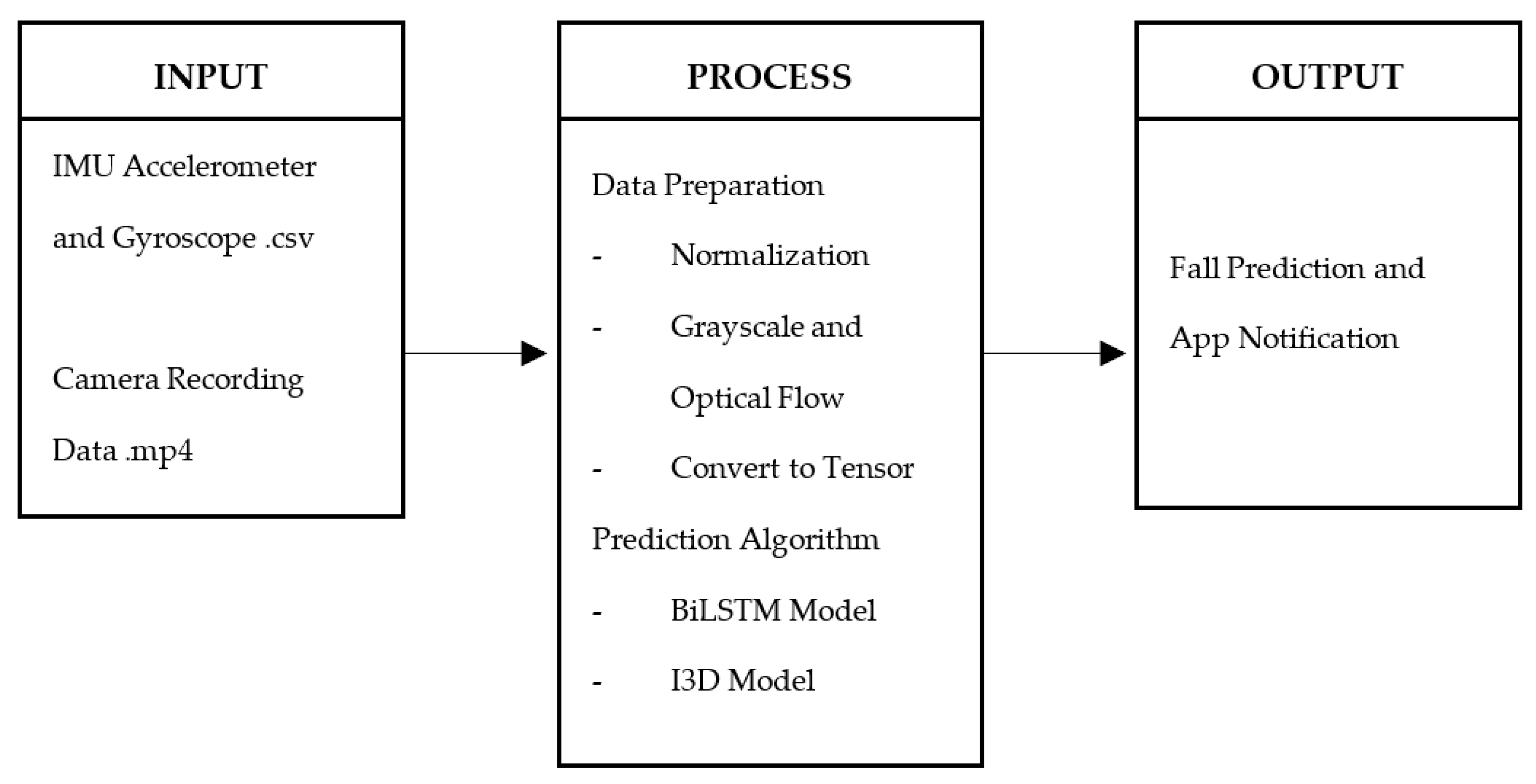
2.2. Training
2.2.1. Camera Model (I3D)
2.2.2. Sensor Model (Convolutional Neural Network-BiLSTM with Attention)
2.2.3. Ensemble Strategy
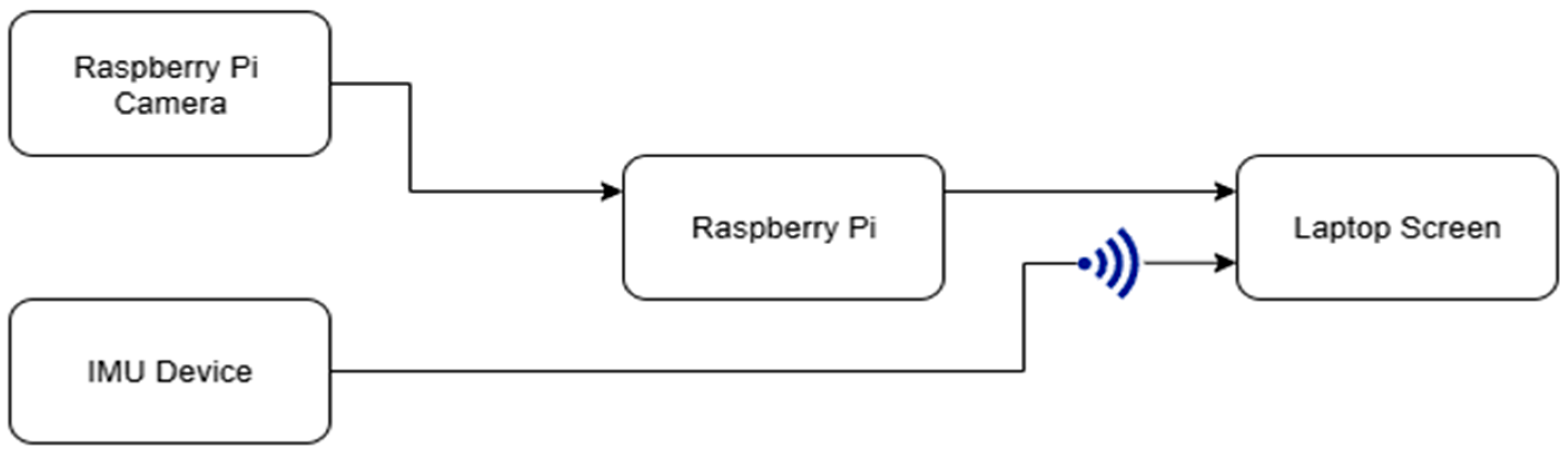
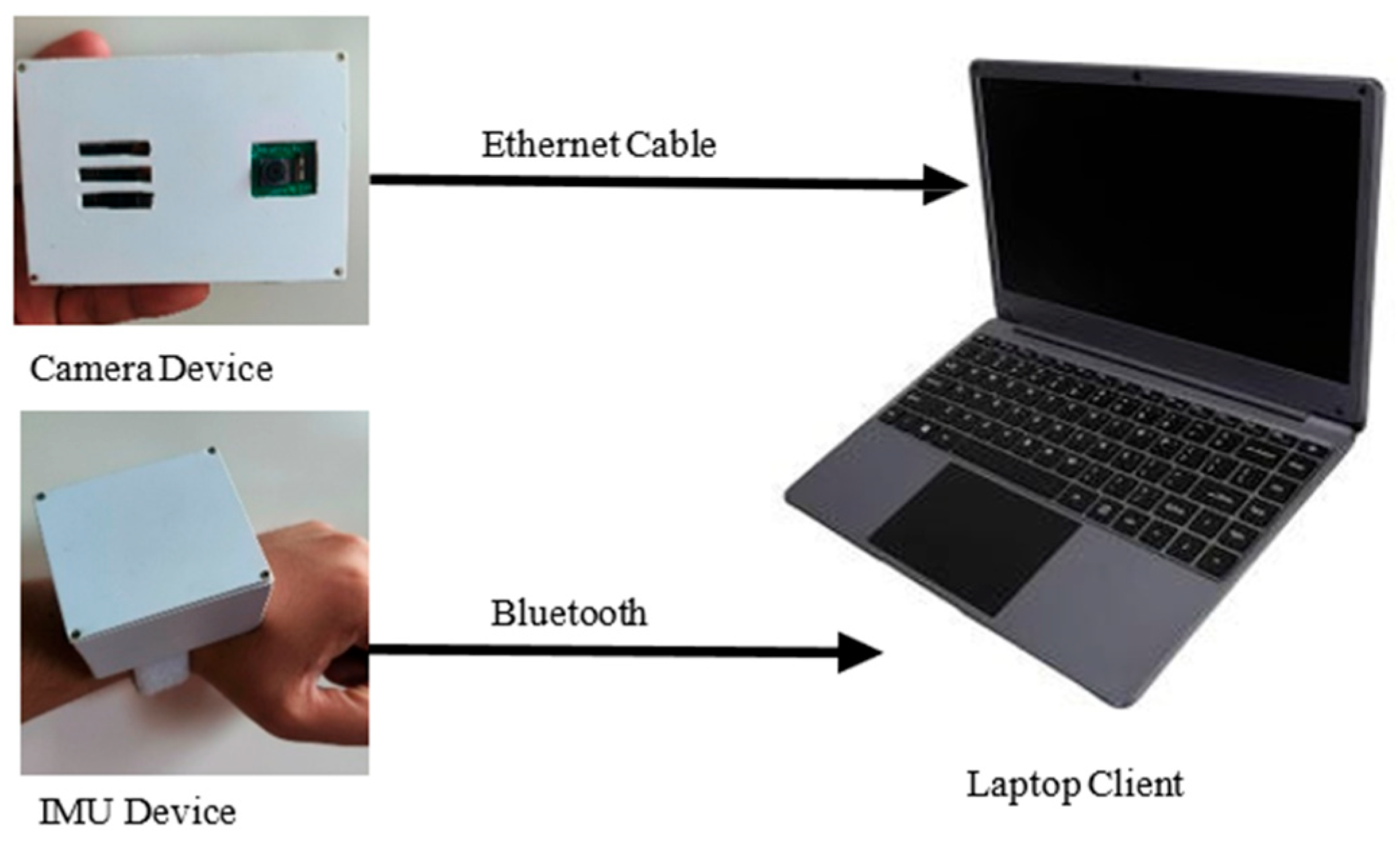
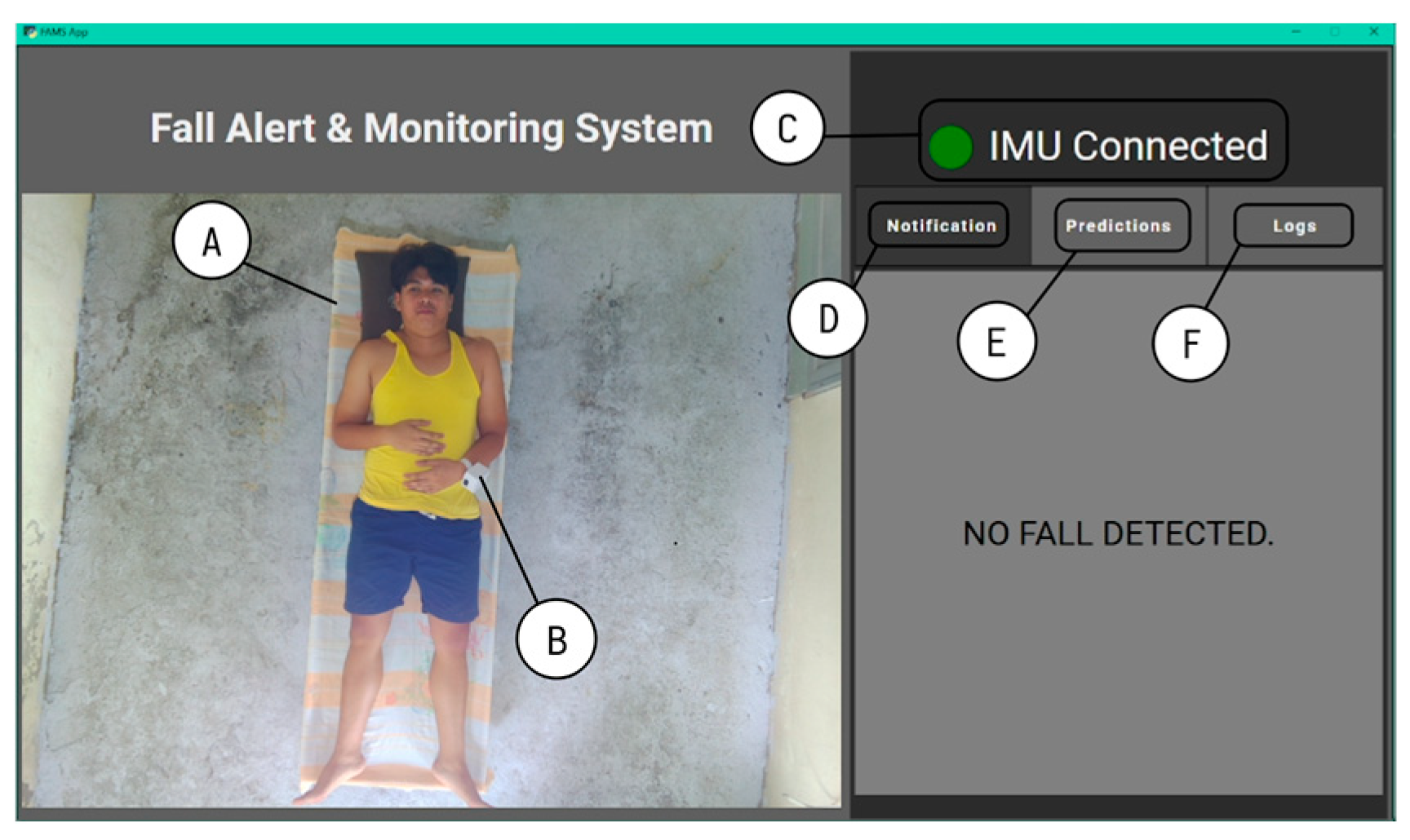
2.3. System Component
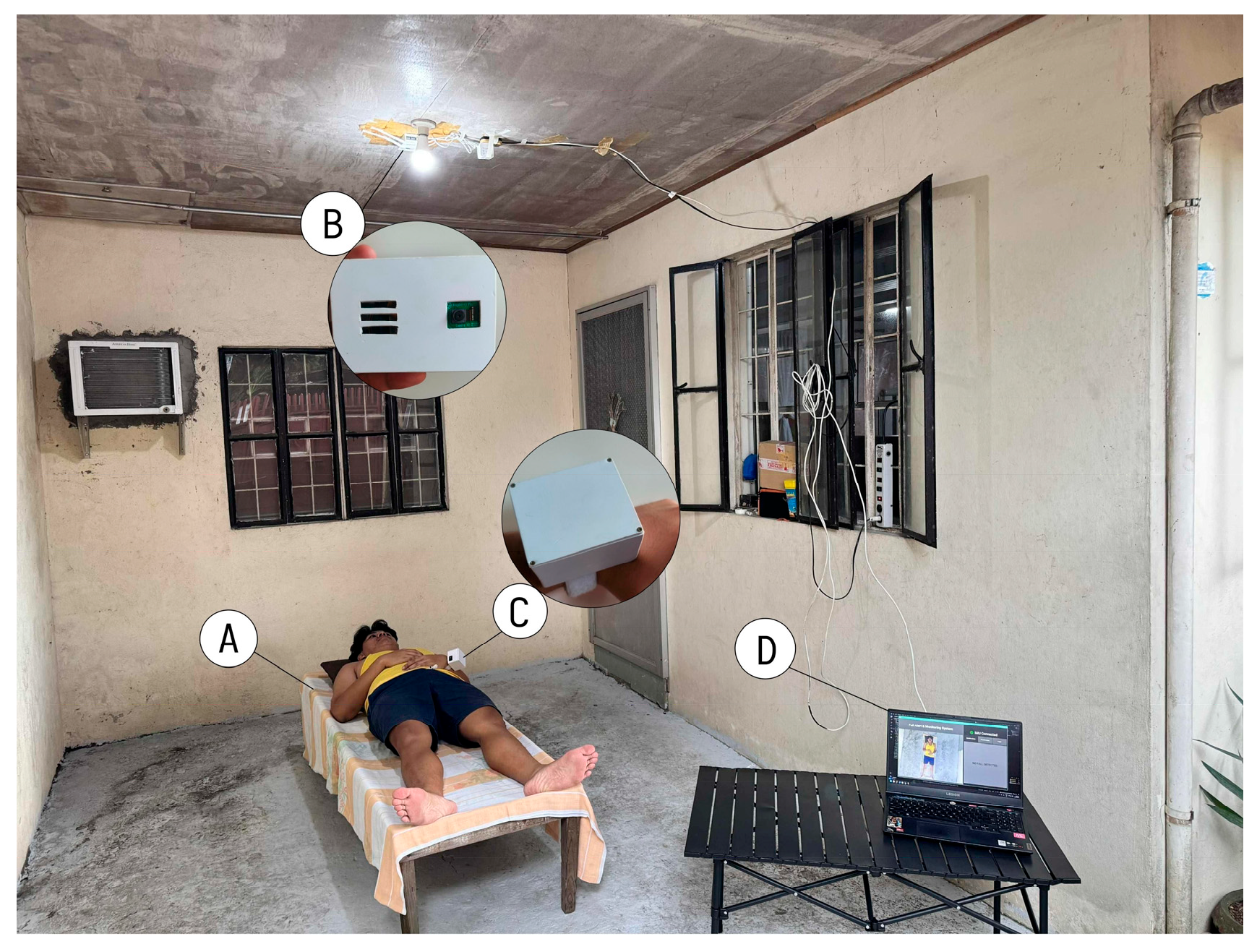
2.4. Experimental Setup
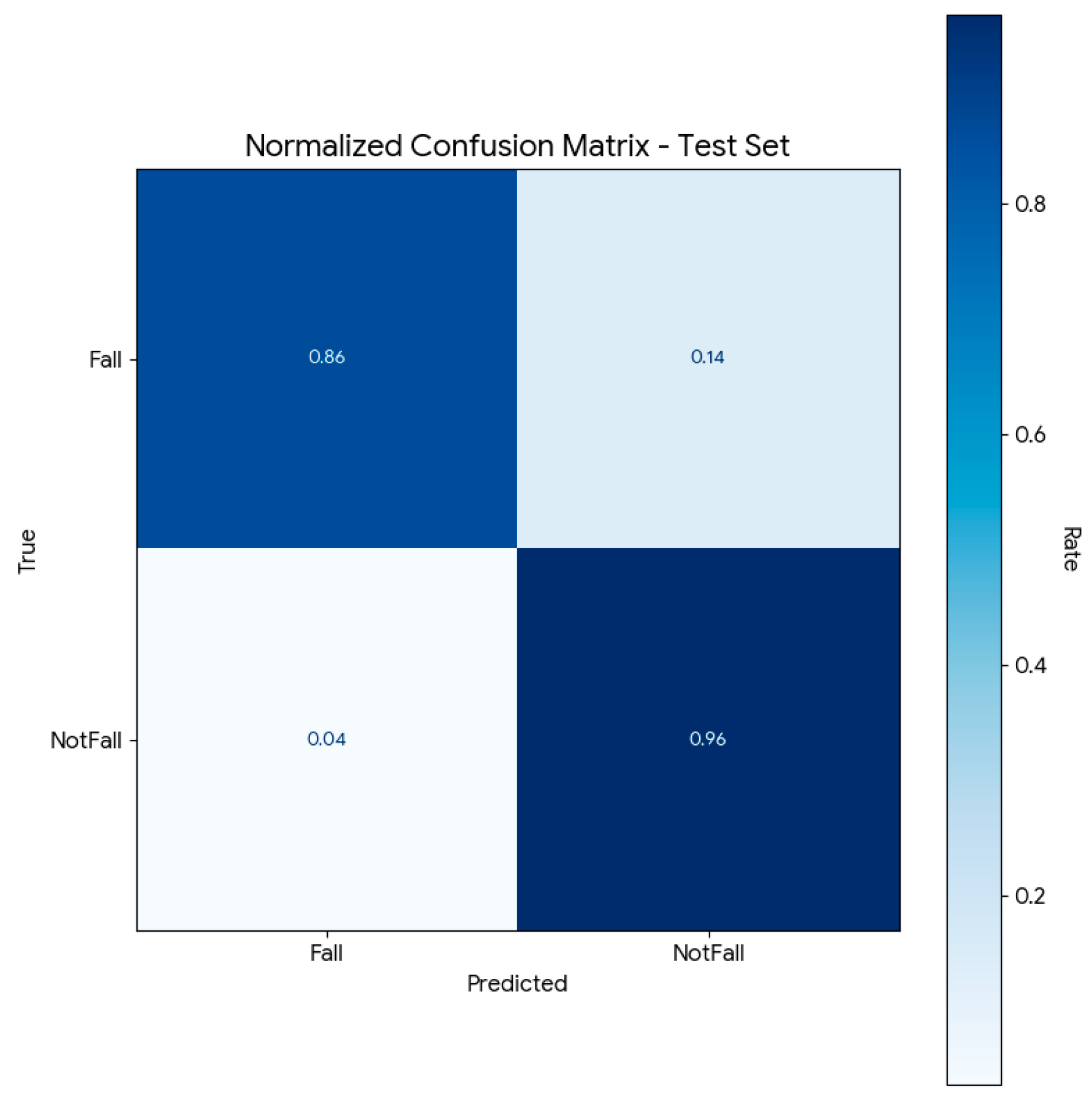
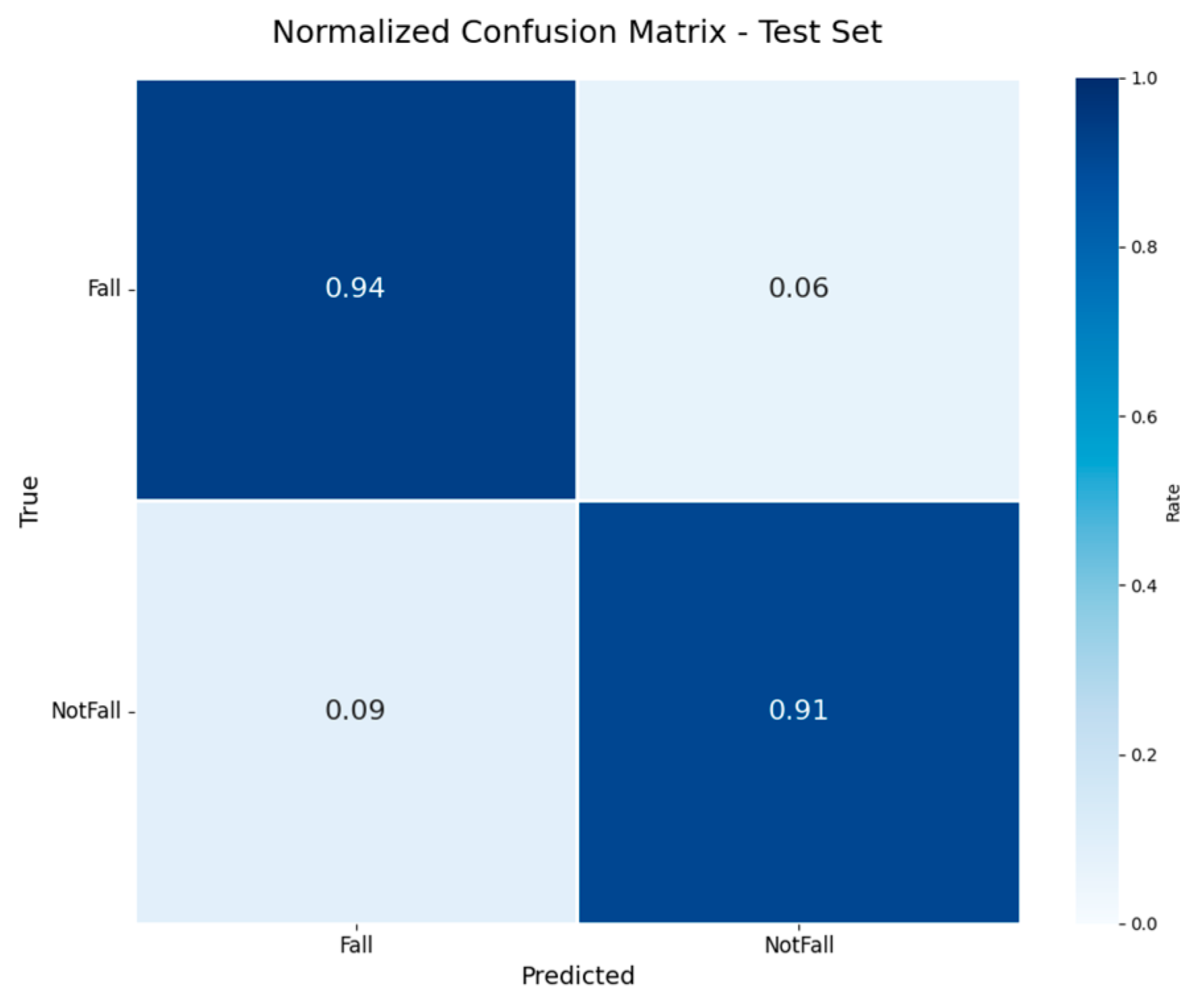
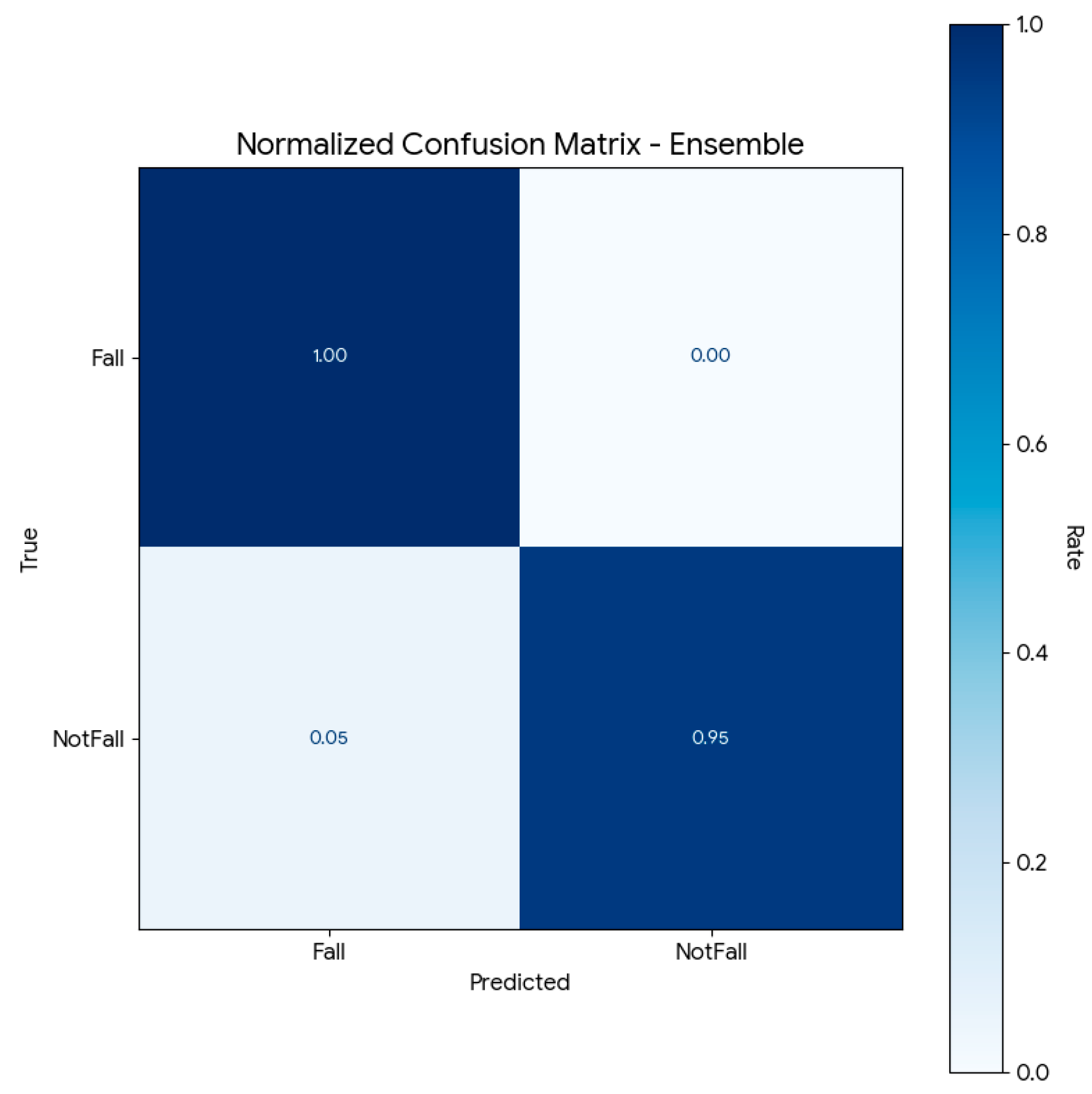
3. Results and Discussion
Statistical Treatment
- Equation (1): Accuracy = (TP + TN)/(TP + FP + TN + FN)
- Accuracy measures the overall correctness of the model by calculating the proportion of correct predictions (both true positives and true negatives) out of all predictions made.
- Equation (2): Precision = TP/(TP + FP)
- Precision measures the proportion of positive predictions that were actually correct.
- Equation (3): Recall = TP/(TP+FN)
- Recall (also called sensitivity or true positive rate) measures the proportion of actual positive cases that were correctly identified by the model.
- Equation (4): Specificity = TN/(TN+FP)
- Specificity measures the proportion of actual negative cases that were correctly identified as negative.
- Equation (5): F1 Score = 2·(Precision·Recall)/(Precision+Recall)
- F1 Score is the harmonic mean of precision and recall, providing a single metric that balances both measures.
- Terms:
- TP (True Positive): Cases correctly predicted as positive.
- TN (True Negative): Cases correctly predicted as negative.
- FP (False Positive): Cases incorrectly predicted as positive (Type I error).
- FN (False Negative): Cases incorrectly predicted as negative (Type II error).
4. Conclusions
Author Contributions
Funding
Institutional Review Board Statement
Informed Consent Statement
Data Availability Statement
Conflicts of Interest
References
- Santos-Lozada, A.R. Trends in Deaths From Falls Among Adults Aged 65 Years or Older in the US, 1999–2020. JAMA 2023, 329, 1605. [Google Scholar] [CrossRef] [PubMed]
- Ang, G.; Low, S.; How, C. Approach to falls among the elderly in the community. Singap. Med. J. 2020, 61, 116–121. [Google Scholar] [CrossRef] [PubMed]
- Mgabhi, P.S.; Chen, T.-Y.; Cruz, G.; Vu, N.C.; Saito, Y. Falls among community-dwelling older adults in the Philippines and Viet Nam: Results from nationally representative samples. Injury 2024, 55, 111336. [Google Scholar] [CrossRef] [PubMed]
- Gafner, S.C.; Allet, L.; Hilfiker, R.; Bastiaenen, C.H.G. Reliability and Diagnostic Accuracy of Commonly Used Performance Tests Relative to Fall History in Older Persons: A Systematic Review. Clin. Interv. Aging 2021, 16, 1591–1616. [Google Scholar] [CrossRef] [PubMed]
- Appeadu, M.K.; Bordoni, B. Falls and Fall Prevention in Older Adults. In StatPearls [Internet]; StatPearls Publishing: Treasure Island, FL, USA, 2025. Available online: https://www.ncbi.nlm.nih.gov/books/NBK560761/ (accessed on 4 June 2023).
- Usmani, S.; Saboor, A.; Haris, M.; Khan, M.A.; Park, H. Latest Research Trends in Fall Detection and Prevention Using Machine Learning: A Systematic Review. Sensors 2021, 21, 5134. [Google Scholar] [CrossRef] [PubMed]
- Mubibya, G.S.; Almhana, J.; Liu, Z. Efficient Fall Detection using Bidirectional Long Short-Term Memory. In Proceedings of the 2023 International Wireless Communications and Mobile Computing (IWCMC), Marrakesh, Morocco, 19–23 June 2023; pp. 983–988. [Google Scholar]
- Caya, M.V.C.; Yumang, A.N.; Arai, J.V.; Ninofranco, J.D.A.; Yap, K.A.S. Human Activity Recognition Based on Accelerometer Vibrations Using Artificial Neural Network. In Proceedings of the 2019 IEEE 11th International Conference on Humanoid, Nanotechnology, Information Technology, Communication and Control, Environment, and Management (HNICEM), Laoag, Philippines, 29 November–1 December 2019; pp. 1–5. [Google Scholar]



| Model | Accuracy | Specificity | Precision | Recall | F1 Score |
|---|---|---|---|---|---|
| Sensor Model | 83.86% | 84.75% | 94.77% | 83.59% | 88.80% |
| Camera Model | 92.70% | 90.91% | 95.65% | 93.62% | 94.62% |
| Ensemble Performance | 97.87% | 97.06% | 97.87% | 99.02% | 98.44% |
Disclaimer/Publisher’s Note: The statements, opinions and data contained in all publications are solely those of the individual author(s) and contributor(s) and not of MDPI and/or the editor(s). MDPI and/or the editor(s) disclaim responsibility for any injury to people or property resulting from any ideas, methods, instructions or products referred to in the content. |
© 2026 by the authors. Licensee MDPI, Basel, Switzerland. This article is an open access article distributed under the terms and conditions of the Creative Commons Attribution (CC BY) license.
Share and Cite
Arcilla, J.J.C.; Palaruan, I.D.; Padilla, D.A. Simulated Fall Detection Using a Semi-Supervised Machine Learning Method. Eng. Proc. 2026, 134, 82. https://doi.org/10.3390/engproc2026134082
Arcilla JJC, Palaruan ID, Padilla DA. Simulated Fall Detection Using a Semi-Supervised Machine Learning Method. Engineering Proceedings. 2026; 134(1):82. https://doi.org/10.3390/engproc2026134082
Chicago/Turabian StyleArcilla, Julius John C., Ildreen D. Palaruan, and Dionis A. Padilla. 2026. "Simulated Fall Detection Using a Semi-Supervised Machine Learning Method" Engineering Proceedings 134, no. 1: 82. https://doi.org/10.3390/engproc2026134082
APA StyleArcilla, J. J. C., Palaruan, I. D., & Padilla, D. A. (2026). Simulated Fall Detection Using a Semi-Supervised Machine Learning Method. Engineering Proceedings, 134(1), 82. https://doi.org/10.3390/engproc2026134082