Proceeding Paper

Advancements in Liquid Hydrogen Aircraft Configuration Design and Assessment †
German Aerospace Center (DLR), Institute of System Architectures in Aeronautics, 21129 Hamburg, Germany
*
Author to whom correspondence should be addressed.
Presented at the 15th EASN International Conference, Madrid, Spain, 14–17 October 2025.
Eng. Proc. 2026, 133(1), 79; https://doi.org/10.3390/engproc2026133079
Published: 7 May 2026

Abstract

Liquid Hydrogen (LH2) as an energy carrier for passenger aircraft has the potential to combine low climate impact and high lifecycle energy efficiency. Due to its significantly different physical properties compared to kerosene, the integration of LH2 fuel storage and distribution systems interacts with the general configuration of the aircraft. In order to assess promising configuration combinations quantitatively, an aircraft design and assessment framework is further developed. These additions are aimed at capturing the interdependencies originating from the fuel system integration choices at the aircraft level and quantifying the effect of trim drag. The framework is applied to a selection of LH2 mid-to-long-range aircraft designs. A comparison of the mass breakdown, aerodynamics breakdown and performance indicators such as specific energy consumption is carried out for the framework-generated aircraft models. A trim drag induced block fuel penalty is quantified for the aircraft selection as well as a mitigation strategy based on operational constraints.

1. Introduction

A significant number of conceptual and preliminary aircraft design studies have already been carried out on Tube-and-Wing Liquid Hydrogen (TWLH2) aircraft in the CS-25 class [1,2]. Usually a wider range of configuration choices for a certain payload and range combination are assessed qualitatively first, followed by a quantitative and more detailed comparison for the most promising designs. For large aircraft, trim and stability constraints are stated as a reason why a forward-aft tank integration is necessary [3]. It is claimed an aft fuel integration leads to excessive trim drag and tail-down load [2]. To methodically evaluate such claims, particularly in terms of target functions like specific block energy, the design process must include methods that can accurately model the key differences between kerosene and hydrogen propulsion systems of different topologies across multiple disciplines. Compared to current kerosene-powered aircraft, mass and volume for the fuel storage and distribution system (FSDS) are significantly increased. In conceptual aircraft design the gravimetric efficiency of tanks can be assumed in a top-down approach [4] or be calculated in a bottom-up approach based on the actual geometry such as in [5,6]. Fuel distribution system (FDS) parameters can be determined in a similar way, for example in a top-down approach calibrated by a bottom-up method [5]. When fuel lines are routed outside of the fuselage to potentially ease certification, fairing weight and aerodynamic effects should be considered [6]. Trim drag is either not considered during preliminary LH2 aircraft design studies and mentioned as an uncertainty [7] or the effect is considered but not quantified [1,5]. Some preliminary design methods [8] do not adequately account for the actual static margin, particularly in larger LH2 aircraft, where fuel distribution can cause a significant shift in the center of gravity (COG). This paper focuses on enhancing the modeling methods for the cryogenic fuel storage and distribution system (FSDS) and trim drag, with the goal of achieving higher fidelity in assessing the configuration choices for TWLH2 aircraft.

2. Methodology

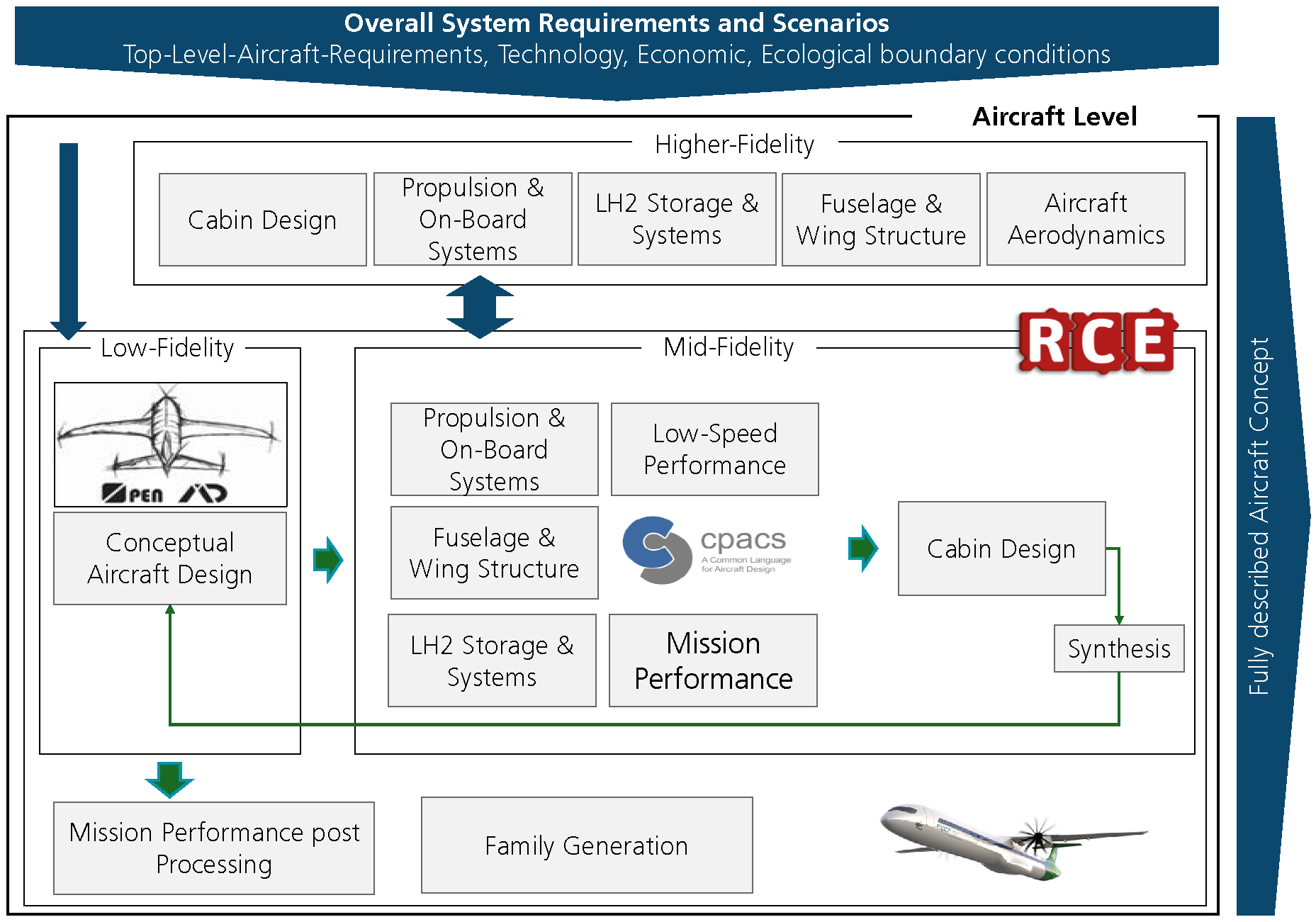
The preliminary aircraft design workflow from the EXACT project [9] is used to calculate the concepts in this paper. In this framework, multiple Python-based tools are connected leveraging the RCE platform [10], resulting in a multidisciplinary and multifidelity workflow, where the results of midfidelity tools are either directly fed back or used to calibrate low-fidelity models, as shown in Figure 1. Data exchange between the tools is carried out in the CPACS data schema [11]. The framework has been continuously enhanced during the course of the project in order to capture as many relevant effects as possible in the preliminary design stage. A bottom-up approach for LH2 storage and systems sizing (Section 2.1), trim drag calculation in the mission analysis to capture the effects of different tank integration strategies (Section 2.2), and a physics-based wing structure sizing tool were introduced.
OpenAD is DLR’s main conceptual aircraft design tool [12]. It is a standalone tool capable of sizing a consistent aircraft starting from a small set of top-level requirements. OpenAD is built on semi-empirical formulae and it is used both as a design initiator and for synthesis of the different disciplines in the EXACT2 workflow. The fuselage and wing structure are sized in detail in dedicated sub-workflows. Firstly, relevant loads on fuselage and wings are calculated based on initial components data provided by openAD [13]. Secondly, the primary structures are resized considering analytically calculated stress flows based on the cutloads from the load cases [14]. To account for the dry wing, the fast wing optimization framework Lightworks [15] is used, which applies analytical constraints related to buckling stability, structural strength, and manufacturability. Finally, the secondary structures are sized with handbook methods.

2.1. Liquid Hydrogen Systems and Storage Sizing

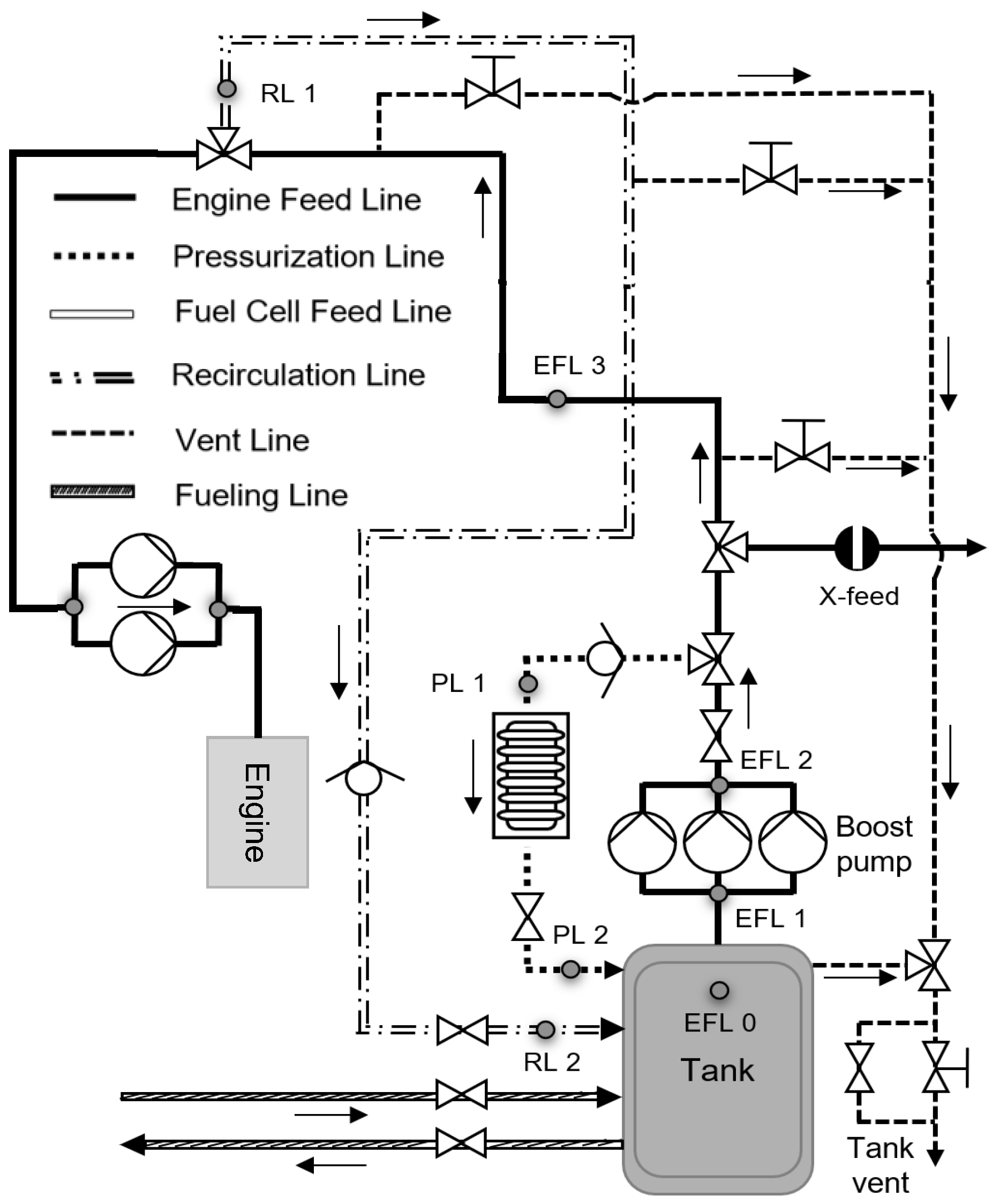
The following methods use a bottom-up, physics-based approach, allowing the accurate capture of the interdependencies of the fuel system and overall aircraft in design trades. The storage tank sizing [6] starts with geometry generation and allowances for pressurization and unusable fuel calculations. The structural sizing of the tanks is then performed with an inbuilt surrogate model based on a CFRP winding optimization for various shapes [16]. Additionally, the mass and volume of crash structures and internal and external mounts are derived based on [17]. A multi-layer vacuum-insulated structure and CFRP vessels are assumed for the tanks of the aircraft concepts investigated in this paper, which are sized for 2 bar (a) operating pressure. The LH2 systems consist of the distribution, venting, refueling and pressurization systems. These subsystems are derived from energy balances and affinity laws for components [18,19]. The aircraft geometry- and fuel-specific boundary conditions at the engine interface are extracted and used as input parameters. The schematic fuel system architecture assumed for this study is depicted in Figure 2. Assuming that LH2 lines should be routed outside of the pressurized area of the fuselage, fairing structures are sized. The additional drag is calculated by adding the wetted surface to the fuselage and increasing the form factor to account for pressure drag penalties.

2.2. High-Speed Performance and Trim Drag Calculation

The Aircraft Mission Calculator (AMC) solves the equations of motion for fixed timesteps of the mission flight trajectory, taking into account the engine and aerodynamic performance characteristics of the aircraft. The initial cruise altitude is optimized to minimize the total energy consumption and a cruise segment based on specific air range is applied. Furthermore, the AMC has the capacity to calculate a trimmed flight trajectory. For that purpose, the component-wise pitching moment characteristics of the aircraft, which are included within the aerodynamic performance output generated by openAD, are taken into consideration. The component-wise pitching moment characteristics, as well as the horizontal tailplane efficiency influenced by the downwash of the wing, are determined using, among others, handbook methods from Roskam [20], Multhopp [21] and Datcom [22]. Along the cruise segment of the trajectory, the required tailplane deflection to sustain moment equilibrium is computed. This calculation incorporates the pitching moment contribution of the aircraft components, thrust, and weight. The method was calibrated based on the D300 reference aircraft model with data from [23].

3. Aircraft Concepts

In the scope of the EXACT project (EXACT—Architecting Aviation: https://exact-dlr.de/, accessed on 1 October 2025), many relevant propulsion technologies and aircraft market segments are evaluated regarding their economic and ecological potential. One such segment is the MLR (Medium–Long-Range) segment, with design ranges between 3000 and 5000 nautical miles. Therefore, both a Sustainable Aviation Fuel (SAF)-powered baseline (D350-TF) and a TWLH2 (D350-TFLH2) aircraft family are created for Entry into Service (EIS) in 2045. For each family the largest concept is chosen for evaluation, since it dictates the sizing for most aircraft components.

3.1. MLR Baseline Concept

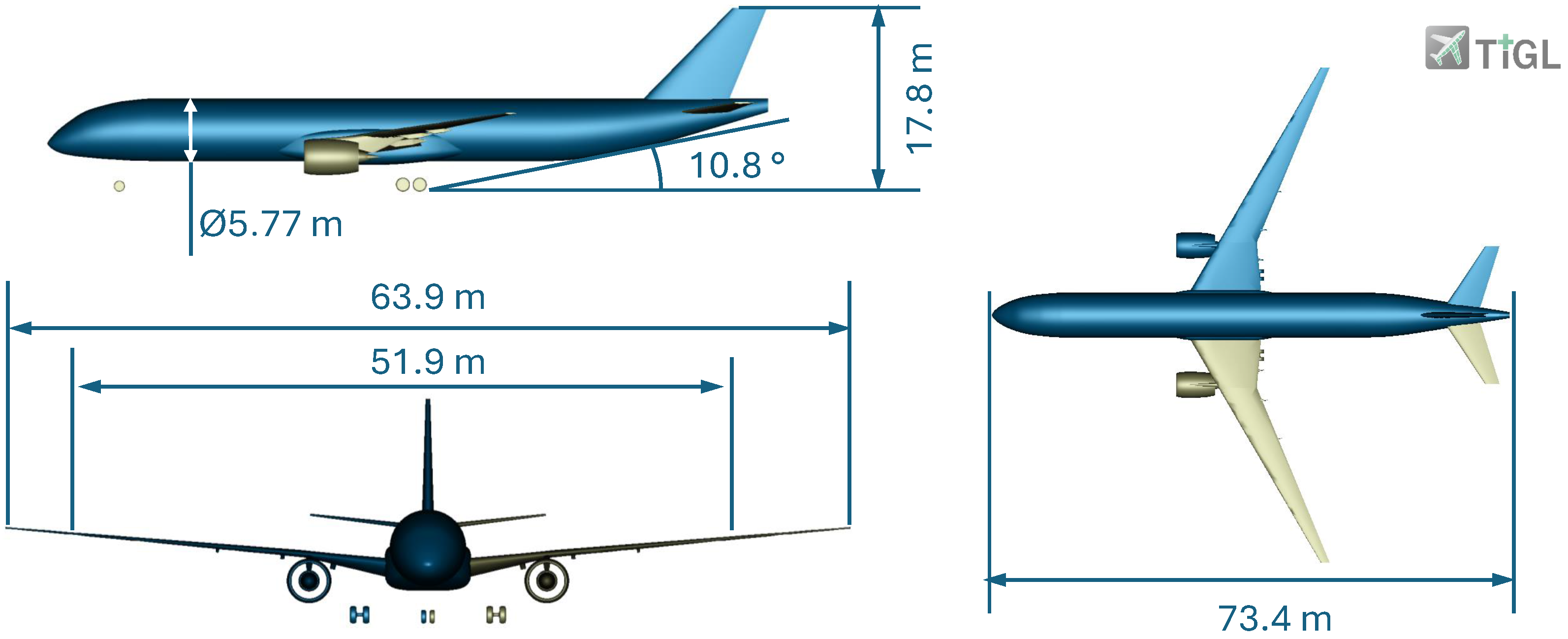
The reference aircraft is the D300, a DLR redesign of the Airbus A330-900 based on publicly available data. The D350-TF family is created from the D300 reference aircraft, see Figure 3. Based on the airport capacity-constrained DLR passenger demand forecast, the largest surge in both passenger and flight volume will be in the seat class of 300–400 by 2050 [24]. Therefore, the design payload is increased by 30% compared to the reference, resulting in a 300–400 passenger capacity based on the family member for a typical two-class layout. Design range was reduced to 4500 Nautical Miles, which based on a route network data analysis will be sufficient to achieve >95% of the missions and Available-Seat-Kilometers (ASK) of the reference aircraft [25].
Other Top-Level Aircraft Requirements (TLARs) were kept constant or within the same class, see Table 1. High-Bypass-Ratio Turbofans (BPR = 14) and a composite wing including foldable wingtips are introduced to reduce the folded wingspan below 52 m, thus allowing usage of airport facilities with Code D. Otherwise incremental improvements to the reference aircraft in composite structure, manufacturing techniques, aerodynamics and turbofan thermal efficiency are assumed. This is modeled by a 3% reduction in the empennage mass, a 5% reduction in the fuselage structure, a 1% reduction in zero-lift drag and an increase of 6% in gas turbine efficiency.

3.2. LH2-MLR Concepts

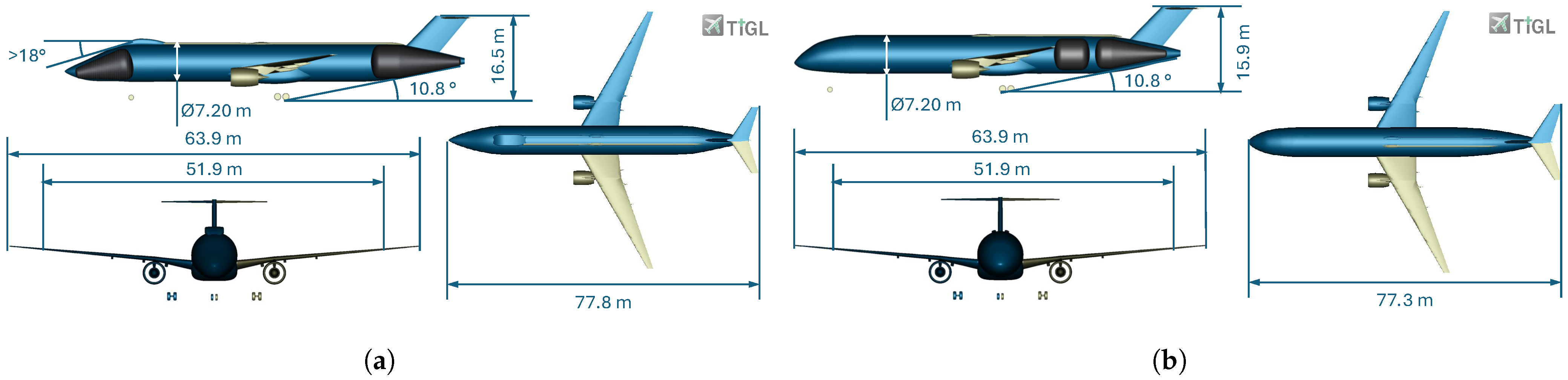
The D350-TFLH2 aircraft family largely shares the same TLARs and baseline technology assumptions as the D350-TF. A 3% increase in gas turbine efficiency (compared to the baseline) is achieved when burning LH2. The hydrogen aircraft have a 7.20 m wide fuselage with twelve-abreast seating in order to keep the fuselage length below 80 m and thus comply with current airport gate infrastructure. Non-Integral, Carbon Fibre-Reinforced Plastic (CFRP) vacuum-insulated tanks are used for fuel storage. The conical forward tank is installed into the unpressurized nose compartment as depicted in the three views in Figure 4a. With the cockpit situated in an upper deck above the passenger compartment, the forward and downward visibility requirement from CS 25.771 [26] can be maintained while the cockpit is retained within the pressurized cabin. This allows the flight deck access from the cabin suggested by CS25.772b and CS25.772c [26], which is a main point of uncertainty for Fwd–aft tank integration concepts where the forward tank is situated between the cockpit and cabin. The visibility constraint limits the forward tank size to 35% of the total fuel capacity. This design trade will be compared against an aft–aft tank integration in the D350L-TFLH2DD concept for the same TLARs and technology assumptions as for the D350L-TFLH2. The horizontal tailplane of the D350L-TFLH2DD was dimensioned using a simplified approach by increasing the volume coefficient by approximately 30% compared to the D350L-TFLH2.

4. Results and Discussion

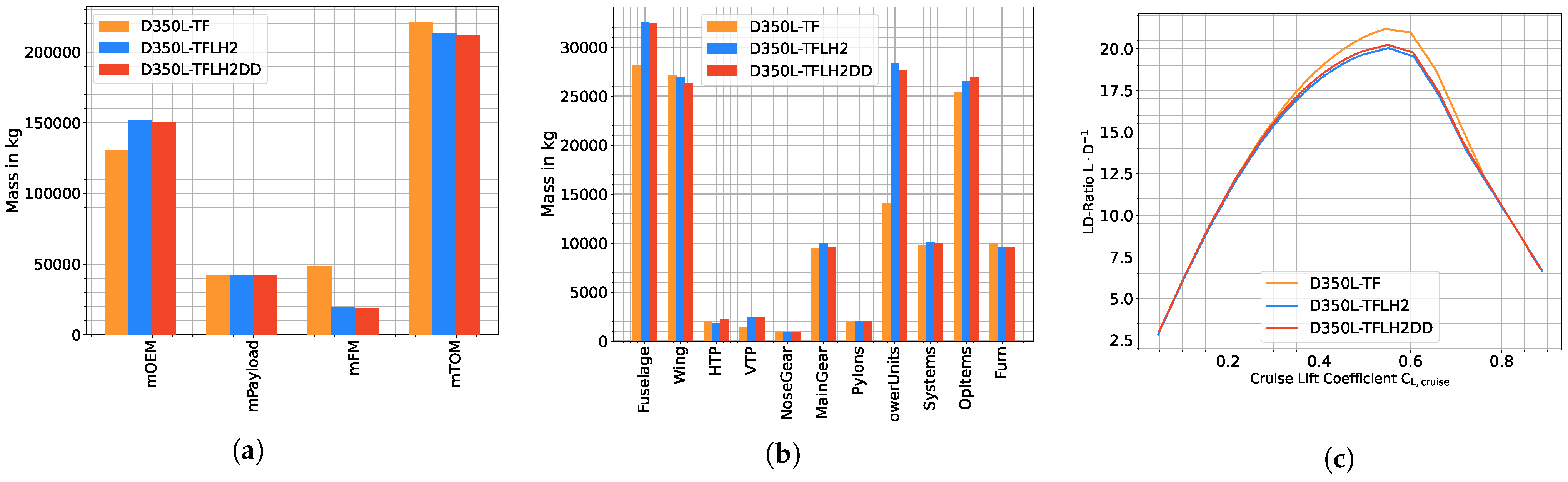
Compared to the SAF baseline, the following effects can be observed for the hydrogen designs. A mass increase in fuselage structure, main gear, operator items and power units, which can be attributed to increased fuselage volume, maximum landing mass (MLM), unusable fuel mass and FSDS mass (Figure 5b). The observed reduction in wing mass for the hydrogen concepts is under investigation and likely requires further calibration of the wing sizing method since the increased inertia loads were captured accurately. Despite the 15% increase in operating empty mass (OEM) the TWLH2 aircraft mission fuel mass reduction of over 50% leads to a 3.5% lower maximum take-off mass (MTOM). Moreover, the LH2 concepts suffer an aerodynamic penalty of up to 10% compared to baseline due to the increased wetted fuselage area and fuel line fairings, see Figure 5c. The aft–aft integration shows a slight advantage over the forward–aft integration, since fuel line exposure and fuel-required fuselage volume are slightly lower. This can be attributed to a more efficient FSDS as shown in Figure 6.
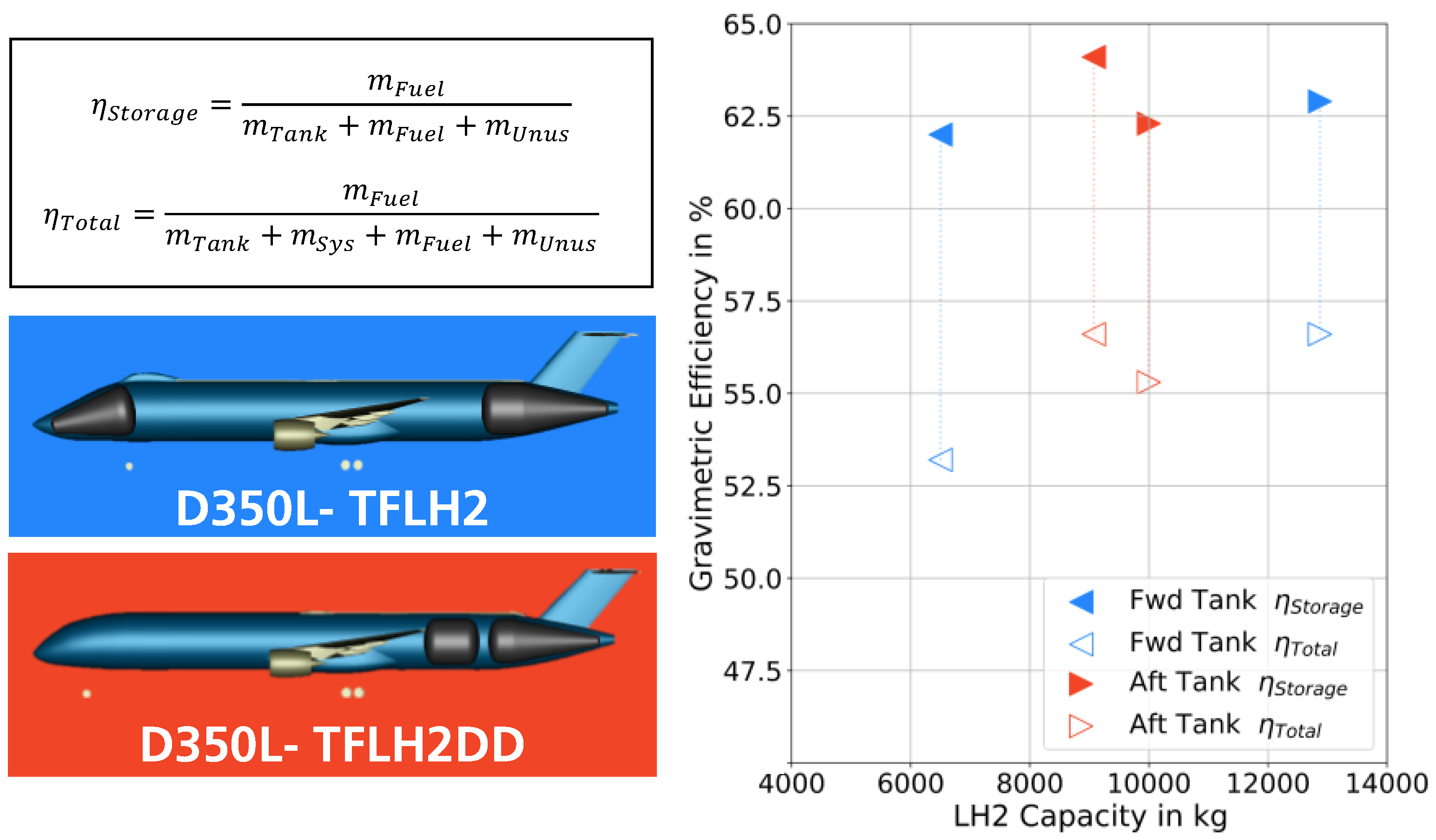
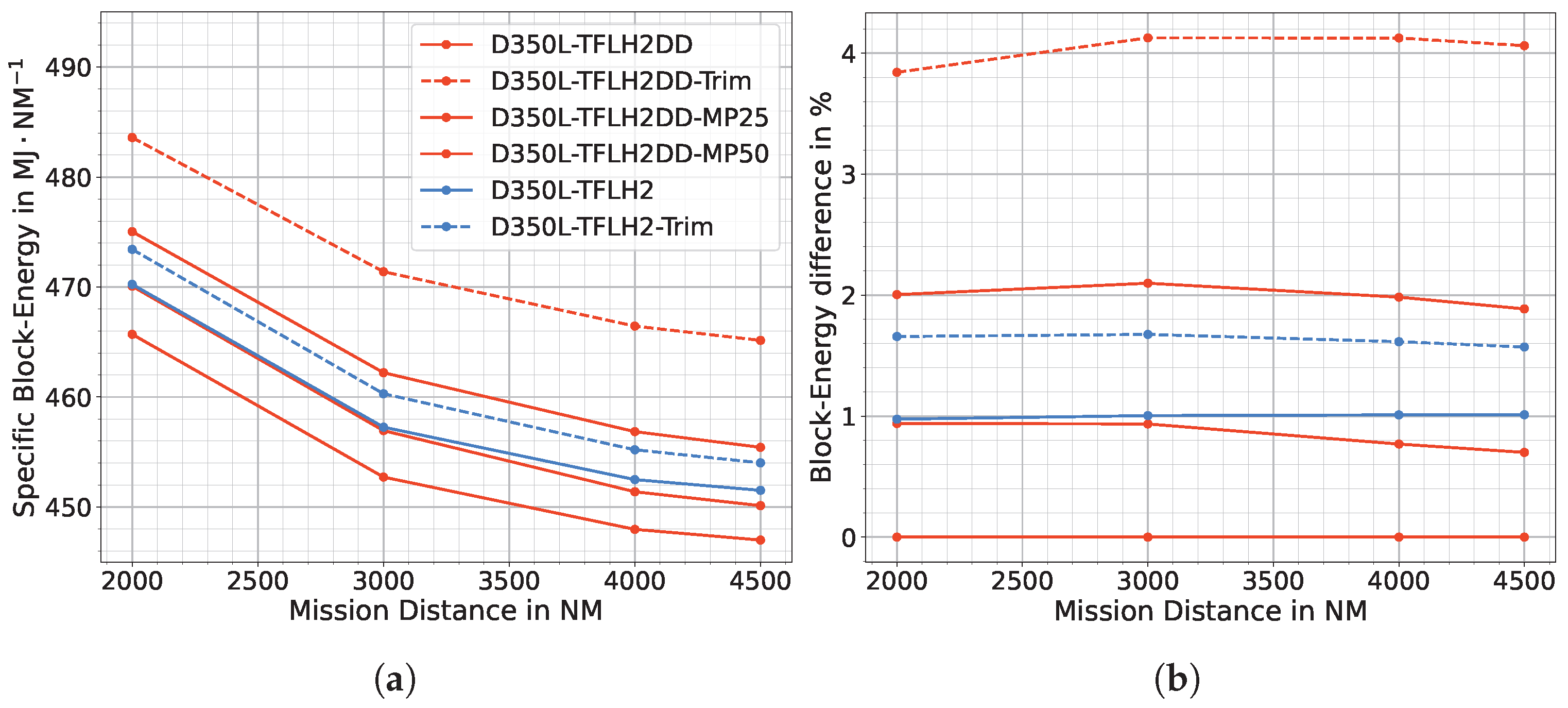
A general trend of rising gravimetric tank efficiency η S t o r a g e with increasing volume is visible. The forward tank of the D350L-TFLH2DD stands out due to its more efficient cylindrical shape compared to the other conical shaped tanks. When considering the fuel distribution system (FDS), total efficiency η T o t a l drops are more pronounced for tanks with lower fuel capacity. The forward D350L-TFLH2 tank is most affected by this effect, since FDS mass is more depending on the pipe length than on the tank volume. As evident in Table 2 the emergency venting piping is mainly responsible for the elevated FDS mass since the venting point is situated at the top of the vertical tailplane. With a venting point above the cockpit a similar FDS mass to the aft–aft tank integration may be achieved for the forward–aft configuration. However fuel fairing mass and drag penalty would still be elevated for the forward–aft configuration by a factor between 1.6 and 2.2. Figure 7a shows the specific block energy consumption for the hydrogen concepts. Figure 7b shows the difference in specific block energy consumption w.r.t. the D350L-TFLH2DD. Results are presented for both trimmed and untrimmed conditions, enabling quantification of the impact of trim-induced drag across the different configurations. The D350L-TFLH2DD exhibits a slight performance advantage in this metric by 1%, attributable to the combined effects of its marginally lower weight and reduced aerodynamic drag compared with the D350L-TFLH2. The trim drag penalty for the aft–aft tank integration is considerable at 4%, while the less penalized Front–aft integration concept is now around 2% more energy efficient. The penalty appears mostly constant between the design range and 3000 nautical miles and starts to drop for shorter missions. This is due to the calculation method, where trim drag is only calculated in cruise, which has a decreasing share of the mission fuel consumption as the flight range reduces. This effect counteracts the less favorable COG positions for lower fuel loads on the D350L-TFLH2DD, which should lead to an increase in trim drag for shorter missions of this concept. Therefore the numbers given in Figure 7 should be regarded as minimum values.
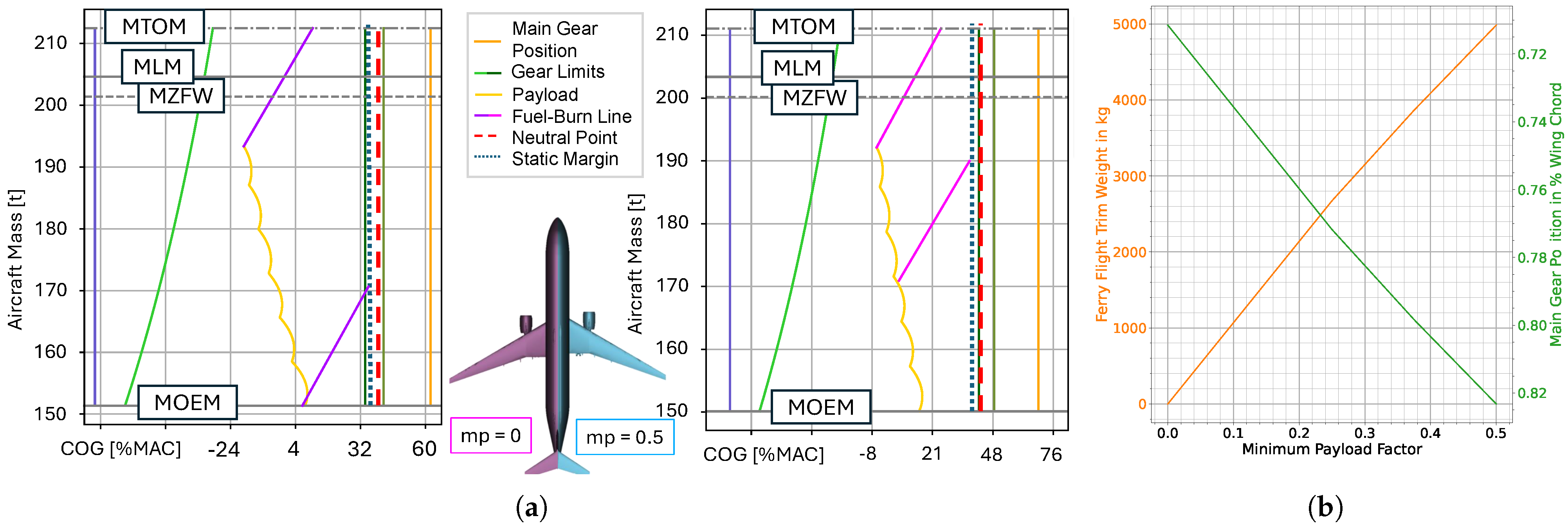
For the aft–aft tank integration, a design trade is conducted to mitigate the trim drag impact by imposing an operational limit on the rearmost flight center of gravity (COG) position. This constraint effectively shifts the wing forward, bringing the average mission COG closer to the static margin, thereby reducing the trim penalty. This mechanism is illustrated in Figure 8a, where the fuel burn line shifts in response to the operational constraints. The introduction of the minimum payload factor, denoted as m p , incorporates a portion of the design payload into the calculation of the rearmost COG case. For the aft–aft integration this is the combination of the OEM and maximum fuel mass. This COG position will rarely be reached in regular operations but is more common on ferry flights near the maximum range. For such operations, a trim weight is required, with the weight for a trim weight positioned at the most forward cargo bay estimated for the D350L-TFLH2DD in Figure 8. When positioning the main landing gear with a tip-back angle constraint, the minimum payload will not be considered for the relevant rearmost COG in order to ensure ground stability at all times. This leads to the main gear position moving aft relative to the wing as it is pushed forwards. At some point, a wing integration of the main gear is not feasible anymore. At an m p of 0.5 for the wing gear attachment point relative to the local wing chord the feasibility limit of the D350L-TFLH2DD is probably reached, see Figure 8b. The effect on specific block fuel energy is considerable; with an m p between 0.25 and 0.5 the aft–aft configuration can reach similar performance in terms of specific block energy as the forward–aft configuration, see Figure 7. The corresponding ferry flight trim weight will be between 2000 and 5000 kg, which can be achieved using between two and four LD3 Unit Load Devices (ULDs) at their maximum gross weight.

5. Conclusions

The interdependencies of the FSDS with mass and drag due to the tank shape, size and position was demonstrated for the two configurations assessed. Overall, the FDS mass contribution to the OEM increase was found to be limited and becomes less significant with rising tank size, as the FDS mass primarily scales with the piping distance between the tank, engine, and venting point. The trim drag penalty for larger LH2 aircraft with aft–aft tank integration was quantified to be at least 4% in specific block fuel energy. However, it was shown that introducing an operational constraint in the form of a minimum payload could reduce this penalty, bringing the aft–aft configuration’s trim drag penalty down to 1–2%, which is comparable to the 0.6% penalty for the forward–aft integration. Only conventional trimming using the HTP was considered in this analysis. Modern long-range aircraft use advanced trailing-edge devices to manage lift and drag through variable camber and differential flap settings [27], which could potentially mitigate small trim drag penalties. As such, the trim drag difference may have limited impact on overall mission performance. While the trim drag issue for the aft–aft LH2 tank integration was addressed in this paper, it must be mentioned that the take-off rotation requirement might require additional design trades if the assumed HTP area is maintained. Overall the demonstrated additions to the design process will allow for more detailed analyses of configuration design choices regarding tank integration and engine placement in a future publication.

Author Contributions

Conceptualization, F.F.; methodology, D.S., V.N., T.B. and M.K.; software, D.S., V.N., T.B. and M.K.; validation, F.F., V.N. and D.S.; formal analysis, F.F.; investigation, F.F.; resources, V.N.; data curation, F.F.; writing—original draft preparation, F.F.; writing—review and editing, D.S., T.B. and M.K.; visualization, F.F.; supervision, D.S.; project administration, D.S. and F.F.; funding acquisition, D.S. All authors have read and agreed to the published version of the manuscript.

Funding

This research received internal funding from the German Aerospace Center (DLR).

Institutional Review Board Statement

Not applicable.

Informed Consent Statement

Not applicable.

Data Availability Statement

No new data were created or analyzed in this study.

Conflicts of Interest

The authors declare no conflicts of interest.

References

  1. Silberhorn, D.; Atanasov, G.; Walther, J.N.; Zill, T. Assessment of Hydrogen Fuel Tank Integration at Aircraft Level. In Proceedings of the Deutscher Luft- und Raumfahrtkongress, Darmstadt, Germany, 30 September–2 October 2019. [Google Scholar]
  2. Brewer, G.D.; Morris, R.E.; Lange, R.H.; Moore, J.W. Study of the Application of Hydrogen Fuel to Long-Range Subsonic Transport Aircraft. Volume 1: Summary; NASA Contractor Report; NASA: Burbank, CA, USA, 1975.
  3. Adler, E.; Martins, J.R.R.A. Hydrogen-Powered Aircraft: Fundamental Concepts, Key Technologies, and Environmental Impacts. Prog. Aerosp. Sci. 2023, 141, 100922. [Google Scholar] [CrossRef]
  4. Huete, J.; Nalianda, D.; Pilidis, P. Impact of tank gravimetric efficiency on propulsion system integration for a first-generation hydrogen civil airliner. Aeronaut. J. 2022, 126, 1324–1332. [Google Scholar] [CrossRef]
  5. Onorato, G.; Proesmans, P.; Hoogreef, M.F.M. Assessment of hydrogen transport aircraft: Effects of fuel tank integration. CEAS Aeronaut. J. 2022, 13, 813–845. [Google Scholar] [CrossRef] [PubMed]
  6. Burschyk, T.; Fröhler, B.; Alder, M.; Zill, T. Global Sensitivity Analysis of Liquid Hydrogen Storage Design Parameters for Overall Aircraft Design. In Proceedings of the 34th Congress of the International Council of the Aeronautical Sciences (ICAS), Florence, Italy, 9–13 September 2024. [Google Scholar]
  7. Manzano, Á.G. Systematic Tailplane Design for an Aircraft Family Concept. Master’s Degree, TU Delft, Delft, The Netherlands, 2024. [Google Scholar]
  8. Kundu, A.K. Aircraft Design (Cambridge Aerospace); Cambridge University Press: Camebridge, UK, 2010. [Google Scholar]
  9. Nugnes, V.; Silberhorn, D.; Fritzsche, F. Overall Aircraft Design Workflow: An Overview of the Aircraft Design Methods and Analysis Capabilities in EXACT2. 2025. Available online: https://elib.dlr.de/213452/ (accessed on 1 October 2025).
  10. Boden, B.; Flink, J.; Först, N.; Mischke, R.; Schaffert, K.; Weinert, A.; Wohlan, A.; Schreiber, A. RCE: An Integration Environment for Engineering and Science. SoftwareX 2021, 15, 100759. [Google Scholar] [CrossRef]
  11. Alder, M.; Moerland, E.; Jepsen, J.; Nagel, B. Recent Advances in Establishing a Common Language for Aircraft Design with CPACS. In Proceedings of the Aerospace Europe Conference, Bordeaux, France, 25–28 February 2020. [Google Scholar]
  12. Wöhler, S.; Atanasov, G.; Silberhorn, D.; Fröhler, B.; Zill, T. Preliminary Aircraft Design within a Multidisciplinary and Multifidelity Design Environment. In Proceedings of the Aerospace Europe Conference, Bordeaux, France, 25–28 February 2020. [Google Scholar]
  13. Hecken, T.; Balack, P.; Petsch, M.; Zerbst, D. Conceptual Loads Assessment of Aircraft with Fuselage Integrated Liquid Hydrogen Tank. In Proceedings of the Deutscher Luft- und Raumfahrtkongress, Stuttgart, Germany, 27–29 September 2022. [Google Scholar]
  14. Petsch, M.; Kohlgrüber, D.; Dominik, S.; Leon Munoz, C.; Marconi, L. Enhancements of the DLR tool PANDORA for automated detailed preliminary design and crash analyses. In Proceedings of the DLRK, Augsburg, Germany, 23–25 September 2025. [Google Scholar]
  15. Dähne, S.; Werthen, E.; Zerbst, D.; Tönjes, L.; Traub, H.; Hühne, C. Lightworks, a scientific research framework for the design of stiffened composite-panel structures using gradient-based optimization. Struct. Multidiscip. Optim. 2024, 67, 70. [Google Scholar] [CrossRef]
  16. Freund, S.; Burschyk, T.; Jacobsen, L.; Franzoni, F. Automated Structural Design Optimization of Double Walled Liquid Hydrogen Tanks and Comparison of CFRP with Aluminium on Aircraft Level. In Proceedings of the DLRK 2025, Augsburg, Germany, 23–25 September 2025. [Google Scholar]
  17. Schatrow, P.; Petsch, M.; Waimer, M.; Wegener, E.; Marconi, L.; Wegener, N.; Kohlgrüber, D. Crashworthiness demonstration strategy for LH2 tank integration. In Proceedings of the Deutscher Luft- und Raumfahrtkongress, Hamburg, Germany, 30 September–2 October 2024. [Google Scholar]
  18. Burschyk, T.; Hämisch, J.; Quiceno, V. Liquid Hydrogen Fuel System: Architecture and Modelling Approach. In Proceedings of the EXACT Architecting Future Aviation Symposium, Hamburg, Germany, 1–2 April 2025. [Google Scholar]
  19. Quiceno, V.; Burschyk, T. Conceptual Design of a Liquid Hydrogen Fuel System for Aircraft Application. In Proceedings of the DLRK, Augsburg, Germany, 23–25 September 2025. [Google Scholar]
  20. Roskam, J. Airplane Design–Part VI: Preliminary Calculation of Aerodynamic, Thrust and Power Characteristics; Roskam Aviation and Engineering Corporation: Ottawa, KS, USA, 1987. [Google Scholar]
  21. Multhopp, H. Aerodynamics of the fuselage. In NACA Technical Memorandum. NACA-TM-1036; NACA: Washington, DC, USA, 1942. [Google Scholar]
  22. Finck, R.D. USAF Stability and Control Datcom; AFWAL-TR-83-3048; McDonnell Douglas Corporation: Long Beach, CA, USA, 1978. [Google Scholar]
  23. Airbus Customer Services. Getting to Grips with Fuel Economy; Technical Report; Airbus S.A.S: Blagnac, France, 2004. [Google Scholar]
  24. Gelhausen, M.C.; Junior, A.; Leipold, A.; Berster, P.; Pabst, H.; Lois, C.; Baier, F. Results from the ATS-Level Assessment of the Clean Sky 2 Technology Evaluator. Aerospace 2025, 12, 185. [Google Scholar] [CrossRef]
  25. Kühlen, M.; Lütjens, K.; Linke, F.; Gollnick, V. An explanatory approach to modeling the fleet assignment in the global air transportation system. CAES Aeronaut. J. 2022, 14, 255–269. [Google Scholar] [CrossRef] [PubMed]
  26. CS-25; Certification Specifications and Acceptable Means of Compliance for Large Aeroplanes—Amendment 28. EASA: Cologne, Germany, 2023.
  27. Lulla, C. (Ed.) Functional Flexibility of the A350XWB High Lift System. In Proceedings of the DLRK, Bremen, Germany, 26–28 September 2011. [Google Scholar]
Figure 1. Schematic visualization of the aircraft design workflow.
Engproc 133 00079 g001
Figure 2. Schematic topology of the LH2-fuel system, adapted from [18].
Engproc 133 00079 g002
Figure 3. Three views of the D350L-TF baseline.
Engproc 133 00079 g003
Figure 4. Three views of (a) D350L-TFLH2 and (b) D350L-TFLH2DD.
Engproc 133 00079 g004
Figure 5. Comparison of the D350L baseline and hydrogen concepts. (a) TOM breakdown for design mission. (b) OEM component mass breakdown. (c) Initial cruise aerodynamic performance.
Engproc 133 00079 g005
Figure 6. Topological and geometric effects on FSDS efficiency.
Engproc 133 00079 g006
Figure 7. Trim drag and mitigation strategies for the D350L hydrogen concepts. (a) Specific block energy consumption (b) Difference in block energy consumption relative to the D350L-TFLH2DD.
Engproc 133 00079 g007
Figure 8. Effects of m p variation on (a) COG diagram; fuel burn line visualized for minimum and design payload. (b) Main gear position and trim weight for ferry flights.
Engproc 133 00079 g008
Table 1. TLARs for D350L-TF.
TLARValue & Unit
Design PAX400
PAX Mass105 kg
Design Range4500 NM
Mach Cruise0.82
Approach Speed147 kts/Cat. 3
Wing Span Folded<52 m/Code D
Table 2. D350L concept FDS breakdown.
UnitTFLH2TFLH2DD
Subsystem-FwdAftFwdAft
Distributionkg323376348389
Ventingkg345259227246
Refuelingkg156156165165
Presskg8899
Misckg273267257267
Total Masskg1107106610061077
Fairing Masskg610370
Fairing Dragdcs0.6–1.10.3–0.5
Disclaimer/Publisher’s Note: The statements, opinions and data contained in all publications are solely those of the individual author(s) and contributor(s) and not of MDPI and/or the editor(s). MDPI and/or the editor(s) disclaim responsibility for any injury to people or property resulting from any ideas, methods, instructions or products referred to in the content.