Proceeding Paper

EFACA Aircraft Noise in Flight and Ground Operations on a Roadmap to ACARE Noise Goals †
by
Vitalii Makarenko
1,*,
Kateryna Kazhan
2,
Vadim Tokarev
1,
Oleksandr Zaporozhets
3 and
Andrzej Chyla
4
1
Department of Aerospace, Kyiv Aviation Institute, Liubomyra Huzara Ave. 1, 03058 Kyiv, Ukraine
2
Department of Environmental Safety, Engineering and Technology, Kyiv Aviation Institute, Liubomyra Huzara Ave. 1, 03058 Kyiv, Ukraine
3
Center of Aviation Technologies, Lukasiewicz Research Network-Institute of Aviation, Aleja Krakowska 110/114, 02-256 Warsaw, Poland
4
Noise ACH, ul. Dzielna 1/43, 00-162 Warsaw, Poland
*
Author to whom correspondence should be addressed.
Presented at the 15th EASN International Conference, Madrid, Spain, 14–17 October 2025.
Eng. Proc. 2026, 133(1), 38; https://doi.org/10.3390/engproc2026133038
Published: 22 April 2026

Abstract

This paper presents an integrated assessment of aircraft noise in flight and ground operations within the EFACA project, supporting the roadmap toward ACARE Flightpath-2050 noise goals. It summarizes required reductions, evaluates current technology readiness, and analyzes contributions from advanced propulsion concepts, propeller-noise modeling, and operational procedures. New seven-bladed propeller designs, validated through semi-empirical, analytical, and CAA methods, demonstrate substantial tonal-noise improvements, influencing the aircraft noise reductions by 2–4 dB depending on the fight stage, and during the ground operation by up to 5 dB.

1. Introduction

Noise goals of Advisory Council for Aviation Research and Innovation in Europe (ACARE) drive a comprehensive mix of technology, operation, and land-use actions covering both in-flight and ground activity. This paper summarizes the goals and reports on progress, and proposes a practical, operationally oriented roadmap of measures, with quantifiable metrics that are designed to achieve the ACARE/Fly the Green Deal (2022) noise targets. While the ACARE Fly the Green Deal goals are structured around the same four pillars as the ICAO Balanced Approach (BA)—Technology, Operations, Land-Use Planning, and Restrictions—the difference lies in the magnitude, integration, and necessity of disruptive innovation required to achieve the targets.
ACARE’s goals represent a revolutionary leap, rather than the constant, incremental improvement that is traditionally associated with ICAO BA, and primarily in aircraft design, including quieter and cleaner powerplants and airframes.

2. Summary of ACARE/Fly the Green Deal Noise Targets

The core long-term goal defined by ACARE is a ~65% reduction in the perceived noise energy of a typical aircraft operation by 2050, relative to a 2000 baseline, which is equivalent to a 15 EPNdB reduction at ICAO certification per singe aircraft operation. Complementary targets focus on population exposure around airports, specifically preventing the growth of populations living within the Lden = 55 dB noise contour in 2030, relative to a 2019 baseline, which is equivalent to a 3 EPNdB reduction per singe aircraft operation, due to current forecasts for air traffic growth until 2030–35. These assessments show measurable progress but confirm that additional technical and operational measures are required to achieve the ambitious 2050 goal.

3. Sources of Required Noise Reduction

Noise reductions must be achieved through concurrent efforts across four domains:
  • Airframe and engine design: Quieter engine nacelles equipped with acoustic liners and chevrons, advanced low-noise high-bypass engine designs, airframe shielding, and optimization of noise generated by the landing gear and high-lift devices (flaps).
  • Operational procedures/air traffic management: Implementation of continuous descent and climbing operations and reduction in level-flight/level segments in terminal airspace near airports.
  • Ground operations and airport measures: Implementation of electric taxiing, replacement of auxiliary power units (APU) with ground power or electric APUs, electrification of ground service equipment, and optimized aircraft taxi routing.
  • Land-use and policy: Effective land-use planning (to prevent population growth within the noise zoning contours) and regulatory instruments such as noise action plans or local operating restrictions in airports.
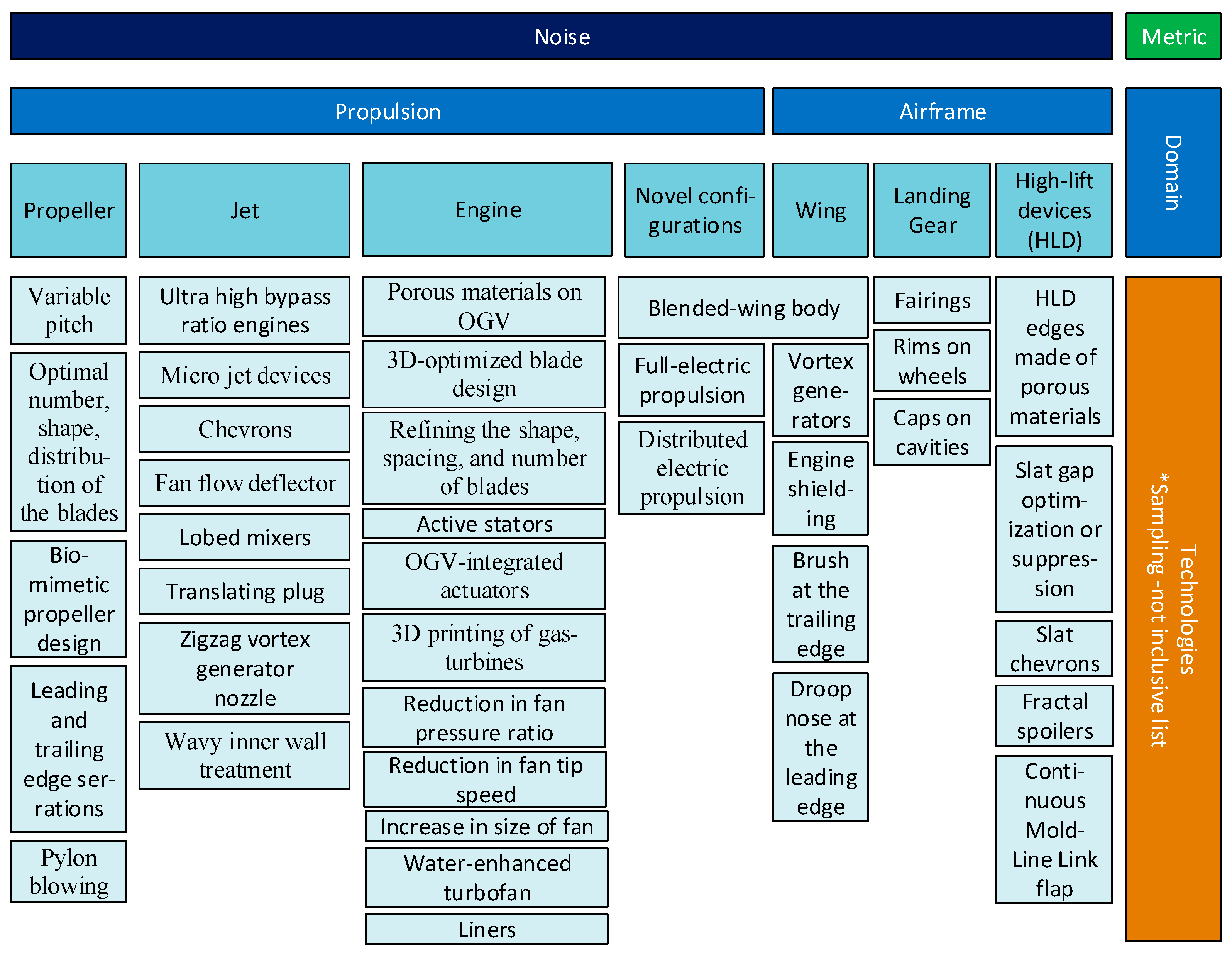
Figure 1 shows noise reduction technologies (NRT) that have a direct and indirect influence on noise produced by airplane propulsion and airframe acoustic sources.
Generally, all noise reduction technologies rely one of four principles:
  • Reduce gas flow speed (engine or airframe) and make flow speed distribution uniform;
  • Absorb sound waves using acoustic treatments on engine or airframe surfaces;
  • Shield acoustic waves by airframe along the propagation path to the listener;
  • Generate smaller vortices instead of large ones to redistribute noise to higher frequencies, which decrease more intensively with distance in the atmosphere.
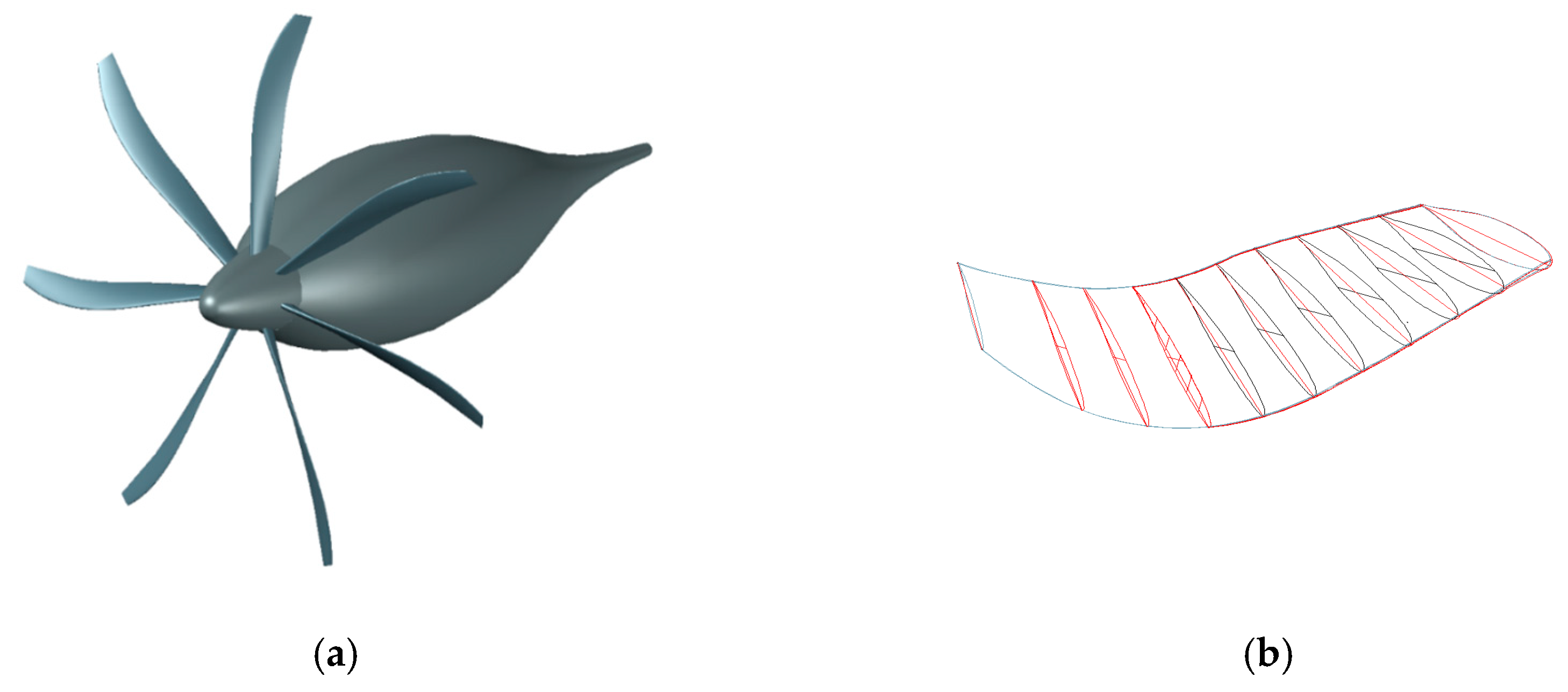
Both EFACA aircraft concepts—hybrid–electric propulsion (HEP) and liquid hydrogen propulsion (LH2) are important for AN modeling assessment. For an LH2 aircraft, the engine is suggested as an ultrahigh bypass design with available NRT. Most important is the designing of the new propeller for the HEP aircraft to provide the best acoustic performances of the propeller itself and the reduced overall aircraft noise up to the ICAO limits in general. In Figure 2, the current CAD version of the EFACA propeller geometry is shown. Its main parameters, and especially the form of the blade, is confirmed by computational aerodynamic code [1], from which the results are used for the following acoustic calculation analysis, in accordance with the main flight profile data for the HEP aircraft (Table 1).
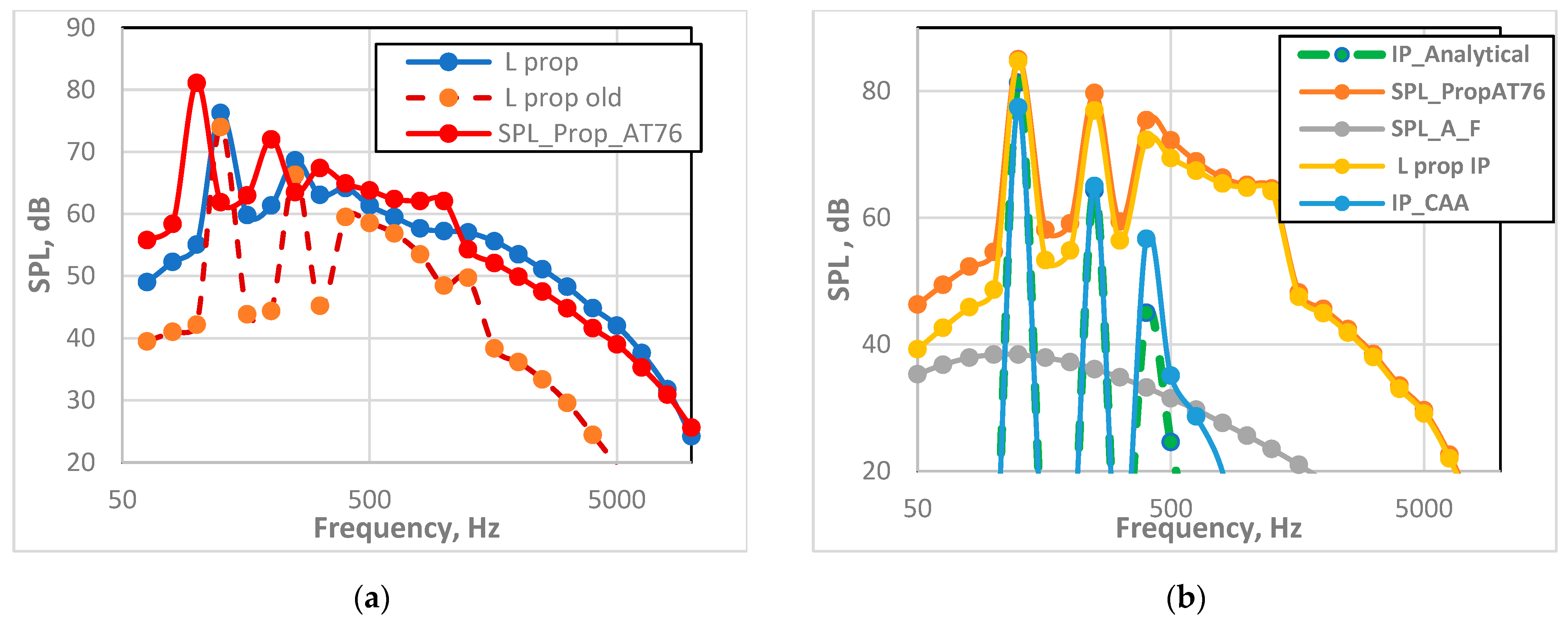
The contribution of the propeller noise for both flight modes—arrival and departure—to the overall spectrum is dominant; thus, the NRT should be provided to reduce the propeller noise in the source, with the main goal being overall aircraft noise reduction. Typical propeller noise mitigation strategies concentrate on shape optimization, including global parameters such as the propeller radius and the number of blades, and local parameters, such as the chord, twist, and sweep distributions along the radius. All these conventional methods are still a subject of ongoing research via CFD modeling, together with several unconventional methods [2]. In our case, such an NRT is obtained by designing a new propeller with seven blades (six blades are in the Hamilton HS 568F propeller for the PW-127 of the reference aircraft ATR72-600) with very specific blade geometry (Figure 2) optimized by CFD modeling. The preliminary results for the new EFACA propeller noise assessment by the NoiTra model is shown in Figure 3 and Table 2. Three types of the calculation models are used: the semi-empirical PROPELLER module of the NoiTra calculation tool achieving the standard [3] recommended for propeller noise assessment (Lprop_old in Figure 3a) by ICAO Manual [4]; an analytical model modified from the Gutin model [5]; and the direct computational aeroacoustics (CAA) method [2]. Noise measurement results (SPLprop_AT76 in Figure 3a) in Katowice airport were used for the clarification of calculated results by the NoiTra model, including the consideration of dominant acoustic sources and sound propagation effects [6].
The NoiTra calculation results fit well with the measurements in real operation (Figure 3) and further spectral and temporal analysis allows for a much better understanding of noise generation and their propagation effects at points of interest and reduction HEP aircraft noise in flight. The EFACA propeller tonal noise is assessed by analytical and CAA models—the first two harmonics are compared well between themselves, showing a 3 and 10 dB difference with a semi-empirical model (Table 2), which are considered to be noise reduction achieved by optimized CFD modeling of the blade geometry (Figure 2). The overall 3 dB reduction in EFACA propeller noise compared to the Hamilton propeller reference noise level appears to be sufficient to meet the short-term ACARE noise target.
EU INVENTOR project (https://w3.onera.fr/inventor/en accessed on 16 April 2026) investigated the NRT for the airframe acoustic sources. Its primary goal was to better understand the physics of noise generated by landing gears and wing high-lift devices, due to the intensive use of advanced CAA methods through the development of NRT for landing gears and high-lift devices’ acoustic components. Mounting support, fairing frame and porous fairings installed over the landing gear strut provide noise reduction of 5–10 dB. The effect of the correct slat-gap filler installation in wing high-lift devices may reach ~10 dB of noise reduction. Despite significant noise reductions observed at component levels, the combination of several NRTs can produce 2 EPNdB reduction at approach and ~4EPNdB at departure, comparing HEP baseline with ATR72-600 reference levels.

4. Noise in Aircraft Flight Operations

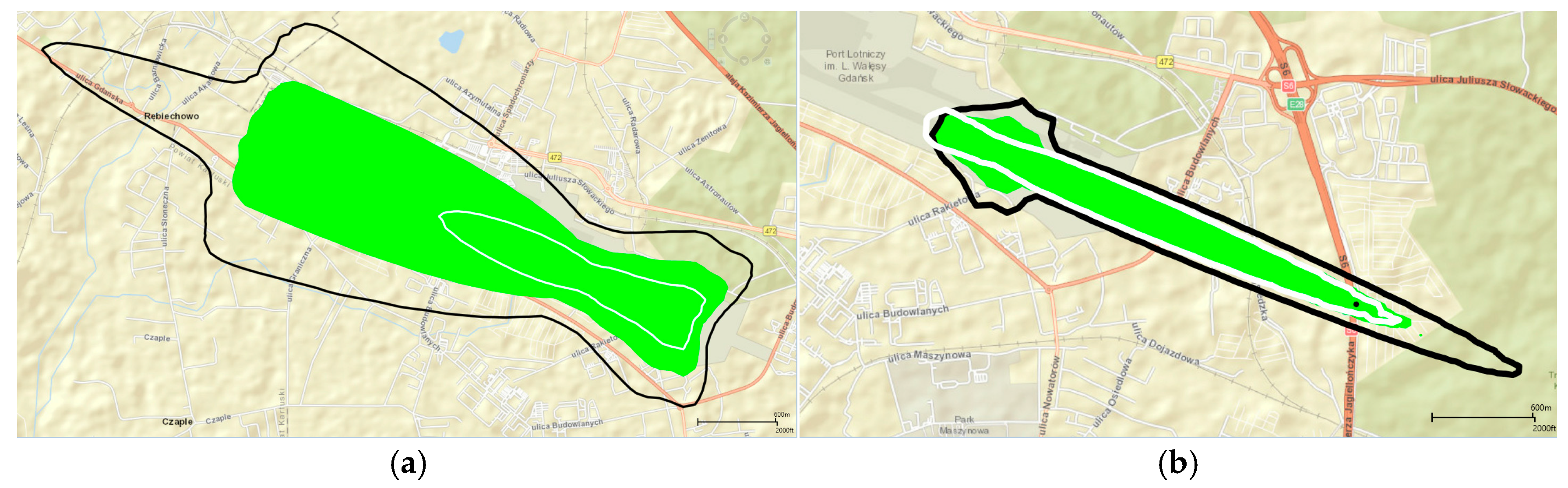
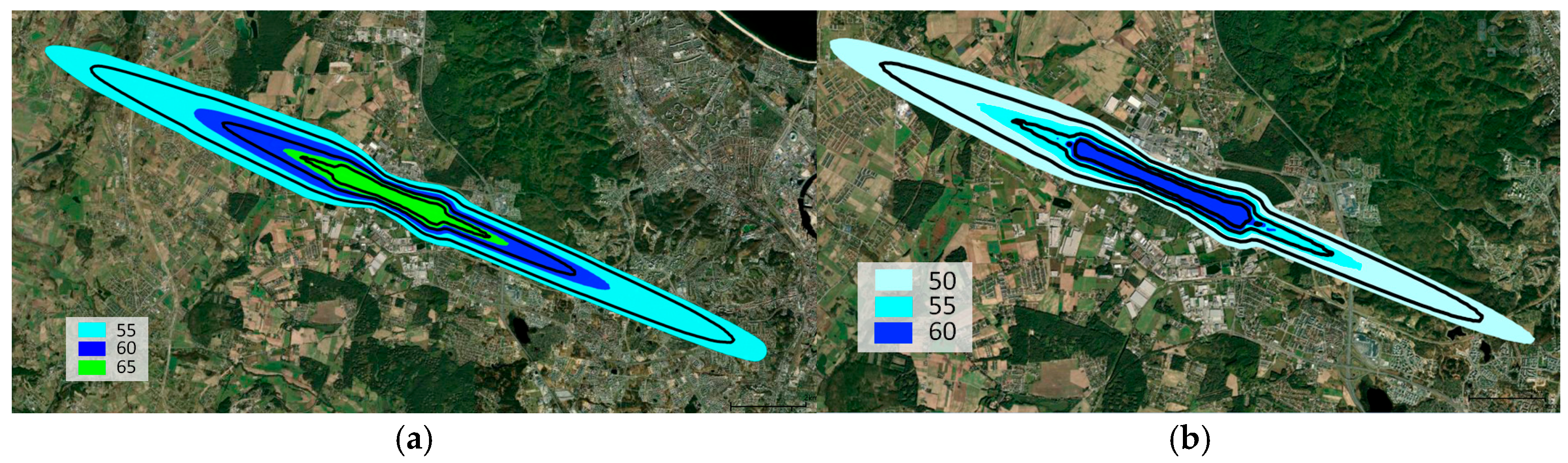
The baseline air traffic scenario (ATR72-600 or HEP aircraft contribution assessment) was analyzed further for the EFACAport layout [7], including appropriate fleet and traffic structure in the EU regional airport. In Figure 4, the EFACA HEP concept continues to demonstrate the moderate reductions in the contour area compared to the reference aircraft ATR72-600. The virtual EFACAport traffic scenario confirms the possibility of increasing to 20% of air traffic in 2035 without an increase in the existing noise zones in regional airports if the aircraft fleet includes the EFACA HEP aircraft instead of ATR72-600.
The EFACAport noise modeling results for Lden and Lnight (Figure 5) highlight the higher noise levels associated with older aircraft NRT. Across all scenarios, the LH2/HEP configurations have the greatest relative impact on departure-driven exposure, particularly where early-climb LH2 aircraft engine thrust is a dominant contributor to community noise.
In a longer perspective—the ACARE 2050 noise goal of 65% perceived noise reduction compared with the 2000-year aircraft technology design—further improvements in the propulsion and airframe of NRT are still necessary for both EFACA designs, as for conventional turboprops and turbofans.

5. Noise in Ground Operations

The propeller noise was investigated as the dominant noise source during aircraft taxiing. As a reference case, the taxiing of the ATR-72-600 in Gdansk airport was considered based on Flightradar24 data. The procedure of the estimation of velocity and acceleration dependence on distance from the Flightradar24 data was described in [7].
To compute the sound pressure level (SPL) in a local coordinate system of an airport, 0xyz, the coordinates of the separate acoustic sources—the propeller of the first engine ( x 1 e , y 1 e ) and the propeller of the second engine ( x 2 e , y 2 e )—are described by the following formulas:
x 1 e = x C G + o y s + d x s ζ ;
y 1 e = y C G + o x s + d y s ζ ;
x 2 e = x C G + o y s + d x s ζ ;
y 2 e = y C G + o x s + d y s ζ ,
where o = R e n g 2 ,   R e n g is the distance between engine axes (for ATR-72-600 R e n g = 8.1 m), d is the distance to the propeller from the center of gravity along the fuselage axis (d = 2.75 m); ζ = 1 Δ x s 2 + Δ y s 2 ; and x C G and y C G are the coordinates of the aircraft center of gravity during motion along the trajectory. The aircraft coordinates are calculated based on the arc length l. For this, the coordinates of the points on the curve from Flightradar24 are interpolated using the arc length l: for example, with the “interparc” function [8]. To compute x s and y s additional interpolation is done with a very small increment to the arc length l, resulting in coordinates x C G i and y C G i . x s = x C G i x C G . y s = y C G i y C G . This allows us to consider the direction of the aircraft motion.
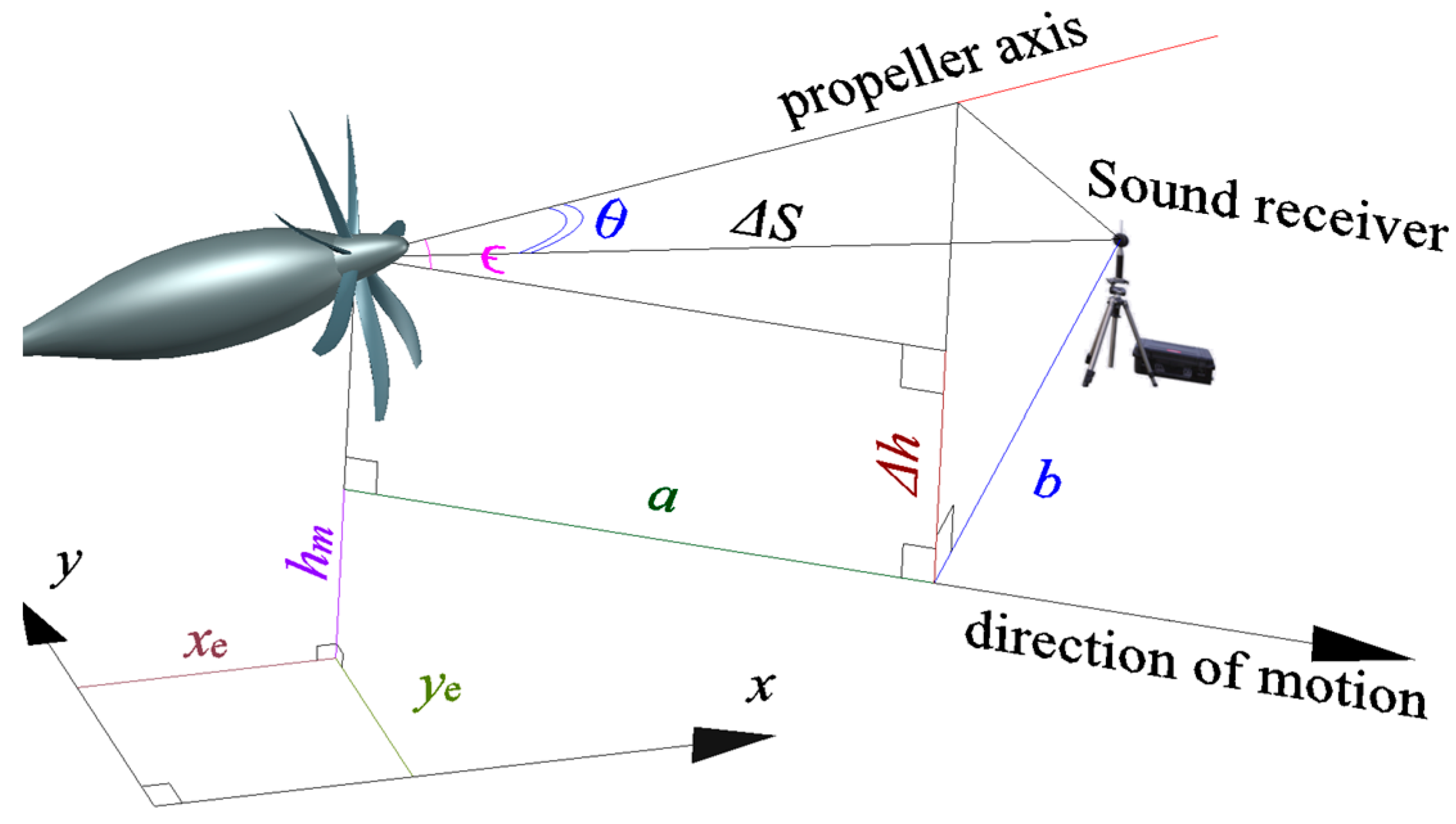
The formulas of Gutin and Deming [9] serve as the basis for our propeller noise calculations. The calculation scheme requires an estimation of the angle between the rotor axis and the direction angle on the observer location θ during the aircraft taxiing:
θ = arccos a 2 cos 2 ϵ + S 2 b 2 a tan ϵ + h 2 2 a cos ϵ S ,
where the variables are shown in Figure 6, S = a 2 + b 2 + h 2 , b is the length of the perpendicular segment from the receiver to the projected propeller axis on the horizontal plane passing through the receiver (direction of motion); a is the distance from the projected position of the propeller center to the foot of the perpendicular dropped from the receiver onto the direction of motion; Δh is the difference in geometric height between the rotor center and the receiver; the angle between the direction of the propeller axis and the direction of the aircraft motion is ϵ = α + γδ; and hm = 1.2 m is the microphone’s height above the ground.
Distances a and b for engine propellers #1 (a1 and b1) and #2 (a2 and b2) can be evaluated based on the coordinates of the receiver (xR,yR) and the propellers’ center ( x 1 e , y 1 e ) and ( x 2 e , y 2 e ) by the following formulas, combined for both engines (1,2):
Δ x 1,2 = x R x 1,2 e ;
Δ y 1,2 = y R y 1,2 e ;
a 1,2 = Δ x 1,2 Δ x s + Δ y 1,2 Δ y s ζ ;
b 1,2 = Δ x 1,2 Δ y s Δ y 1,2 Δ x s ζ ;
In case a = 0, then S = b 2 + h 2 , but θ is calculated using the following formula:
θ = arccos 1 cos 2 ϵ + S 2 b 2 tan ϵ + h 2 2 1 cos ϵ S .
For the computation of noise, it is important to note that a propeller does not run at its maximum rotation speed during taxiing, according to Flight Manual [10]. During taxiing, the propeller’s rotational speed is 850 rpm and this leads to reduced noise. The Ivchenko progress (IP) propulsion design bureau suggested the usage of a new power engine to operate at the reduced propeller rotational speed of 750 rpm for the HEP aircraft.
The sound exposure level (SEL) for each taxiing trajectory, i, was computed without cutting the top 10 dB, based on the following formula:
S E L i x , y = 10 log 10 0 t i p 2 x , y d t p 0 2 ,
where ti is the taxiing duration, p is a sound pressure estimated according to Gutin and Deming propellers noise model [9], and p0 is a threshold sound pressure.
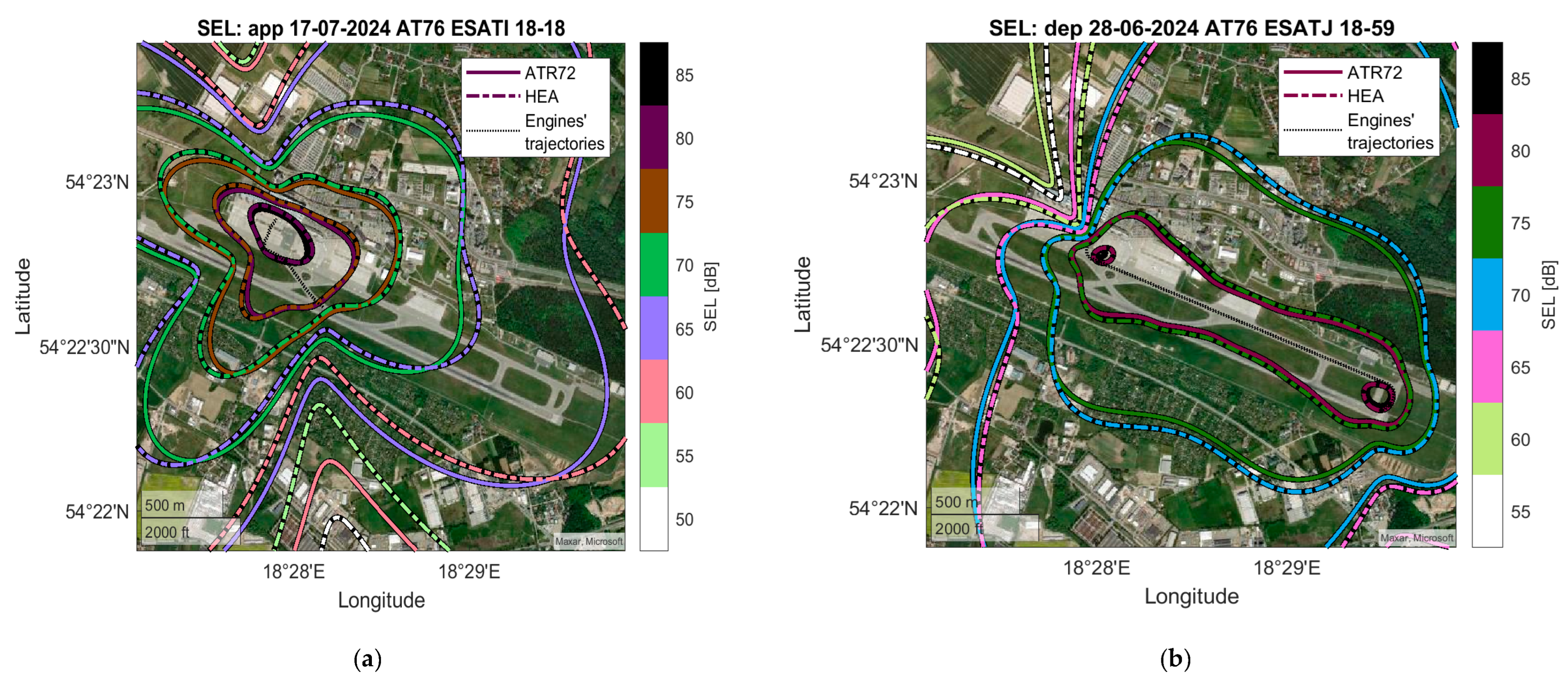
The SEL contours cover a much larger area for the long taxiing path to the East runway end, because it is much longer than the distance to the West end from the apron (Figure 7). As a result, in order to reduce noise, aircraft autonomous taxi operations should be kept as short as possible, possibly due to electric taxis. Additional SEL peaks appear within the noise contour, where the airplane turns and waits the dispatcher’s decision. The SEL comparison between the ATR-72-600 and HEP aircraft indicates that the noise reduction by the HEP aircraft can reach up to 5 dB.

6. Conclusions

The EFACA project study provides an integrated analysis of aircraft noise in flight and ground operations within the EFACA concept aircraft, focusing on NRT that were relevant to aircraft types for a regional airport. This paper focuses on the acoustic performance of a newly developed seven-blade propeller of the EFACA concept for HEP aircraft, which exhibits a significant reduction in tonal noise compared to the ATR-72-600 reference propeller, as independently validated by semi-empirical, analytical, and CAA models. The consistency between the improved NoiTra predictions and measurement data demonstrates the suitability of the updated modeling approach for both aircraft design and airport noise assessment—their results show that the ACARE 2030–35 aircraft noise targets are achievable. Ground-operation analysis shows that aircraft taxi noise exposure is strongly influenced by the taxiing trajectory and propeller rotational speed; their optimal combination during the taxi may lower the SEL by ~5 dB. These results highlight that targeted powerplant improvements combined with optimized operational procedures can provide significant progress towards achieving long-term aircraft noise reduction goals in Europe.

Author Contributions

Conceptualization, V.T. and O.Z.; methodology, V.T. and A.C.; software, V.M. and K.K.; validation, O.Z., A.C. and K.K.; formal analysis, V.T.; investigation, K.K.; resources, K.K.; data curation, V.M.; writing—original draft preparation, V.M.; writing—review and editing, V.M.; visualization, V.M. and K.K.; supervision, A.C.; project administration, A.C.; funding acquisition, O.Z. All authors have read and agreed to the published version of the manuscript.

Funding

This research was funded by European Commission grant number 101056866.

Data Availability Statement

The datasets produced in this study can be obtained from the corresponding authors upon reasonable request.

Conflicts of Interest

Andrzej Chyla was employed by Noise ACH. The remaining authors declare that the research was conducted in the absence of any commercial or financial relationships that could be construed as a potential conflict of interest.

Abbreviations

The following abbreviations are used in this manuscript:
ACAREAdvisory Council for Aviation Research and Innovation in Europe
BABalanced approach
CAAComputational aeroacoustics
CFDComputational fluid dynamics
EFACAEnvironmentally Friendly Aviation for all Classes of Aircraft
ICAOInternational Civil Aviation Organization
IPIvchenko progress
NRTNoise reduction technology
SELSound exposure level
SPLSound pressure level

References

  1. EFACA D7.8. Shaping the GTE Concept, Selection of Parameters and Design Scheme. Determination of GTE Mass. Shaping the Air Propeller Concept, Selection of Parameters and Design Scheme. Determination of Air Propeller Mass. 2024. Available online: https://drive.google.com/file/d/1ccHs5X-TL_fRySIsq01mlJukYc-eQwVX/view (accessed on 17 April 2026).
  2. Klimczyk, W.; Sieradzki, A. Airfoil Tonal Noise Prediction Using Urans. Trans. Aerosp. Res. 2023, 2023, 1–17. [Google Scholar] [CrossRef]
  3. SAE. AIR1407A Prediction Procedure for Near-Field and Far-Field Propeller Noise; SAE: Warrendale, PA, USA, 2012. [Google Scholar] [CrossRef]
  4. ICAO. Doc 9501. Environmental Technical Manual; International Civil Aviation Organization; ICAO: Montreal, QC, Canada, 2018; Volume 1, ISBN 9789292583699. [Google Scholar]
  5. EFACA D5.1. Report the Promising Technologies to Reduce Aviation Noise Exposure at Airports Around the EU and World. 2023. Available online: https://drive.google.com/file/d/1SRJRDIF462rI1yzvHqj2auPAcyYklQZQ/view (accessed on 17 April 2026).
  6. EFACA D5.2. Results of Aircraft Noise Assessment at Aircraft, Airport and Fleet Levels with Complementarily Analysis of Their Calculation and Measuring Tools. 2024. Available online: https://drive.google.com/file/d/1NTInd8amaX9JG1qgdSpq61kzYJ_vvOLa/view (accessed on 17 April 2026).
  7. Kazhan, K.; Zaporozhets, O.; Chyla, A.; Makarenko, V.; Tokarev, V. Low-Noise Airport Flight and Ground Operations. In Proceedings of the 11th European Conference for Aeronautics and Space Sciences (EUCASS), Rome, Italy, 30 June–4 July 2025. [Google Scholar] [CrossRef]
  8. D’Errico, J. Distance Based Interpolation Along a General Curve in Space. Interparc. 2025. Available online: https://www.mathworks.com/matlabcentral/fileexchange/34874-interparc (accessed on 17 April 2026).
  9. Brown, A.; Harris, W. A Vehicle Design and Optimization Model for On-Demand Aviation. In Proceedings of the 2018 AIAA/ASCE/AHS/ASC Structures, Structural Dynamics, and Materials Conference; American Institute of Aeronautics and Astronautics: Reston, Virginia, 2018. [Google Scholar]
  10. Avions de Transport Régional. Flight Crew Operating Manual; Avions de Transport Régional, Direction Support Exploitation: Blagnac, France, 1999; Available online: https://aviation-is.better-than.tv/atr72fcom.pdf (accessed on 17 April 2026).
Figure 1. Variety of NRT in aircraft propulsion and airframe designs.
Engproc 133 00038 g001
Figure 2. Seven-bladed propeller for the EFACA HEP aircraft (a) and its blade geometry (b) optimized to aircraft flight profile.
Engproc 133 00038 g002
Figure 3. Calculated EFACA propeller noise (blue line); the dashed line is for the calculated spectrum by the previous NoiTra model: (a) comparison with measured ATR72-600 (red line) and (b) comparison with analytical and CAA calculation results.
Engproc 133 00038 g003
Figure 4. Noise footprints 90 EPNdB for the departure (a) and approach (b) of the ATR-72-200 (black line), ATR-72-600 (green area), and EFACA HEP (white line within the green area): ICAO certification points are shown in comparison to footprint boundaries.
Engproc 133 00038 g004
Figure 5. EFACAport noise scenario LDEN (a) and Lnight (b) analysis for 2019 (colored footprints) and 2035 (isolines): transition from CEO/ATR-72-200 to LH2/HEP aircraft fleet [6].
Engproc 133 00038 g005
Figure 6. Schematic representation of variables used in SPL estimation.
Engproc 133 00038 g006
Figure 7. SEL during taxi in operations: (a) shortest taxi in and (b) longest taxi out.
Engproc 133 00038 g007
Table 1. Airplane flight profile points for the propeller performance assessment [1].
Flight PhaseHEP RatingAltitude, mMach NumberVelocity, M/C
Take offNormal TO00.171458.32
4000.172258.33
Climb to cruise altitudeMax Climb Max Cruise4000.36121.94
61000.36113.76
CruiseMax Cruise61000.45142.20
DescentFlight Idle61000.32101.12
4000.32108.39
Descent and landingFlight Idle4000.172258.33
00.171458.32
Table 2. Comparison of the tonal components of the propeller noise by analytical, CAA and semi-empirical models.
MethodHarmonic Frequency ftonal, Hz
128.3256.7385.0513.3641.7770.0
EmpiricalLtonal. dB84.1574.970.668.666.565.4
AnalyticalLtonal. dB 81.365.14524.63.4−18.3
CAALtonal. dB 77.56556.735.128.719.8
Diff∆Ltonal. dB3.0–7.010>20>30
Disclaimer/Publisher’s Note: The statements, opinions and data contained in all publications are solely those of the individual author(s) and contributor(s) and not of MDPI and/or the editor(s). MDPI and/or the editor(s) disclaim responsibility for any injury to people or property resulting from any ideas, methods, instructions or products referred to in the content.