1. Introduction
The Ingenuity UAV, which completed seventy-two missions on the surface of Mars, was a breakthrough in space exploration. It demonstrated that rotorcraft can operate in a non-terrestrial environment with atmospheric and gravitational conditions very different from those on Earth. The mission was preceded by extensive studies aimed at replicating Martian conditions through simulations and real-world testing. This proved that aerial missions on the Red Planet can be effectively prepared and validated on Earth. However, the long-term goal of unmanned Mars operations is to support future human missions. Crews operating on the Martian surface will require vehicles capable of transporting passengers and cargo.
As an effect of Ingenuity’s success, a lot of new research on developing UAVs for Martian conditions has been conducted. Most of the research focuses on enhancing Ingenuity’s capabilities [
1,
2], while others propose different rotor layouts, such as quadcopters or octocopters [
3,
4,
5,
6]. Examples of the general challenges facing Martian rotorcraft are also described in [
7]. We can see that the successful Ingenuity mission has had a significant impact on ongoing research and has opened the path to developing new technologies for Mars exploration. Nevertheless, there are not many studies that ask whether it is possible to develop a rotorcraft capable of transporting passengers and loads with all the benefits of using a helicopter. This paper describes a conceptual study of that case, using tools that were developed for helicopter main rotor design.
During the last five years, rotorcraft optimization research was conducted at the Military University of Technology. The studies were aimed at algorithmizing the aerodynamic and structural design process of rotorcraft, taking into consideration changes in the outer shape of the rotor blade while simultaneously modifying the structural strength. The blade planform and geometric parameters are adjusted for better performance capabilities of the rotorcraft, and the inner structure is optimized to minimize total rotor mass while maintaining the capability to sustain loads. Each phase of the research was published in a scientific journal to provide evaluation of the obtained results. The initial phase, consisting of the rotorcraft construction analysis which provides dimensionless parameters to evaluate new and existing constructions, was described in [
8].
The second [
9] and third [
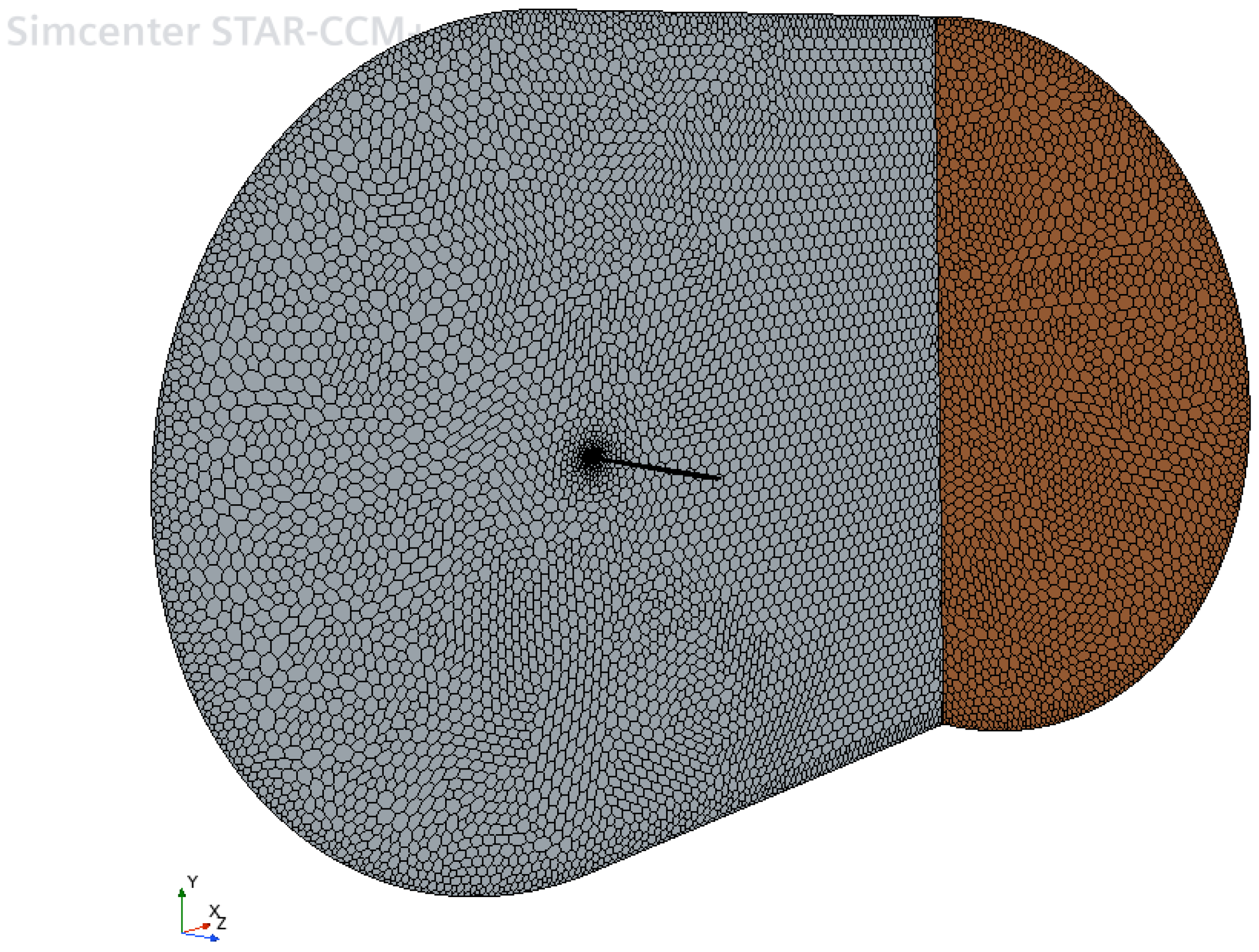
10] phases, which were developed in 2022 and 2023, are focused on preparing the parametrized CFD blade model. The numerical simulations are prepared for different flight conditions, including hover and forward flight. The full parametrization provides the designer with a ready-to-use program for generating the blade shape by entering geometric parameters such as chord, radius, and twist. The airfoil coordinates are loaded from a predefined file. Simultaneously with the blade shape, proportional fluid enclosures are also generated. The fully automated process prepares a CAD file ready to be imported into the CFD environment. The inflow for the one-bladed simulation is calculated and prepared as a function. For the full rotor simulation, the blades are trimmed (collective and cyclic pitch calculation) and inserted into the model using the calculated angles. An example of a parametrized full rotor enclosure for a one-blade hover case calculation is shown in
Figure 1.
The next stage of the research was the parametrization of the structural blade model. The results were shown in [
11]. The final phase was to combine the stages described above into an optimization algorithm. A mathematical model for the aerostructural optimization problem was proposed. The CFD and FEM analyses were combined into an FSI simulation to determine the best blade shape while taking structural strength into account. The method was evaluated using an existing helicopter. The results of an exemplary optimization with method validation are summarized in [
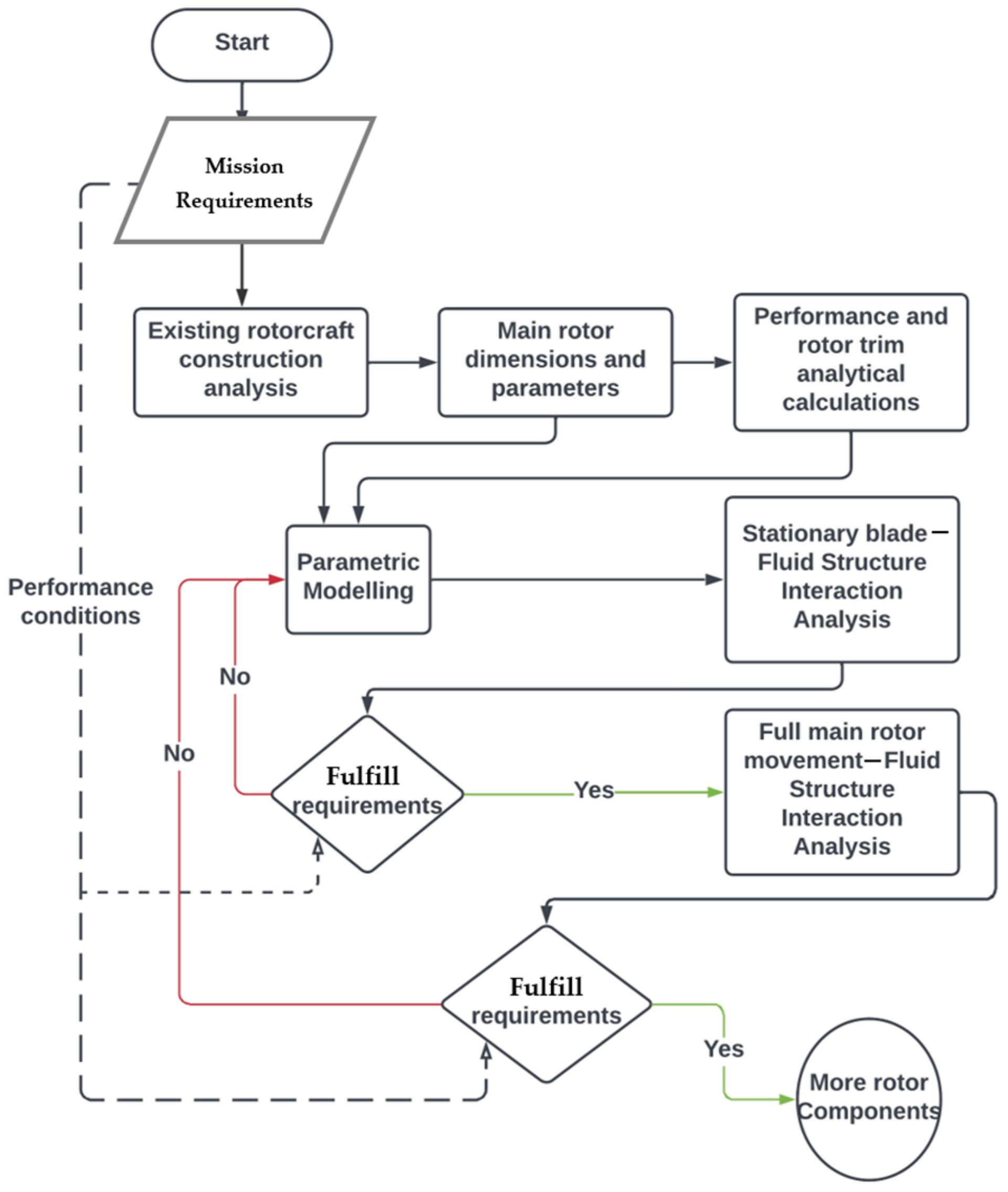
12]. The optimization algorithm is shown in
Figure 2.
The main goal of the study presented in this paper is to initiate the development of Martian transportation capabilities. It is crucial for the space research sector in Europe to regain competitiveness by engaging in the most advanced research. As a result of this conceptual phase, the ability to calculate rotorcraft performance and main rotor trimming in extraterrestrial conditions has been acquired.
2. Method Application
In this research, a design optimization method is partially applied to the initial calculation of manned rotorcraft performance and the evaluation of its hover capability. To perform the preliminary estimates for the required rotor dimensions and potential trim angles, the first step is to adjust the atmospheric parameters. The key difference between Earth and the Martian environment is the typical atmospheric pressure and density. The density of the Martian atmosphere is roughly 1% of that on Earth. Another important factor is temperature: average temperatures on Mars are about 80 K lower than those on Earth. Additionally, Mars’ gravity must be considered in the calculations, as it is approximately one-third of Earth’s gravity. For the CFD calculations, the viscosity of the gas must also be changed in the flow parameters.
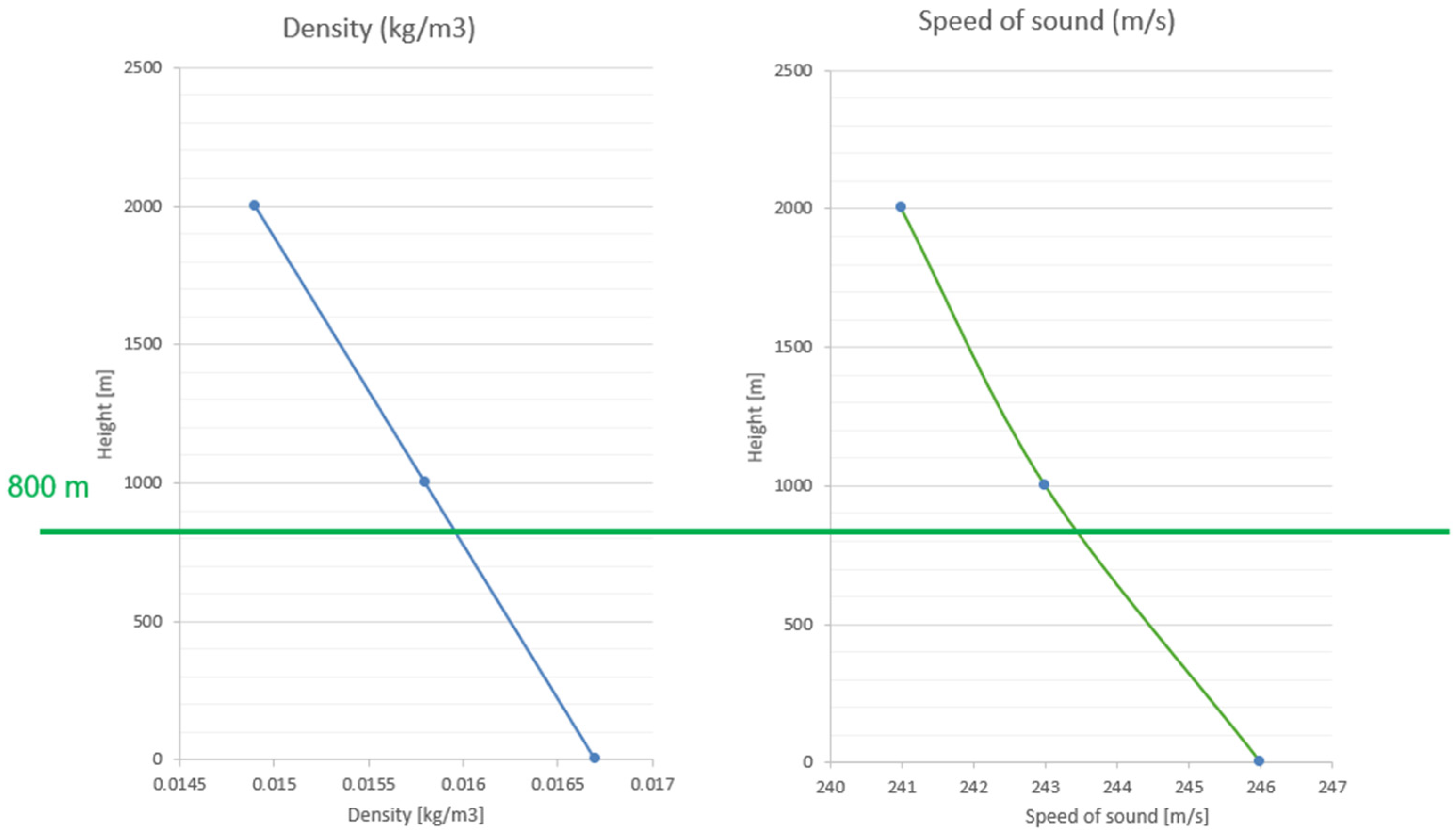
The density of the Martian atmospheric gas changes with altitude. Even at an increase of just 100 m in flight level, the density decreases, which affects the produced lift. A second factor influencing the calculations is the local speed of sound, which limits the maximum rotor radius depending on the rotational speed. These two factors are both implemented in the calculation programs. The density and speed-of-sound functions are shown in
Figure 3. The green line on the graphs indicates the ceiling used in the calculations as the maximum height for the planned operations.
3. Martian Rotorcraft Concept
The first step in rotorcraft design and in evaluating the possibility of producing lift on the surface of Mars is to calculate the main rotor. During performance analysis, it was found that the classic Sikorsky helicopter layout was not efficient. The tail rotor would have to be extremely large, or the tail boom would need to be very long, to generate enough thrust to balance the rotor torque. For this reason, the decision was made to analyze a coaxial rotor variant.
To start the calculations, the total weight of the rotorcraft must be estimated. As a reference for construction development, the existing rotor-glider design was used. The concept is based on the Focke-Achgelis FA-330 Bachstelze, a German design from the Second World War, which had a maximum takeoff weight of 148 kg and a main rotor diameter of 7.32 m.
The proposed construction takes into account the main aircraft elements for mass calculation. The propulsion system is based on an existing electric rotorcraft engine. The airframe (fuselage, transmission, and steering rods) is estimated based on the rotor-glider. The dual coaxial four-bladed main rotor is included, with each blade mass limited to 5 kg. The load is assumed to be 200 kg, accounting for a pilot and 100 kg of cargo. Last but not least, the battery, which is the most important part of the entire rotorcraft, is considered. The endurance and range of the helicopter depend on battery mass and energy density. For the first estimation, it was assumed that a lithium-sulfur battery with 500 Wh/kg energy density will be used. The expected mass evaluation is presented in
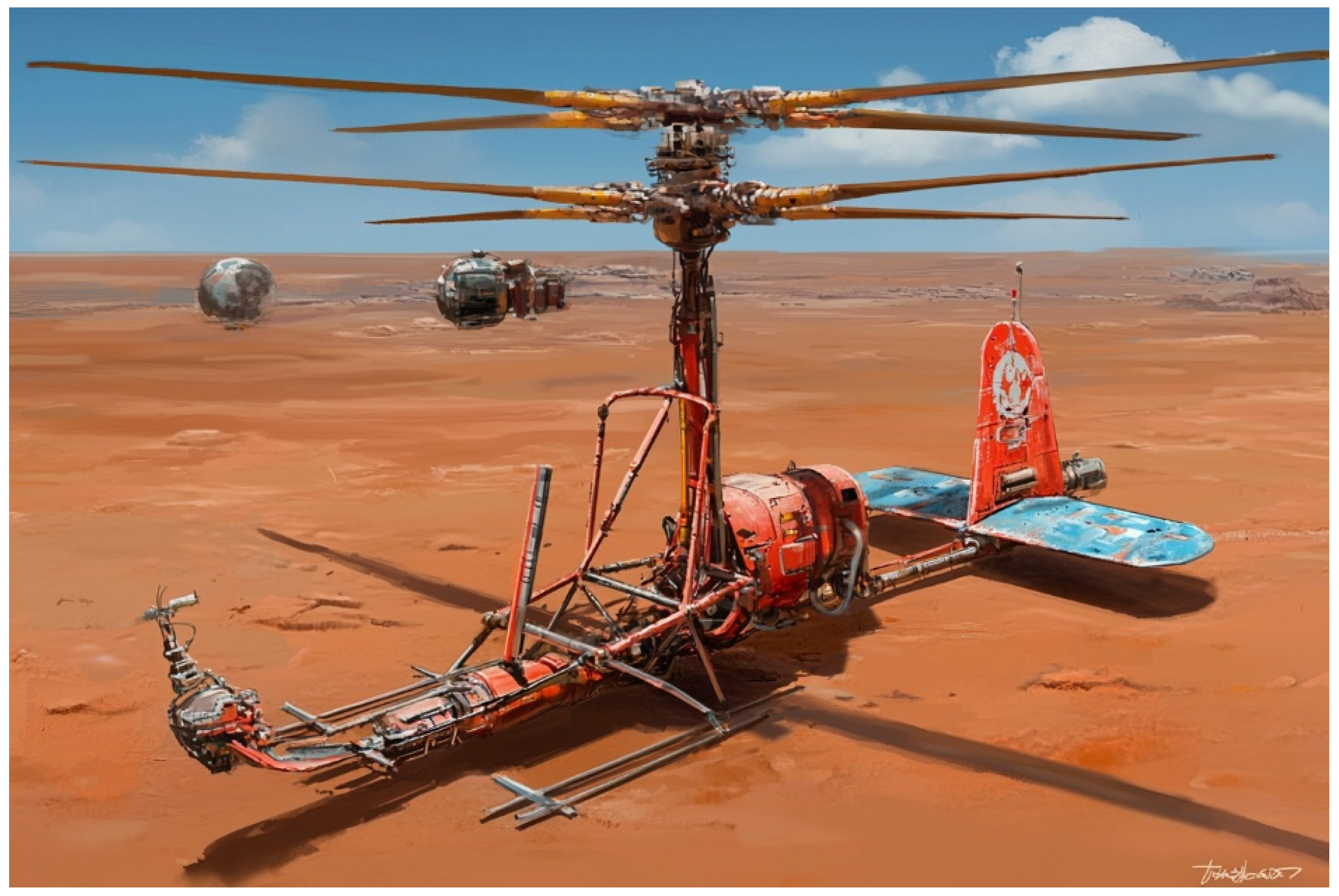
Table 1. The first graphic concept is shown in
Figure 4.
The mass estimation and method adjustment lead to the first performance calculations and the search for the proposed rotor dimensions. It is crucial to find a shape that provides the required lift and maneuverability in each flight phase, while remaining compact enough to be transported to another planet. The speed of sound can also limit the forward speed due to the combination of forward velocity and the angular velocity of the advancing blade.
Using the described tool and prerequisites, the first blade shape that provides the required lift from the coaxial dual rotor, with a technologically feasible collective pitch, was calculated. The first calculation was performed using the standard helicopter airfoil NACA 23015. The resultant rotor parameters are:
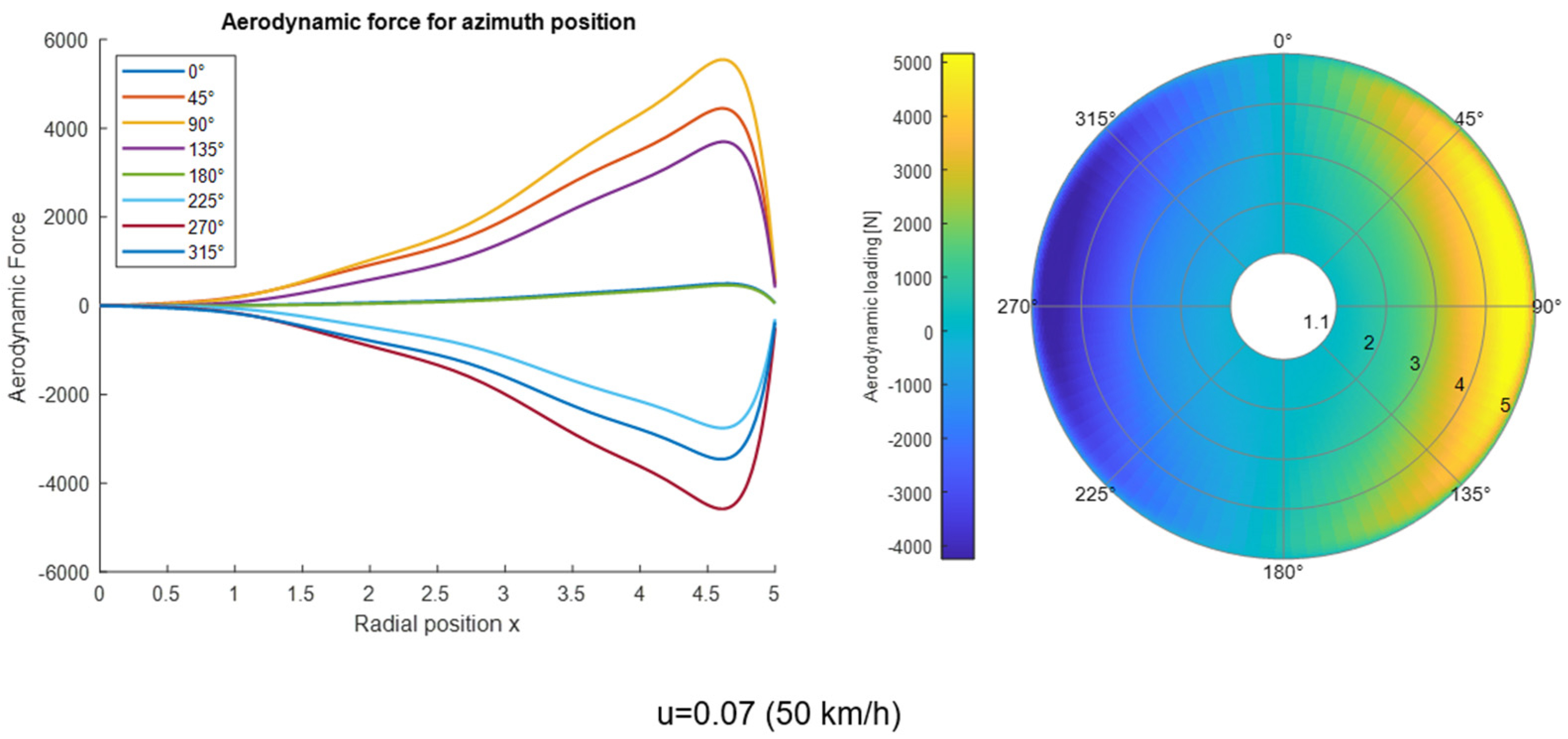
For the conceptual design, we can assume that the rotors produce equal lift. Using the design tool, we obtain the aerodynamic loading for the entire rotor disk. The forces acting on a blade can be evaluated at each azimuth position. A graphical example, for 25 km/h, is shown in
Figure 5.
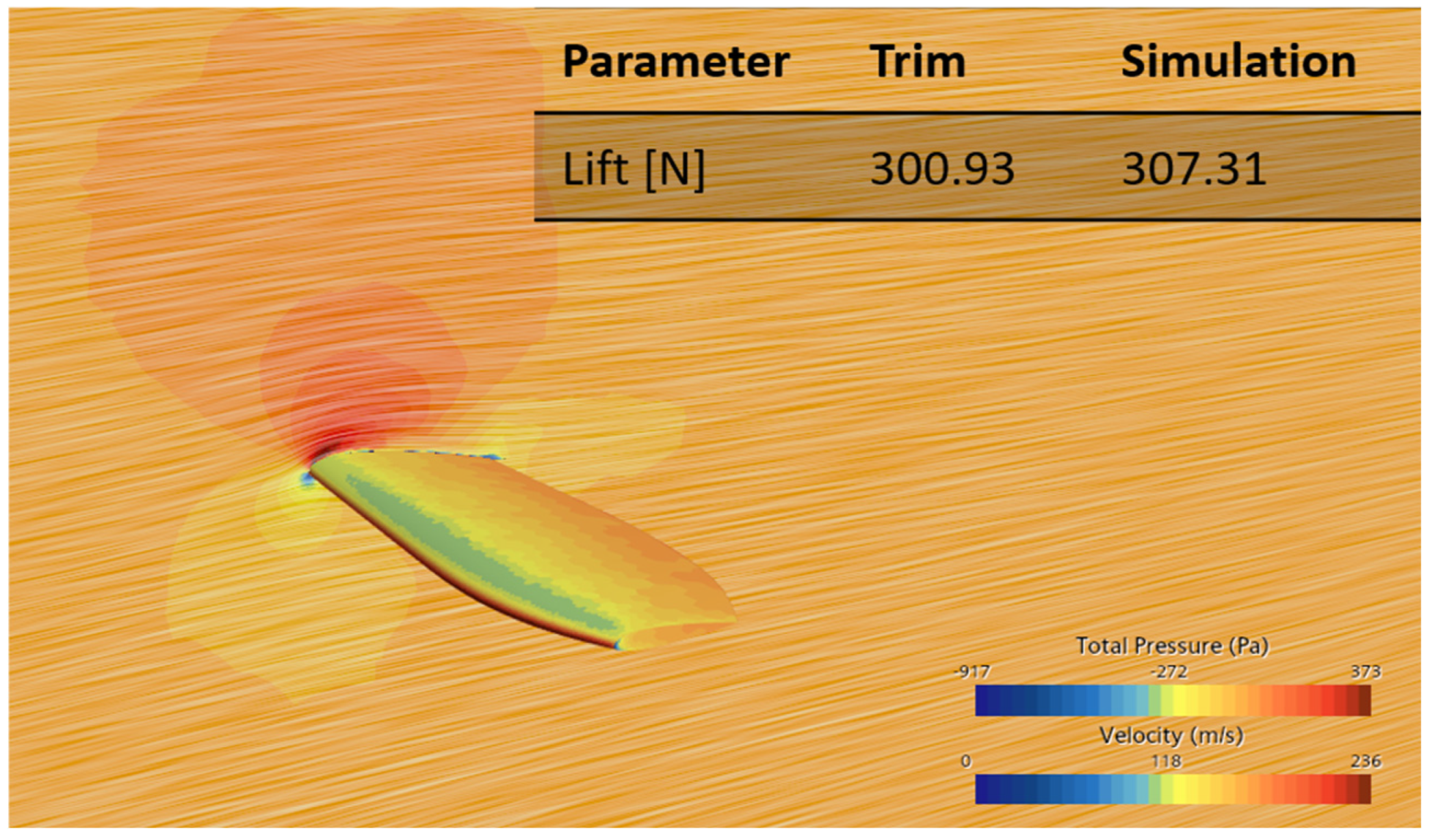
To confirm the analytical assumptions, a CFD simulation was conducted. The single-blade simulation, with a customized inflow angle varying across the span, provides results that confirm the capability of producing lift under Martian conditions. Exemplary results are shown in
Figure 6.
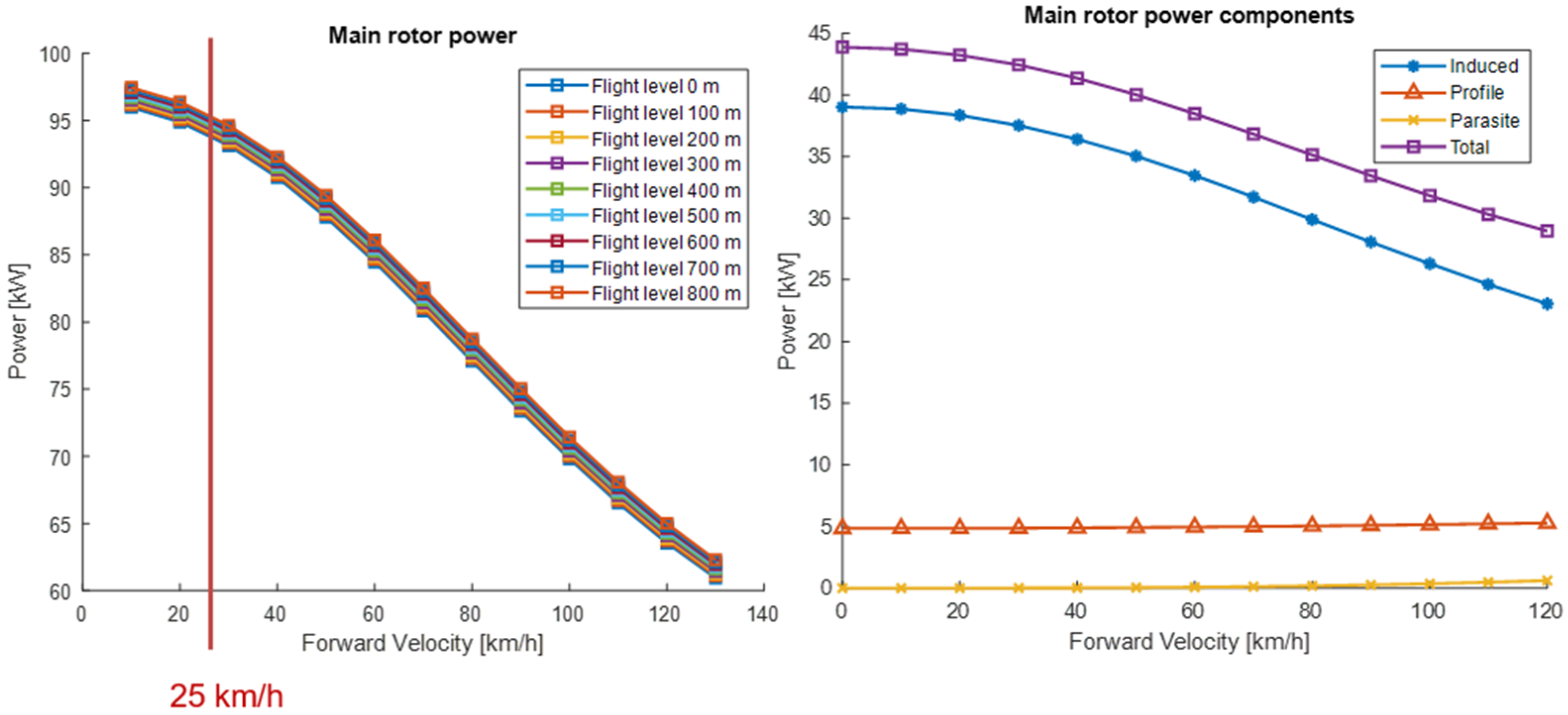
With the rotor dimensions, a performance estimation can be conducted. First, we calculated the required power based on the rotor dimensions, taking into consideration the flight altitude and forward speed. The results are shown in
Figure 7. The left chart represents the required power for the dual coaxial rotor, and the right chart shows the power components for a single rotor. The red line indicates the maximum velocity for this configuration, which is limited by the maximum speed at the blade tip.
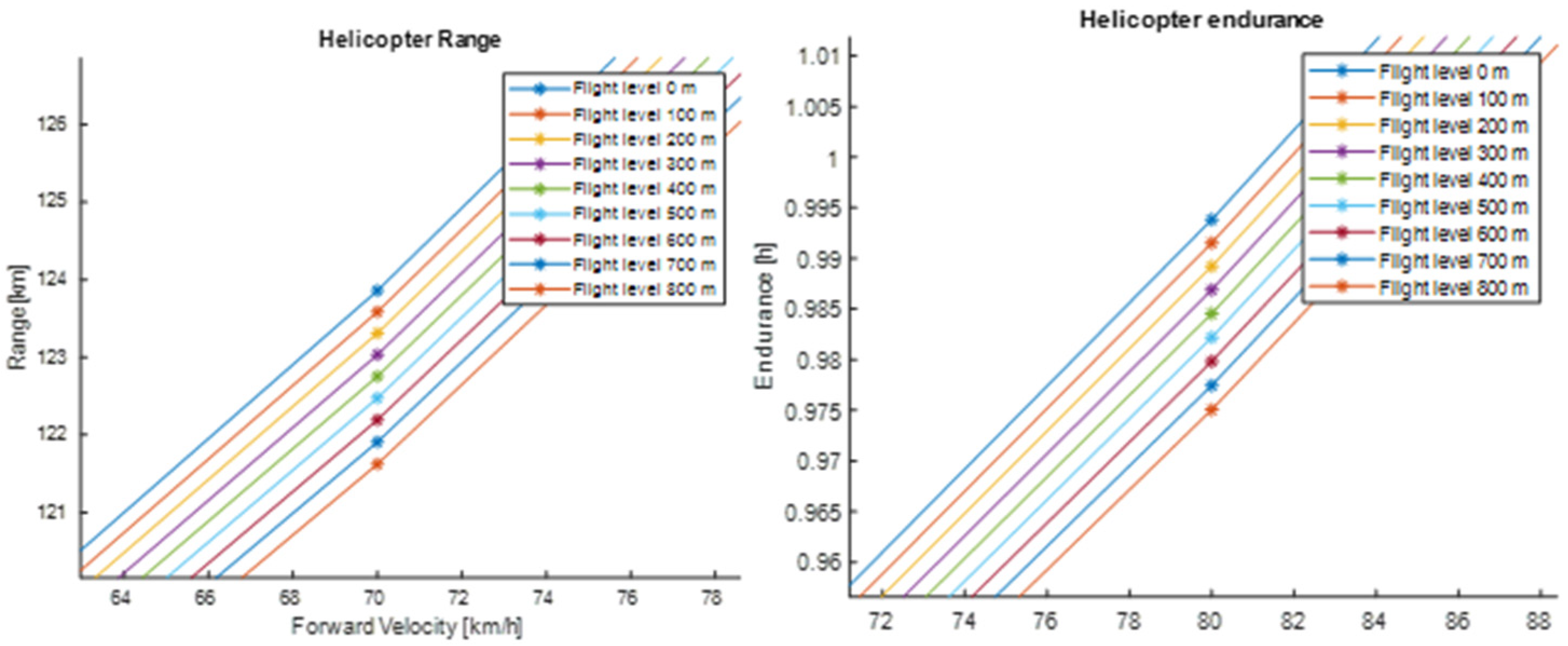
With the required power, the helicopter’s range and endurance can be estimated. A crucial factor in this phase of the calculations is the battery mass and its energy density. The calculated values (magnified to show the influence of flight level change) are presented in
Figure 8.
4. Conclusions
This paper is a short brief on the concept of a Martian rotorcraft capable of transporting a pilot and additional payload. It was shown that, under certain conditions, it is possible to design a construction that could fly on the surface of Mars. Using the method developed at the Military University of Technology, it was demonstrated through analytical and numerical calculations that it is feasible to develop a rotorcraft structure that could be part of future Mars missions.
It was also demonstrated that the presented method is well suited for designing the main rotor structure, even under different environmental conditions. The next steps will focus on finding the optimal main rotor geometry using analytical calculations combined with numerical analysis. It will also be crucial to determine the most suitable airfoil shape.
In the next steps, a full conceptual design of the rotorcraft is planned. The task will be divided into several branches. First, detailed performance calculations and mission planning will be performed, taking into account Martian surface and atmospheric conditions, which vary with geographical longitude and latitude. Another challenge is selecting the appropriate propulsion and battery system capable of operating at much lower temperatures. Next, the airframe will be estimated, including the general layout of components and strength calculations. It is also important to consider the required avionic equipment. Finally, maintenance planning and airworthiness management should be prepared.
As a result, a full concept of the rotorcraft is planned to be prepared. This will allow a feasibility study to be performed and will highlight the risks and technologies that require further development.
Author Contributions
Conceptualization, J.K. and R.R.; methodology, J.K.; validation, Ł.K. and R.R.; formal analysis, J.K.; investigation, J.K.; resources, Ł.K.; writing—original draft preparation, J.K.; writing—review and editing, R.R.; supervision, R.R.; project administration, Ł.K. All authors have read and agreed to the published version of the manuscript.
Funding
This work was funded by the Military University of Technology (Warsaw, Poland) under the university research project no. UGB 531-000037-W200-22 entitled “Algorithmization of the aerodynamic design process of light aircraft, taking into account the optimization of their wetted body geometry in order to improve performance qualities”. The project was carried out at the Faculty of Mechatronics, Armament and Aerospace of the Military University of Technology in 2025.
Institutional Review Board Statement
Not applicable.
Informed Consent Statement
Not applicable.
Data Availability Statement
The data presented in this study are available upon request from the corresponding author due to the early stage of the research.
Acknowledgments
During the preparation of this manuscript/study, the authors used Midjourney AU v7 for the purposes of conceptual graphic preparation. The authors have reviewed and edited the output and take full responsibility for the content of this publication.
Conflicts of Interest
The authors declare no conflicts of interest.
References
- Withrow, S.; Johnson, W.; Young, L.A.; Cummings, H.; Balaram, J.; Tzanetos, T. An advanced mars helicopter design. In Proceedings of the ASCEND 2020, Online, 16–18 November 2020. [Google Scholar]
- Cummings, H.; Perez, B.N.P.; Koning, W.; Johnson, W.; Young, L.; Haddad, F.; Romander, E.; Balaram, J.; Tzanetos, T.; Bowman, J.; et al. Overview and Introduction of the Rotor Optimization for the Advancement of Mars eXploration (ROAMX) Project. In Proceedings of the Aeromechanics for Advanced Vertical Flight Technical Meeting, Transformative Vertical Flight 2022, San Jose, CA, USA, 25–27 January 2022. [Google Scholar]
- Ruiz, M.C.; D’Ambrosio, D. Aerodynamic optimization and analysis of quadrotor blades operating in the Martian atmosphere. Aerosp. Sci. Technol. 2023, 132, 108047. [Google Scholar] [CrossRef] [Scilit]
- Zhu, K.; Quan, Q.; Wang, K.; Tang, D.; Tang, B.; Dong, Y.; Wu, Q.; Deng, Z. Conceptual design and aerodynamic analysis of a Mars octocopter for sample collection. Acta Astronaut. 2023, 207, 10–23. [Google Scholar] [CrossRef] [Scilit]
- Zhu, K.; Quan, Q.; Tang, D.; Dong, Y.; Wang, K.; Tang, B.; Wu, Q.; Deng, Z. A Mars quadcopter capable of autonomous flight and sample collection: Structure and avionics. Acta Astronaut. 2024, 214, 712–721. [Google Scholar] [CrossRef] [Scilit]
- Maser, S.W.; Johnson, W.; Young, L.; Koning, W.; Kuang, W.; Malpica, C.A.; Balaram, J.; Tzanetos, T. Mars science helicopter: Conceptual design of the next generation of mars rotorcraft. In Proceedings of the ASCEND 2020, Online, 16–18 November 2020. [Google Scholar]
- Radotich, M.; Withrow-Maser, S.; deSouza, Z.; Gelhar, S.; Gallagher, H. A study of past, present, and future mars rotorcraft. In Proceedings of the 9th Biennial Autonomous VTOL Technical Meeting, Online, 26–28 January 2021. [Google Scholar]
- Kachel, S.; Rogólski, R.; Kocjan, J. Review of Modern Helicopter Constructions and an Outline of Rotorcraft Design Parameters. Probl. Mechatron. Armament Aviat. Saf. Eng. 2021, 12, 27–52. [Google Scholar] [CrossRef] [Scilit]
- Kocjan, J.; Kachel, S.; Rogólski, R. Helicopter Main Rotor Blade Parametric Design for a Preliminary Aerodynamic Analysis Supported by CFD or Panel Method. Materials 2022, 15, 4275. [Google Scholar] [CrossRef] [Scilit] [PubMed]
- Kocjan, J.; Kachel, S.; Rogólski, R. Parametrization of the main rotor and working environment for different flight conditions—Computational Fluid Dynamics analysis as an application for multidisciplinary optimization. J. Theor. Appl. Mech. 2023, 61, 793–805. [Google Scholar] [CrossRef] [Scilit]
- Kocjan, J.; Kachel, S.; Rogolski, R. Helicopter main rotor FSI analysis using parametric blade model as an application for multidisciplinary optimization. J. Phys. Conf. Ser. 2024, 2716, 012031. [Google Scholar] [CrossRef] [Scilit]
- Kocjan, J.; Rogólski, R. Aerostructural Helicopter Main Rotor Optimization Considering Mass and Strength Limitations. Int. Rev. Aerosp. Eng. 2025, 18, 62–72. [Google Scholar] [CrossRef] [Scilit]
| Disclaimer/Publisher’s Note: The statements, opinions and data contained in all publications are solely those of the individual author(s) and contributor(s) and not of MDPI and/or the editor(s). MDPI and/or the editor(s) disclaim responsibility for any injury to people or property resulting from any ideas, methods, instructions or products referred to in the content. |