1. Introduction
Mechanical metamaterials [
1,
2] are a class of rationally designed structures whose effective properties are governed by their internal architecture rather than their constituent materials. This design-led paradigm allows for the creation of structures with precisely tailored and often unusual multiphysics behaviors. By systematically modifying the geometric parameters of the repeating unit cell, it is possible to tune a wide range of effective properties, including stiffness, bulk modulus, functionally graded characteristics, and even extreme thermal expansion. This design freedom also extends to achieving unconventional responses such as negative stiffness, auxeticity (a negative Poisson’s ratio), and complex couplings between deformations, such as compression and twist. The rapid advancement of additive manufacturing (AM) technologies has been a critical catalyst, providing the unprecedented design freedom necessary to realize these complex internal geometries and bring metamaterials from conceptual design to functional engineering applications [
3,
4]. Moreover, the response of these architected materials can be made programmable, enabling properties to be actively tuned or switched via external stimuli, such as temperature, or through mechanically induced instabilities like buckling.
Within the vast design space of metamaterials, the use of curved elements instead of traditional straight struts has proven to be a particularly fruitful avenue of research. Topologies incorporating curved beams can offer distinct advantages, including greater compliance, reduced stress concentrations at junctions, and improved energy absorption capabilities. Various parametric curves, such as circular arcs, sinusoids, NURBS, and B-splines, have been employed to synthesize novel architected materials. Among these, Bézier curves offer a compelling balance of design flexibility and simplicity, as their complex shapes are governed by a small number of control points. This parametric nature makes them exceptionally well-suited for tuning mechanical properties through the precise manipulation of a few geometric variables, thereby widening the achievable design space [
5,
6,
7].
The forward problem—predicting the properties of a given geometry—is often addressed using analytical models based on beam theory, strain energy methods like Castigliano’s second theorem, or computational approaches such as finite element (FE) analysis and homogenization. However, the more critical challenge from an application standpoint is the inverse problem: identifying an architecture that yields a specific, targeted response. This problem is often ill-posed, as multiple distinct geometries can result in identical mechanical properties. To this end, structural optimization techniques, including topology and shape optimization, have become indispensable tools. Isogeometric analysis (IGA), in particular, has emerged as a powerful framework that integrates computer-aided design (CAD) and analysis, enabling more accurate and efficient shape optimization by using the same NURBS basis functions that define the geometry [
8,
9,
10].
This paper presents a framework for the design and systematic optimization of metamaterials based on unit cells constructed from cubic Bézier curves. By methodically tuning the geometric parameters that define the Bézier curve—namely, the control point positions—we establish clear structure–property relationships that govern the material’s mechanical and physical response. Leveraging a combination of computational homogenization and parametric optimization, our work addresses the inverse design challenge for this class of materials. The ultimate goal is to create a robust design methodology that enables the generation of Bézier-based metamaterials with customized, on-demand multiphysics properties, thereby expanding their potential for advanced engineering applications.
2. Materials and Methods
This study is an extension of the work [
6] and investigates a broader set of geometric configurations by combining two complementary stages. In the first stage, an extensive parametric exploration was performed through automated FE analyses in the ANSYS 2020 R2 Mechanical APDL solver in batch mode. In the second stage, a targeted multi-factor optimization was conducted with modeFRONTIER 2024R2 software combined with FE modeling in Abaqus 2022. The aim was to establish a hierarchy among input parameters and provide designers with a robust tool for multi-objective optimization.
The investigated structure is a sample of a sandwich panel that occupies a volume of 21 mm × 25 mm × 21 mm, with top and bottom skins having a thickness of 2 mm. The core is formed by four in-plane repetitions of an elementary unit cell along two orthogonal directions, where the unit cell consists of two anti-symmetric cubic Bézier curves rotated by 90°. The parameter λ, which is the distance between the endpoints of the base curve, is therefore equal to 21 mm/4 = 5.25 mm. The thickness of the 2D ligament, defined by the Bézier curve, was kept constant in the studied cell. The resulting geometry is extruded along the out-of-plane direction.
Assuming a reference system with its origin in
P0 and the
x-axis oriented as the segment
P0P3, the control points are positioned as follows:
P0(0,0),
P3 (λ, 0),
P1(x
1, y
1) and
P2(λ−x
1, −y
1), since the curve considered in this study is anti-symmetric. For the herein study, the chosen variables are the position of the control point
P1 with respect to
P0, defined by the coordinates x
1 and y
1, and the thickness s. The variables x
1 and y
1 were varied from 0.5 to 2.7 mm in 0.2 mm increments and s from 0.5 to 1.1 mm with increments of 0.1 mm, whose full combination results in a total of 864 design configurations. In the optimization stage, each input variable was varied with the finer resolution of 0.1 mm while maintaining the same bounds. The range for s was determined based on the constraint s/λ < 0.3, which preserves topological integrity as indicated in [
6].
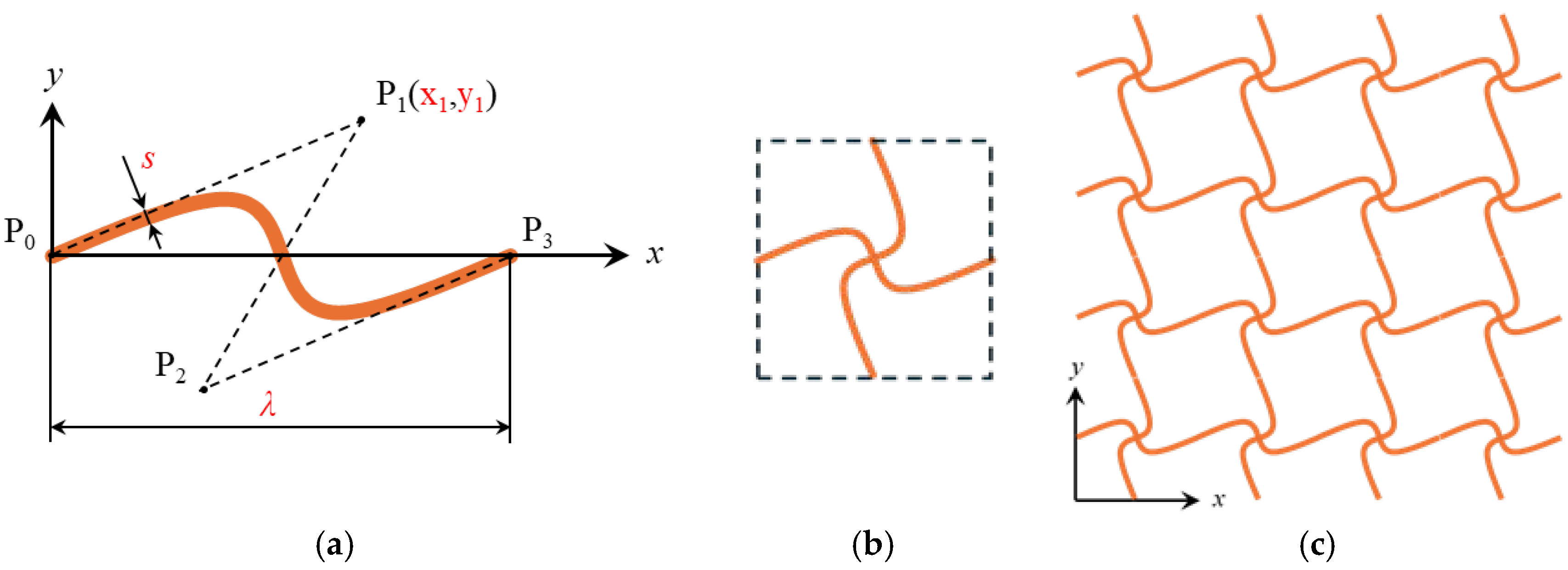
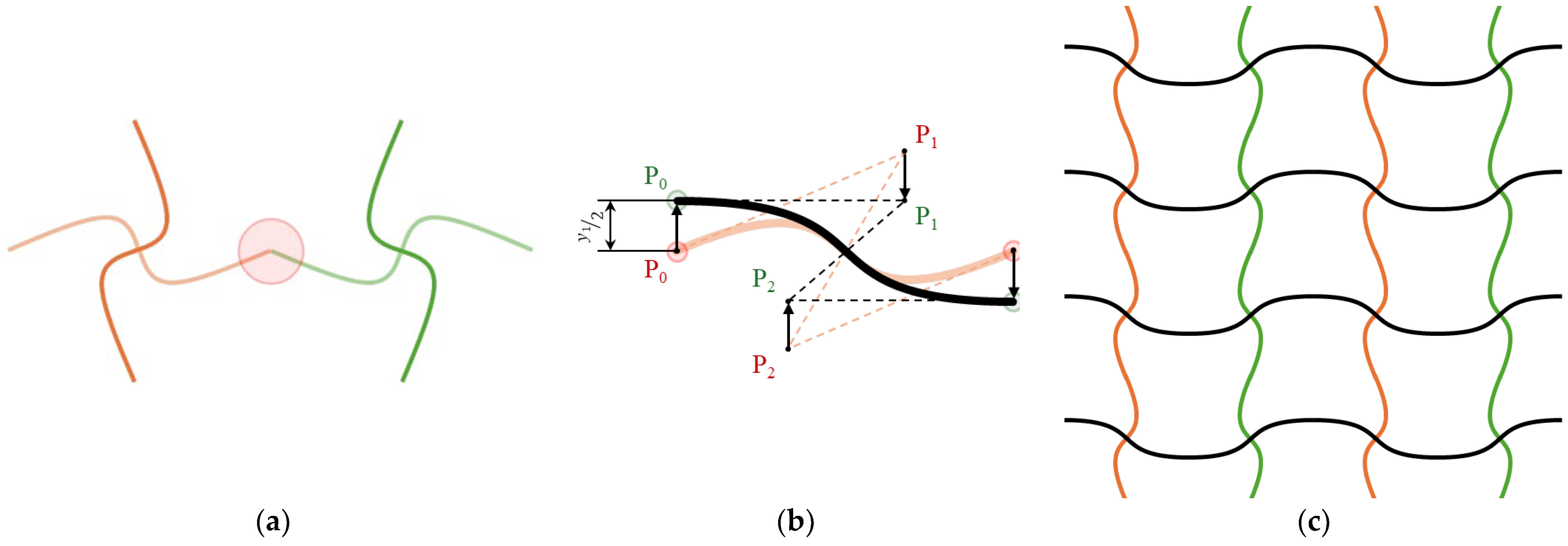
Cubic Bézier curves are defined by four control points,
P0,
P1,
P2 and
P3 (
Figure 1), according to Equation (1):
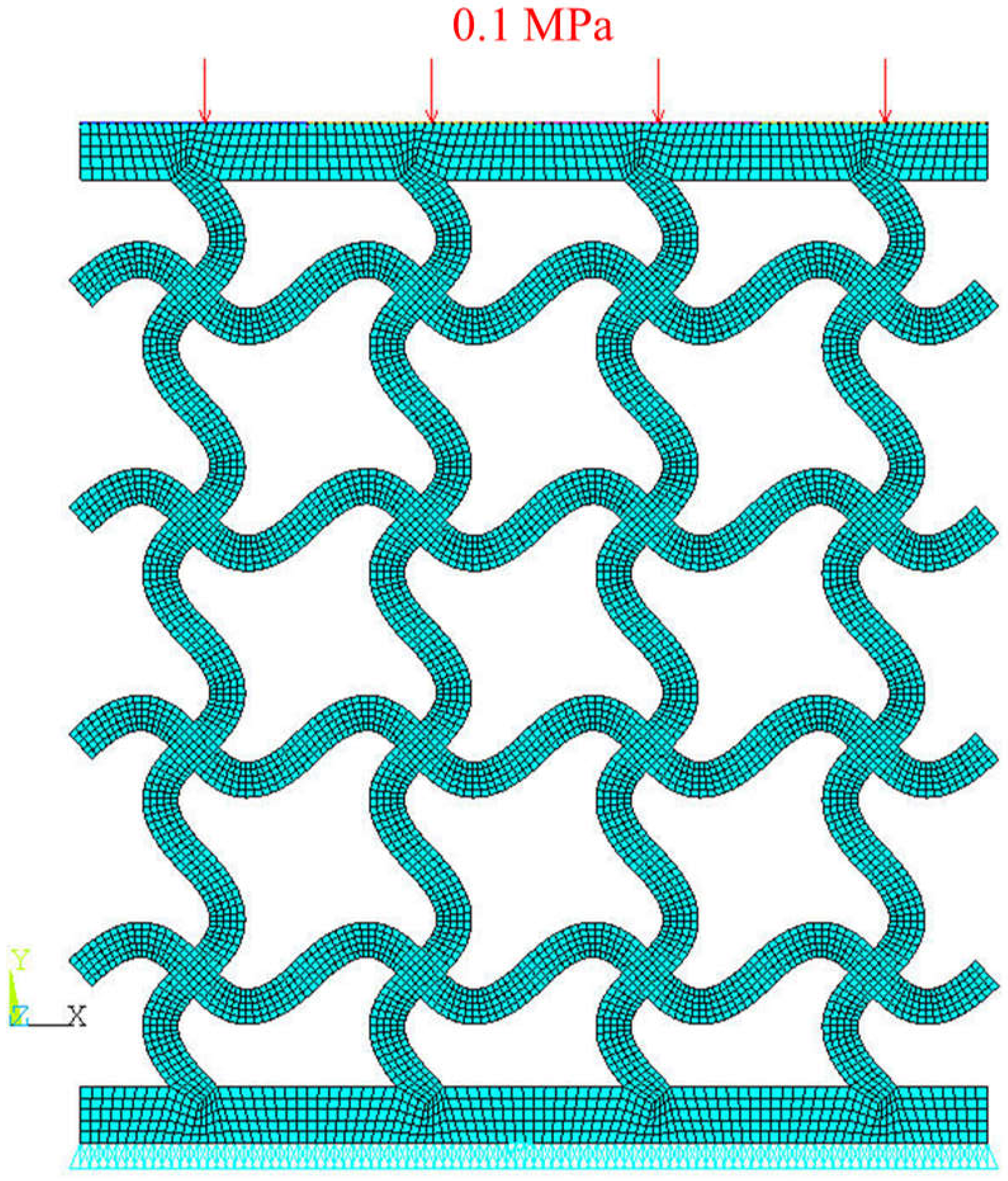
The FE model was developed in APDL and Abaqus using 2D plane strain elements. In APDL, a fully structured quadrilateral mesh was employed, with the element size defined parametrically as one quarter of the cell thickness, varying with each configuration. In Abaqus, a uniform global mesh size of 0.05 mm was adopted for all models. The geometry of the Bézier curve was defined parametrically, allowing dynamic shape control via the definition of the coordinates of
P1. The base curve (
Figure 1a) was replicated by a 90° rotation to form the elementary cell (
Figure 1b). The elementary cell was then repeated along the x- and y-directions to construct the whole sample (
Figure 1c).
The sample was considered made of PLA. A homogeneous, isotropic, linear elastic material was considered, with E = 3500 MPa, ν = 0.36, and density ρ = 1230 kg/m
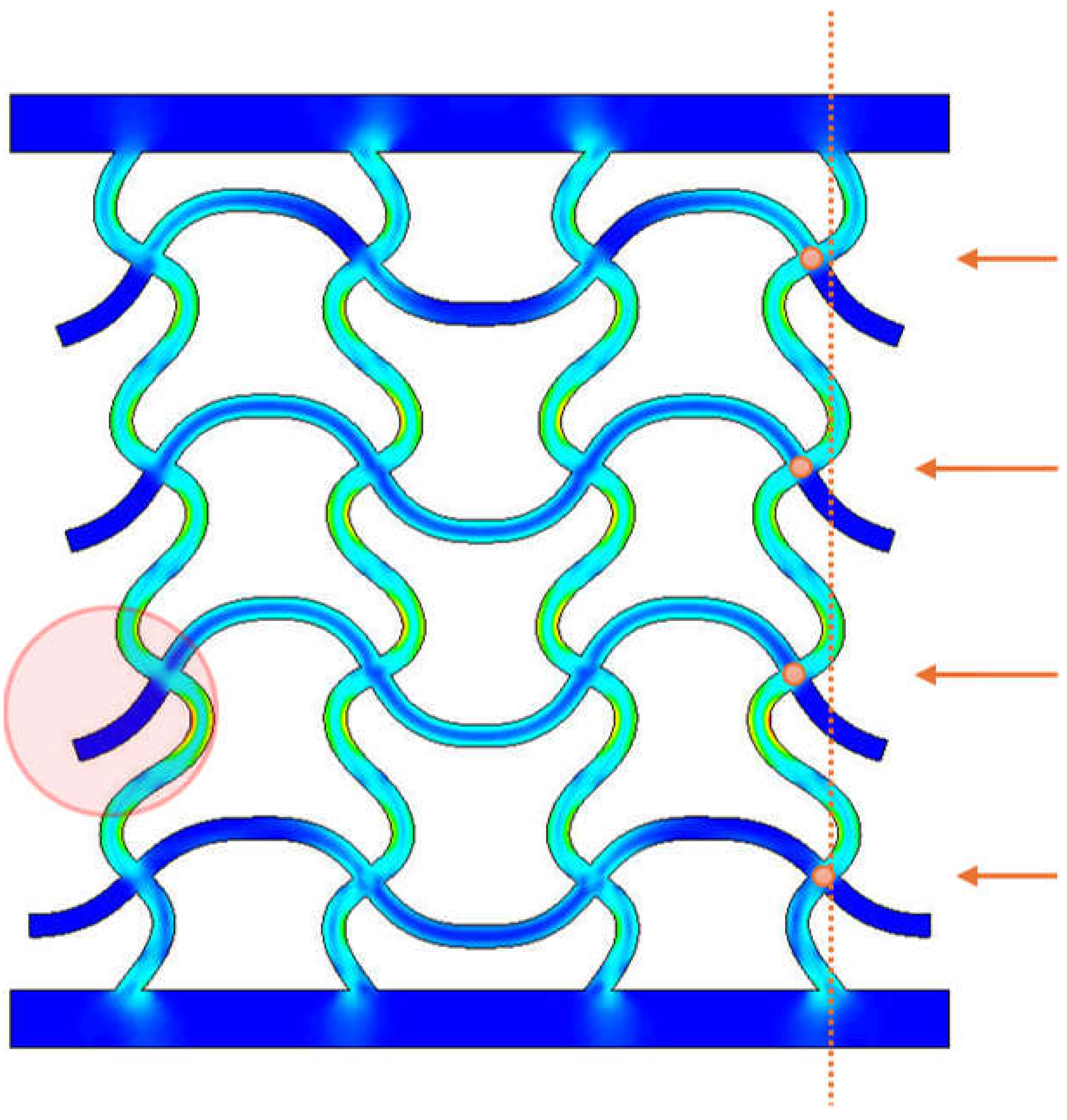
3. A general static analysis was performed with geometric nonlinearity taken into account. The lower surface of the bottom skin was fixed, and a uniform pressure of 0.1 MPa was applied on the top skin (
Figure 2). No symmetry or periodic boundary conditions were applied at the sides, since the FE models represent samples of the sandwich structure rather than the entire sandwich panel.
To assess the structural behavior of the lattice structure, the following outputs were considered: maximum von Mises stress, maximum displacements in the x- and y-directions shown in
Figure 2 (U1 and U2, respectively), strain energy and mass. Insights gained from the exploration analyses later inspired the definition of a variant design, discussed in
Section 3.
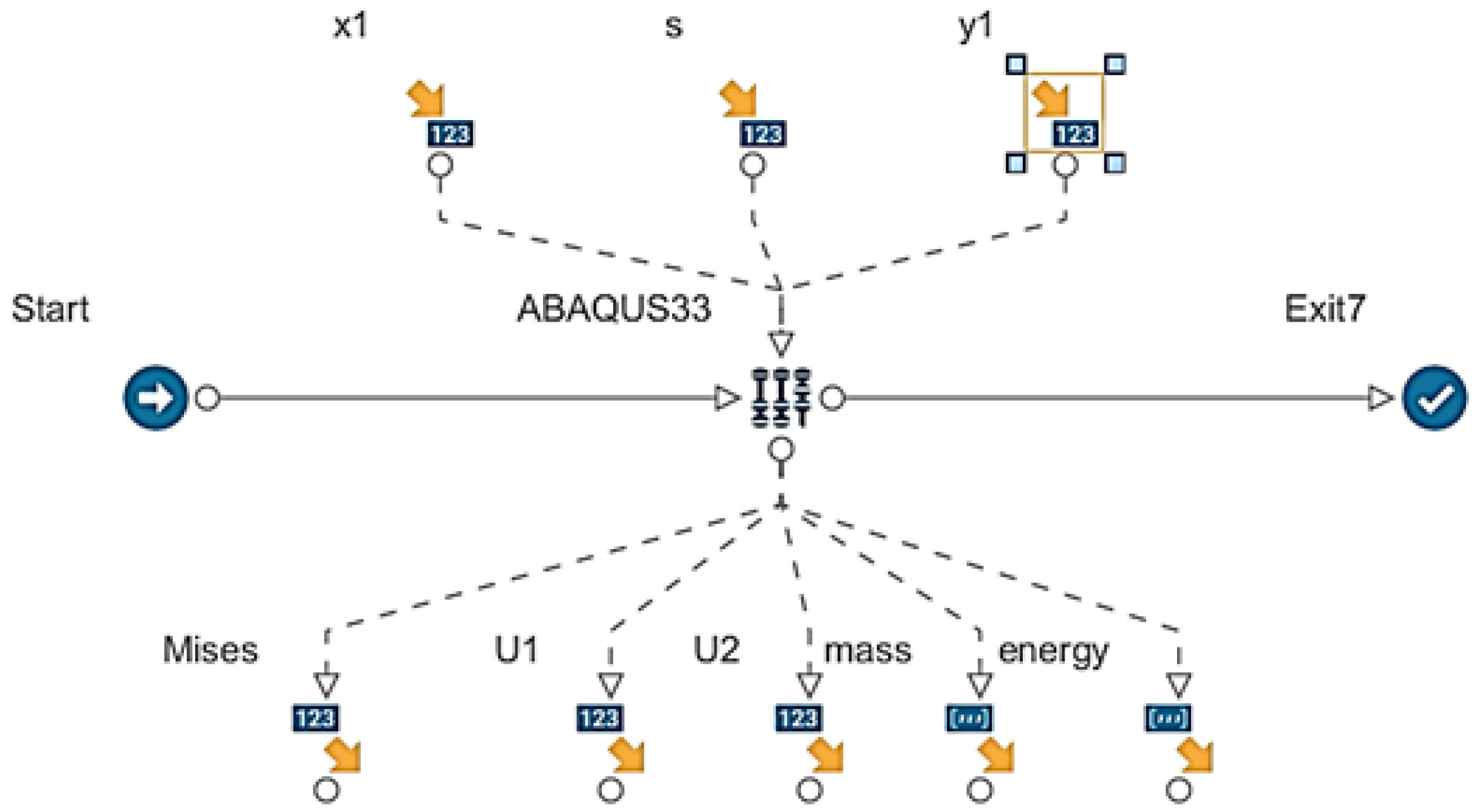
Optimization was conducted using modeFRONTIER software, which interfaced with Abaqus through the workflow shown in
Figure 3. The three input parameters (x
1, y
1 and s) were linked to the FE model, enabling automated generation and evaluation of design variants. Three optimization objectives were defined: (i) maximizing energy absorption, (ii) minimizing mass, and (iii) minimizing von Mises stress. The aim of the research is to provide designers with design strategies tailored to the desired performance, i.e., a highly deformable, lightweight, or resistant structure. These three objectives could be conflicting, and for this reason a trade-off among the optimal geometries should be identified. The multi-strategy algorithm pilOPT was selected, and 100 combinations of the input parameters were tested.
3. Results and Discussion
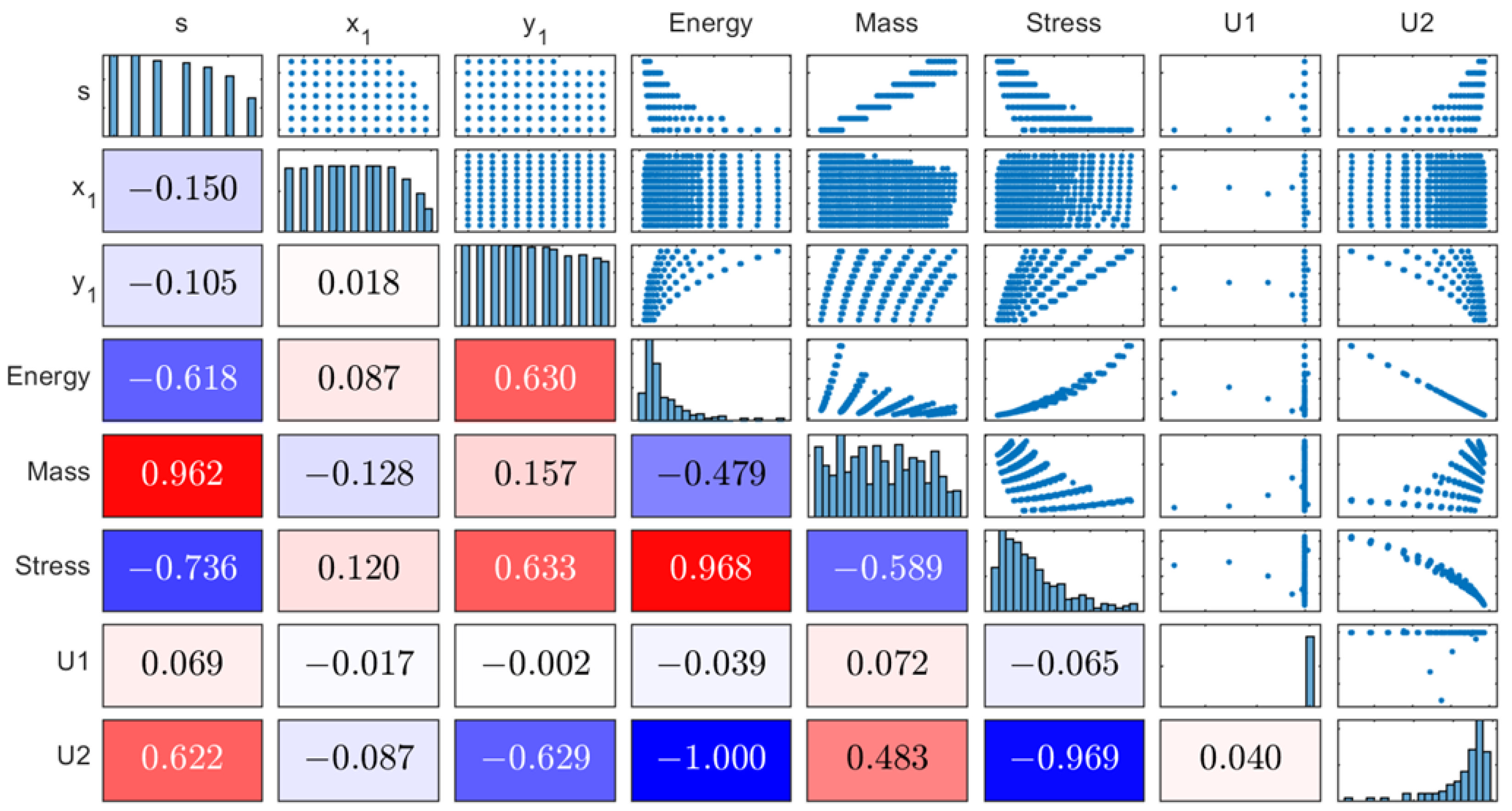
To explore correlations among input and output parameters, scatter matrix analysis was employed. A scatter matrix (
Figure 4) is a square matrix whose size corresponds to the number of parameters considered. The input (s, x
1, y
1) and output (strain energy, mass, maximum von Mises stress, U1, U2) parameters are ordered and assigned to the rows and columns. The diagonal elements contain histograms showing the distribution of each parameter across all simulations, while the panels above the diagonal display the corresponding pairwise scatter plots for the parameters in the associated row and column. Below the matrix diagonal, the relationships between each pair of parameters are summarized through the Pearson correlation coefficient, with color intensity indicating the strength and sign of each correlation. Values of correlation coefficients near +1 (red) indicate a strong direct relationship between variables, while values near −1 (blue) reflect a strong inverse relationship. Coefficients close to 0 (white) suggest a negligible correlation between the variable pair. By showing, for each parameter pair, both the scatter plot and its corresponding correlation coefficient, the scatter matrix makes it straightforward to judge whether the relationship is truly linear and how closely the data align with a linear trend, something that either plot or correlation alone does not convey as clearly.
Among the three geometric input parameters, the ligament thickness, s, exhibits the strongest overall influence. Its highest positive correlation is with the total mass (correlation factor = +0.933), highlighting that configurations with thicker ligaments are inherently heavier. Other notable correlations of s with output parameters are negative, indicating that thicker morphologies tend to experience lower peak stress (−0.682) and reduced deformation (0.580 vertical and −0.680 horizontal) and therefore store less strain energy (−0.573). Following s, the most influential parameter is y1, whose correlations with the output variables are moderate (between 0.3 and 0.5 in module). Increasing y1, corresponding to more curved ligaments, generally leads to more deformable and energy-absorbing configurations but with higher stresses and mass, though the trends are less pronounced than those associated with s. The negative correlation for U2 reflects the convention adopted in the model, where positive U2 is defined in the upward direction. The parameter x1 shows negligible effects, with all correlation coefficients within −0.1 and +0.1.
Beyond these quantitative trends, the scatter plots reveal that combinations of small s or large y1 do not yield univocal performance patterns—except for the clear linear relationship between s and mass—suggesting multiple feasible solutions in those regions of the design space. Moreover, strong interdependencies are evident among the output quantities themselves: lateral and vertical displacements are strongly correlated, strain energy increases with both displacements and stresses, and stresses and displacements are likewise mutually correlated.
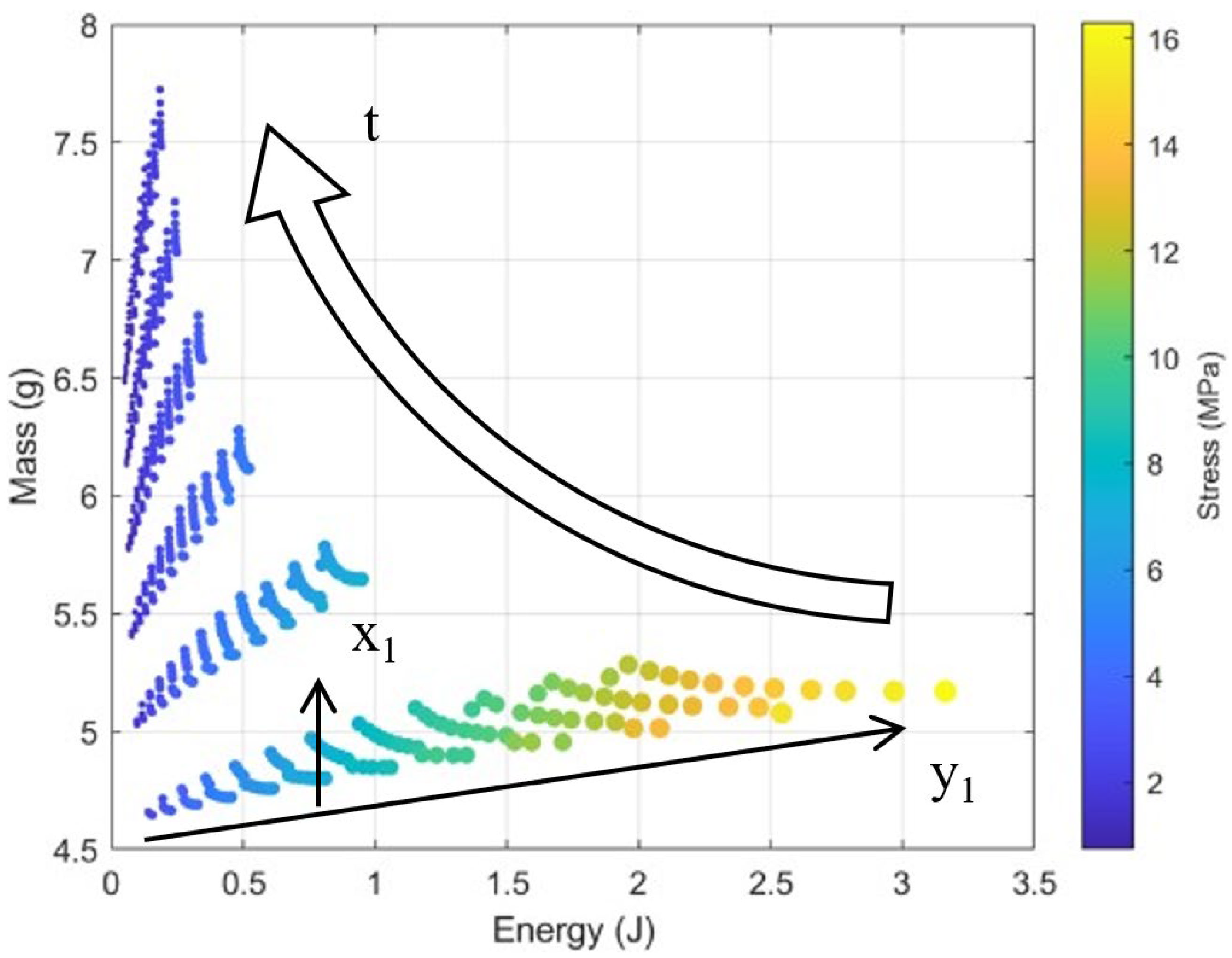
A bubble chart (
Figure 5) was used to simultaneously visualize three output variables, i.e., mass, strain energy, and maximum von Mises stress, to visualize their mutual correlations and how they are affected by the input parameters. Each set of input parameters is represented in the energy–mass plane, with size and color both indicating the level of von Mises stress. The analysis shows the presence of a Pareto front, indicating trade-offs among the performance metrics. The influence of the three input parameters (x
1, y
1, and s) is annotated on the chart with arrows, highlighting how increments in each parameter shift the overall trend in the performance space.
As already observed from the scatter matrix analysis, the strain energy and von Mises stress are strongly correlated (0.976), confirming that configurations experiencing higher stresses also store greater strain energy. The hierarchy among the geometric parameters influencing performance is consistent with previous findings: the ligament thickness s governs the overall mechanical behavior and modulates the extent to which y1 can affect the structural response, whereas x1 shows only a marginal influence. Varying y1 at low s values allows modulation of energy and stress at low mass, whereas changing y1 at high s values mainly affects the mass while keeping stresses and strain energy relatively low.
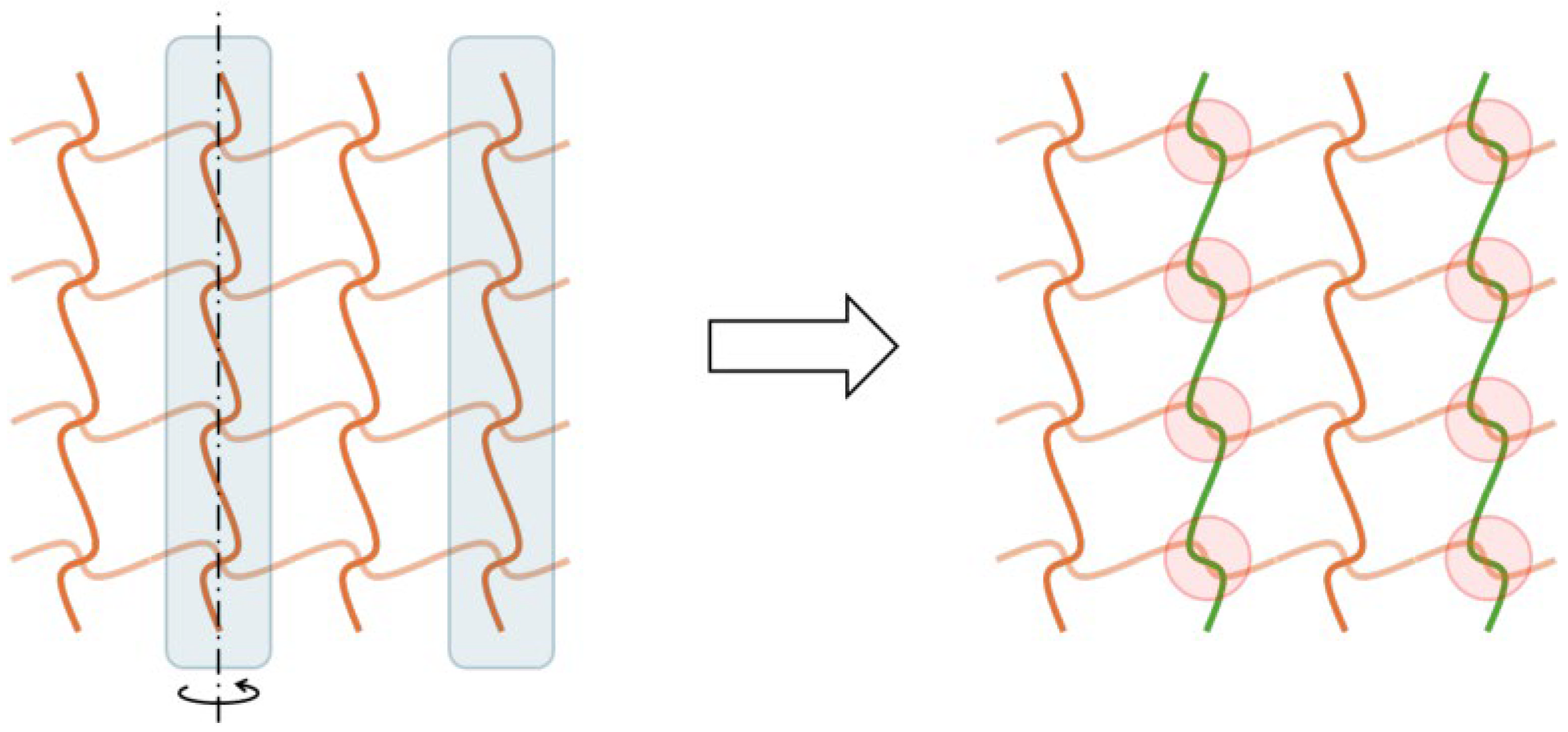
Following the observations from the parametric analysis, a balanced variant of the morphology was developed by slightly modifying the geometry to suppress the lateral displacement U1 detected in the original configuration, which is due to the anti-symmetric nature of the base curve geometry. Assuming that such an effect was mainly caused by the ligaments extending along the vertical (load) direction, the design objective was to achieve an alternation of mirrored vertical ligaments. Since the mirroring of the vertical ligaments alone results in geometrical incompatibilities at the modified cell centers (
Figure 6), this configuration was obtained by alternating the mirroring of the entire unit cells (
Figure 7). The corner joint at the junction between the horizontal ligaments of adjacent cells (
Figure 7a), introduced by mirroring the entire cells, represents a geometric discontinuity, which was resolved by reshaping the horizontal Bézier curves. The end control points
P0 and
P3 were repositioned to align horizontally with the inner control points
P1 and
P2, respectively (
Figure 7b). This adjustment ensured horizontal tangency at the cell boundaries, restoring geometric continuity between neighboring ligaments. Subsequently, a consistent shift of all control points vertically towards the origin was performed, with the vertical coordinate being reduced by half. This resulted in a more regular, almost orthogonal intersection with the vertical lines, resulting in a symmetric arrangement (
Figure 7c) that compensates for the lateral offset observed in the original pattern.
To assess the effect of the geometric modification, the same parametric campaign was repeated using the balanced morphology. The analysis followed exactly the same procedure, varying the same set of input parameters and evaluating the corresponding mechanical outputs under identical boundary conditions. The results are again represented through a scatter matrix analysis, enabling a direct comparison with the previous dataset and revealing how the geometric adjustments influence the correlations among performance metrics.
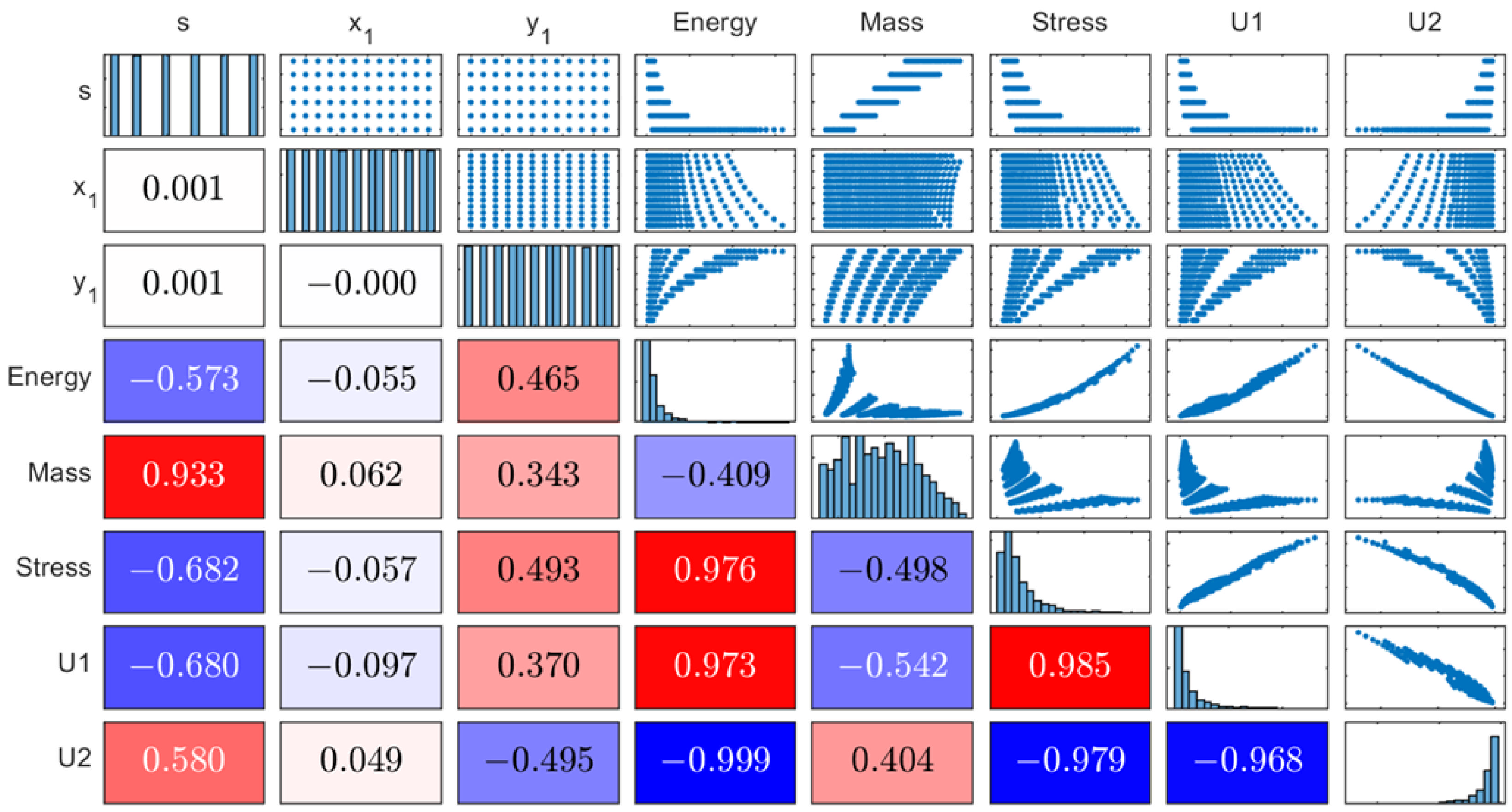
The results obtained with the balanced morphology (
Figure 8) are largely consistent with those of the sample using the original cell (
Figure 4) in terms of correlations and overall trends observed in the scatter plots. The relationships among the main geometric and performance variables remain essentially unchanged, confirming that the modification did not alter the mechanical behavior of the structure. The only significant difference concerns the lateral displacement U1, which is effectively suppressed in the balanced configuration, demonstrating the success of the geometric correction.
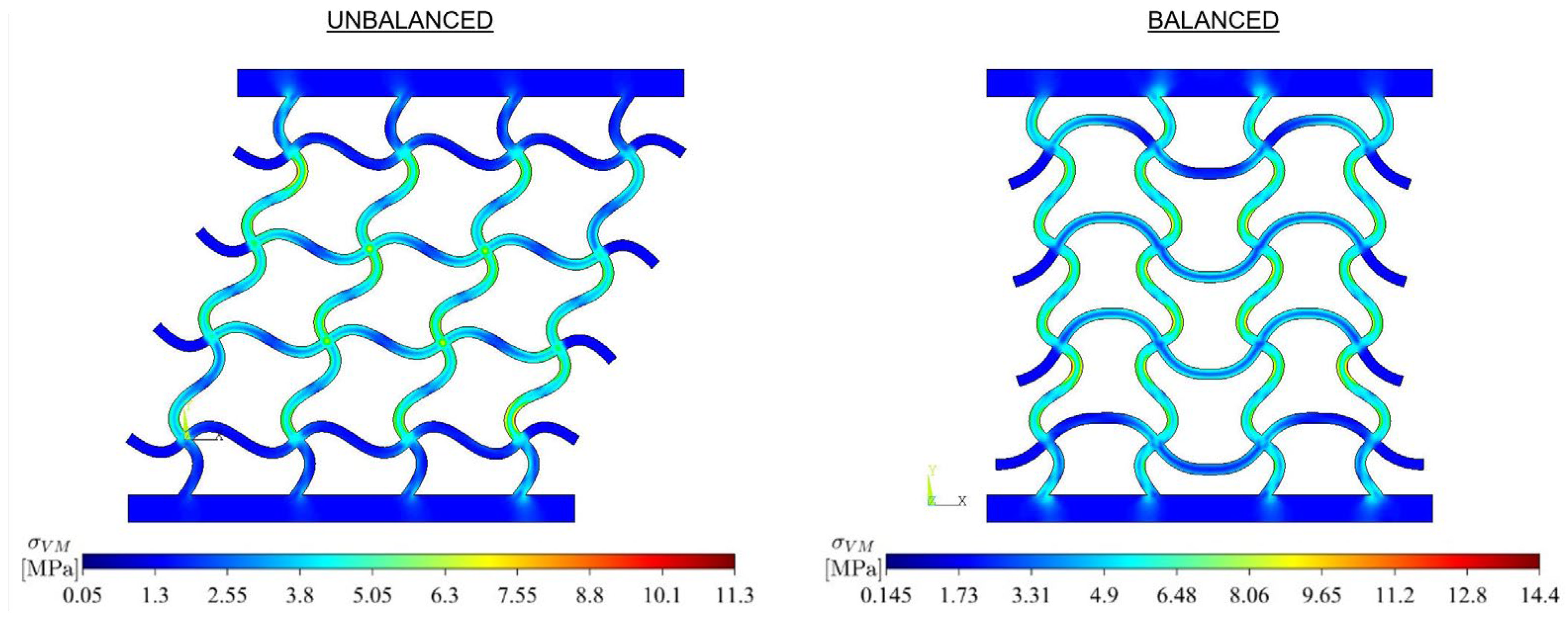
The comparison of von Mises equivalent stress and deformation fields between the two morphologies shown in
Figure 9 refers to a configuration with a specific set of input parameters: s = 0.5 mm, x
1 = 2.2 mm and y
1 = 2.2 mm. The balanced configuration effectively eliminates the lateral displacement observed in the unbalanced case, which reached approximately 5 mm. This improvement, however, comes at the cost of a generally higher stress level, as a larger portion of material now actively contributes to carrying the load, including regions that previously sustained limited stress, such as the vertical ligaments directly connected to the top and bottom plates. As a result, the peak von Mises stress increases by about 27% compared to the unbalanced configuration (14.4 MPa versus 11.3 MPa).
In addition, the rotation of the cantilevered ligaments on the sides of the balanced FE model can be clearly observed in
Figure 10, indicating rotation at the central intersection of the side cells. This behavior, together with the tendency of the intersections to move closer toward the specimen center in the horizontal direction, provides clear evidence of the auxetic nature of the balanced morphology. Although this tendency is partially constrained by the two skins, it remains visible at mid-height along the lateral edges of the model.
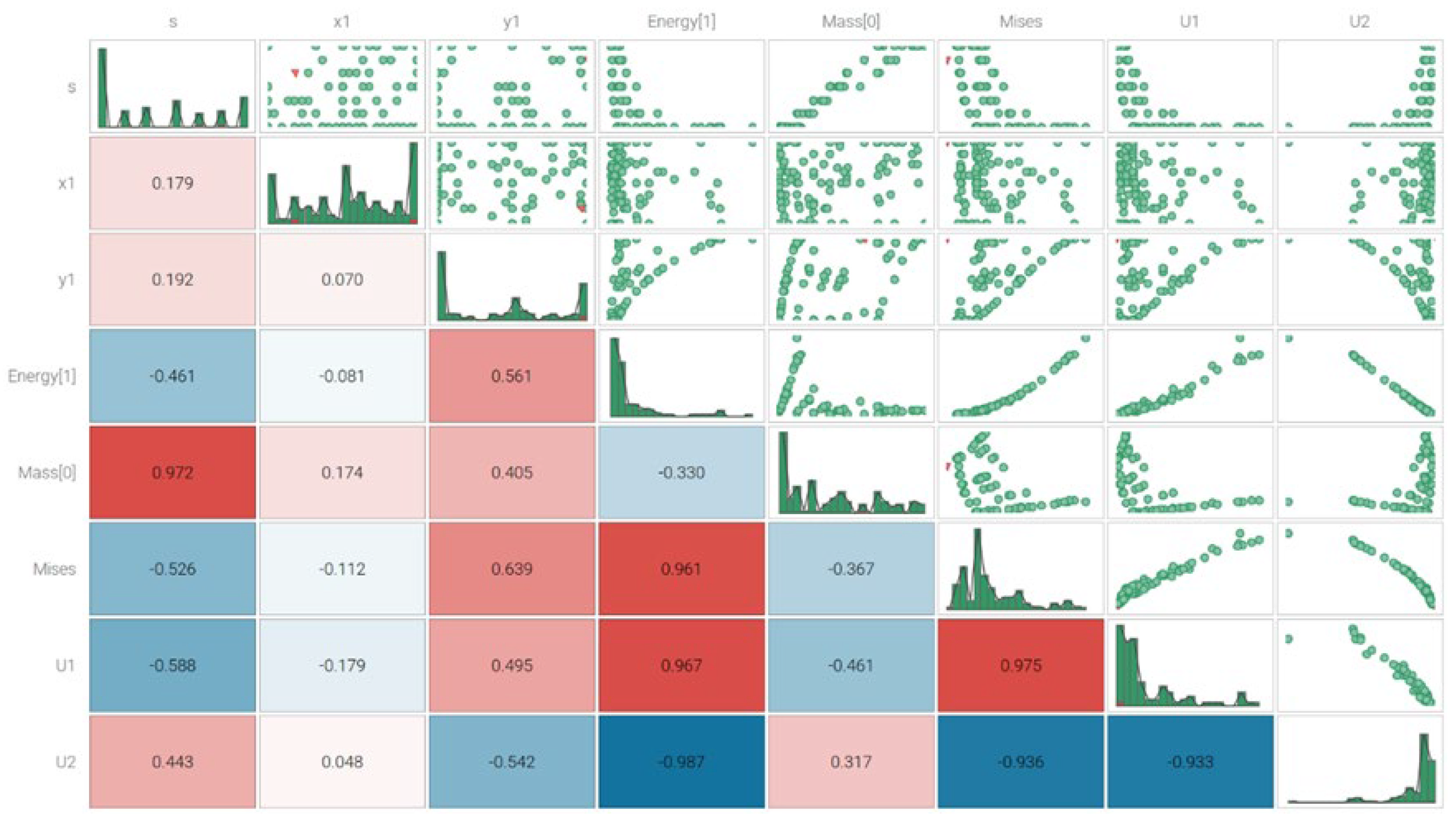
The optimization analysis was performed on the original (unbalanced) cell morphology to validate the connection between the FE model and the optimization environment. The scatter matrix obtained from the optimization stage (
Figure 11) exhibits correlation factors and trends nearly identical to those observed in the exploratory parametric campaign, confirming the consistency of the two approaches. In particular, a strong positive correlation is found between mass and ligament thickness s (0.972), pointing out the dominant role of s in determining the material volume. The geometric parameters x
1 and y
1 show weaker correlations with mass, as the correlation values are 0.174 and 0.405, respectively. The parameter x
1 shows negligible correlation with all output variables, with coefficients between −0.2 and +0.2, suggesting minimal correlation with mechanical behavior. The parameter y
1 has a partial correlation with structural behavior, as it directly affects the curvature of the Bézier ligament and consequently the stress distribution and deformability. Higher values of y
1 are associated with higher von Mises stress (0.639), increased strain energy (0.561), and higher vertical displacement U2 (−0.542).
Overall, the optimization model successfully reproduces the trends and correlations identified in the full-factorial study, while requiring approximately one order of magnitude fewer iterations. This demonstrates the reliability and computational efficiency of the coupled Abaqus–modeFRONTIER optimization analysis in capturing the same physical relationships with a substantially reduced number of simulations.
The analysis shows the presence of the previously identified Pareto front rather than a single optimal design since a multi-objective optimization was performed. Selection of geometrical parameters for the lattice structure depends on design priorities, i.e., resistance, deformability, or lightweight. The design defined by s = 0.5 mm and y1 = 0.5 mm, at the same time, leads to low values of mass, absorbed energy, and stress. The combination of s = 0.5 mm and y1 = 2.7 mm provides results where high energy absorption capabilities are obtained, with low mass but high stresses. A configuration with s = 1.1 mm and y1 = 0.5 mm results in low stresses, low energy, and high mass.




 ,
,