1. Introduction
With the intensifying global warming and the gradual depletion of petroleum resources, countries around the world are actively seeking alternative energy solutions to accelerate the transition toward low-carbon transportation. Electric motorcycles, with advantages such as zero carbon emissions, high energy efficiency, and sustainability, have increasingly gained attention and are expected to become the mainstream mode of urban transportation in the future. Among various propulsion technologies, permanent magnet brushless motors (PMBLMs), owing to their high efficiency, compact size, low maintenance cost, and compatibility with intelligent control, have been widely applied in different types of electric vehicles [
1,
2,
3].
Although current PMBLMs exhibit favorable output characteristics, there remains significant potential for improvement in terms of output torque, power density, and energy efficiency distribution. In particular, the rotor structure, as the key component of the magnetic circuit, plays a decisive role, since its geometric configuration and magnet arrangement directly affect the motor’s power density, energy conversion efficiency, and long-term operational stability [
4,
5,
6].
In this study, we designed the rotor magnetic circuit and optimized the structure of PMBLMs. Finite element analysis (FEA) was employed to conduct magnetic field simulations and evaluate output performance, while the Taguchi optimization method was applied to systematically improve rotor design parameters. Through structural analysis and design optimization, the motor’s torque, power, and efficiency are enhanced. As a result, the overall performance of PMBLMs was improved to provide both theoretical foundations and engineering insights for the future development of electric vehicle propulsion systems.
2. Methodology
2.1. Motor Design
In this study, an electric scooter motor was selected as the reference model, and the rotor structure was adjusted and optimized to improve performance. The FEA software was employed to evaluate the influence of different structural parameters on the output characteristics, and the Taguchi method was applied to identify the optimal parameter combination, thereby enhancing the overall motor performance.
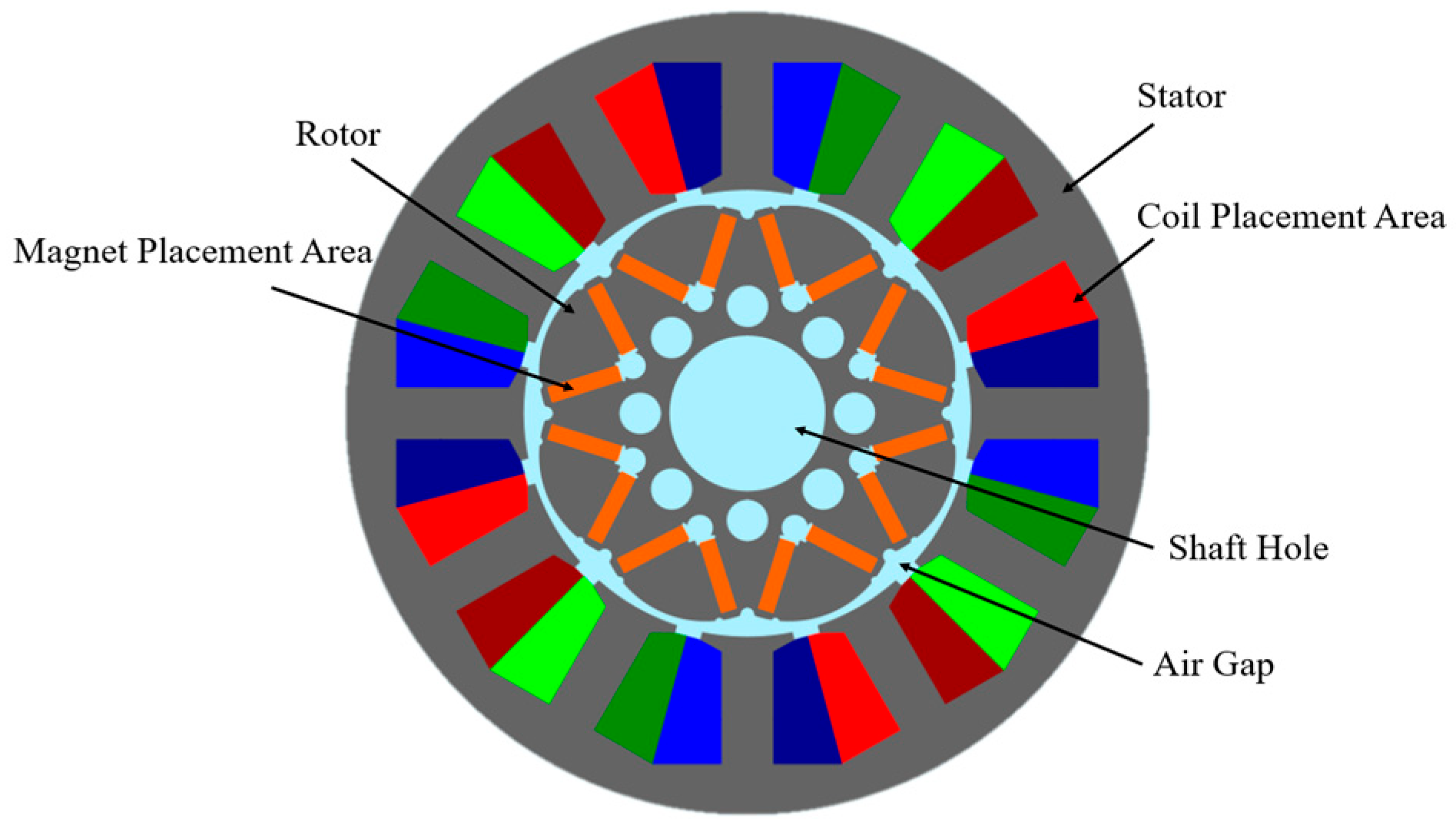
Figure 1 illustrates the geometry of the commercial motor, which adopts an 8-pole, 12-slot concentrated winding configuration. The motor model was established using FluxMotor, where material properties and operating conditions were defined to conduct simulation analyses and obtain motor power, torque, and efficiency. Subsequently, rotor structure optimization was performed [
7,
8], in line with recent international studies, and the results were compared with those of the baseline commercial motor to assess output performance.
Table 1 presents the specifications of the commercial motor.
2.2. Selected Materials
2.2.1. Magnet Material
Various types of permanent magnets can be employed in motor design, including Alnico, ferrite, samarium–cobalt (SmCo), and neodymium–iron–boron (NdFeB) magnets. In this study, NdFeB magnets were chosen for motor design due to their superior magnetic properties and relatively lower cost compared with SmCo magnets. Owing to this balance of performance and affordability, NdFeB magnets are widely adopted in high-performance motor applications.
2.2.2. Electrical Steel
Electrical steel, also referred to as silicon steel, is a type of low-carbon steel alloyed with silicon, typically containing 0.5 to 4.5% silicon by weight. Its characteristics include excellent magnetic properties, high electrical resistivity, and low core loss, making it widely used in motors, large power transformers, and generators. In this study, electrical steel grade 35CS550 manufactured by China Steel Corporation (Kaohsiung city, Taiwan) was employed for the stator and rotor laminations.
2.3. Sensitivity Analysis
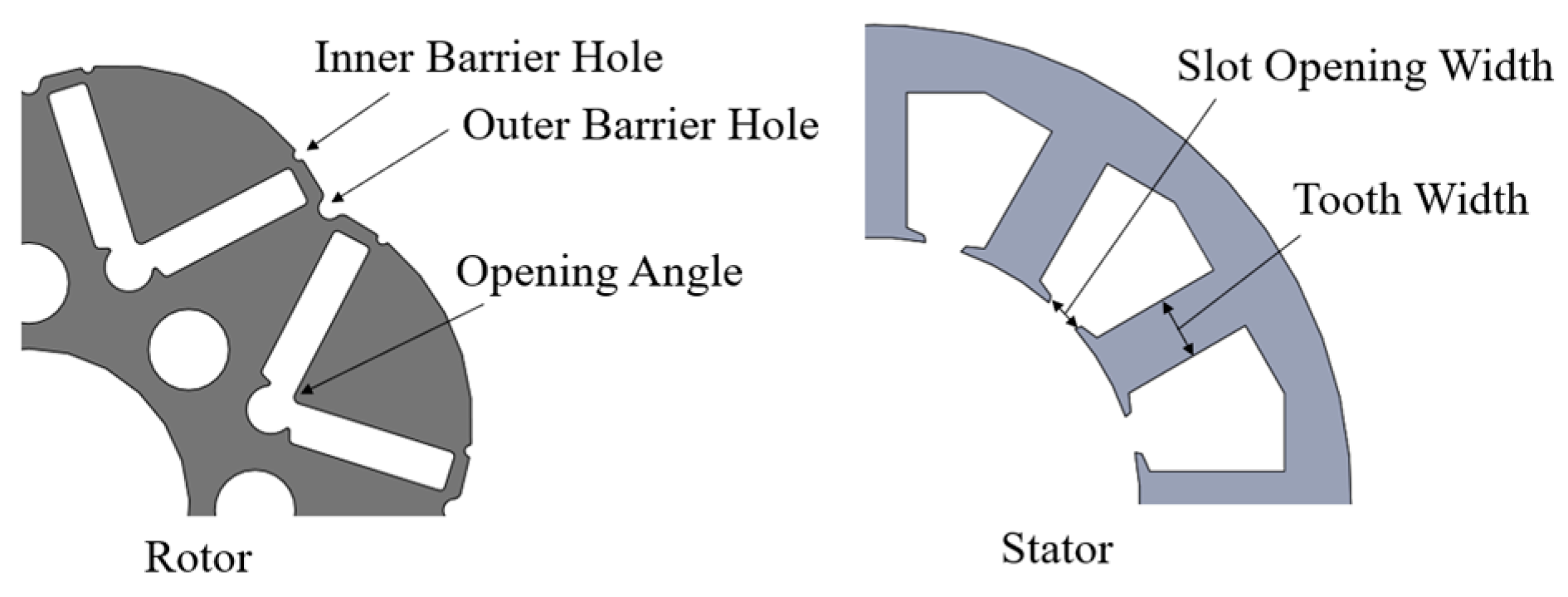
The objective of sensitivity analysis is to determine which design parameters have the most significant influence on motor performance. A single-factor sensitivity analysis was carried out using the simulation software FluxMotor 2020.0 to identify the key geometric parameters for subsequent design optimization. This method reduces unnecessary parameter variations, improves simulation and experimental efficiency, and enhances engineering reliability. The parameters that have the greatest impact include the flux barrier holes located near both sides of the rotor magnets at the outer edge, tooth width, and slot opening. In this study, those parameters were selected for detailed simulation analysis, and suitable ranges were determined for optimization using the Taguchi method.
Figure 2 illustrates the structural schematic of the motor.
2.4. Taguchi Method
The Taguchi method is a robust experimental design and parameter optimization technique widely applied to multi-factor and multi-level problems. Orthogonal arrays were employed to identify the key factors and the optimal parameter combinations with a minimal number of experiments, thereby enhancing product performance. The Taguchi method has been extensively used in engineering design, process improvement, and product optimization, and it can also be applied to motor design parameter optimization to evaluate output performance such as torque, power, and efficiency.
A key feature of the Taguchi method is the introduction of the signal-to-noise (
SN) ratio as a performance stability index. The
SN ratio is classified into larger-the-better, nominal-the-best, and smaller-the-better categories. The ratio is used to measure the robustness of performance under different design conditions [
9,
10]. The general definition of the
SN ratio is given in Equation (1), where
MSD represents the mean squared deviation from the target value.
For the larger-the-better characteristic, the goal is to maximize the quality response. Here,
n denotes the number of experiments, and
yi represents the measured values, as shown in Equation (2).
For the nominal-the-best characteristic, the objective is to achieve a target value. In this case,
denotes the mean of the experimental values and
s2 is the variance, as expressed in Equation (3).
For the smaller-the-better characteristic, the goal is to minimize the quality response, where
n is the number of experiments and
yi is the measured value, as shown in Equation (4).
3. Results
3.1. Initial Conditions
The baseline motor model was first simulated, and its output data were recorded for reference. At a rated input voltage of 96 V and an input current of 87 A, the motor achieved a speed of 2970 rpm, an output power of 7014 W, a torque of 22.8 N·m, and an efficiency of 89.14%. These results were taken as the reference operating point for subsequent optimization. The baseline performance is summarized in
Table 2.
3.2. Motor Parameter Simulation Analysis
Sensitivity analyses were performed on the rotor span angle, inner and outer flux barrier holes, tooth width, and slot opening to determine suitable parameter ranges, which were subsequently used in the Taguchi optimization process.
3.2.1. Motor Parameter Simulation Analysis
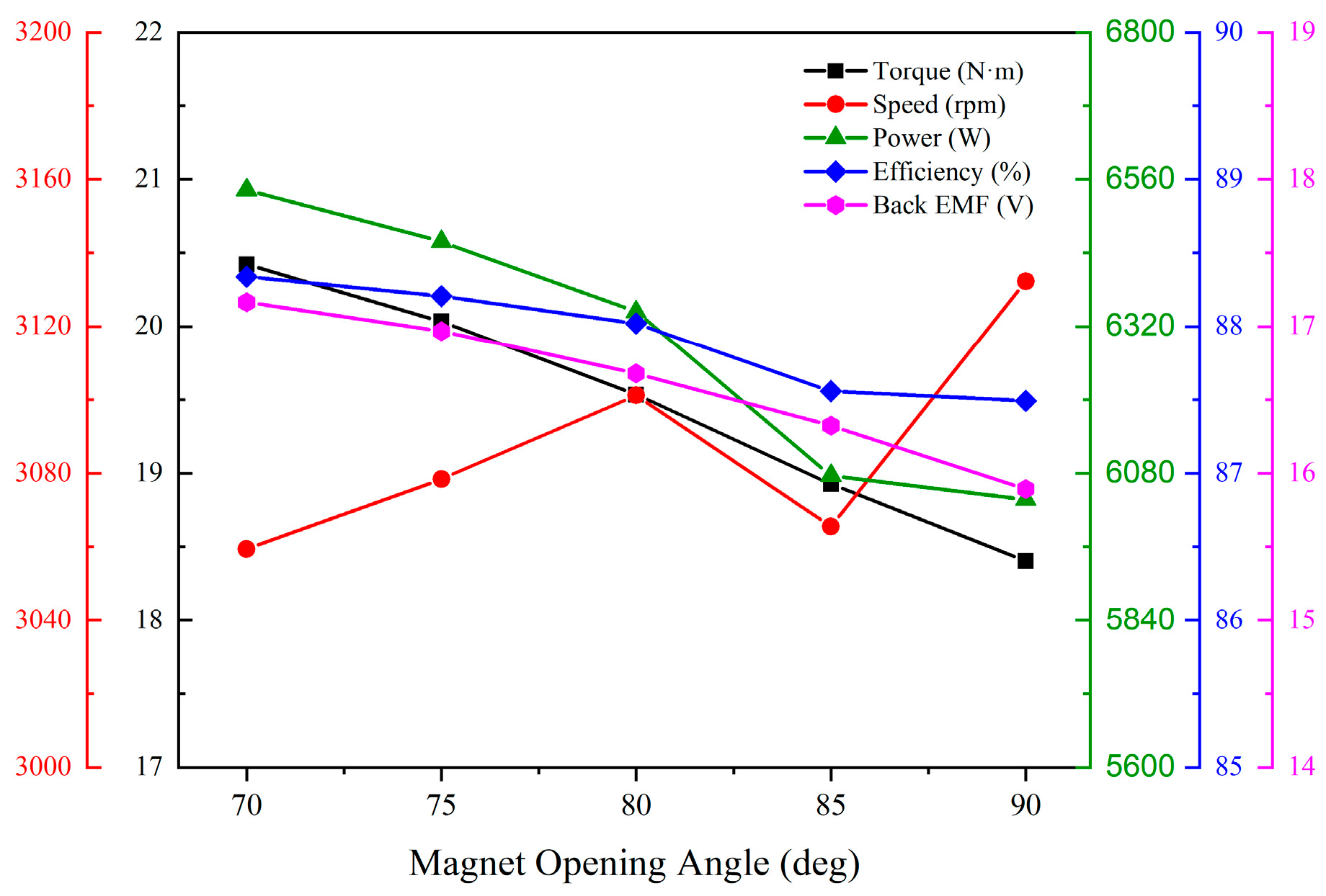
Figure 3 shows the results of the sensitivity analysis for the rotor span angle. Smaller span angles generally provide better output performance, except for rotational speed. However, when the span angle increases from 80° to 85°, a significant drop in performance is observed. At 80°, the motor speed reaches a peak of approximately 3100 rpm. Therefore, the 80° span angle was selected as the baseline geometry for subsequent optimization analysis.
3.2.2. Sensitivity Analysis of Inner Flux Barrier Holes
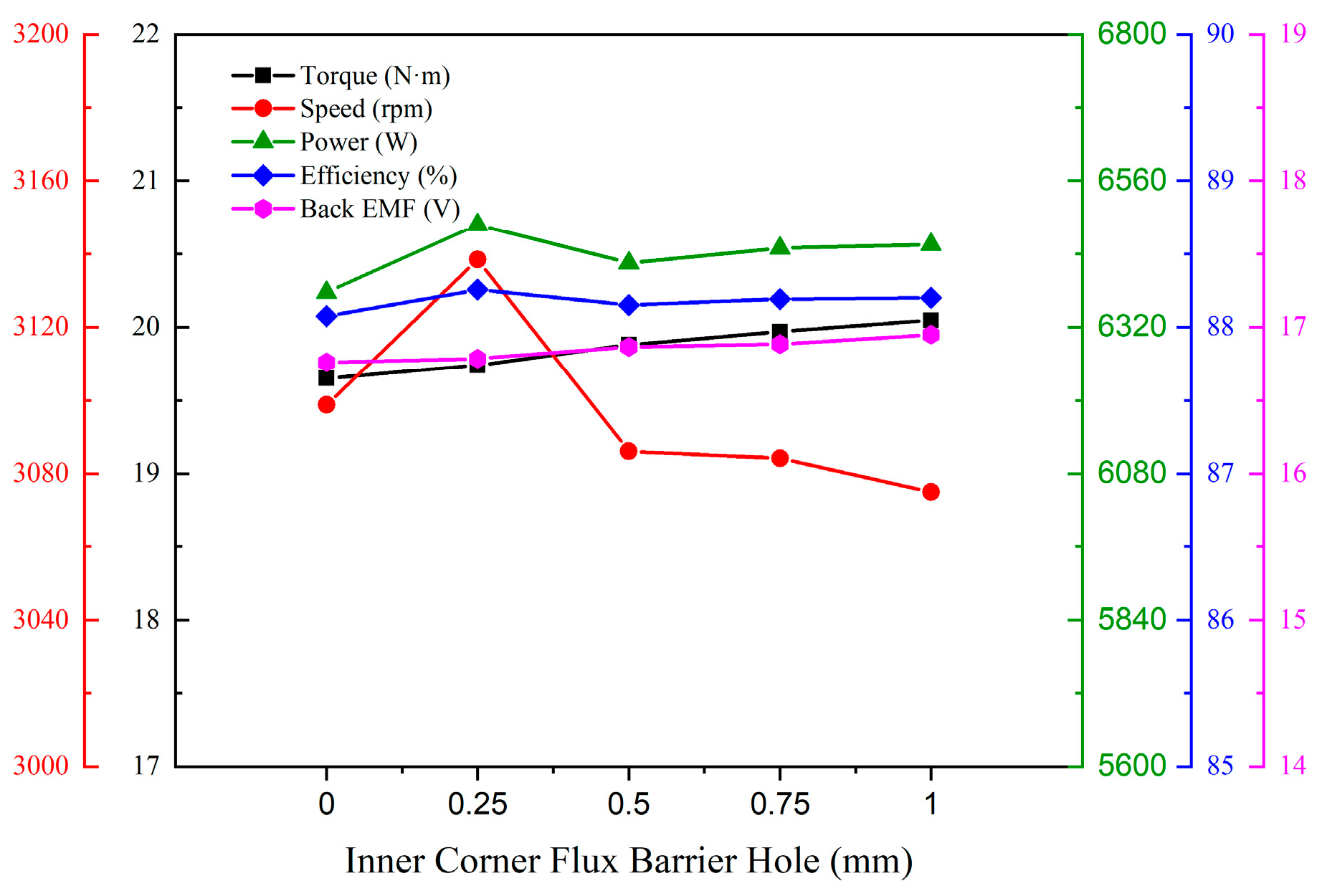
Figure 4 presents the results of the sensitivity analysis for the inner flux barrier holes. The variations in this parameter show negligible influence on back electromotive force (EMF) and torque. However, when the barrier hole size is set to 0.25 mm, the motor speed, output power, and efficiency are significantly higher compared with other values, while torque and back EMF performance are relatively lower. Based on these findings, three levels—0.25, 0.5, and 0.75 mm—were selected as the design range for subsequent Taguchi optimization.
3.2.3. Sensitivity Analysis of Outer Flux Barrier Holes
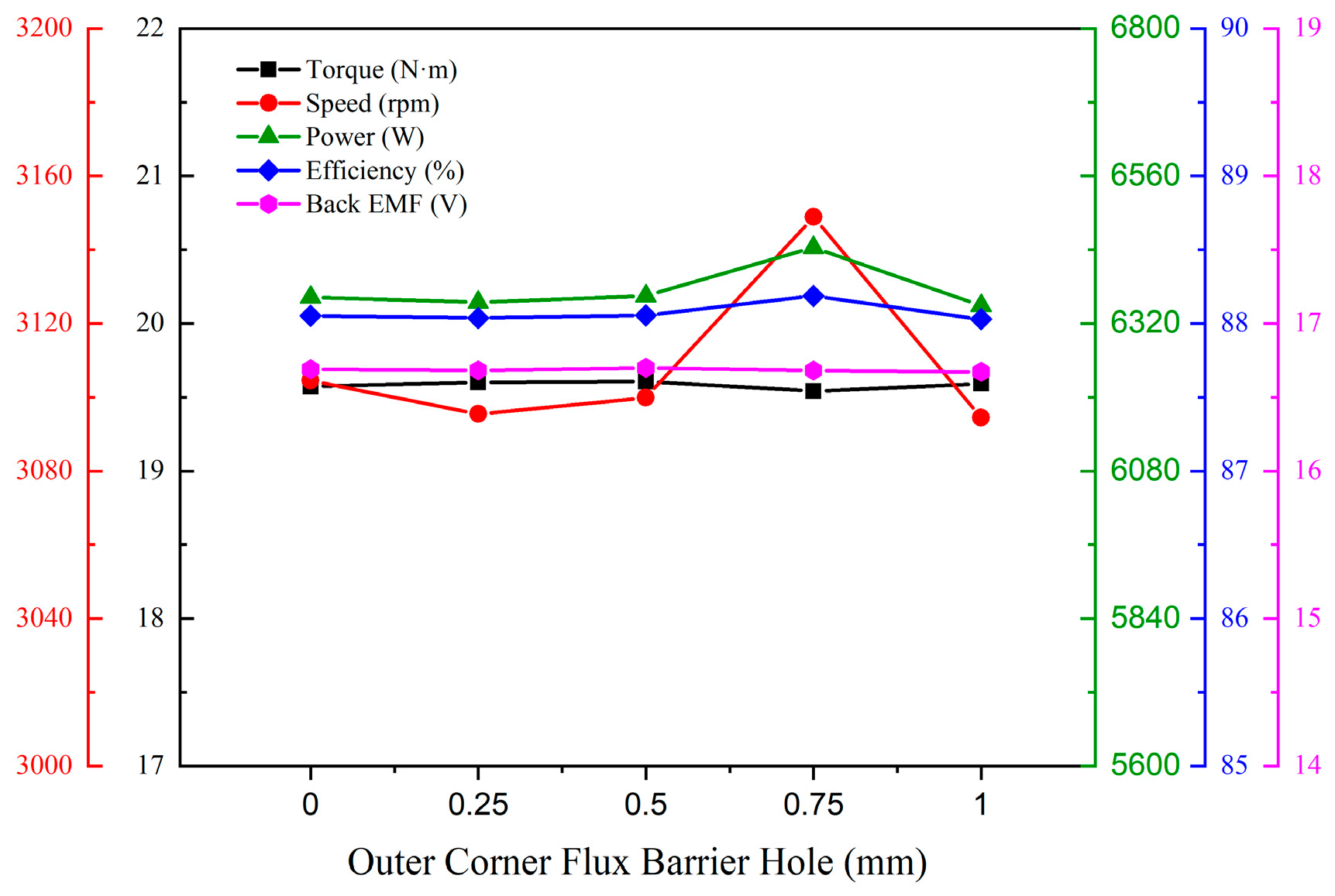
Figure 5 shows the results of the sensitivity analysis for the outer flux barrier holes. Similar to the inner barrier holes, the variations in this parameter exhibit little effect on back EMF and torque. However, at a barrier hole size of 0.75 mm, the motor speed, output power, and efficiency are significantly higher than those of other sizes, while torque and back EMF are relatively lower. Accordingly, three levels—0.25, 0.5, and 0.75 mm—were selected as the design range for the subsequent Taguchi optimization.
3.2.4. Sensitivity Analysis of Tooth Width
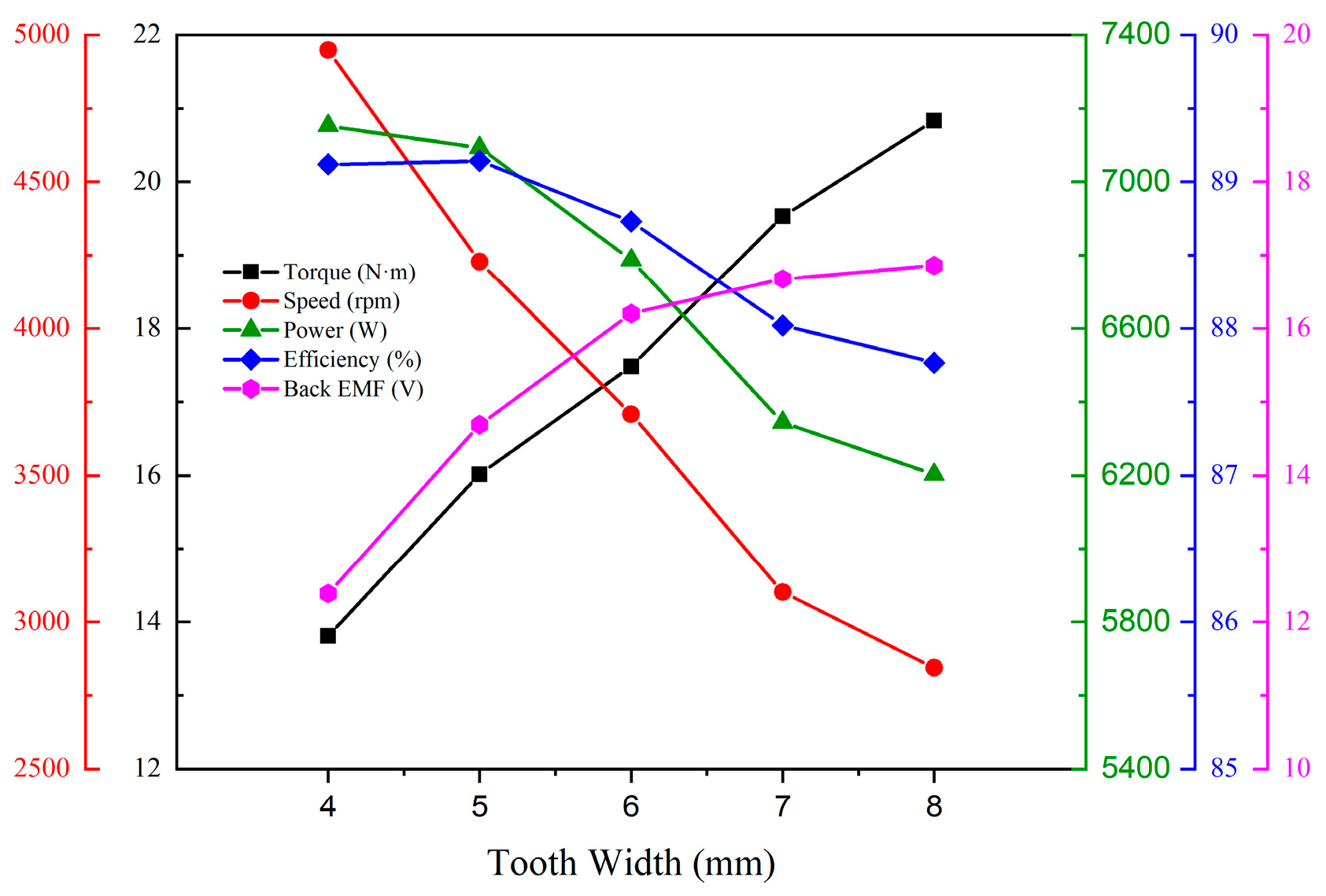
Figure 6 presents the results of the sensitivity analysis for tooth width. A smaller tooth width yields better performance in terms of speed, output power, and efficiency, whereas torque and back EMF exhibit poorer performance. A balanced intermediate width provides more stable characteristics. Therefore, 5, 6, and 7 mm were selected as the design levels for subsequent Taguchi optimization.
3.2.5. Sensitivity Analysis of Slot Opening
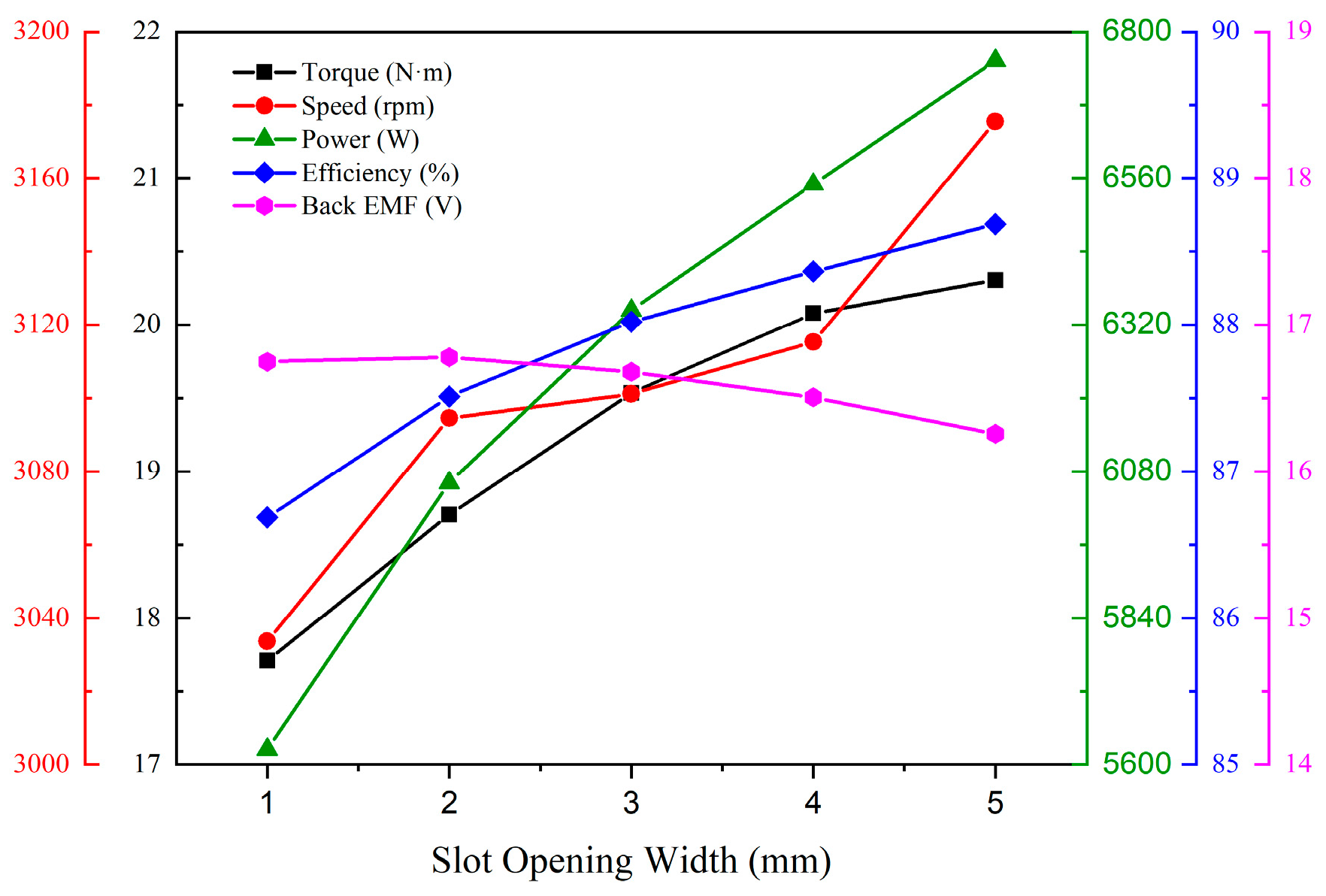
Figure 7 shows the results of the sensitivity analysis for the slot opening. As the slot opening increases, all output characteristics improve except for the back electromotive force (EMF). This suggests that sacrificing back EMF can be considered in exchange for superior output performance. Therefore, slot opening sizes of 3 mm, 4 mm, and 5 mm were selected as the design levels for the subsequent Taguchi optimization.
3.3. Optimization Simulation
After performing sensitivity analyses on each parameter, further evaluations were conducted. Since the span angle introduces significant variations in the geometric structure, it was necessary to determine its value first. Based on the sensitivity analysis results, a span angle of 80°—which provides relatively balanced performance across all metrics—was selected as the fundamental rotor geometry. Subsequently, based on the key influencing factors and level settings identified through the sensitivity analysis, an optimization study was conducted using an L
9 orthogonal array. The factors and their corresponding levels are listed in
Table 3. Furthermore, the L
9 orthogonal array was applied within the framework of the Taguchi method to perform optimization, as summarized in
Table 4.
Based on the simulation results obtained from the L
9 orthogonal array, as shown in
Table 5, the larger-the-better
SN ratios for torque, power, and efficiency were calculated. The analysis indicated that the optimal parameter combination was A2B3C1D3, which achieved an output torque of 20.61 N·m, a power of 8535.59 W, and an efficiency of 90.74%.
However, since we developed a motor for use in electric scooters, torque performance must be emphasized to enhance riding comfort. After a comprehensive evaluation, the combination of parameters in the fourth trial of the orthogonal array (A2, B1, C2, and D3) was selected as the final optimized result. This configuration was then compared with the initial design, as shown in
Table 6.
4. Conclusions
In this study, sensitivity analysis was conducted to identify the key influencing factors. Structural modifications were applied by introducing holes on both sides of the rotor magnets, while the stator was optimized with respect to tooth width and slot opening. Using the Taguchi method, the best parameter combination was obtained. Simulation results comparing the optimized motor with the baseline motor show that, under an input current of 87 A and an input voltage of 96 V, the efficiency of the optimized motor increased from 89.14 to 90.28%, representing a 1.28% improvement. The torque rose from 22.84 to 23.29 N·m, an increase of 1.97%, while the output power increased from 7104.78 to 8053.44 W, a 13.35% improvement. Overall, after structural optimization, the motor demonstrates superior output performance in terms of efficiency, torque, and power compared to the commercial motor.
Author Contributions
Conceptualization, C.-C.C.; methodology, C.-C.Y.; validation, C.-C.L.; formal analysis, M.-H.C.; investigation, Y.-K.C.; writing—original draft preparation, C.-C.C.; writing—review and editing, C.-Y.C.; supervision, C.-Y.C. All authors have read and agreed to the published version of the manuscript.
Funding
The authors would like to thank the National Science and Technology Council, Taiwan for financially supporting this research under Contract no. NSTC 113-2622-E-230-003.
Institutional Review Board Statement
Not applicable.
Informed Consent Statement
Not applicable.
Data Availability Statement
Data will be made available on request.
Conflicts of Interest
The authors declare no conflicts of interest.
References
- Gieras, J.F. Permanent Magnet Motor Technology: Design and Applications, 3rd ed.; CRC Press: Boca Raton, FL, USA, 2009. [Google Scholar]
- Huang, P.Z. Design and Analysis of High Performance BLDC Motor for Electric Vehicle. Master’s Thesis, Nan Kai University of Technology, Nantou, Taiwan, 2016. [Google Scholar]
- Chen, H.S. Characteristic Analysis of an IPM Synchronous Motor and Its Application to Electric Scooters. Master’s Thesis, National Cheng Kung University, Tainan, Taiwan, 2004. [Google Scholar]
- Pyrhönen, J.; Jokinen, T.; Hrabovcocά, V. Design of Rotating Electrical Machines; John Wiley & Sons: Chichester, UK, 2008. [Google Scholar]
- Lin, H.N.; Seangwong, P.; Fernando, N.; Siritaratiwat, A.; Khunkitti, P. Torque capability enhancement of commercial interior permanent magnet motors using T-shaped notching and merged barrier rotor topology. Results Eng. 2024, 21, 101828. [Google Scholar] [CrossRef]
- Hammad, E.M.; Abdel-Kader, F.E.; Ibrahim, M.E.; Shanab, M.A. Rotor flux barrier design for torque improvement in synchronous reluctance motor. In Proceedings of the 2024 25th International Middle East Power System Conference (MEPCON), Alexandria, Egypt, 17–19 December 2024; pp. 1–6. [Google Scholar]
- Nobahari, A.; Vahedi, A.; Mahmouditabar, F. Torque profile improvement of a synchronous reluctance motor through optimizing the rotor flux barriers ends. In Proceedings of the 2019 International Power System Conference (PSC), Tehran, Iran, 9–11 December 2019; pp. 169–173. [Google Scholar]
- Niu, L.; Zhang, M. The optimal design and research of interior permanent magnet synchronous motors for electric vehicle applications. J. Eng. 2023, 2023, e12470. [Google Scholar] [CrossRef]
- Hu, C.C. The Improvement of Motor Efficiency by Taguchi Quality Application. Master’s Thesis, National Kaohsiung University of Applied Sciences, Kaohsiung, Taiwan, 2009. [Google Scholar]
- Zhan, S.W.; Shieh, J.J. Multi-objective optimization design of a permanent magnet brushless motor based on integrated fuzzy logic and Taguchi method. J. Taiwan Energy 2022, 9, 59–72. [Google Scholar]
| Disclaimer/Publisher’s Note: The statements, opinions and data contained in all publications are solely those of the individual author(s) and contributor(s) and not of MDPI and/or the editor(s). MDPI and/or the editor(s) disclaim responsibility for any injury to people or property resulting from any ideas, methods, instructions or products referred to in the content. |



 ,
,