1. Introduction
The accelerating expansion of urban environments has led to a significant increase in impervious surfaces, including asphalt roads and concrete sidewalks. These surfaces disrupt the natural water cycle by preventing rainwater from infiltrating the soil, thereby increasing surface runoff and elevating the risk of flooding in densely populated areas [
1]. Traditional urban drainage systems often struggle to manage the hydrological burden caused by high-intensity rainfall [
2], which places tremendous stress on municipal infrastructure and degrade overall environmental quality. Moreover, issues such as the urban heat island effect and limited green open spaces exacerbate the sustainability challenges faced by modern cities. Addressing these issues requires innovative and adaptive infrastructure solutions that go beyond structural performance to incorporate ecological functionality and environmental resilience.
A promising solution to this problem is the implementation of green pavement systems [
3]. These are environmentally adaptive pavement structures that integrate mechanical load-bearing capacity with eco-functional benefits, including stormwater infiltration and surface temperature regulation [
4,
5]. At the core of this approach lies the concept of zero runoff, which seeks to eliminate stormwater discharge from paved surfaces by maximizing on-site infiltration and facilitating groundwater recharge [
6]. This strategy not only mitigates urban flooding but also contributes to hydrological restoration and climate adaptation.
While the application of pervious pavement systems has received increasing attention, significant challenges remain. Conventional permeable pavements often suffer from clogging, limited structural durability, and high installation and maintenance costs [
7]. These limitations have hindered widespread adoption, particularly in high-density residential zones. Additionally, many existing designs emphasize either structural or hydrological performance in isolation, without addressing the need for integrated, modular, and adaptive systems that can be tailored to specific urban drainage challenges.
Previous research lacks comprehensive studies that utilize digital simulation tools to optimize both mechanical and hydraulic properties of green pavement systems [
8]. Moreover, there is a limited understanding of how such systems can be systematically evaluated under variable rainfall intensities and loading scenarios [
9,
10]. Addressing this gap requires the application of computational tools within a digital twin framework to design, analyze, and validate pavement systems before physical implementation.
In this study, we introduce an innovative hexagonal green pavement system designed through digital simulation to respond to the dual challenges of structural integrity and hydrological efficiency in urban stormwater management. The hexagonal configuration was selected due to its superior interlocking performance, uniform load distribution, and minimal deformation characteristics based on empirical and computational analysis [
11,
12]. The design consists of two functional components: an upper base layer that supports vehicular and pedestrian loads, and a lower support layer optimized for water infiltration and drainage.
Finite element simulations using SolidWorks software version 2012 were conducted to assess the structural behavior of the pavement under static loads of up to 1100 N. Results confirmed that the stress levels remained well below the yield strength of the selected Portland Moderate Strength Concrete material [
13], ensuring structural safety. In parallel, hydraulic simulations were performed using variable valve-opening scenarios to mimic different rainfall conditions. The system demonstrated effective infiltration capacity, with flow retardation coefficients ranging from 0.66 to 0.80 across all tested scenarios. These findings validate the system’s ability to reduce surface runoff and mitigate the risk of urban flooding.
The integration of simulation results into a digital twin framework enables real-time design evaluation and performance optimization [
14]. This modular and scalable system supports the development of climate-resilient and eco-friendly urban infrastructure, aligning with sustainable development goals and smart city strategies [
15]. By offering a comprehensive approach to green pavement design, this research contributes to the advancement of sustainable urban drainage systems, particularly in high-density residential environments where space, performance, and cost-efficiency.
2. Methodology
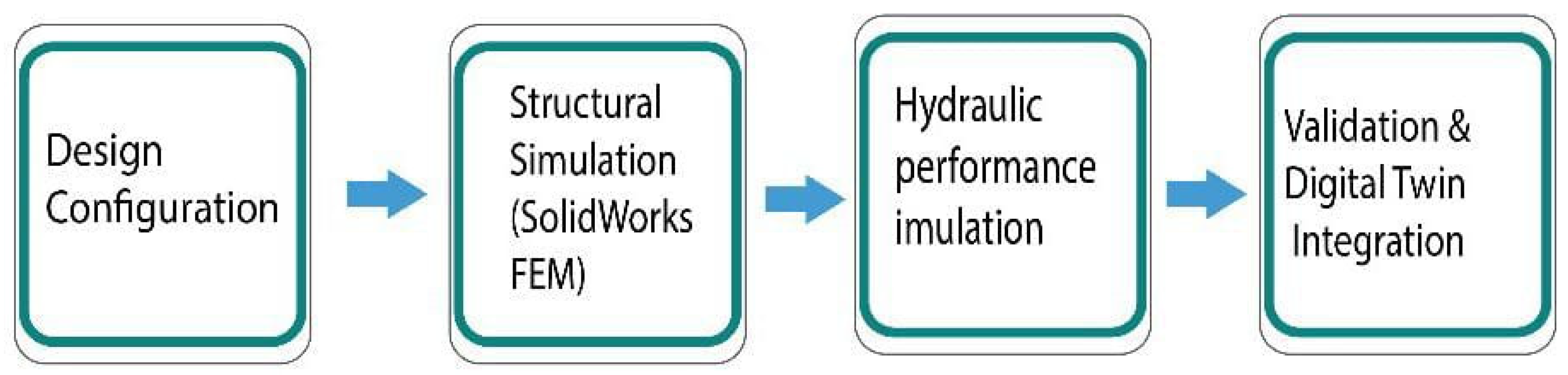
We employed a simulation-based design and analysis approach to evaluate the structural and hydraulic performance of a modular hexagonal green pavement system for sustainable urban drainage (
Figure 1). The methodology integrates computational simulation techniques, material analysis, and performance validation within a digital twin framework.
2.1. Design
The proposed pavement system consists of the following two integrated layers. The upper base layer was designed to withstand vehicular and pedestrian loads using Portland Moderate Strength Concrete, known for its balanced compressive strength and porosity. The lower support layer was structured to optimize water infiltration and facilitate efficient drainage under the pavement. The hexagonal configuration was chosen due to its superior interlocking performance, minimal deformation, and efficient load distribution as indicated by preliminary geometric analysis.
2.2. Structural Simulation
Structural analysis was conducted using the finite element method (FEM) simulation in SolidWorks. A static load of up to 1100 N was applied to the pavement model to represent typical pedestrian and light vehicle pressure. The simulation aimed to identify stress distribution across the pavement surface and substructure, deformation levels and safety margins under applied loads, and structural performance relative to the material’s yield strength.
2.3. Hydraulic Performance Simulation
To simulate real-world stormwater conditions, hydraulic performance tests were performed using variable valve-opening scenarios that represent different rainfall intensities. This approach enabled the measurement of the infiltration rate of water through the porous pavement structure, flow retardation coefficient (measured between 0.66 and 0.80), and water dispersion and retention efficiency across the lower layer.
2.4. Validation and Digital Twin Integration
Results from the simulations were integrated into a digital twin framework. This virtual representation of the pavement system enabled real-time monitoring and performance feedback, the predictive adjustment of design parameters, and the iterative optimization of system structure before physical prototyping. The digital twin model serves as a decision-support tool for engineers and urban planners, offering simulation-based guidance for implementing green pavement in different residential settings.
3. Results and Discussion
The hexagonal green pavement system was evaluated through a series of simulations. We evaluated (1) the design configuration of the pavement system, (2) structural performance based on stress and displacement simulations, (3) hydraulic efficiency evaluated through retardation and infiltration tests, (4) the integration of simulation data into a digital twin model, and (5) a multidimensional interpretation of the system’s structural and ecological contributions. Each subsection provides critical insights into the system’s effectiveness in addressing the dual demands of urban load-bearing infrastructure and sustainable stormwater management.
3.1. Pavement Design Configuration
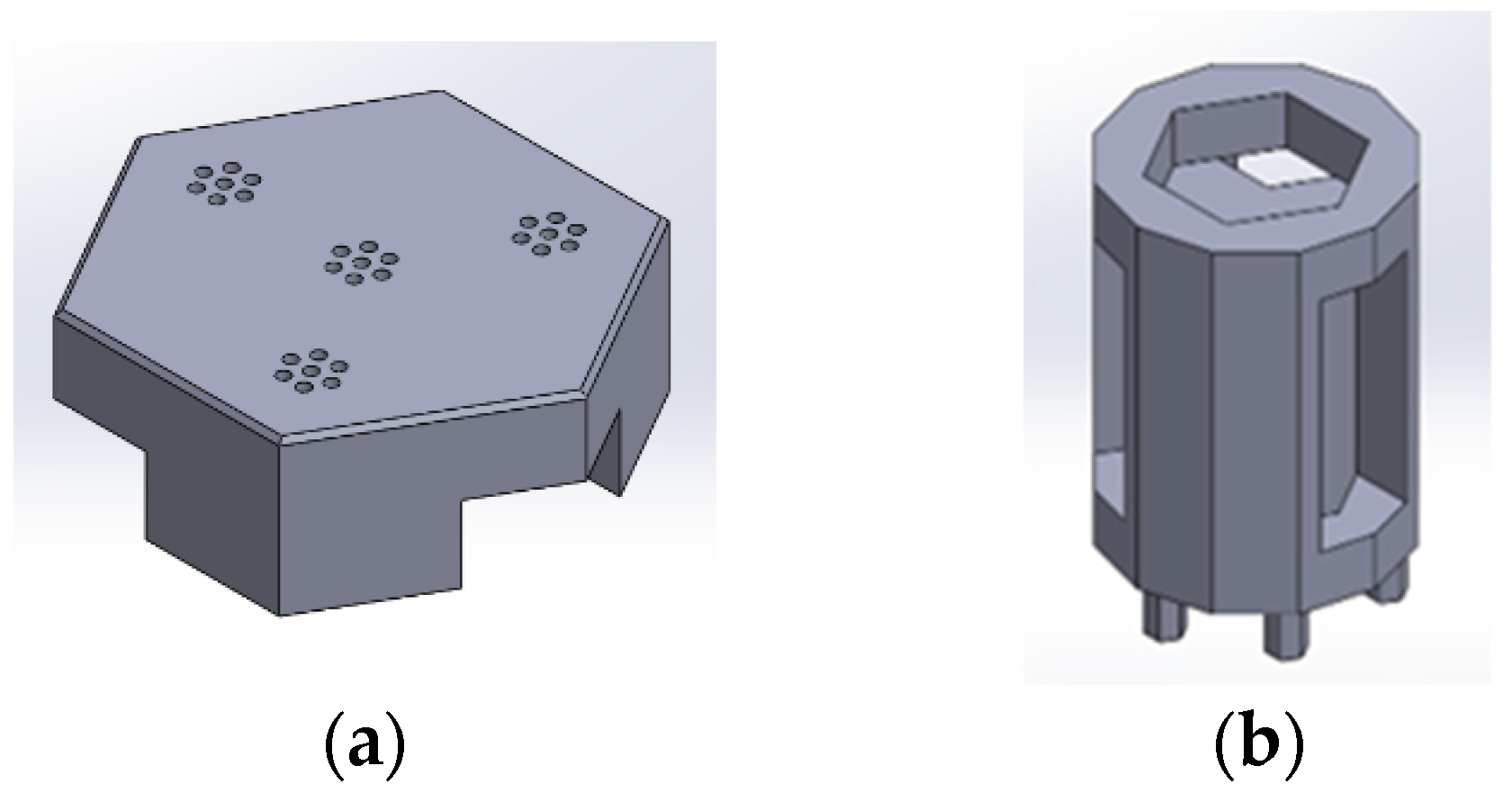
The development of adaptive paving block systems to address climate and urbanization challenges has led to structural and ecological innovations such as modular green pavement. In this study, a hexagonal paving block design was developed to integrate both mechanical and hydraulic functionalities within a dual-layer system (
Figure 2). The first layer, the upper base layer, functions as the primary load-bearing surface, while the second, the lower support layer, is optimized for water infiltration and drainage.
The hexagonal shape was selected based on geometric analysis and comparative studies of block configurations. According to prior research, the hexagon shape demonstrated the lowest deformation (−0.097 cm) and superior interlocking efficiency compared to square or rectangular blocks. These advantages result in more even load distribution, reduced joint damage between modules, and improved construction efficiency.
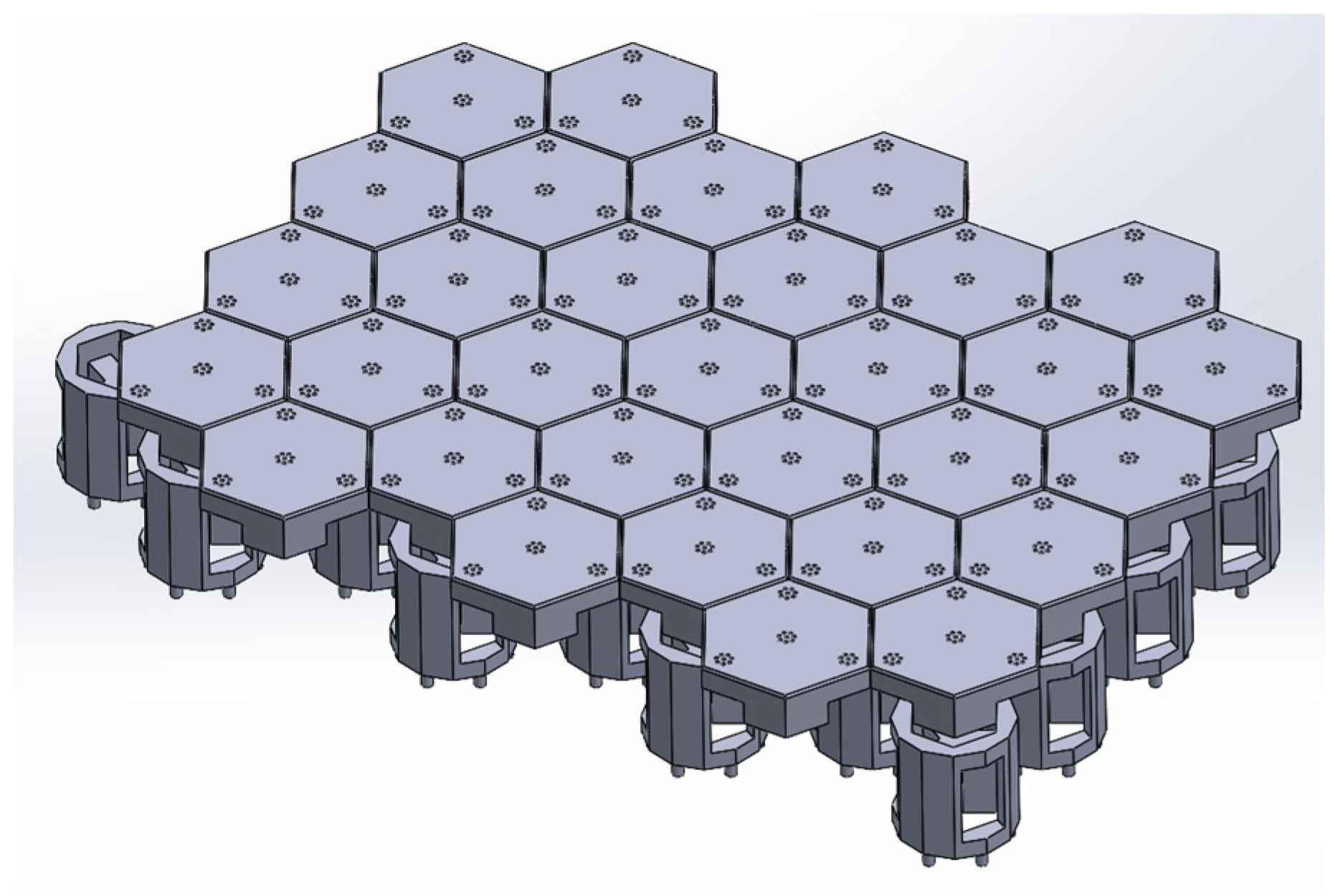
An interlocking design was implemented to ensure structural connectivity between modules (
Figure 3). This configuration provides mechanical flexibility to accommodate surface shifts and ensures uniform distribution of stress, reducing concentrated stress points that may lead to cracking. The modular concept also accelerates installation and simplifies maintenance, allowing for partial replacements without dismantling the entire system.
The paving block components include micro-perforations on the upper surface to facilitate rapid rainwater infiltration into the lower drainage layer. Water is then guided through channels in the support layer into the soil or auxiliary drainage systems. This design enables the preservation of structural functionality and offers a sustainable solution for stormwater runoff and flood risk in densely populated urban areas.
3.2. Structural Simulation: Stress and Displacement Analysis
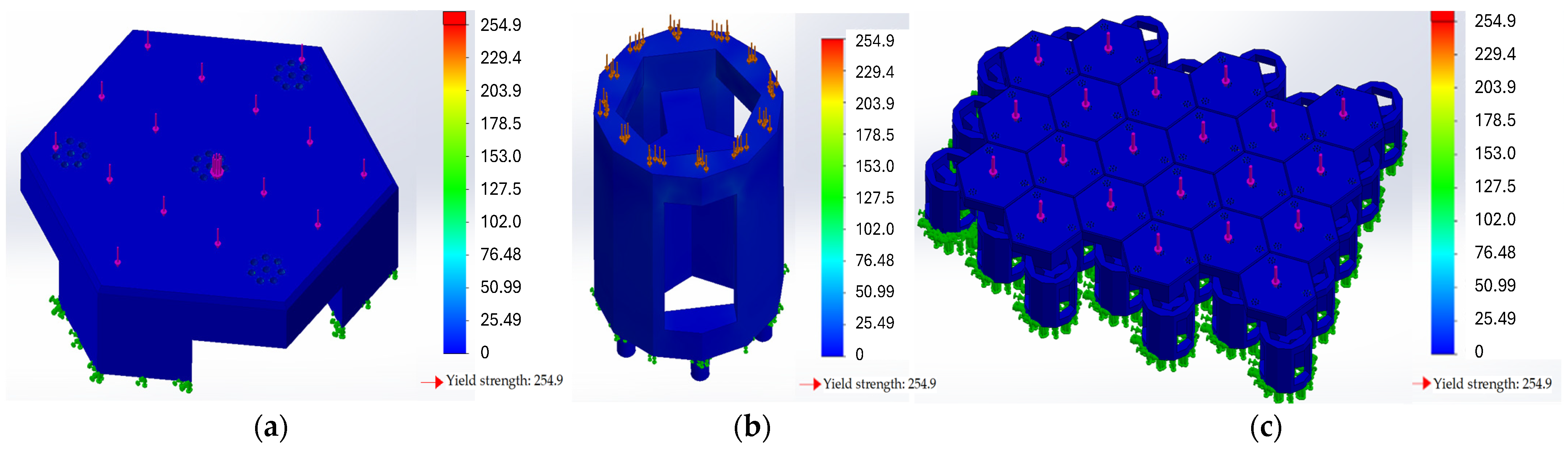
Mechanical performance was evaluated using FEM through SolidWorks software (
Figure 4). Simulations were conducted on three configurations: base paving block (upper surface), support layer block (lower drainage structure), and a fully interlocked paving system. The material used was Portland Moderate Strength Concrete, with the following properties: a compressive strength of 407.88 kgf/cm
2, a yield strength: 254.93 kgf/cm
2, a tensile strength of 50.99 kgf/cm
2, and an elastic modulus of 234,533 kgf/cm
2.
The first simulation on the base block under a 1100 N static load showed evenly distributed stress, with maximum values well below the yield strength. The measured displacement was minimal, indicating no risk of cracking or significant deformation. This confirms the upper layer’s ability to support pedestrian and light vehicle traffic safely. In the second simulation, the support layer was tested under the same load. The results showed stress concentration toward the center of the drainage channel, but still below the yield strength, confirming that the design can withstand vertical pressure without structural failure. The third simulation was conducted to examine a fully interlocked paving system under a distributed load of 1000 N. The system collectively absorbed the applied load, with no single module bearing excessive stress. Maximum displacement values remained within safe limits, supporting the conclusion that the modular interlocking system is suitable for residential pathways and local streets.
3.3. Hydraulic Simulation: Retardation and Infiltration Efficiency
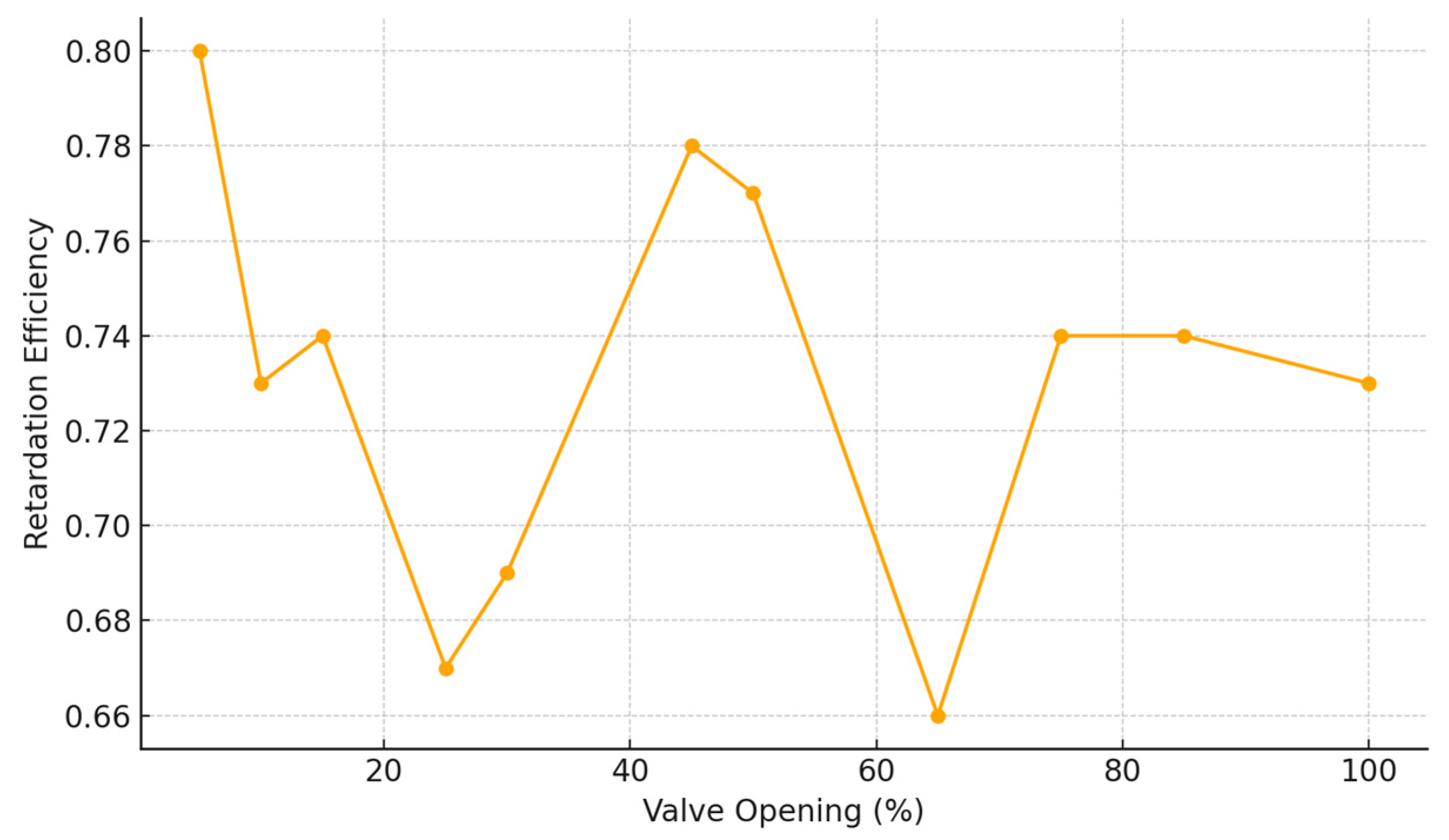
Hydraulic performance was assessed through simulated rainfall using sprinkler and valve systems with openings ranging from 100 to 5%. Water retention volumes were measured with and without the green pavement modules in place. The results of this study showed that the green pavement system demonstrated retardation coefficients ranging from 0.66 to 0.80, depending on rainfall intensity and the presence of a prototype (test mass). These values were derived from the average retained water volumes under both testing conditions.
Modules with test mass (simulating surface resistance) were more effective at delaying runoff. At higher valve openings (85–100%), the system significantly reduced surface runoff, indicating rapid infiltration and storage capacity. At moderate valve openings (50–75%), the system maintained good water retention, though repeated tests revealed some capacity degradation. At lower valve openings (≤25%), the system continued functioning, though water entry volumes were too low to produce significant retention differences.
Figure 5 revealed that runoff volumes declined more quickly without the test mass, indicating that physical surface interaction improves the module’s ability to delay water flow.
Table 1 presents the water volume measurements and calculated retardation efficiency under various valve opening scenarios.
3.4. Integration into a Digital Twin Model
Results from both structural and hydraulic simulations were integrated into a digital twin platform virtual representation of the green pavement system. This model serves not only as a design visualization tool but also as a platform for real-time monitoring and performance assessment. The digital twin integration is beneficial in predictive performance evaluation. The model simulates extreme conditions such as heavy rainfall or dynamic loading to assess system durability before physical implementation. Geometry and material parameters can be adjusted in the model to instantly evaluate their effect on stress and infiltration performance for rapid design iteration. Urban planners can use virtual performance data to select the most suitable pavement design based on local constraints such as budget, aesthetic requirements, and drainage capacity.
Furthermore, the digital twin supports smart infrastructure development by enabling connection to sensors that monitor surface temperature, soil moisture, or water flow rates directly on-site. The operational components and functions of the digital twin model are presented in
Table 2.
3.5. Multidimensional Interpretation: Structural and Ecological Integration
The results of this study demonstrate that the hexagonal green pavement system offers a dual-function solution that combines structural durability with ecological water management. This multidimensional approach responds to the growing urban need for infrastructure that is not only strong and reliable but also adaptive to changing climate conditions and environmental pressures.
Structurally, the interlocking hexagonal blocks, constructed with Portland Moderate Strength Concrete, distribute loads effectively and minimize stress concentration. FEM simulation results confirmed that the stress values remained well below the material’s yield threshold, even under simulated static loads representing pedestrian and light vehicle traffic. The system’s modular interlocking configuration also contributes to reduced deformation, prolonged service life, and simplified maintenance, making it particularly advantageous in urban settings with high pedestrian activity.
The design integrates permeable surfaces and subsurface drainage channels that facilitate efficient water infiltration and temporary retention. This hydraulic capability was validated through stormwater simulation tests, which recorded retardation efficiency ranging from 66 to 80%, depending on rainfall intensity and surface conditions. The system reduces surface runoff, helps prevent local flooding, and promotes groundwater recharge—critical functions for cities facing extreme rainfall events and overburdened drainage networks.
The combination of structural performance and ecological utility into a single pavement system reflects an integrated infrastructure model. This eliminates the traditional separation between mechanical design and environmental responsibility. The hexagonal configuration, in particular, offers superior spatial efficiency and mechanical stability while enhancing the flow and storage of water, positioning it as a well-balanced solution for modern urban challenges.
Moreover, by embedding the pavement into a digital twin framework, the system becomes part of a smart infrastructure ecosystem. It enables real-time monitoring of structural conditions and hydrological performance, predictive analysis, and adaptive control. These digital capabilities ensure that the system remains responsive to real-world conditions over time and can inform future planning or rapid interventions as needed.
The hexagonal green pavement system excels in structural terms and its ecological impact. Its ability to manage water effectively while maintaining load-bearing capacity demonstrates a practical and sustainable approach to modern pavement design. These qualities make it highly suitable for implementation in densely populated residential areas and flood-prone zones, where resilience and multifunctionality are crucial for long-term urban sustainability. In general, the advantages of the Hexagonal Green Pavement System are presented in
Table 3 below.
4. Conclusions
A hexagonal green pavement system was designed and validated through digital simulation methods to address the challenges of urban load-bearing infrastructure and sustainable stormwater management. Structurally, the hexagonal configuration, implemented with Portland Moderate Strength Concrete, showed excellent mechanical stability under applied static loads, with stress levels consistently below the material’s yield strength and minimal deformation observed across all simulation scenarios. These results confirm the pavement’s ability to support pedestrian and light vehicular traffic effectively.
From a hydrological perspective, the system displayed enhanced infiltration and retardation performance under varying rainfall intensities, with retardation efficiency values ranging from 66 to 80%. This indicates a significant reduction in surface runoff, supporting the implementation of zero-runoff strategies in urban environments. The integration of a digital twin model further enhanced the design process by enabling real-time monitoring, predictive analysis, and iterative optimization, thus aligning with smart city development frameworks.
Overall, the hexagonal green pavement design effectively combines structural durability, hydraulic functionality, and ecological integration, making it highly suitable for high-density residential areas and flood-prone urban zones. This research contributes valuable insights into the use of modular, digitally simulated infrastructure systems to support climate resilience, urban sustainability, and smart drainage planning.