
Proceeding Paper

Parameter Extraction and State-of-Charge Estimation of Li-Ion Batteries for BMS Applications †

Research Center in Industrial Technologies (CRTI), P.O. Box 64, Cheraga, Algiers 16014, Algeria
*
Author to whom correspondence should be addressed.
†
Presented at the 6th International Electronic Conference on Applied Sciences, 9–11 December 2025; Available online: https://sciforum.net/event/ASEC2025.
Eng. Proc. 2026, 124(1), 92; https://doi.org/10.3390/engproc2026124092
Published: 26 March 2026
(This article belongs to the Proceedings of The 6th International Electronic Conference on Applied Sciences)

Abstract

Lithium-ion batteries (LiBs) are fundamental to modern energy systems, particularly in electric vehicle (EV) applications, due to their high energy density, long cycle life, and low self-discharge characteristics. Accurate State-of-Charge (SoC) estimation is essential for ensuring reliable performance, efficient energy usage, and the safety of Battery Management Systems (BMSs). However, the nonlinear and time-varying characteristics of LiBs, along with the difficulty in directly measuring internal states, pose significant challenges for parameter identification and SoC estimation. This study presents an advanced approach based on the Weighted Mean of Vectors optimization algorithm to simultaneously identify the unknown parameters of an extended Thevenin Equivalent Circuit Model (ECM) and estimate the SoC. Unlike previous methods that use static parameters for specific battery modes, the proposed technique accounts for dynamic changes during both charging and discharging operations. The algorithm demonstrates superior adaptability by continuously adjusting model parameters to reflect real-time battery behavior under varying operational conditions. The algorithm also models the relationship between SoC and open-circuit voltage (Voc) using data collected from real lithium-ion cells tested under a controlled load profile in the laboratory. This experimental validation ensures the practical applicability and robustness of the proposed methodology. The simulation results confirm the effectiveness and precision of the proposed approach, showing excellent agreement between measured and estimated values, with minimal errors in both voltage and SoC prediction. The enhanced accuracy achieved through this dynamic parameter identification framework represents a significant advancement in battery state estimation technology.

1. Introduction

As environmental degradation accelerates and fossil fuel resources dwindle, the automotive sector faces mounting pressure to adopt sustainable transportation solutions that contribute to global net-zero emissions targets. Electric vehicles (EVs) have emerged as a promising alternative for achieving sustainable energy goals [1], offering superior environmental credentials, enhanced energy efficiency, reduced operational costs, and improved user experience compared to conventional internal combustion engines. At the core of EV technology lies the lithium-ion battery (LiB) system, valued for its exceptional power-to-weight ratio, environmental compatibility, absence of memory degradation, prolonged operational life, and minimal energy loss during storage [2]. However, the dynamic and complex operating conditions encountered in automotive applications necessitate sophisticated battery management systems (BMS) capable of real-time monitoring and control. Critical parameters such as state of charge (SOC), thermal conditions, internal resistance variations, and capacity degradation must be continuously assessed to optimize performance and ensure safety. Since the SOC parameter cannot be directly measured [3], accurate mathematical modeling becomes indispensable for reliable estimation [4]. The development of precise battery models directly influences the effectiveness of parameter estimation algorithms, making model selection and parameter identification crucial elements in battery management system design. Among the available modeling approaches—including data-driven methods, electrochemical representations, and equivalent circuit models (ECMs) [5]—the latter has gained widespread adoption due to its balanced combination of computational simplicity, parameter efficiency, and mathematical tractability for control system implementation [6].
The rapid advancements in Artificial Intelligence (AI) have introduced powerful optimization tools for solving complex engineering problems. Metaheuristic Algorithms (MAs), inspired by biological and natural processes, have been successfully applied to diverse engineering challenges, including welding optimization [7], image processing [8], parameter identification for proton exchange membrane (PEM) fuel cells [9], and photovoltaic system modeling [10]. In battery modeling, MAs have played a key role in refining parameter estimation, significantly improving both accuracy and computational efficiency. Numerous metaheuristic techniques have been explored for this purpose [3,11,12,13,14,15].
In the past two years, several new MAs have been proposed to improve convergence speed and avoid local optima in continuous optimization problems. This raises a fundamental question: given the numerous existing MAs, is there still a need for new ones? The No Free Lunch (NFL) theorem [16] states that no single optimization algorithm is universally effective across all problem domains, reinforcing the importance of developing specialized algorithms for different challenges. Despite progress in the field, many recently introduced MAs have not been systematically tested for estimating LiB model parameters.
In the work of [17], the INFO algorithm—based on the Weighted Mean of Vectors—was employed to identify unknown parameters in an extended Thevenin-based ECM, focusing on dynamic behavior. However, the study did not explore SoC estimation. In contrast, [18] introduced the Improved Marine Predators Algorithm (IMPA) to address both parameter identification and SoC estimation. Nevertheless, the approach assumed fixed model parameters depending on the battery’s operating mode (charging or discharging).
To address this research gap, the current study presents a novel application of the INFO algorithm for comprehensive identification of both the ECM parameters and the SoC. Unlike previous works, the method dynamically adapts to changes in the battery’s operating conditions, offering a more flexible and accurate modeling solution.
In addition to estimation accuracy, practical battery-management applications require modeling approaches that preserve physical interpretability, maintain moderate computational complexity, and remain adaptable under non-stationary operating conditions. Within this context, equivalent circuit models offer an effective compromise between fidelity and implementation simplicity, while dynamic parameter identification helps maintain model validity during charging, discharging, and varying load profiles.

2. Materials and Methods

2.1. Extended Thévenin Equivalent Circuit Model (ECM)

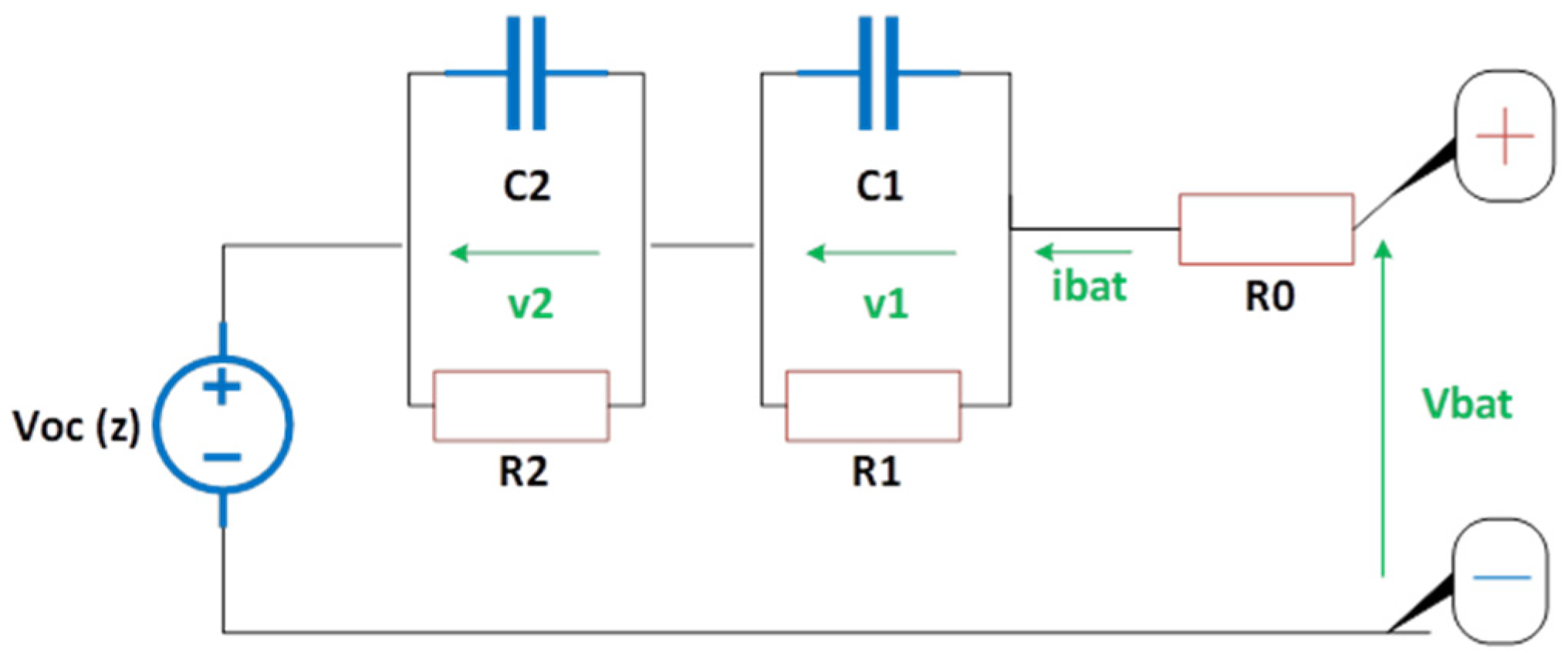
Our research focuses on optimizing parameters in the extended Thevenin model, which offers an effective balance between accuracy and complexity. As shown in Figure 1, this second-order (2RC) model incorporates two RC branches arranged in series with the internal ohmic resistance R0 and the Voltage source (Voc).
To integrate the extended Thevenin model smoothly into a final algorithm, a discrete-time formulation is employed:
v b a t k = V o c ( z k ) − R 0 i b a t k − ∑ i = 1 i = m v i k ,
z k + 1 = z k − η ∆ t Q C i b a t k ,
v i k + 1 = e − ∆ t R i C i v i k + R i 1 − e − ∆ t R i C i i b a t k ,
where
  • v b a t represents the battery output voltage;
  • V o c is the OCV;
  • i b a t is the output/input current;
  • z is the state of charge (SOC);
  • m is the maximum number of RC branches;
  • v i refers to the voltage across the i -th RC branch;
  • i represents the index of the RC branch;
  • η stands for the charge factor (set 1 in this study);
  • ∆ t represents the sampling period;
  • Q C indicates the battery nominal capacity (in Ah).
In this work, the non-linear correlation between V o c and z is accurately described by a sixth-degree polynomial form. This polynomial contains seven numerical coefficients ( a 0 to a 6 ) [14]:
V o c = a 0 + a 1 z + a 2 z 2 + a 3 z 3 + a 4 z 4 + a 5 z 5 + a 6 z 6 ,

2.2. Applied INFO Algorithm

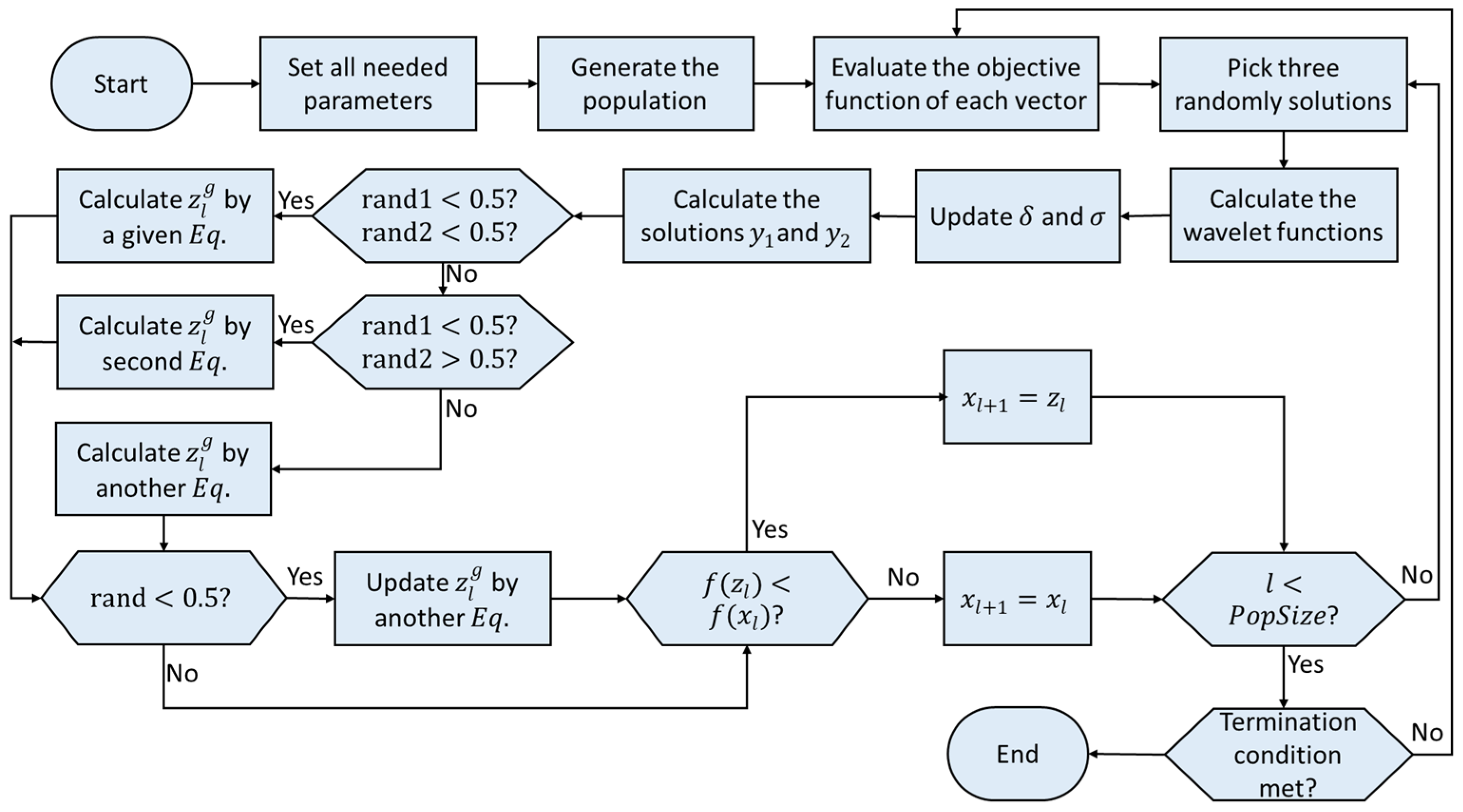
The weIghted meaN oF vectOrs (INFO) method is a population-based optimization algorithm. The key idea is to maintain a population of candidate solution vectors in a multi-dimensional search space and iteratively update them by combining information from other vectors through weighted means, together with local refinements. The algorithm comprises three main phases: (i) an updating rule based on weighted means, (ii) a vector combination process to enhance population diversity, and (iii) a local search operator to fine-tune promising solutions. The central mechanism is the use of weighted means, where solutions with better fitness contribute more significantly to guiding the search direction. The overall workflow of INFO, including initialization, solution update strategies, parameter adaptation, and selection, is summarized in the flowchart represented in Figure 2, which illustrates the main steps of the algorithm and their logical connections. For a deeper understanding of the INFO methodology, readers are encouraged to consult previous studies [9,17,19], which provide comprehensive descriptions and further insights into the algorithm’s design and applications.

2.3. Cost Function and Established Framework

In this paper, the fitness (cost) function is specifically defined as the difference between calculated data ( V e s t ), obtained through mathematical computations, and actual measured data ( V e x p ), This discrepancy, evaluated over N data points, is quantified using the (RMSE), which is expressed as:
F R M S E x = m i n 1 N ∑ i = 1 N [ V e x p i − V e s t i ] 2 ,
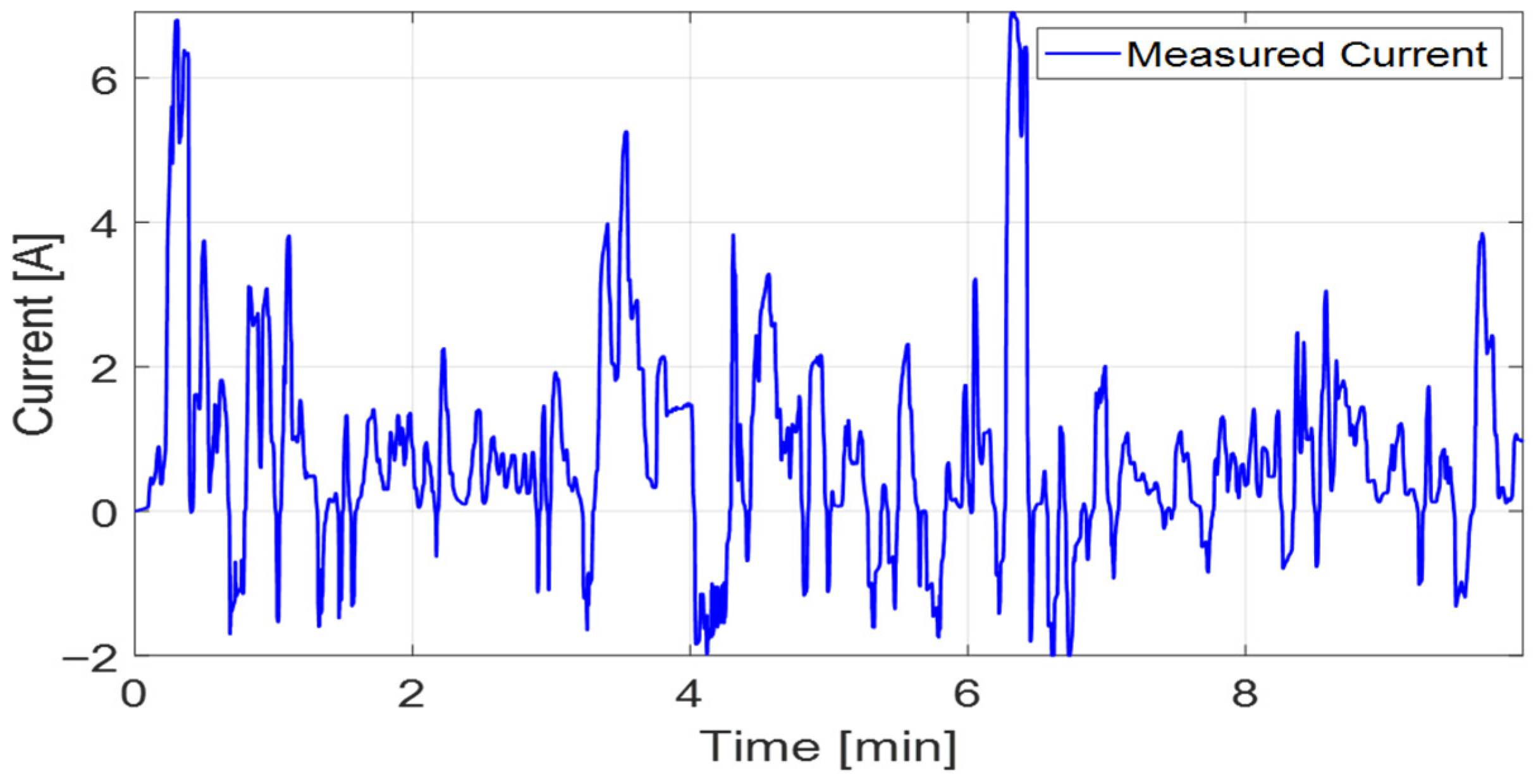
The current rates, corresponding to the test profile based on real driving data, are visually represented in Figure 3.
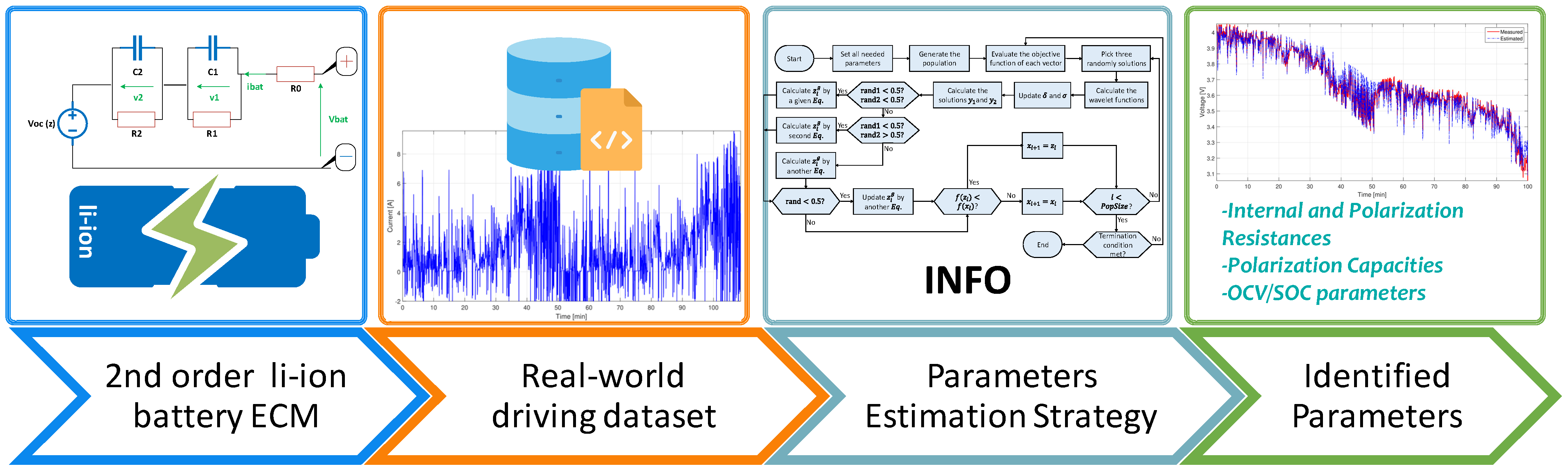
The strategy initiates with the selection and configuration of the LiB model. We selected the 2rd-order ECM because its promising ability in capturing static and dynamic performance of the battery. Next, real-world datasets are utilized, which include real dynamic load profiles and data resulting from battery cells. The selected new algorithm is then applied to extract the parameters of the ECM. The optimization technique is utilized to adjust model parameters and minimize the cost function, thus improving model accuracy. The final output is a set of optimized parameters that align with real-world data Figure 4 summarizes the detailed workflow for estimating parameters using the selected algorithm.

3. Results and Discussion

The results obtained from applying the INFO optimization algorithm to the extended Thevenin ECM highlight its strong potential for accurate modeling and SoC estimation of Li-ion batteries. The current profile, representative of a real-world driving scenario, provided a dynamic and challenging environment for validation.
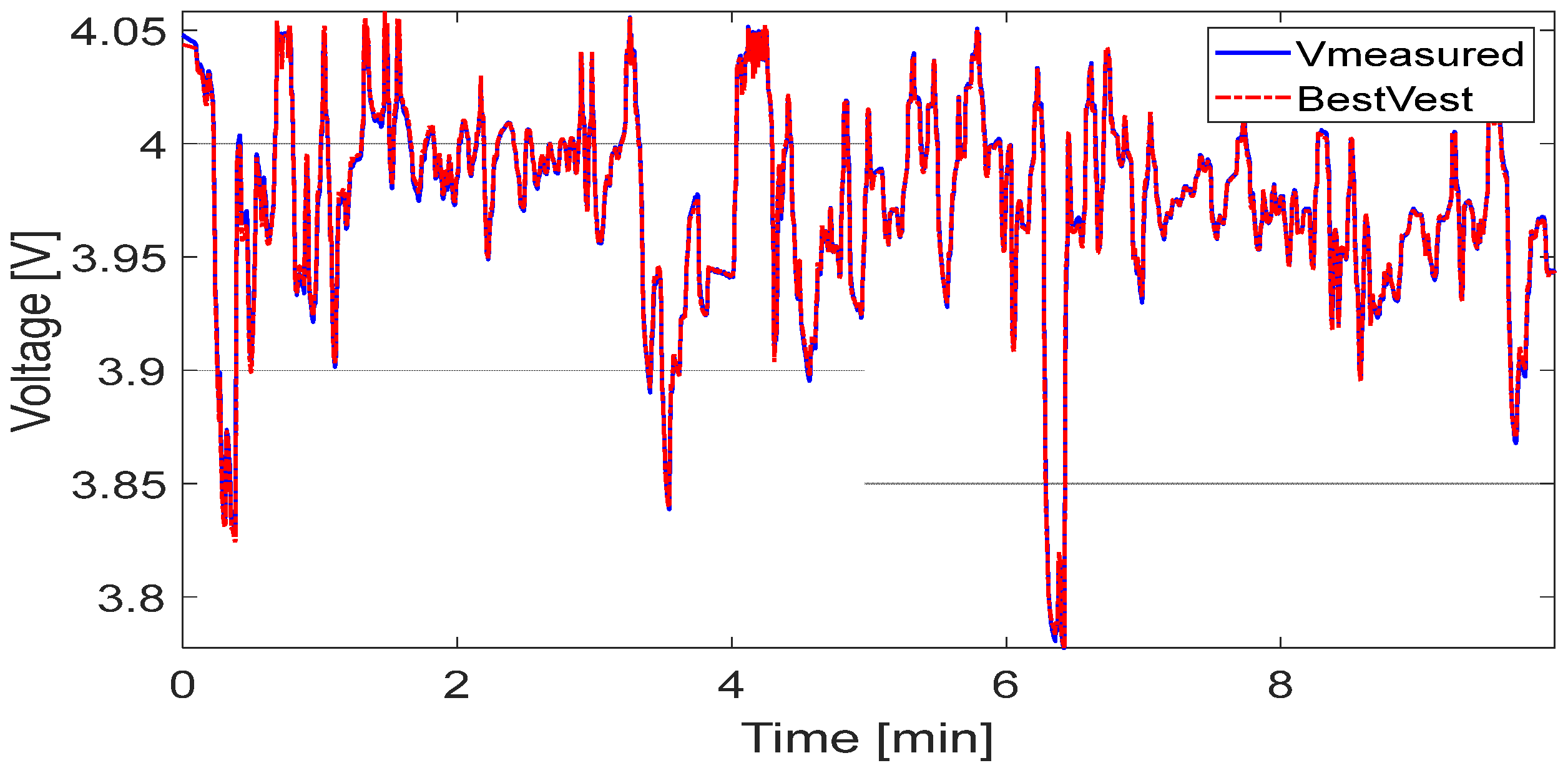
The estimated voltage closely follows the measured values, as illustrated in Figure 5. This high level of agreement indicates that the INFO-identified parameters successfully capture both the transient and steady-state dynamics of the extended Thevenin ECM. Importantly, the algorithm adapts well to rapid current fluctuations, ensuring accurate voltage prediction even during highly dynamic operating conditions.
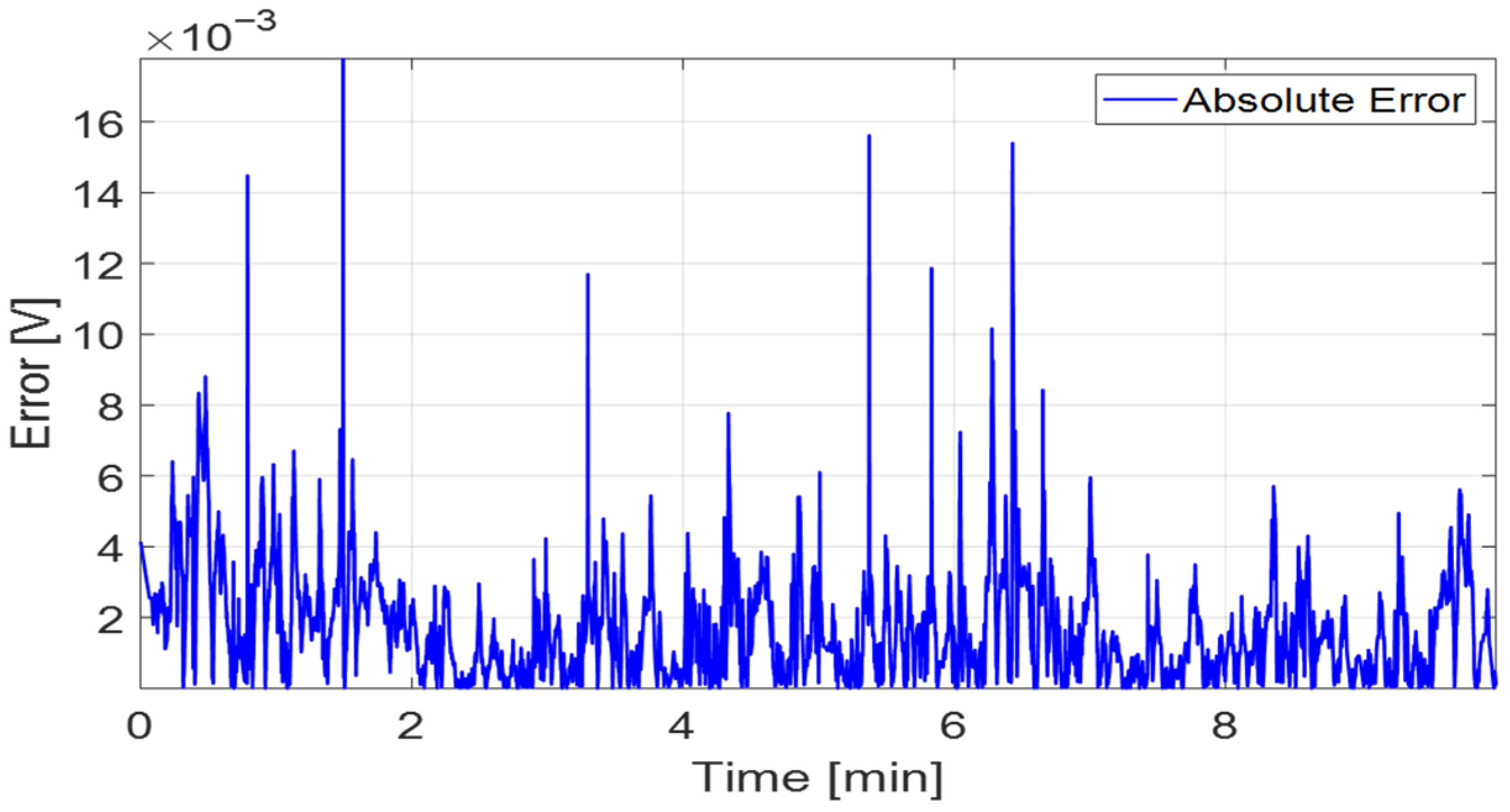
The absolute error analysis (Figure 6) further confirms the accuracy of the model. Throughout the entire test period, the error remains consistently below 10 mV, with no significant spikes observed. Such low error margins demonstrate the robustness of the INFO algorithm in maintaining reliability across varying operating points.
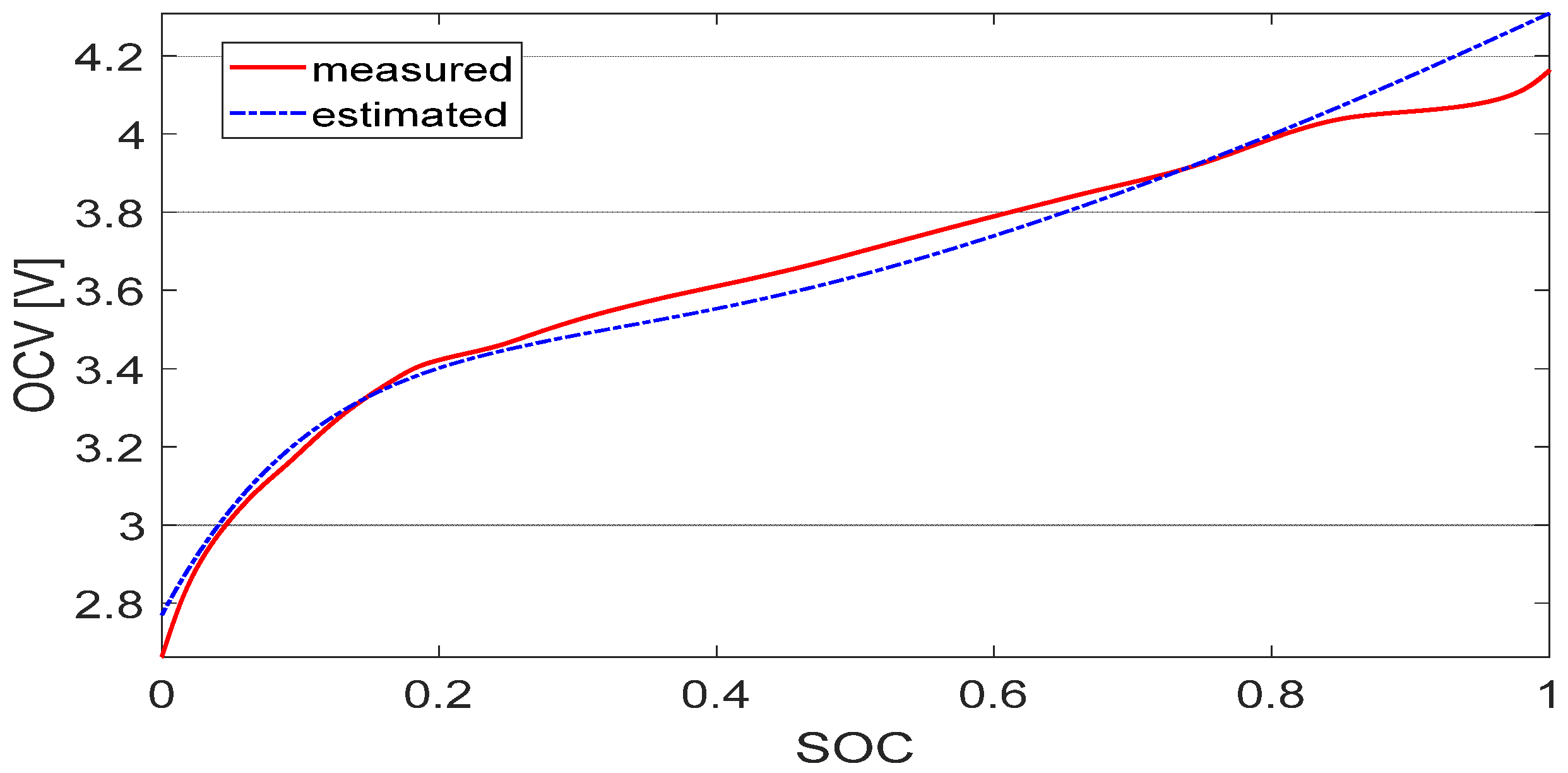
In addition to voltage estimation, the relationship between the OCV and SoC (Figure 7) shows a strong correlation between the estimated and measured curves. The INFO-based identification captures the nonlinear characteristics of the OCV–SoC curve, which is essential for precise SoC estimation. Failure to accurately model this relationship typically leads to cumulative SoC estimation errors; however, the results here confirm the reliability of the proposed approach.
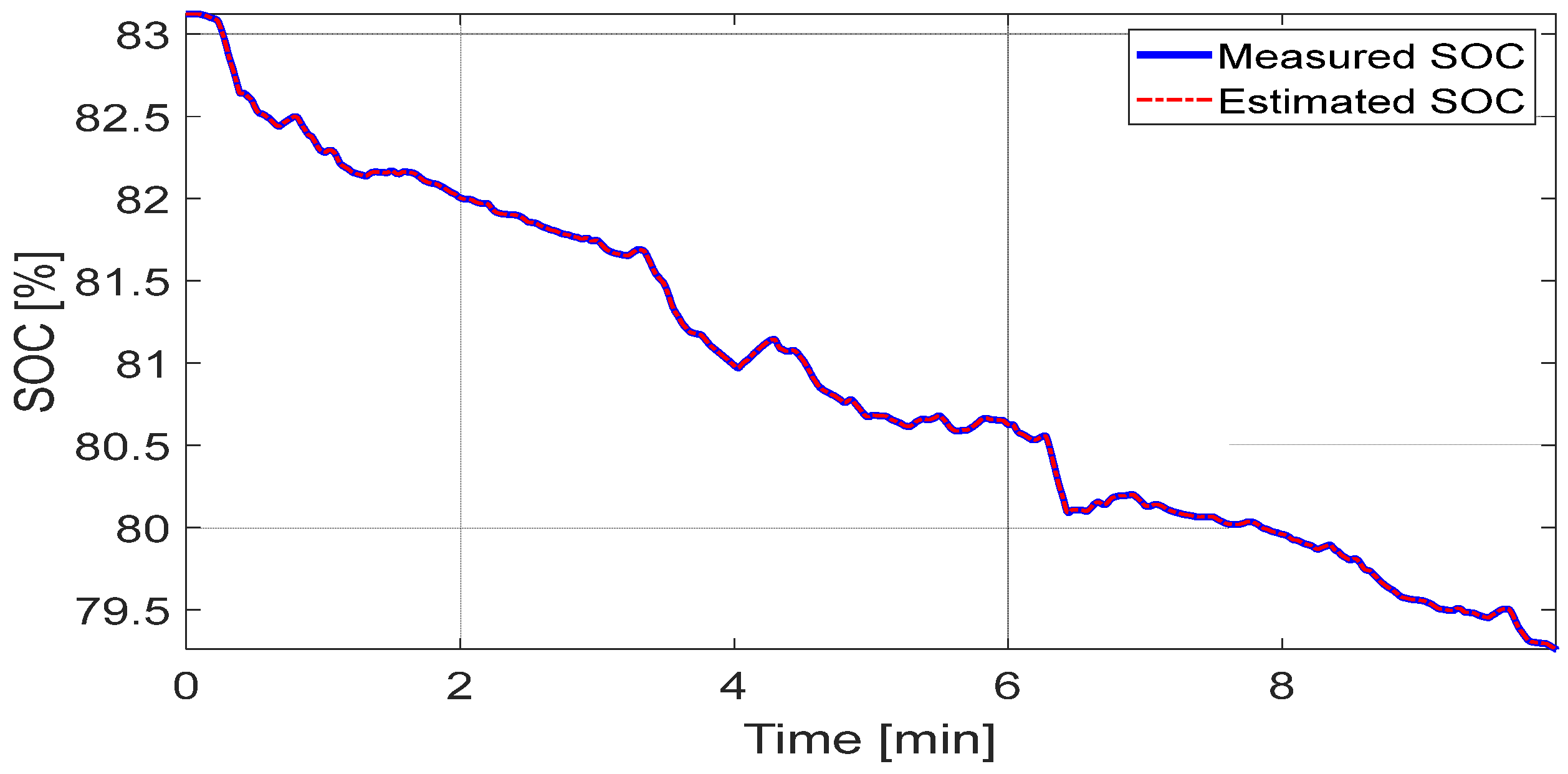
The SoC estimation results (Figure 8) provide further validation. The estimated SoC trajectory exhibits minimal divergence from the measured reference, with the deviation remaining within negligible limits. This level of precision ensures that the method can be confidently integrated into real-time Battery Management Systems (BMS), where inaccurate SoC estimation may compromise system performance, safety, and energy utilization.
Beyond the low estimation error, these results also indicate that the proposed INFO-based framework maintains stable behavior under continuously varying operating points, which is an important practical indicator of robustness for online battery management applications. From a modeling perspective, the obtained performance also suggests that continuously updating the ECM parameters reduces the risk of performance degradation that may arise when fixed parameters are used under changing operating conditions.

4. Conclusions

This study presented the application of the INFO optimization algorithm for joint parameter identification and SoC estimation of lithium-ion batteries using an extended Thevenin ECM. By leveraging weighted mean-based updating rules, INFO successfully captured both the static and dynamic behaviors of the battery under real-world operating conditions. The simulation outcomes confirmed the robustness of the proposed approach, with voltage prediction errors consistently below 10 mV and highly accurate SoC tracking. These results indicate that INFO offers a promising alternative to conventional optimization techniques for battery modeling. Its demonstrated accuracy and reliability support its potential for deployment in real-time BMS applications. Future work may explore hybridization of INFO with other optimization strategies or its application to higher-order ECMs and aging models, thereby extending its applicability to a wider range of energy storage systems. Future work may also include direct comparisons with established estimators such as EKF, UKF, and RLS, together with runtime and sensitivity analyses to further assess practical deployment in real-time BMS applications.

Author Contributions

Conceptualization, B.L. and M.H.; methodology, B.L.; software; validation, B.L. and M.H.; writing—original draft preparation, B.L.; writing—review and editing, H.T. and M.H. All authors have read and agreed to the published version of the manuscript.

Funding

This research received no external funding.

Institutional Review Board Statement

Not applicable.

Informed Consent Statement

Not applicable.

Data Availability Statement

Data will be made available on request.

Conflicts of Interest

The author declares no conflicts of interest.

References

  1. Chu, Y.; Cui, N.; Liu, K. Nonlinear Modeling and SOC Estimation of Lithium-Ion Batteries Based on Block-Oriented Structures. Energy 2025, 315, 134273. [Google Scholar] [CrossRef] [Scilit]
  2. Liu, K.; Peng, Q.; Liu, Y.; Cui, N.; Zhang, C. Explainable Neural Network for Sensitivity Analysis of Lithium-Ion Battery Smart Production. IEEE/CAA J. Autom. Sin. 2024, 11, 1944–1953. [Google Scholar] [CrossRef] [Scilit]
  3. Lekouaghet, B.; Merrouche, W.; Bouguenna, E.; Taghezouit, B.; Benghanem, M. Advanced Parameter Estimation for Lithium-Ion Battery Model Using the Information Sharing Group Teaching Optimization Algorithm. J. Power Sources 2024, 624, 235615. [Google Scholar] [CrossRef] [Scilit]
  4. Lucaferri, V.; Quercio, M.; Laudani, A.; Riganti Fulginei, F. A Review on Battery Model-Based and Data-Driven Methods for Battery Management Systems. Energies 2023, 16, 7807. [Google Scholar] [CrossRef] [Scilit]
  5. Wang, S.; Zhang, S.; Wen, S.; Fernandez, C. An Accurate State-of-Charge Estimation of Lithium-Ion Batteries Based on Improved Particle Swarm Optimization-Adaptive Square Root Cubature Kalman Filter. J. Power Sources 2024, 624, 235594. [Google Scholar] [CrossRef] [Scilit]
  6. Merrouche, W.; Lekouaghet, B.; Bouguenna, E. Honey Badger Algorithm for Estimating the Parameters of Li-Ion Battery 3rd Order ECM. In Proceedings of the NEIS 2023; Conference on Sustainable Energy Supply and Energy Storage Systems, Hamburg, Germany, 4–5 September 2023; pp. 163–169. [Google Scholar]
  7. Lekouaghet, B.; Haddad, M.; Hamouda, N. Exploring Recent Metaphor-Based Algorithms for Optimizing TIG Welding Parameters. In Proceedings of the 2024 2nd International Conference on Electrical Engineering and Automatic Control (ICEEAC); IEEE: Piscataway, NJ, USA, 2024; pp. 1–5. [Google Scholar]
  8. Hamza, A.; Lekouaghet, B.; Himeur, Y. Hybrid Whale-Mud-Ring Optimization for Precise Color Skin Cancer Image Segmentation. In Proceedings of the 2023 6th International Conference on Signal Processing and Information Security, ICSPIS 2023, Dubai, United Arab Emirates, 8–9 November 2023. [Google Scholar]
  9. Lekouaghet, B.; Khelifa, M.A.; Boukabou, A. Precise Parameter Estimation of PEM Fuel Cell via Weighted Mean of Vectors Optimizer. J. Comput. Electron. 2024, 23, 1039–1048. [Google Scholar] [CrossRef] [Scilit]
  10. Bensidhoum, T.; Lekouaghet, B.; Touil, S.-A. Photovoltaic Model Parameters Estimation Via the Fully Informed Search Algorithm. Int. J. Robot. Control Syst. 2024, 4, 929–940. [Google Scholar] [CrossRef] [Scilit]
  11. Fahmy, H.M.; Alqahtani, A.H.; Hasanien, H.M. Precise Modeling of Lithium-Ion Battery in Industrial Applications Using Walrus Optimization Algorithm. Energy 2024, 294, 130859. [Google Scholar] [CrossRef] [Scilit]
  12. Shaheen, A.M.; Hamida, M.A.; El-Sehiemy, R.A.; Elattar, E.E. Optimal Parameter Identification of Linear and Non-Linear Models for Li-Ion Battery Cells. Energy Rep. 2021, 7, 7170–7185. [Google Scholar] [CrossRef] [Scilit]
  13. Merrouche, W.; Lekouaghet, B.; Bouguenna, E. Artificial Search Algorithm for Parameters Optimization of Li-Ion Battery Electrical Model. In Proceedings of the 2023 International Conference on Decision Aid Sciences and Applications (DASA); IEEE: Piscataway, NJ, USA, 2023; pp. 17–22. [Google Scholar]
  14. Lekouaghet, B.; Merrouche, W.; Bouguenna, E.; Himeur, Y. Identifying the Unknown Parameters of Equivalent Circuit Model for Li-Ion Battery Using Rao-1 Algorithm. Eng. Proc. 2023, 56, 228. [Google Scholar] [CrossRef] [Scilit]
  15. Mohamed, M.A.A.; Yu, T.F.; Ramsden, G.; Marco, J.; Grandjean, T. Advancements in Parameter Estimation Techniques for 1RC and 2RC Equivalent Circuit Models of Lithium-Ion Batteries: A Comprehensive Review. J. Energy Storage 2025, 113, 115581. [Google Scholar] [CrossRef] [Scilit]
  16. Joyce, T.; Herrmann, J.M. A Review of No Free Lunch Theorems, and Their Implications for Metaheuristic Optimisation BT—Nature-Inspired Algorithms and Applied Optimization; Yang, X.-S., Ed.; Springer International Publishing: Cham, Switzerland, 2018; pp. 27–51. ISBN 978-3-319-67669-2. [Google Scholar]
  17. Merrouche, W.; Lekouaghet, B.; Bouguenna, E.; Himeur, Y. Parameter Estimation of ECM Model for Li-Ion Battery Using the Weighted Mean of Vectors Algorithm. J. Energy Storage 2024, 76, 109891. [Google Scholar] [CrossRef] [Scilit]
  18. Shaheen, A.M.; Hamida, M.A.; Alassaf, A.; Alsaleh, I. Enhancing Parameter Identification and State of Charge Estimation of Li-Ion Batteries in Electric Vehicles Using an Improved Marine Predators Algorithm. J. Energy Storage 2024, 84, 110982. [Google Scholar] [CrossRef] [Scilit]
  19. Ahmadianfar, I.; Heidari, A.A.; Noshadian, S.; Chen, H.; Gandomi, A.H. INFO: An Efficient Optimization Algorithm Based on Weighted Mean of Vectors. Expert Syst. Appl. 2022, 195, 116516. [Google Scholar] [CrossRef] [Scilit]
Figure 1. ESC model with AVOA implementation for BDT framework.
Engproc 124 00092 g001
Figure 2. INFO Flowchart [17].
Engproc 124 00092 g002
Figure 3. Current profile of the real-world driving Dataset.
Engproc 124 00092 g003
Figure 4. ECM with INFO implementation for SOC estimation framework.
Engproc 124 00092 g004
Figure 5. Measured and estimated LIB voltage via the INFO algorithm.
Engproc 124 00092 g005
Figure 6. Absolute error of the info-based voltage estimation.
Engproc 124 00092 g006
Figure 7. Estimated vs. measured OCV using the INFO algorithm.
Engproc 124 00092 g007
Figure 8. Measured and estimated SOC.
Engproc 124 00092 g008
Disclaimer/Publisher’s Note: The statements, opinions and data contained in all publications are solely those of the individual author(s) and contributor(s) and not of MDPI and/or the editor(s). MDPI and/or the editor(s) disclaim responsibility for any injury to people or property resulting from any ideas, methods, instructions or products referred to in the content.