Proceeding Paper

Phytofabrication of Silver Nanoparticles from Water Hyacinth (Eichhornia crassipes) as a Potential Pest Control Tool for Spodoptera frugiperda  †

by
Joserie Joice Reyes
1,
Jeremy Kyle Edson Austria
1,
Ma. Angelica Chua
1,
Anna Maria Parzuelo
1,
Sean Carlo Castro
1,
Jerry Go Olay
1,
Rugi Vicente Rubi
1,2 and
Carlou Siga-an Eguico
1,2,*
1
Chemical Engineering Department, Adamson University, Manila 1000, Philippines
2
Adamson University Laboratory of Biomass, Energy and Nanotechnology (ALBEN), Adamson University, Manila 1000, Philippines
*
Author to whom correspondence should be addressed.
Presented at the 6th International Electronic Conference on Applied Sciences, 9–11 December 2025; Available online: https://sciforum.net/event/ASEC2025.
Eng. Proc. 2026, 124(1), 91; https://doi.org/10.3390/engproc2026124091
Published: 26 March 2026
(This article belongs to the Proceedings of The 6th International Electronic Conference on Applied Sciences)

Abstract

The invasive fall armyworm (Spodoptera frugiperda) threatens Philippine crops, highlighting the need for sustainable pest management. This study therefore optimizes the green synthesis of silver nanoparticles (AgNPs) from water hyacinth (Eichhornia crassipes), an abundant and problematic aquatic weed, as a potential pest control tool. Methanolic leaf extracts were prepared under varying methanol concentrations, temperatures, and extraction times, and total phenolic content was quantified using the Folin–Ciocalteu method. SEM–EDX confirmed the formation of silver nanoparticles synthesized from Eichhornia crassipes (Ec-AgNPs), with particles observed at ≤100 nm. Optimal extraction occurred at 47 °C, 90% methanol, and 76 min, maximizing phenolic yield. Overall, results suggest phenolic content and extract volume influence nanoparticle size and stability, with larger extract volumes increasing agglomeration risk. Pesticidal efficacy was not evaluated; further work is needed to assess pest control performance.

1. Introduction

Invasive pests such as Spodoptera frugiperda (fall armyworm) have emerged as a major threat to Philippine agriculture, particularly affecting staple crops such as corn and sugarcane and causing substantial yield losses [1]. The widespread infestation in the Philippines since 2019 has intensified reliance on chemical pesticides, which has led to increased environmental pollution, pest resistance, and health risks among farmers [2]. In response, green-synthesized silver nanoparticles (AgNPs) derived from plant extracts have been proposed as a more sustainable pest management option due to their eco-friendly synthesis and the presence of bioactive phytochemicals that can act as reducing and capping agents. Water hyacinth (Eichhornia crassipes), an invasive aquatic plant rich in phenolic compounds and antioxidants, presents a dual benefit as it can be used for AgNP synthesis while also addressing the environmental problem of its proliferation [3]. Hence, this study aims to optimize phenolic extraction from water hyacinth leaves and evaluate its potential for green AgNP synthesis, contributing to the development of sustainable nanopesticides for agricultural use.

2. Materials and Methods

2.1. Materials

Water hyacinth leaves served as the phenolic source collected from Pasig River, Manila, Philippines. Methanol (70–90%) was used as the solvent, and silver nitrate (AgNO3) served as the precursor for AgNP synthesis. Total phenolic content (TPC) was determined using the Folin–Ciocalteu method, with absorbance measured by Ultraviolet–Visible (UV-Vis) spectrophotometry and gallic acid as the calibration standard conducted in Adamson University, Manila, Philippines. Characterization of AgNPs was performed using Scanning Electron Microscopy–Energy-Dispersive X-ray (SEM-EDX) conducted in i-Nano Research Facility-Dela Salle University, Manila, Philippines.

2.2. Phenolic Extraction

The leaves were washed, air-dried in shade for two weeks, oven-dried at 60 °C for 16 h, and pulverized using a Wiley mill. A 1:10 (w/v) plant-to-solvent ratio was used; 10 g of powdered leaves were macerated with 70%, 80%, and 90% methanol in aluminum foil-covered flasks. Samples were shaken at 150 rpm in a water bath at 30, 40 and 50 °C for 30, 60, and 90 min. These parameters were combined and experimentally run in duplicates according to the Box–Behnken design shown in Table 1. The last three runs served as center-point replicates for method validation. Extracts were filtered under vacuum and concentrated using rotary evaporation at 122 mbar and 40 °C.

2.3. Folin–Ciocalteu Assay

Total phenolic content (TPC) of each crude extract was determined using the Folin–Ciocalteu method [4] with gallic acid as the standard. The Folin reagent was diluted 1:10, and sodium carbonate solution was prepared at 75% (w/v). Gallic acid standards (5, 40, 80, 120, 160, and 200 ppm) were prepared from a 1000 mg/L stock solution. Aliquots of 200 µL were mixed with 1 mL Folin reagent and 800 µL Na2CO3, incubated for 30 min, and measured at 765 nm using UV-Vis spectrophotometry. Extract samples followed the same procedure. Absorbances exceeding the standard range were diluted by a factor of 10, and TPC was calculated using the standard calibration curve and dilution factor (dF).

2.4. Silver Nanoparticle (AgNP) Synthesis

Silver nitrate (AgNO3) was selected as the precursor for this study due to its high solubility in water and its robust chemical stability, which facilitates a controlled reduction process. As a highly reactive silver salt, it readily dissociates into Ag+ ions, providing a consistent source for the nucleation and growth of nanoparticles [5].
A 0.1 M AgNO3 solution was prepared by dissolving 1.6999 g of AgNO3 in 100 mL distilled water [6]. Methanolic extracts were added dropwise to the AgNO3 solution in 10 mL increments up to 100 mL (extract: precursor ratios of 1:10, 1:5, 3:10, 2:5, 1:2, 3:5, 7:10, 4:5, 9:10, and 1:1) while stirring at 150 rpm. The mixture was incubated in the dark at room temperature (25 °C) for 24 h to prevent photoactivation [7]. After nanoparticle formation, samples were centrifuged at 10,000 rpm for 15 min [8]. The supernatant was discarded, and the nanoparticles were washed with distilled water and centrifuged again at 10,000 rpm for 10 min. The washed nanoparticles were frozen and freeze-dried to obtain a dry powder.

2.5. AgNP Mass and Percent Yield

The mass and percentage yield of AgNPs were calculated to evaluate the effect of phenolic extract volume on nanoparticle production. The percentage yield was determined using the following equation:
A g N P   P e r c e n t   Y i e l d = w e i g h t   o f   A g N P s   i n   g % A g w e i g h t   o f   A g   i n   i n i t i a l   p r e c u r s o r   i n   g × 100

2.6. AgNP Characterization

The morphology and elemental composition of AgNPs produced using the lowest (10 mL; extract: precursor ratio 1:10) and highest (100 mL; extract: precursor ratio 1:1) extract volumes were examined by SEM-EDX at the i-Nano Research Facility, De La Salle University–Manila. SEM was used to observe nanoparticle morphology and estimate particle size, while EDX identified the elemental composition.

2.7. Acute Toxicity Analysis

To evaluate the acute toxicity of the Eichhornia crassipes (Ec-AgNPs) across the 2nd, 3rd, 4th, and 5th larval instars of the fall armyworm, mortality data were subjected to Probit analysis. This statistical method was utilized to determine the median lethal concentration (LC50), as well as LC90 and LC95 values and their corresponding regression lines. These values served as the primary indices to assess the dose-dependent toxicity of the Ec-AgNPs pesticide across the various developmental stages of S. frugiperda. Furthermore, a two-way Analysis of Variance (ANOVA) was performed to assess the comparative efficacy of the Ec-AgNPs against Aztron WDG, a commercial corn crop pesticide. The two-way ANOVA accounted for two independent factors: larval developmental stage and pesticide concentration, and their subsequent effects on mortality rates. All statistical comparisons between the synthesized Ec-AgNPs and the commercial control were evaluated to determine significant differences in biopesticidal efficiency.

3. Results and Discussion

3.1. Folin–Ciocalteu Assay Results

Total phenolic content (TPC) obtained from the Folin–Ciocalteu assay was used as the response variable for Box–Behnken optimization. Average TPC values of the duplicate runs ranged from 428 to 575 mg/L, demonstrating that extraction conditions significantly influenced phenolic yield. Among the studied factors, methanol concentration had the most impact, with 90% methanol consistently producing higher TPC values, while lower concentrations resulted in reduced yields. Temperature had a positive effect mainly at higher methanol levels, where 50 °C enhanced phenolic extraction, indicating a synergistic interaction between solvent concentration and temperature. Contact time increased TPC up to 60 min, after which a decline was observed at 90 min, likely due to phenolic degradation or oxidation [9,10]. These results align with previous studies reporting the importance of solvent polarity and moderate heating in maximizing phenolic extraction [11,12]. Overall, based on the observed TPC values, the combination of 90% methanol, 50 °C, and 60 min yielded the highest phenolic content.

3.2. Optimization of Extract Yield Using Box–Behnken Design

Optimization of phenolic extraction was evaluated using Box–Behnken response surface methodology (RSM). Figure 1 illustrates that methanol concentration was the most significant factor affecting total phenolic content (TPC), while temperature showed a secondary effect through interaction with methanol concentration. Contact time had no significant individual effect and was therefore fixed at 60 min for surface modeling.
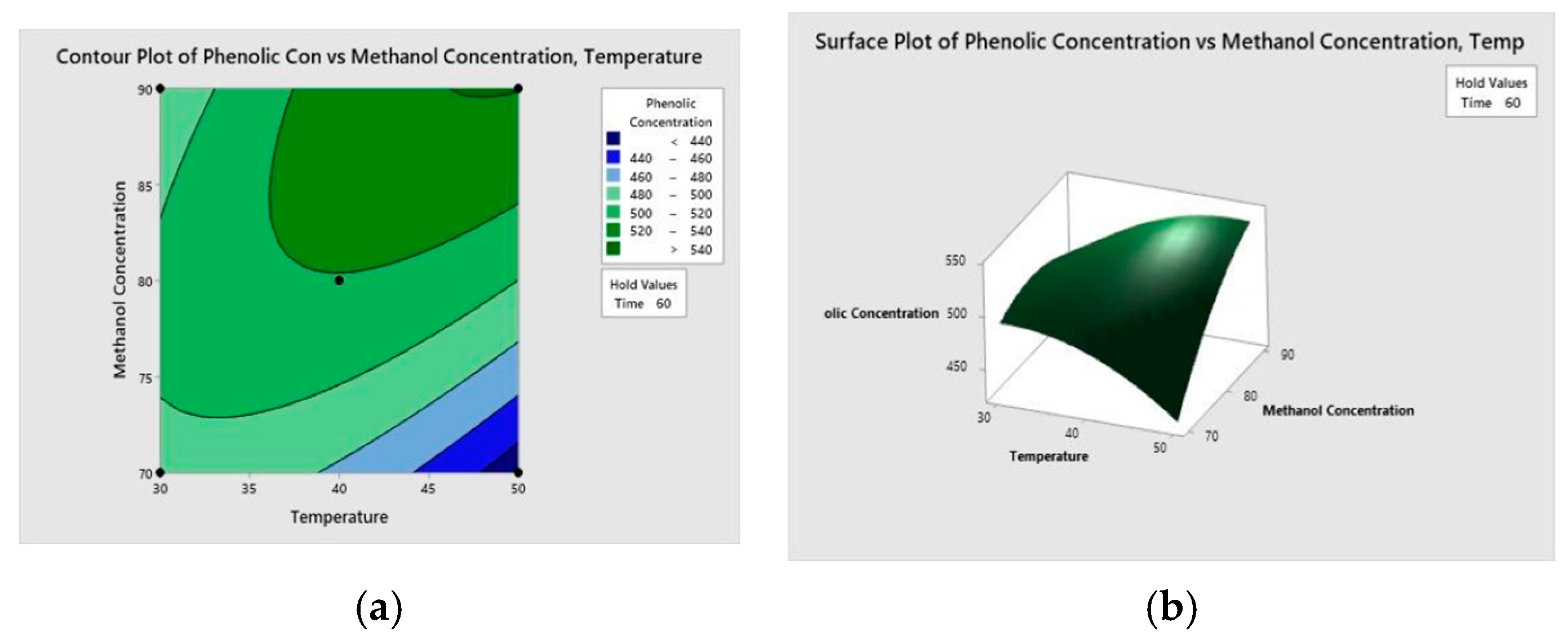
Contour and three-dimensional surface plots in Figure 2 illustrates the synergistic influence of temperature and methanol concentration, with higher TPC values observed at elevated methanol concentrations (80–90%) and moderate temperatures (40–50 °C). Model prediction identified optimal extraction conditions at 47 °C, 90% (v/v) methanol, and 76 min, which were subsequently validated through triplicate experiments.
Validation results produced phenolic concentrations equal to or exceeding previous runs, reaching a maximum of 579.23 mg/L, confirming the reliability of the model and the suitability of Box–Behnken design for optimizing phenolic extraction from Eichhornia crassipes. Similar optimization trends using RSM have been reported in related studies [13].

3.3. Silver Nanoparticle (AgNP) Formation

Ec-AgNPs yield increased with higher volumes of methanolic extract, rising from about 0.6 g at 10 mL to 1.7 g at 100 mL. Cluster formation was observed, suggesting that higher yield does not necessarily indicate better product quality. This may be influenced by biomolecules in the plant extract that promote nanoparticle aggregation [14].

3.4. AgNP SEM-EDX Characterization Results

3.4.1. Morphology of Synthesized Silver Nanoparticles (10 mL)

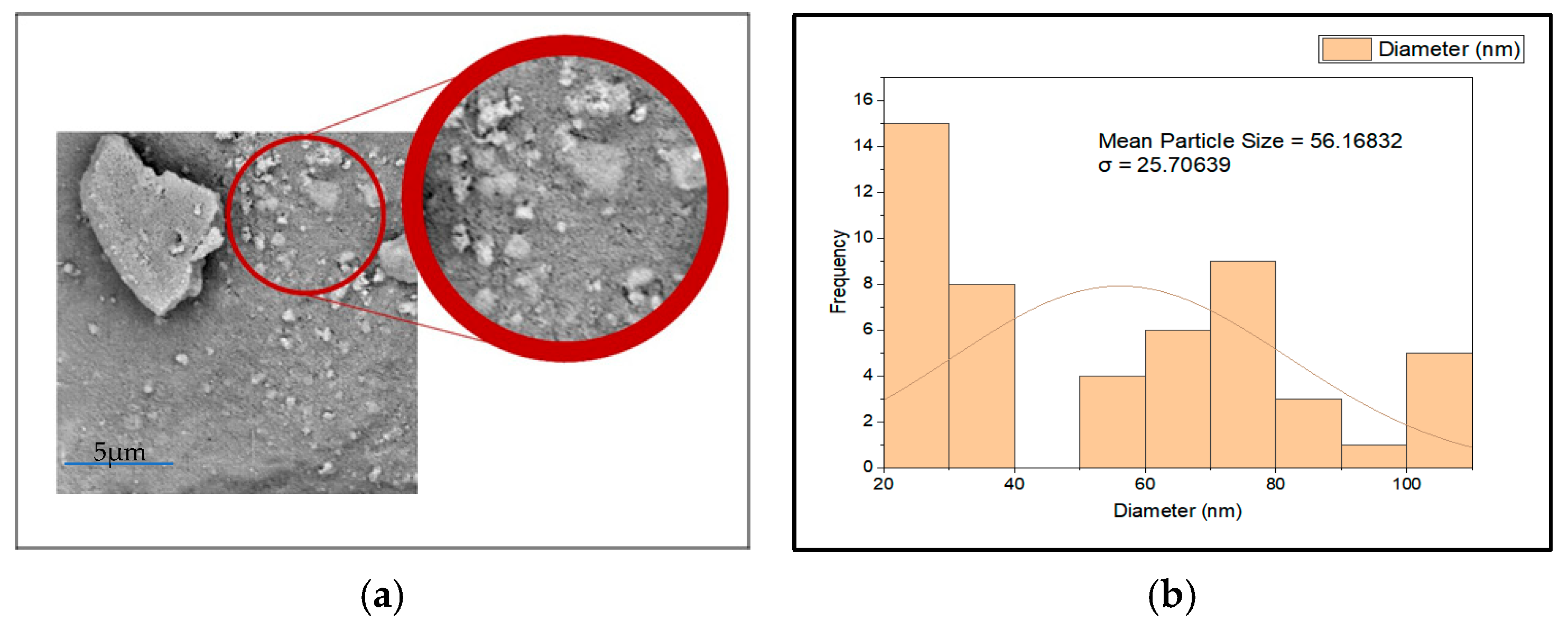
Scanning Electron Microscopy (SEM) analysis at lower magnifications confirmed the presence of Ec-AgNPs; however, significant agglomeration was observed, which contributed to an increase in apparent particle size. This agglomeration is likely driven by the high surface energy and reactivity of the nanoparticles, as well as interparticle van der Waals interactions influenced by specific synthesis parameters [14]. As shown in Figure 3b, the particles exhibited a bimodal distribution with a mean diameter of 6.17 nm (SD = 25.71 nm), though the majority of individual particles were concentrated within the 20 to 40 nm range. In the context of pesticide formulations, smaller nanoparticles are generally more effective due to their high surface-area-to-volume ratio, which enhances penetration and interaction with the target pests, such as S. frugiperda [15]. Furthermore, the size of these green-synthesized nanoparticles falls within the 2 to 260 nm range typically reported for chemically produced counterparts. This indicates that the phytofabrication method using E. crassipes is comparable to conventional chemical synthesis in producing viable nanomaterials [16].

3.4.2. Morphology of Synthesized Silver Nanoparticles (100 mL)

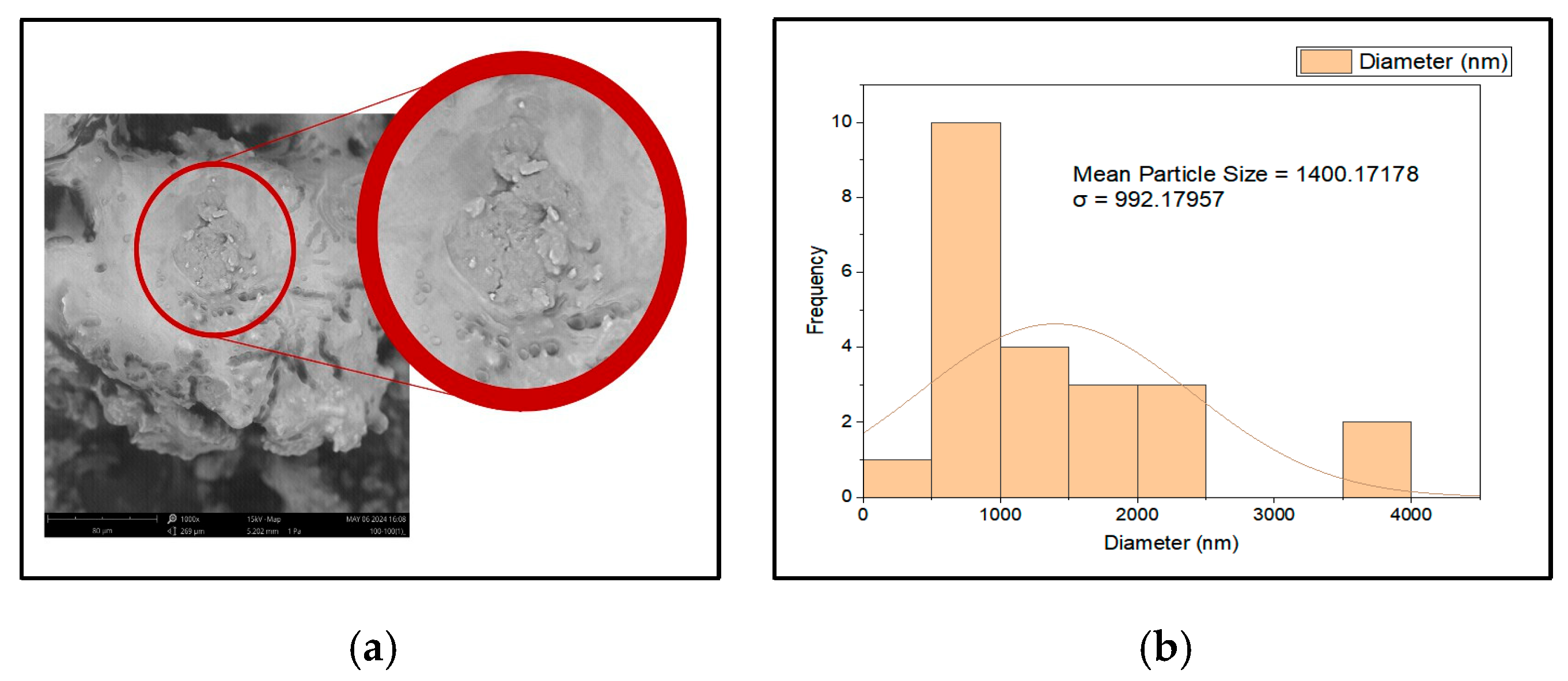
The 100:100 precursor-to-extract combination produced significantly larger AgNPs with greater agglomeration compared to the 10:100 combination. Particles exhibited a mean size of 1400.17 nm (SD = 992.18), with most particles in the 500 to 1000 nm range as shown in Figure 4b. These characteristics indicate reduced stability and dispersibility for pesticide use, highlighting the need to optimize extract volume to balance yield and nanoparticle stability.

3.4.3. Elemental Analysis of Synthesized Silver Nanoparticles (10 mL)

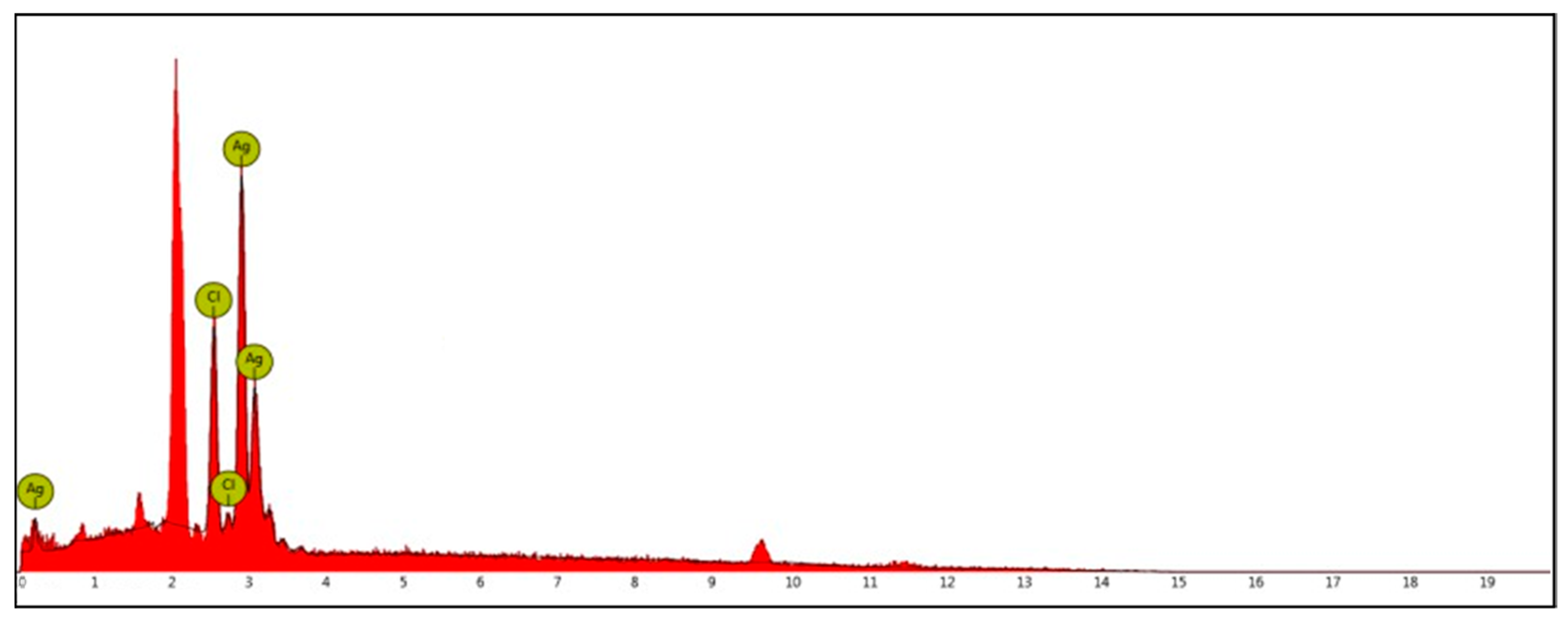
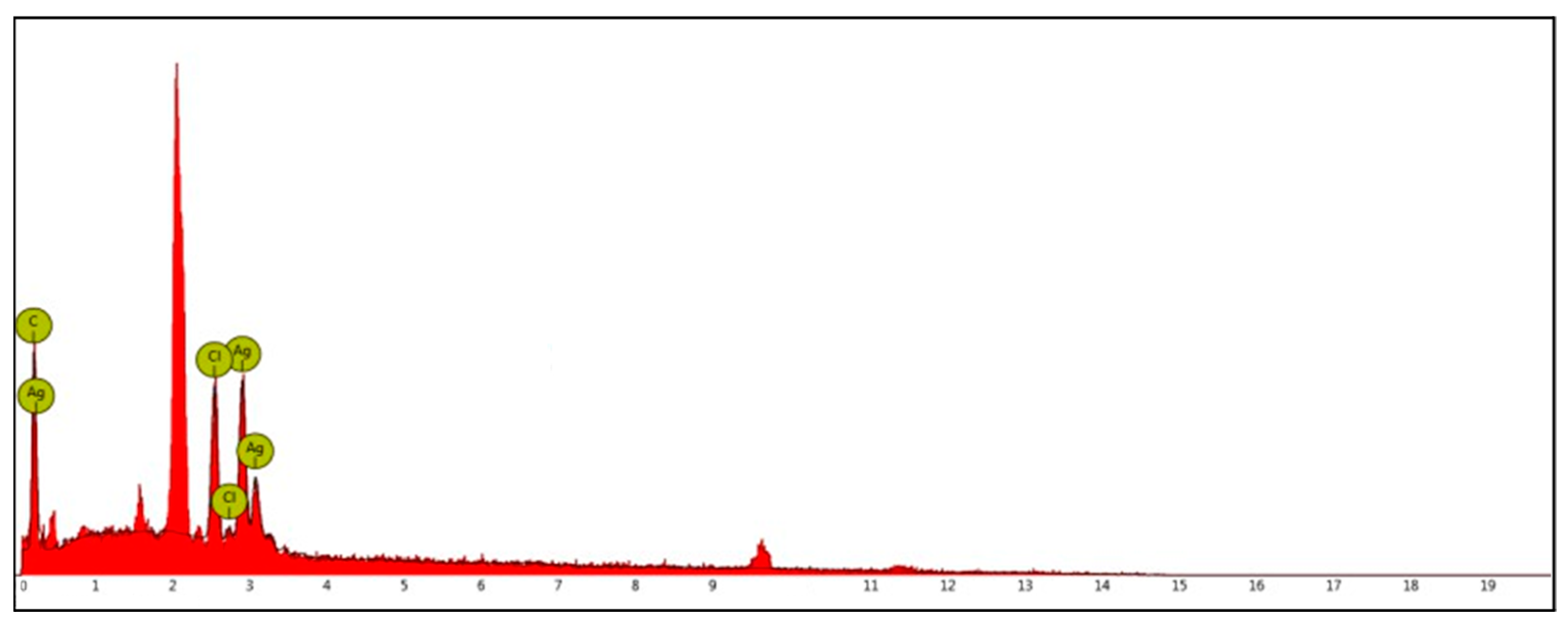
Energy-Dispersive X-ray (EDX) analysis confirmed the elemental composition of the Ec-AgNPs, as shown in Figure 5 and Table 2. The spectra exhibited a strong signal for silver with a characteristic sharp peak at 3 keV, which is the typical X-ray emission energy for metallic silver nanocrystals. A minor chlorine (Cl) signal was also detected; this is likely attributed to chloride ions naturally present in the Eichhornia crassipes extract, which may participate as reducing or capping agents during synthesis. Notably, the absence of nitrogen suggests that the nitrate ions from the AgNO3 precursor were fully dissociated and the silver ions were completely reduced to their metallic form (Ag0) [17]. Furthermore, the presence of residual chlorine may synergistically enhance the pesticidal efficacy of the formulation against S. frugiperda by promoting oxidative stress mechanisms [18].

3.4.4. Elemental Analysis of Synthesized Silver Nanoparticles (100 mL)

The elemental composition of the Ec-AgNPs was verified via EDX analysis (Figure 6 and Table 3), which displayed a prominent peak at approximately 3 keV. This signal is characteristic of the α-X-ray emission of metallic silver, confirming the successful formation of silver nanocrystals. As detailed in Table 3, the high carbon content, followed by silver and chlorine, suggests the presence of organic functional groups from the E. crassipes extract that effectively served as reducing and capping agents. The absence of a nitrogen peak further confirms the complete reduction of the AgNO3 precursor and the thorough washing of the particles to remove residual nitrates [17].

3.4.5. Acute Toxicity Analysis Comparison

The comparative toxicity analysis (Table 4) revealed that while both treatments exhibited dose-dependent mortality, Aztron WDG generally outperformed Ec-AgNPs, particularly against younger (2nd and 3rd) instars, as evidenced by its lower LC50 values. However, the efficacy of both pesticides diminished significantly in 4th and 5th instars, where the concentrations required to reach LC90 and LC95 levels increased substantially.
This trend suggests an age-dependent tolerance in S. frugiperda, likely due to increased larval biomass and physiological resilience in later developmental stages. Notably, at the 4th instar stage, the toxicities of Ec-AgNPs and Aztron became comparable at higher lethal concentrations (LC90/95), indicating that phytofabricated nanoparticles remain a viable alternative for mid-stage larval management. While Aztron demonstrates superior potency, the use of Ec-AgNPs offers a more sustainable approach, managed dosages of AgNPs can minimize ecological impacts on non-target beneficial insects. Consequently, while Aztron remains the more aggressive control agent, Ec-AgNPs represent a promising, lower-impact tool within an Integrated Pest Management (IPM) framework, provided application timing targets younger, more susceptible instars to avoid the necessity of excessive concentrations [19].
The Two-Way ANOVA results (Table 5) examined the interaction between pesticide type and larval instar development on the observed lethal concentrations. The analysis yielded p-values greater than the 0.05 significance level for both the pesticide type and the developmental stages. These results indicate that there is no statistically significant difference in the efficacy of the phytofabricated Ec-AgNPs compared to the commercial Aztron WDG across the 2nd, 3rd, 4th, and 5th instars. Consequently, it can be inferred that the green-synthesized Ec-AgNPs possess a comparable biopesticidal potency to the conventional chemical standard, suggesting its viability as a sustainable alternative for S. frugiperda management.

4. Conclusions

Methanol concentration was the primary factor influencing total phenolic content (TPC), and the optimal extraction condition was determined to be 47 °C, 90% methanol, and 76 min. Increasing extract volume enhanced nanoparticle yield, but also promoted agglomeration and larger particle sizes, reducing stability and suitability for pesticidal use. SEM-EDX affirmed the complete reduction of AgNO3 precursor and formation of Ec-AgNPs with organic capping agents (carbon and chlorine). In order to ensure effective nanopesticide applications, extract volume and synthesis parameters must be optimized, with further characterization recommended.

Author Contributions

Conceptualization, J.J.R., J.K.E.A., J.G.O., R.V.R., C.S.-a.E. and M.A.C.; validation, formal analysis, investigation, data curation, writing—original draft preparation, J.J.R., J.K.E.A., M.A.C., A.M.P. and S.C.C.; methodology, writing—review and editing, supervision, J.J.R., J.K.E.A., J.G.O., R.V.R. and C.S.-a.E. All authors have read and agreed to the published version of the manuscript.

Funding

This research received no external funding.

Data Availability Statement

The raw data supporting the conclusions of this article will be made available by the authors on request.

Acknowledgments

We would like to acknowledge the support of Adamson University-Chemical Engineering Department.

Conflicts of Interest

The authors declare no conflicts of interest.

References

  1. Valdez, E.M.; Rillon, G.S.; Joshi, R.; dela Cruz, K.B.; Donayre, D.K.M.; Martin, E.C.; Sandoval, F.R.; Quilang, E.J.P.; Aquino, M.F.; Pascual, M.K. Fall Armyworm, Spodoptera Frugiperda (J.E. Smith) Damage on Rice in the Philippines. Asia Pac. J. Sustain. Agric. Food Energy 2023, 11, 37–46. [Google Scholar] [CrossRef]
  2. Abbas, A.; Ullah, F.; Hafeez, M.; Han, X.; Dara, M.Z.N.; Gul, H.; Zhao, C.R. Biological Control of Fall Armyworm, Spodoptera frugiperda. Agronomy 2022, 12, 2704. [Google Scholar] [CrossRef]
  3. Tyagi, T.; Agarwal, M. Antioxidant Properties and Phenolic Compounds in Methanolic Extracts of Eichhornia crassipes. Res. J. Phytochem. 2017, 11, 85–89. [Google Scholar] [CrossRef]
  4. Nugriani, N.O.; Diah, I.W.D.; Yusri, S. Antioxidant Stability Testing on Liquid and Powder Eichhornia crassipes Extract. IOP Conf. Ser. Mater. Sci. Eng. 2020, 742, 012019. [Google Scholar] [CrossRef]
  5. Sitorus, C.; Sirait, M.; Juliani, R.; Motlan; Ginting, E.M.; Siregar, N. Synthesis of Silver Nanoparticles from AgNO3 via Chemical Reduction and Their Antibacterial Activity. BIO Web Conf. 2025, 190, 01019. [Google Scholar] [CrossRef]
  6. Heflish, A.A.; Hanfy, A.E.; Ansari, M.J.; Dessoky, E.S.; Attia, A.O.; Elshaer, M.M.; Gaber, M.K.; Kordy, A.; Doma, A.S.; Abdelkhalek, A.; et al. Green Biosynthesized Silver Nanoparticles Using Acalypha wilkesiana Extract Control Root-Knot Nematode. J. King Saud Univ. Sci. 2021, 33, 101516. [Google Scholar] [CrossRef]
  7. Thakur, K.; Bala, I. Evaluation of Effectiveness of Biologically Synthesized Silver Nanoparticles of Eucalyptus globulus Leaf Extract against Pathogenic and Acne-Inducing Bacteria. J. Nanomed. Nanotechnol. 2017, 8, 443. [Google Scholar]
  8. Chinni, S.V.; Gopinath, S.C.B.; Anbu, P.; Fuloria, N.K.; Fuloria, S.; Mariappan, P.; Krusnamurthy, K.; Veeranjaneya Reddy, L.; Ramachawolran, G.; Sreeramanan, S. Characterization and Antibacterial Response of Silver Nanoparticles Biosynthesized Using an Ethanolic Extract of Coccinia indica Leaves. Crystals 2021, 11, 97. [Google Scholar] [CrossRef]
  9. Dai, J.; Mumper, R.J. Plant Phenolics: Extraction, Analysis and Their Antioxidant and Anticancer Properties. Molecules 2010, 15, 7313–7352. [Google Scholar] [CrossRef] [PubMed]
  10. Hashim, N.; Shaari, A.R.; Soh Mamat, A.; Ahmad, S. Effect of Differences Methanol Concentration and Extraction Time on the Antioxidant Capacity, Phenolic Content and Bioactive Constituents of Orthosiphon Stamineus Extracts. MATEC Web Conf. 2016, 78, 01004. [Google Scholar] [CrossRef]
  11. Rorong, J.A.; Sudiarso, S.; Prasetya, B.; Polii-Mandang, J.; Suryanto, E. Phytochemical Analysis of Eceng Gondok (Eichhornia crassipes) Agricultural Waste as Biosensitizer for Ferri Photoreduction. Agrivita 2012, 34, 152–160. [Google Scholar]
  12. Elboughdiri, N. Effect of Time, Solvent–Solid Ratio, Ethanol Concentration and Temperature on Extraction Yield of Phenolic Compounds from Olive Leaves. Technol. Appl. Sci. Res. 2018, 8, 2805–2808. [Google Scholar] [CrossRef]
  13. Krupa, A.N.D.; Abigail, M.E.A.; Santhosh, C.; Grace, A.N.; Raghavan, V. Optimization of process parameters for the microbial synthesis of silver nanoparticles using 3-level Box–Behnken Design. Ecol. Eng. 2016, 87, 168–174. [Google Scholar] [CrossRef]
  14. Khairunnisa, S.; Wonoputri, V.; Samadhi, T.W. Effective deagglomeration in biosynthesized nanoparticles: A mini review. IOP Conf. Ser. Mater. Sci. Eng. 2021, 1143, 012006. [Google Scholar] [CrossRef]
  15. Chaud, M.; Souto, E.B.; Zielinska, A.; Severino, P.; Batain, F.; Oliveira-Junior, J.; Alves, T. Nanopesticides in Agriculture: Benefits and Challenges in Agricultural Productivity and Toxicological Risks to Human Health and the Environment. Toxics 2021, 9, 131. [Google Scholar] [CrossRef] [PubMed]
  16. Naveed, M.; Batool, H.; Rehman, S.u.; Javed, A.; Makhdoom, S.I.; Aziz, T.; Mohamed, A.A.; Sameeh, M.Y.; Alruways, M.W.; Dablool, A.S.; et al. Characterization and Evaluation of the Antioxidant, Antidiabetic, Anti-Inflammatory, and Cytotoxic Activities of Silver Nanoparticles Synthesized Using Brachychiton populneus Leaf Extract. Processes 2022, 10, 1521. [Google Scholar] [CrossRef]
  17. Sule, R.O.; Condon, L.; Gomes, A.V. A Common Feature of Pesticides: Oxidative Stress—The Role of Oxidative Stress in Pesticide-Induced Toxicity. Oxidative Med. Cell. Longev. 2022, 2022, 5563759. [Google Scholar] [CrossRef] [PubMed]
  18. Iravani, S.; Korbekandi, H.; Mirmohammadi, S.V.; Zolfaghari, B. Synthesis of Silver Nanoparticles: Chemical, Physical and Biological Methods. Res. Pharm. Sci. 2014, 9, 385. [Google Scholar] [PubMed]
  19. Pittarate, S.; Perumal, V.; Kannan, S.; Mekchay, S.; Thungrabeab, M.; Suttiprapan, P.; Sengottayan, S.-N.; Krutmuang, P. Insecticidal Efficacy of Nanoparticles against Spodoptera Frugiperda (J.E. Smith) Larvae and Their Impact in the Soil. Heliyon 2023, 9, e16133. [Google Scholar] [CrossRef] [PubMed]
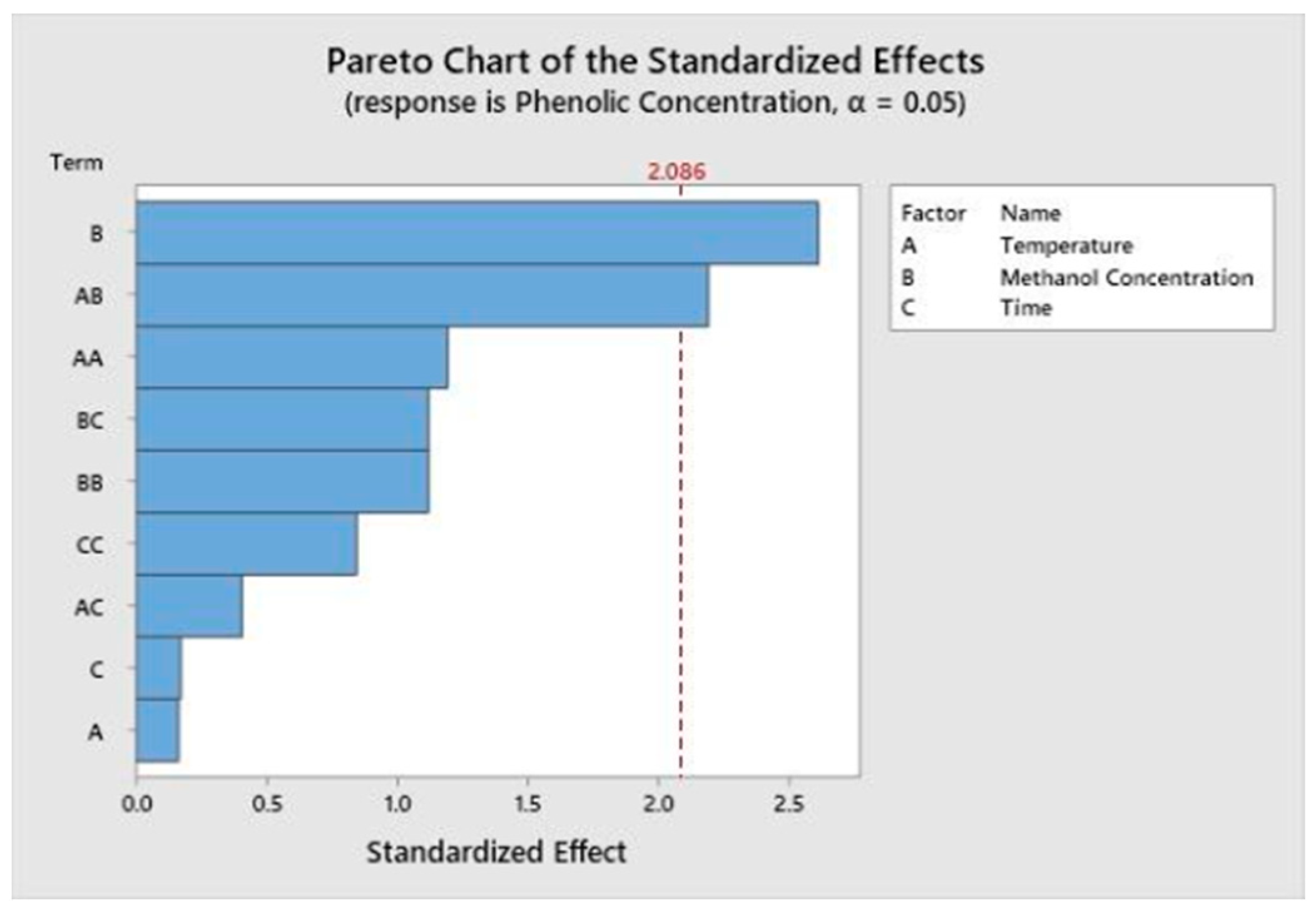
Figure 1. Pareto chart of standardized effects.
Engproc 124 00091 g001
Figure 2. Optimization of phenolic extraction using Box–Behnken design: (a) Contour plot; (b) surface plot of TPC vs. methanol concentration and temperature.
Engproc 124 00091 g002
Figure 3. Ec-AgNPs synthesized using a 10:100 precursor-to-extract volume ratio: (a) SEM image (×10,000); (b) particle size distribution histogram showing a mean particle size of 56.17 nm.
Engproc 124 00091 g003
Figure 4. Ec-AgNPs synthesized using a 100:100 precursor-to-extract volume ratio: (a) SEM image (×1200) showing larger particles and aggregates; (b) particle size distribution histogram showing a mean particle size of 1400.17 nm.
Engproc 124 00091 g004
Figure 5. EDX spectrum of Ec-AgNPs (10:100 ratio).
Engproc 124 00091 g005
Figure 6. EDX analysis of Ec-AgNPs (100:100 ratio).
Engproc 124 00091 g006
Table 1. Box–Behnken Experimental Design for Water Hyacinth Phenolic Extraction.
RunsTemperature (°C)Methanol Concentration (%v/v)Contact Time (min)
1307060
25070
33090
45090
5407030
69030
77090
89090
9308030
105030
113090
125090
13408060
14
15
Table 2. Elemental composition of Ec-AgNPs (10:100 ratio).
ElementAtomic %Weight %
Ag70.4587.89
Cl29.5512.11
Table 3. Elemental composition of Ec-AgNPs (10:100 ratio).
ElementAtomic %Weight %
C11.9950.82
Ag79937.59
Cl8.3211.59
Table 4. Comparative Analysis of the Acute Toxicity Analysis of EC AgNPs and Aztron WDG.
InstarLC50LC90LC95
EC Agness2nd Instar0.783.956.24
3rd Instar1.217.7813.13
4th Instar2.1818.8034.45
5th Instar18.15109.74182.04
Aztron2nd Instar0.512.714.33
3rd Instar0.745.8310.41
4th Instar1.2918.1738.21
5th Instar2.89146.18440.65
Table 5. Analysis of the Effectivity of EC-AgNP and Aztron WDG across Larval Instars.
ANOVA Two-Way (p-Value)
Sources of VariationLC50LC90LC95
Rows0.270.460.49
Column0.620.100.14
Disclaimer/Publisher’s Note: The statements, opinions and data contained in all publications are solely those of the individual author(s) and contributor(s) and not of MDPI and/or the editor(s). MDPI and/or the editor(s) disclaim responsibility for any injury to people or property resulting from any ideas, methods, instructions or products referred to in the content.