1. Introduction
Carbon monoxide (CO), a colorless, odorless gas, poses a significant threat to public health with its toxic and undetectable nature. Produced through incomplete combustion of carbon-containing materials, from sources such as vehicle emissions, waste incineration, and unvented gas appliance usage, CO can cause detrimental effects such as dizziness, loss of consciousness, and even death. As access to reliable gas detection systems remains limited, developing regions in the Philippines are exposed to the dangers of CO and have even recorded many fatalities due to CO poisoning [
1,
2], leaving them with no means for detection.
Conventional gas sensing technologies have been developed in recent decades, including chemiresistive, electrochemical, work function-based, and optical acoustic sensors, among others [
3]. While these gas detection systems work, the conductive and electrochemical capacitive performance [
4], sensitivity, selectivity, and response time [
5] of chemiresistive sensors can be improved by synthesizing carbon-based nanomaterials like carbon dots (CDs).
When derived from biomass sources, CDs present significant performance in gas sensing due to their optoelectrical properties, biocompatibility, low toxicity, and low synthesis cost [
6]. Biomass-based CDs are particularly rich in inherent carbon and nitrogen content, effective for self-doping, and when paired with heteroatom doping with a nitrogen precursor, further enhance the surface chemistry, photoluminescence intensity, photoluminescence quantum yield, and electrical properties of the material [
7].
As a carbon-rich material that serves little to no purpose, water hyacinth
(Pontederia crassipes) is an ideal biomass precursor prevalent in the Philippines, which tends to clog waterways and compete with the flora and fauna of various water bodies when it grows uncontrollably [
8]. Water hyacinth-based CDs doped with nitrogen, or N-doped water hyacinth CDs, can be synthesized via a bottom-up approach, allowing for tunable synthesis parameters and surface functionalization at lower cost, which are advantageous for sensing applications [
9].
To achieve high photoluminescence quantum yield (QY) and viable gas sensing performance, the synthesis process of N-doped water hyacinth CDs can be optimized by varying synthesis parameters like temperature, time, precursor amount, and solvent choice [
10]. Although there are established optimization studies using response surface methodology (RSM) to enhance CD performance in general applications, optimization focused on synthesis conditions for N-doped water hyacinth-derived CDs has yet to be explored.
Therefore, this study optimized the solvothermal synthesis of N-doped CDs from water hyacinth using response surface methodology (RSM) at varying synthesis parameters, including synthesis temperature, duration, and dopant amount, to achieve the optimal QY. To evaluate the CO sensing potential of N-doped water hyacinth CDs, conductometric sensors were fabricated, and their performance was compared against undoped counterparts under varying CO concentrations and temperatures, revealing the enhanced sensing mechanism that nitrogen doping and self-doping offer for effective CO detection.
2. Methods
2.1. Materials and Equipment
Water hyacinth (Pontederia crassipes) leaves were collected from the Pasig River near the ferry station in Quezon Bridge, Plaza Lawton, Manila. Urea (99.0%) was purchased from Bryan Laboratory Consumables (Parañaque City, Metro Manila, Philippines). Ethanol (99.0%) and sulfuric acid (99.9%) were both procured from Yana Chemodities, Inc. (Quezon City, Metro Manila, Philippines). AR-grade quinine hemisulfate salt monohydrate (98.0%) was bought from Sigma-Aldrich (St. Louis, MO, USA). Industrial-grade carbon monoxide gas (99.5%) was sourced from Maguyam Industrial Gas Products Corporation (Silang, Cavite, Philippines). The water used in all experiments was distilled.
The samples were synthesized using 25 mL 304 SS PTFE-lined hydrothermal autoclave reactors using Nabertherm L3/12/B510 muffle furnace (Lilienthal, Lower Saxony, Germany) and sonicated using CLEANMED Ultrasonic Cleaner Ultra (Las Piñas City, Metro Manila, Philippines). Infrared spectra were taken with a PerkinElmer Spectrum Two (Waltham, MA, USA). FESEM images were taken using Hitachi SU8600 (Chiyoda City, Tokyo, Japan) with an Oxford Ultim® Max 40 EDS detector (Abingdon, UK). Optical measurements were performed using a BIOBASE BK-F95S fluorescence spectrophotometer (Jinan, Shandong, China) and a UV-1900i UV-vis spectrophotometer (Nakagyo-ku, Kyoto, Japan). The refractive indices of the samples were determined using a LABART Abbe-2WAJ-T refractometer (Rohini, New Delhi, India).
2.2. Preparation of Raw Materials
The collected water hyacinth leaves were washed under running water to remove any residues and impurities and were pre-dried via air drying and sun-drying for 2 days before transferring to a convection oven set at 105 °C for 2 h. The dried leaves were subsequently mechanically crushed using a blender to obtain fine particles, which were sieved using a No. 325 Tyler mesh size. The resulting powdered water hyacinth leaves were stored in sealed containers until further use.
2.3. Synthesis of N-Doped Water Hyacinth CDs
Water hyacinth powder (5 g) and different amounts of urea (1 to 4 g) were dissolved in a 50 mL ethanol–water mixture (90:10, v/v) and stirred at 800 rpm at room temperature. Then, 15 mL of the solution was transferred to PTFE-lined autoclave reactors and synthesized at 150 °C to 200 °C for 4 to 8 h using a muffle furnace. After cooling to room temperature for at least 24 h, the reaction mixture was sonicated for 1 h to ensure uniform particle size. The mixture was then centrifuged at 3000 rpm for 15 min, and 4 mL of the supernatant was collected. Further purification involved three washing cycles with 99% ethanol, each followed by centrifugation at 3000 rpm for 5 min, and a final cycle at 12,000 rpm for 20 min. The solution was syringe-filtered (0.22 µm) to remove residual impurities. The resulting CDs were labeled according to synthesis conditions (e.g., STD 1) and stored in amber bottles at 4 °C.
2.4. Quantum Yield Determination
The photoluminescence quantum yield of the synthesized N-doped water hyacinth CDs was determined using quinine sulfate as a reference. Both samples were diluted in six tenfold steps to maintain absorbance values below 0.1 at excitation wavelengths of 360 nm (CDs) and 310 nm (quinine sulfate). The quantum yield was calculated from the slopes of integrated emission intensity versus absorbance plots for the sample and standard using the following equation:
where φ is the quantum yield, Grad is the slope of fluorescence intensity vs. absorbance, and η is the refractive index; subscripts st and x denote the standard and sample, respectively.
2.5. Optimization of the Synthesis Parameters
Response surface methodology was employed using a Box–Behnken experimental design to optimize the synthesis conditions for preparing N-doped water hyacinth CDs with quantum yield as the response variable. The range of experimental conditions was initially generated using statistical software (Stat-Ease Design-Expert
® v23.0) and was set as follows: synthesis temperature (A), synthesis duration (B), and dopant amount (C). The best-fit model representing the relationship between the input factors and quantum yield was determined using the same software. The factors used in the experiment are given in
Table 1.
2.5.1. Synthesis Temperature
Synthesis temperature plays a critical role in carbonization and nucleation, governing CD formation and directly influencing their structure and optical properties by regulating ionic and radical reactions during synthesis [
11]. Excessively high temperatures (>200 °C) can lead to over-carbonization, producing large, insoluble carbon particles with reduced surface-active sites, which promote aggregation and diminish fluorescence and quantum yield [
12,
13]. In contrast, insufficient temperatures may result in incomplete carbonization, favoring the formation of polycyclic aromatic aggregates rather than well-defined carbon nanoparticles [
14].
For lignocellulosic precursors like water hyacinth, variations in the thermal degradation behavior of cellulose, hemicellulose, and lignin influence nucleation, mass yield, and optical performance [
15]. At approximately 180 °C, biomass degradation intensifies, promoting dehydration and structural rearrangement into carbon-rich domains; however, further temperature increases accelerate dehydration and decarboxylation reactions, reducing oxygen content and solid yield [
11].
2.5.2. Synthesis Time
Reaction time is another key parameter influencing the internal structure and optical properties of carbon dots (CDs), as synthesis proceeds through sequential dehydration, condensation, and carbonization stages. Insufficient reaction times can result in incomplete carbonization, yielding smaller particles with poorly defined structures, whereas extended synthesis allows polymerization and condensation of carbon frameworks, promoting the formation of graphitic domains and enhanced quantum yield [
16].
Progression of the reaction is often accompanied by a color change in the precursor solution from yellow to brown, while excessive heating can lead to over-carbonization and the formation of non-fluorescent carbonaceous particles. Prolonged reaction times primarily modify the internal structure rather than particle size, as rapid growth typically occurs within the initial stage of synthesis, followed by structural rearrangement [
17]. For water hyacinth-derived CDs, reported synthesis times range from several hours to extended hydrothermal treatments, reflecting the influence of precursor composition and synthesis conditions on CD properties [
11,
18].
2.5.3. Dopant Amount
Dopant amount refers to the ratio between the dopant and carbon precursor during synthesis and plays a critical role in tailoring the optical properties of carbon dots (CDs). Nitrogen is a commonly used dopant due to its comparable atomic radius and valence electron configuration to carbon, which facilitates its incorporation into the carbon framework. Variation in nitrogen content influences emission characteristics, quantum yield, and fluorescence lifetime by introducing nitrogen-containing functional groups that enhance radiative recombination pathways [
19].
However, excessive dopant concentrations can adversely affect CD formation. Several studies report an optimal dopant-to-precursor ratio, beyond which mass yield and fluorescence efficiency decrease due to surface passivation or dopant accumulation. For example, one study identified an optimal ratio of 1:10 for spinach leaf powder and urea, while other studies have reported ideal ratios ranging from 1:2 to 1:5 depending on precursor chemistry and synthesis route [
20,
21,
22]. Excess nitrogen has been shown to promote surface passivation, resulting in reduced fluorescence intensity [
23].
2.6. Characterization of N-Doped Water Hyacinth CDs
The synthesized N-doped water hyacinth CDs under optimal conditions were subjected to different characterization techniques. In particular, the optical and fluorescence properties of the CD samples were determined using UV-vis spectroscopy at scan wavelengths of 190 to 800 nm and PL spectroscopy with a 300 to 400 nm excitation wavelength. The presence of functional groups on the surface of the CDs was assessed using Fourier transform infrared (FTIR) spectroscopy over the wavenumber range of 4000 cm−1 to 400 cm−1. Also, the average size of the CDs was estimated using FESEM-EDX spectroscopy and ImageJ software (version 1.52a). All figures were generated using OriginPro (v2025b).
2.7. Preparation of N-Doped Water Hyacinth CD Sensors
Two strips of 5 mm copper sheets were placed in parallel onto clean microscopic slides. Through the drop-casting method, the CD samples were deposited onto the copper substrates until evenly coated. The prepared devices were heated at 40 °C for 15 min to allow the solution to dry and adhere to the copper substrate. A similar procedure was performed for undoped CD samples.
2.8. Carbon Monoxide Sensing of N-Doped Water Hyacinth CDs
The gas response of the prepared sensors with doped and undoped samples was evaluated at different temperatures (25, 35, and 45 °C) and gas concentrations (25, 35, and 45 ppm CO) using the following equation:
where S is the gas response and R
0 and R
CO are the electrical resistances of the CDs in the purge gas (N
2) and target gas (CO), respectively.
2.9. Statistical Treatment of Data
All experimental protocols for optimizing synthesis parameters and conducting gas sensing tests were performed in duplicate. A Box–Behnken design was used for the optimization of synthesis parameters to determine the effects of temperature, duration, and dopant amount on the quantum yield of the carbon dots (CDs). For gas sensing experiments, a 32 full factorial design was employed to assess the effects of temperature and CO concentration on the gas response of the N-doped water hyacinth CDs. Analysis of variance (ANOVA) and regression analysis were performed using Stat-Ease Design-Expert® v23.0 to evaluate the significance of the experimental factors on the response variables in both design approaches. A p-value of less than 0.05 was considered statistically significant.
3. Results and Discussion
3.1. Characterization of N-Doped Water Hyacinth CDs
3.1.1. UV–Visible (UV-Vis) Spectroscopy
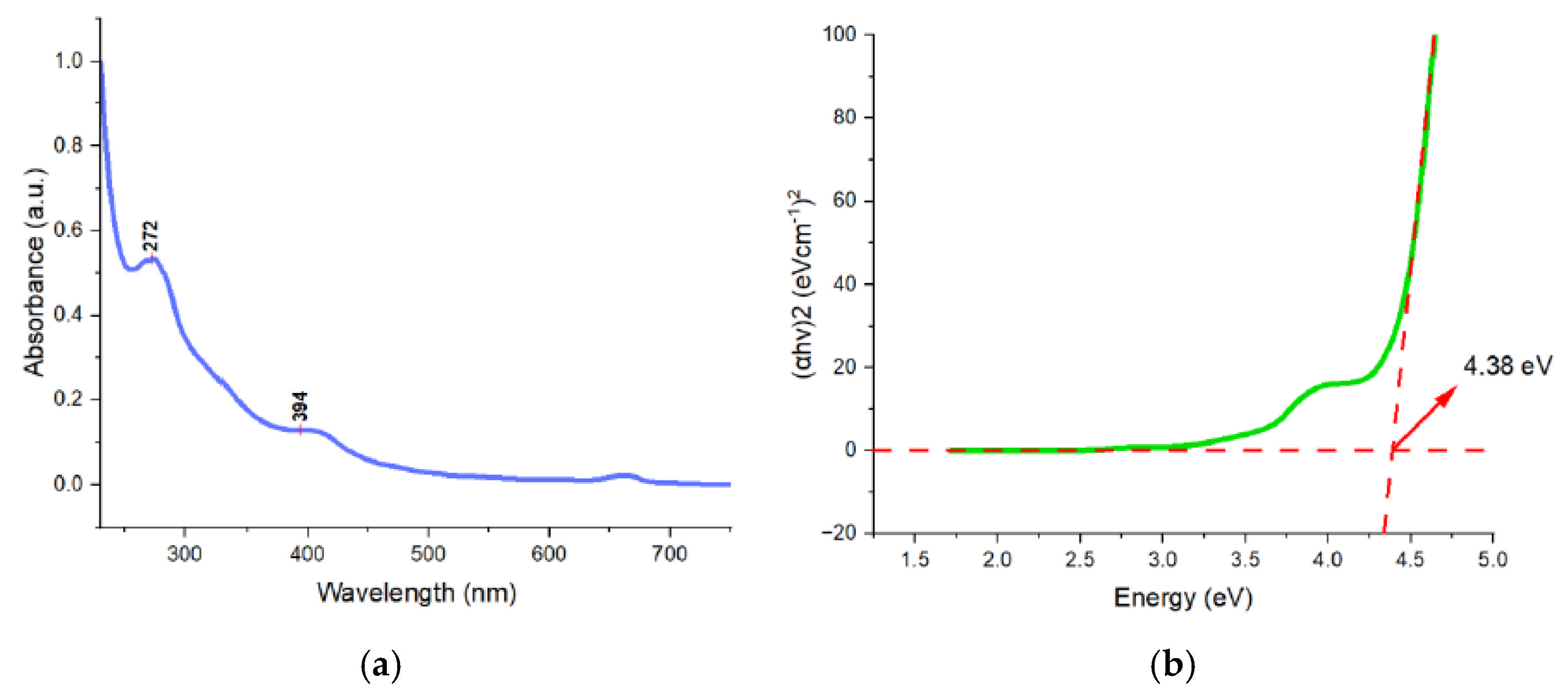
The synthesized optimized N-doped water hyacinth CDs were characterized by UV-vis spectroscopy to determine the optical absorption properties. As shown in
Figure 1a, the N-doped water hyacinth CDs exhibited a strong absorption band at 272 nm, which is associated with the π–π* transition of the C=C bonds within conjugated sp
2 domains of the carbon core, indicating the presence of extended π-electron systems formed during dehydration and carbonization processes [
24]. A secondary shoulder peak was observed at approximately 394 nm, attributed to the n–π* transition of the C=O surface groups and the C–N/C=N bonds related to the doping effect from nitrogen. These peaks confirm the successful incorporation of nitrogen functionalities onto the carbon framework of the synthesized CDs.
The band gap energy of the optimized N-doped water hyacinth CDs was calculated to be 4.38 eV using the Tauc plot method based on a linear fit, as illustrated in
Figure 1b. The wide band gap suggests strong UV absorption, which is characteristic of materials with high-energy electronic transitions [
25]. It also indicates a strong quantum confinement effect due to the spatial confinement of electrons and holes, leading to discrete energy levels within the CDs, which implies a smaller particle size and higher excitation energy to release electrons from the valence band to the excitation band [
26].
3.1.2. Photoluminescence (PL) Spectroscopy
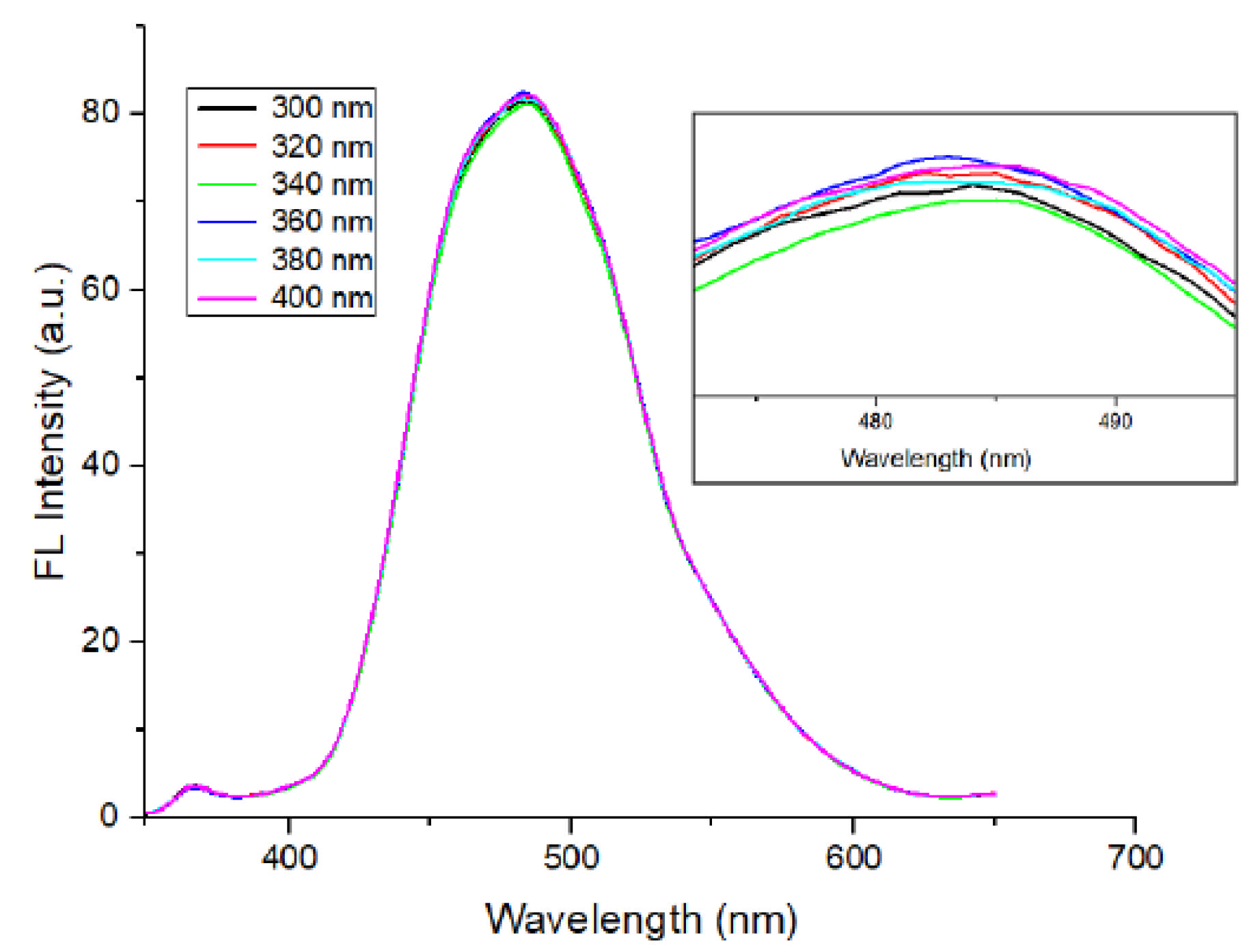
The fluorescent behavior of the CDs was investigated using PL spectroscopy. Excitation-dependent behavior, as seen in
Figure 2, was observed with the emission peak shifting towards longer wavelengths as the excitation wavelength increased. Such behavior suggests the presence of multiple emissive centers, which may arise from surface states, heterogeneous surface chemistry, or size and structural distributions within the CDs, as commonly reported in the literature [
27].
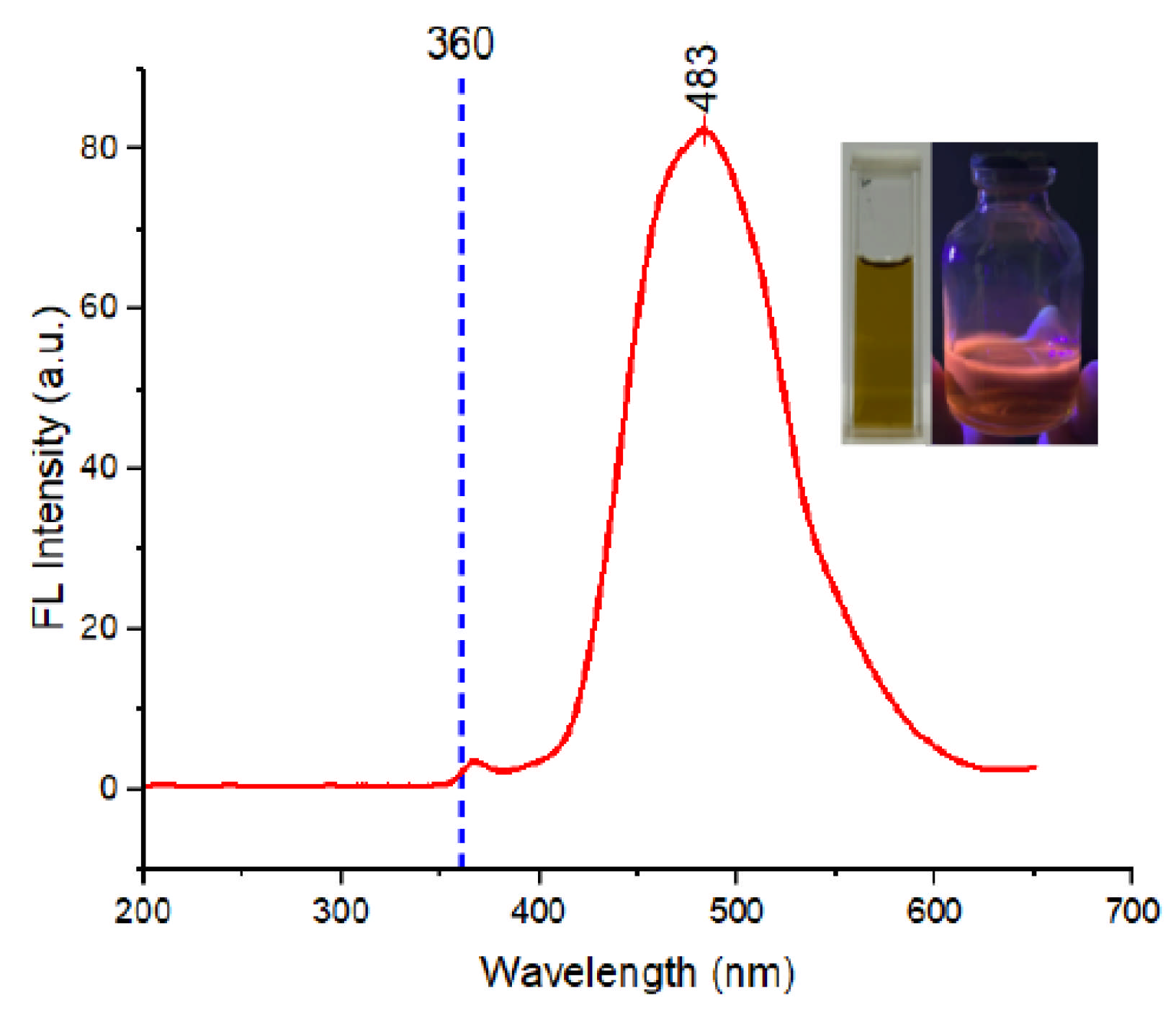
Moreover,
Figure 3 demonstrates the N-doped carbon dots having aprominent emission peak of 483 nm when excited at 360 nm. This blue emission is characteristic of carbon dots and is commonly associated with surface-related emissive centers and defect states, which may be influenced by nitrogen doping and the presence of surface functional groups [
27].
3.1.3. Field Emission Scanning Electron Microscopy (FESEM)
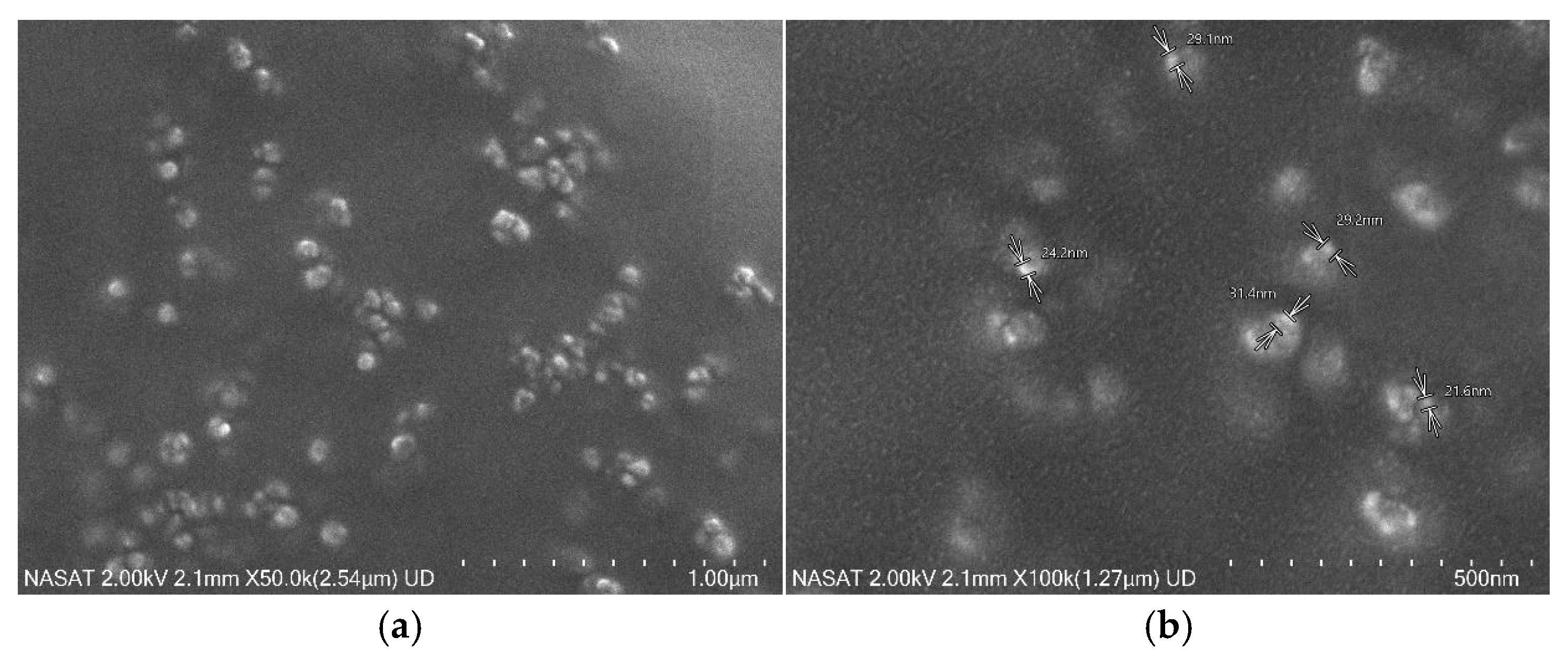
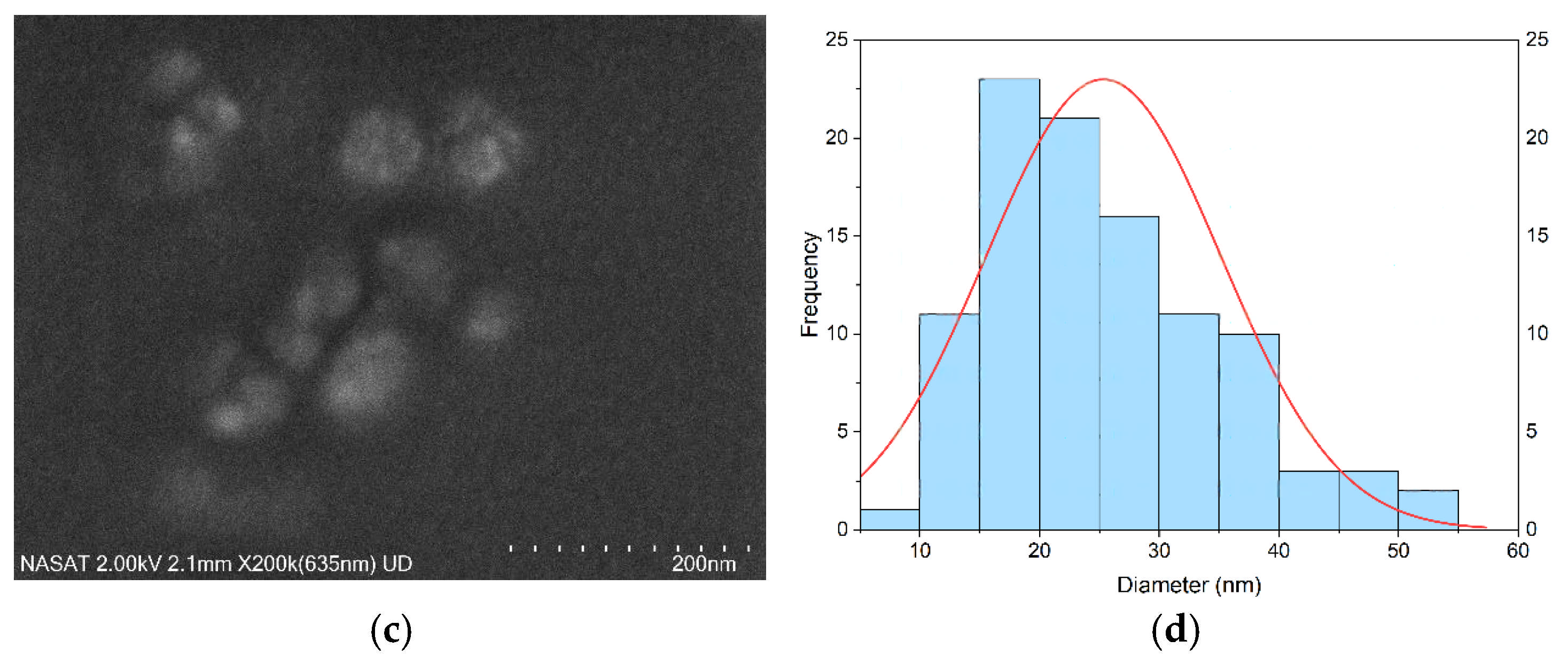
The surface morphology of the synthesized N-doped water hyacinth CDs was characterized via FESEM. The CDs exhibited a predominantly spherical-to-quasi-spherical shape, as illustrated in
Figure 4a–c. Particle size distribution analysis was done using ImageJ software, as shown in
Figure 4d, which indicates a size range between approximately 8 and 55 nm, with the majority of the 15 and 30 nm reflecting a broad and slightly right-skewed distribution, suggesting non-uniform particle formation.
The variation in size is attributed to the aggregation during the drying process. As the solvent evaporates, the concentrations of suspended carbon dots coalesce to form larger particles, causing aggregation due to attractive forces such as van der Waals interactions and hydrogen bonding between functional groups [
28]. Higher-magnification images revealed clustering phenomena, supporting the hypothesis that larger aggregates are composed of multiple smaller CDs, potentially below 10 nm in size, appearing as single entities under FESEM imaging.
3.1.4. Energy-Dispersive X-Ray Spectroscopy (EDX)
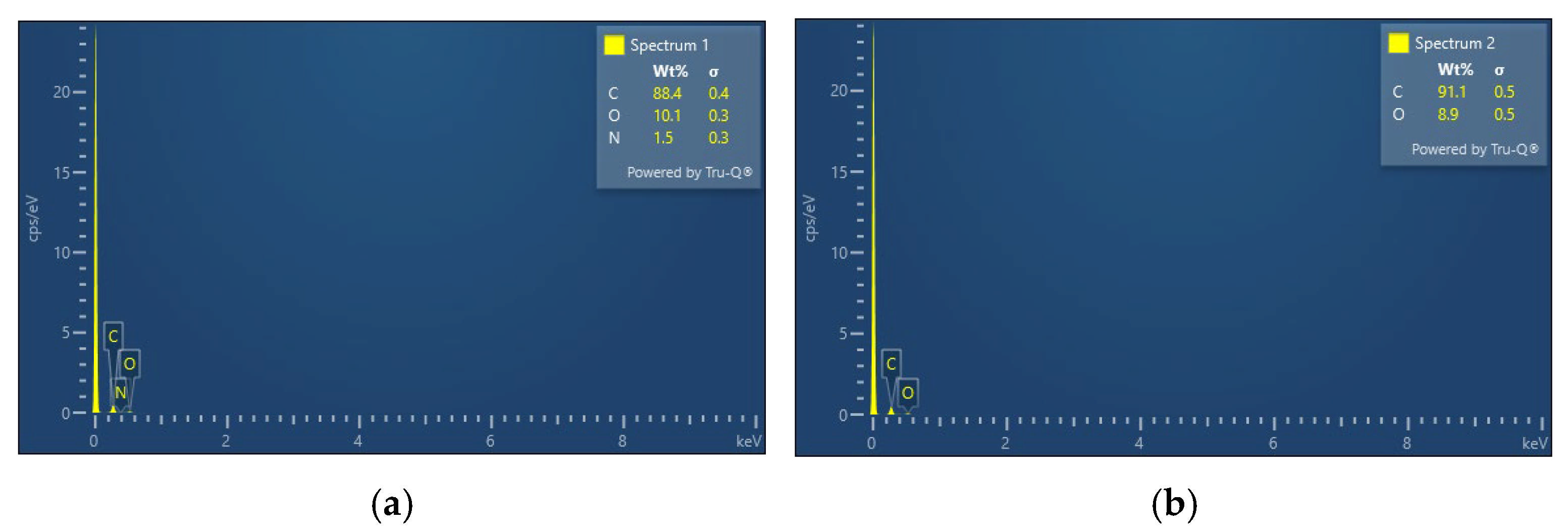
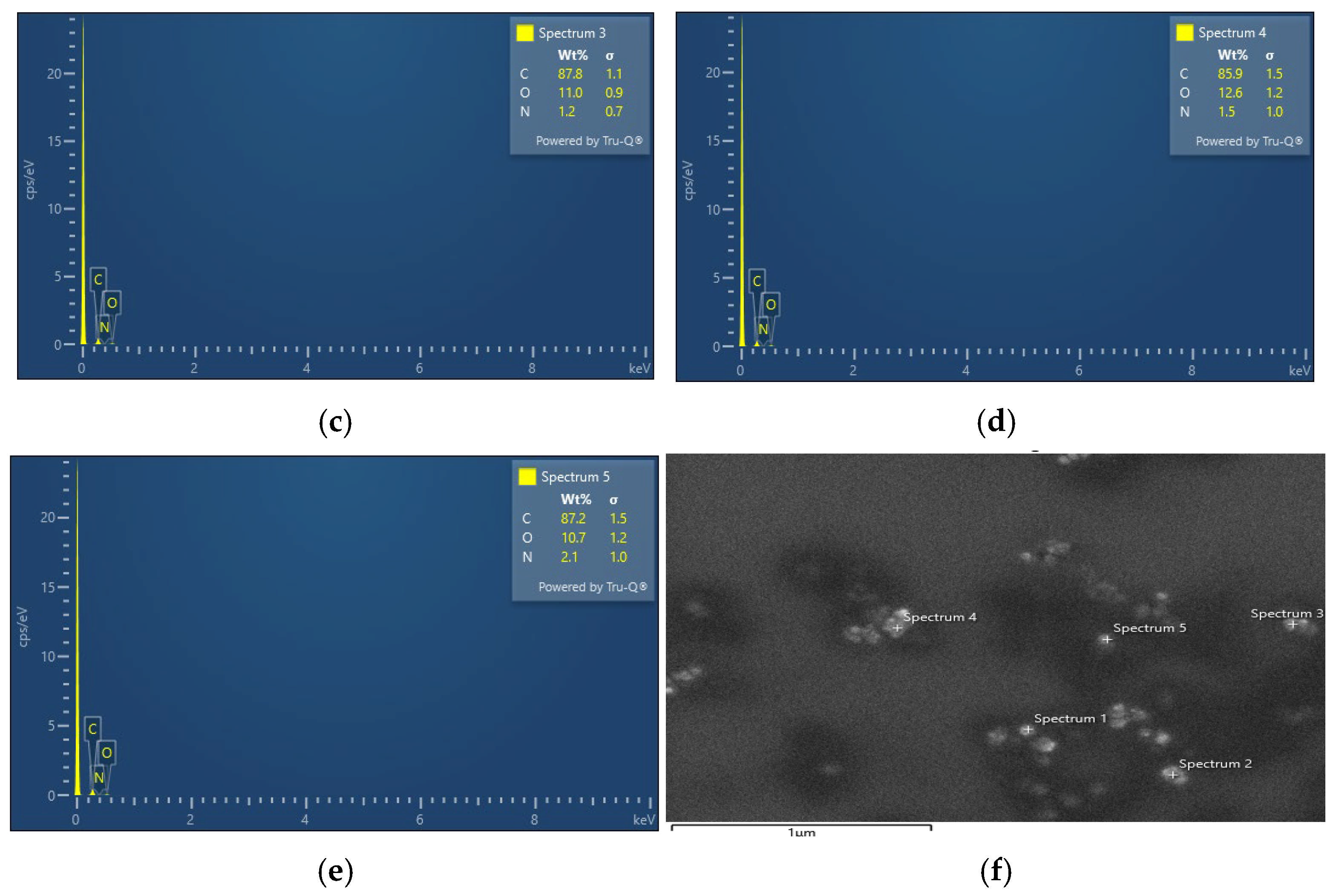
EDX spectroscopy was used to determine the elemental composition of the N-doped water hyacinth CDs, which confirmed the presence of carbon (C), nitrogen (N), and oxygen (O) as the primary constituents. The detection of nitrogen confirms successful doping via urea incorporation during solvothermal synthesis, while oxygen is attributed to oxygen-containing functional groups such as hydroxyl, carboxyl, and carbonyl groups originating from both the biomass precursor and the ethanol solvent. Finally, as shown in
Figure 5b, nitrogen was not detected, likely due to its low-energy peak being obscured by the nearby and stronger oxygen peak, as oxygen is more abundant, or by background noise. This can lead to signal overlap and misidentification [
29]. Nitrogen incorporation is further supported by the synthesis route and the presence of nitrogen-containing functional groups identified in the succeeding FTIR analysis.
3.1.5. Fourier Transform Infrared Spectroscopy (FTIR)
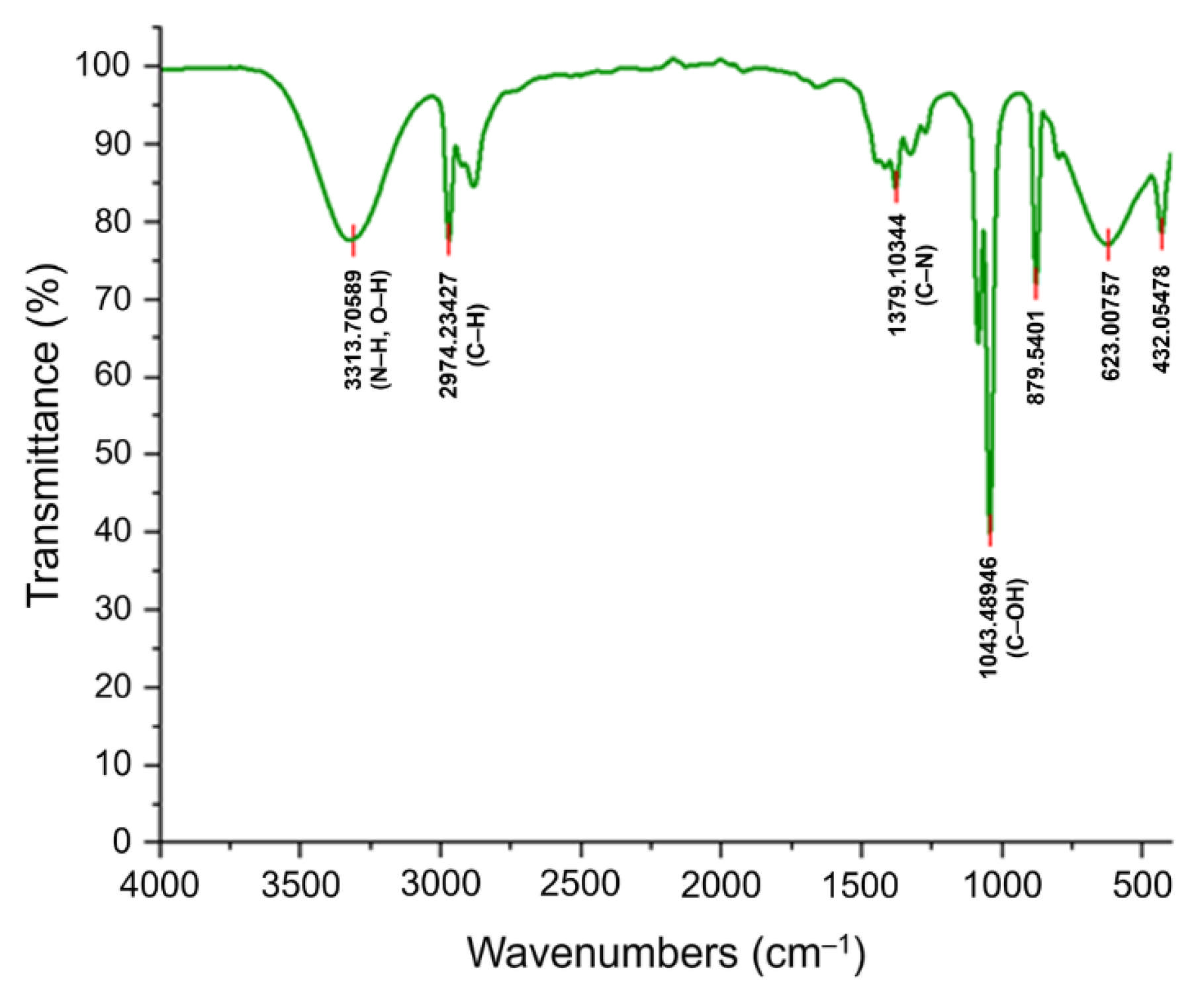
FTIR analysis in
Figure 6 shows that there are several distinct absorption bands within the range of 500 to 4000 cm
−1, indicating the presence of a variety of functional groups. These groups are crucial in modulating the optical properties, dispersibility, and interaction behavior of CDs in sensing applications. A broad absorption band centered at 3313.71 cm
−1 corresponds to the stretching vibrations of N–H and O–H bonds, suggesting the presence of amine and hydroxyl groups. These groups may originate from the biomass precursor and the nitrogen dopant (urea) and also contribute to enhanced hydrophilicity and photoluminescence [
30]. The band observed at 2974.23 cm
−1 is attributed to C–H stretching of sp
3-hybridized carbon, indicative of residual hydrocarbon chains from lignocellulosic components of the precursor material.
A distinct peak at 1379.10 cm−1 corresponds to C–N stretching vibrations, which affirms the successful incorporation of nitrogen into the carbon dot structure. Meanwhile, the peak at 1043.49 cm−1 is attributed to C–OH stretching, pointing to the presence of alcohol groups that may have been introduced through the ethanol solvent used during synthesis. Additional peaks at 879.54 cm−1, 623.01 cm−1, and 432.05 cm−1 fall within the fingerprint region, reflecting the specific vibrational signatures of the synthesized CDs.
3.2. Quantum Yield Optimization Using Box–Behnken Design
The synthesis parameters for nitrogen-doped carbon dots (N-CDs) were optimized using response surface methodology (RSM) via a Box–Behnken design. Three variables were considered, each at three levels: reaction temperature (°C), dopant amount (g), and reaction duration (h). The optimization targeted the enhancement of photoluminescence intensity, serving as the response variable indicative of quantum yield.
The regression analysis yielded a quadratic model with high significance (p < 0.05) and an R2 value of 0.9783, indicating good model fit. Analysis of variance (ANOVA) confirmed the statistical relevance of all three factors and their interactions. The 3D response surface plots revealed a synergistic effect between temperature and urea content in maximizing photoluminescence. Excessive reaction times, however, led to fluorescence quenching, possibly due to excessive carbonization.
The optimal conditions identified were 177.493 °C, a dopant amount of 2.62 g, and a reaction duration of 6.252 h. Validation experiments under these conditions showed excellent agreement with predicted values, confirming model accuracy and its applicability in tuning CD properties.
3.3. Carbon Monoxide Sensing
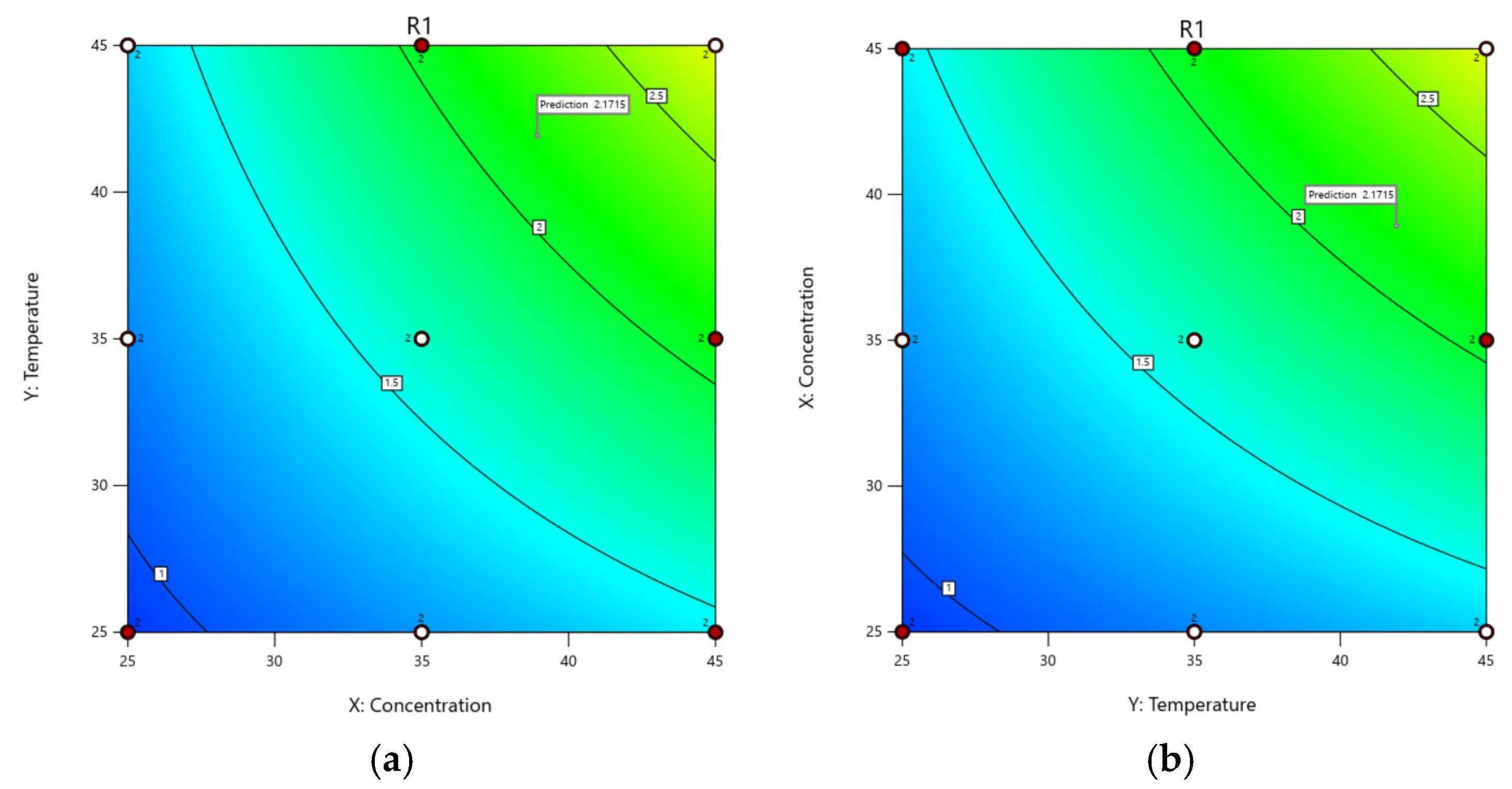
Doped and undoped carbon dots were synthesized under optimal conditions to determine their carbon monoxide gas sensing performance under varying gas concentrations and temperatures. It was found that the gas response varies with changes in gas concentration and temperature. There is a linear increase in gas response as both parameters increase, with the highest gas response at approximately 45 ppm concentration and 45 °C temperature, reaching a value of 2.16, which is represented by the yellow-to-green gradient near the top right corner of each contour plot in
Figure 7. This indicates that increasing both gas concentration and operating temperature enhances the gas response. However, a red peak was not observed, indicating that a maximum response was not observed, likely due to a weak or statistically insignificant interaction between the parameters.
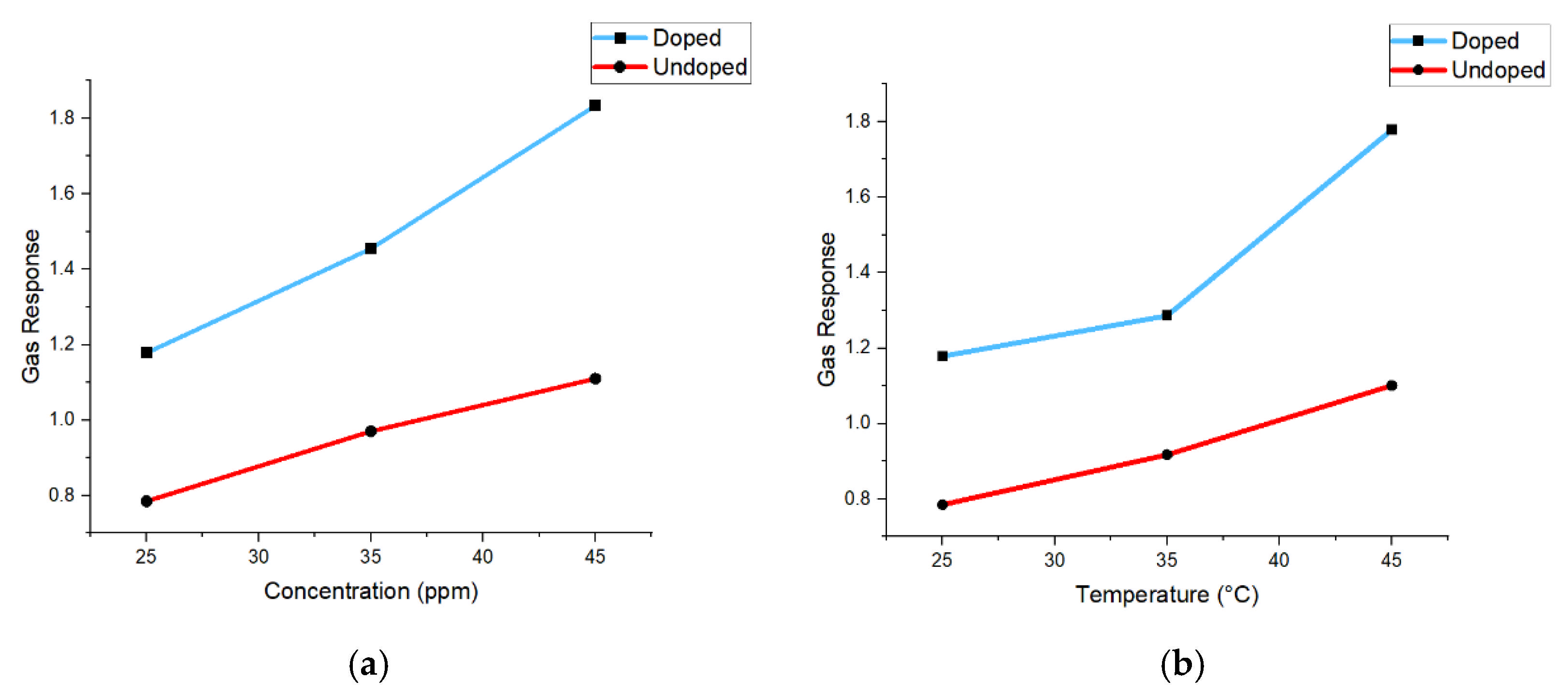
Individually, the factor–response relationship of the gas response at different concentrations at a constant temperature of 25 °C and at different temperatures at a constant concentration of 25 ppm were tested using doped and undoped CDs.
Figure 8 illustrates that both exhibited positive trends, with doped CDs demonstrating higher gas response in both constant temperature and concentration conditions. This is attributed to surface functionalization, which reduced the electrical resistance of the CDs upon exposure to the carbon monoxide gas as a result of enhanced charge transfer efficiency and an increase in density of active sites for gas molecule adsorption from doping [
31].
4. Conclusions
This study optimized the synthesis of nitrogen-doped (N-doped) carbon dots derived from water hyacinth using a Box–Behnken design to determine the optimum temperature, duration, and dopant amount for maximizing photoluminescence quantum yield. The optimal conditions determined were 177.493 °C, 6.252 h, and 2.62 g of dopant, which resulted in a quantum yield of 20.15%, closely aligning with the model’s prediction and confirming its reliability. Among the parameters, temperature was identified as most significant, enhancing quantum yield through improved carbonization up to an optimal point, beyond which defect formation reduced performance. Both synthesis time and dopant amount also showed narrow effective ranges, with excess leading to degradation or aggregation. Optical characterizations using UV-vis and PL spectroscopy confirmed the presence of π–π* and n–π* transitions and emission at 483 nm, indicating successful nitrogen doping and formation of conjugated domains. Morphological and structural analysis via FTIR and FESEM-EDX revealed functional groups associated with nitrogen incorporation and predominantly spherical to quasi-spherical particles with confirmed C, N, and O content. Finally, the optimized N-doped water hyacinth CDs exhibited enhanced CO gas sensing performance compared to undoped samples, supporting their potential for practical gas detection applications. However, potential cross-sensitivity toward other reducing and oxidizing gases (e.g., NO2, NH3, H2, or VOCs) was not investigated in this study and remains an important direction for future work.




 ,
,