Proceeding Paper

Satellite Vegetation Monitoring Challenges for Oil Pollution in the Niger Delta Community †

by
Jennifer Akuchinyere Anucha
1,
Bhaskar Das
2,
Sandhya Patidar
1,
Ambrose Onne Okpu
3,
Ikenna Light Nkwocha
4 and
Bhaskar Sen Gupta
1,*
1
Department of Civil Engineering, School of Energy, Geoscience, Infrastructure and Society, Heriot-Watt University, Edinburgh EH14 4AS, UK
2
Department of Civil Engineering, Central University of Haryana (CUH), Mahendergarh 123031, India
3
Department of Mechanical Engineering, School of Engineering and Physical Sciences, Heriot-Watt University, Edinburgh EH14 4AS, UK
4
Department of Microbiology, Faculty of Sciences, University of Port Harcourt, Port Harcourt 500272, Nigeria
*
Author to whom correspondence should be addressed.
Presented at the 6th International Electronic Conference on Applied Sciences, 9–11 December 2025; Available online: https://sciforum.net/event/ASEC2025.
Eng. Proc. 2026, 124(1), 41; https://doi.org/10.3390/engproc2026124041 (registering DOI)
Published: 22 February 2026
(This article belongs to the Proceedings of The 6th International Electronic Conference on Applied Sciences)

Abstract

Monitoring vegetation and land cover changes over time in oil-impacted regions is crucial for assessing ecological degradation and informing remediation options. This study aimed to identify the challenges encountered when using Landsat imagery to detect changes in vegetation health and land cover in Bodo, a hydrocarbon-impacted community in the Niger Delta region of Nigeria, over a 20-year period. Landsat 7 ETM+ and Landsat 8 OLI imagery were used to derive the Normalised Difference Vegetation Index (NDVI), Normalised Difference Water Index (NDWI), and Normalised Difference Built-up Index (NDBI) from 2003 to 2023. Data continuity was affected by the Landsat 7 Scan Line Corrector malfunction in the 2008 images and by high cloud coverage in the Landsat 8 OLI 2013 images. Hence, 2008 and 2013 were excluded from the analysis, limiting multi-year comparisons. Results from the available years indicated that NDBI values increased gradually, suggesting minor urban expansion. Stable but low NDWI levels suggest water stress, while changing NDVI values indicate alterations in vegetative health. However, this study highlights observable environmental changes and the challenges involved in using satellite imagery for environmental monitoring in oil-impacted regions, underscoring the need for improved cloud-masking methodologies and radar datasets to enhance long-term environmental assessment.

1. Introduction

Oil production is the key driver of Nigeria’s economy, accounting for around 80% of the country’s earnings [1]. Crude oil components are mainly extracted from the Niger Delta region of the country [2]. Despite Nigeria’s abundance of natural resources, oil has emerged as the main driver of the nation’s GDP and wealth since its discovery in 1956 at Oloibiri, Bayelsa State, and its commercial production in 1958 [3,4].
Although the Niger Delta’s oil production has significantly boosted the nation’s economy by generating substantial foreign exchange revenues, it also has shortcomings. The incidence of oil spills has had a terrible impact on Nigeria’s Niger Delta region, causing severe environmental deterioration and disruption to residents’ lives. In 2008, the Bodo village in Rivers State, in the Niger Delta, experienced two massive oil spills caused by a damaged Shell pipeline. The first oil spill occurred in August 2008 and lasted about 3 weeks, while the second occurred in December 2008 and lasted about 10 days. The spill released an estimated 60,000 barrels of oil into the environment, inflicting widespread ecological damage [5]. The oil spill was observed to alter the physicochemical characteristics of Bodo Creek and the aquatic fauna [6,7,8]. These environmental challenges underscore the need for effective and sustained monitoring of oil-impacted ecosystems.
Petroleum exploration has caused recurring environmental, social, and physical disasters in the Niger Delta, which have worsened over time due to insufficient monitoring and assessment [9,10]. Field-based environmental monitoring techniques are time-consuming, expensive, and limited in scope, making them unsuitable for regional, national, and global monitoring [11]. Implementing field-based approaches can also be challenging in remote areas because of security concerns or inaccessible terrain [12]. However, satellite remote sensing is a crucial technique for assessing vegetation health, as it overcomes the limitations of field-based methods [13]. Spatial technologies and remote sensing have been recognised as powerful and effective tools for environmental monitoring [14]. Satellite remote sensing has been very useful for monitoring land cover changes by tracking vegetation health, surface water movement, and urban growth, using indices such as the Normalised Difference Vegetation Index (NDVI), Normalised Difference Water Index (NDWI), and Normalised Difference Built-up Index (NDBI).
In the Niger Delta, several studies have demonstrated the usefulness of GIS and remote sensing in detecting environmental change. For example, GIS and remote sensing were used to assess environmental changes in the Niger Delta’s coastal regions, revealing significant transformations driven by oil and gas exploration, urbanisation, and infrastructure development. Wetland loss in coastal regions, vegetation degradation, and pollution were observed to be the major impacts of unguided economic development and inefficient environmental management [10]. Another study employed Landsat-based NDVI to assess the impact of oil spills on vegetation in the Niger Delta, thereby overcoming the limitation of limited ground access [12]. While these studies demonstrate the usefulness of remote sensing for detecting environmental change in the Niger Delta, limited attention has been paid to the technical constraints associated with satellite imagery and remote sensing.
The effects of cloud cover on satellite data collection have been documented in the literature. While cloud shadows reduce surface illumination, most studies have confirmed that clouds block viewing across all solar wavelengths and that reflections from cloud edges frequently affect the portion of the surface not directly beneath a cloud, distorting the surface’s actual reflectivity [15]. Furthermore, research has long demonstrated how cloud cover affects satellite data applications. Cloud cover has been identified by most of these studies as a primary source of error in the computation of various surface parameters from optical remote sensing data [16,17,18,19]. According to numerous studies, cloud cover and its shadows pose the greatest challenge to most land-surface remote-sensing applications, making it more difficult to observe land-surface biophysical characteristics, particularly in tropical regions. In addition to persistent cloud cover, sensor malfunctions and temporal data gaps are technical constraints that can significantly affect the reliability of multi-temporal spectral analysis, yet they are often underreported in environmental change studies.
This study addresses these gaps by examining the challenges encountered when using Landsat satellite imagery to conduct a multi-temporal spectral analysis of vegetation and land-cover changes in an oil-polluted area in the Niger Delta from 2003 to 2023. Unlike previous studies that primarily emphasise environmental change detection, this study places emphasis on understanding not only the environmental changes occurring in the Niger Delta but also the technical and practical challenges encountered when using satellite imagery to monitor them over time. It highlights how sensor availability, scan-line errors, and cloud contamination can make spectral index analysis and interpretation less reliable.

2. Materials and Methods

2.1. Study Area

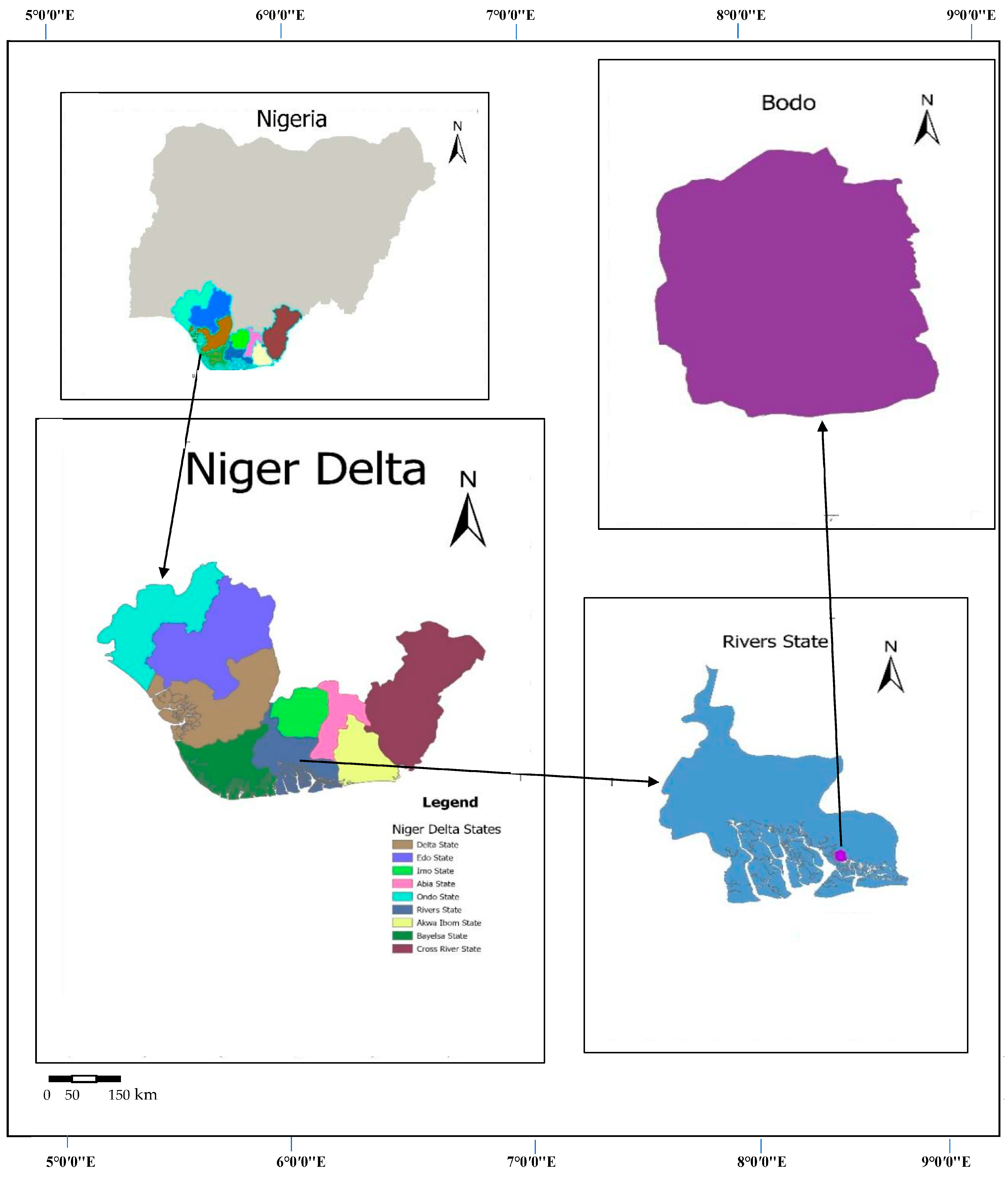
This study was conducted in the Niger Delta region of Nigeria, focusing on the Bodo community in the Gokana Local Government Area (LGA) of Rivers State. Bodo is a traditional, rural, coastal Ogoni village located at latitude 4836′ N and longitude 7821′ E (Figure 1). It is home to a network of brackish water creeks, mangrove swamps, and an island forest known as Bodo Creek [20]. The Niger Delta lies in Southern Nigeria, where the River Niger divides into numerous smaller streams before merging with the Atlantic Ocean. It encompasses nine states: Abia, Akwa Ibom, Bayelsa, Cross River, Delta, Edo, Imo, Ondo, and Rivers [2,21]. The region is characterised by diverse ecosystems, including mangroves, freshwater swamps, tropical lowland forests, and estuaries. The Bodo community in the Niger Delta has suffered severe environmental degradation due to extensive oil and gas exploration and exploitation. Thus, it provides a suitable location for studying long-term ecological change, as satellite remote sensing techniques can identify these changes over time.

2.2. Data Collection

In this study, satellite imagery was obtained from the Landsat dataset (U.S. Geological Survey (USGS), Reston, VA, USA). Landsat is indispensable for long-term environmental monitoring in this study because of its unparalleled historical archive, which extends back to the early 1970s and enables multi-decadal environmental analysis not possible with newer satellite missions. Landsat imagery for the study area was obtained from the USGS Earth Explorer repository (U.S. Geological Survey, Reston, VA, USA). www.usgs.gov (accessed on 20 June 2025) for the period 2003–2023, with 5-year intervals (i.e., 2003, 2008, 2013, 2018, and 2023). Due to the unavailability of Landsat 5 data for the study area, Landsat 7-ETM imagery was obtained for 2003 and 2008 (the 2008 imagery had scan-line corrector errors). In contrast, Landsat 8-9 OLI/TRS satellite imagery was acquired for 2013, 2018 and 2023. The images were collected from collection 2, level 1, maintaining the same path and row for all images obtained (188/057). Efforts were made to ensure the images were acquired during the same season—Nigeria’s dry season, with no more than 20% cloud cover for the same path and row of images, except for 2013, where images available for the selected path and row fell outside the dry season and had cloud cover exceeding 20% for the chosen path and row (Table 1). The footprint of the acquired imagery covered the entire Bodo community and other areas of Rivers State in the Niger Delta region.

2.3. Computation of Spectral Indices

The Landsat images were loaded into QGIS 3.40.3 (QGIS Development Team, Zurich, Switzerland) and processed using modules for satellite imagery and raster data processing. Normalised Difference Vegetation Index (NDVI), Normalised Difference Water Index (NDWI), and Normalised Difference Built-up Index (NDBI) were analysed using the appropriate bands and formulae for each index in the raster calculator of QGIS (Table 2). After this, the results were clipped to the study area (Bodo) shapefile, and spectral maps were created for each index using appropriate symbology.

2.4. Statistical Analysis

Descriptive statistics and visual representations of trends were employed to evaluate temporal changes in land cover in the study area. Bar charts were plotted using the minimum and maximum values of the index. At the same time, line graphs were generated using the mean values of the indices NDVI, NDWI, and NDBI generated from QGIS software to illustrate the relative temporal trends in vegetation, water, and built-up areas in the Bodo community, thereby highlighting how the different land cover types have evolved in relation to one another.

3. Results and Discussion

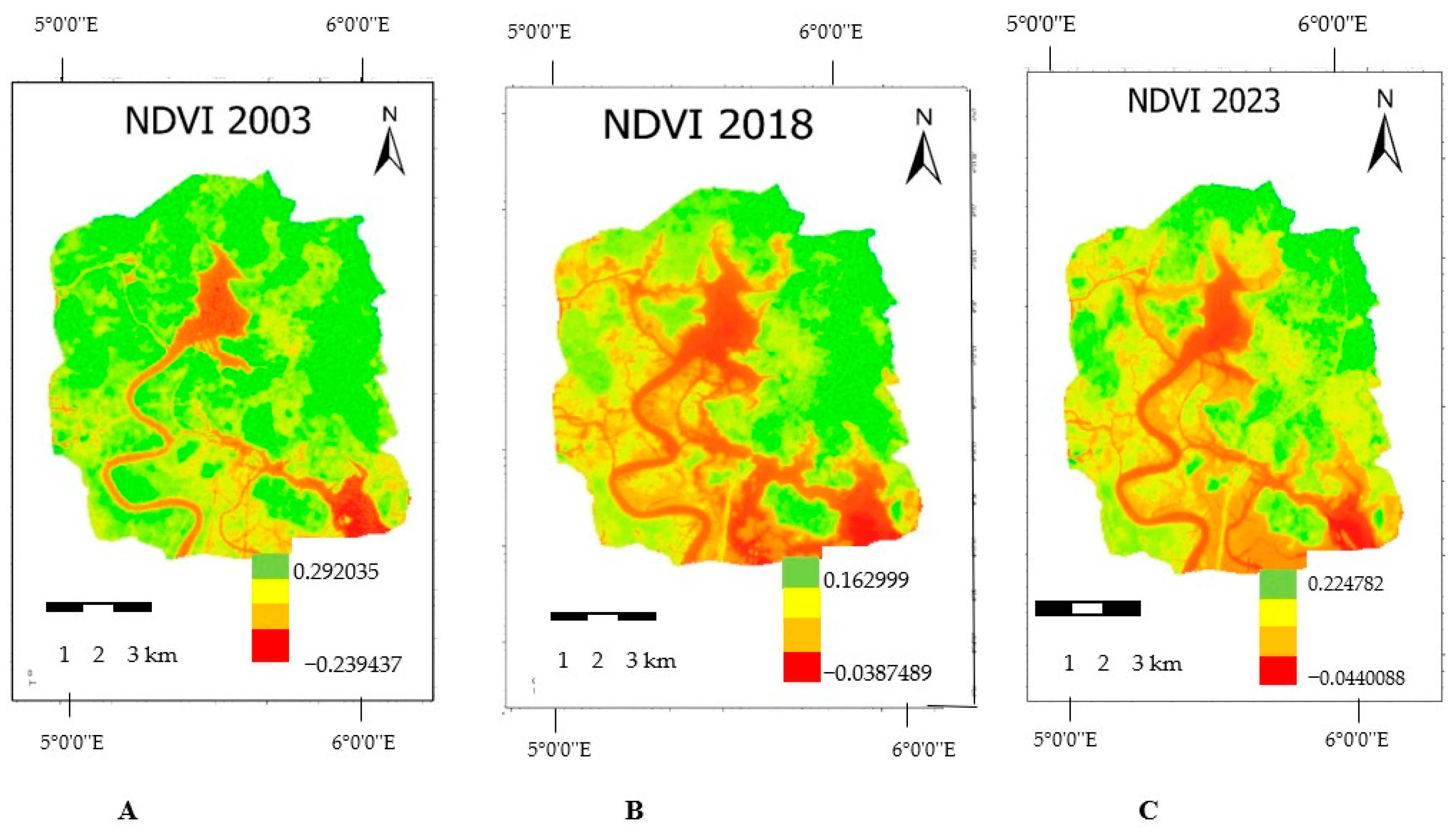
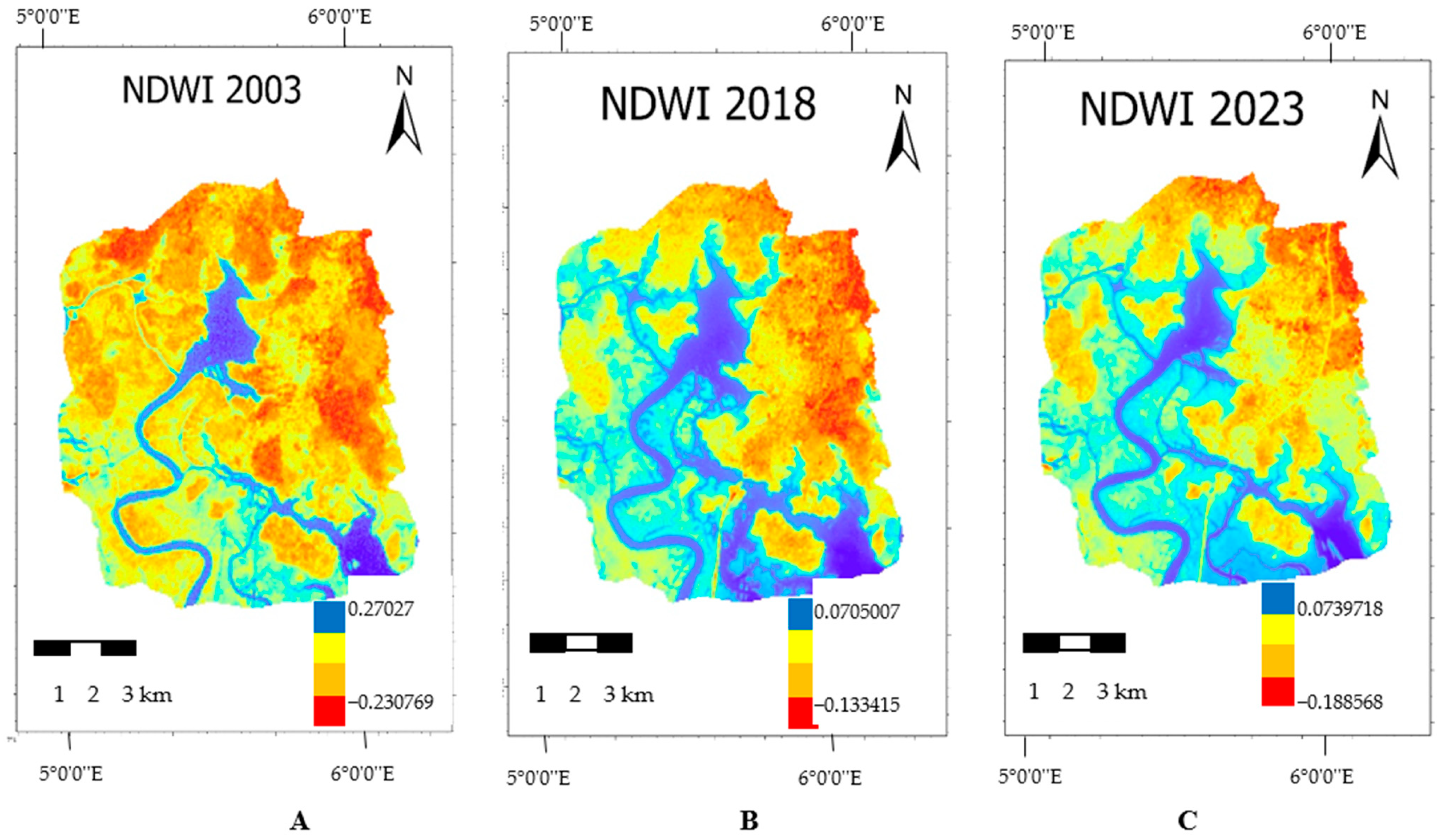
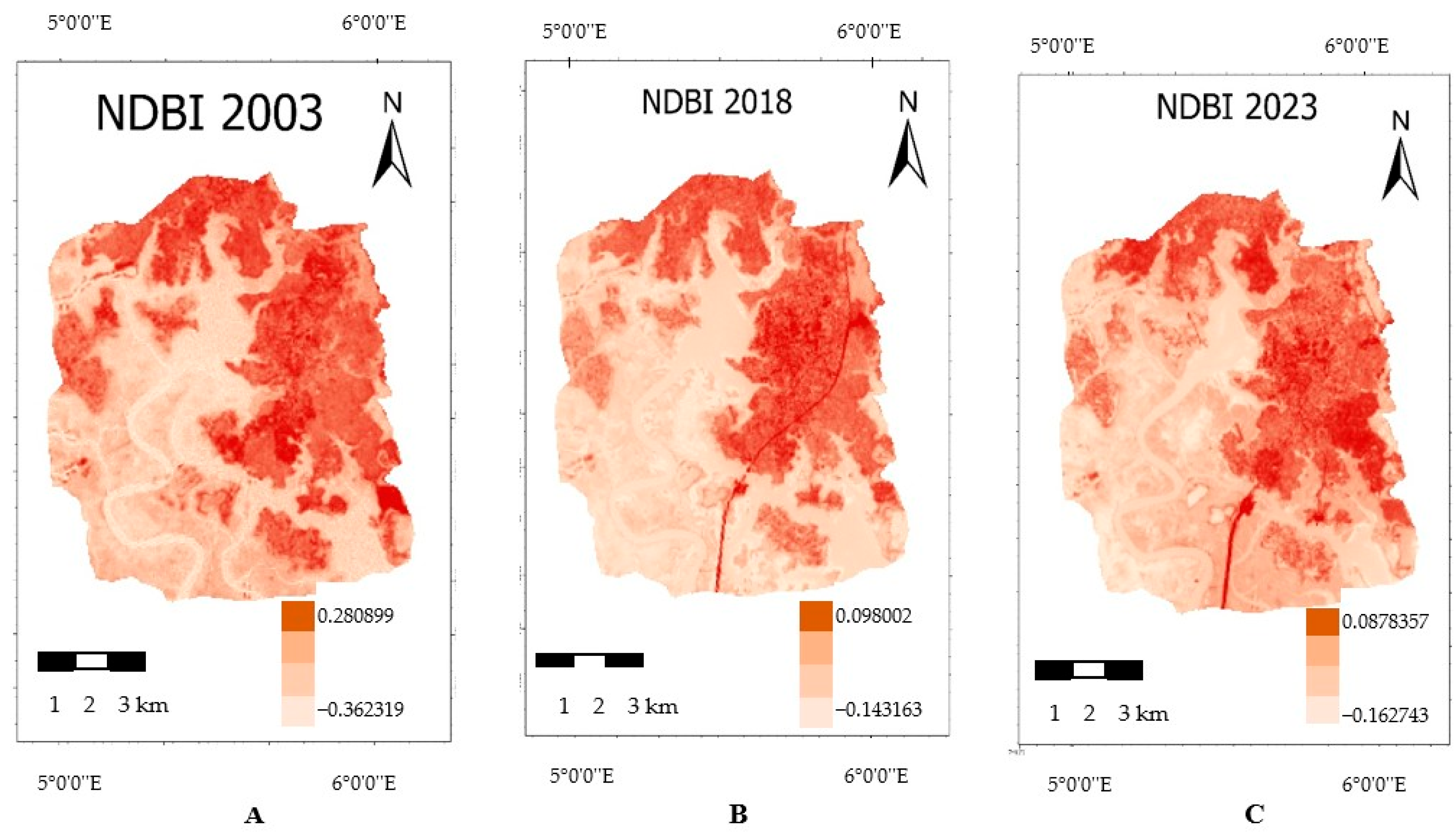
The analysis of satellite-based spectral indices (NDVI, NDWI, and NDBI) in the Bodo community was successful for 2003, 2018, and 2023, but was constrained by data-related challenges, including the Scan Line Corrector failure in 2008 and high cloud cover in 2013. Each calculated spectral index (NDVI, NDWI, and NDBI) ranges between −1 and +1. Values approaching +1 indicate stronger dominance of the target feature (e.g., healthy vegetation for NDVI, surface water for NDWI, or built-up areas for NDBI). In contrast, values close to −1 represent the opposite spectral response. For successful years (2003, 2018 and 2023), spectral maps were created to show changes in land cover over the study period. For NDVI, green areas on the map represent positive values, depicting dense vegetation; lighter tones represent sparse vegetation, bare soil, or built-up areas. In contrast, reddish tones represent areas with negative values, depicting water bodies (Figure 2). The maximum NDVI decreased from 0.292035 in 2003 to 0.224782 in 2023, indicating a reduction in healthy vegetation over time, which could be due to oil and gas activities in the area. NDWI maps for the successful years (2003, 2018 and 2023) also show changes in water bodies and moisture content across the study area over the years. Blue areas on the map indicate positive values, depicting water bodies, flooded vegetation, or moisture. At the same time, reddish and brown tones represent bare land or built-up areas, as seen in Figure 3. Again, the maximum NDWI decreased from 0.27027 in 2003 to 0.0739718 in 2023, suggesting the presence of water stress in the study area over the period observed. Figure 4 illustrates the NDBI map for the study years, showing changes in urban or built-up areas over time, with darker tones representing positive values. The NDBI values also suggest an increase in built-up areas and urbanisation across the study area over time.
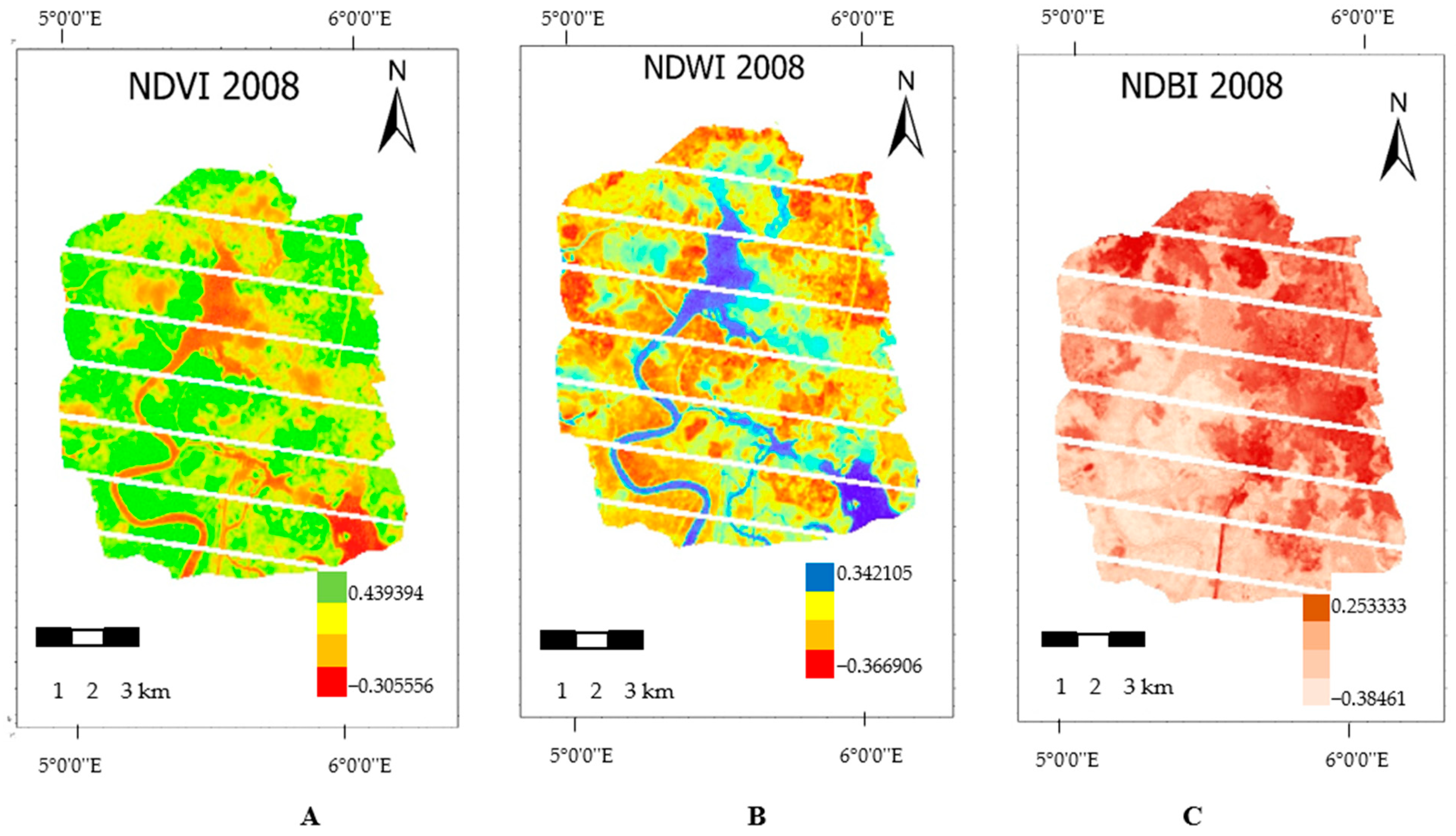
The unavailability of Landsat 5 imagery for the study area in 2003 and 2008 necessitated the use of Landsat 7 ETM+ data for these two years. However, the 2008 imagery was adversely affected by the failure of the Scan Line Corrector (SLC), which occurred on Landsat 7 on 31 May 2003 [22]. This resulted in data gaps that appeared as diagonal striping across the images, leading to the loss of valid observations in portions of the scenes (Figure 5). This rendered the 2008 data unsuitable for reliable analysis; therefore, it was excluded.
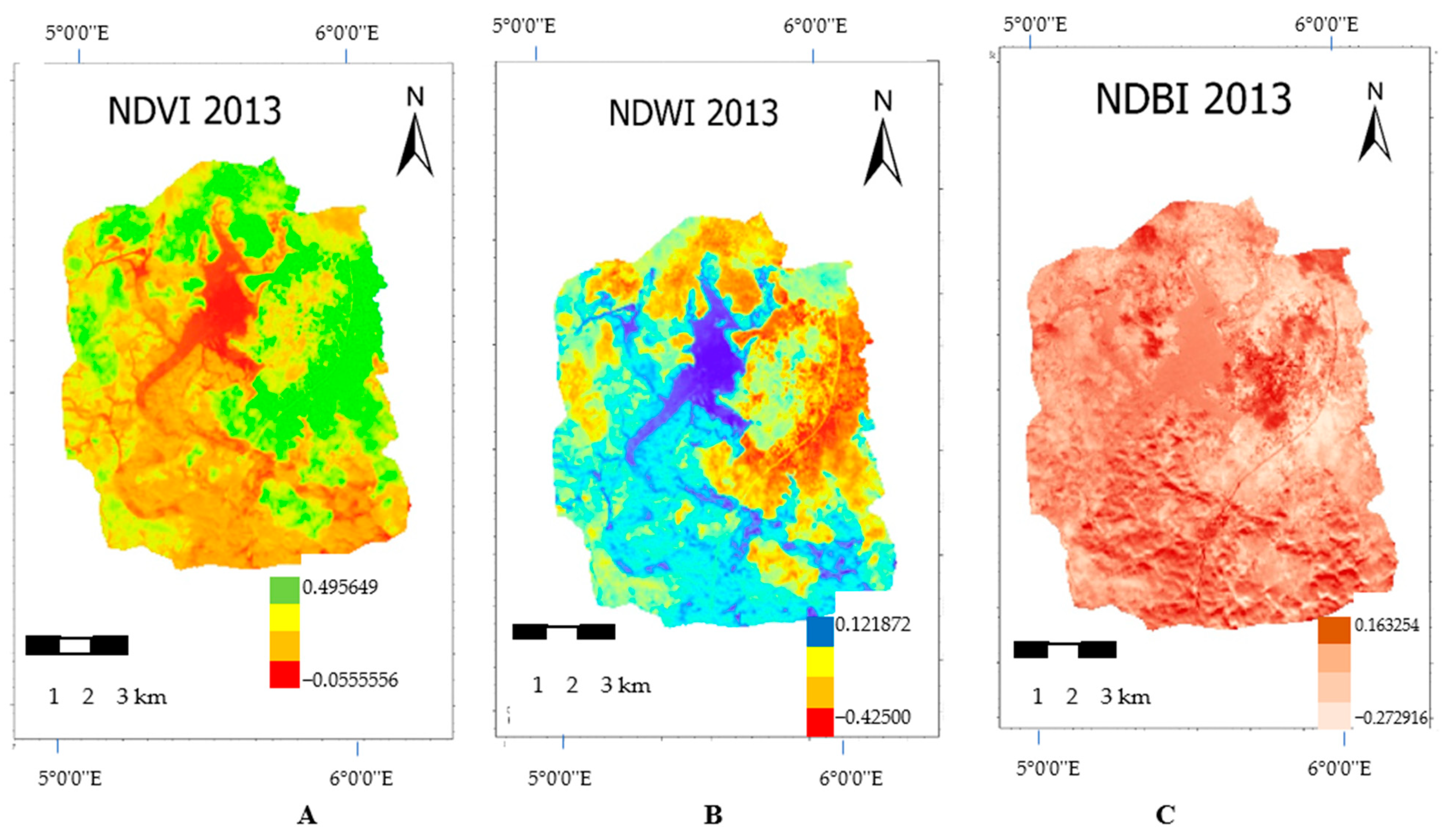
In addition, excessive cloud cover (41.74%) compromised the quality of the selected Landsat 8 images for the 2013 analysis. Dry season scenes were unavailable for the selected path/row in 2013. This resulted in the use of wet-season Landsat 8 images with a cloud cover of 41.74%. Excessive cloud cover compromised the quality of the selected Landsat 8 images, rendering the 2013 dataset unsuitable for analysis and leading to the exclusion of those images, further limiting usable datasets (Figure 6).
These challenges reflect the persistent atmospheric moisture and frequent cloud formation characteristic of the Niger Delta, which significantly restricts the availability of cloud-free optical imagery. Cloud cover has been reported by most authors as a primary source of error in the computation of indices from remote sensing data [16,17,18,19].
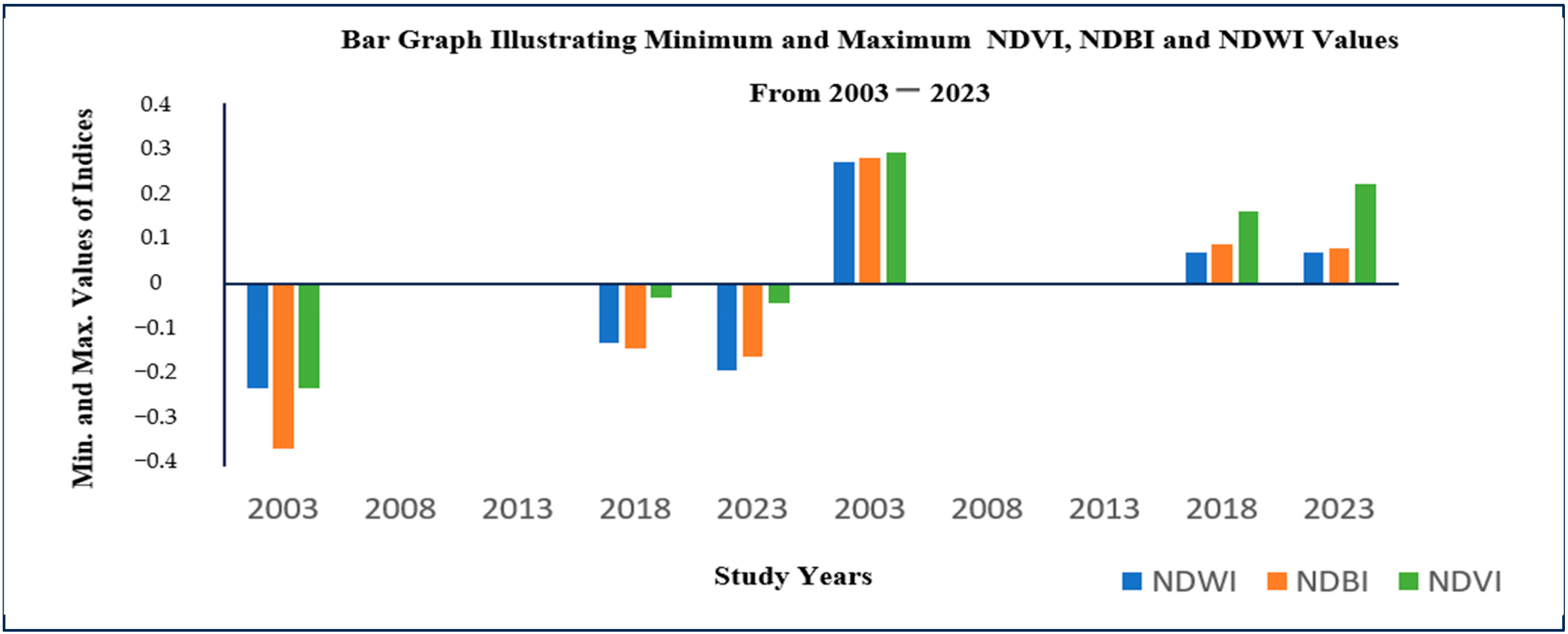
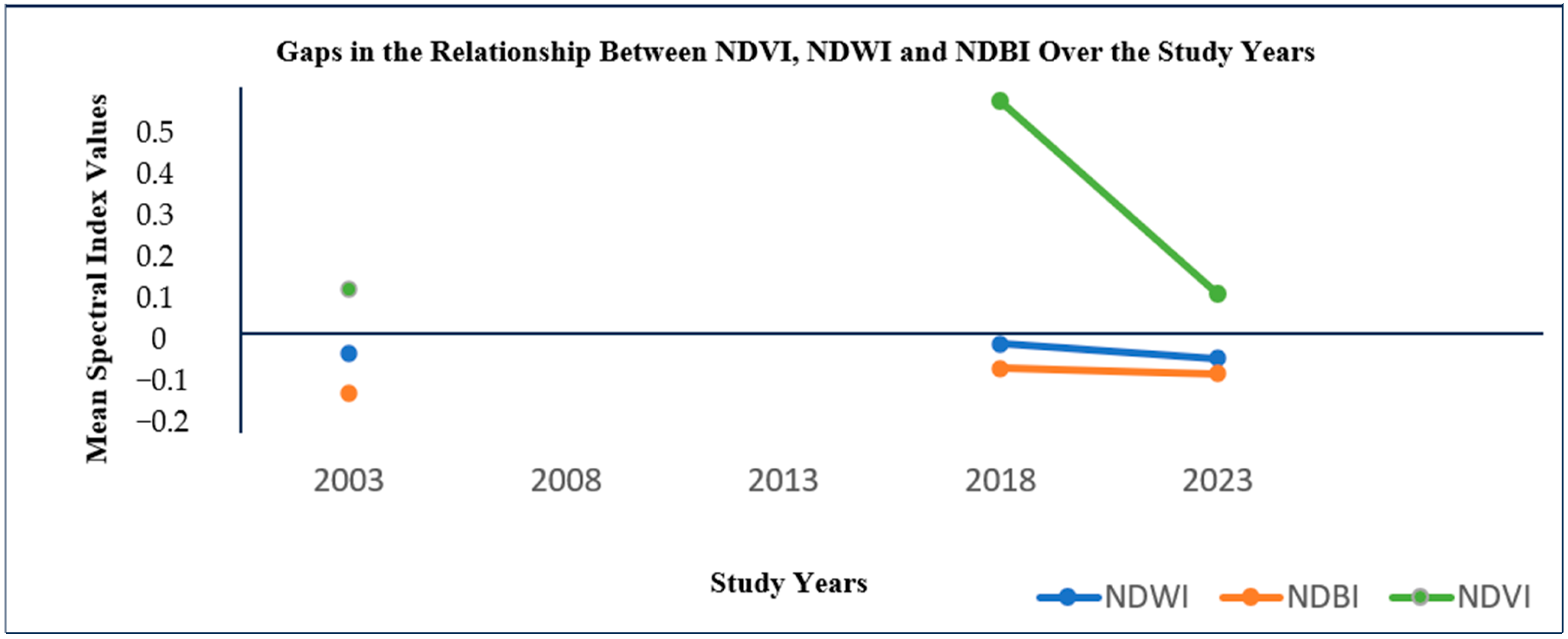
Consequently, temporal inconsistencies and gaps emerged in the time series, limiting the continuous long-term assessment of trends, as shown in Figure 7 and Figure 8. Despite these limitations, analysis of the available datasets reveals significant differences in the minimum and maximum values of NDVI, NDWI, and NDBI across the study years, indicating increasing variability in vegetation cover, moisture and built-up intensity over time. In particular, the increasing differences between the maximum and minimum values suggest spatial heterogeneity in the land cover dynamics of the study area (Figure 7). Additionally, as illustrated in Figure 8, the upward trend in NDBI values between 2018 and 2023 indicates a gradual increase in built-up areas; the corresponding fluctuations in NDVI reflect variability in vegetation health and the relatively lower NDWI values suggest persistent surface water stress during the later years of the study period. These trends indicate sustained ecological pressure on the Bodo community, likely linked to ongoing anthropogenic activities and long-term environmental degradation associated with oil pollution in this region [5].

4. Conclusions

Multi-temporal Landsat-derived NDVI, NDWI and NDBI from 2003 to 2023 revealed changes in vegetation health, water stress and the expansion of built-up areas in the Bodo community, demonstrating ongoing ecological changes driven by oil-related and anthropogenic activities.
Although Landsat imagery remains indispensable for long-term satellite-based environmental monitoring due to its unparalleled historical archive, its application in cloud-prone tropical regions is highly challenging because of scan-line errors, atmospheric conditions such as high cloud cover, and data gaps.
These findings underscore the need for advanced cloud masking and gap-filling techniques, platforms with better data continuity and processing power, such as Google Earth Engine, and multi-sensor data integration, for example, using Sentinel-2 or Sentinel-1. By clearly identifying these challenges, this study contributes to improving the methodological transparency and reliability of long-term satellite-based environmental assessments in environmentally sensitive areas.

Author Contributions

Conceptualization, B.D. and B.S.G.; Methodology, B.D. and B.S.G.; Software, J.A.A.; Validation, B.D. and B.S.G.; Formal Analysis, J.A.A. and S.P.; Investigation, J.A.A.; Resources, B.D. and B.S.G.; Data curation, B.D. and J.A.A.; Writing—original draft preparation, J.A.A.; writing—review and editing, B.D., B.S.G. and S.P.; Visualization, J.A.A. and I.L.N.; Supervision, B.D., S.P. and B.S.G.; Project administration, I.L.N.; Funding acquisition, A.O.O. All authors have read and agreed to the published version of the manuscript.

Funding

This research is funded by the Petroleum Technology Development Funds (PTDF) of Nigeria, under the PTDF Ph.D. overseas Scholarship Scheme, Reference No: PTDF/ED/OSS/PHD/JAA/0020/24.

Institutional Review Board Statement

Not applicable.

Informed Consent Statement

Not applicable.

Data Availability Statement

No new data were created or analyzed in this study. Data sharing is not applicable to this article.

Conflicts of Interest

The authors declare no conflicts of interest.

References

  1. Nkeeh, D.K.; Korfii, U.; Ugadah, U.; Vaah, B.D. Prospects of oil spill remediation in the Niger Delta, Nigeria: A case study of Bodo Creek. Asian J. Fish. Aquat. Res. 2025, 27, 39–56. [Google Scholar] [CrossRef]
  2. Ikhumetse, A.A.; Abioye, O.P.; Ijah, U.J.J.; Bankole, M.T. A Critical Review of Oil Spills in the Niger Delta Aquatic Environment: Causes, Impacts, and Bioremediation Assessment. Environ. Monit. Assess. 2022, 194, 816. [Google Scholar] [CrossRef] [PubMed]
  3. Onuoha, F.C. Oil Pipeline Sabotage in Nigeria: Dimensions, Actors and Implications for National Security L/C. Afr. Secur. Rev. 2008, 17, 99–115. [Google Scholar] [CrossRef]
  4. Anifowose, B. Assessing the impact of oil & gas transport on Nigeria’s environment. In U21 Postgraduate Research Conference Proceedings 1; University of Birmingham UK: Birmingham, UK, 2008. [Google Scholar]
  5. Watts, M.; Zalik, A. Consistently Unreliable: Oil Spill Data and Transparency Discourse. Extr. Ind. Soc. 2020, 7, 790–795. [Google Scholar] [CrossRef] [PubMed]
  6. Nkeeh, D.K.; Hart, A.I.; Erondu, E.S.; Zabbey, N. Assessment of the Physicochemical Parameters of Bodo Creek, Rivers State, Nigeria: A Pre-spill, Post-spill and Post-clean-up Review. J. Appl. Sci. Environ. Manag. 2021, 25, 1505–1512. [Google Scholar] [CrossRef]
  7. Nkeeh, D.K.; Hart, A.I.; Erondu, E.S.; Zabbey, N. Spatial and Monthly Changes in Interstitial Water Physico-chemistry of Bodo Creek. Asian J. Fish. Aquat. Res. 2021, 15, 1–8. [Google Scholar] [CrossRef]
  8. Nkeeh, D.K.; Hart, A.I.; Erondu, E.S.; Zabbey, N. Determination of Physico-chemical Parameters in Interstitial Water Samples from Bodo Creek. J. Sci. Eng. Res. 2021, 8, 90–98. [Google Scholar]
  9. Achi, C. Hydrocarbon Exploitation, Environmental Degradation and Poverty: The Niger Delta Experience. In Proceedings of the Diffuse Pollution Conference, Dublin, Ireland, 17–21 August 2003. [Google Scholar]
  10. Twumasi, Y.A.; Merem, E.C. GIS and Remote Sensing Applications in the Assessment of Change within a Coastal Environment in the Niger Delta Region of Nigeria. Int. J. Environ. Res. Public Health 2006, 3, 98–106. [Google Scholar] [CrossRef] [PubMed]
  11. Tehrany, M.S.; Kumar, L.; Drielsma, M.J. Review of Native Vegetation Condition Assessment Concepts, Methods and Future Trends. J. Nat. Conserv. 2017, 40, 12–23. [Google Scholar] [CrossRef]
  12. Kuta, A.A.; Grebby, S.; Boyd, D.S. Remote Monitoring of the Impact of Oil Spills on Vegetation in the Niger Delta, Nigeria. Appl. Sci. 2025, 15, 338. [Google Scholar] [CrossRef]
  13. Rajendran, S.; Sadooni, F.N.; Al-Kuwari, H.A.; SOleg, A.; Govil, H.; Nasir, S.; Vethamony, P. Monitoring Oil Spill in Norilsk, Russia Using Satellite Data. Sci. Rep. 2021, 11, 3817. [Google Scholar] [CrossRef] [PubMed]
  14. Peter, C.C.; Alozie, M.; Azubuine, C.; Oti, U. Change Approach in Determining the rate of Urban Expansion Dynamics and Changes in Land Use/Land Cover: A Case Study of Owerri Municipal, Imo State, Nigeria. Sky J. Soil Sci. Environ. Manag. 2017, 6, 41–52. [Google Scholar] [CrossRef]
  15. Ayanlade, A.; Nwaezeigwe, J.O. Effects of Cloud Cover Variation on Satellite Data Utilisation: A Case of Landsat Dataset. Ife Soc. Sci. Rev. 2018, 2, 273–288. [Google Scholar]
  16. Vant-Hull, B.; Marshak, A.; Remer, L.A.; Li, Z. The Effects of Scattering Angle and Cumulus Cloud Geometry on Satellite Retrievals of Cloud Droplet Effective Radius. IEEE Trans. Geosci. Remote Sens. 2007, 45, 1039–1045. [Google Scholar] [CrossRef]
  17. Ogunbadewa, E.Y. Investigating Availability of Cloud Free Images with Cloud Masks in Relation to Satellite Revisit Frequency in the Northwest of England. Contrib. Geophys. Geod. 2012, 42, 63–100. [Google Scholar]
  18. Zhu, Z.; Woodcock, C.E. Object-based Cloud and Cloud Shadow Detection in Landsat imagery. Remote Sens. Environ. 2012, 118, 83–94. [Google Scholar] [CrossRef]
  19. Wang, T.; Shi, J.; Husi, L.; Zhao, T.; Ji, D.; Xiong, C.; Gao, B. Effect of Solar-Cloud-Satellite Geometry on Land Surface Shortwave Radiation Derived from Remotely Sensed Data. Remote Sens. 2017, 9, 690. [Google Scholar] [CrossRef]
  20. Onwugbuta-Enyi, J.; Zabbey, N.; Erondu, E.S. Water Quality of Bodo Creek in the Lower Niger Delta Basin. Adv. Environ. Biol. 2008, 2, 132–136. [Google Scholar]
  21. Nwankwo, C.; Tse, A.C.; Nwankwoala, H.O. Carbon Storage of Mangrove Sediments in Kibani, Eastern Niger Delta, Nigeria: Implications on the Environment. Ecol. Nat. Resour. 2023, 7, 611–621. [Google Scholar]
  22. U.S. Geological Survey; NASA. Landsat 7 Scan Line Corrector Failure. USGS and NASA Sources. Available online: https://www.usgs.gov/landsat-missions/landsat-7/landsat-7-scan-line-corrector-failure (accessed on 20 June 2025).
Figure 1. Location of the study area (Bodo) in relation to Nigeria.
Engproc 124 00041 g001
Figure 2. NDVI maps for (A) 2003, (B) 2018, and (C) 2023.
Engproc 124 00041 g002
Figure 3. NDWI maps for (A) 2003, (B) 2018, and (C) 2023.
Engproc 124 00041 g003
Figure 4. NDBI maps for (A) 2003, (B) 2018, and (C) 2023.
Engproc 124 00041 g004
Figure 5. Scan Line Corrector failure in 2008 images for (A) NDVI, (B) NDWI, and (C) NDBI.
Engproc 124 00041 g005
Figure 6. Images of contamination with high cloud cover in 2013 for (A) NDVI, (B) NDWI, and (C) NDBI.
Engproc 124 00041 g006
Figure 7. Bar graph illustrating gaps in minimum and maximum NDVI, NDWI and NDBI values from 2003 to 2023.
Engproc 124 00041 g007
Figure 8. Line graph illustrating gaps in the relationship between NDVI, NDWI and NDBI over the study years.
Engproc 124 00041 g008
Table 1. Specifications of Landsat data collected.
YearSatelliteSensorAcquisition DatePath/RowResolutionCloud CoverRemarks
2003Landsat 7ETM8 January 2003188/05730 m1.0Suitable for use
2008Landsat 7ETM26 March 2008188/05730 m2.0Unusable due to the Scan Line Corrector (SLC)
2013Landsat 8OLI19 May 2013188/05730 m41.74Unusable due to high cloud cover
2018Landsat 8OLI25 January 2018188/05730 m18.22Suitable for use
2023Landsat 8OLI16 February 2023188/05730 m10.14Suitable for use
Table 2. Spectral indices, formulas and band combinations used.
Spectral IndexSatelliteFormulaBand Combination
NDVILandsat 7(NIR − Red)/(NIR + Red)(B4 − B3)/(B4 + B3)
Landsat 8(NIR − Red)/(NIR + Red)(B5 − B4)/(B5 + B4)
NDWILandsat 7(Green − NIR)/(Green + NIR)(B2 − B4)/(B2 + B4)
Landsat 8(Green − NIR)/(Green + NIR)(B3 − B5)/(B3 + B5)
NDBILandsat 7(SWIR − NIR)/(SWIR + NIR)(B5 − B4)/(B5 + B4)
Landsat 8(SWIR − NIR)/(SWIR + NIR)(B6 − B5)/(B6 + B5)
Disclaimer/Publisher’s Note: The statements, opinions and data contained in all publications are solely those of the individual author(s) and contributor(s) and not of MDPI and/or the editor(s). MDPI and/or the editor(s) disclaim responsibility for any injury to people or property resulting from any ideas, methods, instructions or products referred to in the content.