


Abstract
This article presents a meta-surface-based antenna configuration aimed at enhancing the gain performance for millimeter-wave wireless communication systems. The proposed structure consists of a rectangular meta-surface with circular cut-outs placed beneath a rectangular ring to improve the electromagnetic characteristics of the antenna. A rectangular monopole antenna is designed to operate at dual frequency bands around 38 GHz and 43 GHz. To further enhance radiation performance, Artificial Magnetic Conductor (AMC) structures are incorporated beneath the antenna element. The AMC surface improves the radiation efficiency and stabilizes the antenna characteristics by providing in-phase reflection near the operating frequencies. Simulation results demonstrate that the integration of the AMC structure significantly enhances the antenna gain and impedance matching performance. In particular, the incorporation of a AMC array increases the antenna gain from approximately 3.4 dB to 6.4 dB while maintaining stable reflection coefficient characteristics. The proposed design demonstrates improved gain performance and compact structure, making it a promising candidate for millimeter-wave wireless communication applications.
1. Introduction
Fifth Generation (5G) communication technology is transforming modern wireless systems by utilizing higher frequency bands to support high data rates, low latency, and enhanced connectivity. Antennas play a critical role in enabling these capabilities, particularly in compact wireless devices and communication infrastructure. Among various antenna structures, planar antennas are widely used due to their low profile, lightweight structure, ease of fabrication, and compatibility with integrated circuits.
However, achieving high gain and wide bandwidth while maintaining a compact antenna structure remains a major challenge in antenna design. Various techniques such as meta-surfaces, Artificial Magnetic Conductors (AMCs), Electromagnetic Band Gap (EBG) structures, and antenna arrays have been explored to enhance antenna performance. These methods aim to improve radiation efficiency, gain, and impedance bandwidth for modern wireless applications.
In this work, a meta-surface-based monopole antenna supported by AMC structures is proposed to enhance the gain and radiation characteristics. The antenna is designed to operate in the millimeter-wave frequency band around 38–43 GHz for 5G communication systems. A rectangular meta-surface with circular cut-outs is introduced to improve electromagnetic behavior, while AMC structures are employed to enhance radiation efficiency and gain. The proposed design demonstrates improved bandwidth and gain performance with a compact structure.
2. Related Study
Several antenna designs have been proposed in the literature to improve gain and bandwidth for modern communication systems. In [1], a rectangular micro-strip patch antenna was designed on a photonic crystal substrate to resonate at 28.3 GHz for 5G applications. Although the antenna achieved desirable resonant characteristics and bandwidth, the gain was limited to 3.13 dB. A multi-layer rectangular patch antenna using Rogers RT 5880 dielectric material was presented in [2], achieving resonance at 2.8 GHz with a gain of 9.77 dB. However, the antenna exhibited relatively narrow bandwidth.
The authors in [3,4] proposed a rectangular micro-strip patch antenna integrated with meta-material structures arranged in a square configuration enclosed within a square ring. The antenna operates below 6 GHz with a peak gain of 7.68 dB. A planar four-element antenna array operating at 30 GHz was presented in [5,6,7]. Although the array structure improved radiation performance, limitations were observed in gain, reflection coefficient, and bandwidth. Similarly, a serpins fractal antenna with a modified coaxial feed was developed to operate within the 21–30 GHz frequency range.
Furthermore, a rectangular ring-shaped antenna designed to resonate at 28.1 GHz with a bandwidth ranging from 27.3 GHz to 29.3 GHz achieved a gain of 7.9 dB [8,9]. In addition, a rectangular patch antenna using Electromagnetic Band Gap (EBG) structures was proposed to operate at 28 GHz, achieving a gain of 6.68 dB [10,11]. These studies demonstrate various approaches to improving antenna performance; however, challenges related to gain enhancement and bandwidth improvement still remain [12,13,14,15,16,17,18].
In this work, a pioneering idea is presented whereby a rectangular arrangement incorporating a circular incision design enclosed by a rectangular border is proposed as an Artificial Magnetic Conductor. The introduction of this creative configuration is complemented by a rectangular mono-pole antenna, leading to the emergence of resonance frequencies around 38 GHz and 43 GHz. Consequently, the implementation of this specific layout results in an increase in undesired electromagnetic radiation, subsequently contributing to a significant augmentation in the overall efficiency of the antenna system. This innovative approach marks a notable advancement in the field of electromagnetic engineering, offering promising possibilities for further research and practical applications in modern communication systems.
The rest of this paper is structured as follows: Section 2 of the research manuscript delves into a detailed explanation of the patch antenna’s design, shedding light on the intricacies of its construction and functionality. Moving forward, Section 3 focuses on a comprehensive parametric analysis of the Artificial Magnetic Conductor unit cell. Then, Section 4 presents a thorough examination of the rectangular micro-strip patch antenna backed by the Artificial Magnetic Conductor. As a conclusion, Section 5 encapsulates the key findings and implications of the research, highlighting the significance of the proposed Artificial Magnetic Conductor-backed antenna system in enhancing radiation efficiency and overall performance.
3. Designing of Patch Antenna
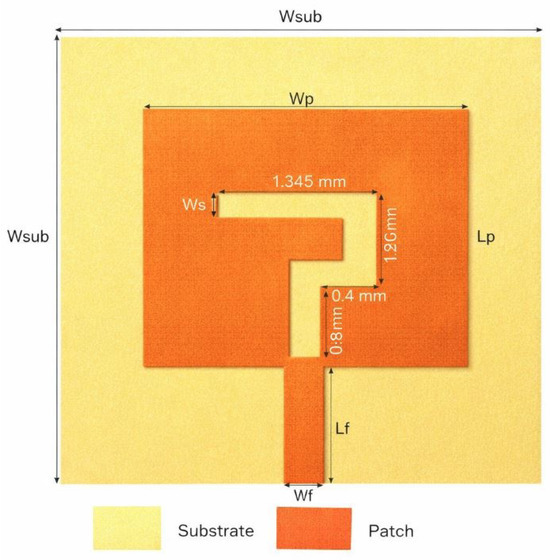
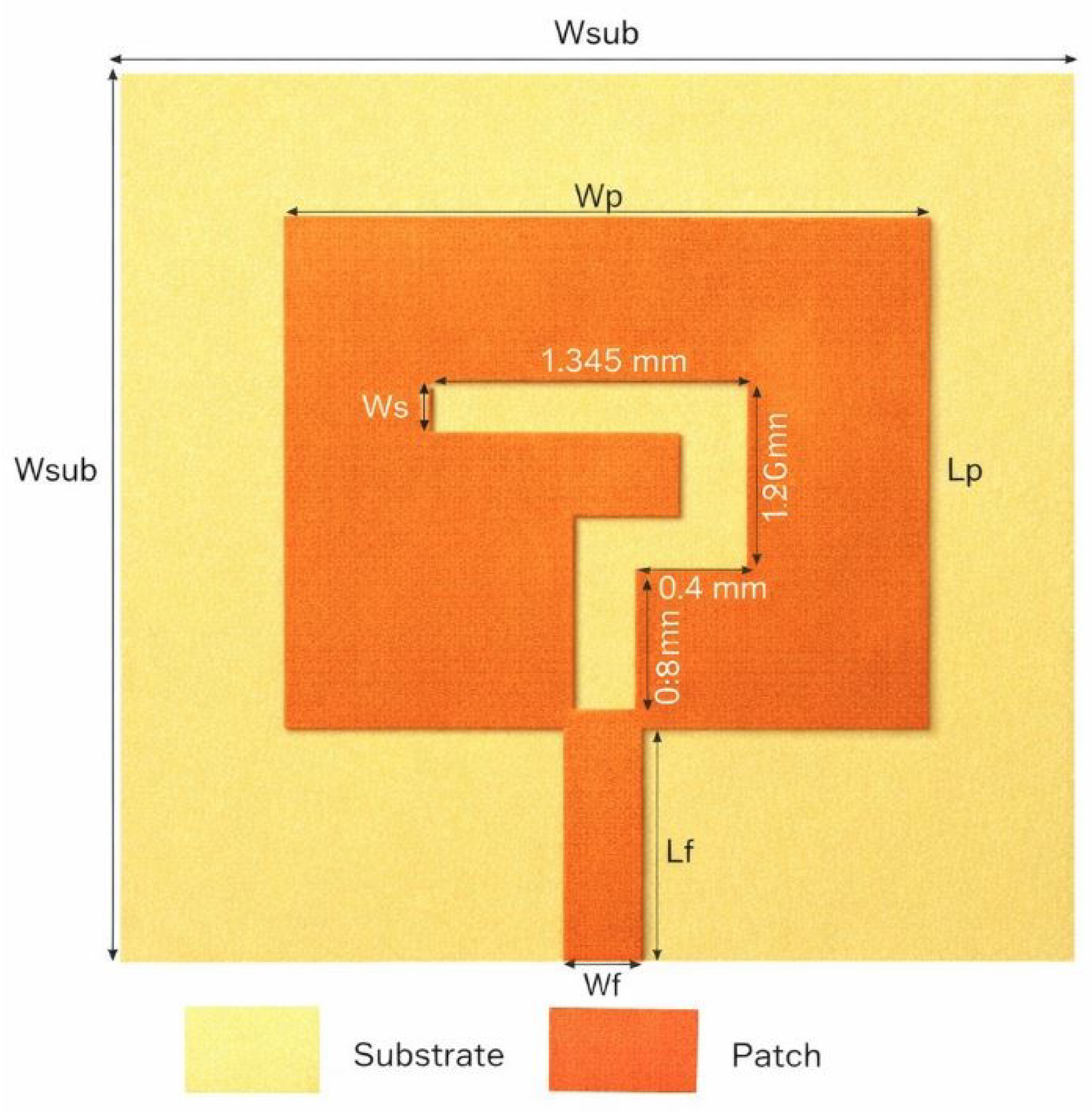
The proposed design involves a straightforward dual-band micro-strip patch antenna, which is intended to operate in the millimeter-wave band around 38 GHz and 43 GHz, and the antenna is excited through a lumped port which is shown in Figure 1. The dimensions of the entire antenna structure are specified as 11.09 × 12.64 × 1.6 mm. This antenna configuration is comprised of three distinct layers, each serving a specific function in the overall performance of the antenna system. The first layer consists of an FR-4 substrate with a relative permittivity of 4.3 and loss tangent of 0.025, and it has a thickness of 1.6 mm. Although FR-4 exhibits higher dielectric loss at millimeter-wave frequencies compared with specialized microwave substrates such as Rogers RT/duroid, it was selected in this work due to its low cost, easy availability, and ease of fabrication for practical prototyping. The dielectric loss of the substrate was taken into account during the electromagnetic simulations using the specified loss tangent (). In addition, the incorporation of Artificial Magnetic Conductor (AMC) structures helps suppress surface wave propagation and improves radiation efficiency and antenna gain, thereby mitigating part of the loss effects introduced by the FR-4 substrate. The second layer is a perfect electric ground plane located at the bottom of the antenna structure, while the third layer is a perfect dielectric patch positioned at the top. The values of various parameters that have been optimized for the antenna design are presented in detail in Table 1, providing a comprehensive reference for the characteristics and performance of the antenna system.
Figure 1.
Proposed top view of the antenna with dimensions.
Table 1.
Proposed dimension values of antenna.
The dimensions of the proposed antenna were determined based on the standard micro-strip patch antenna design equations for millimeter-wave operation. For a rectangular patch antenna, the approximate resonant frequency is given by
where c is the speed of light, L is the effective length of the patch, and is the effective dielectric constant of the substrate. Based on the target operating band of 38–43 GHz, the patch dimensions were initially estimated using these analytical expressions and then optimized using full-wave electromagnetic simulations. Due to the millimeter-wave operating frequency, the corresponding wavelength is approximately 7–8 mm, which justifies the compact antenna dimensions used in the proposed design.
The comprehensive design procedure associated with the antenna is meticulously delineated through a series of methodical and sequential steps that are undertaken with precision. Initially, the antenna is conceptualized by incorporating a patch that possesses specific dimensions represented as ×, which is then intricately connected to a micro-strip line featuring dimensions denoted by ×, and this configuration is ultimately amalgamated with another patch characterized by the same dimensions of ×. Following this integration, a strategically placed slot shaped like a question mark is introduced into the design, which serves the critical function of facilitating impedance matching, a process that is vital for optimizing antenna performance. The resultant combined model of this antenna configuration is engineered to produce resonant frequencies that are recorded around 38 GHz and 43 GHz, showcasing its capability to operate effectively within these frequency ranges. Furthermore, the antenna that has been adeptly designed demonstrates radiation characteristics that yield a gain of approximately 3.4 dB, a figure that is anticipated to experience a slight enhancement through the implementation of Artificial Magnetic Conductors.
Dual-Band Resonance Mechanism
The dual-band operation of the proposed antenna is achieved through the interaction of the primary radiating patch, slot perturbations, and the AMC-backed structure. The first resonance around 28 GHz is primarily generated by the fundamental mode of the rectangular micro-strip patch. This resonance corresponds to the dominant current distribution along the patch length. The second resonance around 38 GHz is produced by the presence of the slot structure and its electromagnetic coupling with the AMC surface. The slot modifies the surface current path and introduces an additional resonant mode, while the AMC layer provides in-phase reflection that enhances radiation performance and impedance matching. Therefore, the lower frequency band is mainly controlled by the dimensions of the primary patch, whereas the higher frequency resonance is influenced by the slot configuration and the AMC-backed structure measurements are given in Table 2.
Table 2.
Proposed measurements of the AMC unit cell.
4. AMC-Backed Patch Antenna
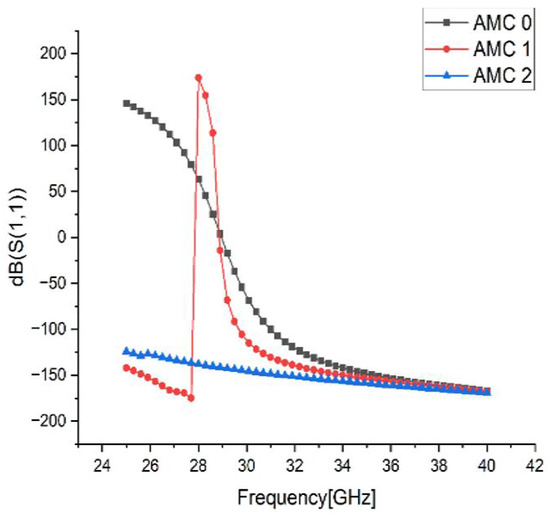
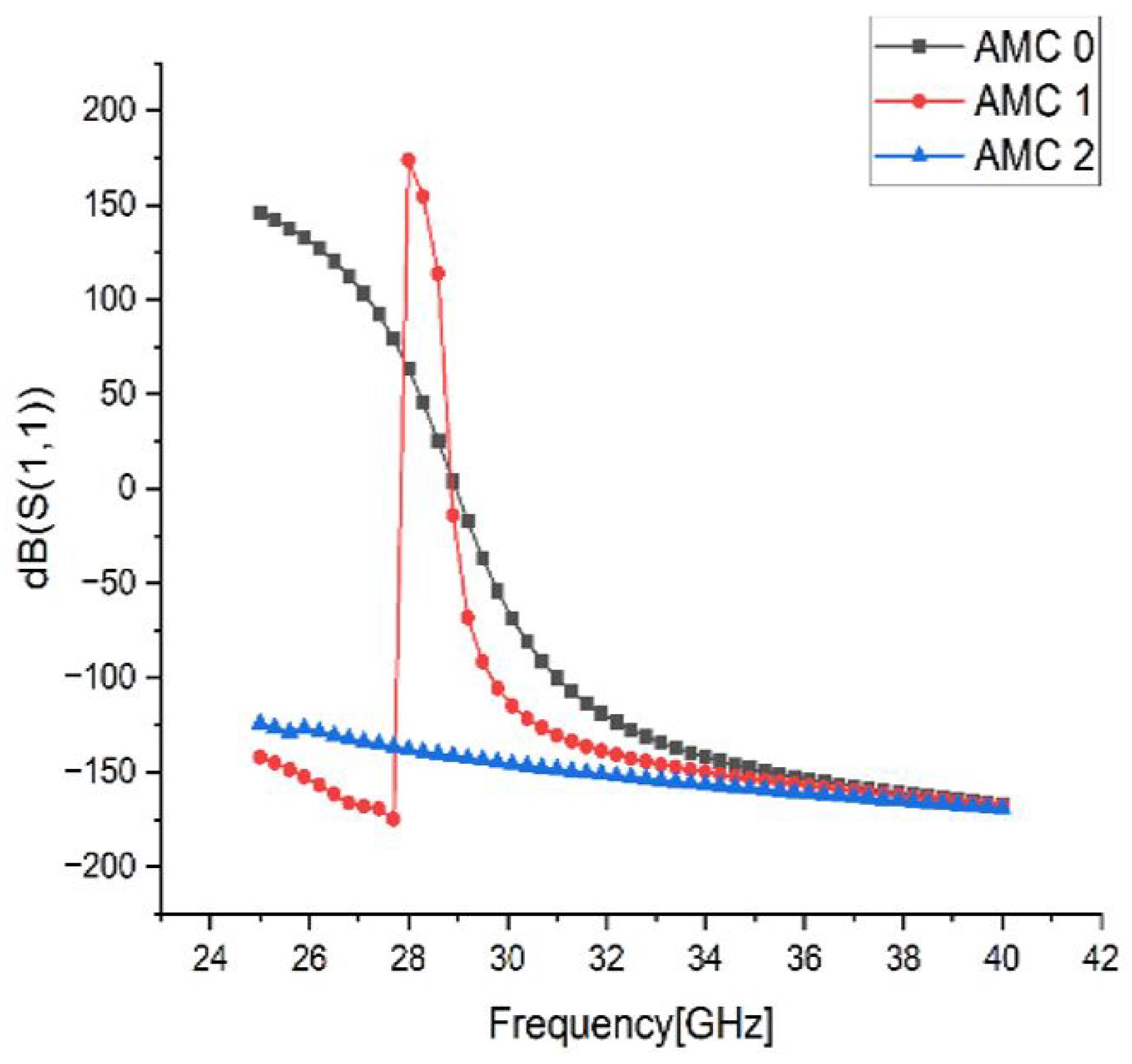
An Artificial Magnetic Conductor (AMC) is used to control and improve the propagation of electromagnetic waves, which makes them suitable to improve the gain and to ensure the directional radiation pattern. A simple unit cell of AMC is printed on FR-4 substrate with h = 1.6 mm, as shown in Figure 2, which describes the reflection phase for 0 degrees is obtained at 28.9 GHz, and supports the millimeter-wave antenna operation around 38–43 GHz with an AMC bandwidth of 0.6332 GHz, where and .
Figure 2.
Reflection phase coefficient at 0 degrees for different configurations of AMCs.
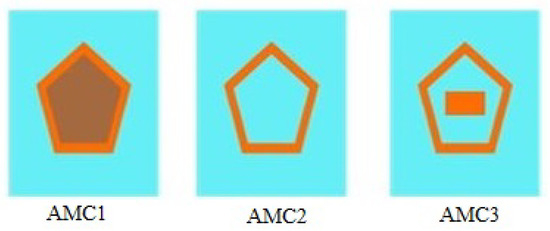
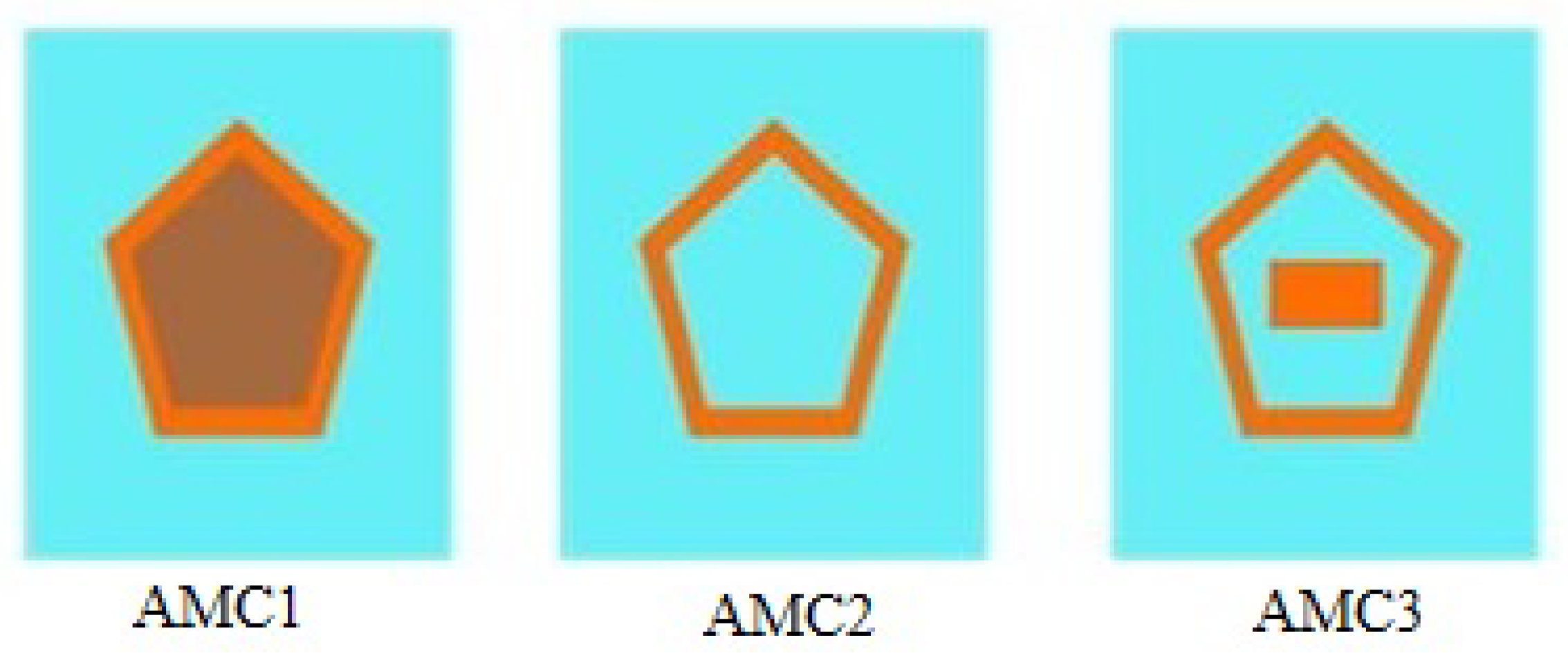
The values listed in Table 3 represent the resonant frequencies of the AMC unit cells where the reflection phase crosses 0°. This condition is an important characteristic of Artificial Magnetic Conductors and indicates the frequency at which the AMC behaves similarly to a perfect magnetic conductor. Figure 3 shows that in Step 1, the FR-4 substrate is taken as a base for the AMC. In Step 2, a square is drawn and cut to obtain a path-like border. Step 3 shows that a square is drawn in the middle, and each side is cut off from a semicircle to obtain the final AMC in step 4.
Table 3.
Comparison among three AMC unit cells.
Figure 3.
Layout of the AMC unit cells.
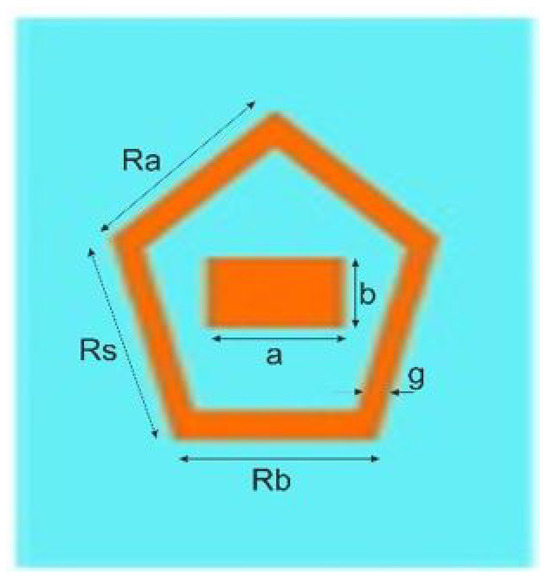
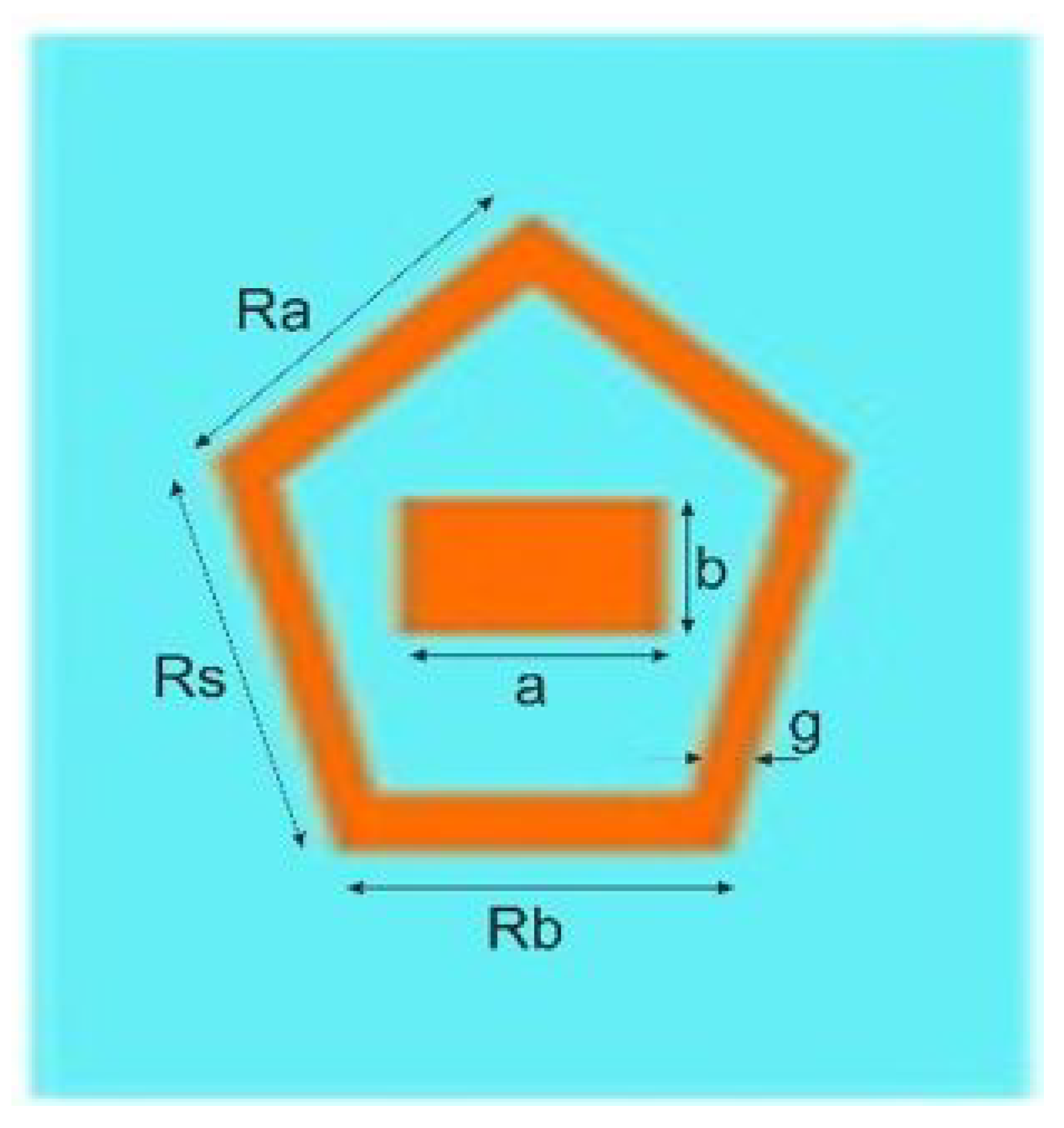
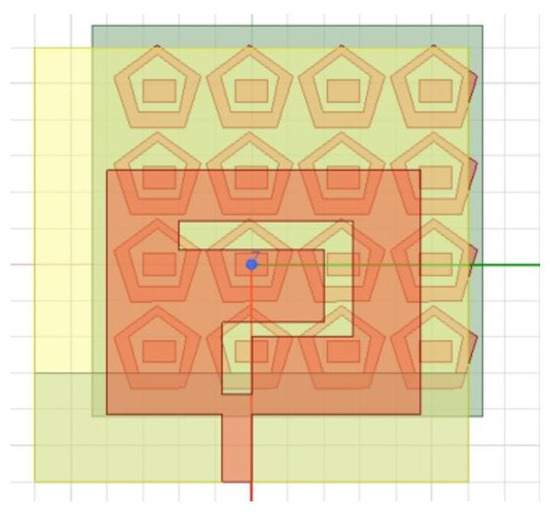
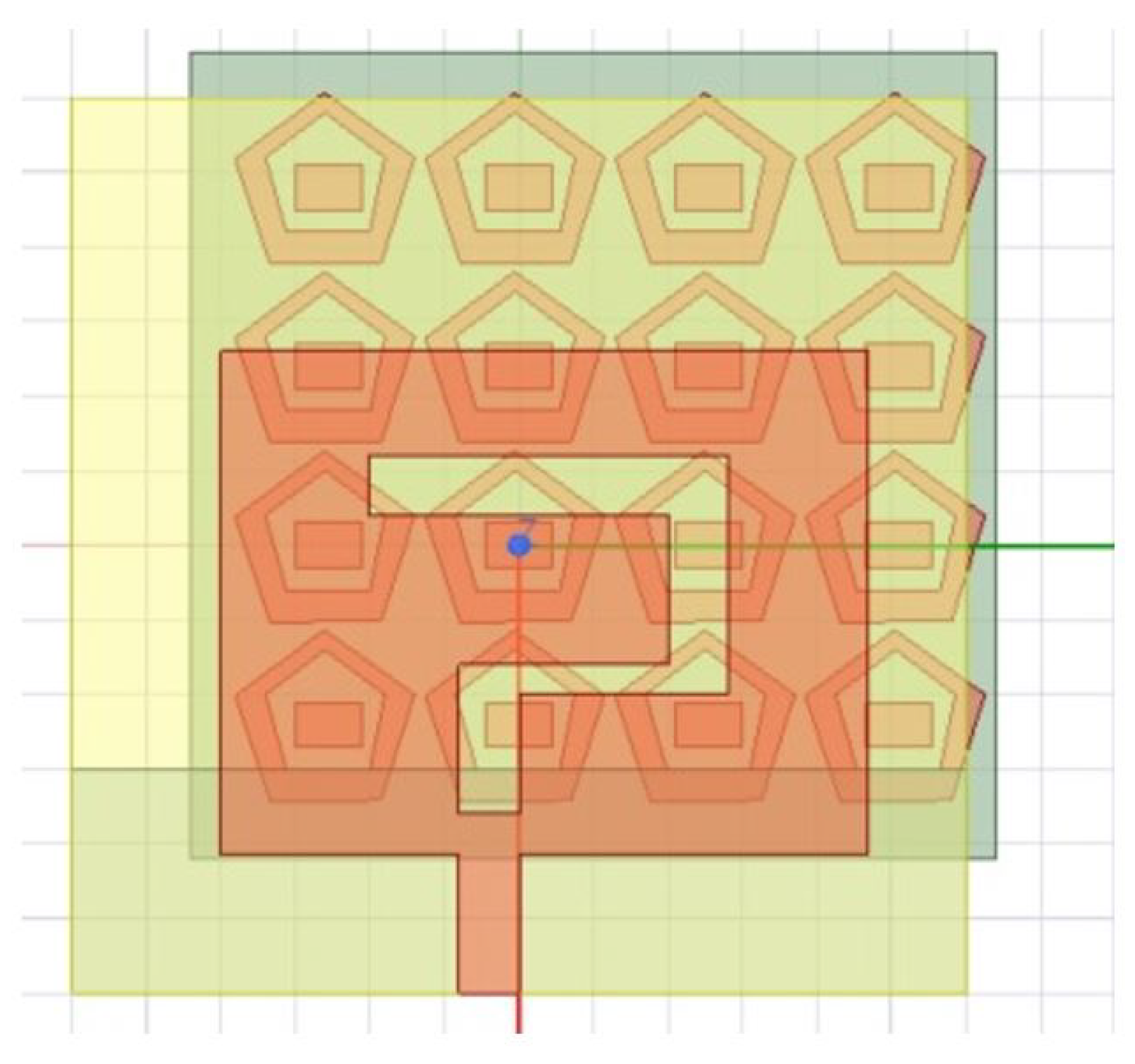
The single AMC cell which is shown in Figure 4 is further expanded into an array, as shown in Figure 5. The proposed antenna is placed above the AMC array to improve the gain of the antenna. The AMC array consists of 16 AMC unit cells with a spacing of 1.7 mm between them; this array gives the optimal conditions and increases the gain of the antenna by 2 dB. The final proposed antenna integrated with AMCs is shown Figure 6.
Figure 4.
Layout of the AMC unit cell.
Figure 5.
4 × 4 configuration of AMC array.
Figure 6.
The proposed antenna integrated with AMCs.
The most important factors of the AMC unit cell are studied here. Figure 7 shows the distance between the rectangular frame and the inner figure, which gives a gain of −3.4 dB and operates at a reflection coefficient of −19 dB. When the distance between the frame and the inner figure is decreased, the AMC gives a gain of dB and operates at the reflection coefficient of −20 dB. If the distance between them is further decreased, the AMC does not radiate. Table 3 shows the comparison between three AMC unit cells.
Figure 7.
plot of AMC array.
5. Analysis of an AMC-Backed Rectangular Micro-Strip Patch Antenna
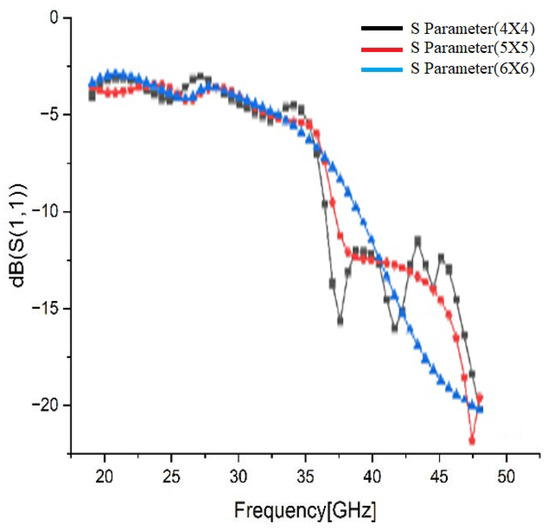
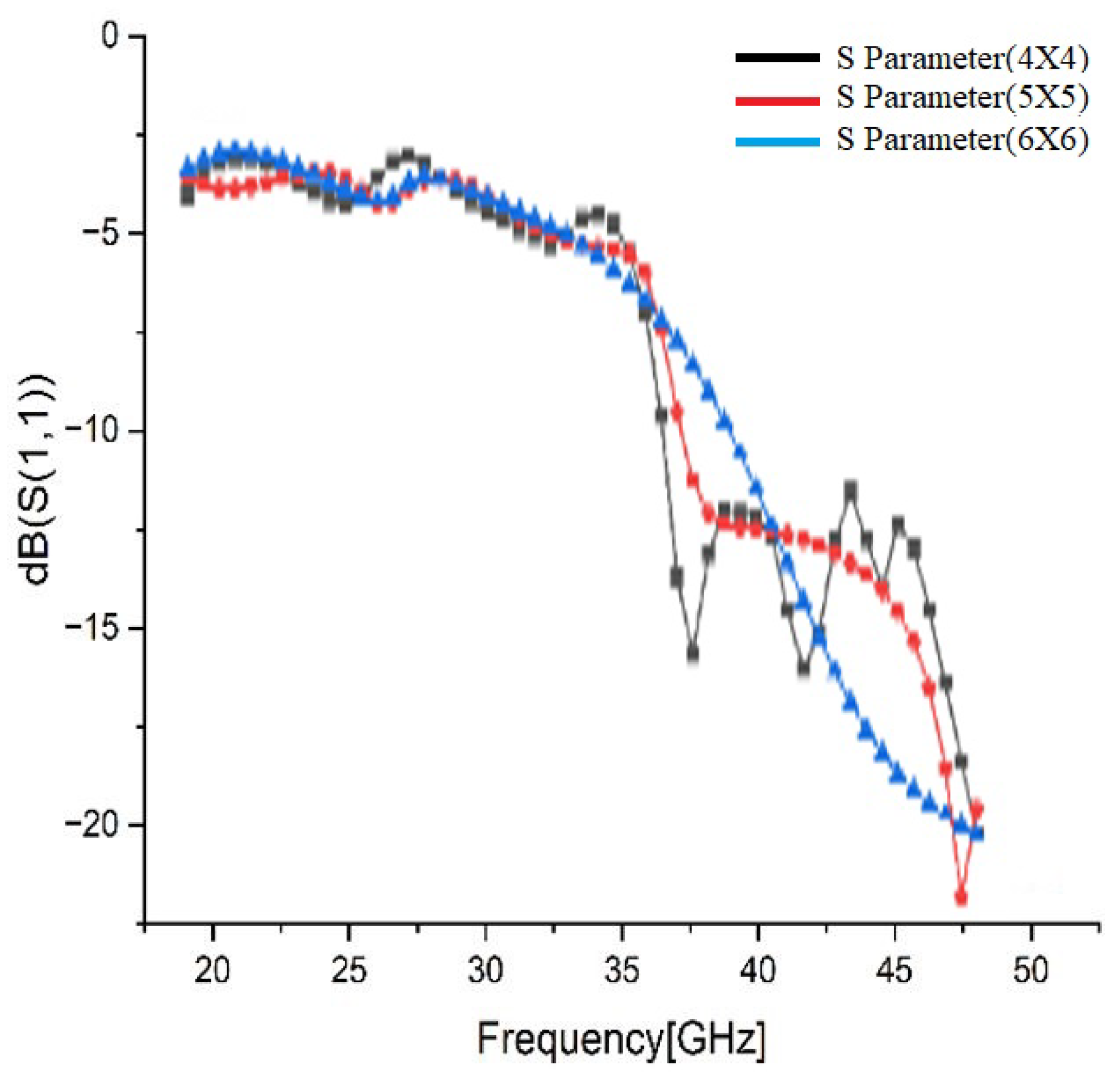
The same AMC unit cell placed as an array, i.e., 4 × 4 (16) AMC unit cells. This is effective and does increase the gain of the antenna. However, when a 6 × 6 AMC array is placed, this is not optimal.
The AMC-backed antenna promises the most out of all the variations, increasing the gain by 2 dB and operating at around 38 GHz and 43 GHz frequency bands, which is compatible with millimeter-wave applications. The final proposed AMC-backed antenna contains a volume of 6 mm. Figure 7 represents the effect of AMCs on scattering parameters.
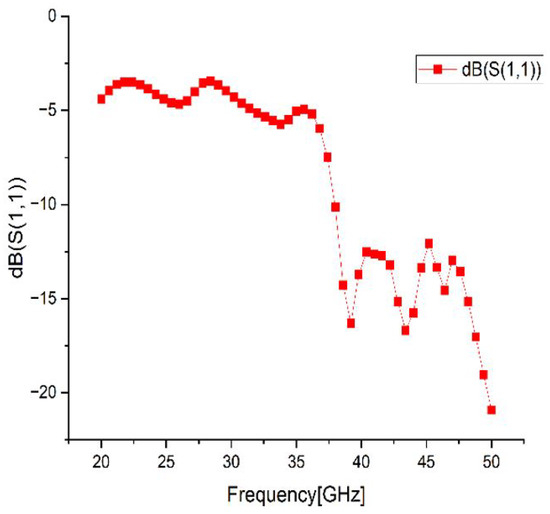
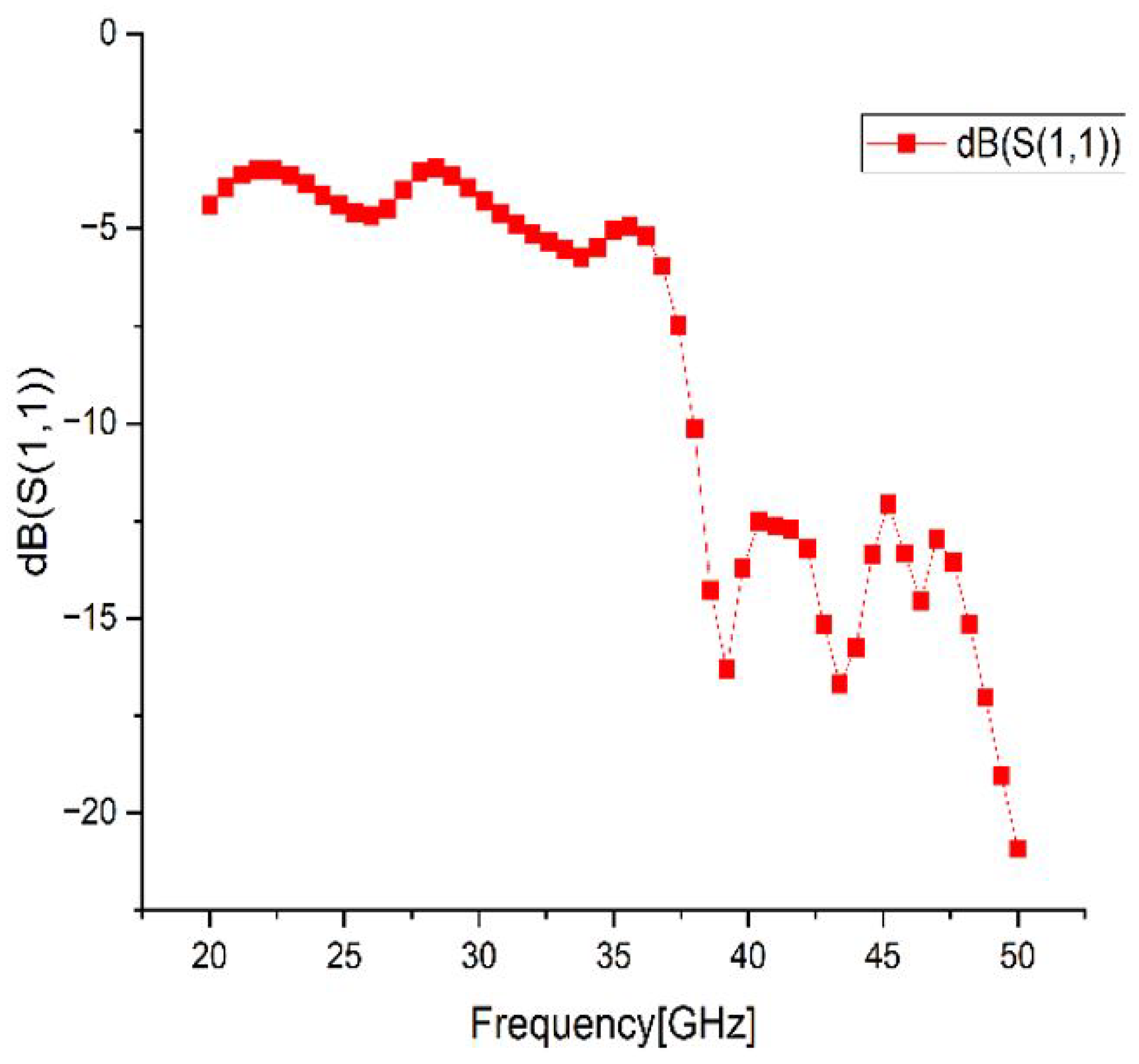
The AMCs are placed at a distance of from the antenna, which is 2.48 mm. Figure 8 shows the scattering parameters of the proposed AMC-integrated antenna.
Figure 8.
S-parameter plot of AMC-backed antenna.
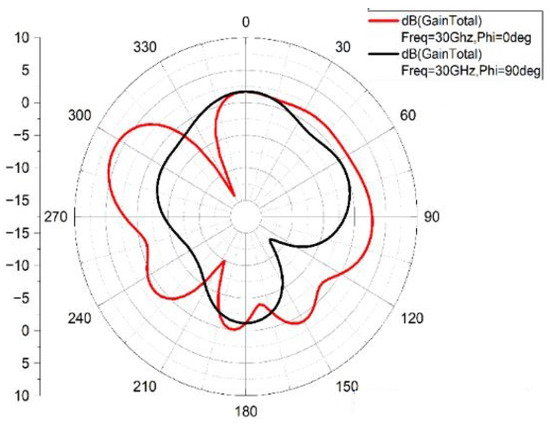
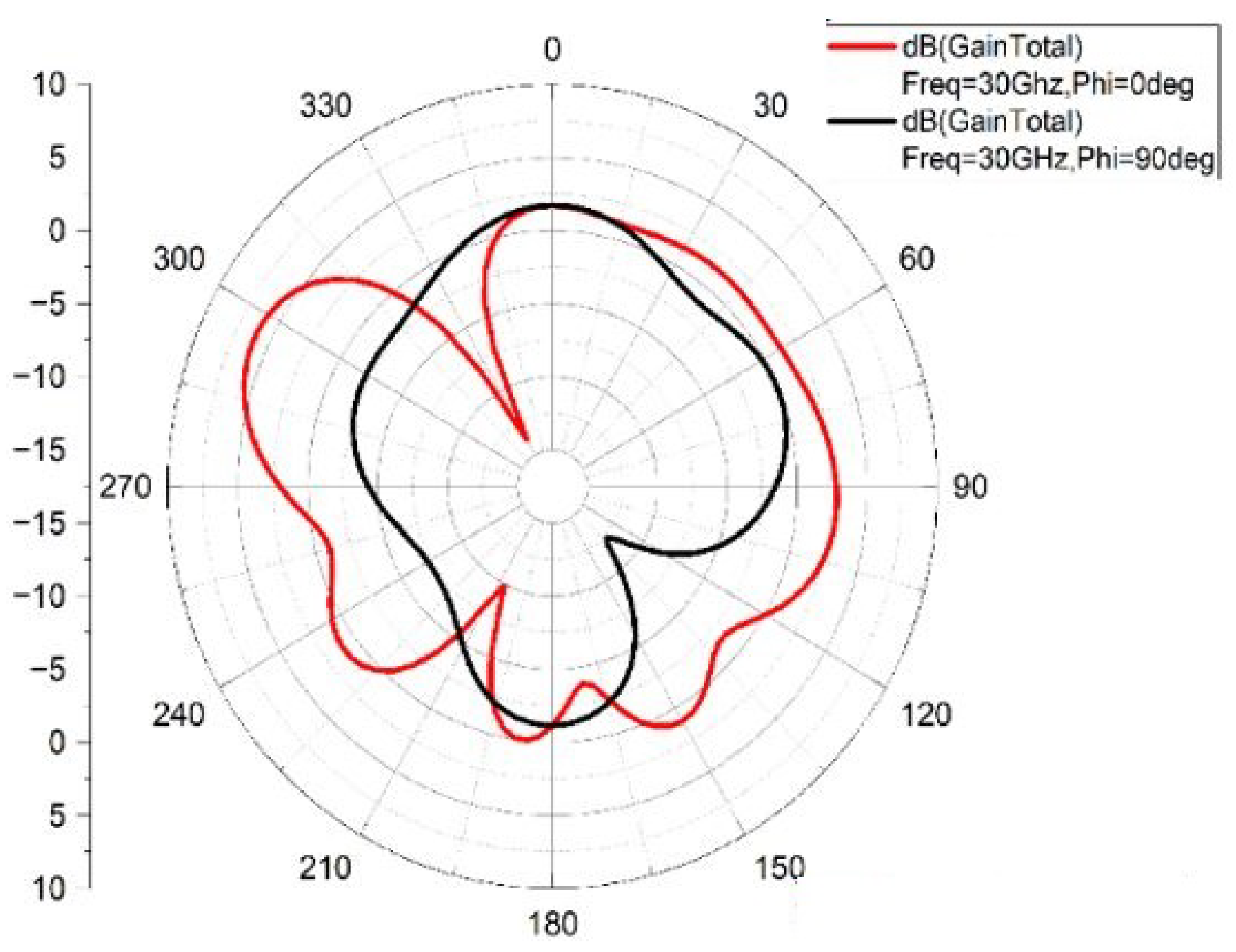
The 2D radiation patterns are shown in Figure 9. Table 3 provides a comparison of the proposed work with existing works.
Figure 9.
2D radiation pattern plot of AMC-backed antenna.
The performance comparison with recently reported mmWave antennas for 5G applications are given Table 4 including proposed one.
Table 4.
Performance comparison with recently reported mmWave antennas for 5G applications.
6. Conclusions
A novel antenna design is proposed that incorporates a rectangular configuration with a question-mark-shaped slot embedded within a rectangular patch integrated with an Artificial Magnetic Conductor (AMC) structure. The proposed configuration is combined with a monopole antenna to enhance the overall gain performance. In this study, three different AMC unit cell structures are designed with varying distances and optimized for operation in the millimeter-wave frequency band of 38–43 GHz. The designed AMC array is compatible with the proposed monopole antenna and helps improve the radiation characteristics of the antenna system. The reflection coefficient of the proposed design remains below −15 dB across the operating band, indicating good impedance matching. Furthermore, the integration of the AMC structure significantly improves the antenna gain from 3.3 dB to 5.5 dB. Therefore, the proposed antenna configuration demonstrates improved gain performance and can be considered a promising candidate for 5G millimeter-wave communication applications. For performance evaluation, Table 4 presents a comparison between the proposed design and existing antenna structures reported in the literature.
Author Contributions
Conceptualization: G.M. and V.K.V.; Methodology: G.M.; Software: G.M.; Validation: G.M., V.K.V., and S.Y.; Formal Analysis: G.M.; Investigation: G.M.; Resources: S.Y.; Data Curation: G.M.; Writing—Original Draft Preparation: G.M.; Writing—Review and Editing: G.M., V.K.V., and S.Y.; Visualization: G.M.; Supervision: S.V.S.P. All authors have read and agreed to the published version of the manuscript.
Funding
There is no funding for this resarch.
Data Availability Statement
Available on request.
Conflicts of Interest
The authors declare no conflicts of interest in the collection, analyses, or interpretation of data; in the writing of the manuscript; or in the decision to publish the results.
References
- Kumar, C.; Raghuwanshi, S.K.; Kumar, V. Graphene-based microstrip patch antenna on photonic crystal substrate for 5G application. Front. Mater. 2022, 9, 1079588. [Google Scholar] [CrossRef] [Scilit]
- Bellekhiri, A.; Chahboun, N.; Zbitou, J.; Laaziz, Y.; El Oualkadi, A. A new design of 5G multilayers planar antenna with the enhancement of bandwidth and gain. Indones. J. Electr. Eng. Comput. Sci. 2023, 29, 1502–1510. [Google Scholar] [CrossRef] [Scilit]
- Ashfaq, M.; Bashir, S.; Hussain Shah, S.I.; Abbasi, N.A.; Rmili, H.; Khan, M.A. 5G antenna gain enhancement using a novel metasurface. Comput. Mater. Contin. 2022, 72, 3601–3611. [Google Scholar] [CrossRef] [Scilit]
- Miriyala, G.; Vakkalagadda, M.; Narsing Yadav, M. MIMO-OFDM system analysis over distinct fading channels with different modulation techniques. In Proceedings of the IEEE International Conference on Recent Trends in Electronics, Information & Communication Technology (RTEICT), Bangalore, India, 18–19 May 2018. [Google Scholar]
- My, D.T.T.; Phuong, H.N.B.; Huong, T.T.; Tu, B.T.M. Design of a four-element array antenna for 5G cellular wireless networks. Eng. Technol. Appl. Sci. Res. 2020, 10, 6259–6263. [Google Scholar] [CrossRef] [Scilit]
- Okwum, D.; Abolarinwa, J.; Osanaiye, O. A 30 GHz microstrip square patch antenna array for 5G network. In Proceedings of the IEEE International Conference in Mathematics, Computer Engineering and Computer Science (ICMCECS), Ayobo, Nigeria, 18–21 March 2020. [Google Scholar]
- Singh, A.; Singh, S. A modified coaxial probe-fed Sierpinski fractal wideband and high gain antenna. AEU–Int. J. Electron. Commun. 2015, 69, 884–889. [Google Scholar] [CrossRef] [Scilit]
- Du, J.; Wang, H.; Deng, L.; Luo, H.; Fang, S.; Huang, S. Design of Microstrip Patch Antenna Array with Enhanced Gain Based on the Metamaterial. In Proceedings of the 2021 International Conference on Microwave and Millimeter Wave Technology (ICMMT), Nanjing, China, 23–26 May 2021; pp. 1–3. [Google Scholar] [CrossRef] [Scilit]
- Ashish, J.; Rao, A.P. A Dual Band AMC Backed Antenna for WLAN, WiMAX and 5G Wireless Applications. Appl. Comput. Electromagn. Soc. J. 2021, 36, 1407–1413. [Google Scholar] [CrossRef] [Scilit]
- Ravi, K.C.; Slyusar, V.; Kumar, J. SRR loaded wideband antenna 5G application. In Proceedings of the IEEE International Conference on Artificial Intelligence and Signal Processing (AISP), Vijayawada, India, 12–14 February 2022; pp. 1–5. [Google Scholar]
- Mallaiah, R.; Miriyala, G.; Vakamulla, V.M.; Majhi, S. OTFS system based on WFrFFT with optimal design complexity. In Proceedings of the IEEE International Symposium on Personal, Indoor and Mobile Radio Communications (PIMRC), Valencia, Spain, 2–5 September 2024. [Google Scholar]
- Abhaynarasimha, K.S.; Mallaiah, R.; Mani, V.V.; Ganesh, M. Extreme learning approach for timing synchronization of ACO-OFDM under nonlinear distortions. In Proceedings of the IEEE Asia Pacific Conference on Communications (APCC), Bali, Indonesia, 5–7 November 2024; pp. 83–89. [Google Scholar]
- Ravi, K.C.; Kumar, J. Miniaturized parasitic loaded high-isolation MIMO antenna for 5G applications. Sensors 2022, 22, 7283. [Google Scholar] [CrossRef] [Scilit] [PubMed]
- Ravi, K.C.; Kumar, J. Multi-directional wideband unit-element MIMO antenna for FR-2 band 5G array applications. Iran. J. Sci. Technol. Electr. Eng. 2022, 46, 311–317. [Google Scholar] [CrossRef] [Scilit]
- Abhaynarasimha, K.S.; Miriyala, G.; Mallaiah, R.; Venkata Mani, V. Timing synchronization of LACO-OFDM under non-linear distortions using ELM. AEU–Int. J. Electron. Commun. 2024, 176, 155124. [Google Scholar]
- Velpula, V.K.; Prasad, S.; Vadlamudi, J.; Yechuri, S.; Miriyala, G.; Kumar, M. Traffic sign recognition for automated speed control using deep learning. In Proceedings of the IEEE International Conference on Recent Trends in Microelectronics, Automation, Computing and Communications Systems (ICMACC), Hyderabad, India, 19–21 December 2024; pp. 703–708. [Google Scholar]
- Miriyala, G.; Mallaiah, R.; Sathyaprasad, A.K.; Vejandla, K.; Vakamulla, V.M. A low-complex and power-efficient optical OFDM for VLC systems. J. Lightwave Technol. 2025, 43, 4156–4164. [Google Scholar] [CrossRef] [Scilit]
- Rafdzi, M.F.; Mohamad, S.Y.; Ruslan, A.A.; Malek, N.F.A.; Islam, M.R.; Hashim, A.H.A. Study for Microstrip Patch Antenna for 5G Networks. In Proceedings of the 2020 IEEE Student Conference on Research and Development (SCOReD), Batu Pahat, Malaysia, 27–28 September 2020; pp. 524–528. [Google Scholar] [CrossRef] [Scilit]



Disclaimer/Publisher’s Note: The statements, opinions and data contained in all publications are solely those of the individual author(s) and contributor(s) and not of MDPI and/or the editor(s). MDPI and/or the editor(s) disclaim responsibility for any injury to people or property resulting from any ideas, methods, instructions or products referred to in the content. |
© 2026 by the authors. Licensee MDPI, Basel, Switzerland. This article is an open access article distributed under the terms and conditions of the Creative Commons Attribution (CC BY) license.