1. Introduction
The growing global population, climate change, and geopolitical risks pose serious threats to food security. The United Nations projects the world population to reach 9.7 billion by 2050, intensifying pressure on agricultural production [
1]. Geopolitical events, such as the Russia–Ukraine war, have exposed vulnerabilities in grain and fertilizer supply chains. Meanwhile, the COVID-19 pandemic has further disrupted global logistics, exacerbating food insecurity in developing countries [
2].
Traditional farming is limited by soil fertility, climate, and practices like fallowing, which, while restoring soil health, reduce continuous production. Intensive pesticide use boosts yields in the short term but poses long-term risks. Glyphosate has been classified as “probably carcinogenic” (Group 2A), and organophosphates such as malathion and diazinon as “possibly carcinogenic” (Group 2B) [
3]. Beyond health hazards, chemical reliance leads to soil and water pollution, loss of beneficial microorganisms, and a decline in biodiversity. Therefore, reducing pesticide dependence is essential for sustainable farming.
E-agriculture approaches—such as IoT, sensor networks, and data analytics—offer valuable options when combined with controlled-environment agriculture. Hydroponic systems, particularly the Nutrient Film Technique (NFT), facilitate soil-free growing through nutrient solutions, which reduces the need for pesticides while improving water and fertilizer efficiency [
4]. NFT keeps plant roots in a thin film of nutrients that supplies both oxygen and water efficiently, and its low-cost infrastructure is suitable for IoT-based sensing and actuation. It is commonly used for leafy vegetables like lettuce but requires continuous flow, making real-time monitoring and control essential [
5].
Unlike traditional farming’s high-water use, pesticide dependence, and climate vulnerability, IoT-enabled hydroponics encourages sustainable, year-round growth with efficient resource management. These factors make NFT systems ideal for IoT automation, where continuous flow demands real-time sensing, control, and reliability through features like alarms, data storage, and mobile notifications.
1.1. Related Work and Research Gap
In recent years, a considerable number of studies have focused on IoT-based hydroponic systems, as summarized in
Table 1. These works have utilized various sensors, microcontrollers, and IoT platforms to enable remote monitoring and control of hydroponic cultivation, often emphasizing user-friendly interfaces through mobile applications.
IoT-based hydroponic systems primarily address real-time monitoring but often fall short of production-grade reliability due to architectural and feature limitations.
Kushawaha et al. [
6] developed a compact system for NPK and environmental monitoring with Azure–Flutter visualization, yet reported limitations such as small-scale ap-plicability, lack of industrial-grade sensors, and dependency on constant connectivity.
Patil et al. [
7] designed a NodeMCU-based automated system for pH and EC control using ThingSpeak and an MQTT mobile app, but it lacked robust data logging, calibration, and security protocols.
Blancaflor et al. [
8] implemented pH and EC regulation with fuzzy logic through a Blynk interface, incorporating additional parameters such as color sensing; however, their system lacked long-term cloud storage, detailed calibration, and adequate security.
Vineeth and Ananthan [
9] employed a master–slave (Raspberry Pi/ESP-12E) architecture using MQTT for remote monitoring, threshold customization, and live video streaming, yet omitted TLS/ACL security and showed vulnerability to water-borne contamination.
Lal [
10] implemented autonomous actuator control (fan, light, pump) via ESP32 and Blynk, but required continuous power and internet, while lacking data security and full calibration.
Finally, Waghmare et al. [
11] focused solely on MQTT-based monitoring and alerting (NodeMCU with buzzer), omitting actuator control, calibration, and security mechanisms necessary for autonomous operation.
Although these studies have advanced IoT use in hydroponics, most remain focused on monitoring and do not meet production-level needs such as continuous time-series logging, secure communication (TLS/ACL/LWT), dual control modes, sensor calibration, and reliability validation through flow and level monitoring. As shown in
Table 1, works [
6,
7,
8,
9,
10,
11] mainly address short-term visualization and lack redundancy, alarm handling, and operational fault detection. These limitations reveal a gap between prototype IoT systems and reliable, field-ready hydroponic automation platforms.
1.2. Contributions
To address these gaps, this study proposes an IoT-enabled NFT hydroponic system for indoor lettuce cultivation with the following contributions:
Design of a new NFT architecture integrating ESP32 with multiple sensors and actuators.
Modular hardware–software design with IoT integration using MQTT, InfluxDB, Node-RED, Grafana (MING) stack, and a Flutter-based mobile app.
Advanced control mechanisms, including hysteresis-based algorithms, multi-mode operation, and threshold-triggered alarms with preventive actions.
A low-cost, open-source platform accessible for small-scale producers and urban farming.
The remainder of this paper is structured as follows:
Section 2 explains the NFT system design and implementation;
Section 3 provides measurement results and assesses performance; and
Section 4 concludes with future research directions, including plant growth experiments, ML-based nutrient optimization, energy efficiency, and Over-The-Air (OTA) updates.
2. A New NFT Hydroponic Automation System
2.1. System Architecture
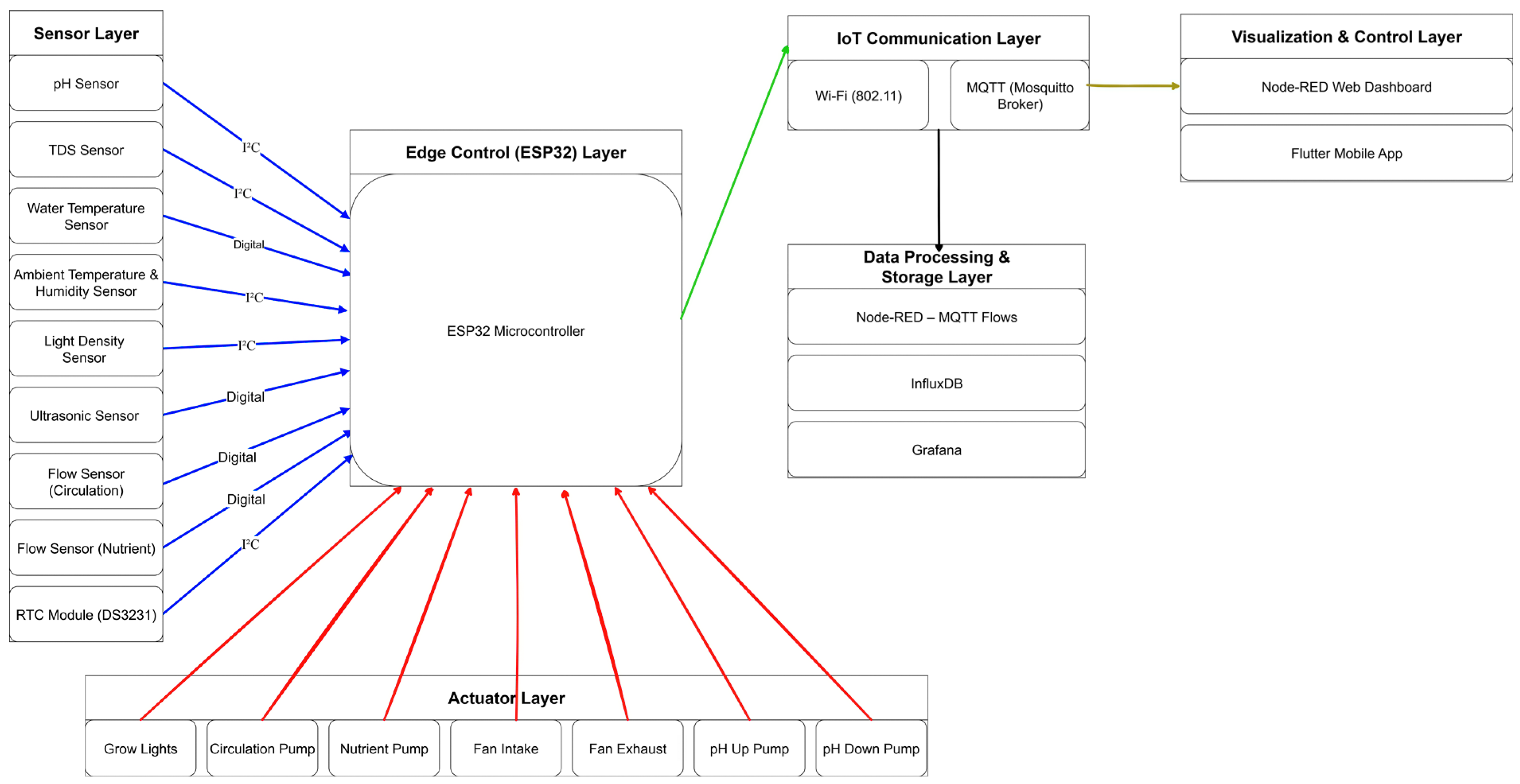
In this study, we present a new NFT hydroponic automation system built on a five-layer modular architecture—sensor, control, actuator, communication, and visualization layers—shown in
Figure 1. This design enhances modularity, scalability, and ease of maintenance.
Sensor Layer: pH and TDS sensors monitor nutrient solution chemistry, while DS18B20 measures solution temperature. AHT10 records ambient temperature and humidity. BH1750 tracks light intensity. HC-SR04 determines tank level. YF-S201 validates circulation flow. Analog probes are read via the ADS1115 ADC using MOSFET-controlled time-division sampling, whereas digital sensors use I2C or 1-Wire protocols.
Control Layer: An ESP32-S board serves as the core, processing sensor data, comparing them against thresholds, and executing algorithms in automatic, manual, or calibration modes. It also activates actuators and manages cloud communication via MQTT.
Actuator Layer: Includes the circulation pump, nutrient dosing pump, pH up/down pumps, LED grow lights, and intake/exhaust fans, which perform irrigation, lighting, and ventilation based on control commands.
Communication Layer: Communication is conducted via the MQTT protocol, well-known in IoT applications for its lightweight and scalable design [
6,
11]. In this layer, Node-RED handles data streams, InfluxDB maintains long-term time-series logs, and MQTT features such as LWT and retained messages improve resilience against network disruptions.
Visualization Layer: Grafana dashboards enable real-time and historical monitoring, while a Flutter-based mobile app supports remote access, manual control, and alarm notifications, thereby strengthening decision support and user interaction.
2.2. Mechanical Enclosure Design
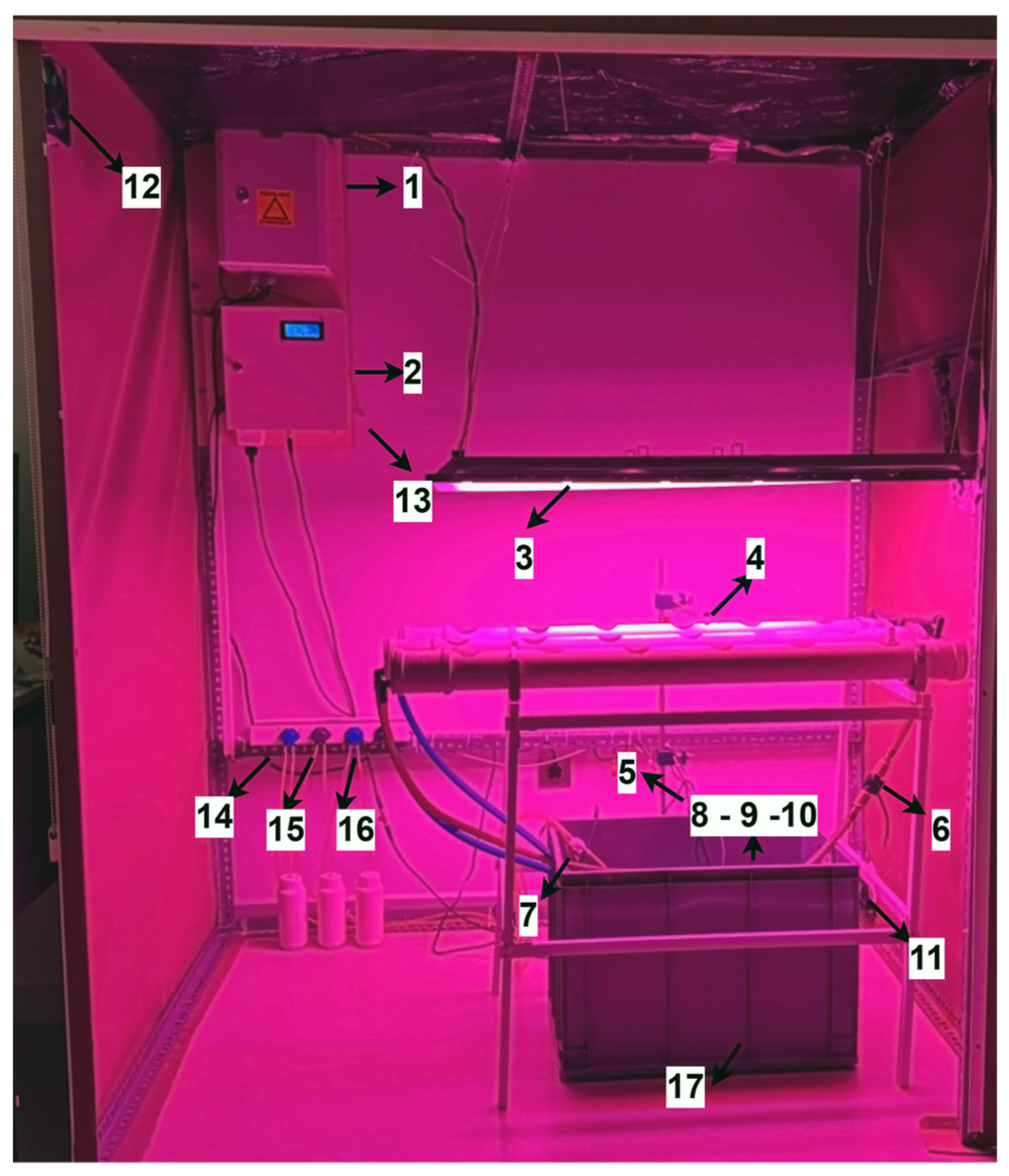
The chamber shown in
Figure 2 was built as a sealed growing environment focused on energy efficiency and sustainability. Upcycled steel rack profiles formed the frame, while discarded roller blinds were repurposed for side panels and the front cover, reducing the carbon footprint and demonstrating the potential of recycled materials in agriculture [
4].
The structure measures 200 × 170 × 120 cm and features three parallel NFT channels made of 115 cm × 7.5 cm PVC pipes, each with six planting holes, supporting up to 18 plants. The NFT system keeps roots in continuous contact with a thin nutrient film, ensuring low water usage, oxygen supply, and easy automation integration [
5]. A 40 × 38 × 60 cm plastic tank holds the nutrient solution, which circulates in a closed loop with a pump, promoting water conservation and continuous renewal.
The internal components of the system, as shown in
Figure 2, are organized logically. The primary hardware is distributed across two dedicated enclosures:
Power Box (1): This unit contains the 12 V power supply that drives the actuators (pumps and fans) and the 5 V adapter which provides power to the control electronics and sensors.
Control Box (2): This enclosure houses the main control logic, including the ESP32-based microcontroller and the 8-channel Relay Board responsible for switching and managing the high-power actuators based on signals from the ESP32.
The system incorporates comprehensive sensing and actuation devices:
Nutrient and Solution Management: The solution chemistry is monitored by the pH Sensor (8) and TDS Sensor (9). The solution temperature is tracked by the Water Temperature Sensor (DS18B20) (10). The tank volume is measured by the Ultrasonic Level Sensor (HC-SR04) (5).
Flow and Circulation: Circulation effectiveness is confirmed by the Circulation Flow Sensor (YF-S201) (6), and nutrient addition is monitored by the Nutrient Flow Sensor (YF-S402) (7). The solution is kept in the Nutrient Tank (17).
Environmental Control: Ambient conditions are tracked using the Ambient Temperature and Humidity Sensor (AHT10) (13) and the Light Intensity Sensor (BH1750) (4).
Actuators (Pumps and Climate Control): The system maintains parameters using the Nutrient Pump (14), pH Up Pump (15), and pH Down Pump (16). Environmental stability is ensured by the Air Intake Fan (11), Air Exhaust Fan (12), and LED Grow Lights (3).
2.3. Electronic Controller Design
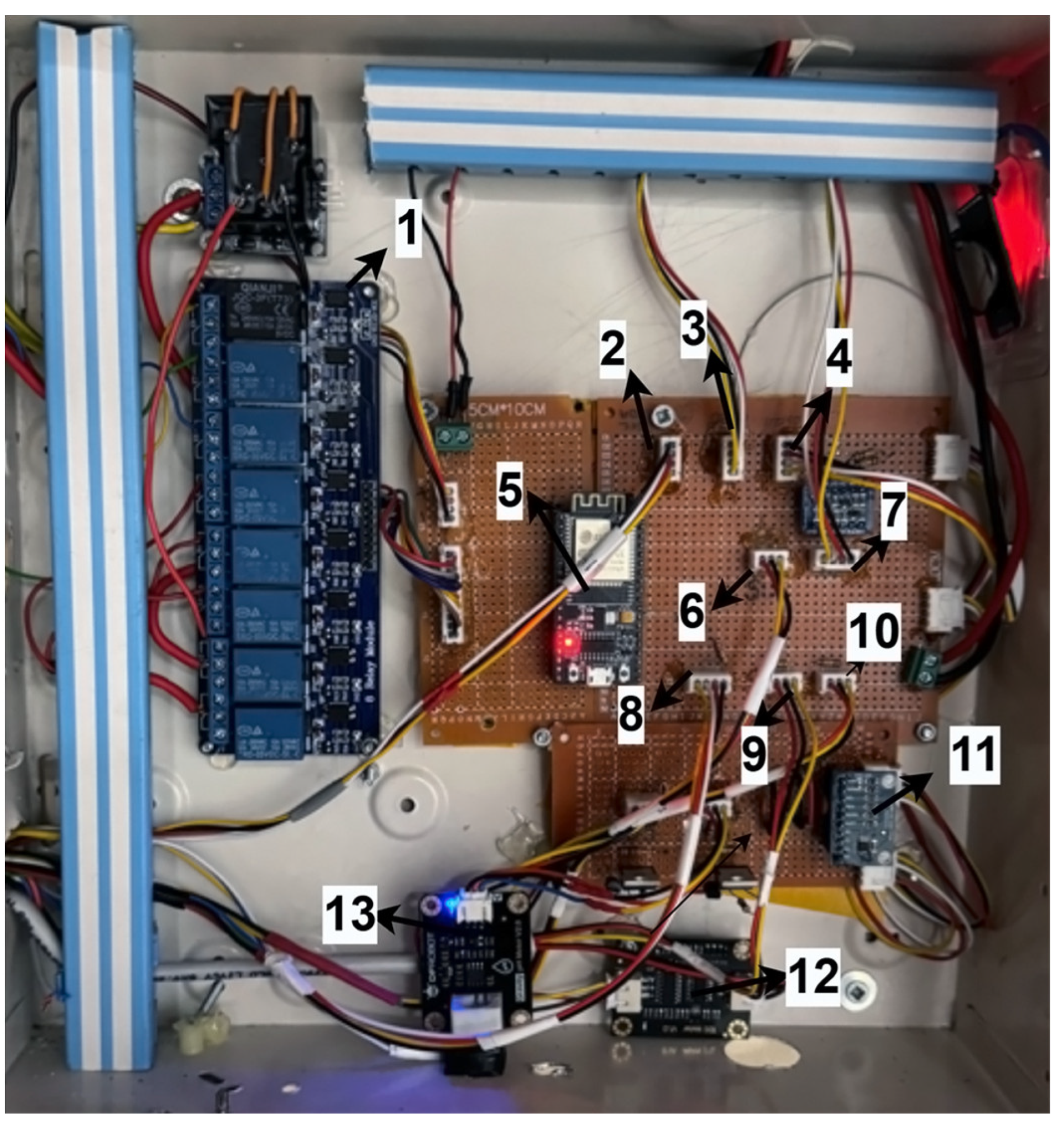
The controller design is centered around the ESP32-S development board, as shown in
Figure 1 and
Figure 3, which acts as the core of the automation layer. The ESP32, with its dual-core architecture, up to 240 MHz clock speed, extensive GPIO capacity, integrated Wi-Fi/Bluetooth connectivity, and low cost, offers one of the most affordable solutions for IoT-based agricultural automation.
These features ensure reliable sensor data collection and quick actuation of components within the NFT hydroponic system. The technical specifications of the sensors used in the system, including their measurement ranges, supply voltages, output types, and functions, are summarized in
Table 2. The technical specifications of the actuators are listed in
Table 3, covering their operating ranges, supply voltages, control types, and specific functions. All actuators are controlled through an 8-channel relay module, which communicates with the ESP32 and operates based on simple ON/OFF commands.
The internal structure of the ESP32-based controller hardware, as detailed and numbered in
Figure 3, is carefully organized for reliable and modular operation. The core control unit is the ESP32 Microcontroller Board (5), which executes all control logic and data processing. Actuators are controlled via the Relay Board (8-channel, 12 V DC) (1), which is essential for managing high-power components. Because high-resolution measurement from analog sensors is needed, the Analog-to-Digital Converter Module (ADS1115) (11) is used to ensure accurate data collection. The controller integrates a comprehensive array of sensors and interface components:
Nutrient and Solution Sensing: Solution chemistry is monitored using the specialized pH Module (DFRobot SEN0161-V2) (13) and TDS Module (DFRobot SEN0244) (12). Solution temperature is tracked by the Solution Temperature Sensor (DS18B20) (6).
Flow and Level: Fluid circulation is monitored by the Circulation Flow Sensor (YF-S201) (10), while nutrient addition is tracked by the Nutrient Flow Sensor (YF-S402) (9). The tank level is measured by the Ultrasonic Level Sensor (HC-SR04) (8).
Environmental and Timing: Ambient conditions are captured by the Ambient Temperature and Humidity Sensor (AHT10) (4), and light intensity is measured by the Light Intensity Sensor (BH1750) (2). Accurate timekeeping is ensured by the Real-Time Clock Module (DS3231) (3).
Local Interface: An LCD display (20 × 4 I2C) (7) provides immediate local status feedback to the user.
2.4. Software Design
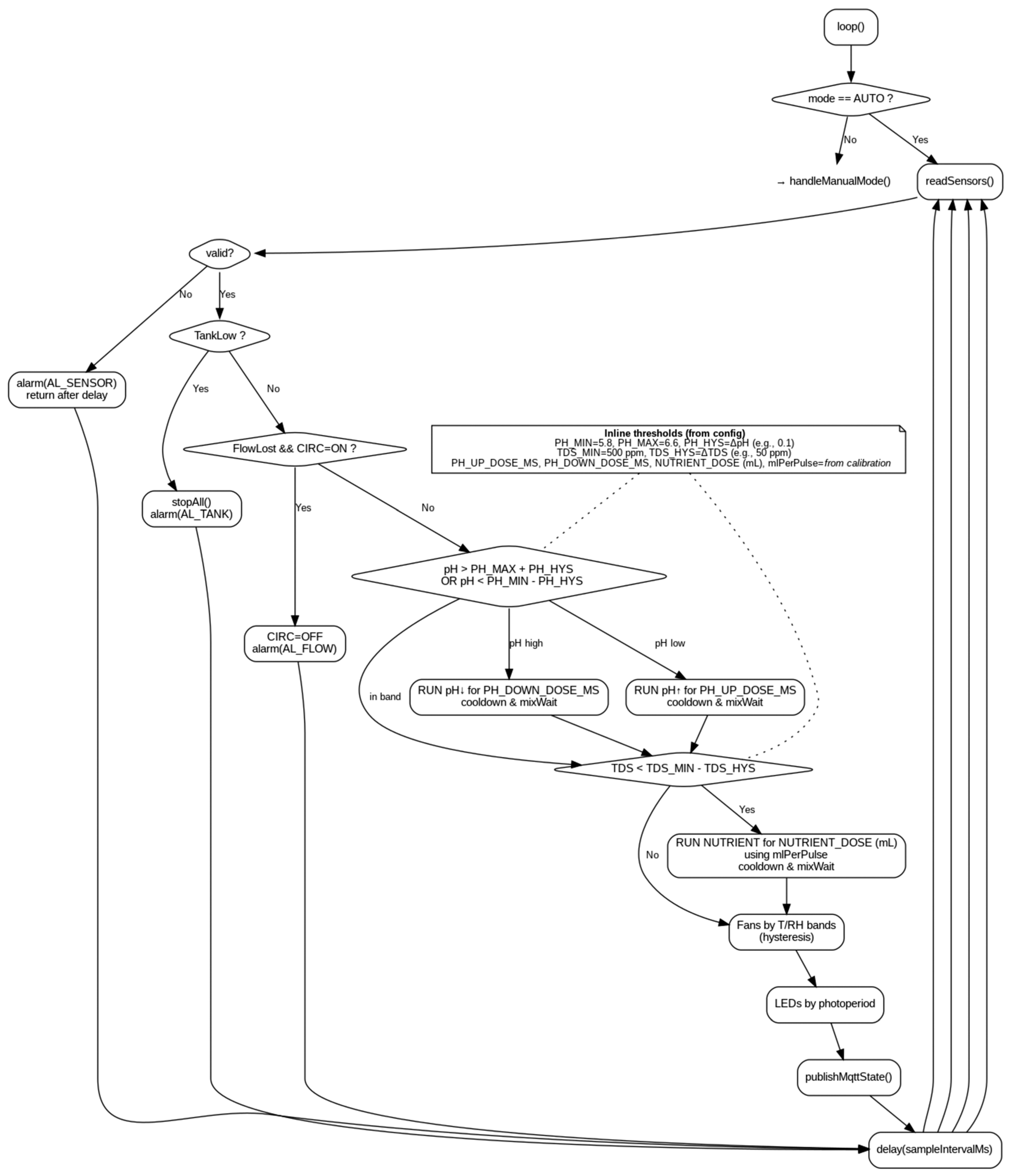
The system software was developed in C++ using the Arduino IDE, featuring a modular architecture that separates sensor acquisition, actuator control, communication, data logging, and user interface layers. It offers three modes: automatic, manual, and calibration. The automatic mode, shown in
Figure 4, compares sensor readings with predefined thresholds and activates the appropriate actuators, including nutrient and pH pumps, fans, and LED grow lights. In manual mode, actuators can be controlled directly through the mobile application or web dashboard.
A hysteresis-based algorithm stabilizes control actions. The pH down pump activates when pH exceeds the upper threshold, while the pH up pump triggers if it falls below the lower limit. Nutrient dosing starts when TDS drops below the specified range, fans respond to changes in temperature or humidity, and LEDs follow a photoperiod schedule to ensure consistent growth conditions.
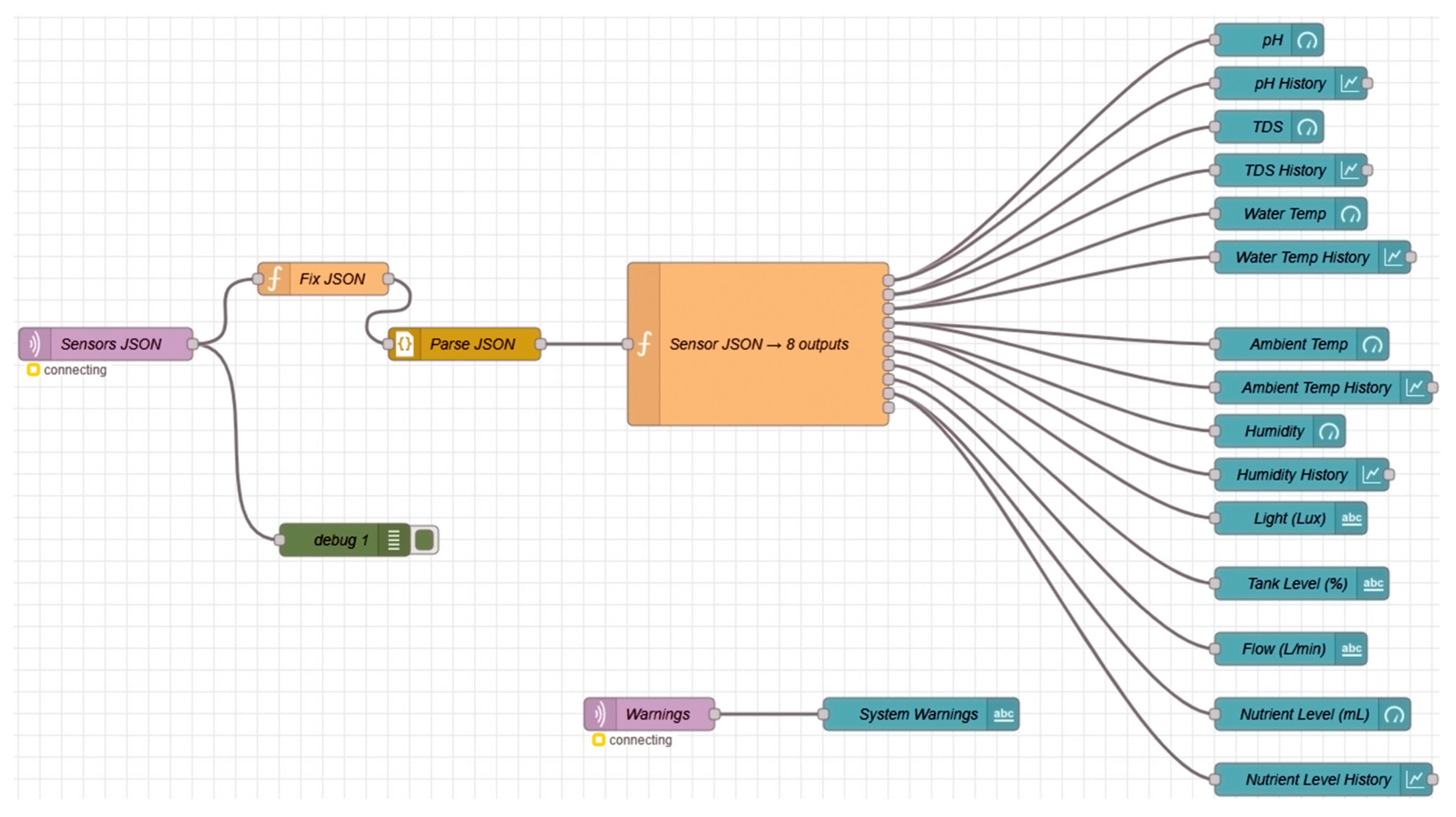
Data transmission uses the MQTT protocol. The Node-RED platform receives these messages and forwards them to InfluxDB for continuous storage of time-series data and to Grafana for real-time visualization, as shown in
Figure 5. Additionally, Node-RED keeps a CSV backup of all sensor readings, creating a dual-layer data logging system. To improve communication resilience, LWT and retained messages are employed, allowing fault-tolerant operation during network disconnections [
10,
11].
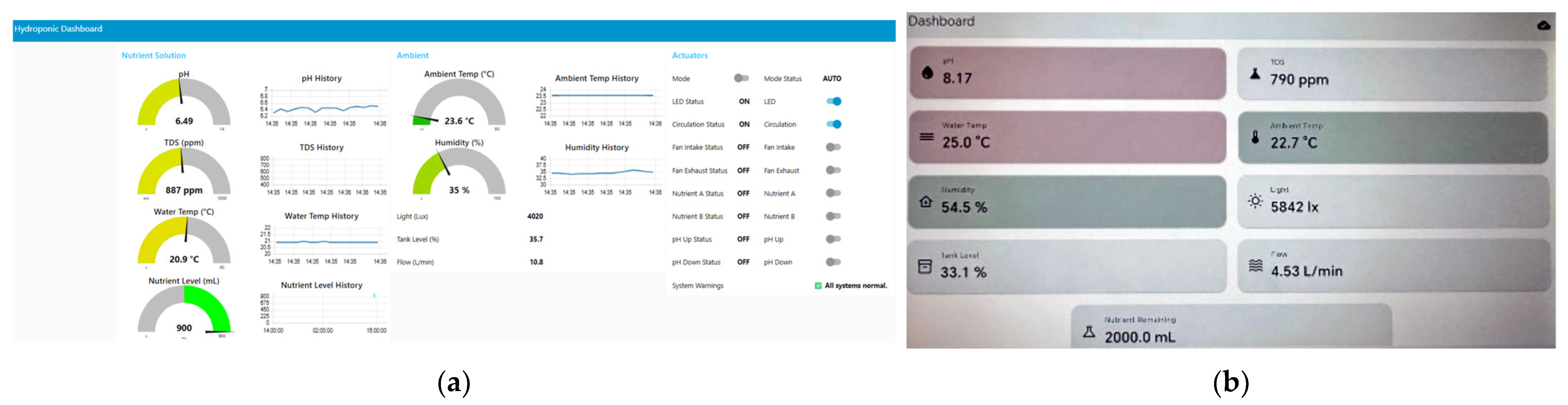
Two separate user interfaces were developed for system interaction. First, the Node-RED-based web dashboard shown in
Figure 6a provides real-time, continuous monitoring of sensor data, observation of threshold limits, and control of actuator states. Second, the system was integrated with a Flutter-based mobile app, deployed on an Android tablet as shown in
Figure 6b. This app allows sensor monitoring, mode switching, and manual actuator control. Additionally, push notifications are sent to users for critical events, improving system reliability and user engagement.
2.5. Data Logging, Security and Alarms
The software architecture integrates data logging, security, and alarm systems. All sensor data are timestamped with the DS3231 RTC and stored locally as CSV files and in InfluxDB as time-series data, supporting both redundancy and long-term analysis. Data are visualized on Grafana dashboards, providing real-time and historical insights. Unlike previous works [
6,
7,
8,
9,
10,
11], which mainly focus on monitoring, our system offers production-grade security with TLS encryption, ACL-based access control, and LWT/retained messaging. These features ensure synchronization after disconnections and protect data confidentiality and integrity. The alarm subsystem also enhances reliability. Critical conditions—such as low tank levels, circulation failures, or persistent pH/TDS deviations—initiate automatic pump shutdowns and notify users via both the web dashboard and mobile app. This integration demonstrates that the system emphasizes not only automation but also operational safety.
3. Measurement Results and Evaluation
3.1. Measurement System Structure and Sensors
In the advanced indoor NFT hydroponic system, pH, TDS/EC, nutrient solution temperature, ambient temperature, humidity, light intensity, tank level, and both circulation and dosing flows were constantly monitored. These data supported both closed-loop control and long-term analysis.
The pH and TDS probes were connected through the ADS1115 ADC using MOSFET-based time-sharing, while digital sensors such as DS18B20 for solution temperature, AHT10 for ambient temperature and humidity, and BH1750 for light were linked via standard protocols. Tank level was calculated as percentage fullness using temperature-compensated HC-SR04 measurements, and flow rates were determined from YF-S201 and YF-S402 Hall-effect sensors using pulse-counting methods.
For data collection, the ESP32 sent MQTT messages time-stamped by the DS3231 RTC. Node-RED processed these messages and stored them in InfluxDB as time-series data while creating CSV backups, ensuring both persistence and redundancy. Each record included: timestamp, pH, TDS, solution and ambient temperatures, humidity, light, tank level, and flow rate.
Control depended on hysteresis-based thresholds. Nutrient dosing was turned off when tank levels were low. Fans activated when temperature or humidity went beyond set limits. LED lights followed a photoperiod schedule. Alarms sounded during circulation interruptions to ensure safe shutdown. These thresholds and logic rules were clearly defined in the software configuration and finite state machine.
3.2. Data Presentation
To illustrate the recording structure,
Table 4 presents the sensor measurement format used in the system.
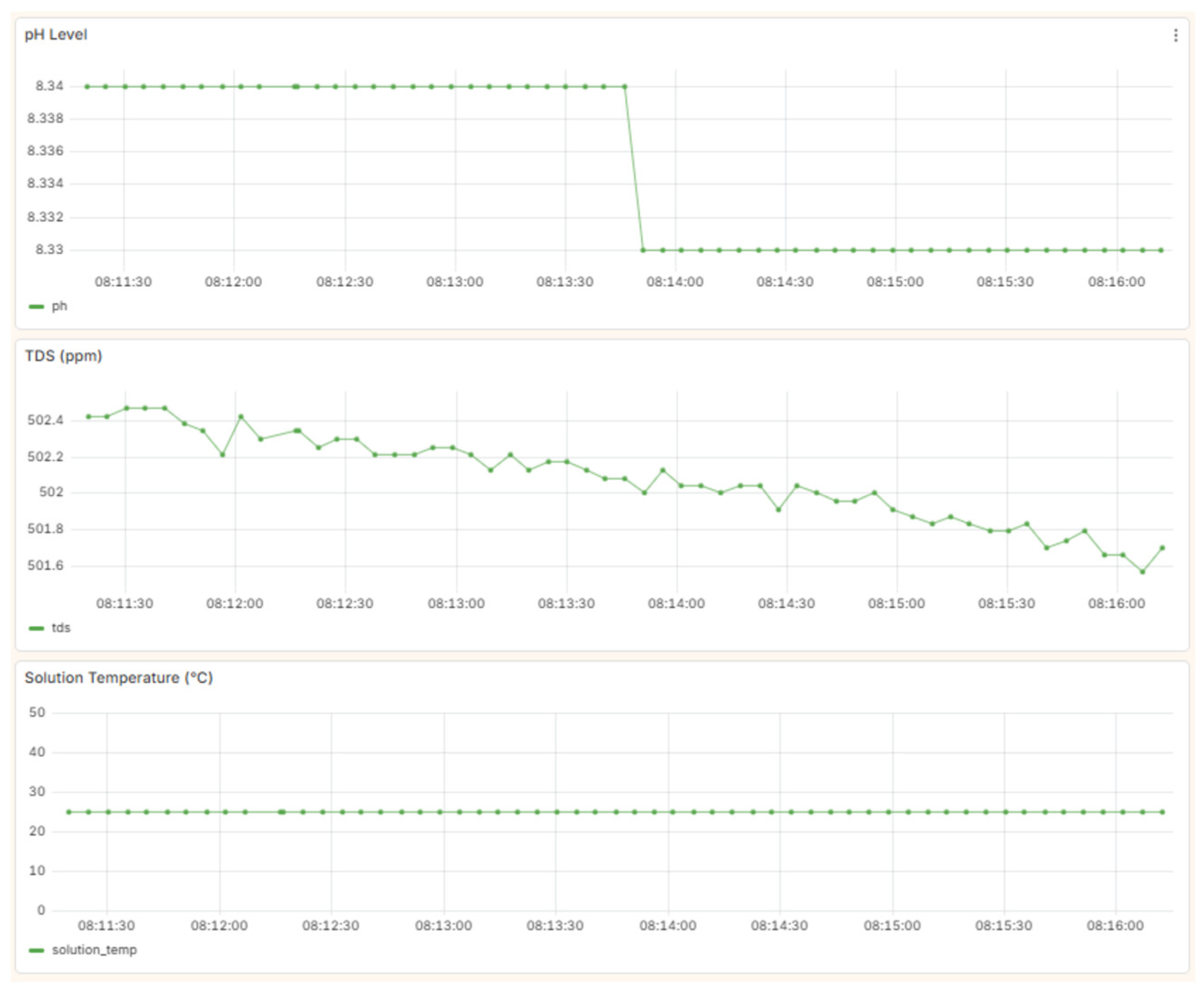
Figure 7 shows the Grafana dashboard visualization of a 10-min time-series segment, highlighting pH, TDS, and nutrient solution temperature. These results demonstrate the system’s dynamic response to control actions.
3.3. Evaluation
The two-point calibration of pH and TDS sensors, along with temperature compensation, ensured consistent in situ measurements. Flow rates from YF-S201 sensors (approximately 7.5 pulses, about 1 L/min) enabled reliable monitoring of circulation and dosing, while temperature-based sound velocity correction reduced noise in ultrasonic tank readings. Combined with alarm systems and safe-state strategies, these measures enhanced operational reliability and data integrity.
Table 5 offers a comparative overview with related works, revealing that most studies [
6,
7,
8,
9,
10,
11] focused on basic monitoring but neglected production-grade needs such as long-term data logging, secure communication, flexible control, flow verification, and safety features.
For instance, TLS/ACL/LWT security, manual and automatic mode switching, and integrated alarms were rarely implemented, while mobile apps (e.g., Blynk, Firebase) lacked robustness for long-term deployment. Conversely, our proposed system features continuous logging, data security, flow validation, and alarm mechanisms, establishing a dependable and scalable testbed for smart hydroponic automation.
4. Conclusions and Future Work
In this study, we developed and deployed an IoT-based monitoring and automation system for NFT hydroponics in enclosed environments. The automation system integrates temperature-compensated pH/TDS measurement, dual flow sensing for circulation and dosing verification, manual and automatic modes, and continuous data logging through an MQTT–InfluxDB–Node-RED–Grafana pipeline. Unlike monitoring-only solutions found in the literature, it also provides alarm mechanisms, data security, and operational reliability.
Experimental results showed consistent pH/TDS regulation with hysteresis control, reliable fan and LED operation, and accurate flow-based verification of pump activity and nutrient dosing. Safety features such as alarms and shutdowns in critical conditions enhanced system reliability.
Future work will focus on (i) experimentally validating with different plant species (e.g., lettuce, spinach) to assess biomass growth, yield, and agronomic results; (ii) integrating energy consumption monitoring to derive efficiency metrics such as kWh per kilogram of produce; (iii) implementing advanced control strategies like PID/MPC or machine learning-based dosing algorithms to improve control precision; and (iv) enhancing communication and security layers with mutual TLS (mTLS) and over-the-air (OTA) software updates to increase scalability and maintainability in field deployments.
Author Contributions
Conceptualization, T.D. and İ.Ç.; methodology, T.D. and İ.Ç.; software, T.D.; validation, T.D. and İ.Ç.; formal analysis, İ.Ç.; investigation, İ.Ç.; resources, T.D.; data curation, T.D.; writing—original draft preparation, T.D.; writing—review and editing, T.D. and İ.Ç.; visualization, T.D.; supervision, İ.Ç.; project administration, İ.Ç. All authors have read and agreed to the published version of the manuscript.
Funding
This research received no external funding.
Institutional Review Board Statement
Not applicable.
Informed Consent Statement
Not applicable.
Data Availability Statement
The original contributions presented in this study are included in the article. Further inquiries can be directed to the corresponding author.
Conflicts of Interest
The authors declare no conflicts of interest.
References
- UN DESA. World Population Prospects 2022: Summary of Results; United Nations: New York, NY, USA, 2022. [Google Scholar]
- FAO. The Importance of Ukraine and the Russian Federation for Global Agricultural Markets and the Risks Associated with the Current Conflict; FAO: Rome, Italy, 2022. [Google Scholar]
- UN. Black Sea Grain Initiative—Update; United Nations: New York, NY, USA, 2023. [Google Scholar]
- FAO. COVID-19 and the Risk to Food Supply Chains: How to Respond? FAO: Rome, Italy, 2020. [Google Scholar]
- IARC/WHO. Monographs on the Evaluation of Carcinogenic Risks to Humans, Vol. 112: Glyphosate; IARC: Lyon, France, 2015. [Google Scholar]
- Kushawaha, A.; Shah, D.; Vora, D.; Zade, N.; Iyer, K. Urban small-scale hydroponics: A compact, smart home-based hydroponics system. MethodsX 2024, 13, 102998. [Google Scholar] [CrossRef] [PubMed]
- Patil, N.; Patil, S.; Uttekar, A.; Suryawanshi, A.R. Monitoring of hydroponics system using IoT technology. Int. Res. J. Eng. Technol. (IRJET) 2020, 7, 1873–1877. [Google Scholar]
- Blancaflor, E.; Jamena, J.N.D.; Banganay, K.N.U.; Rabanal, R.S.C.; Fernandez, K.E.; Zamora, S.L.G. An IoT monitoring system designed for hydroponics plant cultivation. In Proceedings of the 2022 5th International Conference on Computing and Big Data (ICCBD), Shanghai, China, 16–18 December 2022; pp. 1–6. [Google Scholar]
- Vineeth, V.P.; Ananthan, T. Automated hydroponic system using IoT for indoor farming. In Proceedings of the 4th International Conference on Electronics and Sustainable Communication Systems (ICESC 2023), Coimbatore, India, 6–8 July 2023; pp. 369–373. [Google Scholar]
- Lal, R. Autonomous hydroponic farming using internet of things. In Proceedings of the 1st IEEE International Conference on Cognitive, Green and Ubiquitous Computing (IC-CGU 2024), Bhubaneswar, India, 1–2 March 2024; pp. 1–6. [Google Scholar]
- Waghmare, V.; Rakte, P.; Gadalkar, M.; Bhaleghare, S.; Sakhare, D.; Goudar, M. Real time monitoring of hydroponic system using IoT. In Proceedings of the 2024 IEEE International Conference on Intelligent Systems and Advanced Applications (ICISAA 2024), Pune, India, 25–26 October 2024; pp. 1–6. [Google Scholar]
| Disclaimer/Publisher’s Note: The statements, opinions and data contained in all publications are solely those of the individual author(s) and contributor(s) and not of MDPI and/or the editor(s). MDPI and/or the editor(s) disclaim responsibility for any injury to people or property resulting from any ideas, methods, instructions or products referred to in the content. |