Optimization of Feeder Buses Route to Connect High-Speed Railway Stations with Urban Areas †

Abstract
1. Introduction
2. Literature Review
3. Materials and Methods
3.1. Model Construction
- is the potential demand of corresponding link (, ).
- is the population size of link (, ).
- , is the average distance of passenger to link (, ).is the distance between the midpoint of the link (, j) and the targeted station.
- is the total population size of the grid.
- is the population density (person/m2).
- is the zone area (m2).
- is the grid area.
- Passengers in one grid are assigned to one link.
- Individuals in the same grid have similar travel characteristics.
- The distance between passengers inside a given grid and the relevant link is the shortest distance between the midpoint of each grid and that link.whereis the probability of grid ().is the average distance of passenger to link ().
- = 1 if grid () is assigned to link () and vice versa.
- is the potential demand index.
- is the potential demand arrangement array.
- is the proposed priority index for demand.
- is the potential demand index order.
- is the proposed priority index for demand.
- = 1 if the link () belongs to the route, and = 0 if it does not.
- is the traveling time for the link ().
- is the maximum trip time.
- is the area of the grid which is assigned to the link (A).
- is equal to 1 if the path (P) contains the link (A) and is equal to zero in other cases.
3.2. Solution Algorithm
- Steps:
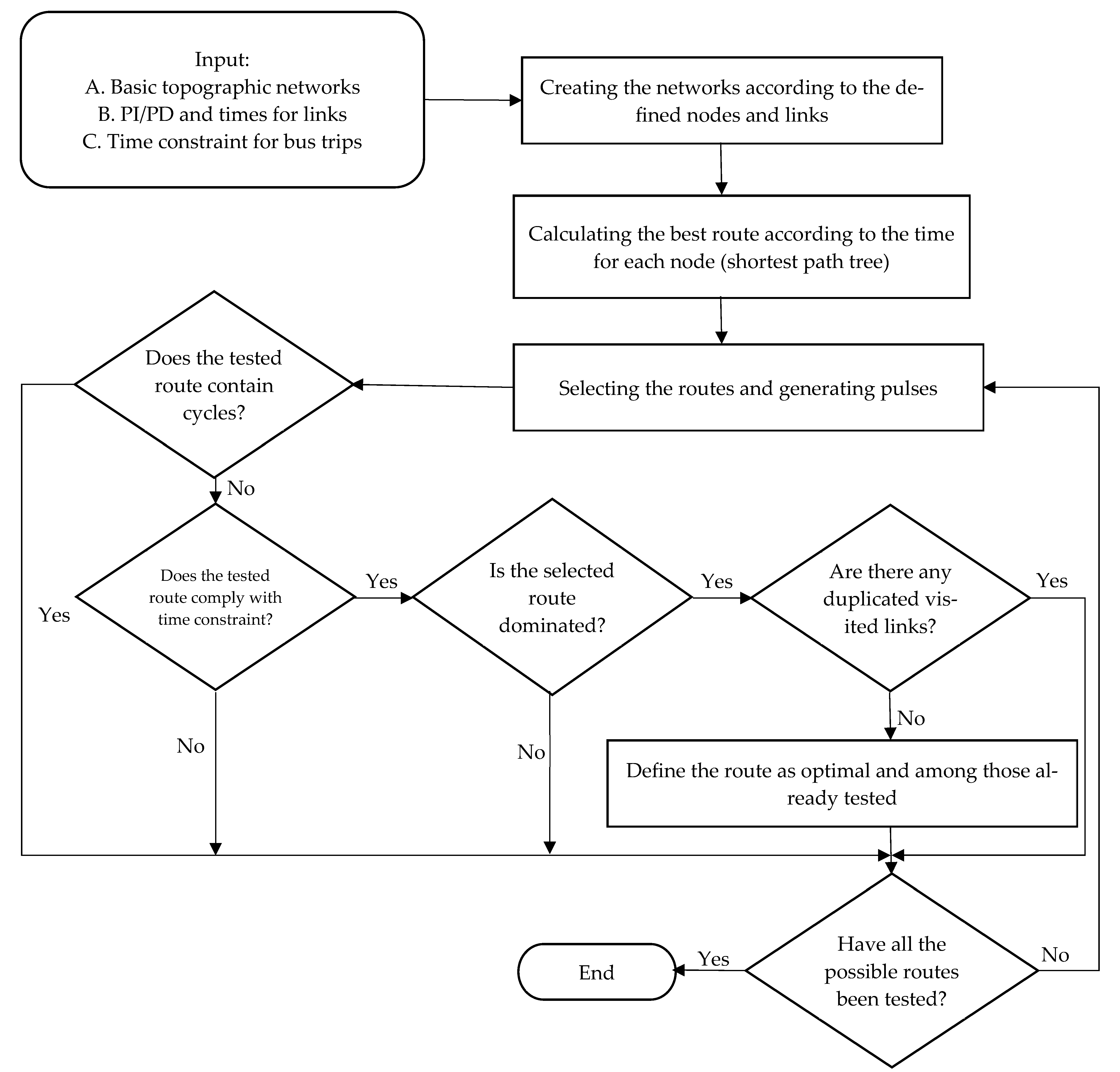
- Step 1 inputs are as follows:
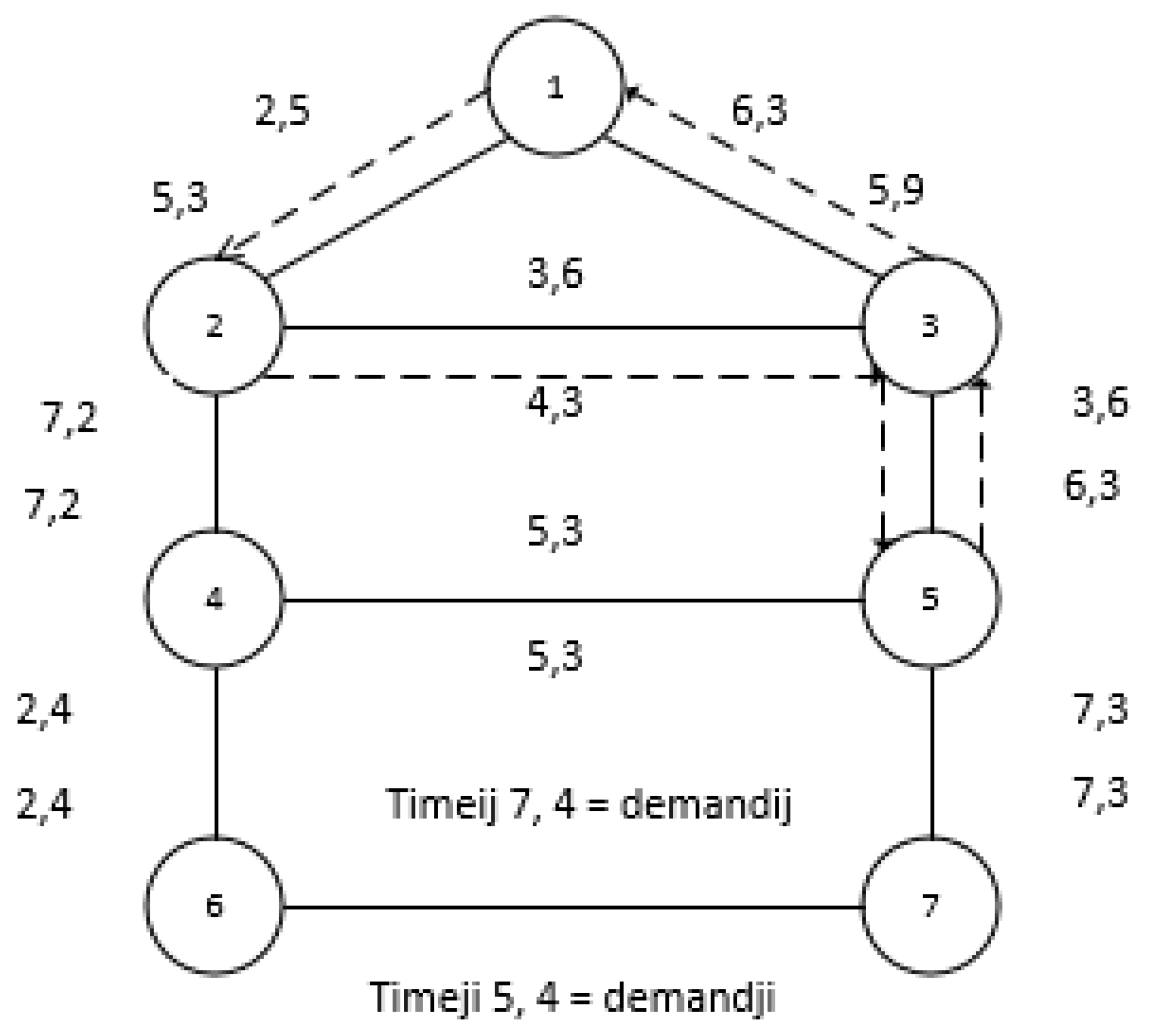
- Building the (O–D) matrix with size (2 × number of links) for the road matrix and determining the start and link nodes.
- Determine the time array of the network with the size (number of links × 1).
- Determine the demand array with the same size of time array.
- Define the maximum travel time (T) of one trip.
- Defining the inhabited area boundary.
- Step 2 calculations are as follows:
- Determining the shortest path between the last node and each node with respect to time.
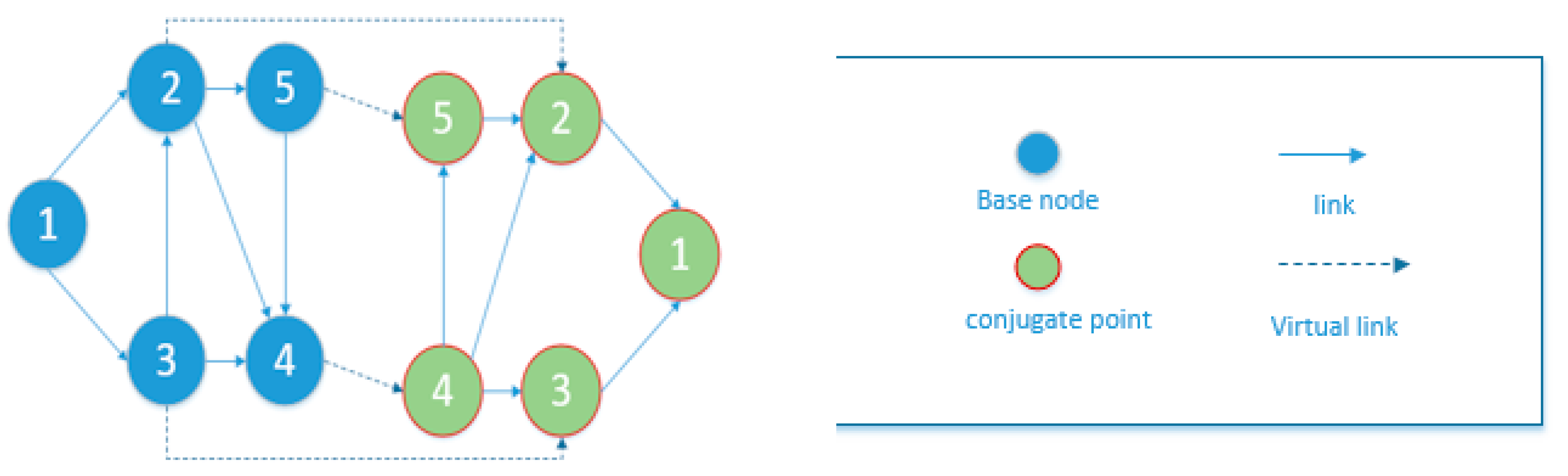
- Selecting each route between the start node and the last one using pulses.
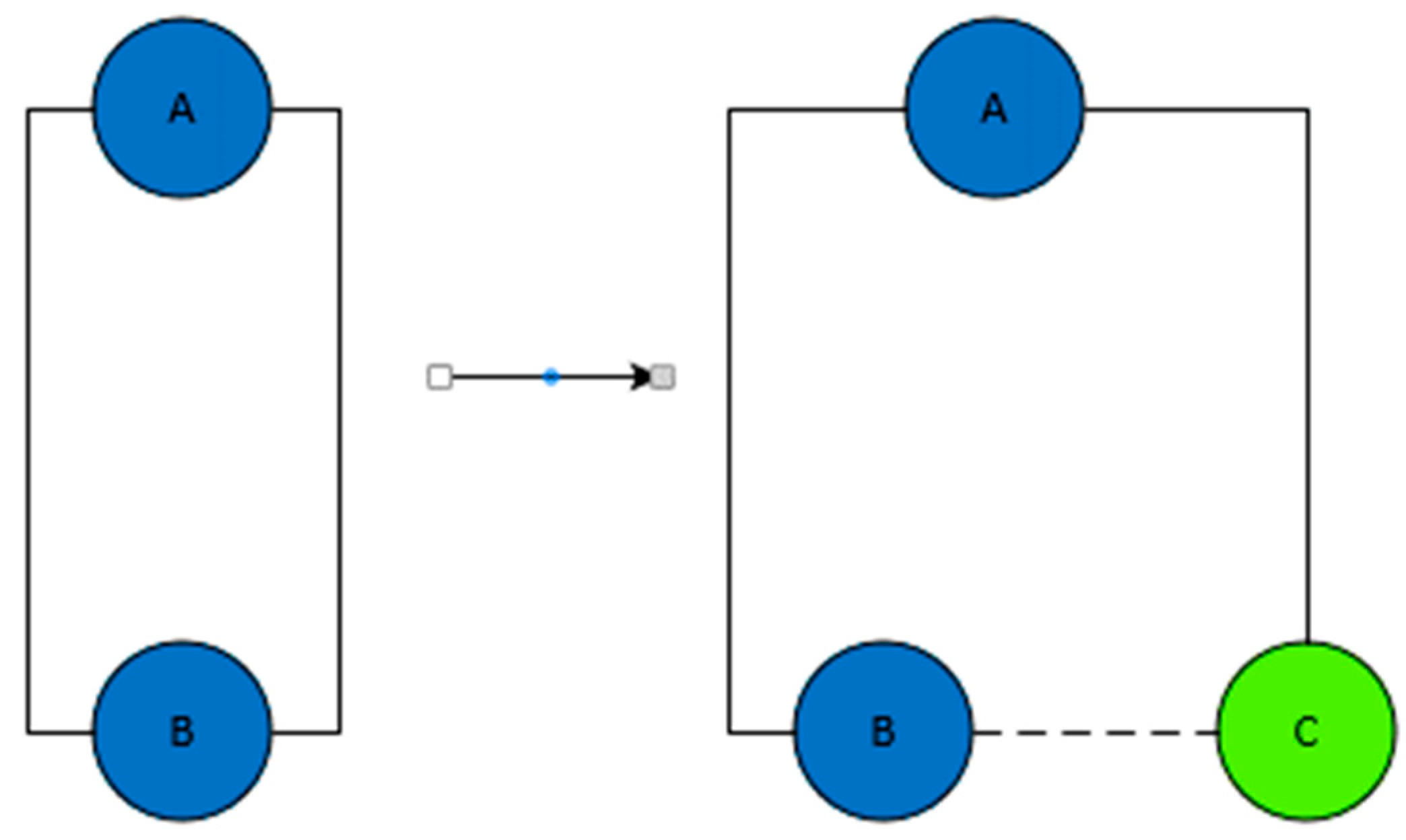
- Pulses traverse the network from the node to the neighboring nodes building sub-partial paths.
4. Results and Discussion
4.1. Experimental Results, and Case Study
4.1.1. Model Verification of a Hypothetical Network
4.1.2. Case Study
4.2. Results Discussion
5. Conclusions
Author Contributions
Funding
Institutional Review Board Statement
Informed Consent Statement
Data Availability Statement
Acknowledgments
Conflicts of Interest
References
- Jiang, X.; Zhang, L.; Chen, M.X. Short-term forecasting of high-speed rail demand: A hybrid approach combining ensemble empirical mode decomposition and gray support vector machine with real-world applications in China. Transp. Res. Part C Emerg. Technol. 2014, 44, 110–127. [Google Scholar] [CrossRef] [Scilit]
- UIC. High-Speed Around the World Historical, Geographical, and Technological Development; UIC: Chicago, IL, USA, 2023. [Google Scholar]
- Belal, E.M.; Khalil, A.A.; El-Dash, K.M. Economic investigation for building a high-speed rail in developing countries: The case of Egypt. Ain Shams Eng. J. 2020, 11, 1001–1011. [Google Scholar] [CrossRef] [Scilit]
- Venezia, E. Cost–Benefit Analysis in High-Speed Railway Projects: Appraisal of Methodological Approaches and an Initial Social Equity Evaluation, A Case Study. Sustainability 2023, 15, 11344. [Google Scholar] [CrossRef] [Scilit]
- Moyano, A.; Moya-Gómez, B.; Gutiérrez, J. Access and egress times to high-speed rail stations: A spatiotemporal accessibility analysis. J. Transp. Geogr. 2018, 73, 84–93. [Google Scholar] [CrossRef] [Scilit]
- Li, X.; Wei, M.; Hu, J.; Yuan, Y.; Jiang, H. An Agent-Based Model for Dispatching Real-Time Demand-Responsive Feeder Bus. Math. Probl. Eng. 2018, 2018, 6925764. [Google Scholar] [CrossRef] [Scilit]
- Sun, B.; Wei, M.; Yang, C.; Xu, Z.; Wang, H. Personalised and coordinated demand-responsive feeder transit service design: A genetic algorithms approach. Future Internet 2018, 10, 61. [Google Scholar] [CrossRef] [Scilit]
- Taplin, J.H.E.; Sun, Y. Optimizing bus stop locations for walking access: Stops-first design of a feeder route to enhance a residential plan. Environ. Plan B Urban. Anal. City Sci. 2020, 47, 1237–1259. [Google Scholar] [CrossRef] [Scilit]
- Sani, S.; Ghatee, M. A potential demand model for a multi-circulation feeder network design. arXiv 2022, arXiv:2205.04537. [Google Scholar]
- Jha, S.B.; Jha, J.K.; Tiwari, M.K. A multi-objective meta-heuristic approach for transit network design and frequency setting problem in a bus transit system. Comput. Ind. Eng. 2019, 130, 166–186. [Google Scholar] [CrossRef] [Scilit]
- Soares, P.H.; Mumford, C.L.; Amponsah, K.; Mao, Y. An adaptive scaled network for public transport route optimisation. Public Transp. 2019, 11, 379–412. [Google Scholar] [CrossRef] [Scilit]
- Soares, P.H. Zone-based public transport route optimisation in an urban network. Public Transp. 2021, 13, 197–231. [Google Scholar] [CrossRef] [Scilit]
- Cipriani, E.; Fusco, G.; Patella, S.M.; Petrelli, M. A particle swarm optimization algorithm for the solution of the transit network design problem. Smart Cities 2020, 3, 541–555. [Google Scholar] [CrossRef] [Scilit]
- Yao, B.; Hu, P.; Lu, X.; Gao, J.; Zhang, M. Transit network design based on travel time reliability. Transp. Res. Part C Emerg. Technol. 2014, 43, 233–248. [Google Scholar] [CrossRef] [Scilit]
- Almasi, M.H.; Mounes, S.M.; Karim, M.R. Validating an Improved Model for Feeder Bus Network Design Using Genetic Algorithm (GA) and Particle Swarm Optimization (PSO). J. East. Asia Soc. Transp. Stud. 2015, 11, 507–522. [Google Scholar]
- Liu, Y.; Feng, X.; Yang, Y.; Ruan, Z.; Zhang, L.; Li, K. Solving urban electric transit network problem by integrating Pareto artificial fish swarm algorithm and genetic algorithm. J. Intell. Transp. Syst. Technol. Plan. Oper. 2022, 26, 253–268. [Google Scholar] [CrossRef] [Scilit]
- Yoon, G.; Chow, J.Y.J. Contextual Bandit-Based Sequential Transit Route Design under Demand Uncertainty. Transp. Res. Rec. 2020, 2674, 613–625. [Google Scholar] [CrossRef] [Scilit]
- Park, C.; Lee, J.; Sohn, S.Y. Recommendation of feeder bus routes using neural network embedding-based optimization. Transp. Res. Part A Policy Pract. 2019, 126, 329–341. [Google Scholar] [CrossRef] [Scilit]
- De-Los-Santos, A.; Canca, D.; Barrena, E. Mathematical formulations for the bimodal bus-pedestrian social welfare network design problem. Transp. Res. Part B Methodol. 2021, 145, 302–323. [Google Scholar] [CrossRef] [Scilit]
- Suman, H.K.; Bolia, N.B. Improvement in direct bus services through route planning. Transp. Policy 2019, 81, 263–274. [Google Scholar] [CrossRef] [Scilit]
- Wu, P.; Xu, L.; Che, A.; Chu, F. A bi-objective decision model and method for the integrated optimization of bus line planning and lane reservation. J. Comb. Optim. 2022, 43, 1298–1327. [Google Scholar] [CrossRef] [Scilit]
- Durán-Micco, J.; Vansteenwegen, P. A survey on the transit network design and frequency setting problem. Public Transp. 2022, 14, 155–190. [Google Scholar] [CrossRef] [Scilit]
- Lozano, L.; Medaglia, A.L. On an exact method for the constrained shortest path problem. Comput. Oper. Res. 2013, 40, 378–384. [Google Scholar] [CrossRef] [Scilit]
- Zhu, Z.; Guo, X.; Zeng, J.; Zhang, S. Route Design Model of Feeder Bus Service for Urban Rail Transit Stations. Math. Probl. Eng. 2017, 2017, 1090457. [Google Scholar] [CrossRef] [Scilit]
- Ceder, A. Public Transit Planning and Operation: Theory, Modeling and Practice; CRC Press, Taylor & Francis Group: Boca Raton, FL, USA, 2016; pp. 480–520. [Google Scholar]
- Pham, Q.D.; Deville, Y. Solving the Longest Simple Path Problem with Constraint-Based Techniques. In International Conference on Integration of Artificial Intelligence (AI) and Operations Research (OR) Techniques in Constraint Programming; Springer: Berlin/Heidelberg, Germany, 2012. [Google Scholar]




| Author | Objective Function (Cost) | Solution Approach | Case Study | |||
|---|---|---|---|---|---|---|
| Operator | User | Exact | Evolutionary | Real | Hypothetical | |
| Li et al. 2018 [6]; Sani et al. 2022 [9]; Heyken et al. 2019 [11]; Heyken et al. 2021 [12]; Cipriani et al. 2020 [13]; Liu et al. 2022 [16] | ✓ | ✓ | ✓ | ✓ | ||
| Taplin et al. 2020 [8]; Yao et al. 2014 [14]; Yoon et al. 2020 [17] | ✓ | ✓ | ✓ | |||
| Almasi et al. 2015 [15]; Jha et al. 2019 [10] | ✓ | ✓ | ✓ | ✓ | ||
| Sun et al. 2018 [7] | ✓ | ✓ | ✓ | |||
| Park et al. 2019 [18] | ✓ | ✓ | ||||
| De-Los-Santos et al. 2021 [19]; Wu et al. 2022 [21] | ✓ | ✓ | ✓ | ✓ | ||
| Suman et al. 2019 [20] | ✓ | ✓ | ✓ | |||
| This paper | ✓ | ✓ | ✓ | ✓ | ✓ | |
| Algorithms | Technique | Resulting Path Nodes |
|---|---|---|
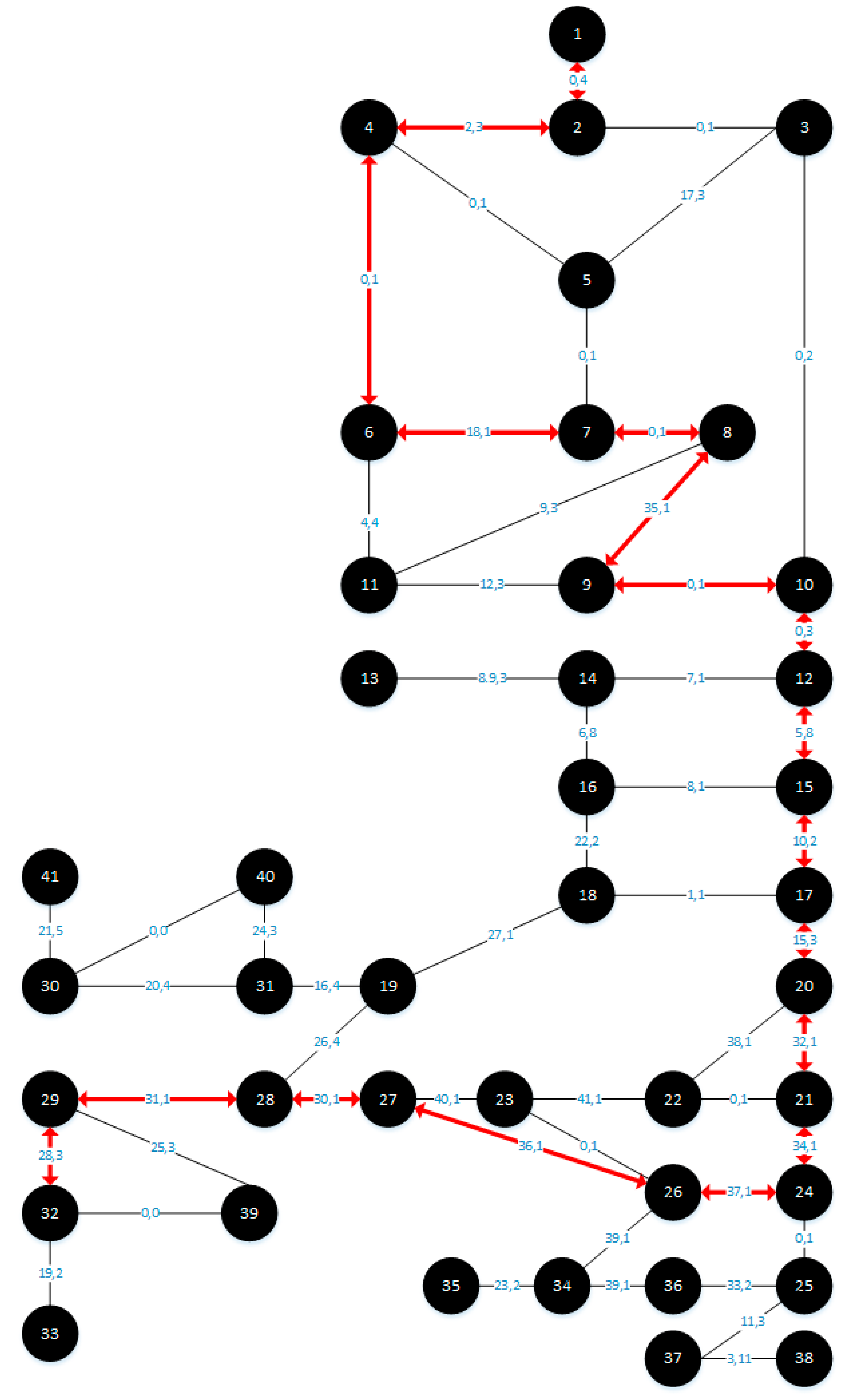
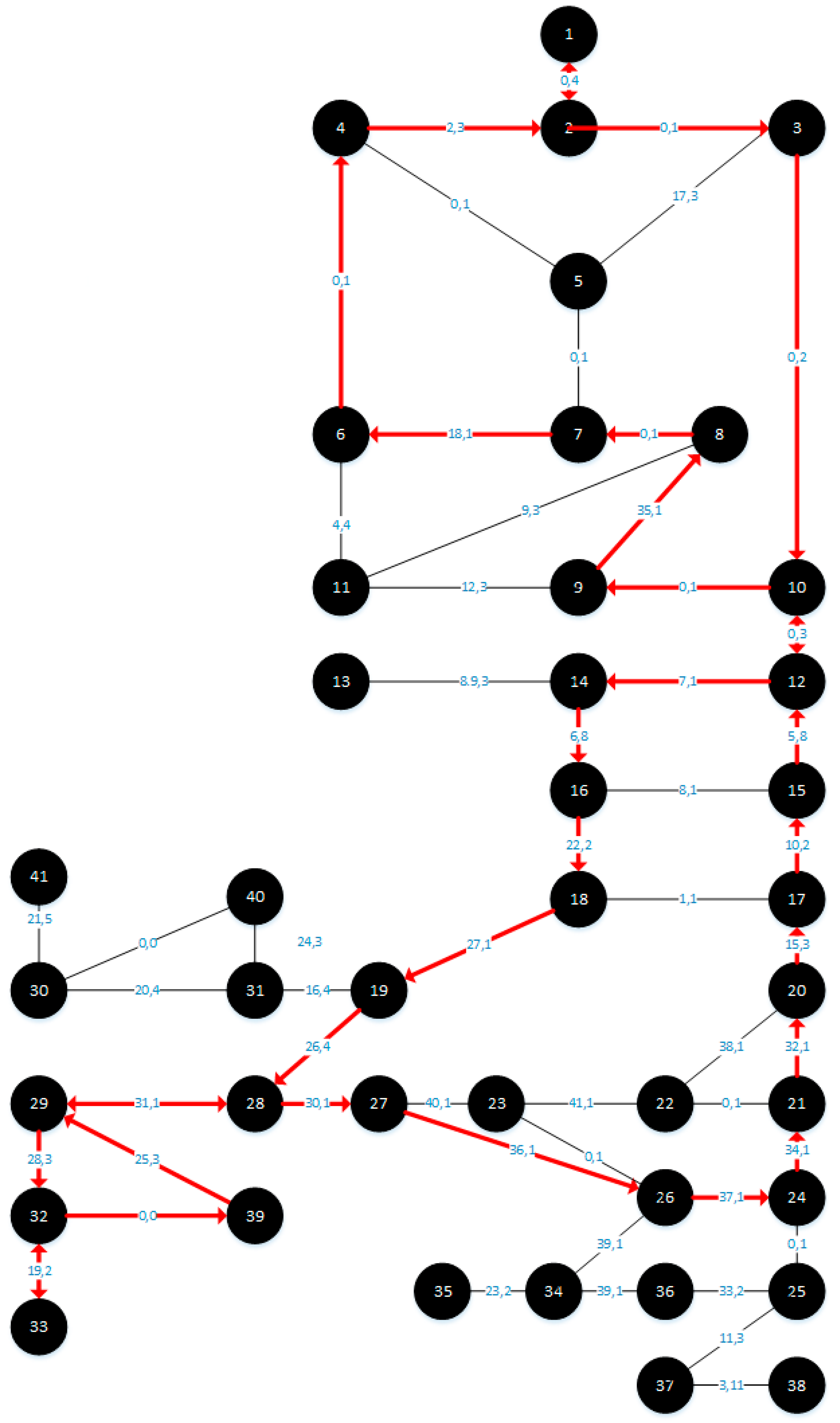
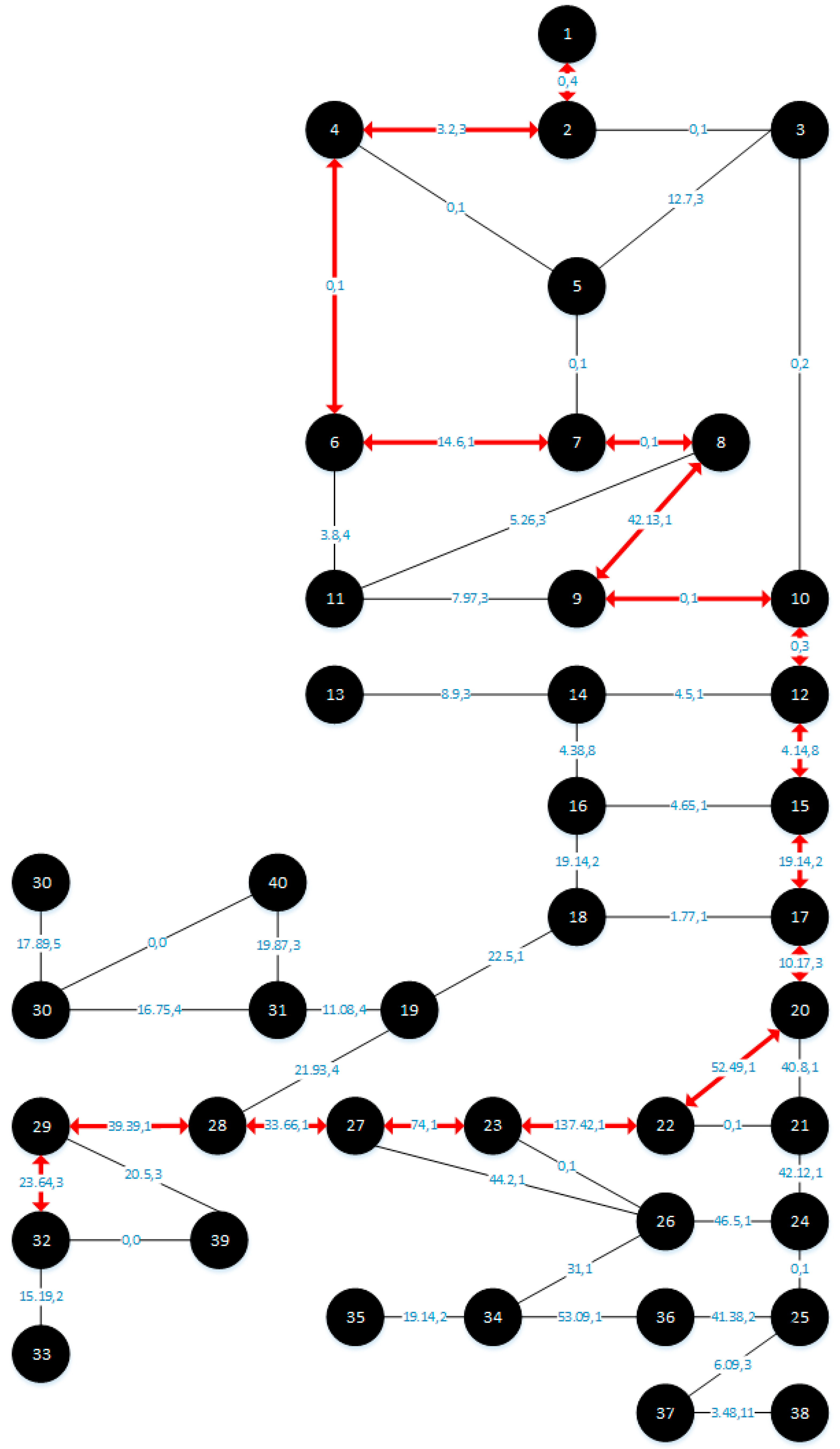
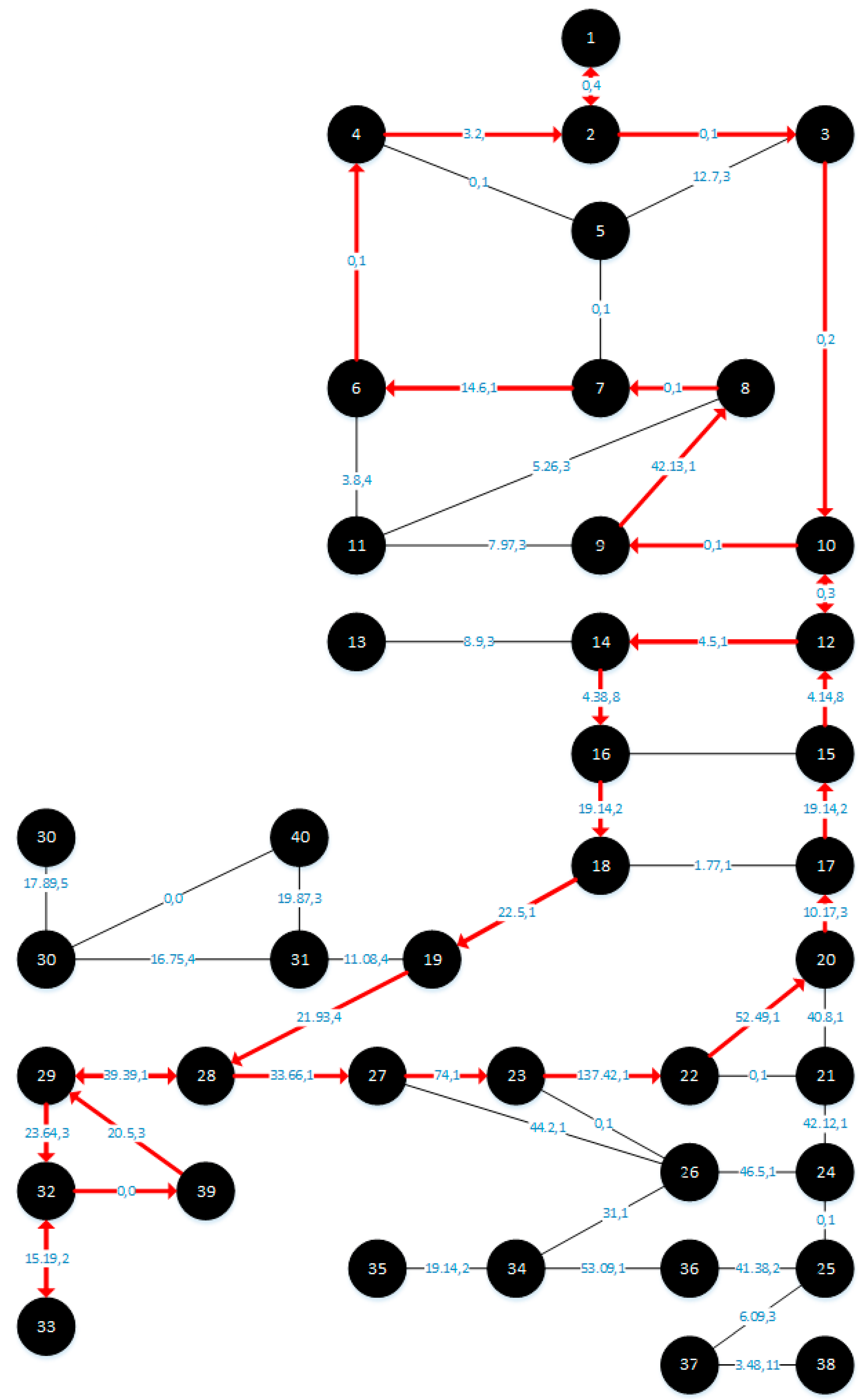
| A | PD | (1-2-4-6-7-8-9-10-12-15-17-20-22-23-27-28-29-32-29-28-27-23-22-20-17-15-12-10-9-8-7-6-4-2-1) |
| B | PD | (1-2-3-10-12-14-16-18-19-28-29-32-33-32-39-29-28-27-23-22-20-17-15-12-10-9-8-7-6-4-2-1) |
| A | PI | 1-2-4-6-7-8-9-10-12-15-17-20-21-24-26-27-28-29-32-29-28-27-26-24-21-20-17-15-12-10-9-8-7-6-4-2-1) |
| B | PI | (1-2-3-10-12-14-16-18-19-28-29-32-33-32-39-29-28-27-26-24-21-20-17-15-12-10-9-8-7-6-4-2-1) |
| Algorithm | PD | PI | ||
|---|---|---|---|---|
| Serviced Area | Solution Time(s) | Serviced Area | Solution Time(s) | |
| Algorithm A | 19.8% | 3.16 | 21.62% | 2.7 |
| Algorithm B | 37.7% | 2.7 | 37.9% | 2.6 |
Disclaimer/Publisher’s Note: The statements, opinions and data contained in all publications are solely those of the individual author(s) and contributor(s) and not of MDPI and/or the editor(s). MDPI and/or the editor(s) disclaim responsibility for any injury to people or property resulting from any ideas, methods, instructions or products referred to in the content. |
© 2026 by the authors. Licensee MDPI, Basel, Switzerland. This article is an open access article distributed under the terms and conditions of the Creative Commons Attribution (CC BY) license.
Share and Cite
Hemdan, S.; Ramadan, M.; Alsultan, A.; Othman, A. Optimization of Feeder Buses Route to Connect High-Speed Railway Stations with Urban Areas. Eng. Proc. 2026, 121, 6. https://doi.org/10.3390/engproc2025121006
Hemdan S, Ramadan M, Alsultan A, Othman A. Optimization of Feeder Buses Route to Connect High-Speed Railway Stations with Urban Areas. Engineering Proceedings. 2026; 121(1):6. https://doi.org/10.3390/engproc2025121006
Chicago/Turabian StyleHemdan, Seham, Mostafa Ramadan, Abdulmajeed Alsultan, and Ayman Othman. 2026. "Optimization of Feeder Buses Route to Connect High-Speed Railway Stations with Urban Areas" Engineering Proceedings 121, no. 1: 6. https://doi.org/10.3390/engproc2025121006
APA StyleHemdan, S., Ramadan, M., Alsultan, A., & Othman, A. (2026). Optimization of Feeder Buses Route to Connect High-Speed Railway Stations with Urban Areas. Engineering Proceedings, 121(1), 6. https://doi.org/10.3390/engproc2025121006