


Abstract
The current study presents results from experimental tests of productivity, fuel consumption, and fuel efficiency of a wheeled excavator Hyundai HW160A that were performed at a construction site in Sofia, Bulgaria. The experiments happened during the span of two consecutive days, and the feedback of the excavator’s operator was also taken into consideration. During the first day, the excavator operated as a conventional excavator only equipped with a bucket, while during the second day it also made use of a 3D semi-automatic digging system and a tiltrotator control system. The productivity was increased by 21.2%, the fuel consumption was decreased by 13.8%, and the fuel efficiency was increased by 32%, respectively, when applying the mentioned systems. The systems are briefly reviewed in this paper.
1. Introduction
Improving transport and construction machinery is a consistently important activity that aims to increase efficiency and safety [1,2], lower the costs, increase reliability, and reduce the environmental footprint of such machines [3]. For the development and design enhancement of transport and construction machinery, not only are simulational models [4] and laboratory tests [5] applied, but also field tests in real operation conditions [6]. In the case of wheeled and crawler excavators, the improvement is a process which up until recently was mainly concerned with bettering the engine and the hydraulic system of the machine. The main criteria that quantify the improvement are increased productivity and decreased fuel consumption, respectively increased fuel efficiency. In order to explain the approach clearly, a definition of the criteria is presented:
- Productivity: the quantity of material mass which the machine handles for a single hour in tons per hour (t/h);
- Fuel consumption: the quantity of fuel which the machine consumes during material handling in liters per hour (L/h) or liters per day (L/day). It is important to clarify that a work hour is a full 60 min only theoretically, while in reality it is between 45 and 50 min;
- Fuel efficiency: the ratio between the consumed fuel and the mass of the material handled in liters per ton (L/t).
Engine improvements in heavy construction equipment mostly have to do with bettering the combustion processes—advanced cylinder chamber designs, new piston design, etc.—with application of new fuel systems with more precise electronic control and with increased efficiency by utilizing energy regeneration [7], energy management [8,9], and hybridized powertrains [10]. Also, the hydraulic part of the propulsion is updated with novel software solutions to optimize the work of the axial-piston pumps and thus decrease hydraulic losses—an example is the ECO mode [11].
The state-of-the-art engines and hydraulic systems in excavators are very advanced and it is rather unlikely that substantial improvements would be made in the near future. Therefore, in order to keep on further developing this machinery, producers come up with solutions that transform work processes into semi-automatic or automatic processes. Another way to improve the mentioned criteria is to adopt tilt quick couplers and tiltrotator systems. In recent years, the combination of such systems has gained popularity in Western Europe and Scandinavian countries [12].
In Bulgaria, such systems are still not widely used, as they have a high investment cost. The Bulgarian market is highly price-sensitive and customers search for cheap solutions, even though they are often less effective. If the total cost of ownership (TCO) of such systems is taken into consideration, the final financial result could be better in comparison to using conventional cheap solutions.
Due to these reasons, the paper focuses on briefly reviewing such 3D semi-automatic and tiltrotator systems and on experimentally evaluating the increase in productivity and fuel efficiency when applying such systems in a contemporary wheeled excavator. The article does not aim to compare any of the systems’ brands, nor to compare producers of heavy equipment. Moreover, the study does not aim to evaluate the accuracy, advantages and disadvantages of the systems, only to experimentally quantify the improvement criteria. The research is a contribution to efforts in testing advanced engineering systems and equipment in various real conditions and would be useful in comparing the values of the improvement criteria for different work scenarios in order to further develop the applied systems.
2. Brief Review of the 3D Automatic Systems and Tiltrotator Systems Used in Excavators
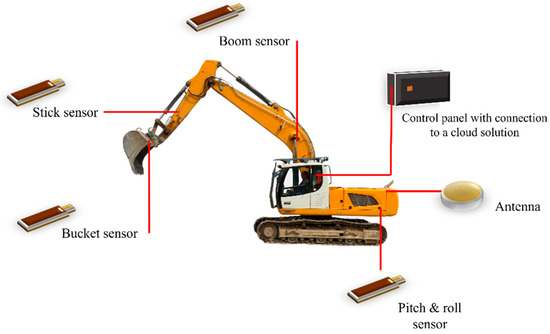
There are currently only few producers worldwide of 3D automatic systems, among which are Topcon, Leica and Trimble. The design and components of a such a system are presented in Figure 1.
Figure 1.
Main components of a semi-automatic 3D system for an excavator.
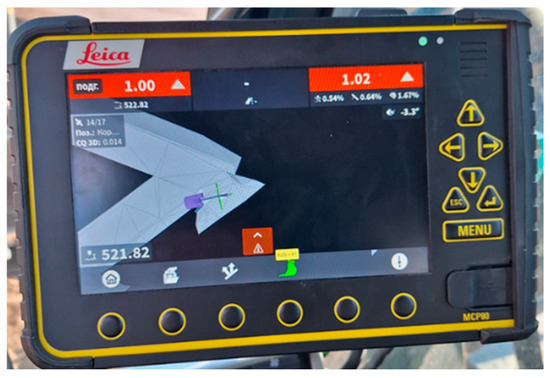
The work principle is as follows: on the body of the excavator is mounted a GPS antenna which is connected to the main computer of the system. This computer calculates the input geological data and compares it with the input data provided by the operator. The operator uses a display which is situated in the cab of the machine and with which the needed working dimensions are entered. For example, if the machine is working on flat terrain and is required to dig a square with a fixed depth, the operator enters the length and the width of the square before extruding the needed depth. An example of the control display in the operator’s cab is shown in Figure 2. The computer analyses and compares the operator’s data and data of the geological maps and prepares the work algorithm. Then, it sends command signals to the devices which are the boom, the arm and the attachment of the machine. The process starts automatically and the operator’s task is only to monitor the process [13].
Figure 2.
Control display of a semi-automatic 3D system.
Excavators are operating in different types of applications. Because of this, the attachment of the machine is vitally important, especially when the machine needs to work with precise operations such as grading and ditching. In the past, the experience and the professional level of the operator determined the quality of the work carried out. Now it is possible to use advanced attachments that aid even an unexperienced operator in performing precise operations. The most used systems are the tilt quick coupler system that allows planar angle operations, and the tiltrotator system which enables rotating of 360° and tilting of ±45° of the tools. The benefits of using such systems include fuel savings and reducing the emissions of CO2, as well as worker and hour savings.
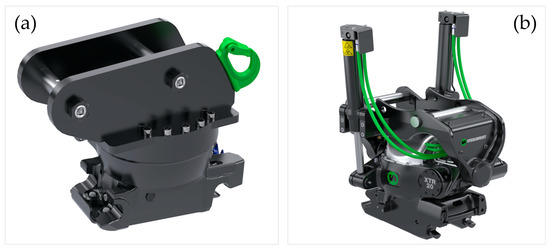
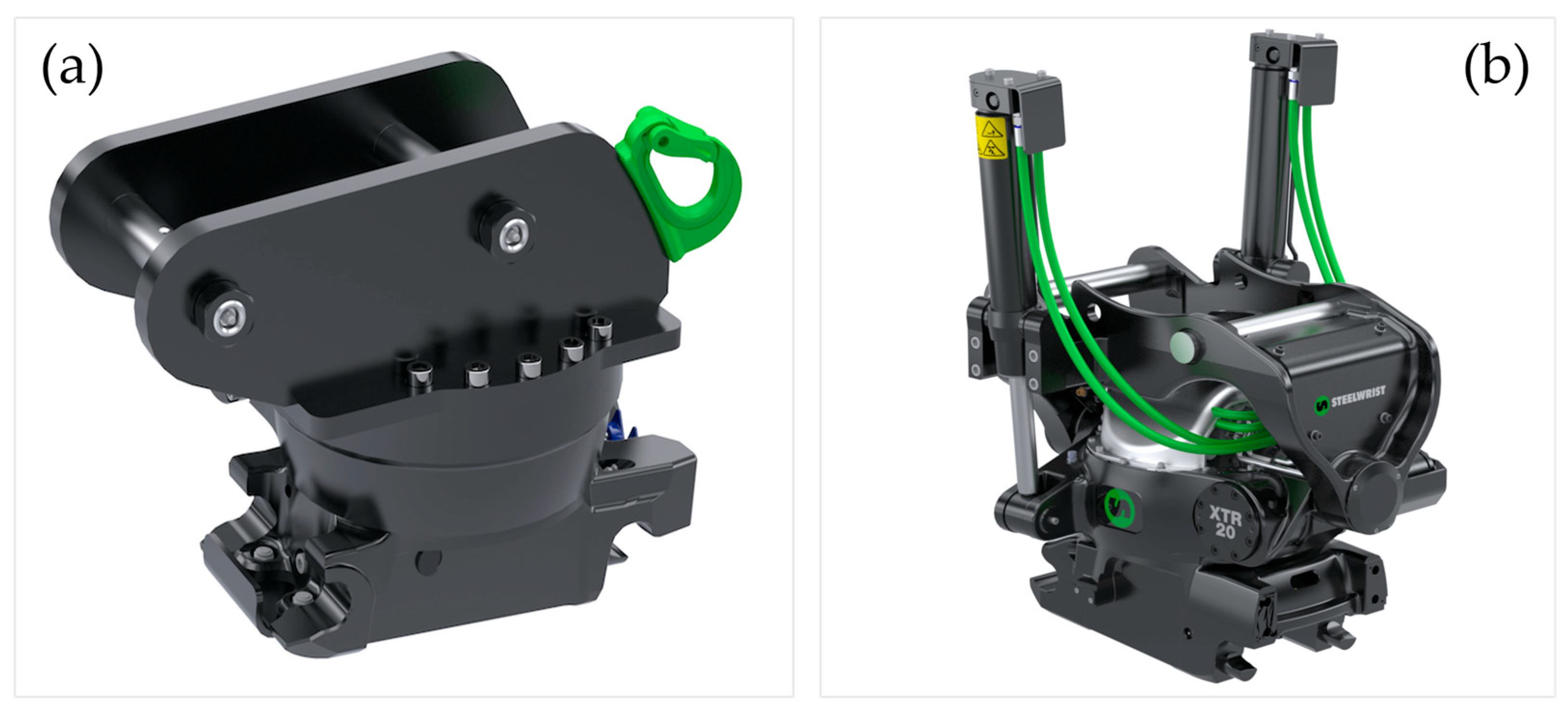
A tilt quick coupler design is presented in Figure 3a. The upper part of it is attached to the arm of the excavator, while the lower part is connected to an attachment, typically a bucket. Both parts are connected via hydraulic motors which enable the angle movement of the lower part relative to the upper one at ±90°.
Figure 3.
A tilt quick coupler (a) and a tiltrotator system (b) by the company Steelwrist (Rosersberg, Sweden) [14].
Tiltrotator control systems represent a step further in the development of tilt quick couplers. A typical tiltrotator system is shown in Figure 3b. The system also consists of a lower and an upper part; however, here the movement is ensured by two hydraulic cylinders situated on the left and right sides of the tiltrotator (tilting cylinders) and a hydraulic motor, ensuring a 3D 360° rotation. The system aids the operator in the completion of very precise tasks, especially those that involve angle profiling.
The two systems discussed—the semi-automatic 3D system, and the tiltrotator system—could be installed on the same machine and could work simultaneously. In this case, the machine would perform some tasks entirely automatically. The next section of the article is dedicated to the experimental comparison of the productivity, fuel consumption, and fuel efficiency of a wheeled excavator Hyundai HW160A (Manufacturer: HD Hyundai Construction Equipment, Ulsan, South Korea), equipped with a semi-automatic 3D system by Leica, and a tiltrotator system by Engcon, against the same excavator but working in conventional mode, without the systems.
3. Materials and Methods
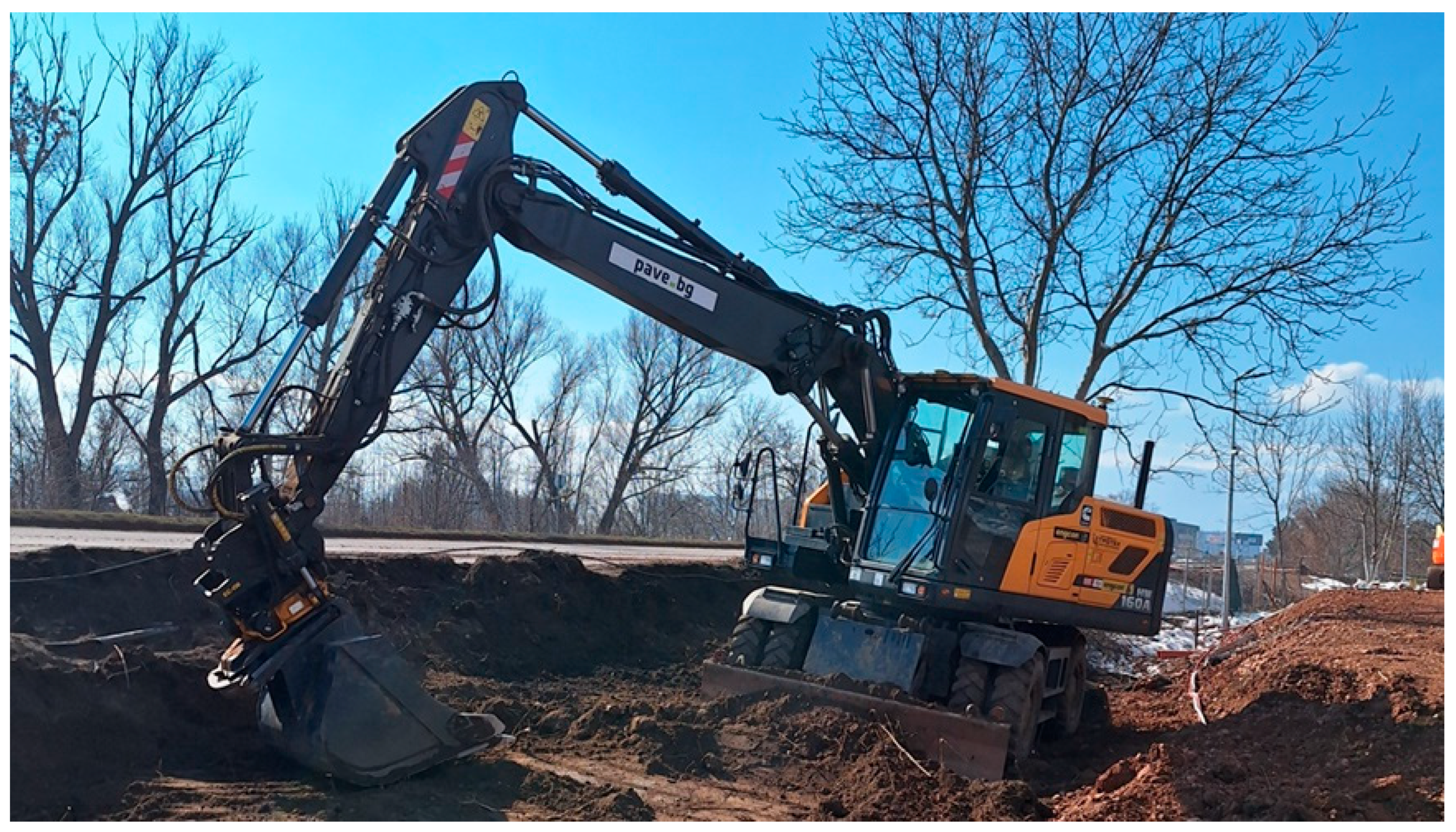
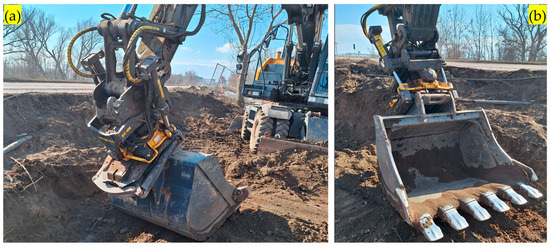
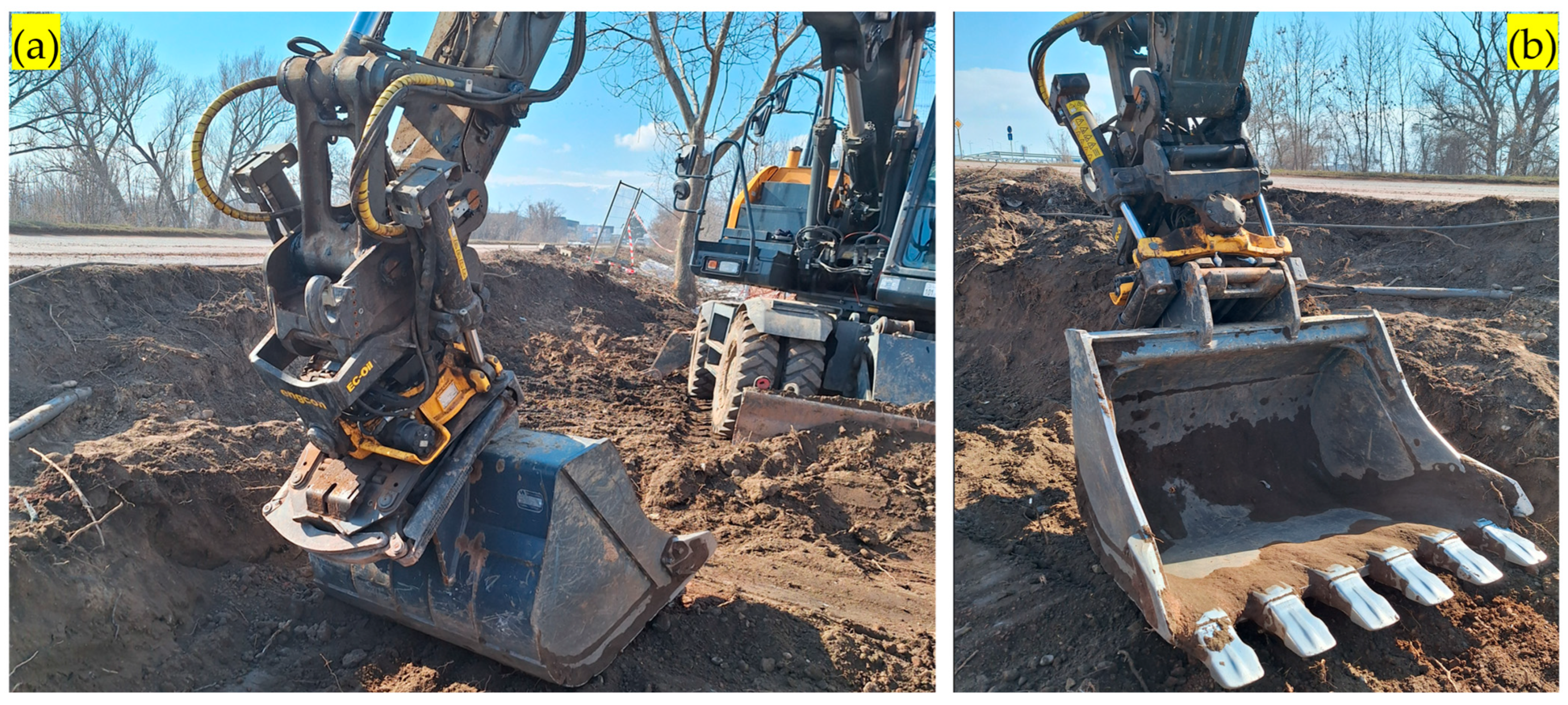
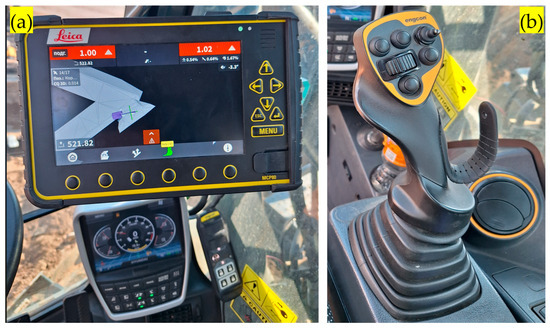
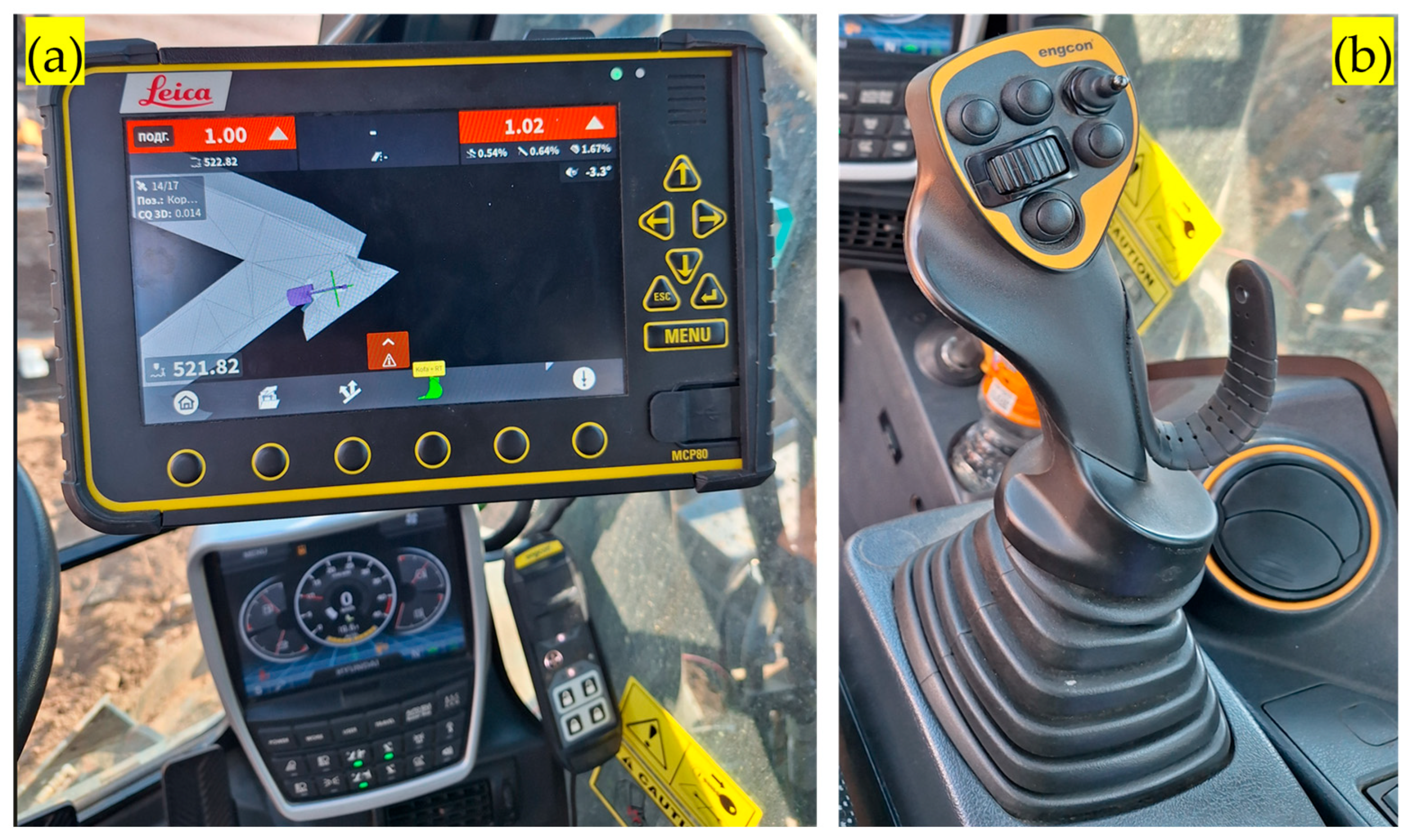
The experimental tests were performed on the 14th and 15th of January 2025 at the construction site of new industrial warehouses near Sofia, Bulgaria. The general contractor of the construction project for the outdoor pavement at the site is the company Pave BG. The same company is the owner of the tested machine. A short technical specification of the machine is given in Table 1. The machine is equipped with a Leica MCP80 3D geosystem for semi-automatic digging (Manufacturer: Leica Geosystems, Heerbrugg, Switzerland, software version: MC1 V7.0.0), a tiltrotator control system Engcon type EC219-QSK60D-QS60-QC2 (Manufacturer: Engcon, Strömsund, Sweden), and a bucket with a 0.89 m3 volume. Images of the tested machine and the systems are given in Figure 4, Figure 5 and Figure 6.
Table 1.
Main technical data of the tested machine [15].
Figure 4.
The studied excavator during operation at the construction site.
Figure 5.
The tiltrotator system (a) and the bucket with which the excavator is equipped (b).
Figure 6.
The control unit of the semi-automatic digging system (a) and the control unit of the tiltrotator system (b).
During the first day, the machine was working as a conventional excavator equipped with a 0.89 m3 bucket. The work day had a standard eight-hour shift within which there was a one-hour break. The first part of the shift started at 8:00 and finished at 12:00. The second part was from 13:00 to 17:00. A 50 min work hour for the testing was assumed. During the second day, the machine was operating using the semi-automatic 3D system, the tiltrotator control system, and the same bucket. The work time was the same as the previous day.
The material was soil with an average density of 1.5 m3 (in some site segments the soil was dry, while in others it was wet). The average density was calculated on the basis of the mass of the material in a full bucket. The task during both days for the excavator was to dig up to 1 m depth in various segments of the construction site. The fuel reservoir of the machine was filled up with fuel on both mornings before the first part of the work shift. The fuel amount filled in the tank on the second morning is considered the consumed fuel for the first day. At the end of the second day, the reservoir was filled again with fuel in order to record the fuel consumption for the second day. The same operator was working with the machine on both days.
The excavator worked by performing 90° cycles—digging material, rotating at 90° and unloading it in a tipper truck. Three tipper trucks were used in order to avoid any delays or idle work of the excavator. Two supervisors were overviewing the process and recording the experimental data for the performance of the machine: one of them was the owner of the company and the other was one of the authors of the current paper.
4. Results
The calculation of extruded mass in tones is based on counting the bucket passes (digging, rotating and unloading). Considering the material density, the results are shown in the following tables: Table 2—productivity, Table 3—fuel consumption and Table 4—fuel efficiency. There was an increase in productivity of 21.2%, the fuel consumption was decreased by 13.8%, and fuel efficiency increased by 32% when applying the mentioned systems.
Table 2.
Productivity results.
Table 3.
Fuel consumption results.
Table 4.
Fuel efficiency results.
5. Operator’s Feedback
After the two days of experiments, the operator of the machine was asked for his general impressions. His main observations and conclusions were as follows:
- During the first day, his performance worsened during the second part of the work shift. This was due to the fact that it is very difficult to keep the same work speed during the whole shift, and fatigue gradually built up. This was not case for the second day, when the semi-automatic system and the tiltrotator system were used.
- Manual levelling of the digging depth requires additional time, despite the support manual levelling devices. Surely, the results during the second day cannot be replicated in manual mode.
- The 3D semi-automatic system is very easy to operate and has a user-friendly interface.
- The tiltrotator system saves time when unloading the bucket.
- The excavator worked on both days in the same engine regime; however, the rpm adjustment is more precise when operated automatically, rather than manually by the operator.
6. Conclusions
This article deals with the experimental evaluation of the improvement criteria for a wheeled excavator equipped with a 3D semi-automatic system and a tiltrotator system. Based on the results, we can conclude that these systems improve the productivity and fuel efficiency of the machine in comparison to the mode when it works as a conventional excavator. The productivity was increased by 21.2%, the fuel consumption was decreased by 13.8%, and the fuel efficiency was increased by 32%, respectively, when applying the mentioned systems. Moreover, the results point out that even experienced operators cannot always maintain the same productivity levels in manual operating opposed to applying automatization of the work processes.
The proposed future research of the team is to evaluate the improvement criteria in a different construction machine—a crawler excavator—and to compare it with the results of the current study. Based on the current and the potential future results, a full financial analysis with TCO can be performed.
Author Contributions
P.I.: conceptualization, investigation, methodology, experiments, writing—original draft preparation; T.G.: investigation, validation, visualization, data curation, writing—review and editing, funding acquisition; V.T.: supervision, data curation, writing—review and editing. All authors have read and agreed to the published version of the manuscript.
Funding
This research is supported by the Bulgarian Ministry of Education and Science under the second stage of the National Program “Young Scientists and Postdoctoral Students—2”.
Institutional Review Board Statement
Not applicable.
Informed Consent Statement
Not applicable.
Data Availability Statement
The original contributions presented in this study are included in the article. Further inquiries can be directed to the corresponding author.
Acknowledgments
The authors would also like to thank Pave BG company for providing the opportunity to test the wheeled excavator.
Conflicts of Interest
The authors declare no conflicts of interest. The funders had no role in the design of the study; in the collection, analyses, or interpretation of data; in the writing of the manuscript; or in the decision to publish the results.
References
- Stoilov, V.; Sinapov, P.; Slavchev, S.; Maznichki, V.; Purgic, S. Analysis of Lateral Forces for Assessment of Safety against Derailment of the Specialized Train Composition for the Transportation of Long Rails. Appl. Sci. 2024, 14, 860. [Google Scholar] [CrossRef] [Scilit]
- Ishchuk, V.; Kravchenko, K.; Blatnický, M.; Lovska, A.; Dižo, J. Research into the Possibilities of Improving the Adhesion Properties of a Locomotive. Machines 2025, 13, 44. [Google Scholar] [CrossRef] [Scilit]
- Rimkus, A.; Mejeras, G.; Dittrich, A.; Pukalskas, S.; Barta, D. Effect of the Concentration of Bioethanol Mixed with Gasoline on the Energy and Environmental Performance of a Hybrid Vehicle in the Worldwide Harmonized Light Vehicles Test Cycle (WLTC). Appl. Sci. 2024, 14, 10858. [Google Scholar] [CrossRef] [Scilit]
- Pavlov, N.; Sokolov, E.; Dodov, M.; Stoyanov, S. Study of the Wheel Loader Vibration with a Developed Multibody Dynamic Model. MATEC Web Conf. 2017, 133, 02007. [Google Scholar] [CrossRef] [Scilit]
- Caban, J.; Seńko, J.; Ignaciuk, P. Laboratory Tests of Electrical Parameters of the Start-Up Process of Single-Cylinder Diesel Engines. Energies 2024, 17, 2155. [Google Scholar] [CrossRef] [Scilit]
- Barta, D.; Dižo, J.; Blatnický, M.; Molnár, D. Experimental Research of Vibrational Properties of a Single-Axle Trailer When Crossing an Individual Road Obstacle. Stroj. Časopis—J. Mech. Eng. 2022, 72, 19–26. [Google Scholar] [CrossRef] [Scilit]
- Vukovic, M.; Leifeld, R.; Murrenhoff, H. Reducing Fuel Consumption in Hydraulic Excavators—A Comprehensive Analysis. Energies 2017, 10, 687. [Google Scholar] [CrossRef] [Scilit]
- Nguyen, V.H.; Do, T.C.; Ahn, K.K. Hybrid Powertrain with Dual Energy Regeneration for Boom Cylinder Movement in a Hydraulic Excavator. Autom. Constr. 2025, 171, 105974. [Google Scholar] [CrossRef] [Scilit]
- Nguyen, V.H.; Do, T.C.; Dang, T.D.; Ahn, K.K. Improving the Efficiency of Hybrid Hydraulic Excavators with a Novel Powertrain and Energy Management System. Energy 2025, 323, 135766. [Google Scholar] [CrossRef] [Scilit]
- Wang, J.; Yang, Z.; Liu, S.; Zhang, Q.; Han, Y. A Comprehensive Overview of Hybrid Construction Machinery. Adv. Mech. Eng. 2016, 8, 1687814016636809. [Google Scholar] [CrossRef] [Scilit]
- Volvo Construction Equipment, 5 Ways to Improve Excavator Fuel Efficiency. Available online: https://www.volvoce.com/europe/en/about-us/news/2019/5-ways-to-improve-excavator-fuel-efficiency/ (accessed on 13 April 2025).
- Construction Briefing, Digging with a Twist: What Are the Advantages of a Tiltrotator? Available online: https://www.constructionbriefing.com/news/digging-with-a-twist-what-are-the-advantages-of-a-tiltrotator/8027719.article (accessed on 13 April 2025).
- Leica Geosystems, Intelligent Solutions for Heavy Construction—Brochure. Available online: https://leica-geosystems.com/-/media/files/leicageosystems/products/brochures/machine%20control/intelligent_solutions_brochure.pdf (accessed on 14 April 2025).
- Steelwrist, Press. Available online: https://steelwrist.com/int/press/ (accessed on 15 May 2025).
- Hyundai Construction Equipment, HW160A Wheeled Excavator—Brochure. Available online: https://www.hyundai-ce.eu/en/products/excavators/wheeled-excavators/hw160a (accessed on 29 April 2025).

Disclaimer/Publisher’s Note: The statements, opinions and data contained in all publications are solely those of the individual author(s) and contributor(s) and not of MDPI and/or the editor(s). MDPI and/or the editor(s) disclaim responsibility for any injury to people or property resulting from any ideas, methods, instructions or products referred to in the content. |
© 2026 by the authors. Licensee MDPI, Basel, Switzerland. This article is an open access article distributed under the terms and conditions of the Creative Commons Attribution (CC BY) license.