1. Introduction
Understanding the thermal state of internal combustion engine components is crucial, particularly when there are alterations in the operational parameters or modifications to the engine design. This is especially relevant in the context of utilizing alternative fuels, such as gasoline–ethanol blends. If that is the case, it is the thermal condition of the cylinder head that serves as the key indicator for determining the necessary adjustments to the engine design in response to the changes in the type of the fuel.
Conducting purely experimental research to ascertain the temperature distribution across the cylinder head is inherently complex and often yields limited results. Proposed, therefore, in the present paper is a theoretical–experimental approach that leverages experimentally obtained temperature measurements at specific points to construct a comprehensive temperature field for the entire cylinder head. This is achieved through the utilization of a numerical model that simulates the thermal state of the cylinder head.
The numerical modelling draws upon data derived from a laboratory study examining the thermal conditions of cylinder heads, conducted by the Department of Transport Engineering and Technologies at the Technical University of Varna, as previously outlined in an earlier publication [
1].
The 3D modelling was performed within the SolidWorks 2024 environment, which provides robust capabilities for analyzing mechanical and thermal stresses [
2]. This platform features an extensive library of basic machine elements and a diverse array of materials, each with specific properties. The volumetric representation of the shape of the cylinder head encompasses all intricacies of its design, as even tiniest geometric alterations can have a dramatic effect on the outcomes of stress and deformation analyses.
A widely accepted method for addressing problems related to stress and deformation is the Finite Element Method (FEM), a numerical network technique. The FEM involves approximating the solution of the continuously varying within the volume of the body quantity (temperature, displacement) to its discrete model [
3]. The model is constructed through the use of an interpolating polynomial, capturing the variation in the target function within the confines of a finite element’s volume, which is based on the function’s values at the notes along the element’s edges [
4]. To achieve this, the body must be fragmented into a sufficiently small set of elements, each with distinct geometric shapes -finite elements. In the context of heat conduction problems, the finite element method is employed [
5]. Grounded in four years [
6]. Law of heat conduction [
7]. In addressing heat conduction issues, the FEM is employed, founded on Fourier’s law of heat transfer.
2. Experimental Results
Numerical modelling is one of the effective approaches to extend the results of experimentally measured temperatures and gain a comprehensive view of the temperature field within the cylinder head.
The accuracy of the results is dependent upon the precision of the three-dimensional representation and the appropriate specification of the thermal boundary conditions. Implemented, in the proposed numerical model, are the first-kind boundary conditions (temperature values) and third-kind boundary conditions (parameters governing the convective heat exchange between the gas medium and the surfaces of the cylinder head: (αg.avg [W/(m2.deg)], and the resultant temperature tg.res [°C]).
The temperatures measured during laboratory experiments are directly incorporated into the numerical model as boundary conditions of the first kind.
Determining the third-kind boundary conditions directly can be quite challenging. An indirect approach is, therefore, adopted for their estimation. The initial values for these parameters are derived from the existing literature, and the subsequent adjustments are made based on the temperature readings at designated control points. It is at these specific locations, where the temperatures obtained from the numerical simulations are compared with those measured experimentally. Modifications to the boundary conditions are implemented until the temperature values from the experimental data and the numerical model converge or are sufficiently close.
To establish the variable parameters for the current study, a load characteristic mode was selected at 3000 min−1, based on laboratory tests, with an open throttle position of 30%. Subject to these conditions, the engine Daewoo Lanos 1,4 cc (Daewoo Motor, Bupyeong, Republic of Korea) under examination demonstrates an effective power output of 25.2 kW. The fuel utilized in this experiment is standard gasoline blended with 20% ethanol. This specific operational mode is among the most frequently employed in automotive applications, where issues related to the thermal state of various engine components are commonly observed.
For each of the operational regimes under study, first-kind boundary conditions are applied to both external and internal surfaces, utilizing values obtained from laboratory measurements. These values are detailed in
Table 1 and
Table 2.
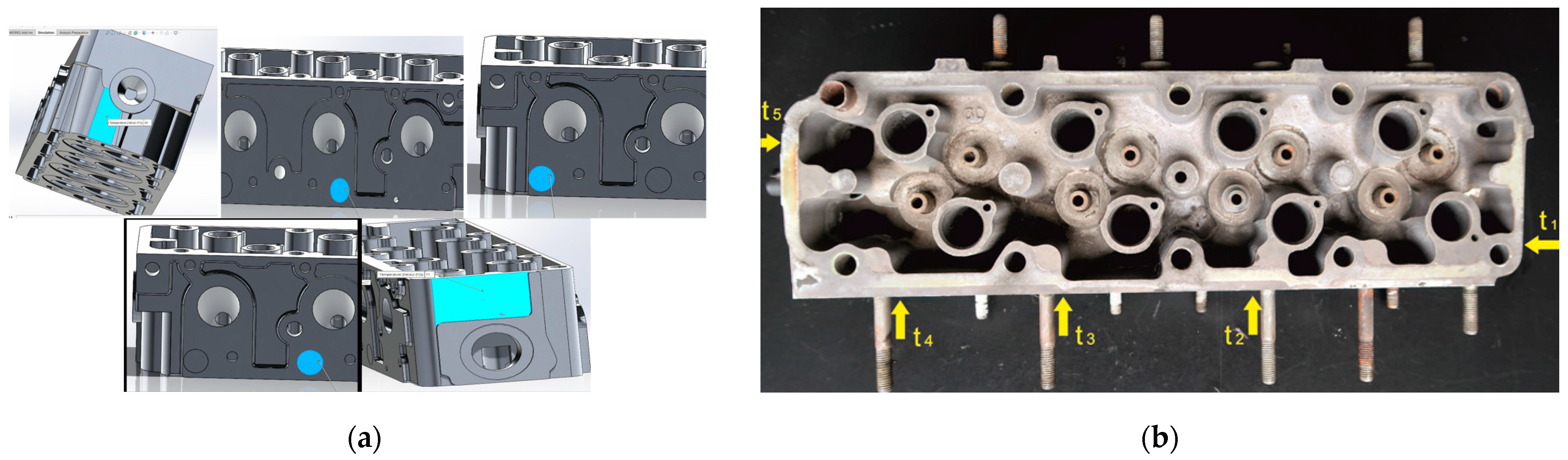
The points, where temperatures t1 through t5 were recorded, are shown in
Figure 1.
In the numerical model, the temperature readings correspond to the positions of the thermocouples used in the laboratory experiments. To ensure precision in measurements, openings are “drilled” in the model at the exact locations of the thermocouples, allowing the samples to capture temperatures at the bottom of these holes (
Figure 2).
The material selected for the model is cast aluminium alloy containing 13% silicon, alloyed with copper and magnesium, as specified in the material catalogue of the SolidWorks 2024 software [
6]. This choice of material closely matches that of the actual component used in the experimental study.
The parameters for convective heat transfer (αg.avg [W/(m
2.deg)] and the resultant temperature tg.res [°C]), which serve as boundary conditions of the third kind, are determined through an iterative process, involving successive approximations during the numerical experiment until the temperature values at the specified points of the calculated temperature field aligned closely with those measured by the thermocouples in the continuous monitoring system. The resulting parameters, thus obtained, in direct correlation with the effective power are presented in
Table 3 and
Table 4.
The results acquired from the experiments have been compared with the measured temperatures obtained from the laboratory experiment, as presented in
Table 5,
Table 6,
Table 7 and
Table 8. Displayed in that table is also the percentage difference between the measured and calculated temperature values. The iterative process of refining the boundary conditions can be continued to achieve even greater accuracy.
The boundary conditions of the third kind, which pertained to the surfaces of the combustion chamber, are determined by the engine load.
One of the significant benefits of extending the laboratory results with numerical standards is the ability to evaluate the impact of the engine’s mean effective pressure on the third-kind boundary conditions.
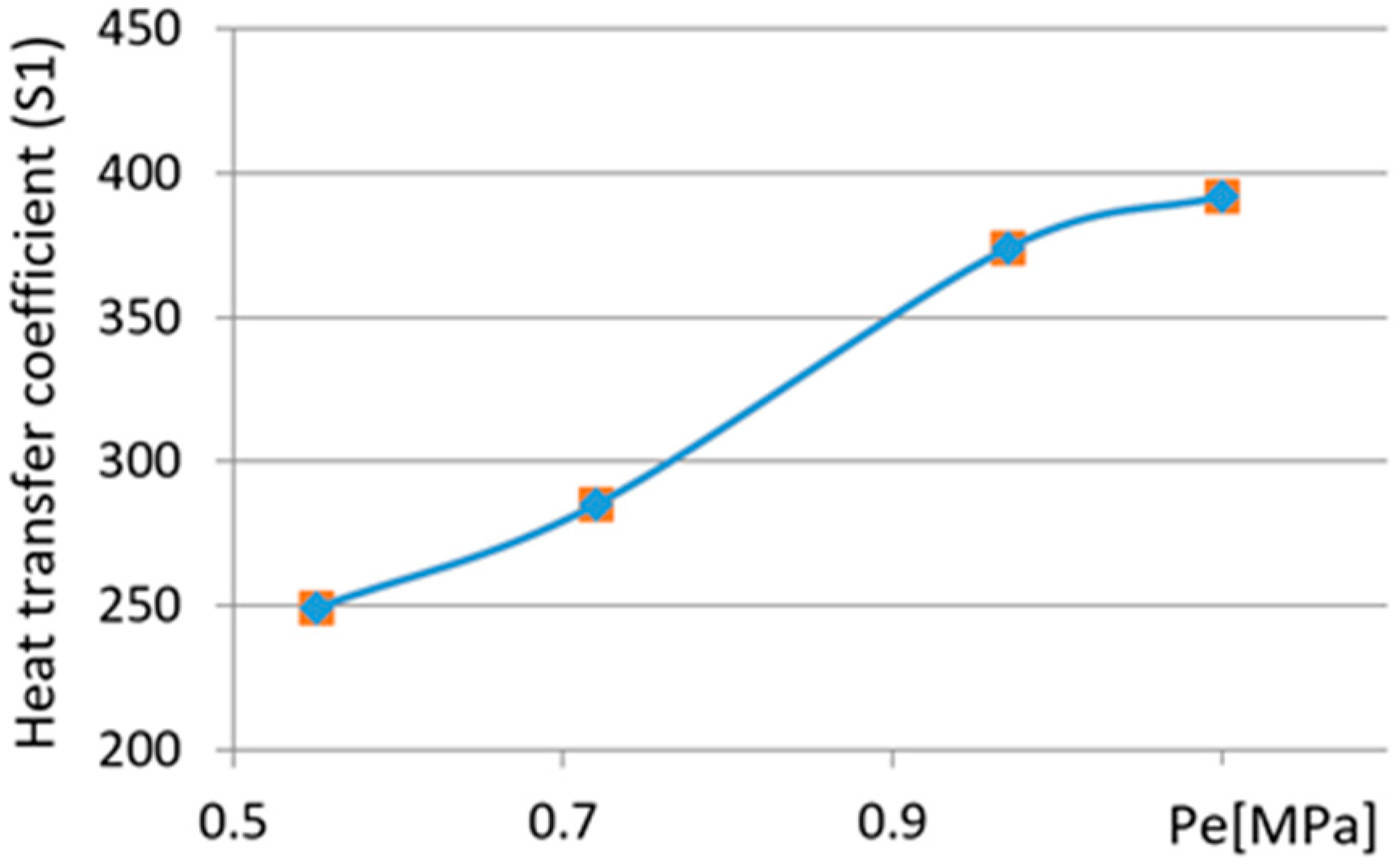
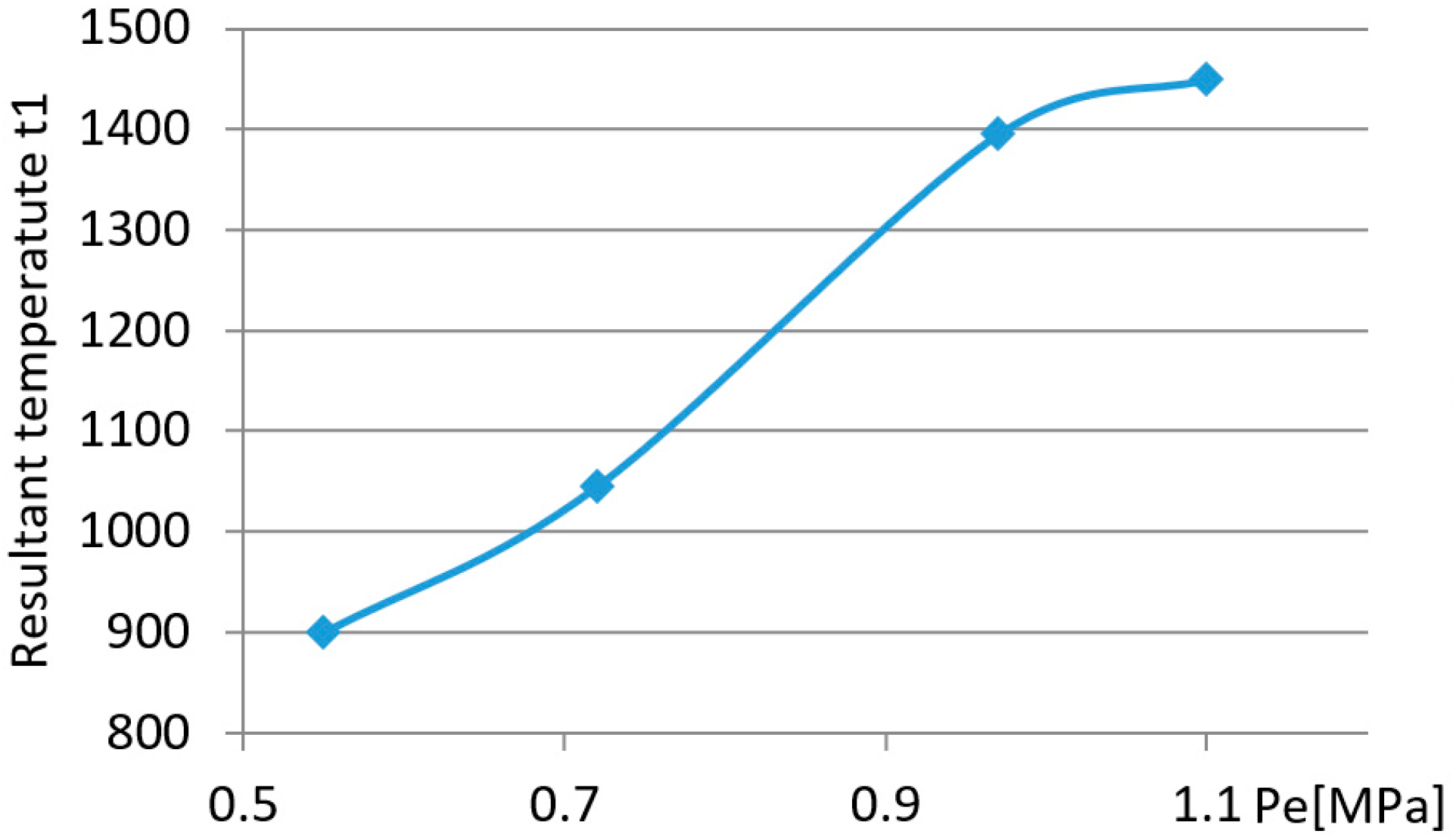
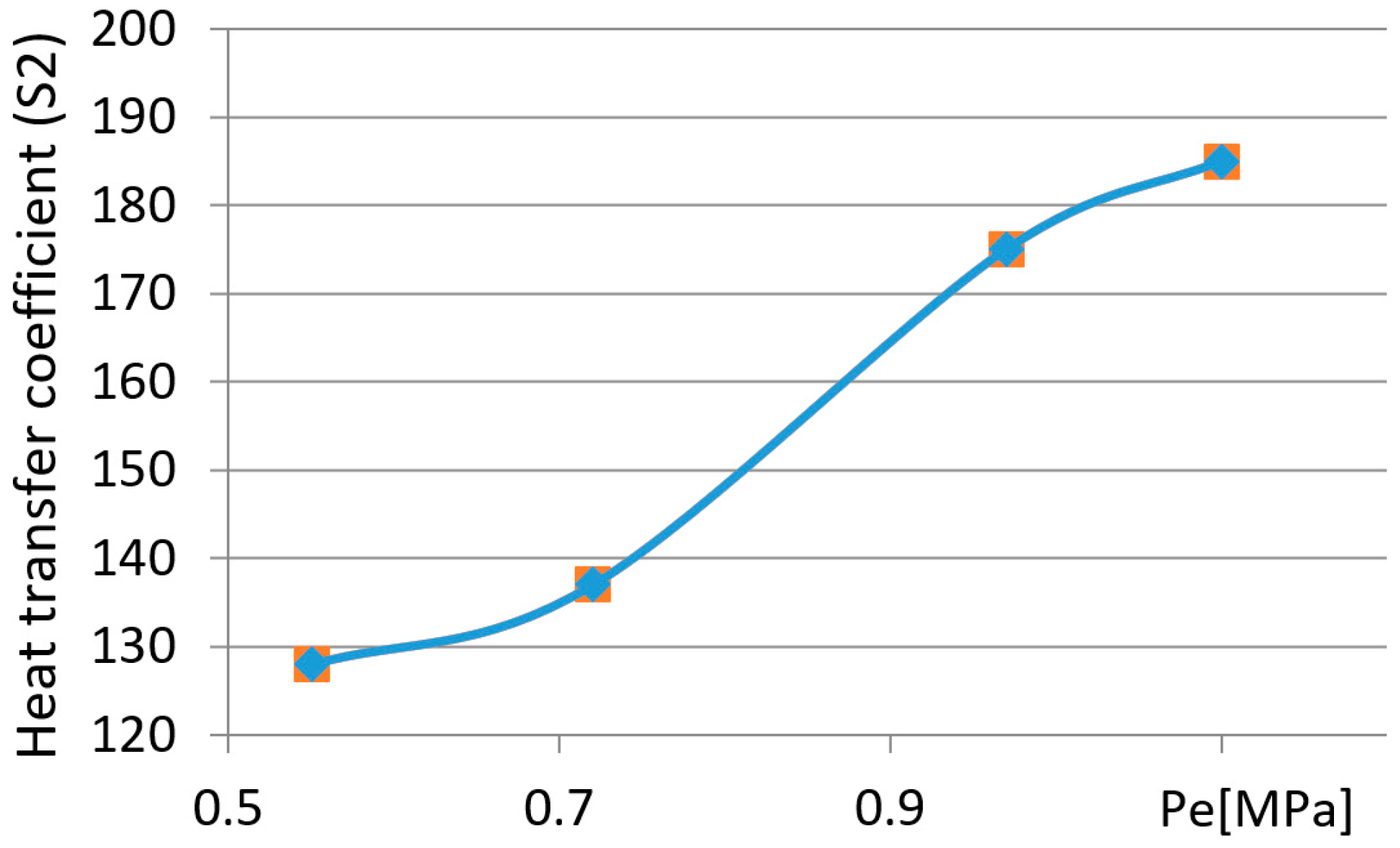
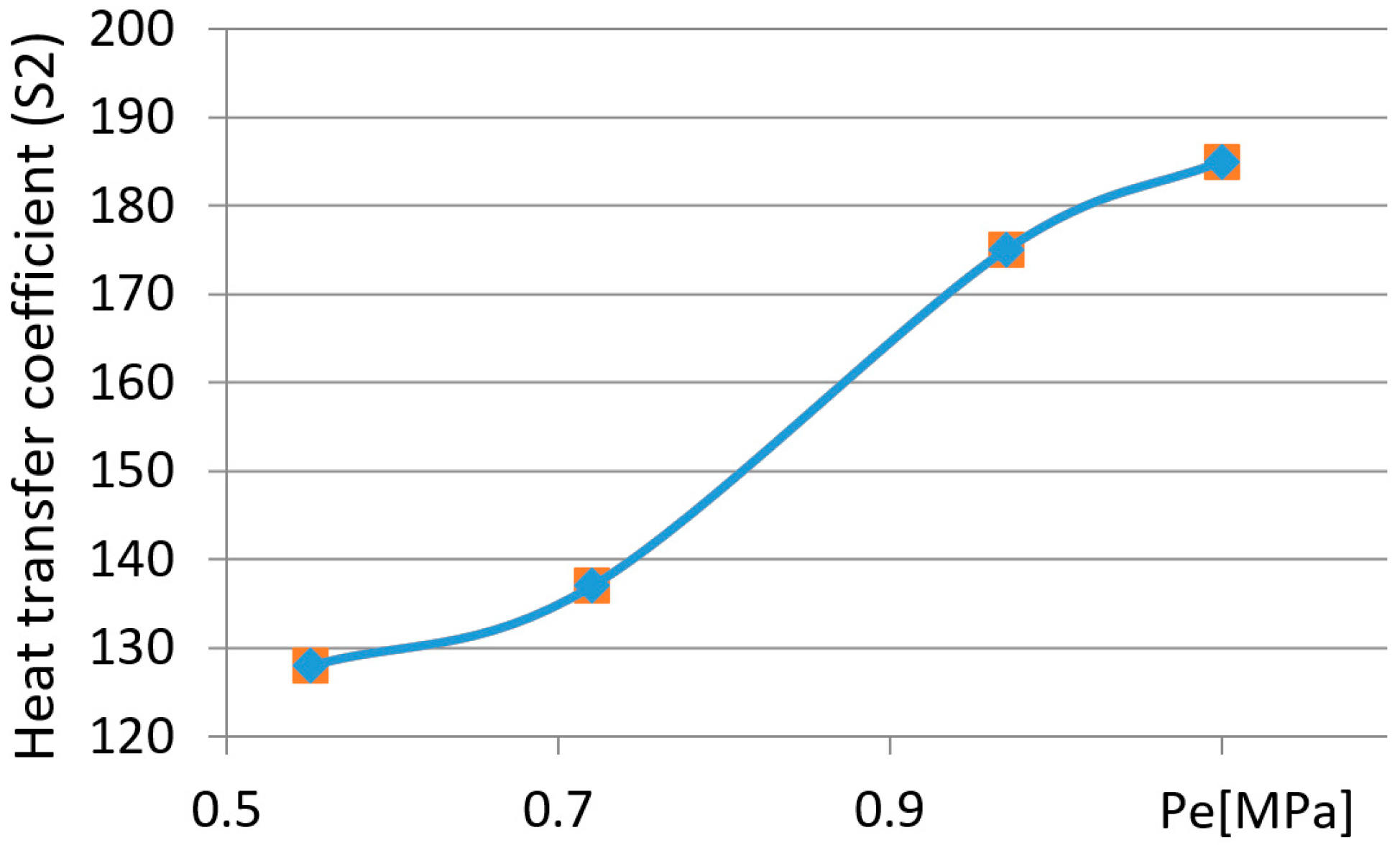
The graphical representations visualized in
Figure 3,
Figure 4,
Figure 5 and
Figure 6 are constructed using the data provided in
Table 7 and
Table 8.
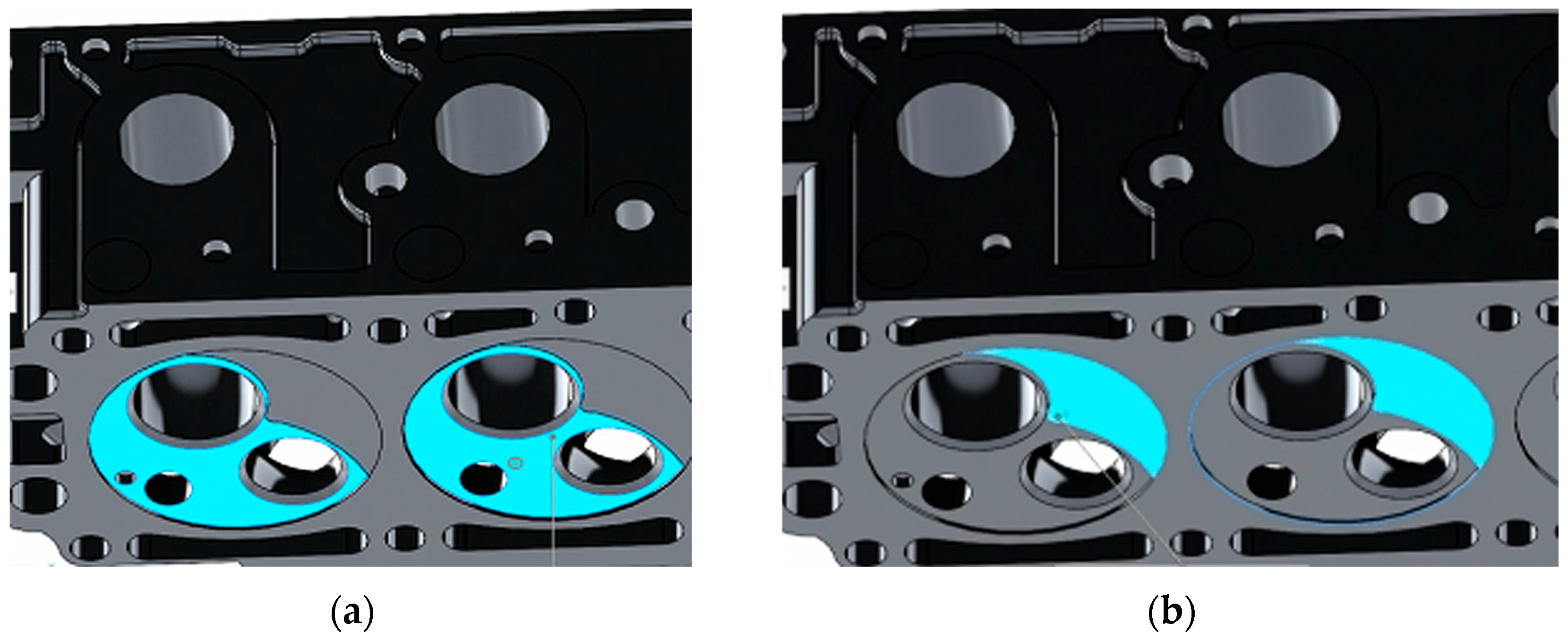
Figure 5 and
Figure 6 reveals the influence of the mean effective pressure on the predetermined boundary conditions for the thermally stressed surface of the combustion chamber (S1),
Figure 7, while
Figure 6 provides the corresponding graph for the surface that experiences less thermal load (S2),
Figure 7.
The temperature distribution within the cylinder head is easily affected by the heat exchange parameters across the combustion chamber surfaces. The heat exchange is defined by the average resultant temperature of the hot gases and the heat transfer coefficient, both of which serve as third-kind boundary conditions [
7]. The impact of the engine load on the boundary condition values is clearly illustrated in
Figure 3 and
Figure 4. It appears that the trends observed in the curves for the two parameters (temperature and heat transfer coefficient) demonstrate a consistent pattern across different surfaces.
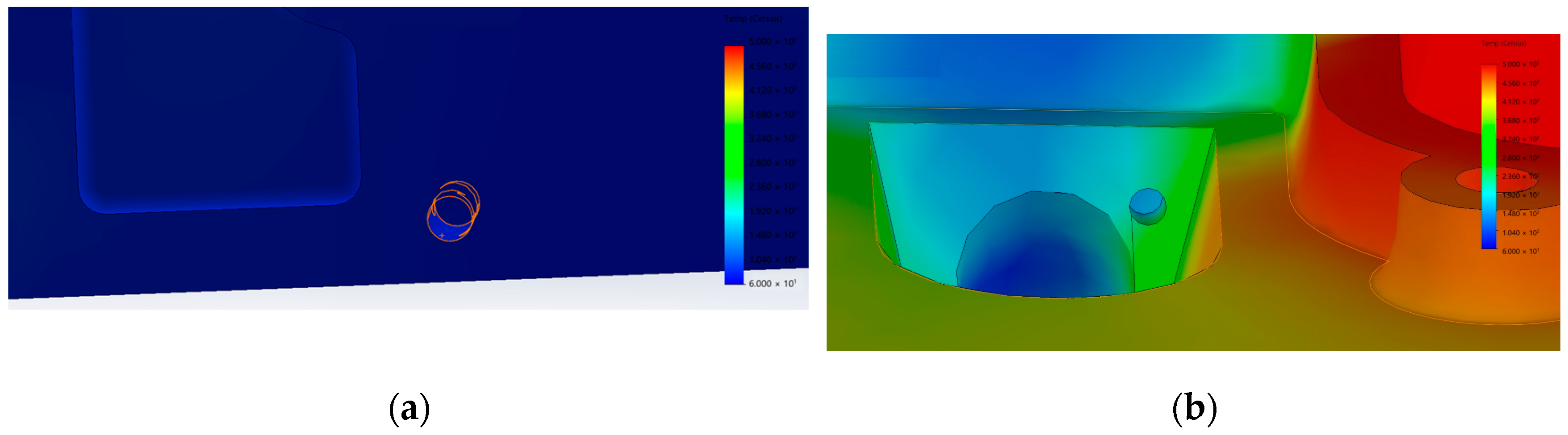
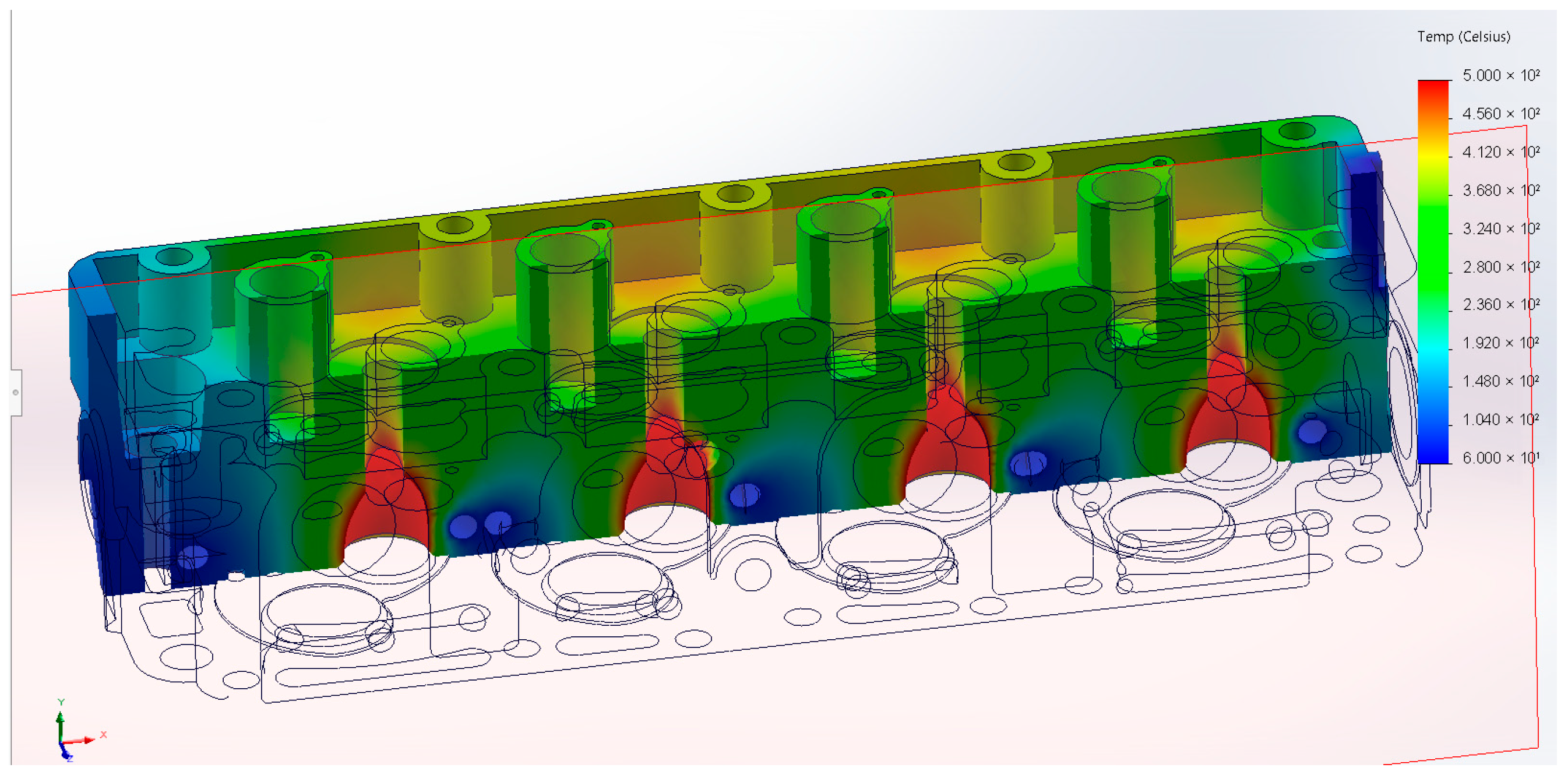
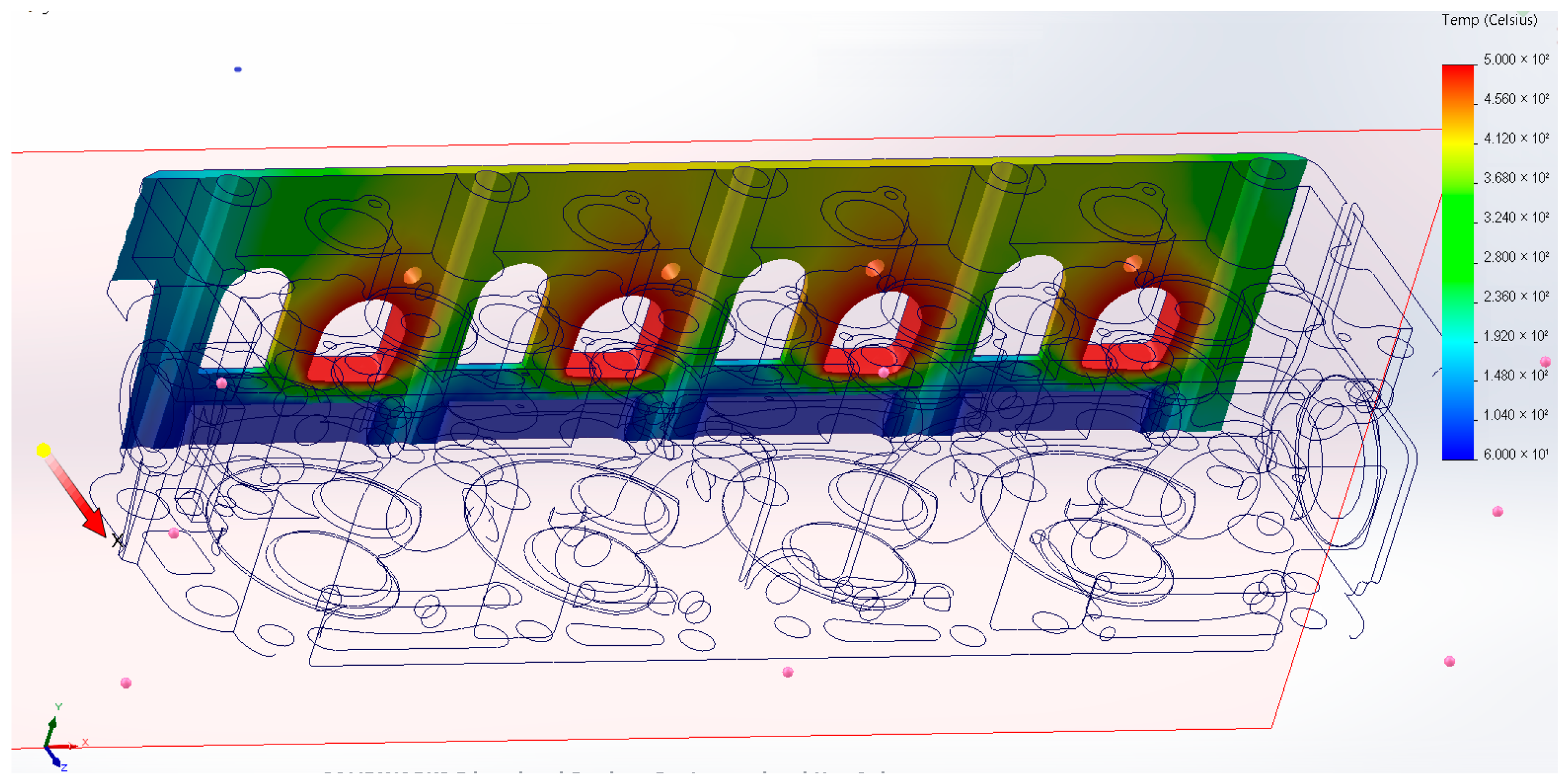
The temperature field generated from the numerical analysis, based on the experimental research, yields an extensive temperature distribution that enables the calculation of temperatures at any selected point. The variations in temperature throughout the volume of the component are depicted in
Figure 8 and
Figure 9.
3. Conclusions
This study presents a novel hybrid theoretical–experimental methodology for comprehensive thermal analysis of cylinder heads operating on gasoline–ethanol blends, addressing the critical challenge of predicting temperature distributions in engines using alternative renewable fuels. The primary scientific contribution lies in developing and validating a systematic approach that combines limited experimental temperature measurements with finite element modeling to generate complete three-dimensional temperature fields, thereby overcoming the inherent limitations of purely experimental investigations.
The methodology demonstrates exceptional accuracy, with numerical predictions deviating from experimental measurements by only 0.09% to 7.03%, and most deviations remaining below 1.5%. For the tested gasoline–E20 blend at 3000 min−1 and 30% throttle opening (effective power range of 19.20–38.40 kW), the iterative determination of third-kind boundary conditions successfully established quantitative relationships between engine load and thermal parameters. Specifically, the heat transfer coefficient ranged from 249 to 392 W/m2K, while resultant gas temperatures varied between 800 °C and 1450 °C, both correlating strongly with mean effective pressure (0.55–1.10 MPa).
The validated model enables prediction of temperatures at any location within the cylinder head, providing critical insights for thermal management when transitioning to renewable fuel blends. The integration of experimentally measured temperatures as first-kind boundary conditions, combined with the iterative refinement of convective heat transfer parameters as third-kind boundary conditions, establishes a robust and reproducible framework applicable to various engine configurations and operating conditions.
Future research should focus on extending this methodology to higher ethanol concentrations and other biofuel blends to establish comprehensive design guidelines for alternative fuel engines. Investigation of transient thermal behavior during dynamic load variations would provide valuable insights into thermal fatigue mechanisms. Additionally, coupling the thermal model with mechanical stress analysis would enable holistic assessment of component durability under combined thermo-mechanical loading. Experimental validation across multiple engine types and geometries would further enhance the generalizability of the approach, while integration with real-time combustion simulation could enable predictive optimization of cooling systems for next-generation sustainable powertrains.