
Proceeding Paper

Virtual and Physical Prototyping in Mechanical Shock Test of an EV Battery Module †
Department of Production Technology and Systems, Faculty of Industrial Technology, Technical University—Sofia, 1000 Sofia, Bulgaria
*
Author to whom correspondence should be addressed.
Presented at the 17th International Scientific Conference on Aerospace, Automotive, and Railway Engineering (BulTrans-2025), Sozopol, Bulgaria, 10–13 September 2025.
Eng. Proc. 2026, 121(1), 12; https://doi.org/10.3390/engproc2025121012
Published: 13 January 2026

Abstract

This study presents a methodology used in the design certification of a battery module for electric vehicle applications. The methodology combines virtual and physical techniques to assess the structure under mechanical shock testing, according to the standards’ requirements. Virtual prototyping is used to quantify parameters as stresses and deformations. Performed simulations using the virtual prototype are validated by testing the physical prototype, which allows for assessing various design parameters with a high level of confidence. The testing of a physical prototype is performed using specialized equipment—a mechanical shock test bench—which is developed and manufactured especially for this task. The presented methodology is demonstrated in an industrial use case, and the main contribution of this study is related to the way the combination of virtual and physical prototyping and testing is used.

1. Introduction

The increase in the standard of living and the search for green energy and eco-friendly solutions are driving the automotive fleet market. Currently, there is an ongoing transition to electric motors, and their wide implementation is also for trucks. The global electric vehicle (EV) market is expanding at an unprecedented rate, with battery packages and technology playing a key role. This expansion is driven by several key advances, including the need for sustainable transportation solutions that meet customer demands, the recent rapid development of battery technology, the continuous development of new materials, and the overall application of new technologies [1,2].
A key component of the EV—the battery package (BP)—is in dynamic research and development (R&D) activities, aiming to develop higher-performing batteries in terms of capacity, energy density, and reliability. Additionally, the BP’s design priorities are evolving to include ease of service, diagnostics, and modularity [3]. These requirements aim to reduce costs and to enable second-life applications such as energy storage [4].
The BP is also a key component that affects vehicle safety. Its strength, rigidity, heat dissipation, and waterproofing should meet high design requirements [5]. The development of standards and procedures for BP testing over the last years has been very intense. Generally, performed tests are essential to the safety and reliability standard requirements, as well as to the performance of the equipment used in the vehicle. Testing is also needed to evaluate various BP design parameters (capacity, life cycle, performance). Different organizations (as UL, IEC, and SAE) have developed standards that include testing protocols to provide a framework for conducting rigorous tests and validating compliance with specific requirements. These standards help the automotive industry to integrate BPs into electric and hybrid vehicles, providing reliable and efficient energy storage solutions. The standard requirements are checked via testing that could be performed at each phase of the product development process, in production, and during its exploitation, to evaluate the overall system design and optimize its performance [6].
Existing standards (voluntary documents, drafted by nongovernmental organizations) and regulations (issued by governmental authorities and have the force of law) could be grouped in nine specific directions of requirements: (1) safety; (2) performance; (3) communication and protocol; (4) Battery Management System (BMS); (5) recycling and environmental; (6) charging; (7) packaging, transport, and handling; (8) testing; (9) energy density and efficiency [7,8,9]. The corresponding BP test standards are constantly improved to guarantee the safety of the battery industry [10], including the International Organization for Standardization (ISO), the International Electrotechnical Commission (IEC), the Society of Automotive Engineers (SAEs), UL certification body, and others. Another possible categorization groups testing into three types: mechanical, electrical, and thermal [11,12,13]. A large number of standards have been developed, and a summary of those that are applicable to the mechanical properties of BP is listed in Table 1.
One of the most important regulations, which covers most of the requirements and is widespread, is UN/ECE-R100 [14]. It is an essential European requirement for the approval of electric road vehicles. UN ECE Regulation No. 100 (also referred to as R100) addresses the safety requirements specific to the electric power train of road vehicles, including rechargeable battery systems. The regulation was published in 1996 and revised in 2011 to ensure compliance with new technologies, with the latest revision in 2021. The regulation specifies all tests that must be carried out on lithium batteries installed in four-wheel electric vehicles for the transport of persons or goods in road vehicle categories M and N with electric traction. This regulation consists of two parts that regulate the approval of road EVs, and it is mandatory.
This study focuses on the mechanical tests for BP, particularly the mechanical shock tests. Many studies on the effect of vibrations and shocks on Li-ion battery cells have been recently conducted, and it is of high importance to obtain preliminary information at the earliest possible design stage [15,16]. Most of the studies use virtual prototyping at the early design stage because of its applicability [17,18,19]. Virtual prototyping technologies enable the examination of multiple parameters, detailed review of ongoing physical processes, and easy checking of various design variants [20,21], as well as optimization [22]. Virtual prototyping results are planned to be validated by physical tests.

2. Materials and Methods

2.1. Materials

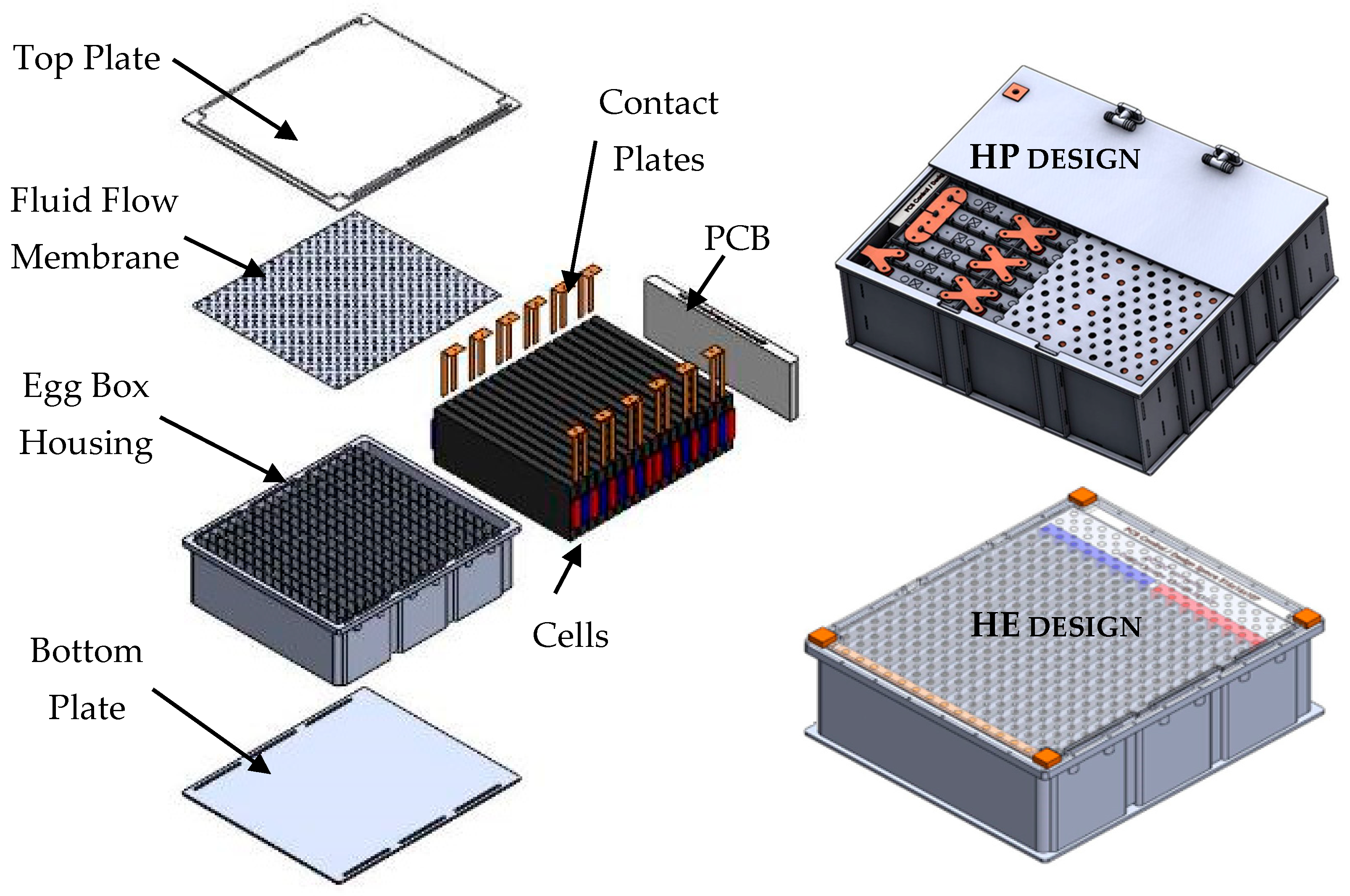
The design of a battery module for the EV BP is the focus of the current study. It is developed in relation to a research project that aims to reach a new concept of standardized, modular, and scalable battery pack. A new modular pack concept is developed, which has provided an opportunity to build custom-defined battery packs in a faster and reliable way, using innovative and predictable Egg Box modules.
The modules are filled with high energy (HE), with pouch Farasis P73 battery cells, or high power (HP), with prismatic Toshiba SCiB 20Ah cells [23], but their outline dimensions are equal. The overall design is shown in Figure 1.

2.2. Methods

2.2.1. The Test Procedure

This design is planned to be tested according to the methodology, which is based on UNECE R100 standard. The mechanical shock test is a part of the safety performance evaluation, and its purpose is to verify the design under inertial loads that may occur during a vehicle crash—crashworthiness.
The standard allows using a subsystem of the pack—its module—to perform the test, as the test result can reasonably represent the performance of the complete battery pack with respect to its safety performance under the same conditions. In addition, the electronic management unit may be omitted from installation on the device under test (DUT) because the electronic management unit for the pack is not integrated into the casing enclosing the cells. The required by the standard test conditions are as follows:
  • Ambient temperature: 20 ± 10 °C;
  • State of Charge (SOC): >50%;
  • All protection devices: Operational (protection systems to be checked after the test);
  • Positioning of the DUT: Two in plane directions—longitudinal (LONG) and transverse (TRAN).
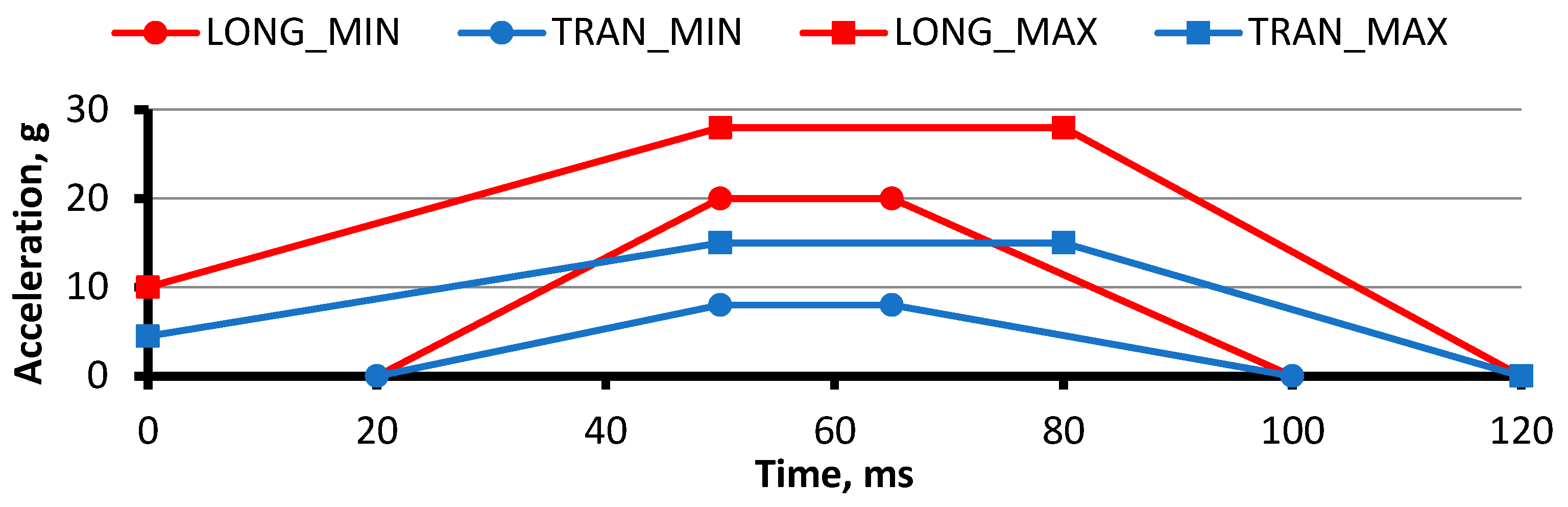
The DUT is decelerated or accelerated in compliance with the acceleration corridors that are specified in Figure 2—for M1 vehicles (cars), where maximal (LONG_MAX, TRAN_MAX) and minimal (LONG_MIN, TRAN_MIN) values are shown. The test pulse is within the minimum and maximum value as specified, and a higher shock level and/or longer duration can be applied to the DUT.
A separate DUT is used for each of the test pulses specified. The test shall end with an observation period of 1 h at the ambient temperature conditions of the test environment.
During the test, there should be no evidence of fire; explosion; electrolyte leakage: all liquid leakage should be considered as the electrolyte. The evidence of electrolyte leakage should be verified by visual inspection without disassembling any part of the tested device. Position after testing: The DUT should be retained by its mounting, and its components should remain inside its boundaries. For a high voltage battery pack, the isolation resistance of the tested device should ensure at least 100 Ω/Volt for the whole REESS measured after the test, or the protection degree IPXXB should be fulfilled for the tested device.

2.2.2. The Methodology

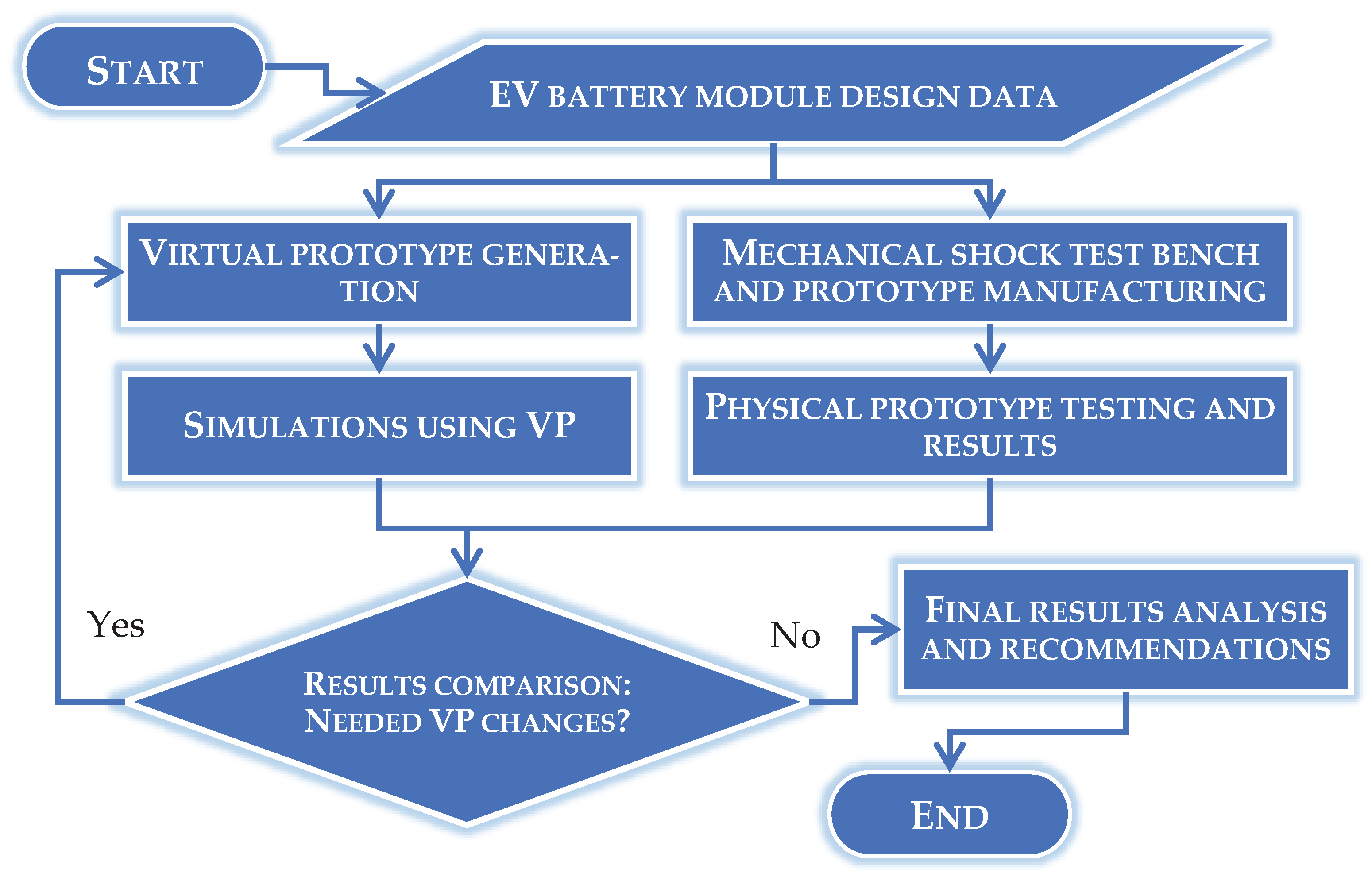
The used methodology in this study implements two separate approaches—using virtual prototype and using physical prototype. It is shown in general in Figure 3. The process is started by collecting the necessary design data for the examined electric vehicle (EV) battery module. Then, the process is split in two: virtual prototyping (VP) and physical prototyping (PhP). The virtual prototyping approach comprises two general steps—preparation and generation of the VP itself and performing simulations over it. The PhP approach requires preparation of a mechanical shock test bench—a specialized tool to perform the tests and prototypes to be manufactured. Next, the proper tests are performed using the test bench and produced prototypes.
An integral validation through a comparison of results from the VP simulations and PhP tests is performed in the next stage. If a significant difference is found, the virtual prototype requires some adjustments, and the entire process of virtual prototyping should be re-run till the results show good coincidence. Why is this needed? It is needed because the next steps that involve EV battery packages with various module numbers and positionings will be easily carried out just by virtual prototyping. This is important, as it will save time and money, giving results with sufficient confidence.
Finally, the obtained results are analyzed, and recommendations over further design development are obtained.

2.3. Virtual Prototyping Approach: Prepared Simulation Models

The virtual prototyping is performed for the two types of modules, HE and HP, in order to evaluate the mechanical structure and the maximum achieved equivalent stresses inside the modules. This is probably the most useful advantage of VP when compared to PhP—the ability to observe various internal parameters as stress, energy, etc.
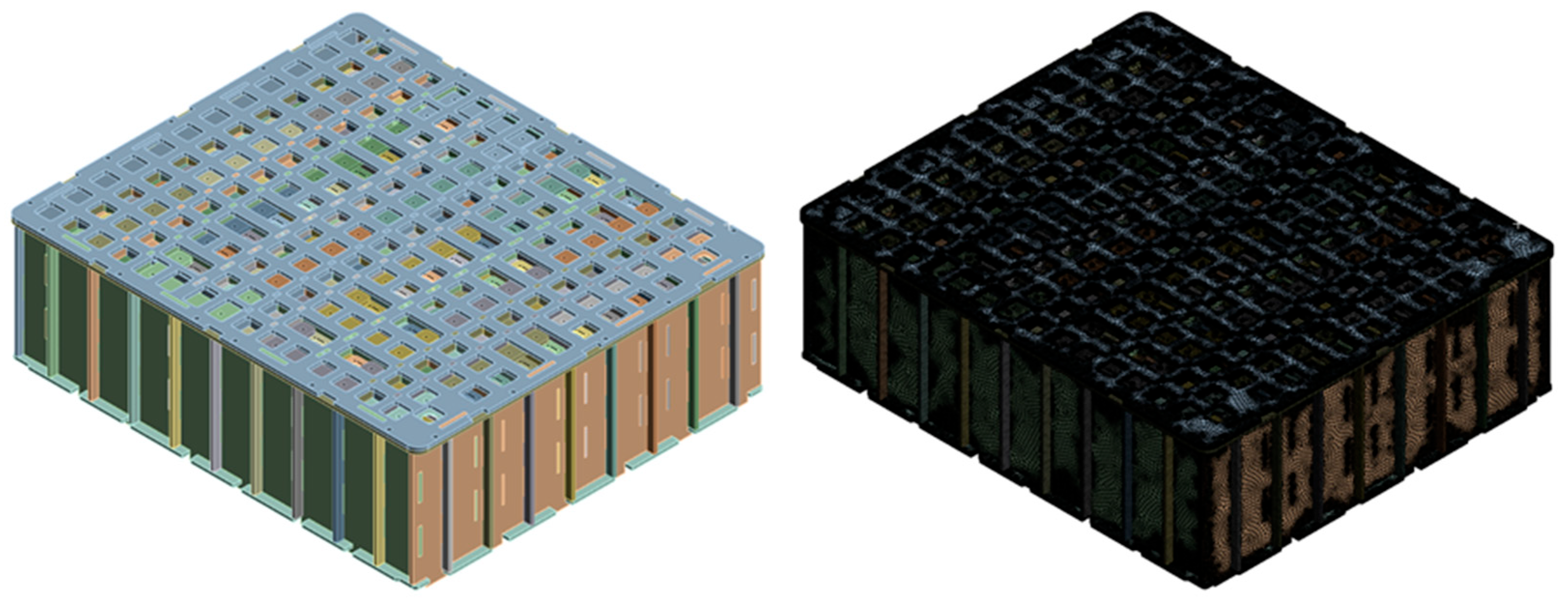
A virtual prototype (or digital mock-up) is created for each of the two modules. Each VP includes the module’s housing and the cells inside it, as well as the bus bars. The Cell Supervising Circuit (CSC) housing and its components are suppressed for this simulation given their relatively negligible weight compared to the module. The cells are presented by their weight (electrolyte is not modeled) and do not contribute to the overall rigidity (worse case). The built Finite Element (FE) model of each of these prototypes has 1,372,000 elements and 5,210,000 elements for the HE module, and 1,732,000 elements and 6,712,000 nodes for the HP module. The mesh is more than sufficient for the purposes of the simulation. The mesh model is shown in Figure 4.
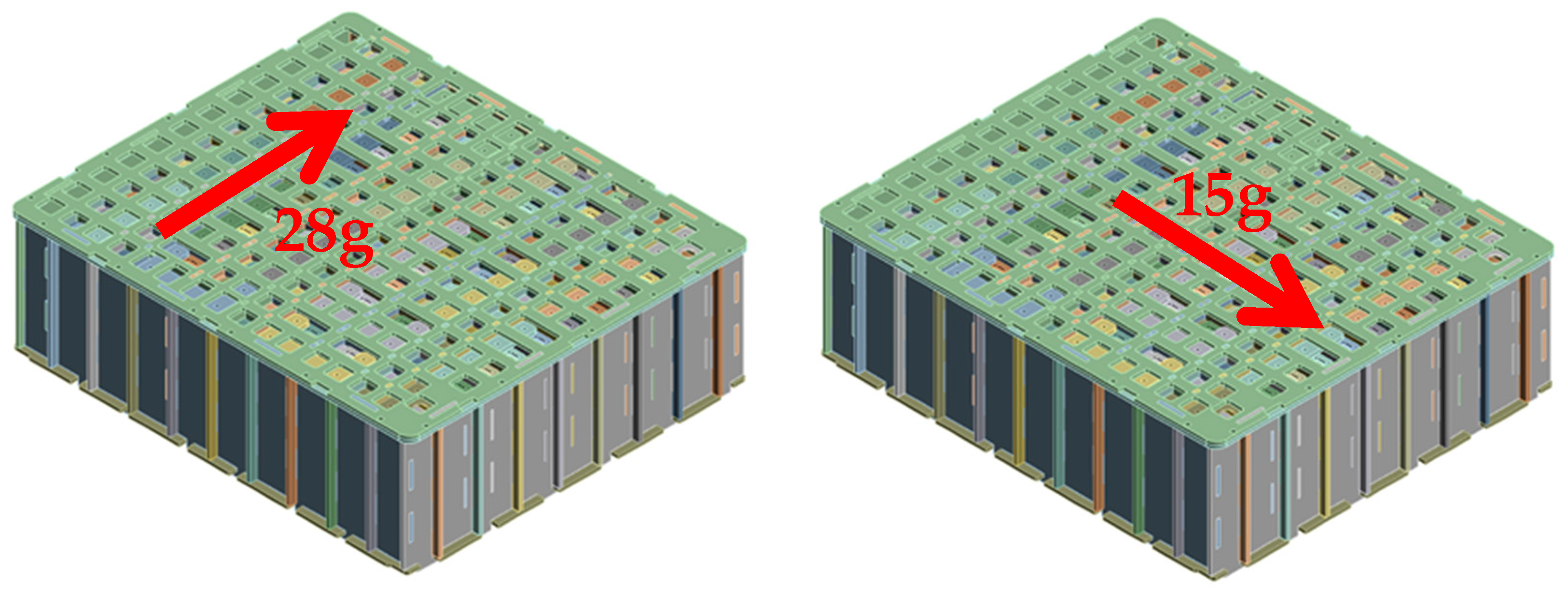
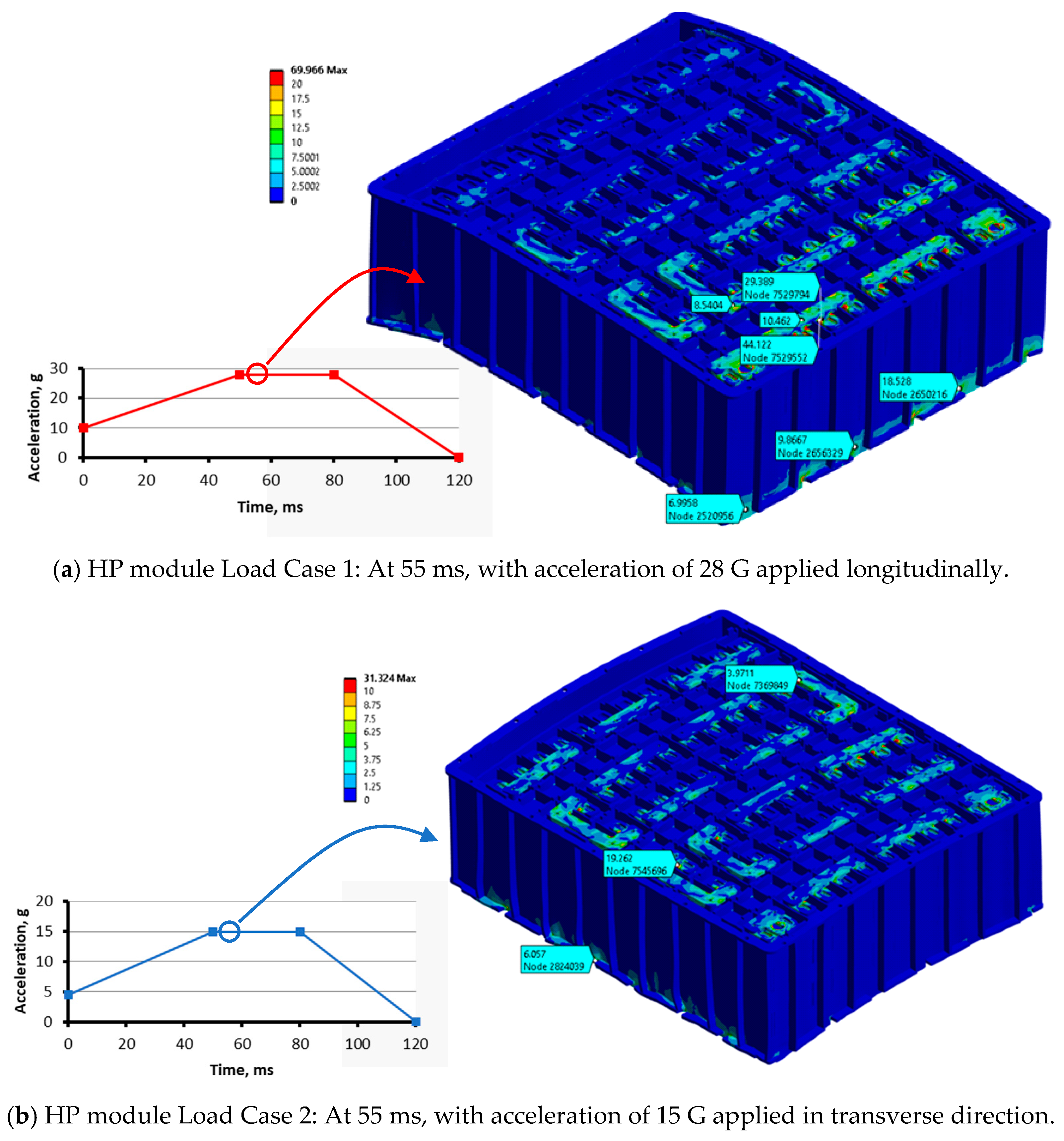
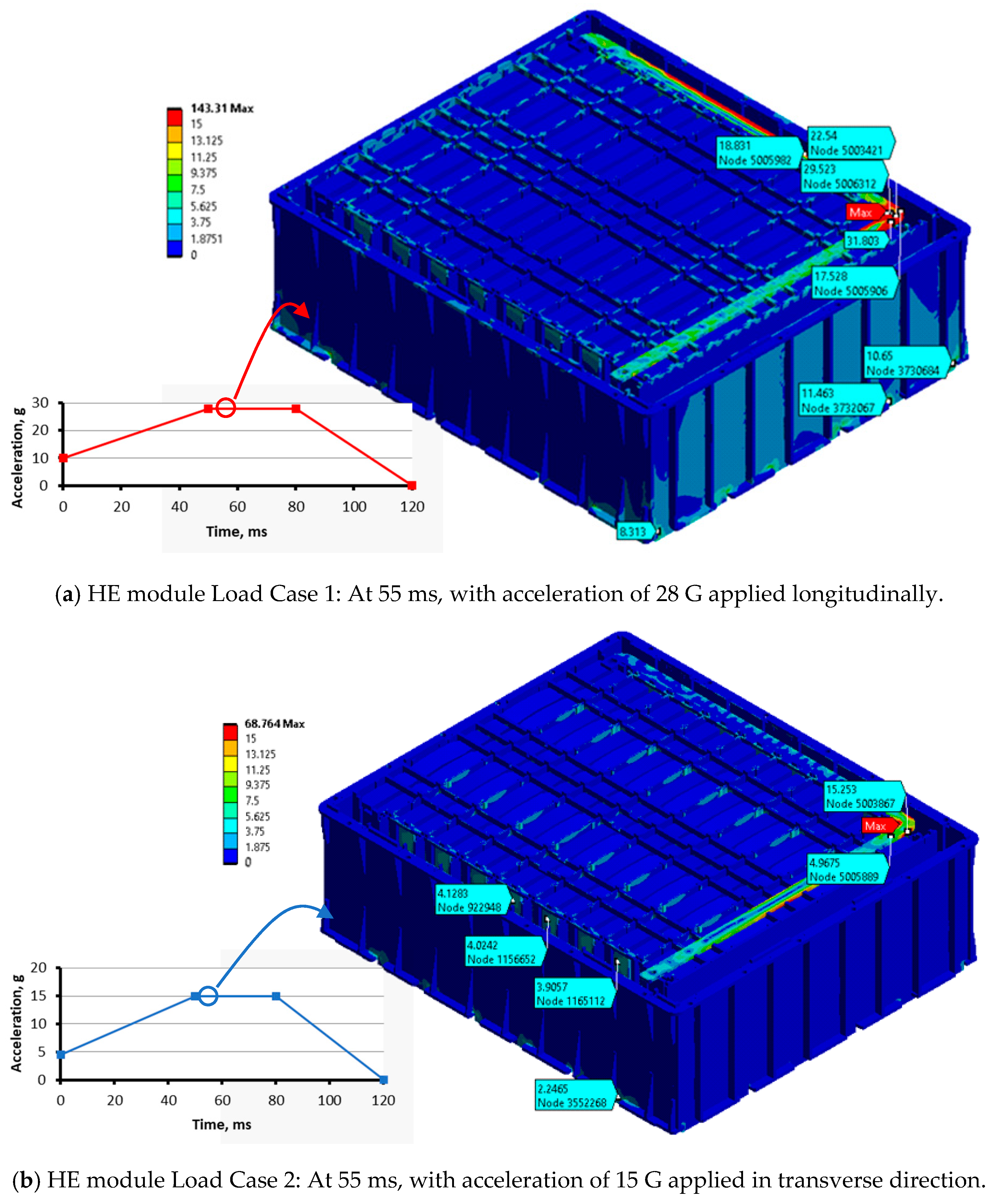
Two load cases are calculated—one with an acceleration of 28 G in the longitudinal direction of travel (the transverse orientation of the module) and one with 15 G in the transverse direction of travel (the longitudinal side of the module). The load curve of the applied loads follows the upper limits, as shown in Figure 2. This is visualized in Figure 5, where the directions of acceleration application are marked too. The constraints correspond to the mounting of the module over the test bench. All material properties are based on the available design data and are not mentioned here, as they are not in the focus of current research. All simulations are performed using ANSYS Workbench version 2019 R3 (license of Customer # 605622, type “No expiration”, acquired on 7 July 2020), employing software module for the structural simulations based on the Finite Elements Method and using transient structural analysis.

2.4. Mechanical Shock Test Bench

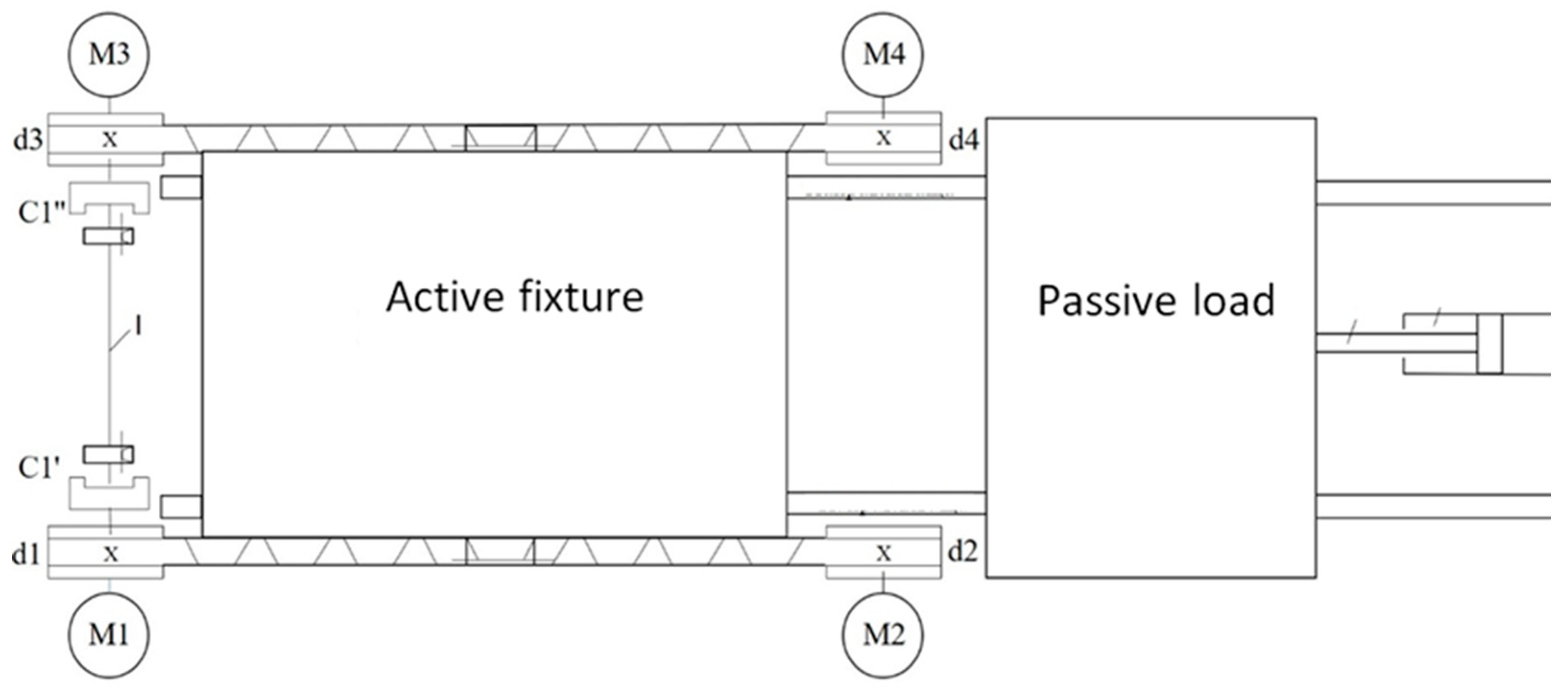
Special equipment is developed for performing physical testing of the DUT. The mechanical shock test in UNECE R100 standard uses high accelerations in a short time, and a kinematic diagram of the mechanical shock test bench is specially developed. It is shown in Figure 6. The active fixture is accelerated using four asynchronous electric motors (M1–M4). The transmission of mechanical energy from one shaft to another is carried out using belt gears, which bring the active fixture into motion.
The EV battery shock test stand consists of a pre-machined main mass, four asynchronous electric motors (M1–M4), whose shafts are interconnected by two belt gears (d1–d2 and d3–d4). Oppositely located engines are connected by a synchronizing shaft-I, consisting of a solid or hollow shaft (tube) and two couplings (C1′–C1″). The aim of the synchronizing shaft is to compensate for the deviations from the correct mutual arrangement of the engine shafts—longitudinal, radial, and angular displacements. The active fixture, on which the test object is placed, is accelerated by the belt, which is connected to it by the engagement plate. The movement is carried out by guides on which the worktable is mounted. The passive load is intended in case the electric motor brakes fail to stop the worktable. Then, the two masses will collide with each other, and the hydraulic damper, which is a high-load buffer, will permanently stop the movement of the worktable.
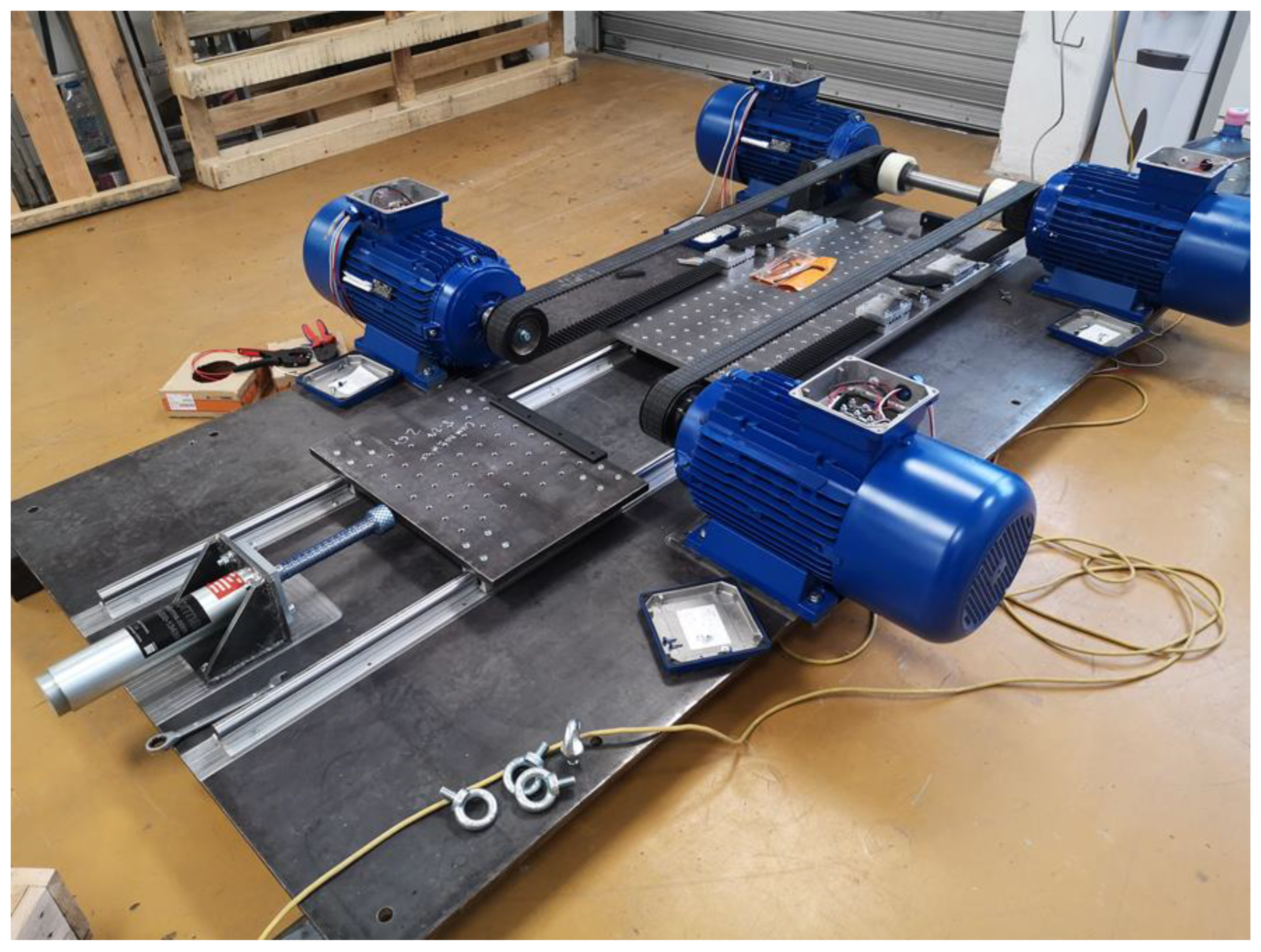
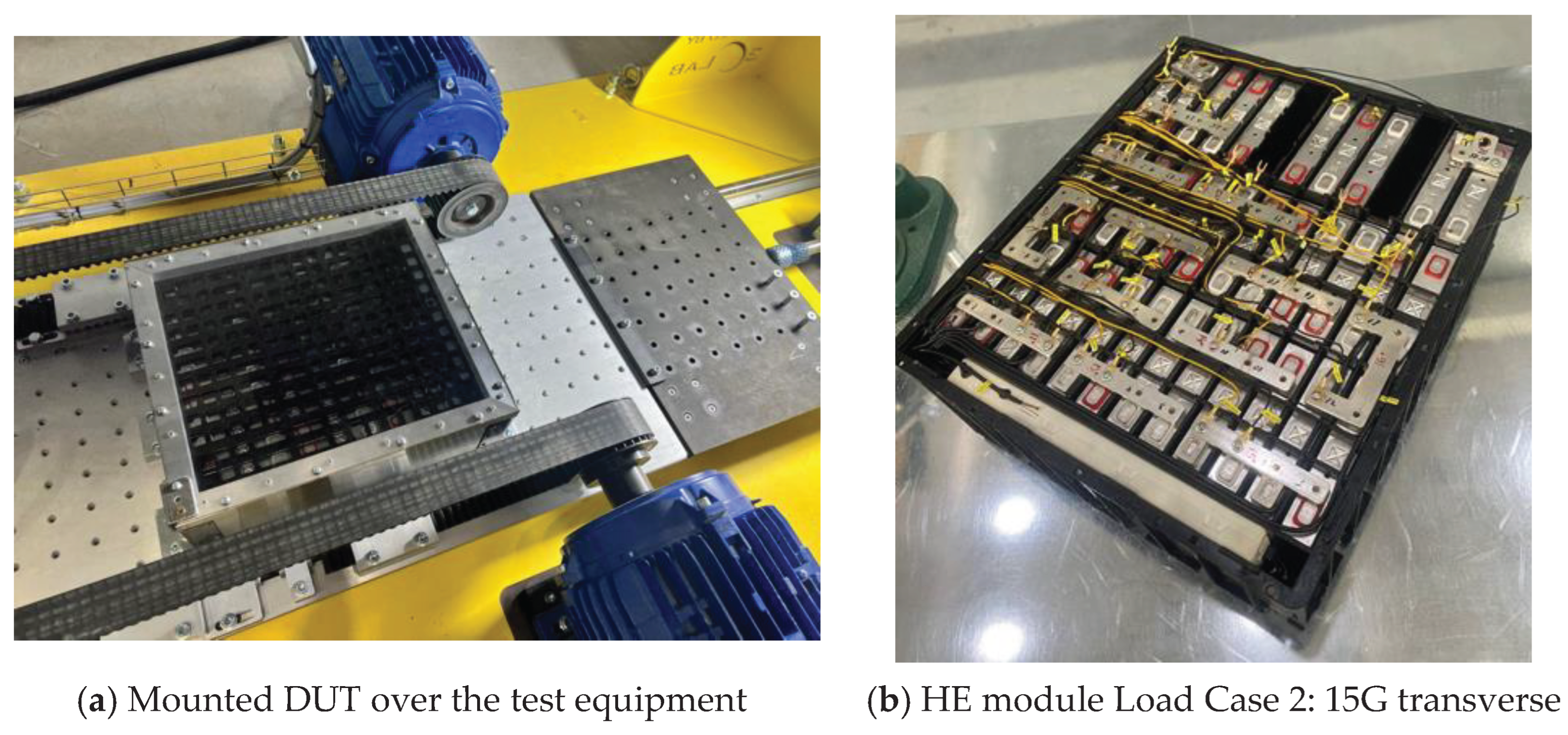
The manufactured and assembled bench is shown in Figure 7. The bench is calibrated using accelerometers mounted on the active fixture. The correspondence to the standard requirements for acceleration impulse is reached by adjusting the current magnitude to reach the appropriate start torque. Details for the test bench calibration are not included in this study.

2.5. Physical Prototypes

Two prototypes have been produced—high energy (HE), with pouch Farasis P73 battery cells, and high power (HP), with prismatic Toshiba SCiB 20Ah cells. A general presentation of the used physical prototypes in the tests is shown in Figure 8.

3. Results

The results are reported subsequently for both approaches: virtual prototyping and by physical testing.

3.1. Virtual Prototyping Results

The results from the simulations proved that no severe or high equivalent stresses or deformations occur with the maximum defined accelerations from the UNECE R100 standard.

3.1.1. HP Module

  • Load Case 1: 28 G longitudinal: As it stands for the HP module, the maximum equivalent stresses have a maximum of around 70 MPa, which are nodal and realistically are a lot lower, at around 45–50 MPa, and occur inside the bus bars. The module housing has peaks of around 15–18 MPa, which is more than acceptable for the Bayblend® FR3040 material. The equivalent stresses are visualized in Figure 9a.
  • Load Case 2: 15 G transverse: As it stands for the HP module, the maximum equivalent stresses have a maximum of around 30 MPa. The module housing has peaks of around 6–10 MPa, which is way below the maximum allowable stresses for the Bayblend® FR3040 material. The equivalent stresses are visualized in Figure 9b.

3.1.2. HE Module

  • Load Case 1: 28 G longitudinal: As it stands for the HE module, the maximum equivalent stresses have a maximum of around 140 MPa, which are nodal and realistically are a lot lower, at around 20–30 MPa, and occur inside the bus bars. The module housing has peaks of around 8–15 MPa, which is once again more than acceptable for the housing material. The equivalent stresses are visualized in Figure 10a.
  • Load Case 2: 15 G transverse: As it stands for the HP module, the maximum equivalent stresses have a maximum of around 70 MPa, which are again in the long bus bar, but the real stresses are at around 15–20 MPa. The module housing has peaks of around 5–8 MPa, which is more than acceptable for the housing. The equivalent stresses are visualized in Figure 10b.

3.2. Physical Testing Results

A mechanical shock test over the test pack is performed using special equipment, as described above. The test is based on the UNECE R100 standard and uses high accelerations in a short time and a kinematic diagram of the mechanical shock test bench.
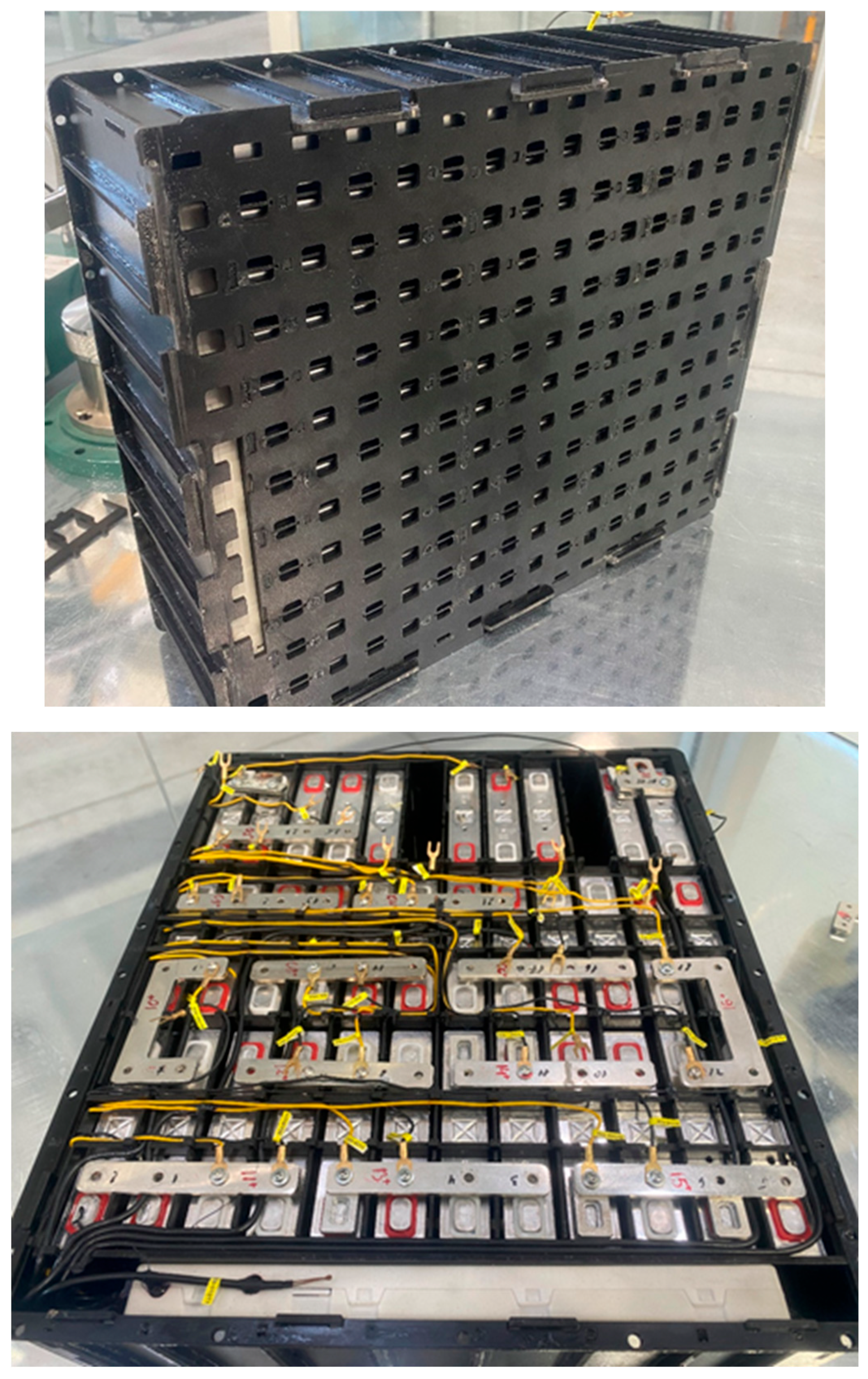
Photos of the mounted on the equipment device under test (DUT)—the test pack—are shown in Figure 11a.
The test pack, or DUT, is examined after the test, and there is no evidence of
  • Fire;
  • Explosion;
  • Electrolyte leakage (verified by visual inspection without disassembling).
  • The DUT is retained by its mounting, and its components are inside its boundaries.
Photos of the tested and visually inspected test pack are shown in Figure 11b.
The general conclusion is that there are no evident damage over the test pack after the performed experiment. There were no plastic deformations, nor cracks observed after the experiment. It is not expected that damage will also occur on the product in conditions of mass production, as it will be with better performance parameters when performing this test because of its relatively higher rigidity.

4. Discussion

Obtained results from both virtual and physical prototyping show very good correspondence. This is evident mainly by the numerical results from the simulations over the virtual prototypes, where there are neither critical stresses nor deformations determined. This is observed also over the physical prototypes that have passed the tests over the mechanical shock test bench. The functional status is reviewed, and it shows that all functions of the battery pack are performed as designed. All functions are within normal limits after the test. Additionally, electrical tests have been performed to check the module for short electrical circuit after the described mechanical shock test. All electrical connections, the soldering points, junctions, and the components overall were found to be in nominal condition.
Thus, the final recommendations could be made, as there is no necessity for design changes. The developed design fulfills the requirements of the battery module standards for EVs, especially concerning its mechanical rigidity and dynamic behavior.

5. Conclusions

The proposed methodology for the assessment of EV battery module behavior at mechanical shock test is validated through an industrial case. This methodology consists of seven steps and combines the advantages of both virtual and physical prototyping. Virtual prototyping and simulations enable the evaluation and verification of the key parameters, such as dimensions, material selection, and the overall design concept of the fixture. A specialized test bench was developed and used for the physical prototype of the examined EV battery module. The tests over this physical prototype are carried out successfully, with no damages observed, and all standard requirements were fulfilled. It is important to note the strong correlation between simulation-based virtual prototype calculations measured and the observed behavior of the physical prototype.
The presented case study successfully demonstrates the effectiveness of the developed methodology, which has been implemented within an industrial setting. Future applications of this methodology are particularly promising for the development of new designs in EVs, including those of different types. By combining virtual and physical prototyping, it provides a well-balanced and efficient solution for industrial applications.

Author Contributions

Conceptualization, G.T. and K.K.; methodology, G.T.; software, K.D.; validation, K.K., T.I. and K.D.; formal analysis, K.K.; investigation, K.D.; resources, T.I.; data curation, T.I.; writing—original draft preparation, K.K.; writing—review and editing, K.K.; visualization, T.I. and K.D.; supervision, G.T.; project administration, G.T.; funding acquisition, G.T. All authors have read and agreed to the published version of the manuscript.

Funding

This work was supported by the European Regional Development Fund under “Research Innovation and Digitization for Smart Transformation” program 2021–2027 through Project BG16RFPR002-1.014-0006, “National Centre of Excellence Mechatronics and Clean Technologies”, and by project No 963646, “High-pErformance moduLar battery packs for sustaInable urban electrOmobility Services—HELIOS”, under the call “Building a Low-Carbon, Climate Resilient Future: Next-Generation Batteries (LC-BAT-10-2020)” within the European Union’s Horizon 2020 research and innovation program.

Informed Consent Statement

Not applicable.

Data Availability Statement

No new data were created.

Conflicts of Interest

The authors declare no conflict of interest.

References

  1. Adebowale, O.J. Modular battery pack design and serviceability in electric vehicles. World J. Adv. Res. Rev. 2025, 26, 2205–2222. [Google Scholar] [CrossRef]
  2. Deng, J.; Bae, C.; Denlinger, A.; Miller, T. Electric vehicles batteries: Requirements and challenges. Joule 2020, 18, 511–515. [Google Scholar] [CrossRef]
  3. Sankaran, G.; Venkatesan, S. Standardization of electric vehicle battery pack geometry form factors for passenger car segments in India. J. Power Sources 2021, 502, 230008. [Google Scholar] [CrossRef]
  4. Adebowale, O.J. Battery module balancing in commercial EVs: Strategies for performance and longevity. Int. J. Eng. Technol. Res. Manag. IJETRM 2025, 9, 162–180. [Google Scholar]
  5. Feng, X.; Hu, J. Analysis and optimization control of finned heat dissipation performance for automobile power lithium battery pack. Therm. Sci. 2020, 24, 3405–3412. [Google Scholar] [CrossRef]
  6. Ruiz, A.; Phrang, A.; Omar, N.; Van Den Bossche, P.; Kriston, A.; Boon-Brett, L. A review of international abuse testing standards and regulations for lithium ion batteries in electric and hybrid electric vehicles. Renew. Sustain. Energy Rev. 2017, 81, 1427–1452. [Google Scholar] [CrossRef]
  7. Lai, X.; Yao, J.; Jin, C.; Feng, X.; Wang, H.; Xu, C.; Zheng, Y. A Review of Lithium-Ion Battery Failure Hazards: Test Standards, Accident Analysis, and Safety Suggestions. Batteries 2022, 8, 248. [Google Scholar] [CrossRef]
  8. Chen, S.; Gao, Z.; Sun, T. Safety challenges and safety measures of Li-ion batteries. Energy Sci. Eng. 2021, 9, 1647–1672. [Google Scholar] [CrossRef]
  9. Castillo, E.C. Standards for electric vehicle batteries and associated testing procedures. In Advances in Battery Technologies for Electric Vehicles; Woodhead Publishing: Cambridge, UK, 2015; pp. 469–494. [Google Scholar]
  10. Kotak, B.; Kotak, Y.; Brade, K.; Kubjatko, T.; Schweiger, H.-G. Battery crush test procedures in standards and regulation: Need for augmentation and harmonization. Batteries 2021, 7, 63. [Google Scholar] [CrossRef]
  11. Yin, H.; Ma, S.; Li, H.; Wen, G.; Santhanagopalan, S.; Zhang, C. Modeling strategy for progressive failure prediction in lithiumion batteries under mechanical abuse. eTransportation 2021, 7, 100098. [Google Scholar] [CrossRef]
  12. Liu, P.; Li, Y.; Mao, B.; Chen, M.; Huang, Z.; Wang, Q. Experimental study on thermal runaway and fire behaviors of large format lithium iron phosphate battery. Appl. Therm. Eng. 2021, 192, 116949. [Google Scholar] [CrossRef]
  13. Zhou, Y.; Wang, F.; Xin, T.; Wang, X.; Liu, Y.; Cong, L. Discussion on International Standards Related to Testing and Evaluation of Lithium Battery Energy Storage. Distrib. Gener. Altern. Energy J. 2022, 37, 435–448. [Google Scholar] [CrossRef]
  14. UN/ECE-R100; Uniform Provisions Concerning the Approval of Vehicles with Regard to Specific Requirements for the Electric Power train. UNECE: Geneva, Switzerland, 2021.
  15. Hua, X.; Thomas, A. Effect of dynamic loads and vibrations on lithium-ion batteries. J. Low Freq. Noise Vib. Act. Control 2021, 40, 1927–1934. [Google Scholar] [CrossRef]
  16. Brand, M.J.; Schuster, S.F.; Bach, T.; Fleder, E.; Stelz, M.; Gläser, S.; Müller, J.; Sextl, G.; Jossen, A. Effects of vibrations and shocks on lithium-ion cells. J. Power Sources 2015, 288, 62–69. [Google Scholar] [CrossRef]
  17. Kermani, G.; Sahraei, E. Characterization and modeling of the mechanical properties of lithium-ion batteries. Energies 2017, 10, 1730. [Google Scholar] [CrossRef]
  18. Vacheva, G.; Hinov, N. Modeling and simulation of hybrid electric vehicles. In Proceedings of the 46th International Conference on Applications of Mathematics in Engineering and Economics, AMEE 2020, Sozopol, Bulgaria, 7–13 June 2020. [Google Scholar]
  19. Chen, Z.Y.; Rui, X.; Sun, F.C. Research status and analysis for battery safety accidents in electric vehicles. J. Mech. Eng. 2019, 55, 93–104, 116. (In Chinese) [Google Scholar] [CrossRef]
  20. Todorov, G.D.; Kamberov, K.H. Black box/white box hybrid method for virtual prototyping validation of multiphysics simulations and testing. IOP Conf. Ser. Mater. Sci. Eng. 2020, 878, 012051. [Google Scholar] [CrossRef]
  21. Romansky, R.P.; Hinov, N.L. Deterministic and Stochastic Approaches in Computer Modeling and Simulation; IGI Global: Hershey, PA, USA, 2023. [Google Scholar]
  22. Malakov, I.; Zaharinov, V. Optimization of size ranges of technical products. Appl. Mech. Mater. 2016, 859, 194–203. [Google Scholar]
  23. Naseri, F.; Barbu, C.; Sarikurt, T. Optimal sizing of hybrid high-energy/high-power battery energy storage systems to improve battery cycle life and charging power in electric vehicle applications. J. Energy Storage 2022, 55, 105768. [Google Scholar] [CrossRef]
Figure 1. Examined “EggBox” design of battery pack module.
Engproc 121 00012 g001
Figure 2. Acceleration corridors for M1 vehicles.
Engproc 121 00012 g002
Figure 3. Methodology for EV battery module testing.
Engproc 121 00012 g003
Figure 4. Used virtual prototype and mesh model in performed virtual prototyping.
Engproc 121 00012 g004
Figure 5. Acceleration boundary conditions for the two load cases.
Engproc 121 00012 g005
Figure 6. Mechanical shock test bench kinematics.
Engproc 121 00012 g006
Figure 7. Assembled mechanical shock test bench.
Engproc 121 00012 g007
Figure 8. Physical prototype used for testing: high-power (HP) module (prismatic Toshiba SCiB 20Ah cells).
Engproc 121 00012 g008
Figure 9. Results from virtual prototyping and simulations over high-power (HP) module (a,b) (prismatic Toshiba SCiB 20Ah cells). Equivalent (von Mises) stress distributions, in MPa.
Engproc 121 00012 g009
Figure 10. Results from virtual prototyping and simulations over high energy (HE) (a,b) (with pouch Farasis P73 battery cells). Equivalent (von Mises) stress distributions, in MPa.
Engproc 121 00012 g010
Figure 11. Physical testing of the battery modules (a,b).
Engproc 121 00012 g011
Table 1. Standards applicable to the mechanical aspect of the battery [6].
Specific TestApplicabilityStandard
Mechanical ShockInt.SAE J2929 (2013), ISO 12405-1 (2011), ISO 12405-3 (2014), IEC 62660-2 (2016)
EUUN/ECE-R100.02 (2021)
USAUL 2580 (2013), USABC (1999), FreedomCAR (2005)
IndiaAIS-048 (2009)
DropInt.SAE J2464 (2009), SAE J2929 (2013)
USAUL 2580 (2013), USABC (1999), FreedomCAR (2005)
Republic of KoreaKMVSS 18-3 (2009)
ChinaQC/T 743 (2006)
PenetrationInt.SAE J2464 (2009)
USAUSABC (1999), FreedomCAR (2005)
IndiaAIS-048 (2009)
ChinaQC/T 743 (2006)
ImmersionInt.SAE J2464 (2009), SAE J2929 (2013), ISO 12405-3 (2014)
USAUL 2580 (2013), USABC (1999), FreedomCAR (2005)
Republic of KoreaKMVSS 18-3 (2009)
Crush/CrashInt.SAE J2464 (2009), SAE J2929 (2013), ISO 12405-3 (2014), IEC 62660-2 (2016)
EUUN/ECE-R100.02 (2021)
USAUL 2580 (2013), USABC (1999), FreedomCAR (2005)
ChinaQC/T 743 (2006)
RolloverInt.SAE J2464 (2009), SAE J2929 (2013)
USAUL 2580 (2013), USABC (1999), FreedomCAR (2005)
IndiaAIS-048 (2009)
VibrationInt.SAE J2929 (2013), ISO 12405-1 (2011), ISO 12405-3 (2014), IEC 62660-2 (2016)
EUUN/ECE-R100.02 (2021)
USAUL 2580 (2013), USABC (1999), FreedomCAR (2005)
IndiaAIS-048 (2009)
ChinaQC/T 743 (2006)
Disclaimer/Publisher’s Note: The statements, opinions and data contained in all publications are solely those of the individual author(s) and contributor(s) and not of MDPI and/or the editor(s). MDPI and/or the editor(s) disclaim responsibility for any injury to people or property resulting from any ideas, methods, instructions or products referred to in the content.