1. Introduction
Due to the increasing importance of environmental sustainability and biodiversity issues in national education, environmental education plays a significant role. However, traditional classroom teaching methods and paper-based teaching materials lack context and interaction, making it difficult to engage students in wildlife conservation and environmental issues effectively [
1]. As augmented reality (AR) technology has been developed in recent years, a new method of learning has been developed that integrates virtual information with physical environments, thereby increasing learners’ understanding of abstract concepts and enhancing their motivation and immersion during learning [
2]. Additionally, the introduction of the concept of gamification can enhance learners’ motivation and participation in continuous learning through mechanisms such as task challenges, point rewards, and background upgrades, which are particularly appropriate for senior elementary school children [
3]. Even though some studies have shown that gamification can increase motivation and participation in learning, in actual practice, there is still a lack of a systematic framework that combines local wildlife content with outdoor teaching situations [
4]. This study aims to address this demand by developing an AR learning system with local ecology at its core, as well as gamification and interactive features.
Design-based research (DBR) is used in this study to conduct systematic development and optimization through the iterative process of design-implementation-testing-improvement [
5]. To enhance the field suitability and learning effectiveness, stakeholders, including teachers, students, and designers, are involved in the design process. The research objectives include: (1) constructing an AR system for biodiversity; (2) increasing students’ learning participation and interest through gamification design; (3) evaluating system usability and user experience; and (4) establishing a repeatable design framework to provide reference for subsequent research and practical application. Through the practice of this study, it is expected to make up for the shortcomings of environmental education in the application of interactive technology, and create an AR teaching system with educational value, clear design logic, and practical application for senior elementary school education. Moreover, the results of this study are not only inspirational for the development of digital learning environments but also provide concrete empirical evidence for the development of future related educational technology applications.
Based on the above background, this study develops an AR learning application for senior elementary school students that focuses on biodiversity education. Using outdoor natural fields and local wildlife materials, as well as gamification task design, it enhances students’ knowledge of biodiversity, roadkill issues, and wildlife rescue, as well as promotes their awareness of ecological conservation. To accomplish the above research objectives, we conducted system design and iterative optimization using design-based research (DBR), evaluated the usability of the developed AR learning system, as well as the students’ response to learning engagement, explore if the gamification task design was effective in enhancing student interest in biodiversity issues and contextual understanding of biodiversity issues, and analyzed the feedback received from users after using the AR learning system.
2. Literature Review
2.1. AR
AR technology is an interactive technology that overlays virtual images, sounds, and information over the real world in real time. It is widely used in several fields, including medicine, industry, marketing, and education [
6]. According to Garzón and Acevedo, AR has the benefit of promoting the understanding of abstract concepts, enhancing learning motivation, and enhancing practical experience in educational contexts. Especially in the field of science and environmental education, AR can help students visualize natural phenomena that are difficult to observe or simulate [
7]. Combining outdoor learning with AR technology can not only provide real-time information supplementation and guidance but also enhance students’ field participation and knowledge internalization [
8]. According to Czok et al., field-based AR systems can provide virtual tours, task puzzles, and multi-sensory stimulation without interfering with the natural environment, further stimulating students’ active exploration [
9].
2.2. Learning Design Theory of Gamification
A gamification strategy is implemented in education to improve learning motivation and participation through the application of game elements and game mechanisms [
10]. A key component of its design is the incorporation of game elements such as points, badges, leaderboards, task challenges, and instant feedback to enhance the fun and interaction of the learning process [
4]. The research also indicates that an appropriate design of gamification can meet the psychological needs of learners and promote goal-oriented behavior as well as autonomous learning [
11]. As a result, gamification strategies have been widely used in digital learning and technology-assisted teaching, making them an important design methodology to enhance the effectiveness of learning [
12].
2.3. DBR
Based on Wang and Hannafin and Barab and Squire, DBR is a research paradigm that integrates educational theory with field practice. Ultimately, it aims to develop a spreadable teaching model and theoretical insights after repeatedly going through the process of design, implementation, and revision in real teaching environments [
13]. As part of this research model, a particular focus is placed on the importance of “field context” and the collaborative interaction between researchers and practitioners [
14].
Based on the above literature, gamification and AR strategies have been widely used in the field of education. However, system development research focusing on field type, biodiversity theme, and primary school students that uses the DBR method is still relatively rare. The contributions of this study are (1) constructing an outdoor learning system that integrates AR and gamification, (2) implementing a comprehensive design process record using the DBR method (
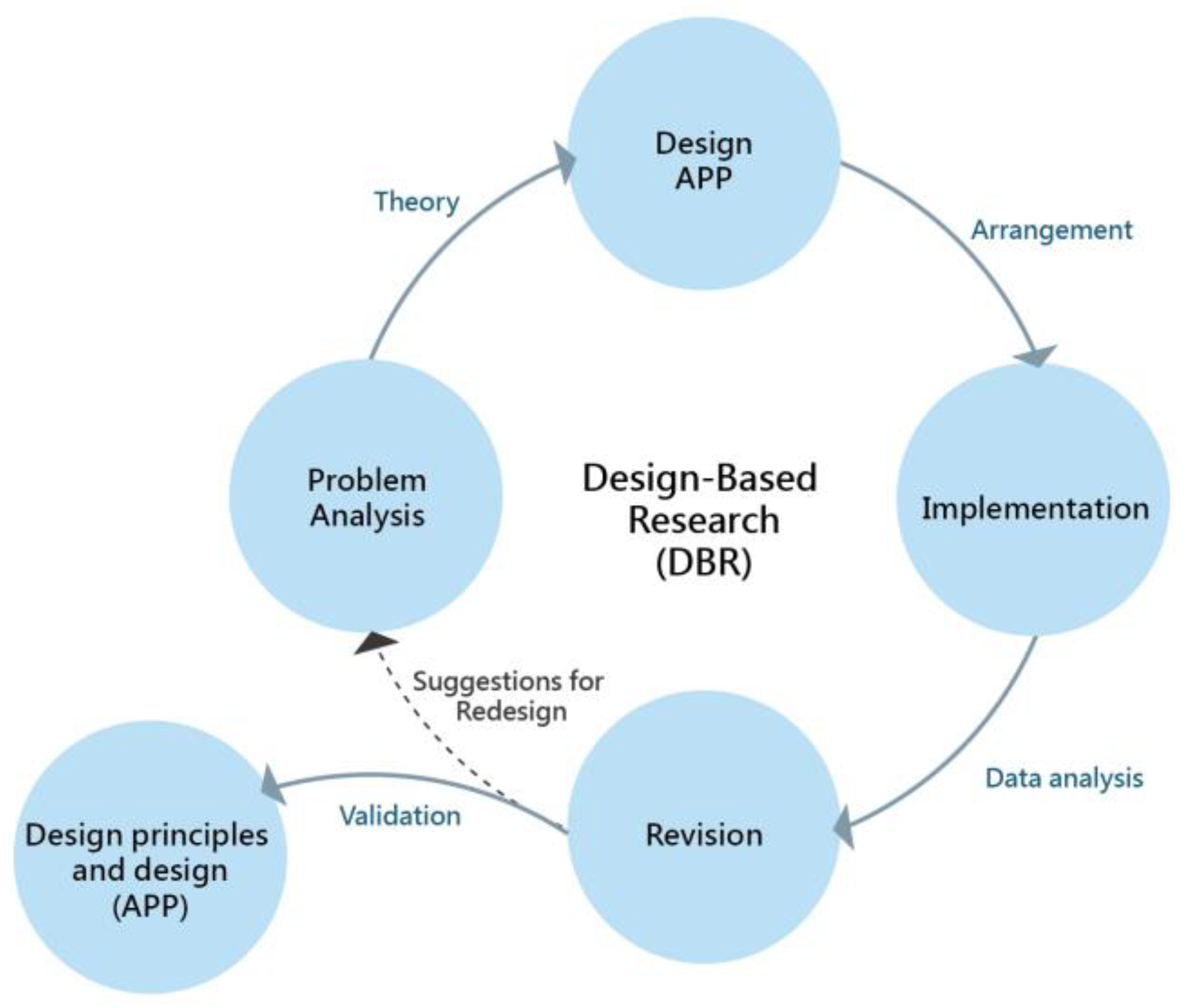
Figure 1), and (3) providing a reference paradigm for the development of future educational technology application systems.
3. Materials and Methods
3.1. DBR Process
We employed the DBR method as the core framework, emphasizing the repeated design, implementation, and revision of teaching interventions in real teaching situations to improve their theoretical value and effectiveness [
13,
14]. This study follows the four-stage model proposed by Wang and Hannafin, which includes the following:
Problem analysis: Through interviews, the learning needs of teachers and seniors were collected for outdoor environmental education to summarize the core functions and teaching objectives of the AR learning system, based on the curriculum and relevant literature.
Design app: A prototype system was developed based on the analysis results, integrating AR identification, roadkill simulations, biological rescue game modules, and instant feedback mechanisms to enhance interactivity and situational immersion [
13].
Implementation: Field tests are conducted with the Taiwan Biodiversity Research Institute, Ministry of Agriculture (TBRI). Students’ behavior, operation difficulties, and learning reactions, and multiple data points through observation and interviews were collected.
Revision: To ensure that the interface and interaction are optimized based on the test results, pay attention to user feedback and system adaptability, and gradually develop teaching design principles that have an empirical basis through repeated adjustments [
15].
As a result, the system has been improved in terms of functionality and usability, as well as meeting the real needs of educational sites and the characteristics of learning environments.
3.2. System Architecture and Learning Functions
The field-based AR learning system developed by this institute is a result of the DBR process, emphasizing three core design concepts: task-oriented interaction, field perception experience, and gamification participation mechanisms. With the implementation of Unity and the AR Foundation integration technology, three core learning modules are designed based on the Android platform, including biological identification, situational roadkill education, and conservation action simulation, as well as tracking of the learning process and achievement rewards.
In functional planning, this system emphasizes particularly the balance between user experience and learning motivation: designing task-based exploration activities to enhance learning participation, integrating real-world AR interaction and reactive feedback to enhance immersion, and guiding students through dual transformations of cognition and behavior. Moreover, the overall system architecture is extensible, allowing it to be modularly modified following different field materials, educational goals, and user needs, demonstrating high potential for practical application.
3.2.1. Species Identification/Roadkill Awareness/Animal Rescue Learning
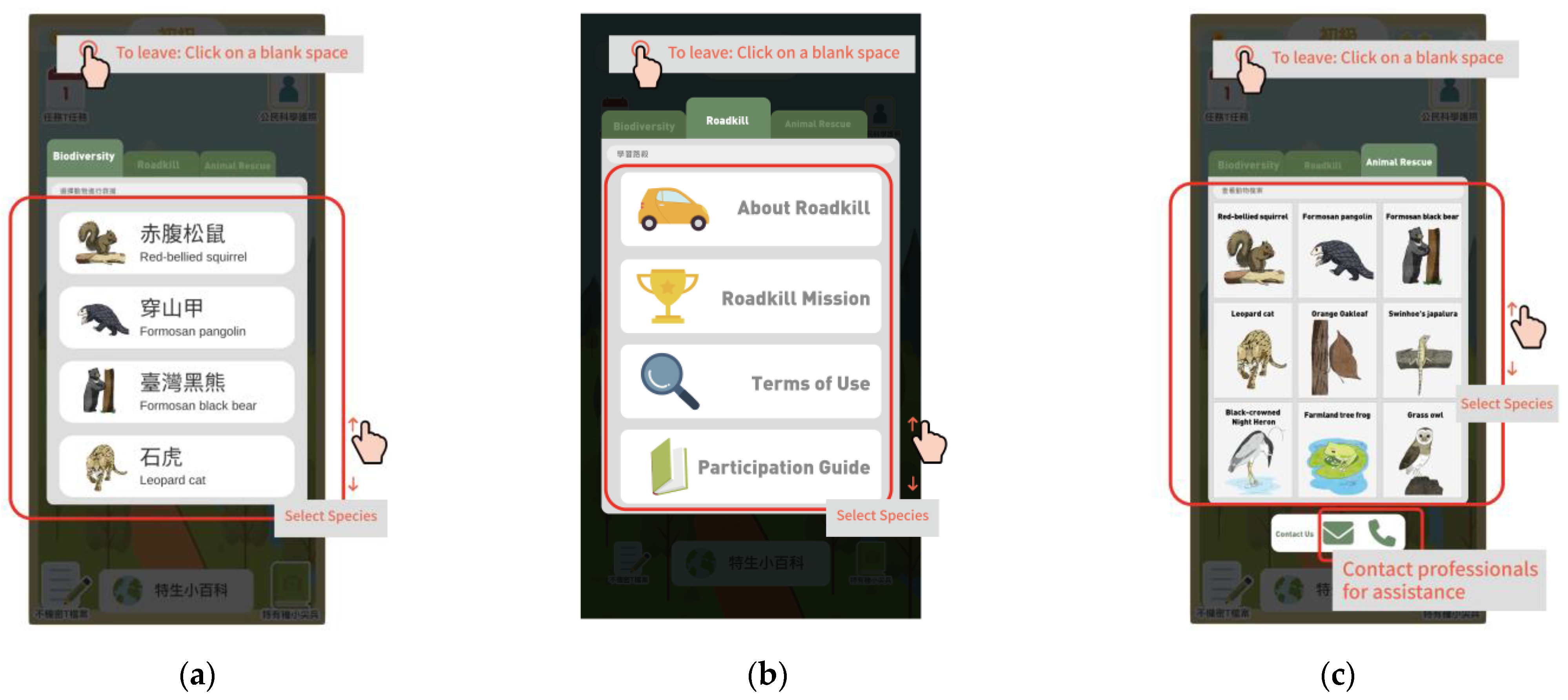
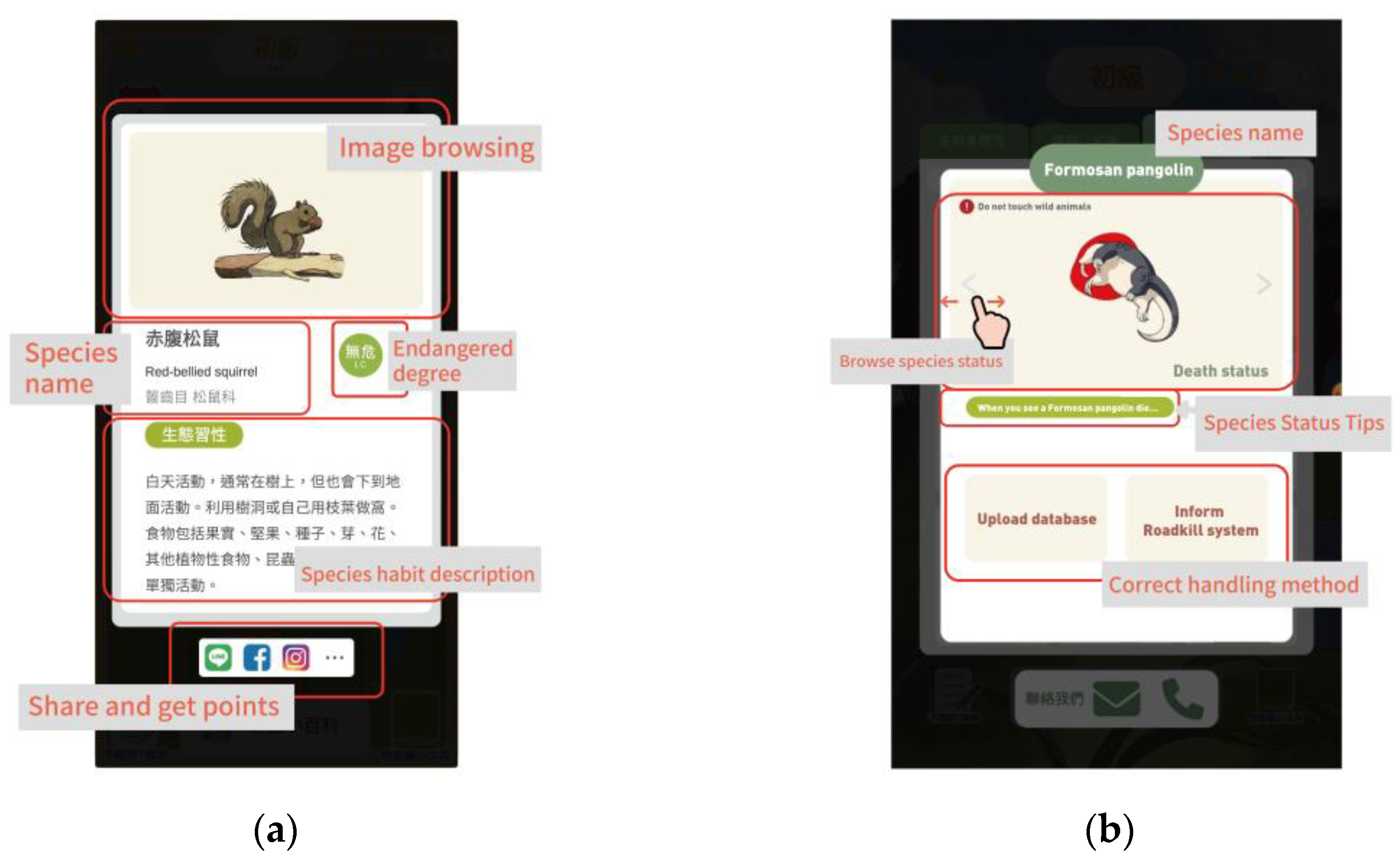
The design content of the app is presented in 2D illustrations and text introductions to common wild animals in Taiwan (Formosan pangolin, Leopard cat, Formosan black bears, etc.), as shown in
Figure 2 and
Figure 3. Each AR task is accompanied by different interactive content that enhances the students’ understanding and memory of species identification and ecological knowledge. To enhance learning participation, this function emphasizes sensory stimulation and feedback reinforcement.
3.2.2. AR Field Exploration and Interactive Mechanisms
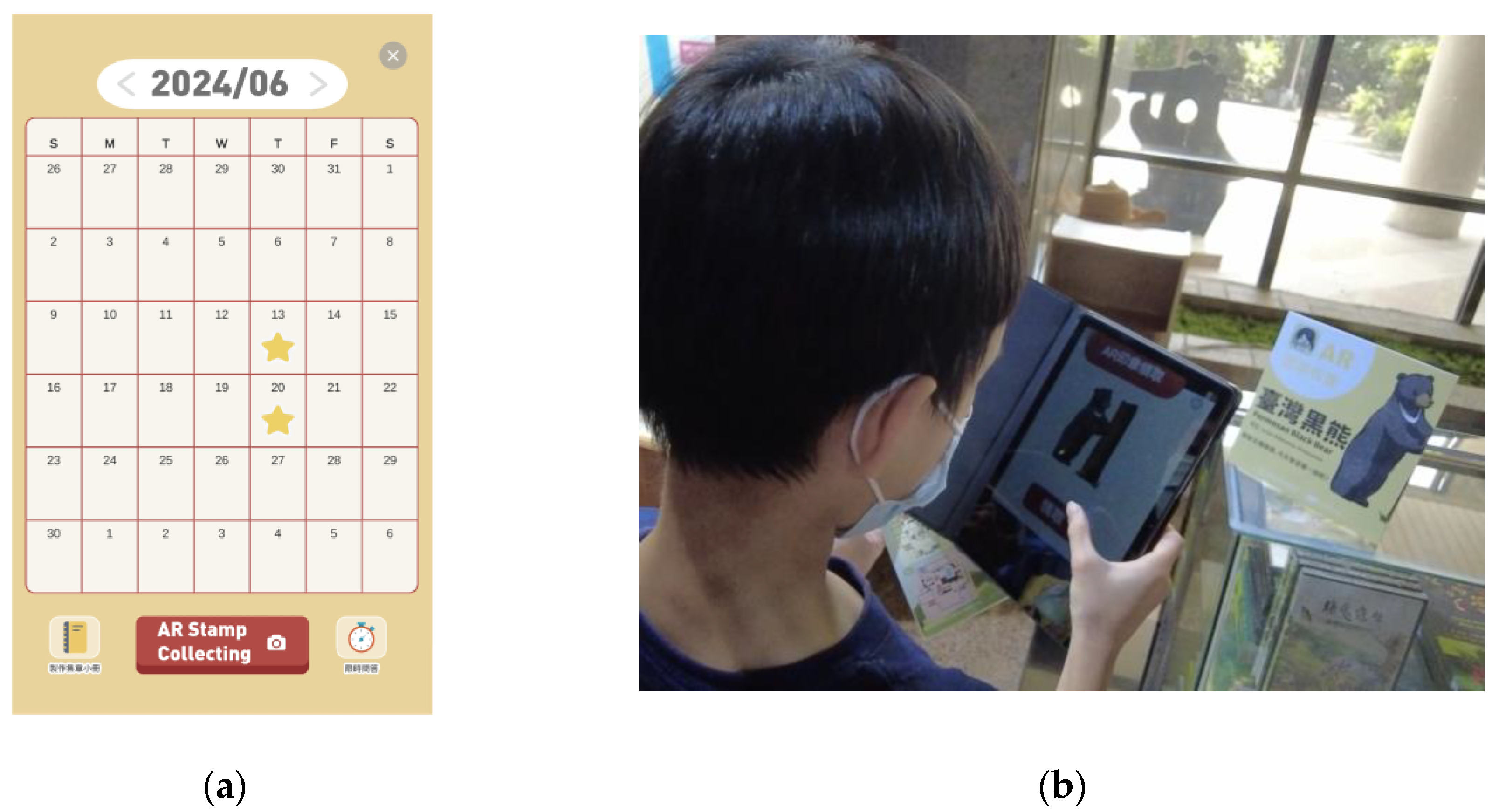
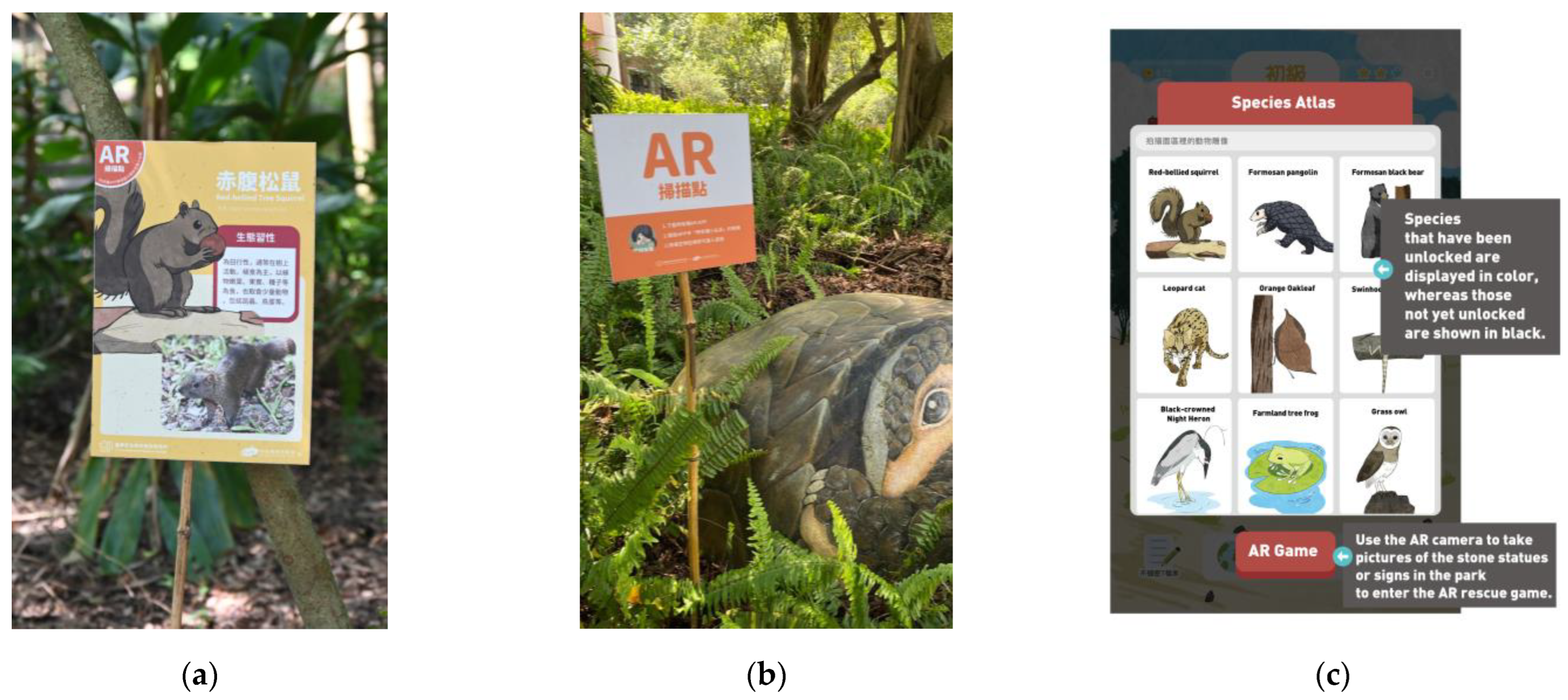
With the app, you can scan the AR markers (picture cards and stone statues) arranged in the interactive field to collect different appearances of creatures (
Figure 4 and
Figure 5).
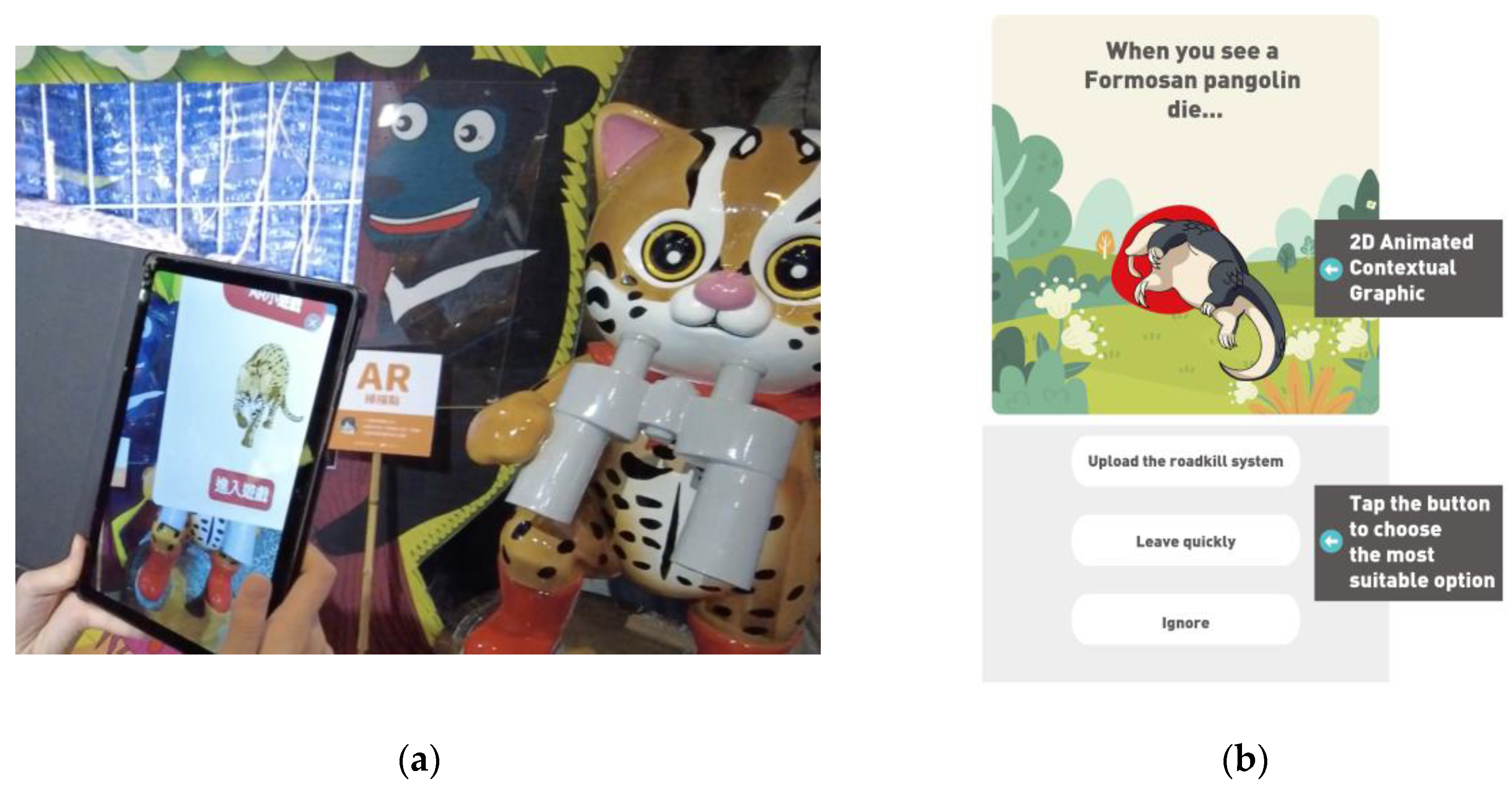
The system generates a different situational animation every time the stone statue is scanned. There are at least two situations for each creature. As shown in
Figure 6, participants can accumulate learning experience through multiple playthroughs.
3.2.3. Roadkill Record and Report Learning
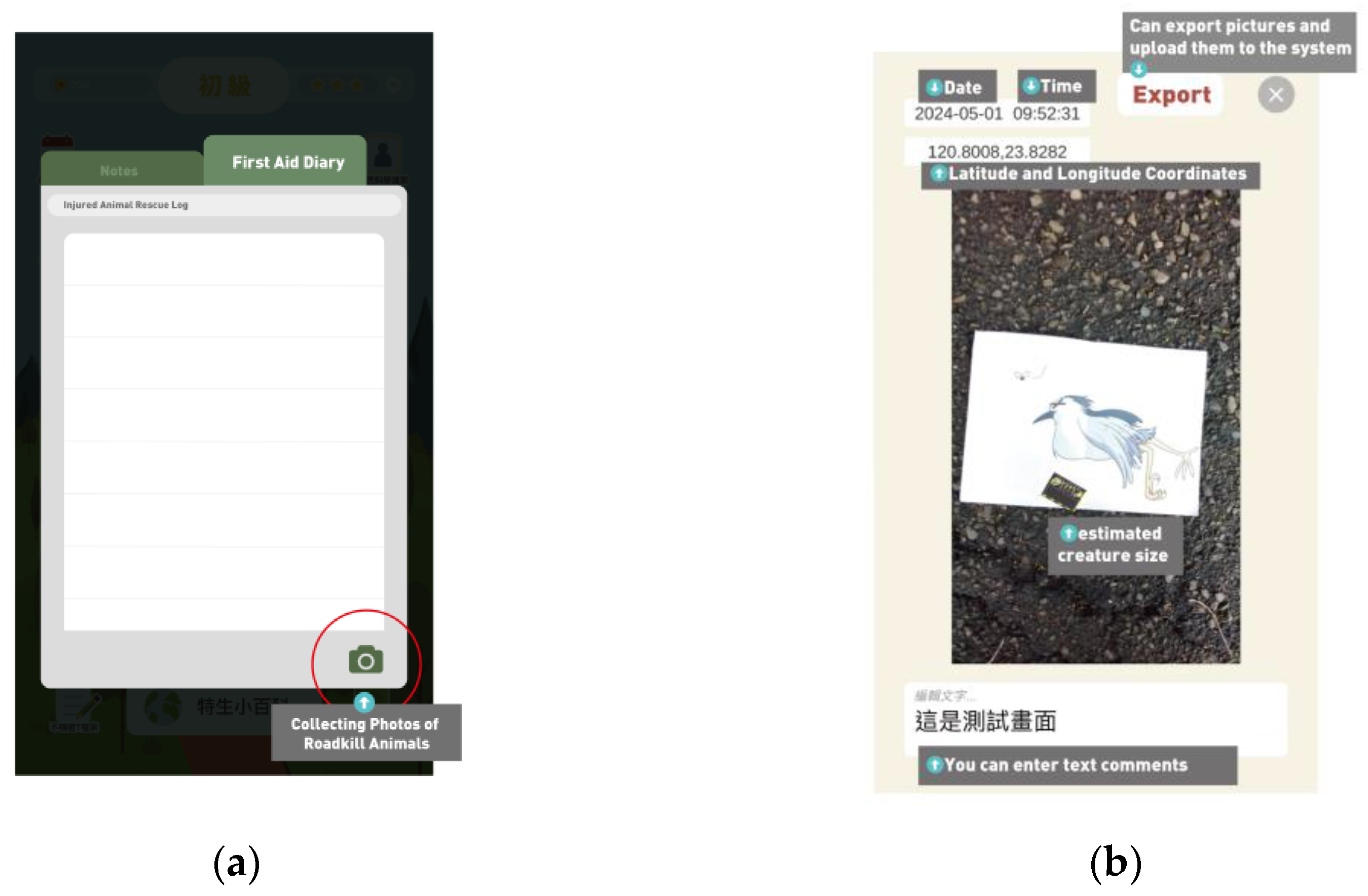
Whenever the public discovers injured or deceased wildlife, they should report the incident as soon as possible. The app combines AR camera technology, and users can utilize this function to take photographs of roadkill animals.
Figure 7b illustrates how the built-in positioning system and scale function can be used to estimate the size of the species’ carcass.
3.2.4. Learning History Record
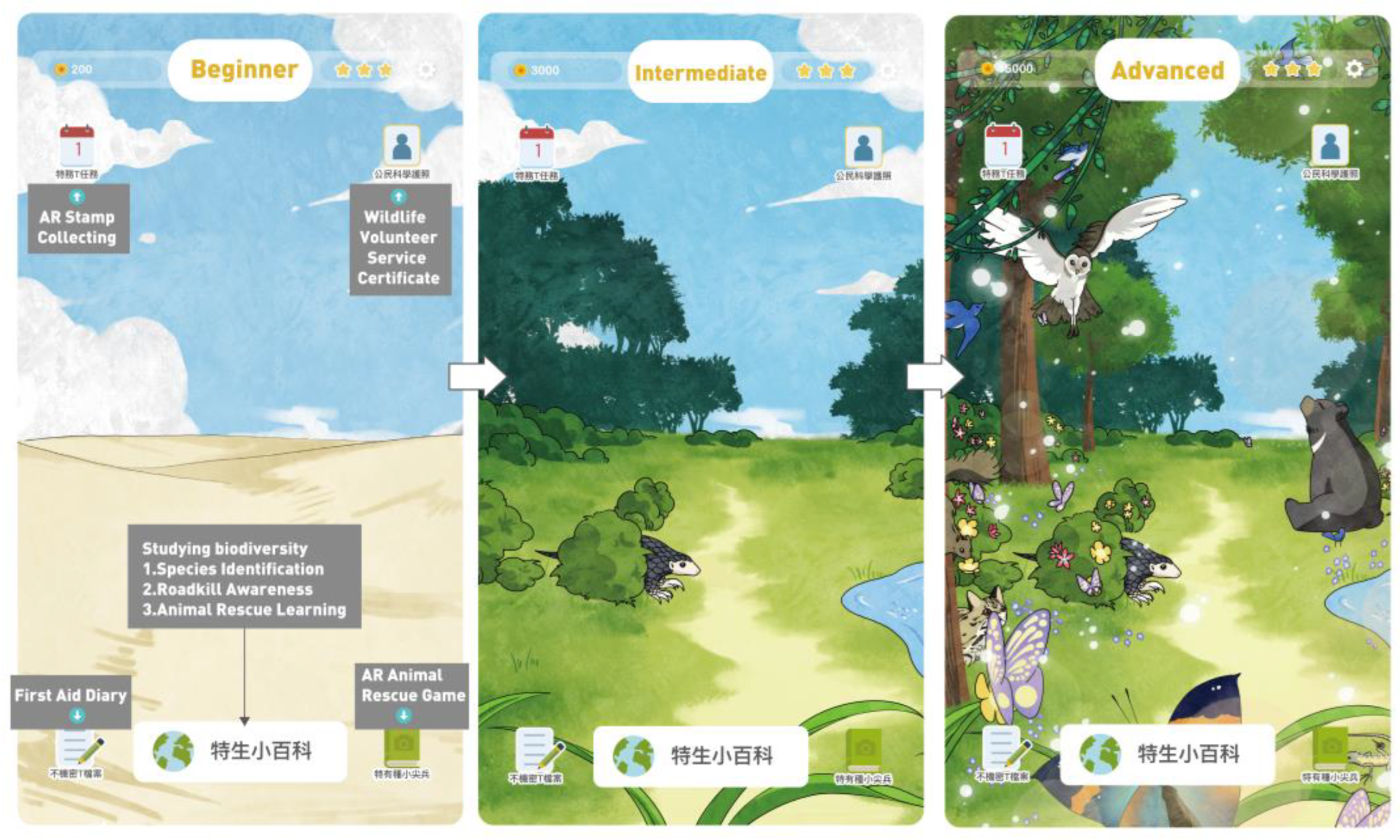
Points will be accumulated in accordance with the user’s learning progress and the number of operations performed.
Figure 8 illustrates how these points contribute to improving the user’s learning participation, as well as unlocking the richness of the game lobby ecosystem and enhancing the enjoyment and sense of achievement associated with the learning experience.
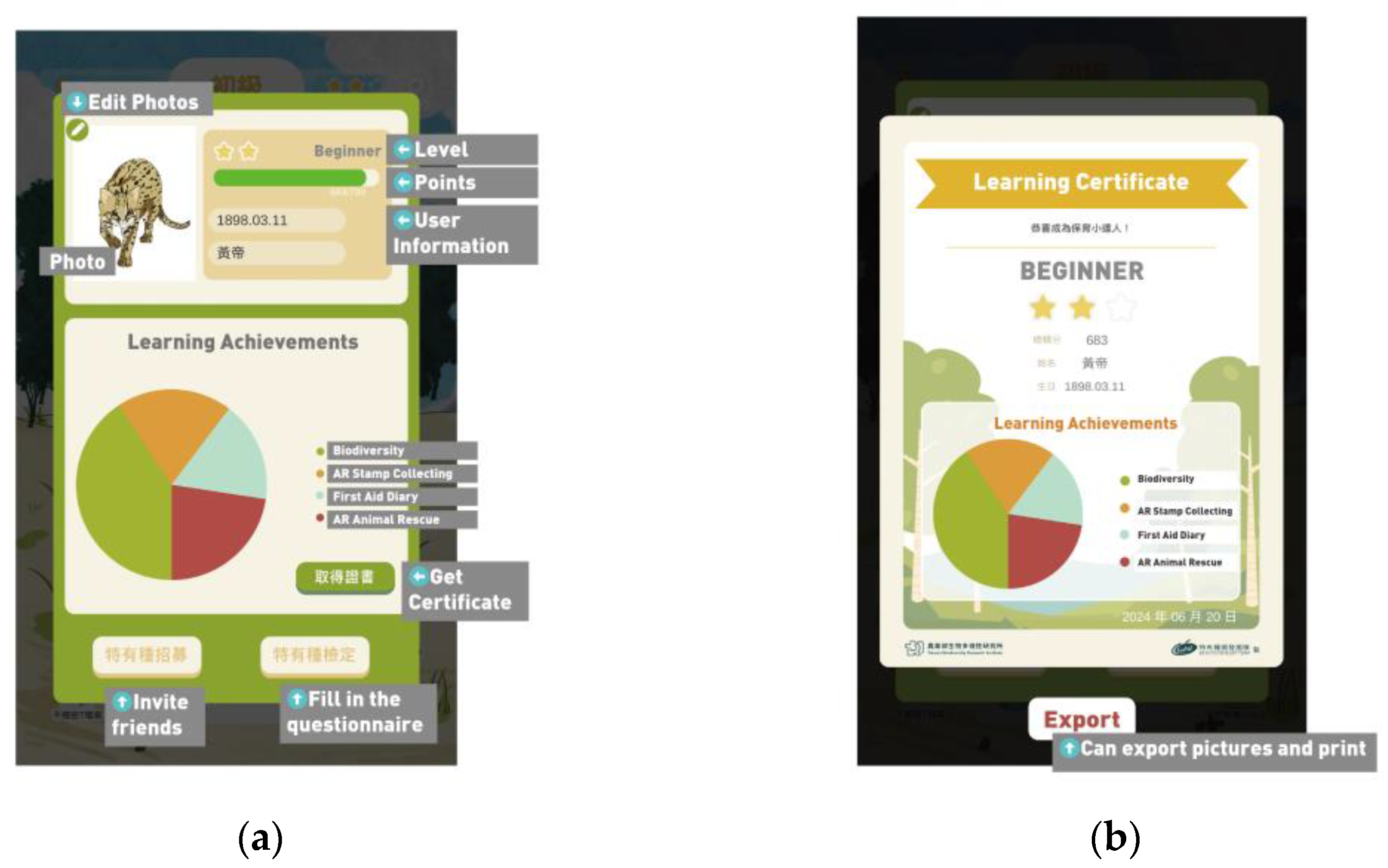
This design combines self-regulated learning with gamification incentives to enhance learning motivation and willingness to participate (
Figure 9). As a result, students are encouraged to continue participating, accumulating achievements, which in turn enhances their motivation for learning and capacity for reflection.
3.3. Participants and Testing
We evaluated the user experience and usability of the system through field testing. Twenty-six students from senior elementary schools (14 boys and 12 girls) participated in the study after obtaining consent from their schools and parents. Tests will be conducted at TBRI. Multiple AR interactive task points are included in the venue configuration, including elements such as species identification, rescue simulation, and roadkill situations. Using tablet devices in a single-person manner, students complete tasks according to the instructions provided by the system. There is a total duration of 120 min for this activity, which covers exploration, learning, and system feedback.
3.4. Tools and Procedures for Data Collection
Data were collected using both a mixed method and a quantitative method to evaluate learning outcomes and user feedback comprehensively. In addition to pre- and post-tests of knowledge, learning motivation, and technology acceptance model scales, brief interviews are conducted to obtain students’ actual operation experiences and subjective feelings.
The knowledge test was developed by teachers and experts based on the teaching tasks; the learning motivation scale was designed based on the ARCS model [
16], and the technology acceptance questionnaire, based on the technology acceptance model (TAM) model [
17], which covered dimensions such as perceived usefulness, ease of use, and behavioral intent. The quantitative data is statistically processed using IBM SPSS Statistics version 25 (IBM Corp., Armonk, NY, USA), while the qualitative data is categorized and summarized into themes to enhance the interpretation of the data.
3.5. Data Analysis Based on DBR
According to the four-stage process of DBR, we recorded the system development process and the design basis. As part of the “problem analysis” and “design construction” stages, teacher and design expert meetings, user testing, etc., were conducted to collect opinions as a basis for optimizing system functions and interfaces.
In the “field implementation” and “reflection and correction” stages, we observed students’ operating behaviors, common error types, and completion rates. They conducted multiple rounds of optimization and adjustment based on observations. As a result of this process, it is easier to clarify the improvement logic of system design and provide the basis for design decisions in the real world.
4. Results
4.1. Pre- and Post-Test Results
To evaluate the learning outcomes of students following the implementation of the AR system developed in this study, a paired sample
t-test was used to compare pre- and post-test performance. Analysis results revealed that the average score of the post-test was significantly higher than that of the pre-test, and the difference was statistically significant (
t (25) = −6.24,
p < 0.001), as shown in
Table 1. This system improves students’ understanding and learning of biodiversity-related information.
4.2. Learning Motivation
The four dimensions of the attention, relevance, confidence, and satisfaction (ARCS) model were used for a single-sample
t-test to determine students’ learning motivation responses to the AR system developed in this study. Based on the analysis results, the average values of the four indicators were all above 4.5, and all reached statistical significance (
p < 0.001), indicating that the system is highly effective in eliciting learning motivation (
Table 2). Following this result, the designed AR learning system has a high level of situational appeal and interactive design, which can effectively promote students’ learning engagement and usage intentions.
4.3. Analysis of TAM
This study used three dimensions of the TAM for analysis to understand students’ acceptance of the AR learning system: perceived usefulness (PU), perceived ease of use (PEOU), and behavioral intention (BI). The average values for each dimension were higher than 4.5, and each reached statistical significance (
p < 0.001), indicating that students generally found the system helpful for learning, easy to use, and likely to use it again in the future. Based on the results of this study, it can be concluded that the AR system has a good application potential and extension value, and it meets the practical needs of technology-assisted learning tools in the education sector (
Table 3).
4.4. Analysis of Open Feedback
To gain a deeper understanding of students’ feelings and reactions to AR outdoor learning activities, the research team collected behavioral observation records, activity feedback sheets, and brief interviews. Students were highly engaged in the exploration task, and some students took the initiative to work with their peers to complete the task, showing good interaction and problem-solving skills. On the 26 feedback sheets, more than 90% of students said they had heard of “biodiversity” in the past but had only a superficial understanding of the concept. In open responses after participating in the activity, most students expressed positive opinions such as “the activity was very good”, “I would like to participate again”, and “thank you”. “Taiwan black bear” and “leopard Cat” were among the AR species that students demonstrated great interest in identifying. “Biodiversity Awareness”, “Roadkill Simulation”, and “Rescue Response” were the most popular learning units, indicating that task-oriented AR activities enhance students’ attention and understanding of natural issues.
Teachers and school staff generally expressed their satisfaction with the activity, believing that this type of technology-assisted outdoor learning can effectively deepen students’ environmental awareness and learning impressions. Based on the results of this study, the AR system has a good application potential and extension value, and it meets the practical needs of technology-assisted learning tools in the education sector.
5. Conclusions
Using the design-based research method, we developed and implemented an outdoor learning system that combines augmented reality (AR) and gamification design for biodiversity education for senior elementary school students. Several designs and field tests have shown that this system is both usable and educational and can enhance students’ learning participation and knowledge of ecological concerns.
The system combines outdoor fields with digital technology to demonstrate the application potential of educational technology in environmental sustainability issues. Features include task-oriented exploration, interactive feedback, and immersive operation. Most students find the operation to be easy and interesting, and the task challenges also stimulate their learning motivation and awareness of the environment. This system is based on a modular architecture design that is flexible and scalable. In the future, it may be extended to topics such as aquatic ecology, native plant identification, or disaster education, as well as developed into a cross-domain AR teaching platform. In addition, the learning process record and point accumulation mechanism may also be useful in promoting citizen science education.
To enhance the personalized learning experience, artificial intelligence functions such as automatic identification and learning process analysis should be introduced in the future. It is also possible to conduct long-term tracking and multidimensional evaluation to study the long-term effects of the system on learning outcomes and attitude changes. The research team hopes to expand cooperation with schools, research institutions, and the community in the future to promote the application and practice of educational technology in sustainable development.
Author Contributions
Conceptualization, C.-Y.Y.; methodology, C.-Y.Y. and W.-H.C.; validation, C.-Y.Y. and W.-H.C.; formal analysis, C.-Y.Y.; investigation, C.-Y.Y. and W.-H.C.; resources, C.-Y.Y.; data curation, C.-Y.Y. and W.-H.C.; writing—original draft preparation, C.-Y.Y.; writing—review and editing, W.-H.C.; visualization, C.-Y.Y.; supervision, W.-H.C.; project administration, W.-H.C.; funding acquisition, C.-Y.Y. All authors have read and agreed to the published version of the manuscript.
Funding
This research was supported by the National Science and Technology Council, Taiwan, ROC (#112-2410-H-468-013-).
Institutional Review Board Statement
The study was conducted in accordance with the Declaration of Helsinki and approved by the Human Research Ethics Committee of National Cheng Kung University (protocol code: NCKU HREC-E-113-185-2 and date of approval: 5 June 2024).
Informed Consent Statement
Informed consent was obtained from all subjects involved in the study.
Data Availability Statement
The data that support the findings of this study are available from the corresponding author upon reasonable request.
Conflicts of Interest
The authors declare no conflicts of interest.
References
- Ardoin, N.M.; Bowers, A.W.; Gaillard, E. Environmental education outcomes for conservation: A systematic review. Biol. Conserv. 2020, 241, 108224. [Google Scholar] [CrossRef]
- Ibáñez, M.-B.; Delgado-Kloos, C. Augmented reality for STEM learning: A systematic review. Comput. Educ. 2018, 123, 109–123. [Google Scholar] [CrossRef]
- Tondello, G.F.; Mora, A.; Marczewski, A.; Nacke, L.E. Empirical validation of the Gamification User Types Hexad scale in English and Spanish. Int. J. Hum.-Comput. Stud. 2019, 127, 95–111. [Google Scholar] [CrossRef]
- Sailer, M.; Hense, J.U.; Mayr, S.K.; Mandl, H. How gamification motivates: An experimental study of the effects of specific game design elements on psychological need satisfaction. Comput. Hum. Behav. 2017, 69, 371–380. [Google Scholar] [CrossRef]
- Wang, F.; Hannafin, M.J. Design-based research and technology-enhanced learning environments. Educ. Technol. Res. Dev. 2005, 53, 5–23. [Google Scholar] [CrossRef]
- Billinghurst, M.; Clark, A.; Lee, G. A survey of augmented reality. Found. Trends Hum.-Comput. Interact. 2015, 8, 73–272. [Google Scholar] [CrossRef]
- Garzón, J.; Pavón, J.; Baldiris, S. Systematic review and meta-analysis of augmented reality in educational settings. Virtual Real. 2019, 23, 447–459. [Google Scholar] [CrossRef]
- Garzón, J.; Acevedo, J. Meta-analysis of the impact of augmented reality on students’ learning gains. Educ. Res. Rev. 2019, 27, 244–260. [Google Scholar] [CrossRef]
- Czok, V.; Krug, M.; Müller, S.; Huwer, J.; Weitzel, H. Learning Effects of Augmented Reality and Game-Based Learning for Science Teaching in Higher Education in the Context of Education for Sustainable Development. Sustainability 2023, 15, 15313. [Google Scholar] [CrossRef]
- Deterding, S.; Dixon, D.; Khaled, R.; Nacke, L. From game design elements to gamefulness: Defining “gamification”. In Proceedings of the 15th International Academic MindTrek Conference: Envisioning Future Media Environments, Tampere, Finland, 28–30 September 2011; pp. 9–15. [Google Scholar] [CrossRef]
- Hamari, J.; Koivisto, J.; Sarsa, H. Does gamification work?—A literature review of empirical studies on gamification. In Proceedings of the 47th Hawaii International Conference on System Sciences, Waikoloa, HI, USA, 6–9 January 2014; pp. 3025–3034. [Google Scholar] [CrossRef]
- Schlag, R.; Sailer, M.; Tolks, D.; Ninaus, M.; Sailer, M. Effectiveness of gamification in education. In Designing Effective Digital Learning Environments, 1st ed.; Sailer, M., Koivisto, J., Hamari, J., Eds.; Routledge: London, UK, 2024; pp. 165–181. [Google Scholar] [CrossRef]
- Barab, S.; Squire, K. Design-based research: Putting a stake in the ground. J. Learn. Sci. 2004, 13, 1–14. [Google Scholar] [CrossRef]
- Barab, S. Design-Based Research: A Methodological Toolkit for Engineering Change. In The Cambridge Handbook of the Learning Sciences, 2nd ed.; Sawyer, R.K., Ed.; Cambridge University Press: Cambridge, UK, 2022; pp. 177–195. [Google Scholar] [CrossRef]
- Collins, A.; Joseph, D.; Bielaczyc, K. Design research: Theoretical and methodological issues. J. Learn. Sci. 2004, 13, 15–42. [Google Scholar] [CrossRef]
- Keller, J.M. Motivational Design for Learning and Performance: The ARCS Model Approach; Springer: New York, NY, USA, 2009. [Google Scholar] [CrossRef]
- Venkatesh, V.; Davis, F.D. A theoretical extension of the technology acceptance model: Four longitudinal field studies. Manag. Sci. 2000, 46, 186–204. [Google Scholar] [CrossRef]
Figure 1.
Research implementation process based on the four-phase Design-Based Research (DBR) model by Wang and Hannafin (2005) [
5], incorporating iterative app development, field implementation, and usability validation. Solid arrows indicate the progression of research phases, while dashed arrows represent the iterative feedback loop for system refinement.
Figure 1.
Research implementation process based on the four-phase Design-Based Research (DBR) model by Wang and Hannafin (2005) [
5], incorporating iterative app development, field implementation, and usability validation. Solid arrows indicate the progression of research phases, while dashed arrows represent the iterative feedback loop for system refinement.
Figure 2.
The relevant learning knowledge: (a) species identification; (b) roadkill knowledge, which refers to roadkill observation; and (c) biological life-saving tips, which refer to the wildlife rescue manual. Note: The Chinese text in the interface provides species names (e.g., Red-bellied squirrel) and module titles (e.g., Biodiversity, Roadkill, and Animal Rescue).
Figure 2.
The relevant learning knowledge: (a) species identification; (b) roadkill knowledge, which refers to roadkill observation; and (c) biological life-saving tips, which refer to the wildlife rescue manual. Note: The Chinese text in the interface provides species names (e.g., Red-bellied squirrel) and module titles (e.g., Biodiversity, Roadkill, and Animal Rescue).
Figure 3.
(a) Species identification learning; (b) Biological life-saving tips. Note: The Chinese text in the interface displays species names, system navigation buttons (e.g., "Contact Us"), and geographic location information relevant to the field study.
Figure 3.
(a) Species identification learning; (b) Biological life-saving tips. Note: The Chinese text in the interface displays species names, system navigation buttons (e.g., "Contact Us"), and geographic location information relevant to the field study.
Figure 4.
Find the AR stamp card and use the AR function to obtain a species by scanning the card: (a) A star icon on the date indicates that the species was successfully collected on that day; dates without collections remain blank; (b) The species pattern will be displayed upon scanning the AR card. Note: The Chinese text in the calendar interface denotes the year and month (e.g., June 2024) and functional buttons for the AR stamp collection module.
Figure 4.
Find the AR stamp card and use the AR function to obtain a species by scanning the card: (a) A star icon on the date indicates that the species was successfully collected on that day; dates without collections remain blank; (b) The species pattern will be displayed upon scanning the AR card. Note: The Chinese text in the calendar interface denotes the year and month (e.g., June 2024) and functional buttons for the AR stamp collection module.
Figure 5.
Designed a series of wildlife rescue games and conducted explorations at TBRI, using AR and stone statues or signboards: (a) If there is no stone statue of the creature, you must scan the picture card; (b) A signboard will prompt you to scan a stone statue if the creature is depicted in a stone statue; (c) The biological atlas provides a list of species that have been scanned. Note: The Chinese text on the signboards and within the app interface provides species names (e.g., “Red-bellied Tree Squirrel”) and system instructions (e.g., “AR Scanning Point”). All overlapping labels are designed for instructional clarity and do not obscure any essential scientific data.
Figure 5.
Designed a series of wildlife rescue games and conducted explorations at TBRI, using AR and stone statues or signboards: (a) If there is no stone statue of the creature, you must scan the picture card; (b) A signboard will prompt you to scan a stone statue if the creature is depicted in a stone statue; (c) The biological atlas provides a list of species that have been scanned. Note: The Chinese text on the signboards and within the app interface provides species names (e.g., “Red-bellied Tree Squirrel”) and system instructions (e.g., “AR Scanning Point”). All overlapping labels are designed for instructional clarity and do not obscure any essential scientific data.
Figure 6.
The AR function of the app allows you to scan the stone statue or picture card, and the system will generate a random animation based on the situation. The situational simulation questions for each creature are provided, and then the correct corresponding method is chosen based on the picture provided: (a) Scan the picture of the stone statue; (b) Present a two-dimensional situational simulation picture and select the appropriate processing method. Note: The Chinese text in the animations and buttons provides situational guidance and options for wildlife rescue (e.g., "Upload the roadkill system").
Figure 6.
The AR function of the app allows you to scan the stone statue or picture card, and the system will generate a random animation based on the situation. The situational simulation questions for each creature are provided, and then the correct corresponding method is chosen based on the picture provided: (a) Scan the picture of the stone statue; (b) Present a two-dimensional situational simulation picture and select the appropriate processing method. Note: The Chinese text in the animations and buttons provides situational guidance and options for wildlife rescue (e.g., "Upload the roadkill system").
Figure 7.
(a) Click on the camera icon to open the AR camera; (b) You can record the current date, time, longitude and latitude, estimated creature size, and text notes. Note: The Chinese text at the bottom is a testing message (“This is a test screen”). The English labels accurately define all system parameters, including coordinates and estimated size.
Figure 7.
(a) Click on the camera icon to open the AR camera; (b) You can record the current date, time, longitude and latitude, estimated creature size, and text notes. Note: The Chinese text at the bottom is a testing message (“This is a test screen”). The English labels accurately define all system parameters, including coordinates and estimated size.
Figure 8.
Based on the user’s learning progress and operation status, the system accumulates points that will enrich the game hall’s ecology. Note: The Chinese text in the interface labels various modules. The visual progression from “Beginner” to “Advanced” illustrates the increasing biodiversity in the lobby as points are earned.
Figure 8.
Based on the user’s learning progress and operation status, the system accumulates points that will enrich the game hall’s ecology. Note: The Chinese text in the interface labels various modules. The visual progression from “Beginner” to “Advanced” illustrates the increasing biodiversity in the lobby as points are earned.
Figure 9.
Using the learning certificate feature in the system, users can export their current learning achievements at any time: (a) Records of learning; (b) An export of the learning certificate. Note: The Chinese text in the certificate and lobby provides user-specific information (e.g., name and birthday) and system tasks (e.g., “Fill in the questionnaire”).
Figure 9.
Using the learning certificate feature in the system, users can export their current learning achievements at any time: (a) Records of learning; (b) An export of the learning certificate. Note: The Chinese text in the certificate and lobby provides user-specific information (e.g., name and birthday) and system tasks (e.g., “Fill in the questionnaire”).
Table 1.
Analysis results of pre- and post-test results.
Table 1.
Analysis results of pre- and post-test results.
| | Pre-Test | Post-Test | |
|---|
| | Mean | Standard Deviation (SD) | Mean | SD | t | p |
|---|
| Knowledge score | 96.35 | 11.71 | 108.08 | 11.58 | −6.24 | <0.001 |
Table 2.
Analysis results of learning motivation based on ARCS model.
Table 2.
Analysis results of learning motivation based on ARCS model.
| ARCS Dimension | Mean | SD | t | p |
|---|
| Attention | 4.680 | 0.447 | 53.38 | <0.001 *** |
| Relevance | 4.526 | 0.598 | 38.62 | <0.001 *** |
| Confidence | 4.615 | 0.487 | 48.32 | <0.001 *** |
| Satisfaction | 4.551 | 0.588 | 39.44 | <0.001 *** |
Table 3.
Analysis results of TAM.
Table 3.
Analysis results of TAM.
| TAM Dimension | Mean | SD | t | p |
|---|
| PU | 4.556 | 0.554 | 41.98 | <0.001 *** |
| PEOU | 4.587 | 0.574 | 40.73 | <0.001 *** |
| BI | 4.577 | 0.523 | 44.60 | <0.001 *** |
| Disclaimer/Publisher’s Note: The statements, opinions and data contained in all publications are solely those of the individual author(s) and contributor(s) and not of MDPI and/or the editor(s). MDPI and/or the editor(s) disclaim responsibility for any injury to people or property resulting from any ideas, methods, instructions or products referred to in the content. |
© 2026 by the authors. Licensee MDPI, Basel, Switzerland. This article is an open access article distributed under the terms and conditions of the Creative Commons Attribution (CC BY) license (https://creativecommons.org/licenses/by/4.0/).