Proceeding Paper

Predication-Error-Based Intrinsically Motivated Saccade Learning †

Intelligent Systems Laboratory, Department of Electrical Engineering & Technology, University of Gujrat, Gujrat 50700, Pakistan
*
Author to whom correspondence should be addressed.
Presented at the 1st International Conference on Energy, Power and Environment, Gujrat, Pakistan, 11–12 November 2021.
Eng. Proc. 2021, 12(1), 48; https://doi.org/10.3390/engproc2021012048

Published: 29 December 2021
(This article belongs to the Proceedings of The 1st International Conference on Energy, Power and Environment)

Abstract

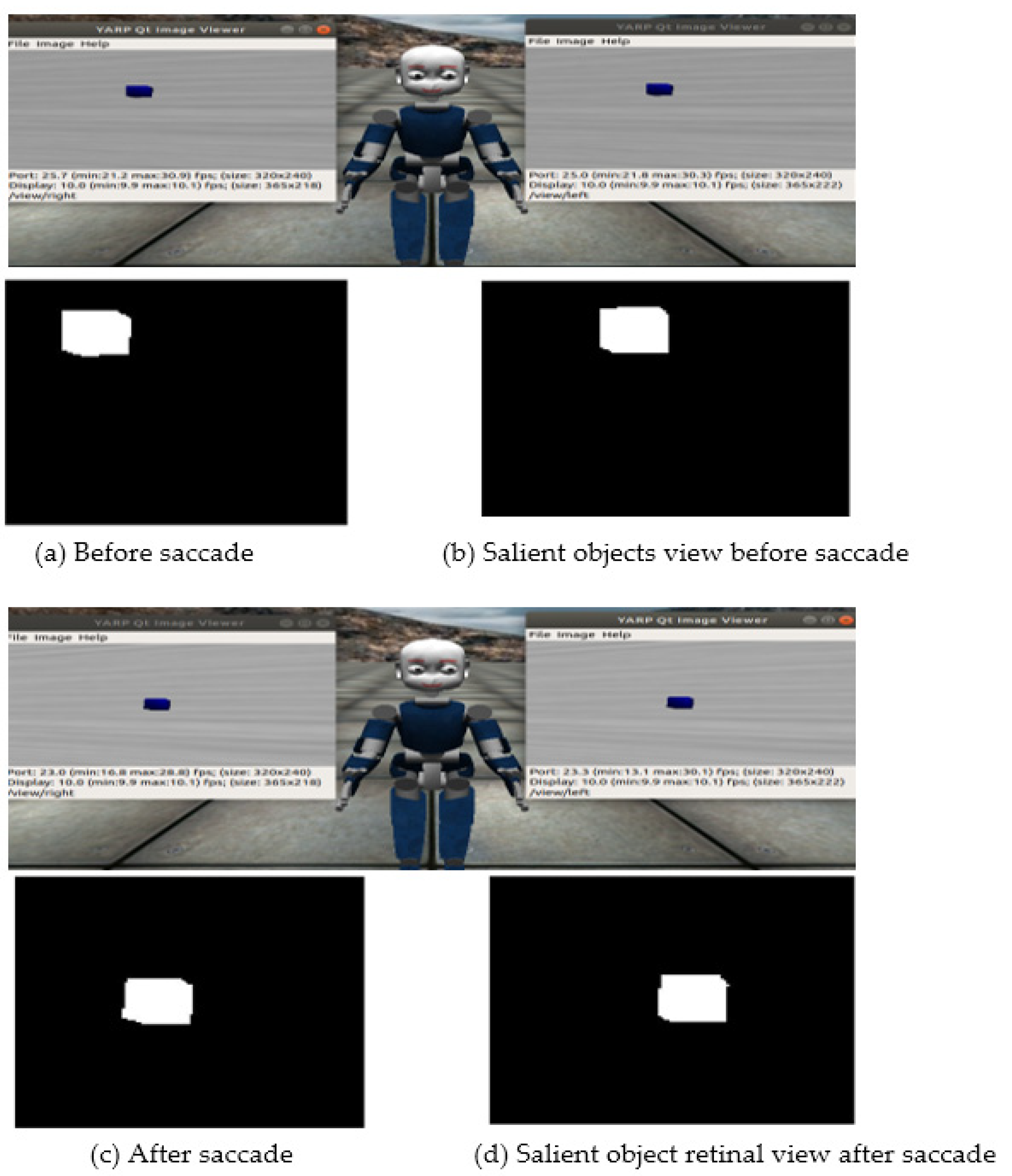
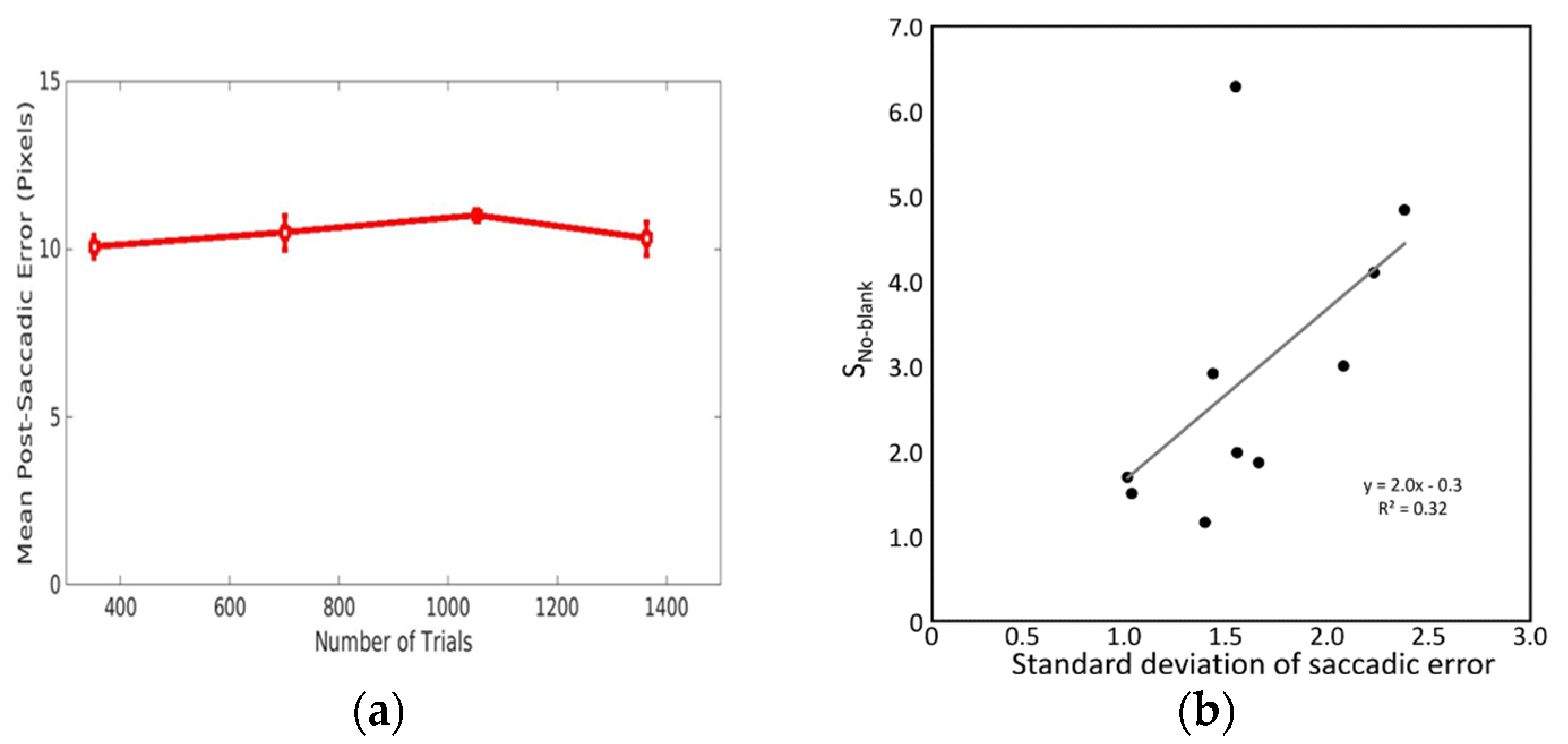
The quick, simultaneous movements of both eyes in the same direction is called a saccade, and the process of developing an internal model for the eyes’ movement-control based on visual stimuli is called saccade learning. All humans use this type of eye motion to bring salient objects to the foveal locations of the retina, even if the objects are located randomly in the surrounding environment. To begin with, infants are not able to perform this type of eye motion, but sensory information motivates them to start learning saccadic behavior. In this paper, a sensory prediction-error-based intrinsically motivated model is proposed for learning saccadic eye movements, and this approach is more consistent with biological systems for saccade learning. Predicted Coding/Biased Competition using Divisive Input Modulation (PC/BC-DIM) network is used for saccade learning using sensory prediction errors. The quantification of sensory prediction errors provides an intrinsic reward. A simulated humanoid agent, iCub, is used to assess and quantify the performance of the proposed model. The performance metrics used for this purpose are percentage mean post-saccadic distance and standard deviation. The mean post-saccadic distance for the proposed model was less than 1°, which is biologically plausible.
Keywords: PC/BC-DIM; LWPR algorithm; sensory prediction-error; intrinsic motivation; saccade; eye movements; neural networks; biological plausibility; iCub simulator PC/BC-DIM; LWPR algorithm; sensory prediction-error; intrinsic motivation; saccade; eye movements; neural networks; biological plausibility; iCub simulator