


Abstract
Green organic coatings are developed to be deposited on and protect metallic cultural heritage artefacts from environmental degradation. This research work is carried out through a comparative study of under-development green organic and commercial coatings for indoor and outdoor applications against an artificial ageing environment. Non-destructive techniques, such as Colorimetry, Glossimetry, Eddy-current thickness measurements, and SEM-EDS investigation, are employed to assess the studied bronze substrate-coating mock-up systems’ behavior. The results showed some correlations among the studied parameters, such as the thickness–colour (namely ΔΕ parameter) relationship, while comparative conclusions provide consultant suggestions for cultural heritage conservation applications.
1. Introduction
The usage, research, and development of green and sustainable coating materials for the protection and conservation of cultural heritage are in the spotlight, since climate change characteristics and poor environmental conditions jeopardize the integrity of monuments, sculptures, and statues [1,2]. Based on state-of-the-art green processing methods and materials, the European research programme HORIZON-CL2-2021-HERITAGE-01: GREENART (GREen ENdeavor in Art ResToration) [3] focuses on the development of sustainable green materials from more sustainable and efficient resources to replace the commercial protective organic coatings of cultural heritage, as well as improve the response against the more intent environmental degradation phenomena, being aligned with the Green Deal Agenda [2,3,4]. New organic coatings for cultural heritage protection should be mainly characterized by increased anticorrosive behavior and durability, application ease, environmental safety, and neutrality, as well as affordability in terms of Life Cycle Assessment (LCA). This research endeavours to monitor and highlight characteristics and correlations against ageing conditions of both under-development and commercial organic coatings for metal cultural heritage conservation and protection applications.
The present work shows the evaluation methodology designed and performed by the research team of the University of West Attica (UNIWA team), for the assessment of selected under-development green organic coatings proposed by the GREENART research project for cultural heritage protection and conservation against ageing effects. Two different bio-based organic coatings are evaluated in this study, oriented for outdoor and indoor metal cultural heritage applications before and after artificial ageing experiments up to 2 months, in comparison with two commercial organic coatings, widely used in the conservation sector, as well as the uncoated metal bronze sample. The assessment is based on a multidisciplinary approach of non-destructive and analytical techniques. The outcome could be useful for academics, professionals, and related industries for the evaluation of new, greener, bio-based organic coating materials for cultural heritage protection and conservation applications.
2. Materials and Methods
2.1. Materials
In order to simulate the behavior of cultural heritage metal objects against artificial ageing, RG7 bronze alloy (Dekur S.A., Piraeus, Greece) in as-received condition from the manufacturer is selected to approach the chemistry of many metal historical objects. All samples are discoid coupons with a 6 cm diameter and 1 cm thickness in as-polished condition after the appropriate metallographic preparation up to 1 μm alumina polishing stage. Table 1 presents the nominal chemical composition of the studied alloy in wt%.
Table 1.
Nominal chemical composition of RG7 bronze alloy substrate (in wt%.).
Under-development green organic coatings for outdoor and indoor applications supplied by partners of GREENART, as well as commercial organic coatings Incralac (StanChem Inc., East Berlin, Germany) and Beeswax (Xouxoutas Co., Chalkidiki, Greece), were deposited by drop-casting and brush methods onto the metal substrate accordingly. Some critical characteristics of these coatings are presented in Table 2. GOOC coating includes a bio-solvent, such as D-Limonene, which is primarily extracted from citrus fruit peels during the juicing process [5]. GIOC coating is based on bio-polymers derived from food and other organic waste, such as chitosan and alginate [6].
Table 2.
Characteristics of the organic coating materials examined in the present work.
2.2. Methods
2.2.1. Artificial Ageing
All specimens were subjected to artificial ageing in order to accelerate the environmental degradation impact on the studied mockups, using a RUMED climate test cabinet (Rubarth Apparate GmbH, Laatzen, Germany). The experimental parameters were 40 °C and 65% RH in constant exposure up to a period of two months.
2.2.2. Non-Destructive Testing and Analytical Techniques
Non-destructive testing refers to a set of techniques for inspecting, examining, and evaluating materials, components, and assemblies for discontinuities, alterations, and variations in their characteristics, without destroying their integrity or functionality [7,8]. Colorimetry measurements on the specimens were used to determine the colour uniformity before and after ageing. The measurements were carried out using the colorimeter PCE-CSM 10 Spectrophotometer (PCE Instruments UK Ltd., Manchester, UK) for quality control of the specimens in different color spaces (CIE L*a*b*, XYZ, Yxy, LCh, CIE LUV, Hunter Lab) [9]. Surface gloss of specimens was measured using a TG 60/268 Lovibond gloss meter (Tintometer GmbH, Dortmund, Germany) and GQC6 Quality Control Software, which is included for free, according to EN ISO 7668 standard [10]. The gloss meter determined the intensity of light reflected from the specimens’ surface at 85° measurement angle, giving information on the status of their surface [11]. Evaluation of coating or corrosion and environmental deposition products thickness is realized by a lab-scale Eddy-current thickness testing set-up (SAUTER GmbH, KERN & SOHN GmbH, Balingen, Germany). Multiple measurements are carried out on the specimen surface and the average value of thickness is produced for each studied specimen. Thickness measurement evolution against ageing reveals the clearest and most mechanistic degradation effect of the studied mock-ups. Specimens’ morphology was examined through non-destructive imaging techniques in visible radiation (VIS) and ultraviolet-induced visible luminescence (UVL) [8]. Visible reflectance imaging was carried out using a Nikon D800 digital single lens reflex camera (DSLR) (Nikon Corp., Tokyo, Japan) equipped with an AF-S Nikkor 24–70 mm 1:2.8 G ED lens (Nikon Corp., Tokyo, Japan). A photobox and two J78 halogen lamps were used for symmetrical and uniform illumination. UVL was carried out using the aforementioned instrumentation and a copy stand to support the samples. One UV LED lamp with 14,250 mW radiation power and max spectral emission of 365 nm was used for excitation radiation. Barrier filter KODAK 2E (Eastman Kodak Company, Rochester, NY, USA) was used to balance excess blue radiation from the light source. The procedure was carried out in a light isolated room, in complete darkness. A JSM-6510 LV Scanning Electron Microscope (JEOL Ltd., Tokyo, Japan) was employed for microstructural observation of the specimens’ surface [12].
3. Results and Discussion
3.1. Thickness Measurements
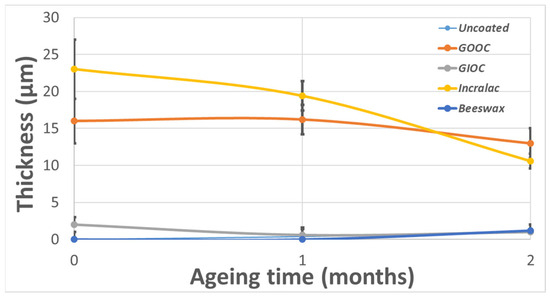
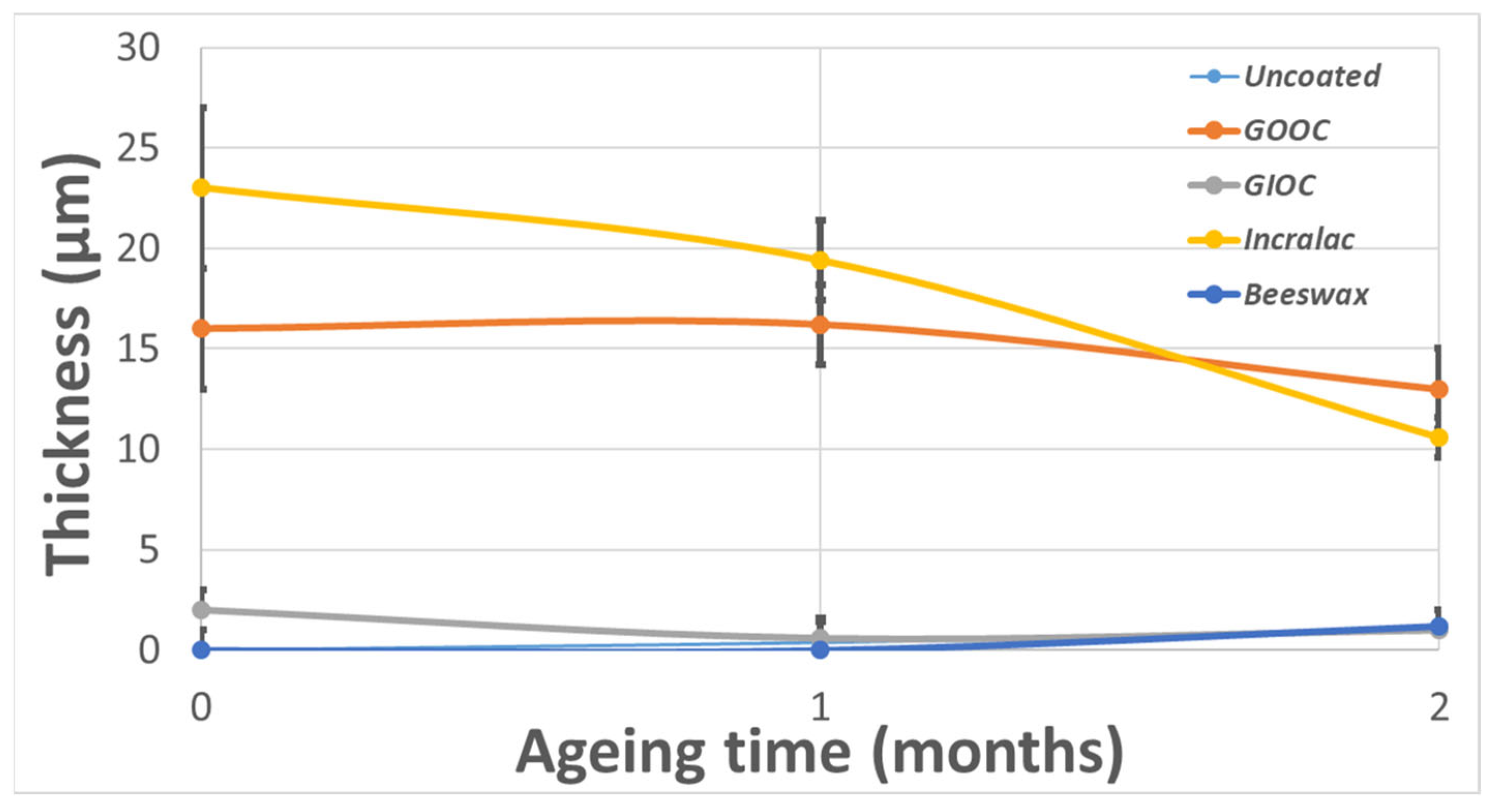
Green indoor organic coating (GIOC) and Beeswax-coated samples present very thin thickness, and their behavior presents stability, with a slight increase at the 2-month ageing condition (Figure 1). This fact is mainly due to possible corrosion products and depositions from the ageing conditions, behavior which is also similar to the uncoated samples. Green outdoor organic coating (GOOC) and Incralac samples present a decrease, however, on a different scale, and GOOC seems to be more durable, regarding the thickness coating degradation.
Figure 1.
Thickness evolution of the studied samples regarding the artificial ageing time.
3.2. Colorimetry Investigation
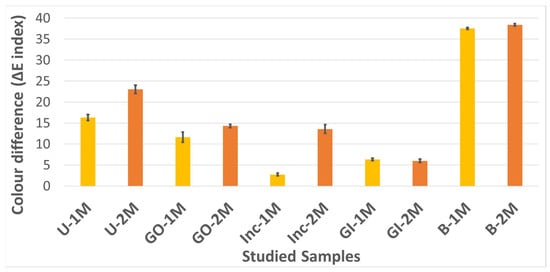
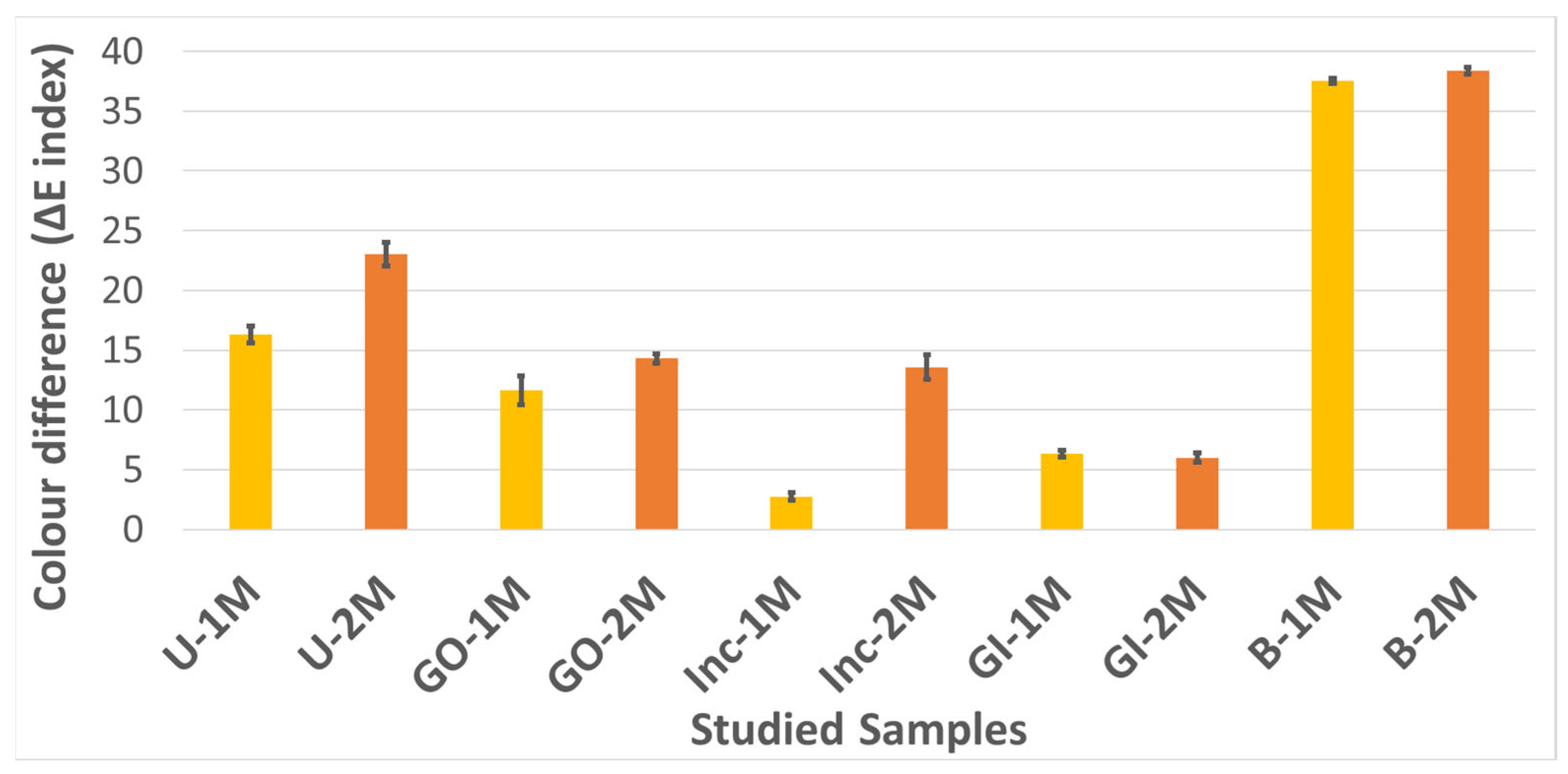
Concerning the ΔΕ comparative diagrams (Figure 2), they present an increasing behavior regarding the ageing time, except for indoor-related coatings, i.e., Beeswax and GIOC, which present essentially a stable response. It is noticed that there is a relationship between thickness evolution and ΔΕ response. More specifically, there is a decrease in thickness and an increase in ΔΕ for outdoor-oriented coatings, whereas both indoor-oriented coating samples present essential stability in both thickness and ΔΕ. The uncoated samples present an increase in both studied parameters and this fact is attributed to corrosion products and deposition formations on the metallic surface due to the artificial ageing effect.
Figure 2.
Changes in colour ΔΕ values between 1- (1 M) and 2-month (2 M) ageing of all samples (U: Uncoated, GO: GOOC, Inc: Incralac, GI: GIOC, and B: Beeswax).
3.3. Imaging Techniques
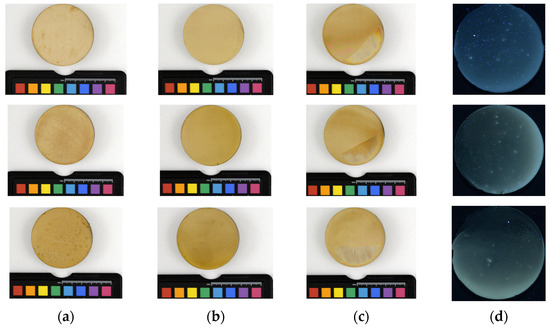
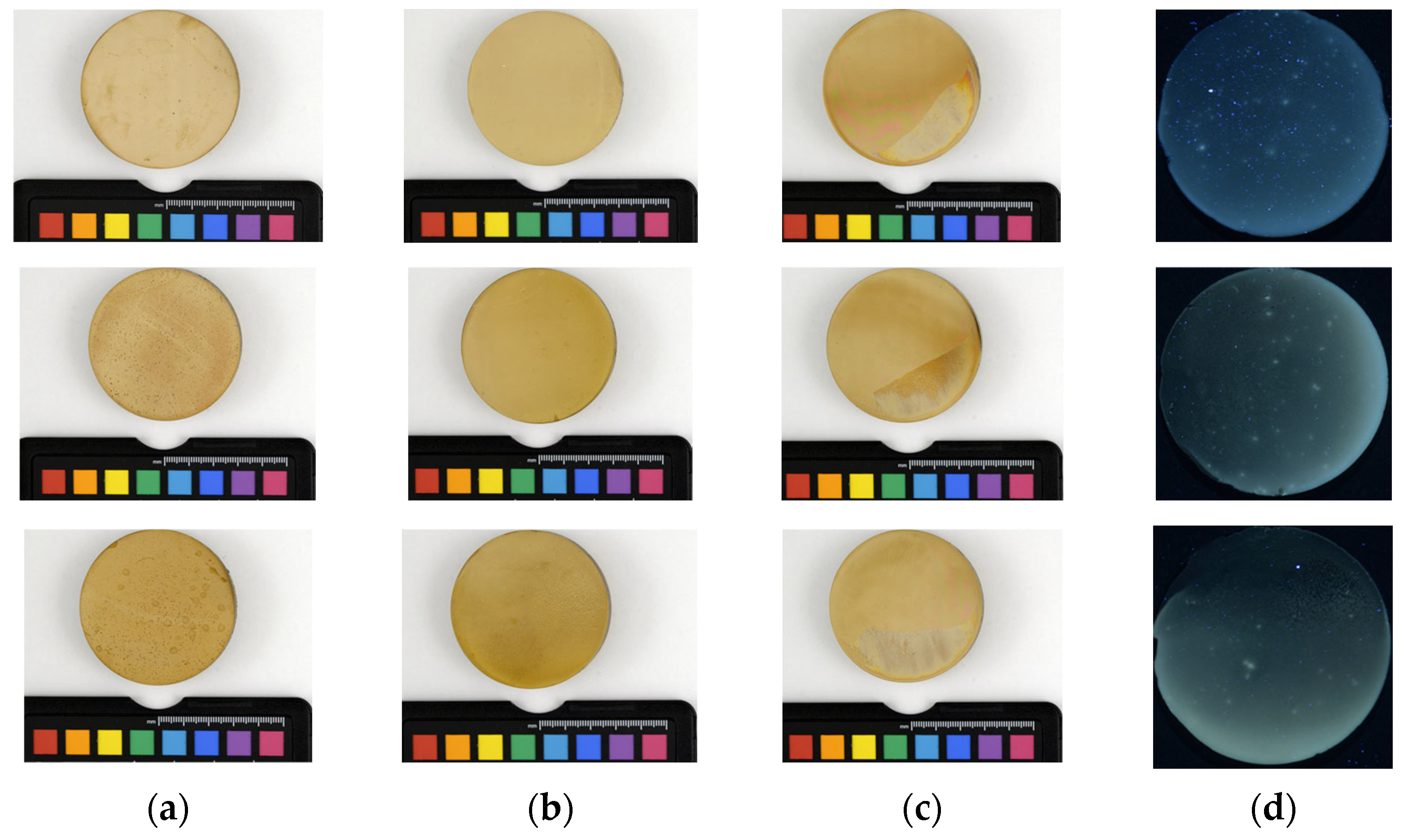
The impact of ageing on the studied samples’ surface is presented via imaging techniques at VIS and UVL, and a strong correlation is noticed between the qualitative interpretation of imaging techniques and the quantitative ΔΕ parameter response. The uncoated samples (Figure 3a) present a gradual increase regarding the ageing impact, exhibiting corrosion products and depositions from the experiment and clear change in colour to a more reddish hue. Regarding the coated samples, GOOC-coated samples’ behavior presents colour alteration from the 1-month ageing stage (Figure 3b), while all GIOC-coated samples present an iridescence effect in some areas (Figure 3c); however, no essential differentiations are detected during the time of the ageing experiment. Regarding UVL, only GOOC samples present fluorescence (Figure 3d) in the form of colour alterations, mainly between the non-aged and 1-month aged sample, while the 2-month aged sample presents similar behavior to the 1-month aged one. The gradual differentiations may be related to coating thickness fluctuations.
Figure 3.
RG7 (a) uncoated, (b) GOOC, and (c) GIOC coated coupons recorded via VIS imaging technique before and after 1- and 2-month ageing exposure, as well as RG7 (d) GOOC-coated coupons recorded via UVL imaging technique before and after 1- and 2-month ageing exposure.
3.4. Gloss Measurements
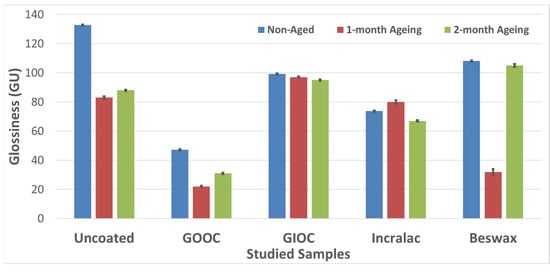
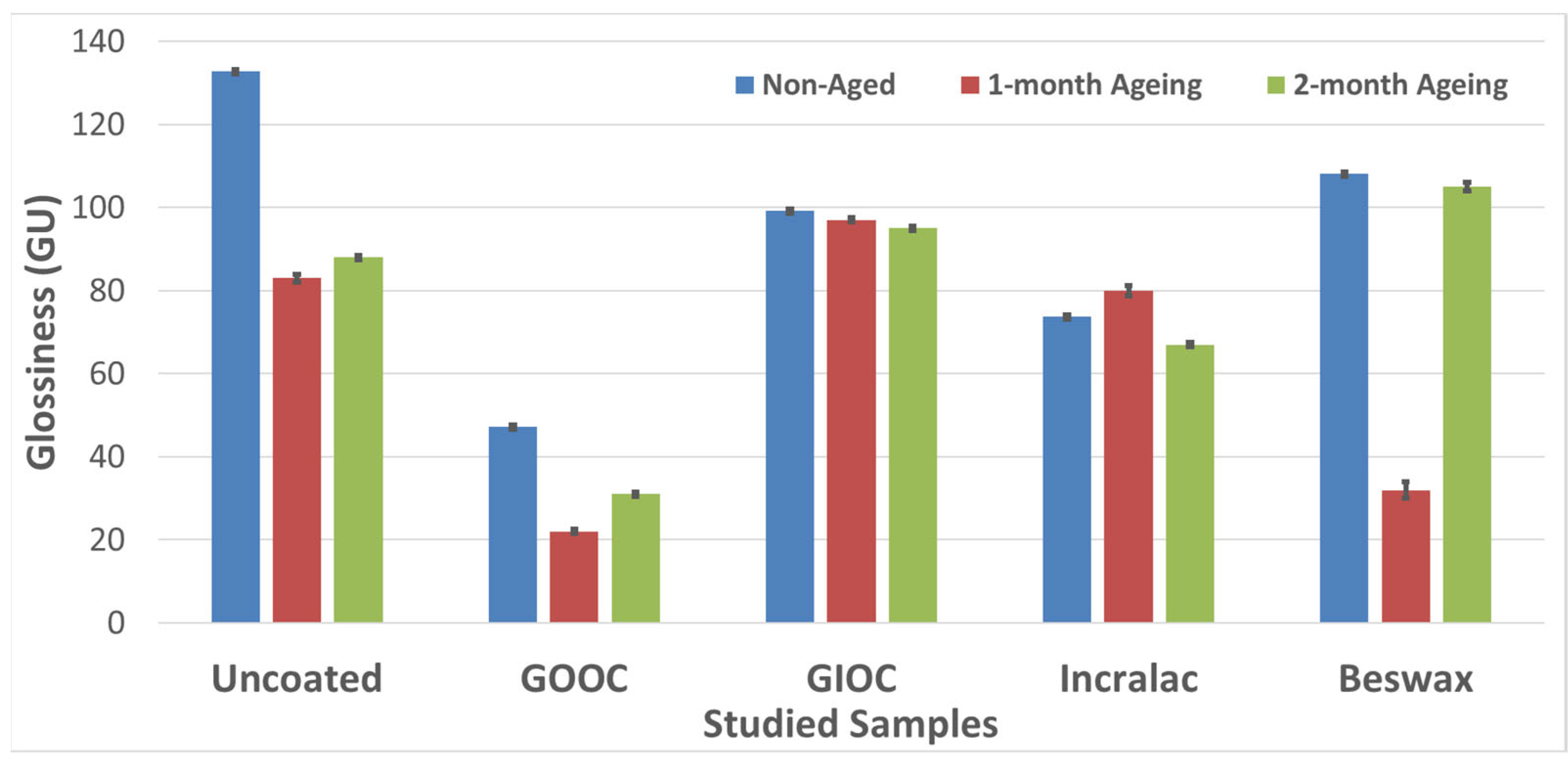
Regarding glossimetry results (Figure 4), the samples’ behavior is rather complicated, especially for the commercial coatings. Uncoated samples present a general decrease in gloss with a subsequent small increase from 1- to 2-month ageing exposure, possibly related to the modifications of microstructural and crystallographic characteristics of corrosion products and depositions due to ageing. Under-development coatings present a general decrease in behavior; however, the GOOC presents an increase in gloss from 1- to 2-month ageing exposure, a fact that may be related to micro-scale modifications in this coating structure, such as constituents’ micro-segregations, which are detected in SEM-EDS study (see Section 3.5); GIOC presents very high gloss with a minor decrease in behavior against ageing time. Concerning commercial coatings, Incralac presents a rather unstable behavior; however, after 2-months of ageing exposure, the gloss is decreased. The 1-month behavior, which is rather increased, can be attributed to alterations in its constituents, as well as its thickness reallocation, because its thickness evolution behavior previously presents an immense large standard deviation; it may be related to the rather rough brush method deposition and the physicochemical characteristics of Incralac, such as viscosity. Finally, Beeswax behavior is also very complicated; the non-aged condition presents the glossiest coating; however, after 1-month of ageing it presents a very low, mat-like value, and at 2-month ageing returns to very high glossiness. This intense behavior may be related to Beeswax consumption near to 1-month ageing exposure, when its protective action is lost and the metallic surface is revealed and free to be degraded by artificial ageing. Then, some corrosion products and depositions on the naked metallic surface are formed, such as the red-colour-like cuprite (Cu2O), which are roughly indicated by thickness measurements (Figure 1). The combination of the essential absence of Beeswax, a free polished metallic surface, and some corrosion products and depositions seems to increase this sample’s gloss at 2-month ageing condition.
Figure 4.
Glossimetry measurements at 85° before and after ageing experiments of all samples.
3.5. SEM Study
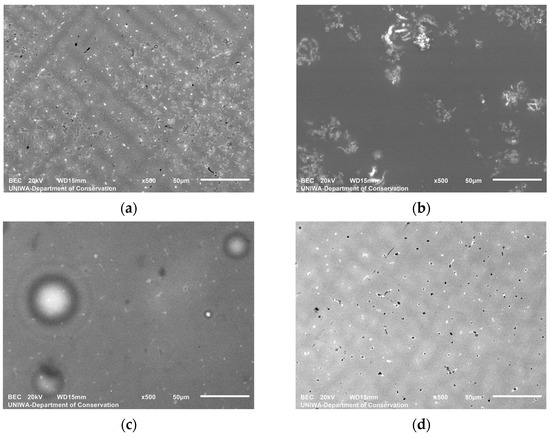
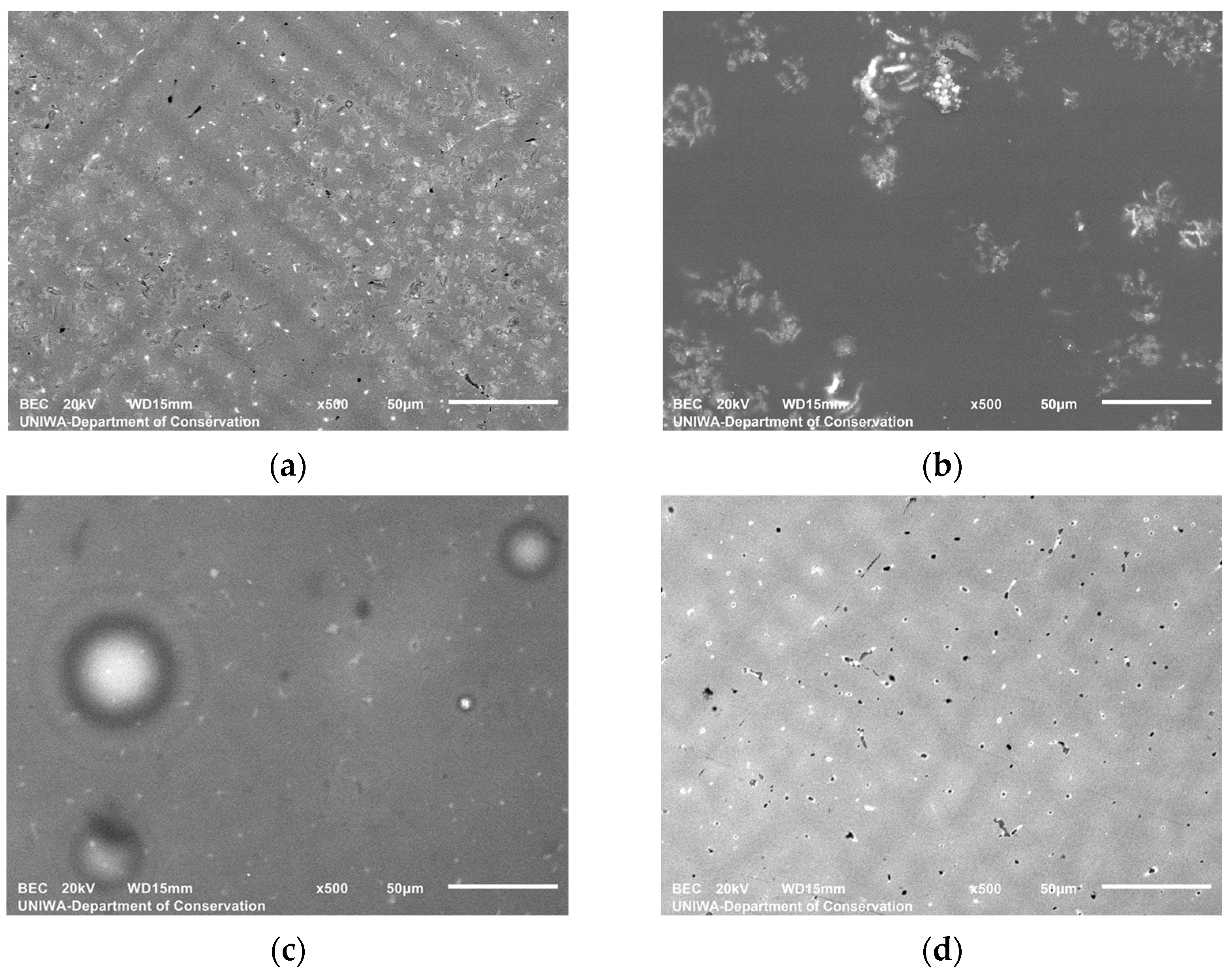
Concerning the indicative results from the SEM study, samples after 1-month ageing exposure present interesting phenomena. SEM-BE micrograph of uncoated and 1-month aged sample (Figure 5a) presents some corrosion phenomena and depositions on its surface, whereas the green outdoor organic coating (GOOC) presents a solid and relatively constant condition of the coating (Figure 5b), albeit with some minor segregation of constituents and depositions from the humidity. Regarding the indoor-oriented coatings after 2-month ageing exposure, Figure 5c presents that the green indoor organic coating (GIOC) seems to be far more protective, with only some bubble-like areas revealing the substrate surface, whereas the Beeswax surface (Figure 5d) is fully exposed to environmental and ageing conditions, with only some minor organic-like remains of it on the surface.
Figure 5.
SEM-BE micrographs of uncoated sample (a), GOOC (b) after 1-month ageing exposure, GIOC (c), Beeswax (d) after 2-month ageing exposure.
4. Conclusions
This study presents some important and preliminary results of GREENART research programme, concerning the comparative response evaluation of under-development green organic and commercial coatings for indoor and outdoor cultural heritage applications on metallic objects against ageing effect, via non-destructive and analytical techniques. Based on the results, a clear qualitative correlation between coating and/or corrosion products and deposition thickness and colorimetric values, namely ΔΕ parameter, was detected, a fact that is very critical to develop an efficient and user-friendly evaluation protocol, as well as approach better phenomena and mechanisms which are realized on these materials against ageing effects.
Regarding the outdoor-oriented coatings comparison, the greener one presents more stable thickness evolution and stability and more intense ΔΕ alteration from 1-month ageing, while a similar response is presented by Incralac up to 2-month ageing. Furthermore, gloss properties of the greener coating are overall lower than the Incralac one; however, both responses present a general decreasing trend against ageing time, with some minor micro-differentiations between 1- and 2-month ageing steps, where micro-segregation phenomena about the structure and thickness of these coatings may be realized. Concerning the indoor-oriented coatings comparison, both of them present very thin and essentially stable layers against the ageing experiment, with minor alterations near to measurement accuracy; however, the commercial Beeswax presents an intense modified colourimetric behavior from 1-month ageing exposure, a fact that is detected by ΔΕ parameter and VIS-imaging techniques. This intense Beeswax response alteration is also monitored in gloss measurements with steep alterations between the studied experimental steps. Uncoated samples investigation reveals the parallel behavior of the metallic substrate object against the ageing experiment, where corrosion products and depositions are detected sooner that 1-month ageing exposure, a fact that enlightens the need for protective coating usage and helps this study to understand combined phenomena and mechanisms of the coated samples, such as the Beeswax behavior in 2-month ageing, where there is entire consumption of this coating, as well as that corrosion products and depositions had already formed sooner, approximately from 1-month ageing exposure, and are clearly detected, either direct or indirect, on the metallic surface of the substrate by all methodology NDT and analytical approaches.
Finally, assessing overall the under-development coatings versus commercial ones, there is no clear dominance of some category; however, the green indoor organic coating seems to be more efficient than the conventional one, whereas outdoor coatings present strengths and weaknesses regarding the studied parameters. Nevertheless, the results and conclusions of this research endeavours are very useful to the efficiency–sustainability evaluation of these coatings development, as well as a strong consultant guidance protocol for cultural heritage protection and conservation intervention acts.
Author Contributions
Conceptualization, A.A.K., A.K. (Angelos Kaldellis), S.T., A.K. (Athanasios Karabotsos) and A.G.A.; methodology, A.A.K., A.K. (Angelos Kaldellis), S.T., and A.K. (Athanasios Karabotsos); investigation, A.A.K., A.K. (Angelos Kaldellis), S.T. and A.K. (Athanasios Karabotsos); resources, A.A.K., A.K. (Angelos Kaldellis), S.T., A.K. (Athanasios Karabotsos), and A.G.A.; writing—original draft preparation, A.A.K., A.K. (Angelos Kaldellis), and S.T.; writing—review and editing, A.A.K., A.K. (Angelos Kaldellis), S.T., and A.G.A.; supervision, A.A.K., A.K. (Angelos Kaldellis), S.T., and A.G.A.; project administration, A.A.K.; funding acquisition, A.G.A. and S.T. All authors have read and agreed to the published version of the manuscript.
Funding
This research work was carried out within the framework of the 101060941 HORIZON-CL2-2021-HERITAGE-01 GREen ENdeavor in Art ResToration (GREENART) research project funded by the EU. The registration fees for the presentation in the 8th International Conference of Engineering Against Failure (ICEAF) were totally funded by the University of West Attica, Greece.
Institutional Review Board Statement
Not applicable.
Informed Consent Statement
Not applicable.
Data Availability Statement
Data is contained within the article.
Conflicts of Interest
The authors declare no conflicts of interest. The funders had no role in the design of the study, in the collection, analyses, or interpretation of data, in the writing of the manuscript, or in the decision to publish the results.
References
- Baglioni, M.; Poggi, G.; Chelazzi, D.; Baglioni, P. Advanced Materials in Cultural Heritage. Conserv. Mol. 2021, 26, 3967. [Google Scholar] [CrossRef] [Scilit]
- Molina, M.T.; Cano, E.; Ramírez-Barat, B. Protective coatings for metallic heritage conservation: A review. J. Cult. Herit. 2023, 62, 99–113. [Google Scholar] [CrossRef] [Scilit]
- European Cultural Heritage Green Paper. Europa Nostra, The Hague & Brussels. 2021, pp. 1–107. Available online: https://openarchive.icomos.org/id/eprint/2552/1/2021_European%20Heritage%20Green%20Paper_full%20paper.pdf (accessed on 28 May 2025).
- European Green Deal. European Green Deal: Commission Proposes Transformation of EU Economy and Society to Meet Climate Ambitions. Available online: https://ec.europa.eu/commission/presscorner/detail/en/ip_21_3541 (accessed on 28 April 2025).
- Xu, J.; Peng, L.; Chu, J.; Shi, J.; Cui, O.; Shi, Q. D-limonene as an alternative for the extraction and purification of nuciferine from lotus leaf via multi-stage vortex assisted two-phase solvent extraction integrated with solid phase extraction using mesoporous material SBA-15 as adsorbent. Sustain. Chem. Pharm. 2023, 32, 100997. [Google Scholar] [CrossRef] [Scilit]
- Caruso, M.R.; D’Agostino, G.; Milioto, S.; Cavallaro, G.; Lazzara, G. A review on biopolymer-based treatments for consolidation and surface protection of cultural heritage materials. J. Mater. Sci. 2023, 58, 12954–12975. [Google Scholar] [CrossRef] [Scilit]
- Zisopol, D.G.; Minescu, M.; Iacob, D.V. A Study on the Influence of aging of the Butt-welded PE100 SDRPPHCS11 on Shore A Hardness and Tensile Strength. Eng. Technol. Appl. Sci. Res. 2024, 13, 12722–12727. Available online: https://etasr.com/index.php/ETASR/article/view/6635/3425 (accessed on 5 May 2025). [CrossRef] [Scilit]
- Alexopoulou, A.; Kaminari, A.A.; Moutsatsou, A. Multispectral and Hyperspectral Studies on Greek Monuments, Archaeological Objects and Paintings on Different Substrates. Achievements and Limitations. In Transdisciplinary Multispectral Modeling and Cooperation for the Preservation of Cultural Heritage, TMM_CH 2018, Communications in Computer and Information Science, 1st ed.; Moropoulou, A., Korres, M., Georgopoulos, A., Spyrakos, C., Mouzakis, C., Eds.; Springer: Cham, Switzerland, 2019; Volume 962, pp. 443–461. [Google Scholar] [CrossRef] [Scilit]
- Alexopoulou, A.; Kaminari, A.; Moutsatsou, A.; Banou, P. Imaging Techniques in the Study of Cultural Heritage; Open Academic Editions; Kallipos: Athens, Greece, 2024; pp. 93–186, (In Greek). [Google Scholar] [CrossRef]
- ISO 7668; Anodizing of Aluminium and Its Alloys—Measurement of Specular Reflectance and Specular Gloss of Anodic Oxidation Coatings at Angles of 20°, 45°, 60° or 85°. ISO: Geneva, Switzerland, 2018.
- Ye, L.; Banach, S.; Arney, J. Interpretation of Gloss Meter Measurements. J. Imaging Sci. Technol. 2006, 50, 567–571. [Google Scholar] [CrossRef] [Scilit]
- Mavropoulou, G.; Ioannidou, D.; Kaldellis, A.; Deligiannis, S.; Stergiou, V.; Skarvelis, P.; Tsakiridis, P.E. Microstructural and Mechanical Characterization of Plasma-Sprayed Cu36Ni5In Coatings on Dual-Phase Ti8Mn Substrate. J. Materi. Eng. Perform 2025. [Google Scholar] [CrossRef] [Scilit]

Disclaimer/Publisher’s Note: The statements, opinions and data contained in all publications are solely those of the individual author(s) and contributor(s) and not of MDPI and/or the editor(s). MDPI and/or the editor(s) disclaim responsibility for any injury to people or property resulting from any ideas, methods, instructions or products referred to in the content. |
© 2025 by the authors. Licensee MDPI, Basel, Switzerland. This article is an open access article distributed under the terms and conditions of the Creative Commons Attribution (CC BY) license (https://creativecommons.org/licenses/by/4.0/).